PART 2: I Inherited 1,000 Acres—Then Found 400 HOA Homes Sitting on My Grandmother’s Land, and Their Paperwork Collapsed in Court
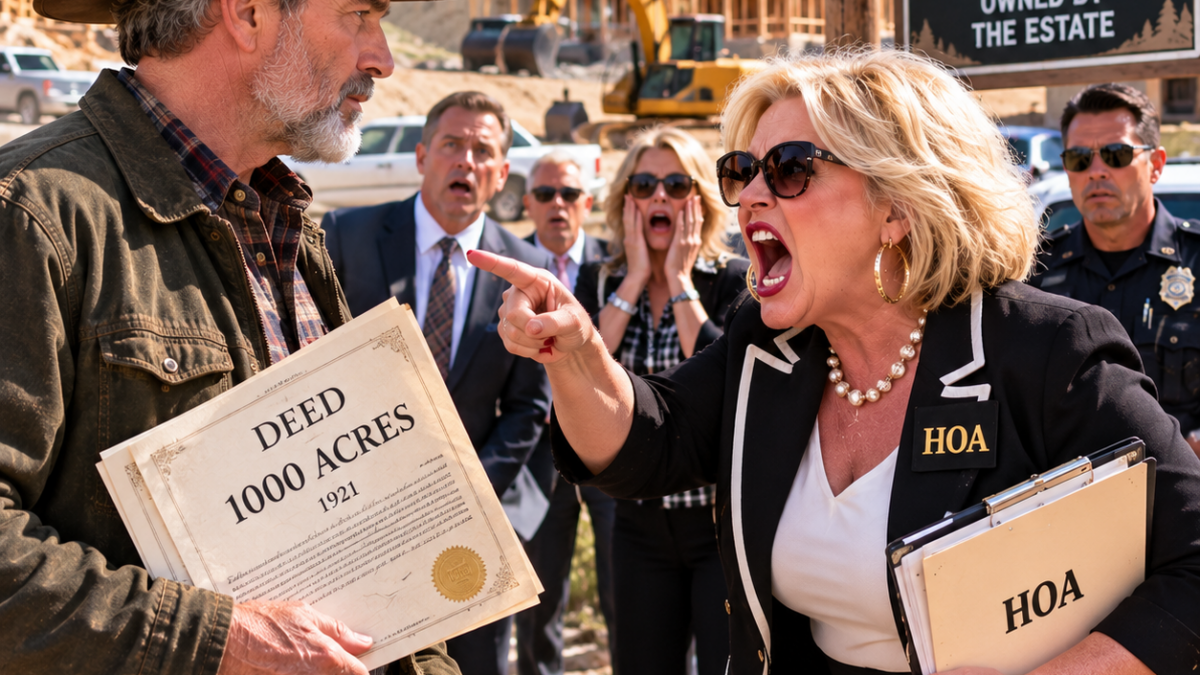
I inherited one thousand acres from my grandmother, drove out expecting empty fields and an aging farmhouse, and instead found hundreds of houses, paved streets, a swimming pool, and an HOA sign welcoming me onto land my family had never sold.
The HOA president looked at my probate papers, smiled like I was a confused stranger, and offered me exactly one piece of advice: walk away before I created problems for myself.
She had no idea that one sentence buried in their founding documents pointed to something that had never existed—and once I started following that paper trail, the entire neighborhood’s legal foundation began to look very different.
My name is Michael Gray.
Four months after my grandmother died, I drove out to inspect the land she had left me.
One thousand acres.
That number sounds enormous when you say it aloud.
But when I was a child, I never thought of it as acreage.
It was simply Grandma’s place.
It was the field where I chased fireflies in July.
The creek where I ruined two pairs of shoes in one afternoon.
The porch where my grandmother, Ruth Gray, would sit after sunset with a glass of sweet tea and tell me stories about people who had lived and died before I was born.
She bought the property in 1963.
And according to every estate document I had received after her death, she still owned it when she died.
Her will was straightforward.
No complicated trust.
No business entity.
No siblings fighting over percentages.
I was her only grandchild.
The property passed to me.
Probate confirmed it.
So when my GPS announced that I had arrived, I expected to see open land, perhaps overgrown after years of neglect.
Instead, I stopped on the shoulder and stared through my windshield.
There were houses.
Not one or two.
Hundreds.
Paved roads curved through manicured lawns.
Streetlights.
Sidewalks.
Mailboxes.
Children rode bicycles along a street called Meadow Lane.
Sprinklers hissed over grass cut to identical heights.
Farther in, I could see the roof of a community pool.
At the entrance stood a stone monument:
WELCOME TO MEADOWBROOK ESTATES
A COVENANT-PROTECTED COMMUNITY
I checked the GPS.
Then the probate map.
Then the GPS again.
Same location.
Same parcel.
My grandmother’s land.
I drove through the entrance slowly.
A guard waved me through.
He did not know he was waving the legal owner of the ground beneath his booth into the neighborhood built on it.
I counted houses until I lost track somewhere beyond three hundred.
At the center of the development stood a large community building with the words:
MEADOWBROOK HOMEOWNERS ASSOCIATION
I parked.
For several minutes I remained in the car.
I felt grief first.
Not anger.
The old farmhouse was gone.
The field behind it was gone.
The stretch of trees where my grandmother used to hang a tire swing was now a row of expensive two-story homes.
Everything familiar had been erased so completely that I began questioning my own memory.
Then I reminded myself:
Memory was not what mattered.
I had the deed.
I went inside.
The receptionist called someone.
Five minutes later, a woman in her early sixties walked toward me wearing a gray blazer and a precise silver bun.
“Mr. Gray?”
“Yes.”
“I’m Diane Crawford, HOA president.”
She shook my hand.
“How can I help?”
I opened my folder.
“My grandmother died four months ago.”
Her smile softened politely.
“I’m sorry.”
“She owned this property.”
The smile remained.
I placed the deed transfer, probate order, and will on the desk between us.
“I inherited it.”
Diane looked at the documents.
Not carefully.
Just long enough to acknowledge them.
Then she folded her hands.
“Mr. Gray, Meadowbrook Estates has existed for more than fifteen years.”
“I can see that.”
“We have approximately four hundred families here.”
“That doesn’t answer my question.”
“What question is that?”
“How did they get here?”
Something changed in her eyes.
Only slightly.
She said:
“Our records are complete.”
“Did the developer buy the land from my grandmother?”
“You’ll need to discuss legal questions with counsel.”
“Was there a deed transfer?”
“Our legal position is secure.”
“Was there a sale?”
Her smile cooled.
“Mr. Gray, I think you should speak with an attorney before making claims that may create unnecessary difficulties for yourself.”
That was the first threat.
Gentle.
Professional.
Wrapped in concern.
I closed the folder.
Then I asked:
“If this is all legal, why can’t you show me how my grandmother transferred the property?”
Diane stood.
“I’ve answered what I can.”
No.
She hadn’t.
I left the building and drove directly to the county clerk’s office.
Three hours later, I found the first thing Diane Crawford clearly did not expect me to find.
My grandmother’s title history was unbroken from 1963 to the day she died.
No sale.
No transfer.
No mortgage conveying ownership.
No development agreement signed by her.
Nothing.
But Meadowbrook’s founding paperwork repeatedly referenced an entity called the Gray Family Trust.
I stared at those words until the records room seemed to go silent around me.
My grandmother had never created a trust.
And yet an entire community had been built as if she had.
That was when I stopped wondering whether there had been a mistake.
I started wondering who had needed everyone to believe one.
PART 2
That evening, I sat in a hotel room twelve miles from Meadowbrook Estates with the county documents spread across the bed.
I had not planned on staying in a hotel.
The original plan had been simple.
Inspect Grandma’s land.
Meet with an appraiser.
Spend a night in town.
Drive home.
Instead, I was surrounded by documents explaining how four hundred families had somehow purchased houses on acreage no legitimate record said the developer ever owned.
I kept returning to one phrase.
Gray Family Trust.
It appeared in the HOA formation papers.
The development summary.
An early zoning reference.
A financing attachment.
Each document treated the trust as established fact.
But no trust instrument existed.
No probate reference.
No tax registration.
No filing.
No attorney record connected to my grandmother.
Nothing.
I called the attorney who had handled Grandma’s estate.
His name was Paul Winters.
He had known her for twenty-seven years.
“Paul.”
“Michael?”
“I need you to tell me if Grandma ever created a trust.”
Silence.
“Which kind?”
“Any kind involving the land.”
“No.”
“You’re sure?”
“Yes.”
“Could she have done it before you represented her?”
“Possible in theory.”
“Would it show up somewhere?”
“Almost certainly.”
“There’s an HOA development on the property.”
Another silence.
“How much development?”
“Four hundred houses.”
Paul stopped breathing for a second.
“Say that again.”
I explained.
When I finished, he said:
“Do not sign anything.”
“I wasn’t planning to.”
“Do not accept money.”
“They haven’t offered any.”
“Yet.”
That word stayed with me.
Then he said:
“Get a title attorney.”
The email came twenty minutes later.
From Meadowbrook.
Subject:
INVITATION TO RESOLUTION MEETING
Diane Crawford wrote that the board wished to “clarify misunderstandings.”
The meeting would take place the following week.
HOA counsel would attend.
They hoped to resolve the matter amicably.
At the bottom:
We remain confident in the strength of Meadowbrook Estates’ legal position.
Paul was right.
Something was coming.
I attended.
Not because I believed they planned to explain anything.
Because people reveal more when they think they control the room.
The community center main hall was packed.
At least two hundred residents.
That surprised me.
I expected attorneys.
Maybe board members.
Not an audience.
Then I understood.
This was theater.
Diane wanted witnesses.
She wanted two hundred homeowners to see me as the outsider challenging their homes.
She stood at the front beside two men.
“Mr. Gray, welcome.”
Same polished smile.
She introduced Roger Stanton, vice president.
Then Neil Bridges.
HOA legal counsel.
Neil had several binders stacked in front of him.
Not files.
Binders.
Thick ones.
He opened the first.
“Mr. Gray, I understand you recently inherited an interest in property historically connected to this development.”
“Not historically connected.”
I remained standing.
“It is the development.”
A few residents whispered.
Neil ignored that.
“Meadowbrook was lawfully formed through a community development agreement authorized by the Gray Family Trust.”
“There was no Gray Family Trust.”
Diane stepped in.
“We’ll get to that.”
Neil turned pages.
Articles of incorporation.
Tax history.
Municipal documents.
HOA bylaws.
Development approvals.
Homeowner deeds.
Fifteen years of paperwork.
He moved through it fast.
That was deliberate.
Volume can imitate certainty.
He wanted me looking at four hundred homes, thousands of pages, millions of dollars, and thinking:
This cannot possibly be wrong.
But I had spent the previous night learning one important thing.
Every legitimate structure has a foundation.
If the foundation does not exist, adding paperwork does not create it.
Neil finished.
“As you can see, the association has operated openly and lawfully for fifteen years.”
“No.”
He paused.
“Excuse me?”
“I can see that it has operated for fifteen years.”
The room shifted.
“That doesn’t prove the first transaction was lawful.”
Neil’s jaw tightened.
Roger Stanton leaned forward.
“Mr. Gray, nobody here wants conflict.”
I looked around.
“Neither do I.”
“That’s why we’ve prepared something.”
He slid one sheet toward me.
Settlement.
Seventy-five thousand dollars.
I nearly laughed.
“What is this?”
“A goodwill resolution.”
“For what?”
“In exchange for releasing any claims.”
I read.
Full waiver.
Acknowledgment that Meadowbrook had legitimate title.
Acknowledgment of Gray Family Trust authority.
No future action against the HOA, residents, developers, agents, or counsel.
$75,000.
I put it down.
“My grandmother’s property is one thousand acres.”
Roger said:
“We understand.”
“Worth millions.”
“This is not a purchase price.”
“I know.”
Diane leaned toward me.
“We’re trying to spare everyone unnecessary litigation.”
I looked at her.
“The Gray Family Trust never existed.”
The room stirred.
Diane said:
“Our legal team has verified the trust structure.”
“Show me the trust.”
Neil opened another binder.
He removed a single certification.
Fancy letterhead.
Attorney signature.
Sixteen years old.
It stated that the Gray Family Trust had authorized development.
I photographed it.
Neil frowned.
“Why are you taking a picture?”
“Because I want to know who signed it.”
The name:
Richard Daws.
Attorney at law.
I had never heard of him.
Diane said:
“That certification has been relied upon for fifteen years.”
“So?”
“So your claim that the trust did not exist is contradicted by legal documentation.”
“Then show me the trust.”
She did not.
That silence mattered.
I stood.
“Thank you.”
Roger frowned.
“You’re leaving?”
“Yes.”
“The offer is time-sensitive.”
“I understand.”
Diane called after me.
“Mr. Gray.”
I turned.
“Think about what’s best for these families.”
I looked at the residents.
Children’s parents.
Retirees.
Young couples.
They had mortgages.
Schools.
Lives.
Then back at Diane.
“I am.”
That night I searched Richard Daws.
His obituary came first.
Dead eleven years.
Then bar record.
Suspended before his death.
Reason:
Professional misconduct involving document irregularities and fraud-related matters.
I sat back.
An entire development had been justified through a certification from an attorney later disciplined for document fraud.
Still not enough.
Suspicious is not proof.
I needed proof.
Three days later, Meadowbrook sent me a trespass notice.
That almost made me laugh.
I had allegedly entered the community without permission.
The community on my land.
The notice said I failed to register properly.
I had been invited.
The second notice accused me of harassment.
No details.
The third communication came from the county court.
Temporary restraining order petition.
Meadowbrook alleged that I had behaved aggressively.
Three residents submitted statements.
They said I intimidated them.
Raised my voice.
Made them fear for their safety.
I remembered the meeting.
I had asked questions.
Photographed a document.
Left.
That was all.
But I saw what they were doing.
They were not simply defending title.
They were constructing me.
Michael Gray:
Aggressive outsider.
Greedy heir.
Threat to four hundred families.
If they could make me the problem, nobody would look closely at the trust.
I stopped reacting.
Started cataloging.
Every envelope.
Every timestamp.
Every email.
Hotel receipts.
GPS history.
Phone logs.
Meeting invitation.
Photograph metadata.
The story they were writing about me had to compete with evidence.
Then I spent two days researching development law.
Community development agreements.
Recorded authorization.
Owner consent.
Property description.
Permit filings.
Title.
Everything kept coming back to the same missing element.
My grandmother’s consent.
No document.
No transfer.
No trust.
The more I followed the paperwork, the stranger it became.
Every Meadowbrook permit referenced something else.
Permit A cited development agreement B.
Agreement B cited trust certification C.
Certification C claimed authority from Gray Family Trust.
But there was no trust.
It was a closed circle.
Everything supported everything else.
Nothing supported the beginning.
That was when I found Helen Roberts.
Property attorney.
Two counties over.
Known for title litigation.
Known for not being afraid of associations or local government.
I called.
Receptionist:
“What is the dispute?”
“I inherited a thousand acres.”
“Okay.”
“There are four hundred houses on it.”
Pause.
“Excuse me?”
“The developer appears never to have purchased the land.”
Longer pause.
“And the HOA says a trust authorized it.”
“Did the trust exist?”
“No.”
“Hold please.”
Helen called back in forty minutes.
Her first question:
“Tell me about the trust.”
I did.
She listened without interruption.
Then:
“Restraining order?”
“Yes.”
“Against you entering the property?”
“Yes.”
“Convenient.”
“My thought.”
“Don’t say that in court.”
“I know.”
She asked for everything.
I emailed.
That evening she called again.
“Michael.”
“Yes?”
“I found something.”
Her tone changed.
Not excited.
Serious.
“What?”
“Original archived permit submission.”
I sat up.
“What does it say?”
“Surveyor flagged boundary discrepancies.”
I went still.
“What kind?”
“The proposed development footprint did not match the ownership records.”
“Whose ownership?”
“Your grandmother’s.”
I closed my eyes.
“Was it approved anyway?”
“Yes.”
“Where is the report now?”
“Not in the final file.”
“Meaning?”
“Meaning somebody received it.”
“And?”
“It disappeared from the permit package.”
“Can we find the surveyor?”
“I’m trying.”
She did.
Henry Caldwell.
Seventy-three.
Retired surveyor.
We drove ninety miles.
He lived in a modest ranch-style house.
Coffee already waiting.
He knew why we were there.
“I wondered if this would ever come back.”
That was his first sentence.
Helen set a recorder on the table with his permission.
“You surveyed Meadowbrook?”
“It wasn’t called Meadowbrook then.”
“Sixteen years ago?”
“Yes.”
“What did you find?”
Henry leaned back.
“Developer gave me coordinates.”
“And?”
“They overlapped private property.”
“How much?”
He looked at me.
“Almost all of it.”
My stomach dropped despite everything I already knew.
“You identified the owner?”
“Gray.”
“My grandmother.”
“Ruth Gray.”
He remembered her name.
“Did you speak to her?”
“No.”
“Why?”
“That wasn’t my job.”
“Did the developer produce proof of ownership?”
“No.”
“Then what did you do?”
“Wrote the report.”
He stood.
Went to the garage.
Returned with a file box.
Inside:
Original survey.
Field notes.
Correspondence.
Copy of submitted report.
Clear language.
DEVELOPMENT CANNOT PROCEED ABSENT PROOF OF OWNERSHIP, TRANSFER, OR AUTHORIZATION FROM GRAY FAMILY.
I read it.
Again.
Helen photographed every page.
Henry said:
“Three months later I drove past.”
“Construction?”
“Yes.”
“Did you call?”
“County planning.”
“What did they say?”
“No boundary discrepancy on record.”
Helen asked:
“Your report had been filed?”
“I have the transmittal receipt.”
He handed it over.
Stamped.
Received.
Then erased from the final permit process.
Not physically erased from history.
Henry’s copy survived.
That was enough.
On the drive back, Helen was quiet.
Finally:
“Michael.”
“Yes?”
“This is bigger.”
“I know.”
“No.”
She glanced at me.
“County involvement.”
I said nothing.
“Someone had to receive that report.”
“Yes.”
“Someone had to decide it wasn’t going to stop the project.”
“Yes.”
“You still want this public?”
“Eventually.”
“Good answer.”
“What’s the bad answer?”
“Immediately.”
She smiled without humor.
“We build first.”
Helen requested state-level land records.
Bypassing county archives.
She hired Walter Puit.
Thirty years in land-record management.
His job:
Trace the Gray title from 1963 forward.
Every transfer.
Every encumbrance.
Every possible gap.
“If there’s a legitimate conveyance,” he said, “I’ll find it.”
“And if there isn’t?”
“Then somebody built four hundred houses on a fiction.”
Meanwhile, Helen answered the restraining order.
Not just denial.
Countermotion.
Produce founding documents.
Original trust authorization.
Development agreement.
Correspondence with county officials.
Anything establishing legal acquisition.
Now the HOA had to answer.
Their response did not begin in court.
It began in the newspaper.
I walked into a gas station three days later.
My face was on the front page.
INHERITANCE DISPUTE THREATENS MEADOWBROOK COMMUNITY
The article quoted Diane.
“Distant relative.”
“Dubious claims.”
“Threat to families.”
It mentioned the restraining-order request.
Not the survey.
Not the trust problem.
Not the missing deed.
A photograph showed me leaving the community center.
I looked angry.
Maybe I was.
The framing was perfect.
Four hundred innocent families.
One greedy man.
Then regional websites picked it up.
Online page:
PROTECT MEADOWBROOK FAMILIES
My name.
My photograph.
People called me a con artist.
One post said I targeted retirees.
Completely false.
Another claimed I wanted to bulldoze the neighborhood.
I had never said anything remotely like that.
But misinformation has one advantage truth rarely has.
Speed.
By the time Helen and I had evidence ready, strangers already knew who I was supposed to be.
The restraining-order hearing drew a crowd.
Signs:
SAVE OUR HOMES
STOP THE LAND GRAB
A woman shouted:
“How do you sleep at night?”
I wanted to answer:
Badly.
Instead I walked inside.
Diane sat front row.
Blue suit.
Concerned expression.
Neil Bridges presented three residents.
Fear.
Intimidation.
Aggressive conduct.
Helen cross-examined.
“When did Mr. Gray threaten you?”
“He didn’t exactly threaten me.”
“What did he do?”
“He looked angry.”
“What words did he use?”
“I don’t remember.”
Second resident.
“You said he shouted.”
“Yes.”
“What did he shout?”
“I don’t remember.”
“Was it before or after the $75,000 offer?”
“I’m not sure.”
Third resident contradicted the first two.
The judge denied the order.
Insufficient evidence.
Outside, someone threw a paper cup.
It hit my shoulder.
Helen said:
“Keep walking.”
I did.
No response.
No anger.
The worst part came three days later.
Email from my largest client.
Contract terminated.
$17,000 in pending work.
Gone.
Reason:
Reputational concerns.
Link attached.
Meadowbrook article.
That night, hotel room.
Vending-machine dinner.
Curtains closed.
I stared at the ceiling.
Thought:
Quit.
Take whatever settlement.
Leave.
Let someone else fight.
I had enough savings to survive.
Not enough to fight indefinitely.
That is how pressure works.
Not one devastating blow.
Small losses.
Money.
Sleep.
Reputation.
Work.
Eventually you decide truth is too expensive.
Then I thought about Grandma.
Ruth Gray did not keep one thousand acres for sixty years because it was easy.
Developers had approached her before.
I remembered one when I was twelve.
Man in a shiny car.
He offered money.
Grandma listened.
Then said:
“No.”
After he left, I asked:
“Was it a bad offer?”
She said:
“Doesn’t matter.”
“Why?”
“Because I wasn’t selling.”
That was her.
Simple.
I called Helen the next morning.
“I’m not quitting.”
She was silent.
Then:
“Good.”
“Why?”
“Walter finished.”
My heart changed pace.
“And?”
“Unbroken ownership.”
I closed my eyes.
“No gap?”
“None.”
“No transfer?”
“None.”
“No encumbrance?”
“Nothing giving the developer ownership.”
“So?”
“The development has no legitimate title origin.”
I breathed.
Then Helen said:
“There’s more.”
“What?”
“They filed quiet title.”
I did not understand immediately.
“When?”
“Three weeks ago.”
“Why didn’t I know?”
“You were served through the larger action packet. Buried.”
My stomach turned.
Quiet-title action.
If successful, it could ask the court to declare legal ownership.
Their theory:
Adverse possession.
Continuous use.
Community reliance.
They were trying to convert years of occupation into legal ownership.
Deadline:
Nineteen days.
Then everything clicked.
Newspaper.
Public campaign.
Restraining order.
Client loss.
Pressure.
Not random retaliation.
Clock.
They wanted me exhausted before I realized which filing mattered.
Helen said:
“If you default or respond badly, they gain leverage.”
“How much?”
“Enough that I don’t want to find out.”
“How long?”
“Nineteen days.”
I looked at the stack of evidence.
“Then we stop reacting.”
“Yes.”
“We attack the foundation.”
“Exactly.”
Helen called an emergency meeting at her office.
Walter there.
Whiteboard.
Timeline.
1963:
Ruth Gray purchase.
Sixteen years ago:
Development proposal.
Survey discrepancy.
Gray Family Trust certification.
Permit approval.
Construction.
Then fifteen years of HOA operations.
Walter produced his title report.
Bound.
Indexed.
Exhibits.
“Your grandmother’s ownership is continuous.”
He tapped.
“Every legitimate record.”
“No sale.”
“No gift.”
“No easement giving development rights.”
“No trust.”
“Nothing.”
Helen displayed the certification.
Richard Daws.
Then another report.
Forensic document examiner.
Signature comparison.
Authenticated exemplars.
Questioned signature.
Conclusion:
Simulated or traced.
Not authored by Daws.
I read it twice.
“So even the dead lawyer didn’t sign it.”
Helen nodded.
“The trust certification is forged.”
That was the moment the entire case changed.
Not invalid.
Not questionable.
Forged.
Walter added another piece.
Henry’s survey versus permit coordinates.
They matched my grandmother’s boundaries.
The permit approval had been signed by deputy commissioner Alan Torres.
Six months after final approval, Torres bought a vacation property.
Cash.
Helen immediately said:
“That does not prove bribery.”
“I know.”
“It is a question.”
“Not evidence by itself.”
“Correct.”
That discipline mattered.
We would not become Diane.
No story ahead of proof.
Helen looked at me.
“What do you want?”
“Public record.”
“All of it?”
“All.”
“Once filed, residents will see it.”
“Good.”
“Press too.”
“Good.”
“Diane will attack harder.”
“She already cost me my biggest client.”
Helen nodded.
“We file tomorrow.”
Expedited evidentiary hearing.
Thursday.
Seventy-two hours.
I barely slept.
Not fear this time.
Readiness.
At court, Meadowbrook residents filled the hallway.
Some hostile.
Some uncertain.
The courtroom itself was small.
Judge Eleanor Marsh.
Late fifties.
Reading glasses.
No patience for performance.
Helen whispered:
“Facts.”
“Only.”
Neil Bridges had two associates.
Binders again.
Diane sat behind him.
Perfect posture.
She still looked confident.
Helen stood.
“Your Honor, this case is simpler than the volume of paper suggests.”
Good opening.
“My client inherited one thousand acres from Ruth Gray.”
Exhibit one.
1963 deed.
“Ms. Gray maintained continuous title until death.”
Probate.
“My client is sole heir.”
Walter’s title report.
“No transfer exists.”
Then:
“The defendant HOA claims authority through a Gray Family Trust.”
Certification.
“The trust never existed.”
Estate records.
County records.
State searches.
Then forensic report.
“The signature authenticating the trust certification was not written by the attorney whose name appears on it.”
The room changed.
People whispered.
Judge Marsh read.
Then Henry Caldwell.
He testified.
Survey.
Boundary overlap.
Warning.
Receipt.
Construction proceeded anyway.
Helen introduced permit files.
Missing survey from final package.
Alan Torres approval.
Careful.
No bribery accusation.
Just record.
Then Neil stood.
Good faith.
Fifteen years.
Families.
Mortgages.
Infrastructure.
Community reliance.
Technical irregularities.
That phrase made me angry.
Forged foundational certification:
Technical irregularity.
Neil said:
“My clients relied upon professional representations.”
Judge Marsh:
“Counselor.”
He stopped.
“Does the association possess a deed transferring ownership from Ruth Gray?”
Pause.
“No, Your Honor.”
“Bill of sale?”
“No.”
“Recorded owner consent?”
“The trust certification—”
“I asked whether you possess recorded consent from Ruth Gray.”
“No.”
“Trust instrument?”
Neil looked down.
“No.”
“Proof the Gray Family Trust existed?”
“The certification—”
“That is not what I asked.”
Silence.
“No.”
The whole case fit inside that word.
No.
Diane stood.
Suddenly.
“Your Honor.”
Judge Marsh looked up.
“Mrs. Crawford, sit down.”
“The trust was authorized.”
“Mrs. Crawford.”
“I was told it was authorized.”
Neil whispered urgently.
Too late.
Diane continued.
“The attorney handled it.”
Judge:
“Sit down.”
“We built a real community.”
Gavel.
“Mrs. Crawford.”
She stopped.
Helen rose.
“Your Honor, I believe Mrs. Crawford has confirmed the HOA relied entirely upon the disputed certification.”
Neil:
“Objection.”
Judge Marsh looked at him.
“On what basis?”
Neil sat.
The judge reviewed documents.
Five minutes.
Maybe seven.
Longest silence of my life.
Then:
“The HOA’s quiet-title action is dismissed.”
No cheers.
“This court orders an independent evidentiary examination of the development’s founding documentation.”
She continued.
“The questioned trust certification is referred to the district attorney for investigation.”
Diane sank into her chair.
Neil gathered papers.
Residents stared.
Some at me.
Some at Diane.
Most at nothing.
Then the judge said something I never forgot.
“Length of reliance does not transform a forged instrument into legitimate title.”
That was it.
Fifteen years.
Four hundred homes.
Millions invested.
None changed the beginning.
Outside, reporters crowded us.
Helen spoke.
Not me.
“We have no intention of targeting innocent homeowners.”
That sentence mattered.
“What happens to the houses?”
“We will work through the civil process.”
“Will Mr. Gray evict residents?”
“No decision today.”
“Does he own the land?”
“The court has recognized the strength of his title and dismissed the HOA’s competing claim.”
“What does he want?”
Helen looked at me.
I said:
“The truth first.”
That became the headline.
Not bad.
The criminal investigation moved quickly.
Maybe because once the court referred the certification, agencies no longer had to treat it as a private dispute.
Diane charged.
Fraud-related offenses.
Conspiracy.
Theft by deception allegations.
Roger Stanton implicated.
Neil Bridges investigated over court filings and knowledge of the buried survey.
Alan Torres subpoenaed.
Then testimony.
“Consulting fees.”
Prosecutors called them improper payments.
Eventually plea negotiations.
Diane:
Five-year sentence structure with eligibility considerations under the deal.
Permanent ban from HOA or similar community board leadership.
Restitution.
Roger accepted similar consequences.
Neil fought longer.
Emails complicated his claim of ignorance.
He had apparently received materials relating to Henry’s survey.
The civil title case resolved first.
The court formally restored ownership of the full one thousand acres.
Including the ground beneath Meadowbrook.
That was the moment everyone expected me to become the villain they had imagined.
Legally, I had enormous leverage.
Homes.
Roads.
Pool.
Community center.
Parks.
Land.
Approximate combined property value:
$47 million.
Helen sat across from me.
“You understand what this means?”
“Yes.”
“You own the underlying property.”
“Yes.”
“Residents will need title regularization.”
“Yes.”
“Some structures may legally be treated as improvements on your land depending on final orders.”
“I know.”
“You have options.”
“I know.”
She closed the folder.
“What do you want?”
That question was harder than beating Diane.
Because now anger would have been legal.
I could justify almost anything emotionally.
They called me greedy.
Dangerous.
Con artist.
A woman threw a cup.
My client fired me.
Residents signed statements.
People wanted me excluded from my own property.
I could say:
You chose Diane.
Now live with it.
Except most of them hadn’t chosen fraud.
They bought houses.
Got mortgages.
Hired title companies.
Paid taxes.
Raised kids.
They trusted documents.
The same documents designed to fool them.
I walked Meadowbrook for three days.
Not with lawyers.
Alone.
I found remnants of Grandma’s property along the outer edge.
Old fence posts.
Weathered.
Half buried.
One section of tree line remained.
I remembered her voice.
Fair.
That was Grandma.
Fierce.
But fair.
She once caught me taking extra money from a lemonade stand jar when I was nine.
Not stealing.
It was ours.
I wanted a toy.
She made me put it back.
“Why?”
“Because you didn’t earn that portion.”
“It’s family money.”
She said:
“That doesn’t mean everything you can take belongs in your pocket.”
I remembered that.
Standing between two old fence posts while four hundred homes spread behind me.
Residents were victims too.
Different loss.
I lost land.
They risked homes.
If I punished them for trusting forged paperwork, I would become another person using legal leverage against people with less power.
I called Helen.
“I want a resident settlement.”
“What kind?”
“Nobody gets thrown out.”
Silence.
“Michael.”
“Current residents keep a path to their homes.”
“How?”
“Purchase option.”
“They already paid for their homes.”
“I know.”
“Some won’t be able to pay twice.”
“Then leases.”
She waited.
“Below market.”
“Michael, you are talking about giving away enormous value.”
“No.”
“Explain.”
“I’m regularizing ownership.”
“On favorable terms.”
“Yes.”
“Why?”
“Because they didn’t forge anything.”
Helen said nothing.
I continued.
“Leadership faces the consequences.”
“Developers.”
“Insurers.”
“Professionals.”
“County actors if proven.”
“Yes.”
“But not families.”
She sighed.
“Give me a week.”
The structure we developed was complicated.
Every current resident received options.
For those capable of purchasing legal title, fair-market valuations adjusted to recognize prior good-faith investment and legal equities.
Long financing.
Reasonable interest.
No predatory balloon clauses.
For retirees or families who could not afford purchase:
Long-term leases.
Stable payments.
First right of refusal.
Protection from arbitrary displacement.
Common areas:
Conservation and community-use easement.
Pool.
Parks.
Community center.
Green space.
Managed through a new HOA.
Not Diane’s HOA.
Transparent board elections.
Independent accounting.
Outside counsel.
Conflict-of-interest rules.
Financial disclosures.
Resident access to records.
Term limits.
No founding leader allowed permanent control.
The settlement documents explicitly acknowledged the original development was fraudulently founded.
That mattered to me.
Compassion did not require pretending nothing happened.
Truth remained.
One afternoon, Helen put the final draft in front of me.
“Sign here.”
I did.
Then she asked:
“You know you could demand much more.”
“Yes.”
“Some lawyers would tell you to.”
“I know.”
“You’re leaving millions on the table.”
“Maybe.”
“Your grandmother’s land.”
“Yes.”
She studied me.
“You’re sure?”
I looked at the signature line.
“Grandma would be furious if I let guilty people steal it.”
Helen nodded.
“She would also be furious if I used their fraud to destroy innocent families.”
Helen smiled.
“That’s your legal analysis?”
“Grandmother analysis.”
“Hard to appeal.”
The first resident who called me directly was the woman from the courtroom.
Third row.
She had cried after the judge ruled.
Her name was Laura Bennett.
“Mr. Gray?”
“Yes.”
“I don’t know if you remember me.”
“I think I do.”
“We believed…”
She stopped.
“Diane.”
“Yes.”
“I’m sorry.”
I waited.
“We thought you wanted our houses.”
“I know.”
“We thought you were going to throw us out.”
“I know.”
“Then we got the settlement package.”
“Yes.”
She started crying.
“I don’t understand.”
“What part?”
“Why.”
I thought.
“Did you forge the trust?”
“No.”
“Hide Henry Caldwell’s survey?”
“No.”
“Pay off a county official?”
“No.”
“Then why would I punish you for it?”
She laughed through tears.
“You make it sound simple.”
“It isn’t.”
“No.”
“But simple doesn’t mean easy.”
Another pause.
“My husband wants to apologize too.”
“He doesn’t need to call.”
“We held a sign outside court.”
“Which one?”
“Stop the Land Grab.”
I smiled despite myself.
“That one was memorable.”
“We were wrong.”
“Yes.”
She actually laughed.
“Thank you for not pretending we weren’t.”
“I’ve had enough pretending.”
News coverage changed.
First:
Greedy heir threatens community.
Then:
Forged trust at center of title scandal.
Then:
Landowner offers path for families to keep homes.
People love reversals.
I hated seeing myself on television.
Turned it off.
The professional client who canceled me called.
“We may have acted too quickly.”
“Yes.”
“We’d like to discuss reinstatement.”
“No.”
Silence.
“Michael, we value the relationship.”
“You valued it until a newspaper article scared you.”
“We have stakeholders.”
“So do I.”
“You’re declining?”
“Yes.”
That felt better than any revenge against Diane.
Not because I hurt them.
Because I finally understood I did not need everybody who abandoned me to return.
Some relationships survive pressure.
Others reveal themselves.
Both outcomes are useful.
Paul Winters visited Grandma’s land later.
We stood near the original fence.
“She would not believe this.”
“She’d blame you.”
“For what?”
“Probate.”
He laughed.
“Probably.”
Then he became serious.
“You did right by her.”
“Which part?”
“Not letting them take it.”
I looked toward Meadowbrook.
“And the residents?”
“That too.”
I wasn’t sure.
I think moral certainty after a complicated decision is mostly fiction.
I still wondered if I gave too much.
Sometimes I wondered if I should have demanded more compensation from institutional defendants before settling resident titles.
Helen told me:
“You can spend ten years perfecting fairness.”
“Then?”
“Everybody dies waiting.”
Good lawyers are annoying.
Diane’s criminal case concluded months later.
I did not attend sentencing.
Reporters asked why.
I said:
“Her sentence does not require my audience.”
I had nothing to gain watching her lose freedom.
The person I had needed to defeat was HOA President Diane Crawford.
That person no longer existed.
She had no board.
No authority.
No legal narrative.
Her paperwork was exposed.
Her sentence belonged to the court.
Roger Stanton disappeared from community life.
Neil Bridges eventually faced professional discipline and criminal exposure based on what investigators established about his filings.
Alan Torres cooperated.
His “consulting fees” became part of the broader public-corruption investigation.
More development approvals were reviewed.
That surprised me.
Meadowbrook was not necessarily the only questionable project.
The county hired outside auditors.
Records-retention rules changed.
Permit files were digitized.
Survey objections had to be tracked through resolution.
The system responded late.
But it responded.
Henry Caldwell received more attention than he wanted.
Reporters called him a whistleblower.
He hated the term.
“I wrote a survey.”
That was his answer.
“You saved everything.”
“Surveyors save records.”
“Why?”
“Because land remembers longer than people.”
I liked that.
Walter Puit became something of a local legend among title lawyers.
He hated that too.
Apparently all the competent people in my case preferred anonymity.
I understood.
A year later, Meadowbrook held its first election under the new governance structure.
I attended.
Not as owner.
Observer.
Residents nominated candidates.
Five seats.
Nine candidates.
Actual debate.
Budget.
Maintenance.
Transparency.
One woman asked:
“Will Mr. Gray have veto power?”
The interim attorney said:
“No.”
Heads turned toward me.
I nodded.
Good.
I had no interest in becoming Diane with better paperwork.
Laura Bennett won a board seat.
She later called.
“I have a strange question.”
“What?”
“Would you come speak at our meeting?”
“About?”
“History.”
“No.”
She laughed.
“I expected that.”
“Ask Henry.”
“He already said no.”
“Walter?”
“He said something impolite.”
“Sounds right.”
Eventually I agreed.
One meeting.
I stood in the same community center where Diane once offered me $75,000.
Different board.
Different residents.
Same room.
Laura introduced me.
No applause.
I had specifically asked for none.
I brought three documents.
Grandma’s deed.
Henry’s survey.
Settlement structure.
“That’s the story.”
A teenager in the back raised his hand.
“How could nobody know?”
Good question.
“Because most people check the document immediately in front of them.”
“What does that mean?”
“Your parents bought a house.”
He nodded.
“They checked their deed.”
“Yes.”
“Title company checked seller’s title.”
“Yes.”
“Seller relied on earlier documents.”
“Yes.”
“Eventually everyone relied on a piece of paper saying a trust authorized the first development.”
He frowned.
“But the trust was fake.”
“Yes.”
“So why didn’t anyone check?”
“Somebody did.”
“Who?”
“Henry Caldwell.”
I held up the survey.
“The problem wasn’t that nobody noticed.”
Pause.
“The problem was that the person who noticed was ignored.”
That changed the room.
Systems often fail that way.
Not because there is no warning.
Because warnings are inconvenient.
Henry’s report threatened a development worth millions.
So someone removed the obstacle.
Then every later participant assumed earlier participants had done their jobs.
Sixteen years later, four hundred families lived on top of that assumption.
After the meeting, an older man approached.
His name was George.
“You could’ve ruined us.”
“Yes.”
He appreciated the honesty.
“Why didn’t you?”
I looked around.
Children drawing on paper near the wall.
Residents stacking chairs.
Laura reviewing budget documents.
“My grandmother hated waste.”
He looked confused.
“Destroying four hundred families would be waste.”
He nodded.
Then:
“Did you forgive us?”
That question kept coming.
I answered:
“I don’t know all of you well enough to forgive all of you.”
He laughed.
Fair.
“Did you forgive Diane?”
“No.”
That answer was easy then.
Years later, less so.
Not because what she did became smaller.
Because she became less important.
The land changed after everything.
Not physically.
My relationship to it.
For months, I thought:
Mine.
One thousand acres.
Taken.
Stolen.
Restored.
Mine.
Eventually I realized ownership was the simplest part.
Responsibility was harder.
Road maintenance.
Drainage.
Utilities.
Common land.
Environmental management.
Resident contracts.
Legal compliance.
Taxes.
I created a land-management entity.
Independent administrator.
Audits.
I did not want a private kingdom.
I wanted predictability.
Helen insisted on governance barriers.
“You’ve been traumatized by associations.”
“Accurate.”
“So we’re creating an association.”
“Absolutely not.”
She smiled.
“We’re creating oversight.”
“Different word.”
“Same human problem.”
She was right.
Any concentration of authority needs structure.
Even mine.
Especially mine.
Grandma had been one person on rural land.
Now her property contained a community.
The inheritance I received was not the inheritance she expected to leave.
That realization was painful.
Sometimes I wished Meadowbrook had never been built.
I imagined the fields.
Farmhouse.
Creek.
Fireflies.
Then I would drive past the playground.
Children.
Families.
Trees planted fifteen years earlier now tall.
Reality does not ask whether you prefer its origin.
It only asks what you will do with what exists.
One afternoon, I found the location where Grandma’s farmhouse had stood.
It had been demolished during early development.
A cul-de-sac covered part of it.
The front porch would have sat roughly where a flower bed now grew.
I parked.
A woman came outside.
“Can I help you?”
I introduced myself.
Her face changed.
“Oh.”
Not fear.
Recognition.
“You’re him.”
“Unfortunately.”
She laughed nervously.
Her name was Natalie.
She had lived there twelve years.
“Was the farmhouse here?”
“Yes.”
“Where?”
I pointed.
“Your dining room might be where the kitchen was.”
She covered her mouth.
“I had no idea.”
“Why would you?”
She invited me inside.
I almost said no.
Then entered.
Modern kitchen.
Granite.
Family photos.
Children’s drawings.
Nothing of Grandma.
I stood near the window.
Same direction as her old kitchen window.
The view was different.
But one oak remained.
I recognized it.
Grandma used to complain squirrels stole birdseed from that tree.
I touched the windowsill.
Natalie said:
“I’m sorry.”
“For what?”
“For living here.”
I looked at her.
“You didn’t do anything.”
“But this was hers.”
“Yes.”
“And now—”
“Now you live here.”
She waited.
“That doesn’t erase her.”
I realized I believed it.
Memory is not preserved by freezing land forever.
Sometimes memory survives through stories told in changed places.
Natalie asked permission to place a small marker near the oak.
For Ruth Gray.
I said yes.
A month later:
RUTH’S OAK
IN MEMORY OF RUTH GRAY, WHO CARED FOR THIS LAND LONG BEFORE MEADOWBROOK EXISTED.
I cried.
Not at the court ruling.
Not when Diane was charged.
That marker.
Because for the first time, Grandma’s name existed inside the community built over her absence.
Laura proposed a history project.
Residents collected old photographs.
Henry donated copies of original survey maps.
Paul found one picture of Grandma on the farmhouse porch.
I contributed it.
The community center created a small display.
Not glorifying me.
Good.
About the land.
Ruth Gray.
Original farm.
Development fraud.
Court case.
Resident settlement.
Some people wanted the fraudulent chapter removed.
“Negative history.”
Laura said:
“No.”
That made me proud of her.
Transparency only matters if you keep the uncomfortable parts.
Five years later, Meadowbrook was financially stable.
Resident purchase plans performing better than expected.
Some leases converted to ownership.
Common areas preserved.
New HOA boring.
Boring is excellent.
One meeting spent fifty minutes discussing pool umbrellas.
I sent Helen a text:
We fought sixteen years of fraud so they could argue about umbrellas.
She replied:
That’s civilization.
She was right.
The lawsuit against original developer entities produced partial recoveries.
Insurers settled portions.
County litigation continued.
I recovered meaningful compensation.
Not $47 million.
That number had always been theoretical.
What mattered more was legal clarity.
Titles regularized.
Families stable.
Grandma’s estate recognized.
Fraud recorded.
One afternoon, a reporter asked:
“Do you consider yourself wealthy now?”
I laughed.
“On paper.”
“One thousand acres beneath a development?”
“Yes.”
“Payments from four hundred households?”
“Structured transactions.”
“Still.”
I thought.
“Grandma used to say land makes people look richer than they feel.”
Reporter smiled.
“Do you feel rich?”
I looked toward Ruth’s Oak.
“Yes.”
He expected money.
I didn’t explain.
Another reporter insisted on calling residents “squatters.”
I corrected her.
“They were good-faith purchasers.”
“But legally—”
“They did not knowingly occupy land they understood belonged to someone else.”
“Does that distinction matter?”
“Completely.”
Words matter.
Squatter suggests intent.
The residents were deceived.
Calling them criminals would have made revenge easier.
It would also have been false.
I learned to be careful with language because Diane had used language against me.
Greedy heir.
Aggressive.
Outsider.
Threat.
Land grab.
Labels flatten facts.
I refused to do the same.
At one community anniversary, Laura asked me to say a few words.
I kept it short.
“My grandmother bought this land in 1963.”
People listened.
“She did not create Meadowbrook.”
Pause.
“She also did not create the fraud that led to Meadowbrook.”
I looked around.
“But all of us inherited the consequences.”
That was true.
“Some inherited homes.”
“I inherited title.”
“The county inherited failure.”
“The courts inherited a dispute.”
“Then we had to decide what to pass forward.”
Silence.
“I hope what we pass forward is better documentation and less fear.”
That got laughter.
Then applause despite my request.
People never listen.
Diane wrote to me once.
Years later.
Prison mail.
I recognized the name.
I almost handed it to Helen unopened.
Instead, I read.
She said she had convinced herself the community justified everything.
That too many people depended on Meadowbrook for the truth to be allowed to threaten it.
That line disturbed me.
Not because it surprised me.
Because it explained too much.
If protecting a good outcome justifies hiding a bad origin, almost anything becomes permissible.
She wrote:
By the time I understood what had been done before I became president, I believed exposing it would destroy hundreds of families. I chose continuation.
I stopped.
Was that true?
Maybe partly.
People rarely see themselves as villains.
She claimed she did not create the original forgery.
The criminal record suggested her role became more active later.
I did not know which parts of her letter were self-serving.
Probably some.
Then:
I told myself I was protecting them.
That sentence stayed with me.
Maybe she had.
At first.
Then protecting the community became protecting the HOA.
Then protecting the HOA became protecting herself.
Institutions slide that way.
Purpose becomes authority.
Authority becomes identity.
Identity becomes survival.
Eventually truth becomes an enemy.
She apologized.
Not perfectly.
I did not reply.
Forgiveness does not require correspondence.
Years later, when someone asked whether I forgave her, my answer changed.
“I no longer need anything from her.”
That felt closer.
Grandma taught me another thing I had forgotten.
When I was fifteen, a neighbor’s cow broke through her fence and destroyed part of the garden.
I wanted the neighbor to pay for everything.
Grandma inspected.
Then said:
“He’ll repair the fence and replace what he can.”
“That’s it?”
“He didn’t drive the cow over here.”
“He owns it.”
“Yes.”
“So he’s responsible.”
“Yes.”
“Then make him pay everything.”
Grandma looked at me.
“Responsibility is not the same as revenge.”
I hated that sentence at fifteen.
Life has a sense of humor.
Decades later, I stood holding legal power over four hundred families and finally understood it.
They were responsible for regularizing their titles.
They were not responsible for Diane’s fraud.
The developer was responsible.
Officials who knowingly helped were responsible.
Professionals who concealed information were responsible.
Punishment should follow conduct.
Not proximity.
That principle saved me from becoming cruel.
My grandmother would have understood.
The old fence posts remained along the property edge.
I ordered that several be preserved.
No practical reason.
History.
One afternoon, Laura found me standing beside one.
“You okay?”
“Yes.”
“What are you thinking?”
“About how ridiculous it is.”
“What?”
“This post.”
She waited.
“Sixteen years of development.”
“Four hundred houses.”
“Millions of dollars.”
“Lawyers.”
“Courts.”
“And this piece of wood knew where the boundary was the whole time.”
Laura laughed.
“That sounds like something Henry would say.”
Probably.
We installed a small plaque nearby.
ORIGINAL GRAY PROPERTY LINE
No drama.
Just fact.
The development no longer felt like theft when I drove through.
That took years.
At first every road looked like intrusion.
Every house looked like loss.
Eventually I started seeing people.
Natalie’s kids.
Laura walking her dog.
George arguing about landscaping.
Children at the pool.
Grandparents visiting.
The built community became real without erasing the wrong that created it.
That was difficult to hold.
Two truths.
Meadowbrook should never have been built the way it was.
Meadowbrook contained lives worth protecting.
Both.
People prefer simple morality.
Destroy the bad thing.
Restore the old thing.
But you cannot bulldoze fifteen years of human life and call it restoration.
The old farm was gone.
I could not bring it back.
What I could do was protect what remained of Grandma’s values.
Fairness.
Ownership.
Responsibility.
No cheating.
No taking more than you are owed.
I think that mattered more than restoring fields.
The legal cases finally ended.
Alan Torres accepted responsibility for improper payments tied to the permit process.
Neil Bridges faced professional sanctions and consequences for filings investigators determined crossed legal lines.
Original developer entities dissolved long before the case but successor insurers and responsible parties contributed to settlements.
The county changed procedures.
No development authorization could rely solely on a certification without underlying title documentation.
Survey objections required written resolution.
Independent title verification for large developments.
People said:
“Your case changed county law.”
Not exactly.
It changed procedures.
Still useful.
Walter retired again.
Apparently one retirement was insufficient.
At his retirement dinner, Helen gave him a gift.
A binder.
He looked offended.
“What is this?”
“Your title report.”
“I already have one.”
“Signed by all of us.”
He opened it.
I wrote:
You found what sixteen years of paper tried to hide.
He looked away quickly.
Possibly emotional.
He later denied it.
Henry died at eighty-one.
His family invited me to the funeral.
His daughter said he kept the Meadowbrook file until the end.
“He thought he failed because nobody listened originally.”
“He didn’t fail.”
“I told him that.”
“He preserved the proof.”
She nodded.
“He liked knowing that.”
That mattered.
Warning ignored is not warning wasted if the record survives.
Sometimes truth arrives late.
Late still counts.
My work recovered too.
Not the client I refused to return to.
Better clients.
People knew the real story eventually.
Some hired me because of it.
I found that uncomfortable.
One said:
“We know you don’t give up.”
I answered:
“I charge more now.”
Humor.
Life.
The hotel room became a strange memory.
Sometimes I drove past that hotel and remembered vending-machine dinners.
The moment I nearly quit.
That was the closest Diane came to winning.
Not court.
Not paperwork.
Exhaustion.
Most abuses of power do not depend on being legally correct.
They depend on being more persistent than the person they are hurting.
That is why access to counsel mattered.
Helen changed everything.
Walter.
Henry.
Paul.
Without them, truth still existed.
But truth without resources can remain buried.
That bothered me.
I began funding a small title-dispute assistance program through a local legal nonprofit.
Not named after me.
Absolutely not.
Focused on older landowners.
Inheritance conflicts.
Questionable liens.
Clouded titles.
People without resources.
Helen helped design it.
“You’re becoming sentimental.”
“No.”
“You’re giving money away.”
“Tax planning.”
“Liar.”
Maybe.
The first case helped a widow challenge an invalid property lien.
Small.
Nothing like Meadowbrook.
She kept her house.
That felt better than newspaper coverage.
Grandma would have liked it.
One summer evening, I sat beneath Ruth’s Oak with Natalie’s family.
Her daughter asked:
“Did your grandma live here?”
“Yes.”
“In our house?”
“Not exactly.”
“Where?”
I pointed.
“About there.”
She looked at her dining-room window.
“Was she nice?”
“Yes.”
“Would she be mad we live here?”
Children ask terrifying questions.
I thought carefully.
“No.”
“Why?”
“Because you didn’t take it from her.”
She accepted that immediately.
Adults struggle longer.
Then:
“Would she like my swing?”
A swing hung from Ruth’s Oak.
I smiled.
“She loved swings.”
The girl ran off.
I sat watching.
That may have been the moment Meadowbrook finally became part of my inheritance rather than the thing that replaced it.
Not land.
Responsibility.
People.
History.
Future.
The final deed transfer under the resident settlement program happened years later.
Last household.
Elderly couple.
They had chosen lease first.
Eventually bought.
Helen attended.
Laura too.
The couple signed.
I signed.
Recording documents went to county.
When it was done, Helen closed the file.
“That’s the last one.”
I felt strangely empty.
“No more?”
“No more title regularizations.”
“What do I do now?”
“Live.”
“Seems inefficient.”
She laughed.
Then handed me one final folder.
Original certified copy of Grandma’s deed.
I ran my thumb across the paper.
One thousand acres.
Sixty years.
Fraud.
Court.
Settlement.
Everything had started there.
Not with Diane.
Not with Meadowbrook.
With Grandma buying land.
Helen said:
“You could frame it.”
“No.”
“Safe?”
“Yes.”
“Good.”
I placed it in the same fireproof box as her will.
That night I walked along the edge of the development.
Old fence posts.
Modern streetlights beyond.
Past and present separated by a few feet.
I thought about the title people gave the story online.
MAN INHERITS 1,000 ACRES—HOA LOSES EVERYTHING.
Not true.
The guilty leadership lost power.
The fraudulent structure lost legal standing.
The old HOA was replaced.
But the community did not lose everything.
That was the point.
If everyone had lost everything, then I would have failed.
Winning should not require innocent people to become collateral damage.
Diane and her collaborators had believed the opposite.
They believed protecting their system justified hurting whoever threatened it.
My responsibility was to prove I was different.
Not with speeches.
With choices.
Grandma once told me:
“Land doesn’t make you important.”
I was young.
I asked:
“Then why keep so much?”
She answered:
“Because somebody has to decide what happens to it.”
At the time, I thought that meant ownership.
Now I think she meant stewardship.
The person whose name is on the deed gets choices.
Those choices reveal more than the deed ever can.
I could take.
I could leave.
I could destroy.
I could preserve.
Court told me what I could do.
Grandma taught me to ask what I should do.
Those are not always the same.
Today, Meadowbrook Estates still exists.
Different legal foundation.
Different HOA.
Transparent books.
Resident elections.
No Diane.
No fabricated trust.
At the entrance, the old stone sign remains.
But below it, residents added a smaller plaque.
I argued against it.
They ignored me.
It reads:
MEADOWBROOK ESTATES
REFOUNDED ON VERIFIED TITLE AND COMMUNITY TRUST
A little dramatic.
Laura says I have no sense of ceremony.
Probably true.
Ruth’s Oak stands near Natalie’s home.
Children still swing from it.
The old Gray fence posts remain along the western edge.
Henry’s survey is archived properly now.
Anyone can request it.
No disappearing report.
No buried objection.
No invented trust.
Sometimes visitors ask me to point out the moment I “won.”
I could say the judge dismissing quiet title.
Or Diane standing up and admitting they relied on the certification.
Or the forensic report proving the signature was forged.
But those were legal wins.
The moment I knew the story would end well came later.
Laura Bennett called me crying because she realized she could keep her home.
I understood then that correcting the theft did not require creating another one.
That was the harder victory.
Anybody can enjoy watching an enemy lose.
It takes more discipline to stop taking once justice has already given you enough.
My grandmother’s land came back to me legally.
Her values came back more slowly.
Fair.
Practical.
Stubborn.
Never cheat.
Never let anyone cheat you.
Never confuse what you can take with what you should take.
I still keep Diane’s original $75,000 settlement offer.
Not because it matters legally.
As a reminder.
One sheet.
Seventy-five thousand dollars.
Release all claims.
Acknowledge the Gray Family Trust.
Walk away.
If I had signed, the lie would have become permanent.
Four hundred families would have continued living under a title problem they did not understand.
Officials would never have been investigated.
Henry’s survey would remain buried.
Grandma’s sixty years of ownership would have been erased by convenience.
Sometimes the difference between history and truth is one exhausted person refusing to sign.
I came very close to exhaustion.
Closer than people know.
That is why I don’t tell this story as:
I destroyed an HOA.
I didn’t.
Evidence destroyed a fraudulent claim.
Courts corrected title.
Prosecutors pursued people whose conduct justified prosecution.
Residents rebuilt governance.
I simply stayed long enough for those processes to happen.
That is less dramatic.
Also more true.
On the anniversary of Grandma’s death, I visit Ruth’s Oak.
Not every year.
Most.
I sit nearby.
Sometimes families pass.
Nobody treats me like the owner.
Good.
A child once asked:
“Are you the man who owns everything?”
I said:
“No.”
His mother looked embarrassed.
“But Mom said—”
“I own land interests.”
He frowned.
“What’s that?”
“Complicated.”
“Do you own the pool?”
“No.”
“The road?”
“Not exactly.”
“The tree?”
I looked up at Ruth’s Oak.
“No.”
“Who owns the tree?”
I smiled.
“Maybe the tree owns itself.”
His mother laughed.
The kid accepted it.
Children are better at complexity than lawyers sometimes.
Before leaving, I touched the old bark.
Grandma had sat beneath that tree.
Now another family cared for it.
That was enough.
If she could see Meadowbrook today, I think she would have questions.
Many.
She would probably hate the pool design.
She would complain the houses were too close together.
She would ask why everyone needed such large garages.
Then she would inspect the paperwork.
Of that I am certain.
Afterward, maybe she would sit on Laura’s porch.
Drink sweet tea.
Ask about their children.
And when someone told her what I had done with the settlement, she would probably say:
“Well, of course.”
As if there had never been another choice.
That was Ruth Gray.
The world can turn morality into something complicated.
Grandma had a talent for making it embarrassingly simple.
The land was stolen through paper.
So we corrected the paper.
The guilty used innocent families as shields.
So we separated the guilty from the innocent.
The HOA tried to make me disappear.
So I stayed.
Then, when I finally had the power to make hundreds of other people disappear, I refused.
That is the ending I can live with.
The court gave me back one thousand acres.
But the real inheritance was knowing what not to do once they were mine.




