PART 2: HOA Secretly Redirected Stormwater Into My Basement—Then Blamed My House Until I Showed Everyone the Night Footage
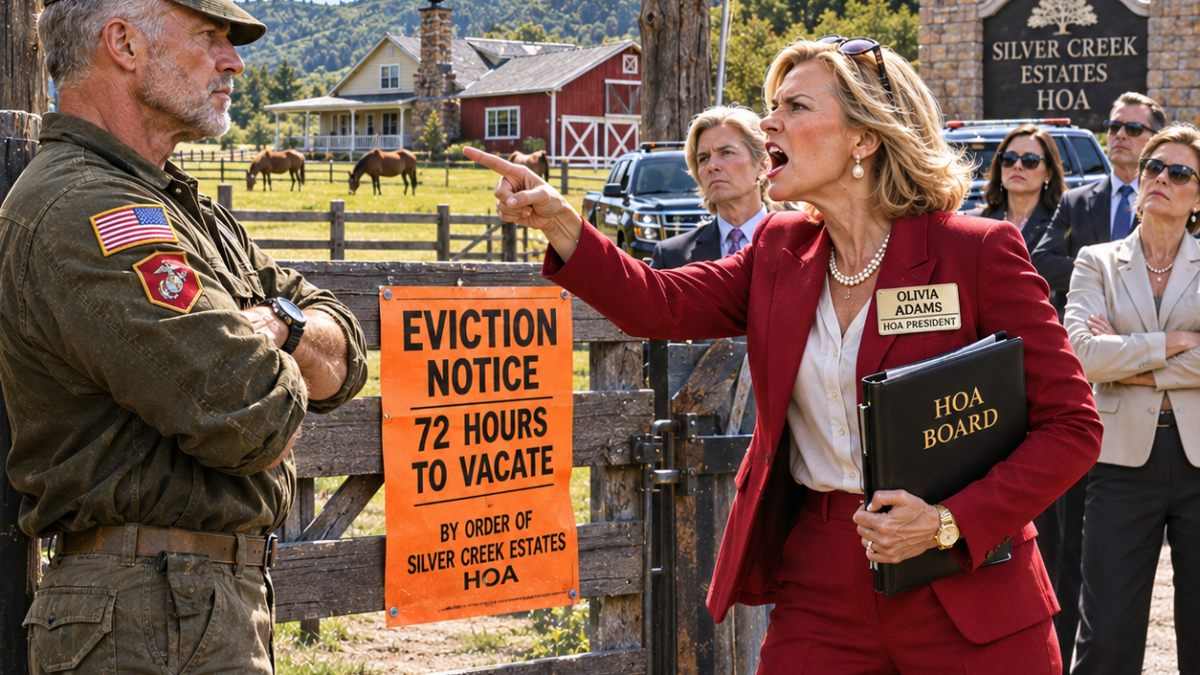
The first time my basement flooded, I blamed the storm, but at 1:47 in the morning my security cameras recorded two HOA contractors carving a fresh trench behind my fence and turning runoff from the common field into a narrow channel aimed straight at the foundation of the house I had spent twenty years protecting.
By sunrise, three inches of cold brown water covered my home office, gym equipment, old photographs, and boxes I could never replace, while HOA president Karen calmly told me that “soil shifts” and suggested the problem was probably my aging foundation.
I might have believed her if the rain that morning had not shown me, in real time, exactly where every gallon was being sent—and if one neighbor had not quietly admitted that the HOA had done something disturbingly similar before.
I knew something was wrong before I reached the bottom stair.
The sound gave it away.
Slosh.
My boot came down into cold water and I froze.
For one stupid second, I hoped a pipe had burst. A pipe would have been simple. Shut off the valve, call a plumber, dry the room, complain about the bill.
Then I switched on the basement lights.
Water covered almost the entire floor.
My treadmill sat half submerged. Papers from my home office floated beneath the desk. A cardboard box of old family photographs had already begun soaking through along the bottom.
And the smell—mud, wet insulation, damp wood—told me this had not happened five minutes earlier.
I grabbed towels, a wet vacuum, fans, anything I could find.
Then I checked the exterior cameras.
At 1:47 a.m., an HOA maintenance truck appeared behind my property.
Two men got out.
One carried a shovel.
The other moved orange cones.
For the next twenty minutes, they cut a trench through the common slope behind my fence.
Not away from my property.
Toward it.
I watched the footage twice.
Then a third time.
By dawn, I was outside in boots following the fresh cut.
The ground behind my house had always sloped gently toward a community drainage swale. I knew that because I had lived there for two decades and spent years maintaining my own grading and waterproofing.
Now there was a raised ridge of fresh soil where water normally spread out.
Beside it, someone had carved a narrow channel.
It ended near my foundation.
“You’re up early.”
I turned.
My neighbor Mark stood at the fence with a coffee mug. Retired firefighter. Good man. Not someone prone to gossip.
“You see anyone back here last night?”
He frowned.
“HOA truck. Around midnight.”
“You saw them digging?”
“Yeah. I figured emergency drainage work.”
“They tell you anything?”
“No.”
Mark stepped closer and studied the trench.
“That’s new.”
“My basement has three inches of water.”
His expression changed.
Then he said something I didn’t expect.
“They regraded the community field a few years ago and flooded the townhomes.”
I stared at him.
“What happened?”
“HOA said it was weather.”
“Was it?”
“No.”
Before I could ask more, rain began tapping against my jacket.
Softly at first.
Then harder.
Mark went home.
I stayed.
Water collected along the common field.
For a minute, nothing dramatic happened.
Then the runoff hit the new ridge.
It turned.
Entered the trench.
Accelerated.
And came straight toward my house.
I took out my phone and filmed the entire path.
By the time I reached the HOA office, my jeans were wet below the knees and my temper had burned down into something quieter.
Karen was behind her desk.
I put my phone on the table.
“You redirected the drainage into my property.”
She barely looked at the screen.
“We made temporary adjustments to community landscaping.”
“My basement flooded.”
“Basements flood.”
“Not mine.”
“Properties age.”
“My security cameras recorded your contractors.”
That got her attention.
Only for half a second.
Then the smile came back.
“You seem upset.”
“I am.”
“Then file a complaint.”
“I’m filing a claim.”
Her fingers stopped tapping.
“A claim against the HOA?”
“Yes.”
“You would need evidence.”
I picked up my phone.
“I have evidence.”
For the first time, the smile vanished.
I went home through heavier rain.
The trench had become a running stream.
Water struck the soil beside my basement wall hard enough to carry pebbles with it.
Then my phone buzzed.
Alicia, another neighbor.
Her message read:
**DID THEY CHANGE THE DRAINAGE? MY BACKYARD IS FILLING UP.**
I looked from her text to the water rushing toward my house and finally understood that whatever Karen had authorized was no temporary mistake.
It was affecting more than one property.
And if she planned to blame our foundations for what her contractors had done in the dark, I needed someone whose opinion she could not dismiss.
PART 2
The second storm hit before I could find that person.
Not some once-in-a-century downpour.
Not a hurricane.
Just ordinary, miserable, steady rain.
That made it worse.
If I’d been standing in my basement during a historic flood, Karen could have pointed at the weather and called it an act of God.
Instead, I watched a normal storm turn into a man-made disaster.
By ten that morning, water was moving across the basement floor in thin brown sheets.
The first flood had left about three inches in the lowest section.
This one kept feeding.
My sump pump ran constantly.
The motor sounded like it was begging for mercy.
I moved what I could upstairs.
Electronics.
Documents.
Tools.
A pair of speakers I’d owned since the nineties.
Then I reached the half-submerged cardboard box beneath an old workbench.
The bottom collapsed when I lifted it.
Photographs slid into the water.
“Damn it.”
I dropped to my knees.
One picture showed my father standing beside an irrigation ditch on the farm where I grew up.
He had one boot on a shovel and that same irritated expression he wore whenever somebody tried to explain water to him without understanding gravity.
Another showed my mother sitting on the hood of his truck.
Another was my parents’ twenty-fifth anniversary.
My father’s funeral program was in the box too.
Water turned the edges soft in my hands.
That was the moment the problem stopped feeling like property damage.
A treadmill could be replaced.
Drywall could be replaced.
Carpet.
Furniture.
Even a computer.
But you cannot order another photograph of your father from forty-three years ago.
I laid each picture across the kitchen table and aimed a fan at them.
Then I went back downstairs with a ruler.
Three and one-quarter inches.
Photograph.
Video.
Timestamp.
Waterline.
Foundation wall.
Photograph.
Sump discharge.
Video.
Outside trench.
Video.
I documented until anger became procedure.
That was something my father had taught me.
When something fails on a farm, standing there furious at it doesn’t fix anything.
Find the source.
Understand the flow.
Then change what matters.
At noon, I called the HOA emergency number.
A recording told me to call 911 for life-threatening emergencies and email the office for everything else.
Estimated response time:
Three to five business days.
I stared at the phone.
Then laughed.
My basement was becoming a pond and the HOA wanted me to submit a ticket.
An hour later, somebody knocked.
A large man in a reflective vest stood on the porch.
The logo on his chest said **HANDYMAN SERVICES**, though it looked like somebody had printed it on an inkjet machine and ironed it on before breakfast.
“You the water guy?”
“I’m the homeowner.”
“HOA sent me.”
“What company?”
He pointed at his shirt.
That did not answer the question.
“You licensed for drainage?”
He frowned.
“Licensed?”
“Civil drainage. Structural inspection. Water intrusion.”
“They told me to look.”
I should have turned him away.
Instead, I let him inside because I wanted to know exactly what Karen was trying to create on paper.
He walked halfway down the basement steps.
Stopped.
Sniffed.
“Yeah.”
I waited.
“Yeah what?”
“Water.”
“I know it’s water.”
He nodded thoughtfully as if we had made progress.
He crouched near the bottom stair and touched the puddle with one finger.
“Mhm.”
I stared at him.
“Are you testing something?”
“No.”
“Then why did you touch it?”
He wiped his hand on his vest.
“Just checking.”
“For what?”
“Wetness.”
I actually had to look away.
“Would you like to see the trench outside?”
“Not really.”
“The water is coming from outside.”
“Probably foundation.”
“You haven’t inspected the foundation.”
“Old houses leak.”
“This basement hasn’t flooded in twenty years.”
“First time for everything.”
He started back upstairs.
“Wait.”
He turned.
“You aren’t taking moisture readings?”
“No.”
“Checking exterior grading?”
“No.”
“Photographs?”
“No.”
“Measurements?”
“No.”
“Then what exactly are you reporting?”
He shrugged.
“Looks like foundation intrusion.”
“Based on what?”
“Water’s inside.”
He left.
Five minutes later, Karen emailed me.
**Our contractor has inspected the reported flooding. Preliminary findings indicate the issue likely results from aging foundation conditions and insufficient private-property maintenance. The association cannot accept responsibility for individual structural deficiencies.**
I read it three times.
Then I created a new folder on my computer.
**HOA WATERGATE.**
Her email went inside.
So did the security footage.
Rainfall data.
Pictures.
Mark’s message confirming the midnight work.
Alicia’s texts.
Every photograph.
Every timestamp.
I replied to Karen with one sentence.
**Your contractor did not inspect the exterior drainage, grading, or foundation. Please preserve all records, communications, work orders, invoices, and contractor instructions related to drainage work performed behind my property.**
Her answer came seven minutes later.
**Please refrain from accusatory or threatening communications.**
I wasn’t threatening anybody.
I was learning.
There is a moment in almost every dispute when you realize conversation has stopped being useful.
I had reached it.
Alicia called that afternoon.
“You need to see my yard.”
I pulled on boots and walked over.
Her backyard looked like someone had laid a shallow brown lake across the grass.
Water stood around the base of her shed.
Her husband was using a push broom to move water away from the patio.
“This never happens,” she said.
“How long have you lived here?”
“Twelve years.”
“Flooded before?”
“Never.”
I walked toward the rear boundary.
The common field sat beyond her fence.
The HOA grading work had created a new ridge there too.
Not as dramatic as mine.
But enough.
Water that once spread toward the old drainage swale now pooled before splitting in two directions.
One branch headed toward my lot.
Another toward Alicia’s.
A third neighbor, Greg, came through the side gate.
“You guys getting water too?”
“Yes.”
“My shed’s wet.”
I looked at him.
“Did anyone notify you about drainage work?”
“No.”
Alicia folded her arms.
“Karen sent an email about mailbox paint.”
Greg laughed without humor.
“Priorities.”
Mark joined us ten minutes later.
He pointed across the common field.
“They did the same thing near Building C years ago.”
“Who authorized it then?” I asked.
He shook his head.
“Different president. Same management philosophy. Fix the common area cheap, let homeowners fight about damage afterward.”
That stayed with me.
Maybe Karen hadn’t woken up and decided to flood my basement personally.
Maybe what she’d done was worse in a quieter way.
The community field had erosion problems.
Fixing those properly would cost money.
So somebody found the cheapest immediate solution.
Move the water.
Anywhere but HOA ground.
My property became the convenient downhill answer.
I went home and called every engineering firm within an hour’s drive.
I did not want a restoration company.
I needed someone who understood water.
A licensed civil engineer.
Hydrology.
Drainage.
Grading.
Someone whose report would survive a lawyer reading it.
Most firms were booked.
One receptionist told me three weeks.
Another offered a basic inspection but no engineering opinion.
Then I found Daniel Pierce.
Twenty years as a civil engineer and hydrology consultant.
Residential flooding.
Stormwater systems.
Expert testimony.
His receptionist said:
“He had a cancellation this afternoon.”
“I’ll take it.”
“He hasn’t quoted the inspection fee yet.”
“I’ll take it.”
“You don’t know the price.”
“I know the price of another basement.”
She paused.
“Fair enough.”
Daniel arrived at three twenty.
Mid-fifties.
Waterproof field jacket.
Laser level.
Soil probe.
Survey rod.
Tablet.
Moisture meter.
The difference between him and Karen’s handyman was obvious before he spoke.
He looked at the house first.
Then the land.
Then the sky.
“Where does the water normally go?”
I pointed.
“Common swale that direction.”
“Before this week?”
“For twenty years.”
“And the new channel?”
“Behind the fence.”
“Show me.”
We walked the property.
Daniel stopped before reaching the trench.
“That’s recent.”
“How can you tell?”
“Exposed soil. Root disturbance. Moisture variation. No established vegetation.”
He crouched.
Ran his fingers across a cut.
“Square shovel.”
“You can tell?”
“Mostly.”
He pointed at the sidewall.
“See the straight vertical cuts? This wasn’t erosion.”
We followed the trench uphill.
He used the laser level repeatedly.
Entered numbers into the tablet.
Measured the raised soil berm.
Walked twenty feet.
Measured again.
Then stopped.
His expression changed.
“What?”
He didn’t answer immediately.
He walked back to the common field.
Measured another point.
Then returned.
“Your lot is not the drainage problem.”
“I know.”
“No, I mean topographically.”
He turned the tablet toward me.
“Your rear grade was built to shed ordinary surface water away from the structure. The common land sits lower in the intended flow direction.”
“Then why is water reaching me?”
“Because somebody changed the pathway.”
He pointed toward the fresh berm.
“They pushed soil here.”
“How much?”
“Not much. That’s the problem. You don’t need much.”
He moved his hand through the air.
“Imagine water spreading across this entire section during a storm. Before, it dissipates along the swale. Raise this edge six inches, carve this channel, and suddenly you’re concentrating flow.”
“Into me.”
“Into the lowest available route they created.”
We reached my foundation.
Daniel checked moisture.
Tested the wall.
Inspected the waterproofing.
Looked at the sump.
Then went inside.
He spent almost an hour in the basement.
No finger in the puddle.
Actual measurements.
When he finished, we stood near the damaged office.
“What do you think?”
“Your foundation is not the cause.”
I felt something unclench.
Not because I doubted myself.
Because hearing a professional say it matters when somebody has spent two days telling you you’re imagining reality.
Daniel continued.
“I don’t see evidence of long-term structural seepage consistent with a failing foundation.”
“Waterproofing?”
“Actually pretty good.”
“I did it years ago.”
“You did this?”
“Most of it.”
“Nice work.”
“My father believed water only respects gravity and good planning.”
“Smart man.”
“He’d be furious right now.”
Daniel looked at the soaked photographs drying upstairs.
“I imagine.”
I asked:
“Can you prove the trench caused this?”
“I can establish causation to a reasonable engineering degree if the data supports it.”
“English?”
He smiled.
“I need to test it.”
He went back outside with a fluorescent tracing dye approved for drainage testing.
We introduced a small controlled amount into the channel.
Then monitored.
The colored water followed the exact route.
Down the trench.
Toward my foundation.
Into the saturated area where water pressure was entering.
Daniel photographed everything.
When we returned inside, he pulled off his wet jacket.
“I’m comfortable saying the artificial grading is the primary cause of your flooding.”
“Put that in writing.”
“I will.”
“Can you prepare a full report?”
“Yes.”
“Site diagrams?”
“Yes.”
“Cost implications?”
“I can recommend remediation. Contractors price it.”
“How bad?”
He looked around.
“Inside or outside?”
“Both.”
“Inside, you’re looking at water mitigation, insulation removal, drywall, possibly flooring, electrical inspection, equipment loss, mold prevention.”
“And outside?”
“Regrade the common area correctly. Remove the artificial berm. Restore the proper swale. Install engineered drainage. Stabilize soil. Depending on design, likely a French drain or catch-basin system, possibly multiple collection points.”
I rubbed my forehead.
“Ballpark.”
“Don’t hold me to it.”
“I won’t.”
“With basement restoration and proper exterior correction?”
“Yes.”
“Could approach ninety thousand.”
I stared.
“Ninety?”
“Could be less. Could be more.”
“For a trench two guys dug in twenty minutes.”
“That is often how expensive mistakes begin.”
I sat at my kitchen table after he left and looked at my father’s damaged photograph.
He would have enjoyed Daniel.
Not the flood.
The engineering.
Dad loved proving water with stakes, string, and grade.
When I was twelve, he’d made me redo a drainage ditch because I had been lazy with the slope.
I complained.
He handed me the shovel back.
“Water doesn’t care how tired you are.”
I hated that sentence for years.
Now I understood it.
Karen had tried to solve water with authority.
The water didn’t care who chaired the board.
Daniel’s preliminary report arrived the next afternoon.
Thirty-two pages.
Photographs.
Elevation data.
Flow diagrams.
Soil observations.
Moisture readings.
Weather records.
His conclusion was blunt:
The recent unauthorized grading on HOA-controlled common land had altered established stormwater flow and concentrated runoff toward adjacent private properties, materially causing the flooding at my residence.
He recommended immediate temporary diversion until permanent work could be engineered.
I forwarded the report to an attorney.
Not Karen.
Not the HOA office.
My attorney.
He called thirty minutes later.
“You have video of the work?”
“Yes.”
“Original files?”
“Yes.”
“Backed up?”
“Three places.”
“Witness?”
“Mark saw the truck.”
“HOA email blaming your foundation?”
“Yes.”
“Did you notify them before the second storm?”
“Yes.”
“Did they correct the trench?”
“No.”
He went quiet.
Then:
“This is strong.”
“How strong?”
“Strong enough that you stop communicating emotionally and let documents do the work.”
“I haven’t communicated emotionally.”
“You named your evidence folder HOA Watergate.”
“That is private.”
He laughed.
“Fair.”
“What do we do?”
“Preservation notice first. Then demand temporary mitigation immediately. Then damages once we know the full scope.”
“The HOA meeting is tomorrow.”
“Are you going?”
“Yes.”
“Don’t threaten.”
“I know.”
“Don’t exaggerate.”
“I won’t.”
“Don’t call anybody criminals.”
“I wasn’t planning to.”
“Present the facts.”
“That is exactly what I plan to do.”
The meeting room was full before six.
Usually HOA meetings attracted the same dozen people.
That night there were more than forty.
Alicia.
Mark.
Greg.
People from the townhomes Mark had mentioned.
A woman I’d never met who said water had reached her children’s play area.
Karen stood at the front in a bright blazer holding her clipboard.
She looked completely composed.
That bothered me more than anger would have.
“Welcome,” she said. “We’ll begin with landscaping updates.”
I raised my hand.
She saw it.
Ignored me.
“The board has approved seasonal mulch replacement—”
I kept my hand up.
Alicia raised hers.
Then Mark.
Then Greg.
Within seconds, half the room had hands raised.
Karen stopped.
“Yes?”
“I need to present something,” I said.
“This is not the appropriate—”
“It concerns the drainage work behind our properties.”
A murmur moved through the room.
Karen’s lips tightened.
“As previously explained, there were temporary landscaping adjustments.”
“Good.”
I stood.
“Then everybody should see them.”
I connected my laptop to the projector.
Karen came around the table.
“What are you doing?”
“Showing the board what it approved.”
“You did not request presentation time.”
“I requested it by email.”
“I denied it.”
“Then I’ll take public comment.”
“You have three minutes.”
“I’ll be concise.”
The first image appeared.
Security footage.
Timestamp:
**1:47 A.M.**
HOA truck.
Two contractors.
Shovels.
Orange cones.
Someone behind me whispered:
“Why were they doing that at two in the morning?”
I changed slides.
Before-and-after grading photographs.
Then runoff video.
Rain hit the common field.
Water struck the raised berm.
Turned.
Entered the trench.
Raced toward my home.
Then came the basement.
Three inches of water.
Floating papers.
Wet insulation.
Ruined flooring.
My father’s photographs spread across the kitchen table.
The room went silent.
Karen spoke.
“This proves water entered a basement. It does not prove responsibility.”
I clicked again.
Daniel Pierce.
Licensed civil engineer and hydrologist.
Credentials.
Site plan.
Elevation map.
Flow arrows.
Alicia leaned forward.
“That’s my yard too.”
“Yes.”
I displayed the model.
Several affected properties appeared in yellow.
Mine was red.
Karen interrupted.
“This is one consultant’s interpretation.”
I looked at her.
“Would you prefer his measurements?”
She didn’t answer.
I opened Daniel’s conclusion.
Karen said:
“You are consuming meeting time.”
Mark stood.
“He’s showing us why our homes flooded.”
“Sit down.”
“No.”
The word came from Mark so calmly that Karen seemed almost offended.
She turned back to me.
“Continue.”
I played the dye test.
Fluorescent tracing solution entered the artificial trench.
Followed the channel.
Reached the saturated foundation zone.
Then Daniel’s recorded summary played.
“The observed stormwater concentration is consistent with recent grading modifications on the common parcel. The homeowner’s foundation and existing waterproofing do not explain the sudden onset or distribution of flooding.”
When the video ended, nobody spoke for several seconds.
Then a man in the back asked:
“Who authorized the trench?”
Karen reached for her clipboard.
“This was maintenance.”
“Who authorized it?”
“We don’t discuss internal contractor decisions in open session.”
Alicia stood.
“You changed drainage behind my house without telling me.”
“The work was temporary.”
“My yard is still flooded.”
“We are evaluating—”
Greg interrupted.
“My shed has water damage.”
Another woman:
“My kids’ play area flooded.”
Karen raised her voice.
“Everyone needs to calm down.”
That phrase never helps.
The room erupted.
“Why weren’t we notified?”
“How much did this cost?”
“Were there permits?”
“Who is the contractor?”
“Why was it done at night?”
Karen banged the table.
“Order!”
Nobody cared.
I raised my voice.
“Everybody.”
The room slowly quieted.
I looked at Karen.
“You said in your office that drainage approval was HOA business.”
Her face changed.
“I said landscape infrastructure—”
I played the recording.
Her own voice filled the room.
**Drainage approval is HOA business, not yours.**
Then:
**If you believe there’s been an issue, you may file a complaint.**
I stopped the audio.
My attorney had already confirmed the recording was lawful where we lived because I was a participant in the conversation.
Karen stared at me.
“That’s misleading.”
“How?”
“You removed context.”
“I have the complete recording.”
Someone laughed.
Not because it was funny.
Because Karen had run out of room.
I said:
“Daniel’s preliminary estimate for full correction and restoration approaches ninety thousand dollars.”
A collective gasp.
Karen’s head snapped toward me.
“That is absurd.”
“Then hire your own licensed engineer.”
“We will.”
“Please do.”
“You’re trying to bankrupt the association.”
“No.”
I pointed at the flooded basement photograph.
“I was trying to keep my home dry.”
Her voice sharpened.
“The community field was experiencing significant erosion.”
There.
The room changed.
I lowered my voice.
“So you did redirect it.”
She realized what she’d said.
“That is not—”
“You had an erosion problem.”
“We had maintenance concerns.”
“You moved the water.”
“Temporarily.”
Alicia shouted:
“Into us!”
Karen slammed her clipboard down.
“You people have no understanding of budget constraints!”
Nobody needed me to say anything after that.
Karen had admitted the decision.
Not the damage.
Not liability.
But the decision.
The room exploded again.
One person demanded her resignation.
Another demanded a board vote.
Mark demanded the contractor records.
Karen grabbed her bag.
“This meeting is adjourned.”
The vice president stood.
“You can’t adjourn unilaterally.”
She stared at him.
“I am the president.”
“And there are four other board members.”
That was the first visible fracture.
Karen looked around the table.
Nobody defended her.
She left.
The door slammed hard enough to shake the glass.
For a moment everybody stared at it.
Then the vice president looked at me.
“Can we have a copy of the report?”
“Yes.”
“Full video?”
“Through counsel.”
He swallowed.
“Understood.”
The meeting continued without Karen.
It wasn’t orderly.
People were angry.
But anger finally had direction.
The vice president promised immediate temporary mitigation.
I said:
“Don’t promise it. Get somebody outside tonight.”
To his credit, he did.
A licensed emergency contractor arrived before midnight and installed temporary barriers to stop additional runoff.
That should have happened the first morning.
The next day, Karen came to my house.
Two board members followed several feet behind her.
She knocked like she was serving a warrant.
I opened the door but didn’t invite anyone inside.
“This is harassment,” she said.
“Good morning to you too.”
“You publicly humiliated me.”
“I presented an engineering report.”
“You manipulated residents.”
“The trench did most of the work.”
One board member looked down, hiding a smile.
Karen noticed.
“Do you find this funny?”
“No,” he said quickly.
She turned back to me.
“You recorded me without authorization.”
“My attorney has already reviewed that issue.”
Her confidence faltered.
“You accused the HOA of illegal activity.”
“I said the grading was unauthorized. Daniel’s report says the same.”
“You don’t know what permits existed.”
“Then show them.”
She didn’t.
Instead she pointed at me.
“You will retract your statements.”
“No.”
“You will remove the footage.”
“No.”
“You will stop threatening litigation.”
“No.”
Her voice rose.
“The HOA has authority to discipline homeowners who damage community reputation.”
“My property isn’t subject to your disciplinary bylaws.”
“We’ll see about that.”
“My attorney already has.”
Her face tightened.
“You are turning everyone against me.”
“I didn’t dig the trench.”
“That trench protected the community field.”
The board members both looked at her.
I said:
“Say that again.”
She realized.
Too late.
“You authorized it to protect the field.”
“I didn’t say I authorized anything.”
“You just said the trench protected it.”
“That was its purpose.”
“Who decided my basement was an acceptable alternative?”
She stared at me.
For the first time since the whole thing began, there was something other than arrogance in her face.
Fear.
Not of me.
Of the answer.
She lowered her voice.
“You have no idea what it costs to manage a community.”
“Then tell me.”
“People complain about dues.”
“I know.”
“They complain when maintenance gets deferred.”
“Yes.”
“They complain when assessments go up.”
“Probably.”
“Everyone wants perfect drainage until you tell them what it costs.”
I looked at her.
“That’s your defense?”
She exhaled.
“The field was eroding. A permanent project required engineering, permitting, excavation. We needed time.”
“So you moved the runoff.”
“For one storm.”
“It rained twice.”
“The contractor was supposed to restore it.”
“When?”
She said nothing.
One board member finally spoke.
“Karen.”
She turned.
“What?”
“Was the board told?”
Her face hardened.
“This isn’t the place.”
“Were we told?”
“You approved maintenance authority.”
“Not this.”
The second board member said:
“I never knew about a trench.”
Karen’s eyes flashed.
“You people are unbelievable.”
She turned back to me.
“You’ve turned a maintenance mistake into a crusade.”
“No.”
I pointed toward my basement window.
“Water did that.”
She stepped close enough that I could smell her perfume.
“You’re going to regret crossing this board.”
I took out my phone.
Raised it.
“I’m documenting that statement.”
Her eyes widened.
Then she turned and marched away.
The two board members did not immediately follow.
One stayed.
“I didn’t know.”
I believed him.
That didn’t excuse the board.
But I believed him.
“What happens now?” he asked.
“My lawyer sends your lawyer a demand.”
“How much?”
“I don’t know yet.”
He looked toward the common field.
“We don’t have ninety thousand sitting around.”
“That isn’t really my problem.”
He winced.
“I know.”
My attorney’s demand letter went out two days later.
Total preliminary demand:
**$89,750.**
It included professional engineering expenses, basement mitigation and restoration estimates, exterior drainage correction, proper regrading, waterproofing work, contaminated material removal, and related damages.
It did not include fantasy numbers.
No emotional distress jackpot.
No punitive amount designed to make social media happy.
Just documented loss and necessary repair.
The HOA requested an emergency meeting.
Karen was not invited.
My attorney and I sat across from the remaining board members and their association counsel.
The vice president opened.
“We recognize mistakes were made.”
My attorney asked:
“Which mistakes?”
The vice president shifted.
“The temporary drainage adjustment.”
“Who approved it?”
Silence.
Their lawyer said:
“We’re not here to assign individual blame.”
My attorney nodded.
“Then we’re here to discuss association responsibility.”
“Yes.”
They offered a cheap repair first.
Regrade the trench.
Add gravel.
I shook my head.
Their lawyer proposed sealing my basement wall.
Daniel had already explained why that was inadequate.
My attorney slid the engineering report across the table.
“You cannot waterproof your way out of concentrated stormwater. Correct the source.”
The treasurer looked miserable.
“What exactly are you demanding?”
My attorney read it.
“Engineered regrading of the HOA common parcel.”
“Proper stormwater conveyance.”
“Permitted drainage infrastructure.”
“Soil stabilization.”
“Restoration of affected private areas.”
“Foundation waterproofing where damaged.”
“Basement restoration.”
“Professional fees.”
The treasurer whispered:
“Almost ninety thousand dollars.”
I said:
“You spent a few hundred dollars creating the problem.”
Nobody answered.
The vice president finally asked:
“If we agree to repairs, will you waive litigation?”
My attorney answered.
“If the final agreement covers the damage, work is completed correctly, affected homeowners are addressed, and future liability is handled appropriately, settlement is possible.”
I added:
“And Karen cannot supervise any part of the work.”
The board members exchanged looks.
The vice president said:
“She is currently suspended from operational authority.”
“Currently?”
“We have procedures.”
“Use them.”
Their attorney cleared his throat.
“Board governance isn’t part of your property claim.”
“Fair.”
I leaned back.
“Then consider that free advice.”
The meeting ended without signatures.
But the board had moved from denial to numbers.
That was progress.
For the first time in days, I slept six straight hours.
Then Karen hand-delivered a three-page letter to my mailbox.
Not from the HOA attorney.
Not from the board.
From Karen.
She claimed my landscaping caused the flooding.
One sentence suggested runoff had been “redirected by existing elevations on the homeowner parcel.”
Daniel read it.
Then called me.
“She is claiming your slope pulled the water uphill?”
“That seems to be the theory.”
There was silence.
Then Daniel laughed.
A licensed engineer laughing at your opponent’s hydrology is reassuring.
My attorney was even happier.
“Do not answer.”
“Why?”
“Because the suspended president of an association just created a written document contradicting the association’s own ongoing negotiations.”
“Helpful?”
“Extremely.”
Two days later, the HOA held another emergency community meeting.
Karen was officially suspended pending internal review.
The vice president stood at the microphone.
“We have received the independent engineering report.”
The room quieted.
“It confirms the drainage changes contributed to flooding on multiple adjacent properties.”
That sentence mattered.
No euphemism.
No “weather event.”
No “foundation maintenance.”
Responsibility.
Alicia squeezed my shoulder from the chair beside me.
The vice president continued.
“The association will retain a licensed engineering firm to design permanent corrective work.”
Applause began.
He raised a hand.
“We are also reviewing compensation for documented homeowner damage.”
A woman shouted:
“Who approved the trench?”
The vice president looked down.
“That matter is under internal review.”
Everyone knew.
Then the rear door opened.
Karen walked in.
Not calmly.
She had papers in one hand and fury in her face.
“I will not be silenced.”
The vice president closed his eyes.
Someone behind me muttered:
“Oh, Lord.”
Karen marched toward the front.
“This board does not have authority to suspend an elected president without proper cause.”
The association attorney stood.
“Karen, please sit down.”
“You represent the HOA.”
“Yes.”
“Then do your job.”
“I am.”
She turned toward the residents.
“This entire situation is being manipulated by one disgruntled property owner.”
People started shouting.
Karen raised her voice.
“I acted to protect community property from serious erosion.”
I stood.
There was no need to yell.
“By sending the water where?”
She stared at me.
“You caused your own flooding.”
“How?”
“Your grading.”
“Daniel measured it.”
“Your waterproofing.”
“He inspected it.”
“Your foundation.”
“He inspected that too.”
“You hired him.”
“Then hire your own engineer.”
The vice president said:
“We did.”
Karen turned sharply.
“What?”
That was new to me too.
He looked at her.
“The association engineer completed a review yesterday.”
“And?”
He hesitated.
The attorney slid a document toward him.
The vice president read:
“The permanent grading changes and temporary trench materially altered stormwater flow.”
The room went silent.
Two independent engineers.
Same conclusion.
Karen’s mouth opened.
Closed.
She looked toward the board.
“You had no right.”
“To investigate?”
“To go around me!”
The vice president stared at her.
“You are suspended.”
“I wrote half these procedures.”
“That doesn’t exempt you from them.”
Karen slammed her hand onto the podium.
“I saved that field.”
A man in the back shouted:
“You flooded our houses!”
Karen pointed at him.
“You have no idea what proper maintenance costs.”
Another resident:
“Then raise the issue at a meeting!”
“We would never have approved ninety thousand dollars!”
Karen shouted:
“Exactly!”
The room froze.
I think even Karen heard it.
Her logic.
The permanent repair cost too much.
So she approved a cheap temporary diversion.
In darkness.
Without notification.
Without permits.
Without board review.
Then blamed homeowners after the damage.
The vice president asked quietly:
“Did you authorize the contractor to perform the nighttime trench?”
Karen looked around.
No allies.
No friendly faces.
Even the board members who had defended her weeks earlier stared at her differently now.
She said:
“I authorized emergency maintenance.”
“Did you authorize that trench?”
“I authorized whatever was necessary.”
That was as close to an admission as anyone needed.
The HOA attorney stepped toward her.
“Karen, stop speaking.”
She snapped:
“Don’t tell me what to do.”
He lowered his voice.
“I am trying to protect you.”
“I don’t need protection.”
Nobody laughed.
That was almost sad.
Karen grabbed her papers.
“You’re all spineless.”
She pointed at me.
“And you’re enjoying this.”
I thought about my father’s ruined photographs.
The mildew.
Two nights without sleep.
My treadmill.
Alicia’s flooded yard.
The man dipping one finger into my basement and calling it a foundation problem.
“I’ll enjoy it when the water goes where it’s supposed to.”
She left.
No dramatic applause.
No cheering.
Just silence.
The vice president waited.
Then said:
“The board will proceed with removal review.”
Three days later, the association formally accepted the remediation settlement.
The figure rounded to roughly ninety thousand dollars by the time final engineering and restoration contracts were signed.
Insurance covered part of the eligible property damage.
The HOA’s reserve account covered substantial common-area remediation.
Additional costs came from budget reallocation.
There was no magical free money.
Residents ultimately paid indirectly because an HOA’s money is residents’ money.
That bothered me.
Karen made the decision.
But innocent homeowners would feel some of the cost.
I asked my attorney:
“Can I make them charge her personally?”
“Not through this settlement.”
“Even if she acted without authorization?”
“That becomes a separate governance, insurance, or legal issue.”
I hated that answer.
But law is full of answers you hate.
The work began Monday.
Real contractors.
Licensed.
Permitted.
Survey stakes.
Engineering drawings.
Equipment that cost more than Karen’s original entire “solution.”
The first thing they did was erase the trench.
An excavator peeled back the improvised berm.
The common field was regraded according to Daniel’s recommendations and the association engineer’s final plan.
Crews installed collection basins in strategic locations.
Perforated drainage lines.
Gravel beds.
Filter fabric.
Stabilization grids.
Controlled discharge toward the proper stormwater system.
Along my property, they built an engineered French drain designed to intercept subsurface flow before it could reach the foundation.
My basement wall was excavated where necessary.
Cleaned.
Inspected.
Waterproofed.
Protected with drainage membrane.
Damaged insulation came out.
Wet drywall came out.
Electrical components were checked.
The old flooring was removed.
Dehumidifiers the size of washing machines ran for days.
It was loud.
Muddy.
Expensive.
And beautiful.
Not aesthetically.
Functionally.
There is something deeply satisfying about watching people who understand a problem solve it correctly.
One worker named Ray stood beside the open trench studying the plans.
“This is one serious residential drainage package.”
“So I hear.”
“You expecting Noah?”
“HOA.”
He laughed.
“That bad?”
“They’re paying.”
He whistled.
“Now I understand the specifications.”
The vice president and treasurer appeared most mornings.
They never stayed long.
The treasurer looked physically ill whenever invoices arrived.
One afternoon the vice president walked to my porch.
“Crew needs temporary access along the east side.”
“They’ve got it.”
“Thank you.”
I nodded.
He lingered.
“What?”
“The board appreciates your cooperation.”
I looked at the excavator rebuilding a slope his organization had destroyed.
“This isn’t cooperation.”
He frowned.
“What would you call it?”
“Accountability.”
He nodded slowly.
“Fair.”
Alicia came over later.
“You know people are talking about removing the rest of the board.”
“Why?”
“They let Karen run everything.”
“Did they know about the trench?”
“Maybe not.”
“They still had oversight responsibilities.”
“Exactly.”
“What do people want?”
“Special election.”
I looked toward the treasurer.
He was standing by a drainage basin with his head in his hands.
“Be careful.”
Alicia laughed.
“You’re defending them?”
“No.”
“Sounds like it.”
“I’m saying replacing bad oversight with angry oversight doesn’t automatically improve anything.”
She considered that.
“You should run.”
“No.”
“Why not?”
“My patience with meeting minutes is limited.”
“You’d win.”
“That is not a qualification.”
She smiled.
“That’s exactly why you’d win.”
“No.”
I meant it.
I had fought the HOA because I wanted them out of my basement.
I did not want their gavel.
Daniel returned midway through construction.
He checked elevations.
Inspected pipe bedding.
Reviewed outlet positions.
Watched a controlled flow test.
Then nodded.
“They’re doing it right.”
“No shortcuts?”
“Not that I see.”
“Good.”
He smiled.
“You scared them.”
“Engineering scared them.”
“Engineering plus an attorney.”
“Fair.”
He walked toward the new French drain.
“Want to know something?”
“What?”
“If they’d hired somebody competent before touching the grade, the proper original fix would’ve cost significantly less than all this.”
“How much?”
“Depends on design.”
“Roughly.”
“Maybe thirty to forty thousand for the common-area problem before damage.”
I stared at the crew.
“So saving thirty thousand cost them ninety.”
“Plus county exposure.”
“County?”
Daniel looked at me.
“I filed a required professional report.”
“For what?”
“Unpermitted grading creating potential stormwater and structural risk.”
I hadn’t known.
“When?”
“After my inspection.”
“You didn’t tell me.”
“Didn’t need your permission.”
He smiled.
“That line sounds familiar.”
I laughed.
“What happens?”
“County review.”
“Could they fine them?”
“Possibly.”
“Force more work?”
“Possibly.”
“Karen?”
“That’s not my department.”
Daniel packed his equipment.
“Enjoy the drainage.”
“That is a strange sentence.”
“Trust me. After this case, you’ll enjoy it.”
He was right.
Two mornings after final grading, county inspectors arrived.
One introduced himself and explained they were reviewing unauthorized stormwater modification on HOA common land.
I gave him copies of my footage.
Daniel’s report.
HOA correspondence.
He already had much of it.
“Other properties affected?”
“Alicia. Greg. Several others.”
“We’ll contact them.”
“What are you looking for?”
“Permits. Contractor authorization. Environmental compliance. Prior complaints.”
“Prior?”
He nodded.
“The engineer’s report references an older flooding event.”
Mark.
The townhomes.
I gave the inspector Mark’s contact information with Mark’s permission.
The county investigation widened.
That was when the board’s remaining confidence disappeared.
The new drainage system was finished after roughly a week of major exterior work and additional interior restoration.
Then came the test.
A storm.
Forecast called for heavy rain overnight.
I stood behind my house at six that evening with an umbrella like an idiot waiting for weather.
Mark joined me.
“You planning to fight the clouds?”
“Testing.”
“Daniel already tested.”
“I want to see it.”
Alicia came through the gate wearing a raincoat.
“Me too.”
Then Greg.
“Why are all of you here?”
He shrugged.
“Neighborhood entertainment.”
Rain started.
We watched water collect.
For twenty minutes, nothing interesting happened.
That was the point.
Water entered the new collection basin.
Moved through the engineered channel.
Exited toward the proper drainage system.
No brown river curved toward my foundation.
No pooling behind Alicia.
No water around Greg’s shed.
I went downstairs.
Dry.
I touched the new wall.
Dry.
The sump sat quiet.
I stood there longer than necessary.
Mark appeared at the top of the stairs.
“Well?”
“Dry.”
He smiled.
“Congratulations.”
It shouldn’t have felt emotional.
It did.
For almost a month, rain had become a threat.
A sound that tightened my shoulders.
That night I lay in bed listening to it strike the roof.
Steady.
Hard.
Normal.
I fell asleep.
The next morning, the basement was still dry.
That was better than winning an argument.
Then the HOA tried one last trick.
A white envelope appeared on my door.
Formal letterhead.
Polite language.
The association “wished to resolve all matters amicably.”
That sounded promising.
Then:
**In consideration of association-funded repairs, homeowner agrees to maintain confidentiality regarding the drainage incident and refrain from public statements that could negatively affect community reputation.**
An NDA.
I laughed so loudly Mark later asked what happened.
My attorney called after I sent him a photograph.
“They’re asking you to sign this after the settlement?”
“Yes.”
“Are the repairs already required under the settlement?”
“Yes.”
“Then you’re receiving no new consideration for silence.”
“My exact thought.”
“What did you do?”
“Wrote ‘Absolutely not’ on it.”
He sighed.
“Please stop writing on legal documents.”
“Sorry.”
“You aren’t.”
“No.”
“Do not sign it.”
“I wasn’t going to.”
“They’re embarrassed.”
“They should try fixing things before flooding people.”
“Radical concept.”
The NDA disappeared.
Then Karen disappeared too.
For about two weeks nobody knew where she’d gone.
Rumors multiplied.
Moved to another state.
Living with a sister.
Staying in a hotel.
Suing the board.
Joining another HOA.
I ignored all of it.
The county did not.
Their audit uncovered additional drainage and maintenance reporting problems.
Some were simple incompetence.
Some records listed work as completed when inspectors could not verify it.
Some contractor documentation was missing.
Prior flooding complaints had been closed without meaningful investigation.
Nothing turned into the giant criminal conspiracy neighbors imagined over backyard conversations.
Reality was more ordinary.
And in some ways more disturbing.
Bad governance.
Loose oversight.
A president allowed to make unilateral decisions.
Board members who stopped asking questions because challenging Karen was exhausting.
Contractors selected for speed instead of qualifications.
People signing reports they had barely read.
That was enough to cause real damage.
The county issued fines and corrective requirements.
The HOA had to review several infrastructure areas.
Insurance demanded new procedures.
Residents demanded something stronger.
A full leadership vote.
The clubhouse overflowed the night of the election.
I stood near the back.
Karen was there.
That surprised everyone.
She walked in quietly.
No bright blazer.
No clipboard.
Dark sweater.
Hair pulled back.
For the first time since I’d known her, she looked less like an HOA president and more like a tired person.
The board attorney sat beside her.
The meeting began.
The vice president explained the county findings.
Engineering costs.
Insurance issues.
Internal review.
Then governance.
A resident made a motion to remove Karen permanently from any board position under the association’s procedures.
Another seconded.
Karen stood.
“I want to speak.”
Murmurs.
The vice president looked at counsel.
Counsel nodded.
“Five minutes.”
Karen walked to the microphone.
Nobody shouted.
That made the room more tense.
She looked across the residents she’d controlled for years.
“I made a decision during an erosion emergency.”
Alicia crossed her arms beside me.
Karen continued.
“The community field was losing soil. We had estimates for a permanent drainage solution that the board could not afford without increasing assessments.”
A man interrupted:
“So you flooded us instead?”
The vice president raised a hand.
“Let her finish.”
Karen gripped the podium.
“I authorized temporary grading.”
She looked toward me.
“I did not intend to flood his basement.”
I believed that.
It didn’t help much.
“I believed the contractor would restore the flow before the next storm.”
I said nothing.
She continued.
“When the flooding occurred, I was advised that admitting responsibility before investigation could expose the association financially.”
My attorney, seated near the aisle, whispered:
“That part is plausible.”
Karen’s voice weakened.
“So I denied it.”
Someone said:
“You lied.”
Karen closed her eyes.
“Yes.”
The room went silent.
That was the first direct admission.
She continued.
“Then I kept denying it because I had already denied it.”
I knew exactly how human that was.
One bad decision.
Then another to protect the first.
Then another.
Until defending your reputation becomes more important than fixing the original damage.
Karen looked at me.
“I should have sent an engineer the first morning.”
“Yes.”
“I should have stopped the drainage immediately.”
“Yes.”
“I should not have threatened you.”
“No.”
She nodded.
“I know.”
Then she looked back at the residents.
“I believed I was protecting the HOA budget.”
Alicia spoke.
“You protected your position.”
Karen’s mouth tightened.
Then relaxed.
“Eventually, yes.”
That was the truest thing I’d heard her say.
The vote happened.
Karen lost her board seat.
So did two members who had repeatedly supported her without proper oversight.
The treasurer survived by a narrow margin after releasing detailed records and accepting new audit requirements.
The vice president chose not to run again.
New leadership was elected.
Sam became president.
The same Sam who had barely spoken at meetings under Karen.
His first statement was short.
“We’re going to be boring.”
People laughed.
He continued.
“I mean that seriously. No secret projects. No surprise enforcement. No midnight contractors. If something costs money, we’ll show you what it costs. If something changes drainage, we’re hiring an engineer before somebody picks up a shovel.”
That received the loudest applause of the night.
Afterward, Karen approached me.
The room noticed.
People went quiet.
She stopped several feet away.
“Can we speak?”
“Here is fine.”
She looked uncomfortable.
“I wanted to say I’m sorry about the photographs.”
That surprised me.
“What photographs?”
“The ones in your basement.”
She had seen them in my presentation.
My father’s picture.
My parents.
The funeral program.
“I didn’t know.”
“You didn’t need to know.”
She looked at me.
“What?”
“You didn’t need to know what was in my basement to know you shouldn’t redirect water into it.”
Her face fell.
Maybe that sounded cruel.
But it was true.
“I understand.”
I softened slightly.
“Most of them survived.”
“I’m glad.”
“They’re warped.”
“I’m sorry.”
I nodded.
She started to leave.
Then turned.
“For whatever it’s worth, I really did think I was protecting the community.”
“I believe you.”
She looked surprised.
“That doesn’t make it okay.”
“I know.”
She walked away.
I never saw her at another HOA meeting.
The new board commissioned a full stormwater assessment of the common property.
That cost money.
Residents complained.
Sam published the estimates.
Residents argued.
The board held a vote.
The project passed.
That’s what should have happened the first time.
Alicia joined the environmental committee.
Mark refused every committee invitation on principle.
Greg became strangely obsessed with catch basins.
I remained gloriously uninvolved.
Until Sam knocked on my door.
“No.”
“I haven’t asked anything.”
“Still no.”
He laughed.
“We’re having a barbecue.”
“That’s acceptable.”
“We want you there.”
“Less acceptable.”
“There’s food.”
“I’ll consider it.”
The barbecue happened on a Saturday with clear weather.
Kids ran around the park.
Dogs chased balls.
A speaker played music at a volume Karen probably would have cited.
Nobody measured anything.
The new board stood around in jeans instead of sitting behind a table.
Sam tapped a spoon against a cup.
I immediately considered leaving.
“Don’t,” Alicia said.
“I know what this is.”
“Stay.”
Sam cleared his throat.
“I want to acknowledge someone.”
I looked at the parking lot.
Too far.
“Someone who had absolutely no interest in becoming part of HOA politics.”
People laughed.
“Still don’t,” I called.
More laughter.
Sam smiled.
“But when our association made a serious mistake, he documented it, hired the right professional, and refused to let us explain it away.”
Applause started.
I raised both hands.
“Please don’t.”
Nobody listened.
Sam continued.
“Because of what happened, the board unanimously adopted new infrastructure rules.”
He read them.
Independent engineering review before major drainage changes.
Permit verification.
Multiple bids.
Board vote for substantial common-area alterations.
Written notice to potentially affected properties.
Transparent contractor credentials.
Mandatory disclosure of emergency work.
Annual reserve planning.
No midnight trenches.
That last one was unofficial.
People applauded anyway.
Alicia nudged me.
“You saved the neighborhood.”
“I saved my basement.”
“Same thing.”
“No.”
“Close enough.”
Later, I stood near the edge of the park listening to two neighbors talk.
“Can you believe that drainage job cost ninety grand?”
The other man answered:
“Best ninety grand the HOA ever spent.”
I smiled.
Technically, it wasn’t all one drain.
The figure included restoration, engineering, waterproofing, grading, and the permanent system.
But I wasn’t going to ruin a good line with accounting.
Daniel visited one final time for the sign-off.
He walked the whole site.
Checked outlet flow.
Looked at my foundation.
Reviewed the drainage inspection records.
Then stood beside me in the backyard.
“Done.”
“Completely?”
“Completely.”
“Anything wrong?”
“No.”
“Nothing?”
He laughed.
“You’ve become traumatized by water.”
“Probably.”
“This system is excellent.”
“How excellent?”
“You’d need a very unusual event to overwhelm it.”
“Don’t tempt the weather.”
He packed his meter.
“The county found more issues in the HOA records.”
“I heard.”
“Old board wouldn’t have survived regardless.”
“Maybe.”
“You okay with how it ended?”
I looked toward the common field.
Fresh grass had begun growing over the repaired slope.
“I wanted Karen to pay personally at first.”
“Understandable.”
“She didn’t pay ninety thousand.”
“The association did.”
“Which means residents did.”
“In part.”
“That bothered me.”
Daniel nodded.
“Still does?”
“Some.”
“What would’ve happened if you let it go?”
I looked at him.
“Another property would’ve flooded.”
“Probably.”
“And maybe another.”
“Probably.”
“Then fixing it wasn’t only reimbursement.”
“No.”
It had become infrastructure the community should have installed years earlier.
That helped.
Not enough to make the damage worth it.
But enough to stop thinking of the money as revenge.
The basement restoration finished soon afterward.
Waterproof vinyl flooring.
New drywall.
Fresh insulation.
New baseboards.
Repaired electrical outlets.
My office returned to its corner.
The gym equipment was replaced.
I bought another treadmill.
Mark called that unnecessary.
I told him retirement required hobbies.
The photographs were harder.
A restoration specialist saved most of them.
My father’s ditch picture remained wrinkled along one edge.
I could have had it digitally repaired.
I didn’t.
I framed the damaged original.
Dad stood there forever with his boot on the shovel.
Water stain across the lower corner.
One evening I carried the frame downstairs.
Set it above my desk.
Then sat on the workout bench.
No fans.
No dehumidifiers.
No smell of mildew.
Dry air.
I closed my eyes.
For weeks, I’d been listening for water.
Imagining the slosh before every stair.
Now I heard the furnace.
The quiet hum of a computer.
Nothing else.
Peace is strange that way.
You don’t notice it when it’s present.
You notice when it returns.
The new HOA administration began publishing monthly financial reports.
Alicia brought one to my house like she’d discovered treasure.
“Look.”
“What am I looking at?”
“Contractor list.”
“Okay.”
“License numbers.”
“Good.”
“Insurance certificates.”
“Also good.”
“Project approval dates.”
“Alicia.”
“What?”
“You’re enjoying governance too much.”
She smiled.
“Someone has to.”
She showed me a new environmental compliance section.
Every significant landscaping project affecting grade or runoff required review.
“You inspired this.”
“I inspired nothing.”
“It specifically references lessons from the drainage incident.”
“That’s unfortunate.”
She laughed.
“You going to the next meeting?”
“No.”
“Why?”
“Dry basement.”
She rolled her eyes and left.
A month later, another hard storm came through.
Thunder.
Wind.
Rain heavy enough that gutters overflowed briefly.
I woke at two seventeen.
Not because of noise.
Habit.
I lay there listening.
Then got up.
Went downstairs.
Dry.
I checked the back wall.
Dry.
Walked outside in a raincoat.
The new system was working exactly as designed.
Water entered the catch basins.
Moved through the drainage network.
Exited safely.
No trench.
No erosion.
No water against my foundation.
I stood in the rain longer than necessary.
Mark’s porch light came on.
His window opened.
“You okay?”
“Yeah.”
“You know normal people sleep during storms.”
“Go back to bed.”
“You checking the drain?”
“No.”
“You are absolutely checking the drain.”
“Good night, Mark.”
He laughed and closed the window.
I looked down.
Water flowed past my boots.
Away from the house.
The direction mattered.
Funny how something that simple can become emotional.
A few weeks later, I repaired my mailbox.
Karen had once complained it sat at an improper height, despite having no authority over my property.
I measured it.
She had actually been right about one thing.
The post was leaning.
I replaced it.
Mark walked past.
“Giving in to the HOA?”
“Structural maintenance.”
“Looks compliant.”
“Keep walking.”
I repainted a section of fence too.
Trimmed the hedge.
Cleaned the gutters.
Things I had put off during the fight.
Before, every task felt like surrender because Karen had once mentioned it in some notice.
Now it felt like mine again.
That distinction surprised me.
Being told what to do by somebody without authority can make you resist things you might otherwise choose freely.
Once she was gone, the resentment went with her.
Months passed.
Karen eventually moved out of the area.
The details were ordinary.
No dramatic midnight escape.
No secret fortune.
She sold her house and relocated closer to family.
The board’s insurance counsel reached a separate resolution over governance and financial issues.
County penalties were paid.
Corrective work completed.
The neighborhood moved on.
Then, almost a year after the flood, I received a letter.
Karen.
No HOA letterhead.
Plain envelope.
I considered throwing it away.
Instead, I opened it.
She wrote that she had spent months convinced I had destroyed her reputation.
Then she went back through the timeline.
The midnight work order.
My first complaint.
Her email blaming my foundation.
The second storm.
Daniel’s report.
The meeting.
Her threats.
The county findings.
She wrote:
**The hardest thing to admit is that you gave me multiple opportunities to fix the problem before anyone else knew about it.**
I stopped.
That was true.
The first morning, I went to her office alone.
No cameras in her face.
No crowd.
No lawyer.
She could have walked outside.
Seen the trench.
Called the contractor.
Stopped the flow.
Instead she protected the HOA.
Or what she thought was the HOA.
Her letter continued:
**I was terrified of telling residents that permanent drainage would require a large expense because I had spent years telling them I could keep dues low and still maintain everything. I chose a temporary solution because I did not want to admit the real solution was expensive. Then when the temporary solution damaged your home, I became more afraid of admitting I had been wrong than I was of the damage itself.**
That was the entire story in one paragraph.
Fear disguised as authority.
She apologized.
Not beautifully.
Not dramatically.
But specifically.
For the trench.
For the handyman.
For the email.
For threatening me.
For trying to make me sign away my voice.
She ended with:
**I thought leadership meant preventing people from seeing problems. I understand now that sometimes leadership is admitting the problem before it becomes worse.**
I folded the letter.
Then placed it in the HOA Watergate folder.
Beside her first email.
I didn’t answer.
Not because I still hated her.
I didn’t.
I simply didn’t need anything else from her.
The following spring, the association planted native grasses along the common drainage area.
Not decorative shrubs blocking water.
Actual erosion-control plants selected by engineers.
Daniel would’ve been proud.
Sam invited him to the ribbon-cutting.
Daniel declined.
Smart man.
There was no real ribbon anyway.
Just residents standing around looking at grass.
Mark whispered:
“We have become extremely boring.”
“Good.”
Alicia heard us.
“Boring means nobody’s basement is flooding.”
“Also good.”
Sam walked over.
“We’re considering a plaque.”
I stared.
“No.”
“What?”
“No plaque.”
“You don’t know what it says.”
“If my name is on it, no.”
“It wasn’t.”
“Oh.”
“It was going to explain the stormwater restoration.”
“That’s fine.”
Mark said:
“Put ‘Don’t Mess With the Guy Downhill.’”
I laughed.
Sam looked thoughtful.
“No.”
“Coward.”
We left the drainage area without a plaque.
Better that way.
Years later, people who moved into the neighborhood had no idea what happened.
They saw a well-designed stormwater system.
Stable slopes.
Healthy grass.
Dry basements.
They didn’t know two men once appeared at 1:47 in the morning with shovels and turned a field into a weapon against gravity.
They didn’t know Karen.
Didn’t know the meetings.
Didn’t know Daniel’s dye test.
Didn’t know about my father’s wet photographs drying across my kitchen table.
That felt right.
Infrastructure is supposed to become invisible when it works.
So is good governance.
One Sunday afternoon, my grandson visited.
He was eleven.
He followed me downstairs.
“Grandpa, why do you have a picture of Great-Grandpa holding a shovel?”
I looked at the framed photograph.
The water stain remained along the bottom.
“He was teaching me drainage.”
“At your age?”
“Younger.”
“That sounds boring.”
“It was.”
“Then why keep it?”
I smiled.
“Because I was wrong.”
“About drainage?”
“About boring.”
He looked confused.
I pointed toward the wall.
“You know what’s behind there?”
“No.”
“Waterproof membrane.”
He stared.
“Okay.”
“And outside?”
“Grass?”
“Under the grass.”
He shrugged.
“Pipes?”
“Very expensive pipes.”
“How expensive?”
“About ninety thousand dollars worth of lessons.”
His eyes widened.
“For pipes?”
“It’s a long story.”
“Tell me.”
So I did.
Not every detail.
Enough.
When I finished, he asked:
“Why didn’t the HOA just fix it when you told them?”
Kids ask the best questions because they haven’t learned how adults hide simple answers under complicated language.
“I think they were scared.”
“Of water?”
“Of admitting they made a mistake.”
He considered that.
“That’s dumb.”
“Yes.”
“Would’ve been cheaper.”
“Yes.”
He looked again at my father’s picture.
“Great-Grandpa would’ve known?”
“Immediately.”
“Because he knew water?”
“Because he knew something else.”
“What?”
I remembered Dad handing me that shovel when I complained.
“Problems don’t get cheaper because you ignore them.”
My grandson nodded as if storing that for later.
Then pointed at the treadmill.
“Can I try it?”
“No.”
“Why?”
“You’re eleven.”
“So?”
“Go outside.”
He ran upstairs.
I stayed.
The basement was quiet.
Clean.
Dry.
I walked to the wall where the first water had entered.
Placed my hand against it.
Nothing.
No vibration from water pressure.
No dampness.
No mildew.
Just a cool painted wall.
Then rain began outside.
Light at first.
Tapping on the windows.
Years earlier, that sound would’ve sent me running for the stairs with a flashlight.
Now I stayed where I was.
My grandson shouted from upstairs:
“Grandpa! It’s raining!”
“I know.”
“Aren’t you going to check the drain?”
I smiled.
“No.”
“Why not?”
I looked at my father’s photograph.
Then at the dry floor beneath my feet.
“Because this time they built it right.”
I switched off the basement light and walked upstairs.
Outside, rain moved across the neighborhood exactly as rain should.
Across roofs.
Into gutters.
Through drains.
Down the restored slope.
Away from my home.
No emergency emails.
No midnight contractors.
No trench.
No one standing behind a desk insisting water had somehow forgotten gravity.
Just a storm.
And for the first time since the night my basement flooded, that was all it was.
[END OF STORY]