PART 2: HOA Karen Tried Her “Master Key” on My Truck, Then Called 911 on Me—She Had No Idea I Was the Sheriff
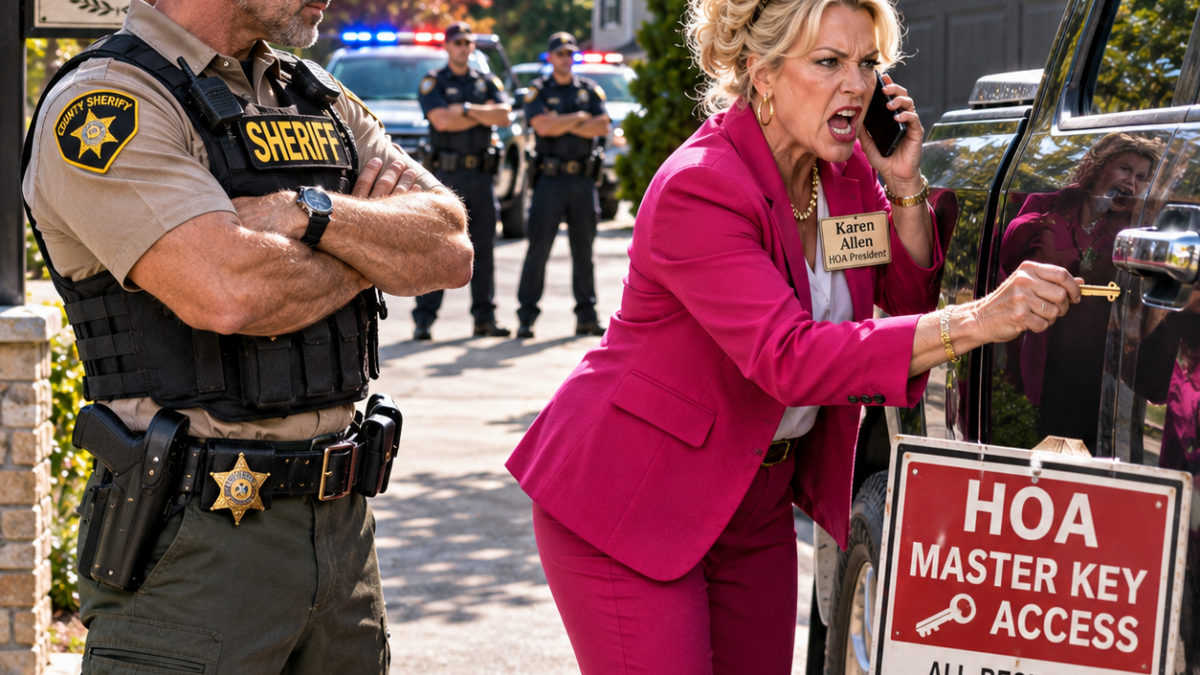
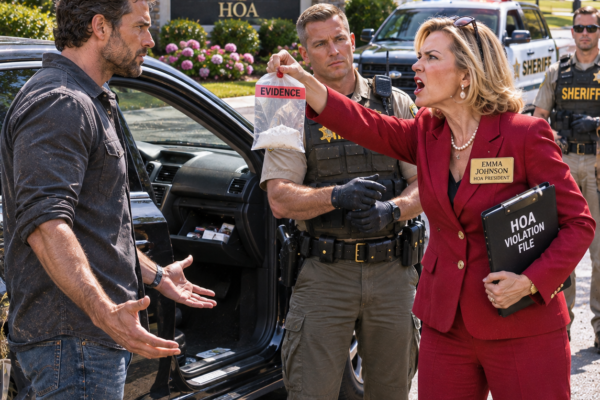
At 7:12 one quiet morning, I stepped onto my porch with coffee in my hand and found Karen Allen bent over the driver’s door of my truck, jamming a brass “HOA master key” into the lock while muttering that every vehicle in the neighborhood was required to allow emergency access. When the key failed, she spun toward me, accused me of obstructing a mandatory inspection, and dialed 911 right there in my driveway, telling dispatch that a suspicious man was refusing to surrender control of a noncompliant vehicle that sat on property her HOA did not even govern. I could have ended her little performance with one sentence, but the confidence in her voice told me something far more useful than anger ever could: she truly believed an official-sounding title gave her the right to reach into other people’s lives, and I wanted to see exactly how much of that belief she was willing to put on the record.
My name is Daniel Mercer, and I had spent more than twenty years in law enforcement before buying a small house at the edge of Willow Bluff, a quiet subdivision built beside county land and an older cluster of private homes.
My property sat just outside the HOA’s recorded boundary.
That detail had bothered Karen from the day I moved in.
The first time she introduced herself, she marched up my driveway with a clipboard tucked beneath one arm and stared at the marked county cruiser parked beside my garage.
“Law-enforcement vehicles create unnecessary alarm,” she said.
I thought she was joking.
She wasn’t.
“I’ll need you to park it somewhere less visible.”
“It’s my driveway.”
“The neighborhood has standards.”
“Your neighborhood does.”
Her smile tightened.
Three days later, I found a homemade notice under the cruiser’s windshield wiper.
UNAUTHORIZED GOVERNMENT IMAGERY VISIBLE FROM PUBLIC VIEW — $45.
The “government imagery” was the sheriff’s star on the door.
I saved the paper.
Then I saved the next one.
And the one after that.
By the end of the year, I had a binder full of Karen’s invented violations: tire tracks after rain, excessive chrome reflection, intimidating vehicle height, and one personal favorite—“driveway shadow imbalance.”
None came from the actual HOA management system.
Karen printed them herself.
The board tolerated her because she had once served as president and still treated that title like a lifetime appointment.
Most people found her exhausting.
I found her predictable.
Then she asked me for a copy of my vehicle keys.
“For emergency HOA access,” she explained.
“No.”
She blinked.
“No?”
“Absolutely not.”
“We’ll revisit this.”
That should have warned me.
Weeks later, I came outside and found her at my truck with the brass key.
“Karen.”
She jumped and nearly dropped it.
“What are you doing?”
“Testing emergency access.”
“To my vehicle?”
“All neighborhood vehicles must be accessible during a community incident.”
“Show me that rule.”
She straightened.
“The safety committee has authority.”
“There is no safety committee with authority over my truck.”
Her cheeks reddened.
Then she tried the key again.
It scraped uselessly against the lock.
“This is a violation.”
“No. This is my truck not opening for a key that doesn’t belong to it.”
She pulled out her phone.
I expected her to photograph the vehicle.
Instead she dialed 911.
“Yes,” she said loudly. “I need an officer. There is a noncompliant male preventing an HOA safety inspection of a suspicious vehicle.”
I stared at her.
She pointed at me.
“He’s becoming confrontational.”
I hadn’t moved.
The dispatcher must have asked for the address because Karen recited it proudly.
Then she added:
“Please hurry. I don’t know who this man is.”
That almost made me smile.
Within minutes, a cruiser turned onto the street.
Deputy Ray Hernandez stepped out, took one look at Karen beside my truck, then looked at me standing on the porch.
He stopped.
Karen rushed toward him.
“Officer, thank God. He refuses to cooperate.”
Ray’s eyes moved from Karen to the brass key still in her hand.
Then to the sheriff’s insignia on the vehicle.
Then back to me.
His expression changed.
“Ma’am,” he said slowly, “before we go any further, I need to clarify something about the man you just called 911 on.”
Karen folded her arms.
“Good. Tell him he has to comply.”
Ray looked at me once more.
Then turned back toward her.
And the entire street seemed to go quiet while he chose his next words.
PART 2
“Ma’am,” Ray said, “that man is Sheriff Daniel Mercer.”
Karen stared at him.
Nothing happened for about three seconds.
Then she laughed.
Not because anything was funny.
It was the little nervous laugh people make when reality says something their ego refuses to process.
“No.”
Ray stayed expressionless.
“Yes, ma’am.”
She looked at the truck.
Then at me.
Then back to Ray.
“He’s the sheriff?”
“Yes.”
“The actual sheriff?”
I stepped off the porch.
“Last time I checked.”
Her mouth opened.
Closed.
Opened again.
I had seen suspects react to unexpected evidence in a hundred different ways over my career. Some became quiet. Some angry. Some suddenly cooperative.
Karen chose outrage.
“Well, that makes this worse.”
Ray blinked.
“How?”
“He should know better.”
“Know better than what?”
“Than refusing a mandatory HOA safety inspection.”
Ray looked at the brass key in her hand.
“Did you attempt to unlock his vehicle?”
“I conducted an access test.”
“Without his permission?”
“The HOA doesn’t require individual permission.”
I finally spoke.
“My property isn’t in the HOA.”
Karen snapped toward me.
“It is HOA-adjacent.”
“That isn’t a legal status.”
“It should be.”
Ray closed his eyes for half a second.
I knew that expression.
He was silently asking every decision in his life that had led him to this driveway at seven twenty in the morning.
Then he looked at me.
“Sheriff, since you’re personally involved, I’m going to take the report.”
“Exactly.”
Karen pointed triumphantly.
“See? He admits there needs to be a report.”
Ray nodded.
“Yes.”
Her face brightened.
“Good.”
“About you trying to access a vehicle you don’t own.”
The brightness disappeared.
“This is unbelievable.”
Ray took out his notebook.
“Start from the beginning.”
Karen did.
Her version was remarkable.
According to her, Willow Bluff had recently experienced “a pattern of vehicular unpredictability.”
That sounded serious until Ray asked what it meant.
“People are parking inconsistently.”
“How?”
“Some vehicles move at different times.”
Ray waited.
Karen waited.
I turned my face away because I was dangerously close to laughing.
Ray continued.
“And because vehicles move at different times, you believe you need keys?”
“Emergency access capability.”
“Who approved this?”
“The safety committee.”
“Who serves on the safety committee?”
Karen hesitated.
“I currently coordinate it.”
“Anyone else?”
“We’re expanding.”
“So just you.”
“That’s an oversimplification.”
Ray wrote something.
Karen leaned sideways to see.
“What are you writing?”
“My notes.”
“Those are about me.”
“Yes.”
“I should be allowed to review them.”
“No.”
She looked offended.
Ray pointed at my truck.
“Did Sheriff Mercer ever give you permission to access it?”
“No, but—”
“Did you know he lived here?”
“Of course.”
“Did you know the vehicle belonged to him?”
“I knew a resident used it.”
I raised an eyebrow.
A resident.
Apparently admitting she knew exactly who I was before calling 911 would damage the performance.
Ray asked:
“Why did you tell dispatch you didn’t know who he was?”
Karen’s fingers tightened around the brass key.
“I meant I didn’t know his official status.”
“You called him a suspicious male.”
“He was suspicious.”
“Standing on his own porch?”
“He refused compliance.”
Ray looked at me.
“Sheriff, did you threaten her?”
“No.”
“Touch her?”
“No.”
“Tell her she couldn’t leave?”
“No.”
Karen interrupted.
“He was intimidating.”
“How?”
“He stood there.”
I rubbed my forehead.
Ray wrote that down too.
Then he held out his hand.
“May I see the key?”
Karen pulled it closer to her chest.
“This is HOA property.”
Ray glanced at me.
I said nothing.
“Ma’am, I’m asking to examine the item you say authorizes vehicle access.”
Slowly, she gave it to him.
Ray turned it over.
It was a large brass key with a decorative plastic cap.
No electronic component.
No manufacturer marking suggesting it belonged to any government or emergency system.
Just a key.
“Where did this come from?”
“The HOA emergency kit.”
“Who told you it opens all neighborhood vehicles?”
“It’s a master key.”
“That wasn’t my question.”
Her face hardened.
“I was told.”
“By whom?”
Silence.
“Ms. Allen?”
“I don’t recall.”
Ray handed it back.
Then he looked at the truck door.
There were fresh scratches around the lock.
Small.
Nothing catastrophic.
But visible.
I hadn’t noticed until then.
My irritation changed.
The absurdity stopped being entirely funny.
Ray saw them too.
“Sheriff?”
“Those weren’t there yesterday.”
Karen waved dismissively.
“Normal wear.”
“You put a metal key against the lock.”
“For safety.”
Ray photographed the marks.
Karen’s voice sharpened.
“Oh, come on. We’re calling scratches a crime now?”
Ray lowered his phone.
“We’re documenting what happened.”
“This is retaliation.”
“No.”
She pointed at me.
“He’s your boss.”
“That’s why I’m handling this by policy and why any charging decision won’t be his.”
Her eyes narrowed.
I stepped closer.
“Ray, notify Chief Deputy Garcia. I’m recusing myself from any enforcement decision involving this incident.”
Karen frowned.
“Recusing yourself?”
“It means I’m not going to investigate my own complaint.”
For the first time since Ray arrived, she seemed uncertain.
People who misuse authority assume everyone else wants to misuse it too.
She had expected me to pull rank.
Maybe threaten arrest.
Maybe enjoy humiliating her.
Instead I was stepping away.
That confused her more than anger would have.
Ray said:
“Ms. Allen, you need to leave Mr. Mercer’s property.”
“I’m not finished.”
“You are for today.”
“What about the inspection?”
“There is no inspection.”
“You can’t decide that.”
“I can tell you the vehicle owner has withdrawn permission for you to remain on his property.”
“I never needed permission.”
Ray pointed toward the street.
“Please leave.”
Karen looked at me.
“This is going before the board.”
“Good.”
“I’m serious.”
“So am I.”
She marched toward the sidewalk, then turned back.
“You will regret making this difficult.”
Ray stopped writing.
“Ms. Allen.”
“What?”
“That’s the kind of sentence you may want to reconsider while an officer is documenting a dispute.”
Her face reddened.
“It was not a threat.”
“Then leave it there.”
She walked away.
Her sandals slapped the pavement like angry punctuation.
Ray waited until she entered her house.
Then looked at me.
“Sheriff.”
“Yes?”
“What in the world was that?”
I picked up my coffee.
It was cold.
“Tuesday.”
He laughed.
I didn’t.
Because I knew Karen.
Embarrassment didn’t discourage her.
It energized her.
The first flyers appeared the next morning.
Hot pink.
Glitter around the borders.
They were taped to mailboxes, light poles, trash containers, and the entrance sign to Willow Bluff.
The headline read:
**URGENT COMMUNITY ACTION REQUIRED**
**STOP THE NONCOMPLIANT VEHICLE**
Underneath was a photograph of my truck.
Not a good photograph.
It looked as though Karen had crouched behind a hydrangea and taken it through two branches.
The flyer accused the vehicle owner of refusing “universal safety access.”
It warned that a noncompliant automobile could delay emergency response.
Then it called for a neighborhood vote requiring residents to provide the HOA with “emergency access credentials.”
Keys.
She wanted everyone’s keys.
My neighbor Mark knocked on my door that afternoon holding one of the flyers.
“Is this you?”
“Apparently.”
He read it again.
“She wants keys to our cars?”
“Apparently.”
“She fined me last week.”
“For what?”
“My car is too red.”
I stared.
“Too red?”
He nodded miserably.
“Visually aggressive.”
“What kind of red?”
“Factory red.”
“Well, obviously dangerous.”
Mark laughed.
Then stopped.
“She’s getting worse.”
I looked toward Karen’s house.
“Yes.”
“What are you going to do?”
“Document it.”
“That’s it?”
“For now.”
Mark frowned.
“You’re sheriff.”
“Exactly.”
“I don’t understand.”
“I can’t turn a neighborhood argument into a criminal case just because I wear a badge.”
“But she scratched your truck.”
“Ray documented it.”
“She tried to open it.”
“Documented.”
“She made a false 911 call.”
“Also documented.”
Mark shook his head.
“I’d be losing my mind.”
“I am.”
“You don’t look like it.”
“That’s the job.”
That evening, I added the flyer to my binder.
I had started that binder as a joke.
By then it had tabs.
VEHICLE NOTICES.
PROPERTY ACCESS.
HOA CORRESPONDENCE.
PHOTOS.
BOARD COMMUNICATIONS.
I hated how professional it looked.
Two days later, Karen held an emergency HOA meeting.
Technically she no longer had unilateral authority to call one, but Karen treated technicalities as things that happened to other people.
Jill Patterson, one of the actual board members, sent me a recording afterward.
“Watch this sitting down,” she wrote.
I did.
Karen stood beside a projector screen wearing a navy blazer.
The first slide showed my truck.
The title:
**PRIMARY SOURCE OF COMMUNITY INSTABILITY**
I paused the video.
Looked at my truck through the window.
It was parked.
Menacingly, apparently.
Next slide.
A pie chart.
My truck occupied seventy-two percent of something called “identified neighborhood transportation concern.”
No source.
No methodology.
Just a blue circle.
Then:
**POTENTIAL THREAT INDICATORS**
SIZE.
REFLECTIVENESS.
AUTHORITY SYMBOLISM.
UNPREDICTABLE MOVEMENT.
OWNER NONCOMPLIANCE.
I laughed.
Then a resident asked:
“Karen, isn’t that the sheriff’s truck?”
She answered:
“Government employment does not exempt someone from community standards.”
Another voice:
“His house isn’t in our HOA.”
Karen replied:
“Community influence extends beyond arbitrary legal lines.”
That ended my laughter.
Arbitrary legal lines.
Property boundaries.
Jurisdiction.
Consent.
All arbitrary to her when they prevented her from doing what she wanted.
I saved the recording.
The following morning, three new papers appeared beneath my windshield wiper.
**REFLECTIVE PAINT DISTURBANCE — $55**
**UNAUTHORIZED GOVERNMENT SYMBOLISM — $80**
And my favorite:
**DRIVEWAY SHADOW IMBALANCE — $35**
I carried the last one inside.
Set it on the kitchen counter.
Stared at it.
Then called my son.
He had been a patrol deputy for years before transferring into investigations in a neighboring jurisdiction. He understood both sides of my life better than anyone.
He answered:
“Everything okay?”
“I’ve been fined for my shadow.”
Pause.
“Your personal shadow?”
“Truck.”
“Oh.”
“You sound relieved.”
“For a second I thought retirement was going badly.”
“I’m not retired.”
“You’re old enough.”
“Goodbye.”
“Dad.”
“What?”
“What actually happened?”
I told him.
He became quiet.
“She’s escalating.”
“Yes.”
“You documenting it?”
“Binder.”
“One?”
“Currently.”
He laughed.
Then:
“Be careful.”
“She’s annoying, not dangerous.”
“Those aren’t mutually exclusive.”
That stayed with me.
The next morning, twenty-six orange survey flags lined both sides of my driveway.
Every flag carried a printed tag:
**HOA CLAIM PENDING**
**VEHICLE ACCESS GATE UNDER REVIEW**
I stood in the middle of them with my coffee.
Twenty-six tiny declarations that Karen’s imagination had conquered my yard.
I photographed everything before touching a single one.
Spacing.
Location.
Footprints.
Distance from the property line.
Then I texted Jill.
**Board approve a gate?**
Her response arrived instantly.
**WHAT GATE?**
Then:
**DO NOT MOVE ANYTHING YET. I’M COMING OVER.**
She arrived ten minutes later wearing slippers.
She looked at the flags.
Closed her eyes.
“She told us she was taking a break.”
“She seems well rested.”
Jill pulled one flag from the ground.
“HOA claim pending?”
“Apparently my driveway has declared independence.”
“She has no authority to do this.”
“I know.”
“No, I mean she hasn’t been authorized to do anything involving your property.”
“I know.”
“The board never voted.”
“I assumed.”
“She keeps saying we did.”
“That part interests me.”
Jill looked embarrassed.
“We’ve let her say ‘the board’ for too long when she means ‘Karen.’”
That was the first crack inside Willow Bluff.
Not everyone was willing to keep hiding behind exhaustion.
Karen appeared twenty minutes later.
Clipboard.
Sunglasses.
Same sense of destiny.
“I see you discovered the preliminary access markers.”
Jill turned.
“What preliminary access markers?”
Karen stopped.
“Jill.”
“Did the board approve these?”
“The board supports improved mobility.”
“Did we vote?”
“Not everything requires a formal vote.”
“Did we vote?”
Karen shifted.
“Unanimous in spirit.”
Jill actually laughed.
“That’s not a thing.”
Karen ignored her and looked at me.
“The community will eventually vote to establish shared authority over vehicles within visual proximity of HOA property.”
I blinked.
“Visual proximity?”
“Yes.”
“So if you can see something, you regulate it?”
“For safety purposes.”
“What if you can see the moon?”
Jill turned away to hide a smile.
Karen didn’t.
“Mocking policy doesn’t make you exempt.”
“There is no policy.”
“Not yet.”
Those two words mattered.
Not yet.
Meaning she knew she was operating ahead of any actual rule.
I took a photograph.
Karen stiffened.
“Stop documenting me.”
“You’re standing on my property.”
“I’m conducting official work.”
Jill said:
“No, Karen. You’re not.”
For the first time, the anger in Karen’s face shifted away from me.
Toward Jill.
“You’re undermining the board.”
“I am the board.”
“You’re one member.”
“So are you.”
“I’m president.”
“Until people decide otherwise.”
Silence.
Karen walked away.
Fast.
That afternoon, a tow truck appeared.
The driver parked along the curb and stood looking at a work order.
I walked out.
“Can I help you?”
He looked at my truck.
Then at me.
“HOA requested removal of an abandoned vehicle.”
“Which vehicle?”
He pointed.
My county truck.
“That’s mine.”
His face changed.
“She said it hasn’t moved in weeks.”
“I drove it this morning.”
He looked at the sheriff’s emblem.
“Oh.”
“Did she tell you what kind of vehicle it was?”
“No.”
“Did she prove ownership?”
“She sent a form.”
“Can I see it?”
He hesitated.
Then held it out.
**WILLOW BLUFF COMMUNITY VEHICLE REMOVAL AUTHORIZATION**
Signed:
Karen Allen.
No legal citation.
No property-owner signature.
No actual tow authority.
The driver folded the form.
“I’m sorry.”
“You didn’t hook the truck.”
“No.”
“Then we’re good.”
He left.
I forwarded the incident to Chief Deputy Garcia.
Not because I wanted Karen arrested.
Because the pattern was getting harder to dismiss as eccentric HOA behavior.
A few days later, she crossed another line.
I came outside and found a heavy yellow wheel clamp locked onto the front tire of my truck.
A laminated tag hung from it.
**HOA IMPOUND — NONCOMPLIANT VEHICLE**
**RELEASE FEE: $350**
**PROCESSING: $25**
**ADMINISTRATION: $15**
Total:
$390.
I crouched beside it.
Real clamp.
Real lock.
Fresh scrape on the wheel.
Behind me came the familiar click of sandals.
“Perhaps now you’ll cooperate.”
I stood.
Karen crossed her arms.
“You put this on my truck.”
“I issued an immobilization order.”
“You don’t have immobilization authority.”
“Community safety grants emergency discretion.”
“No, it doesn’t.”
“You’ll pay the release fee.”
“No.”
“Then the vehicle remains immobilized.”
I pulled out my phone.
Her eyes narrowed.
“What are you doing?”
“Calling dispatch.”
Panic flashed across her face.
“You wouldn’t.”
“I’m not handling this myself.”
“You are weaponizing your office.”
“No. I’m calling the nonemergency line as a property owner.”
She started talking faster.
“This was authorized.”
“By whom?”
“The board.”
Jill’s front curtain moved across the street.
Then the door opened.
She stepped outside.
“No, it wasn’t.”
Karen spun.
“Jill, this doesn’t involve you.”
“I’m the board secretary.”
“You missed the informal approval.”
“There was no informal approval.”
“The board failed to object.”
“Because you never told us.”
Karen looked at me.
“This is harassment.”
I pointed at the clamp.
“It’s on my truck.”
Deputy Ray Hernandez arrived eight minutes later.
He parked, walked up, saw the wheel clamp, and stopped.
“Again?”
“Morning, Ray.”
Karen rushed toward him.
“Officer, I’m glad you’re here. He refuses to pay the lawful release assessment.”
Ray looked at me.
Then at the clamp.
Then at Karen.
“Ma’am, did you place this on the vehicle?”
“I authorized it.”
“Did you physically place it?”
“Yes.”
“Do you own the vehicle?”
“No.”
“Do you own this driveway?”
“No.”
“Do you have a court order?”
“No.”
“Statutory authority?”
“I have HOA authority.”
Ray sighed.
“That’s not statutory authority.”
Karen raised her clipboard.
“You’re confusing municipal law with private governance.”
“No.”
He pointed at the clamp.
“Remove it.”
“I refuse.”
“Ma’am.”
“This is lawful.”
“Remove it.”
“No.”
Ray glanced at Jill.
“Did your board authorize this?”
“No.”
Karen snapped:
“Stop asking her.”
Ray’s patience tightened.
“Ms. Allen, you are being directed to remove a device you placed on property you do not own. If you refuse, we’ll document the refusal and have it removed.”
“You’re all afraid of him.”
Ray stared.
“Of the sheriff?”
“Yes.”
Ray looked at me.
I shrugged.
“Terrifying.”
He almost smiled.
Karen finally crouched and unlocked the clamp.
She dragged it away, muttering about tyranny.
Ray photographed the damage to my wheel.
Then he handed the report to Garcia.
Again, I stayed out of the charging decision.
The next stage was less funny.
Karen launched something called the **Great Vehicle Harmony Initiative**.
Glossy brochures appeared on doorsteps.
Mandatory emergency keys.
Driveway inspection schedules.
Vehicle-color guidelines.
Parking rotations.
Fines for “disruptive silhouettes.”
Mark received a notice because his headlights were “too assertive.”
Jill was warned that her SUV displayed “insufficient wheel humility.”
Another neighbor, Leonard, received a fine for washing his car “at an excessive auditory intensity.”
Every time somebody brought me one, I copied it.
Then told them the same thing:
“Check your actual bylaws. Don’t pay anything that isn’t properly authorized. If you’re uncertain, contact the management company or an attorney.”
I did not tell people to ignore legitimate HOA obligations.
That mattered.
Bad leadership does not magically invalidate every contract.
But Karen’s invented fees were different.
Then came the plywood barricade.
I returned from the grocery store and found it stretched across my driveway.
Eight feet wide.
Zip-tied.
Spray-painted:
**HOA PARKING CONTROL**
I stopped my truck.
Stared.
Got out.
Photographed it.
Then moved it to the side because I needed to get home.
The next morning, a county code inspector knocked.
“Complaint about an illegal traffic-control structure.”
I pointed toward the barricade.
“There.”
He examined it.
“Who built this?”
“Guess.”
He read the HOA sign.
“Your property is outside Willow Bluff.”
“Yes.”
“Did you erect it?”
“No.”
He looked toward Karen’s house.
“She complain?”
“I assume.”
He took photographs.
Then laughed despite himself.
“She reported her own illegal barricade?”
“Looks that way.”
The inspector issued no violation against me.
Instead, he documented that the structure lacked authority and was on private property.
Karen watched from across the street.
No clipboard.
Arms crossed.
Quiet.
That quiet made me more uncomfortable than her shouting.
The next move arrived in my mailbox.
A thick glossy packet.
**THE BLUFF NEIGHBORHOOD MOBILITY COUNCIL**
I had lived there three years.
No such council existed.
Karen had appointed herself acting coordinator.
The packet announced mandatory vehicle registration.
Emergency master-key requirements.
Unannounced driveway inspections.
Parking reassignment.
And an $89 “Mobility Harmony Contribution.”
At the bottom was a QR code.
I scanned it without paying.
Personal payment account.
Karen Allen.
That changed the situation.
Invented fines are ridiculous.
Soliciting money under the appearance of an official organization can become something else entirely.
I called Garcia.
“Got a minute?”
“Karen?”
“Yes.”
“How many binders?”
“Three.”
He groaned.
I explained the payment demand.
His tone changed.
“Send everything to Ray.”
“I’ll do that.”
“And Daniel?”
“What?”
“Do not investigate the payment account yourself.”
“I know.”
“You sound disappointed.”
“I like knowing things.”
“That’s why you’re a sheriff.”
The complaint went through channels.
Ray gathered statements from residents.
The county attorney reviewed the documents.
We didn’t immediately call it fraud.
Intent matters.
Authority matters.
How the money was represented matters.
Whether people actually paid matters.
Real investigations are slower than neighborhood gossip.
Karen, unfortunately, kept creating evidence faster than anyone could process it.
That evening Jill came over.
She looked exhausted.
“We’re removing her.”
“From what?”
“President.”
I leaned against the door.
“That’s HOA business.”
“Yes.”
“Then handle it.”
“We need evidence.”
“You already have your bylaws and board records.”
“We need people to understand the pattern.”
I gestured toward the dining room.
Three binders sat on the table.
Jill stared.
“You weren’t kidding.”
“No.”
She walked closer.
“Will you come Friday?”
“As a homeowner?”
“You’re not in the HOA.”
“Exactly.”
“As the person she targeted.”
I considered.
“Only if the board attorney agrees.”
“He does.”
“And I won’t discuss anything confidential from a criminal investigation.”
“Fine.”
“And if people start treating it like a public execution, I leave.”
Jill nodded.
“Fair.”
Friday night, Willow Bluff’s community center was full.
Karen arrived last.
Navy blazer.
Clipboard.
Fake earpiece.
I still don’t know what that earpiece connected to.
Possibly destiny.
She walked to the podium.
“Tonight’s emergency mobility session will now begin.”
Jill stood.
“No.”
The room went silent.
Karen turned.
“What?”
“The board is running the meeting.”
“I am president.”
“For the moment.”
A murmur moved through the room.
Karen’s face tightened.
“This is insubordination.”
“You don’t command us.”
“Sit down, Jill.”
“No. You sit down.”
There are words powerful people struggle to hear.
For Karen, that word was no.
She stared at Jill.
Then at the board.
Then at the room.
Nobody looked away.
Slowly, she sat.
Jill reviewed the agenda.
Unauthorized fines.
Unauthorized committees.
Attempted vehicle access.
Tow request.
Wheel clamp.
Barricade.
Fake mobility organization.
Money collection.
I was invited to speak.
I brought one folder.
Not all three.
I did not need to bury her in paper.
I started with the photograph of her at my truck.
“This was the morning Ms. Allen attempted to use what she called an HOA master key on a vehicle belonging to me.”
Karen interrupted.
“Emergency key.”
Jill said:
“Please let him finish.”
I continued.
“She then called 911 to report me for refusing a safety inspection.”
A man in the back said:
“She didn’t know you were sheriff?”
I looked at him.
“No.”
Laughter spread.
Karen’s face reddened.
I held up a hand.
“This part isn’t funny for the reason people think.”
The room settled.
“911 isn’t a tool for winning HOA arguments. Deputies respond to information they’re given. False or exaggerated information can put everybody in a bad position.”
No one laughed after that.
I showed the wheel clamp.
The tow authorization.
The orange flags.
The barricade.
Then the Mobility Council packet.
Jill projected the payment page.
People started murmuring.
A woman raised her hand.
“I paid that.”
The room went quiet.
Karen snapped:
“It was voluntary.”
The woman stood.
“The letter said due within five days.”
“Suggested.”
“It said mandatory.”
“Administrative wording.”
Another resident stood.
“I paid too.”
Jill looked at Karen.
“How many people paid?”
“I don’t have that number.”
“Where is the money?”
“Held for community purposes.”
“In your personal payment account?”
“That was temporary.”
“Did the board authorize it?”
Karen stood.
“You’re twisting everything.”
Jill didn’t raise her voice.
“Did we authorize it?”
Karen looked at the other board members.
No one spoke for her.
Finally:
“No formal vote occurred.”
Jill nodded.
“Thank you.”
The motion came ten minutes later.
Immediate removal of Karen Allen as HOA president.
All in favor.
Hands rose.
Not every hand in the room.
But every voting director except Karen.
Against?
Karen raised hers.
Alone.
Jill read the result.
“Motion passes.”
The sound that followed wasn’t cheering at first.
It was breathing.
An entire room exhaling.
Karen stood.
Her chair scraped backward.
“You’ll regret this.”
Nobody answered.
“You think you can run this place without me?”
Jill said:
“We’re going to try.”
“You’ll have parking chaos.”
Mark muttered:
“We’ll risk it.”
A few people laughed.
Karen pointed at me.
“This is his fault.”
I shook my head.
“No.”
“You built a case against me.”
“You built it. I kept copies.”
Her expression twisted.
“You enjoyed this.”
I thought before answering.
“Parts of it.”
That surprised her.
“Seeing you lose power?”
“No.”
“Then what?”
“Seeing people stop being afraid to tell you no.”
The room became very quiet.
Karen grabbed her clipboard.
“You haven’t heard the last of me.”
Jill replied:
“That is exactly what we’re afraid of.”
Karen slammed the door behind her.
The new board spent the next week untangling her work.
They refunded unauthorized payments.
Canceled fake fines.
Removed her from community email systems.
Changed passwords.
Sent residents a plain-language notice explaining which documents were real and which had been created without board authority.
Leonard Price became interim president.
His first act was to abolish the vehicle-safety committee.
His second was to confirm it had never legally existed in the first place.
For several days, Willow Bluff was peaceful.
Then Karen reinvented herself.
A linen envelope appeared in my mailbox.
No HOA logo.
Gold seal.
Inside:
**BLUFF COMMUNITY OVERSIGHT INITIATIVE**
**MANDATORY MEDIATION NOTICE**
Signed:
**K. Allen, Acting Coordinator**
I read it twice.
Then checked the return address.
A rented post-office box.
The letter demanded that I attend a “vehicle compliance mediation” and suggested a $140 contribution toward neighborhood oversight.
QR code.
Same personal payment account.
I called Ray.
He groaned when he answered.
“Please tell me you’re calling about livestock.”
“I don’t own livestock.”
“Then I already hate this call.”
I sent him the letter.
Other residents received similar ones.
Some included threats of “further enforcement.”
Some demanded money.
One warned that nonpayment might affect “future property standing.”
That phrase concerned the county attorney.
Not because Karen had actual power.
Because some residents believed she did.
Power can be fake and still cause real harm if people are frightened enough to obey it.
Ray’s investigation expanded.
My son visited that evening.
He read the letter at my kitchen table.
“She’s spiraling.”
“Yes.”
“You okay?”
“Annoyed.”
“That’s not what I asked.”
I looked at him.
He had his mother’s eyes.
That still caught me sometimes.
My wife had died five years earlier after a long illness.
She had been the person who could tell me when the badge followed me through the front door.
“You don’t stop being sheriff at home,” she once said. “But you do have to remember you’re also just a man who needs dinner.”
My son had inherited that irritating talent.
I sat down.
“No.”
He nodded.
“Better.”
“I bought this place because I wanted quiet.”
“I know.”
“I spend all day dealing with other people’s emergencies. I don’t want a fabricated government department in my mailbox.”
He smiled slightly.
“Reasonable.”
“I keep wondering whether I should sell.”
That surprised him.
“Seriously?”
“Sometimes.”
“Because of her?”
“Because I don’t want the last years of this job to be about a neighbor forcing me to prove I’m not abusing it.”
He was silent.
Then:
“Mom would’ve hated that sentence.”
“I know.”
“She’d tell you not to let one loud person choose where you live.”
“I know.”
“She’d also tell you to stop collecting binders on the dining table.”
I looked toward them.
“Your mother respected documentation.”
“No. She tolerated yours.”
That made me laugh.
Then the motion alert sounded.
Back camera.
11:47 p.m.
I opened the feed.
Karen.
Reflective vest.
Cargo pants.
Clipboard.
Tape measure.
She was inside my property line.
Barely.
But inside.
She measured the distance from my truck’s front tire to the grass.
Then held what appeared to be a stud finder against the fender.
My son stared at the screen.
“What is she doing?”
“I don’t know.”
“Is that a stud finder?”
“I believe so.”
“On a truck?”
“Yes.”
He rubbed his face.
“You win.”
I stepped onto the porch.
“Karen.”
She jumped.
The tape measure fell.
“I’m conducting an assessment.”
“At midnight?”
“Timing is irrelevant when public safety is involved.”
“This is private property.”
“The Oversight Initiative has jurisdiction.”
“No, it doesn’t.”
She lifted the vest.
“This is an authorized uniform.”
“It’s reflective polyester.”
“You’re obstructing an investigation.”
I pointed toward the camera.
“You’re being recorded.”
She froze.
Documentation.
Always her weakness.
“Turn that off.”
“No.”
“This footage may violate oversight confidentiality.”
“No.”
She backed toward the sidewalk.
“I’ll note your refusal.”
“Please do it from the public right-of-way.”
She left.
My son stood behind me.
“Dad.”
“What?”
“Call Ray.”
“I was going to.”
“No, you were going to add it to Binder Four.”
I looked at him.
“There’s a Binder Four?”
He closed his eyes.
“I’m going home.”
The next morning, eleven neighbors turned over identical Oversight Initiative letters.
Ray and the county prosecutor had enough to act.
Not because Karen was annoying.
Because the pattern now included repeated trespass, unauthorized representations of authority, attempts to collect money under misleading notices, and ongoing harassment after she had been formally told to stop.
The prosecutor approved charges appropriate to the documented conduct.
A summons and protective restrictions were prepared.
Ray and another deputy went to serve them.
I stayed home.
That was deliberate.
I wanted no dramatic confrontation with Karen.
No badge-to-clipboard showdown.
No satisfaction from watching her get paperwork.
I had learned something over twenty years.
The more legitimate your authority is, the less theatrical it needs to look.
Unfortunately, Karen supplied her own theater.
She stood in the street holding an enormous poster board when deputies arrived.
On it was a satellite image of Willow Bluff.
My truck was circled in red.
Arrows pointed outward.
Labels included:
**UNKNOWN VEHICLE ENERGY ZONE**
**DRIVEWAY DOMINANCE RISK**
**POTENTIAL DISRUPTION FIELD**
A child asked:
“Is Sheriff Mercer a superhero?”
Karen snapped:
“He is a menace.”
Then Ray stepped out of his cruiser.
“Karen Allen?”
She turned.
“Finally.”
He handed her the papers.
She smiled as she began reading.
Then the smile disappeared.
“What is this?”
“Court summons and notice of conditions.”
“You can’t charge me.”
“I’m not debating the case in the street.”
“The initiative is lawful.”
“The prosecutor disagrees with some of your conduct.”
“This is his doing.”
She pointed at me.
I was standing on my porch.
I said:
“No.”
“You’re destroying me.”
“No.”
“You turned everyone against me.”
“No.”
Ray said:
“Ms. Allen, please focus on me.”
She looked at him.
“You’re prohibited from entering Mr. Mercer’s property. You’re not to attach notices, devices, barricades, or markings to his property or vehicle. You’re also directed to stop representing that you possess government or HOA enforcement authority you do not have.”
She started breathing faster.
“You cannot erase the initiative.”
Ray answered:
“This isn’t about erasing anything. It’s about conduct.”
She looked around.
Neighbors watched.
No one came to rescue her.
That was the moment I saw the real wound.
Not the charges.
Not losing the presidency.
Irrelevance.
Karen needed the neighborhood to need her.
Without the clipboard, without the title, without people waiting for her approval, she did not know who she was.
That didn’t excuse anything.
But it explained more than any bylaw ever could.
She drove away later that afternoon.
For almost a month, peace held.
No flags.
No notices.
No mystery inspections.
No emergency vehicle shadow citations.
The neighborhood gradually became normal.
Kids played basketball.
Mark washed his aggressive red car.
Leonard sent everyone one email a month instead of Karen’s usual seventeen.
Jill planted flowers around the entrance sign without forming a Beautification Emergency Tribunal.
I began leaving the blinds open again.
The criminal case resolved slowly.
Karen’s attorney challenged some allegations.
The prosecutor dropped one count that was difficult to prove and amended another.
Karen ultimately accepted responsibility for several misdemeanor offenses tied to trespass, vehicle tampering, harassment, and deceptive fee collection.
Restitution covered the scratch damage and refunded residents.
She received probation, community service, counseling requirements, and strict restrictions on contacting me or representing herself as an official authority.
The judge did not ban her from having opinions.
No court can do that.
It banned conduct.
Important difference.
I gave a short statement at sentencing.
Not about the truck.
About 911.
“When somebody calls emergency services because a neighbor won’t obey an invented rule, they’re not just wasting time. They’re creating a police encounter based on false urgency.”
Karen stared at the table.
I continued.
“I wear a badge. That protected me from some of the misunderstanding that morning because Deputy Hernandez recognized me. Most people don’t have that advantage.”
The judge nodded.
I sat.
Karen did not apologize that day.
I respected that more than a fake apology.
Months passed.
Then a package arrived.
No return address.
My name written neatly.
I called Ray before opening it because the conditions around Karen were still active.
He came over.
We opened it together.
Pink tissue paper.
A silver box.
Inside was glitter.
A lot of glitter.
But the spring mechanism had been removed.
Nothing exploded.
A note lay on top.
**This is what restraint looks like. You’re lucky I’m taking the high road.**
Ray stared.
I stared.
Then he started laughing.
“Do not laugh.”
“I’m trying.”
“She sent the sheriff a disarmed glitter bomb.”
“I can see that.”
“That’s incredible.”
“She may have violated her contact restriction.”
That stopped him.
We documented it.
The prosecutor handled the rest.
Karen received a formal warning and modification requiring future communication to go through counsel.
No dramatic prison sentence.
No SWAT team.
No revenge fantasy.
Just another boundary.
This one backed by a judge.
Spring arrived.
The neighborhood softened.
Leonard sent me a jar of homemade strawberry jam with a handwritten note:
**Thank you for surviving the Great Vehicle Crisis.**
I kept that one.
Mark started calling his car “the aggressive red threat.”
Jill became HOA president after residents begged her to run.
Her first condition was a two-term limit.
Her second was that nobody could create a committee without a recorded board vote.
Her third was:
“No rules involving vehicle shadows.”
That one passed unanimously.
One evening, my son stopped by.
We sat on the porch.
My truck was parked where it had always been.
He handed me a beer.
“You still thinking about selling?”
“No.”
“Good.”
“I didn’t say it for your approval.”
“Mom would approve.”
“That’s unfair.”
“Effective, though.”
We sat quietly.
After a while, he asked:
“Why did Karen bother you so much?”
“Other than trying to unlock my truck?”
“You’ve dealt with armed people.”
“Yes.”
“Drunks.”
“Yes.”
“Felons.”
“Yes.”
“People who actually wanted to hurt you.”
“Yes.”
“But she got under your skin.”
I considered it.
“Because she made authority cheap.”
“What does that mean?”
“She treated titles like costumes.”
I looked toward the street.
“Sheriff. President. Coordinator. Safety officer. Oversight director. To her, the title was the thing that allowed you to tell people no.”
“And to you?”
“The title is the thing that tells you when you have to hear no.”
My son smiled.
“That sounds rehearsed.”
“It wasn’t.”
“Still going to steal it.”
“For what?”
He looked at me.
“I put in for chief deputy.”
I turned.
“What?”
“Garcia’s retiring next year.”
“You didn’t tell me.”
“Telling Dad is different from telling the sheriff.”
I understood immediately.
“You worried I’d interfere.”
“Yes.”
“I wouldn’t.”
“I know.”
“Then why hide it?”
“Because I wanted to know I earned the interview without you even thinking about helping.”
That hurt.
Then made me proud.
“Good.”
“Good?”
“Yes.”
He smiled.
“Mom would’ve liked that.”
“Yes.”
She would have.
Months later, he got the promotion.
Not from me alone.
A formal panel.
County HR.
Civil-service review.
References.
I stayed out of the process as much as possible.
The morning he pinned on the new insignia, I remembered Karen holding up her fake Mobility Council credential.
Same basic human desire.
To matter.
Different path.
One asked people to trust him because he’d earned responsibility.
The other demanded obedience because she needed validation.
That difference became the whole story for me.
I thought Karen was gone for good.
Then Tanya Brooks from county records stopped by one afternoon.
She carried a folder.
“Before you ask, this is public.”
“That’s encouraging.”
“You might want to sit.”
I sat.
She opened the folder.
Articles of incorporation.
Association documents.
A new residential development about thirty miles south.
Cedar Glen.
Proposed neighborhood association.
The paperwork was incomplete.
Some filings hadn’t been accepted yet.
But one name appeared clearly.
**Proposed President: Karen Allen.**
I leaned back.
Tanya stared at me.
“She’s starting again.”
“So it seems.”
“Are you going to warn them?”
That question bothered me.
The younger version of me would have driven down there with four binders and a projector.
The angry version would have wanted an audience.
The sheriff in me wanted facts.
“What information is public?”
“Court disposition. Some filings. HOA removal isn’t county record.”
“What about the civil repayment order?”
“Public.”
I nodded.
“I’m not going to start a campaign.”
Tanya frowned.
“So nothing?”
“No.”
I looked at the paperwork.
“But I’m also not going to hide facts.”
I wrote a short letter to Cedar Glen’s developer and management company.
No insults.
No “Karen.”
No dramatic warning.
I attached links to public court records and stated that Karen Allen had previously been involved in litigation and criminal proceedings arising from unauthorized representations of HOA authority, property trespass, vehicle interference, and deceptive fee demands.
Then I wrote:
**Please verify independently and make your own governance decisions.**
That was all.
Two weeks later, the developer replied.
They thanked me.
Said their board-selection process would include additional background review.
I never asked what happened next.
Not my neighborhood.
Not my authority.
That mattered.
Another year passed.
I retired as sheriff.
Garcia took over temporarily until the election.
My son remained chief deputy under the next elected administration.
On my final afternoon at the station, Ray Hernandez brought me a small box.
“Retirement gift.”
I opened it.
A brass key.
Not Karen’s.
A cheap hardware-store key glued to a wooden plaque.
Underneath:
**UNIVERSAL HOA MASTER KEY**
**OPENS ABSOLUTELY NOTHING**
I laughed harder than I had in months.
“Where did you get this?”
“Evidence room.”
My smile disappeared.
He laughed.
“Kidding. Hardware store.”
“You’re terrible.”
“Learned from leadership.”
The department gave me the serious gifts too.
A framed flag.
A retirement badge.
Photographs.
Speeches.
Those mattered.
But the stupid key plaque went on the wall of my garage.
Right above where I parked the truck.
The original truck stayed with the county when I retired.
I bought an ordinary dark-blue pickup.
No sheriff’s star.
No lights.
No government plate.
For the first time in decades, I could drive somewhere without people immediately deciding what I represented.
That felt strange.
And good.
A month after retirement, I walked outside one morning with coffee.
Same time.
About seven twelve.
For one second, the memory returned so clearly I almost expected to see Karen crouched beside the door.
Nothing.
Just morning light across the hood.
A bird on the mailbox.
Mark washing his aggressive red car.
Jill jogging with her dog.
She waved.
I waved back.
No clipboard.
No citation.
No access test.
I got into the truck.
My key opened it.
Imagine that.
As I backed out, Jill called:
“Daniel!”
I stopped.
She walked over holding an HOA envelope.
I stared at it.
“No.”
She laughed.
“Relax.”
“What is it?”
“Invitation.”
“To?”
“Neighborhood barbecue.”
“I’m not in the HOA.”
“We checked.”
“Good.”
“Guests are allowed.”
“Any vehicle inspection?”
“Only shadows.”
I gave her a look.
She laughed again.
I went.
The barbecue was held beside the lake.
Kids ran around.
People grilled hamburgers.
Mark’s red car sat in full visual aggression near the entrance.
Nobody cared.
Leonard brought jam.
Ray showed up late and spent ten minutes telling strangers the master-key story before I threatened to throw him into the water.
My son came with his family.
For the first time, Willow Bluff felt like a neighborhood instead of a jurisdictional dispute.
Late in the afternoon, my grandson wandered over.
He was nine.
He had heard pieces of the story.
Kids always hear the parts adults think they’re hiding.
“Grandpa?”
“Yeah?”
“Did that lady really think one key could open every car?”
“Yes.”
“That’s dumb.”
“Very.”
“Did you arrest her?”
“No.”
He looked disappointed.
“But you’re sheriff.”
“Was.”
“You could have.”
“No.”
“Why?”
I put down my drink.
“Because being able to do something isn’t the same as being the right person to do it.”
He frowned.
“That sounds boring.”
“It usually is.”
“So who did it?”
“Other officers handled the case.”
“Because she bothered you?”
“Because I was involved.”
He considered that.
“So sheriffs have rules too?”
“Especially sheriffs.”
He nodded.
Then ran off toward the water because nine-year-olds have limited patience for constitutional philosophy.
My son had overheard.
“Not bad.”
“What?”
“The answer.”
“He called it boring.”
“That means you explained government correctly.”
We laughed.
By sunset, people started leaving.
I walked home instead of driving.
The path followed the edge of Willow Bluff before turning toward my property.
Near the corner stood a small wooden post.
Years earlier Karen had wanted to put an HOA vehicle checkpoint there.
Now it held a simple sign:
**WILLOW BLUFF COMMUNITY TRAIL**
Below:
**PLEASE RESPECT PRIVATE PROPERTY BEYOND THIS POINT**
My property began thirty feet later.
The sign wasn’t threatening.
It didn’t need to be.
Boundaries work best when people agree they exist.
I stopped beside it.
For years, I thought the most satisfying part of the whole mess was the moment Ray Hernandez told Karen she’d called 911 on the sheriff.
I won’t lie.
Her face was memorable.
So was the wheel clamp.
The fake earpiece.
The “unknown vehicle energy zone.”
The absurdity made the story easy to tell.
But the older I got, the less that reveal mattered.
Karen’s mistake was not that she picked the wrong person.
It would have been just as wrong if my truck belonged to Mark.
Or Jill.
Or a schoolteacher.
Or a mechanic.
Or someone who had never met a deputy personally.
Rights are not more valuable because the owner has a badge.
That was the lesson I wanted my grandson to understand.
And maybe the lesson I had needed too.
I had spent a career carrying real authority.
That made it tempting to laugh at Karen’s fake version.
But real authority can become just as ugly when the person holding it forgets limits.
The badge never meant every door belonged to me.
It meant more doors were closed to me unless the law gave me a reason to enter.
Karen’s brass key opened nothing.
That was almost poetic.
She thought authority was a universal key.
A title that unlocked people’s cars.
Their driveways.
Their wallets.
Their choices.
But authority isn’t a master key.
It’s a key cut for one specific lock.
Use it somewhere it doesn’t belong and you don’t open the door.
You damage the lock.
I walked the rest of the way home.
My garage light came on automatically.
Inside, that ridiculous brass-key plaque hung above the workbench.
**OPENS ABSOLUTELY NOTHING.**
I set my coffee cup beside it.
Outside, Mark’s red car started.
Somewhere down the street, children laughed.
A dog barked.
Nobody issued a citation.
My new truck sat quietly in the driveway, casting a completely unbalanced shadow across the pavement.
I considered fixing it.
Then went inside.
[END OF STORY]