PART 2: HOA President Parked Her Lexus in My Private Barn—So I Locked My Own Doors and Left for the Weekend
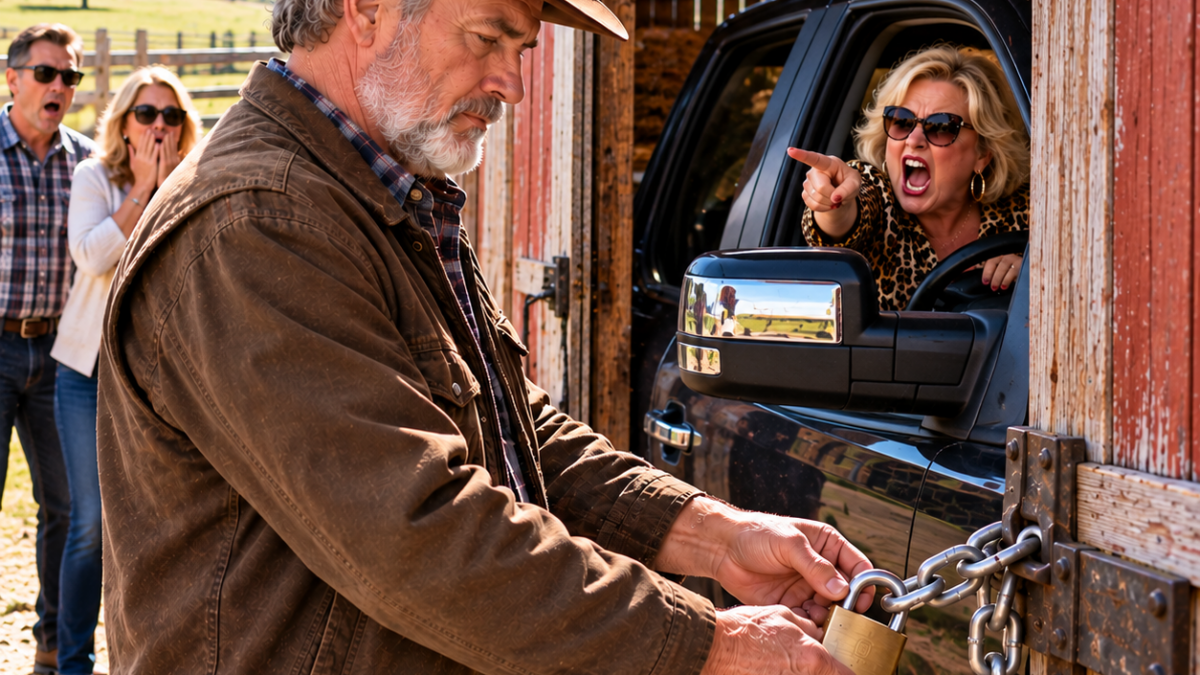
The HOA president parked her pearl-white Lexus inside my private barn without asking, looked me straight in the eye, and told me that anything sitting inside our “community” could be repurposed whenever the board decided it served a useful purpose.
I didn’t yell, threaten her, or touch the car—I simply closed my own barn doors, snapped my heavy padlock into place, and left town for the weekend while she stood in my driveway realizing her clipboard had finally met a boundary it couldn’t rewrite.
What I came home to on Sunday night turned one ridiculous parking dispute into the first loose thread of something nobody in Willow Creek was prepared to see unravel.
My name is Marcus Stenley, and I bought five acres at the edge of Willow Creek three years earlier because I wanted room.
Not isolation.
Not a fortress.
Just room.
The property sat where the subdivision ended and older wooded land began. My house was modest, but behind it stood a barn that had seen more winters than I had. The roof sagged when I bought the place. One door hung crooked. Half the interior wiring looked like it had been installed by someone who believed electrical codes were suggestions.
I repaired it myself.
New doors.
Roof reinforcement.
Lighting.
Shelving.
A proper workbench.
By the time I finished, that barn was the part of the property I was proudest of.
It was also entirely mine.
That distinction apparently meant less to Tiffany Ralston.
Tiffany was president of the Willow Creek Homeowners Association, and she carried herself like the neighborhood had elected a governor instead of a volunteer board officer. She was in her fifties, always dressed, holding a clipboard, and able to turn the smallest disagreement into a discussion about “standards.”
The previous summer, I had received a warning because my American flag had faded.
Not torn.
Not hanging improperly.
Faded.
The notice called it “unsightly exterior presentation.”
I replaced the flag because it needed replacing anyway, but I never forgot the absurdity.
Then came Friday morning.
I walked toward the barn around eight and stopped halfway across the yard.
A pearl-white Lexus sat inside.
Not beside the barn.
Inside it.
I recognized the HOA PRESIDENT decal in the rear window immediately.
I stared for several seconds, wondering whether I had somehow missed a conversation in which I had agreed to become private parking for Willow Creek officials.
Then Tiffany appeared at the end of my gravel drive.
Clipboard.
Cream pantsuit.
Smile.
“Morning, Marcus.”
I pointed toward the barn.
“Is that your car?”
“Yes.”
“Why is it in my barn?”
She answered as casually as if I had asked about the weather.
“The landscapers are reseeding near my house. I needed the street clear, your doors were open, and I figured you wouldn’t mind.”
“You figured wrong.”
Her smile tightened.
“Oh, please. We’re all part of the same community.”
“That doesn’t make my barn community property.”
She lifted the clipboard.
“Section Five, Paragraph Three allows temporary repurposing of underutilized structures for community benefit.”
I laughed.
“That section is about structures on common property.”
“It says unutilized structures.”
“On HOA land.”
“Marcus, do we really need to make this difficult?”
“You parked on my private property without permission.”
“It is not trespassing when there is a legitimate community purpose.”
“That is not how private property works.”
The smile disappeared.
Then came the part Tiffany always used when charm failed.
The threat of paperwork.
“Your west fence is still two inches above the approved height.”
I looked at her.
“So?”
“I could issue a noncompliance notice.”
“For refusing to let you use my barn?”
“For multiple outstanding concerns.”
There it was.
I could have argued.
Instead, I walked past her.
Entered the barn.
Picked up the industrial padlock I kept beside the doors.
Stepped outside.
Closed both doors.
Locked them.
Click.
Tiffany stared.
Then her eyes widened.
“Marcus.”
I pocketed the key.
“You cannot lock my vehicle in there.”
“I locked my barn.”
“My Lexus is inside.”
“I noticed.”
“Open it.”
“No.”
She stepped toward me.
“You’re being childish.”
“You’re trespassing.”
“I have somewhere to be.”
“So do I.”
I walked toward my truck.
“Where are you going?”
“My brother’s cabin.”
“For how long?”
“Weekend.”
Her expression changed completely.
“You’re joking.”
“No.”
“Marcus, unlock that door right now.”
I opened my truck.
“Cell service up there is terrible.”
“Marcus!”
I got in.
Through the rearview mirror, I saw Tiffany hurry to the barn and pull hard on the locked doors.
For once, the HOA president had nothing that could make someone obey.
And I drove away wondering whether, by Monday morning, she might finally understand the difference between community rules and somebody else’s property.
PART 2
My brother Daniel’s cabin was ninety minutes north, near a reservoir where cell service faded somewhere around the last gas station.
That was part of why I liked going there.
No neighborhood emails.
No compliance notices.
No one measuring fences.
Just pine trees, old wooden steps, and a porch overlooking water.
Daniel was already outside when I pulled in.
He took one look at my face.
“What happened?”
“HOA president parked in my barn.”
He waited.
I waited.
Then he laughed.
“You’re serious.”
“Unfortunately.”
“Why?”
“Community benefit.”
He laughed harder.
I carried my bag inside.
Daniel followed.
“So what did you do?”
“Locked the barn.”
His laughter stopped.
“With her car inside?”
“Yes.”
“Marcus.”
“What?”
“That is the most you thing I have ever heard.”
“She parked there without permission.”
“I understand.”
“It’s my barn.”
“I also understand that.”
“She could’ve asked.”
“She could have.”
“So?”
Daniel leaned against the counter.
“So Tiffany is probably having a complete meltdown right now.”
“Good.”
“And you left town.”
“Yes.”
“With the key.”
I held it up.
Daniel shook his head.
“You are absolutely impossible.”
“I learned from you.”
“No. I would have moved the car.”
“I wasn’t touching her Lexus.”
That was important.
I had no interest in damaging it.
No interest in driving it.
No interest in creating some argument where Tiffany could accuse me of doing something to her property.
I had simply secured my own building.
Could she be angry?
Obviously.
Would I have eventually opened the barn if she had apologized and agreed never to do it again?
Probably.
But after two years of petty HOA notices, surprise “inspections,” and that constant assumption that private ownership was just an inconvenience to Tiffany’s authority, I wanted her to experience a boundary.
One.
A literal door.
Daniel poured coffee.
“You know she’ll fine you.”
“For what?”
“Existing.”
“She’s been trying.”
“She’ll make something up.”
“That’s what cameras are for.”
He looked at me.
“What cameras?”
“The GoPros.”
Then I told him about the three cameras around the barn.
I had installed them after something strange happened the previous fall.
I had returned home and found tools moved inside the shed.
Nothing stolen.
Just moved.
At first I thought I had forgotten where I placed them.
Then I found one exterior latch open.
So I installed cameras.
The HOA had asked about them during an inspection.
I had casually mentioned that one was unreliable.
Tiffany apparently remembered that as:
None of them work.
That misunderstanding would become expensive for her.
I spent Friday evening fishing with Daniel.
Saturday morning we repaired part of his deck.
I checked my phone twice when we drove into the tiny town for hardware.
No messages from Tiffany.
That surprised me.
I expected twelve.
Daniel said:
“Maybe she learned.”
I looked at him.
“You don’t believe that.”
“No.”
Saturday afternoon passed.
Sunday morning too.
We drove back toward Willow Creek after dinner.
Rain started twenty miles from town.
Soft at first.
Then steady.
By the time I reached my neighborhood, the streets were glossy under the headlights.
Willow Creek looked exactly like Tiffany wanted.
Beige homes.
Trimmed hedges.
Identical mailbox posts.
Landscaping so precise it seemed anxious.
My five acres sat at the far edge like the neighborhood had ended mid-sentence.
Trees.
Gravel.
Barn.
Older fence.
House set farther back.
I pulled in.
Then stopped.
The barn lock was gone.
Not hanging open.
Gone.
I got out.
Rain soaked my shoulders.
The metal hasp had fresh scratches.
Small silver fragments lay in the gravel.
Bolt cutters.
The barn door stood three inches open.
I pushed it.
Empty.
The Lexus was gone.
My workbench was still there.
Tools.
Equipment.
Nothing obvious missing.
Then I saw the paper.
Folded neatly.
Centered on the bench.
Willow Creek HOA letterhead.
Of course.
I opened it.
**NOTICE OF VIOLATION**
**Unauthorized use of structure for private storage.**
I read it again.
My barn.
Private storage.
Apparently the HOA was now fining me for using my private barn as a private barn.
Then:
**$250 FINE**
Further violations may result in legal action.
Compliance Office.
I stood in the rain and stared at the page.
I did not know whether to laugh or become furious.
Tiffany had:
Parked her vehicle on my property.
Entered my barn without permission.
Apparently arranged for my lock to be cut.
Removed her vehicle.
Left the doors unsecured.
Then fined me.
The arrogance was almost impressive.
I went inside.
Changed clothes.
Made coffee.
Then opened the hall closet.
Small black hard case.
Inside:
GoPro equipment.
I removed the memory card from the camera covering the barn approach.
Laptop.
Video.
Friday.
My truck leaving.
Tiffany pacing.
Pulling the doors.
Making phone calls.
Then eventually walking away.
Saturday.
Nothing until 11:42 a.m.
Tiffany appeared from the driveway.
Umbrella.
Clipboard.
A man beside her.
Tall.
Heavy jacket.
Bolt cutters.
No masks.
No attempt to hide.
He walked directly to the barn.
Tiffany pointed at the lock.
He positioned the cutters.
One push.
Nothing.
Second.
Metal twisted.
Third.
Lock dropped.
I paused the footage.
Zoomed.
Her face clearly visible.
His face clearly visible.
Timestamp.
She opened the doors.
The man picked up the broken lock.
Tiffany looked inside.
Then walked out of camera view.
A few minutes later, the Lexus rolled from the barn.
The man left the doors open.
Tiffany placed something on my workbench.
Violation notice.
They walked away.
I watched it twice.
Then backed it up.
Laptop.
External drive.
Cloud.
I had learned enough from Tiffany not to depend on one copy of anything.
Monday morning I drove to the county sheriff’s office.
Deputy Collins sat behind the front desk drinking coffee.
He had a mustache so large it appeared to arrive five seconds before the rest of him.
“What can I do for you?”
“My barn lock was cut.”
“Anything stolen?”
“No.”
He looked up.
“Then?”
“Someone retrieved a car.”
He stared.
“From your barn?”
“Yes.”
“Why was the car there?”
“That is a longer story.”
He leaned back.
“Monday morning is slow.”
I explained.
Private barn.
Tiffany.
Unauthorized parking.
Padlock.
Weekend.
Return.
Cut lock.
Fine.
Collins rubbed his face.
“Let me understand.”
“Okay.”
“She put her car in your barn.”
“Yes.”
“Without asking.”
“Yes.”
“You secured the barn.”
“Yes.”
“She came back with somebody and cut your lock.”
“Yes.”
“And then fined you.”
“Yes.”
He looked toward another deputy.
“You hearing this?”
The other deputy pretended not to.
Collins sighed.
“Video?”
I turned the laptop.
He watched.
The humor disappeared.
“Do you know the man?”
“No.”
“Permission to enter?”
“No.”
“Permission to cut the lock?”
“No.”
“Any damage besides the lock?”
“Latch scratched. Doors left open.”
He watched again.
Then:
“Leave me a copy.”
“I brought one.”
I handed over a flash drive.
He smiled slightly.
“You came prepared.”
“I had the weekend.”
Collins began typing.
“We’ll take a formal statement.”
I gave one.
He explained that the county attorney would decide what charges, if any, the evidence supported.
That was fine.
I was not there to play prosecutor.
I just wanted the incident documented by somebody whose authority did not come from a homeowners-association charter.
When I returned home, another notice was taped to the door.
I saw it from the driveway.
Bright white.
Bold.
I photographed it before touching anything.
**FAILURE TO MAINTAIN STRUCTURE SECURITY**
Doors allegedly left open.
Potential liability.
Fine:
$400.
I stared.
Tiffany had cut the lock.
Opened the doors.
Left them unsecured.
Then her HOA fined me for failing to secure them.
I sent Collins the photograph.
Ten minutes later he called.
“Please tell me that’s satire.”
“No.”
“She issued another fine?”
“Yes.”
“For the doors she opened?”
“Apparently.”
Long silence.
Then:
“Do not respond to her directly.”
“Gladly.”
“We’re sending this over with the rest.”
“To?”
“County attorney’s office.”
That afternoon I replaced the lock.
New hasp too.
Then I installed another camera.
Not hidden.
Obvious.
A message without words.
Tuesday around two, a silver township vehicle pulled into my driveway.
A woman got out.
Early forties.
Dark blazer.
Hair pulled back.
Leather folder.
She walked toward me while I was tightening the hinge.
“Marcus Stenley?”
“Yes.”
“Angela Voss.”
I recognized the name.
Township legal counsel.
I had watched her dismantle a developer’s zoning argument at a public meeting the previous year without ever raising her voice.
She shook my hand.
“Deputy Collins forwarded the complaint.”
“That was quick.”
“Cutting through a resident’s lock while invoking HOA authority tends to get attention.”
Fair.
She asked permission to view the footage.
We went inside.
I played it.
She watched once.
Then again.
Pause.
Notes.
“What is Tiffany saying here?”
“No audio at that distance.”
“Fine.”
She watched the man cut the lock.
“Do you know him?”
“No.”
“We’ll identify him.”
She watched Tiffany leave the violation notice.
Then closed the laptop.
“Tell me about your history with the HOA.”
So I did.
Flag.
Fence.
Inspections.
Letters.
Warnings.
Nothing dramatic.
Individually, almost silly.
Angela did not laugh.
“How often are you fined?”
“Four times in two years.”
“Did you appeal?”
“Three.”
“Results?”
“Denied.”
“Same board?”
“Yes.”
“Who heard the appeals?”
“Tiffany chaired all three.”
Angela’s pen stopped.
“She fined you and chaired the appeal?”
“Usually.”
“Records?”
“I keep everything.”
“Good.”
She looked around my kitchen.
“HOAs are private entities. They can enforce valid agreements within their lawful scope.”
“I know.”
“But private rules do not turn a board president into a public official.”
“That seems to be the confusion.”
“I want ninety days of enforcement records.”
“From me?”
“From the HOA.”
She stood.
“We’re opening a formal review.”
“For the lock?”
“For the lock, the notices, and whether association authority is being represented beyond its actual scope.”
“What should I do?”
“Nothing dramatic.”
“That keeps coming up.”
“There’s probably a reason.”
Then she gave me her card.
“If Tiffany contacts you, preserve it.”
“Will do.”
“And Marcus?”
“Yes?”
“Do not turn this into a neighborhood war.”
“I’m not trying to.”
“Good.”
She left.
The next three days were strange.
Quiet.
No notices.
No Tiffany.
No security patrol.
No HOA email.
Her Lexus stayed in her driveway.
Curtains closed.
Willow Creek had never been so peaceful.
Friday morning Collins called.
“Come down when you can.”
I arrived before lunch.
He had a folder waiting.
Angela was there.
“Sit,” she said.
That word never sounds good in government offices.
Collins opened the file.
HOA expense reports.
Angela had requested records through the investigation.
Payments.
Vendor invoices.
Reimbursements.
Then one name repeated:
**RALSTON LANDSCAPING**
I knew it.
Tiffany’s brother.
More than twenty thousand dollars over a relatively short period.
Descriptions included:
Lawn assessments.
Fence consultation.
Shade optimization.
I looked at Angela.
“What exactly is shade optimization?”
“That is an excellent question.”
Collins slid over another sheet.
“Same company received work after residents were cited for landscaping issues.”
I read.
A pattern.
Fine.
Correction requirement.
Recommended vendor.
Ralston Landscaping.
Angela said:
“We’re verifying whether homeowners were pressured to use the company.”
“Related-party contract?”
“Yes.”
“Disclosed?”
“We haven’t found adequate disclosure yet.”
“Illegal?”
“Don’t jump ahead.”
I nodded.
Good.
She continued.
“The problem isn’t that a board can never hire someone related to a board member.”
“Conflict disclosures.”
“Exactly.”
“Competitive process.”
“Sometimes.”
“Fiduciary duty.”
“Yes.”
She looked almost pleased.
“I read.”
Collins said:
“Please don’t encourage him.”
Then another document.
Residents who challenged vendor work had received additional fines.
Not proof of retaliation.
But concerning.
Angela closed the folder.
“We’re seeking temporary limits on enforcement activity while records are examined.”
“What happens to my fines?”
“Frozen.”
“All?”
“For now.”
Monday, every Willow Creek homeowner received a township notice.
HOA enforcement temporarily suspended pending review.
Hotline provided.
Residents invited to report relevant experiences.
Tiffany named as president under investigation.
By Wednesday, more than sixty calls.
Sixty.
That number stunned me.
I had assumed most people were happy.
Or at least indifferent.
They weren’t.
Howard Bennett, retired Navy pilot, had been cited repeatedly over a flag display.
Ellie Ramirez, a nurse, had been fined because her work van sat in her driveway overnight.
The Hendersons nearly faced lien proceedings after a fight over rose bushes.
A retired teacher had been threatened over a bird feeder.
Bird feeder.
I stood in my front yard Thursday morning staring at signs neighbors had planted along the road.
**HOA DOESN’T OWN US**
**LET PEOPLE LIVE**
**FREE THE FEEDER**
**RALSTON RESIGN**
Then one appeared near my barn.
Hand-painted:
**THIS BARN PROTECTED BY PETTY VENGEANCE AND THE LAW**
I laughed.
I should have removed it.
I didn’t.
Howard walked over carrying coffee.
“That one yours?”
“No.”
“Shame.”
“I’m thinking of framing it.”
He handed me a cup.
We stood looking at the barn.
Howard said:
“I owe you an apology.”
“For?”
“I thought you were an ass.”
“That assessment may still be accurate.”
He smiled.
“I mean about Tiffany.”
“What did you think?”
“That you liked fighting her.”
“I didn’t.”
“I know now.”
He looked toward her street.
“She fined me over the flag.”
“I heard.”
“Not the flag itself.”
“What?”
“Pole angle.”
I stared.
“Seriously?”
“Three degrees outside approved display orientation.”
“You measured?”
“She did.”
We both laughed.
Then he became serious.
“My wife wanted me to take it down.”
“Why didn’t you?”
“Forty years flying for the Navy. I figured I earned three degrees.”
Fair.
The next Friday, Collins knocked on my door.
Hat in hand.
“Got coffee?”
“Is that why you came?”
“Partly.”
We sat at the kitchen table.
He opened a folder.
“Recognize this entity?”
**WILLOW CREEK RESIDENTIAL OUTREACH INITIATIVE**
“No.”
“Neither did we.”
Payment:
Just under $5,000.
Community wellness grant.
Address:
Empty lot outside town.
Owner of the lot:
Tiffany’s daughter.
I looked up.
Collins continued.
“Purchased recently.”
“Cash?”
“Yes.”
“Connection?”
“Still being examined.”
Then wire transfers.
Multiple entities.
Small amounts.
Different states.
HOA treasury account.
Angela arrived twenty minutes later with a laptop.
She looked tired.
“Morning.”
Collins said:
“Marcus has coffee.”
“Then he’s finally useful.”
She sat.
Pulled up business records.
Nine entities under review.
Some with mailing addresses but no obvious operations.
Some associated with people tied to Tiffany.
One company Tiffany’s daughter had listed as an employer.
That company had invoiced the HOA for mailing services.
No identifiable employees.
No normal business footprint.
Angela said:
“We requested a forensic audit.”
“How much?”
“Too early.”
“Ballpark?”
“No.”
“Angela.”
“No.”
“Fine.”
She almost smiled.
Then:
“Court approved a temporary freeze over HOA-controlled accounts subject to the investigation.”
That was serious.
“What happens to normal bills?”
“Court-supervised essential payments.”
“So landscaping?”
“Still happens.”
“Pool?”
“Yes.”
“Utilities?”
“Yes.”
“No enforcement spending?”
“Correct.”
For the first time, Tiffany could not solve a problem by charging the neighborhood for it.
State investigators arrived that afternoon.
Unmarked vehicles.
Interviews.
Requests.
Records.
Digital backups.
Meeting minutes.
A woman approached me near the mailbox.
“Marcus Stenley?”
“Depends.”
Badge.
“Keller. Financial Crimes Division.”
“Then yes.”
We went inside.
She laid out diagrams.
Entities.
Payments.
Connections.
“This began with your barn incident.”
I frowned.
“The lock?”
“The paperwork after it.”
“What paperwork?”
“Tiffany filed an internal complaint justifying the forced entry.”
I leaned forward.
“She documented it?”
“Very thoroughly.”
That was the irony.
People who misuse authority often love paperwork because paperwork makes them feel legitimate.
Keller handed me a memo.
Three days before Tiffany parked her Lexus.
My address.
My property.
Barn described as:
**Potential Community Resource**
Proposed:
Temporary reassignment of access.
I read it twice.
“They planned it.”
“Looks like somebody discussed the idea in advance.”
“This wasn’t an emergency parking situation.”
“No.”
“She told me the landscapers forced her to move.”
“That may or may not have been true.”
“But the memo predates it.”
“Yes.”
The whole interaction shifted in my memory.
Tiffany had not simply seen an open barn and behaved arrogantly.
At minimum, the HOA had already discussed treating my private structure as available community space.
My refusal became more than inconvenience.
It challenged a policy they had never properly adopted.
Keller said:
“That complaint referenced an internal policy.”
“Which?”
“Temporary Community Resource Reassignment.”
“Never heard of it.”
“Neither have most board members.”
“Ratified?”
“We have not located a valid vote.”
“So Tiffany cited a policy that didn’t officially exist.”
“That’s one of the issues.”
I leaned back.
“And that led you into the finances?”
“Into everything.”
By dusk, word spread that Tiffany had been taken in for questioning.
Not convicted.
Not tried.
Questioned.
I made a point of saying that whenever someone came to my porch.
Because suddenly everybody had a story.
People love certainty when a disliked authority figure is finally vulnerable.
I did not.
I’d spent two years angry because Tiffany treated accusations like facts.
I wasn’t going to repeat her method.
Howard arrived first.
Then Ellie.
Then the Hendersons.
We sat in folding chairs on my porch.
Citronella candles.
Beer.
Tea.
Nobody celebrated.
Mostly we talked.
Ellie said:
“I thought I was the only one.”
Howard:
“Everybody thought that.”
Mrs. Henderson wiped her eyes.
“When they threatened the lien, my husband wanted to sell.”
Her husband looked down.
“I thought fighting would cost more.”
That sentence summarized the entire neighborhood.
Tiffany did not need everyone to believe she was right.
She needed them to believe resistance was expensive.
On Sunday, residents organized a meeting in the community park.
Not the HOA.
Residents.
Under an old oak tree.
Angela attended.
Agent Keller.
Collins.
State auditor representative.
More than one hundred residents gathered.
Some brought lawn chairs.
Some stood.
One mother had two kids playing in the grass behind her.
Keller explained what they could.
Ongoing investigation.
Estimated misappropriated funds already above $100,000.
Possibly more.
People gasped.
A man shouted:
“How?”
Keller answered:
“Multiple vendors, entities, transfers, and allegedly improper expenditures.”
Ellie raised her hand.
“Can we dissolve the HOA?”
The entire crowd went quiet.
Angela answered.
“Your governing documents permit dissolution if the required supermajority and legal steps are satisfied.”
Someone asked:
“What happens to common property?”
“Needs legal transition.”
“Road maintenance?”
“Alternative structure.”
“Pool?”
“Ownership has to be assigned.”
“Can we vote?”
“You can begin the process.”
Howard stood.
“Then begin.”
Hands rose.
Not an official dissolution vote.
A show of intent.
Enough.
Petition circulated Monday.
Within forty-eight hours, enough signatures to start formal proceedings.
Tiffany’s house went silent.
Her husband remained.
She seemed to leave town for a while.
Rumors multiplied.
I ignored them.
Then a district-court notice arrived confirming formal criminal allegations had been filed.
Wire-related fraud allegations.
Embezzlement-related counts.
Conspiracy.
Misappropriation.
Serious charges.
I pinned the notice to my refrigerator.
Daniel visited and saw it.
“You framed the enemy?”
“No.”
“Then why is that up?”
“Reminder.”
“Of what?”
“That locking a barn caused all this.”
He laughed.
“You know that’s not really what happened.”
“I know.”
“You locking the barn did not make Tiffany steal money.”
“No.”
“It exposed something.”
“Yes.”
“Important difference.”
My brother surprised me sometimes.
The dissolution process reached quorum weeks later.
Township clerk delivered paperwork.
No parade.
No speeches.
Just an envelope.
The old HOA was effectively on its way out, subject to winding down debts, common-area responsibilities, and legal requirements.
I thought the story was ending.
Then Angela called.
“Courthouse.”
“What now?”
“You’ll want to see it.”
I hated when she said that.
Third floor.
Archive room.
Laptop.
Flash drive.
She played security footage from the old HOA office.
Four months earlier.
Tiffany stood near a shredder.
Beside her:
Tall man.
Navy blazer.
Bright red tie.
“Curtis Dre,” Angela said.
“Attorney?”
“Called himself HOA counsel.”
“Called?”
“He isn’t licensed here.”
I looked at her.
“Never?”
“Not in this state.”
Video resumed.
Tiffany handed him a folder.
He flipped pages.
Fed them through shredder.
One after another.
Angela paused.
“Financial records.”
“Which?”
“Missing quarter from previous audit.”
My stomach tightened.
Second video.
Different camera.
Inside Curtis’s office.
Drawer.
Blank HOA citation forms.
Mechanical stamp.
Tiffany’s signature.
Stamp.
Stamp.
Stamp.
I stared.
“They fabricated notices.”
Angela nodded.
“Investigators allege they used enhanced balances on selected homeowner accounts.”
“How?”
“Additional fees.”
“For what?”
“Various compliance items.”
“Then?”
“Debts bundled.”
“Sold?”
“Some.”
“To whom?”
Angela turned the screen.
Collections firm.
Different name.
Registered connection:
Curtis Dre.
I stared.
“He was buying debts created by an HOA he advised.”
“That is part of the allegation.”
“And threatening liens.”
“Yes.”
“Foreclosures?”
Angela’s expression changed.
“Three properties require review.”
“Actually foreclosed?”
“Potentially wrongful.”
“Three?”
“One vacant.”
That hit differently.
Money is abstract until it becomes a house with nobody living in it.
“Who owned it?”
“Patricia Harrove.”
“Where is she now?”
Angela looked at me.
“Why?”
“I want to meet her.”
A week later, Patricia sat on my porch.
Early sixties.
Widow.
Small woman.
Hands wrapped around tea.
Her husband died of a heart attack two years earlier.
Three months later, HOA fees started.
Landscaping.
Exterior upkeep.
Late charges.
Administrative penalties.
Nearly $5,000.
Then lien.
Legal threats.
Collections.
Patricia said:
“I thought I had done something wrong.”
I hated that sentence.
“You asked questions?”
“At first.”
“What happened?”
“They sent more letters.”
“Lawyer?”
“I couldn’t afford one.”
“Family?”
“My daughter lives in Arizona.”
She looked embarrassed.
“I didn’t want to tell her I was losing the house.”
“Why?”
“Because her father and I worked thirty years for it.”
She stared into her tea.
“And then after he died, I couldn’t even keep it.”
I said:
“Patricia.”
She looked up.
“You didn’t fail.”
Her eyes filled.
“We have records now.”
“Can I get anything back?”
“The property is vacant.”
She stopped breathing for a second.
I continued.
“There may be a process.”
“What process?”
“I’d like to buy it.”
She stared.
“Why?”
“Then transfer it back.”
“No.”
“Yes.”
“I couldn’t pay you.”
“I don’t want profit.”
“Marcus—”
“Let the lawyers figure it out.”
She covered her mouth.
I had expected gratitude.
What I got was grief.
She cried for ten minutes.
Not because a house was coming back.
Because somebody finally told her the story might not end with loss.
It took two weeks.
Angela made calls.
State investigators coordinated.
Title issues.
Court approval.
Paperwork.
Township waived certain transfer costs.
I paid closing expenses.
Then Patricia received the deed.
The day she moved home, half the street showed up.
Howard carried boxes.
Ellie brought food.
The Hendersons cleaned the kitchen.
I repaired the back fence.
Patricia stood in the doorway.
Her hand over her mouth.
A photograph of her husband still sat on a shelf because the house had been vacant and most belongings had remained in storage.
She picked it up.
Pressed it against her chest.
That was when I stopped caring about whether Tiffany ever apologized.
Patricia had her home.
That mattered more.
State action against former board members continued.
Several faced civil penalties for failures of oversight.
Some were barred for years from serving in similar administrative positions.
Curtis Dre was arrested in another county while investigators were examining a new company connected to him.
Fraud-related allegations.
Forgery.
Obstruction issues.
His case was separate.
Tiffany’s indictment grew.
Nine counts in the source record.
Investigators alleged more than $120,000 had been diverted or misused over two years.
The exact amount became part of the forensic accounting.
Her trial was scheduled for fall.
I received a subpoena.
Angela came to my house.
“You’re testifying.”
“I assumed.”
“Your barn footage matters.”
“I figured.”
“Your interaction matters.”
“Unfortunately.”
“You will not editorialize.”
“Angela.”
“I know you.”
“You barely know me.”
“I know enough.”
She opened a folder.
“Question: Did Tiffany Ralston park her Lexus in your barn?”
“Yes.”
“Did you give permission?”
“No.”
“What did you do?”
“Secured my barn.”
“Don’t say trapped.”
“I wasn’t going to.”
“Did you damage her vehicle?”
“No.”
“Threaten her?”
“No.”
“What happened while you were away?”
“Someone cut the lock.”
“Who appears in the video?”
“Tiffany and the man investigators later identified.”
“Good.”
We practiced.
Facts.
Nothing more.
Meanwhile, the barn became a neighborhood joke.
Then something else.
A symbol.
People asked to use it.
Not assume.
Ask.
That distinction became almost sacred to me.
Neighbor wanted to store firewood.
“Sure.”
“How much?”
“One wall.”
“For how long?”
“Three months.”
We wrote it down.
Kids’ art class.
“Can we use the barn Saturday?”
“Yes.”
“Mess?”
“Clean it.”
Agreement.
Nothing fancy.
One page.
Permission.
Boundary.
Respect.
Howard said:
“You’ve become an HOA.”
“Get off my property.”
He laughed.
One Saturday I came home to find a carved wooden sign above the doors.
**NO TRESPASSERS. NO TYRANTS. COMMUNITY WELCOME.**
Nobody admitted making it.
Howard absolutely made it.
He denied everything.
I left it.
Town council responded too.
New county rules for any future HOA operating in the township.
Registration.
Quarterly financial disclosures.
Accessible meeting minutes.
Clear vendor conflict reporting.
Public contact information.
Not every detail came from my case.
Officials had been discussing oversight already.
But Willow Creek made the need impossible to ignore.
Angela helped draft.
Residents commented.
I reviewed sections about private-property enforcement.
“Too vague,” I told her.
“You are not counsel.”
“Still vague.”
She rewrote it.
Passed unanimously.
The neighborhood changed.
Flags appeared.
Different colors on front doors.
Work vans stayed in driveways.
One family let their teenager paint a mural across their backyard fence.
Bright shapes.
Blue.
Orange.
Red.
Tiffany would have hated it.
I drove past.
Howard stood beside me.
“You like that?”
“No.”
He looked shocked.
“Then complain.”
“Why?”
“It’s ugly.”
“Not my fence.”
Howard smiled.
“That took you long enough.”
Trial day arrived in October.
I wore jeans.
Boots.
Clean shirt.
Angela looked me up and down outside the courthouse.
“You own a suit.”
“Yes.”
“Why aren’t you wearing it?”
“I’m testifying about a barn.”
She sighed.
“Fine.”
Inside:
Jury.
Judge.
Prosecutors.
Defense.
Tiffany at the table.
She looked smaller than I remembered.
Not physically.
The clipboard was gone.
That mattered more than it should have.
People appear different when the symbols of their authority disappear.
I took the stand.
Oath.
Questions.
Name.
Property.
Barn.
Friday morning.
Lexus.
Conversation.
I repeated Tiffany’s explanation.
Community benefit.
Section Five, Paragraph Three.
My response.
Private land.
Then:
“What did you do?”
“I closed and locked my barn.”
“With the vehicle inside?”
“Yes.”
“Why?”
“Because I did not consent to my barn being used as parking.”
“Did you touch the Lexus?”
“No.”
“Move it?”
“No.”
“Damage it?”
“No.”
“Did you leave town?”
“Yes.”
“For how long?”
“Until Sunday.”
“What did you find?”
“Lock removed. Car gone. Violation notice inside.”
Video played.
The jury watched.
Tiffany.
Curtis’s associate, later identified.
Bolt cutters.
Lock falling.
Car leaving.
Notice.
The prosecutor asked:
“What happened after you reported this?”
I explained enough to connect the complaint to the broader investigation.
Then stepped down.
I was not the case.
That mattered.
Bank records were the case.
Audit.
Shell entities.
Fake vendor arrangements.
Fabricated citations.
Recorded office footage.
Curtis.
Resident testimony.
Patricia.
I was one domino.
The verdict came back guilty on all counts presented in that trial.
Sentencing six weeks later.
Five-year minimum term under the source outcome.
Restitution.
Orders addressing affected homeowners.
Tiffany said nothing.
She stared forward.
I expected to feel triumphant.
Nothing.
Relief.
Maybe.
Settlement.
Like a door had finally closed.
Outside courthouse, sunlight.
Traffic.
Someone using a leaf blower.
Normal life.
Howard met me on sidewalk.
“Heard about the mural?”
“What now?”
“Guy across from Ellie says it ruins the neighborhood.”
“What did you tell him?”
Howard grinned.
“Not my fence.”
I laughed.
That phrase spread.
**Not my fence.**
**Not my driveway.**
**Not my flag.**
**Not my barn.**
It became the unofficial rule Willow Creek should have understood from the beginning.
Your rights end where somebody else’s begin.
Simple.
Hard for certain people.
The former HOA’s common responsibilities did not disappear magically.
Residents created a smaller maintenance association for genuinely shared property.
Road landscaping.
Drainage.
Pool.
No aesthetic enforcement over private yards.
No surprise inspections.
No private fines for flags.
Budgets published.
Contracts disclosed.
Meetings short.
Painfully boring.
Perfect.
Ellie became treasurer.
Howard wanted president.
Nobody allowed it.
Correct decision.
Patricia joined a resident advisory committee after moving home.
At the first meeting, she barely spoke.
Months later, she was the one asking the sharpest questions.
“What company owns this?”
“Any family relationship?”
“Three bids?”
“Who approved it?”
Fear had been replaced by scrutiny.
That was one of the best things to come from the whole mess.
I visited her one spring afternoon.
She had replanted flowers near the front steps.
Her husband had loved yellow roses.
She put them back.
“Come see.”
I walked over.
Small rose bushes.
New.
Barely blooming.
“They’re beautiful.”
“They’re tiny.”
“They’ll grow.”
She looked at me.
“I thought I’d never plant here again.”
Neither of us said anything for a while.
Then:
“Why did you help me?”
I shrugged.
“You were wronged.”
“People are wronged every day.”
“Yes.”
“You paid money.”
“Yes.”
“You didn’t know me.”
“No.”
“Then why?”
I looked toward the house.
“Because I could fix one thing.”
She nodded slowly.
“Only one?”
“At a time.”
That became more important to me than exposing Tiffany.
Systems can feel too large.
$120,000.
Nine entities.
Dozens of fines.
Three homes.
Hundreds of residents.
You can become paralyzed trying to repair everything.
But one house?
One deed?
One barn?
One person?
Start there.
My own barn changed too.
Before Tiffany, it was a workshop.
Afterward, people saw it as something public.
Not public property.
Community space by invitation.
That phrase mattered.
**By invitation.**
Kids painted there.
Howard stored a canoe one winter.
Ellie organized a first-aid class.
A woodworking group used it twice a month.
I kept rules.
Ask.
Schedule.
Clean up.
Respect tools.
Lock doors.
Nobody complained.
I never charged.
Daniel visited.
Walked inside.
Saw twelve kids painting birdhouses.
He stared.
“You locked Tiffany’s Lexus in here because it was private.”
“Still private.”
“There are twelve children.”
“Invited.”
He laughed.
“You’re impossible.”
“Consistent.”
He pointed at the carved sign.
“Howard made that.”
“I know.”
“You told me nobody admitted it.”
“He can’t keep secrets.”
The original cut padlock sat in a drawer.
I kept it.
Not as trophy.
Evidence eventually returned after the case.
I almost threw it out.
Then decided to hang it beside the workbench.
A reminder:
Locks don’t create property rights.
They only mark them.
Respect does the rest.
Years later, newcomers to Willow Creek sometimes heard exaggerated versions.
“The HOA president stole his barn.”
No.
“She tried to seize his land.”
Not exactly.
“He locked her in.”
Absolutely not.
“The FBI came because of a Lexus.”
Also no.
Stories simplify themselves.
The truth was stranger and more ordinary.
A woman who had gone too long without boundaries assumed another person’s building could serve her convenience.
Then, when challenged, she used paperwork to justify it.
That paperwork created a record.
The record opened questions.
Questions reached finances.
Finances exposed patterns.
Patterns exposed people who had been too scared or isolated to compare experiences.
The real turning point was not the lock.
It was neighbors talking to each other.
Howard had believed he was alone.
Ellie believed she was alone.
Patricia believed she had failed.
The Hendersons believed resistance would ruin them.
Tiffany’s authority depended on those people never sitting together on one porch.
Once they did, the scale changed.
That taught me something about power.
A clipboard is not power.
A title is not power.
A fine is not power.
Real power comes from people believing those things cannot be challenged.
The moment they ask:
“Where does it say that?”
Everything changes.
I became annoying about that phrase.
Community maintenance board proposed a new parking policy.
I asked:
“Where does it say that?”
Ellie rolled her eyes.
“Marcus.”
“Where?”
“In the draft.”
“Good.”
Howard wanted to ban overnight street parking during snow.
“Authority?”
“Municipal ordinance.”
“Good.”
Someone wanted standards for exterior storage.
“No.”
“Why?”
“Private yards.”
“What about rats?”
“Health code already exists.”
“You enjoy this.”
“A little.”
The goal was not to eliminate rules.
That would be childish.
Shared spaces require rules.
Roads.
Drainage.
Pool safety.
Money.
The problem was rule creep.
A rule designed for common property becomes a reason to control a private barn.
Section Five, Paragraph Three had been exactly that.
Common structures.
Tiffany stretched it until it reached my doors.
The new governance documents included a sentence Angela suggested after our case:
**Nothing in these provisions authorizes entry onto, possession of, or temporary use of privately owned property without express owner consent or lawful governmental authority.**
I loved that sentence.
Howard called it the Marcus Clause.
I hated that name.
It stuck.
Five years later, Willow Creek looked less uniform.
Better, in my opinion.
Some houses still beige.
Some blue.
One dark green.
Flags.
Flower beds.
That ridiculous mural still there, slightly faded.
Someone painted a giant sun on one garage door.
Not my taste.
Not my garage.
Patricia’s roses grew tall.
She sent me a photo every spring.
The original HOA president’s house eventually sold.
New family moved in.
Young parents.
Two kids.
They had no idea at first who used to live there.
One Saturday, the father came to borrow a ladder.
“Mr. Stenley?”
“Marcus.”
“I’m Ben.”
“I know.”
“You do?”
“Howard gave me a full background check.”
He laughed.
“Could I borrow your extension ladder?”
“Yes.”
“For an hour.”
“Write your number on the board.”
He saw the list.
Canoe.
Post driver.
Ladder.
Chairs.
“You track everything?”
“Lessons learned.”
He returned it early.
Good neighbor.
Months later, his daughter joined the art class in the barn.
Life has a sense of humor.
The house Tiffany once ruled from became just another home.
That felt right.
No monument.
No shame.
No need to make her family part of her actions.
Her husband eventually moved away.
I rarely saw him after the trial.
I never blamed him publicly.
I did not know what he knew.
That distinction mattered.
One of the most dangerous things about neighborhood conflict is how easily responsibility spreads to people merely standing nearby.
Tiffany was responsible for Tiffany.
Curtis for Curtis.
Board members for what they did or failed to do.
Residents for their own choices.
No collective guilt.
That principle became important during restitution.
Some residents wanted every former board member punished equally.
Angela pushed back.
“Evidence.”
That word again.
One member had repeatedly voted no.
Another had missed meetings because of illness.
One failed to review financials.
Another signed checks.
Different conduct.
Different consequences.
People hated nuance.
Law requires it.
So should fairness.
The final state audit came out almost a year after the barn incident.
It documented internal-control failures.
Related-party transactions.
Poor vendor oversight.
Improperly supported expenses.
Manipulated enforcement procedures.
Records destruction.
The number was ugly.
But the report also listed recommendations.
Two-signature requirements.
Independent financial review.
Conflict disclosures.
Open records.
Retention rules.
Those recommendations mattered more to me than the number.
Money can be repaid.
Bad systems repeat themselves unless redesigned.
Angela sent me a copy.
I called.
“You expect me to read ninety-seven pages?”
“You read HOA bylaws for fun now.”
“I do not.”
“You highlighted the draft ordinance.”
“Against my will.”
“Page forty-two.”
“What?”
“Barn incident.”
I opened.
There it was.
Not dramatic.
Three sentences.
Private-property dispute triggered inquiry into enforcement authority and associated financial practices.
No mention of locking the Lexus inside.
“Boring.”
Angela said:
“Official reports are supposed to be.”
“Howard will be disappointed.”
“Howard should never be given an official report.”
Agreed.
The county ordinance created after the scandal had effects outside Willow Creek.
Other HOAs began filing quarterly records.
Some residents discovered nothing wrong.
Good.
Oversight should not begin with assumption of guilt.
A few boards changed vendors after conflict reviews.
Another association created an appeal process where the person issuing a fine could not also decide the appeal.
Imagine.
I spoke at one public meeting when asked.
Only once.
I said:
“Rules work best when the person enforcing them would accept the same process if roles were reversed.”
That sentence came from Patricia.
She told me one afternoon:
“If Tiffany had been the homeowner and I had been president, she would never have accepted what she did to me.”
Exactly.
Fairness test.
Flip the roles.
Would you still call it reasonable?
If no, something is wrong.
I never became anti-HOA in the simplistic sense.
People expected me to.
Some neighborhoods want shared standards.
Fine.
People voluntarily buy into them.
Also fine.
But voluntary agreement is not blank authority.
A covenant about common landscaping does not create a right to enter someone’s barn.
A dues provision does not justify secret family contracts.
A board title does not turn a private person into government.
And “community” is not a magic word that dissolves ownership.
Tiffany’s first argument had been:
**What’s mine is yours and vice versa.**
She did not believe that.
I knew because I once joked to Howard:
“Should we park in her garage?”
He laughed for ten minutes.
The absurdity revealed the principle.
Community sharing only works with consent.
Otherwise it is taking.
Simple.
My relationship with the barn changed most.
For years I thought of it as proof I could fix things myself.
Roof.
Doors.
Wiring.
Then it became proof that boundaries matter.
Then community space.
Eventually it just became a barn again.
That was probably the healthiest stage.
One rainy Friday, almost exactly six years after Tiffany parked her Lexus, I was working on an old table saw.
A white SUV pulled into my driveway.
My body reacted before my brain.
Old memory.
Then a woman stepped out.
New neighbor.
Melissa.
She approached.
“Marcus?”
“Yes.”
“Sorry to bother you.”
“No problem.”
“Our garage door is stuck.”
“Okay.”
“We’re expecting hail tonight.”
“Okay.”
“Could I park my car in your barn for a few hours?”
I stared.
She became nervous.
“Only if there’s space.”
Then I laughed.
Harder than she understood.
“Yes.”
“You sure?”
“Absolutely.”
She parked inside.
I handed her a key.
“What’s this?”
“Barn.”
“You trust me?”
“You asked.”
That was the difference.
Four hours later she returned.
Car out.
Key back.
No clipboard.
No fine.
No investigation.
I stood inside the doors after she left.
Rain against roof.
Same barn.
Completely different feeling.
I realized the building had never needed protection from people.
It needed protection from entitlement.
People are easy.
Ask.
Listen to answer.
Respect it.
Done.
The final time I saw Patricia Harrove before she moved closer to her daughter, she gave me a rose cutting from her garden.
“Take it.”
“I kill plants.”
“Learn.”
“I have a barn.”
“Not relevant.”
She made me plant it near the porch.
First year, barely survived.
Second year, two flowers.
Third year, full bush.
Every spring I think of her husband.
A man I never met.
I think about a woman who believed she lost their house because she was weak.
She wasn’t.
She had been isolated and overwhelmed by a system designed to sound more legitimate than it was.
That is why I dislike the phrase:
“Why didn’t they fight?”
Fight with what?
Money?
Legal knowledge?
Time?
Energy after a spouse dies?
Confidence when every letter says you’re wrong?
Sometimes fighting begins when one other person says:
“I believe you.”
That is what the residents eventually gave each other.
Not heroics.
Witness.
Ellie believed Howard.
Howard believed Patricia.
Patricia believed the Hendersons.
They compared letters.
Amounts.
Dates.
Vendor names.
Suddenly private shame became public pattern.
Tiffany had built power from isolation.
Community broke it.
Not my padlock.
Community.
The carved barn sign weathered over time.
**NO TRESPASSERS. NO TYRANTS. COMMUNITY WELCOME.**
Letters faded.
I considered replacing it.
Instead, I sanded it lightly and sealed the wood.
Keep the scars.
Howard approved.
“Authentic.”
“You made it.”
“No proof.”
“Your initials are on the back.”
He stared.
“I was framed.”
Some things never change.
Daniel still jokes that I started a state investigation because I refused to let a Lexus stay dry during landscaping.
I tell him:
“That is an irresponsible summary.”
“Accurate?”
“Technically.”
“You loved locking that door.”
“For about five minutes.”
“Worth it?”
I think about that sometimes.
If I could go back, would I do exactly the same thing?
Maybe.
Maybe I would give Tiffany one more chance to remove the car.
Maybe I would call the sheriff before leaving.
Age makes you less attached to your most satisfying decisions.
But I would still tell her no.
That is the part I know.
No, you cannot use my barn without asking.
No, your charter does not erase private property.
No, threatening fines does not make an unrelated rule suddenly relevant.
No is not hostility.
Sometimes it is the healthiest word in a community.
Years later, a high-school civics teacher invited Angela and me to speak about local governance.
I almost declined.
Then she said the class was studying private associations and public authority.
Fine.
Students asked better questions than adults.
One:
“Why did everyone let Tiffany do this for so long?”
Angela answered:
“Because most abuses begin small.”
Exactly.
Not $120,000 overnight.
Flag notice.
Fence measurement.
Bird feeder.
Van.
A little humiliation.
A little pressure.
Most people pay.
Move on.
Next time enforcement expands.
Then nobody remembers where the original line was.
Student:
“Why didn’t the board stop her?”
Angela:
“Some failed to supervise. Some trusted. Some benefited. Some were intimidated.”
Another:
“Did Mr. Stenley do anything wrong by locking the car inside?”
Angela looked at me.
I said:
“Ask a lawyer.”
The class laughed.
She answered carefully.
“The broader lesson is that escalating a private dispute can create unnecessary risk. When possible, use documented notice and lawful channels.”
I nodded.
Fair.
The student asked:
“So he shouldn’t have done it?”
I said:
“I didn’t say I was a role model.”
More laughter.
Then I became serious.
“What mattered was what happened next.”
“What?”
“I documented.”
“Why?”
“Because memory turns into argument.”
I pointed at Angela.
“Records turn argument into something other people can examine.”
That was the lesson.
Video.
Receipts.
Minutes.
Invoices.
Deeds.
Not glamorous.
But Tiffany’s whole system depended on nobody lining them up.
The students seemed disappointed that the answer wasn’t dramatic.
Good.
Real accountability should be boring.
By the time I turned sixty, Willow Creek felt like somewhere I actually wanted to stay.
That had not always been true.
During Tiffany’s worst period, I considered selling.
Not because of one fine.
Because of constant awareness.
Will another notice appear?
Will someone photograph the fence?
Will my truck be called commercial?
Will the barn trigger another argument?
That kind of small pressure wears people down.
After the old HOA ended, I realized how much energy I had spent anticipating conflict.
Then it stopped.
Silence felt strange.
Then peaceful.
The thing I had bought five acres to find in the first place.
One evening, I sat outside watching sunset.
Barn doors open.
Kids’ art tables stacked inside.
My tool chest against the wall.
Firewood on one side.
A neighbor’s canoe hanging overhead with permission.
The rose Patricia gave me growing near the porch.
Howard walked up.
“You realize Tiffany accidentally created the community she kept talking about.”
I frowned.
“What?”
“Look.”
He pointed.
Barn.
Neighbors.
Different houses.
People walking.
Flags.
Mural.
Patricia’s old home now occupied by a young couple who knew the story.
“You’re giving her too much credit.”
“Obviously.”
“But?”
“She wanted uniformity.”
“Yes.”
“She called that community.”
“Yes.”
“What we got is messy.”
“Very.”
“Better.”
I hated when Howard was right.
Community is not everyone behaving the same.
It is people disagreeing without trying to own each other.
Tiffany never understood that.
She thought leadership meant deciding.
Real leadership often means knowing what is not yours to decide.
That may be the entire story.
The day Tiffany parked inside my barn, she believed being HOA president gave her a special claim on my space.
When I objected, she reached for a rule.
When the rule did not fit, she reached for a fine.
When that did not work, she reached for forced access.
Then paperwork.
And because she documented so much in the process, investigators finally had a trail into things residents had suspected but could never connect.
Her mistake was not simply parking a Lexus in my barn.
Her mistake was believing there was no difference between having authority and feeling entitled to it.
The barn taught her otherwise.
The courts taught the rest.
The neighborhood learned too.
And so did I.
Boundaries without community become walls.
Community without boundaries becomes control.
You need both.
My barn still has a lock.
Of course it does.
But most Saturdays, the doors are open.
Not because anybody can use it.
Because the people who do understand one simple rule Tiffany never did:
Ask first.
That rule has worked better than every page of HOA bylaws we ever had.
A few months ago, I replaced the old heavy padlock.
Rust.
Age.
Normal wear.
When I removed it, I found myself remembering the original one.
The one cut on Saturday morning.
I could still see Tiffany on the footage.
Umbrella.
Clipboard.
Standing beside a man with bolt cutters as if she had the right to open whatever door annoyed her.
I thought I would feel angry.
I didn’t.
That surprised me.
Tiffany’s story had already ended.
Mine hadn’t.
I installed the new lock.
Closed the doors.
Tested it.
Then opened them again because Howard was coming to pick up his canoe.
On the workbench sat a small framed photograph Patricia mailed me after moving to Arizona.
Her standing in front of her restored house.
Yellow roses behind her.
On the back she had written:
**Thank you for reminding me that losing once doesn’t mean losing forever.**
That sentence means more to me than the court notices.
More than Tiffany’s conviction.
More than the audit.
More than the dissolution papers.
Because exposing wrongdoing is only half the job.
The other half is deciding what you build afterward.
We built something better.
Not perfect.
Never perfect.
But better.
Howard arrived.
“Door open?”
“Yes.”
“Permission to enter?”
I looked at him.
“Don’t start.”
He grinned.
“Just respecting boundaries.”
“Get your canoe.”
He went inside.
I leaned against the barn door and looked toward Willow Creek.
No clipboard patrol.
No uniform lawns.
No fear over bird feeders.
A flag moved in the breeze down the street.
Slightly faded.
Nobody cared.
Across from it, the mural caught the evening sun.
Still ugly.
Still not my fence.
I smiled.
Then I tapped the carved sign above my barn doors.
Once.
Not because the barn had defeated Tiffany.
It hadn’t.
People did.
Records did.
Neighbors finally talking did.
One ridiculous Lexus merely gave everyone a place to start asking questions.
And sometimes that is all a bad system needs to come apart:
one locked door,
one camera that still works,
and one person finally willing to say,
**“No. That belongs to me.”**




