PART 2: HOA Leased My 3,200-Acre Inheritance to an Oil Company Without Permission—Then I Followed the Money
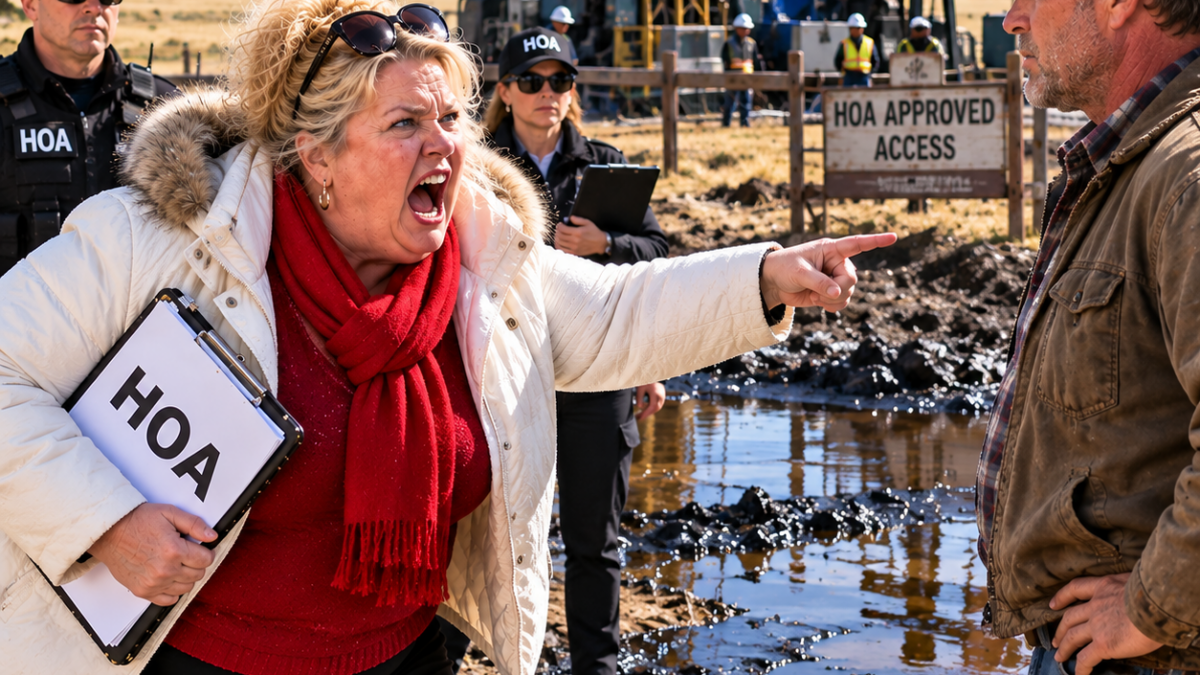
PART 2
Three days later, Perian Ridge sent me a bill for $47,000.
I found the certified envelope inside Walter’s mailbox on Thursday afternoon.
The heading read:
**NOTICE OF SPECIAL ASSESSMENT — COMMUNITY INFRASTRUCTURE DEVELOPMENT**
According to the letter, owners inside the association’s designated service area were responsible for contributing to road improvements, pipeline access, drainage work, and other infrastructure associated with the Apex Petroleum project.
Forty-seven thousand dollars.
Due within thirty days.
Failure to pay could lead to collection proceedings and an attempted lien against the property.
I stood beside Walter’s desk and read the notice twice.
Then I laughed.
Not because anything about it was funny.
Because the audacity had reached a level my brain couldn’t process any other way.
First they signed an oil lease covering mineral rights they didn’t own.
Then they let someone drill.
Now they wanted me to pay for the infrastructure supporting it.
They were charging me for the privilege of having my own land used without permission.
I placed the assessment beside the lease.
Then I photographed every page.
By then, I had stopped thinking like a granddaughter trying to settle an estate.
I was thinking like an auditor.
Documents first.
Emotion later.
That afternoon I needed groceries.
Walter had shopped at the same supermarket outside Midland for decades. When I walked through the automatic doors, I recognized several people from his funeral.
They recognized me too.
That should have felt comforting.
It didn’t.
A woman who had hugged me after the service saw me near the produce section and immediately turned her cart down another aisle.
Two men standing beside a display of potatoes stopped talking when I approached.
One looked at me.
Then away.
By the time I reached checkout, I understood.
Garrett had gotten there first.
The cashier’s name tag said BRENDA.
She scanned my groceries without speaking until she reached the coffee.
Then she said, “You’re Walter Hartwell’s granddaughter.”
“Yes.”
“I heard you’re trying to shut down the oil project.”
“I’m trying to find out who authorized drilling on my land.”
She looked up.
“People are counting on those checks.”
“I understand.”
“My sister finally fixed her roof because of that money.”
“I’m glad she fixed her roof.”
Brenda’s mouth tightened.
“You don’t sound glad.”
“I’m not angry at your sister.”
“Then who are you angry at?”
I slid my card into the reader.
“That’s what I’m trying to determine.”
She handed me the receipt.
“You were gone for years.”
There was judgment in the sentence.
I looked at her.
“Yes.”
“Garrett’s been here.”
“So was my grandfather.”
She looked down.
The conversation ended.
I carried my groceries outside and sat in the car with the air conditioning running.
For several minutes I did nothing.
Then I opened my phone.
I had spent the previous night searching for oil and gas lawyers who represented landowners instead of producers.
One name kept appearing.
José Williams.
Houston.
Former petroleum-industry counsel.
Now focused on mineral owners, lease disputes, and royalty litigation.
I called.
His assistant transferred me.
“This is José.”
“My name is Eleanor Hartwell. I think an HOA leased mineral rights it doesn’t own.”
There was a pause.
“That is an unusual opening sentence.”
“It gets worse.”
“Start at the beginning.”
I told him about Walter.
The inheritance.
The pump jack.
The lease.
Garrett.
The assessment.
The text message.
José interrupted only to clarify dates.
When I finished, he asked:
“Do you have a current title opinion?”
“No.”
“Mineral title?”
“I have Walter’s deed and probate documents.”
“That’s not enough.”
“What should I do?”
“Nothing publicly.”
“That wasn’t the answer I expected.”
“If you send a cease-and-desist today, you alert everybody.”
“They’re extracting oil now.”
“I know.”
“That’s my oil.”
“I know.”
“So I let them keep taking it?”
“For a little while, maybe.”
I stood from the car and began pacing beside it.
“That sounds insane.”
“It sounds insane because you’re thinking about stopping the conduct.”
“What should I be thinking about?”
“Proving it.”
That stopped me.
José continued.
“Every barrel has a production record. Every royalty has a payment trail. Every permit has an application. Every boundary claim has paperwork somewhere.”
“So we let them create evidence.”
“We make sure evidence is preserved before they realize they need to explain it.”
I looked toward the highway.
“What about the $47,000 assessment?”
“Don’t pay it.”
“Respond?”
“Not yet.”
“They threatened a lien.”
“They can threaten whatever they want. Whether they can lawfully perfect it is another question.”
“And the text?”
“Save it.”
“I did.”
“Good.”
Then he added:
“Eleanor, don’t talk about our strategy with neighbors.”
“One neighbor was Walter’s closest friend.”
“Still no.”
“That seems extreme.”
“You already know Garrett is shaping the community narrative.”
“He is.”
“Then assume anything you say could reach him.”
I hated that advice.
Which usually meant it was useful.
Before heading back to the ranch, I drove past the home of Rosa Delgado.
Rosa had lived beside Walter’s southern boundary for almost forty years.
She was a retired schoolteacher with silver hair, weathered hands, and an ability to make anyone feel as if she knew what they had done before they confessed.
She was outside watering tomatoes.
I pulled over.
Rosa turned off the hose.
“You have Walter’s face when you’re angry.”
“That doesn’t sound flattering.”
“It wasn’t meant to.”
I smiled despite myself.
She looked toward the drilling site.
“You found out.”
My smile disappeared.
“Found out what?”
“That they got the oil.”
“You knew?”
“I knew Garrett wanted it.”
“How?”
Rosa sat on the porch.
I joined her.
“Three years ago he came to Walter’s house.”
“For what?”
“Mineral rights.”
“What did Walter say?”
“No.”
“That simple?”
“With Walter? Usually.”
She looked toward the ranch.
“I was in my barn. Doors open. Sound carries.”
“What happened?”
“Garrett talked for maybe twenty minutes. Walter told him no three times.”
“And Garrett?”
“Got angry.”
“What did he say?”
“I couldn’t hear every word.”
She thought.
“But before he left, he said something about finding another way.”
My stomach tightened.
“You wrote that down?”
Rosa looked at me sharply.
“How did you know?”
“Because Walter told me you wrote down everything.”
She smiled.
“Your grandfather complained about my notebooks for thirty years.”
“Do you still have it?”
“Yes.”
“Can I see it?”
“No.”
That surprised me.
“Why?”
“Because I don’t know what you’re going to do yet.”
“I’m going to stop them.”
“Maybe.”
“Rosa—”
She placed one hand over mine.
“Listen to me.”
I did.
“These men have been setting things in place for years. Garrett isn’t stupid. Craig Bellows isn’t stupid. If Walter couldn’t stop them alone, you won’t stop them by getting angry faster.”
I thought about José telling me almost the same thing.
“Then what do you suggest?”
“Be your grandfather’s granddaughter.”
“What does that mean?”
“Watch first.”
Rosa turned the hose back on.
Conversation over.
For six weeks, I lived two lives.
Monday through Friday, I was in Dallas at an accounting firm reviewing corporate audits and internal investigations.
Nobody there knew the full story.
I told my manager I was handling my grandfather’s estate.
That was true.
Just incomplete.
Every Friday after work, I drove five hours west.
Every weekend, I became an investigator.
José gave me a checklist.
Title search.
Mineral ownership.
Deed history.
Association formation documents.
Boundary amendments.
Planning commission records.
Drilling permits.
Production reports.
Royalty statements.
Bank accounts if we could legally obtain them.
Communications.
Anything connecting Garrett and Craig to Walter before his death.
I began with the title.
I hired a Houston title company far enough from Midland that nobody would casually know the examiner.
The report arrived two weeks later.
Walter Hartwell had owned the mineral estate outright.
No severance.
No sale.
No mineral deed.
No assignment.
No lease executed by him.
Nothing.
Our family’s ownership traced back generations.
I felt relief for about thirty seconds.
Then the obvious question returned.
If Garrett had no mineral rights, how had Apex Petroleum accepted his signature?
I pulled Perian Ridge’s corporate filing.
Formed in 2008.
Service boundaries attached.
I printed the map.
Then spread it beside the legal description from the Apex lease.
The difference was enormous.
Walter’s ranch did not sit barely outside the association.
It sat more than two miles beyond the original service boundary.
I called José.
“They expanded it.”
“You found an amendment?”
“Not yet.”
“Then don’t assume.”
“The maps don’t match.”
“I believe you.”
“But?”
“But courts like paper more than intuition.”
The next morning, I went back to the clerk.
Four hours.
Archived planning records.
Old meeting packets.
Zoning adjustments.
Then I found it.
2014.
**REQUEST FOR DESIGNATED SERVICE AREA ADJUSTMENT — PERIAN RIDGE COMMUNITY ASSOCIATION**
The expansion added roughly four thousand acres.
Including Walter’s ranch.
Prepared by Craig Bellows.
Approved by the county planning commission.
I flipped to the signature page.
Garrett Thornton.
Planning commissioner.
I stared at the name.
He had approved the expansion of a service area for the association he controlled.
I photographed every page.
Then I checked the meeting minutes.
Garrett had not disclosed a conflict in the packet I could see.
I sent everything to José.
He called fifteen minutes later.
“This is very good.”
“Good enough?”
“No.”
My frustration must have been audible.
“He expanded his own organization’s boundary.”
“Potentially improper.”
“Onto land whose owner never agreed.”
“Important.”
“And then used that boundary to sign an oil lease.”
“Very important.”
“So why isn’t it enough?”
“Because he’ll say the boundary adjustment was a public-service decision. He’ll say he believed the association had authority. Craig will find legal language to support a good-faith interpretation.”
“They stole mineral rights.”
“I know what it looks like.”
“What do we need?”
“Proof they knew they didn’t have permission.”
Intent.
Always intent.
That afternoon I prepared a public-information request to the Texas Railroad Commission, the state agency regulating oil and gas operations.
José rewrote half of it.
“Ask for correspondence.”
“I did.”
“Ask for attachments.”
“Okay.”
“Affidavits.”
“Okay.”
“Ownership certifications.”
“Okay.”
“Production reports.”
“Already there.”
“Royalty disclosures if contained in permit files.”
I added it.
Estimated response:
Thirty to forty-five days.
More waiting.
Back at Rosa’s house, she seemed almost pleased.
“You’re learning patience.”
“I hate it.”
“Walter did too.”
We sat beneath the porch fan.
“Two weeks before Walter died,” she said, “Apex came here.”
I turned toward her.
“What?”
“Dark pickup. Company logo.”
“Did you see the driver?”
“No.”
“What happened?”
“Walter shouted.”
That got my attention.
“My grandfather hardly ever shouted.”
“Exactly.”
“What did he say?”
Rosa looked toward the horizon.
“Something like, ‘Nobody touches the oil under my land.’”
“When?”
“Two weeks before the heart attack.”
I felt something cold move through my chest.
“Rosa.”
“No.”
She knew where my thoughts were going.
“We are not inventing things.”
“I didn’t say anything.”
“You didn’t need to.”
She pointed at me.
“Walter was seventy-eight. His heart was bad. A stressful argument does not mean somebody caused his death.”
I looked down.
She was right.
“Do you have the date?”
“In my notebook.”
“Now can I see it?”
Rosa went inside.
Returned with a worn leather book.
She opened it.
The entry was short.
Date.
Dark truck with Apex logo.
Walter very upset.
Told visitor to leave and never come back.
I photographed the page.
That gave us something.
Apex had approached Walter directly.
Walter refused.
Three months after Walter’s death, Apex signed with Garrett instead.
I drove home at sunset.
The pump jack rose and fell against the darkening sky.
For the first time, its rhythm felt personal.
Up.
Down.
Up.
Down.
Money leaving the ground with every cycle.
Two months into my investigation, Garrett changed strategy.
He stopped pretending I was simply confused.
He made me the enemy.
I learned about the HOA meeting from Rosa.
Two hundred residents.
Garrett at the microphone.
Craig beside him.
According to Rosa’s neighbor, Garrett described me as a wealthy Dallas heir who had ignored Walter while he was alive, then appeared after his death because oil had made the ranch valuable.
That one hurt.
Because it contained enough truth to be cruel.
I had not visited enough.
Work had been easy to blame.
Five-hour drive.
Quarterly deadlines.
Client travel.
Walter always said he understood.
But grief has a way of turning excuses into evidence against yourself.
Craig followed Garrett.
He warned residents that if I challenged the lease, royalty payments could stop.
Money people were using for tuition.
Medical bills.
Roof repairs.
Debt.
Then he encouraged residents to “help Eleanor understand the human consequences.”
Neighborly concern.
That was what he called it.
The results appeared immediately.
The hardware store owner suddenly could not help me.
The gas station attendant stared at me openly.
Then an email came from Walter’s church.
My presence at services, it said politely, could create “unnecessary division.”
I read that email sitting inside Walter’s truck.
He had donated to that church for thirty years.
Repaired their fence.
Helped rebuild after a storm.
And now his granddaughter had become socially inconvenient.
Still, none of that prepared me for what I found at the ranch.
Words had been spray-painted across the barn.
**GO BACK TO DALLAS.**
The entrance fence had been cut.
And on the porch lay the orange tabby Walter had fed for years.
The cat was still.
A note had been left beside it.
I will not repeat what it said.
I stood there holding my grocery bag and stopped breathing.
That cat had appeared on the ranch when I was in college.
Walter claimed he didn’t like it.
Then spent sixteen years buying food for an animal he supposedly didn’t like.
I buried the tabby beneath the oak behind the barn.
The same tree Walter used to sit under in July evenings.
Afterward, I went inside.
Locked the doors.
Sat in his chair.
And cried.
Not the controlled tears I had allowed myself at the funeral.
This was ugly grief.
Angry grief.
Fear.
Guilt.
Exhaustion.
I called my mother.
We spoke maybe twice a year.
She lived in Florida now.
Remarried.
Different life.
“Mom.”
She heard my voice.
“What happened?”
I told her.
Not every financial detail.
Just enough.
When I finished, she said:
“Sell it.”
“What?”
“Sell the ranch.”
“No.”
“Eleanor, listen to yourself.”
“They’re stealing from us.”
“Then let them buy it.”
“It’s not about money.”
“It is always about money eventually.”
“No.”
She sighed.
“You sound like your father.”
I went quiet.
“And Walter,” she continued.
“Stubborn. Proud. Always ready to sacrifice peace for a principle.”
“That’s not fair.”
“Neither of them knew when to let go.”
“Grandpa didn’t create this.”
“I know.”
“Then why should I be the one who leaves?”
“Because you’re alive.”
That shut me up.
My mother’s voice softened.
“I already buried your father. I already buried my father. I don’t want some land dispute becoming the thing I lose you to.”
For the first time, I heard the fear beneath her frustration.
“I’m being careful.”
“You say that like careful people can’t get hurt.”
I closed my eyes.
“Sell it, Ellie.”
“I can’t.”
“You mean you won’t.”
“Maybe.”
The call ended quietly.
I sat in Walter’s chair long after midnight.
For the first time, I seriously considered quitting.
Not because Garrett had convinced me.
Because my mother had.
What was the ranch worth compared with my life?
Compared with sleep?
Compared with being able to walk into a grocery store without feeling hated?
Maybe truth did not matter if everyone had already chosen the story they preferred.
I fell asleep in Walter’s chair.
At 7:12 the next morning, my phone rang.
José.
His voice was different.
“Are you sitting down?”
“I am now.”
“The Railroad Commission response arrived.”
I sat at Walter’s kitchen table.
“What did they send?”
“Everything.”
A pause.
“Eleanor, Apex has produced more than ninety-eight thousand barrels from the disputed acreage.”
I stared toward the window.
“How much?”
“Ninety-eight thousand plus.”
“What are the royalties?”
“About $2.3 million so far.”
I gripped the phone.
“To the HOA?”
“Yes.”
“Where’s the money?”
“That’s why I called.”
José had obtained financial records through discovery connected to the lease dispute.
Royalty deposits arrived in the Perian Ridge operating account.
Then moved.
Fast.
Within days of each deposit, large transfers left the account.
Over $1.1 million had gone to accounts connected personally to Garrett Thornton and Craig Bellows.
The rest was categorized as management costs, legal expenses, administrative charges, and project oversight.
But the documentation was thin.
Some categories had no supporting invoices at all.
I stared at Walter’s empty chair.
“Say it.”
José hesitated.
“This looks like serious misappropriation.”
“They pocketed it.”
“A substantial amount appears to have benefited them directly.”
“Say what you mean.”
He exhaled.
“It may be embezzlement, fraud, or both. We need law enforcement to decide the criminal side.”
“How much did residents get?”
“Some distributions appear legitimate.”
“So Garrett kept families dependent on the project while taking the largest share.”
“That may be what happened.”
I looked toward the barn.
Toward the oak where I had buried the cat.
“José.”
“Yes?”
“I’m not selling.”
“I figured.”
“Send me everything.”
For the next two weeks, my Dallas apartment became an evidence room.
Production statements covered my dining table.
Bank records occupied the kitchen counter.
My laptop stayed open until two in the morning.
I built a spreadsheet.
Month.
Production volume.
Market value.
Gross proceeds.
Royalty percentage.
Deposit.
Transfer.
Recipient.
Date.
Description.
By the third night, the pattern was undeniable.
Royalty deposit.
Forty-eight to seventy-two hours.
Transfer.
Garrett.
Craig.
Administrative expense.
Another deposit.
Another transfer.
Another month.
Same thing.
I sent the analysis to José.
His reply arrived an hour later.
**Call me.**
When I did, he said:
“I forwarded it to a federal contact.”
My stomach tightened.
“Without telling me?”
“You hired me to protect you, not to ask permission before reporting what may be federal financial crimes.”
He was right.
I didn’t like it.
Two days later, Special Agent Dana Thomas called.
She asked to meet.
I drove to Houston.
Dana was younger than I expected.
Mid-thirties.
No dramatic personality.
No television-agent swagger.
She spoke carefully.
Asked precise questions.
Reviewed documents slowly.
“We can establish movement of money,” she said.
“We can establish a lease.”
“We can establish your title.”
“Yes.”
She tapped the table.
“What I need is intent.”
“José said the same thing.”
“Good lawyer.”
“He’ll be unbearable when I tell him that.”
Dana almost smiled.
“If Thornton believed his boundary expansion legitimately authorized the association, his defense becomes very different.”
“He knew Walter refused.”
“Can you prove that?”
“Rosa Delgado.”
“Witness?”
“Yes.”
“What exactly did she hear?”
I told her.
Garrett’s visit.
Walter’s refusal.
The line about finding another way.
Dana’s pen stopped.
“Do you have that contemporaneously documented?”
“She wrote it down.”
“When?”
“Same day.”
“I need to see the notebook.”
That afternoon, I drove straight to Rosa.
She knew before I explained.
“You brought government with you.”
“Not literally.”
“Yet.”
We sat in her kitchen.
I told her about the money.
The investigation.
The need for intent.
Rosa listened.
Then went to her cabinet.
The notebook appeared again.
She opened to an entry from three years earlier.
This one described Garrett’s visit.
Not the Apex truck.
Garrett personally.
White association pickup.
Raised voices.
Walter angry.
Then one sentence in quotation marks.
Underlined twice.
**We’ll find another way, Walter. One way or another, that oil is coming out of the ground.**
I read it three times.
“Rosa.”
“I remember it.”
“Exactly?”
“Exactly enough that it scared me.”
“Will you testify?”
She looked toward a framed photograph on her wall.
Walter at a church picnic.
Rosa beside him.
Both younger.
Both laughing.
“He fixed my fence after my husband died,” she said.
“I know.”
“He checked my pipes every freeze.”
“I know.”
“When I had surgery, he brought groceries every Friday for six weeks.”
Her eyes stayed on the photograph.
“I should have spoken sooner.”
“You were afraid.”
“So was Walter.”
She looked at me.
“Yes.”
“I’ll testify.”
That night, José called.
“When is the annual HOA meeting?”
“Two weeks.”
He was quiet for several seconds.
Then:
“That’s where we do it.”
“Court?”
“Later.”
“Why the meeting?”
“Because Garrett’s greatest asset is community belief.”
“I don’t care whether they like me.”
“This isn’t about being liked.”
“Then what?”
“Witnesses.”
He explained.
Residents.
Press.
Regulators.
Board members.
If Garrett denied the money transfers publicly, that mattered.
If Craig claimed authority they could not document, that mattered.
If they contradicted records, that mattered.
And most importantly, the community would hear facts directly instead of through Garrett’s narrative.
We began preparing.
A week before the meeting, I drove to Houston.
José’s conference table disappeared beneath documents.
Deed.
Title opinion.
Original association boundaries.
2014 boundary expansion.
Garrett’s planning commission approval.
Apex lease.
Production statements.
Bank transfers.
Rosa’s notes.
José arranged them in order.
“You don’t accuse.”
“I know.”
“You ask.”
“I know.”
“You don’t speculate about Walter’s death.”
“I know.”
“You don’t mention the cat unless they make character an issue.”
I looked at him.
“I wasn’t planning to.”
“Good.”
“You think I’m emotional?”
“I think you’re human.”
“That sounded almost nice.”
“Billable kindness.”
We spent four hours rehearsing.
Question.
Document.
Pause.
Next question.
No speeches.
No anger.
José had contacted two reporters.
One from Midland.
One from Houston.
He also filed a complaint with the Railroad Commission and requested a representative attend.
Everything was ready.
Then Dana called.
Three days before the meeting.
“I need privacy.”
I stepped onto my apartment balcony.
“What happened?”
“We found another document.”
“What?”
“A sworn authorization affidavit was submitted with the Apex lease.”
“Signed by Garrett?”
“Craig Bellows.”
“Okay.”
“Attached to it was a letter supposedly signed by Walter Hartwell authorizing Perian Ridge to negotiate mineral interests.”
I stopped moving.
“That doesn’t exist.”
“We have the copy.”
“My grandfather never signed that.”
“We compared it with authenticated samples.”
My hand tightened around the phone.
“And?”
“It appears false.”
For several seconds, Houston traffic hummed below me.
“That’s why they signed the lease.”
“It appears to be part of how authority was represented.”
“They forged Walter’s permission.”
“We believe the document requires criminal investigation.”
I wanted to tell José immediately.
Tell Rosa.
Tell the newspapers.
Put it on a projector in front of Garrett.
Dana interrupted my thoughts.
“You cannot reveal this at the meeting.”
“What?”
“We need time.”
“This proves intent.”
“I know.”
“It proves everything.”
“It may prove critical elements. Which is exactly why you cannot warn them we have it.”
I paced the balcony.
“So I stand there and leave out the strongest evidence?”
“Yes.”
“That makes no sense.”
“It makes investigative sense.”
“They’ve been doing this for years.”
“And if they destroy evidence because they learn the scope of what we have, we may lose parts of the case.”
I hated that she was right.
“What can I use?”
“Public records. Your title. Boundaries. Financial transfers already obtained lawfully. Regulatory questions. Rosa’s testimony only if counsel is comfortable and she understands the risk.”
“The forged letter stays hidden.”
“Yes.”
“How long?”
“Until we’re ready.”
I closed my eyes.
“Okay.”
José’s reaction was calmer.
“We still have enough.”
“Not enough for me.”
“That’s emotion.”
“I know.”
“Good.”
“You enjoy saying that.”
“Very much.”
The night before the annual meeting, I stayed at Walter’s ranch.
I stood inside his office practicing the opening question.
Then stopped.
His photograph hung above the bookcase.
Walter in his fifties.
Hat in one hand.
Squinting into the sun.
I looked at him.
“I should’ve come home more.”
The room remained quiet.
“I’m sorry.”
Still quiet.
“I’m fixing it.”
That sounded arrogant.
I corrected myself.
“I’m trying.”
That felt better.
Saturday evening, more than 250 people packed the Midland Community Center.
I arrived with Rosa.
José waited near the front.
Two reporters stood beside the refreshment table.
A Railroad Commission inspector sat in a corner with a notepad.
Garrett walked onto the stage at seven.
He looked completely comfortable.
That almost impressed me.
He welcomed everyone.
Praised community prosperity.
Talked about the Apex partnership.
Road upgrades.
Scholarships.
Senior assistance.
Local jobs.
Every program sounded good.
Some probably was.
That was the dangerous part.
Fraud rarely arrives wearing a sign saying fraud.
Sometimes it arrives attached to things people genuinely need.
Garrett received applause.
Then he opened questions.
Parking.
Holiday decorations.
Road repairs.
Softball after softball.
Finally, the room settled.
Garrett looked around.
“Anything else?”
I stood.
Heads turned.
The temperature of the room changed.
Garrett saw me.
His smile flickered.
Then returned.
“Ms. Hartwell.”
“Mr. Thornton.”
“How nice to finally have you at one of our meetings.”
“I have several questions.”
“I’m sure you do.”
A few people laughed.
I walked toward the front with my laptop.
“Would you mind if I use the projector?”
Craig stood.
“This is an HOA meeting.”
The Railroad Commission inspector looked up.
José remained still.
Garrett lifted a hand.
“Let her.”
That was his first mistake of the evening.
I connected the laptop.
Two maps appeared.
“Left side: Perian Ridge service boundary filed in 2008.”
I pointed.
“Right side: boundary used in the Apex Petroleum lease.”
People leaned forward.
“My grandfather’s 3,200 acres appear only on the second.”
I looked at Garrett.
“How?”
“Boundary adjustment.”
I clicked.
2014.
Craig’s filing.
Garrett’s approval.
“Were you serving on the county planning commission at the time?”
Garrett’s jaw tightened.
“Yes.”
“And president of Perian Ridge?”
“This is public record.”
“So you approved your own association’s boundary expansion?”
Craig interrupted.
“Eleanor, zoning matters are more complicated than your presentation suggests.”
I turned toward him.
“Then explain.”
“This is not the proper forum.”
Garrett said, “The expansion was lawful.”
“Did Walter consent?”
“Consent was not required for service-area planning.”
“For mineral leasing?”
Silence.
I clicked.
Apex lease.
Garrett’s signature.
Craig’s.
“Neither name is Walter Hartwell.”
Craig stood.
“The association was authorized.”
“By whom?”
“The relevant governing instruments.”
“Which one specifically?”
He looked toward Garrett.
Then back at me.
“Submit your request in writing.”
A murmur moved through the room.
I clicked again.
Production statements.
“Ninety-eight thousand barrels.”
Then royalty total.
“Approximately $2.3 million.”
Nobody spoke.
Garrett tried to regain control.
“Yes. Revenue that has benefited every family here.”
“Let’s talk about that.”
Next slide.
Bank transfers.
Dates.
Amounts.
Recipients.
Garrett Thornton.
Craig Bellows.
Over $1.1 million.
The room became absolutely silent.
I looked at Garrett.
“What services did you personally provide that justify these transfers?”
His face changed.
“This is confidential financial information.”
“It came from records connected to the lease covering my property.”
“You have no right to publish private banking information.”
“I asked what services you provided.”
“These are management distributions.”
“Where are the invoices?”
Craig stepped forward.
“This presentation is defamatory.”
José finally spoke.
“Then identify the false statement.”
Craig recognized him.
His expression tightened.
Garrett’s voice rose.
“You come in here after abandoning this town and accuse people who built it of stealing?”
I did not answer the insult.
I clicked back to the transfer schedule.
“Are these numbers wrong?”
“This is taken out of context.”
“Which number?”
“You don’t understand how association finances work.”
“I audit corporate finances for a living.”
That quieted him for half a second.
Then the Railroad Commission inspector stood.
“Mr. Thornton?”
Garrett looked over.
The man identified himself.
“I’m here regarding a complaint concerning the Apex lease.”
The room shifted again.
“The permit documents identify Perian Ridge as authorized representative for all relevant landowners. Can you provide documentation showing authority to represent the Hartwell mineral estate?”
Garrett looked at Craig.
Craig said:
“We will respond through counsel.”
The inspector nodded.
“That would be you.”
Nobody laughed.
It wasn’t funny anymore.
A resident stood.
“Garrett, where did the million dollars go?”
Another voice:
“Why didn’t we know?”
Another:
“How much were you paid?”
Questions began spreading.
Garrett struck the podium with his palm.
“Enough.”
The room quieted.
“This woman is trying to destroy a project that has helped every one of you.”
A woman near the front said:
“She asked where the money went.”
Garrett pointed toward me.
“She wants it all.”
“That’s not what I said.”
“She wants every royalty dollar.”
“No.”
“She wants to shut down the wells.”
“I asked who authorized drilling on my land.”
“You weren’t here.”
That sentence landed hard.
Garrett continued.
“Walter lived here. We dealt with Walter.”
I felt Rosa stand behind me.
“Then tell them what Walter said.”
Garrett froze.
Every head turned.
Rosa walked slowly toward the aisle.
She held the notebook.
“Three years ago, you went to his ranch.”
Garrett’s voice became quiet.
“Rosa, sit down.”
“No.”
I had never heard her say a word with more force.
“You asked for his mineral rights.”
“That’s not relevant.”
“He said no.”
“Rosa.”
“You told him you would find another way.”
Garrett’s face drained.
Craig moved toward the microphone.
“Meeting adjourned.”
People shouted.
“No!”
“Answer her!”
“Where’s the money?”
Garrett stepped back from the podium.
The reporters began moving forward.
One called:
“Mr. Thornton, are you under federal investigation?”
I had not told them that.
Maybe José had mentioned a broader review.
Maybe the question was speculation.
It didn’t matter.
Craig grabbed Garrett’s arm.
They moved toward the side exit.
Cameras followed.
The Railroad Commission inspector remained standing, watching them go.
I disconnected my laptop.
My hands were shaking.
Not visibly, I hoped.
Rosa took my hand.
“Walter would’ve been proud.”
I looked at the empty podium.
“I hope so.”
Residents stared at me.
Some angry.
Some confused.
Many frightened.
The same people who had avoided me in grocery aisles now looked as if they wanted me to explain how their world had changed in twenty minutes.
I couldn’t.
Because the biggest piece was still hidden.
Craig’s forged authorization letter.
And the FBI was not finished.
Six weeks later, agents arrested Craig Bellows at his law office.
Garrett Thornton was arrested the same day.
The public charges included financial fraud, conspiracy, and offenses connected to the false authorization used in the lease process.
The forged Walter Hartwell letter became a central piece of the government’s case.
When the news broke, José called.
“You can finally talk about it.”
“I don’t want to.”
“You’ve wanted to for six weeks.”
“I wanted Garrett to know I knew.”
“He knows.”
“That’s enough.”
Apex Petroleum suspended operations immediately.
The pump jack stopped.
For the first time since I inherited the ranch, the horizon stood still.
Apex’s lawyers contacted José within days.
Their position was straightforward.
They believed the association had lawful authority.
They relied on sworn documentation.
They had been deceived.
That did not erase what happened to my minerals.
But it changed how I viewed the company.
José asked what outcome I wanted.
“Money.”
He laughed.
“Finally, an honest client.”
“No. Listen.”
“I’m listening.”
“I want every royalty Walter should have received.”
“Good.”
“Damages for unauthorized production.”
“Yes.”
“Legal fees.”
“Obviously.”
“And then I want to talk about a new lease.”
Silence.
“You want Apex back?”
“Maybe.”
“After all this?”
“They drill oil. That’s what oil companies do.”
“They extracted without valid authority.”
“Because someone gave them forged documents.”
“That doesn’t eliminate their due-diligence obligations.”
“I know.”
“So why another lease?”
“Because the oil is still there.”
José waited.
“And?”
“And I don’t want Garrett’s corruption to turn my grandfather’s land into a monument to anger.”
He leaned back.
“I’m listening.”
“If Apex agrees to better terms, transparent production reporting, direct payment, environmental safeguards, and no HOA involvement, I’ll negotiate.”
“And the community?”
That was harder.
Rumors had already spread that I planned to recover royalty distributions from individual families.
Legally, José said there were theories under which we could pursue some recipients depending on what they knew.
Most residents had known nothing.
They believed the money was legitimate.
Some had used it for medical bills.
Tuition.
Repairs.
Mortgages.
The same people had shunned me.
Some had repeated lies.
At least one had vandalized Walter’s property.
I did not know who.
Anger told me to make everyone feel what I had felt.
That night, I sat at Walter’s desk.
The $47,000 assessment still lay inside my file.
The threatening text.
Photographs of the barn.
The cut fence.
The orange tabby’s old food dish remained beside the back steps.
I imagined lawsuits against families.
Demand letters.
Collections.
Fear.
Then I realized something.
That would make me Garrett with better paperwork.
I called José the next morning.
“I’m not pursuing residents.”
“You’re sure?”
“Yes.”
“Even those who received royalty distributions?”
“If they received them in good faith, leave them alone.”
“That will limit recovery.”
“I know.”
“And Apex?”
“Full recovery.”
“Garrett and Craig?”
“Everything available under law.”
“And the HOA?”
“Dissolve the old structure if necessary. But I don’t want ordinary families ruined.”
José was quiet.
“That your final answer?”
“Yes.”
“Why?”
I looked toward Walter’s photograph.
“Because winning everything isn’t the same as fixing anything.”
Apex negotiations took three months.
Their first offer insulted José.
Their second insulted me.
The third became serious.
Eventually we settled.
Back royalties.
Compensation.
Legal fees.
Restoration obligations.
Then we negotiated a completely new lease.
This time my name appeared where the owner’s name belonged.
The royalty percentage was significantly better.
Independent metering.
Monthly production data.
Direct deposits.
Audit rights.
Environmental monitoring.
No community association acting as intermediary.
Nothing vague.
Nothing hidden.
I read every page.
Twice.
Then I created something Garrett never expected.
A community trust.
Not controlled by Perian Ridge.
Not controlled by me alone.
Independent board.
Independent audit.
Published statements.
A fixed portion of my future royalty income would fund emergency medical assistance, scholarships, infrastructure grants, and aid for older residents.
The exact programs Garrett had used as moral cover.
Only this time, the money would actually go where people were told it was going.
Rosa was the first person I asked to serve on the oversight board.
She laughed.
“I’m retired.”
“So?”
“I’m old.”
“You keep notebooks.”
“That’s your qualification?”
“That and you’re impossible to intimidate.”
She considered.
“Walter would enjoy this.”
“Yes.”
“Fine.”
The criminal cases took longer.
Craig eventually entered a guilty plea connected to the forged authorization and related financial misconduct.
Garrett fought longer.
He blamed Craig.
Blamed Apex.
Blamed administrative confusion.
Blamed outdated boundary records.
Then prosecutors produced emails.
Messages.
Meeting notes.
Financial transfers.
Rosa testified.
So did people who had once worked inside the association.
The image of Garrett as a man who had simply misunderstood property law became harder to maintain.
He was convicted on financial and conspiracy-related charges and ordered to pay restitution.
Craig received a longer sentence because of the forged documentation and his professional role in creating and certifying records.
I attended the sentencing.
Not because I wanted to watch them suffer.
Because Walter couldn’t.
Garrett entered wearing a suit.
No western shirt.
No tan confidence.
No warm smile.
He looked older.
For a moment, I remembered our first meeting.
The mahogany desk.
The map with Walter’s land highlighted yellow.
His warning about the bigger picture.
Now the bigger picture surrounded him.
Victims.
Residents.
Reporters.
Federal prosecutors.
Court officers.
Documents.
Craig sat at the other table.
He never looked toward me.
When the judge discussed the forged authorization, my chest tightened.
Walter’s name had been used after his death to give legitimacy to something he had refused while alive.
That bothered me more than the money.
Money can be returned.
A dead man cannot correct his own signature.
After sentencing, José found me outside the courthouse.
“You okay?”
“I think so.”
“You don’t look happy.”
“I’m not.”
“You won.”
“I know.”
He waited.
“I thought it would feel different.”
“How?”
“Louder.”
José nodded.
“Real endings usually aren’t.”
The community changed slowly.
At first, people avoided me for a different reason.
Shame.
Brenda from the supermarket appeared at the ranch one afternoon.
She parked near the house but stayed beside her car.
“I brought something.”
She held a casserole.
I almost laughed.
Walter’s funeral had taught me that casseroles were the official food of guilt in West Texas.
“Come inside.”
She followed me to the kitchen.
We sat.
“I owe you an apology.”
“Yes.”
She blinked.
Maybe she expected me to make it easier.
I didn’t.
“I said things.”
“You did.”
“I believed Garrett.”
“I know.”
“My sister was getting checks.”
“I know.”
“He said you wanted to take them away.”
“I know.”
Brenda looked at her hands.
“You must hate us.”
“Some days I did.”
Her eyes lifted.
“Do you now?”
I thought about it.
“No.”
“Why?”
“Because being wrong isn’t the same thing as knowing you’re wrong and doing it anyway.”
Her eyes filled.
“I should have asked questions.”
“Yes.”
That time, I softened it.
“But so should a lot of people.”
The church sent another email.
This one invited me back.
I did not attend immediately.
I wasn’t ready.
The hardware store owner reopened his conversational skills.
The gas station attendant suddenly became fascinated with weather.
Apologies arrived in fragments.
Some sincere.
Some convenient.
Some never came.
I learned to live without requiring all of them.
My mother called after the settlement became public.
“I saw the article.”
“I figured.”
“You won.”
“Yes.”
“You sound tired.”
“I am.”
A pause.
“I was wrong.”
“About what?”
“Telling you to sell.”
“You were scared.”
“I still am.”
“So am I.”
She laughed softly.
“That’s new.”
“What?”
“You admitting it.”
I smiled.
“Maybe.”
Then she said:
“Your grandfather would have been proud.”
The words hurt.
In a good way.
“I hope so.”
“You know what he would have done next?”
“What?”
“Complained about the lawyer fees.”
I laughed harder than I had in months.
She was right.
The week after Craig and Garrett’s cases ended, I drove back to Midland alone.
No reporters.
No attorneys.
No files in the passenger seat.
I stopped at Rosa’s first.
She had two glasses of iced tea waiting.
“Sit.”
“Yes, ma’am.”
We watched the sun drop.
The old pump jack on Walter’s land was still.
Apex had not restarted production yet under the new lease.
“Quiet,” Rosa said.
“I forgot what it sounded like.”
“Walter liked quiet.”
“He liked complaining about noise.”
“That too.”
We sat for several minutes.
Then Rosa handed me the old notebook.
“What’s this?”
“Yours.”
“No.”
“Yes.”
“It belongs to you.”
“I wrote it for myself.”
“Exactly.”
She closed my fingers over it.
“Now somebody should keep it who understands why records matter.”
I looked down at the worn leather.
“Thank you.”
She nodded.
“That’s enough talking.”
Before leaving Midland, I drove to the cemetery.
Walter’s grave sat beneath a mesquite tree.
Simple stone.
Name.
Dates.
Nothing dramatic.
I carried one wildflower.
I knelt beside the marker.
For months, I had imagined what I would say once the case ended.
I had entire conversations with him in my head.
Apologies.
Updates.
Angry speeches.
Jokes.
Now I had nothing.
I placed the flower.
Touched the top of the stone.
Then sat beside him.
The wind moved through dry grass.
Far away, traffic passed on the highway.
I thought about the ranch.
My great-grandfather arriving in 1921.
Walter working that soil for sixty years.
My father leaving.
My mother leaving.
Me leaving.
Then inheriting not just acreage and minerals, but a fight Walter had already begun.
I had thought the inheritance was 3,200 acres.
Then I thought it was oil.
Then I thought it was a legal obligation.
I had been wrong every time.
The real inheritance was responsibility.
Not ownership.
Responsibility.
To know what was mine.
To protect it.
To refuse to let someone rewrite Walter’s choices after he could no longer speak.
And, eventually, to know when protection stopped being revenge.
I stood.
“I kept it,” I said.
My voice sounded strange in the open air.
“The land.”
Pause.
“And myself.”
That mattered more.
When production restarted months later, the first royalty statement came directly to me.
No HOA account.
No Garrett.
No Craig.
No hidden transfers.
I sat at Walter’s desk and opened it.
Production.
Price.
Royalty percentage.
Deductions.
Net.
Clear.
Boring.
Beautifully boring.
The community trust received its first transfer the same week.
Rosa called.
“You sent too much.”
“It’s the percentage we agreed on.”
“Still too much.”
“You’re a terrible trustee.”
“I’m excellent. I’m protecting the trust from you.”
The first grant went to repair the roof of an elderly couple’s house.
Brenda’s sister.
I found that out only after the independent board approved it.
For a moment, the irony almost made me change my mind.
Then I remembered my own rule.
The trust wasn’t revenge.
It was the opposite.
I signed the approval.
Another grant helped a high school student with tuition.
Another paid for a volunteer fire department equipment upgrade.
Every quarter, statements went online.
Anyone could see the money.
Every dollar.
Every program.
No mahogany office required.
A year after the investigation began, Perian Ridge reorganized under new leadership.
Garrett’s map disappeared from the office wall.
Craig’s legal firm was gone.
The revised association boundaries excluded my ranch entirely.
That was one document I framed.
José saw it during a visit.
“You framed a boundary map?”
“Yes.”
“You accountants are strange.”
“You lawyers charge by the hour to say that.”
He laughed.
We stood on the porch.
A new pump jack moved slowly in the distance.
Authorized this time.
Mine.
“Any regrets?” he asked.
“Several.”
“About the case?”
“About waiting so long to visit Walter.”
José’s face softened.
“You couldn’t change that.”
“I know.”
“That help?”
“No.”
“Usually doesn’t.”
He left before sunset.
That evening, I walked behind the barn.
The oak tree had grown greener after spring rains.
Beneath it was the small place where I had buried Walter’s orange tabby.
I had placed a flat stone there months earlier.
No name.
Just a marker.
I sat under the tree.
For the first time, the memory of finding the cat did not bring back only rage.
It reminded me how close I came to becoming reckless.
That had been Garrett’s greatest weapon.
Not money.
Not influence.
Provocation.
Make me angry enough and I might make mistakes.
Make me angry enough and I might become unreasonable.
Make me unreasonable and he could dismiss everything else.
Walter understood that instinctively.
He had refused Garrett without surrendering the land.
Rosa understood.
José understood.
Even my mother, in her frightened way, understood the danger.
Patience was not weakness.
It was control.
Two years later, I finally left my accounting firm in Dallas.
Not because of the case.
At least, not entirely.
I had spent a decade following other people’s money.
I wanted to build something of my own.
I moved back to the ranch part-time and started a small forensic accounting practice specializing in landowners, family businesses, and rural nonprofits.
The first client who walked into my office had an oil royalty statement he didn’t understand.
He was seventy-four.
He wore a hat nearly identical to Walter’s.
“I think somebody’s shorting me.”
I looked at the statement.
“Maybe.”
“You can tell?”
“Not from one page.”
He looked disappointed.
I smiled.
“Bring me everything.”
“Everything?”
“Every check. Every lease. Every amendment. Every statement.”
He stared.
“That’s a lot.”
“I know.”
“What if it turns out nothing’s wrong?”
“Then you sleep better.”
“And if something is?”
I looked toward the framed boundary map on my wall.
“Then we follow the numbers.”
One summer evening, Rosa and I attended the community trust’s annual meeting.
It was held in the same community center where Garrett’s world had begun collapsing.
Different board.
Different atmosphere.
Financial statements projected onto the wall.
Every question answered.
A resident raised her hand.
“Why do we need independent audits every year? They’re expensive.”
Rosa leaned toward me.
“Want this one?”
“Absolutely.”
I stood.
“Because trust should never require blindness.”
No dramatic applause.
Good.
I had learned to distrust dramatic applause.
People nodded.
Asked follow-ups.
Voted.
Meeting ended.
Ordinary governance.
That was the victory.
Outside, Rosa stopped beside my truck.
“Walter would hate meetings like this.”
“He hated all meetings.”
“He’d approve of the accounting.”
“Definitely.”
She smiled.
“You going to the cemetery?”
“How did you know?”
“You have your grandfather face again.”
I drove there alone.
This time I carried no flower.
Just the old notebook.
I sat beside Walter’s stone.
Opened to the page where Rosa had written Garrett’s words.
**One way or another, that oil is coming out of the ground.**
Garrett had been right about one thing.
The oil eventually came out.
But not his way.
Not through a boundary he manipulated.
Not through a lease he had no right to sign.
Not through a dead man’s false authorization.
And not through a financial system designed to reward the people controlling the paperwork.
It came out under a contract Walter would have recognized as legitimate.
Owner.
Operator.
Terms.
Payment.
Accountability.
I closed the notebook.
The sunset stretched orange across West Texas.
For years, I thought people like Garrett won because they were powerful.
I no longer believed that.
They won because complexity exhausted ordinary people.
They hid behind maps.
Committees.
Legal phrases.
Service boundaries.
Bank transfers.
Titles.
They counted on nobody having enough time to put every piece together.
My advantage had never been anger.
It was patience.
One lease.
One map.
One signature.
One transaction at a time.
When I drove back to the ranch, the pump jack moved slowly against the horizon.
I stopped at the entrance.
The old Perian Ridge sign that once claimed authority over Walter’s land was long gone.
In its place stood a cedar marker I had made myself.
**HARTWELL RANCH — EST. 1921**
Nothing else.
No warning.
No slogan.
No mention of oil.
I drove through the gate.
Behind me, the road disappeared into dust.
Ahead, porch lights glowed against the darkening ranch.
For the first time since Walter died, I did not feel as if I were returning to the scene of a fight.
I was simply going home.
And somewhere beneath those 3,200 acres, the oil still belonged exactly where Walter had always said it did:
to the person who actually owned the land above it.
[END OF STORY]





