PART 2: HOA Karen’s Son Called 911 Because I Locked My Own Pool Gate—Then the Property Records Shut Them Both Down
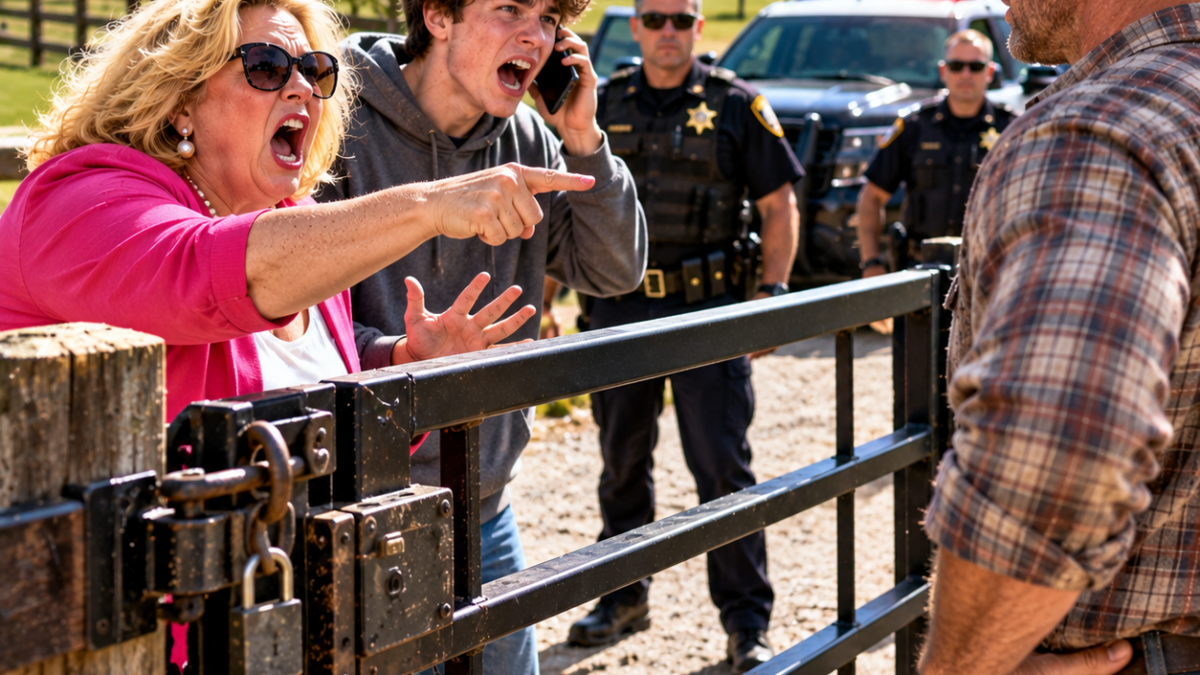
Tommy called 911 because I locked him out of my own backyard pool, and he stood in my driveway smirking like the police were about to arrest me for it.
What he didn’t understand was that his mother’s HOA title couldn’t move my property line an inch—and by the end of that week, the entire neighborhood was finally asking who the real problem had been all along.
The afternoon everything exploded had started almost perfectly.
It was one of those brutally hot Saturdays when the air above the pavement seemed to shimmer and even the birds had given up making noise. My wife, Melissa, and I had spent most of the morning outside with our daughter, enjoying something we had worked years to build.
Our pool.
Not the community pool.
Not an HOA amenity.
Not a shared recreation area.
Our pool.
Our backyard.
Our money.
Our property.
For nearly five years, Melissa and I had talked about putting one in.
At first it had been one of those vague someday plans couples make when they’re trying to be responsible.
Someday when the roof was paid off.
Someday when the emergency fund looked better.
Someday after the kitchen renovation.
Someday after we stopped discovering expensive problems with the house.
Then our daughter got older and started begging to swim every summer.
Melissa began sketching pool layouts on graph paper.
I started saving contractor estimates.
We argued over tile.
We changed our minds about the shape three separate times.
We spent weeks comparing fences because I wanted something secure enough that our daughter couldn’t get near the water without us.
By the time construction finally began, the pool represented a lot more than concrete and water.
It represented years of patience.
And when it was finally finished, I wanted one thing to be absolutely clear.
It was private.
That mattered because Willow Ridge had a strange relationship with boundaries.
People there were friendly.
Sometimes too friendly.
Before we built the fence, neighbors routinely wandered through side yards instead of using sidewalks.
Kids cut across lawns.
Teenagers sat on retaining walls that didn’t belong to them.
Adults treated outdoor spaces like extensions of the neighborhood commons.
Most of it was harmless.
But after construction began, we started getting jokes.
“Can’t wait for the neighborhood pool to open.”
“Hope you’re buying enough lounge chairs for everybody.”
“You taking reservations?”
We laughed at first.
Then one afternoon, before the landscaping was even finished, I came home and found two teenagers I barely knew sitting beside the unfinished pool.
Another time, Melissa discovered a neighbor’s children inside the backyard while a contractor was working.
That scared her.
After that, we stopped laughing.
The fence went up.
The gate got a proper lock.
And I mounted a wooden sign I had made myself.
PRIVATE PROPERTY
NO TRESPASSING
POOL USE BY INVITATION ONLY
Direct.
Clear.
Impossible to misunderstand.
At least I thought so.
That Saturday, Melissa was sitting beside the pool while our daughter splashed near the steps.
I was inside getting drinks when I looked through the kitchen window and saw Tommy Whitaker walking toward the gate.
Tommy was twenty-three.
Not thirteen.
Not a confused little kid.
Twenty-three.
But if you watched the way his mother treated him, you might have thought adulthood was something that had happened to everyone except Tommy.
He was tall, skinny, permanently sunburned, and had apparently committed himself to cargo shorts for life.
A towel hung around his neck.
Flip-flops slapped against the patio stones.
No shirt.
No knock on the front door.
No text.
No invitation.
He walked straight toward the gate like he had a reserved lounge chair waiting for him.
I stood at the window and watched him grab the handle.
Pull.
Nothing.
He pulled again.
Then harder.
The lock held.
His face changed.
Confusion first.
Then irritation.
Then genuine offense.
I almost laughed.
For years, Tommy had apparently been able to wander where he pleased.
A locked gate seemed to be a completely foreign concept.
He rattled it again.
Then he banged on the wood.
“Hello?”
Melissa looked toward the house.
I stepped outside.
Tommy saw me.
“What’s up with the gate?”
I glanced at it.
“It’s locked.”
“No kidding.”
He pulled the handle again, as though demonstrating the problem.
“Open it.”
I stopped several feet away.
“Why?”
He looked at me like I had asked why people needed oxygen.
“I’m going swimming.”
“No, you’re not.”
His mouth opened slightly.
“What?”
“We’ve got family time today.”
He stared past me toward the pool.
“But you guys are swimming.”
“Yes.”
“So?”
“So you weren’t invited.”
He laughed once.
Not because anything was funny.
Because he thought I must be joking.
“Dude.”
“Tommy.”
“Open the gate.”
“No.”
His expression darkened.
“You can’t lock people out.”
“I can lock people out of my backyard.”
“It’s an HOA pool.”
That sentence caught me so completely off guard that for a second I had nothing to say.
Then I asked, “What?”
He pointed at the water.
“The pool. It’s HOA property.”
I looked behind me.
Then back at him.
“You think the pool I built behind my house is HOA property?”
“My mom said this whole green-space section is community controlled.”
I almost smiled.
“Your mom is wrong.”
His cheeks reddened.
“She’s the HOA president.”
“I know.”
“She knows the property map.”
“Apparently not.”
His jaw tightened.
“You can’t just put up a fence and claim community property.”
“I didn’t.”
He pointed toward the fence.
“You literally did.”
“No. I put a fence around property I own.”
“Same thing.”
“No, Tommy. Those are very different things.”
He stepped closer.
“This is ridiculous.”
I kept my voice calm.
“Then check the county records.”
“I don’t have to.”
“You probably should before accusing somebody of stealing land.”
“I’m not accusing you of stealing anything.”
“You just said I fenced off HOA property.”
“Because you did.”
“No.”
“Yes.”
“No.”
His voice rose.
“You know what? Fine.”
I expected him to storm away.
Instead he pulled out his phone.
I assumed he was calling his mother.
That would have been predictable.
What happened next was not.
He dialed.
Waited.
Then said, loudly enough for me to hear:
“Yeah, I need to report somebody blocking access to a community facility.”
I stared at him.
Melissa stood up beside the pool.
“Is he serious?”
I didn’t answer.
Tommy turned slightly away from me.
“Yes. The homeowner locked the gate.”
Pause.
“No, it’s supposed to be HOA access.”
Another pause.
“Yes, he’s here.”
I felt something between disbelief and irritation crawling up my spine.
“Tommy.”
He held up one finger.
Actually held up one finger to silence me.
That was the moment I realized he had called 911.
Not the HOA office.
Not his mother.
Because I had locked my pool gate.
He ended the call and smiled.
“They’re coming.”
I stared at him.
“You called the police?”
“You shouldn’t have locked me out.”
Melissa walked toward me.
Our daughter stood behind her clutching a towel.
“Dad?”
I looked back.
“It’s okay.”
But Melissa’s face said exactly what I was thinking.
This was insane.
Tommy leaned against the fence.
“You should probably unlock it before they get here.”
I looked at him.
“No.”
“You’re really going to make this worse?”
“I’m not the one who called 911 because I couldn’t go swimming.”
His face went red again.
“You’ll see.”
“See what?”
“My mom’s been telling people your fence isn’t legal.”
That was new.
“When?”
He hesitated.
“You’ll see.”
I almost asked more.
Then I stopped.
Something about his tone told me there was more happening than one entitled man being angry about a locked gate.
Five minutes later, I heard sirens.
PART 2
Actual sirens.
Our daughter looked frightened.
That was when my annoyance sharpened into anger.
Whatever stupid feud Tommy imagined he was having with me, my kid was now watching police cars arrive at our house because a grown man had been told he couldn’t use someone else’s pool.
Two patrol cars turned into the cul-de-sac.
Red and blue lights flashed against garage doors.
Curtains moved.
Neighbors appeared at windows.
Tommy walked toward the driveway with his arms folded.
And he was smiling.
Not nervous.
Not embarrassed.
Smiling.
Like he had summoned reinforcements.
One officer approached me.
He looked tired already.
“Sir?”
“Yes.”
“We received a report regarding access being denied to a community facility.”
I looked at Tommy.
Then back at the officer.
“A community facility?”
“Yes.”
I laughed once.
I couldn’t help it.
The officer’s expression remained neutral.
“Can you explain?”
“That pool is on my private property.”
I pointed toward the backyard.
“The fence is mine. The pool is mine. The gate is mine. He showed up without an invitation, tried to get inside, and called 911 when I told him no.”
Tommy stepped forward.
“That’s not true.”
The officer turned.
“What part isn’t true?”
“The property part.”
I looked at him.
Tommy continued.
“The HOA owns that green belt.”
The officer looked toward the fence.
Then back at me.
“Do you have property records?”
Before I could answer, Melissa said, “Absolutely.”
I almost smiled.
Melissa was already moving toward the house.
That woman keeps documents like she expects a congressional inquiry at any moment.
Permits.
Surveys.
Contractor invoices.
Tax maps.
Warranty paperwork.
If the refrigerator ever broke, Melissa could probably produce the serial number before the compressor stopped running.
She returned carrying a thick folder.
“Here.”
The officer raised an eyebrow.
I said, “She’s prepared.”
Melissa opened it on the hood of my car.
“Original boundary survey. Updated survey from the pool installation. City construction permit. Fence permit. Final inspection. Contractor certification.”
Tommy’s smile weakened.
The officer studied the documents.
His partner walked toward the side yard and looked at the fence line.
I stayed quiet.
The truth doesn’t become more convincing when you yell it.
Then I heard a familiar voice from the sidewalk.
“Officer!”
I closed my eyes.
Melissa whispered, “Of course.”
Darlene Whitaker was coming down the street.
Tommy’s mother.
HOA president.
Neighborhood ruler.
Destroyer of peaceful Saturdays.
She wore a blue visor, white slacks, and a coral-colored polo shirt.
A clipboard was tucked under one arm.
I had no idea why she had brought a clipboard to an active police call.
With Darlene, maybe the clipboard was ceremonial.
She reached the driveway breathing slightly harder than usual.
“Officer, there’s been a serious misunderstanding.”
The officer nodded toward her.
“And you are?”
“Darlene Whitaker. HOA president.”
Tommy smiled again.
Darlene pointed her pen toward my backyard.
“That property includes community green-belt access.”
I looked at Melissa.
She looked at me.
Neither of us said anything.
The officer held up the survey.
“This document indicates the fence is within his parcel.”
Darlene didn’t even look at it.
“Our association documents say otherwise.”
“Do you have those documents?”
“I don’t carry the entire governing declaration around with me.”
I glanced at her clipboard.
For once it had failed her.
Darlene continued.
“That fence encroaches approximately two-point-three feet into common property.”
The officer looked at me.
“Do you know anything about that?”
“Yes.”
I took the updated survey from Melissa.
“That claim came up during the fence permit process. The surveyor marked the boundary. The city reviewed it. The fence is inside my property line.”
I handed him the document.
Darlene stepped closer.
“I measured it personally.”
I looked at her.
“With what?”
Her eyes narrowed.
“That’s irrelevant.”
“Actually, I’m fascinated.”
“Please stop interrupting.”
The officer read the survey.
Then looked toward the fence again.
His partner came back.
“I’m not seeing anything suggesting public access.”
Darlene’s face tightened.
“The HOA controls the green belt.”
The officer said, “Maybe. But based on what I’m looking at, this pool and fence are not in it.”
Tommy spoke up.
“My mom knows these lots better than anybody.”
The officer looked at him.
“Your mother is not the county surveyor.”
I turned my head so Tommy wouldn’t see me smile.
Darlene did not appreciate the comment.
“Are you seriously going to let this resident barricade a community amenity?”
I finally stepped forward.
“Stop calling my pool a community amenity.”
She spun toward me.
“You knew when you bought here that the HOA maintained shared recreation standards.”
“I know exactly what I bought.”
“You’ve been hostile to community access from the beginning.”
“People have been walking into my backyard without permission.”
“We are a neighborhood.”
“That doesn’t erase property lines.”
She folded her arms.
“This is exactly the attitude that damages communities.”
“No, Darlene. Calling 911 because your adult son can’t use somebody else’s pool damages communities.”
Tommy muttered, “Screw you.”
The officer turned immediately.
“Enough.”
Tommy went silent.
The officer handed the documents back to me.
“As far as law enforcement is concerned, there’s no criminal issue here.”
Darlene stepped closer.
“So you’re refusing to act?”
“I’m saying we have no basis to force a homeowner to unlock a gate on his private property.”
“This is a civil dispute.”
“Yes.”
“I want that in writing.”
“You can request the incident report.”
Darlene’s nostrils flared.
Then she looked at me.
“You want to play hardball?”
I almost laughed.
“I locked a gate.”
“You’ll be hearing from the architectural committee.”
Melissa spoke for the first time in several minutes.
“About the fence you already approved?”
Darlene froze.
It was tiny.
Just a fraction of a second.
But I saw it.
Melissa saw it.
The officer probably saw it too.
Darlene recovered.
“Approval can be reconsidered if information was withheld.”
“What information?”
“We’ll discuss it formally.”
She grabbed Tommy’s wrist.
“Come on.”
He pulled away.
“I’m not twelve.”
“Then stop behaving like you are.”
I looked at Melissa.
That might have been the first sensible thing Darlene said all afternoon.
Mother and son walked away.
The officers remained long enough to confirm there was nothing else requiring police involvement.
Before leaving, one of them looked at me.
“Keep those documents somewhere easy to reach.”
Melissa held up the folder.
“Trust me.”
He smiled.
Then the patrol cars left.
The cul-de-sac became quiet again.
Our daughter came outside.
“Are the police mad at us?”
That question hurt.
I crouched beside her.
“No.”
“Did we do something bad?”
“No.”
“Then why did they come?”
I glanced toward Tommy’s house.
“Because someone didn’t like being told no.”
She thought about that.
Then asked, “But it’s our pool.”
“Exactly.”
Kids understand boundaries surprisingly well when adults don’t spend years teaching them exceptions.
That evening, I locked the gate again.
Not because Tommy might return.
Because after everything that had happened, the click of that lock felt important.
It sounded like ownership.
It sounded like safety.
It sounded like a line.
The next morning, Melissa opened the front door and found a certified envelope wedged beside the welcome mat.
She carried it into the kitchen without speaking.
I saw the HOA seal.
“Oh, come on.”
She handed it to me.
My name was printed across the front in bold capital letters.
I opened it.
NOTICE OF VIOLATION.
Unauthorized structure.
Obstruction of community access.
Noncompliant pool barrier.
Encroachment concerns.
Failure to maintain shared-use access.
I read it twice.
Melissa read over my shoulder.
“They’re acting like we built a wall around Disneyland.”
The letter gave us seven days to remove or modify the fence and “restore appropriate community access.”
Failure to comply could result in fines.
Two hundred fifty dollars per day.
Possible legal action.
Recovery of HOA legal expenses.
Melissa lowered the paper.
“This is retaliation.”
“Yes.”
“She threatened you yesterday.”
“I know.”
“And now suddenly the fence is illegal.”
“I know.”
She looked toward the backyard.
“Are we actually going to have to tear it down?”
“No.”
I said it immediately.
Maybe too immediately.
Because in truth, I didn’t know.
I knew the permits were valid.
I knew the survey was accurate.
But anyone who has dealt with an aggressive HOA understands the problem.
Being right doesn’t automatically make a fight cheap.
An HOA can create paperwork.
Hearings.
Fines.
Attorney fees.
Liens.
Stress.
Most people don’t surrender because the HOA is right.
They surrender because defending themselves becomes exhausting.
I read the notice again.
Then I noticed the signature.
Darlene Whitaker.
Of course.
Melissa sat across from me.
“What do we do?”
I folded the letter.
“We stop treating this like a neighbor argument.”
By noon, I had called an attorney.
His name was Paul Mendes.
A friend at work had used him during a property dispute involving another HOA.
Paul’s office looked almost aggressively calm.
Dark wood.
Plants.
Shelves full of property law books.
He wore a navy suit with tan loafers and read Darlene’s violation notice without changing expression.
Then he read it again.
Finally he looked at me.
“Let me guess.”
“What?”
“They’re either claiming an easement or pretending this gate blocks a shared recreational entrance.”
“Pretty much.”
He smiled.
“Classic.”
Melissa leaned forward.
“So they can’t do this?”
Paul lifted one finger.
“Never say can’t until we’ve read everything.”
I appreciated that answer more than false confidence.
We gave him the HOA declaration.
Architectural approval.
City permits.
Survey.
Police incident information.
Photographs.
Emails.
He spent almost forty minutes reading.
Then leaned back.
“This is stupid.”
I laughed.
“That’s your legal analysis?”
“My legal analysis is longer. My personal analysis is this is stupid.”
Melissa smiled for the first time all day.
Paul tapped the survey.
“The fence is inside your property.”
“Yes.”
“No recorded access easement crosses the gated area.”
“Correct.”
“The pool was privately financed.”
“Yes.”
“Not HOA maintained.”
“No.”
“Not listed as an association amenity.”
“No.”
“The fence received architectural approval.”
“Yes.”
He picked up the violation notice.
“And the HOA president’s adult son called police because you wouldn’t let him swim?”
“Yes.”
Paul looked at me for several seconds.
“Do you know how many people would pay me for facts this clean?”
“Hopefully not what you’re charging me.”
Melissa kicked my shoe under the table.
Paul laughed.
Then became serious.
“Here’s what they’re doing.”
He placed the notice between us.
“They’re betting you won’t want the headache.”
I nodded.
“They issue a scary letter.”
He tapped the words DAILY FINE.
“They set a short deadline.”
Another tap.
“They mention escalating penalties.”
Another.
“They assume you panic.”
Melissa said, “And tear down the fence.”
“Exactly.”
Paul looked toward me.
“Most HOA power disputes don’t end with brilliant legal arguments. They end when one side gets tired.”
“Then I guess we need stamina.”
He smiled.
“That’s what I was hoping you’d say.”
We prepared a formal response.
Not emotional.
Not dramatic.
Paul insisted on that.
“Never sound angrier than the documents.”
I liked that phrase.
The response included the city-approved permit.
The architectural committee approval.
Both surveys.
A notarized statement from the fence contractor.
Photographs showing the fence line.
A copy of the police incident information.
And a demand that the HOA identify the specific recorded easement, covenant, plat restriction, or ownership interest supporting its claim of community access.
Paul added one more paragraph.
It stated that any attempt to impose fines inconsistent with the governing documents would be disputed formally and, if necessary, challenged through appropriate legal channels.
We sent it.
For two days, nothing happened.
Then retaliation arrived in a new form.
A large notice appeared on the clubhouse board.
EMERGENCY HOA MEETING
SERIOUS RESIDENT VIOLATIONS
COMMUNITY ACCESS AND PROPERTY COMPLIANCE
No name.
It didn’t need one.
Everyone knew.
By dinner, two neighbors had texted me.
One wrote:
“What did you do?”
I replied:
“Locked my pool gate.”
The answer got three laughing emojis.
But I wasn’t laughing much anymore.
Melissa found me sitting at the kitchen table reading the HOA declaration again.
“You okay?”
“Yeah.”
“You’ve read that section six times.”
“I know.”
“You trust Paul?”
“Yes.”
“Then stop torturing yourself.”
I looked toward the backyard.
“What bothers me isn’t the fine.”
“What is it?”
“Our daughter.”
Melissa’s expression softened.
“She saw police cars at our house because we locked our own gate.”
“I know.”
“I don’t want her growing up thinking boundaries are something you need permission to enforce.”
Melissa sat beside me.
“She won’t.”
“How do you know?”
“Because she’s watching us enforce one.”
That changed how I saw the fight.
Until then, part of me had considered compromise.
Not because Darlene was right.
Because I was tired.
Maybe we could offer limited neighborhood access.
Maybe certain hours.
Maybe something to make the argument disappear.
But what would that teach?
That if someone complains loudly enough, your private space becomes negotiable?
No.
The gate stayed locked.
The emergency meeting was Thursday evening.
The clubhouse parking lot was full when Melissa and I arrived.
People stood outside talking in clusters.
The moment we approached, conversations dipped.
Then resumed.
Inside, every chair was taken.
People lined the walls.
Tommy stood near the rear door wearing the same cargo shorts he always wore.
He saw me.
Smirked.
Then looked away.
At the front table sat Darlene.
Navy blazer.
Pearls.
Clipboard.
And yes.
The gavel.
I whispered to Melissa, “She really loves that thing.”
“Don’t.”
“I’m just saying.”
“You laugh, we’re sitting in the back.”
I behaved.
Barely.
Darlene struck the gavel.
“Let’s come to order.”
The room quieted.
She began with several minutes of procedural language.
Community standards.
Collective responsibility.
Preservation of common resources.
Respect for established access traditions.
Then finally she said:
“Tonight we must address the selfish actions of one resident who has chosen to divide this community by restricting long-standing recreational access.”
Every face turned toward me.
I stayed seated.
Darlene continued.
“This is not personal.”
Someone behind me coughed in a way that sounded suspiciously like laughter.
Darlene ignored it.
“This is about protecting the rights of all homeowners.”
I raised my hand.
She looked at me.
“You will have an opportunity to speak.”
“Great.”
She continued.
“The installation of a restrictive fence and locked gate has created legitimate concerns regarding access to land historically treated as part of the shared green-belt corridor.”
Historically treated.
Interesting phrasing.
Not owned.
Not deeded.
Not recorded.
Treated.
Paul had warned me about language like that.
When documents are weak, people start describing habits as rights.
Darlene continued.
“This association cannot allow one resident to unilaterally redefine shared community expectations.”
That was when a chair scraped across the floor.
Everyone turned.
Rick Harwin stood near the back.
Rick was in his seventies.
Vietnam veteran.
Lived in Willow Ridge for twenty-eight years.
Mowed his lawn with such perfect lines that landscapers probably felt personally judged.
He rarely attended HOA meetings.
And when he did, he usually sat near the exit and left early.
Darlene frowned.
“Mr. Harwin, public comment will—”
“I’ve lived here twenty-eight years.”
His voice wasn’t loud.
It didn’t need to be.
The room went completely quiet.
Darlene forced a smile.
“Yes, and we appreciate your—”
“I’m talking.”
A few people murmured.
Darlene’s smile disappeared.
Rick continued.
“When I moved here, this HOA collected dues, maintained the entrance, handled snow removal, and made sure nobody painted their house purple.”
Someone laughed.
Rick pointed toward the board.
“Now we call police because a man locks his own pool?”
Tommy shifted near the door.
Darlene said sharply, “Nobody on this board called police.”
Rick looked at Tommy.
“Your son did.”
Tommy muttered, “It was community access.”
Rick ignored him.
“I’ve watched this association go from protecting property values to protecting egos.”
Darlene stiffened.
“Mr. Harwin—”
He pointed toward me.
“That fence is legal.”
“We are reviewing—”
“It has a permit.”
“There are concerns—”
“It was approved.”
Darlene slapped the gavel.
“Please allow the chair to maintain order.”
Rick stared at the gavel.
Then at her.
“That little hammer doesn’t make you right.”
The room erupted.
Not cheering.
But laughter.
Real laughter.
Darlene’s face turned red.
She struck the gavel harder.
“Enough.”
Then another woman stood.
Sharon.
She lived two streets over.
“Since we’re talking about enforcement, can we talk about my roses?”
Darlene looked stunned.
“This meeting is not about landscaping.”
“It was when you fined me.”
Several people started murmuring again.
Sharon continued.
“The board overturned my violation six months ago.”
Darlene said, “That matter was resolved.”
“No. It wasn’t. I never got my fine refunded.”
A man near the wall raised his hand.
“Same with my fence.”
Another voice:
“And my mailbox.”
Another:
“You threatened me over a basketball hoop.”
Darlene started banging the gavel.
“Order!”
The room wasn’t listening anymore.
That was the moment I saw it.
Power shifting.
Not because I had done anything brilliant.
Because people had been quiet for too long.
Darlene had made every person believe their fight with her was isolated.
My pool dispute gave them a room.
And suddenly they were comparing notes.
Darlene stood.
“This meeting concerns one specific violation.”
I stood too.
“No.”
The room quieted.
She looked at me.
“You will wait until recognized.”
“No, Darlene.”
Melissa touched my arm.
Not to stop me.
Just to remind me to stay controlled.
I looked directly at Darlene.
“This meeting is about your son being told no.”
A sound moved through the room.
Half gasp.
Half laugh.
Tommy pushed away from the wall.
“Man, screw you.”
I turned toward him.
“You walked into my backyard without permission.”
“I used to swim there before the fence.”
“The pool didn’t exist before the fence.”
That got another laugh.
Tommy’s face went red.
“I mean the yard.”
“Exactly.”
Darlene pointed at me.
“Do not attack my son.”
“I’m not attacking him.”
“You are trying to embarrass him.”
“He called 911 because I locked my gate.”
Tommy stepped forward.
“You made it a big deal.”
I looked at him.
“You called emergency services.”
Silence.
Then somebody near the back said, “He’s got you there.”
Tommy spun around.
“Stay out of it.”
Rick stood again.
“No, son. That’s the problem. Everyone stayed out of it.”
Tommy looked at his mother.
Darlene slammed the gavel again.
“This is becoming abusive.”
I turned toward the board.
“I have city permits.”
I lifted the folder.
“Property surveys.”
Another document.
“Architectural approval.”
Another.
“Contractor certification.”
Another.
“And a lawyer who reviewed the declaration and asked your board to identify the exact legal basis for claiming access through my property.”
I looked at Darlene.
“We haven’t received one.”
A newer board member named Janet shifted in her chair.
She looked toward Darlene.
“Is that true?”
Darlene’s face tightened.
“Our counsel is reviewing the matter.”
Janet frowned.
“I thought we hadn’t sent anything to counsel yet.”
The room changed.
Darlene turned toward her.
“We discussed it.”
“No.”
Janet shook her head.
“You said we would discuss counsel after tonight.”
Darlene stared at her.
Janet looked suddenly uncomfortable.
But she didn’t back down.
I said, “So the board sent me a seven-day demand with daily fines before consulting its attorney?”
Darlene answered quickly.
“The board has authority to enforce violations.”
“Not imaginary ones.”
“You do not determine what is a violation.”
“Neither does your son.”
That landed.
Tommy pushed off the wall again.
Darlene snapped, “Tommy, don’t.”
For the first time all evening, he listened.
I turned back to the board.
“You want to take this to court?”
Nobody answered.
“Fine.”
Darlene’s eyes narrowed.
“Is that a threat?”
“No.”
I held up the folder.
“It’s the opposite. It’s notice that I’m prepared.”
The room became still.
“If you believe my fence sits on HOA property, prove it.”
Silence.
“If you believe there’s an easement, produce it.”
Silence.
“If you believe my privately funded pool is a community amenity, show me where that exists in the declaration.”
Nothing.
I looked at Darlene.
“But if you’re doing this because your son got angry after being locked out, then understand something.”
She stared.
“I’m not tearing down a legal safety fence because a twenty-three-year-old man wants to swim without asking.”
Someone clapped.
One person.
Then another.
Then five.
Then half the room.
Darlene slammed the gavel.
Nobody stopped.
Melissa squeezed my hand.
Tommy looked like he wanted to disappear.
Darlene shouted, “Enough!”
The clapping faded.
Janet cleared her throat.
“I move that enforcement be suspended until association counsel reviews the property documents.”
Darlene turned slowly.
“What?”
Janet repeated herself.
Another board member said, “Second.”
Darlene looked around the table.
“You cannot seriously be doing this.”
Janet said quietly, “We should have done it before sending the letter.”
The vote happened right there.
Three in favor.
One abstention.
Darlene voted against.
The enforcement action was suspended.
For the first time since I had known her, Darlene looked small.
Not physically.
Her voice still worked.
Her title still existed.
The gavel was still in her hand.
But nobody was afraid of it anymore.
She closed the meeting ten minutes later.
People stayed.
That mattered.
Normally, when Darlene ended a meeting, everyone left like students released from detention.
That night, residents remained in groups.
Talking.
Comparing violations.
Showing letters.
Swapping stories.
Rick found me near the door.
“You did good.”
“I mostly stood there.”
He smiled.
“Sometimes standing is the whole job.”
Sharon joined us.
“I hope you destroy them.”
I shook my head.
“I don’t want to destroy anybody.”
She looked surprised.
“I want them to stop.”
Rick nodded.
“That’s smarter.”
Across the room, Darlene packed her papers into a leather folder.
Tommy stood beside her.
He looked toward me.
No smirk now.
Just anger.
Darlene whispered something to him.
They left through the side door.
Melissa walked over.
“You okay?”
I exhaled.
“Ask me tomorrow.”
The next morning, Paul called.
“Heard the meeting went well.”
“How?”
“Janet contacted association counsel.”
I laughed.
“Of course she did.”
“More importantly, their lawyer contacted me.”
I sat straighter.
“And?”
“He wants copies of the permit package.”
“They already have them.”
“He wants them directly from us.”
“What does that mean?”
“It means their lawyer is probably wondering why the board threatened litigation without asking him whether they had a case.”
That was encouraging.
“Do we?”
“Do we what?”
“Have a case?”
Paul paused.
“If they fine you despite these documents, yes. If they try to remove the fence, potentially. But don’t get ahead of yourself.”
“So we wait.”
“We wait.”
Waiting was harder than fighting.
For three days, nothing happened.
The pool gate stayed locked.
Tommy did not appear.
Darlene drove past our house more than usual.
Maybe coincidence.
Maybe not.
On Tuesday morning, Melissa noticed a woman standing near the side fence with a clipboard.
“Who’s that?”
I went outside.
“Can I help you?”
She introduced herself as a surveyor hired by the HOA’s attorney.
I smiled.
“Please tell me you’re here to measure two-point-three feet.”
She laughed.
“I was told there’s a boundary dispute.”
“There really isn’t.”
“We’ll see.”
Unlike Darlene, she had actual equipment.
Tripod.
Laser.
Survey markers.
Recorded plats.
She spent nearly two hours working.
I stayed out of her way.
Darlene appeared after twenty minutes.
Of course.
She stood on the sidewalk watching.
Then finally approached.
“What are you doing?”
The surveyor looked up.
“Verifying boundary monuments.”
“I already measured the encroachment.”
The surveyor paused.
“With survey equipment?”
Darlene’s face tightened.
“I used the association site map.”
The surveyor nodded politely.
Then went back to work.
I walked inside before I laughed.
That afternoon, the results reached Paul.
He called immediately.
“Congratulations.”
“On?”
“Your fence is not two-point-three feet into common property.”
“I’m shocked.”
“It’s actually several inches farther inside your lot than your contractor needed to place it.”
“So Darlene’s measurement—”
“Was fiction.”
“Can I put that in writing?”
“No.”
“You’re no fun.”
“The better news is there’s no access easement crossing your backyard.”
I sat back.
“So this is done.”
“Legally? It should be.”
“HOA legally or normal-person legally?”
Paul laughed.
“Good distinction.”
The official letter arrived one week after the emergency meeting.
Melissa brought it inside.
We opened it together.
The wording was cold.
Professional.
Almost painfully neutral.
After review by association counsel, municipal permits, recorded plats, architectural approvals, and independent survey verification, the HOA was withdrawing the violation.
No fines.
No corrective action.
No fence removal.
No access requirement.
Matter closed.
Melissa read the last line.
Then looked at me.
“That’s it?”
“That’s it.”
“No apology?”
“No.”
She frowned.
“I wanted an apology.”
“I wanted the gate.”
She looked outside.
The gate was still there.
Locked.
She smiled.
“Fair.”
That evening, we grilled beside the pool.
Our daughter jumped into the water twenty times.
Melissa played music.
Nobody knocked.
Nobody rattled the gate.
Nobody announced that HOA residents had swimming rights.
It was the first peaceful Saturday we had enjoyed since the renovation finished.
I thought the story was over.
It wasn’t.
The withdrawn violation embarrassed Darlene.
But the meeting had done something worse.
It gave residents permission to compare experiences.
Suddenly old HOA decisions were being questioned.
Sharon formally demanded her fine refund.
Rick requested financial records.
Three homeowners asked for written explanations of architectural denials.
A family near the entrance challenged a landscaping penalty Darlene had issued without full board review.
Janet started insisting that every enforcement action be documented in meeting minutes.
Darlene hated all of it.
I know because she stopped pretending otherwise.
At the next regular meeting, I attended mostly out of curiosity.
Darlene sat at the front.
Same pearls.
Same clipboard.
Same gavel.
Different room.
People no longer went silent when she frowned.
Janet questioned a budget item.
Darlene snapped, “We’ve always handled it this way.”
Janet replied, “That doesn’t answer the question.”
Rick laughed from the back.
Darlene glared at him.
He smiled.
Another homeowner asked why several fines had been waived while others had not.
Darlene said, “Individual circumstances vary.”
The homeowner replied, “Then show us the criteria.”
It went on like that for two hours.
Nobody yelled.
Nobody threatened.
But Darlene’s old method had stopped working.
Before, she could end questions by sounding authoritative.
Now people wanted documents.
Votes.
Policies.
Minutes.
Records.
Proof.
Power hates paperwork when power has been relying on personality.
Tommy vanished from neighborhood life.
I saw him occasionally driving past.
He never approached our gate again.
Once, while I was taking out the trash, I saw him walking down the sidewalk with two friends.
One of them pointed toward my backyard.
Tommy said something I couldn’t hear.
They laughed.
Then kept walking.
I felt anger rise for a second.
Then disappear.
Let him laugh.
The gate was locked.
The pool was ours.
The police report said it.
The survey said it.
The county records said it.
The HOA’s own attorney said it.
His opinion no longer mattered.
Two months after the emergency meeting, Darlene stopped showing up to some committee sessions.
That was unusual.
She had always attended everything.
Landscaping.
Architecture.
Budget.
Neighborhood events.
If someone organized a bake sale, Darlene somehow arrived holding a clipboard.
Then rumors started.
She was tired.
She was angry.
She was blaming “hostile residents.”
She claimed the neighborhood had become “ungrateful.”
I stayed out of it.
Three months after our dispute, an email hit every HOA inbox.
SUBJECT: BOARD LEADERSHIP UPDATE
Darlene Whitaker was resigning as HOA president for personal reasons.
Effective immediately.
I read the email twice.
Melissa read it over my shoulder.
“That’s it?”
“What did you expect?”
“Fireworks.”
I laughed.
“No fireworks.”
She took my phone.
“She resigned.”
“Yep.”
“Because of you?”
“No.”
Melissa raised an eyebrow.
“Really?”
“Because people stopped being afraid of her.”
That was closer to the truth.
My fence didn’t remove Darlene.
Neither did my lawyer.
Neither did Rick.
Neither did Janet.
Darlene lost control because the entire neighborhood finally realized control had always required their cooperation.
One person saying no mattered.
Twenty people saying no changed the HOA.
Janet became interim president.
The difference was immediate.
Meeting agendas were published early.
Violation decisions required documentation.
Board members had to disclose conflicts of interest.
Major enforcement actions had to go through counsel before threats of litigation were sent.
And there was one rule I particularly liked.
Complaints involving a board member or their immediate family could not be decided by that board member.
Melissa read that policy twice.
“Wonder what inspired this.”
“Could be anything.”
“Probably roses.”
“Definitely roses.”
Two weeks after Darlene resigned, I checked the mailbox and found a small white envelope.
No HOA seal.
No certified-mail sticker.
Just my name.
Handwritten.
Inside was a card.
The message was short.
“Your fence looks great.
Also, if you’re ever interested, we could use someone like you on the HOA board.
—Janet”
I laughed out loud.
Melissa looked over.
“What?”
I handed her the card.
She read it.
Then started laughing too.
Our daughter looked between us.
“What?”
I said, “They want Dad to join the HOA.”
She immediately shook her head.
“No.”
Melissa laughed harder.
I pointed at our daughter.
“Smartest person in this house.”
I wrote Janet back.
I thanked her.
Then politely declined.
I had fought to keep people out of my backyard.
I wasn’t about to volunteer for a job that required me to spend my evenings discussing mailbox colors.
Months passed.
The pool remained private.
The fence remained standing.
The gate remained locked whenever we weren’t expecting guests.
Something else changed too.
People started asking.
That sounds so small.
But it mattered.
Neighbors texted:
“Pool day?”
“You guys around Saturday?”
“Okay if we bring the kids?”
Sometimes we said yes.
Sometimes no.
Nobody died from hearing no.
That was the lesson Tommy had somehow missed.
A boundary isn’t hostility.
An invitation matters because the owner gets to decide when it exists.
One Saturday, Rick came over with his grandson.
I opened the gate.
He paused before entering.
“Permission?”
I smiled.
“Permission granted.”
He looked at the sign.
“Imagine that.”
“What?”
“Asking.”
“Revolutionary concept.”
He laughed.
The kids swam for two hours.
Rick sat beneath the umbrella drinking iced tea.
At one point he looked toward the fence.
“You know what the funniest part of this whole thing is?”
“What?”
“If Tommy had knocked and asked like a normal human being, you probably would’ve let him swim.”
I thought about it.
“Maybe.”
Rick laughed.
“All that over a word he didn’t want to hear.”
No.
It wasn’t really over a pool.
That took me a long time to understand.
The pool was just where the conflict became visible.
The real fight was about ownership.
Not property ownership.
Personal ownership.
Who gets to make decisions about your space?
Your time?
Your boundaries?
People like Tommy and Darlene often treat access as the default.
If they’ve been allowed to do something before, they start believing permission has transformed into a right.
Then the first boundary feels like theft.
I had not taken anything from Tommy.
I had simply stopped giving him something.
He experienced that as aggression.
His mother experienced it as a challenge.
And because she had authority, she tried to turn that challenge into punishment.
That was the dangerous part.
Not an entitled twenty-three-year-old banging on a gate.
A system that allowed his mother to issue official threats because he was embarrassed.
If Melissa and I had panicked after the violation letter, Darlene’s strategy would have worked.
The fence might have come down.
The gate might have opened.
Neighbors would have learned that paperwork could turn private property into community privilege if someone applied enough pressure.
Instead, documents beat intimidation.
The survey mattered.
The permits mattered.
The approval mattered.
The lawyer mattered.
But so did something simpler.
We didn’t panic.
That was the piece Paul had understood from the beginning.
“They’re hoping you get scared.”
He had been right.
Fear is cheap enforcement.
Most people receive a letter stamped with an HOA seal and immediately imagine court.
Liens.
Thousands in fees.
Years of conflict.
The letter doesn’t have to be right.
It only has to be frightening enough.
Darlene had built much of her authority around that.
A strong tone.
A short deadline.
An official-looking notice.
A threat of fines.
People complied.
Until one didn’t.
Several months after Darlene resigned, I ran into Paul at a coffee shop.
He asked about the HOA.
“Still standing.”
“The fence?”
“Still standing.”
“The pool?”
“Still private.”
He smiled.
“And the president?”
“Former president.”
He raised his coffee.
“I love a happy ending.”
I laughed.
“She resigned three months later.”
“Because of the case?”
“Not officially.”
“Nothing is ever officially because of the case.”
I smiled.
“Janet asked me to join the board.”
Paul nearly spit out his coffee.
“You said no.”
“Immediately.”
“Good.”
“You’re a lawyer. Shouldn’t you encourage civic engagement?”
“I encourage people to protect their mental health.”
Fair.
That summer, Willow Ridge felt different.
Not perfect.
No neighborhood is.
People still argued about landscaping.
Somebody painted a front door a shade the architectural committee hated.
A family installed basketball equipment without submitting the right form.
One resident kept leaving trash bins out too long.
Normal HOA nonsense.
But disagreements became smaller.
Less personal.
Janet had a habit of saying:
“Show me the rule.”
If someone complained, she asked for the exact provision.
If a rule didn’t exist, the board didn’t invent one.
If a board member had a personal relationship to the issue, they stepped out of the vote.
It wasn’t revolutionary governance.
It was competence.
Funny how radical competence can look after years of ego.
Darlene still lived in the neighborhood.
That made things interesting.
For the first month after resigning, she avoided us.
If she saw me checking the mail, she waited.
If Melissa walked toward the sidewalk, Darlene suddenly discovered something fascinating inside her garage.
Then one afternoon, I was trimming shrubs near the front walkway when she approached.
I expected tension.
Instead she stopped several feet away.
“Can we talk?”
I rested the trimmer against my leg.
“Sure.”
She looked toward our backyard.
“You really never intended to let the neighborhood use the pool?”
I almost laughed.
“Darlene, we invite neighbors over.”
“That’s not what I meant.”
“I know.”
She looked uncomfortable.
“I thought because the old path ran behind your lot…”
“The old path ended before my property.”
“I know that now.”
That sentence surprised me.
She continued.
“The original site map I had was outdated.”
“Apparently.”
“I shouldn’t have relied on it.”
“No.”
She frowned.
“You could at least make this easier.”
“What?”
“My apology.”
I blinked.
“That’s what this is?”
“Partially.”
I waited.
Darlene looked down the street.
“I was wrong about the property line.”
“That’s one part.”
She sighed.
“I was wrong to send the violation without legal review.”
“Another part.”
She looked at me.
“You’re going to make me say everything?”
“No.”
I folded my arms.
“But I’m not going to pretend the problem was only a bad map.”
She knew exactly what I meant.
For once, she didn’t argue.
“I was angry.”
“I noticed.”
“Tommy felt embarrassed.”
“He called 911.”
“I know.”
“He lied about my pool being community property.”
“He believed what I had told him.”
That caught me.
“You told him it was HOA property?”
Darlene’s eyes dropped.
“I told him the green-belt area had historically been treated as shared space.”
“That’s not the same thing.”
“I know.”
“You let your son believe he had a right to enter somebody else’s backyard.”
“I know.”
I stared at her.
She looked older than she had behind the HOA table.
Less polished somehow.
Not physically.
Just without the title surrounding her.
She continued.
“When the police rejected my interpretation, I felt humiliated.”
“So you sent the violation.”
“Yes.”
That was the first completely honest thing I had ever heard her say about the situation.
“You retaliated.”
She flinched.
“Yes.”
There it was.
No polished HOA language.
No shared access.
No community standards.
No architectural concern.
Retaliation.
I nodded.
“Thank you.”
She looked surprised.
“For what?”
“For saying it.”
“I’m not asking you to forgive me.”
“Good.”
That almost made her smile.
Then she said, “I’m sorry.”
I had not expected it.
I didn’t rush to fill the silence.
Apologies are sometimes weakened by the person receiving them.
We get uncomfortable.
We say, “It’s fine.”
It wasn’t fine.
So I didn’t say that.
I said:
“I appreciate that.”
She nodded.
Then turned to leave.
After several steps, she stopped.
“For what it’s worth, the fence does look good.”
I smiled.
“Janet already told me.”
Darlene rolled her eyes.
“Of course she did.”
She walked home.
I told Melissa that evening.
She stared at me.
“Darlene apologized?”
“Yes.”
“Voluntarily?”
“I think so.”
“No lawyer present?”
“No.”
“Did you check the sky?”
“For?”
“Horsemen.”
I laughed.
We didn’t become friends with Darlene.
That would have been unrealistic.
But the hostility cooled.
Tommy was different.
He never apologized.
Not to me.
Not to Melissa.
At least not directly.
But the following summer, something happened.
I was standing beside the mailbox when Tommy’s truck pulled up.
He got out.
Walked toward me.
Stopped.
I waited.
He looked older somehow.
Maybe because he was wearing actual jeans.
“Hey.”
“Hey.”
He shoved his hands into his pockets.
“My mom says I should apologize.”
I almost laughed.
“That’s usually not the best opening.”
He nodded.
“Yeah.”
Silence.
Then he looked toward our backyard.
“I shouldn’t have called the cops.”
“No.”
“I thought you were doing it to piss me off.”
“Locking my gate?”
“Yeah.”
“Tommy, the lock was installed before you tried to use the pool.”
“I know.”
“You understand the world does not schedule property decisions around irritating you personally?”
He smiled reluctantly.
“I get that now.”
“Good.”
He kicked at a pebble.
“I was acting like an idiot.”
I said nothing.
He looked up.
“You could disagree.”
“No. I think you’re making excellent progress.”
He laughed.
Then became serious.
“I’m sorry.”
It wasn’t eloquent.
But unlike the forced beginning, that part sounded real.
“Okay.”
“You still hate me?”
“I never hated you.”
“You definitely hated me.”
“I was extremely unimpressed.”
He smiled.
“That sounds worse.”
“It should.”
He nodded toward the backyard.
“So…”
I raised one eyebrow.
He laughed.
“I’m kidding.”
“Good choice.”
Then he walked away.
He never asked to use the pool again.
Maybe that was maturity.
Maybe embarrassment.
Maybe both.
Either way, the gate stopped being a battlefield.
Years later, what I remember most clearly is not the police cars.
Not the violation letter.
Not even the meeting.
It’s Tommy standing outside that gate on the first day.
His hand wrapped around the latch.
Pulling.
Then pulling again.
His expression wasn’t confusion because something belonged to someone else.
It was confusion because something had finally stopped opening for him.
That’s what boundaries do.
They interrupt assumptions.
Most decent people notice the boundary and adjust.
They knock.
They ask.
They respect the answer.
Entitled people experience the boundary as an attack.
Then they test it.
Rattle the handle.
Raise their voice.
Call someone with authority.
Find a rule.
Invent a rule.
Threaten consequences.
Anything except accept the simplest fact:
No.
Sometimes no is a complete sentence.
Tommy needed police officers to explain that.
Darlene needed a surveyor.
The HOA needed a lawyer.
The neighborhood needed an emergency meeting.
All because one locked gate said something none of them had been willing to say clearly before.
Private property.
Invitation only.
Years of HOA drama had taught me something valuable.
Most power isn’t created in official documents.
It is created in the gap between what someone demands and what everyone else is willing to challenge.
Darlene’s title gave her authority.
But intimidation gave her power.
When people stopped being intimidated, the title became much smaller.
At the final HOA meeting I attended before deciding to stop wasting Thursday evenings of my life, Janet gave a brief report.
Violations were down.
Legal expenses were down.
Resident complaints about inconsistent enforcement were down.
Meeting attendance was actually up.
Rick raised his hand.
Janet smiled.
“Rick?”
“Any update on the illegal community swimming pool?”
The room exploded.
I stared at him.
“You’ve been waiting months to say that.”
“Yes.”
Janet looked at me.
“Sir, according to our records, you continue denying residents access to your private backyard.”
“Correct.”
“Scandalous.”
“Thank you.”
Even Darlene, seated near the rear, smiled.
Tommy wasn’t there.
Probably wise.
After the meeting, Janet approached me.
“Offer still stands.”
“No.”
“You’d be good on the board.”
“That’s exactly why I’m staying off it.”
“That makes no sense.”
“It makes perfect sense.”
Rick walked past.
“He’s smart.”
Janet shook her head.
“You two are impossible.”
Outside, the evening air was warm.
Melissa was waiting at home.
Our daughter was probably already in the pool.
My pool.
Behind my fence.
Through my locked gate.
I drove home smiling.
Not because I had defeated Darlene.
Not because Tommy had been humiliated in front of police.
Not because an HOA letter had been withdrawn.
Because peace had finally returned.
Real peace.
The kind that doesn’t require surrender.
The kind that comes when everyone understands the line and stops pretending it isn’t there.
I pulled into the driveway.
Walked around the side of the house.
Reached the gate.
Unlocked it.
My daughter shouted from the water.
“Dad!”
Melissa was sitting under the umbrella.
“You survived?”
“Barely.”
“Anybody get arrested?”
“Not tonight.”
“Boring.”
I laughed.
Then closed the gate behind me.
And locked it.
Because after everything that had happened, there was one thing Willow Ridge understood perfectly.
The pool wasn’t community property.
Tommy wasn’t entitled to use it.
Darlene’s gavel couldn’t change the deed.
An HOA letter couldn’t erase a survey.
And calling 911 did not magically turn somebody else’s backyard into yours.
Sometimes the strongest revenge isn’t destroying the person who came after you.
Sometimes it’s leaving the gate exactly where it was.
Leaving the lock exactly where it was.
Keeping every inch of the property they tried to bully you into surrendering.
And watching them finally learn that the word no doesn’t become negotiable just because they’re angry about hearing it.




