PART 2: HOA Karen Sued Me to Silence My Roosters—She Never Asked Why Those Birds Were on My Land
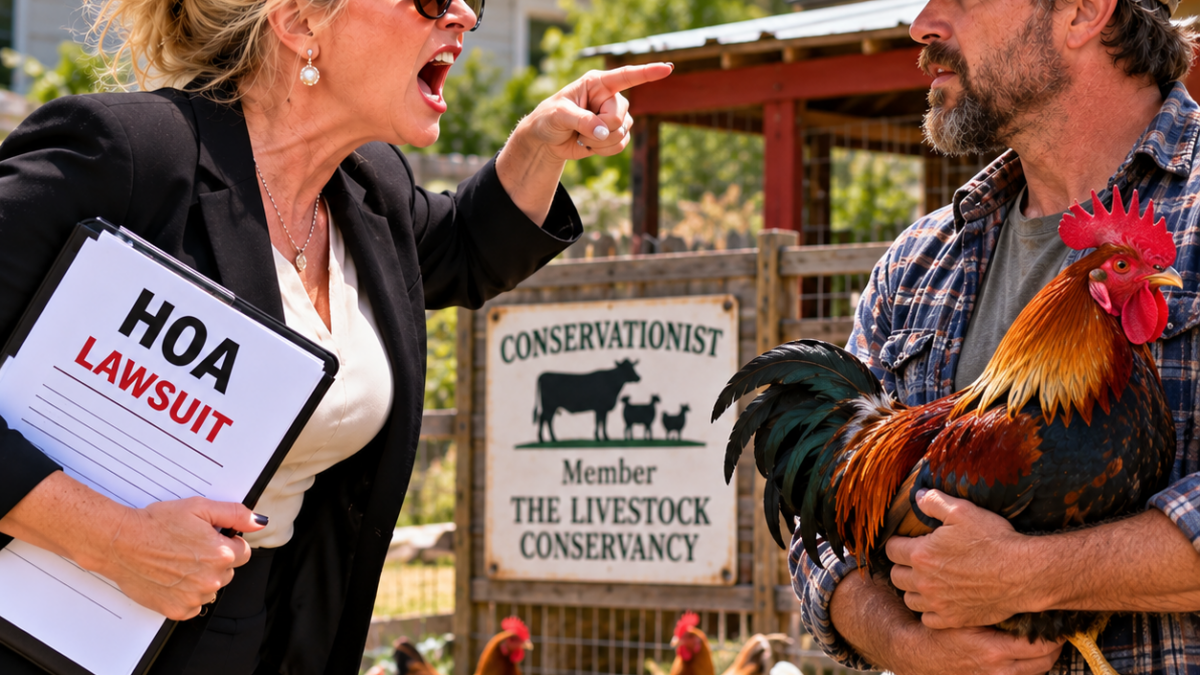
PART 2
The note contained only one line.
**Your military career does not put you above the people who live here.**
No signature.
It didn’t need one.
Sarah was standing beside me at the kitchen counter.
She read it over my shoulder.
“Well,” she said quietly, “that’s not about rooster noise.”
“No.”
“That’s personal.”
“Yes.”
I laid the note flat.
For a few seconds, neither of us said anything.
That bothered me more than Karen shouting at the property line.
A formal violation was one thing. Associations issued stupid notices every day. Sometimes the notice was wrong. Sometimes the resident was wrong. Usually there was a process.
But this?
This was contempt.
She had taken something she knew about me—something that had nothing to do with poultry, zoning, or noise—and attached it to an enforcement action.
Sarah touched the paper with one fingertip.
“Keep that.”
“I’m keeping everything.”
I went to the office and opened a new file folder.
On the tab I wrote one word.
**KAREN**
The pink note went inside.
So did the violation.
Then I started building the response.
I had spent twenty-five years in the Army, much of it as a sergeant major. People hear that rank and imagine yelling.
The truth is that senior enlisted work involves far more paperwork than shouting.
Personnel actions.
Investigations.
Property accountability.
Maintenance records.
Regulations.
Statements.
Timelines.
If you couldn’t document what happened, then six months later somebody who wasn’t there would decide it happened differently.
So I documented.
I quoted Article Two, Section Four exactly.
I attached the county zoning records showing agricultural use predating the subdivision.
I attached records establishing that the property’s agricultural classification had remained continuous.
I included the relevant right-to-farm protections my attorney contact later confirmed were worth raising.
I included a letter describing my conservation breeding work and the heritage breeds I maintained.
The centerpiece was the Livestock Conservancy documentation.
The American Crevecoeur was not a random barnyard chicken I had bought because I liked being difficult.
The breed had a real conservation purpose.
My records tracked breeding pairs, hatch rates, mortality, lineage, egg production, and transfers.
Sarah once joked that the chickens had better personnel files than some soldiers I had supervised.
She wasn’t entirely wrong.
I concluded my response plainly.
The HOA’s demand conflicted with its own preexisting-use provision.
I disputed every fine in advance.
I would not remove the birds.
I requested that all enforcement cease.
And if the HOA intended to pursue the matter, I wanted every further communication in writing.
I mailed one copy certified to the association.
I sent another to Karen.
Then I waited.
The certified receipt came back signed.
Seven days later, so did the first invoice.
**Failure to Comply: $700.**
One hundred dollars per day.
Karen had simply ignored everything I sent.
Sarah held the invoice at arm’s length.
“She didn’t even answer your letter.”
“No.”
“Can she do this?”
“She can send invoices.”
“That isn’t what I asked.”
“I know.”
I called the county planning office.
Then the agricultural extension office.
Then a lawyer I knew through a veterans’ network.
Everyone gave some version of the same answer.
The facts looked good for me.
But good facts did not mean the HOA would become reasonable.
That was the first mistake I almost made.
I thought evidence would persuade Karen.
Evidence only matters to someone whose goal is being correct.
Karen’s goal was compliance.
A second letter went out.
This one had a harder tone.
**NOTICE OF FORMAL DISPUTE AND DEMAND TO CEASE ENFORCEMENT**
I again cited the preexisting-use language.
Again attached the zoning records.
Again disputed the nuisance characterization.
I demanded that the fine be withdrawn.
I warned that further targeted enforcement after notice of the applicable documents could expose the association to legal claims.
A week later, another invoice arrived.
Total due:
**$1,400.**
A second pink note was taped to it.
This one said:
**Laws don’t apply to you, Mr. Hayes? We’ll see about that in court.**
I stared at the sentence for several seconds.
Sarah came into the room.
“What now?”
I handed it to her.
She read it.
Her mouth tightened.
“I’m starting to hate this woman.”
“Get in line.”
“You’re joking.”
“A little.”
She put the note down.
“Marcus, I’m serious.”
“I know.”
“This is affecting us.”
That hit me harder than the invoice.
I had been treating the dispute like a mission.
Threat.
Assessment.
Response.
Documentation.
Next step.
But Sarah lived here too.
She was hearing every car that slowed outside.
Every knock at the door made her wonder whether another notice had arrived.
Every time General Patton crowed before sunrise, she woke and waited for me to react.
My fight had entered her nervous system.
I reached for her hand.
“Do you want me to move the roosters farther back?”
She thought about it.
“No.”
“Sound barriers?”
“Would it help?”
“Maybe.”
“Would Karen stop?”
“No.”
“Then that isn’t what this is about.”
She was right.
Still, I installed additional natural screening around the pens.
I adjusted feeding times.
I documented distances from the nearest homes.
I even recorded the rooster activity at different times of day.
Not because I thought Karen deserved accommodation.
Because I wanted to know I had acted reasonably.
That mattered to me.
The invoices continued.
Two thousand.
Twenty-eight hundred.
Thirty-five hundred.
Every time one arrived, I sent a written dispute.
Every letter went certified.
Every receipt went into the folder.
Eventually the folder became a binder.
Then two binders.
I also began walking through Oakridge in the evenings.
At first Sarah accused me of reconnaissance.
“That’s because it is reconnaissance.”
“You’re spying on suburban dads.”
“Observing.”
“That’s spying with comfortable shoes.”
But the walks mattered.
I needed to understand whether Karen’s support was as broad as she claimed.
The first person who spoke honestly with me was David.
He lived on a corner lot with his wife and two boys.
I found him shooting basketball with his older son.
The hoop was portable.
Large base.
Plastic wheels.
Exactly the sort of harmless object Karen seemed born to despise.
David recognized me.
“You’re the chicken guy.”
“That’s me.”
He laughed.
“Sorry.”
“I’ve been called worse.”
His son took a shot.
Missed.
David retrieved the ball.
“So is it true you told Karen to get off your property?”
“Yes.”
“That story has improved every time I’ve heard it.”
“What version are you on?”
“She says you threatened her.”
I smiled.
“With what?”
“Apparently military intimidation.”
I stared at him.
“I asked her to move six inches across a property line.”
David laughed.
“I figured.”
His son went inside.
David lowered his voice.
“She’s been telling people you refuse to follow the same rules as everyone else.”
“Did she mention that my property is agriculturally zoned and the covenants specifically exempt preexisting land uses?”
His face changed.
“No.”
“Did she mention the conservation program?”
“No.”
“Did she mention I’ve disputed every fine in writing?”
“No.”
David bounced the ball once.
“She made it sound like you just bought a bunch of roosters because you hate the neighborhood.”
“That would be a strange retirement plan.”
He looked toward his garage.
Then back at me.
“We get letters about this hoop.”
“Seriously?”
“Every couple weeks.”
“What’s the violation?”
“Visible recreational equipment after eight.”
He shook his head.
“My boys use it after dinner. Sometimes we leave it out overnight because—well, because it’s a basketball hoop.”
“What happens?”
“Fifty-dollar warning. Then a hundred.”
“Do you fight it?”
“I did once.”
“And?”
“She found something else.”
“What?”
“My trash cans were visible from the street.”
He gave me a tired smile.
“After that my wife said just pay it.”
That sentence told me everything.
Karen did not need everyone to support her.
She only needed resistance to feel more expensive than compliance.
The next breakthrough came from George and Eleanor Abernathy.
They were older.
George had been a corporate attorney before retirement.
Eleanor collected garden gnomes.
Karen hated the gnomes.
Naturally.
“They’re unapproved lawn ornamentation,” George told me dryly.
Eleanor pointed at one holding a tiny fishing pole.
“This one is particularly dangerous.”
I laughed.
George didn’t.
“How much?”
“Seventy-five dollars each violation.”
“You’ve paid?”
“Three times.”
“Why?”
“Because litigating over a ceramic man in suspenders would cost more than seventy-five dollars.”
Then he looked at me.
“Your case is different.”
I explained everything.
Agricultural zoning.
Preexisting-use exemption.
Conservation records.
Fines.
Pink notes.
George became completely still when I mentioned the notes.
“Do you have them?”
“Yes.”
“Originals?”
“Yes.”
“Good.”
I frowned.
“You sound excited.”
“I’m a retired lawyer. We have unusual hobbies.”
I brought the binders to his house the next day.
George read for nearly two hours.
When he finished, he removed his glasses.
“Marcus, you have done something most clients never do.”
“What?”
“You kept everything.”
“Habit.”
“You’d be amazed how many people throw away the letter they’re angry about and then bring me a photograph of half of it.”
He tapped the certified receipts.
“You gave notice.”
Then the covenants.
“You cited their own exemption.”
Then the county documents.
“You established the land-use history.”
Then Karen’s pink notes.
“And she keeps writing things that suggest personal hostility.”
“So what do I do?”
“Wait.”
I did not like that answer.
“For what?”
“For her to make the mistake people like this eventually make.”
“She’s already fined me thousands.”
“That’s not the mistake.”
“What is?”
George smiled thinly.
“She still believes she controls the forum.”
I understood a month later.
The envelope came from a law firm downtown.
Sarah brought it into the kitchen with both hands.
“This looks bad.”
It was thick.
Heavier than the HOA notices.
I opened it.
Summons.
Complaint.
Oakridge Estates Homeowners Association, Inc. versus Marcus Hayes.
They wanted more than five thousand dollars in accumulated fines.
Attorney fees.
And an injunction ordering me to remove what they called “nuisance livestock” from my property.
The entire flock.
For several seconds, I heard nothing except the refrigerator humming.
Sarah pulled out a chair.
“Marcus?”
I read the first page again.
Then the second.
Karen had finally done it.
She had taken her argument somewhere her title meant nothing.
Court.
My first emotion was anger.
My second was fear.
That part mattered.
People like to tell stories afterward as if they were confident every second.
I wasn’t.
If we lost, this could become expensive.
Really expensive.
Attorney fees.
Court costs.
Possible restrictions on the farm.
Damage to a conservation program I had spent years building.
Sarah could see it.
“Are we in trouble?”
“I don’t know yet.”
That was one of the hardest things I had said during the entire conflict.
Not “we’ll win.”
Not “she can’t do this.”
I didn’t know.
So I called George.
“She sued.”
There was a pause.
Then:
“Bring me everything.”
An hour later, we sat in his study.
He read the complaint.
Twenty minutes.
Thirty.
He made notes.
Finally, he leaned back.
“This is sloppy.”
“How sloppy?”
“The allegations are mostly conclusory. Unreasonable noise. Reduced property values. Disruption. But I’m not seeing objective measurements.”
“No decibel tests?”
“None attached.”
“County citations?”
“No.”
“Animal-control complaints?”
“Not that I see.”
He flipped pages.
“But this is the interesting part.”
He opened the HOA covenants.
“Section Five, Article Three.”
I read.
Legal action on behalf of the association required authorization by a majority of the full board at a duly recorded meeting.
“And?”
George looked at me.
“Do you know of a vote?”
“No.”
“Meeting minutes?”
“No.”
“Special assessment?”
“No.”
He leaned forward.
“Karen may have just used association money to file a lawsuit without proper board authorization.”
“May?”
“We verify before accusing.”
That was George.
Careful.
Precise.
Useful.
He picked up his phone.
“I know someone.”
“Who?”
“A litigator.”
“I already dislike the way you said that.”
“You’ll like her more than Karen will.”
Two days later, Sarah and I sat across from Jessica Riley in a downtown conference room.
Jessica was younger than George by decades, sharply dressed, direct, and completely uninterested in dramatic speeches.
She read my file.
All of it.
When she finished, she stacked the documents neatly.
“Mr. Hayes.”
“Marcus is fine.”
“Marcus. There are two separate issues here.”
I nodded.
“First, we defend the nuisance claim.”
“Right.”
“That means we address zoning, the association documents, your established agricultural use, the specific noise allegations, and any applicable statutory protections.”
“And the second?”
“We find out who authorized this lawsuit.”
George smiled.
Jessica continued.
“If the board followed its own process, we deal with that.”
“And if they didn’t?”
“Then somebody has a problem.”
I looked at Sarah.
She was trying not to smile.
Jessica pointed to the pink notes.
“These are originals?”
“Yes.”
“Good.”
“Why?”
“Because when someone claims a neutral enforcement motive while simultaneously sending handwritten comments about your military service and daring you to go to court, motive becomes worth examining.”
She tapped the binder.
“I also want the association’s enforcement history.”
“Why?”
“Selective enforcement.”
I understood.
“Other homeowners.”
“Exactly.”
Jessica opened a legal pad.
“We’re going to ask for board minutes, voting records, legal invoices, financial statements, enforcement records, internal emails, and communications concerning you.”
Sarah looked at me.
“This is going to get expensive.”
Jessica turned to her.
“We’ll discuss fees before I do anything.”
I appreciated that.
No movie-lawyer nonsense.
No promise that Karen would be destroyed.
Just procedure.
After reviewing the situation, the firm agreed to represent us under terms we could manage.
George helped.
The neighborhood helped too, though not financially.
They helped with information.
David sent every basketball-hoop notice.
The Abernathys produced their gnome fines.
Others came forward.
Trash cans.
Christmas decorations.
Door colors.
Vegetable beds.
One woman had been cited for leaving a child’s bicycle on the porch.
Another received a warning for a bird feeder.
Most disputes were trivial.
Together, they formed a pattern.
Then discovery began.
Karen’s attorney fought nearly every request.
Too broad.
Too burdensome.
Irrelevant.
Jessica narrowed some.
Defended others.
The court ordered substantial production.
Thirty days.
The first boxes arrived at Jessica’s office looking as though someone had emptied filing cabinets into them with a shovel.
Receipts.
Invoices.
Bank statements.
Meeting minutes.
Printed emails.
Duplicate copies.
Missing dates.
No organization.
Jessica stared at the pile.
“Classic document dump.”
I rolled up my sleeves.
“You have no idea how much administrative misery I have survived.”
Sarah joined us.
So did two paralegals.
For days we sorted.
Dates.
Vendors.
Amounts.
Approvals.
Minutes.
Correspondence.
The first thing that bothered Sarah was landscaping.
“Marcus.”
I looked over.
She had two spreadsheets open.
“What?”
“This contractor is expensive.”
“Prestige Lawn Care?”
“Yes.”
“They maintain the entrance and common park.”
“Not this much.”
She was right.
Month after month, large payments.
I pulled the covenants and mapped what areas the HOA actually maintained.
The numbers did not make sense.
Then Sarah found a receipt mixed into the wrong envelope.
Service address:
Karen Miller’s house.
I stared at it.
Prestige Lawn Care.
Extensive planting.
Water-feature maintenance.
Seasonal pruning.
The amount matched an HOA check.
Exactly.
“Could be an accounting mistake,” I said.
Sarah looked at me.
“You don’t believe that.”
“One invoice isn’t a pattern.”
So we kept looking.
A second.
A third.
Then more.
Personal work at Karen’s property.
Paid through association funds.
Jessica’s expression changed when we showed her.
“Do not discuss this outside the legal team.”
I nodded.
“Understood.”
“This is now much bigger than chicken noise.”
It got worse.
A catering payment from HOA funds lined up with the date of Karen’s daughter’s graduation party.
A roofing payment supposedly for the clubhouse went to a company tied to a relative.
The clubhouse roof, according to maintenance records, had not required the work described.
Then came the emails.
Those were devastating.
One message about me read:
**I don’t care what his zoning is. This is Oakridge, not Green Acres. Keep fining him. He’ll break eventually.**
Another board member named Frank had written:
**Are we sure filing suit is wise? Don’t we need a board vote?**
Karen’s response:
**I have already retained counsel. This is happening. Stop questioning me.**
Not a majority vote.
Not even a completed vote.
She had retained counsel first.
Then expected the board to follow.
I sat in Jessica’s conference room with the email in my hand.
For months, Karen had told everyone this was neutral enforcement.
Now I could see the truth in her own words.
Break him eventually.
That phrase bothered me more than I expected.
Sarah sat beside me.
“She wanted to wear us down.”
“Yes.”
“She knew about the zoning.”
“Yes.”
“She just didn’t care.”
“No.”
Jessica gathered the documents.
“This supports our counterclaims.”
“What are you filing?”
“Carefully drafted claims based on the evidence. Abuse of process or malicious-prosecution theories depend on posture and state law, so we’ll plead only what’s supportable. Breach of fiduciary duty and misuse of association funds are much clearer areas of concern.”
“Fraud?”
“If the records support it.”
Sarah looked at me.
“Are you okay?”
I wasn’t sure.
For months I had wanted proof.
Now I had it.
And it did not feel satisfying.
It felt dirty.
The chickens had never been the point.
They were simply the homeowner issue Karen chose as the next place to exercise control.
Jessica filed the counterclaims.
Karen and two directors closely aligned with her were named individually where the evidence supported personal conduct.
The association remained involved.
Then something happened I had not expected.
Frank called me.
The board member who had questioned the lawsuit.
His voice shook.
“I got served.”
“I know.”
“It says personal liability.”
“You need a lawyer.”
“Marcus, I didn’t want this.”
“You voted with her for years.”
“I was scared of her.”
“So were a lot of homeowners.”
“My wife is terrified.”
That softened me.
Not enough to excuse him.
But enough to hear the human being behind the title.
“What do I do?” he asked.
“Tell the truth.”
“What?”
“Get independent counsel. Then tell the truth.”
“She’ll destroy me.”
“Frank, look around.”
I lowered my voice.
“She doesn’t have that power anymore unless you keep giving it to her.”
He said nothing.
Two days later, his attorney contacted Jessica.
Frank would cooperate.
That cooperation filled gaps.
He confirmed there had been no proper board vote authorizing the suit before Karen retained counsel.
He produced messages.
He explained how Karen controlled meeting agendas.
He described decisions made informally and later reflected in sanitized minutes.
He admitted he had signed off on things he did not fully support because opposing Karen meant becoming her next target.
I did not like him.
But I understood him.
Cowardice can cause enormous damage without looking dramatic.
Sometimes all evil needs from the people around it is silence and a signature.
Word spread through Oakridge.
Not every legal detail.
But enough.
Residents began demanding records.
Meeting attendance exploded.
Karen stopped walking the neighborhood.
Then a young local reporter named Leo contacted me.
David’s nephew.
He ran a local news site while studying journalism.
“I heard there’s a lawsuit involving heritage chickens.”
“That’s one way to describe it.”
“Can I interview you?”
“I need to ask my lawyer.”
Jessica allowed it under strict conditions.
No confidential discovery.
No inflammatory accusations.
No guessing about criminal conduct.
Facts only.
Leo visited the farm.
General Patton performed perfectly.
The moment Leo raised his camera, the rooster climbed onto his stump and crowed.
Leo laughed.
“So this is the dangerous animal?”
“Don’t let the feathers fool you.”
I showed him the property.
The conservation pens.
The records.
The distances.
The agricultural documents.
George Abernathy explained the governance issues without exaggeration.
David described his family’s experience.
Eleanor showed Leo the offending garden gnomes.
One held a shovel.
Leo photographed it like evidence from a major crime scene.
He requested comment from Karen.
She shut the door.
The story ran two days later.
Then local television called.
That part made me uncomfortable.
I did not want to become “Rooster Veteran versus HOA Karen.”
I wanted the lawsuit gone.
I wanted my farm left alone.
But publicity changed the pressure on the board.
Homeowners who had never attended meetings began asking why their dues were paying for a lawsuit that apparently had not been properly authorized.
They also wanted to know about the landscaping records.
That question was far more dangerous to Karen than any rooster.
Then came her deposition.
Jessica warned me beforehand.
“Do not react.”
“I know.”
“No laughing.”
“I don’t laugh during depositions.”
“No facial expressions.”
“I was a sergeant major.”
“That is not an answer.”
Sarah squeezed my hand.
“Please listen to her.”
So I sat beside Jessica in the conference room and tried to become furniture.
Karen arrived in a navy suit with her attorney.
She looked thinner.
Still defiant.
The court reporter swore her in.
Jessica began slowly.
Name.
Address.
Board position.
Years served.
Nothing dramatic.
Then the chickens.
“Mrs. Miller, what investigation did you perform before concluding Mr. Hayes’s flock constituted an actionable nuisance?”
Karen crossed her arms.
“People complained.”
“How many?”
“Several.”
“Names?”
“Harold.”
“Anyone else?”
“I don’t remember.”
“Did you commission a noise measurement?”
“No.”
“Request county enforcement?”
“No.”
“Contact animal control?”
“No.”
“Visit Mr. Hayes’s agricultural operation other than the confrontation at his property line?”
“I didn’t need to.”
Jessica nodded.
“Did you review his zoning documents?”
“Eventually.”
“Before or after the first fine?”
Karen hesitated.
“After.”
“Did you review Article Two, Section Four of the covenants?”
“I know the covenants.”
“That wasn’t my question.”
Her attorney shifted.
Karen said, “Yes.”
Jessica placed a copy in front of her.
“Please read the highlighted provision.”
Karen stared at it.
Then read the grandfathered-use language.
Her voice became quieter with every line.
Jessica continued.
“When Mr. Hayes sent written notice citing this provision, did you suspend the fines pending legal review?”
“No.”
“Why?”
“Because he was still violating the rules.”
“You just read the provision suggesting established land uses may be exempt from restrictions.”
“He was interpreting it wrong.”
“Did association counsel tell you that?”
Karen looked at her lawyer.
Jessica waited.
“Did counsel tell you that?”
“I don’t recall.”
Jessica changed exhibits.
“Is this your email address?”
“Yes.”
“Did you write, ‘I don’t care what his zoning is. Keep fining him. He’ll break eventually’?”
Karen’s face changed.
“I don’t remember the exact wording.”
“You don’t remember writing it?”
“I write many emails.”
Jessica nodded.
“We’ll let the document speak for itself.”
Then came the lawsuit authorization.
Frank’s email.
Karen’s response.
Jessica read it.
Karen insisted she had been exercising leadership.
“Was there a duly recorded majority vote authorizing the filing before counsel was retained?”
Karen’s attorney objected.
Jessica waited.
Eventually Karen answered.
“I believed I had authority.”
“That’s not my question.”
“I don’t recall the timing.”
Jessica slid the meeting minutes across.
“There is no authorization recorded here.”
“Then maybe the secretary failed to record it.”
Jessica placed Frank’s declaration beside it.
“Mr. Franklin says no vote occurred.”
Karen’s face hardened.
“Frank is weak.”
There was a silence.
Even her attorney looked at her.
Jessica spoke softly.
“Let’s move to the association finances.”
That was when Karen stopped looking at me.
Prestige Lawn Care invoices appeared.
HOA checks.
Her home address.
Three years of payments.
“Can you explain why the association paid invoices for work performed at your private residence?”
Karen stared at the page.
“That must be an accounting issue.”
“Every month?”
“I don’t handle bookkeeping.”
“But you approved expenditures?”
“As president.”
Jessica produced signature records.
Karen’s.
Again.
Again.
Again.
“How much association money was used for landscaping your home?”
“I don’t know.”
Jessica gave the documented total.
Karen went pale.
Her attorney asked for a break.
They returned twenty minutes later.
Then came the catering.
Then the contractor tied to her family.
Karen blamed the treasurer.
Then administrative confusion.
Then informal reimbursement arrangements.
Jessica asked for records proving reimbursement.
There were none.
Finally, Karen cracked.
“I did everything for that neighborhood.”
Nobody spoke.
“Do you know how many hours I worked?” she continued. “Nobody wanted the responsibility. Everybody complained, but nobody volunteered.”
Her attorney whispered her name.
She ignored him.
“They wanted perfect entrances and maintained property values and somebody to enforce the rules, but whenever I enforced them I was the villain.”
For the first time, I heard the human explanation beneath the arrogance.
She had probably started by solving real problems.
A neglected entrance.
Unpaid dues.
Broken landscaping.
Residents ignoring basic standards.
Then responsibility became identity.
Identity became entitlement.
And somewhere along the way she stopped believing the association’s money belonged to anyone else.
Jessica waited.
Then asked the simplest question of the day.
“Did that responsibility authorize you to use association funds for your personal property?”
Karen began crying.
Not dramatically.
Not like a movie villain collapsing.
Her shoulders simply folded.
“No.”
One word.
The room became completely still.
Jessica closed the folder.
“No further questions.”
Outside, Sarah met me in the hallway.
“Well?”
I leaned against the wall.
“I thought I’d feel better.”
“You don’t?”
“No.”
She took my hand.
“Because this was never fun.”
That was true.
A week later, the HOA’s insurance carrier requested settlement discussions.
Their lawyers had reviewed the deposition and the financial evidence.
The association itself faced significant exposure.
But the carrier disputed coverage for deliberate misuse of funds and other intentional conduct by individual board members.
That distinction changed everything.
The association could settle portions of the dispute.
Karen could not assume the policy would protect her personally from everything.
Jessica explained the proposal to us.
The HOA would dismiss the nuisance lawsuit with prejudice.
My fines would be voided.
The association would reimburse covered legal costs and compensate us for the harassment and disruption under a negotiated settlement.
The board would undergo restructuring.
Independent financial review.
Governance reforms.
Karen and the directors implicated in the financial issues would have to deal separately with claims tied to their own conduct.
I looked at Jessica.
“And the birds?”
“Stay.”
All of them?”
“All lawful livestock covered by the settlement and existing property rights.”
Sarah exhaled so hard she laughed.
I closed my eyes.
For months I had been carrying tension in my shoulders without realizing it.
General Patton was staying.
The breeding program was staying.
The farm was staying.
But the settlement had another practical requirement.
The board had to address its leadership.
An emergency community meeting was called.
For years, a dozen people at an Oakridge meeting counted as a crowd.
That night more than a hundred showed up.
Sarah and I entered with George and Eleanor.
David sat near the front.
His sons were home shooting baskets.
Karen sat at the board table.
No pink tracksuit.
No clipboard.
No swagger.
Frank, serving temporarily as vice president, called the meeting to order.
His hands shook.
He read from a prepared statement.
“Recent litigation has exposed the association to significant legal and financial risk and has revealed serious concerns regarding governance, authorization procedures, and financial management.”
Karen leaned toward him.
“Get to the point.”
Frank stopped reading.
He looked at her.
For perhaps the first time in years, he did not look away.
“I’m getting there.”
A murmur moved through the room.
Frank continued.
“I move that Karen Miller be removed as president and from the board for cause, subject to the association’s governing procedures, based on gross misconduct and breach of fiduciary responsibilities.”
Silence.
One of Karen’s longtime allies sat frozen.
Then, slowly, he raised his hand.
“I second.”
Karen turned toward him.
“You coward.”
His face reddened.
“Maybe.”
That answer surprised everyone.
He swallowed.
“But I’m done.”
The vote began.
Hands rose.
One after another.
Some quickly.
Some hesitantly.
Frank counted.
Karen sat motionless.
The result was overwhelming.
Frank’s voice cracked.
“The motion carries.”
Karen stood.
“You can’t do this.”
Nobody answered.
“I built this association.”
A voice from the back said, “You used it.”
Karen pointed toward the crowd.
“You begged me to enforce standards!”
Someone else answered, “Not steal our money.”
“You all complained!”
David stood.
“Complaining doesn’t make you owner of the neighborhood.”
Karen looked toward me.
There it was.
The same fury from the morning she first came to my farm.
“You.”
I stayed seated.
“This is because of you.”
“No.”
I shook my head.
“This started because of my roosters.”
She laughed bitterly.
“You think you’re some hero?”
“No.”
“Then stand up and say something.”
I did.
Not because I wanted the moment.
Because refusing would have become its own performance.
I faced her.
“You sued me, Karen.”
“You forced me to.”
“No.”
“You refused every compromise.”
“You demanded that I remove a lawful conservation flock from agricultural land.”
“They were waking residents.”
“Then you should have investigated the noise.”
Her face twisted.
“I was protecting the community.”
“At first, maybe you were.”
That quieted her.
I continued.
“I believe you probably joined the board because nobody else wanted the work.”
Her eyes narrowed.
“I believe you solved real problems.”
The room became silent.
“But somewhere along the way, you decided the fact that you were willing to do the work meant nobody else had the right to question how you did it.”
Karen’s mouth opened.
I didn’t let her interrupt.
“You didn’t lose this position because my rooster crowed.”
I pointed toward the stack of audit documents on the table.
“You lost it because you stopped hearing anybody but yourself.”
Her eyes filled.
For a second I thought she might answer.
Instead, she grabbed her purse.
Walked through the aisle.
And left.
Nobody applauded.
I was grateful for that.
It would have made the moment ugly.
The door closed.
Then George Abernathy stood.
“We have work to do.”
That was the beginning of the repair.
An interim board formed.
George agreed to serve as president only until elections.
His first action was to order a full independent forensic audit.
His second was to freeze disputed fines connected to Karen-era discretionary enforcement.
David’s basketball-hoop fine disappeared.
The Abernathys’ gnome penalties vanished.
Christmas-light fines.
Trash-can fines.
Garden violations.
Each reviewed individually.
Some legitimate dues and genuine violations remained.
That mattered.
We were not replacing one arbitrary regime with another.
The rules still existed.
They simply had to be clear, lawful, and applied consistently.
The audit confirmed serious misuse of association funds.
Amounts and responsibility were resolved through legal proceedings and settlement negotiations.
Karen ultimately agreed to repay misused funds, contribute toward legal costs and damages, and resolve the individual claims rather than face a public trial.
She sold her house months later.
The elaborate landscaping that had partly been paid for through disputed association expenditures did not survive the new owners.
A young couple with two children moved in.
Within weeks, they removed part of the formal garden and installed a patch of grass.
One afternoon I drove past and saw a plastic soccer goal where Karen’s decorative fountain had been.
I smiled.
Not because her house had been changed.
Because no one sent the new family a violation.
Frank remained in Oakridge.
He resigned from the board.
For months, he avoided me.
Then one morning he appeared at my gate.
I was repairing fencing.
He stood there awkwardly.
“Marcus.”
“Frank.”
“I owe you an apology.”
I put down the pliers.
“Yes.”
He seemed surprised.
Most people expect “you don’t owe me anything.”
He did.
“I should have stopped her.”
“You should have tried.”
“I told myself voting no wouldn’t matter.”
“Maybe it wouldn’t have.”
“That’s what I kept saying.”
He looked toward the pasture.
General Patton scratched beneath an oak tree.
“Then every time I stayed quiet, it got easier.”
I understood that.
“Fear works like that.”
Frank nodded.
“My wife asked why I let Karen talk to me the way she did.”
“What did you tell her?”
“That I didn’t want conflict.”
I leaned against the fence.
“And?”
“She said avoiding conflict didn’t prevent it. It just moved the cost onto somebody else.”
Smart woman.
“Tell her she’s right.”
“I already did.”
He looked toward the birds.
“So those are actually rare?”
I laughed.
“Very.”
“Can I see them?”
That surprised me.
“Sure.”
I showed Frank the breeding pens.
The lineage charts.
The hatch records.
The conservation documentation.
He stared at General Patton.
“He looks ridiculous.”
“He does.”
“And this bird helped destroy an HOA presidency.”
“I would give Karen more credit than the bird.”
General Patton crowed.
Frank laughed.
It was the first time I had ever heard him laugh.
My own case ended quietly compared with everything that came before.
Settlement documents.
Signatures.
Confidential numbers.
Dismissals.
Releases.
No courtroom speech.
No judge slamming a gavel.
Real legal endings are often paperwork.
Jessica called when the final documents were entered.
“It’s finished.”
“That’s it?”
“That’s it.”
I looked around the kitchen.
Sarah was standing by the sink.
She had heard.
I put the phone down.
For several seconds neither of us moved.
Then Sarah began crying.
That broke me.
Not because we had won.
Because I finally understood how much she had carried.
I crossed the room and held her.
“I’m sorry.”
“For what?”
“For turning our house into headquarters.”
She laughed through tears.
“You did.”
“For being more interested in winning than noticing you were scared.”
“I was scared.”
“I know.”
“You were too.”
I nodded.
That was harder to admit.
“Yes.”
She pulled back.
“Would you do it again?”
I thought about it.
“Yes.”
“So would I.”
Then she pointed toward the coffee maker.
“But if another HOA president comes up our driveway, I’m handling it.”
“Deal.”
My life gradually returned to what I had wanted before Karen entered it.
Morning coffee.
Feed buckets.
Breeding records.
Fence repairs.
Egg counts.
The quiet satisfaction of helping preserve animals most people did not know existed.
I expanded the program.
A breeding trio of Silver Appleyard ducks joined the farm.
Sarah claimed I had learned nothing from the rooster lawsuit.
I argued ducks were quieter.
She told me not to tempt fate.
The neighborhood changed too.
People started visiting.
David’s boys loved the Crevecoeurs.
Eleanor brought her grandchildren.
George pretended he was coming to discuss HOA reform but always ended up watching the birds.
The first barbecue after the litigation ended drew almost forty neighbors.
Ten years earlier, I had known none of them.
Now children ran across my lawn while adults sat beneath the trees drinking iced tea.
General Patton moved through his pen like an old general inspecting troops.
David stood beside me.
“You realize Karen accidentally created community.”
“That’s generous.”
“She united everyone.”
“Against her.”
“Still counts.”
I looked across the yard.
Maybe he was right.
Fear isolates.
Conflict sometimes reveals how many isolated people were waiting for permission to trust one another.
The new board rewrote major parts of the enforcement policy.
Written complaints.
Clear notice.
Meaningful appeal.
Documented votes before litigation.
Financial transparency.
Independent review for conflicts of interest.
No more one-person decisions disguised as board authority.
George insisted on one more reform.
Every new director received training.
When he told me, I laughed.
“Training?”
“You Army people love training.”
“We also love making other people attend it.”
“Exactly.”
A year after the lawsuit, the HOA invited me to speak at a meeting.
I refused.
George called.
“Five minutes.”
“No.”
“Three.”
“No.”
“Marcus.”
“I raise chickens.”
“You also spent a year learning more about HOA governance than any sane person should.”
“That’s a reason to recover.”
Sarah overheard the call.
“Go.”
I covered the phone.
“Whose side are you on?”
“Harmony.”
So I went.
I kept it short.
No story about defeating Karen.
No speech about tyranny.
I held up one of my old violation notices.
“This cost the association a great deal of money.”
People laughed.
“It also cost my family sleep, time, and peace.”
The room quieted.
“The problem wasn’t that the HOA had rules. Communities need rules.”
George nodded.
“The problem was that too much discretion was concentrated in too few hands, and too many people decided silence was easier than oversight.”
I placed the notice down.
“If the new system works, you should not need another crisis to find out whether your board is functioning.”
That was all.
Three minutes.
George looked disappointed.
“I expected more military metaphors.”
“I’m retired.”
Years passed.
General Patton grew slower.
He still crowed.
Just not as often.
One autumn morning I found him sitting beneath his stump instead of on top of it.
I knew.
Age comes for everything.
I carried him carefully to a separate pen.
Sarah joined me.
“He okay?”
“Old.”
She crouched beside him.
“This stupid bird caused a lot of trouble.”
I smiled.
“He caused almost none of it.”
General Patton looked at us with the permanently offended expression Crevecoeurs seemed born with.
He lived several more months.
When he died, I buried him beneath an oak tree overlooking the conservation pens.
I did not expect to cry.
I did anyway.
Sarah stood beside me.
“He was a good rooster.”
“He was loud.”
“That too.”
I placed the old pink note in a box that night.
Not the original.
That remained with the legal records.
A photocopy.
**Your military career does not put you above the people who live here.**
Karen had been right about one thing.
It didn’t.
My service never placed me above anyone.
It taught me that people entrusted with authority should be held to a higher standard, not a lower one.
That was the part she had misunderstood.
Years after General Patton died, his descendants still lived on the farm.
I kept the bloodline records.
Continued breeding carefully.
Transferred birds to other conservation breeders.
Added new genetic lines where appropriate.
The work outlasted the lawsuit.
That mattered more than anything.
One cool morning, I stepped onto the porch with coffee.
The sky was just beginning to lighten.
Oakridge sat beyond my property line.
Quiet houses.
Dark windows.
The same neighborhood Karen once claimed my farm was destroying.
From one of the rear pens, a young Crevecoeur rooster climbed onto the same stump General Patton had favored.
He stretched his neck.
Then crowed.
The sound rolled across my five acres and faded toward the subdivision.
I waited.
No golf cart appeared.
No Lexus stopped at the property line.
No pink stationery showed up on my porch.
A light came on at David’s house.
A minute later, another rooster answered from the breeding pen.
Sarah opened the door behind me.
“You going to do something about all that noise?”
I looked at her.
“Absolutely.”
“What?”
I raised my coffee.
“Listen.”
She stepped beside me.
So we did.
So we did.
For a while, neither Sarah nor I said anything.
The young rooster crowed again from the rear pen, his voice rougher and less polished than General Patton’s had been. Another bird answered from farther down the pasture. The sound rolled across the grass, bounced faintly off the tree line, and disappeared into the cool morning.
Years earlier, that exact sound had been introduced into a lawsuit as evidence that I was destroying a neighborhood.
Now it was simply morning.
Sarah wrapped both hands around her coffee.
“You know,” she said, “I used to tense up every time one of them crowed.”
I looked at her.
“During the lawsuit?”
“Long after the lawsuit.”
That surprised me.
“How long?”
She shrugged.
“Long enough.”
I felt a familiar pinch of guilt.
I had spent so much time documenting what Karen had done to me that I sometimes forgot Sarah had lived through it too. She had heard the threats, watched the fines climb, opened legal envelopes, sat beside me in attorneys’ offices, and spent nights wondering whether the place we had built together might somehow be taken from us.
“You never told me.”
“You were busy fighting.”
“That isn’t an excuse.”
“I didn’t say it was.”
She leaned against the porch railing.
“For months after it ended, whenever a car slowed near the driveway, I’d look through the window. Every time the mail came, I’d check for certified envelopes first. Every time the birds got loud, some part of me expected another fight.”
I looked toward the pens.
“I’m sorry.”
Sarah bumped her shoulder against mine.
“We made it through.”
“That doesn’t erase it.”
“No.”
She took another drink.
“But this helps.”
“What does?”
She nodded toward the pasture.
“Being able to hear them and not feel afraid.”
That stayed with me.
Victory had always seemed like something obvious when I was younger.
A hill taken.
A mission completed.
Orders carried out.
Later, I learned that some victories were quieter.
A wife no longer flinching at the mailbox.
A neighbor leaving a basketball hoop in the driveway.
An old couple putting three new garden gnomes beside their roses simply because they wanted to.
A rooster crowing before sunrise without anyone turning it into a threat.
That morning, I walked the pens after breakfast.
The young Crevecoeur who had inherited General Patton’s favorite stump was one of his great-grandsons. I had named him Sherman mostly because Sarah told me I was forbidden from recycling military names indefinitely.
Apparently, naming roosters after generals did not count as diversification.
Sherman was still developing.
His crest stood unevenly over his eyes, giving him the permanent appearance of someone who had just woken up angry. His black plumage carried the faint green sheen characteristic of the breed, and his legs were strong.
More importantly, his lineage was useful.
I checked the breeding ledger clipped inside the feed room.
Every bird had an identification number.
Parentage.
Hatch date.
Health notes.
Breeding recommendations.
I had become more meticulous after the lawsuit, not because anyone required it, but because the fight had reminded me what conservation actually meant.
You could not protect something by merely loving it.
You had to document it.
Understand it.
Plan for what happened when you were gone.
That last part became increasingly important as I got older.
I was standing over the ledger one afternoon when David walked into the barn.
He had more gray in his beard now.
His oldest boy, the one who had once thought Karen hated basketball, was away at college.
His younger son was in high school and had become tall enough that I had stopped challenging him to casual games in the Garcia driveway.
David held two cups of coffee.
“I come bearing tribute.”
“What do you want?”
“Can’t a neighbor bring coffee?”
“You can.”
He handed me a cup.
“You never do.”
“Fair.”
We walked toward the pens.
Sherman immediately crowed.
David grinned.
“That one sounds like Patton.”
“He has the same timing.”
“Meaning?”
“He waits until people are trying to have conversations.”
David leaned against the fence.
“I wanted to ask you something.”
“There it is.”
He ignored me.
“My youngest has a school agriculture project.”
“Tell him he can come over.”
“He wants to do it on your conservation program.”
“That’s fine.”
“His teacher wants to bring the class.”
I turned toward him.
“How many?”
“Twenty-six.”
“No.”
David laughed.
“Come on.”
“Twenty-six teenagers around breeding pens?”
“They’re fourteen.”
“That is not helping your case.”
“He already told the teacher you’d probably say yes.”
“Your son has inherited your dishonesty.”
“Community spirit.”
I shook my head.
But the truth was, I liked the idea.
Most people who saw chickens saw food, eggs, or a generic farm animal.
Few understood that livestock breeds could disappear.
Not individual animals.
Entire genetic populations.
Traits developed over generations could vanish because modern agriculture no longer valued them.
“I’ll do it,” I said.
David smiled.
“Knew you would.”
“With rules.”
“Of course.”
“No opening gates.”
“Right.”
“No feeding anything without permission.”
“Okay.”
“No chasing birds.”
“Obviously.”
“And if one of them asks whether chickens are dinosaurs, you answer.”
David laughed.
“Deal.”
The class visited two weeks later.
I expected boredom.
I was wrong.
The kids were fascinated by everything I assumed they would ignore.
Why Crevecoeurs had crests.
Why breed diversity mattered.
Why I paired certain birds and not others.
Why I recorded hatch rates.
Why conservation livestock was different from simply owning rare-looking animals.
One boy stood near Sherman’s pen for almost ten minutes.
“So if people stop breeding these, they can actually disappear?”
“Yes.”
“Like extinct?”
“Eventually.”
He frowned.
“But they’re chickens.”
“They don’t know that makes them replaceable.”
He thought about that.
Then asked, “How many do you need to keep a breed safe?”
“That’s a complicated question.”
He pulled out a notebook.
“Good.”
I liked that kid.
At the end of the visit, the teacher asked if I would consider making the farm available for an annual educational program.
My first reaction was no.
Then I looked at the students taking photographs beside the fence.
General Patton’s descendants had survived a lawsuit because I understood what they were worth before somebody else decided they were disposable.
If conservation stayed private, it eventually died with the conservationist.
“Once a year,” I said.
The teacher smiled.
“Maybe twice?”
“Once.”
She laughed.
“Once.”
Sarah was delighted.
“You complained for three days about having children here,” she said that evening.
“They touched everything.”
“They loved it.”
“One of them tried to name a hen.”
“What was wrong with the name?”
“Chicken Nugget.”
Sarah laughed so hard she had to sit down.
“That is objectively funny.”
“It lacked respect.”
“It was a chicken.”
“A heritage chicken.”
That became one of our running arguments.
The farm gradually acquired a role I had never planned.
People came to learn.
Not crowds.
I had no interest in turning my home into an attraction.
But local students visited.
A small farming club came one Saturday.
Two young families interested in heritage poultry spent an afternoon learning how I selected breeding stock.
Eventually, a young woman named Emily Carter contacted me through the conservation network.
She was twenty-seven and had recently purchased eight acres outside town.
“I want to start with Crevecoeurs,” she told me over the phone.
“Why?”
She hesitated.
“I like how they look.”
“That’s not enough.”
Silence.
I worried I had been too harsh.
Then she said, “Okay. What would be enough?”
That answer impressed me.
We talked for almost an hour.
About space.
Predator protection.
Record keeping.
Genetic diversity.
The difference between breeding for novelty and breeding for preservation.
A month later, Emily visited the farm.
She asked better questions in person.
She also noticed things most beginners did not.
Body structure.
Temperament.
Comb condition.
Feather quality.
“Would you sell me a breeding trio?” she asked.
“Not yet.”
Her face fell.
“Why?”
“Because I want you to come back twice.”
“For what?”
“To work.”
She stared at me.
“You want free labor?”
“I want to know whether you like chickens after cleaning their housing.”
She laughed.
“That’s fair.”
She came back.
Twice.
Then a third time without being asked.
I transferred her a carefully selected trio the following spring.
Before she left, I handed her copies of the lineage records.
She looked at the pages.
“This is a lot.”
“It matters.”
“I know.”
“No, you know I think it matters.”
I pointed to the folder.
“You’ll understand whether you think it matters after five years.”
She held it tighter.
“I won’t lose it.”
“Good.”
Watching her truck disappear down the road with those birds felt unexpectedly emotional.
Sarah saw my face.
“You okay?”
“Fine.”
“You look like we sent a child to college.”
“They’re valuable breeding stock.”
“Of course.”
She smiled.
“Very different.”
A year later, Emily sent me photographs of her first successful hatch.
Twelve chicks.
Ten healthy.
Good diversity.
She had included the full breeding records.
I printed the email.
Not because I needed it.
Because I wanted it.
That was when I started thinking seriously about what happened to the conservation program after me.
Sarah and I had no children.
Our nieces loved the farm but had careers and lives elsewhere.
I did not want the birds sold off at an estate auction someday to people who only cared that they looked unusual.
So I did what I always did when emotion made a problem complicated.
I created paperwork.
I met with an attorney.
Then another conservation breeder.
Then representatives from the agricultural extension office.
We developed a succession plan.
Certain breeding lines would transfer to established conservation partners.
Equipment would go with them.
Records would be duplicated and stored in more than one place.
Emily agreed to become one of the future custodians.
When I told George Abernathy about the plan, he smiled.
“You’re finally admitting you won’t live forever.”
“I’m considering the possibility.”
“Progress.”
George had aged too.
He had finished his temporary term as HOA president years earlier and refused reelection.
Oakridge developed an odd tradition after his tenure.
Nobody wanted to remain president very long.
George considered that healthy.
“People should be suspicious of anybody who enjoys running an HOA for ten consecutive years,” he once told me.
The board now rotated regularly.
Meetings were posted openly.
Budgets went online.
Major expenditures required clear votes.
Residents still argued.
Of course they did.
One year there was a six-month dispute about replacing the entrance sign.
Another year two groups nearly went to war over whether the common park needed pickleball courts.
The difference was that disagreement no longer meant intimidation.
People argued.
Voted.
Lost.
Won.
Went home.
That was normal.
Normal had become something I appreciated.
Eleanor Abernathy remained immune to all governance.
Her gnome collection expanded.
At one point there were twenty-three.
George pretended to hate them.
When Eleanor died at eighty-four, the whole neighborhood attended her funeral.
She had been sick only briefly.
George stood beside me afterward outside the church.
He looked smaller without her.
“I don’t know what to do with the gnomes,” he said.
“Keep them.”
“All twenty-three?”
“Especially the dangerous one with the fishing pole.”
He laughed.
Then cried.
A week later, I stopped at his house.
One gnome had been moved.
It stood beside Eleanor’s favorite rose bush.
The fishing pole one.
George saw me looking.
“She always liked that idiot.”
“I know.”
He nodded toward it.
“Karen fined us seventy-five dollars for him.”
“Worth every penny?”
George smiled.
“Every cent.”
Those moments changed the way I thought about the original fight.
At first, I had believed I was defending rights.
And I was.
Property rights.
Agricultural rights.
Procedural fairness.
The conservation program.
But property becomes meaningful because of what people attach to it.
A basketball hoop was never merely equipment to David’s sons.
It was where their father played with them after work.
Eleanor’s gnomes were gifts from grandchildren.
My roosters represented genetic history and the life I had built after the Army.
Karen’s mistake had been reducing everything to appearance, compliance, and control.
She saw objects.
Violations.
Noise.
We saw lives.
I heard about her occasionally.
Not through gossip I went looking for.
Oakridge was still Oakridge.
Information traveled.
She moved two counties away near her daughter.
She never served on another HOA board, as far as I knew.
Someone once told me she volunteered with a church charity.
I hoped that was true.
Years softened my anger.
Not erased it.
What she did had been wrong.
The misuse of money was real.
The harassment was real.
The lawsuit was real.
But if I spent the rest of my life needing Karen to remain miserable, then she would still occupy land in my head she had no right to own.
So I stopped asking.
The only time I saw her again was almost nine years after the lawsuit.
Sarah and I were at a county agricultural fair.
I was helping with a heritage poultry display.
A woman stopped near the Crevecoeur enclosure.
Older.
Thinner.
Gray hair.
Karen.
For a second, neither of us spoke.
Then she looked at the birds.
“Those are the same kind?”
“Same breed.”
She nodded.
One rooster scratched in the bedding.
“They’re quieter than I remember.”
I almost laughed.
“This building is loud.”
“Maybe.”
She looked at me.
“You still have the farm?”
“Yes.”
“And the HOA?”
“Still there.”
Her mouth moved slightly.
“George?”
“Retired from retirement.”
That actually made her smile.
We stood awkwardly.
Finally she said, “I was awful to you.”
I did not rush to make her feel better.
“Yes.”
She nodded.
“I know.”
Another silence.
“I thought if I admitted I was wrong about one thing, everyone would challenge everything.”
“That happened anyway.”
“Yes.”
She looked down.
“I was terrified of losing control.”
“I figured that out eventually.”
“And then I lost all of it.”
There was no bitterness in the way she said it.
Just fact.
I looked at her.
“How are you?”
She seemed surprised by the question.
“Better.”
“Good.”
“My daughter has two children now.”
“That’ll keep you busy.”
“It does.”
A rooster crowed from the display.
Karen flinched.
Then laughed at herself.
“I suppose I deserved that.”
“No.”
She looked at me.
“It’s just a rooster.”
Her expression changed.
Maybe because she recognized the sentence.
Maybe because I did.
She extended her hand.
I shook it.
“Take care of yourself, Marcus.”
“You too, Karen.”
She walked away.
That was enough.
I did not need an apology speech.
I did not need her humiliation preserved forever.
I had my land.
Sarah.
The birds.
The people who mattered.
By then Sherman had also died.
Another rooster occupied the stump.
Then another after him.
Generations passed quickly when you worked with poultry.
Each one felt permanent until it wasn’t.
My ledgers grew thicker.
The names changed.
The bloodlines continued.
One spring morning, Emily arrived with her daughter, a little girl about six years old.
The child pressed herself against the fence.
“Why does that chicken have crazy hair?”
Emily looked horrified.
I laughed.
“Because he’s a Crevecoeur.”
The girl tried to pronounce it.
Failed.
Tried again.
“Can I pet him?”
“No.”
“Why?”
“He’s not a pet.”
“What is he?”
I crouched beside her.
“That’s a good question.”
I looked at the rooster.
“He’s part of a very old family.”
The girl frowned.
“Like Grandpa?”
Emily covered her mouth, trying not to laugh.
“Exactly like Grandpa.”
That answer satisfied her completely.
Later, while Emily loaded supplies into her truck, I watched the little girl scatter approved treats through the fence.
“You’re doing a good job,” I told Emily.
“With the birds?”
“With all of it.”
She looked embarrassed.
“That means a lot.”
“You still keeping records?”
She rolled her eyes.
“Yes, Sergeant Major.”
“Good.”
Sarah had begun calling Emily my replacement.
I pretended to hate it.
Secretly, it gave me peace.
The work would continue.
Not exactly as I had done it.
That was important too.
If conservation depended on one man doing everything one way, it was not conservation.
It was possession.
One evening, Sarah and I sat on the porch watching the sun settle beyond the pasture.
We were older.
My knees reminded me every morning.
Sarah had finally convinced me to hire help for the heavier maintenance.
I still complained about it.
She ignored me.
From Oakridge came the faint sound of a bouncing basketball.
Probably not David’s sons anymore.
Someone else’s children.
George’s old house had new owners.
The Abernathy gnome with the fishing pole remained beside the rose bush because George had included it in the sale agreement as a joke.
The new owners kept it.
I liked that.
“Do you ever think about selling?” Sarah asked.
“The farm?”
“Yes.”
“No.”
“That was fast.”
“You?”
She looked across the pasture.
“Not yet.”
Not yet.
At our age, those words meant something different.
I reached for her hand.
A rooster crowed.
Another answered.
Sarah smiled.
“There it is.”
“What?”
“The noise.”
I listened.
She leaned against my shoulder.
“Remember when somebody thought the whole neighborhood needed protecting from that?”
“I remember.”
“You were impossible.”
“I was correct.”
“Those aren’t mutually exclusive.”
Fair.
We sat there as darkness gathered.
No court papers.
No certified mail.
No strategy.
No enemy.
Just the ordinary sounds of animals settling for the night.
A few weeks later, I updated the succession binder.
At the very front, before the breeding records and legal documents, I placed one photograph.
It was from the first neighborhood barbecue after the lawsuit.
David stood holding a plate.
George was arguing with someone off camera.
Eleanor sat beneath an umbrella.
Sarah was laughing.
Behind them, General Patton stood on his stump with his neck stretched upward, caught in the middle of a crow.
On the back of the photograph, I wrote one sentence.
This is why the flock stayed.
Not because a judge saved them.
There had never been a dramatic final ruling.
Not because I was a veteran.
Not because Karen lost.
Not even because the Livestock Conservancy records made the birds important.
They stayed because when somebody tried to reduce a living piece of history to a nuisance, enough people eventually stopped being afraid to say no.
Years from now, someone else would stand in these pens.
Someone else would open my ledgers.
Someone else would complain about mud, feed prices, predator fencing, early mornings, and roosters that seemed determined to crow during phone calls.
They might never know every detail about Karen Miller.
That was fine.
I did not need to become part of the conservation story.
The birds were the story.
One morning, long after the lawsuit had become something I rarely thought about, I stepped outside before dawn.
Sarah was still sleeping.
The air was cold enough that steam rose from my coffee.
I walked to the pasture fence.
The newest breeding rooster climbed onto General Patton’s old stump.
He was young.
Strong.
Impatient.
He stretched his neck.
For a moment, the whole farm seemed to wait.
Then he crowed.
Clear.
Loud.
Unapologetic.
A porch light came on in Oakridge.
Then another.
Nobody complained.
I smiled into my coffee.
Twenty years earlier, I had bought five acres because I wanted somewhere quiet after a life spent surrounded by orders, engines, radios, and men shouting over machinery.
It took me a long time to understand that quiet was not the same thing as silence.
Quiet was being able to hear the sounds of your own life without fear attached to them.
A rooster.
A basketball.
Children laughing.
A neighbor’s lawn mower.
Sarah calling from the kitchen.
The ordinary noises of people who were allowed to belong where they lived.
Behind me, the screen door opened.
Sarah stepped onto the porch wrapped in a robe.
“You’re up early.”
“So is he.”
The rooster crowed again.
She walked beside me.
We watched the first edge of sunlight appear beyond the pasture.
“Coffee?” I asked.
“In a minute.”
She slipped her hand into mine.
The young rooster hopped down from the stump and disappeared among the flock.
The sun rose.
The farm woke.
And nothing needed defending.
[END OF STORY]


