PART 2: HOA Karen Called Cops When I Returned to My Ranch — Minutes Later Her HOA Was Officially Dissolved
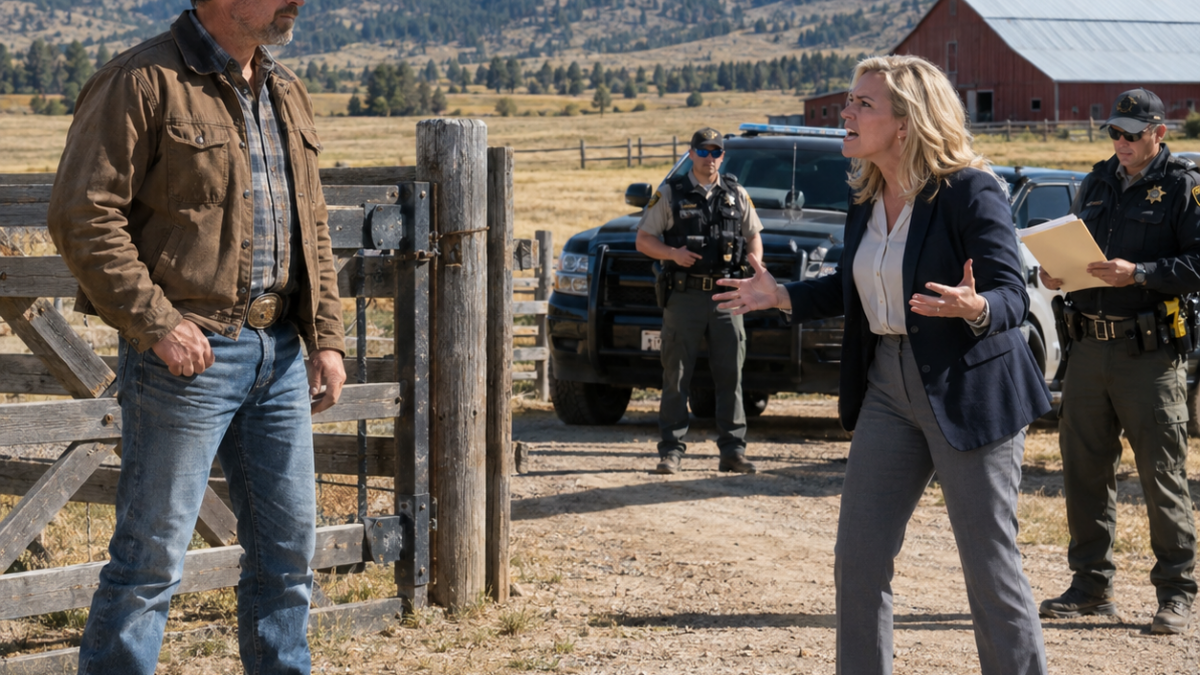
PART 2
Deputy Wright left me with one piece of advice.
“Go to the recorder’s office Monday.”
Then he looked at Janet.
“And nobody changes another lock until this gets sorted out.”
Janet’s jaw tightened.
“I have a responsibility to protect this community.”
Randy glanced around at forty acres of pasture, barn, equipment sheds, and two horses watching us from behind a fence.
“What community?”
For the first time that afternoon, I almost laughed.
Janet didn’t.
She waited until his cruiser disappeared before stepping closer to the gate.
“You think you won something?”
“I think a deputy just refused to arrest me on my own land.”
“You have no idea what you’re dealing with.”
“You keep saying that.”
“I have attorneys.”
“Good.”
“I have the board.”
“Congratulations.”
“The county approved what we did.”
“Then Monday should be very easy for you.”
Her pleasant mask slipped.
Only for a second.
But I saw it.
Then she turned toward her white sedan.
“You’ll regret making this difficult.”
I watched her drive away.
After she was gone, I opened the toolbox behind my truck seat and pulled out a pair of bolt cutters.
The padlock snapped on the second try.
That sound was more satisfying than it should have been.
I coiled the chain beside the gate instead of throwing it away.
Something told me I might need it later.
Then I drove home.
The farmhouse had belonged to my grandparents first.
Grandpa Samuel Dawson bought the original forty acres in 1952.
Not with family money.
He didn’t have any.
He worked pipeline construction for nine years, saved every dollar he could, then bought what everybody told him was miserable Texas dirt.
No proper house.
No barn.
One unreliable well.
According to my grandmother, he stood in the middle of the field the first day and said, “Looks like enough.”
“Enough for what?” she asked.
“A life.”
They built one.
My father, Tom, was born there.
So was my aunt.
I wasn’t born at Dawson Ranch, but nearly every important childhood memory happened there.
Learning to ride.
Falling off.
Learning not to approach a cow from directly behind.
Learning why.
Helping Dad repair fences in July heat.
Watching Grandma make peach cobbler.
Burying Grandpa beneath an oak tree on the eastern edge after he died.
Later, scattering Grandma’s ashes in the meadow because she said cemeteries made her claustrophobic.
Land becomes complicated when enough of your dead remain connected to it.
You stop seeing acreage.
You see voices.
That first night home, I stood in the kitchen trying to make coffee while the house settled around me.
I should have been exhausted.
I had barely slept in two days.
Instead, I kept hearing Janet’s words.
Abandoned agricultural land annexation provision.
County Code 47.3.
I opened my laptop.
No internet.
Of course.
Grandpa used to say broadband was something city people invented because they lacked patience.
I used my phone instead.
County code search.
Section 47.
Nothing about abandoned ranches.
47.3 dealt with an entirely unrelated administrative procedure.
Not annexation.
Not agricultural abandonment.
Nothing Janet had claimed.
I tried alternate terms.
Agricultural land annexation.
Abandoned property.
HOA jurisdiction.
Nothing.
I wrote the phrase exactly as it appeared on the sign.
Zero credible results.
My stomach tightened.
Maybe Janet had cited the wrong number.
Maybe some obscure county rule existed.
But if so, why put the wrong one on the gate?
And why had I received no certified notice?
No hearing notice?
No petition?
No tax change?
No court filing?
I opened my property tax account online.
Current.
Paid.
Owner:
RACHEL DAWSON.
No lien.
No transfer.
No pending tax sale.
Nothing.
Janet had either made an enormous administrative mistake or she was lying.
Then I remembered Deborah.
I called again.
Straight to voicemail.
“Deb, it’s me.”
I looked through the kitchen window toward her property.
“I’m home.”
Nothing.
“I know you’ve seen what they put on my gate.”
Still nothing.
“I’m not angry.”
That was partly a lie.
“I just need to know what happened while I was gone.”
I hung up.
Then I walked through the house.
My bedroom.
Mom’s old room.
Grandpa’s study.
Nothing seemed disturbed.
The ranch itself looked neglected, but not abandoned.
Deborah had clearly fed the horses.
Water troughs worked.
Hay had been moved.
Someone had checked the place.
So why had she stopped answering me?
I slept badly.
Sunday passed slowly.
I photographed everything.
The gate.
Broken padlock.
HOA sign.
Smaller annexation notice.
Fence lines.
Barn.
House.
Livestock.
I made copies of my deed and tax receipts.
Then Monday morning arrived with something else.
The first violation notice.
It was waiting in the mailbox.
PINEWOOD VALLEY HOMEOWNERS ASSOCIATION.
NOTICE OF VIOLATION.
Unpermitted agricultural structure.
The barn.
My father built it in 1968.
Fine:
$500.
I stood beside the mailbox holding the paper.
At first I thought I was too tired to understand it.
Then I laughed.
Not because it was funny.
Because it was absurd.
The barn was older than Janet.
Probably older than half her subdivision.
I put the notice in a folder.
Then drove to the county recorder’s office.
The building looked exactly like county offices always look.
Brick.
Low ceiling.
Fluorescent lights.
A row of plastic chairs designed to make every minute feel longer.
I took a number.
Forty-five minutes later, a clerk called me.
“Dawson?”
“That’s me.”
Her name was Denise Ortega.
Mid-thirties.
Dark hair.
Wire-rimmed glasses.
Sharp expression.
I liked her immediately because she looked mildly annoyed before I even explained anything.
People who enjoy unnecessary drama rarely look annoyed by paperwork.
I laid everything out.
“My family owns forty acres on Miller Road.”
She typed.
“Parcel number?”
I gave it.
“Okay.”
“I’ve been away four months caring for my mother.”
“I’m sorry.”
“Thank you. When I returned, an HOA had locked the gate and claimed my property had been annexed.”
Denise stopped typing.
“Annexed?”
“That’s their word.”
“Into what?”
“Pinewood Valley HOA.”
She looked at me.
“Is your property already subject to recorded restrictive covenants?”
“No.”
“Subdivision plat?”
“No.”
“Voluntary agreement?”
“No.”
“That’s unusual.”
“That’s why I’m here.”
I showed her the sign.
“County Code 47.3.”
She typed.
Then frowned.
“That’s not right.”
“What?”
“This section has nothing to do with abandoned agricultural property.”
“So there is no abandonment annexation provision?”
“Not under that citation.”
“Can you search for anything similar?”
She did.
Five minutes.
Different terms.
County planning references.
Nothing.
Finally, she turned toward me.
“I’ve worked here eight years. I’ve never seen a process where a private HOA simply annexes individually owned agricultural land because the owner is temporarily absent.”
“Neither have I.”
“Let me search Pinewood Valley.”
She typed the name.
Waited.
Her expression changed.
“Interesting.”
“That’s rarely a good word at a government counter.”
She almost smiled.
“There is a filing.”
“HOA?”
“Sort of.”
“What does that mean?”
“Pinewood Valley Homeowners Association appears under a business-license category.”
“Is that normal?”
“Not how I would expect a mandatory residential association to appear.”
She clicked again.
“Formation date says March 15 two years ago.”
“Janet told me they’ve been operating for years.”
Denise looked closer.
“But the county-system filing timestamp is January this year.”
I leaned toward the screen.
“January?”
“Yes.”
“Why would an organization formed two years ago only enter the system this January?”
“Could be migration.”
“Could be?”
“Could be bad indexing.”
“Or?”
She looked at me.
“Or somebody filed paperwork later claiming an earlier formation.”
There it was.
First real crack.
“Can I see the original filing?”
“Not immediately.”
“Why?”
“Archive images aren’t attached.”
“When?”
“I can request them.”
“How long?”
“Couple days if I’m lucky.”
I gave her my number.
Before leaving, I asked one more question.
“Would a property annexation appear here?”
“If recorded.”
“There’s nothing involving Dawson Ranch?”
She searched.
No.
No annexation.
No HOA lien.
No covenant amendment.
No deed transfer.
No management agreement.
Nothing.
Denise printed the parcel history.
Rachel Dawson remained owner of record.
I held that page all the way to the parking lot.
For the first time since coming home, I breathed normally.
Then I found the second violation notice under my windshield wiper.
EXCESSIVE VEGETATION.
Fine:
$300.
I looked toward the building.
No one obvious.
I checked the parking lot.
Nothing.
Janet knew where I was.
That bothered me.
Tuesday brought another notice.
Agricultural equipment visible from road.
$250.
Wednesday:
Fence materials inconsistent with community aesthetics.
$300.
Thursday:
Livestock odor impacting residential enjoyment.
$450.
Friday:
Unapproved exterior color on residential structure.
My farmhouse had been white since 1977.
Seven notices.
$2,300.
I spread them across my kitchen table.
Different citation numbers.
Inconsistent formatting.
Different fonts in two places.
References to bylaw sections that didn’t correspond logically.
One said Article VII, Section 3.
Another cited Article 7.3 but described a completely different rule.
I searched Pinewood Valley HOA online.
A community page existed.
A private forum.
No governing documents publicly available.
No obvious state registration number.
No filed covenants attached.
That was when an attorney’s letter arrived.
Houston firm letterhead.
At least this one looked legitimate.
Failure to pay fines could result in lien action.
Continued “unauthorized occupation” could lead to eviction proceedings.
Eviction.
From my own ranch.
I sat at the kitchen table staring at that word.
For the first time, fear pushed through anger.
Because lies printed on cheap HOA paper were one thing.
A Houston law office was another.
What if Janet had found some procedural loophole?
What if somebody had signed something while Mom was ill?
What if my father had agreed to something years ago?
What if I was missing paperwork?
I had money.
Not a lot.
Mom’s care was expensive.
Travel had been expensive.
The ranch needed repairs.
A serious land dispute could consume everything.
That was the point.
I realized it suddenly.
The notices weren’t designed to be legally convincing.
They were designed to make fighting feel expensive.
Pressure works before legality gets tested.
Saturday night, I sat in the dark kitchen.
Grandpa’s old clock ticked above the sink.
Every sound in the house felt too loud.
I thought about Mom.
Still in rehabilitation.
Struggling to move her left hand.
Speech getting stronger, but slow.
She had asked about the ranch when I left.
“Everything okay?”
I lied.
“Fine.”
I did not want her blood pressure climbing because some woman in a linen blazer had decided to steal family land.
I called the rehab center.
Mom answered on the fourth ring.
“Rachel.”
“Hey.”
“You home?”
“Yes.”
“How’s porch?”
“Still leaning.”
“Your father never fixed that right.”
“No.”
She laughed softly.
The stroke had changed her laugh.
Slower.
But still hers.
Then she asked, “Gate?”
My whole body tightened.
“What about it?”
“Deb called.”
“What?”
“She called here.”
“When?”
“Week ago maybe.”
“Why didn’t you tell me?”
Mom sighed.
“You were driving.”
“What did she say?”
“Trouble.”
“What kind?”
“HOA lady.”
I closed my eyes.
“Mom.”
“I told her you’d handle it.”
Those words almost broke me.
Everyone kept believing I could handle things.
Grandpa had.
Dad had.
Mom did.
But sitting there with $2,300 in fake fines and a lawyer threatening eviction, I didn’t feel capable of handling anything.
“Rachel?”
“I’m here.”
“Don’t sell.”
“I’m not selling.”
“Promise.”
“I promise.”
She relaxed.
I wish I had.
Monday morning brought Denise’s phone call.
“Ms. Dawson?”
“Yes.”
“I found the formation file.”
Something in her voice made me sit up.
“Good?”
“No.”
“What happened?”
“I think you need to come see this.”
“I can be there in thirty minutes.”
“Come before lunch.”
“What am I looking at?”
She hesitated.
“Dates that can’t exist together.”
I was at the recorder’s office in twenty-two minutes.
Denise led me into a small back room.
Door closed.
Blinds half drawn.
She spread documents across a table.
“Articles of incorporation.”
I read.
PINEWOOD VALLEY HOMEOWNERS ASSOCIATION.
Formation:
March 15, two years earlier.
“Look at the notary.”
December 3.
Three years earlier.
I stared.
“That’s before the document was supposedly created.”
“Fifteen months before.”
“Could it be a wrong stamp?”
“Possible.”
She pulled another page.
“Except I contacted the notary.”
My pulse jumped.
“Allowed?”
“Basic verification.”
“What did she say?”
“She never notarized this document.”
Denise looked at me.
“And the stamp was reported missing four years ago.”
Cold moved down my spine.
“What?”
“Her seal was stolen from an office.”
I sat back.
Denise continued.
“That’s not everything.”
She turned the monitor.
State business search.
NO RESULTS.
“I checked every naming variation.”
“Pinewood Valley isn’t registered?”
“Not as the entity represented in these papers.”
“So what does that mean?”
“I’m a recorder clerk, not your attorney.”
“I know.”
“But I would not rely on these documents as proof of valid mandatory HOA authority.”
“What about the founding petition?”
Her expression darkened.
“That’s where this becomes more concerning.”
Fifty-two names.
Signatures.
“Do you recognize anyone?”
I found Deborah.
Harold Vance.
Several neighbors.
“Deborah told me she never signed anything.”
“Can she prove it?”
“I don’t know.”
Denise tapped the signatures.
“If enough of these are not authentic, there may never have been legitimate consent.”
My phone vibrated.
Another unknown call.
I ignored it.
Then Denise said, “I think you need a lawyer.”
“Property lawyer?”
“County attorney first.”
“Why?”
“Because forged formation documents filed into county records are not just a civil dispute.”
I left with certified copies.
When I reached the ranch, an environmental inspection notice was taped to my door.
ANONYMOUS COMPLAINT.
Hazardous waste.
Potential groundwater contamination.
Wednesday, 10:00 a.m.
I laughed out loud.
Then I almost cried.
Every time one story weakened, Janet created another.
Police.
HOA fines.
Lawyer.
Environmental complaint.
If I solved that, what came next?
Animal control?
Fire marshal?
Tax audit?
Health department?
Death by bureaucracy.
Wednesday morning, Frank Delgado from county environmental services arrived.
He looked tired before getting out of his truck.
“Rachel Dawson?”
“Yes.”
“Anonymous complaint.”
“I know.”
He looked toward the barn.
“Mind if we start there?”
“Take your time.”
He inspected everything.
Barn.
Equipment shed.
Fuel storage.
Septic area.
Creek.
Soil.
Two hours later, he closed his notebook.
“Nothing.”
“Nothing?”
“No environmental violations.”
“What about groundwater contamination?”
“Based on what I can observe, no evidence.”
He signed the report.
“Unfounded.”
I exhaled.
He started toward his truck.
Then stopped.
“Ms. Dawson?”
“Yes?”
“This isn’t official advice.”
“Okay.”
“We’ve received three anonymous environmental complaints from this general area in six months.”
“Against who?”
“I shouldn’t discuss other properties.”
“Understood.”
He looked at the paper.
“But they came from the same callback number.”
My stomach tightened.
“Can you tell me the number?”
“No.”
“Can you preserve that information?”
He met my eyes.
“Yes.”
That was enough.
That evening I found Deborah’s note.
It had been slipped under my door.
Rachel,
I’m sorry.
Janet threatened me.
My name is on the HOA founding petition.
I never signed it.
Meet me at Mae’s Diner on Route 12 tomorrow at 7.
Come alone.
—Deb
I read it three times.
Deborah had not betrayed me.
She was scared.
That hurt differently.
At seven the next morning, she was already sitting in the back booth.
Hands wrapped around coffee.
Eyes toward the door.
When I sat across from her, she started crying.
“I’m sorry.”
“Don’t.”
“I promised your mother.”
“You kept the horses alive.”
“I should’ve called.”
“You were threatened.”
“That doesn’t make it right.”
“What did Janet do?”
Deborah wiped her eyes.
“She started two months after you left.”
“With the ranch?”
“With everyone.”
She described a community meeting.
Janet said she was creating a formal HOA for valley properties.
Shared maintenance.
Road repairs.
Property values.
Deborah was handed a petition.
“I told her no.”
“Why?”
“I don’t want anyone telling me what color to paint a barn.”
Reasonable.
“She came back?”
“Three times.”
“And?”
“I never signed.”
“But your name is there.”
She pulled out her phone.
Photo of formation petition.
Deborah J. Phillips.
Neat cursive.
Then she produced her driver’s license.
Actual signature.
Different slant.
Different D.
Different double-l.
Not subtle once you knew where to look.
“That’s not mine.”
“I believe you.”
“She forged me.”
Her voice cracked.
“I’ve known these people fifteen years, Rachel. They all think I agreed.”
“Who else?”
“Harold Vance.”
“Former notary?”
“Yes.”
“And three others.”
“What happened?”
“Two moved.”
“Because of Janet?”
Deborah looked away.
“Mostly.”
“What did she do?”
“Fines.”
“Threats?”
“Complaints.”
“Like environmental complaints?”
Deborah looked back sharply.
“You got one?”
“Yes.”
She closed her eyes.
“Oh God.”
“What?”
“That’s what she did to the Hendersons.”
“Who?”
“Family that owned sixteen acres near the north ridge.”
“What happened?”
“They refused to sign.”
“And?”
“Code complaints. Livestock complaints. Zoning complaints.”
“Then?”
“They sold.”
“To Janet?”
“No.”
“To a developer connected to her husband.”
My stomach turned.
“Price?”
“About half market.”
“How long ago?”
“Three years.”
Before Pinewood Valley allegedly existed.
Janet’s pattern was older than her fake HOA.
“Harold has everything,” Deborah said.
“What everything?”
“He started collecting documents when the Hendersons left.”
I drove to Harold Vance’s place that afternoon.
He was eighty-two.
Retired notary.
Sharp enough to embarrass people half his age.
He answered the door holding a screwdriver.
“You Rachel?”
“Yes.”
“Deborah says Janet’s finally picked the wrong woman.”
“I’m not sure whether that’s a compliment.”
“It is.”
He let me in.
His kitchen table disappeared beneath paperwork within ten minutes.
Formation filings.
Violation notices.
Copies of complaints.
Signature comparisons.
Property sales.
Emails.
Handwritten timelines.
“You did all this?”
“Retirement is boring.”
“You’ve been collecting three years?”
“Three years, four months, nine days.”
I smiled.
“Not bored, then.”
“Angry.”
He showed me the Henderson documents.
Then Martinez.
Both families had resisted Janet’s demands.
Both faced escalating pressure.
Both sold.
Both buyers were companies connected to people in Janet’s circle.
“Why didn’t you go to police?”
“I did.”
“What happened?”
“Civil dispute.”
“County attorney?”
“Needed standing.”
“You didn’t?”
“My property wasn’t taken.”
“Recorder?”
“Things disappeared.”
“Denise?”
“Too new.”
That matched Deborah.
Harold leaned back.
“Janet’s greatest strength isn’t that she’s smart.”
“What is it?”
“She makes every victim look isolated.”
He pointed at stacks.
“Henderson thinks he has a zoning problem.”
Another stack.
“Martinez thinks he has an HOA problem.”
Another.
“Deborah thinks somebody forged one signature.”
Then mine.
“You think somebody is stealing one ranch.”
I looked around.
“But it’s one system.”
Harold smiled.
“Exactly.”
I stayed four hours.
When I left, he gave me copies of everything.
“You sure?”
“I’m eighty-two.”
“That’s not an answer.”
“It’s the only one you’re getting.”
At the door, he said, “She’ll come harder now.”
“Why?”
“Because people who fake authority cannot tolerate questions.”
He was right.
That night, Pinewood Valley’s community forum exploded.
Someone posted photos of me.
My truck.
My horses.
My barn.
Headline:
SQUATTER OCCUPIES HOA PROPERTY — COMMUNITY SAFETY CONCERNS.
Comments followed.
She abandoned her mother and ranch.
She’s only back because land prices went up.
Why aren’t police doing anything?
Someone wrote:
If the authorities won’t protect our community, residents should.
That one frightened me.
Not because I thought someone would attack me.
Because Janet had converted paperwork into a crowd.
My phone stopped ringing after ten.
Neighbors who had known my parents didn’t answer messages.
Isolation.
Harold’s word.
I sat in the kitchen.
Seven violation notices.
Deborah’s forged signature.
Harold’s evidence.
County paperwork.
My deed.
For a few minutes, selling felt easy.
Not surrender.
Escape.
The ranch had value.
I could sell on my terms.
Move Mom closer.
Buy somewhere nobody knew Janet Evans.
Then I looked at the wall beside the pantry.
Three pencil marks.
RACHEL — AGE 8.
RACHEL — 11.
RACHEL — 14.
Dad had measured my height there.
He died seven years ago.
I put my hand against the last line.
“Not happening.”
I didn’t care whether keeping Dawson Ranch made financial sense.
Not anymore.
The choice had to remain mine.
The next morning Denise called.
“Come before opening.”
Again, I reached the county office early.
This time she had created a comparison chart.
Seventeen rows.
Left:
Signatures from Pinewood Valley founding documents.
Right:
Verified signatures from public records.
Deeds.
Voter forms.
Prior notarized instruments.
Seventeen.
Every one materially inconsistent.
“All?” I asked.
“All seventeen I could reliably compare.”
“And there are fifty-two total.”
“Yes.”
“How many signatures are required?”
“That’s a legal question for the county attorney under the specific governing structure.”
“Fair.”
“But?”
She looked at me.
“If these seventeen are fraudulent, the association’s claimed formation support has a serious problem.”
That was when Linda Rivera entered.
Assistant county attorney.
Early forties.
Black suit.
No wasted movement.
Denise had already briefed her.
Linda shook my hand.
“Rachel Dawson?”
“Yes.”
“You’re having an interesting month.”
“I’d prefer a boring one.”
“Most clients say that after meeting me.”
We moved into a conference room.
Harold arrived.
Then Deborah.
For three hours, Linda reviewed evidence.
Not conclusions.
Evidence.
She asked about chain of custody.
Where did this copy come from?
Who obtained it?
When?
Was the original available?
Could the signer testify?
Could the clerk authenticate the filing?
Could the notary verify the seal?
Every time I wanted to jump ahead, Linda slowed me down.
Finally she closed the folder.
“This is enough for emergency action.”
My heart jumped.
“To arrest Janet?”
“I didn’t say that.”
“What then?”
“To challenge the HOA’s legal standing and freeze enforcement activity while fraud allegations are referred.”
Harold frowned.
“She’s been stealing for years.”
“She may have committed crimes.”
“May?”
“I prosecute evidence, Mr. Vance, not frustration.”
He nodded.
Didn’t like it.
Respected it.
Linda continued.
“Janet scheduled an emergency HOA meeting for Saturday.”
I stared.
“She did?”
“She intends to address what she calls illegal occupancy at Dawson Ranch.”
Harold laughed.
Linda didn’t.
“She has invited property owners.”
“Why does that help?”
“Because she’s placing her claimed authority on the record in front of witnesses.”
Deborah leaned forward.
“What do we do?”
Linda’s expression changed.
Not smiling.
Close.
“We attend.”
Preparation took three days.
Harold organized signature comparisons.
Denise produced certified filing copies.
Linda verified the state-level absence of the required registration and county inconsistencies relevant to Pinewood Valley’s claimed status.
Deborah called people.
Eleven agreed to talk.
Eight could attend.
Two former residents gave notarized statements.
One refused.
Too frightened.
I understood.
Janet had spent years teaching people that attention was dangerous.
Friday evening I sat on the porch.
The ranch spread in front of me.
Sunlight turned everything gold.
I had been home less than two weeks.
It felt like months.
My phone rang.
Mom.
“Big day tomorrow?”
I smiled.
“Who told you?”
“Deb.”
“You two are talking again?”
“She called rehab.”
“Conspiracy.”
Mom’s speech had improved.
Still slower.
“Rachel.”
“Yes?”
“Your grandpa almost sold once.”
I sat straighter.
“What?”
“1987.”
“Why?”
“Bad year. Drought.”
“I never knew.”
“He had offer.”
“What stopped him?”
“Grandma.”
“Why?”
Mom paused.
Words took effort.
“She said… don’t sell scared.”
I closed my eyes.
Don’t sell scared.
“Did they ever consider selling later?”
“Sure.”
“When?”
“Many times.”
That surprised me.
Family stories had turned Dawson Ranch into destiny.
But Grandpa and Grandma had been practical people.
“They stayed because they wanted to?”
“Yes.”
Not because leaving was betrayal.
Choice.
Again.
“Mom?”
“Yes?”
“I’m scared.”
“I know.”
“What if tomorrow goes badly?”
“Then Monday.”
I laughed.
“What?”
“Fight Monday.”
Simple.
“Okay.”
“I love you.”
“Love you too.”
Before hanging up, she said, “Your father would be proud.”
That nearly ruined me.
I sat on the porch until dark.
Saturday, the community center parking lot overflowed.
More than forty vehicles.
Janet had successfully advertised my humiliation.
I almost admired the efficiency.
Harold rode with me.
He wore a bolo tie.
“Court clothes?” I asked.
“My dangerous outfit.”
Deborah waited near the entrance.
Beside her stood eight residents.
Linda arrived carrying one folder.
Her assistant carried a box.
Court reporter followed.
Deputy Randy Wright sat across the street with another deputy.
Janet arrived last.
White sedan.
Navy dress.
Pearls.
She parked beneath a sign:
HOA PRESIDENT.
Of course she did.
When she saw me, she raised her voice.
“Ms. Dawson.”
Conversations stopped.
“I’m surprised you came.”
“Why?”
“This meeting concerns your unauthorized occupation.”
“My home?”
“Community property.”
I smiled.
“Then we should definitely talk about it.”
Her eyes narrowed.
Inside, folding chairs filled.
I took the back row.
Janet sat at a long table with two board members.
Banner behind her:
PINEWOOD VALLEY HOA
BUILDING COMMUNITY TOGETHER
At exactly two, she started.
“Thank you all for coming.”
Voice warm.
Controlled.
“Pinewood Valley is facing a serious threat.”
Eyes turned toward me.
“An individual has illegally occupied property under HOA jurisdiction.”
A few people murmured.
“Ms. Dawson has refused lawful fines, rejected community standards, damaged HOA property by cutting a gate lock, and spread malicious claims about our organization.”
Damaged HOA property.
The lock she had attached to my gate.
I almost admired that one too.
“Today,” Janet continued, “we will vote on legal action necessary to protect this community.”
Linda raised her hand.
Janet paused.
“Yes?”
“I don’t believe we’ve met.”
Linda stood.
“Linda Rivera. Assistant county attorney.”
The room changed immediately.
Not dramatically.
But shoulders shifted.
Faces turned.
Janet’s smile froze.
“I wasn’t aware the county attorney’s office had an interest.”
“We became interested after receiving documentation involving county records.”
Janet recovered.
“Of course. We welcome transparency.”
“Good.”
Linda opened her folder.
“Can you confirm Pinewood Valley Homeowners Association claims a formation date of March 15 two years ago?”
“Yes.”
“This is your articles-of-incorporation document?”
“Yes.”
“Your filing?”
“Yes.”
Linda held it up.
“The notary certification is dated fifteen months before the stated formation.”
Silence.
Janet blinked.
“Clerical error.”
“We contacted the notary.”
Janet stopped.
“She denies notarizing the document.”
The first murmur.
“Her seal had also been reported stolen years earlier.”
Janet’s board member to the left turned toward her.
She ignored him.
“This is obviously some filing irregularity.”
Linda continued.
“We also found no state registration matching the legal status under which Pinewood Valley has been representing itself to residents.”
“The application was delayed.”
“Do you have confirmation?”
“It’s handled by counsel.”
“Name?”
Janet hesitated.
Then gave the Houston firm.
Linda nodded.
“We contacted them.”
That surprised Janet.
“The firm states its involvement began after the Dawson dispute and that it relied on organizational representations supplied by you.”
The room became louder.
A man near the front stood.
“Janet, you told us lawyers formed the HOA.”
“Sit down, Martin.”
He didn’t.
“You said everything was legal.”
“It is.”
Linda raised her voice slightly.
“There’s more.”
She motioned to Deborah.
Deborah walked forward.
I could see her hands shaking.
“My name is Deborah Phillips.”
Everyone knew her.
That helped.
“According to Pinewood Valley documents, I am one of fifty-two founding members.”
Janet said, “Correct.”
Deborah looked at her.
“No.”
The room quieted.
“I never joined.”
Janet laughed.
“You signed the petition.”
“No.”
Deborah held up the copied signature.
“That is not mine.”
She held up a verified sample.
“This is.”
Linda displayed enlarged comparisons.
People leaned forward.
Janet shook her head.
“Anybody’s handwriting can vary.”
“Absolutely,” Linda said.
“That’s why one signature would be a question.”
Next slide.
Second resident.
“Eight in this room today dispute their signatures.”
Third.
Fourth.
Fifth.
One by one.
“I never signed.”
“Not mine.”
“I was told it was a road-maintenance survey.”
“I refused.”
“My husband and I both said no.”
Two statements from former residents followed.
Linda read them.
The room changed.
People who had been staring at me now stared at Janet.
She felt it.
“I want to be clear,” Linda said. “Nobody here should assume criminal liability merely from a visual comparison. But the county has identified enough discrepancies to question whether this association was ever validly formed.”
Harold stood.
“My name is Harold Vance.”
Janet’s face darkened.
He smiled.
“I wondered when you’d look at me.”
“Harold, this isn’t the place.”
“It is exactly the place.”
He carried a folder forward.
“I was a notary forty years.”
“We know.”
“I reviewed your paperwork three years ago.”
“You have no authority.”
“Neither do you, apparently.”
Laughter.
Janet slammed her palm on the table.
“This is not funny.”
Harold agreed.
“No.”
He looked around.
“Henderson family lost sixteen acres.”
Silence.
“Martinez sold after two years of complaints.”
Another silence.
“Deborah was threatened.”
He pointed toward me.
“Rachel was called a trespasser on a ranch older than half the people in this room.”
Janet stood.
“This is a coordinated attack.”
Her face flushed.
“This woman came back after abandoning the ranch and now she wants everyone to believe she’s a victim.”
That hit me.
She knew it would.
Mom’s stroke.
Four months away.
The hospital nights.
The guilt.
Janet converted it into abandonment.
I stood.
Not because Linda asked me to.
Because I needed to.
“My mother nearly died.”
The room went quiet.
“I left Dawson Ranch because she had a stroke.”
Janet tried to interrupt.
I kept going.
“I slept in hospital chairs.”
No one moved.
“I helped her learn to hold a spoon again.”
My voice cracked.
“I drove home every few weeks until she got worse.”
I looked at Janet.
“You knew exactly why I was gone.”
Her eyes shifted.
That told me yes.
“How?”
No answer.
“How did you know I wasn’t here?”
Still nothing.
Deborah whispered, “She asked me.”
I turned.
“What?”
“She kept asking when you were coming back.”
Janet snapped.
“That proves nothing.”
Maybe.
But now everyone understood.
She wasn’t rescuing abandoned property.
She had been watching for absence.
I sat again.
Linda resumed.
“Mrs. Evans, did you personally collect founding signatures?”
Janet folded her arms.
“As president, I coordinated the process.”
“Did every person freely sign?”
“Yes.”
Eight people shouted no.
Linda waited.
“Did you personally witness all signatures?”
“No.”
“Who did?”
“Volunteers.”
“Names?”
Janet hesitated.
“Records exist.”
“Where?”
“HOA office.”
“County investigators requested those records yesterday.”
That was news to me.
Janet’s face drained slightly.
Linda continued.
“The office provided no volunteer-signature logs.”
“They must have been misplaced.”
Harold muttered, “Amazing how paper always gets lost around you.”
Janet pointed at him.
“You have been harassing this board for years.”
“And you’ve been sending fake bills for years.”
“Enough!”
Janet’s chair scraped backward.
“I created Pinewood Valley because none of you would take responsibility.”
There it was.
Her voice no longer sounded polished.
It sounded exhausted.
Angry.
Personal.
“You complain about roads.”
She pointed into the audience.
“You complain about property values.”
Another.
“You complain when barns fall apart.”
Another.
“You complain when your neighbors refuse basic standards.”
Then she looked at me.
“And people like her leave for months and expect the rest of us to look at decay.”
“My ranch wasn’t decaying.”
“You weren’t here.”
“I was caring for my mother.”
“You left.”
The room reacted badly to that.
Janet heard it.
Too late.
Linda waited.
Then quietly asked:
“What did you do when people refused to join?”
Janet’s eyes narrowed.
“I explained why membership mattered.”
“And when they continued refusing?”
“Some people don’t understand what is good for the community.”
“That isn’t an answer.”
“I did what was necessary.”
The entire room went still.
Linda didn’t move.
“What does that mean?”
Janet realized the danger.
She looked toward the court reporter.
For the first time all afternoon, she saw the woman typing.
Her face changed.
“I want counsel.”
“That is your right,” Linda said.
“But before you continue speaking, I think that is wise.”
Janet stared at the audience.
Then at the board members beside her.
One had physically moved his chair away.
The other looked sick.
Linda turned toward the residents.
“Based on the county records reviewed so far, discrepancies in formation filings, lack of verified organizational standing, contested signatures, and evidence that the purported mandatory association lacked the legally required basis to impose the obligations it claimed, the county is initiating immediate action to treat Pinewood Valley’s asserted mandatory HOA authority as void and to stop enforcement while formal dissolution and fraud proceedings move forward.”
The room erupted.
“What does that mean?”
“My fines?”
“We paid thousands!”
“Can they take our houses?”
Linda raised both hands.
“It means this organization cannot continue acting as though its disputed authority is unquestioned.”
She spoke carefully.
“Residents should preserve every notice, receipt, payment record, lien communication, and contract. The county attorney’s office will provide a process for claims and restitution where appropriate.”
Janet stared at her.
“You cannot dissolve my HOA in a meeting.”
“No,” Linda said calmly.
“Your own records did that.”
Silence.
“The legal filings formalize what the evidence already shows.”
Randy Wright entered from the side door.
Not rushing.
Not dramatic.
But the sight of a deputy changed everything.
Janet backed toward the table.
“What is this?”
Randy stopped several feet away.
“Mrs. Evans, county investigators need to speak with you regarding potential forgery and false-document filings.”
“I’ve committed no crime.”
“Then you’ll have an opportunity to explain.”
“This is her fault.”
Janet pointed at me.
Everyone looked.
She continued.
“Rachel Dawson came back here and poisoned you against me.”
Nobody agreed.
The silence was devastating.
Two weeks earlier, Janet could have made half the room boo me.
Now nobody moved.
I stood.
Walked forward.
Not for revenge.
That’s what I told myself.
Probably partly true.
I stopped ten feet from Janet.
“My grandfather bought Dawson Ranch in 1952.”
My voice was steady.
“My father built the barn you fined me for.”
I looked toward the audience.
“My grandmother’s ashes are in that meadow.”
Then Janet.
“My mother nearly died while you were watching my gate and waiting for me to stay away long enough to call the land abandoned.”
Her face hardened.
“You don’t know that.”
“No.”
I nodded.
“Investigators will determine what you knew.”
That mattered.
I wasn’t going to become Janet by turning suspicion into certainty.
“But I know this.”
I held up my deed.
“My family never gave you Dawson Ranch.”
I placed it on the table.
“You put a lock on property you did not own.”
Then one violation notice.
“You fined a barn older than your organization.”
Another.
“You called me a trespasser.”
Another.
“You used neighbors’ fear against them.”
I looked at Deborah.
Harold.
The others.
“And now the paperwork you relied on is being examined in public.”
Janet’s eyes filled with fury.
“You think you won?”
I thought about Mom.
Dad.
Grandpa.
Four months of hospital corridors.
Two weeks of fear.
“You called the police because I came home.”
I picked up my deed.
“I didn’t need to win.”
I looked toward the room.
“I needed the truth to catch up.”
Randy asked Janet to accompany him voluntarily for an interview.
She demanded an attorney.
Good choice.
She wasn’t handcuffed in the meeting.
That disappointed some residents.
It shouldn’t have.
Justice is not improved by unnecessary theater.
What mattered was that Pinewood Valley’s enforcement operation stopped that afternoon.
No new fines.
No new threats.
No new liens.
No one else being told that fake paperwork outranked their deed.
The county attorney obtained emergency court orders preserving records.
That became crucial.
Because investigators found more.
Much more.
The stolen notary stamp.
Draft formation documents with dates changed.
Electronic files showing multiple versions of founding petitions.
A spreadsheet tracking which property owners had “resisted.”
Yes.
That word.
RESISTED.
Columns.
Name.
Property.
Estimated value.
Compliance status.
Family contact.
Pressure category.
Deborah’s name appeared.
Harold’s.
Henderson.
Martinez.
Mine.
RACHEL DAWSON.
Temporary absence.
Mother medical.
Low liquidity.
High sentimental attachment.
I stared at those words when Linda later showed me a copy during civil discovery.
Low liquidity.
High sentimental attachment.
A human life reduced to leverage.
“They knew about Mom.”
Linda nodded.
“How?”
“Community monitoring. Public posts. Deborah says Janet repeatedly asked questions.”
“Did Deborah give her details?”
“Some, before she understood.”
I didn’t blame Deborah.
Janet had made ordinary conversation into intelligence.
How’s Rachel’s mother?
When is she returning?
Is the ranch insured?
Anyone staying there?
Do you have a key?
Questions neighbors ask.
Until context changes them.
Investigators found payment records too.
Fees collected from residents into accounts controlled by Pinewood Valley.
Some paid ordinary shared-road expenses.
That complicated the story.
Not every dollar was stolen.
Not every community service was fake.
Janet’s genius—and corruption—was mixing legitimate activity with invented authority.
Road gravel was purchased.
Drainage work happened.
Insurance existed.
But the association she used to compel payments and threaten property interests lacked the foundation she claimed.
That distinction mattered in court.
It also mattered to me.
I wanted Janet punished for what she did.
Not blamed for things she didn’t.
Harold struggled with that.
“She took money.”
“Some money paid actual shared expenses.”
“She had no authority.”
“That’s different from every expense being fake.”
“She forged signatures.”
“Yes.”
“So why are we being careful with her?”
“Because that’s what separates evidence from revenge.”
He stared at me.
“You always this annoying?”
“According to my mother, yes.”
He eventually smiled.
The criminal case took months.
Forgery counts.
False filings.
Fraud-related charges.
Potential extortion theories tied to property pressure.
Some allegations were stronger than others.
Prosecutors narrowed the case.
Janet’s husband Billy was investigated too.
He had handled some accounts.
Evidence did not support every rumor residents told.
That was another lesson.
Once somebody is exposed as dishonest, people begin attaching every unexplained bad event to them.
Dead tree?
Janet.
Lost mail?
Janet.
Property tax increase?
Janet.
Someone even blamed her for coyotes.
I told Linda, “Please tell me coyotes are not in the indictment.”
“Still investigating.”
I stared.
She smiled.
First joke I ever heard from her.
The civil aftermath was enormous.
Residents produced receipts.
Years of dues.
Fines.
Special assessments.
Some payments had gone toward real shared services.
Others were tied to invalid enforcement.
Accountants sorted them.
Attorneys argued.
People wanted full refunds.
Insurance companies became involved.
The Houston law firm that sent me the threat letter quickly clarified that it had relied on representations from Pinewood Valley leadership and withdrew further enforcement once questions arose.
That disappointed people who wanted a dramatic conspiracy involving everyone.
Reality was narrower.
Janet had built influence by making professionals assume her organization was what she claimed.
That was enough.
You don’t need every person in a system to be corrupt.
You need enough people to stop checking.
Deborah apologized to me at least twenty times.
The twenty-first happened while we repaired fencing near the south pasture.
“I should’ve called.”
“You did eventually.”
“Too late.”
“Mom says I should have answered Grandpa more often too.”
“That different?”
“Not really.”
She hammered a staple.
“I was scared.”
“I know.”
“She threatened environmental complaints.”
“She filed one anyway.”
“She said she’d report my septic system.”
“You should probably fix your septic system.”
Deborah glared.
“Rachel.”
“Sorry.”
She laughed.
That sound mattered.
The valley had become quiet in a different way.
Before, silence meant fear.
Now people talked.
Constantly.
Sometimes too much.
Temporary meetings replaced the fake HOA.
Then residents created a voluntary road-maintenance cooperative.
Harold refused to call it an association.
“Too soon.”
They elected three coordinators.
Term limits.
Public accounts.
No architectural rules.
No livestock rules.
No ability to lien anyone’s ranch.
Membership agreements individually signed and notarized legitimately.
Deborah joined.
Harold joined.
I did too.
“Traitor,” Harold told me.
“We need gravel.”
“Fine.”
The road cooperative’s first vote was over potholes.
Nobody forged anything.
Progress.
Mom came home six months later.
Not to New Mexico.
To Dawson Ranch.
Temporarily.
Her rehab doctors approved travel.
I installed a ramp along the porch.
She hated it.
“Ugly.”
“It’s safe.”
“Still ugly.”
I pushed her wheelchair to the edge of the porch.
She looked across the fields.
For a long time, she didn’t speak.
Then:
“Gate?”
“No lock.”
“Good.”
I placed the broken brass padlock in her lap.
She turned it over.
“This hers?”
“Yep.”
“Keep.”
“I was thinking of throwing it away.”
“No.”
“Why?”
She looked toward me.
“Remember.”
Mom had become economical with words after the stroke.
Sometimes one was enough.
Remember.
I kept it.
Janet’s case resolved the following year.
She did not receive the dramatic life sentence some neighbors wanted.
The strongest counts involved forged signatures and false filings.
She pleaded to multiple charges.
Restitution.
Probationary supervision.
Jail time tied to the criminal counts.
Restrictions on serving in community-association leadership.
Civil judgments followed.
Her husband faced separate financial liability where records supported it.
The exact punishment mattered less to me than something else.
She lost the one thing she had built everything around.
Authority.
Not legitimate authority.
The feeling of it.
No board table.
No reserved parking spot.
No residents afraid to disagree.
No letterhead that could make someone’s hands shake.
No “President” beneath her name.
The HOA was formally unwound.
Nullified where legally appropriate.
Accounts placed under supervision.
Restitution procedures created.
Recorded threats challenged.
People who had paid invalid fines filed claims.
The Hendersons contacted me.
They lived in Oklahoma now.
I spoke with Mrs. Henderson for an hour.
“We could’ve fought harder,” she said.
“No.”
“We sold.”
“You survived.”
“We let her win.”
“She built a system designed to exhaust you.”
Mrs. Henderson became quiet.
Then said:
“My husband had chest pain every time the mail came.”
That was enough.
“Nobody should have to destroy their health to prove they own their own life.”
She cried.
So did I.
The Martinez family eventually pursued a civil claim concerning the pressure campaign around their sale.
They didn’t get the property back.
They didn’t want it.
Too many bad memories.
They did receive a settlement.
The county revised procedures for disputed property-association filings.
Not because Dawson Ranch was uniquely important.
Because Denise Ortega had asked the uncomfortable question:
Why did these dates not match?
One clerk.
One date.
That had opened everything.
I visited Denise after the case ended.
She was at the same counter.
Same glasses.
Same mildly annoyed expression.
I brought cookies.
“Bribe?”
“Gratitude.”
“Government ethics.”
“Then share them.”
She accepted.
“You saved my ranch.”
“No.”
“You found the filing.”
“You brought me the question.”
“That sounds philosophical.”
“I work county records. We get bored.”
I laughed.
“Did you know immediately?”
“No.”
“When?”
“When the notary date was impossible.”
“What did you think?”
“Either somebody made an embarrassing error or somebody thought nobody would read carefully.”
“And?”
She opened the cookie box.
“Never bet against clerks.”
Fair.
Harold lived another four years.
He died at eighty-six.
At his funeral, Deborah handed me a folder.
“He left this for you.”
Inside was his original Pinewood Valley research.
On top, one note.
RACHEL—
PAPER LIES LESS THAN PEOPLE, BUT ONLY IF SOMEBODY READS IT.
DON’T GET SENTIMENTAL. BURN THE BAD COPIES.
—HAROLD
I laughed during his funeral reception.
His daughter asked why.
I showed her.
“That sounds like Dad.”
I kept the note.
Burned the duplicates.
Mom improved enough to walk short distances with a cane.
She never recovered full use of her left hand.
She moved permanently to Dawson Ranch two years after Janet called the police on me.
Her choice.
Not mine.
“New Mexico too dry,” she said.
“This is Texas.”
“Different dry.”
Impossible woman.
We repaired the porch.
Finally.
Dad would have hated how much it cost.
I restored the barn rather than replace it.
The contractor told me new construction would be cheaper.
I said no.
He asked why.
“Because my father built it.”
He understood.
Not economically.
Emotionally.
That counts too.
One spring afternoon, Mom and I sat on the porch.
A white SUV slowed near the gate.
I tensed.
Old reaction.
The driver waved.
Road cooperative.
They were dropping off notices about ditch maintenance.
I laughed at myself.
Mom noticed.
“What?”
“I thought it was HOA trouble.”
“No HOA.”
“I know.”
“Good.”
She sipped tea.
Then asked, “You forgive Janet?”
That surprised me.
“I don’t think about her much.”
“Not answer.”
I looked across the field.
Did I forgive her?
I had forgiven neighbors.
Deborah.
Myself, partly.
Janet was harder.
“I don’t know.”
Mom nodded.
“Okay.”
“That’s it?”
“Forgiveness not invoice.”
“What?”
“You don’t owe on schedule.”
I smiled.
Stroke or not, she could still say something devastating in six words.
Years passed.
The sign at Dawson Ranch weathered.
No HOA notices.
No fake liens.
No police calls.
Just bills I actually owed.
Fence repairs.
Veterinary expenses.
Property taxes.
The boring responsibilities of owning something real.
That became important.
People imagine freedom from abusive authority means no rules.
It doesn’t.
I still had county codes.
Environmental standards.
Taxes.
Animal regulations.
Real laws.
The difference was legitimacy.
Real authority can tell you where it comes from.
It has procedures.
Appeals.
Records.
Limits.
Janet’s version depended on confidence.
She behaved like an authority, so people treated her like one.
Until somebody asked:
Show me.
Show me the code.
Show me the filing.
Show me the signatures.
Show me the vote.
Show me the lien.
Show me the county order.
The answer was always weaker than the threat.
That is why the memory I return to most is not the public meeting.
Not Janet’s face when Linda said Pinewood Valley had no valid foundation.
Not Randy entering the room.
Not the neighbors apologizing.
I remember the gate.
My truck idling.
Two days without sleep.
Mom’s hospital smell still on my clothes.
Janet standing on the other side.
“You’re trespassing.”
That moment was designed to make me question reality.
Everything I knew said the ranch belonged to my family.
But there was a lock.
A sign.
A woman with confidence.
A police call.
For a few seconds, I wondered whether she knew something I didn’t.
That is how intimidation works.
It inserts uncertainty between you and what you know.
Then charges you to remove it.
The deed removed mine.
Not because old paper is magical.
Because Grandpa filed it correctly.
Dad preserved it.
I kept copies.
Taxes remained current.
Ownership had a chain.
Truth had records.
One summer, a young couple bought property near the valley.
They stopped at Dawson Ranch because someone told them I knew “HOA stuff.”
I laughed.
“What happened?”
The woman showed me a letter from the road cooperative.
“They’re asking us to join.”
“Do you want to?”
“We don’t know.”
“Then read the agreement.”
“Can they force us?”
“Not under this cooperative structure as written.”
“You’re sure?”
“Don’t trust me either.”
They looked confused.
“Take it to an attorney if the decision matters enough.”
The husband smiled.
“You’re telling us not to trust the person everyone said to ask?”
“I’m telling you authority should survive verification.”
They joined eventually.
Voluntarily.
That word still makes me happy.
Five years after Janet’s HOA collapsed, Mom died.
Peacefully.
At Dawson Ranch.
Her room faced west.
I held her hand.
Just like she had held mine during every childhood fever.
Her last clear words came the evening before.
“Don’t sell scared.”
I cried.
“I remember.”
“Good girl.”
She died before sunrise.
We scattered half her ashes in the meadow with Grandma’s.
The other half went beside Dad’s grave.
After everyone left, I stayed alone.
The ranch felt impossibly quiet.
For the first time in my life, I was the oldest Dawson still connected to the land.
That frightened me more than Janet ever had.
Three generations behind me.
No one in front.
That night, I took the original deed from the safe.
Grandpa’s name.
I ran my finger over it.
Then I opened another box.
The fake HOA sign.
One violation notice.
The brass padlock.
Harold’s note.
Deborah’s forged-signature comparison.
The county order ending Pinewood Valley’s claimed authority.
Pieces of the same story.
People ask me sometimes why I kept the ranch.
They expect me to say family legacy.
That’s part of it.
But family legacy can become another kind of prison if you let dead people make every decision.
I kept it because I wanted it.
That difference matters.
If I sell someday, I’ll sell because I choose to.
Not because somebody manufactures fear.
Not because a fake HOA says I owe money.
Not because a woman with a polished logo tells me my absence erased seventy years.
The choice is the inheritance.
Grandpa bought land because he wanted a life.
Dad built a barn because he wanted to stay.
Mom told me not to sell scared because she understood fear makes bad decisions.
And I fought Janet because I needed ownership to mean something beyond having my name on paper.
It had to mean nobody else could decide for me without lawful authority.
The last time I saw Janet was years later.
Grocery store.
I was buying coffee.
She was near produce.
We recognized each other immediately.
She looked older.
So did I.
Neither of us moved for several seconds.
Then she approached.
No blazer.
No pearls.
No clipboard.
Just Janet.
“Rachel.”
“Janet.”
“I heard about your mother.”
That surprised me.
“Thank you.”
“She was sick when…”
“Yes.”
Janet looked down.
“I didn’t understand how serious it was.”
“You knew enough.”
She nodded.
No defense.
That was new.
“I was trying to build something.”
I waited.
“A community.”
“You forged people’s names.”
Her face tightened.
“Yes.”
“You threatened families.”
“I thought standards mattered.”
“You thought control mattered.”
She looked at me.
Maybe nobody had said it that plainly.
Then:
“I lost everything.”
I felt nothing satisfying.
That surprised me.
Years earlier, I would have enjoyed that sentence.
Now it just sounded sad.
“You lost a position you never had the right to build that way.”
She looked toward the shopping carts.
“People still hate me.”
“I can’t help you with that.”
“I know.”
She turned to leave.
Then stopped.
“I really did think the valley needed organization.”
“Maybe it did.”
She looked back.
That answer surprised her.
“But organization without consent is control.”
Silence.
“And control built on forged signatures is fraud.”
Janet nodded once.
Then walked away.
I watched her disappear between aisles.
No revenge speech.
No triumphant last line.
Life rarely gives those.
I bought coffee.
Went home.
That evening the sunset turned the pasture orange.
Horses moved near the fence.
Road cooperative trucks had recently graded Miller Road.
Voluntary dues paid for it.
The barn stood straight.
Porch still creaked.
I sat where Mom used to sit.
The brass padlock rested on a shelf inside.
I didn’t need to look at it anymore.
I knew what it represented.
The day Janet called the police on me, she believed the sirens proved she had authority.
She believed uniforms would make her story true.
She believed a laminated sign could outweigh a deed.
She believed people would choose fear over questions because most people had.
For a while, she was right.
Then Randy Wright read the paperwork.
Denise Ortega checked a date.
Deborah stopped being afraid.
Harold opened his files.
Linda Rivera followed the evidence.
Eight residents stood up and said:
That is not my signature.
Janet’s power didn’t disappear because I shouted louder.
It disappeared because everyone stopped accepting her version without proof.
That is the part I carried forward.
Not hatred.
Not revenge.
Proof.
Years later, I had the gate replaced.
The old posts were rotting.
The contractor asked whether I wanted an electronic opener.
“No.”
“Keypad?”
“No.”
“Automatic lock?”
I looked at the place where Janet’s brass padlock once hung.
Then smiled.
“Simple chain.”
He shrugged.
“Your ranch.”
Exactly.
My ranch.
Not because Janet lost.
Not because the county said so.
Not because neighbors apologized.
Because the deed had always said so.
The truth had simply survived long enough for everyone else to catch up.
And when I close that gate now, the chain hangs loose enough that I can open it with one hand.
No warning sign.
No fake logo.
Just a small wooden plaque beneath the mailbox.
DAWSON RANCH
EST. 1952
Grandpa’s year.
Dad’s barn.
Grandma’s meadow.
Mom’s porch.
My responsibility.
One afternoon, I found a young woman standing outside the gate taking a photograph of the sign.
I walked over.
“Can I help you?”
She looked embarrassed.
“My father told me about what happened here.”
“Oh.”
“He said this is where the fake HOA got shut down.”
“Among other places.”
She smiled.
“I’m studying property law.”
“That sounds exhausting.”
“He said one clerk caught the whole thing because of a date.”
“That’s basically true.”
She looked toward the house.
“Were you scared?”
The question caught me off guard.
People usually ask whether I was angry.
Satisfied.
Vindicated.
Not scared.
“Yes.”
“How scared?”
I thought about the kitchen table.
The eviction letter.
Mom in rehab.
Neighbors turning away.
“Enough to consider leaving.”
“But you didn’t.”
“No.”
“Why?”
I almost gave her the easy answer.
Family.
Legacy.
Courage.
Instead, I told her the truth.
“Because I realized fear was part of their strategy.”
She nodded.
“So you stopped being afraid?”
I laughed.
“No.”
She looked confused.
“I stopped letting fear make the decision.”
That seemed to satisfy her.
She thanked me.
Walked back to her car.
I stood at the gate long after she left.
Don’t sell scared.
Mom had been right.
Fear does not disappear because you find evidence.
It sits beside you.
In the recorder’s office.
At public meetings.
When police arrive.
When neighbors glare.
When attorneys send letters.
Courage isn’t feeling certain.
Sometimes courage is carrying your documents into a room while your hands shake.
Deborah’s hands shook.
She testified.
Harold was old and tired.
He kept records.
Denise risked becoming unpopular at work.
She followed the dates.
Randy could have accepted Janet’s confidence.
He read my deed.
Linda could have dismissed everything as neighborhood drama.
She kept asking questions.
People imagine I saved Dawson Ranch.
I didn’t.
Not alone.
That was Janet’s mistake too.
She isolated people because isolated people are easier to control.
The moment we connected, her system collapsed.
One deed.
One clerk.
One frightened neighbor.
One retired notary.
Eight witnesses.
A county attorney.
A deputy willing to say, “I can’t arrest someone for standing on land she appears to own.”
None of us looked powerful alone.
Together, the truth became harder to bury.
That is why I still live at Dawson Ranch.
Not because the land is sacred.
Land is dirt.
Grass.
Water.
Fences.
What became sacred was the choice.
Three generations protected that choice before me.
Janet Evans came closer than I like admitting to taking it through nothing more than paper, pressure, and confidence.
She called the police while standing on my land.
She expected them to remove me.
Instead, that call became the first public crack in the authority she had invented.
A few weeks later, she stood in front of the same community she had frightened for years and watched residents discover that the organization collecting their money, issuing their fines, and threatening their homes had never possessed the legal foundation she claimed.
Her HOA didn’t fall because I was stronger.
It fell because it was fake.
And once enough people finally looked closely at the paperwork, there was nowhere left for the lie to hide.
The ranch is still here.
So am I.
And no one has ever put another padlock on my gate.


