PART 2: HOA Karen Called Cops When I Refused to Give Her Free Gas —Too Bad She Didn’t Know I’m the New Mayor
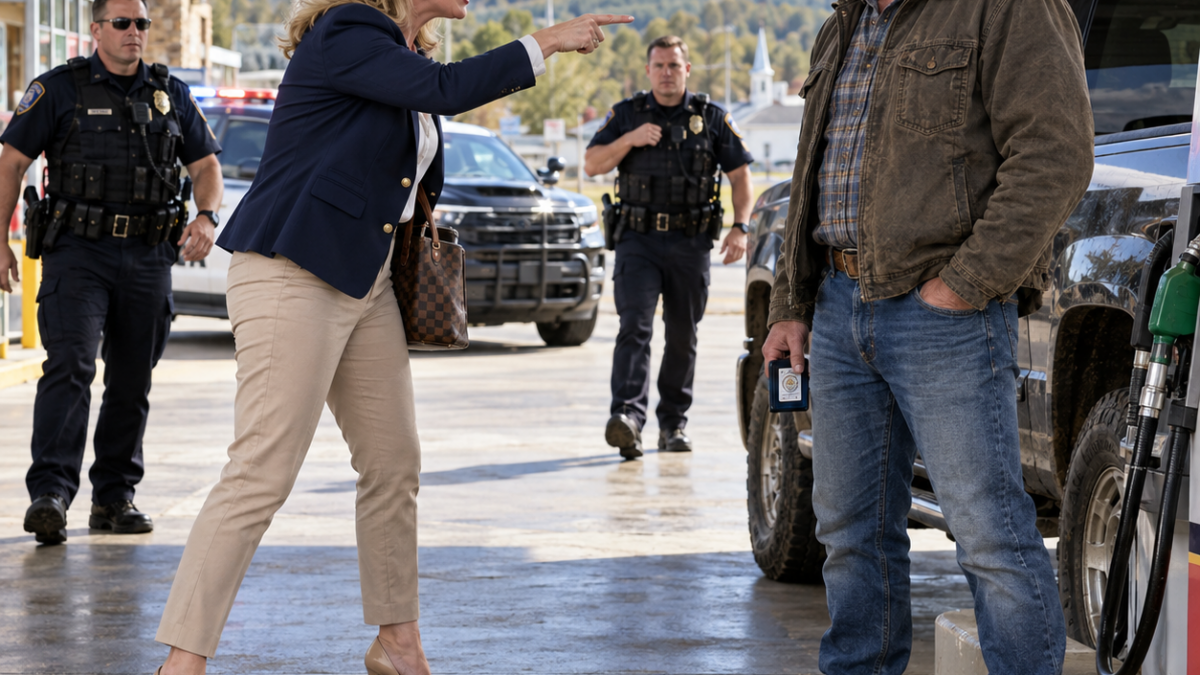
PART 2
Four days later, Pinewood Hills answered me officially.
The envelope sat between a utility bill and a furniture catalog.
Heavy cream paper.
Pine-tree logo.
OFFICE OF THE PRESIDENT.
Debbie liked things that looked official.
People often confuse presentation with legitimacy.
Lawyers learn early not to.
I opened the letter at my kitchen table.
FORMAL NOTICE OF VIOLATION.
Article 7.3.
Conduct detrimental to community harmony.
Fine: $500.
Mandatory appearance before the board Thursday evening.
Failure to appear: additional $1,000 penalty.
I read it twice.
Then downloaded the governing documents.
Forty-seven pages.
I found Article 7.3 on page twenty-three.
The important language was vague enough to drive a truck through:
“In the judgment of the board.”
No objective definition of detrimental conduct.
No meaningful evidentiary standard.
No clear appeals procedure.
Just discretion.
Debbie had found a phrase broad enough to convert personal irritation into community enforcement.
I kept reading.
Article 12.7 was more interesting.
Residents could petition for a formal financial audit if fifteen percent of homeowners signed.
Pinewood Hills had 127 households.
I calculated.
19.05.
So twenty signatures would be safe.
I wrote:
AUDIT — 20+
Then circled it.
Not because I knew there was financial wrongdoing.
Not yet.
Because people who abuse one kind of authority often get sloppy somewhere else.
Thursday night, the clubhouse was unusually crowded.
Thirty-two residents.
Triple normal attendance according to Harold Jenkins, though I didn’t know Harold yet.
Debbie sat at the center of the board table.
Two members flanked her like loyal jurors.
Two others looked uncomfortable.
She called the meeting to order at exactly seven.
“We have a special community matter tonight.”
Every head turned toward me.
Debbie folded her hands.
“This isn’t about punishment. It’s about expectations.”
Of course.
People in power rarely describe punishment as punishment.
They call it standards.
Harmony.
Safety.
Procedure.
She continued.
“Our community works because we support one another.”
Several people nodded.
“When one resident refuses to participate in that spirit, it affects everyone.”
Then she looked at me.
“Mr. Williams, three minutes.”
I stood.
No speech.
No anger.
Just facts.
“Mrs. Bailey entered my gas station Saturday morning and requested premium gasoline without payment.”
Murmurs.
“She claimed my late father had an arrangement providing free fuel to HOA leadership.”
Debbie’s jaw tightened.
“There is no record of such an agreement.”
I continued.
“When I declined, she called 911 and reported that I had behaved aggressively and threatened her.”
Someone whispered.
I ignored it.
“My station records audio and video. The entire encounter exists on camera. I’m willing to make it available.”
That changed the room.
Debbie raised her hand.
“Thank you.”
I hadn’t finished.
She knew it.
But she controlled the microphone.
“Perspectives differ.”
There’s a phrase people use when evidence becomes inconvenient.
Perspectives differ.
Debbie smiled toward the audience.
“We are not here to litigate private misunderstandings.”
“You made it an HOA violation.”
Her smile tightened.
“Please respect procedure.”
I sat.
She continued.
“Several residents have expressed concern about Mr. Williams’s willingness to participate in community norms.”
Which residents?
She never said.
“What we’re deciding tonight is whether his conduct falls under Article 7.3.”
One loyal board member raised a hand.
Then another.
Debbie’s.
Three.
The older woman at the end of the table started to raise hers, stopped, lowered it.
The final member voted no.
Three to two.
Fine sustained.
Five hundred dollars.
For refusing to give away my own gasoline.
Debbie wrote something on a pad.
Then, almost casually:
“We’ve also received questions regarding the Williams Gas and Go property.”
My station wasn’t in the HOA.
She knew that.
“Traffic impact. Visual compatibility. General community concerns.”
No formal accusation.
Just words floating into the room.
That was Debbie’s real skill.
She understood that if you make people slightly suspicious, they often finish the accusation themselves.
The meeting ended at 7:42.
Fall festival announcement.
Pool schedule.
Trash pickup.
Then everyone left.
A man in his sixties waited near the rear wall.
Gray hair.
Heavy shoulders.
When he passed me, he pressed folded paper into my hand.
He didn’t stop.
I opened it in my car.
Three words.
CHECK THE FINANCES.
That was how Harold Jenkins entered my life.
Three days later, another violation arrived.
Article 4.2.
Property maintenance.
Four photographs attached.
Leaves on my lawn.
Fine: $200.
I looked outside.
Oak tree next door.
Windstorm two nights earlier.
Maybe forty leaves.
Debbie had sent someone to photograph them.
I added the letter to TIMELINE.
Date.
Rule cited.
Evidence.
Possible retaliatory motive.
Then I started measuring what couldn’t be dismissed as neighborhood annoyance.
Gas station traffic.
Dad had taught me to track everything.
Gallons sold.
Transactions.
Average ticket.
Daypart.
Week over week.
Month over month.
Seven days after Debbie began talking?
Traffic down 31 percent.
People who had filled up every Tuesday for years now drove past.
Some glanced toward the station.
Then accelerated.
That was when the fight became personal in a new way.
Dad had built that business.
I could absorb a slow week.
But the station employed Tommy.
Twenty-two.
Good kid.
Dad gave him his first job as a teenager.
One Friday, Tommy arrived looking uneasy.
“Somebody called me.”
“Who?”
“Wouldn’t say.”
“What did they want?”
“Offered me another job.”
“Where?”
“Service station two towns over.”
“Better money?”
“Yeah.”
I leaned back.
“You taking it?”
“No.”
“You should if it’s better for you.”
“That’s not why they called.”
I knew.
“How’d they get your number?”
“When I asked, they hung up.”
Tommy looked toward Dad’s photograph.
“I’m staying.”
I gave him a raise that afternoon.
Not enough to change his life.
Enough to tell him loyalty wasn’t invisible.
Then the reviews appeared.
One star.
New account.
Rude owner. Discriminatory. Unsafe for families.
No incident.
No date.
No details.
Next day, another.
Then another.
Similar language.
Fresh accounts.
I screenshotted each.
Didn’t respond.
When someone is building a false narrative, emotional replies become raw material.
I wasn’t giving Debbie any.
That evening Harold Jenkins appeared at my house carrying an old cardboard box.
“I think you need this.”
I let him in.
He placed the box on my kitchen table.
“How long have you lived here?”
“Twenty-three years.”
“Why did you tell me to check the finances?”
He opened the box.
Meeting minutes.
Budgets.
Financial summaries.
Photocopies dating back years.
“I keep paper.”
“So did my father.”
“Smart man.”
Harold removed a folder.
“2020.”
Clubhouse renovation.
$47,000.
I remembered the clubhouse.
Worn carpet.
Old tables.
Fluorescent lights flickering like insects.
“What renovation?”
“Exactly.”
Vendor:
BAILEY PROPERTY SERVICES.
“Related?”
“Debbie’s husband.”
I looked up.
“Bradley Bailey.”
“Yes.”
More invoices.
Landscaping.
Repairs.
Reserve transfers.
Maintenance contracts.
Different descriptions.
Same family-controlled business.
Total across Harold’s copies:
More than $120,000.
“You showed anyone?”
Harold shook his head.
“Why not?”
“Because four families before you tried to fight Debbie.”
“What happened?”
“They moved.”
“All four?”
“Within a year.”
“Why?”
“Violations. Fines. Social pressure. Complaints.”
He met my eyes.
“Exactly what’s happening to you.”
That night I photographed every page.
Secure cloud.
External backup.
Then returned the originals.
Harold kept custody.
My phone rang.
Cedarville City Hall.
The woman on the line reminded me that my inauguration was ten days away.
October 28.
Ten a.m.
“Any special requests, Mayor-elect Williams?”
One.
“Don’t release my residential address.”
A pause.
“All right.”
No one in Pinewood Hills knew.
That had been deliberate.
Three weeks earlier, I had won Cedarville’s mayoral election.
Narrowly.
I had run because after fifteen years as an attorney, and years helping Dad’s station after his death, I had grown tired of watching basic municipal problems become political theater.
Potholes.
Permitting.
Small-business regulations.
Fire response.
Budget transparency.
Nothing glamorous.
I had never campaigned inside Pinewood Hills beyond ordinary public events.
I hadn’t moved there to be “the mayor.”
I wanted a home.
Debbie had no clue.
Neither did most neighbors.
And I intended to keep it that way until inauguration.
Not because I wanted a dramatic reveal.
Because using future public office to win a private HOA dispute would be exactly the kind of abuse I claimed to oppose.
That distinction became more important every day.
Six days before inauguration, I filed three things.
First:
Formal demand for HOA financial records.
Second:
Audit petition under Article 12.7.
Twenty-two signatures.
Harold first.
Martha Flores second.
Twenty others who spoke quietly at doors and looked both directions before signing.
Third:
A complaint to the state consumer-protection authorities outlining suspected financial irregularities.
I delivered the audit petition personally.
Harold came as witness.
Debbie answered her door in a silk robe.
She looked at me.
Then Harold.
Then the petition.
“What is this?”
“Article 12.7 audit demand.”
Her expression changed.
“Twenty-two owners signed.”
She read the first page.
I held out acknowledgment of service.
“Sign receipt.”
For once, Debbie Bailey had nothing to say.
She signed.
Closed the door.
Harold waited until we reached the sidewalk.
“Eight years.”
“What?”
“First time I’ve seen her speechless in eight years.”
The feeling didn’t last.
That night, while reviewing gas-station cameras, I found footage from 2:17 a.m. three nights earlier.
A man walking the station perimeter.
Dark clothes.
Baseball cap.
Face unclear.
But the gait bothered me.
Officer Bobby Pullman.
Maybe.
I wouldn’t label it that way.
Evidence didn’t support certainty.
So I wrote:
UNIDENTIFIED MALE. POSSIBLE MATCH. NOT CONFIRMED.
Installed additional cameras.
Two days later, an anonymous note appeared in my mailbox.
TROUBLEMAKERS DON’T LAST LONG HERE.
I photographed it.
Placed it in plastic.
Logged receipt.
The next afternoon, Debbie returned to the gas station.
No command.
No demand.
Different strategy.
She parked away from the pumps.
Walked inside.
“Edward.”
“Debbie.”
“I’ve been thinking.”
Dangerous opening.
“I believe we both allowed emotions to get involved.”
I pressed record on my phone inside my shirt pocket.
“Did we?”
“I may have been too aggressive.”
“Okay.”
“And perhaps you overreacted.”
There it was.
She sat at the small table by the coffee machine.
“I’d like to resolve this.”
“How?”
“You withdraw the audit petition.”
I waited.
“You withdraw the state complaint.”
Still waiting.
“And I’ll see that all outstanding HOA fines disappear.”
“You can make that happen?”
“I’m president.”
I nodded.
“What else?”
She smiled.
“I can also encourage people to support local businesses again.”
My stomach tightened.
“Meaning my gas station?”
“Community relationships matter.”
“So if I cooperate, customers return?”
“I didn’t say anyone was boycotting you.”
“No?”
“No.”
She leaned forward.
“Call it a reset.”
“What do you want in return besides withdrawing complaints?”
“Nothing unreasonable.”
Of course.
“A monthly contribution.”
“To whom?”
“Community improvement fund.”
“How much?”
“Five hundred.”
“Every month?”
“Think of it as goodwill.”
“And if I don’t?”
Her smile thinned.
“I think you’ve already seen how unpleasant misunderstandings can become.”
There it was.
I asked:
“Let me make sure I understand. I withdraw the audit petition, withdraw my complaint, pay $500 monthly, and you dismiss fines and help make Pinewood Hills friendlier to my business?”
She smiled.
“Exactly.”
I leaned back.
“I’ll think about it.”
“Forty-eight hours.”
She left.
Bought no gas.
I stopped recording.
Uploaded audio.
Sent it to my lawyer.
His response:
Do not provoke further statements. Preserve original. Combined with pattern, potentially significant evidence of coercion/extortion. Continue documenting.
That night Debbie posted publicly.
SPECIAL ASSESSMENT REMINDER.
$400.
Late penalty: $150 per day.
Three delinquent addresses listed.
Mine first.
Her pressure was becoming visible.
That was desperation.
Four days before inauguration, I woke to seventeen missed calls.
A former law colleague texted:
CHECK THE GAZETTE.
Headline:
QUESTIONS ARISE ABOUT MAYOR-ELECT’S FITNESS FOR OFFICE.
I sat straight up.
Anonymous Pinewood Hills residents described me as hostile.
Aggressive.
Unwilling to cooperate.
One claimed I had screamed at a woman asking for help.
Another questioned whether my business was “safe.”
Then the line designed to do maximum damage:
If a man cannot live peacefully among his own neighbors, can he be trusted to lead an entire town?
That was the first time Debbie’s campaign crossed into my public life.
I read the article three times.
No direct quotes with names.
No request for comment before publication.
Just insinuation.
By eight a.m., two hundred shares.
Council members called.
Campaign volunteers called.
Reporters.
Friends.
People who hadn’t spoken to me in years.
I answered almost nobody.
Because I knew exactly what Debbie wanted.
The new mayor angrily attacks neighbors.
Mayor-elect threatens newspaper.
Mayor-elect abuses influence.
No.
I wasn’t giving her that story.
Then fuel suppliers began canceling deliveries.
“Logistical concerns.”
Tommy pressed one dispatcher.
Eventually the man admitted someone had contacted vendors questioning the station’s “stability.”
That night I sat alone in Dad’s office.
The fluorescent light hummed.
His photograph leaned left.
I didn’t straighten it.
For the first time since the gas demand, I felt tired.
Not strategic.
Not disciplined.
Tired.
It is exhausting to know the truth while watching other people react to a lie.
You want to grab strangers by the shoulders.
Show them the footage.
Show them the documents.
Explain everything.
But truth delivered badly can look like desperation.
So I waited.
Then Harold found the invoice.
$12,000.
Clubhouse parking-lot resurfacing.
Problem:
The parking lot hadn’t been resurfaced.
Harold had dated photographs.
Three years.
Same cracks.
Same patched section.
Same faded lines.
Vendor:
Greenfield Paving.
I searched.
No legitimate business registration.
Address:
Vacant parcel outside town.
Then two more vendors.
Same pattern.
Invoices.
Payments.
Little or no visible work.
Shell-company indicators.
Now this wasn’t merely aggressive HOA governance.
The money trail looked serious.
I contacted a forensic accountant.
Privately.
No mayoral office.
No city resources.
My own money.
My own lawyer.
Then Rita Santos arrived.
She had avoided me for months.
Now she stood on my porch crying.
“I’m sorry.”
“For what?”
“I signed something.”
“What?”
“A complaint.”
“Against me?”
She nodded.
“Debbie said it was just documenting concerns.”
“What did it say?”
“I didn’t read all of it.”
She covered her mouth.
“After the newspaper article, I realized parts sounded like what I signed.”
I brought her inside.
“Did you contact Debbie?”
“Yes.”
“What happened?”
Rita unlocked her phone.
Messages.
I read.
Rita:
I want to withdraw my complaint. I did not mean to accuse Edward of threats.
Debbie:
Think carefully. Retractions undermine community leadership.
Rita:
The statement isn’t accurate.
Debbie:
Residents who create instability often discover multiple compliance issues. I would hate for your household to face unnecessary fines.
Rita:
Are you threatening me?
Debbie:
I’m explaining consequences.
That was the cleanest evidence yet.
“Can I photograph these?”
Rita nodded.
“My name?”
“Won’t be used without your consent.”
She started crying again.
“I believed her.”
“Lots of people did.”
“You’re not angry?”
“I’m angry at what happened.”
“At me?”
I thought about it.
“No.”
That seemed to break something loose in her.
She exhaled like she had been holding air for weeks.
Forty-eight hours before inauguration, the picture was complete enough.
Gas-station footage.
False 911 allegation.
HOA retaliation.
Audio recording of Debbie’s proposed $500-per-month arrangement.
Financial records showing more than $120,000 in questionable Bailey-related vendor payments.
Phantom-company invoices.
Witness pressure.
Anonymous threat.
Coordinated business reviews.
Public smear campaign.
Potential surveillance.
Prior families driven out.
I could have released everything immediately.
The temptation was enormous.
Send it to the Gazette.
Post the footage.
Hold a press conference.
Destroy Debbie before inauguration.
But if I did, she would say exactly one thing.
Political revenge.
New mayor uses power against HOA president.
Some people would believe it.
Maybe many.
So I chose the harder route.
Inauguration first.
Private complaints afterward.
No city staff.
No city letterhead.
No mayoral office.
No police directive.
No favors.
My lawyer prepared filings dated for the day after I took office.
Then I emailed all 127 Pinewood Hills households.
SPECIAL COMMUNITY MEETING.
Saturday.
7 p.m.
Financial transparency.
Supporting records available.
Signed:
Edward Williams.
No “Mayor.”
No “Mayor-elect.”
Just me.
Debbie called four times.
I ignored every one.
Tuesday morning arrived bright and cold.
Cedarville City Hall had bunting across the steps.
Folding chairs on the lawn.
Maybe two hundred people.
I wore the same dark suit I had worn to my wife’s funeral four years earlier.
That made the morning more emotional than I expected.
She should have been there.
Dad should have been there.
Instead I stood alone at the podium.
A circuit judge administered the oath.
I raised my right hand.
Repeated the words.
Mayor of Cedarville.
Applause.
At the back of the crowd, Bradley Bailey stood with his hands in his coat pockets.
Debbie wasn’t there.
Bradley left before the ceremony ended.
I gave a short speech.
Budget transparency.
Small-business support.
Infrastructure.
Public trust.
Nothing about Pinewood Hills.
Nothing about Debbie.
For ninety minutes, I belonged to the town.
Then I went home.
Saturday evening, Pinewood Hills clubhouse filled with eighty-three residents.
Almost two-thirds of the community represented.
Harold in his back corner.
Rita beside the exit.
Debbie at the board table.
Bradley directly behind her.
She looked composed.
Then I walked to the projector.
“Before we begin, I want to make one thing clear.”
The room settled.
“I am not speaking tonight as mayor of Cedarville.”
A wave of murmurs.
Many had only recently learned.
“I’m speaking as a Pinewood Hills homeowner exercising rights under Article 12.7.”
Debbie’s face tightened.
“Twenty-two residents signed a valid audit petition.”
I clicked the first slide.
“Tonight, I’m going to show you why.”
PAYMENTS TO BAILEY PROPERTY SERVICES.
2019–2023.
$127,000.
People shifted.
I looked around.
“Can anyone identify $127,000 in improvements performed by this vendor?”
Silence.
Debbie spoke.
“Financial reporting is more complicated than a slideshow.”
“Agreed.”
Next slide.
Clubhouse renovation.
$47,000.
Photo of current clubhouse.
Worn carpet.
Old furniture.
Then historical photos.
Very little changed.
Someone said:
“Where did forty-seven thousand go?”
Debbie raised her hand.
“Deferred maintenance and administrative expenses.”
“Then those should appear in supporting invoices.”
Next slide.
Parking lot.
Invoice:
$12,000 resurfacing.
Harold’s photograph before.
After.
One year later.
Two years later.
Same cracks.
Same faded markings.
Harold stood.
“That parking lot wasn’t resurfaced.”
Bradley laughed sharply.
“You’re a paving expert now?”
“No.”
Harold pointed toward the screen.
“I’m an old man with a camera.”
Laughter.
Nervous.
Then I advanced.
GREENFIELD PAVING.
Business search result.
No registered company.
Invoice address.
Vacant lot.
The laughter stopped.
Next vendor.
Same issue.
Next.
Same.
Residents began talking over one another.
Debbie stood.
“These searches can be misleading.”
“Then explain the vendors.”
“I’m not going to perform accounting under hostile questioning.”
“It’s your HOA’s money.”
Bradley stood so fast his chair scraped the floor.
“This is defamatory.”
I looked at him.
“You’re welcome to contact counsel.”
“We will.”
“I recommend it.”
He pointed at me.
“You’re using your new office to threaten private citizens.”
There it was.
Exactly what I had anticipated.
“No.”
I gestured toward the projector.
“Every document shown tonight was obtained as a homeowner or through private counsel. No city employee collected these records. No city funds were used. No municipal authority was invoked.”
Bradley opened his mouth.
I continued.
“The state complaint will be filed by my private attorney.”
The room erupted.
“What state complaint?”
“Investigation?”
“Where’s our money?”
“Debbie, answer him!”
Her two loyal board members physically moved their chairs several inches away.
Small movement.
Huge meaning.
Then Debbie made her final mistake.
She stood.
Pointed at me.
“This man has had a personal vendetta since the day he moved here.”
Silence.
“He refused a basic courtesy to the HOA.”
I waited.
“He screamed at me.”
I said nothing.
“He threatened me until I feared for my safety.”
Still nothing.
“Then he weaponized his legal training and political campaign against this community.”
Every face turned toward me.
I walked to my laptop.
Inserted a flash drive.
“Before we discuss the finances further, I think we should resolve one factual dispute.”
The station footage appeared.
Timestamp.
7:15 a.m.
Debbie entering.
Her voice filled the clubhouse.
“Fill up my Escalade. Premium.”
People watched.
My response.
“The station doesn’t have an arrangement with the HOA.”
Debbie:
“I can make your life in Pinewood Hills very, very uncomfortable.”
Then:
“The price is $4.29.”
Then Debbie dialing 911.
Her recorded voice:
“There’s a man here being hostile and threatening me.”
The footage showed me standing behind the counter.
Never raising my voice.
Never approaching her.
Never threatening.
Four minutes twelve seconds.
When it ended, the projector went dark.
Nobody spoke.
Debbie remained standing.
Her face had lost all color.
A man near the back finally said:
“You called 911 because he wouldn’t give you gas?”
Debbie looked around.
“It’s out of context.”
I almost admired the reflex.
“What context?” Rita asked.
Everybody turned.
Rita stood slowly.
“What context makes that okay?”
Debbie’s eyes widened.
“Rita.”
“No.”
Rita’s voice shook.
“You pressured me to sign a complaint.”
Murmurs exploded.
“And when I tried to withdraw it, you threatened me with violations.”
“Rita, that’s not what happened.”
“I have the messages.”
Now the room changed completely.
This was no longer me versus Debbie.
That was what she had depended on.
One troublemaker.
One outsider.
One angry business owner.
But corruption gets fragile when witnesses realize they aren’t alone.
Harold stood.
“She did this to the Petersons.”
Someone else:
“And the Lanes.”
Another:
“My deck fine doubled after I questioned the budget.”
Another:
“She threatened my mother over a wheelchair ramp.”
Voices overlapped.
Eight years of silence erupted.
Debbie slammed her palm against the table.
“This meeting is out of order!”
A woman shouted:
“So is stealing our money!”
Bradley walked out.
No goodbye.
No defense.
Gone.
One board member asked:
“Edward, what happens now?”
I answered carefully.
“Tomorrow, nothing.”
People stared.
“Monday, private counsel submits the financial evidence to the appropriate state authorities. An independent audit should follow.”
“What about Debbie?”
“That isn’t my decision.”
Debbie laughed bitterly.
“Of course it is. You’re mayor now.”
“No.”
I looked directly at her.
“And that’s the difference between us.”
The room went still.
“You used whatever authority you had to punish people who disagreed with you.”
I paused.
“I won’t.”
No cheering.
I didn’t want cheering.
This wasn’t campaign theater.
“The evidence goes where it belongs. Investigators decide what it supports. Auditors trace the money. Residents decide who serves on this board.”
Then I stepped away from the projector.
Harold passed Debbie on his way out.
He paused.
“You should have listened.”
Then walked away.
Three weeks later, a state investigator began interviewing residents.
Harold first.
Rita second.
Then others.
Bank records were subpoenaed or requested through proper channels.
Vendor contracts reviewed.
Meeting minutes compared.
The independent financial review found the problem was worse than we knew.
More than $140,000 missing or improperly routed across several years.
Shell companies.
Questionable invoices.
Work that could not be verified.
Reserve money transferred through businesses connected directly or indirectly to Bailey-controlled interests.
Debbie resigned four days after the community meeting.
Three sentences.
No explanation.
The two board members who had backed her resigned soon afterward.
Emergency election scheduled.
First action of the interim board:
Suspend contested fines.
Second:
Independent audit back to 2015.
Third:
Review all enforcement procedures.
My $500 “community harmony” fine disappeared.
So did the leaf fine.
I kept copies.
Not because I needed the money.
Because bad systems become easier to repeat when everyone destroys the record after surviving them.
Then came Officer Bobby Pullman.
I did nothing publicly.
No mayoral demand.
No call to his chief.
No speech.
My lawyer provided requested evidence through ordinary channels.
Gas-station footage.
His response to Debbie’s 911 call.
The unexplained late-night person captured outside the station, clearly identified only as unidentified because that was all the footage actually supported.
An internal review opened.
That mattered.
Not because I wanted Pullman destroyed.
Because Debbie’s power had depended partly on people assuming she could summon institutions and get immediate compliance.
Police.
HOA.
Vendors.
Local media.
Business relationships.
Pullman had the right to answer allegations fairly.
So did I.
Eventually he was placed on administrative leave while conduct questions were reviewed.
I made no comment.
Reporters asked.
“No comment on an active personnel matter.”
They hated that answer.
It was the correct one.
Bradley Bailey’s dealership began losing customers.
Again, not because I told anyone to boycott him.
I didn’t.
The community knew where some vendor money had gone.
People made their own decisions.
That was theirs to make.
Debbie became nearly invisible.
I saw her once in the grocery store.
Cereal aisle.
No entourage.
No board papers.
No performative smile.
Our eyes met.
I nodded.
She looked away.
I didn’t follow.
Didn’t confront.
Didn’t demand an apology.
There are moments revenge looks dramatic in your imagination.
You picture the perfect speech.
The other person finally admitting everything.
Neighbors applauding.
But when the moment comes, sometimes the greatest satisfaction is realizing you no longer need anything from them.
Not an apology.
Not fear.
Not humiliation.
Nothing.
The gas station took longer to recover.
Trust does.
Martha Flores never stopped coming.
Every Wednesday.
Gas.
Coffee.
Exact change even after I repeatedly told her she could use a card.
“I don’t trust those machines.”
“Mrs. Flores, you use Facebook.”
“That’s different.”
“It is absolutely not.”
She ignored me.
Tommy stayed.
Suppliers restored schedules.
Customers returned.
Then new customers arrived.
Some drove from neighboring communities because they had read what happened.
I appreciated the support.
But I didn’t want the station turned into a monument to conflict.
Dad didn’t build Williams Gas and Go to fight HOAs.
He built it to sell honest fuel at an honest price.
So when the old roadside sign finally needed replacing, I kept it simple.
WILLIAMS GAS AND GO.
SERVING CEDARVILLE SINCE 1987.
Then underneath:
FAIR PRICES. NO EXCEPTIONS.
Dad’s phrase.
He used it when friends asked for discounts.
When city officials wanted favors.
When relatives expected free repairs.
Fair prices.
No exceptions.
The first time I saw the new sign lit at night, I stood outside longer than I intended.
Tommy came out.
“You okay?”
“Yeah.”
“You look weird.”
“Thank you.”
“Mayor weird.”
“Go home, Tommy.”
He laughed.
Dad would have liked him.
Mayor’s office brought its own problems.
Real ones.
Road repairs.
Budget deficit.
A water-main replacement nobody wanted to fund.
Business permitting.
Fire department staffing.
Public records.
People angry because a stop sign moved six feet.
Ordinary government.
Beautifully ordinary.
I made one policy decision after Pinewood Hills that mattered personally.
Every department head received the same instruction.
Authority must be explainable.
If a resident asks why something is required, staff should be able to identify the rule.
Not:
Because we said so.
Not:
That’s procedure.
The actual rule.
Policy.
Ordinance.
Statute.
Written authority.
Some employees complained.
Then adjusted.
I never mentioned Debbie.
I didn’t need to.
A few months after everything settled, I received an email from a woman named Rebecca who lived twenty miles away in Lakewood Terrace.
Her HOA had unexplained fees.
Selective enforcement.
Board members refusing financial questions.
She had read about Pinewood Hills.
“What should I do?”
I stared at the message.
I wasn’t an HOA reform expert.
I was one guy who had gotten dragged into an ugly dispute.
But I knew the first steps.
Document.
Read the governing documents.
Find the audit provision.
Request records.
Keep communications in writing.
Don’t exaggerate.
Don’t accuse beyond what evidence supports.
Find other homeowners with similar concerns.
Use lawyers and regulators when needed.
Do not respond to intimidation with intimidation.
I sent her a template based on the petition we had used.
Then another email arrived.
Different neighborhood.
Then another.
I began keeping a folder of generic resources.
No politics.
No mayoral office.
Just personal guidance.
Harold teased me.
“You’ve created a second job.”
“I already have three.”
“Lawyer, gas-station owner, mayor.”
“Exactly.”
“Add HOA therapist.”
“Absolutely not.”
The emergency election happened in December.
Harold refused nomination.
“I’m too old to spend Tuesday nights arguing about fences.”
The new president was a woman named Linda Carver.
Accountant.
Quiet.
Her first board meeting lasted fifty-two minutes.
She published the financial statements the next morning.
Harold sent me the link with one message:
BORING.
I replied:
PERFECT.
The full independent audit later confirmed extensive financial misconduct.
Not every suspicious expense was criminal.
That distinction mattered.
Some were sloppy governance.
Some were conflicts of interest.
Some were unsupported.
Some were legitimate expenses badly documented.
But enough transactions appeared intentionally deceptive that investigators continued.
Debbie and Bradley eventually faced legal proceedings over the financial conduct.
I attended none of the early hearings unless called.
I didn’t want the case remembered as Mayor Williams versus Debbie Bailey.
It was Pinewood Hills homeowners versus years of concealed financial practices.
The residents owned that accountability.
Rita testified.
So did Harold.
So did former board members.
Records did most of the talking.
Debbie’s defense emphasized that residents had repeatedly approved budgets.
Technically true.
But approving an annual budget isn’t approving fabricated invoices.
Bradley’s attorneys argued Bailey Property Services performed real work.
Some work, apparently, had been performed.
The question was whether billed amounts and specific projects matched reality.
Forensic accounting separated those issues far better than neighborhood gossip ever could.
That taught everyone another lesson.
Once real investigators arrive, the story usually becomes less dramatic and more precise.
That’s good.
Truth should survive precision.
In the end, the legal consequences were significant without becoming theatrical.
Repayment.
Penalties.
Restrictions on future fiduciary roles.
Additional consequences tied to specific proven financial conduct.
Residents recovered part of what had been lost.
Not everything.
Money gone for years is difficult to restore completely.
But they received something else.
Records.
Every transaction now visible.
Every contract reviewed.
That may sound boring.
It was revolutionary for Pinewood Hills.
One afternoon, Harold stopped at the station.
He placed an envelope on the counter.
“What’s this?”
“Refund.”
“For?”
“HOA.”
He opened it.
$312.47.
“I got one too.”
He smiled.
“Twenty-three years of dues and all I get is three hundred bucks.”
“Want me to cash it?”
“No.”
“What are you doing?”
“Framing it.”
“Of course you are.”
He tucked it away.
Then looked at Dad’s photograph.
“You know, your father would’ve liked this.”
“Everyone tells me that.”
“Maybe everybody’s right.”
Dad knew Pinewood Hills long before I did.
He had served customers from the development since the first homes appeared.
After everything happened, I went through some of his oldest ledgers.
Handwritten.
1980s.
1990s.
Receipts clipped to pages.
And there it was.
HOA purchases occasionally.
Fall festival fuel for generators.
Emergency snowstorm supplies one year.
Landscaping mower gas.
All paid.
Every gallon.
Debbie had lied when she said Dad gave HOA leadership free fuel.
But there had been a relationship.
A fair one.
The HOA bought gasoline.
Dad charged the posted price.
Fair prices.
No exceptions.
I laughed alone in the office.
Dad had already answered Debbie twenty years before she asked me.
I copied the relevant ledger page and kept it.
Not evidence anymore.
History.
The Gazette printed a correction eventually.
Buried farther down than the original story, naturally.
They acknowledged that the earlier article relied heavily on anonymous neighborhood claims that were later contradicted by recorded evidence.
The editor called me personally.
“We should’ve contacted you before publishing.”
“Yes.”
“I’m sorry.”
“Thank you.”
“You going to sue?”
“No.”
A long pause.
“Why not?”
“Because you corrected it.”
“That’s generous.”
“No. It’s practical.”
I had spent fifteen years as a lawyer.
Not every wrong needs a lawsuit.
Sometimes correction is enough.
Sometimes it isn’t.
Knowing the difference matters.
My first year as mayor was hard.
Not because of Debbie.
Because real public work is hard.
People want roads fixed without taxes.
Services expanded without budgets.
Growth without construction.
Business without traffic.
Transparency until transparency reveals something they dislike.
But I loved it.
Maybe because after Pinewood Hills, I understood public trust differently.
Authority isn’t how many people obey you.
It is how carefully you behave when they don’t.
Debbie saw disagreement as disloyalty.
That was her fatal mistake.
Good governance requires people who disagree.
They make you explain yourself.
They expose assumptions.
They slow bad decisions.
Yes, they’re annoying.
Democracy is often annoying.
That’s the point.
Two years later, Pinewood Hills invited me to its annual picnic.
Not as mayor.
Invitation addressed:
Edward Williams and staff of Williams Gas and Go.
Tommy held it up.
“I’m staff.”
“You are.”
“Free food?”
“Probably.”
“I support democracy.”
We went.
Linda Carver grilled hamburgers.
Harold complained about the potato salad.
Martha Flores had coffee even though it was ninety degrees.
Kids ran across the lawn.
Nobody mentioned Debbie for almost an hour.
Then somebody joked about free gas.
The table went silent.
I smiled.
“You can all buy some Monday.”
Everyone laughed.
That was the first time the memory felt funny instead of sharp.
Afterward, Rita found me near the clubhouse.
“I never thanked you.”
“You testified. We’re even.”
“No.”
She looked toward her house.
“I almost moved.”
“I didn’t know.”
“My husband wanted to.”
“Why didn’t you?”
“Because after that meeting, things changed.”
She smiled.
“I realized the neighborhood wasn’t Debbie.”
That mattered.
Communities make the mistake of confusing the loudest leader with the community itself.
Pinewood Hills existed before Debbie’s presidency.
It existed after.
Same homes.
Same trees.
Same residents.
Different culture.
One person can dominate a room.
They cannot become the room unless everybody lets them.
Officer Pullman’s situation ended quietly.
The internal review found policy violations tied to how he handled several calls involving Pinewood Hills.
The nighttime station footage never became definitive evidence against him because identification wasn’t strong enough.
That fact mattered.
Suspicion is not proof merely because suspicion fits a narrative.
He received departmental discipline and retraining rather than the dramatic punishment some neighbors expected.
Some people complained.
I didn’t.
Evidence supported what it supported.
No more.
That principle protected me.
It had to protect him too.
Months later, Pullman came into the gas station.
Uniform.
He stood near the counter awkwardly.
“Mayor.”
“Bobby.”
“I’m not here officially.”
“Okay.”
He looked toward the camera.
Then back.
“I should’ve watched the footage.”
“Yes.”
“I knew Debbie.”
“I figured.”
“She made a lot of calls.”
“I know.”
“Usually nothing.”
“Then you should’ve known better.”
He nodded.
“I did.”
Silence.
“I’m sorry.”
I believed him.
“Thank you.”
He left.
No friendship.
No dramatic reconciliation.
Enough.
One evening years later, I closed the station myself.
Tommy was manager by then.
Married.
Baby on the way.
I still came in more than necessary because the station felt more like home than City Hall ever would.
Dad’s photograph still hung crooked.
I straightened it.
It tilted again when I touched the frame.
“Fine.”
Outside, the new sign glowed.
Williams Gas and Go.
Serving Cedarville since 1987.
Fair prices. No exceptions.
A black SUV stopped at pump four.
For one second, memory returned.
Debbie’s white Escalade.
Her heels on tile.
“Fill up my tank.”
Then a tired father got out of the SUV.
Two kids inside.
He swiped his card.
Pumped regular.
Bought juice.
Paid.
Left.
Ordinary.
I smiled.
That was the victory too.
Not living forever inside the conflict.
The town moved on.
Pinewood Hills moved on.
The station moved on.
Eventually I did too.
Debbie sent me a letter several years after the financial cases ended.
Handwritten.
I recognized her name on the return address.
I considered not opening it.
Then I did.
Edward,
I spent years believing leadership meant being obeyed.
When people resisted me, I assumed resistance proved they were selfish.
I justified things I should not have justified.
The gasoline incident seems ridiculous now.
I told myself I deserved it because of everything I did for the community.
That sense of entitlement grew larger than I realized.
I am sorry for calling the police.
I am sorry for what I said about you.
I am especially sorry for using people’s fear of fines and isolation to keep control.
I don’t expect forgiveness.
Debbie.
I read it twice.
Then placed it beside Dad’s old ledger.
Two documents.
Two definitions of leadership.
Dad:
Fair prices. No exceptions.
Debbie:
I believed leadership meant being obeyed.
I knew which one I wanted to carry into the mayor’s office.
I wrote back only three sentences.
Debbie,
I received your letter.
Thank you for writing it.
I hope your life is peaceful.
That was enough.
Forgiveness doesn’t require pretending harm never happened.
It means the harm no longer gets to write your future.
By the end of my first term, people occasionally asked whether I intended to run again.
I did.
But I never used Pinewood Hills as a campaign story.
My consultants wanted to.
“Mayor fights corrupt HOA.”
Great mailer.
Great advertisement.
Easy applause.
I refused.
“That happened to Edward the homeowner.”
“But voters love it.”
“No.”
“Why?”
“Because if I use a private conflict for political advantage, Debbie gets to become part of my public identity forever.”
I didn’t want that.
My father built a gas station.
I built a legal career.
Then a public-service career.
Debbie Bailey did not get to become the headline over all of it.
I won reelection anyway.
A little more comfortably the second time.
On inauguration morning, I stopped at the station first.
Same as before.
7:15.
Coffee.
Ledger.
Dad’s photograph.
Tommy arrived.
“Big day.”
“Apparently.”
“You nervous?”
“No.”
“Liar.”
“Little.”
He looked toward pump six.
“Remember the free-gas lady?”
“Unfortunately.”
“You know, if you had just given her the gas—”
I pointed at the door.
“Get out.”
He laughed.
Then became serious.
“You ever think about that?”
“What?”
“How much happened because of one tank of gas?”
All the time.
One refusal.
One false call.
One fine.
One audit.
One set of records.
An entire system exposed.
But the gasoline didn’t cause any of it.
It revealed what already existed.
Debbie’s entitlement.
Board weakness.
Financial secrecy.
Residents’ fear.
Institutional familiarity.
The problems were already there.
I simply said no at the wrong moment for her and the right moment for everyone else.
That is often how hidden systems break.
Not when somebody launches a grand crusade.
When an ordinary person refuses one unreasonable demand.
No.
I will not give you free gas.
No.
I will not pay a retaliatory fine.
No.
I will not withdraw a legitimate audit request.
No.
I will not pay $500 a month for peace.
No.
I will not use my mayoral office to destroy you either.
That last no mattered most.
Because power does not become ethical simply because the person holding it believes he is right.
Debbie believed she was right.
That was how everything started.
I refused to repeat her mistake from the opposite direction.
Years later, when I teach young municipal employees about ethics, I sometimes tell them a simplified version.
I never use names.
A community leader demanded a personal favor from a business.
Business owner refused.
Leader retaliated.
Later, business owner acquired significant public authority.
“What should he do?”
Someone always says:
“Crush her.”
Room laughs.
Then I ask:
“Why?”
“Because she deserves it.”
“Who decides?”
Silence.
“What if you’re wrong?”
More silence.
“What if you are right but use authority you don’t legally possess?”
That’s when they understand.
Justice isn’t revenge performed by the correct person.
It is process strong enough to survive your anger.
That was the greatest lesson Pinewood Hills gave me.
Not documentation.
I already knew that.
Not corruption.
I had seen it.
Restraint.
Dad understood restraint instinctively.
He could have given politicians free gas.
Would have been useful.
He never did.
Could have favored friends.
Never did.
Could have raised prices during storms.
Never did.
Fair prices.
No exceptions.
As a kid, I thought it was just his business slogan.
As mayor, I realized it was a philosophy.
Rules should apply even when exceptions benefit you.
Especially then.
On the tenth anniversary of Dad’s death, I closed the station early.
No ceremony.
I sat behind the counter alone.
Found one of his old notebooks.
Inside, among inventory counts and supplier phone numbers, he had written something I didn’t remember ever hearing.
A reputation is what people expect you to do before you walk into the room.
I stared at it.
That was what Debbie attacked.
My reputation.
That was what she relied on.
Hers.
Eight years as HOA president meant people assumed she was telling the truth before she spoke.
I had been new.
So they assumed less.
Reputation can be earned.
It can also become camouflage.
Dad’s sentence continued.
Don’t spend your whole life protecting your reputation. Protect the habits that created it.
I leaned back.
“Could’ve told me that earlier.”
The photograph remained crooked.
Outside, a car pulled in.
Martha Flores.
Older now.
Still driving.
Still stubborn.
I unlocked the door.
“We’re closed.”
“I need gas.”
“Pump works.”
“And coffee.”
“Machine’s off.”
She stared.
“Edward.”
I laughed.
Turned it back on.
She put exact change on the counter.
“Mayor gives an old woman free coffee?”
“No.”
She pointed at the cup.
“You’re not charging.”
“Community courtesy.”
Her eyes widened.
Then she laughed so hard she had to hold the counter.
That was the only free thing I gave anyone that evening.
Dad would have forgiven me.
Probably.
When Martha left, I watched her taillights disappear down Pinewood Road.
Pinewood Hills was quiet beyond the trees.
Not silent from fear.
Just quiet.
Different thing.
Debbie once told me she could make my life there very, very uncomfortable.
She did.
For a while.
She cost my business money.
She damaged relationships.
She made me question whether public office was worth taking while a smear campaign grew around me.
There were nights I wanted to quit everything.
Sell the house.
Sell the station.
Walk away from the mayor’s office before being sworn in.
What kept me steady wasn’t ambition.
It was Dad’s stubbornness.
The same stubbornness that made his photograph refuse to stay straight.
Do the work.
Keep records.
Don’t cheat.
Don’t panic.
Don’t give away what isn’t yours to give.
Even if what you’re being asked to give away is gasoline.
Even if later what you’re tempted to give away is your integrity.
That second one costs more.
Much more.
The first morning Debbie entered my station, she saw an ordinary man behind a counter and assumed she had more power.
She was wrong about me.
But that was never the most important part.
She was wrong about power.
A title doesn’t make your demand legitimate.
A board vote doesn’t make retaliation fair.
A 911 call doesn’t turn a lie into an emergency.
Being mayor doesn’t give me the right to settle personal scores.
Real authority comes with boundaries.
The people who understand that deserve it.
The people who don’t eventually expose themselves.
Sometimes all it takes is one person saying:
No.
Pay for your own gas.
And being patient enough to document what happens next.
Years after Debbie’s presidency ended, Williams Gas and Go still stands on Pinewood Road.
Tommy runs most daily operations.
I still show up early when I can.
Dad’s picture still hangs behind the counter.
The pumps are newer.
The register is digital.
Premium costs a lot more than $4.29 now.
But the rule underneath the sign hasn’t changed.
FAIR PRICES.
NO EXCEPTIONS.
Every once in a while, somebody recognizes me and jokes:
“Mayor discount?”
I point at Dad’s photograph.
“He won’t allow it.”
Most people laugh.
Some actually look at the picture.
And whenever I straighten the frame, it tilts slightly left again.
I stopped fighting it years ago.
Some things don’t need correcting.
Some things just need preserving.
That station.
Dad’s rule.
The truth.
And the simple understanding Debbie Bailey learned too late:
The day I refused to give her free gasoline wasn’t the day she made an enemy.
It was the day she finally encountered someone she couldn’t make afraid enough to stop asking questions.
She thought my becoming mayor would be the surprise that destroyed her.
It wasn’t.
The title changed nothing about what she had done.
The cameras did.
The records did.
The witnesses did.
The audit did.
The truth did.
And in the end, that was exactly how I wanted it.
Because I didn’t beat Debbie Bailey by becoming more powerful than she was.
I beat the system she built by refusing to abuse power the way she had.
That is the victory Dad would have understood.
And every morning when I unlock Williams Gas and Go, straighten his crooked photograph, and watch the first customers pull toward the pumps, I still hear the same lesson he spent his whole life teaching me without ever making a speech about it.
Work honestly.
Charge fairly.
Keep records.
And never mistake somebody’s title for permission to take what isn’t theirs.


