PART 2: HOA Enforcers Smashed My Memorial Gate—Then I Stepped Outside With Dad’s Shotgun and the Real Sheriff Arrived
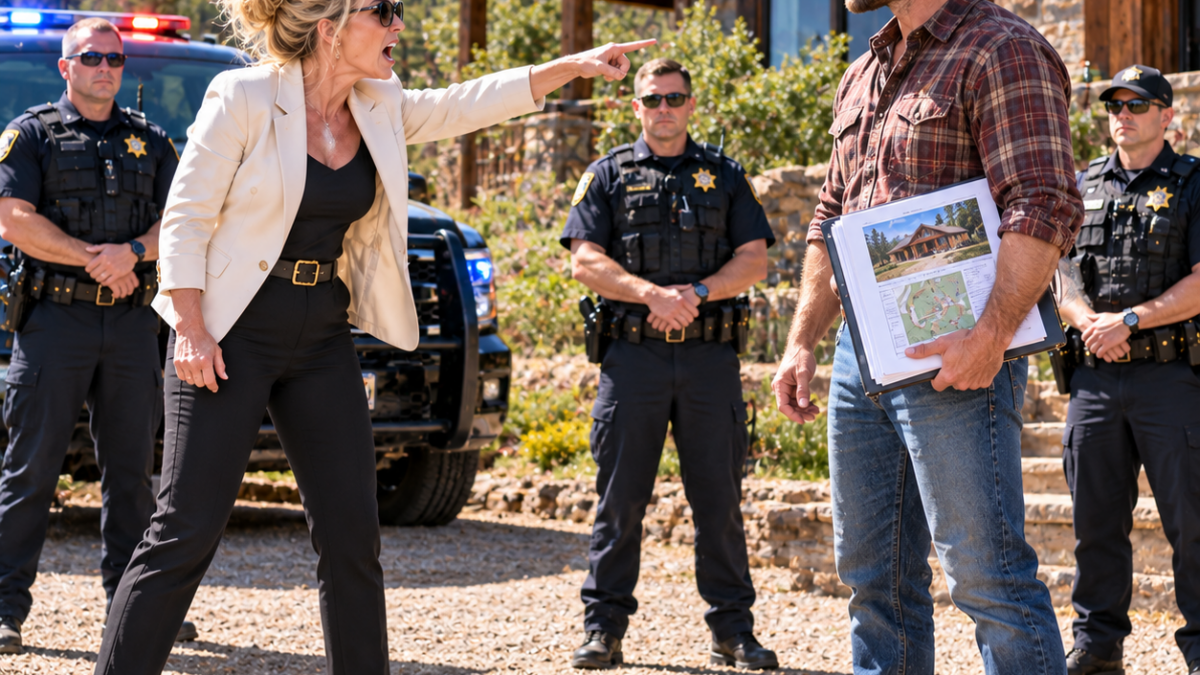
At 6:47 on a Sunday morning, I woke to the sound of six HOA enforcement men ripping apart the custom iron gate I had built after my wife died. By the time I reached the window, their truck was already rolling toward my house, their president was shouting orders through a megaphone, and the gate that had helped me survive the worst year of my life was twisted across the gravel. What they didn’t know was that I had spent three weeks documenting every threat, every lie, and every late-night patrol—and before that morning was over, one decision Gerald Gomez made at the end of my driveway would destroy the authority he had spent years building.
My name is Albert Anderson.
Eighteen months before that morning, cancer took my wife, Elena.
After fifteen years of saving, she and I had finally bought a single-story ranch house outside Tucson where the desert opened wide enough to breathe.
Lily, our daughter, could finish high school without changing schools.
I could work remotely as a software engineer.
And Elena was supposed to recover there.
She never got the chance.
Three weeks before the final ironwork on our new front gate was finished, she died.
I almost canceled the project.
Instead, I kept going.
The gate became the first thing I created after losing her.
Wrought iron.
Earth-toned finish.
A sun forged into the center, its rays spreading outward.
Hope breaking through darkness.
The HOA architectural committee approved the design in writing before installation.
I kept that letter in the same filing cabinet as Elena’s death certificate and Lily’s birth certificate.
That should tell you what the gate meant to me.
Three months before the men came for it, Lily walked into the kitchen holding an HOA envelope.
“Dad, this looks bad.”
Inside was a violation notice.
My approved gate was suddenly “non-compliant.”
Thirty days to remove it.
Seventy-five-dollar fine.
I assumed clerical error.
I pulled out the CC&Rs.
Nothing prohibited my design.
The community rules specifically allowed entry features consistent with the desert character of the neighborhood.
My gate fit perfectly.
I called the management office.
After seven minutes on hold, a woman returned.
“Mr. Gomez will contact you directly.”
Gerald Gomez.
HOA president.
Six years in office.
Former property manager.
Silver hair.
Perfect smile.
The kind of man who looked friendly right up until you disagreed with him.
He appeared on my porch three days later.
“Standards evolve, Mr. Anderson.”
“I have written approval.”
“Approvals can be reconsidered.”
“Show me the new standard.”
His smile thinned.
“It makes people uncomfortable.”
“The gate?”
“Your refusal to cooperate.”
Then he said something I never forgot.
“I’d think carefully about whether this is a hill worth dying on.”
After that, the patrol SUV began circling my home.
Once a day.
Then four times.
Then at night.
Neighbors stopped waving.
Lily started eating lunch alone at school because a board member’s daughter had turned our HOA dispute into gossip.
Then came new fines.
Noise.
Landscaping.
Garbage.
My irrigation was mysteriously shut off while every neighboring system worked.
Three saguaros started dying.
The trash truck skipped only my house.
Gerald sent a neighborhood-wide email warning that a “non-compliant resident” threatened everyone’s property values.
He never named me.
He didn’t have to.
Then the final notice arrived.
HOA enforcement would enter my property in seven days and remove the gate themselves.
No court order.
No judge.
No legal authorization.
I called attorney David Moreno.
“They cannot do that,” he said.
Then I called the sheriff’s non-emergency line and created a formal record.
I upgraded every security camera.
Four angles.
Cloud backup.
No blind spots.
And when Lily whispered, “Dad, I’m scared,” I sent her to stay with Rosa Martinez outside HOA jurisdiction until it was over.
The night before Gerald’s deadline, I sat in the dark living room with my father’s old Mossberg nearby.
Not because I wanted a fight.
Because for three weeks, strangers had been teaching my daughter that our home belonged to whoever was willing to frighten us most.
At 6:15 the next morning, diesel engines appeared at the end of the street.
Seven men stepped out wearing matching white shirts marked HOA ENFORCEMENT.
Gerald raised a megaphone.
And then the bolt cutters came out.
I called 911 before the first man touched my gate.
PART 2
The dispatcher answered almost immediately.
“911. What’s your emergency?”
“My name is Albert Anderson. I’m at 4723 Saguaro Ridge Drive. I have seven individuals outside my property preparing to enter without authorization. I have a prior sheriff’s report regarding this threat.”
I gave her the case number.
My voice sounded calmer than I felt.
Years in software engineering had taught me something useful about crisis: when a system begins failing, the fastest way to lose control is to treat every alarm like a separate disaster.
Identify the facts.
Preserve the record.
Do not improvise.
The dispatcher asked whether anyone had entered yet.
“No.”
“Do you see any weapons?”
“Tools. Bolt cutters. Pry bars.”
Then came the question I knew was coming.
“Do you have any weapons inside the residence?”
“Yes.”
“What kind?”
“A legally owned shotgun.”
“Where is it?”
“With me inside the house.”
“Are you threatening anyone with it?”
“No.”
That distinction mattered more than almost anything else that morning.
I had spent three days discussing boundaries with David Moreno and speaking with Sergeant Ray Delgado from the Pima County Sheriff’s Office.
I knew exactly what I was not going to do.
I would not fire at property.
I would not chase anyone.
I would not point a gun at people simply because they were trespassing.
I would not turn a property dispute into something my daughter would spend the rest of her life remembering for the wrong reason.
The shotgun was not there to win an argument.
It was there because seven men with tools and a heavy truck were outside the home where Lily and I lived.
Nothing more.
Nothing less.
The dispatcher said units were coming.
Then Gerald’s amplified voice shattered the morning.
“ATTENTION, MR. ANDERSON.”
I looked through the front window.
Gerald stood beyond the property line with the megaphone pressed against his mouth.
White polo.
Pressed khakis.
Silver hair perfect even before sunrise.
Behind him, the flatbed truck idled.
Three white pickups sat farther back.
The enforcement team stood near the gate.
“PURSUANT TO THE AUTHORITY GRANTED TO THE SAGUARO RIDGE HOMEOWNERS ASSOCIATION, WE ARE HERE TO REMOVE A NON-COMPLIANT STRUCTURE.”
He paused.
Then:
“YOU HAVE SIXTY SECONDS TO ALLOW ACCESS.”
I almost laughed.
Sixty seconds.
He had spent three months refusing every written request I made for actual authority.
Now he gave me sixty seconds.
I left the dispatcher on speaker, placed the phone on a small table near the front door, picked up Dad’s shotgun, and stepped onto the porch.
I stayed several yards inside my property.
Barrel down.
Both hands visible.
The desert air was cool.
That never lasts long in Tucson, but for a few minutes after sunrise, the desert can feel almost gentle.
There was nothing gentle about my driveway.
“This is private property,” I called.
Gerald lowered the megaphone.
“You have no court order. I have already contacted the sheriff. Do not enter.”
One of the younger enforcement men looked toward Gerald.
Gerald smiled at me.
It was that same porch smile from weeks earlier.
The one that said he believed his title ended all conversations.
“Mr. Anderson, are you threatening HOA personnel with a firearm?”
“No.”
His phone was raised.
Recording.
Good.
Mine were too.
Four cameras.
Cloud backup.
Local backup.
Garage server.
There would be no competing stories when this ended.
“I am standing on my own porch,” I said. “You have been formally told not to enter. Law enforcement is on the way.”
Gerald looked toward his men.
“Proceed.”
Nobody moved at first.
Then a thick-necked man carrying bolt cutters stepped forward.
Tony Breslin.
I didn’t know his name then.
He was simply the man about to cross a line he should have questioned.
He looked at Gerald.
“You sure?”
Gerald answered loudly enough for the cameras.
“Do it.”
Tony clamped the cutters around the gate lock.
The sound of metal tightening against metal made my stomach twist.
That gate.
People kept calling it a gate.
Even David.
Even the sheriff.
Legally, that’s what it was.
But there are objects that stop being objects because grief fills the empty space inside them.
Elena had helped me sketch the first version.
Not the final design.
She was already weak by then.
We sat at the kitchen table while Lily did homework.
Elena drew a crooked circle in the center of the page.
“A sun.”
“That looks like a fried egg.”
“I’m dying. Be supportive.”
I froze.
She laughed.
That was Elena.
She could turn cancer into a joke while I still couldn’t say the word without feeling like something had punched through my ribs.
“Rays,” she said.
She drew lines outward.
“Why?”
“Because you’re going to need to remember something after I’m gone.”
“Don’t.”
“Albert.”
“I don’t want to talk about this.”
“I know.”
She put her hand over mine.
“Dark isn’t permanent.”
Three weeks before Jorge finished the gate, Elena died.
The first time I saw the completed sun at the center of that wrought iron, I stood in the driveway and cried so hard Jorge quietly walked back to his truck and gave me privacy.
Now Tony squeezed the bolt cutters.
The lock snapped.
The sound cracked across the morning like a shot.
My whole body reacted.
Gerald looked at me.
Watching.
Waiting.
Maybe he expected me to lose control.
Maybe that had always been part of the plan.
If I raised the weapon, pointed it, shouted something reckless, then Gerald’s story changed.
He would no longer be the HOA president illegally entering private property.
He would become the brave community leader confronted by an armed unstable widower.
I understood that in one brutal second.
So I did nothing.
Tony pushed.
The gate resisted.
Another man joined him.
They forced it inward.
One hinge tore partially free.
The sun motif twisted.
I heard myself inhale.
That was all.
The flatbed began moving.
Its tires crossed the property line.
Then the truck entered my driveway.
My dispatcher could hear everything.
My cameras saw everything.
Gerald stepped through the broken gate behind it.
That was the moment there could be no misunderstanding.
They were on my land.
I raised my voice.
“You are now on private property after being explicitly told not to enter. Leave immediately.”
Tony stopped the truck thirty feet from the porch.
Several workers remained near the gate.
Tools in their hands.
Gerald kept walking.
“Put the shotgun down, Anderson.”
“It’s pointed at the ground.”
“You’ve lost.”
“No.”
“Accept it with some dignity.”
That sentence almost made me smile.
Six years as HOA president had taught Gerald a dangerous lesson.
People complying with you starts feeling exactly like you being right.
He mistook obedience for legitimacy.
He mistook silence for agreement.
He mistook fear for respect.
And most dangerously, he believed nobody would ever make him prove the difference.
“The sheriff is on the way,” I said.
Gerald stopped.
“Everything here is recorded.”
His eyes moved toward one camera.
Then another.
I watched him notice the infrared unit near the garage.
Something shifted in his face.
Small.
Doubt.
“You think cameras change the rules?”
“No.”
I looked at the broken gate.
“They prove who broke them.”
Then we heard the sirens.
Far away at first.
Gerald turned.
Tony stepped out of the truck.
One worker put his pry bar on the ground without being asked.
Gerald looked furious.
“Pick that up.”
The man didn’t.
The sirens grew louder.
“Everybody stay where you are,” I said.
Gerald glared.
“You don’t give orders here.”
“No.”
I nodded toward the road.
“But they do.”
Two sheriff’s cruisers came hard around the corner.
Red and blue lights washed over the desert.
They stopped at the entrance.
Doors opened.
Deputies stepped out.
“Everyone keep your hands visible!”
The order was immediate.
Clear.
Real.
I placed the shotgun on the porch floor and stepped away from it.
Tony dropped the bolt cutters.
Pry bars hit gravel.
The truck engine kept idling.
Gerald stood in the middle of my driveway with his megaphone hanging from one hand.
For the first time, his white HOA polo looked like exactly what it was.
A shirt.
Not a uniform.
Not a badge.
Not authority.
A shirt.
A deputy approached me first.
“Homeowner?”
“Yes.”
“Albert Anderson?”
“I called.”
“Firearm?”
“On the porch.”
He secured it temporarily.
I cooperated.
Another cruiser arrived.
Sergeant Ray Delgado stepped out.
I recognized him before he spoke.
His voice had been steady during our calls in the days before the confrontation.
Now the man matched the voice.
Mid-fifties.
Measured movements.
No urgency where urgency wasn’t needed.
He took in the scene.
Broken gate.
Truck across my property line.
Tools.
Workers.
Gerald.
Me.
Cameras.
Then he said:
“Who is responsible for this operation?”
Gerald immediately stepped forward.
“I am.”
Of course he did.
Authority was muscle memory for him.
“My name is Gerald Gomez. President of Saguaro Ridge Homeowners Association.”
Delgado nodded.
“What are you doing on Mr. Anderson’s property?”
“Conducting a lawful enforcement action.”
“Do you have a court order?”
“Our governing documents—”
“That’s not my question.”
Gerald stopped.
Delgado repeated:
“Do you have a court order authorizing entry onto this property?”
Gerald’s face tightened.
“Our CC&Rs give—”
“Yes or no?”
“No.”
That one word changed everything.
Delgado looked at the broken gate.
“The homeowner told you not to enter?”
Gerald glanced at me.
“He’s been non-compliant for months.”
“Did he tell you not to enter this morning?”
“Yes, but—”
“And you entered anyway.”
“We have enforcement authority.”
Delgado looked toward Tony.
“Tools?”
Tony’s eyes dropped.
“We were told it was authorized.”
“By whom?”
Every face turned toward Gerald.
He realized what was happening.
Too late.
“I authorized it.”
Delgado remained expressionless.
Gerald kept talking.
That was his worst decision of the morning.
He could have stopped.
Asked for counsel.
Said nothing.
Instead he had spent too many years winning arguments by talking longer than everyone else.
“This is ridiculous,” he snapped. “I’ve served this community for years. We cannot allow one resident to ignore rules because he feels special. His gate is non-compliant. We sent notices. We issued fines. He refused. Someone had to enforce the standards.”
Delgado let him finish.
Gerald pointed toward me.
“He threatened my team with a shotgun.”
“I never pointed it at anyone,” I said.
Delgado looked at the deputies.
Then me.
“Video?”
“Four cameras.”
“Audio?”
“Yes.”
“Cloud backup?”
“Yes.”
He almost smiled.
“You really are an engineer.”
I brought out my laptop.
The footage began before the convoy arrived.
Timestamp.
Multiple angles.
Gerald’s megaphone.
My warning.
Tony asking if Gerald was sure.
Gerald:
“Do it.”
The cutters.
Broken lock.
Truck crossing the line.
My shotgun remaining pointed toward the porch floor and ground.
Then another camera gave them something I had not heard clearly in real time.
Gerald stood beside the truck before the entry.
Phone against his ear.
“Just go in.”
Pause.
“He’s not going to do anything.”
Pause.
“I’ll take full responsibility.”
Delgado froze the video.
Looked at Gerald.
Nobody spoke.
It didn’t require a speech.
Gerald had provided his own.
Delgado closed the laptop.
“Mr. Gomez, place your hands behind your back.”
Gerald stared.
“What?”
“You are being placed under arrest while we investigate criminal trespass and property damage.”
His face flushed.
“You cannot arrest the HOA president for enforcing HOA rules.”
Delgado answered:
“Being HOA president does not make you law enforcement.”
“I have authority under the covenants.”
“Covenants don’t give you permission to break into private property.”
“This man had a gun.”
“And we’ll document that separately.”
Gerald looked toward his men.
“Tell them.”
Nobody moved.
“Tony.”
Tony swallowed.
“He told us it was legal.”
Gerald’s face changed.
“What?”
“You said the board could do it.”
“You knew the job.”
“You said we didn’t need a court order.”
“Because we didn’t.”
Delgado looked at Tony.
“You’ll give a statement.”
“Yes, sir.”
Gerald began protesting again.
Then the cuffs closed.
That sound was quieter than the bolt cutters.
But I felt it deeper.
Neighbors had gathered at the property edge.
People who had spent months looking away from me now watched Gerald Gomez being placed into a sheriff’s cruiser.
Nobody cheered.
I’m glad they didn’t.
There are moments when celebration makes justice look smaller.
Gerald climbed into the back seat.
The door closed.
For six years he had built his identity around being the man people had to obey.
Now he sat behind glass while actual law enforcement photographed the damage he had ordered.
Tony and the other workers gave statements.
The flatbed was moved.
Deputies photographed tools.
My gate.
The torn hinge.
The damaged lock.
The property line.
Then Delgado came to me.
“You okay?”
I looked at the gate.
“No.”
He followed my eyes.
“I meant physically.”
“Yes.”
He nodded.
“Your daughter?”
“Staying with family friends.”
“Good.”
I looked at him.
“Did I do anything wrong?”
The question embarrassed me the moment it left my mouth.
But I needed the answer.
Delgado understood.
“We’ll document everything, including the firearm. From what I saw on the footage, you remained on your property and didn’t point it at anyone.”
I exhaled.
“You called before they entered.”
“Yes.”
“You repeatedly told them to leave.”
“Yes.”
“You preserved evidence.”
“Yes.”
“You didn’t physically confront them.”
“No.”
He held out his hand.
“That was the right move.”
I shook it.
“I just wanted them to leave us alone.”
Delgado looked toward the damaged gate.
“Sometimes people like Mr. Gomez count on residents not knowing the difference between association rules and law.”
He paused.
“They remember once handcuffs are involved.”
After everyone left, I stood alone.
The sunrise had fully reached the yard.
The sun motif was bent.
One outer ray had twisted.
The left hinge had torn out of the masonry.
I walked toward it.
Touched the metal.
Cold.
Scratched.
Still there.
I thought about Elena drawing that crooked sun.
Dark isn’t permanent.
I sat down in the gravel.
For eighteen months, grief had arrived when it wanted.
At grocery stores.
At red lights.
In the shower.
While folding laundry.
That morning it arrived beside a broken gate.
I cried.
Not because Gerald had won.
He hadn’t.
Because for three months I had been so focused on defending Elena’s memorial that I hadn’t admitted how exhausting it was to keep fighting after I had already spent a year and a half fighting something much bigger.
Cancer had not listened to evidence.
It had not cared about fairness.
It had not responded to documentation.
Gerald did.
Maybe that was why I refused to surrender.
I could not save Elena.
I could save this.
My phone rang.
Lily.
I answered immediately.
“Dad?”
“It’s over.”
“What happened?”
“They came.”
Silence.
“The sheriff arrested Gerald.”
Another silence.
“Are you okay?”
“Yes.”
“The gun?”
“Everything stayed safe.”
I heard her breathe.
Then cry.
“Can I come home?”
I looked at the house.
“Yes.”
“Promise?”
“I promise.”
Rosa brought her back two hours later.
Lily jumped out before the car fully stopped.
She ran to me.
I held her.
For months, she had become careful about affection.
Seventeen.
Almost eighteen.
Too old to hug Dad in front of people.
That morning she held on like she was ten.
Then she saw the gate.
Her face changed.
“Oh, Dad.”
“I know.”
She touched the bent sun.
“They ruined it.”
“No.”
I surprised myself.
She looked at me.
“They damaged it.”
I ran my hand over one twisted ray.
“We’ll fix it.”
Two days later, Detective Maria Santos knocked on my door.
Sharp eyes.
No wasted words.
She sat at my kitchen table with a digital recorder.
“Start from the beginning.”
So I did.
Architectural approval.
First violation.
Gerald’s porch visit.
Surveillance.
Night patrols.
Lily’s school problems.
Noise fine.
Irrigation interruption.
Garbage service issue.
Neighborhood email.
Removal notice.
Attorney advice.
Sheriff report.
Cameras.
Convoy.
Gate.
Shotgun.
Arrest.
Three hours.
When I finished, I gave her the evidence folder.
She stared at its thickness.
“You made this?”
“Yes.”
“You keep spreadsheets too?”
I opened my laptop.
Timestamped patrol log.
Dates.
Times.
Vehicle passes.
Violation notices.
Email metadata.
Certified-mail receipts.
Photographs.
Video index.
Cloud backup manifest.
She leaned back.
“I wish every complainant were a software engineer.”
“Most people have better hobbies.”
She smiled.
Then became serious.
“This goes beyond your gate.”
“What do you mean?”
“We’ve already received calls.”
“From neighbors?”
“Former residents.”
That got my attention.
“Former?”
“You’ll hear what we can disclose when appropriate.”
A week later she called.
“Your case wasn’t isolated.”
Three families.
Five years.
Different disputes.
Same pattern.
The Nguyen family—though the source documents had mangled their name in several places—had spent more than a year fighting Gerald over a backyard vegetable garden.
Fines.
Inspections.
Patrols.
Warnings.
Eventually they sold.
The Crawford family installed solar panels.
Arizona law protected much of what they did.
Gerald still buried them in enforcement.
Legal expenses wore them down.
They sold too.
Another family left after landscaping conflict escalated.
When Santos described the pattern, something inside me shifted.
Until then, I had thought the story was:
Gerald hates my gate.
Wrong.
The gate was only my entry point into a machine that had operated for years.
Pick a target.
Declare violation.
Escalate paperwork.
Make daily life uncomfortable.
Turn neighbors against them.
Increase costs.
Wait.
Eventually the family leaves.
Then Gerald points to their departure as proof he was right.
That was the cycle.
My family had almost become another line in it.
David Moreno filed our civil case.
Gerald personally.
The HOA for negligent supervision.
Gate damage.
Emotional distress.
Harassment.
Punitive damages.
Attorney fees.
I cared about some claims more than others.
Money mattered.
I wasn’t wealthy.
Replacing custom ironwork wasn’t cheap.
Therapy for Lily wasn’t cheap.
Legal work definitely wasn’t cheap.
But the dollar figure felt secondary.
What I wanted was a public record.
Something future residents could find before another president stood on a porch and said:
Approvals can be revoked.
Thirty-seven residents signed a petition demanding the board’s removal within one weekend.
Kelly Reyes led it.
She lived three houses down.
For months, she had barely spoken to me in public.
Then she was the person who warned me the enforcement truck was coming.
She knocked on my door after Gerald’s arrest.
“I owe you an apology.”
I shook my head.
“You warned me.”
“Late.”
“You warned me.”
She looked at the damaged gate.
“I knew things were wrong.”
“Why didn’t you speak?”
“Because I saw what happened to the Crawfords.”
Honest.
“They were miserable.”
“Yes.”
“And you have kids.”
“Two.”
“You were protecting them.”
“I was protecting myself.”
She looked ashamed.
“Same difference sometimes.”
She looked at me.
“No, it isn’t.”
I respected that.
“But I’m done.”
And she was.
Kelly went door to door.
Collected signatures.
Asked for financial transparency.
Demanded Gerald be removed from every committee.
The emergency HOA meeting happened without me.
They invited me.
I declined.
“Why?” Lily asked.
We were eating dinner.
“Because they need to decide what kind of board they want without turning me into the center of everything.”
“Aren’t you already the center?”
“I’d rather not be.”
She pushed pasta around her plate.
“People apologized at school.”
“How’d that feel?”
“Awkward.”
“Maya?”
“She never really stopped talking to me.”
“That’s good.”
“The prom committee asked me back.”
“You want to go back?”
She shrugged.
“I don’t know.”
I studied her.
The harassment had taken more from Lily than I admitted.
Senior year should have been stupid and ordinary.
Bad cafeteria food.
College applications.
Prom drama.
Instead she had learned what a surveillance vehicle looked like at midnight.
She had learned that adults could isolate a teenager to punish her father.
She had learned to watch windows.
Gerald’s punishment could never give her those months back.
I hated him most for that.
Three weeks after the civil filing, the HOA’s insurer offered eighty thousand dollars.
Confidential settlement.
No admission.
Mutual nondisclosure.
David called.
“It’s not terrible.”
“No.”
“You haven’t heard my analysis.”
“No confidentiality.”
“Albert.”
“No.”
“They’re paying fast because they’re afraid.”
“Good.”
“Trials are expensive.”
“I know.”
“Uncertain.”
“I know.”
“They could offer more later.”
“I want written accountability.”
David went silent.
“I thought you wanted revenge.”
“I did.”
“And now?”
“I want something Lily can look at ten years from now and know we weren’t crazy.”
That changed him.
“I’ll reject it.”
“Thank you.”
That evening, Lily and I sat on the porch.
Temporary chain-link barrier where the gate had been.
Sunset over the mountains.
She asked:
“Do you think Mom would be proud?”
The question hurt.
Elena hated conflict.
She could argue, believe me.
But she hated living inside anger.
“I think she’d be proud we didn’t run.”
Lily nodded.
“And the gun?”
I looked at her.
“What about it?”
“She hated guns.”
“Yes.”
“Would she be mad?”
I answered carefully.
“She would’ve been scared.”
“So was I.”
“I know.”
“Were you?”
“Yes.”
That surprised her.
“You didn’t look scared in the video.”
“I was terrified.”
“Of them?”
“Of making one mistake that couldn’t be undone.”
She leaned against me.
“That’s what scared me too.”
We watched the desert darken.
The shotgun went back into the safe that night.
Not because danger had vanished.
Because I didn’t want an object used during the worst morning of our life sitting inside the emotional center of our home.
Dad had given it to me as an heirloom.
He said:
“Hope you never need it.”
I hoped I never needed to take it out again.
The criminal case moved faster than the civil case.
Video has a way of shortening arguments.
Gerald’s own words hurt him more than anything I could have said.
Do it.
I’ll take full responsibility.
His team cooperated.
Tony Breslin gave a statement admitting Gerald repeatedly assured them the HOA possessed legal entry authority.
The other workers confirmed the same.
Tony faced his own consequences but received consideration for cooperation.
Months later, the criminal case resolved through a plea.
I sat in the courtroom beside David.
Lily chose to stay home.
Good choice.
Gerald entered wearing a dark suit.
His silver hair looked thinner.
He did not look at me until the judge began discussing the conduct.
Unauthorized entry.
Property damage.
Abuse of association processes.
Pattern evidence relevant to supervision and sentencing considerations.
The final disposition was not the dramatic prison sentence some neighbors expected.
Two years’ probation.
Two hundred hours of community service.
Restitution.
Most important to the community:
Ten-year prohibition from HOA leadership.
When the judge read that condition, Gerald’s face finally changed.
Money?
He could earn more.
Probation?
He could wait.
Community service?
He could survive.
But leadership had become his identity.
Take away the title and who was Gerald Gomez?
He looked toward me.
I expected hatred.
Instead I saw exhaustion.
Then he looked away.
Tony approached after court.
Hat in both hands.
Literally.
“Mr. Anderson.”
“Tony.”
“I know sorry doesn’t fix it.”
“No.”
“Gerald said everything was legal.”
“You could’ve asked.”
“I should have.”
“Yes.”
That answer surprised him.
People often expect forgiveness to erase responsibility.
It shouldn’t.
Tony nodded.
“I thought the shirts meant we were official.”
I almost laughed.
Instead:
“Next time somebody gives you a uniform, ask what it actually authorizes.”
“Yes, sir.”
He offered his hand.
I took it.
The civil case settled two weeks before trial.
The insurer had watched the criminal proceedings.
New offer:
$120,000.
Legal fees paid.
Formal written apology.
Explicit acknowledgment that the gate removal operation had been unauthorized.
No sweeping nondisclosure clause erasing what happened.
I accepted.
Some people thought that contradicted my earlier refusal.
It didn’t.
The first offer wanted silence.
The final offer bought accountability.
Money and accountability can exist in the same settlement.
I used part of the money to repair the gate.
Jorge insisted.
When he saw the damage, he ran his fingers along the twisted sun.
“They did this?”
“Yes.”
He shook his head.
“I can repair.”
“How much?”
“Cost.”
“No.”
“Albert.”
“Your work deserves payment.”
“So did yours.”
“What?”
He pointed at the house.
“Standing here.”
I couldn’t argue.
We compromised.
He charged materials and his crew.
Not his own labor.
The new gate arrived in late June.
Not new exactly.
Reborn.
Jorge salvaged much of the original iron.
Straightened the sun.
Reforged damaged rays.
Replaced the hinge.
Strengthened the frame.
When installation finished, he called me to the driveway.
“Look back.”
“What?”
“Back side.”
On the interior face of one lower crossbar was a small inscription.
Almost invisible from the road.
STAND YOUR GROUND.
I stared at it.
Jorge raised both hands.
“Not political.”
I laughed.
“I know.”
“Not about gun.”
“I know.”
“About home.”
My eyes burned.
“Yes.”
“About wife.”
“Yes.”
He patted my shoulder.
Then left me alone.
I stood there a long time.
Elena’s sun.
Dad’s lesson about boundaries.
Lily’s fear.
My stubbornness.
Gerald’s arrogance.
All somehow compressed into iron.
Lily graduated two weeks earlier.
University of Arizona.
Close enough to visit.
Far enough to be her own person.
At graduation, I sat beside Rosa Martinez.
When Lily crossed the stage, she looked toward us.
For one second, I saw Elena.
Not physically.
Expression.
The slight upward tilt of the chin whenever she refused to cry.
I cried enough for both of them.
That night, Lily gave me a small frame.
Inside was a photograph she had taken after the arrest.
The damaged gate.
Bent sun.
Morning light behind it.
“What is this?”
“Evidence.”
I laughed.
She smiled.
“Turn it over.”
On the back:
WE DIDN’T BREAK.
I sat down.
“Lily.”
“I know Mom designed the sun.”
“She did.”
“I know what it means.”
I hugged her.
She whispered:
“I’m sorry I told you to remove it.”
“No.”
“I did.”
“You were scared.”
“I wanted it gone.”
“You wanted the harassment gone.”
She thought.
“That’s different?”
“Yes.”
It took me months to understand the same thing.
Gerald tried to make the gate responsible for what he was doing.
If only I removed the gate.
If only I paid the fine.
If only I apologized.
If only I cooperated.
Then peace would return.
That’s how coercion works.
The person hurting you convinces you the pain is caused by your resistance.
But if a person needs you to surrender something lawful before they will treat you decently, the problem was never the object.
The problem is the person demanding surrender.
Saguaro Ridge elected a new board.
Kelly Reyes won a seat.
Two other long-time residents joined.
Their first changes were procedural.
Written notice periods.
Documented hearings.
No enforcement action affecting private structures without legal review.
No unilateral president authority.
No vendor entering a lot without owner consent or lawful order.
Board votes recorded.
Appeal rights.
Conflict disclosures.
Boring rules.
Beautiful rules.
People underestimate the value of boring governance.
The summer barbecue returned.
I almost skipped it.
Lily forced me.
“You keep telling me not to let Gerald ruin things.”
“That’s different.”
“No.”
She was right.
Again.
Eight families came at first.
Then more.
The Nguyens drove back from Phoenix.
They had sold years earlier after Gerald’s garden campaign.
Mrs. Nguyen found me near the grill.
“You’re Albert?”
“Yes.”
She took my hand.
“Thank you.”
“For what?”
“For finishing something we couldn’t.”
I didn’t know what to say.
“We left.”
Her eyes filled.
“We thought we were weak.”
“You weren’t.”
“We sold.”
“You survived.”
“Same?”
“Sometimes.”
She squeezed my hand.
Their children ran around the yard.
Families who had once avoided me now argued over burgers and baseball.
That afternoon did more healing than the settlement.
Because revenge ends with the person who hurt you.
Recovery begins with everybody else.
One year later, I received an envelope.
Return address:
Gerald Gomez.
I almost threw it away.
Opened it instead.
Albert,
My probation counselor said I should write apologies to people I harmed.
That sentence nearly made me stop reading.
It sounded mandatory.
Then:
I thought the board gave me authority to protect the neighborhood. Over time I stopped seeing any difference between protecting it and controlling it.
Better.
I told myself residents who challenged me were selfish.
I told myself enforcement worked because people eventually complied.
I understand now many complied because they were afraid.
Then:
I have no excuse for entering your property after you warned us not to.
I am sorry for what happened to your gate and your daughter.
That line mattered.
Lily.
He remembered her.
Or someone told him.
Either way.
I folded the letter.
Did not answer immediately.
Three weeks later, I wrote:
Gerald,
Thank you for acknowledging it.
What you did affected my daughter more than you probably understood.
I hope your community service teaches you the difference between serving people and ruling them.
Albert
Short.
No forgiveness declaration.
No dramatic moral lesson.
He already had one.
Years passed.
Lily finished college.
Computer science.
My fault, apparently.
She moved to Denver.
Then complained about snow constantly.
“Arizona has heat.”
“Heat doesn’t have to be shoveled.”
Fair.
The house became quiet again.
Different quiet.
Not grief.
Empty nest.
I kept working remotely.
Walked the property every evening.
The recovered saguaros survived.
Two carried permanent stress scars.
I left them.
At first because removal was expensive.
Later because they reminded me that healing and returning to original condition are not the same thing.
You can survive and still show what happened.
The gate developed weathering.
Iron does.
Every year I touched up the finish.
Every year I traced the hidden words.
STAND YOUR GROUND.
Over time, that phrase changed meaning for me.
When Gerald came, standing my ground meant refusing entry.
Later it meant something harder.
Not letting anger become my identity.
There’s a danger in winning against a bully.
You start believing the fight made you strong.
Then you keep looking for fights to prove you still are.
I didn’t want Gerald living in my head after he had already left the board.
So I stopped checking on him.
Stopped reading neighborhood threads about his community service.
Stopped caring whether he was embarrassed at grocery stores.
Justice happened.
That was enough.
I had a daughter.
A home.
Work.
Memories of Elena that deserved more space than Gerald Gomez.
On the fifth anniversary of Elena’s death, Lily came home.
We sat on the porch.
Same place.
The sun dropped behind the mountains.
She had brought wine.
I still drank coffee.
“You know what I remember most about that morning?” she asked.
“You weren’t here.”
“Exactly.”
I looked at her.
She smiled.
“You sent me away.”
“To keep you safe.”
“I hated it.”
“I know.”
“I thought you were sending me away because you were planning something reckless.”
“I wasn’t.”
“I know now.”
She looked toward the gate.
“I remember Rosa refreshing the camera feeds.”
“What?”
“You gave her access.”
“I forgot.”
“We watched.”
My chest tightened.
“You watched everything?”
“Not everything.”
“Lily.”
“She turned it off when the men crossed the gate.”
I exhaled.
“I didn’t want you seeing that.”
“I know.”
“Did you see me with the shotgun?”
“Yes.”
I looked down.
She reached for my hand.
“Dad.”
“Yes?”
“I wasn’t scared of you.”
I swallowed.
“I was scared for you.”
“I know.”
“And Mom would’ve understood.”
“You think?”
“She’d have yelled at you afterward.”
I laughed.
“She definitely would.”
“Then she’d have yelled at Gerald more.”
“Yes.”
We raised our glasses toward the fading sky.
Lily asked:
“Do you still think the gate was worth all of it?”
I looked at the iron.
The sun.
The repaired rays.
“Wrong question.”
“What’s the right one?”
“Was our right to live without being intimidated worth defending?”
She nodded.
“And?”
“Yes.”
That was the answer.
Not the metal.
Never the metal alone.
Gerald had tried to reduce the conflict to:
Gate versus HOA.
Ugly structure versus community standard.
Stubborn widower versus neighborhood harmony.
Those frames made him look reasonable.
The actual conflict was:
Can a private association ignore its own approval, invent new standards, harass a family, isolate a child, interfere with services, and physically enter private property simply because a president believes nobody will stop him?
No.
That was the whole story.
The shotgun became the most dramatic image because people remember weapons.
I don’t.
When I remember that morning, I remember my phone.
911 already connected.
Cameras already recording.
Paper trail already built.
Lily already safe.
Attorney already informed.
Sheriff already warned.
The gun was the least important part of the preparation.
The evidence was what ended Gerald.
Not force.
Not threats.
Not bravado.
Proof.
That matters to me because there were moments when fear tempted me toward a simpler fantasy.
Gerald breaks the gate.
I storm outside.
Everybody backs down.
Hero wins.
That is how stories work.
Real life punishes that kind of simplicity.
A raised barrel.
One misunderstood movement.
One frightened worker.
One deputy arriving at the wrong second.
And the story could have ended in a hospital, courtroom, or cemetery.
I don’t romanticize that morning.
I survived it.
There’s a difference.
The HOA still exists.
People ask me why we didn’t dissolve it.
Because an HOA is not inherently Gerald Gomez.
It can maintain shared roads.
Manage drainage.
Coordinate common-area insurance.
Handle expenses residents legitimately agreed to share.
The answer to abusive governance is not always no governance.
Sometimes it’s transparent governance with limits.
Kelly understood that.
Her board published finances quarterly.
Meetings streamed online.
Residents received agendas in advance.
Disciplinary hearings had independent review.
Appeals became real.
Patrol SUVs disappeared entirely.
Nobody missed them.
The white enforcement polos were retired too.
Kelly called me one afternoon.
“Found a box of them in storage.”
“Burn them.”
“That seems dramatic.”
“Donate them to a paintball team.”
“Better.”
I never learned what happened.
Probably trash.
Appropriate.
The biggest change was harder to measure.
People waved again.
Not just to me.
To one another.
Fear had made everyone private.
Gerald encouraged residents to report each other.
Garden.
Fence.
Noise.
Cars.
Trash cans.
Every neighbor became a potential witness for enforcement.
When that disappeared, conversations returned.
One small act at a time.
A ladder borrowed.
A package collected.
A dog returned.
A barbecue.
Communities are repaired through boring kindness.
Gerald’s system had trained people to see deviations.
Kelly’s board learned to see people.
I retired from software engineering at sixty-two.
On my final day, Lily sent a text:
NOW YOU CAN SPEND ALL DAY DOCUMENTING YOUR IRRIGATION SYSTEM.
I replied:
IT DESERVES OVERSIGHT.
She sent:
MOM WOULD DIVORCE YOU AGAIN.
I laughed until I cried.
Elena was still everywhere.
Not in a supernatural way.
In habits.
Jokes.
Recipes.
Lily’s expressions.
The sun in the gate.
Some losses become architecture.
You stop expecting them to leave.
You learn how to live inside them.
Jorge died before I retired.
Heart attack.
His son took over the forge.
At Jorge’s memorial, I told his son what the gate meant.
He already knew.
“My dad talked about it.”
“What did he say?”
“He said it was the only job where the customer cried before complaining about the invoice.”
Accurate.
“He was proud of repairing it.”
“So was I.”
His son smiled.
“Dad said the second version was stronger.”
“It was.”
“Because of reinforcement?”
I thought about it.
“Yes.”
Then:
“And because we knew what it could survive.”
Years later, the gate still stands.
The sun motif has darkened slightly.
One ray is imperfect.
Jorge could have replaced it completely.
I asked him not to.
That bent ray came from the original gate.
From the morning Gerald broke in.
Somebody once asked why I wanted damage preserved.
Because restoration is not pretending nothing happened.
It’s making something usable, meaningful, and beautiful after something did.
That is what Elena taught me.
That is what Lily learned.
That is what the gate became.
Gerald once said:
“Is this hill worth dying on?”
No.
Not literally.
No gate is.
No HOA fight is.
No piece of metal is worth somebody dying.
That sentence bothered me for years because it framed resistance as extremism.
As though my only options were surrender or death.
There was a third option.
Document.
Report.
Prepare.
Protect Lily.
Set boundaries.
Let Gerald cross them on camera if he chose.
Then let actual law decide.
Gerald destroyed himself because he could not imagine limits.
His greatest mistake was not cutting the gate.
It was believing that because people had obeyed him before, the law must obey him too.
It didn’t.
The last time I saw Sergeant Delgado was at a grocery store about three years after the case.
I recognized him near produce.
“Sergeant.”
He looked at me.
“Gate guy.”
“That’s how you remember me?”
“Better than shotgun guy.”
Fair.
He shook my hand.
“How’s your daughter?”
“Denver.”
“Doing well?”
“Yes.”
“Good.”
“You still working?”
“Two months to retirement.”
“Congratulations.”
He picked up a bag of oranges.
Then said:
“You know, that morning could’ve ended badly.”
“I know.”
“You really know?”
“Yes.”
He studied me.
“Good.”
No praise.
No speech.
Just that.
He was right to say it.
We tell stories afterward with the ending already known.
That creates false inevitability.
We say:
Then the sheriff came.
Then Gerald was arrested.
Then we won.
But before the sirens, nobody knew.
Tony could have panicked.
Gerald could have escalated.
I could have reacted to the gate breaking.
A deputy could have misunderstood the scene.
Outcomes are fragile.
Knowing that made me less interested in revenge over time.
I wanted accountability.
Got it.
I wanted Lily safe.
She was.
I wanted my home back.
It became home again.
Everything else was excess.
At sixty-five, I began thinking about selling.
Not because of Gerald.
Because the property was a lot to maintain.
Lily objected.
“You can’t sell the gate.”
“I’d sell the house.”
“Same thing.”
“You live twelve hundred miles away.”
“Emotional ownership has no mileage limit.”
That sounded like Elena.
I stayed another year.
Then another.
Eventually Lily came home for Christmas with her husband, Nathan.
We stood near the driveway.
Nathan admired the ironwork.
“This is the famous gate?”
“Unfortunately.”
Lily pointed to the backside.
“Show him.”
I shook my head.
She did anyway.
STAND YOUR GROUND.
Nathan grinned.
“That’s intense.”
“It’s not what you think.”
Lily answered before me.
“It means don’t surrender your life to somebody else’s fear.”
I looked at her.
“Where did you get that?”
“Therapy.”
“Expensive.”
“Worth it.”
Probably.
She touched the sun.
“Mom designed this.”
“A version.”
“It stays with the property?”
“If I sell, yes.”
She frowned.
Then:
“Maybe that’s okay.”
“What changed?”
“Somebody else might need it.”
That sentence ended the debate for me.
I sold two years later.
Young couple.
Two kids.
I told them the entire gate story during closing.
Not because I wanted to frighten them.
Because I didn’t want the inscription to become some strange mystery.
The husband listened.
Then asked:
“Did you really stand here with a shotgun?”
“Yes.”
His wife elbowed him.
“That’s not the point.”
She understood immediately.
“What is?”
She looked at the gate.
“He had already done everything else right before it reached that moment.”
Exactly.
The couple promised to keep the gate.
I moved closer to Lily.
Smaller house.
No HOA.
That was not accidental.
On my final morning at Saguaro Ridge, I made coffee before sunrise.
Sat on the porch.
Exactly where I had sat waiting for Gerald’s convoy years earlier.
No patrol SUV.
No enforcement trucks.
No megaphone.
Just desert.
The saguaros were older.
So was I.
The gate stood closed.
Morning light reached the sun motif.
For a second it looked almost new.
I raised my cup toward it.
Then toward the sky.
“Elena.”
No answer.
Of course.
Still:
“We kept it.”
Those were the words I had whispered after the gate was rebuilt.
They meant something different now.
We kept the house.
For years.
We kept Lily safe.
We kept the right to live without being ruled by someone’s ego.
We kept Elena inside our lives without turning grief into a prison.
Eventually, keeping something means knowing when you can let it go.
I left the keys on the kitchen counter.
Walked the house once.
Our bedroom.
Lily’s old room.
Office.
Living room.
The spot where Dad’s shotgun had once rested during the worst night.
The safe was empty now.
The Mossberg had gone to Lily’s husband, who treated it as the family heirloom it had always been meant to be.
I stepped outside.
Closed the door.
Walked down the driveway.
At the gate, I stopped.
Ran my fingers over the hidden words.
STAND YOUR GROUND.
Then I opened it.
Drove through.
And left it standing behind me.
That may be the most important part of the story.
Gerald Gomez thought standing your ground meant refusing to move because somebody challenged you.
He lived that way.
Every disagreement became a threat.
Every refusal became disrespect.
Every rule became a weapon.
He confused stubbornness with strength.
I did too for a while.
But standing your ground does not mean you never move.
It means nobody else gets to move you through intimidation.
When I finally left Saguaro Ridge, I left because I chose to.
Not because Gerald forced me.
Not because an HOA fine scared me.
Not because neighbors isolated Lily.
Not because men in white polos smashed the gate.
Choice made the difference.
Years earlier, Gerald arrived at 6:15 in the morning believing he was about to remove a piece of metal.
Instead, he exposed a pattern of harassment that had driven families from their homes.
He lost his title.
His authority.
His ability to serve in HOA leadership for a decade.
The board changed.
The rules changed.
Families who had been afraid came forward.
And the gate he meant to destroy became stronger than before.
Not because I grabbed a shotgun.
Not because I frightened six men.
Not because I wanted revenge.
Because I documented everything, protected my daughter, called the real authorities, and refused to give Gerald the reckless reaction he needed to turn himself into the victim.
When he finally crossed the property line, he did it on camera.
When he ordered the gate broken, his own voice was recorded.
When the sheriff asked whether he had a court order, he had to say no.
And when Gerald Gomez finally learned that an HOA polo shirt was not a badge, it was already too late.
The cuffs did not destroy his power.
They only revealed that most of it had never been real.
The gate was.
My home was.
Elena was.
Lily was.
And those were the things worth protecting.


