PART 2: Fake HOA Cops Harassed Me After I Refused to Sell My Inherited Gold Land — They Regretted It
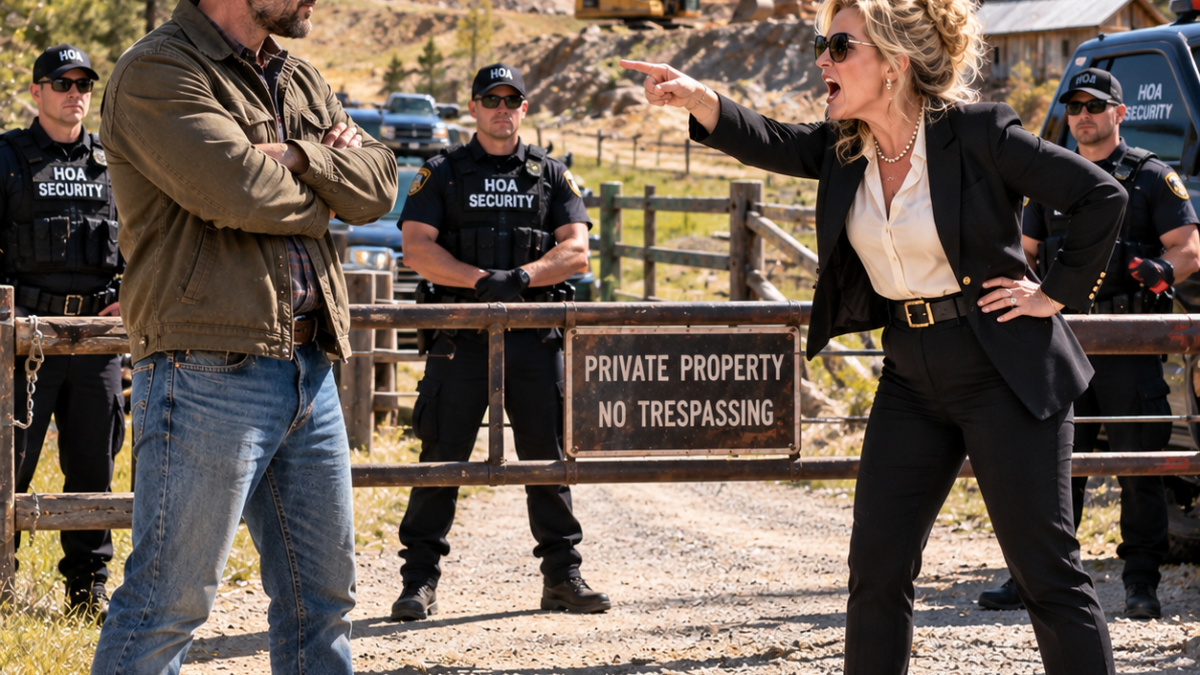
PART 2
Three days passed.
Nothing happened.
I repaired the fence anyway.
Not recklessly.
Not defiantly.
I simply finished a maintenance job on land legally recorded in my name.
The first citation remained on Granddad’s kitchen counter.
Every time I walked past it, something bothered me.
Not the money.
Five hundred dollars annoyed me, but I could afford it.
What bothered me was the confidence.
People committing legitimate enforcement actions usually have procedures.
Names.
Identification numbers.
Appeal rights.
Contact information.
Crane had given me none of that.
He had given me authority as theater.
Uniform.
Badge.
Clipboard.
Legal-sounding section number.
Then he expected my brain to fill in everything missing.
That is exactly how social engineering works in cybersecurity.
You don’t need to break the strongest system if you can convince the person operating it to open the door.
On the fourth morning, I found another envelope taped to my gate.
No tire tracks.
No footprints I could clearly distinguish.
Same letterhead.
Same formatting.
FAILURE TO MAINTAIN PROPERTY STANDARDS.
Fine: $750.
I stared at it.
I had repaired the fence.
Cleared brush.
Removed dead limbs.
The property looked better than it had when I arrived.
Yet somehow improving it had produced another violation.
Now the total was $1,250.
I photographed everything.
Tape.
Envelope.
Page.
Placement.
Time found.
Then the black SUV returned.
It parked roughly a hundred yards away on the county road.
Twenty minutes.
Left.
Came back later.
Slow pass.
Another slow pass before sunset.
Next day, same thing.
No confrontation.
No citation.
Just presence.
I knew the tactic.
Make the target imagine what comes next.
Fear does most of its work between actual events.
Then Martha Jennings appeared.
Seventy-one years old.
Maybe five feet tall.
Carrying a pie.
“You’re Derek.”
“Yes.”
“I’m Martha. I lived next to Walter thirty years.”
That sentence was enough.
I invited her onto the porch.
She set the pie between us.
Apple.
Cinnamon.
Brown sugar.
For the next hour, I heard pieces of my grandfather’s life that had never made it into our phone calls.
He fixed Martha’s gate when her husband died.
Started her truck in winter.
Brought groceries during a wildfire evacuation warning.
Sat on the porch with her during evenings when his arthritis got too painful to work.
“He loved this dirt,” she said.
I looked across the property.
“It’s mostly rock.”
“He loved the rock too.”
That sounded like Granddad.
Then she said:
“They offered him money.”
“Who?”
“Different people.”
“How much?”
“I don’t know.”
“For the property?”
“Sometimes property. Sometimes mineral rights.”
I stopped.
“Mineral rights?”
She nodded.
“This is gold country, Derek.”
“I know historically.”
“No.”
She lowered her voice.
“People started surveying again a few years back.”
“How serious?”
“Serious enough that strangers began knocking.”
Granddad had never told me that.
“He refused?”
“Every single time.”
“What happened after?”
Martha looked toward the road.
“That black SUV started appearing.”
My eyes followed hers.
“Crane?”
“I never knew his name.”
“Uniform?”
“Yes.”
“Granddad believed they were HOA security?”
Martha almost laughed.
“Walter called them frauds.”
That word landed hard.
“He knew?”
“He said Sierra Ridge didn’t have anything like that.”
“Did he report them?”
“He tried gathering things.”
“What things?”
“Letters. Pictures. Notes.”
“Where?”
“I don’t know.”
Her face changed.
Regret.
“His health got worse.”
“You couldn’t have known.”
“I knew enough to ask more questions.”
I touched her hand.
“You’re asking them now.”
Martha looked at me.
“Be careful.”
“With Crane?”
“With whoever sends him.”
That night, the phone rang.
Blocked number.
I answered and activated recording.
“Mr. Marshall.”
Male voice.
Flat.
Professional.
“This is HOA enforcement.”
“Name?”
“HOA enforcement.”
“Which officer?”
“You know who we are.”
Interesting.
“Your outstanding fines total twelve hundred fifty dollars. If payment is not received within seven days, a lien will be placed against your property.”
“Under what authority?”
Pause.
“You’ve been informed.”
“No, I’ve been threatened.”
“Pay the balance.”
Click.
The call ended.
I replayed it twice.
Crane?
Maybe.
Similar cadence.
Couldn’t prove it.
So I labeled it UNKNOWN MALE CALLER.
I opened Sierra Ridge Community Association’s website.
Very basic.
Volunteer board.
Five members.
President: Glenn Sawyer.
No security division.
No fine schedule.
No enforcement officers.
No patrol program.
Nothing.
I called Glenn at nine the next morning.
“Sierra Ridge Community Association. Glenn.”
“My name is Derek Marshall.”
“Walter’s grandson?”
“Yes.”
“I’m sorry about your grandfather.”
“Thank you.”
I went straight to it.
“I need to verify something called the HOA Security Enforcement Division.”
Silence.
“The what?”
“Security Enforcement. Victor Crane. Tony Miller.”
Longer silence.
Then Glenn’s voice changed.
“Mr. Marshall, we don’t have security officers.”
I leaned back.
“At all?”
“Nothing remotely like what you’re describing.”
“They issued citations under your association’s name.”
“What?”
“$1,250 total.”
“We don’t issue fines.”
“They threatened a lien.”
“We cannot do that.”
“They cite Section Twelve, Subsection C.”
“We don’t have a Section Twelve C covering private fence repairs.”
I closed my eyes.
There it was.
Verification.
The first clean break between performance and reality.
“Did my grandfather contact you?”
Glenn hesitated.
“About a year before he passed.”
“What did he say?”
“That strangers were using our association’s name.”
“Did you investigate?”
“I told him to report them.”
“To whom?”
“Sheriff, county.”
“And?”
“He said he was gathering proof.”
I thought about Martha.
“He mentioned mineral rights?”
Another pause.
“Yes.”
“What exactly?”
“People asking about land values. Surveys. Gold potential.”
My pulse changed.
“Did anyone connected to Sierra Ridge solicit property from him?”
“No.”
“Then whatever this is has nothing to do with your association?”
“Absolutely nothing.”
After the call, I began researching the land itself.
Granddad’s parcel sat in historic mining country.
Gold extraction had shaped entire towns nearby.
Most easy deposits were exhausted long ago.
But new extraction methods make old regions economically interesting again.
I found a geological survey in county records.
Three years old.
Buried in technical documentation.
The larger zone around Granddad’s property showed significant mineral potential.
Gold.
Not proof of a commercially viable mine by itself.
But enough to attract attention.
Enough to explain repeated purchase offers.
Enough to make forty-five rural acres worth far more to the right company than ordinary assessed value suggested.
Now I understood the structure.
Granddad refuses to sell.
Fake enforcement appears.
Fines.
Threats.
Surveillance.
Make ownership exhausting.
Make a below-market offer look like relief.
Classic pressure strategy.
Different industry.
Same psychology.
I could have called the sheriff immediately.
Crane and Miller were impersonating authority.
Demanding money.
Threatening property action.
But they were probably employees.
Maybe contractors.
Foot soldiers.
If I moved too fast, whoever benefited from the land acquisition would disappear behind plausible deniability.
So I waited.
That afternoon, Victor Crane returned.
No uniform.
Khaki slacks.
Polo shirt.
No badge.
He came alone.
That interested me.
I was on the porch reviewing county documents.
My phone was recording in my shirt pocket before he reached the steps.
“Mr. Marshall.”
“Victor.”
He smiled.
“I think we started badly.”
“You arrived pretending to have authority you don’t possess.”
His smile held.
“I’m here privately today.”
“Good choice.”
He ignored that.
“There’s a company interested in your land.”
Of course.
“They’ve authorized me to make an offer.”
“How much?”
“Two hundred thousand.”
I laughed before I could stop myself.
Granddad’s parcel assessed above four hundred thousand before mineral speculation.
“Two hundred?”
“Cash. Fast closing.”
“Why would I sell for less than half assessed value?”
“Remote property.”
He gestured.
“Infrastructure issues. Regulatory problems.”
“Which regulatory problems?”
“Your current citations.”
There it was.
They create the problem.
Then discount the property because the problem exists.
“Interesting.”
Victor leaned forward.
“The buyer will assume those complications.”
“Very generous.”
“They’re trying to help.”
“I spoke with Glenn Sawyer.”
Victor’s face changed for less than a second.
“Who?”
“The actual Sierra Ridge president.”
“I know Glenn.”
“He says there is no Security Enforcement Division.”
Victor recovered.
“Glenn manages the volunteer board.”
“He is the board president.”
“There are other layers of governance.”
I almost smiled.
“Name one.”
Victor’s eyes hardened.
“I’m here to make an offer, not debate structure.”
“I’m not selling.”
“That’s unfortunate.”
“I’m also not paying your fake fines.”
“They aren’t fake.”
“Provide the authority.”
“I already have.”
“No. You provided paper.”
Victor’s smile disappeared.
“Your grandfather made this difficult too.”
My body went still.
“What does that mean?”
“He resisted everything.”
“What happened?”
“You know.”
“No.”
Victor took a breath.
“He thought saying no made him untouchable.”
I stood.
“Walter died at eighty-nine.”
Victor smiled.
Small.
Cold.
“Of course he did.”
The implication landed like a punch.
Was he claiming something happened to Granddad?
Probably not.
More likely he wanted me to wonder.
Which was worse in its own way.
He was willing to use a dead man’s natural death as intimidation.
“You should leave.”
“I’m giving you a chance.”
“No.”
“This property will become difficult to hold.”
“Leave.”
He walked away slowly.
At the SUV, he turned.
“Two hundred thousand won’t stay on the table forever.”
“I hope not.”
“What?”
“Next offer should be less insulting.”
He drove away.
I went inside shaking.
Not fear.
Rage.
IT security teaches emotional detachment.
A breached server doesn’t care if you’re angry.
An intruder doesn’t become easier to trace because you’re offended.
Evidence rewards discipline.
So I replayed the recording.
Every word.
Saved it.
Backed it up.
Then I called an attorney.
Marie Robinson.
Sacramento.
Property rights and fraud litigation.
A colleague had described her in one sentence.
“She enjoys people with expensive lawyers.”
Good enough.
Her office occupied the third floor of a converted Victorian.
She listened for forty minutes.
No interruptions.
No performative outrage.
Just notes.
When I finished, she tapped the pen against her pad.
“You documented everything?”
“Yes.”
“Original citations?”
“Yes.”
“Recordings legally obtained?”
“Yes.”
“Cameras?”
“Not enough yet.”
“Fix that.”
She leaned back.
“What’s your background?”
“Cybersecurity.”
“That explains the logs.”
“I annoy people professionally.”
“Useful.”
She reviewed Crane’s offer.
Then the mineral survey.
“What company?”
“Unknown.”
Marie typed.
Several databases.
Property acquisition filings.
Mining transactions.
Then she stopped.
“Apex Mineral Resources.”
“What about them?”
“They’ve been buying mineral rights across this region.”
“Legally?”
“Mostly.”
“That word matters.”
“Two lawsuits.”
“Against Apex?”
“Related acquisition entities.”
“For?”
“Pressure tactics.”
My attention sharpened.
“Settled?”
“Confidential.”
She searched another business entity.
“Western Land Solutions.”
“Who are they?”
“Apex subsidiary or affiliated acquisition vehicle.”
Then Victor Crane.
Her eyebrows rose.
“Here.”
“What?”
“Consulting payments.”
“How much?”
“Approximately forty-seven thousand over eighteen months.”
I leaned forward.
“So Crane works for them.”
“At minimum, he invoices their acquisition entity.”
“Meaning Apex wanted Granddad’s land.”
“Likely.”
“And when he refused?”
“Someone appears to have applied pressure.”
That was the cautious legal phrasing.
I appreciated it.
“Can we prove Apex authorized the fake officer routine?”
“Not yet.”
“Then arrest Crane?”
“We could take this to the sheriff today.”
She looked directly at me.
“Or we can document enough to prove who directs him.”
“What would you do?”
“I’m your lawyer, not your commander.”
“Marie.”
She sighed.
“If it were my land, I would want the whole structure.”
“Exactly.”
“But that increases risk.”
“I know.”
“No, you think you know.”
She leaned closer.
“These people already trespassed, impersonated authority, demanded money, stalked the property, and used your grandfather’s death to scare you.”
She let that settle.
“They may become desperate.”
“I won’t confront them physically.”
“You call law enforcement the second something crosses into immediate danger.”
“Agreed.”
Marie contacted Sheriff Raymond Ortega.
I added cameras.
Front gate.
Driveway.
Rear access road.
Workshop.
House.
Redundant cloud storage.
Battery backup.
I sent a certified letter to the fake enforcement mailing address.
No more contact except through counsel.
No trespassing.
No consent.
No ambiguity.
Copies to Marie.
Sheriff’s office.
Glenn Sawyer.
Paper trail.
Two days passed quietly.
Then the black SUV returned.
Crane and Miller stood on the county road.
Public land.
They didn’t cross.
Smart.
They watched the property.
I sat on the porch with coffee.
No reaction.
After fifteen minutes, Victor shouted:
“Lien in forty-eight hours, Marshall!”
I raised the coffee mug.
“Foreclosure after that!”
Nothing.
He waited.
I didn’t answer.
Eventually they left.
Later Martha called.
“They’re talking to people.”
“Who?”
“Hendersons. Castillos. Others.”
“What are they saying?”
“That you’re under environmental investigation.”
“For?”
“Groundwater contamination.”
I almost laughed.
Then didn’t.
Water fear in rural land country isn’t funny.
One accusation can make neighbors terrified.
“Anything else?”
“They say Walter left you problems.”
“Of course.”
Martha sounded ashamed.
“Some people believe them.”
“That’s not their fault.”
“It feels like it.”
“No.”
I opened county groundwater records.
Clean.
Repeated testing.
No contamination.
Provably false.
Marie called it what it was.
Defamation.
“Don’t counterattack publicly,” she said.
“Why?”
“Because Victor’s doing our witness collection.”
I smiled.
“Every neighbor he tells becomes a person who can testify.”
“Exactly.”
The next morning, I called Sheriff Ortega.
Fifty-eight.
Thirty years in county law enforcement.
He had already read Marie’s packet.
“You’ve got enough for arrests now,” he said.
“I know.”
“You’re asking us to wait.”
“For the larger structure.”
“Correct.”
“I hate that.”
“I understand.”
“If someone is endangered, I’m moving.”
“I want you to.”
“You armed?”
“Yes.”
“Don’t become stupid because you’re armed.”
“I won’t.”
“I mean it.”
“I know.”
“Call me directly.”
He gave me his cell.
That same evening I found Granddad’s lockbox.
Workshop.
Back corner.
Behind rusted tools.
Steel box.
Key hanging on a nail.
Classic Walter.
Hidden enough to be overlooked.
Obvious enough to be found.
Inside were decades of papers.
Purchase offers.
Mineral-right inquiries.
Photos of strange cars.
License plates.
Handwritten dates.
Names.
Descriptions.
Then a folder.
SECURITY ENFORCEMENT.
My stomach tightened.
Fake citations.
Same formatting.
Same logo.
Same language.
Some dated two years earlier.
Granddad had been documenting them.
On one page, his handwriting:
Crane returned. Says fines increase if I don’t sell.
Another:
Black SUV again. Two men watched gate.
Another:
Offer from Western Land. Too low. Told them no.
Then:
Glenn confirms no security office.
Granddad had verified it too.
Exactly as I had.
I sat on the workshop floor surrounded by his papers.
For the first time since arriving, I cried.
Not dramatically.
Not loudly.
Just the slow kind that comes when grief suddenly gains context.
Granddad had fought alone.
He had known.
He had been building the same case I was building.
He simply ran out of time.
I held one notebook.
Page after page.
Dates.
Times.
Descriptions.
The handwriting grew shakier toward the end.
But the records continued.
“Okay,” I whispered.
“I’ve got it now.”
The next Sunday morning, three vehicles arrived.
Black SUV.
White pickup.
Silver sedan.
Victor.
Miller.
Third man I didn’t recognize.
All three wore uniforms.
I texted Sheriff Ortega.
THEY’RE HERE. THREE. ENTERING PROPERTY.
Response:
DEPUTY EN ROUTE. ETA 8. DO NOT ENGAGE PHYSICALLY.
Victor pushed open my gate.
Crossed the property boundary.
Tony followed.
Third man hesitated.
Then followed too.
Everything recorded.
Victor stopped twenty feet from the porch.
“Mr. Marshall.”
“Victor.”
“We’re here to execute a lien.”
I stayed seated.
“That isn’t how liens work.”
“You have five minutes to gather personal belongings.”
“Why?”
“We’re securing the premises.”
He held up paper.
“Court order.”
I nearly smiled.
“What court?”
“Confidential.”
“No.”
Victor frowned.
“No?”
“Court identity isn’t confidential.”
He tightened his grip on the paper.
“Five minutes.”
“Case number?”
“Stop obstructing enforcement.”
“I’m asking you to identify the court.”
“Put the phone away.”
I lifted it higher.
“You are being recorded.”
Tony stepped closer.
“Mr. Marshall—”
“Don’t.”
He stopped.
“You were formally notified not to enter this property.”
Victor pointed at the house.
“You lost that right when the lien attached.”
“What recording office?”
Silence.
“Document number?”
Nothing.
“Judge?”
Nothing.
“Leave.”
Then Martha appeared at the gate.
Phone raised.
Victor looked annoyed.
Glenn Sawyer arrived behind her.
Pickup sideways near the road.
He got out recording.
Victor turned.
Glenn shouted:
“I’m Glenn Sawyer, president of Sierra Ridge Community Association.”
The third man looked at Victor.
Glenn continued.
“These people do not represent us.”
Victor raised one hand.
“Separate enforcement entity.”
“There is no separate enforcement entity.”
“You aren’t authorized to discuss—”
“I’m president of the actual association.”
Glenn laughed bitterly.
“We don’t issue these citations.”
Martha called out:
“Walter told everybody you were frauds!”
Victor’s face changed.
Then sirens.
Two sheriff vehicles.
Raymond Ortega stepped out.
No fake light bar.
No costume.
Real badge.
Real county insignia.
Real authority has a different energy because it doesn’t need to perform.
“What’s happening?”
I answered.
“These three entered after written trespass notice. They claim a court order allows seizure of my property.”
Ortega looked at Victor.
“Give it to me.”
Victor hesitated.
“Now.”
He handed it over.
The sheriff read.
Turned it over.
Read again.
“No seal.”
Victor said nothing.
“No case number.”
Nothing.
“No filing stamp.”
Nothing.
“No judge.”
Victor finally spoke.
“It’s an enforcement instrument.”
Ortega looked at him.
“It’s a piece of paper.”
The third man backed away.
“I didn’t know.”
Victor turned sharply.
“James.”
“I didn’t know!”
Sheriff Ortega handed the fake order to his deputy.
“Victor Crane.”
Victor’s face drained.
“You are under arrest.”
Tony Miller uncrossed his arms.
The third man—James Ward—started talking immediately.
“I was hired three weeks ago.”
Victor snapped:
“Shut up.”
“I thought it was security work.”
“James.”
“I didn’t know they were fake.”
Deputy moved toward him.
“I’ll cooperate.”
Tony went quietly.
Victor did not resist either.
People like Victor often rely on others believing they are dangerous.
When real consequences arrive, resistance rarely helps.
Martha stood at the gate crying.
Glenn took her hand.
She looked at me.
“Walter should’ve seen this.”
I looked toward the workshop.
The lockbox was still open inside.
“He did.”
She frowned.
“His records are part of the case.”
That made her cry harder.
Three months later, I sat in county court while prosecutors laid out evidence.
Fake citations.
Recorded threats.
Fraudulent court order.
Surveillance.
Money demands.
My grandfather’s files.
My files.
Glenn’s testimony.
Martha’s testimony.
James Ward’s cooperation.
Victor’s defense argued he had misunderstood the extent of his authority.
The jury had the actual HOA president saying no authority existed.
They had Western Land payments.
They had threats tied directly to sale pressure.
They had Victor telling me I should learn from what happened to Granddad.
They deliberated less than four hours.
Guilty.
Criminal impersonation.
Attempted extortion.
Trespass.
Fraud conspiracy charges proven under the case as presented.
Victor received four years in state prison.
Restitution.
The expensive confidence disappeared at sentencing.
He looked smaller.
Again, not physically.
Authority had stopped orbiting him.
Tony’s sentence was lighter.
Probationary terms and suspended custody under the story’s resolution because evidence showed he followed Victor rather than designed the scheme.
James received immunity in exchange for cooperation.
And James gave investigators the larger target.
Western Land Solutions.
Then Apex Mineral Resources.
Emails.
Consulting invoices.
Internal land-acquisition records.
Walter Marshall’s parcel appeared repeatedly.
So did others.
At least five landowners had experienced similar pressure.
Fake enforcement.
Manufactured violations.
Lowball offers.
Threats.
The strategy wasn’t random.
Find desirable mineral land.
Approach owner.
If owner sells voluntarily, fine.
If not, manufacture pressure.
Create fear.
Create alleged liabilities.
Make the offer look safer than resistance.
Victor hadn’t invented the entire system.
He was a tool inside it.
Federal investigators moved in.
Apex leadership denied authorizing criminal conduct.
Lawyers blamed rogue consultants.
Western Land blamed Victor.
Victor blamed misunderstandings.
Everybody suddenly knew nothing.
But documents remember what people forget.
Payments.
Invoices.
Emails.
Acquisition maps.
Target property lists.
The wider investigation produced civil and criminal consequences beyond Victor’s local case.
Western Land Solutions was dissolved.
Apex faced substantial litigation and federal scrutiny.
Its CEO resigned after the investigation became public.
Several affected landowners joined a consolidated civil action.
Marie called me when the first federal charging documents became public.
“You finished your grandfather’s case.”
I looked at Walter’s lockbox on my kitchen table.
“No.”
“What do you mean?”
“He started it.”
Pause.
“Fair.”
“I just found where he left off.”
“You know most people would’ve thrown half those old papers away?”
“I know.”
“Walter understood documentation.”
“He would’ve been good at cybersecurity.”
Marie laughed.
Then her voice softened.
“He’d be proud.”
That hurt.
In the right way.
A month later, a geological firm completed an updated assessment.
The deposit was real.
Significant.
Not mythical buried treasure.
Commercial geology.
Estimated mineral potential substantial enough to make serious operators interested.
One legitimate mining company offered me $2.3 million for the mineral rights.
Surface lease negotiable.
Environmental reviews required.
Professional contract.
Real lawyers.
Real documentation.
No fake badges.
I had gone from receiving a $200,000 intimidation offer to a $2.3 million mineral proposal.
I read it.
Then called Marie.
“Well?”
“No.”
Silence.
“No?”
“I’m declining.”
“Derek.”
“I know.”
“That’s life-changing money.”
“I know.”
“Can I ask why?”
I looked out at Granddad’s oak trees.
“Because everyone keeps deciding what this land is worth based on what they can remove from it.”
Marie stayed quiet.
“I’m not saying never.”
“Okay.”
“I’m saying not now.”
“Walter turned them down too.”
“That’s part of it.”
“And the other part?”
“I finally understand why.”
Granddad didn’t preserve forty-five acres because he failed to recognize gold.
He preserved it because he recognized value that didn’t need mining.
Quiet.
Family.
Trees.
A place where Martha could bring pie.
Where generations knew the same sunset.
Gold had been under that ground long before Walter was born.
It wasn’t going anywhere.
I called my mother.
“I’m staying.”
She was silent.
“At the property?”
“Yes.”
“I thought you hated rural life.”
“I hate bad internet.”
“That’s not the same thing.”
“I’ll fix the internet.”
“You serious?”
“Yes.”
Her voice softened.
“Your grandfather hoped you would.”
I stopped.
“He said that?”
“Not directly.”
“Mom.”
“He said you were the only one stubborn enough to understand him.”
“That is not a compliment.”
“It was from Walter.”
Fair.
I renovated the original house.
Not into something modern and unrecognizable.
Just enough.
Electrical.
Plumbing.
Roof.
Reliable internet.
I built a smaller cabin farther uphill for visiting family.
Left the workshop mostly untouched.
Granddad’s lockbox stayed on a shelf.
Copies of its contents went into secure storage.
Martha still visited.
Always with pie.
Glenn organized a community meeting after the trials.
Maybe thirty people.
Some had believed Victor’s groundwater rumors.
Several apologized.
I didn’t need apologies.
Fear works because it makes uncertainty feel dangerous.
Victor had told them their wells might be contaminated.
Of course they worried.
I explained what I knew from security work.
“Verification beats confidence.”
People listened.
“Legitimate authority can answer basic questions.”
I held up one of Victor’s old fake citations.
“Who issued this?”
Silence.
“Under what rule?”
Silence.
“What appeal process?”
Silence.
“What case number?”
Silence.
“Who do you call to verify?”
That was the point.
Scammers hate verification because their strongest weapon is momentum.
They want the target reacting before thinking.
Pay now.
Sign now.
Leave now.
Sell now.
Don’t call anybody.
Don’t ask.
Don’t compare.
Don’t verify.
Granddad had verified.
I had verified.
That one phone call to Glenn broke the illusion.
After the meeting, Martha and I sat on the porch.
Sunset turned the hills orange.
She looked toward the lower meadow.
“Walter used to sit right there.”
“I know.”
“He would’ve been unbearable if he saw Victor arrested.”
I laughed.
“Absolutely.”
“He would’ve talked about it for years.”
“Every visitor.”
“Mailman.”
“UPS driver.”
“Strangers at gas stations.”
We laughed until Martha wiped her eyes.
Then she became serious.
“He was scared near the end.”
I looked at her.
“He never admitted it.”
“Walter didn’t admit anything.”
“He knew they were waiting.”
“For him to die?”
She nodded.
“He said they figured family would sell.”
I looked toward the workshop.
“They almost guessed right.”
“You really considered selling?”
“Yes.”
“What changed?”
“Them.”
Martha smiled.
“Walter would enjoy that too.”
The irony was perfect.
Apex wanted me gone.
Their pressure anchored me.
I might have sold quietly during the first month.
Taken the money.
Returned to Sacramento.
Instead, fake cops arrived.
They turned a property decision into a family promise.
Years passed.
Not dramatically.
That was the good part.
The fence aged.
I repaired it.
Wildflowers returned each spring.
Coyotes screamed somewhere beyond the ridge at night.
Martha’s knees got worse, so I started taking pie ingredients to her instead of pretending she needed to keep feeding me.
Glenn eventually retired from the HOA board.
Nobody created a security division.
The association became wonderfully boring.
Road-maintenance votes.
Wildfire brush clearance.
Shared well discussions.
Actual community problems.
Once, a new resident asked why the bylaws included an explicit clause prohibiting anyone from representing themselves as “HOA enforcement officers.”
Glenn looked at me across the room.
“Long story.”
I said:
“Very long.”
Walter’s land became known locally for something other than gold.
A university geology department asked permission to conduct noninvasive field studies.
I allowed it.
Students came with equipment.
Actual identification.
Written agreements.
Insurance certificates.
Clear scope.
One professor laughed when I checked everything.
“You really verify credentials.”
“You have no idea.”
The students found trace mineralization exactly where older surveys predicted.
One asked if I planned to mine.
“Maybe someday.”
“You’d be rich.”
“I’m doing okay.”
He looked across the oak-covered slope.
“I’d probably keep it too.”
That pleased me more than it should have.
Then one autumn afternoon, I found another piece of Granddad.
Not evidence.
A letter.
Tucked inside an old property ledger.
Derek,
If this land becomes yours, don’t keep it because you think I’m asking you to.
Keep it if you love it.
Sell it if that is right for you.
But make the decision yourself.
There will always be someone who knows what your property is worth to them.
Make sure you know what it is worth to you.
Walter.
I read it three times.
Then sat on the workshop floor exactly where I had sat years earlier surrounded by his evidence.
Granddad had not left me an obligation.
He had left me a choice.
That made staying feel different.
Not duty.
Ownership.
Real ownership.
The right to decide without intimidation.
That was what Victor had tried to steal before he ever touched the land.
Choice.
The criminal scheme depended on removing it.
Fake fines.
Fake liens.
Fake court orders.
Bad offers.
Threats.
Rumors.
Make the target believe only one safe path remains.
Sell.
Real freedom is sometimes as simple as having enough truthful information to say no.
I framed Granddad’s letter.
Not the citations.
Not Victor’s mugshot.
Not newspaper articles.
Walter’s letter.
It hangs in the house.
There will always be someone who knows what your property is worth to them.
Make sure you know what it is worth to you.
A few years after Victor’s release date approached, I received a letter.
State correctional facility return address.
Victor Crane.
I almost threw it away.
Then didn’t.
Derek Marshall,
I don’t expect forgiveness.
I spent a long time telling myself Apex used me.
They did, but I also chose to do what they asked because the money was good and because wearing authority felt better than admitting I had none.
Your grandfather never believed me.
That made me hate him.
You didn’t believe me either.
I thought that meant you were arrogant.
Now I understand it meant you checked.
I am sorry for what I said about Walter’s death.
Nothing happened to him. I knew that.
I said it because I wanted you afraid.
That may be the thing I regret most.
Victor.
I lowered the letter.
For years, one tiny question had remained.
I knew Granddad died naturally.
Doctors said so.
Records supported it.
Still, Victor had planted doubt deliberately.
That was the cruelty.
Now he admitted it.
I felt relief.
Then anger that relief was even necessary.
I put Victor’s letter into the lockbox.
Not with Walter’s personal letter.
With the evidence.
Because that was where Victor belonged.
Part of the record.
Not part of the home.
I never wrote back.
Maybe he changed.
I hope he did.
But changed people don’t automatically become people you owe access to.
Martha died at seventy-nine.
Her daughter asked if we could hold a small memorial on my property because Martha had loved the view from Walter’s porch.
Of course.
Neighbors came.
Glenn.
Martha’s grandchildren.
People I barely knew.
Someone brought apple pie using Martha’s recipe.
At sunset, her daughter stood near the fence I had been repairing the first day Crane arrived.
“My mother said this place felt safe.”
That sentence nearly broke me.
Safe.
The place where fake officers once watched from the road.
Where Victor threatened liens.
Where men entered with a fraudulent seizure order.
Now safe.
That was better than revenge.
Victor lost years.
Apex lost money.
Western Land disappeared.
Those consequences mattered.
But restoration mattered more.
Fear leaves residue.
You don’t remove it with one arrest.
You remove it through ordinary days when the feared thing stops happening.
One week.
One month.
One year.
No black SUV.
No fake citation.
No blocked number.
Eventually silence stops feeling like the pause before the next attack.
It becomes peace.
Twenty years after I first inherited the property, the gold was still underground.
Commodity prices rose.
Offers rose with them.
One exceeded eight million dollars.
I laughed when I saw it.
My wife—yes, eventually I got married—looked at me.
“What?”
“Walter would haunt me for turning down eight million.”
“Would he?”
“No.”
She read his framed letter.
“He’d probably say decide yourself.”
“Exactly.”
“What do you want?”
I looked outside.
Our daughter was running through wildflowers near the workshop.
“Not yet.”
My wife smiled.
“Then not yet.”
That was enough.
Maybe one day my daughter will sell mineral rights.
Maybe extraction technology will become cleaner.
Maybe conservation value will outweigh mining.
Maybe she will sell everything and build another life.
I won’t chain her to Walter’s decision or mine.
Because the lesson wasn’t never sell.
It was never let someone else turn pressure into your decision.
The land survived the Gold Rush.
Walter.
Victor.
Apex.
Me.
It will survive more.
Sometimes I walk to the eastern fence at sunset.
The same section I was repairing when the black SUV first arrived.
Posts have been replaced twice since.
Nothing lasts untouched.
That’s fine.
Maintenance isn’t failure.
I’ll lean against the fence and remember Crane raising his hand like a traffic cop.
“HOA Security Enforcement.”
I almost believed him.
For perhaps thirty seconds, part of my brain considered the possibility that I had missed some rural property rule.
That’s how easily authority can be fabricated.
Uniform.
Badge.
Voice.
Paper.
Confidence.
But real authority survives questions.
Fake authority needs obedience before questions arrive.
That difference changed my life.
Ask for the badge number.
Ask for the statute.
Ask for the case number.
Call the organization independently.
Verify the address.
Check the filing.
Document the threat.
Preserve the email.
Most importantly, don’t confuse resistance with recklessness.
I didn’t beat Victor because I yelled louder.
I beat him because every time he lied, I gave the lie a timestamp.
Every time he threatened me, I preserved the threat.
Every time he claimed authority, I asked him to identify it.
Every time he escalated, he created another witness.
He thought patience meant fear.
It meant preparation.
Walter understood that before I did.
He spent his last years filling a metal box with evidence.
Maybe he knew he would never use it.
Maybe he hoped I would.
That thought used to make me sad.
Now it makes me feel accompanied.
Two generations worked the same case.
One started it.
One finished it.
And the forty-five acres stayed exactly where they had always been.
Trees above.
Gold below.
Family in between.
The day Victor Crane walked onto my land carrying a fake court order, he believed the most valuable thing on the property was buried underground.
He was wrong.
The most valuable thing was the right to decide what happened to it.
Granddad protected that right until he died.
Then he passed it to me.
Victor tried to take it with a uniform.
Apex tried to buy it for pennies.
Fear tried to convince me it wasn’t worth defending.
None of them succeeded.
So when people ask whether I regret turning down millions for the mineral rights, I tell them the truth.
No.
Because gold has a price.
Land has a price.
Even houses have a price.
But walking onto the porch at sunset, hearing my family laugh inside the same place Walter fought to keep, and knowing every decision made there is finally ours?
Nobody has offered enough money for that yet.


