PART 2: They Laughed at My 12 Tiny Cows and Called Them a Petting Zoo—Then the Historic Drought Made Every Rancher Ask What Breed They Were
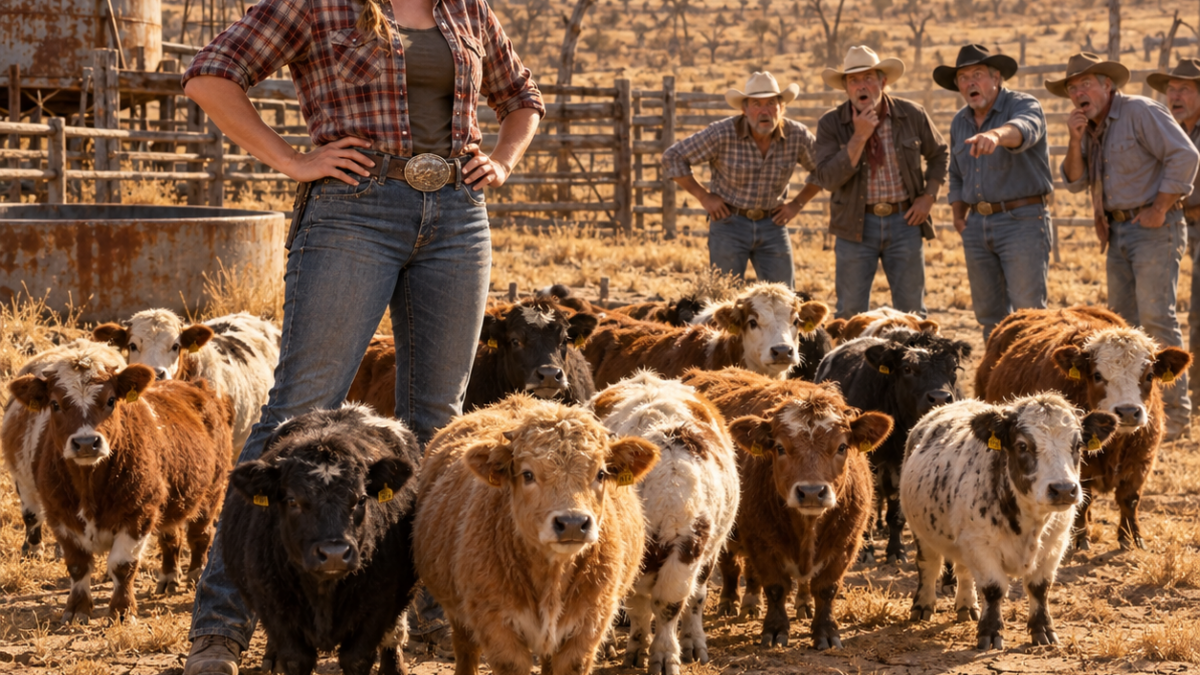
The morning I led twelve undersized cows into the Rollins County livestock barn, men who owned more cattle than I had acres stopped beside my pen just to laugh, and by lunchtime someone had taken a black marker to my sign and written MINIATURE PETS beneath the name of the ranch my father had spent nearly forty years trying to keep alive.
Preston Whitmore—the richest cattleman in the county and the man everybody listened to when he talked about what counted as “real ranching”—looked over my little Dexter cows, joked that his heifers could eat one for breakfast, and later told a room full of ranchers that scale was the whole business and people like me were running hobbies with tax numbers.
I did not argue with him that day, because I had twelve cows, seventy-four dry acres, an eighteen-hundred-dollar well repair I could not afford, and no proof that the breed my father had defended for decades was anything more than an expensive piece of family stubbornness—but before that summer ended, men with thousand-acre ranches would be calling my kitchen three and four times a day asking one question I had never expected to hear.
“What breed are those cows?”
My name is Willa Hensley.
I was thirty-eight when my father died.
He died in April, in the equipment shed, between one job and another with a wrench still in his hand.
That detail bothered me for months.
Not because it was dramatic.
Because it was exactly like him.
My father, Earl Hensley, never believed work ended simply because a person was tired, sick, angry, or scared.
The Hensley place sat six miles outside town at the end of a gravel road.
Seventy-four acres.
Mixed native grass.
No creek worth bragging about.
No rich bottom ground.
No oil lease.
No development value.
Dad bought it in 1979 after selling a truck and borrowing almost everything else.
By the time it became mine, the ranch came with a county tax notice, a weak well pump, funeral expenses I had not told my daughter about, and twelve Dexter cows that barely reached the belt of a grown man.
At the county fair, they looked ridiculous beside the commercial Angus.
That was the truth.
The Angus steers in the next aisle looked like black refrigerators.
My cattle looked like someone had stopped building them halfway through.
Around ten in the morning, a little boy asked his mother whether they were babies.
At eleven, Preston Whitmore stopped.
Everybody knew Preston.
Whitmore Cattle Holdings controlled thousands of acres, and Preston carried himself with the relaxed confidence of a man who had never once wondered whether a bounced check might ruin his month.
He looked down the row.
“Willa Hensley.”
“Mr. Whitmore.”
“These all yours?”
“All twelve.”
He gave a low whistle.
“I’ve got heifers that would eat one of these for breakfast and ask what else was on the menu.”
Several men laughed.
Preston smiled.
“No offense.”
“Of course.”
“What do you figure they hang?”
“Depends.”
“That’s the trouble.”
He put his hat back on.
“You can’t sell depends.”
He walked away.
Twenty minutes later, a buyer stopped.
“What breed?”
“Dexter.”
“Irish?”
“Yes.”
“Registered?”
“Every one.”
“How many can you deliver annually?”
“Two. Maybe three.”
His interest died immediately.
He left while I was still talking about marbling.
I sold nothing.
Not one cow.
I had expected one cull sale to pay for the well pump.
Instead, that afternoon I found somebody had written MINIATURE PETS across my pen card.
I scrubbed it off.
Didn’t ask who did it.
That evening I hauled all twelve home.
My seventeen-year-old daughter, June, looked out the kitchen window at the still-full trailer.
“How’d it go?”
“Fine.”
“Mom.”
“It went fine.”
“You didn’t sell anything.”
“No.”
“You could sell four now.”
I looked at her.
“That would cover the pump and most of first semester.”
“I know.”
“You’d still have eight.”
“I know.”
“Nobody would know the difference.”
“I would.”
June stared at me.
“That isn’t an argument. That’s just you.”
Then she said the thing I had been avoiding since April.
“Grandpa’s gone.”
I did not answer.
That night I went looking for the pump warranty.
Instead, on the shelf above the deep freeze, I found one of Dad’s old ledgers.
Rainfall.
Hay prices.
Weaning weights.
Deaths.
Pasture conditions.
Failures.
Decades of numbers.
Then, near the back, on a page by itself, six words:
WHITMORE — 1998 — REFUSED TRIAL.
I sat alone at the kitchen table until almost two in the morning, staring at that sentence and wondering what my father had asked the richest cattle family in the county to test.
Nine days later, Preston Whitmore drove onto my ranch.
And this time he wasn’t laughing.
He wanted to buy all seventy-four acres.
PART 2
Preston did not arrive like a man coming to pressure me.
That would have been easier.
He came alone in the good truck, the one without feed sacks or fencing tools in the bed, and parked beneath the cottonwood as if he had stopped to visit an old friend.
He got out slowly.
Looked toward the south pasture.
Then toward the house.
“Your dad had the prettiest piece of nothing in Rollins County.”
I stared at him.
He smiled.
“I mean that kindly.”
“That’s an impressive sentence.”
He laughed.
“You always this friendly?”
“Depends who drives up.”
“There’s that word again.”
I folded my arms.
“What do you want?”
That finally moved him to business.
Whitmore Cattle Holdings had changed the way it moved livestock between two units.
They leased ground farther east.
Had a feeding arrangement near Scotts Bluff.
The all-weather county road beside my ranch was the shortest reliable route between properties, but the section line forced their trucks into a long detour.
He wanted my seventy-four acres.
All of it.
Then he named a price.
I stopped breathing for a moment.
Not because it was insulting.
Because it wasn’t.
The money would pay the ranch note.
Taxes.
The pump.
Funeral expenses.
June’s college.
Probably four years of it if she kept her scholarship.
And I could still buy a small place closer to town.
Preston saw the arithmetic happening on my face.
“You’ve got no scale here, Willa.”
“I know how many acres I own.”
“I’m not insulting you.”
“You keep saying that right before you do.”
He smiled again.
“There is no economic future in seventy-four acres out here. Not with cattle.”
“My father managed.”
“Your father survived.”
The distinction hurt because part of me knew he was right.
“He was stubborn,” Preston continued. “Good man. Hard worker. But stubborn.”
“And now I’m stubborn.”
“Yes.”
“At least we cleared that up.”
“Stubborn doesn’t pay county taxes.”
“I’m not selling.”
He nodded.
“Not today.”
“Not any day.”
That made him study me differently.
At his truck door, he paused.
“The drought outlook is worse than they’re saying publicly.”
I felt my stomach tighten.
“How much worse?”
“I’ve got people whose entire job is water and forage.”
“That wasn’t my question.”
He looked toward my cows.
“Twelve head now?”
“Yes.”
“I would think seriously about where you want to be in August.”
He climbed into the truck.
No threat.
No raised voice.
That made it harder.
Preston was not inventing the drought.
He was warning me about something real.
The same afternoon, Nora Ellison from the extension office called.
She did not waste time.
“Precipitation since April first is thirty-eight percent of normal.”
I looked out the window.
Grass tips were already fading.
“Reservoir?”
“Bad.”
“How bad?”
“Bad enough that we’ve met twice.”
Nora was fifty-one, thin as a post, and spoke with the emotional warmth of a spreadsheet.
I liked her.
She did not tell people what they wanted.
“Build a destocking plan now.”
“I only have twelve.”
There was a pause.
I waited for the joke.
Instead she said:
“That’s a workable number.”
That surprised me.
“Can I come walk your grass?”
“Sure.”
“I mean really walk it.”
“I know.”
“Good.”
Before hanging up she said:
“Figure out your water before July figures it out for you.”
That evening I stood at the fence.
Twelve small cows.
Red.
Black.
Short-legged.
Quiet.
My father used to say:
Don’t count your cattle till you count your grass.
He said it so often that by the time I was an adult I stopped hearing it.
Now, with the drought forecast and Preston’s offer still in my head, the phrase sounded different.
I went inside.
Opened the ledger again.
Rainfall records began in 1984.
Every month.
Every year.
Dad had recorded hay purchases down to the ton.
Weaning weights.
Two-year weights.
Body condition.
Calving problems.
Deaths.
A page from the drought of 2012 listed four animals.
Beside one he had written a single word.
WRONG.
No excuse.
No story.
Just wrong.
That caught me.
Most ranchers remember the good calf crop.
The heavy steers.
The year grass stayed green through July.
Dad wrote down mistakes.
I found that more valuable than confidence.
Then I returned to the six words.
Whitmore.
Refused trial.
What trial?
Dad had never told me.
Nora arrived the last Tuesday in May.
We walked the ranch for four hours.
Every hundred yards she dropped a wire hoop.
Clipped grass.
Bagged it.
Labeled it.
By noon we had walked from the road fence to Creek Draw and back through the North Strip.
She did not say much.
I knew enough to understand that was bad.
At the truck she balanced her clipboard on one knee.
“Native stands cured too early.”
“I can see that.”
“Brome headed at half height.”
“I saw that too.”
“Creek Draw?”
“Usually green into July.”
She looked at the cracked clay.
“Not this year.”
“How bad?”
She tapped the pen.
“Maybe sixty percent of normal carrying capacity.”
I did the calculation instantly.
“Seven cows.”
“No.”
I looked at her.
“You said sixty percent.”
“Sixty percent of grass.”
“Same thing.”
“No.”
She pointed toward my herd.
“What does a mature cow weigh?”
“Seven hundred. Seven-fifty.”
“My brother’s commercial cows average twelve-fifty to thirteen hundred.”
“So?”
“So stop budgeting by head.”
I stared.
“Everybody out here says head.”
“Everybody says lots of things.”
She wrote two figures.
“Your cattle are roughly half the body weight.”
“Not exactly.”
“Of course not exactly. But close enough to matter.”
She looked at me.
“This doesn’t make them magic.”
“I didn’t say it did.”
“I’m making sure you don’t.”
She pointed toward the pasture.
“Twelve Dexters do not place the same forage demand on seventy-four acres as twelve thirteen-hundred-pound cows.”
I felt something shift.
Something embarrassingly obvious.
“What should I count?”
“Pounds.”
“Pounds of cow.”
“Pounds of metabolic demand if you want to get technical.”
“I don’t.”
“Good. Count pounds.”
I thought of the fair.
Twelve tiny cows.
Everyone had counted heads.
No one had counted what those heads actually consumed.
Nora and I spent the next two weekends running polywire.
I divided three large pasture sections into nine.
Bought two hundred step-in posts.
Used solar energizer.
Moved cattle every four or five days.
Rested grazed ground for roughly thirty days before allowing them back.
Then I did something that felt insane.
I fenced ten acres off entirely.
Sandy Corner.
No grazing.
None.
Nora watched me set the final post.
“You sure?”
“No.”
“That’s acceptable.”
“I’m short on grass and you’re telling me not to use ten acres.”
“I’m telling you to keep reserve.”
“That is reserve.”
“Yes.”
“It’s grass.”
“Yes.”
“Grass I need.”
“Later.”
I hated it.
Good forage sitting behind wire while the active paddocks browned.
It felt like putting cash into a pile and lighting a match.
Then came hay.
Second week of June.
Thirty-one tons.
Grass hay.
One hundred forty dollars per ton.
Already expensive.
The loader operator asked:
“How many head?”
“Twelve.”
He laughed.
“You feeding elephants?”
“No.”
“You’ll have hay left next April.”
“I hope so.”
I spent almost everything Dad had left in the farm account.
That decision terrified me more than the cattle.
Money in a bank still feels like options.
Hay in a stack is one option.
But by August, the same hay cost more than three hundred dollars a ton when you could find it at all.
That June purchase became one of the smartest things I did.
At the time, it felt reckless.
The Cattlemen’s Association met the third Monday in June.
Methodist church basement.
Folding chairs.
Bad coffee.
Same room Dad used to attend.
I almost skipped it.
Then I remembered how often I had spent my life disappearing whenever I thought other people were judging me.
So I went.
The entire meeting was drought.
Hauling water.
Emergency grazing.
Early weaning.
Lease prices.
Culling.
Preston controlled most of the discussion because Preston knew his business.
That part matters.
He was not an idiot.
His plan was good.
Wean early.
Ship yearlings ahead of schedule.
Move part of the herd to Nebraska grass already under contract.
Protect core cows.
Men wrote things down.
Near the end, Clem Hadlock raised a hand.
“Anybody considered running smaller cattle?”
People laughed.
Clem had been joking.
Preston smiled.
“I’ve seen small cattle.”
My stomach tightened.
“I saw twelve at the fair.”
More laughter.
“If you want to run a hobby, run a hobby. But twelve head doesn’t pay a hired man, doesn’t fill a truck, and doesn’t keep a packing plant interested in your phone number.”
He never looked at me.
That made it worse.
“Scale isn’t a preference in this business.”
He lifted his coffee.
“It’s the business.”
Half the room looked my way.
Then away.
I had four answers ready.
I could have told him small cows ate less.
Could have mentioned registration.
Forage efficiency.
Dexter hardiness.
I said nothing.
Because every answer sounded like a woman defending a petting zoo.
When the meeting ended, I drove home angry.
I put Dad’s ledger on the kitchen table.
Opened a new page.
DATE.
HAY FED.
WATER PUMPED.
BODY CONDITION.
PASTURE.
COST.
MINERAL.
I wrote down everything.
Including the parts that made me look foolish.
That was my revenge.
Not words.
Numbers.
Nora came at the end of June.
Three weeks of data.
She stood at the table with a calculator and the back of a seed catalog.
“You’re around twenty-two pounds dry matter per head daily between standing forage and supplement.”
“Good?”
“Manageable.”
“For how long?”
“That is the question.”
She calculated.
Then recalculated.
“If you had twelve large cows here right now, you would already be in a different situation.”
“How different?”
“Hay earlier.”
“How much earlier?”
“Probably now.”
I sat down.
“That’s the advantage.”
“One of them.”
“One?”
“Smaller mature weight lowers maintenance demand.”
“What’s the downside?”
Nora looked pleased.
She liked that question.
“Calves are smaller.”
“Obviously.”
“Less total carcass weight.”
“Yes.”
“Commercial buyers don’t care that your cow survived elegantly if she produced fewer saleable pounds.”
“So Preston’s right.”
“About part of it.”
I frowned.
“Which part?”
“In a normal forage year, in a commodity market, larger cattle can outperform you economically.”
That was not what I wanted to hear.
Nora continued.
“But you are not living in a normal forage year.”
She tapped Dad’s ledger.
“Risk is part of economics too.”
By July, neighboring pastures turned brown.
Then gray.
Merle Euler sold his herd.
Thirty-one years breeding cattle.
I drove over the afternoon the trucks arrived.
I did not know what I could offer.
Nothing, really.
He stood beside the chute wearing a clean shirt.
His wife stayed inside.
The last trailer loaded.
Merle watched until the truck disappeared.
“Thirty-one years.”
I stood beside him.
He kicked dust.
“Kept telling myself three more weeks.”
“Of rain?”
“Yeah.”
He looked at me.
“You still got those little cows?”
“Yes.”
“How many?”
“Twelve.”
“All twelve?”
“Yes.”
He nodded.
“Don’t let anybody talk you into adding more.”
I frowned.
“Why?”
“That’s the whole trick.”
“What is?”
“Knowing what your ground can actually carry.”
He looked at his empty corrals.
“Nobody believes it when grass is good.”
Whitmore Cattle Holdings did not sell in July.
They moved.
Eleven hundred head shipped east to Nebraska.
Lease rates had tripled.
Then freight.
Crew motel costs.
Fuel.
Handling.
Shrink.
It was a rational plan.
It was also brutally expensive.
My twelve stayed home.
That did not mean we were doing well.
We started feeding hay in the second week of July.
Eight weeks earlier than I had planned.
Every morning I climbed the stack.
Every morning it looked shorter.
June noticed too.
One Sunday we were repairing the float valve at the stock tank.
“I called school.”
My hand stopped.
“Why?”
“I can defer until January.”
“No.”
“I keep my scholarship.”
“No.”
“That saves four thousand dollars.”
“You’re going in August.”
“Mom.”
“No.”
She put the wrench down.
“I already talked to them.”
I picked it up.
“You’re going.”
“Who decided that?”
“Me.”
“That’s exactly the problem.”
I stared at her.
She wiped sweat from her forehead.
“You don’t tell me anything.”
“I tell you what you need.”
“No. You tell me after you decide.”
“That’s called being your mother.”
“I found the hay invoice.”
Silence.
“Thirty-one tons.”
I tightened the valve harder than necessary.
“That was Grandpa’s account.”
“That money was mine to spend.”
June’s face changed.
“Fine.”
She stood.
“Then it’s your drought.”
“June.”
“Have fun with it.”
She walked back toward the house.
I finished the float valve.
Because it needed finishing.
Then I sat on the concrete lip of the tank.
Hands burning.
I had told myself I was protecting her.
Maybe I was.
But there was something else.
If I carried every problem alone, then every problem remained mine to control.
Admitting I needed help felt like admitting I could not run the ranch.
I hated realizing that.
Dad had let me help when I was seventeen.
Younger.
He had given me numbers.
Bills.
Bad news.
Had I confused secrecy with strength?
That night, the well-pump electricity bill sat beside the ledger.
Two hundred six dollars.
May had been seventy-one.
I crossed the truck transmission off my repair list.
One more thing postponed.
Last week of July, my phone rang.
Casper number.
“Willa Hensley?”
“Yes.”
“Linville.”
I knew the name.
He ran four hundred head south of Shirley Basin.
He had been at the fair.
I remembered hearing him make a joke about hobby farms.
“What can I do for you?”
“Want to buy a bred heifer.”
I stayed quiet.
“And a bull.”
“What changed?”
He laughed awkwardly.
“Been doing some arithmetic.”
“What arithmetic?”
“Pounds per acre.”
There it was.
“How soon?”
“This week.”
“No.”
He paused.
“I haven’t named the price.”
“I know.”
“I’ll pay above auction.”
“No.”
“Willa.”
“It’s one hundred one degrees.”
“I know.”
“You want to haul those cattle two hundred miles.”
“They’re cattle.”
“They’re at five-and-a-half body condition.”
“Which is good.”
“For here.”
Silence.
“They’ve never been on your ground.”
“They’ll adapt.”
“Maybe.”
I heard Dad in my own voice.
“If they come apart on your place in August, you’ll tell everyone the breed doesn’t work.”
“I wouldn’t—”
“You would, and you’d be right because I sold you cattle that weren’t ready to move.”
He went quiet.
“I’ll give you four thousand.”
My throat tightened.
Four thousand.
Exactly what June wanted to save by deferring school.
“No.”
“You’re turning down four grand.”
“Yes.”
“Why?”
“Call me in October.”
“And?”
“I’ll tell you if I think they’re ready.”
I hung up.
Then stood in my kitchen for several minutes staring at the phone.
I wanted to call him back.
Wanted the money.
Didn’t.
That might have been the first time I understood what Dad was trying to preserve.
Not the breed.
Reputation based on honest use.
Then August eighth came.
The far tank dropped four inches by noon.
It should have dropped two.
I walked to the well.
Silence.
No pump.
No hum.
Nothing.
Worst sound a wellhead makes.
I opened the control box.
Burned insulation.
Hot wiring.
Breaker.
Pressure switch Dad installed in 2006.
I called Wheatland.
“Eleven days.”
“I have livestock.”
“So does everybody.”
Torrington gave me voicemail.
I called Graham Bellamy, my veterinarian, because I needed somebody competent to hear the problem.
“Call Russ Okafor in Glendo.”
“He a pump guy?”
“Yes.”
“Good?”
“Yes.”
“Expensive?”
“Very.”
“Perfect.”
Russ arrived after eight.
Worked by headlights.
Near midnight, he gave me the answer.
Motor damaged.
Wire compromised.
Control box.
Switch.
Emergency labor.
Three thousand eight hundred dollars.
I leaned against the truck.
“Can it wait?”
“No.”
“How long?”
“Three days if Cheyenne has the motor.”
Three days.
Nothing.
Unless you have cattle in August.
Then three days is a year.
I borrowed a fifteen-hundred-gallon tank from the co-op.
Drove to the city fill station.
Thirty dollars each load.
Four trips daily.
Moved all twelve cows onto two acres behind the equipment shed where cottonwoods gave afternoon shade.
Stopped grazing.
Fed hay.
The transmission in my truck—already on the repair list—started slipping on the third haul.
I talked to it like a sick animal.
“Not now.”
The truck ignored me.
On the second day, Hazel stopped eating.
Hazel was fourteen.
Deep red.
Dad bought her as a heifer calf.
She had never missed a meal in her life.
She stood in shade.
Head low.
Ears slack.
I called Graham.
He arrived at six.
Temperature.
Rumen.
Hydration.
He pinched the skin on her neck.
It stayed tented too long.
“Dehydrated.”
“I’ve got water in front of her.”
“She’s old.”
“The breed is supposed to be hardy.”
Graham stopped packing his bag.
“The breed is supposed to nothing.”
I stared.
“Dexters tolerate conditions well.”
“Yes.”
“They’re efficient.”
“Yes.”
“Then—”
“Willa.”
His voice softened.
“Hardy is not immortal.”
I looked at Hazel.
“Small body size helps. Lower maintenance demand helps. Heat load may be different. Good feet help.”
“So?”
“So none of that is a force field.”
He closed the truck bed.
“You’ve managed them well.”
“Then why is she sick?”
“Because it’s one hundred three degrees, your well failed, and she’s fourteen.”
I hated the simplicity of it.
“No miracles.”
“What?”
“Don’t start believing in miracles now.”
He looked straight at me.
“Miracles are what people believe in right before they lose something they should’ve managed.”
That sounded like Dad.
Hazel drank at four the next morning.
I sat twelve feet away on an overturned bucket.
When she lowered her head and drank, I put my forehead against my knees.
Stayed like that.
Maybe cried.
Nobody was there.
So it does not matter.
The pump went in Friday.
I paid with a cashier’s check.
The money came from June’s account.
Dad opened that account when she was four.
Added a little every month.
Sixteen years.
Passbook.
Rubber band around it.
Untouchable.
Until I touched it.
I did not tell her.
That was my worst decision that summer.
June found the receipt in my truck console Sunday.
She came into the kitchen holding it.
“You said that account was untouchable.”
“I’ll replace it.”
“With what?”
“I will.”
“WITH WHAT?”
I flinched.
Her voice cracked.
She hated that and got angrier.
“You wouldn’t let me defer school.”
“No.”
“You wouldn’t let me help when helping cost nothing.”
“I was protecting—”
“No.”
She shook her head.
“You would rather spend my school money than tell me you can’t do this by yourself.”
“That isn’t—”
“It is.”
She stopped.
Then quieter:
“Grandpa let you help him.”
I froze.
“I remember.”
“June—”
“You were younger than me.”
There was no defense.
None.
She went upstairs.
I sat at the table.
Dad’s ledger beside me.
Every bad number written down honestly.
And I had hidden the most important number in my own house.
Three days later, while searching Dad’s desk for the old well permit, I found the envelope.
Manila.
Rubber band melted into dark tar.
Dad’s handwriting:
WHITMORE CORRESPONDENCE.
Inside:
Four letters.
Two from Dad.
Two on heavy Whitmore letterhead.
I read Dad’s first letter.
Then again.
He had proposed a trial.
Three grazing seasons.
Two comparable ninety-acre parcels.
Whitmore commercial cows on one.
His Dexters on the other.
Same rest periods.
Same forage measurements.
Animal weights recorded.
Water use metered.
Failures included.
He needed Whitmore’s land and commercial animals because he did not have enough scale for a proper comparison.
He offered his labor.
His records.
His cattle.
Then I reached the paragraph that explained everything.
My concern is not that your cattle are the wrong cattle. Your cattle do very well on your country in a wet decade.
I stopped.
Read on.
My concern is what happens on the dry end, and I don’t know the answer, and neither do you.
I would rather find out with eighty head than eight hundred.
I sat back.
Dad had not believed Dexters were magic.
He had not even claimed they were better.
He had asked a question.
The Whitmore response came a month later.
Polite.
Professional.
Closed.
Their genetics program targeted commercial markets rewarding carcass weight.
No regional demand for Dexter-type cattle.
Could not justify ground and labor to lenders for a low-commercial-value comparison.
They invited Dad to branding.
The final letter was his.
Three sentences.
Thank you.
I understand.
I will continue the comparison at smaller scale on my own ground.
Records will be available to anyone who ever wants them.
That was it.
Twenty-seven years.
No grant.
No university.
No investor.
Just my father writing numbers in ledgers because somebody told him the answer had no market.
I sat on the office floor.
My back against the drawer.
For the first time since he died, I understood what the cattle meant to him.
Not sentiment.
Not breed loyalty.
A question.
What happens on the dry end?
And this year was the dry end.
I called Nora.
“Come over.”
“When?”
“Now.”
“That sounds dramatic.”
“I found Dad’s trial.”
Silence.
“I’m coming.”
We spread all six ledgers across the kitchen table.
1984 onward.
Rainfall.
Stocking.
Weights.
Hay.
Body condition.
Pasture.
Calf crop.
Losses.
Nora stopped talking.
That was unusual.
She turned pages carefully.
“Your father has rainfall, stocking rate, and condition recorded together.”
“Yes.”
“For twenty-seven years.”
“Yes.”
“Same ground.”
“Yes.”
“He recorded bad years.”
“Yes.”
She found 2012.
The page with four deaths.
WRONG.
Nora stared.
“He blamed himself.”
“He usually did.”
“That makes the data better.”
“That sounds cruel.”
“I mean scientifically.”
She looked at me.
“People clean up records when they’re trying to prove something.”
“Dad didn’t.”
“No.”
She turned another page.
“He kept what contradicted him.”
“Is this valuable?”
Nora thought.
“Not financially in the way you mean.”
I felt disappointment.
Then she continued.
“Universities almost never have twenty-seven years of consistent ranch-level management data on one small herd and one piece of ground.”
“So it matters.”
“Yes.”
“What did he prove?”
She looked at the Whitmore letter.
“He proved the question was worth asking.”
“That’s not an answer.”
“No.”
She smiled slightly.
“But I think we can get closer.”
Caleb Whitmore came on the last day of August.
Twenty-nine.
Preston’s only son.
Managed roughly six thousand acres day-to-day.
I had met him twice.
Both times he stood behind his father.
This time he came alone.
He stepped out with his hands visible.
“I’m not here to buy anything.”
“That is exactly what someone planning to buy something says.”
He smiled.
“Fair.”
“What do you want?”
“To see your grass.”
I stared.
“Why?”
“Because ours is gone.”
That answer was honest enough that I let him in.
We walked for two hours.
Nine paddocks.
Polywire.
Rest periods.
The sandy ten acres I fenced out in May.
Now, despite everything around it being bitten and dry, Sandy Corner held six inches of standing growth.
Caleb stopped there.
“You haven’t grazed this?”
“No.”
“All year?”
“No.”
“Why?”
“Reserve.”
“You had twelve cows and held ten acres.”
“Yes.”
He looked at me as if I had committed some strange religious act.
“You couldn’t afford that.”
“No.”
“Then why?”
“Because Nora told me not to spend everything I had just because it was grass instead of cash.”
He wrote that down.
I almost laughed.
Then I showed him the ledger.
Sunday condition scores.
Hay fed.
Water-meter readings.
Caleb asked good questions.
No jokes.
At the fence near the house, he stopped.
“We’ve got eleven hundred head in Nebraska.”
“I heard.”
“Three-ten a pair per day.”
I winced.
“Plus freight.”
“Ouch.”
“Plus crew.”
He stared toward my cattle.
“The thing Dad won’t hear is that drought didn’t create our whole problem.”
“What did?”
“We built the operation so every acre fails at once.”
I frowned.
“That isn’t possible.”
“Not literally.”
He waved toward the horizon.
“Same genetics. Similar mature size. Same production assumptions. Same stocking logic. Huge scale.”
He pushed his hat back.
“Our note assumes a certain number of head.”
“Okay.”
“That number assumes grass.”
“Obviously.”
“Grass doesn’t exist.”
I stayed quiet.
“We can’t shrink fast enough to matter.”
He looked at my twelve.
“You could sell two cows tomorrow and materially change your demand.”
“That’s not an advantage anybody respects.”
Caleb smiled without humor.
“It is now.”
Before leaving, he asked permission to record the herd.
“Why?”
“Dad won’t believe me.”
“Believe what?”
“That they still look like cows.”
I laughed.
He recorded forty seconds.
Twelve Dexter cows.
Late August.
Coats slick.
Ribs covered.
Nothing miraculous.
Nothing fat.
Just cattle maintaining condition in a county full of animals that looked hollow.
The video left his phone.
Then left whoever he sent it to.
By second week of September, mine rang three or four times a day.
“What breed?”
“Dexter.”
“Where from?”
“Irish originally. Mine are registered lines Dad maintained.”
“How big?”
“Seven hundred to seven-fifty mature, roughly.”
“How much do they eat?”
“Less than a thirteen-hundred-pound cow because they weigh less.”
“Can I buy two?”
“No.”
“Why?”
“Because it is September.”
One rancher became irritated.
“I’ve got cash.”
“So does everybody now.”
“You trying to create scarcity?”
“No. I’m trying not to sell cattle into dead grass.”
People wanted a miracle.
I refused to sell one.
“No, the breed does not survive without water.”
“No, they do not eat rocks.”
“Yes, I have fed hay since July.”
“No, twelve head are not producing more total beef than twelve big cows.”
“Yes, stocking rate matters.”
“Yes, rest matters.”
“No, you cannot buy four and put them on eighty acres you already grazed bare.”
I disappointed people every day.
That felt important.
Then a livestock marketer from Fort Collins arrived.
He wore clean boots but knew cattle.
I could tell.
He evaluated feet.
Udders.
Topline.
Registration papers.
He did not call them cute.
He sat at my kitchen table.
“I want all twelve.”
I went still.
“Package.”
“For what?”
“Foundation herd.”
He explained a breeding program aimed at smaller acreage producers.
Direct-market beef.
Registered stock.
Premium positioning.
He was not stupid.
And he was not lying.
Then he wrote a number on the back of his card.
I stared.
That amount would pay:
The ranch note.
Taxes.
Pump.
June’s $3,800.
Four years of school.
Everything.
I would keep the seventy-four acres.
And have no cattle.
“What do you think?”
“I think I need time.”
“How much?”
“I don’t know.”
“Forty-eight hours?”
“No.”
“A week.”
“Maybe.”
He left.
I kept the card.
For nine days.
Every morning I looked at the herd.
Every night I looked at the number.
June knew something was wrong.
“You got an offer.”
“Yes.”
“For the cattle.”
“Yes.”
“How much?”
I told her.
She sat down.
“Mom.”
“I know.”
“That’s everything.”
“I know.”
“You could pay the ranch.”
“Yes.”
“My school.”
“Yes.”
“Your truck.”
“Probably.”
“And Grandpa’s account.”
“Yes.”
June looked out the window.
“What happens if you sell?”
“I keep the land.”
“But no cows.”
“No.”
“What would you do?”
“I don’t know.”
That was the hardest part.
Not losing cattle.
Losing the question Dad spent twenty-seven years asking.
Once the foundation herd went to Colorado, the genetics were not gone.
But the line.
The records.
The management history.
The ownership of what it meant.
That would belong somewhere else.
June studied me.
“You don’t want to.”
“No.”
“Then don’t.”
“It would pay for school.”
“I know.”
“I spent your money.”
“I know.”
“I can fix it.”
“Mom.”
Her voice softened.
“You can fix money more than one way.”
That was the beginning of us learning to talk again.
September fifteenth.
Eight in the morning.
Whitmore truck.
Preston driving.
Caleb passenger.
Preston got out.
Walked to the fence.
Stared at my cows.
For a long time.
No joke.
No petting zoo.
No smile.
Finally:
“All right.”
I waited.
“Tell me exactly what they are.”
That sentence felt better than I want to admit.
Revenge does not always arrive as suffering.
Sometimes it arrives as a question.
I made coffee.
All three of us sat at the kitchen table.
Dad’s ledgers stacked at one end.
Preston presented a proposal.
Six bred females that fall.
First option on every calf for three years.
Twelve days of consulting from me to design paddocks and rotations on two Whitmore units.
Good day rate.
Very good.
Then:
Five-year exclusivity.
No Hensley cattle sold to another operation inside four counties.
“No.”
Preston looked up.
“That clause is important.”
“Still no.”
“It’s what makes the premium worthwhile.”
“It turns Dad’s work into your inventory.”
“I’m buying access.”
“You’re buying cattle.”
“And expertise.”
“You’re paying for my time.”
“Willa.”
“The knowledge is free.”
He stared.
“That makes no business sense.”
“It makes perfect sense.”
“If I pay you premium rates and you teach competitors the same thing—”
“You’re not paying for secrets.”
“What am I paying for?”
“Cattle and twelve days.”
He leaned back.
“Then my neighbors get the rest free.”
“Yes.”
“Why?”
“Because my father offered your family the same information in 1998.”
Preston’s face changed.
Not anger.
Something more uncertain.
“I don’t know what you’re talking about.”
“I think you might.”
Caleb spoke.
“There’s a Hensley box in records.”
Preston turned toward him.
“What?”
“I’ve seen it.”
The room became quiet.
Preston looked out the window.
Then at the ledgers.
“Your father used to come to branding.”
I said nothing.
“Three, four years.”
He rubbed one hand across his coffee cup.
“He’d ask about weights. Pasture rest. Calf crop.”
“He proposed a trial.”
“My father handled correspondence.”
“He wanted to know what happened on the dry end.”
Preston stared at me.
“He thought your cows were better?”
“No.”
That caught him.
“He wrote the opposite.”
“What?”
“He said your cattle were good cattle.”
Preston waited.
“He said nobody knew what happened in extreme dry years.”
I slid the letter across the table.
“He’d rather learn with eighty cows than eight hundred.”
Preston read it.
Then read his father’s response.
Nothing in his face moved for a while.
Caleb finally said:
“We should have an open meeting.”
Preston looked at him.
“What?”
“Let Nora present the numbers.”
“No.”
“Why?”
“Because everyone will say I’m endorsing miniature cattle.”
I almost smiled.
Caleb did.
“They’re already saying worse.”
Preston glared.
Caleb shrugged.
“Dad, eleven hundred head are in Nebraska.”
Silence.
Preston looked down at Dad’s letter again.
Then at me.
“What does Nora actually say?”
“I don’t know yet.”
That was true.
She called that evening.
And sounded apologetic.
“Your pounds of weaned beef per acre this year are lower than Euler’s three-year normal average.”
I sat down.
“How much lower?”
“Not much.”
“But lower.”
“Yes.”
“So Dad was wrong.”
“I didn’t say that.”
“You said my cattle aren’t more productive.”
“In normal output terms, no.”
I closed my eyes.
All those years.
“Willa.”
“What?”
“You’re asking the wrong question again.”
“Then give me the right one.”
“Do you want a flattering answer or an accurate one?”
“Accurate.”
“Good.”
She paused.
“Your cattle did not outperform large commercial cattle in maximum beef output.”
“Okay.”
“But that is not what saved you.”
“What did?”
“Demand.”
She explained.
Twelve Dexters averaging roughly 740 pounds had consumed around fifty-eight percent of the dry matter that twelve commercial cows averaging thirteen hundred pounds would have required over the same drought period.
“Because they’re small.”
“Yes.”
“That’s embarrassingly obvious.”
“Most useful things are.”
“What else?”
“Management.”
I knew that answer.
“Say it anyway.”
“You stocked conservatively.”
“Yes.”
“You rotated.”
“Yes.”
“You rested pasture.”
“Yes.”
“You bought hay before the market moved.”
“Yes.”
“You held ten acres in reserve when you could least afford to.”
“Yes.”
“Any producer in Rollins County could have done those management things with Angus.”
I smiled.
“That’s what you’re saying at the meeting?”
“Exactly.”
“Preston will love that.”
“I’m not there to embarrass Preston.”
“I might be.”
Nora sighed.
“Try adulthood.”
“I’ll consider it.”
The meeting took place first Saturday in October.
Same Methodist church basement.
Sixty-one people.
More than Christmas in some years.
Nora had six ledgers.
Projector losing focus.
No theatrics.
She started with body weight.
Twelve Dexter cows.
Average approximately 740 pounds.
Then twelve hypothetical commercial cows at 1,300.
She showed estimated dry-matter requirements.
Numbers.
Not breed advertising.
Then she showed the drought forage.
Hay.
Water.
Rest periods.
The room stayed quiet.
“This herd’s total maintenance demand was significantly lower because the animals were significantly smaller.”
Somebody asked:
“So Dexters are more efficient?”
Nora frowned.
“That word can get us in trouble.”
A rancher laughed.
“Figures.”
She continued.
“If you mean they consume less per cow, yes. They weigh less.”
“What about pounds of beef?”
“Important question.”
Next slide.
The answer was not flattering.
In good years, larger commercial cattle could produce more saleable pounds.
Packers paid for weight.
Scale mattered.
Preston sat with arms folded.
I watched him.
Nora continued.
“What we are looking at here is not a universally better cow.”
That sentence killed half the miracle in the room.
Good.
“It is a different risk profile.”
Nobody moved.
“In favorable forage years, smaller cattle can give up revenue potential.”
Next slide.
“In severe forage shortage, lower mature weight reduces maintenance demand and gives a producer more flexibility to destock in smaller increments.”
She pointed toward my records.
“Willa could materially reduce herd demand by selling two cows.”
Then toward a Whitmore chart Caleb had allowed her to use.
“A large operation cannot shrink its fixed costs nearly as easily.”
Preston shifted.
Nora did not soften.
“Do not leave here believing twelve little cows magically defeated drought.”
She showed my hay purchase.
Thirty-one tons in June.
One-forty per ton.
August price over three hundred.
“My cattle didn’t do that,” I said from my chair.
Nora nodded.
“Exactly.”
Then Sandy Corner.
Ten acres rested all summer.
“Her cattle did not create this reserve.”
Next slide.
Nine paddocks.
Thirty-day rest.
“Breed helped.”
She looked around the room.
“Management saved her.”
That was the line.
Not because it made me heroic.
Because it prevented people from buying cattle when they should have been changing decisions.
Then Nora opened Dad’s 1998 letter.
Read the paragraph.
Wet decade.
Dry end.
I would rather find out with eighty head than eight hundred.
Twenty-eight years old.
The room became completely still.
Preston stood.
Nobody expected it.
He did not make a speech.
“In 1998,” he said, “the Hensleys asked my family to test this.”
He looked at the letter.
“My father declined.”
Pause.
“At the time, there was no commercial market for the answer.”
He looked around the room.
“This summer Whitmore Cattle Holdings spent one hundred nine thousand dollars on leased grass, freight, and related relocation costs.”
A few men shifted.
“We sold four hundred twelve cows in a market where we had borrowed against the assumption that we would not have to.”
That was more information than Preston usually shared publicly.
Then he looked at me.
“At the county fair, I asked Willa Hensley if she was running a petting zoo.”
Several people looked down.
Preston continued.
“I’m saying that here because most of you heard the first part.”
His voice remained calm.
“You should hear the second.”
He turned to me.
“How does a man with six thousand acres and a bank note start a small herd on his dry ground without doing it stupidly?”
That was the moment.
Everyone in the room looked at me.
I could have humiliated him.
Could have repeated every joke.
Could have asked whether his cattle were hungry enough to eat mine now.
For months I had imagined what I might say if this moment ever came.
None of those lines felt right anymore.
Preston had already paid the price.
Not enough to ruin him.
Enough to stand in public and admit he had dismissed the question.
I answered:
“Start with ten.”
He nodded.
“Not a hundred.”
“Okay.”
“Put them on the worst section you own.”
He frowned.
“Why?”
“The ground you’ve been apologizing for since your father bought it.”
A few people laughed.
I continued.
“Measure forage before.”
Nora nodded.
“After.”
“Right.”
“Water.”
“Yes.”
“Weights.”
“Yes.”
“Calves.”
“Yes.”
“And write down the years it doesn’t work.”
Preston looked at Dad’s ledgers.
“I can do that.”
“Good.”
That was my revenge.
Not hurting him.
Making him write it down.
The rains came third week of October.
Four-tenths Thursday.
Then an inch and a half over Halloween weekend.
The smell of rain hitting dust rose from the county road like childhood.
I stood outside.
Let it soak my hair.
June came onto the porch.
“You’re getting wet.”
“Yes.”
“That usually happens in rain.”
“Smart kid.”
“College education.”
She had not left yet.
August plans had changed briefly because of the pump mess, but after a long argument, recalculation, and a short-term family loan Nora helped me structure, June’s start date returned to the original plan.
I had begun paying her account back.
Every payment was discussed.
Out loud.
No hiding.
At the November meeting, Nora made sure nobody romanticized the rain.
“It doesn’t fix the drought.”
People groaned.
“Native stands need two normal growing seasons. Maybe three.”
Merle Euler did not buy his herd back.
The cows he sold cheap now cost nearly three times as much.
Rain did not restore timing.
That is the cruelty of drought.
When you are forced to sell low, recovery often arrives after replacement becomes expensive.
My life did not transform either.
I sold six bred females to Whitmore in November.
Fair premium.
No exclusivity.
Four more animals went over the next eighteen months.
Four different operations.
None within fifty miles of each other.
On purpose.
I kept the foundation.
And Hazel.
Hazel wintered.
At fifteen years old, she calved again in March.
Graham came by.
Looked at calf.
Then Hazel.
“You going to tell everyone this proves the breed lives forever?”
“No.”
“Good.”
“She’s immortal personally.”
“That’s acceptable.”
I worked twelve consulting days for Preston.
Then eleven more for other people.
Some paid cash.
One paid hay.
Wade, a rancher west of town, paid part cash and installed a transmission in my truck.
That may have been my favorite contract.
Nora and I ran pasture-management workshops.
Free.
Same church basement.
First had thirty people.
Second fifty-two.
Third ninety.
Half ran Angus.
That mattered to me.
Because I never wanted the story to become:
Buy Dexters and drought stops mattering.
The workshop began with the opposite.
Nora would write on the board:
NO BREED FIXES OVERSTOCKING.
Then she would make people calculate total mature cow weight per acre.
Men who had said “head” their entire lives learned to write pounds.
Preston attended the second workshop.
Sat in back.
Took notes.
I pretended not to notice.
Caleb ran ten small cows on one hundred sixty acres of thin ground in the southwest corner.
Exactly as I suggested.
He measured everything.
First year remained dry.
Interesting numbers.
Second year rain came back.
The comparison became less meaningful.
He wrote that down.
That made me trust him.
One day he brought his notebook.
“Nothing dramatic.”
“Good.”
“I thought you’d be disappointed.”
“Dad spent twenty-seven years proving that boring records matter.”
Caleb smiled.
“Dad hates that I’m keeping this.”
“Why?”
“Says I’m turning ranching into homework.”
“He owns spreadsheets.”
“Different apparently.”
I laughed.
Preston cut total cow numbers by twenty percent.
Did not rebuild to the old figure when grass returned.
That shocked the county more than any Dexter purchase.
He built a hay shed he had called unnecessary since 2009.
When I asked him why, he said:
“I got tired of paying drought prices.”
“You could’ve learned that before.”
“I know.”
“Dad wrote it down.”
“I know.”
“You ignored him.”
“I know, Willa.”
I smiled.
“Just making sure.”
He sighed.
“You are enjoying this too much.”
“A little.”
The college account was restored in January.
All $3,800.
Then I added another $1,200 in March.
I sat June down.
Showed her the passbook.
She stared.
“You didn’t have to do the extra twelve.”
“Yes, I did.”
“No.”
“Yes.”
“Mom.”
“It was Grandpa’s habit.”
She smiled.
“That is not always a compliment.”
“I’m learning.”
June left for school in August.
Two hundred ten miles away.
Animal science.
Minor undecided.
I helped load her car.
She caught me putting things into her bag.
“Mom.”
“What?”
“You’re doing that thing.”
“What thing?”
“Trying to solve leaving with objects.”
“I have no idea what you mean.”
She pulled out socks.
Flashlight.
First-aid kit.
Two jars of pickled beans.
Then a photocopy.
Dad’s ledger page.
Four animal numbers.
Beside the last:
WRONG.
June looked at it.
“Why this page?”
“Because Grandpa wrote down when he failed.”
She studied it.
“That’s depressing.”
“No.”
I closed the bag.
“It’s why I trust the rest.”
Her eyes filled.
Mine did too.
Neither of us mentioned it.
She hugged me.
Then drove away.
The house was quiet again.
Different quiet.
Not death quiet.
Distance quiet.
I could live with that.
Eighteen months after the county fair, I stood at the fence on a wet Saturday morning.
Coffee cooling in my hand.
Twelve cows in the near paddock.
Not the exact same individuals—some had calved, some sales had changed the group—but the same small red and black shapes.
Still barely reaching a grown man’s belt.
A pickup slowed on the county road.
Driver lifted two fingers.
Kept going.
Nobody stopped to laugh.
I had not proven Dexters were the best cattle in Wyoming.
They weren’t.
That was important.
Put large commercial cows on good grass with enough water and a market paying for pounds, and they could make more money.
That was true.
Preston had been right about scale.
He had simply treated a conditional truth like a universal one.
Small cattle were not the answer.
They were one answer.
On seventy-four acres.
Under one set of conditions.
During drought.
With careful rotation.
With early hay.
With reserve grass.
With a rancher who was willing to count pounds instead of bragging about head.
Dad knew that before I did.
His genius—if you can call it that—was not predicting the future.
It was refusing to let one good decade convince him the bad end no longer existed.
That was what he wanted to test in 1998.
The dry end.
And he had spent almost three decades waiting for it.
Not hoping.
Recording.
There was one part of the story I did not understand until much later.
Why Dexters?
Why had Dad picked them in the first place?
I found the answer from Graham.
We were preg-checking one fall.
He had his arm inside a cow and said:
“Your father told me once.”
“Told you what?”
“Why he bought them.”
I stared.
“You knew this whole time?”
“I know many things.”
“You are infuriating.”
“Cow’s pregnant.”
“Graham.”
He pulled off the glove.
“1983.”
“What happened?”
“Dry year.”
I knew that from the ledger.
“He was helping a rancher east of Lusk.”
“Okay.”
“Guy had big cows. Grass got short. Sold hard.”
“Same story.”
“Mostly.”
Graham washed his hands.
“Across the fence was an old man running Dexters.”
I laughed.
“Seriously?”
“Small herd. Looked ridiculous.”
“Of course.”
“They weren’t doing great.”
“Good.”
“But they were still there.”
I stopped smiling.
“Dad noticed.”
“Your father always noticed what stayed.”
That sentence hurt.
Dad bought his first Dexters the following year.
Not because they were magic.
Because they were still there.
I found the purchase record in Ledger One.
Four females.
One bull.
He paid too much.
Of course he did.
The herd grew slowly.
Never beyond what the place could carry.
That was why I had only twelve after decades.
Everyone thought small herd meant failure to grow.
Dad thought it meant discipline.
Preston understood eventually.
Three years after the drought, he invited me to Whitmore headquarters.
I expected a consulting issue.
Instead, I found twenty-two ranchers in the shop.
Coffee.
Maps.
Charts.
Preston stood at the front.
“What is this?”
“Dry-year planning.”
“You invited me?”
“You’re late.”
“You didn’t tell me I was presenting.”
“You’re not.”
“Good.”
“Caleb is.”
I looked at Caleb.
He appeared nervous.
Excellent.
The presentation compared five units.
Stocking density.
Mature cow weights.
Reserve forage.
Water redundancy.
Destocking triggers.
No breed marketing.
Just systems.
One slide had a heading:
OPTIONS BEFORE CRISIS.
I looked at Preston.
“That yours?”
“No.”
“Caleb?”
“Yes.”
“Good.”
Caleb discussed the ten-cow trial.
Then said:
“The point isn’t that small cows solve drought.”
He glanced at me.
“They don’t.”
Good.
“The point is that we had built an operation that only worked efficiently inside a narrow band of conditions.”
Preston watched.
“We optimized for normal.”
Caleb changed slide.
“And normal moved.”
That was better than anything I could have said.
Afterward, Preston found me near the loading chute.
“You happy?”
“With what?”
“You won.”
I frowned.
“This isn’t winning.”
He laughed.
“Of course it is.”
“No.”
“You had twelve cows everyone mocked. Now twenty-two ranchers are changing drought plans.”
“That’s not about me.”
“It’s partly about you.”
I shook my head.
“It’s about Dad’s records.”
“Your dad didn’t make us listen.”
“No.”
“You did.”
That made me uncomfortable.
Preston noticed.
“Interesting.”
“What?”
“You liked being right better when nobody said it.”
“I’m not right about everything.”
“Neither am I.”
“Historic day.”
He smiled.
Then grew serious.
“I owe you something.”
“No.”
“I do.”
He looked toward the pens.
“At the fair, I wasn’t trying to hurt you.”
“That makes it better?”
“No.”
He considered.
“I was trying to be funny.”
“It wasn’t.”
“I know.”
Silence.
Then:
“I’m sorry.”
There it was.
Simple.
No audience.
I had imagined demanding that apology.
When it came, I did not need it as much.
“Thank you.”
He nodded.
“That’s it?”
“What do you want?”
“Maybe a speech.”
“Sorry.”
“You really are Earl’s daughter.”
That was the first time hearing it felt entirely good.
A year later, drought returned.
Not historic.
Moderate.
Enough to test whether anybody learned anything.
Whitmore destocked early.
Not panic sale.
Planned sale.
Moved fewer cattle.
Hay already stored.
Caleb’s small herd stayed on the thin unit.
My herd stayed at twelve.
Actually eleven for two months after I sold an older cow.
People called asking why I had not replaced her.
“Grass.”
“But prices are strong.”
“Grass.”
“You could buy one.”
“I could.”
“Then?”
“Grass.”
Eventually people stopped asking.
That may have been the greatest victory.
They learned that “I could” and “I should” were different sentences.
The livestock marketer from Fort Collins came back.
Same man who once offered to buy all twelve.
He sat at my kitchen table.
“I still want genetics.”
“I know.”
“Different structure.”
“I’m listening.”
He proposed buying calves selectively.
No foundation-herd transfer.
No exclusivity.
Shared registry promotion.
Better.
I agreed to limited sales.
That became a small secondary income.
Not an empire.
Not a miracle business.
Enough.
I never wanted growth for the sake of growth.
That was the temptation the story warned against.
June finished college.
Animal science.
Minor in range management.
Of course.
She came home after graduation.
Not permanently.
At first.
She worked for a conservation district.
Then a grazing cooperative.
She had opinions.
Many.
“Your rest periods are too rigid.”
I stared at her.
“Excuse me?”
“Thirty days isn’t magic.”
“I know.”
“Then why always thirty?”
“I don’t always.”
“You wrote thirty.”
“Get off my ranch.”
She laughed.
“Grandpa would’ve agreed with me.”
“Now you definitely leave.”
Eventually, she moved back within forty miles.
That was close enough.
She began helping with the ledgers.
Not because I asked.
One winter she scanned every volume.
Created backups.
Spreadsheets.
Rainfall charts.
I hated the computer version.
She expected that.
“Mom, paper burns.”
“Computers die.”
“Cloud.”
“Clouds cause drought.”
“That makes no sense.”
“It does to me.”
We compromised.
Paper remained.
Digital copies existed.
Dad’s handwriting stayed on the shelf.
Preston retired gradually.
Men like Preston do not announce retirement.
They just begin saying Caleb’s name more often when something goes wrong.
One spring, he drove over.
Older.
Softer around the shoulders.
He stood at my fence.
Hazel was gone by then.
She died at sixteen.
Quietly.
I buried her near the cottonwoods.
Preston looked at the herd.
“How many?”
“Twelve.”
He laughed.
“Still?”
“Why change a winning number?”
“You know twelve isn’t magic.”
“I know.”
“Then why twelve?”
“Grass.”
He shook his head.
“I walked into that.”
“Yes.”
We stood.
Then he said:
“My father kept your dad’s letters.”
“I know.”
“I found the whole file.”
“What else?”
“Notes.”
My stomach tightened.
“What notes?”
“After Earl’s visits.”
I looked at him.
“Your father took notes?”
“Some.”
“About what?”
“Your dad’s questions.”
I almost laughed.
“The trial he refused.”
“Yes.”
“Then took notes on the idea.”
“Yes.”
“That is very Whitmore.”
Preston smiled.
“There’s one you should see.”
He handed me a photocopy.
Preston Whitmore Jr.’s handwriting.
Earl Hensley may be right about reduced mature size as drought insurance, but market does not currently reward maintaining capacity we do not need most years.
I read it twice.
Preston watched.
“Dad understood.”
“Partly.”
“He decided economics didn’t justify acting.”
“That’s different from not knowing.”
“Yes.”
I thought about Earl’s twenty-seven years.
Not proving everyone stupid.
Waiting for economics to change.
The cattle did not become biologically superior during drought.
The value of their lower demand changed.
Risk changed price.
Preston’s father had seen that possibility.
Dismissed it because the market did not pay for it.
Then the drought made the risk expensive.
I folded the copy.
“Can I keep this?”
“Yes.”
“Why give it to me?”
Preston looked toward the pasture.
“Because your father should’ve known Dad listened more than he admitted.”
My throat tightened.
“He didn’t get to know.”
“No.”
Neither of us said anything.
Some victories arrive after the person who deserved them is gone.
Those are hard.
That evening, I placed the Whitmore note beside Dad’s 1998 letter.
For years I thought the story was:
Dad asked.
Whitmore laughed.
Dad proved them wrong.
Too simple.
The truth was better.
Dad asked a serious question.
Whitmore understood enough to see the risk.
Chose not to spend money finding out.
Dad kept measuring.
Twenty-seven years later, conditions made the unanswered question valuable.
That was not revenge.
That was patience.
But I still enjoyed Preston’s petting-zoo apology.
I am not a saint.
The county fair came around every year.
For a long time, I avoided showing cattle there.
Then June convinced me.
“Take four.”
“No.”
“Why?”
“I hate the fair.”
“You hate one memory.”
“Same thing.”
“No.”
She won.
I took four heifers.
Same end pen.
I requested it.
The shade was still bad after noon.
I brought fans.
My sign read:
HENSLEY DEXTERS
REGISTERED
MATURE COW WT. 700–800 LB
ASK ABOUT FORAGE DATA
No miniature.
No petting zoo.
People stopped.
Serious people.
Some curious.
Some skeptical.
Good.
A boy asked if they were babies.
His mother apologized.
I smiled.
“No. They’re supposed to be that size.”
Preston walked through at eleven.
I swear he planned the timing.
He stopped.
Looked at the cattle.
Then at the crowd.
“Careful.”
Everyone turned.
“I’ve got heifers that’ll eat one of those for breakfast.”
I stared.
He held his face straight for three seconds.
Then laughed.
So did I.
The joke belonged to us now.
That mattered.
Humiliation loses power when you choose to remember it without being controlled by it.
A buyer approached later.
“How many can you deliver annually?”
“Two or three.”
He did not walk away.
Instead:
“That’s all?”
“That’s all I can produce without changing what makes the system work.”
He nodded.
“Put me on the list.”
Dad would have liked that answer.
The farm never became big.
Seventy-four acres stayed seventy-four acres.
Eventually I paid off the note.
I remember the day clearly.
Bank clerk handed me papers.
“Congratulations.”
“Is that it?”
“That’s it.”
“No trumpet?”
“Budget cuts.”
I drove home.
Parked beside the equipment shed where Dad died.
Sat on the tailgate.
Held the release.
For years, staying on that land felt like proof.
Proof I was loyal.
Proof Dad had not wasted his life.
Proof Preston was wrong.
That day, for the first time, staying felt simpler.
I stayed because I wanted to.
That was enough.
June found me there.
“What?”
“Paid off.”
She looked at the paper.
Then hugged me.
“Grandpa would be unbearable.”
“Yes.”
“He’d say something like, ‘Took you long enough.’”
“Exactly.”
We laughed.
Then she looked toward the cows.
“You know we could run more now.”
I stared.
She smiled.
“Testing you.”
“You almost lost inheritance rights.”
She laughed.
Later, with the debt gone, I could have expanded.
Bought neighboring ground.
Added cattle.
I considered it.
Then asked the question Dad taught me.
Count grass first.
The answer was:
Some expansion.
Not much.
I bought twenty-two acres when an elderly neighbor sold.
Kept most as reserve.
The herd grew to sixteen in good years.
Dropped to twelve in others.
Sometimes ten.
That flexibility became the system.
People hated it because it did not produce a simple number.
“How many cows do you run?”
“Depends.”
I smiled every time I said it.
Preston once told me:
“You can’t sell depends.”
Turns out you can.
You just have to explain what it depends on.
Rain.
Forage.
Mature weight.
Market.
Water.
Debt.
Hay.
Risk.
Family.
Everything that actually matters.
Nora eventually retired.
At her retirement dinner, somebody asked what case she remembered most.
She pointed at me.
“The tiny cows.”
Everyone laughed.
I groaned.
She continued:
“Not because the cows were special.”
“Thank you.”
“Because Willa’s father had twenty-seven years of data nobody asked for until suddenly everybody needed it.”
That quieted the room.
Nora raised her glass.
“To people who keep bad-year records.”
I raised mine.
That was the right toast.
Dad’s ledgers eventually went to the state university archive.
Not permanently.
I made sure ownership stayed with the family.
They digitized them.
Researchers used parts.
A graduate student wrote a paper comparing mature cow size, forage demand, and drought resilience.
The conclusion was maddeningly cautious.
As science should be.
No breed was declared champion.
Smaller mature cow size reduced maintenance requirements.
Management intensity significantly influenced outcomes.
Reserve forage and early feed acquisition mattered.
Market context remained decisive.
I loved it.
Dad would have hated the writing and loved the caution.
One student visited the ranch.
She asked:
“Did Mr. Hensley intend this to become research?”
“No.”
“Then why so detailed?”
“Because he didn’t trust memory.”
“Why?”
“Memory likes being right.”
She wrote that down.
I smiled.
Sometimes Dad still got published accidentally.
Preston died years later.
Old.
Not during a dramatic drought.
Not bankrupt.
Not defeated.
His funeral filled the church.
He had employed hundreds of people.
Helped neighbors.
Made mistakes.
Built things.
Bought things.
Dismissed things.
Changed some.
People are complicated.
Caleb asked me to speak.
I refused.
Then spoke anyway.
Not about the fair.
Not about the drought.
I told the story of Preston standing in the church basement.
Admitting publicly that he had laughed.
Then asking how to start with ten cows without doing it stupidly.
“That,” I said, “was the best thing I ever saw him do.”
Not because he agreed with me.
Because changing your mind publicly costs more than changing it privately.
Especially for powerful men.
Afterward, Caleb handed me Preston’s old hat.
“What am I supposed to do with this?”
“He wanted you to have it.”
“Why?”
Caleb smiled.
“There’s a note.”
Inside the sweatband:
YOU CAN SELL DEPENDS AFTER ALL.
I laughed so hard people turned around.
I kept the hat.
Not displayed.
Top shelf in Dad’s office.
Beside the ledgers.
Years later, another historic drought came.
Worse in some measurements.
Better in others.
By then, the county had changed.
Not completely.
But enough.
More ranchers measured mature cow weight.
More used rotational systems.
More kept reserve forage.
Some ran smaller cows.
Some did not.
Preston’s old operation ran mixed genetics.
Caleb did not convert six thousand acres to Dexters.
That would have been stupid.
He reduced average mature cow size modestly.
Kept different cow groups on different ground.
Planned destocking triggers.
Stored more hay.
Diversified lease options.
In that drought, Whitmore still lost money.
So did I.
Drought does not care whether your story deserves a satisfying ending.
But nobody panicked.
Nobody moved eleven hundred head because every acre failed simultaneously.
Merle Euler had cattle again by then.
Not the same herd.
Smaller.
Fewer.
He stopped at my gate one afternoon.
“You started this mess.”
“What mess?”
“Everybody asking cow weights.”
“Terrible.”
“I used to answer in head.”
“Me too.”
“You know what I hate?”
“What?”
“You and your dad were right.”
I smiled.
“About everything?”
“No.”
“Then I’m not interested.”
He laughed.
“About counting grass.”
“That was Dad.”
“He was still annoying.”
“Yes.”
Merle looked at the herd.
“You selling a heifer?”
“Maybe.”
“There’s that word.”
“Depends.”
He groaned.
The story eventually became less about the cows.
That surprised me.
At first, every caller wanted the breed name.
Dexter.
Dexter.
Dexter.
Then some people bought them and managed badly.
Too many acres grazed too hard.
No reserve.
No hay plan.
Bad results.
Exactly what Nora warned.
One man called angry.
“These cattle aren’t doing what yours did.”
“How many?”
“Twenty-six.”
“How much ground?”
“Ninety acres.”
“What was your forage estimate?”
Silence.
“Rest?”
“They’ve got plenty of room.”
“That wasn’t my question.”
“I thought they were efficient.”
“They are.”
“So?”
“Efficient doesn’t mean free.”
He never called again.
I heard later he sold them.
That bothered me.
But it also reinforced the truth.
A breed can change demand.
It cannot repair bad decisions.
I began telling prospective buyers:
“If you’re buying because of the drought story, don’t.”
Some laughed.
Some listened.
The ones who listened usually did better.
June eventually took partial responsibility for the herd.
Not because I retired.
Because she insisted.
We argued about everything.
She used more sophisticated forage tools.
I trusted clipping and eyes.
She used satellite vegetation indexes.
I called them expensive weather guesses.
She called my ledger “analog data infrastructure.”
I threatened to disown her.
Together, we were probably better.
One dry June, she came inside with her tablet.
“We should sell three.”
I looked out the window.
Grass did not look terrible.
“Why?”
“Projected forage.”
“We have reserve.”
“Not enough for September if rainfall stays below median.”
“We could wait.”
“Yes.”
I heard Dad.
Selling late is worse than selling cheap.
“How many?”
“Three.”
“Which?”
She had already identified them.
Two older cows.
One open.
I sighed.
“You’re right.”
“I know.”
“Never say that again.”
We sold.
July stayed dry.
By August, neighbors were calling trucks.
June did not gloat.
Good.
Neither did I.
That is when I knew the lesson had truly moved into the next generation.
Not breed loyalty.
Not stubbornness.
Decision timing.
The fair pen card from the first year stayed in a drawer.
The one someone wrote MINIATURE PETS on.
I had scrubbed it.
But if you held it toward light, faint marker remained.
Years later, June found it.
“You kept this?”
“I keep everything now.”
“Grandpa disease.”
“Yes.”
She tilted it.
“You can still read it.”
“I know.”
“Does it bother you?”
I thought.
“No.”
“Why keep it?”
I looked toward Preston’s hat.
Dad’s letters.
The ledgers.
“Context.”
She laughed.
“Very scientific.”
“Get out.”
After she left, I held the card.
At thirty-eight, those words humiliated me.
Miniature pets.
Because I feared they were true in the way that mattered.
Maybe I was not a rancher.
Maybe Dad’s herd was a relic.
Maybe seventy-four acres were too small.
Maybe Preston understood the future better.
The drought did not prove those fears foolish.
It proved they were incomplete.
Scale matters.
So does fragility.
Weight matters.
So does maintenance cost.
Production matters.
So does survival.
Market matters.
So does timing.
A ranch does not have one correct size forever.
Neither does a herd.
That was Dad’s real lesson.
Count grass first.
Then decide what belongs on it.
Not the other way around.
On a cool October morning, years after all of it, I stood by the house with coffee.
Rain had fallen overnight.
The near paddock smelled dark and alive.
Twelve cattle grazed.
Again twelve.
Not because twelve was sacred.
Because that year, that was what the grass carried.
A truck slowed.
Young driver.
I did not recognize him.
He pulled into the gate.
“Mrs. Hensley?”
“Willa.”
“I’m Parker Dane.”
“Okay.”
“I bought the Ralston place.”
“South?”
“Yes.”
“One hundred sixty acres?”
“One fifty-eight.”
“Bad well.”
“Fixed.”
“Good.”
He looked at my cattle.
“Are those Dexters?”
“Yes.”
“I heard the story.”
“Sorry.”
He laughed.
“I wanted to ask what breed I should buy.”
I leaned against the fence.
“How much forage do you have?”
He hesitated.
“I asked what breed.”
“I heard you.”
“What do you recommend?”
“How much water?”
“Good.”
“How good?”
He looked confused.
I smiled.
“How many pounds of grass can you produce in a dry year?”
“I don’t know.”
“Then I don’t know what cow you should buy.”
He stared at me.
“That’s not very helpful.”
“It’s the most helpful thing I can tell you.”
He looked toward my herd again.
“So you’re not going to tell me to buy Dexters?”
“No.”
“Why not?”
“Because I don’t know your ground.”
He stood there.
Then nodded.
“Who can help me measure it?”
I gave him Nora’s successor’s number.
Then June’s.
Not because she was my daughter.
Because she was good.
He thanked me.
Drove away.
I watched his truck disappear.
Dad would have liked that too.
The world is very confident about what counts as too small.
Small herd.
Small ranch.
Small cow.
Small account.
Small idea.
Small question.
Sometimes the world is right.
Some things are too small to support what people ask of them.
But sometimes we measure the wrong thing.
People laughed at twelve small cows because they counted head.
Preston dismissed seventy-four acres because he counted scale.
The market dismissed Dad’s experiment because it counted carcass pounds.
I almost sold everything because I counted dollars.
Dad counted grass.
Then weight.
Then rain.
Then mistakes.
For twenty-seven years.
Quietly.
That was why, when the drought came, his answer was already sitting on my kitchen table.
Not a miracle.
A record.
The first time Preston asked what breed my cows were, he did it to make a joke.
The last time we talked seriously about them, he asked how to measure whether his own trial was working.
That difference was enough revenge for me.
I never needed Whitmore Cattle Holdings to fail.
I did not need Preston humiliated.
I needed the thing everyone laughed at to be examined honestly.
Once it was, the truth was more interesting than victory.
The big cattle were not stupid.
The little cattle were not magical.
The large ranch was not wrong.
The small ranch was not superior.
The systems carried different risks.
And one summer, the risk nobody valued became the one everyone could see.
I walked into Dad’s office later that morning.
Opened the oldest ledger.
Rainfall.
Weights.
Notes.
I turned to 1998.
The year he offered the trial.
Then to the last page he wrote before he died.
No final wisdom.
No letter to me.
No grand statement.
Just numbers.
March rainfall.
Hay remaining.
Hazel condition 6.
Pump pressure low.
North Strip needs rest.
That was my father.
He did not leave instructions for life.
He left observations.
Maybe that was better.
Instructions tell you what somebody else did.
Observations help you decide what to do now.
I closed the ledger.
Outside, the cattle moved slowly across wet grass.
Twelve small shapes.
Still small.
Always would be.
I no longer needed them to look impressive.
I no longer needed the ranch to look large.
I no longer needed anybody at the county fair to understand what Dad had been trying to learn.
The seventy-four acres were still ours.
June had her education.
Her account was restored.
The pump worked.
Hay sat under cover.
And on ranches across four counties, men who once laughed at the phrase “small cattle” now kept notebooks that included mature cow weight beside stocking rate.
That was enough.
More than enough.
Because the thing Dad spent twenty-seven years trying to prove was never that small cattle were better.
It was that ranchers should know what they were asking their grass to carry before the dry year arrived.
The drought eventually broke.
The lesson did not.
And every time somebody asks me what breed they should run, I still give them the answer my father gave me long before I was wise enough to hear it.
“Don’t count your cattle until you’ve counted your grass.”
[END OF STORY]




