PART 2: My Daughter’s Fiancé Demanded $50K “Or No Wedding” — I Froze His Account at MY Bank Instead
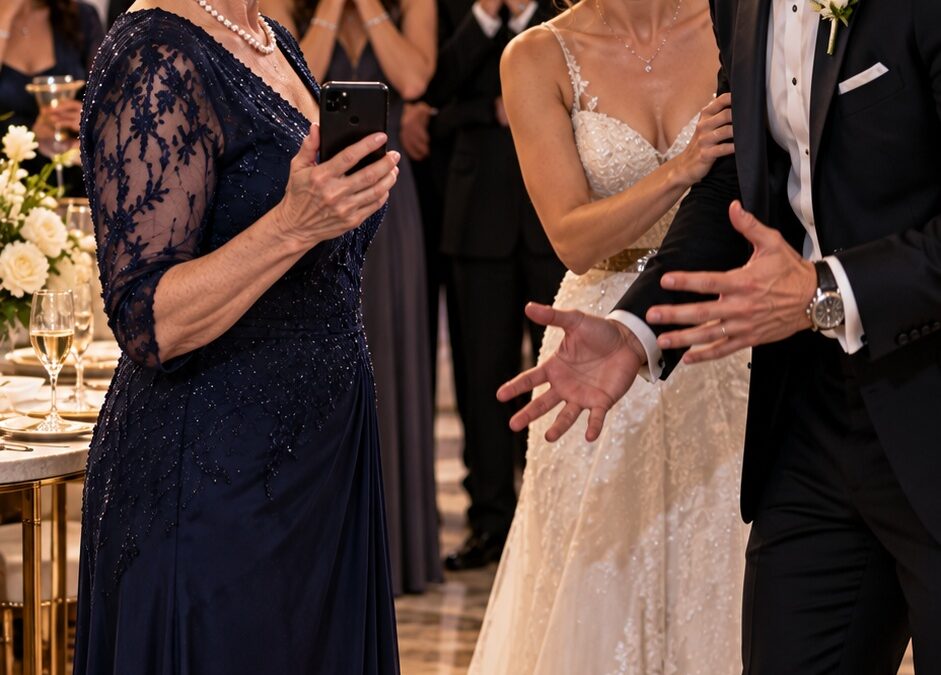


“You can’t freeze my accounts.”
He hissed.
“I retired from National Trust.”
I said.
“I did not disappear.”
His mouth tightened.
“You don’t have that authority.”
“No.”
I agreed.
“I don’t.”
For one second, relief flashed across his face.
“Bank security does.”
His expression changed again.
“And when someone uses the name of a former Northeast Regional executive as an unauthorized guarantor on multiple loan applications, that tends to get their attention.”
He stared at me.
I leaned closer.
“They are reviewing every business account connected to Grant Development.”
His breathing changed.
“Every application.”
“Every transfer.”
“Every representation you made using my name.”
Behind him, Amelia was watching.
My only daughter.
Thirty-two years old.
Pediatric nursing supervisor.
Kindest person I have ever known.
Still wearing the diamond engagement ring Jackson claimed had belonged to his grandmother.
A ring I already knew had never belonged to anyone’s grandmother.
Her expression told me she had finally realized that this was not a disagreement about wedding expenses.
It was something much larger.
Jackson looked toward her.
Then back at me.
“You planned this.”
“Yes.”
I said.
“But not the way you think.”
My name is Cleo Baker.
I was sixty-five years old that night.
For forty years, banking had taught me that fraud rarely begins with a dramatic theft.
It begins with small assumptions.
A name borrowed without permission.
A relationship exaggerated.
A signature implied.
A promise made with somebody else’s money.
Jackson had made the mistake of thinking retirement had made me sentimental.
What it had actually made me was patient.
────────── ✦ ──────────
Banking had never been simply a career for me.
It became my survival after my husband died.
David was forty-three when his heart stopped.
Amelia was eight.
One morning, I had a husband.
By evening, I was a widow trying to explain death to a child who still believed adults could repair anything.
For months, I functioned mechanically.
Wake Amelia.
Make breakfast.
Pack lunch.
School.
Work.
Homework.
Dinner.
Bed.
Then cry quietly after she fell asleep.
I was already working at National Trust Bank when David died.
I had started years earlier as a teller fresh out of college.
Business degree.
Two good suits.
One pair of uncomfortable black heels.
Far more ambition than confidence.
I learned fast.
Deposits.
Commercial accounts.
Credit analysis.
Regulatory procedures.
Risk.
Fraud controls.
Leadership.
By the time Amelia entered high school, I was managing a large regional division.
Eventually, I became senior executive responsible for Northeast Regional operations.
My office grew larger.
My responsibilities grew heavier.
But I never forgot what banking had given me during the worst year of my life.
Stability.
David’s death did not take our home.
It did not bury Amelia beneath student debt.
It did not make us financially dependent on relatives.
That mattered.
So when Amelia told me she wanted to become a pediatric nurse, I made one promise.
“You graduate owing nobody.”
She protested.
“Mom, nursing school is expensive.”
“I know.”
“You’ve already done enough.”
“That is not the point.”
I worked extra hours.
Accepted difficult assignments.
Saved aggressively.
We lived comfortably but modestly.
Three-bedroom house.
Reliable cars.
Vacations, but never extravagant ones.
When Amelia graduated with honors, I sat in the auditorium holding David’s old watch inside my purse.
I cried through the ceremony.
She became exactly the nurse I always knew she would.
Patient.
Calm.
Especially good with frightened children.
By thirty-two, she had become a nursing supervisor at Memorial Children’s Hospital.
Doctors respected her.
Parents trusted her.
Children adored her.
She had built a life that made me enormously proud.
There was only one part of it she had neglected.
Herself.
Amelia gave so much energy to other people that dating always came second.
Then, two years before the engagement disaster, the hospital held its annual charity gala.
National Trust was one of the major sponsors.
I attended to present a ceremonial check for renovation of the children’s cancer ward playroom.
Afterward, Amelia appeared beside me.
She was glowing.
“Mom, I want you to meet someone.”
The man beside her was tall.
Dark hair.
Perfect navy suit.
Confident handshake.
“Cleo Baker.”
He said.
“It’s an honor.”
“Amelia talks about you constantly.”
That was Jackson Grant.
His development company had worked on part of the hospital renovation.
He spoke passionately about designing spaces for children.
He gave Amelia credit for several improvements.
Every time she spoke, he turned toward her.
Listened.
Really listened.
Or appeared to.
That distinction took me too long to understand.
Over the next eighteen months, Jackson became part of our family life.
Sunday dinners.
Holidays.
Birthdays.
He arrived early.
Carried groceries.
Asked questions.
Remembered details.
My brother Jon mentioned fishing once.
Six months later, Jackson asked whether Jon had caught anything during spring trout season.
My cousin Patricia quilted.
Jackson remembered the exact pattern she had been working on.
That kind of attention makes people feel valued.
I respected it.
He also seemed fascinated by my career.
Unlike some men who become defensive around successful women, Jackson appeared genuinely curious.
“What was the hardest part of managing regional operations?”
He asked once.
“Regulations or people?”
“People.”
I said.
He laughed.
“I knew it.”
We discussed interest rates.
Commercial lending.
Risk assessment.
Leadership.
He asked intelligent questions.
I enjoyed answering.
Looking back, those conversations were not just conversations to him.
They were reconnaissance.
At the time, I saw only a future son-in-law who respected my experience.
More importantly, Amelia was happy.
Lighter.
She left work on time.
Traveled.
Talked about gardens and children and building a life beyond hospital walls.
Then came the proposal.
Cape Cod.
Sunset.
A beach where David and I had once taken Amelia when she was small.
Jackson had secretly contacted me beforehand.
“Which places there matter most to her?”
That detail touched me deeply.
The ring looked antique.
Diamond.
Delicate setting.
“Family heirloom.”
He told her.
“My grandmother’s.”
When Amelia called crying from the beach, I cried too.
For the first time in years, I imagined grandchildren.
A larger family table.
David absent but somehow present in everything we had built.
We celebrated the engagement at my home.
That night, Jackson raised a glass.
“To family.”
He said.
I believed him.
That was before the questions changed.
Before the money.
Before the lies.
Before fifty thousand dollars became the price of marrying my daughter.
────────── ✦ ──────────
The first warning was the wedding.
Amelia had always imagined something intimate.
Botanical garden.
Sixty guests.
String quartet.
Dinner.
Nothing extravagant.
Within weeks of the engagement, Jackson began expanding it.
Two hundred guests.
Luxury venue.
Celebrity photographer from Los Angeles.
Floral installations that cost more than Amelia earned in a month.
“What happened to the garden?”
I asked during lunch.
Amelia stirred her soup.
“Jackson thinks it’s too small.”
“What do you think?”
“I like the larger venue too.”
She answered too quickly.
I noticed.
“He says we only get married once.”
“He’s correct.”
I said.
“That doesn’t mean one day should create five years of debt.”
She smiled faintly.
“You sound like a banker.”
“I spent forty years practicing.”
Then:
“He mentioned you might help.”
My spoon stopped.
“With what?”
“The wedding.”
“I planned to.”
I said carefully.
David and I had saved money for this years ago.
“But he said…”
She hesitated.
“What?”
“He said you probably wanted to make it special.”
The implication was subtle.
If I questioned the cost, I was cheap.
Worse.
I was failing my daughter.
That was the first time I recognized Jackson’s real talent.
He rarely asked directly.
He created emotional conditions in which saying no appeared selfish.
At our next dinner, I raised the wedding budget.
“Perhaps we should establish an actual number.”
Jackson smiled.
“Of course.”
“I’m happy to contribute.”
“I know.”
“But everything above that amount should be yours and Amelia’s responsibility.”
His jaw tightened.
Only for a second.
Then relaxed.
“Cleo.”
He leaned back.
“I just want Amelia to have the wedding she deserves.”
Across the table, Amelia looked down.
There it was again.
Money transformed into love.
Question the spending, and somehow you questioned Amelia’s worth.
I had spent too long in finance not to recognize emotional leverage.
So I began looking.
Quietly.
Grant Development appeared successful on the surface.
Beautiful website.
Renderings.
Press releases.
Projects.
But public records told another story.
Liens.
Abandoned permits.
Projects announced but never completed.
Investor complaints.
Nothing criminal.
Not yet.
Just enough instability to make me curious.
Then someone casually mentioned Jackson’s previous engagement.
Daughter of a family that owned a regional grocery chain.
It had ended abruptly six months before he met Amelia.
Jackson had never mentioned it.
When I raised that with Amelia, she became defensive.
“Mom.”
“People have past relationships.”
“I know.”
“His business struggled during the pandemic.”
“I’m sure.”
“You always taught me not to judge people by their bank accounts.”
That sentence was not hers.
At least, not entirely.
I heard Jackson inside it.
“What did he tell you about the engagement?”
“The woman’s family was controlling.”
Of course.
That worried me.
When a new partner describes every previous person who questioned them as controlling, difficult, jealous, or unstable, I pay attention.
Still, I did not push Amelia.
If I attacked Jackson without enough proof, she would protect him.
That is what love does when threatened.
Instead, I gathered facts.
A longtime colleague introduced me to Jackson’s business partner, Thomas Wilkins.
I arranged lunch under the innocent premise of discussing investment opportunities.
Thomas was nervous.
Young.
Eager.
Within an hour, he told me almost everything.
Grant Development was close to collapse.
Three projects over budget.
Investors pulling out.
Subcontractors demanding payment.
New investment capital being used to cover old obligations.
“Jackson said you might invest.”
Thomas admitted.
I kept my face still.
“He did?”
“He said you were interested in development.”
“I see.”
“We need capital within sixty days.”
“How much?”
Thomas gave me a number that made my stomach tighten.
Jackson had not joined our family because of me.
But by then, I was beginning to suspect remaining in it depended heavily on what I could provide.
Two days later, I got stronger evidence.
Jackson stopped at my house while Amelia was working.
He was delivering menu samples.
I was upstairs.
Through an open window, I heard him on the patio.
“What do you mean denied?”
His voice was sharp.
“My fiancée’s mother is Cleo Baker from National Trust.”
I froze.
“I listed her as a reference.”
My hand tightened around the curtain.
“No.”
He continued.
“Your committee needs to reconsider.”
“The wedding is four months away.”
“I have commitments.”
I stepped away from the window before he saw me.
He had used my name on a loan application.
Without asking.
That was no longer arrogance.
That was dangerous.
I did not confront him.
Not yet.
That surprised even me.
At sixty-five, patience is one of the few advantages age gives us that younger manipulators consistently underestimate.
They think silence means ignorance.
Often, it means documentation.
A week later, a wedding caterer called me.
“Mrs. Baker?”
“Yes.”
“We’re following up regarding the outstanding twenty-thousand-dollar deposit.”
“What deposit?”
Pause.
“For the wedding.”
“I’m not responsible for vendor payments.”
The woman became confused.
“Mr. Grant said all wedding accounts would be settled through you and National Trust.”
I closed my eyes.
“He gave you my name?”
“And phone number.”
“How many vendors were told that?”
“I’m not sure.”
Neither was I.
That became my next question.
How many promises had Jackson made using money that was not his?
I started calling.
Florist.
Caterer.
Venue.
Photographer.
Transportation.
Several believed I was the financial backer.
Jackson had never asked me.
He had simply created the assumption.
Then came the engagement ring.
A college friend now connected to a jewelry appraisal organization examined detailed photos.
“Not antique.”
She told me.
“How old?”
“Manufactured within the last two years.”
“Mass-produced vintage style.”
I remembered Jackson’s story.
Grandmother.
Lasting love.
Family legacy.
Another lie.
Then the Yale story cracked.
Jackson had always claimed his father taught economics at Yale.
An old colleague of mine now connected with the university had never heard of Professor Grant.
Current.
Retired.
Visiting.
Nothing.
I began wondering whether anything Jackson had said about his background was true.
Then Lauren Winters called me.
She had previously worked at Grant Development.
We met for coffee.
She hesitated for nearly fifteen minutes before saying:
“Jackson has a pattern.”
“What kind?”
“Women.”
My stomach tightened.
“Tell me.”
“Before Amelia, there was Elizabeth Harrington.”
“The grocery family?”
Lauren nodded.
“Before Elizabeth, Diane Mercer.”
“Her family owns a construction supply company.”
“Yes.”
“Before her?”
“Real estate investor’s daughter.”
Every relationship lasted roughly the same amount of time.
Every woman had money.
Or family money.
Or professional connections.
Every romance became serious quickly.
Then business opportunities appeared.
Investments.
Introductions.
Loans.
Guarantees.
“When things stopped benefiting him…”
Lauren said.
“He became critical.”
“Controlling?”
“Yes.”
“Then the relationship ended?”
“Usually after money disappeared.”
That afternoon, I sat inside my car for almost twenty minutes.
Not moving.
My daughter was not marrying a man with financial problems.
She was engaged to a man who appeared to use relationships as financial infrastructure.
And worse, he had already begun changing her.
Amelia stopped our regular lunches.
When we spoke, she repeated Jackson’s concerns.
“You’re interfering.”
“You don’t trust him.”
“You never let me make my own decisions.”
That last one hurt.
Because I had spent thirty-two years trying to raise the exact opposite.
Independent.
Confident.
Smart.
I called Sarah Levenson.
Former family-law attorney.
Later National Trust’s legal counsel.
My closest friend.
I told her everything.
She listened.
Then:
“Financial exploitation.”
She said.
“Classic pattern.”
“Can we stop him?”
“Not by storming into Amelia’s house with a folder.”
“I know.”
“If you push too soon, he’ll isolate her further.”
“What do I do?”
“Protect yourself.”
“Keep contact open with Amelia.”
“Document every unauthorized financial representation.”
“And wait until you have something he cannot explain away.”
I hated waiting.
But Sarah was right.
The hardest thing a mother can do is watch her adult child walk toward danger while understanding that controlling them in the name of rescue may push them deeper into the very relationship you fear.
So I waited.
And Jackson became bolder.
────────── ✦ ──────────
He wanted the Oakwood Country Club for the engagement party.
Twenty-five thousand dollars once food and beverages were included.
My home could have held fifty people comfortably.
He refused.
“Amelia deserves the best.”
That phrase again.
Not:
I want this.
Instead:
Amelia deserves.
He turned every demand into proof of his devotion.
The guest list revealed his real priorities.
Bank board members I knew.
Commercial lenders.
Venture capitalists.
Real-estate investors.
People Jackson barely knew personally but desperately wanted professionally.
This was not an engagement celebration.
It was a networking event wearing a wedding dress.
I contributed a fixed amount.
In writing.
Jackson accepted.
Then told vendors I would cover any additional balances.
I let him.
Because by then, Sarah and I were no longer trying to determine whether he was exploiting us.
We were determining how far he would go.
The answer came three weeks later.
Amelia met me for coffee.
Alone.
A rare event by then.
She looked exhausted.
Dark circles.
Trembling hands.
She had lost weight.
“Mom.”
“What happened?”
“Jackson says we may need to postpone the wedding.”
I waited.
“He says the business needs capital.”
“How much?”
Her eyes filled.
“He wants me to ask you for fifty thousand dollars.”
There it was.
“What exactly did he say?”
“That it could be an early wedding gift.”
“Investment?”
“He says it would be both.”
“That’s not how investments work.”
“I know.”
She whispered.
“He says if the company isn’t stable, we shouldn’t get married.”
I looked at my daughter.
A woman who could calmly stabilize a frightened child in an emergency room was trembling over coffee because a man had convinced her his failing business was somehow her responsibility.
“Amelia.”
“I’m sorry.”
“Stop.”
She looked up.
“You have nothing to apologize for.”
“He says I’m not supporting him.”
“That’s different from funding him.”
“He says marriage means partnership.”
“Yes.”
“Partnership does not mean your mother writes checks under threat.”
She flinched at the word.
“Threat.”
I let it sit.
Then invited Jackson’s parents to dinner.
Richard and Margaret Grant.
Jackson had described them as an influential Connecticut family.
His father supposedly taught economics at Yale.
They arrived from Rhode Island in an eight-year-old Honda.
Lovely people.
Middle-class.
Warm.
Uncomfortable whenever Jackson discussed money.
Richard had been a high-school math teacher.
Not Yale.
Not economics professor.
Public high school.
Retired.
At dinner, Margaret admired Amelia’s engagement ring.
Jackson smiled.
“Grandmother would’ve loved seeing Amelia wear it.”
Margaret blinked.
“Which grandmother?”
Silence.
Jackson laughed.
“Mom.”
“Your grandmother’s ring was a plain gold band.”
She said.
“We offered it to you.”
“You said it wasn’t special enough.”
Amelia’s eyes moved toward Jackson.
He recovered.
“Great-grandmother.”
“Dad’s side.”
Richard looked confused too.
First visible crack.
Later, as they left, Margaret squeezed my hand.
“Cleo.”
“Yes?”
“Could we meet?”
“Just us?”
Her eyes were scared.
That told me more than her words.
The engagement party was three days later.
By then, everything was ready.
Not the flowers.
Not the catering.
The evidence.
Sarah attended with documents in her purse.
Thomas Wilkins was invited directly by me.
Lauren Winters had agreed to attend if needed.
So had two women from Jackson’s past.
Marcus Johnson, National Trust’s security director and my colleague for twenty years, knew the outline.
I had not asked him to violate procedure.
I did not need to.
Banks have fraud protocols.
Jackson had triggered several.
Unauthorized guarantor representations.
Potential application misstatements.
Inconsistent financial documentation.
Questionable transfers.
My name had simply made the bank notice faster.
At seven, guests arrived.
Oakwood Country Club glowed beneath crystal chandeliers.
Ice sculptures.
Champagne fountains.
Towering flowers.
Everything Jackson wanted.
Amelia should have been radiant.
She looked like an actress playing a bride.
Black cocktail dress altered because she had lost too much weight.
Water instead of champagne.
Smile that disappeared whenever nobody was watching.
Jackson drank scotch.
Networked.
Boasted.
I listened.
He discussed Grant Tower.
A project I knew was underfunded.
He referenced investors who had already withdrawn.
Thomas stood near me.
Every few minutes, he whispered:
“That’s not true.”
Or:
“That deal collapsed.”
Or:
“We don’t have that financing.”
Then Jackson clinked his glass.
“Everyone!”
The room quieted.
He wrapped one arm around Amelia.
She stiffened slightly.
“After our Bali honeymoon…”
He announced.
“We’ll be moving into our new home in Oakwood Estates.”
Amelia looked at him.
Surprised.
Homes there started around three million.
“And next year…”
Jackson raised his glass.
“Grant Development breaks ground on Grant Tower.”
Applause.
Murmurs.
Businesspeople looked toward me.
Of course.
Who else did they assume would fund this?
My stomach turned.
Jackson was not simply exploiting my name privately anymore.
He was publicly constructing the appearance that my family—and therefore possibly my financial backing—stood behind him.
After the toast, he cornered me on the terrace.
Several business associates stood nearby.
Close enough to hear.
He wanted witnesses.
Just not the kind he was about to get.
“Cleo.”
He smiled.
“We need to settle the investment.”
“What investment?”
“Fifty thousand.”
“I haven’t agreed.”
“Come on.”
He laughed.
“Don’t make this awkward.”
“Then perhaps we should discuss it with Amelia.”
His eyes hardened.
“This needs to happen by tomorrow.”
“Why?”
“Timing.”
“What happens tomorrow?”
“If capital isn’t secured…”
He paused deliberately.
“I’ll have to reconsider certain commitments.”
“What commitments?”
“The wedding.”
I looked at him.
“Are you saying you will cancel your wedding to my daughter if I do not invest fifty thousand dollars in your business?”
He smiled.
Too confident.
“Let me be direct.”
He leaned closer.
“I need fifty thousand by tomorrow.”
“Or there is no wedding.”
“And you’ll explain to Amelia that her mother chose money over her happiness.”
For a moment, I simply studied him.
He mistook silence for fear.
Then he added:
“You may have worked in banking.”
“But frankly, Cleo, I think you were lucky.”
I almost smiled.
“Lucky?”
“You climbed the corporate ladder during a different era.”
“Serious investors understand calculated risk.”
One of his friends chuckled.
That was the moment I knew I had nothing left to protect.
Not the party.
Not appearances.
Not his dignity.
I nodded.
“I see.”
Then walked away.
No argument.
No raised voice.
That worried him more than anger would have.
I entered the hallway near the cloakroom.
Called Marcus.
He answered immediately.
“It’s time.”
I said.
“Proceed with the review.”
“Understood.”
I hung up.
Returned.
Jackson was still entertaining potential investors.
I stepped beside him.
“Jackson.”
He smiled.
“Change your mind?”
I leaned close enough that only he could hear the first sentence.
“Your National Trust accounts have been frozen pending investigation.”
The glass slipped.
Shattered.
Silence spread outward.
“What?”
“Your commercial loan applications listing me as guarantor have been flagged.”
“You can’t—”
“Your accounts are being reviewed for potential fraud and misrepresentation.”
His face went colorless.
I spoke slightly louder.
“I may be retired.”
“But I still serve on the bank’s security oversight committee.”
His eyes widened.
“Using the identity or reputation of a bank executive as an unauthorized financial guarantor is not networking.”
“It can become fraud.”
“This is insane.”
He stammered.
“We discussed investments.”
“No.”
“We discussed banking generally.”
“You used my name without consent.”
“That’s not—”
Thomas appeared beside me.
Jackson stared.
“Thomas?”
“The bank called the office.”
Thomas said.
His voice shook.
“All Grant Development accounts are suspended pending review.”
Jackson stepped toward him.
“You talked to them?”
Thomas backed away.
“I gave them the documents they requested.”
“You idiot.”
There.
The mask finally cracked.
The club manager approached.
“Mr. Grant?”
Jackson turned.
“There are representatives from National Trust requesting to speak with you privately.”
Then the ballroom doors opened.
Lauren Winters entered.
Behind her:
Diane Mercer.
And Elizabeth Harrington.
Jackson’s previous fiancée.
The woman whose family had covered his earlier loan problems.
Amelia saw them.
Then looked at Jackson.
“What is happening?”
He reached toward her.
“Nothing.”
“Business disagreement.”
“Your mother is trying to sabotage me.”
Elizabeth stepped forward.
“No.”
Jackson froze.
“Elizabeth.”
She looked at Amelia.
“He told me the same thing.”
Silence.
“What thing?”
Amelia whispered.
“That my family didn’t respect him.”
“That they were controlling.”
“That he needed money to prove himself.”
“That investing in him meant investing in our future.”
Diane nodded.
“He did it to me too.”
Lauren added:
“He uses relationships to get access to resources.”
Jackson looked at me.
“You brought these people here?”
“Yes.”
His mother stepped through the crowd.
“Jackson.”
He turned.
Margaret’s face was red with humiliation.
“Stop.”
“Mom, stay out of this.”
“No.”
Her voice shook.
“No more lies.”
Amelia’s hand moved to her ring.
Slowly.
Jackson noticed.
“Amelia.”
She slid it off.
He stepped forward.
“Don’t do this.”
She placed it on the table.
Right beside his untouched dinner plate.
The tiny sound of metal against china somehow felt louder than the glass shattering.
“What have you done?”
She asked.
Jackson tried to take her hands.
She stepped back.
“Your mother is overreacting.”
He said quickly.
“This is a temporary banking issue.”
“They’re jealous.”
“My old relationships were complicated.”
“We can fix this.”
Amelia stared at him.
Not crying.
Not yet.
Then moved toward me.
Stood beside me.
I looked around the ballroom.
“I believe this party is over.”
No one argued.
Guests began collecting purses and coats.
Whispers spread.
Jackson’s carefully curated evening had become the exact opposite of what he intended.
Instead of legitimizing him, it exposed him.
I took Amelia into a private sitting room.
Sarah joined us.
So did Jackson’s parents.
Margaret immediately began crying.
“We are so sorry.”
Amelia sat completely still.
Richard shook his head.
“We knew some things didn’t add up.”
He admitted.
“But not this.”
Margaret looked at Amelia.
“We really love you.”
“We thought he had finally found someone good.”
Amelia finally spoke.
“He did.”
Margaret cried harder.
Outside, bank security interviewed Jackson.
Thomas provided business records.
Lauren.
Diane.
Elizabeth.
Three women.
Same story.
Different year.
Different financial resource.
Same pattern.
Elizabeth sat beside me later.
“He forged my signature.”
She said quietly.
“My father discovered it.”
“I thought my family had destroyed our engagement.”
“Because Jackson told you that?”
“Yes.”
“I spent years believing my father was controlling.”
Diane looked toward Amelia.
“He isolates you first.”
“Then when anyone questions him, he tells you they are jealous or manipulative.”
“Eventually you defend him for doing the very thing they’re warning you about.”
Amelia covered her face.
“God.”
I touched her shoulder.
“No shame.”
She looked at me.
“I defended him.”
“You loved him.”
“I pushed you away.”
“You were being manipulated.”
“I should’ve known.”
“No.”
I said firmly.
“His behavior is his responsibility.”
That mattered.
Manipulators survive by transferring shame to victims.
I would not let Jackson leave that final gift behind.
Marcus eventually came to us.
“The preliminary review found significant irregularities.”
“What kind?”
I asked.
“Large deposits followed by quick offshore transfers.”
“Business expenses that appear personal.”
“Multiple loan applications with inconsistent information.”
“Accounts remain frozen.”
“What happens next?”
“Formal investigation.”
“Potential referrals.”
Amelia stared at the floor.
The club manager approached me with the final event bill.
“Mr. Grant indicated you would cover everything.”
Of course he did.
I gave the manager my card.
“Only the amount I previously agreed to.”
“Please itemize the rest separately.”
“Those records may become evidence.”
He nodded.
On our way out, we passed Jackson.
Security was escorting him toward the entrance.
When he saw me, rage overtook him.
“You planned this.”
“Yes.”
“You never wanted Amelia to have her own life.”
Amelia stopped.
Then turned.
“My mother protected me from a man who saw me as access to money.”
Jackson stared.
“She never tried to separate us.”
Amelia continued.
“You did.”
“Every time she asked a question, you made me doubt her.”
“Every time she raised a concern, you told me she was controlling.”
“You were isolating me.”
His face hardened.
“You’ll regret this.”
Amelia looked at him for a long moment.
Then:
“No.”
“I think I was going to regret marrying you.”
She turned away.
We walked to my car.
I did not feel triumphant.
I felt sick.
Because winning against a manipulator still means watching someone you love discover that the future they believed in never existed.
────────── ✦ ──────────
The investigation moved fast.
Faster than Jackson expected.
He had tried to use his relationship with Amelia to secure more than two hundred thousand dollars in questionable loans.
The engagement ring had been purchased on credit.
Payments overdue.
No grandmother.
No heirloom.
His laptop contained draft documents that would have given him power of attorney over Amelia’s finances during certain “emergency circumstances.”
That scared me more than the fifty-thousand-dollar demand.
Had they married, financial entanglement would have deepened.
Joint accounts.
Property.
Beneficiary changes.
Maybe loans she never fully understood.
The public engagement disaster was painful.
Marriage would have been worse.
Other women came forward.
The pattern sharpened.
Jackson courted women whose families had money or useful business connections.
He moved quickly.
Romance.
Engagement.
Business crisis.
Urgent investment.
If money arrived, crisis disappeared temporarily.
If families resisted, he told the woman her relatives were controlling.
Eventually, the relationship collapsed.
The district attorney opened an inquiry involving potential wire fraud and financial misrepresentation.
Jackson insisted everything was misunderstood.
Of course.
For Amelia, legal facts were easier than emotional ones.
Three days after the party, she returned to work.
“Too soon.”
I told her.
“My patients need me.”
“And I need them.”
She was right.
Children did not care that her engagement ended publicly.
A seven-year-old with leukemia did not ask whether her fiancé was a fraud.
A frightened mother needed Amelia’s calm voice.
Work reminded her who she had been before Jackson.
Still, evenings were difficult.
One night, she curled on my sofa.
Tea untouched.
“I’m a nurse.”
She said.
“I assess people every day.”
“I notice changes.”
“How did I not see this?”
“Because you weren’t conducting a clinical assessment.”
I said.
“You were in love.”
“That sounds like an excuse.”
“It isn’t.”
“It’s context.”
She stared at me.
“He was good at what he did.”
“Very.”
“You saw it.”
“Eventually.”
“You knew before I did.”
“That doesn’t make you foolish.”
She started crying.
“I was planning children with him.”
I moved beside her.
“I know.”
“I thought Dad would’ve liked him.”
That broke me.
Because I had thought so too.
A week later, I took Amelia to our family cabin.
Three hours from the city.
David had built much of it himself.
Small.
Two bedrooms.
Lake.
Stone fireplace.
After David’s death, Amelia and I had gone there to grieve away from people.
Now we returned for another kind of loss.
Mornings walking.
Afternoons reading.
Evenings beside the fire.
On the third night, Amelia asked:
“When did you know?”
“I didn’t.”
“Mom.”
“I suspected.”
“That’s different.”
“When?”
“The wedding budget.”
She smiled weakly.
“You thought he was cheap?”
“No.”
“I thought he wanted other people to fund his image.”
She stared into the fire.
“Then the questions about the bank.”
“The loans.”
“The vendors.”
“The lies about his family.”
She nodded.
“I noticed some of those things.”
“I know.”
“But I always explained them.”
“That’s what skilled manipulators rely on.”
“What do you mean?”
“They rarely tell lies that are obviously impossible.”
“They give you stories that fit something you already want to believe.”
Amelia was quiet.
“He said the previous fiancée’s family controlled him.”
“You value independence.”
“So that story made you want to prove you weren’t controlling.”
“He said expensive wedding choices showed how much he valued me.”
“You spend your life caring for others.”
“So being told you deserved something extravagant appealed to a need you rarely acknowledge.”
“He told you I was interfering.”
“You’ve always wanted to make your own decisions.”
“So defending him felt like defending your independence.”
She looked at me.
“That’s awful.”
“It’s effective.”
Then she asked something harder.
“Did you ever want to just tell me everything?”
“Every day.”
“Why didn’t you?”
“Because I know you.”
“If I had arrived with a dossier too early…”
“You would’ve defended him.”
She nodded.
“I would have.”
“I needed evidence you could evaluate yourself.”
“You gave me that.”
“No.”
“Jackson gave you that.”
“I only made sure it was visible.”
Our relationship changed at the cabin.
For years, I had sometimes slipped into executive mode with Amelia.
Problem.
Analysis.
Solution.
She had sometimes responded by protecting her independence even when she needed help.
That week, we became something else.
Not only mother and daughter.
Two adult women.
Both capable.
Both imperfect.
Both allowed blind spots.
When we returned, Amelia began rebuilding.
She returned wedding gifts.
Wrote personal notes.
Donated her unworn wedding dress to a charity providing formal dresses to disadvantaged students.
That one surprised me.
“Are you sure?”
She touched the garment bag.
“Yes.”
“Doesn’t it hurt?”
“Yes.”
“Then why donate it?”
“Because it can become somebody else’s good memory.”
That was Amelia.
Pain rarely made her smaller.
Eventually, she found somewhere useful to put it.
Three months after the engagement ended, she used a modest inheritance from David to create a financial-literacy foundation for young adults.
I laughed when she told me.
“What?”
“You spent months dating a financial predator.”
“And your response is to become an educator.”
“I’m a nurse.”
“Same disease.”
She smiled.
The foundation taught practical basics.
Credit.
Loans.
Joint accounts.
Guarantors.
Power of attorney.
Co-signing.
Relationship financial abuse.
Emergency funds.
Warning signs.
“Everyone deserves access to this.”
Amelia said.
“Not just people with banking executives for mothers.”
That became her favorite joke.
I helped.
Of course.
Retirement suddenly had purpose.
Former colleagues volunteered.
Jackson’s victims participated anonymously at first.
Then some publicly.
Elizabeth eventually spoke about forged signatures.
Diane about business pressure inside relationships.
Lauren about what she had seen from inside Grant Development.
Shame weakened each time someone told the truth.
Six months after the engagement party, Jackson’s legal consequences were finalized.
He avoided jail by agreeing to a significant financial settlement.
Most compensation went to earlier victims who had lost actual money.
He was barred for ten years from serving as an officer in certain financial or development entities.
Grant Development effectively collapsed.
I expected satisfaction.
Instead, I mostly felt relief.
He no longer occupied our daily thoughts.
That was better.
Jackson’s parents called us during the process.
Margaret cried.
“We saved ten thousand dollars.”
She said.
“For retirement.”
“We want Amelia to have it.”
“No.”
Amelia answered.
“Please.”
“You don’t owe me money.”
“He’s our son.”
“His actions are not your debt.”
Margaret broke down.
Amelia suggested donating to Memorial Children’s Hospital instead.
They did.
Later, they volunteered with our foundation.
At first, I found that complicated.
Then I understood.
They were rebuilding too.
Parents are not responsible for every moral failure of adult children.
How they respond afterward matters.
Margaret and Richard did not cover for Jackson.
Did not minimize.
Did not blame Amelia.
They acknowledged truth.
That was enough for a beginning.
Amelia slowly returned to the hospital charity committee.
The same committee where she had met Jackson.
I questioned it.
“Are you sure?”
“Yes.”
“Why?”
“Because it matters.”
She said.
“If I stop doing work I care about because I met him there, he takes something else.”
I smiled.
“There’s my daughter.”
She laughed.
“I was always here.”
That was true.
Manipulation had not replaced her.
It had buried her under doubt.
Recovery was excavation.
She began trusting her own decisions again.
Small things first.
A dress.
Restaurant.
Vacation.
Work schedule.
Then bigger decisions.
Money.
Friendships.
Dating.
She started a monthly support group for people who had experienced financial or relationship fraud.
Men and women.
No lectures.
No judgment.
Just stories.
Practical resources.
“I’m not an expert.”
She always said.
“I’m someone who learned the expensive way.”
People trusted that.
A year after the broken engagement, Amelia and I walked beside the river at sunset.
She linked her arm through mine.
“I realized something.”
“What?”
“If I had married Jackson…”
She paused.
“I would’ve disappeared.”
My throat tightened.
“Not suddenly.”
She continued.
“Slowly.”
“My money.”
“My career.”
“My relationship with you.”
“My confidence.”
“Maybe eventually even my sense of what was real.”
I nodded.
“The engagement ending publicly felt like the worst thing that had ever happened.”
“But now…”
She looked toward the water.
“It saved me from something much worse.”
We walked quietly.
Then she smiled.
“I realized something about you too.”
“That sounds dangerous.”
“You could have shown me all your research privately.”
“Yes.”
“You could’ve tried to force me to leave.”
“Yes.”
“You didn’t.”
“No.”
“Why?”
“Because I respected you.”
She frowned slightly.
“Even when I was making a terrible decision?”
“Especially then.”
“Explain.”
“Protecting someone is not the same as controlling them.”
I said.
“I wanted you safe.”
“But I also needed the decision to be yours.”
“If I destroyed your relationship without letting you see the truth…”
“You might have lost Jackson but also lost trust in me.”
She squeezed my arm.
“That is real love.”
“What?”
“Protecting someone without owning their choices.”
I looked at her.
For a woman who once bandaged stuffed animals because she believed everything hurt deserved care, Amelia had always possessed a kind of wisdom I could never put on a balance sheet.
We reached a bench.
Sat.
I thought about forty years in banking.
Risk.
Patterns.
Verification.
Controls.
People used to ask what made a great banker.
Numbers?
No.
Numbers rarely lie by themselves.
People lie with numbers.
Great banking requires understanding behavior.
Why this loan now?
Why this urgency?
Why this projection?
Why does every story depend on tomorrow?
Jackson’s fifty-thousand-dollar demand contained every classic warning sign.
Urgency.
Emotional pressure.
Artificial deadline.
Personal leverage.
Huge promise.
Threat disguised as consequence.
“Tomorrow.”
He said.
“Or no wedding.”
The most important decision I made was refusing his deadline.
Manipulators love deadlines because deadlines kill reflection.
No time to verify.
No time to consult.
No time to notice inconsistencies.
Just fear.
Act now.
Lose everything.
I had spent decades telling young loan officers:
“When someone insists you must decide before you can think, thinking is probably exactly what they fear.”
Jackson should have known better than to use that tactic on a banker.
Then again, arrogance was his greatest weakness.
He believed women were categories.
Amelia:
Compassionate.
Therefore exploitable through love.
Me:
Mother.
Therefore exploitable through guilt.
Elizabeth:
Wealthy family.
Therefore exploitable through rebellion.
Diane:
Business resources.
Therefore exploitable through ambition.
He understood traits.
He did not understand character.
Amelia’s compassion did not make her permanently weak.
My love for my daughter did not make me financially reckless.
Elizabeth’s independence eventually made her testify.
Diane’s professional knowledge eventually helped investigators.
People are more than the vulnerabilities predators see in them.
That was Jackson’s fatal miscalculation.
He saw access.
We became resistance.
The day after the one-year anniversary, Amelia visited my house for dinner.
No occasion.
Just Wednesday.
Exactly the kind of ordinary evening I treasure now.
She brought pasta.
I made salad.
We ate at the kitchen table.
No country club.
No ice sculpture.
No hundred-dollar flower arrangements.
She was telling me about a child at the hospital who had finally finished chemotherapy.
Her eyes were bright.
Phone face-down.
No one interrupting.
No one telling her she should switch specialties because pediatrics “limited her earning potential.”
I watched her talk.
Thought about the woman from the engagement party who glanced at Jackson before every opinion.
Gone.
Not because she became someone new.
Because she returned to herself.
After dinner, she helped with dishes.
“Mom.”
“Yes?”
“Do you still have the paperwork?”
“What paperwork?”
She laughed.
“All of it.”
“Jackson’s.”
“Of course.”
“Why?”
“Forty years of banking.”
“You keep everything seven years.”
She shook her head.
“You’re impossible.”
“You’re welcome.”
Then she became quiet.
“I’m glad you froze the account.”
“So am I.”
“Did you ever worry you had gone too far?”
“Absolutely.”
She looked surprised.
“Really?”
“Of course.”
“The bank could have reviewed everything and found only bad business judgment.”
“What then?”
“I would have apologized for suspecting fraud.”
“And lived with being unpopular.”
“You were willing to risk that?”
“Yes.”
“Why?”
“Because the downside of being wrong was embarrassment.”
“The downside of ignoring it…”
I looked at her.
“Was you marrying him.”
She nodded.
That was risk assessment in its purest form.
Not certainty.
Probability and consequence.
Sometimes we do not need absolute certainty before we protect ourselves.
We need enough evidence to pause.
Verify.
Refuse pressure.
Ask another question.
That became part of our foundation curriculum.
Amelia insisted on it.
A slide that read:
URGENCY IS NOT PROOF.
Another:
LOVE IS NOT A FINANCIAL PLAN.
And my favorite:
A PERSON WHO RESPECTS YOU CAN SURVIVE YOUR QUESTIONS.
Jackson could not survive questions.
Every question became accusation.
Every boundary became betrayal.
Every independent opinion became disloyalty.
Healthy people may dislike boundaries.
They still respect them.
Manipulators experience boundaries as threats because boundaries interrupt access.
That lesson cost us a lot.
But not fifty thousand dollars.
Not Amelia’s financial future.
Not her career.
Not years trapped in a marriage built on lies.
There are losses you eventually become grateful you never had to experience.
One afternoon, Margaret Grant asked me something during a foundation event.
“Do you hate him?”
Her son.
Jackson.
I thought.
“No.”
She seemed shocked.
“How?”
“Hate is expensive.”
I said.
“I already spent enough on him.”
She laughed through tears.
Then:
“I still love him.”
“I know.”
“Does that make me terrible?”
“No.”
“He’s your son.”
“You can love someone without protecting them from consequences.”
Her eyes filled.
“That’s hard.”
“Yes.”
I thought of Amelia.
Protecting without controlling.
Loving without enabling.
Different versions of the same lesson.
My career taught me control systems.
My daughter taught me human boundaries.
Both matter.
Years ago, when I was a young branch manager, my supervisor told me:
“Trust everyone.”
Then paused.
“Verify everything.”
I laughed then.
Now I understand the deeper meaning.
Trust should not require blindness.
Love should not require financial secrecy.
Family should not make questions forbidden.
If Jackson had been legitimate, verification would have strengthened him.
Real business could survive reviewing balance sheets.
Real family history could survive a question about Yale.
A real heirloom could survive an appraisal.
A real partnership could survive a mother asking where fifty thousand dollars was going.
Only deception requires darkness.
Amelia eventually began dating again.
Not quickly.
Not because everyone told her to “move on.”
I hate that phrase.
Grief moves with us.
Betrayal too.
Then one day, she mentioned someone.
“His name is Michael.”
I raised an eyebrow.
“Hospital?”
“Physical therapist.”
“Money?”
She laughed.
“Mom.”
“I’m joking.”
“Mostly.”
“He has his own money.”
“Excellent start.”
“He also knows I have a mother who can freeze bank accounts.”
“Better.”
She threw a napkin at me.
I did not investigate Michael.
That surprised her.
“Nothing?”
“What do you want me to do?”
“No background check?”
“You’re thirty-three.”
“You investigated Jackson.”
“Jackson used my name on loan applications.”
“Fair.”
“If Michael does that…”
“You’ll freeze him?”
“I’ll send a fruit basket first.”
She laughed.
That sound mattered.
Trusting again is not stupidity.
It is courage with memory.
Amelia did not become suspicious of everyone.
She became attentive to herself.
When something felt wrong, she no longer immediately invented an explanation for someone else.
That was her greatest recovery.
Not the foundation.
Not the support group.
Not public strength.
Self-trust.
One evening, she said:
“Jackson didn’t just lie to me.”
“What do you mean?”
“He taught me to lie to myself.”
I listened.
“I noticed the contradictions.”
“The ring.”
“His stories.”
“The spending.”
“His criticism.”
“But every time something bothered me, I told myself I was being unfair.”
“That he was stressed.”
“That he loved me.”
“That I was scared of commitment.”
She looked at me.
“I abandoned my own instincts before he ever abandoned me.”
“That isn’t your fault.”
“I know.”
“But it is my responsibility now.”
I could not have been prouder.
There is a difference between blame and responsibility.
Victims are not responsible for being targeted.
But healing eventually asks us what we will do with knowledge.
Amelia chose to listen to herself again.
So did I.
Retirement changed too.
Before Jackson, I imagined my later years quietly.
Travel.
Books.
Consulting occasionally.
Maybe gardening.
Instead, I found myself speaking at financial-literacy workshops.
Helping fraud victims.
Mentoring younger banking professionals.
Teaching people how emotional manipulation and financial exploitation often overlap.
It gave my career a final chapter I never expected.
One young banker asked me after a seminar:
“What was the exact moment you knew Jackson was a fraud?”
“There wasn’t one.”
I said.
“That surprises me.”
“Fraud rarely announces itself.”
“It accumulates.”
“Small inconsistencies.”
“Pressure.”
“Stories that change.”
“Unusual urgency.”
“Boundaries tested repeatedly.”
“Then one day, the pieces form a pattern.”
“What was the fifty-thousand-dollar demand?”
“The moment he stopped hiding.”
She smiled.
“And freezing the accounts?”
“The moment I stopped pretending I needed more proof.”
A year and a half after the engagement ended, Oakwood Country Club hosted another hospital fundraiser.
Amelia and I attended.
Walking into the ballroom felt strange.
Same chandeliers.
Same terrace.
Different flowers.
For a moment, I saw Jackson again.
Glass falling.
Face white.
“Fifty thousand or no wedding.”
Amelia noticed me pause.
“You okay?”
“Yes.”
“You want to leave?”
“No.”
She smiled.
“Good.”
We entered.
She spoke with doctors.
Parents.
Donors.
Nobody whispered about Jackson anymore.
Life had moved.
That itself was healing.
At dinner, Amelia gave a short presentation about the financial-literacy foundation.
Not dramatic.
Not about revenge.
She explained how relationship fraud can combine emotional trust with financial pressure.
She told people that shame often keeps victims silent.
Then:
“Being deceived does not mean you are foolish.”
She said.
“It means someone deliberately misused your trust.”
I felt tears rising.
“Recovery starts when you stop asking why you were stupid enough to believe them and start asking what they did to make the lie believable.”
The room applauded.
I thought of David.
He would have been unbearable.
Standing first.
Clapping loudest.
Probably embarrassing her.
I smiled.
Later, on the terrace, Amelia joined me.
Same place Jackson demanded money.
“You’re thinking about him.”
She said.
“A little.”
“Me too.”
“Bad?”
“No.”
She looked across the lawn.
“Just strange.”
“What?”
“He thought this was going to be the beginning of his biggest deal.”
I laughed softly.
“It became an audit.”
“Very you.”
“Occupational hazard.”
She linked her arm through mine.
“Mom.”
“Yes?”
“Thank you.”
“You’ve already thanked me.”
“I know.”
“For what this time?”
“For not writing the check.”
“That was an easy decision.”
“No.”
She shook her head.
“It wasn’t.”
“He used me.”
“He knew you would think about my happiness.”
“That’s why he picked fifty thousand.”
“Large enough to save him.”
“Small enough that he believed you would pay to avoid hurting me.”
She was right.
Jackson had calculated not only my finances.
My emotions.
“And thank you for letting me see him.”
She continued.
“Instead of just telling me.”
I looked at her.
“You needed the truth to belong to you.”
“Yes.”
We stood there quietly.
Then she smiled.
“So.”
“What?”
“Michael wants to take me to Cape Cod.”
I turned.
“Cape Cod?”
“Yes.”
“Same beach?”
“No.”
She laughed.
“Different beach.”
“Good.”
“Mom.”
“I’m kidding.”
She gave me that look.
Then became serious.
“I think I’m ready to make new memories there.”
That touched me more than I expected.
Jackson had used a meaningful place for his proposal.
For a while, I worried he had contaminated it forever.
But places do not belong to the worst thing that happened there.
Neither do people.
Amelia went.
Had a wonderful weekend.
No engagement.
Thank God.
Just seafood.
Beach walks.
Bad weather.
Laughter.
Normal life.
Exactly what she deserved.
I sometimes think about what would have happened if I had handed Jackson the fifty thousand dollars.
Grant Development might have survived another few months.
The wedding would have continued.
He would have praised me.
Amelia would have felt relieved.
I might have convinced myself I had overreacted.
Then another crisis.
Another investment.
Maybe a joint house purchase.
Maybe Amelia’s inheritance.
Maybe power of attorney.
Maybe my banking reputation tied to increasingly dangerous transactions.
Fraud rarely ends when you pay it.
Payment teaches the fraudster that pressure works.
Jackson was not asking for fifty thousand.
He was testing the size of the door.
That is why I am grateful I closed it.
Actually—
I did more than close it.
I locked the account behind it.
There is still a framed photograph on my desk from Amelia’s nursing-school graduation.
She is twenty-two.
White uniform.
Diploma.
David’s watch around my wrist.
Whenever someone asks why I acted so aggressively against Jackson, I look at that picture.
I did not spend twenty-two years after my husband died building stability for my daughter so that some charming man could convert her future into collateral.
But equally important—
I did not save her by owning her choices.
That distinction remains the lesson I value most.
I protected what was mine.
My name.
My financial reputation.
My accounts.
My consent.
Then I created conditions where Amelia could see Jackson clearly.
She removed the ring.
Her hand.
Her choice.
That is why our relationship survived.
Control would have made me another version of him.
Love required something harder.
Patience.
Evidence.
Boundaries.
And trust that the daughter I raised could make the right decision once she could finally see the whole truth.
She did.
Today, the fifty thousand dollars remains invested.
Not in Grant Development.
Not in Grant Tower.
Not in a wedding.
I eventually donated part of it to Amelia’s foundation.
She objected.
“I’m not taking your wedding money.”
“It isn’t wedding money anymore.”
“What is it?”
“Tuition.”
“For what?”
“Other people’s mistakes.”
She laughed.
Then accepted half.
The rest remains in my account.
Sometimes I look at the balance and smile.
Not because I enjoy what happened.
Because that number reminds me of a choice.
A demand.
A deadline.
A threat.
And one word I finally understood how to say without guilt.
No.
Jackson believed love would make me weak.
He misunderstood love.
Love is not giving someone everything they demand because they threaten to hurt someone you care about.
Sometimes love is writing the check.
Sometimes love is refusing.
Sometimes love is standing quietly in a ballroom while a manipulator laughs at you, then stepping into a hallway and making the one phone call he never imagined you were prepared to make.
He demanded fifty thousand dollars.
Instead, he received a frozen bank account, a fraud investigation, three former victims walking through the door, an engagement ring placed back on the table, and the end of the future he had tried to finance with my daughter’s trust.
And the best part?
A year later, Amelia stood beside me on that same terrace, stronger than before, still compassionate, still successful, still capable of love.
Jackson did not take that from her.
He did not take her career.
He did not take her relationship with me.
He did not take her financial future.
He did not even take Cape Cod.
He only lost access.
Because when he looked at my daughter, he saw a pathway to money.
When he looked at me, he saw an old banker he could pressure.
He should have looked more carefully.
I had spent forty years learning exactly what to do when someone tried to make a withdrawal they were never authorized to take.





