𝗙𝗨𝗟𝗟 𝗦𝗧𝗢𝗥𝗬: My Daughter-in-Law Stopped Me at My Own Front Door and Asked Whether the Owner Had Given Me Permission to Come Home
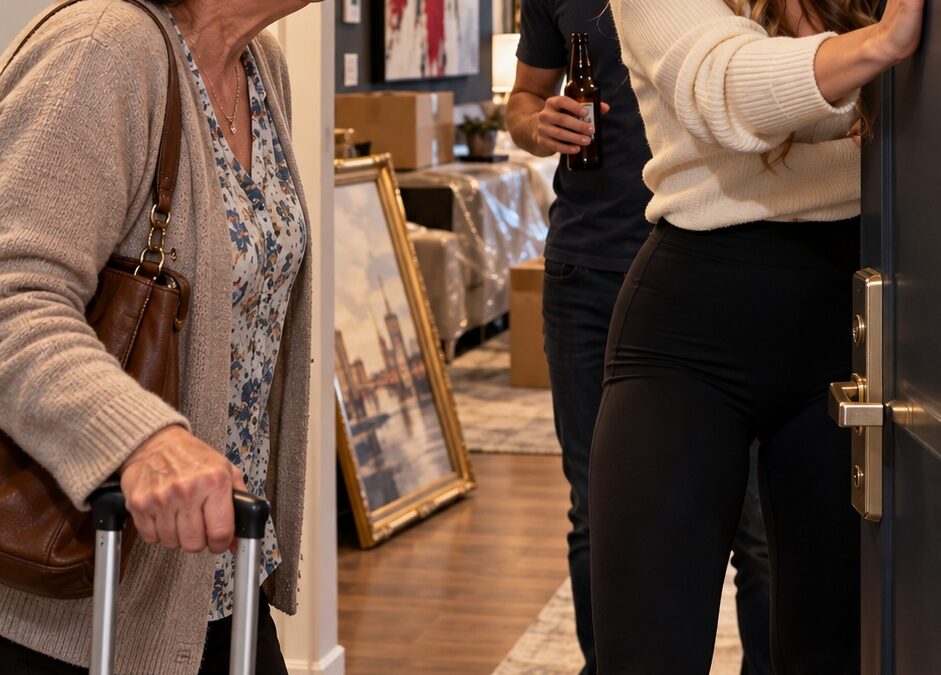
𝗣𝗔𝗥𝗧𝟮 𝗔𝗡𝗗 𝗙𝗨𝗟𝗟 𝗦𝗧𝗢𝗥𝗬 𝗜𝗦 𝗜𝗡 𝗧𝗛𝗘 𝗙𝗜𝗥𝗦𝗧 𝗖𝗢𝗠𝗠𝗘𝗡𝗧


I had made thirty years of mortgage payments.
I had served eight years on the building board.
I knew the maintenance staff.
I knew which pipe rattled in winter.
I knew that the elevator paused half a second too long at the third floor.
I knew the view from my bedroom window in every season.
I knew the patch of hallway carpet Bradley had ruined with grape juice when he was nine.
This was not a place I rented.
It was not Bradley’s childhood home in some symbolic sense.
It was legally mine.
I tried my key again.
It would not turn.
That was when the first cold wave went through me.
“You changed the lock.”
Bradley looked down.
“For security.”
“Security from what?”
Neither answered.
I pushed past Jennifer.
My shoulder struck hers harder than I intended.
The hallway inside stopped me cold.
For thirty-two years, the walls had been warm beige.
Now they were charcoal gray.
The watercolor painting of the Golden Gate Bridge Robert gave me on our twentieth anniversary was gone.
In its place hung an enormous canvas covered in red slashes.
“What have you done?”
Jennifer stepped beside me.
“We redecorated.”
“My painting.”
“It was dated.”
I walked toward the living room.
My grandmother’s oak rocking chair was gone.
The chair she had inherited from her own mother.
The one Bradley used to climb into when he wanted me to read Goodnight Moon.
Gone.
My cream sofa was gone.
The mahogany coffee table my father made by hand was gone.
In their place sat a black leather sectional and a glass-and-chrome table that made the room look like the lobby of an overpriced nightclub.
“Where is my furniture?”
Bradley came from the kitchen.
“We donated most of it.”
My knees nearly gave way.
“You what?”
“Some of it was junk, Mom.”
“My grandmother’s rocking chair was built in 1873.”
“It was falling apart.”
“No, it wasn’t.”
“Mom—”
“My father built that coffee table.”
He sighed.
“You’ve been gone three months.”
“I was caring for my dying sister.”
“We know.”
“I told you exactly when I was coming home.”
Bradley looked at Jennifer.
She went to the kitchen counter.
A manila folder rested there.
“Actually,” she said, “we need to talk about the home part.”
Something in her voice made my stomach tighten.
She removed several documents.
“Things changed while you were in Arizona.”
Bradley spoke with the measured patience people use with children.
“You transferred the apartment to me.”
I stared at him.
“No.”
“Before you left.”
“No.”
“You wanted everything organized in case something happened.”
“No.”
Jennifer slid a deed across the counter.
I put on my reading glasses.
My hands were shaking.
At the bottom was my name.
Scarlet Patterson.
The signature was close.
Very close.
But the S curled the wrong way.
I always looped it twice.
This one looped once.
“This is forged.”
Bradley closed his eyes.
“Mom.”
“I never signed this.”
“You were under enormous stress about Aunt Helen.”
“My sister was dying. I was not incompetent.”
Jennifer moved closer.
“Have you been confused lately?”
I looked at her.
“What?”
“Bradley said you called from Arizona asking where you put documents that were right in front of you.”
I had.
Twice.
Helen was dying of ovarian cancer.
I had gone weeks sleeping four hours a night.
I was handling medication schedules, hospice nurses, bills, cremation paperwork, insurance, and the emotional wreckage of watching my sister disappear.
Once I called Bradley because I could not find Helen’s insurance folder.
I had been holding it.
That was exhaustion.
Grief.
Not dementia.
“I want both of you out.”
Bradley looked at me.
“This isn’t your apartment anymore.”
“Yes, it is.”
“The county records say otherwise.”
“Then the county records are wrong.”
Jennifer smiled.
“Call the police.”
“I will.”
“Good.”
She leaned closer.
“Show them the deed with your signature.”
Her eyes hardened.
“Then explain you don’t remember signing it.”
I understood the trap.
If I said I did not remember, I sounded confused.
If I said forgery, I needed proof.
“I want my medication.”
Bradley rubbed his forehead.
“What medication?”
“My blood pressure pills.”
“I’ll get them.”
“I’ll get them myself.”
“Our bedroom now,” Jennifer said.
My bedroom.
The room Robert died in.
The room where Bradley crawled into bed after nightmares.
Now hers.
“No.”
I started toward the hall.
Jennifer picked up her phone.
“We should call security.”
I turned.
“You would call security on me?”
“You’re trespassing.”
I looked at Bradley.
He would not meet my eyes.
Five minutes later, Frank, one of the building security guards, stood in the doorway.
I had known him seven years.
His daughter once sold me Girl Scout cookies.
“Mrs. Patterson?”
“Frank.”
He looked miserable.
Jennifer handed him the deed.
“She’s confused.”
“Don’t say that.”
“She believes the apartment still belongs to her.”
“It does.”
Frank examined the papers.
Then me.
“I’ve seen you here for years.”
“Exactly.”
“But these records show Mr. Patterson owns the unit.”
“They forged them.”
Bradley shook his head.
“See?”
His voice softened.
“She’s making accusations.”
Frank’s expression changed.
Not suspicion.
Worse.
Pity.
“Ma’am.”
“Frank.”
“Maybe you should come downstairs.”
“No.”
“We can call somebody.”
“I don’t need somebody.”
I looked at my son.
“You’re really doing this?”
He stared at his phone.
Jennifer gave me a small wave.
“We’ll box up whatever personal things are left.”
The door closed.
The deadbolt clicked.
And I stood in the hallway holding one suitcase.
Everything I had taken to Arizona to care for Helen.
Everything else I owned was behind a door I could no longer open.
I sat on the bench outside the building for almost an hour.
The same bench where I used to wait for Bradley’s school bus.
The same bench where Robert and I drank coffee on spring mornings.
The same bench where I cried after his oncologist told us the cancer had spread to his liver.
People passed carrying groceries.
Briefcases.
Flowers.
Everyone headed toward homes they still belonged in.
At four-thirty that afternoon, I became homeless.
I had $198 in my wallet.
I checked into the Sunset Motel on Route 74.
Three nights.
One hundred thirty-five dollars.
The carpet looked like dried blood.
The room smelled of bleach, cigarettes, and something sour beneath both.
I sat on the edge of the bed.
For hours.
The television remained off.
I kept hearing Jennifer.
Did you get the owner’s permission?
The owner.
Me.
At seven the next morning, I called my bank.
My checking balance:
$53.19.
I thought I heard wrong.
Then I checked savings.
Zero.
My savings account had contained more than sixty-three thousand dollars.
Money Robert and I spent decades building.
Not wealth.
Security.
The difference between aging with choices and aging in fear.
I pressed zero until a representative answered.
Her name was Tamara.
“Mrs. Patterson, I see several large withdrawals.”
“I authorized none.”
“The latest was yesterday.”
“How much?”
“Eighteen thousand five hundred.”
My heart thudded.
“Who withdrew it?”
She paused.
“Bradley Patterson.”
“My son?”
“He has power-of-attorney access.”
“No.”
“Our records—”
“I never gave anyone power of attorney.”
“Documents were filed June fifteenth.”
I gripped the motel phone.
“I was in Arizona on June fifteenth.”
Silence.
“My sister was dying.”
“The documents show your signature and a notary seal.”
“They are forged.”
“If you’re alleging fraud, you’ll need a police report.”
“Freeze everything.”
“There is almost nothing left to freeze.”
Those words hurt in a way I did not expect.
Almost nothing.
Home.
Money.
Furniture.
All within three months.
Stolen by the person who used to sleep with his stuffed bear tucked under his chin.
I hung up.
Then remembered a business card in my purse.
Gerald Brennan.
Attorney.
Two years earlier he had updated my will.
My real will.
The one leaving everything to Bradley after my death.
Apparently my son had decided death was an unnecessary technicality.
Gerald’s office sat between a nail salon and a tax service.
His secretary fit me in immediately.
He listened.
Everything.
When I finished, he leaned back.
“This is elder financial abuse.”
Hearing the term made me flinch.
“Elder.”
“You’re sixty-seven.”
“I don’t feel elderly.”
“The statute doesn’t care.”
“Can you help?”
“I can try.”
He looked at the deed copy.
“The problem is proving ownership.”
“I have owned that apartment since 1993.”
“We need the original deed.”
“It’s in my apartment.”
“Which you cannot access.”
“Yes.”
Gerald made calls.
Two days later:
“Scarlet, county records show Bradley has owned that apartment for eight years.”
I laughed.
Impossible.
“I know.”
“How?”
“Someone altered the digital records.”
“What about the original?”
“The clerk says there is no paper deed under your name.”
“There is.”
“Then somebody removed it.”
His voice grew careful.
“Litigation could cost twenty or thirty thousand dollars.”
I looked around the motel room.
“I have sixty-three dollars.”
Gerald went silent.
“Let me work.”
I stayed one more night.
Then my credit card was declined.
Bradley had canceled it.
I called Paula.
My best friend for sixteen years.
We painted together.
Traveled together.
Had lunch every Thursday.
“Can I stay with you?”
Long pause.
“Scarlet…”
My stomach sank.
“What?”
“Jennifer called.”
Of course she did.
“She told me about your condition.”
“My what?”
“She said you may say some strange things.”
“Paula, they stole my home.”
Silence.
“My money.”
“Scarlet—”
“I’m telling you the truth.”
“She said you don’t remember signing documents.”
“I didn’t sign them!”
“Maybe you should get evaluated.”
“You think I have dementia?”
“I think you’re confused.”
That broke something.
I called three other friends.
Jennifer had called all of them.
She had prepared the battlefield before I even knew there was a war.
That night I slept in my Toyota in a parking garage.
My suitcase became my pillow.
My coat became my blanket.
The air grew colder after midnight.
I thought about Helen.
Three months earlier I had driven to Arizona because she called me crying.
“The doctor says six weeks.”
She lasted eleven.
I held her hand at the end.
She had almost nothing.
A rented home.
Clothes.
Medical debt.
I paid for her cremation with savings Bradley later stole.
Helen had always disliked him.
“That boy only calls when he wants something.”
“He’s busy.”
“He’s selfish.”
“He’s my son.”
“And that makes you blind.”
I was angry with her when she said it.
Now she was dead.
And right.
Five mornings into living in my car, I woke with crushing pain in my chest.
It moved down my left arm.
I tried breathing.
Could not.
My phone battery was dead.
I stumbled toward the parking attendant.
Chris.
College student.
Twenty maybe.
He took one look at me.
“Ma’am?”
“My chest.”
He called 911.
I had a mild heart attack.
NSTEMI.
The doctor said stress likely contributed.
“You’re lucky.”
I nearly laughed.
Four days in the hospital.
On day three, a social worker named Diane came into my room.
“Mrs. Patterson, we need to discuss discharge.”
“I don’t have anywhere to go.”
“I know.”
She sat.
“Your son contacted us.”
I felt my pulse rise on the monitor.
“What does he want?”
“He filed for temporary conservatorship.”
I stared.
“What?”
“He claims you’re unable to manage your financial and personal affairs.”
“He stole them.”
“Mrs. Patterson—”
“He stole everything, and now he wants a judge to give him legal permission to keep stealing it.”
Diane looked uncomfortable.
“He submitted evidence.”
“What evidence?”
“The incident at the apartment.”
“My apartment.”
“Security reported you attempting to enter property registered to him.”
“That is because he forged the deed.”
“He also submitted letters from two physicians stating you may have cognitive impairment.”
“What physicians?”
She checked.
Names I did not recognize.
“I haven’t seen either one.”
“There is a hearing Monday.”
“If he wins?”
“He controls finances.”
I already had none.
“Medical decisions.”
My stomach tightened.
“And?”
“Your living arrangements.”
That frightened me most.
Gerald called later.
“Scarlet, this got bigger.”
“How?”
“Jennifer’s father.”
“Harold?”
“Harold Chen.”
“Yes.”
“Retired judge.”
I knew that.
“Twenty-three years on the bench.”
Gerald continued.
“Still connected.”
My skin went cold.
“The county clerk handling your deed problem?”
“Yes?”
“Close to Harold.”
“So…”
“I think someone is manipulating the system.”
Not Bradley alone.
Jennifer.
Harold.
People who knew courts.
Records.
Notaries.
Procedure.
I had spent my adult life believing systems might be imperfect but essentially fair.
Suddenly I was on the wrong side of a machine controlled by people who understood every lever.
The hearing came Monday.
I wore the navy dress from Helen’s funeral.
Pearl earrings.
Good shoes.
I washed my hair in a gas station bathroom.
Slept sitting upright so the dress would not wrinkle.
Gerald met me outside court.
“Don’t lose your temper.”
“They are lying.”
“I know.”
“The judge doesn’t.”
Bradley testified.
I had become increasingly forgetful.
I called repeatedly from Arizona.
I appeared at “his” apartment making irrational claims.
I lived in my car.
I refused assistance.
Jennifer testified next.
Tears.
Soft voice.
Concern.
She said I broke into their apartment in the middle of the night.
I turned to Gerald.
“What?”
“She says police removed you.”
“That never happened.”
But she said it under oath.
Then she mentioned a restraining order.
Also nonexistent.
When it was my turn, I spoke.
“They forged my deed.”
“Evidence?”
“The original is inside my apartment.”
“Do you have copies?”
“No.”
“They drained my bank account.”
“Records show power of attorney.”
“Forged.”
“Evidence?”
“I was in Arizona when it was signed.”
The judge studied me.
Then reviewed the file.
“Mrs. Patterson, I am ordering a psychological evaluation.”
Relief almost came.
Then:
“Temporary conservatorship to Bradley Patterson for thirty days.”
“No.”
My voice came out too loudly.
The judge’s expression softened.
“You are living in your vehicle.”
“Because he stole my house.”
“You recently suffered a cardiac event.”
“Because he stole my house.”
“The evaluation will provide clarity.”
The gavel fell.
Bradley had legal authority over my life.
As Gerald and I left the courthouse, someone called me.
“Mrs. Patterson!”
Frank.
The security guard.
He looked frightened.
“I need to show you something.”
We met at a diner.
Coffee between us.
Untouched.
“I checked security footage.”
My heart lifted.
“And?”
“Bradley and Jennifer moved into your apartment while you were gone.”
“I know.”
“There’s more.”
He lowered his voice.
“I saw a notary arrive.”
I froze.
“They were signing documents.”
“Can you copy the footage?”
“I already did some.”
“Frank.”
“Bradley also took your mail.”
Bank statements.
Official envelopes.
Everything.
For the first time in weeks, hope entered me.
Six hours later, Frank called.
“I’m sorry.”
His voice shook.
“What happened?”
“They fired me.”
“Who?”
“Building management.”
“Why?”
“Improper access to surveillance.”
“That is your job.”
“They deleted the footage.”
My chest tightened.
“All of it?”
“Six months.”
He had children.
A wife.
He could not risk being sued.
I understood.
I hated that I understood.
County clerk?
Threatened harassment charges.
Notary?
Denied ever meeting me.
Building?
Erased footage.
Friends?
Convinced I was senile.
Every proof vanished.
Every witness frightened.
Every institution turned against me.
Then the parking garage evicted me too.
Complaint about sleeping in my vehicle.
That night, I sat in the driver’s seat and thought about giving up.
I pictured a care facility.
Medication.
A locked room.
Bradley visiting once a month.
Jennifer eventually selling whatever remained.
I heard Robert’s voice in memory.
“You’re tougher than you think, Scarlet.”
He used to say that whenever I panicked.
“You just haven’t had to prove it yet.”
I looked at my apartment building.
There was one thing they did not know.
A fireproof safe.
Robert installed it behind a removable closet panel.
Inside:
Original deed.
Birth certificate.
Title insurance.
Closing paperwork.
My mother’s ring.
Emergency cash.
Bradley never knew it existed.
I made a reckless decision.
Two in the morning.
I went home.
Not legally, according to the new records.
But home.
I had served on the building board.
I knew the maintenance access procedures.
The master key hung where it had always hung.
I took it.
Apartment 412.
The door opened.
Jennifer’s perfume hit me.
Their furniture.
Their life layered over mine.
I moved down the hallway.
Bedroom.
Bradley slept on Robert’s old side.
Jennifer slept on mine.
That sight made me sick.
Three steps to the closet.
Panel.
Safe.
Combination.
My birthday.
The day Robert proposed.
Our anniversary.
Click.
Blue folder.
There.
My deed.
I almost cried.
Then the bedroom light came on.
Jennifer stood in the doorway.
Phone in hand.
“I’m calling the police.”
“This is my home.”
“You broke in.”
Bradley woke.
His eyes found me.
Then he smiled.
“Mom.”
Not surprise.
Satisfaction.
It hit me.
They wanted this.
They had been waiting for me to do something desperate enough to make their story believable.
“Let me leave.”
“No.”
“Bradley.”
“You broke into our home.”
“I came for my property.”
He reached for my bag.
I held it.
“Let go.”
“No.”
We struggled.
The canvas tore.
Documents fell across the floor.
Jewelry.
Cash.
Birth certificate.
Deed.
Jennifer dropped immediately.
“Bradley!”
She grabbed my mother’s pearl necklace.
“She’s robbing us!”
“That is mine!”
Police arrived.
Jennifer cried.
Bradley produced an emergency protective order.
Another document I had never seen.
Claiming I assaulted Jennifer at a grocery store.
“Fake.”
The officer looked at me.
“Ma’am.”
“Everything is forged.”
“Please come with us.”
“They stole my home!”
Handcuffs closed around my wrists.
Bradley picked up the deed from the floor.
He smiled.
“Take care, Mom.”
I spent the night in a cell.
Breaking and entering.
Burglary.
Protective-order violation.
My public defender, Marcus Webb, advised a plea.
“Trespassing. Probation.”
“I’m innocent.”
“Property records disagree.”
“They’re fraudulent.”
“Can you prove it?”
No.
Bail:
Five thousand dollars.
I did not have five dollars.
Gerald paid it himself.
Anonymous at first.
Later I learned he put it on his personal credit card.
By the time I got out, I had missed the court-ordered psychological evaluation.
The judge granted permanent conservatorship to Bradley based on existing evidence.
That was the bottom.
No home.
No money.
Criminal charges.
Permanent conservatorship.
Homeless shelter.
A son legally authorized to make decisions for me after stealing everything I owned.
The shelter bed was narrow.
A woman beside me coughed most of the night.
Breakfast at six.
Out by eight.
Marcus called.
“Take the plea.”
“No.”
“You could get two to five years.”
“I won’t say I committed a crime for entering my own home.”
He sighed.
“Trial in six weeks.”
Wednesday afternoon, Gerald called.
His voice was different.
“Scarlet.”
“What?”
“I found something.”
I sat on the shelter steps.
“What?”
“Jennifer is married.”
I almost laughed.
“To Bradley.”
“No.”
My skin prickled.
“To a man named Todd Franklin.”
“What?”
“Nevada.”
Seven years earlier.
“No divorce.”
I stood.
“Then—”
“Her marriage to Bradley is invalid.”
Everything inside me changed.
“Are you certain?”
“I spoke to Todd Franklin.”
“Why didn’t he divorce her?”
“He thought she disappeared.”
“What does this change?”
“A lot.”
Bigamy.
Fraud.
False identity issues.
A marriage she used to sign documents.
A direct reason for prosecutors to investigate beyond my word against theirs.
Gerald filed emergency motions.
The district attorney opened a case.
Sandra Morrison called me herself.
“Mrs. Patterson, tell me everything.”
I did.
A week later:
“Charges are being filed.”
I could not speak.
“Against whom?”
“Jennifer Patterson.”
“Bradley Patterson.”
“Harold Chen.”
My breath stopped.
“And the notary, Craig Sullivan, is cooperating.”
“He denied knowing me.”
“He lied.”
“For immunity, he admitted Harold paid him twenty thousand dollars to forge your signature.”
I closed my eyes.
“He kept copies of documents before notarization.”
Blank forms.
Then forged signature.
“County clerk Phyllis Henderson is cooperating too.”
Fifteen thousand dollars.
Record alteration.
Paper deed removal.
My reality came back piece by piece.
Sandra continued.
“Your burglary charges are being dropped.”
I cried.
“Your conservatorship is under emergency review.”
More tears.
“Arrest warrants are active.”
The court dissolved the conservatorship.
Legally, I became myself again.
Think about that sentence.
I became myself again.
According to the law.
Police returned my personal documents.
My jewelry.
My mother’s ring.
Then another surprise.
Frank.
He had saved backup surveillance footage to a personal drive before the building deleted the system.
Bradley and Jennifer moving in.
Notary entering.
Mail being taken.
Everything.
Bradley was arrested at work.
Jennifer at a spa.
Harold surrendered.
Bradley tried blaming Jennifer.
She manipulated him.
She convinced him I was unstable.
Part of that may have been true.
But he took the money.
He changed the locks.
He drank beer while security removed me from my own home.
He had choices.
The district attorney understood that.
So did I.
When police finally let me enter Apartment 412 again, I thought I would feel triumphant.
Instead, I opened the door to emptiness.
Everything was gone.
Not Jennifer’s furniture.
Everything.
They had cleared the apartment.
Sold or destroyed what remained.
My grandmother’s rocking chair.
Father’s table.
Mother’s china.
Photo albums.
Robert’s clothes I had not yet been ready to donate.
Christmas ornaments.
Bradley’s school drawings.
Thirty-two years reduced to bare carpet and empty walls.
I stood in the living room.
Cried harder than I had during the court hearings.
Objects are objects.
People say that when they have never watched someone deliberately erase the physical evidence of their life.
That rocking chair could not be replaced.
Not because it was valuable.
Because four generations had sat in it.
The Golden Gate watercolor could be copied.
But Robert chose that exact one.
He carried it through San Francisco in the rain.
He hid it behind our luggage.
He watched my face when I opened it.
Gone.
But what hurt most was Bradley.
My child had helped do this.
Whatever version of him I wanted to remember had been buried beneath choices he made as an adult.
The trial moved quickly.
Bradley pleaded guilty.
Fraud.
Conspiracy.
Four years.
Jennifer fought.
Bigamy.
Fraud.
Conspiracy.
Eight to twelve years.
Harold took a deal.
Probation.
Fifty-thousand-dollar fine.
Permanent disbarment.
The man who once wore a robe and judged other people would never practice law again.
Civil court awarded me damages.
Assets seized.
Liens.
Settlement.
Legally, I won.
Financially, I recovered enough to rebuild.
Emotionally?
There was no verdict for that.
Three months later, I stood in the living room again.
New cream sofa.
Reclaimed-wood coffee table.
Not my father’s.
But beautiful.
New bookshelves.
New books.
Warm beige walls.
I painted my own watercolor of the Golden Gate Bridge.
Arthur, my art instructor later told me it was one of my best pieces.
I hung it exactly where Robert’s painting used to be.
Not as a replacement.
Nothing could replace it.
As a declaration.
I am still here.
Gerald calculated the final settlement.
After legal fees and costs, about $240,000 remained.
I used fifty thousand restoring the apartment and rebuilding basic belongings.
One hundred thousand went into a protected trust Gerald managed.
Nobody could touch it without safeguards.
The remaining ninety thousand?
I created the Scarlet Patterson Elder Protection Fund.
Free legal assistance for seniors facing financial exploitation.
Gerald joined the board.
Sandra Morrison joined too.
Within two months, we had already helped three people.
One widow whose nephew forged checks.
One retired teacher pressured into transferring her home.
One man whose daughter tried gaining guardianship after he refused to finance her business.
Every time we stopped one case, something in me healed.
Not because another person’s suffering justified mine.
Because pain felt less pointless when it became a warning light for someone else.
Frank was rehired.
We met every Thursday for coffee.
“I should have believed you.”
He said that the first time.
“You believed the papers.”
“I believed the system.”
“So did I.”
He wanted to study criminal justice.
I encouraged him.
Paula eventually called.
“I failed you.”
“Yes.”
She cried.
“I’m sorry.”
“I know.”
“Can we ever be friends again?”
I thought carefully.
“Maybe.”
She sounded relieved.
“Not the way we were.”
Silence.
“But perhaps differently.”
Trust does not always return in its original shape.
Sometimes forgiveness means opening a smaller door.
The apartment next to mine was rented by a young couple.
Sarah and Michael.
Baby girl.
When they moved in, I brought cookies.
Sarah smiled.
“You didn’t have to.”
“I wanted to.”
She reminded me of what I once hoped Jennifer would become.
Not a replacement daughter.
I stopped looking for replacements.
But a good neighbor.
A friend.
That was enough.
Then Bradley’s letter arrived.
State prison envelope.
My name written in handwriting I had recognized since he was a child.
I sat at the kitchen table for an hour before opening it.
Mom,
I don’t know how to say this except to say it. I’m sorry.
I stopped.
Breathed.
Continued.
Jennifer convinced him I would not miss the money.
That everything would eventually belong to him.
That taking it early was not really stealing.
Then he wrote:
But that isn’t true.
I knew it was wrong.
That mattered.
Not enough.
But it mattered.
He admitted greed.
Admitted he believed being my son gave him rights to my property.
Admitted he watched me be removed because choosing me meant giving up the life Jennifer promised him.
He did not ask forgiveness.
He wrote:
I destroyed the best person in my life because I wanted money.
I cried at that line.
Not because it healed me.
Because somewhere inside the criminal sitting in prison was the boy I once raised.
And he finally understood what the adult version of himself had done.
He hoped I could someday remember who he was before.
I read the letter three times.
Then tore it into small pieces.
Not dramatically.
Not angrily.
I simply wasn’t ready to carry his apology.
Maybe one day.
Not then.
Tuesday evenings became watercolor class.
My instructor, Arthur, was seventy-one and believed everyone could paint if they learned to look properly.
“Most people paint what they think a tree looks like.”
He told us.
“Paint the tree that is actually there.”
That felt like advice for more than watercolor.
I had spent years seeing Bradley as the son I thought he was.
Not the man actually standing in front of me.
At a student show, someone bought one of my paintings.
Seventy-five dollars.
I framed the check instead of cashing it.
The first money I earned after everything happened.
Not a settlement.
Not recovered funds.
Mine.
At the senior center, I taught financial safety.
The first class had eight people.
Then twenty-three.
Then we needed a larger room.
I taught practical things.
Never sign documents because a relative says, “It’s routine.”
Get independent legal advice.
Keep original deeds in secured locations.
Use transaction alerts.
Check credit reports.
Understand exactly what power of attorney grants.
Do not confuse family connection with automatic trust.
Do not allow anyone to isolate you from friends.
Most importantly:
If someone starts using your age against you every time you disagree, pay attention.
One Thursday, an eighty-year-old woman stayed afterward.
“My son keeps asking me to sign papers.”
“What papers?”
“He says estate planning.”
“Have you read them?”
“No.”
“Then don’t sign them yet.”
“He’ll be angry.”
“Let him be angry.”
Her eyes filled.
“I don’t want to believe he’d hurt me.”
“I understand.”
That was the hardest truth.
Most exploitation does not begin with strangers.
It begins with someone you love.
Someone whose betrayal seems so impossible that you explain away warning after warning rather than accept what you are seeing.
“Call an independent lawyer.”
I told her.
“Not his.”
She hugged me.
A week later, she returned.
“The papers transferred my house.”
I closed my eyes.
She had not signed.
Because she came to class.
Because my story existed.
That moment meant more than the civil award.
December came.
I woke one Saturday in my own bed.
Weak sunlight across the room.
For the first time in almost a year, I felt peace before I remembered pain.
That was new.
For months, consciousness arrived with fear.
Where am I sleeping?
How much money do I have?
Court today?
Medication?
Lawyer?
Now:
Coffee.
Art class Tuesday.
Frank Thursday.
Senior center.
Normal life.
Gerald called.
“Jennifer filed an appeal.”
My stomach tightened.
“Anything to worry about?”
“No.”
I exhaled.
“Bradley may be eligible for parole in eighteen months with good behavior.”
I waited for some feeling.
Fear?
Anger?
Longing?
Nothing immediate.
“How do you feel?”
Gerald asked.
“Fine.”
“Really?”
“Yes.”
“He isn’t my responsibility anymore.”
Gerald was quiet.
Then:
“That sounds healthy.”
He told me the fund had helped another woman.
Her daughter tried forcing her into a nursing facility to access her house.
We got an attorney involved.
The daughter backed off.
After the call, I sat by the window with coffee.
People passed below.
Shopping bags.
Dogs.
Children.
Someone carried a Christmas tree.
I thought about the woman who stood outside this apartment one year earlier.
Suitcase.
Confused.
Jennifer laughing.
Bradley drinking a beer.
That woman still believed some argument could make them remember she was his mother.
She did not yet understand the plan had begun months before.
The forged deed.
Bank withdrawals.
Power of attorney.
Calls to friends.
Medical claims.
Court strategy.
They were not improvising cruelty.
They were constructing a reality where every protest I made became evidence that I was unstable.
That is what frightened me most in retrospect.
They weaponized my reaction.
If I cried, I was unstable.
If I shouted, aggressive.
If I calmly accused them, paranoid.
If I lived in my car, incapable.
If I tried retrieving my deed, criminal.
If I said the records were forged, delusional.
Every attempt to defend myself became another piece of their narrative.
And for a while, it worked.
Police believed them.
Friends believed them.
A judge believed them.
Even institutions I had trusted believed them.
That nearly broke me.
Nearly.
But truth had one advantage Jennifer underestimated.
It did not need to remain hidden forever.
One notary talked.
One clerk talked.
Gerald kept digging.
Frank saved footage.
Todd Franklin existed.
Paper trails remained.
Greedy people believe systems can be controlled completely.
They forget systems are made of thousands of individual records and human beings.
One contradiction opens a crack.
One crack lets in light.
My life now was smaller in some ways.
No son calling on Sunday.
No Christmas with grandchildren I once imagined having.
No illusion that blood guarantees love.
But fuller in other ways.
Gerald.
Frank.
Sarah next door.
Arthur.
People at the senior center.
Sandra.
Even Paula, slowly finding her way back into my trust.
Family, I learned, is partly biology.
But belonging is behavior.
Who protects your dignity when protecting it costs them something?
Who believes you when believing you is inconvenient?
Who shows up?
Those people matter.
Bradley sometimes entered my thoughts.
Not the prison inmate first.
The child.
Four years old, asleep against Robert’s chest.
Seven, missing both front teeth.
Twelve, furious because I would not let him stay overnight at a friend’s house whose parents I had never met.
Eighteen, crying secretly after Robert’s diagnosis.
Twenty-two, hugging me after graduation.
Those memories were real.
So was what he became.
Both could exist.
I did not have to erase his childhood to hold the adult responsible.
That became important.
People asked me:
“How can a mother send her own son to prison?”
I never sent Bradley anywhere.
Bradley committed crimes.
A court sentenced him.
Motherhood did not require me to stand between him and consequences.
Love without accountability becomes permission.
I learned that too late.
Perhaps I had made excuses long before Jennifer.
Helen saw selfishness.
I called ambition.
Robert occasionally complained Bradley expected help without gratitude.
I called youth.
When he borrowed money and forgot to repay it, I said he was overwhelmed.
When he missed birthdays but called before needing favors, I defended him.
Nothing justified what he did.
But maybe the man who stole my apartment did not appear overnight.
Maybe I had spent years editing his flaws because mothers are talented editors when love is involved.
I no longer did that.
Truth first.
Even painful truth.
Especially painful truth.
One spring afternoon, Frank and I drank coffee downstairs.
He looked at me.
“Do you ever regret fighting?”
“No.”
“Even the arrest?”
“I regret breaking in.”
He raised an eyebrow.
“You needed the deed.”
“I could have been hurt.”
“Yes.”
“I could have made things worse.”
“You did make things worse.”
I laughed.
“Thank you.”
“You know what I mean.”
“I do.”
I no longer romanticized desperation.
The fact that the story ended in my favor did not make every choice wise.
I had been frightened.
Homeless.
Cornered.
I took risks.
Some nearly destroyed my case.
If I could advise the woman I had been, I would tell her:
Document sooner.
Tell more people sooner.
Get independent legal advice before signing anything.
Protect records.
But hindsight is a privilege survival gives you.
At the time, I did the best I could with fear sitting in the passenger seat.
The Elder Protection Fund grew.
Not huge.
But useful.
Gerald trained volunteer lawyers.
Sandra spoke at events.
Local banks asked us to help create fraud-awareness materials.
I resisted public speaking.
Then agreed once.
At a community center.
Sixty people.
I stood behind a podium.
“My name is Scarlet Patterson.”
My hands trembled.
“I lost my home to my own son.”
Silence.
“Not because I gave it to him.”
I continued.
“Because he and others convinced the legal system I was too old and confused to know what belonged to me.”
People listened.
Some cried.
Afterward, a man in his seventies approached.
“My daughter has my passwords.”
“Why?”
“She said it was easier.”
“Do you want her to?”
He hesitated.
“I don’t know.”
“Then that is where you start.”
Choice.
That is what elder abuse steals first.
Not money.
Choice.
The right to decide.
The right to say no without your age becoming evidence against you.
The right to be difficult.
Forgetful sometimes.
Emotional.
Imperfect.
Without someone turning normal human weakness into legal incompetence.
I forgot Helen’s insurance folder because my sister was dying.
That mistake became part of the argument that I could not manage my life.
Think about that.
Grief was used as evidence of dementia.
Living in my car after my home was stolen became evidence I could not maintain housing.
A heart attack caused by stress became evidence I could not care for myself.
The consequences of abuse were presented as proof I required the abuser’s control.
Once I understood that, I became furious all over again.
Then useful.
Anger is energy.
It can burn you.
Or power something.
I chose the second.
Paula and I took a short trip to the coast.
The first since everything happened.
We drove in awkward silence for twenty minutes.
Then she said:
“I was afraid.”
“Of me?”
“Of being wrong.”
I looked at her.
“If Jennifer was right, helping you might have made things worse.”
“And if I was right?”
Her eyes filled.
“You needed me.”
“Yes.”
“I’m sorry.”
“I know.”
She wiped her cheek.
“Why did you agree to come with me?”
“Because sixteen years deserve more than one terrible decision.”
She nodded.
“But?”
“But they don’t erase the decision.”
We spent the day walking near the water.
Not the friendship we had.
Something more cautious.
Perhaps more honest.
That was enough.
One year after I returned from Arizona, I opened my suitcase.
The same suitcase Jennifer mocked.
I had never unpacked the bottom pocket fully.
Inside was a hospital wristband from Helen’s hospice.
I held it.
Cried.
I had been so consumed by Bradley that I had barely grieved my sister.
I took her ashes from the small urn I had stored safely with Gerald after losing the apartment.
Then drove to Arizona.
Alone.
Not because I had no one.
Because I wanted to.
I scattered part of Helen’s ashes near a desert overlook she loved.
“You were right about him.”
I said aloud.
Wind moved through dry grass.
“I hate that you were right.”
I laughed through tears.
Then:
“I’m okay.”
That mattered too.
Healing was not only recovering from my son.
It was remembering the reason I had been gone in the first place.
Helen.
Love.
Caregiving.
Loss.
Jennifer and Bradley turned those three months into an opportunity.
I refused to let them own the memory of that time.
I had gone to Arizona because my sister needed me.
I had held her hand.
I had made soup she barely ate.
I had washed her hair.
Changed sheets.
Argued with insurance.
Sat beside her while she slept.
Read mystery novels aloud when morphine made concentration difficult.
She died knowing she was loved.
That was the truth of Arizona.
Not the forged paperwork back home.
I returned to my apartment with a small stone from the desert.
Placed it beside Robert’s photograph.
New objects began carrying memory.
That surprised me.
For months I believed losing old things meant losing history.
But memory attaches itself again.
The reclaimed table became the place Sarah’s baby took her first steps during a visit.
My new sofa became where Paula slept after we returned late from the coast.
My watercolor became the first piece I painted after surviving.
New furniture stopped feeling like evidence of loss.
It became evidence that life kept accepting new chapters whether I wanted it to or not.
Another letter from Bradley arrived.
I did not open it.
I gave it to Gerald.
“Keep it.”
“For how long?”
“I don’t know.”
“You want me to destroy it?”
“No.”
That surprised me.
Not forgiveness.
Possibility.
I was not ready.
But I no longer needed to make a permanent decision every time pain knocked.
Sometimes:
Not yet.
Is enough.
At Christmas, Sarah invited me next door.
Her little girl handed me a wrapping-paper tube and shouted something incomprehensible.
Michael carved ham badly.
Sarah burned rolls.
Everyone laughed.
I remembered Jennifer.
Perfect table.
Perfect clothes.
Perfect presentation.
Her life had always been arranged like a photograph.
But warmth cannot be styled.
Trust cannot be staged.
Neither can belonging.
I went home that night and sat beneath my own small Christmas tree.
Robert’s old ornaments were gone.
So I had bought new ones.
One was a tiny house.
One a paintbrush.
One a suitcase.
That last one made me laugh when I saw it.
I hung it in the center.
The suitcase.
The object Jennifer looked at when she asked whether I had permission.
Permission.
That word had followed me.
Did I have permission to enter?
To access my money?
To control my medical care?
To sleep somewhere?
To retrieve my documents?
To speak in court?
To decide whether I was sane?
The entire scheme depended on shifting authority away from me.
Jennifer’s cruelty was not really about an apartment.
It was about convincing everyone—including me—that age had transformed me from an adult into property someone else should manage.
I rejected that.
Completely.
I was sixty-seven.
Then sixty-eight.
I occasionally forgot where I put my glasses.
Sometimes they were on my head.
I walked into rooms and forgot why.
I wrote appointments on a calendar.
My knees hurt after stairs.
None of that made me incompetent.
None of it made me disposable.
None of it transferred ownership of my life.
Aging is not surrender.
I learned to say that in every class.
One Tuesday, after financial-safety class, a woman asked:
“How do you know when helping becomes controlling?”
Good question.
I thought.
“Ask who has the final choice.”
“If my daughter handles my bills?”
“Do you want her to?”
“Yes.”
“Can you stop the arrangement?”
“Yes.”
“Can you see every statement?”
“Yes.”
“Can you question her without being insulted or threatened?”
“Yes.”
“Then that sounds like help.”
She nodded.
“And control?”
“When your no stops mattering.”
That was what happened to me.
My no stopped mattering.
I never signed that deed.
No matter.
I never authorized withdrawals.
No matter.
I never consented to conservatorship.
No matter.
They tried to construct a world where consent could be manufactured after the fact.
That is why my fund mattered.
Not simply recovering money.
Protecting consent.
Gerald once asked whether I wanted Bradley removed entirely from my will.
“Yes.”
No hesitation.
“Who are your beneficiaries now?”
I thought.
A portion to the Elder Protection Fund.
Some to charity.
A small gift to Sarah’s daughter for education.
Gerald looked at me.
“Nothing to Bradley?”
“No.”
“What if you reconcile someday?”
“Then reconciliation can be emotional.”
I signed.
“Inheritance is not proof of love.”
That sentence would have shocked the woman I once was.
I used to believe everything naturally flowed to a child.
House.
Savings.
Jewelry.
Legacy.
Bradley believed that too.
That belief helped him justify theft.
He wrote it himself.
He was going to get it eventually.
So why wait?
Because I was still alive.
Because inheritance begins after death.
Until then, assets belong to the person who earned them.
Simple.
But entitlement has an amazing ability to make theft sound like scheduling.
Bradley’s parole hearing eventually approached.
Gerald told me I could submit a victim statement.
I stared at the form.
For days.
I did not ask for harsher punishment.
I did not ask for mercy.
I wrote:
What my son did did not merely cost me money. It temporarily cost me legal ownership of my own identity. He participated knowingly in a plan that made my age, grief, homelessness, and medical crisis into evidence against me. I have rebuilt my life. Whether he has rebuilt his character is for him to prove through his actions.
That was all.
I refused to make prison the center of my healing.
Bradley’s punishment belonged to the justice system.
My future belonged to me.
Frank eventually enrolled in night school.
The day he received his acceptance letter, he brought it to coffee.
“You did this.”
“No.”
“You encouraged me.”
“You were already thinking about it.”
“Still.”
“Then buy me coffee when you graduate.”
“Deal.”
He did.
Two years later.
Criminal justice degree.
His wife and children attended.
So did I.
When they called his name, I clapped until my hands hurt.
There are families you inherit.
There are families you discover because something terrible reveals who is willing to stand beside you.
Frank once escorted me out of my own home.
Later he risked his job to help prove the truth.
People are allowed to learn.
That is different from pretending harm did not happen.
One does not require the other.
My life continued.
Art.
Classes.
Legal fund.
Coffee.
Small trips.
Ordinary mornings.
The greatest luxury became ordinary mornings.
No court.
No police.
No social workers questioning capacity.
No motel ceiling.
No sleeping upright in a car.
Just coffee.
Sunlight.
Calendar.
Choice.
Some mornings I sat by the window and watched the building entrance.
People coming home.
Suitcases.
Grocery bags.
Children.
I thought about the first day.
Jennifer blocking my door.
“Did you get the owner’s permission?”
If I could return to that hallway, I would not change the answer.
At the time, I was too stunned to give one.
Now I would look directly at her and say:
“I am the owner.”
Not only of Apartment 412.
Of myself.
That is what they tried hardest to steal.
And what I fought hardest to recover.
Bradley may eventually leave prison.
He may become better.
He may not.
Jennifer may serve her sentence and spend the rest of her life blaming everyone else.
Harold may tell himself he was protecting his daughter.
People can build comfortable lies around terrible behavior.
I no longer need to enter those lies and argue.
That freedom took longer to recover than the apartment.
I used to imagine healing meant reaching a point where the story no longer hurt.
It still hurts.
Sometimes.
The difference is pain no longer makes decisions for me.
I can remember Bradley at eight without excusing Bradley at forty.
I can miss the son I thought I had without inviting the man he became back into my finances or home.
I can love the child in memory and keep the adult outside my boundaries.
Both are true.
That complexity no longer scares me.
On my seventieth birthday, the Elder Protection Fund held a small dinner.
Nothing extravagant.
Gerald brought cake.
Sandra brought flowers.
Frank and his family came.
Paula came.
Sarah brought her daughter, now old enough to run through my apartment demanding cookies.
Arthur brought a framed watercolor mat.
He had secretly collected small paintings from everyone in my class.
At dinner, Gerald stood.
“Scarlet hates speeches.”
“I do.”
“So I’ll keep this brief.”
“Please.”
Everyone laughed.
He looked at me.
“Three years ago, you came into my office with two hundred dollars, a suitcase, and a story nobody wanted to believe.”
My throat tightened.
“Today, the fund created because you refused to disappear has assisted thirty-seven seniors.”
Applause.
I shook my head.
“No.”
Gerald looked confused.
“Not because I refused to disappear.”
“What would you call it?”
I thought.
“Because enough people eventually refused to look away.”
That was the truth.
I fought.
Yes.
But nobody survives everything alone.
Gerald.
Frank.
Sandra.
Notary cooperation.
Clerk cooperation.
Even strangers.
Chris calling the ambulance.
The pharmacist finding cheap medication.
People mattered.
Strength did not mean solitary endurance.
Strength sometimes meant allowing someone else to help when pride wanted you to pretend you were fine.
After dinner, Sarah’s daughter climbed onto my lap.
She pointed toward my Golden Gate painting.
“You made that?”
“Yes.”
“Why?”
I smiled.
“Because I lost another one.”
“Where?”
“Long story.”
She considered that.
“Make another.”
Children simplify things beautifully.
I laughed.
“I did.”
Exactly.
I did.
Things were lost.
I made something new.
Not identical.
New.
That became my life.
Not restoration.
Reconstruction.
There is a difference.
Restoration tries to return to before.
I could never return.
Robert was dead.
Helen was dead.
Bradley’s betrayal existed.
Grandmother’s rocking chair was gone.
I had slept in jail.
Been called incompetent.
None of that could be erased.
Reconstruction accepts the ruins.
Then asks:
What can still be built?
A protected trust.
A new home inside an old apartment.
A legal fund.
A painting.
Different friendships.
Boundaries.
Purpose.
Myself.
One December morning, years after everything, I found the small suitcase ornament.
I held it.
Smiled.
Then hung it on the tree.
I no longer saw Jennifer’s face.
I saw mine.
Standing in that hallway.
Exhausted from Arizona.
Grieving Helen.
Still trusting Bradley.
Still believing home was a permanent thing because I had paid for it.
That woman did not yet know how much she could survive.
Heart attack.
Homelessness.
Court defeat.
Arrest.
Conservatorship.
Betrayal.
She would survive all of it.
Not elegantly.
Not without mistakes.
Not without fear.
But she would.
That is what I wanted to tell her.
Not:
Don’t be afraid.
Fear was appropriate.
Not:
Everything will be okay.
For a long time, it wasn’t.
I would tell her:
Keep going.
One truthful step.
Then another.
Get the record.
Make the call.
Take the medication.
Find the lawyer.
Tell the story.
Refuse the false confession.
Refuse the plea if it isn’t true.
Refuse to let someone else’s version of you become your own.
Keep going.
That is how I got here.
My apartment is warm tonight.
Cream sofa.
Reclaimed table.
My paintings.
Robert’s restored photographs.
Helen’s desert stone.
The tiny suitcase ornament waiting for Christmas.
Outside, the city moves beneath my windows.
Inside, everything is quiet.
Mine.
Not because a deed says so.
Though it does.
Not because county records finally say so.
Though they do.
Not because a court restored my rights.
Though it did.
Mine because I choose what happens here.
Who enters.
Who does not.
What hangs on the walls.
Where my money goes.
Which papers I sign.
Whose calls I answer.
Whom I forgive.
Whom I do not.
That is ownership.
And that is the part Bradley and Jennifer never understood.
They thought taking my apartment would make me homeless.
They thought taking my money would make me helpless.
They thought calling me confused would make me disappear.
They thought age made me easy.
They were wrong.
At sixty-seven, I lost nearly everything.
By seventy, I understood something I should have known all along.
My power was never stored in a bank account.
It was never in the deed.
It was never in Bradley’s approval.
It was never in whether Jennifer respected me.
My power was in my ability to decide that the story was not finished simply because someone else had written a terrible chapter.
I still think about my son.
Of course I do.
Mothers do not erase thirty years of love because four years of prison appear on a sentence.
But love no longer means access.
Love no longer means inheritance.
Love no longer means believing excuses.
Love no longer means surrender.
If Bradley becomes a better man, I hope he does it because being better matters.
Not because he expects the apartment back.
He will never own Apartment 412.
He will never own the trust.
He will never own me.
That is not revenge.
It is clarity.
And clarity, I have learned, is one of the most peaceful things a person can possess.
So when I remember Jennifer standing in my doorway with that little smirk and asking:
“Old lady, did you get the owner’s permission?”
I finally know the answer she deserved.
No.
I did not ask the owner for permission.
Because the owner was standing right in front of her.
Suitcase in hand.
Tired.
Grieving.
Terrified.
But still standing.
And she always would be.




