𝗙𝗨𝗟𝗟 𝗦𝗧𝗢𝗥𝗬: “Hey, Old Woman! Who Let You Do That?” My DIL Slapped My Hand 22 Times as I Tried to Open the Fridge…
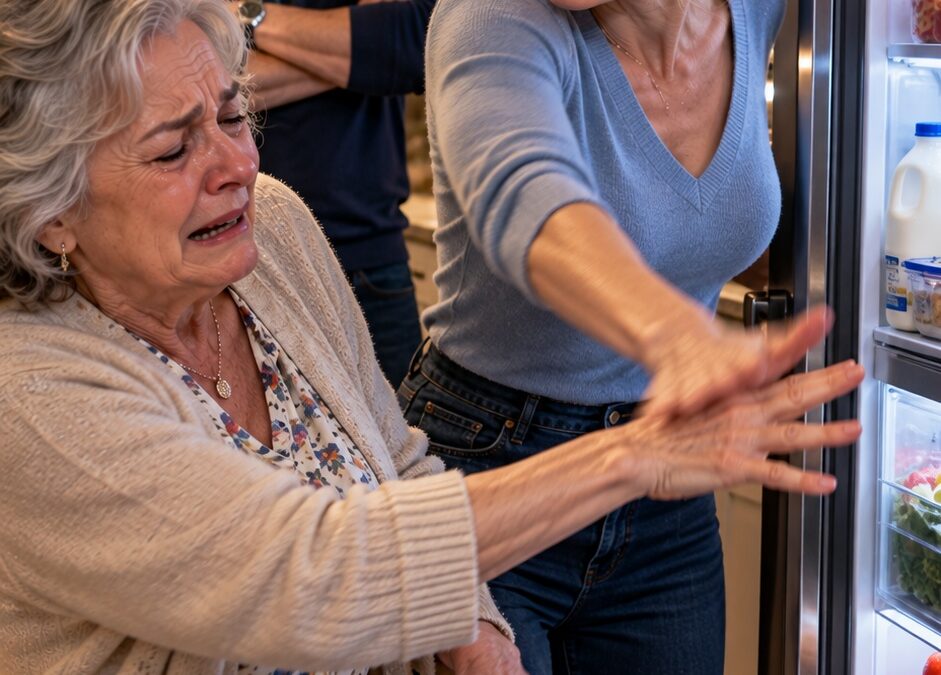
𝗣𝗔𝗥𝗧𝟮 𝗔𝗡𝗗 𝗙𝗨𝗟𝗟 𝗦𝗧𝗢𝗥𝗬 𝗜𝗦 𝗜𝗡 𝗧𝗛𝗘 𝗙𝗜𝗥𝗦𝗧 𝗖𝗢𝗠𝗠𝗘𝗡𝗧


My only child.
He had his arms crossed.
He did not stop her.
Did not say:
“That’s my mother.”
Did not say:
“Don’t touch her.”
He simply watched.
“You can have water.”
Brenda finally said.
“And crackers.”
My stomach cramped.
“I’m hungry.”
“You had dinner.”
“No.”
My voice sounded weak even to me.
“You gave me six crackers.”
Brenda looked at Scott.
Then laughed.
“See?”
She turned back toward me.
“You don’t even remember eating.”
“I remember.”
“Apparently not.”
Scott finally spoke.
“Mom, you need to stop fighting us.”
“Scott—”
“Brenda is trying to take care of you.”
I stared at the son I had raised.
The little boy who used to crawl into my bed during thunderstorms.
The teenager who cried when our golden retriever died.
The young man who called every Sunday after leaving for college because he knew I worried.
That man appeared to be gone.
“My wife owns this house now.”
He said.
“You signed it over.”
“This is still my home.”
Brenda smiled.
“No, Darcy.”
She had started calling me by my first name instead of Mom months earlier.
Sometimes, when she was especially cruel, she called me old woman.
“This is our home.”
She reached into the pantry.
Tossed a sleeve of saltine crackers onto the counter.
“Take these.”
Then filled half a glass with tap water.
“Go downstairs.”
I picked them up.
My hand trembled.
The skin across my knuckles was already swelling.
Scott looked away.
That somehow hurt more than the slaps.
I walked to the basement door.
Before I stepped down, Brenda called after me.
“And don’t come back up tonight.”
I did not answer.
The basement had once been Gerald’s workshop.
My husband.
Forty-two years married.
He kept tools along one wall and tomato seedlings beneath grow lights every spring.
After he died, Scott and Brenda cleared everything out.
Then they cleared me out.
First I lost the master bedroom.
Then the guest room.
Then most of the house.
Now I slept in what had been a storage space behind the furnace.
Twin bed.
Thin mattress.
Broken dresser.
Cold concrete floor.
A lamp that flickered if I touched the cord wrong.
I sat on the bed.
Ate one cracker.
Then another.
Slowly.
Trying to fool my stomach into believing six crackers were food.
My hand throbbed.
I held it beneath the lamp.
One welt.
Two.
Five.
Nine.
Fourteen.
Eighteen.
Twenty-two.
Some were already darkening.
I stared at them until the room blurred through tears.
Six months earlier, I had not been living like this.
Six months earlier, I had been Mrs. Gerald Peterson.
Sixty-five years old.
Widow only in the technical future.
Homeowner.
Church member.
Friday-night card player.
Tomato gardener by marriage.
A woman with neighbors who waved when I collected the mail.
Gerald and I had built a quiet, ordinary life outside Columbus, Ohio.
Three-bedroom ranch house.
Mortgage paid off.
His pension from the electric company.
My Social Security.
Savings.
Nothing extravagant.
Enough.
Then one Wednesday morning in April, Gerald walked into the backyard carrying a small tray of tomato seedlings.
He never came back inside.
I found him beside the garden bed.
At first, I thought he had fallen.
Then I touched his face.
Cold.
I remember screaming his name.
After that, everything became fragments.
Ambulance.
Neighbors.
Funeral home.
Casseroles.
Flowers.
Death certificates.
People telling me to call if I needed anything.
People gradually returning to their own lives.
Forty-two years ended in one heartbeat.
I stopped sleeping.
Stopped eating correctly.
Dr. Hollstead prescribed medication for depression.
Then sleeping pills.
They helped.
Maybe too much.
Days blurred.
I would wake at noon and forget whether I had eaten breakfast.
I left laundry in the machine.
Once I found milk in a kitchen cabinet.
That terrified me.
Scott drove down from Cleveland every weekend.
At first, he seemed like my salvation.
“Mom, you shouldn’t be alone.”
“I’m fine.”
“You’re not eating.”
“I eat.”
“Toast isn’t dinner.”
He cleaned.
Paid bills.
Organized mail.
Brenda came too.
She held my hand.
“You’ve been through trauma.”
She said.
“You need to let family help.”
I trusted them.
Why wouldn’t I?
Scott was my son.
Two months after Gerald died, they introduced the idea of estate planning.
Brenda had a friend.
A lawyer named Harold Tomkins.
“Just temporary arrangements.”
Scott said.
“What arrangements?”
“Moving the house into a family trust.”
“Why?”
“Protection.”
Brenda sat beside me on the couch.
“If you fall.”
“If you get sick.”
“If probate becomes complicated.”
“It’s smarter to handle these things now.”
“I’m not dying.”
“Of course not.”
She smiled.
“But responsible families plan.”
Then they raised other possibilities.
Power of attorney.
The deed.
Financial accounts.
All phrases I understood individually but could barely process together.
I was medicated.
Grieving.
Sleeping four hours some nights and fourteen hours others.
I wanted the conversation to stop.
Scott squeezed my shoulder.
“Trust me.”
So I did.
Harold came one afternoon.
Placed documents across my kitchen table.
He even set up a camera.
That should have reassured me.
Instead, it later became one of their strongest weapons.
“Mrs. Peterson, are you signing voluntarily?”
“Yes.”
“Do you understand these documents?”
“Yes.”
“Has anyone forced you?”
“No.”
“Do you want your son to help manage your property?”
“Yes.”
My voice sounded slow.
My eyes looked glazed.
But I answered correctly.
Because every time I hesitated, Scott explained.
“This protects you.”
I believed him.
I signed the quitclaim deed.
Power of attorney.
Trust papers.
Bank authorizations.
And more.
I remember almost none of it.
By August, Scott and Brenda moved into the house.
At first, I was grateful.
The rooms no longer felt empty.
Brenda cooked.
Scott handled bills.
Someone asked whether I had taken my medication.
Then Brenda said the master bedroom was too large for one person.
“You don’t need all that space.”
She said.
“Scott and I have two wardrobes.”
I moved into the guest room.
A month later, Brenda needed an office.
“I work remotely twice a week.”
Another reasonable request.
I moved into the basement.
Then came the rules.
I could not use the kitchen without permission.
Could not invite neighbors over.
Could not answer the front door.
Could not watch television in the living room after seven.
Could not use the washer unless Brenda approved.
Could not call friends unless Scott knew whom I was talking to.
At first, they framed everything as routine.
“You need structure.”
“You’re still recovering.”
“You get confused.”
I protested.
Then they reminded me of things I really had forgotten.
The milk in the cabinet.
A missed appointment.
A check I wrote twice.
Every mistake became evidence.
Eventually, I stopped trusting my own memory.
That was how they defeated me before I knew there was a battle.
The night of the twenty-two slaps changed that.
At two in the morning, hunger woke me.
Real hunger.
The hollow pain of a body not being fed enough.
I lay in bed listening.
Silence.
I climbed the stairs.
One at a time.
Opened the kitchen door.
Dark.
Scott snored faintly down the hallway.
I crossed to the refrigerator.
Pulled it open.
Light flooded the kitchen.
Leftover chicken sat on a plate.
I reached.
The overhead light snapped on.
“Well, well, well.”
I froze.
Brenda stood in the doorway wearing a bathrobe.
Her phone was raised.
Recording.
“Look at this.”
She spoke directly into the camera.
“The old woman is stealing food from my refrigerator.”
“Your refrigerator?”
I whispered.
Scott appeared.
His phone was up too.
“Mom.”
He shook his head.
“This is exactly what we’re worried about.”
“I’m hungry.”
“You ate dinner.”
“No.”
“Yes, you did.”
Brenda said brightly.
“A complete dinner.”
“I had crackers.”
She looked at Scott.
“See how confused she is?”
“I’m not confused.”
“Mom.”
Scott pointed his camera toward me.
“What day is it?”
I opened my mouth.
Nothing came.
Tuesday?
Wednesday?
In the basement, without television, visitors, or a normal routine, days really had blended together.
“See?”
Brenda said.
“She doesn’t know.”
They questioned me for minutes.
What month?
Who was president?
When did Gerald die?
What did I eat?
Where was I?
Some answers I knew.
Some I fumbled because I was exhausted and frightened.
Brenda kept filming.
Then her face changed when she lowered the phone.
Cold.
Efficient.
“We need to discuss professional care.”
My stomach tightened.
Scott nodded.
“A facility.”
“No.”
“Mom.”
“No.”
“Somewhere with nurses.”
“I don’t need nurses.”
“Somewhere safe.”
I looked from him to Brenda.
Then suddenly understood.
The videos.
The restrictions.
The humiliation.
The legal documents.
They were building a record.
A story.
Not Darcy Peterson, grieving widow.
Darcy Peterson, incompetent old woman.
Then another thought hit.
Gerald’s life insurance.
Three hundred fifty thousand dollars.
The check had arrived the previous week.
It had gone into an old joint account.
Years earlier, Gerald had added Scott to that account for emergencies.
No one ever removed him.
“You took the insurance money.”
I whispered.
Scott did not answer immediately.
That was answer enough.
“It was in a joint account.”
He finally said.
“That was for me.”
“It’s being used for your care.”
Brenda added.
“Facilities are expensive.”
I gripped the counter.
“You already withdrew it?”
Scott’s face remained blank.
“All of it.”
I almost fell.
Gerald worked decades for that money.
He believed it would protect me if he died first.
And my own son had emptied it.
That night, I understood they had not simply become cruel.
They had planned.
Maybe not every detail from the first day.
But enough.
By morning, something inside me hardened.
I still had a cell phone.
Hidden.
They believed they had confiscated my primary phone weeks earlier.
They did not know about the older one I kept inside the broken dresser drawer.
I called Gerald’s brother.
Frank.
He answered on the third ring.
“Darcy?”
He sounded shocked.
“I’ve been trying to reach you.”
“Frank.”
My voice broke.
“I need help.”
“What happened?”
“Come get me.”
“Now?”
“Please.”
I told him everything in a whisper.
The deed.
Money.
Food.
Basement.
Slaps.
Nursing home.
Frank became very quiet.
“I’m coming.”
“Two hours.”
“Pack whatever you can.”
“Don’t let them know.”
For the first time in months, I felt hope.
I returned upstairs.
Brenda and Scott ate eggs and bacon.
Blueberries.
Toast with butter.
Orange juice.
Brenda placed two dry pieces of toast in front of me.
I ate.
Then I made a mistake.
I smiled.
Brenda noticed.
“What are you smiling about?”
I looked at her.
Months of humiliation boiled into courage too quickly.
“I know what you’re doing.”
Scott lowered his phone.
“What?”
“You tricked me.”
“You took Gerald’s money.”
“You want me declared incompetent.”
“And I’m leaving today.”
Silence.
Then Brenda laughed.
Scott joined her.
Not nervous laughter.
Delighted laughter.
Brenda walked to the counter.
Picked up a folder.
“Leaving?”
She spread documents across the table.
“The house you gave us?”
My signature.
Everywhere.
“The trust?”
Another page.
“The power of attorney?”
Another.
Scott pulled up the signing video.
There I was.
Glazed eyes.
Slow voice.
“Yes.”
“Yes.”
“Yes.”
Brenda leaned toward me.
“You can leave anytime.”
She whispered.
“The door is right there.”
“But you leave with nothing.”
I stared.
“No house.”
“No money.”
“You own nothing.”
“The clothes on your back?”
She shrugged.
“We could argue those are ours too.”
My hope collapsed.
Then my hidden phone rang downstairs.
Scott heard.
He found it.
Read Frank’s name.
“You called Uncle Frank?”
He threw the phone onto the floor.
Stomped it.
Glass cracked beneath his shoe.
“No more phone.”
An hour later, Frank arrived.
I tried to reach the door.
Brenda shoved me into a kitchen chair.
Her nails dug into my shoulder.
“Make one sound.”
She whispered.
“And your life gets worse.”
Scott met Frank outside.
I could hear pieces.
“Mom isn’t well.”
“Confused.”
“Possible dementia.”
“She’s paranoid.”
Frank demanded to see me.
Scott refused.
Calmly.
Politely.
Like a worried son protecting a fragile mother.
Finally, Frank said:
“I’m calling Adult Protective Services.”
Scott responded:
“Please do.”
“We want help.”
That was how confident he was.
Frank left.
Brenda smiled at me.
“Strike one.”
Two days later, Adult Protective Services came.
Her name was Joan Chen.
Mid-forties.
Tired eyes.
Clipboard.
Scott and Brenda transformed the house before she arrived.
Fresh flowers.
Bread baking.
Refrigerator stocked.
My basement room suddenly had a heater.
Colorful quilt.
Books.
Small television.
Lamp.
They let me shower.
Gave me clean clothing.
Joan interviewed me alone.
Or tried to.
“They took my house.”
I said.
“They took $350,000.”
“They barely feed me.”
“They hit me.”
I showed my bruised hand.
Joan leaned closer.
Then Brenda appeared.
“Oh.”
She sighed.
“Those bruises.”
She produced edited video.
In it, I looked frantic near the refrigerator.
Brenda appeared to be gently restraining me.
The slaps were cut.
The context erased.
“She gets agitated around food.”
Brenda explained.
“We found food hidden in her room.”
A lie.
“She forgets she ate.”
Another.
Joan reviewed the deed.
Power of attorney.
Signing video.
Everything looked proper.
Then the stocked kitchen.
Then my freshly staged basement.
Her face softened toward me in the way people look at someone they pity but do not believe.
“Mrs. Peterson.”
She said.
“I don’t see evidence of neglect.”
“They staged this.”
“Your son appears to be providing care.”
“He is stealing from me.”
“The house was transferred voluntarily.”
“I didn’t understand.”
“But you stated on video that you did.”
I started crying.
Wrong move.
Her expression changed.
Compassion.
Not belief.
“You’re fortunate to have family.”
She said.
Many elderly people had no one.
I almost laughed.
After she left, Brenda came downstairs.
“Strike two.”
That evening, they forced another decision.
Shady Pines.
An assisted-care facility.
“I’m not going.”
Scott placed documents in front of me.
Psychiatric evaluation.
Depression.
Possible cognitive decline.
Sleeping medication.
Antidepressants.
Videos.
APS report.
Power of attorney.
A complete package.
Brenda smiled.
“Sign voluntarily.”
“Or?”
Scott looked at me.
“We’ll petition the court.”
“And have you placed involuntarily.”
I searched his face for my son.
Could not find him.
I signed.
One week before they moved me, I tried escaping.
At two in the morning, I slipped outside.
Walked three miles in slippers and a thin sweater.
October cold cut through me.
I reached my friend Martha’s house.
Twenty years of friendship.
Surely she would know.
She opened the door.
“Darcy?”
I told her everything.
She listened.
Then her expression became uncomfortable.
“Scott came here.”
My heart sank.
“He said you might do this.”
“No.”
“He said you were paranoid.”
“I’m not.”
“He said you would say that too.”
She reached for the phone.
I begged.
She called Scott.
Fifteen minutes later, he arrived with Brenda.
Blanket.
Concerned voices.
Perfect performance.
“She wanders.”
Brenda told Martha.
“The doctor warned us.”
Martha looked at them with sympathy.
“You poor things.”
Taking care of an elderly parent is such a burden.
They drove me home.
Brenda turned around in the passenger seat.
“One week.”
She whispered.
“Then Shady Pines.”
I stopped fighting.
For a while.
Shady Pines looked tired before I even entered.
Cracked parking lot.
Gray walls.
Wheelchairs lined in corridors.
Inside smelled of disinfectant layered over something older and sadder.
My room held four beds.
Helen had dementia and screamed for hours at night.
Margaret spoke to people who did not exist.
Betty believed she was still living in her childhood home.
I had a bed by the window.
That was my world.
Scott kissed my forehead.
“Bye, Mom.”
Then left.
The routine swallowed me.
Breakfast.
Pills.
Dayroom.
Lunch.
Pills.
Television.
Dinner.
Pills.
Bed.
I tried explaining.
Every staff member already knew the story Scott had given them.
“My mother has paranoid delusions.”
“She believes we stole from her.”
“She gets confused.”
The chart became more powerful than my voice.
Medications made my thoughts foggy.
Then the fog became evidence that the diagnosis was correct.
I stopped knowing dates.
Lost weight.
Stopped talking.
A nursing assistant named Clare eventually noticed.
Young.
Kind eyes.
“You’re different.”
She said.
“How?”
“You’re not confused.”
“You’re sad.”
I cried.
I told her everything.
Clare believed me.
Her grandmother had suffered financial abuse too.
She found an elder-law attorney.
Patricia Brennan.
Patricia came pretending to be my niece.
Listened.
Reviewed documents.
Returned one week later.
Her face told me before her words did.
“Everything is technically legal.”
My chest hollowed.
“The deed?”
“Properly executed.”
“Power of attorney?”
“Valid when signed.”
“The insurance?”
“Joint account.”
“So I lose?”
“You could challenge it under undue influence.”
“Then do it.”
“It would be extremely expensive.”
She needed a fifteen-thousand-dollar retainer.
I had nothing.
Scott had everything.
Worse, the facility recorded the meeting.
My emergency contact received notice.
Scott and Brenda came the next day.
Furious.
Within hours, I was transferred into locked memory care.
Not assisted living.
Memory care.
Secure doors.
Alarms.
Patients with advanced dementia.
Clare no longer worked my wing.
Three months passed.
Ninety days.
They increased medications.
My body weakened.
I lost almost thirty pounds.
My hands shook.
I stopped recognizing myself in mirrors.
Scott and Brenda barely visited.
Frank tried.
They blocked him.
The facility trusted Scott because he held power of attorney.
The doctor, Ramirez, saw me briefly.
Noted “decline.”
More medication.
Then I overheard staff discussing hospice.
Brenda had asked about comfort-only care.
I was sixty-five.
They were discussing the end of my life as if I were already dying.
That was when I stopped caring whether I woke up.
I did not make plans.
I simply surrendered internally.
I lay in bed and waited.
Then one night, a nurse named Grace sat beside me.
Mid-fifties.
Gray streaks in her hair.
Patient hands.
She read my chart.
Then looked directly at me.
Not through me.
“At the moment.”
She said.
“Do you know where you are?”
“Yes.”
“Your name?”
“Darcy Peterson.”
“Year?”
I answered.
“President?”
Answered.
She studied me.
“You don’t have dementia.”
Tears filled my eyes.
“I’m not crazy.”
“I know.”
Three words.
I know.
I began sobbing.
“They stole everything.”
“I believe you.”
Those three were even stronger.
I believe you.
Grace let me cry.
Then asked:
“Have you tried everything?”
“Yes.”
“Or have you given up?”
“What’s the difference?”
“You’re alive.”
She leaned closer.
“As long as you’re alive, there is still something you can do.”
That night, for the first time in months, I thought about living.
The next day I began paying attention again.
I wanted my mind clear.
With Grace’s help, I requested medication review and began refusing unnecessary sedating medication where I legally could.
The fog gradually lifted.
I ate.
Even terrible food.
Forced down supplement drinks.
Walked when staff allowed it.
I needed strength.
Grace gave me a prepaid phone.
Against the rules.
“Hide it.”
She whispered.
I hid it inside my pillowcase.
At night, I researched.
Elder financial abuse.
Undue influence.
Coercion.
Capacity.
Revocation.
Everything.
I learned the legal documents were not necessarily unbeatable if I could prove Scott and Brenda deliberately exploited my grief and medication.
The problem was proof.
Then I overheard two aides talking.
Brenda had asked about hospice.
Scott wanted me declared permanently incompetent.
They wanted the house sold.
Tampa.
Florida.
That gave me an idea.
A terrible idea.
A brilliant one.
They believed I was deteriorating.
So I gave them exactly what they expected.
When Dr. Ramirez came, I acted confused.
Severely.
Blank stare.
Barely spoke.
Mrs. Walsh informed Scott I had declined dramatically.
Three days later, he and Brenda visited.
First time in months.
I sat in the dayroom.
Hair messy.
Cardigan hanging off my thinner body.
Face empty.
A prepaid phone hidden in my pocket.
Recording.
Scott sat beside me.
“Mom?”
I did not react.
Brenda waved her hand in front of my face.
“Wow.”
“She really is gone.”
Mrs. Walsh left us alone.
Brenda looked around.
Then leaned toward Scott.
“How long are we paying two thousand a month for this?”
Scott pulled out his phone.
“The house is worth six hundred thousand.”
My heartbeat pounded.
“The insurance money is basically gone.”
He continued.
“We need the house sold.”
Brenda laughed.
“I still can’t believe she signed everything.”
Scott chuckled.
“Mom always was too trusting.”
“Gerald dying was perfect timing.”
Every cell in my body wanted to move.
I stayed still.
Brenda said:
“She was so out of it on those pills.”
“She’d have signed anything.”
Scott agreed.
Then they praised Harold.
How carefully he had structured everything.
How impossible it would be for me to fight.
Then came worse.
Once Ramirez permanently declared me incompetent, they would be “free and clear.”
Sell.
Move to Tampa.
Brenda asked:
“Should we speed things up?”
Scott looked uncertain.
She mentioned hospice.
Comfort-only care.
Reducing intervention.
“If she stops eating, it goes faster.”
Scott did not stop her.
“How long?”
He asked.
“Maybe weeks.”
“She’s basically gone already.”
Brenda said.
“We’d just be helping.”
My son sat three feet from me while his wife discussed how convenient my death would be.
And the phone recorded every word.
After they left, I remained motionless until the door shut.
Then I began shaking.
That night Grace listened to the recording in a bathroom with water running.
Her face went white.
“This is it.”
“What?”
“Conspiracy.”
“Fraud.”
“Elder abuse.”
“Maybe more.”
“How do I get it to someone?”
Grace knew a journalist.
Daniel Cross.
Investigative reporter at the Columbus Dispatch.
Two days later, Daniel sat across from me.
I told him everything.
Gerald.
The documents.
Twenty-two slaps.
Insurance.
Videos.
APS.
Martha.
Shady Pines.
Memory care.
Hospice.
Then I played the recording.
Daniel did not interrupt.
When it ended, he stared at the phone.
“Mrs. Peterson.”
“This is one of the worst elder-abuse cases I’ve investigated.”
“Can it help?”
“Yes.”
“How?”
“Sunlight.”
He spent a week investigating.
Talked to Frank.
Neighbors.
Doctors.
Pulled records.
Studied Brenda’s history.
Then discovered something terrifying.
Years before, the mother of Brenda’s first husband had transferred significant assets to Brenda and her husband.
She later died under circumstances Daniel believed deserved another look.
Same pattern.
Older woman.
Assets transferred.
Isolation.
Rapid decline.
Daniel published on Sunday.
Front page.
LOCAL COUPLE ACCUSED OF ELDER FINANCIAL ABUSE AND CONSPIRACY.
My photographs appeared side by side.
At Gerald’s funeral:
Grieving.
But upright.
Alert.
Healthy.
Then Shady Pines:
Thirty pounds lighter.
Hollow cheeks.
Gray hair.
Vacant expression.
The online article included audio.
Scott’s voice.
Brenda’s.
Every ugly word.
The article exploded.
Local television.
Radio.
Thousands of shares.
Families told similar stories.
Lawyers volunteered.
Advocacy groups called.
Adult Protective Services reopened the case.
Police entered within forty-eight hours.
Monday morning, Scott and Brenda were arrested.
Fraud.
Elder abuse.
Conspiracy.
Harold Tomkins came under investigation.
Frank filed for emergency guardianship so someone legally independent could represent my immediate interests.
A different judge reviewed the case.
Sarah Phillips.
Wednesday, Shady Pines rolled me into court in a wheelchair.
I stood.
On my own.
Walked to counsel table.
Judge Phillips noticed.
She ordered an independent psychiatric evaluation.
Not Ramirez.
Not anyone connected to Scott.
Dr. Carolyn Meyers spent two hours with me.
Then evaluated me again after unnecessary medication had been cleared.
Her conclusion was simple.
No dementia.
No significant cognitive impairment.
Grief.
Depression.
Overmedication.
Inappropriate placement.
Friday, I returned to court.
Scott and Brenda sat in handcuffs.
Frank sat behind me.
Grace came on her day off.
Daniel was there with a notebook.
Judge Phillips listened to the recording.
Her face became colder with every minute.
Then:
“The quitclaim deed is voided.”
I stopped breathing.
“The power of attorney is revoked.”
My hands began shaking.
“The trust documents are invalidated.”
Tears fell.
“All property is returned to Mrs. Darcy Peterson.”
I covered my mouth.
The judge continued.
Scott and Brenda were ordered to return money taken from my accounts, including the three hundred fifty thousand dollars in life-insurance proceeds.
Their attorney stood.
Judge Phillips cut him off.
“I’ve heard enough.”
She described the scheme plainly.
They exploited a newly widowed, heavily medicated woman.
Isolated her.
Manipulated evidence.
Placed her in inappropriate care.
Then discussed accelerating her death while waiting to profit.
She referred the matter for prosecution.
That afternoon, I left Shady Pines.
Not as an escape.
Not secretly.
Through the front door.
Free.
Frank drove me home.
My home.
Forty years with Gerald.
When I stepped inside, almost everything looked different.
Scott and Brenda had repainted.
Replaced furniture.
Moved things.
But the walls were still mine.
The kitchen.
Living room.
Bedroom.
I stood in the center of the house.
Cried.
Frank cried too.
Then I walked into the kitchen.
Opened the refrigerator.
No one stopped me.
I did not even take anything.
I just stood there holding the handle.
Because I could.
Scott and Brenda tried to flee before the case fully closed.
Police caught them at the airport attempting to board a flight to Mexico.
They eventually pleaded guilty.
The evidence was overwhelming.
Five years.
Elder abuse.
Fraud.
Conspiracy.
Restitution.
They had spent much of the insurance money.
Cars.
Purchases.
Expenses.
Some assets were seized.
Brenda’s jewelry.
Savings.
Vehicles.
I recovered part of what Gerald left me.
Not all.
Money was not the thing I mourned most anymore.
Harold Tomkins was disbarred.
He had known exactly how vulnerable I was when he created those documents.
He had helped give exploitation the appearance of legality.
Martha came to my house.
Crying.
“I’m sorry.”
She said.
“I believed them.”
I looked at a woman I had known twenty years.
For a while, I thought I would never forgive her.
Then I remembered how convincing Scott had been.
How convincing Brenda had been.
How convincing the paperwork looked.
“I forgive you.”
I said.
“But next time someone appears at your door in slippers at two in the morning begging for help, maybe listen a little longer.”
She cried harder.
“I will.”
Other friends returned.
One by one.
They had all been told I was mentally ill.
Paranoid.
Unstable.
Dangerous.
Their absence had hurt.
Their apologies did not erase it.
But I refused to spend the years I still had collecting bitterness.
My body recovered slowly.
Weight returned.
Strength returned.
The tremor in my hands improved but never disappeared completely.
I still had nightmares about locked doors.
Fluorescent lights.
Helen screaming.
Being told my own memory could not be trusted.
Three months after leaving, I returned to Shady Pines.
Voluntarily.
Grace saw me first.
She wrapped both arms around me.
“I knew it.”
She whispered.
“I knew you were still in there.”
Clare came too.
I thanked them both.
Then I visited the women from memory care.
Helen still screamed.
Margaret still spoke to invisible visitors.
Betty still asked when her mother was coming home.
I brought cookies.
Sat beside them.
Held hands.
Listened.
After that, I returned every week.
Not because I enjoyed being there.
Because I knew what it felt like to become invisible in a room full of people.
I began volunteering with an elder-abuse advocacy organization.
At first, they asked me simply to tell my story.
Senior centers.
Church groups.
Caregiver conferences.
Social workers.
Families.
Then people began approaching me afterward.
“My daughter controls my bank account.”
“My nephew wants my deed.”
“My son says I’m confused whenever I disagree.”
“My sister won’t let Mom talk to us alone.”
I learned how common it was.
Isolation first.
Then paperwork.
Then control.
Often wrapped in the language of care.
I did not become a lawyer.
I did not pretend every family disagreement was abuse.
But I could say:
Get independent advice.
Do not sign under pressure.
Keep copies.
Talk to someone outside the household.
Review medications.
Know who has access to your accounts.
And above all:
Being old does not mean surrendering your right to decide.
Daniel wrote another article six months later.
This one about recovery.
From Victim to Victor.
I did not love the title.
“Victor” sounded too neat.
Survival is rarely neat.
I had my house back.
Yes.
Justice.
Yes.
But I had lost eight months.
My son.
My trust.
Parts of my health.
There was no courtroom order returning those.
Still, the article helped.
More people learned.
More families called hotlines.
Grace told me several residents at Shady Pines had their cases reviewed after questions emerged about oversight.
That mattered.
Frank stayed close.
He came every week.
Once, sitting on my porch, he said:
“I failed you.”
“No.”
“I left that day.”
“Scott lied.”
“I should’ve broken the door down.”
“You would’ve been arrested.”
“Maybe worth it.”
I smiled.
“Next time.”
His face darkened.
“There better never be a next time.”
There wouldn’t.
Not like that.
I joined a grief group for widows.
Started attending church again.
Played cards.
Planted tomatoes.
The first spring back home, I stood in Gerald’s garden.
His old tools were still there.
Rusty.
I planted six tomato plants.
Too many for one person.
Exactly the number Gerald always planted.
When the first tomato ripened, I sat outside and cried.
Not the hopeless crying from Shady Pines.
Grief.
Clean grief.
There is a difference.
About a year after I got out, I woke one morning and noticed something strange.
I felt happy.
Not the happiness I knew before Gerald died.
That woman was gone.
The wife who believed family could never betray her.
The mother who believed a son’s love was guaranteed forever simply because she had raised him well.
The woman who believed legal documents were always fair because they were legal.
I missed her innocence sometimes.
But the happiness I had now was harder.
Earned.
I got out of bed.
Walked to the kitchen.
The house was quiet.
Morning sunlight stretched across the floor.
I stopped in front of the refrigerator.
My hand rested on the handle.
For a moment, I was back there.
9:30 at night.
Brenda’s palm.
Once.
Twice.
Twenty-two times.
Scott watching.
Water.
Crackers.
“Who gave you permission?”
I looked at my hand.
The bruises were long gone.
Then I opened the refrigerator.
Eggs.
Bacon.
Fruit.
Butter.
Orange juice.
I took all of it out.
Made myself an enormous breakfast.
More food than I needed.
I did not care.
I fried eggs.
Cooked bacon.
Buttered toast generously.
Cut fruit.
Made coffee exactly the way I liked it.
Then I sat at my kitchen table.
Gerald’s chair was empty across from me.
That still hurt.
Probably always would.
I took a bite.
Then another.
No one counted.
No one filmed.
No one asked what day it was.
No one told me I was confused.
No one decided whether I had eaten enough.
I was simply a woman eating breakfast in her own home.
That ordinary freedom tasted better than anything I had eaten in my life.
People later asked whether I hated Scott.
I never knew how to answer.
He was my son.
He had also participated in destroying me.
Those two truths existed together.
I remembered holding him as a baby.
Teaching him to ride a bicycle.
Gerald cheering when Scott graduated.
Christmas mornings.
College.
His first job.
Then I remembered him saying:
“My wife owns this house now.”
I remembered his shoe crushing my phone.
His signature placing me in Shady Pines.
His voice on the recording:
“Dad’s death was perfect timing.”
Some wounds do not need reconciliation to heal.
Scott wrote from prison.
The first letter was excuses.
Brenda manipulated me.
I was scared.
I didn’t know how far it would go.
I did not answer.
The second contained apology.
The third:
I don’t expect you to forgive me.
That one I kept.
Not because I forgave him immediately.
Because it was the first sentence that required nothing from me.
No demand.
No justification.
No request that I ease his guilt.
Eventually, I wrote back.
Three lines.
I am alive.
I am rebuilding.
What you do with the rest of your life is now your responsibility.
I signed:
Mom.
That was all.
Some friends thought I should never speak to him again.
Others thought a mother must forgive.
I stopped allowing people to tell me what motherhood required.
That was how this began.
Other people deciding what my role meant.
What I owed.
What I should tolerate.
No more.
If forgiveness comes fully someday, it will be mine.
If it does not, that will be mine too.
Grace once told me:
“The hardest thing after abuse is learning that choice belongs to you again.”
She was right.
Choice.
What to eat.
Who enters my house.
Who touches my money.
What medication I take.
Who receives forgiveness.
Where I live.
Whether I sell the house.
Whether I keep Gerald’s tomato garden.
Small choices.
Large choices.
All mine.
I replaced every legal document.
New will.
New power of attorney.
Independent attorney.
Frank as primary agent with a professional fiduciary as backup.
No single person could transfer major assets without review.
I changed accounts.
Beneficiaries.
Locks.
Passwords.
Everything.
Not because I lived in fear.
Because trust and safeguards can coexist.
Gerald and I trusted Scott so completely that we left him on an old joint account for decades.
We thought:
He’s our son.
What could happen?
Now I understand good planning is not an insult to family.
Clear boundaries protect everyone.
I began saying that in my talks.
One woman approached me after a presentation.
She was seventy-eight.
Her daughter wanted to be added to every account.
“I don’t want to hurt her feelings.”
She said.
I recognized myself immediately.
“So don’t accuse her.”
I said.
“Tell her you’ve decided to use an independent fiduciary system.”
“What if she gets angry?”
“That will tell you something.”
The woman stared at me.
Then smiled.
At another event, a man asked:
“How do you know when care becomes control?”
I thought about Brenda’s refrigerator.
“When the person receiving the care is no longer allowed to speak.”
I said.
“When questions are treated as proof of confusion.”
“When independence becomes disobedience.”
“When family uses fear to get signatures.”
“When concern consistently benefits the caregiver more than the person supposedly being protected.”
He wrote that down.
I wished I had heard those words before Gerald died.
But perhaps I would not have believed them.
We all think abuse belongs to other families.
Other neighborhoods.
People who should have known better.
Until it happens.
I had been competent my entire life.
Managed a household.
Raised a child.
Handled money.
Cared for Gerald.
Paid taxes.
Volunteered.
Then grief hit.
Medication blurred me.
That vulnerability lasted months.
Scott and Brenda treated temporary weakness as an opportunity to permanently remove my power.
That is what still makes me angriest.
Not merely that they stole.
That they watched me drowning and decided the water made robbery easier.
Yet something good came from the wreckage.
Not because suffering is secretly a gift.
I hate when people say that.
Suffering is suffering.
The good came from what Grace did.
What Clare did.
What Daniel did.
What Frank eventually did.
People chose not to look away.
That matters.
Grace could have read my chart and moved on.
Clare could have dismissed me.
Daniel could have decided my story was too complicated.
Judge Phillips could have trusted the existing paperwork.
Instead, each person asked another question.
Sometimes rescue begins there.
One more question.
I visited Grace on her birthday the next year.
Brought flowers.
She laughed.
“You didn’t need to do this.”
“Yes, I did.”
“You saved yourself.”
“No.”
I shook my head.
“I survived long enough for you to remind me I was still alive.”
Her eyes filled.
“That’s different.”
She hugged me.
Then whispered:
“Never let anyone put you in this place again.”
“I won’t.”
We both knew life might eventually bring a real reason for care.
Age does that.
Illness.
Frailty.
Someday, perhaps, I will need help.
Maybe even a facility.
That possibility no longer terrifies me the way it once did.
What terrified me was not receiving care.
It was being stripped of choice and then calling the stripping care.
If I ever need assistance, it will be planned.
Reviewed.
Independent.
With my voice included for as long as I have one.
And if I lose that voice someday, my legal plan will speak for the person I was when I could choose clearly.
That is dignity.
I turned sixty-six not long after the article about my advocacy work came out.
Frank brought a cake.
Martha came.
Grace.
Clare.
Daniel stopped by briefly.
Church friends filled the living room.
Someone joked that I needed twenty-two candles in honor of the refrigerator incident.
“Absolutely not.”
I said.
Everyone laughed.
I did too.
That surprised me.
For a long time, the number twenty-two made my hand ache even when nothing was wrong.
Now it could exist without controlling me.
Healing sometimes looks like being able to laugh near the scar.
After everyone left, I stood in the kitchen.
Opened the refrigerator.
Took out leftover cake.
Ate another slice.
Straight from the plate.
I smiled.
Maybe childish.
Maybe symbolic.
I had earned a few symbols.
Scott and Brenda believed old age had made me weak.
What they misunderstood was that weakness and helplessness are not the same.
Yes.
I was weak.
Grieving.
Medicated.
Hungry.
Isolated.
Then later physically frail.
Those conditions were real.
But helpless?
Not permanently.
There was still a mind beneath the fog.
A woman beneath the label.
A person beneath the chart.
And once someone believed me, I began believing myself again.
That was the turning point.
Not the article.
Not the arrest.
Not even the recording.
Grace saying:
“I believe you.”
Abusers survive by making the victim question reality.
Recovery begins when reality has a witness.
Today, when I unlock my front door, I sometimes pause.
Not because I expect Scott.
Or Brenda.
Because having a key feels significant now.
My key.
My door.
My house.
Gerald’s name is still on some old papers.
Mine is on everything current.
I never remarried.
I do not know whether I ever will.
I have friends.
Frank.
Church.
Advocacy work.
A tomato garden that produces more than I can eat.
I give half away.
Every Friday, Martha and I play cards again.
Our friendship is different.
Trust repaired but not returned to its original shape.
That is okay.
Things can heal crooked and still be strong.
The same is true of me.
I have scars nobody sees.
Sometimes when someone raises their voice behind me, I flinch.
If a medical worker speaks too slowly, as if I cannot understand, anger rises faster than it should.
I hate closed institutional doors.
I double-check every document.
I never sign anything without reading every page.
Some might call that paranoia.
I call it experience.
One afternoon, after a presentation, a social worker asked:
“What would you tell the version of yourself sitting in that basement eating crackers?”
I thought for a long time.
Then:
“You are not stupid.”
She waited.
“You trusted your child.”
“That is not stupidity.”
“You were grieving.”
“That is not incompetence.”
“You were medicated.”
“That does not make exploitation your fault.”
I swallowed.
“And I would tell her to hold on.”
“Because someone is going to believe her?”
“No.”
I shook my head.
“Because eventually she is going to believe herself.”
That answer stayed with me.
The hardest part of what Scott and Brenda did was not taking my house.
A judge returned it.
Not the insurance money.
Some was restored.
Not even Shady Pines.
I walked out.
The deepest theft was my certainty about myself.
They made me wonder whether I really was confused.
Whether maybe I had eaten.
Maybe I had imagined the slaps.
Maybe I had agreed to everything.
Maybe I deserved supervision.
That damage lasted longest.
So now, every ordinary act of independence feels like a vote for reality.
I choose dinner.
I drive myself to church.
I decide when lights go off.
I plant tomatoes wherever I want.
I invite guests without asking.
I spend my own money.
I own my mistakes too.
Freedom includes the right to make them.
That is something people forget when discussing older adults.
Safety matters.
But life cannot be reduced to eliminating every risk.
A person can be protected so completely that they disappear.
Scott claimed every restriction was for my safety.
No kitchen.
No phone.
No visitors.
No money.
No house.
No freedom.
Eventually no voice.
Then no life.
That was where his version of “care” was heading.
Now, when someone tells me:
“We’re only trying to keep you safe.”
I ask:
“At what cost?”
Real care can answer that question.
Control cannot.
I think about Gerald every morning in the garden.
Sometimes I still feel angry with him for dying.
Ridiculous.
Human.
“You left me with a mess.”
I tell the tomatoes.
Then I imagine his laugh.
Gerald would have hated what Scott became.
That truth hurts.
But I also refuse to define forty-two years of motherhood by the worst eight months of my son’s life.
I loved Scott.
Raised him.
There were good years.
Real ones.
The betrayal does not erase them.
The good memories do not excuse the betrayal.
Both can exist.
That is adulthood too.
Holding contradictions without forcing them into something simpler.
I do not know who Scott will be when he leaves prison.
That chapter belongs to the future.
Mine belongs to me now.
And every morning when I walk into the kitchen, the refrigerator is just a refrigerator again.
Mostly.
Some mornings it still feels like a monument.
To food.
Choice.
Ownership.
Survival.
I open it whenever I want.
Sometimes at two in the morning.
Sometimes just because I can.
No permission.
No camera.
No slap.
No voice telling me I already ate.
And when I close the door, I look around the kitchen Gerald and I shared for decades and remind myself:
This is my home.
This is my life.
This is my name on the deed.
And nobody gets to make me disappear again.
Brenda once called me a stupid old woman.
She believed my age meant I was easy to control.
Scott believed my grief made me incapable of fighting.
They mistook medication for incompetence.
Silence for surrender.
Trust for stupidity.
And frailty for defeat.
They were wrong.
At sixty-six, I am not the woman I was before Gerald died.
I am not the woman who sat in a basement counting twenty-two welts.
I am not the woman wheeled into a locked memory-care unit while everyone discussed her as if she were already gone.
I am the woman who listened.
Waited.
Learned.
Recorded.
Survived.
And stood up from a wheelchair in front of the judge who finally gave me back my name, my home, my money, and my right to decide.
But the sweetest victory did not happen in court.
It happened one ordinary morning.
I opened my refrigerator.
Cooked exactly what I wanted.
Sat at my own kitchen table.
And ate until I was full.
No one stopped me.
No one counted.
No one asked permission.
No one called me confused.
For the first time in a very long time, I was simply free.
And after everything they had taken from me, freedom tasted like bacon, buttered toast, hot coffee, and the life I had fought my way back to.




