They Sold Me 11 Acres for $500 and Called Me a Fool—Six Months Later, the Entire HOA Board Was at My Gate
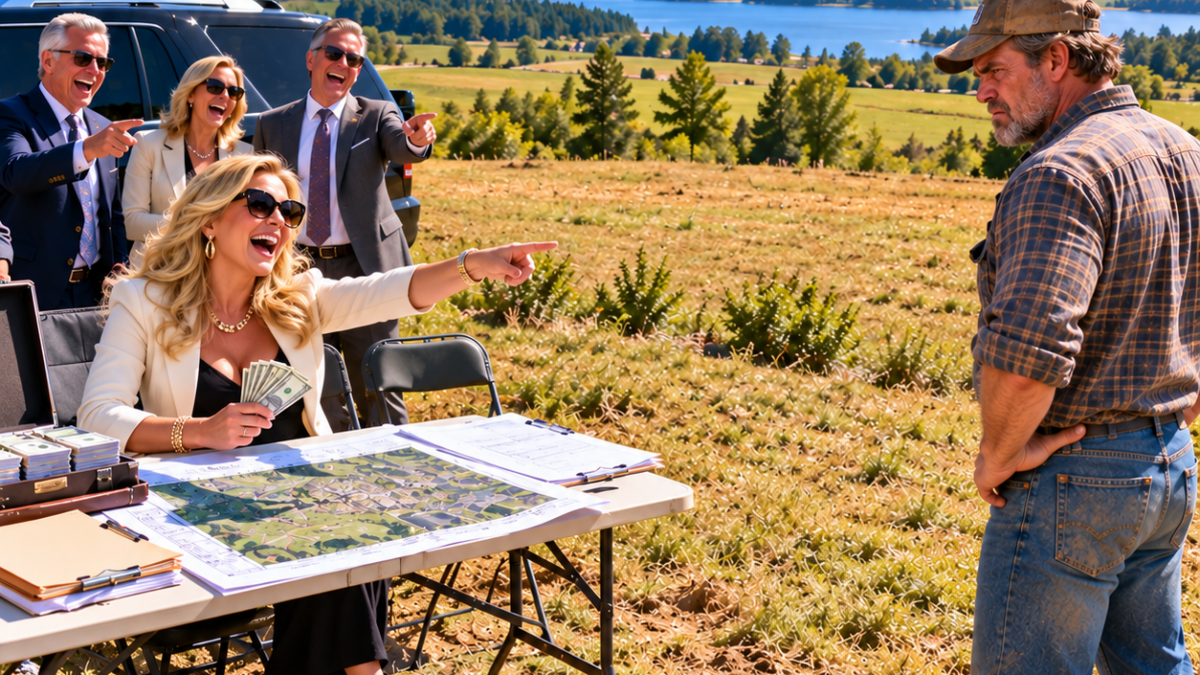
They Sold Me 11 Acres for $500 and Called Me a Fool—Six Months Later, the Entire HOA Board Was at My Gate
The HOA president laughed when she handed me the deed because she thought I had just paid five hundred dollars for eleven acres of worthless rock, dead brush, and fire hazard.
Six months later, she was standing outside my gate with the entire board, three security trucks, and a contract demanding that I give every inch of it back.
What Vanessa Whitmore still didn’t understand was that the land hadn’t changed owners when they discovered what was beneath it—and neither panic, threats, altered records, nor a room full of angry board members could change the signature she had put on that deed.
My name is Caleb Mercer.
I was forty-four when all of this started, and if you had asked anyone who knew me what kind of trouble I usually attracted, they probably would have laughed.
I wasn’t a trouble magnet.
I wasn’t a crusader.
I didn’t spend my evenings attending county meetings or arguing with neighbors on community Facebook pages.
I worked with machinery.
Machines made sense to me.
For most of my adult life, I had been an industrial mechanic, moving wherever the work was good enough to justify the heat, dust, noise, or distance.
Mining towns.
Pipeline projects.
Processing plants.
Drilling sites.
Places where one bad bearing could shut down millions of dollars in equipment and where nobody cared much about your personality if you could diagnose a problem before sunrise.
That kind of work teaches you two things.
First, listen before touching anything.
Second, trust what you can verify.
People will tell you a pump is fine because they don’t want to pay for another one.
A pressure gauge doesn’t care about anybody’s budget.
A supervisor will swear maintenance was done last month.
The logbook tells you whether it was.
I learned early that promises are soft.
Records are hard.
That probably explains why I handled the HOA the way I did.
I lived just outside a gated development called Silverbriar Estates.
Not inside it.
That part becomes important.
My house sat beyond the western boundary, where the manicured sidewalks ended and the terrain started rising into dry country.
I could hear Silverbriar’s sprinklers kick on before dawn if my windows were open, but nobody from the HOA had authority over my house.
No one could tell me what color to paint my fence.
Nobody cared whether my truck was ten years old or twenty.
Nobody measured my grass.
I liked that arrangement.
Behind my house, between my property and a rocky ridge, sat eleven acres owned by the Silverbriar Homeowners Association.
Calling it land almost made it sound more impressive than it was.
It was dirt.
Bad dirt.
Sun-baked.
Cracked.
Gray.
Loose stone everywhere.
The brush dried out so thoroughly every summer that the county treated it like a standing fire invitation.
No irrigation.
No direct public road access.
No sewer.
No utilities worth mentioning.
No practical development route.
Years earlier, some developer had apparently looked at the parcel, walked the ridge for an afternoon, and left without making an offer.
That was the reputation it carried.
Worthless.
Everybody in Silverbriar knew it.
The HOA’s biggest complaint wasn’t that the parcel didn’t make money.
It was that it cost money.
Every year, they paid crews to clear enough brush to keep the county fire marshal satisfied.
Every year, the line item appeared in the association budget.
Every year, somebody complained.
Vanessa Whitmore complained the loudest.
She was fifty-one then.
Always polished.
Always prepared.
The kind of woman who could turn a request about pool hours into a twenty-minute speech about community integrity.
Vanessa had been president of the Silverbriar HOA for three years.
She wasn’t stupid.
That would have made dealing with her easier.
She was organized, confident, and completely certain that whatever she believed at a given moment was probably the correct interpretation of reality.
That was more dangerous.
She had a practiced smile for public meetings.
A firmer smile for disagreements.
And a third expression—small, tight, almost sympathetic—that appeared whenever somebody realized she had no intention of compromising.
The eleven acres had become her favorite budget complaint.
She called it “Silverbriar’s garbage patch.”
That got laughs.
At first.
By the third year, even the joke sounded tired.
The brush clearing bill had gone up again.
Insurance concerns were rising.
The county had issued another wildfire mitigation reminder.
And because the land couldn’t be turned into homes without expensive access work, nobody on the board saw a reason to hold it.
So during an open meeting one spring evening, Vanessa proposed getting rid of it.
I was there because I occasionally attended Silverbriar meetings when topics near my boundary came up.
Not because I had voting rights.
I didn’t.
But the meetings were open enough that adjacent owners sometimes came by.
Vanessa stood behind the podium with a slide projected behind her.
SURPLUS LAND DISPOSAL.
That wording interested me.
She explained that the board had investigated options.
No developer interest.
No practical community use.
No reasonable return on further investment.
Annual maintenance burden.
Therefore, the board recommended selling the full eleven acres to any interested buyer willing to accept it as-is.
No road access guarantee.
No HOA-funded clearing.
No future maintenance assistance.
No complaints.
One board member joked that the buyer would need a good pair of boots.
People laughed.
Then Vanessa announced the proposed price.
Five hundred dollars.
I thought I had heard wrong.
I raised my hand.
Vanessa looked toward the back.
“Yes, Caleb?”
“Did you say five hundred?”
She smiled.
“For all eleven acres.”
The room chuckled.
“Five hundred total?”
“Rocks included.”
More laughter.
Diane Prescott, the HOA vice president and financial chair, leaned toward her microphone.
“You’ll spend ten times that cutting brush the first summer.”
That got a louder laugh.
I nodded.
“Are there any retained rights?”
Vanessa’s smile faded slightly.
“What do you mean?”
“Water rights. Mineral rights. Reversion. Repurchase option.”
A few people turned toward me.
Not because the questions were strange.
Because nobody else had been treating the proposal seriously enough to ask them.
Vanessa glanced toward Diane.
Then toward the association’s outside manager.
“No.”
“None?”
“The parcel would be transferred as-is.”
“Fee simple?”
There was a short pause.
“Yes.”
That was the first moment I really became interested.
Not because I suspected oil.
I didn’t.
Not because I believed I was about to become rich.
I absolutely didn’t.
But eleven acres for five hundred dollars is unusual even when the eleven acres are terrible.
And terrible land has uses.
Storage.
Buffer acreage.
Maybe a workshop someday.
Maybe just privacy.
I had spent more than five hundred dollars on tools I used twice.
I raised my hand again.
“I’ll buy it.”
The room went quiet for half a second.
Then somebody laughed.
Vanessa did too.
“Seriously?”
“Yes.”
She looked around as if checking whether this was becoming entertainment.
“You understand the association assumes no responsibility for maintaining access?”
“Yes.”
“No guarantee of utilities.”
“Understood.”
“The land is being transferred in its current condition.”
“That’s fine.”
Diane leaned toward her microphone.
“You really want that headache?”
“I’ve owned worse headaches.”
Vanessa laughed again.
“All right.”
The board voted.
Approved.
Five hundred dollars.
Two days later, I brought a cashier’s check.
I didn’t sign anything in the clubhouse.
I insisted the transfer go through normal recording procedures.
Maybe that came from years of equipment contracts.
Maybe I’m simply suspicious by nature.
Either way, I wanted a deed.
Not a handshake.
Not meeting minutes.
Not some one-page receipt printed from the HOA office.
A deed.
The paperwork was prepared.
Special warranty deed.
Fee simple ownership.
Parcel description.
No repurchase option.
No reversion clause.
No retained mineral rights.
No condition stating that the HOA could recover the land if its value later changed.
Nothing.
The association conveyed the property.
I paid five hundred dollars.
The deed was notarized.
Recorded.
County receipt issued.
I ordered a certified copy.
Then I copied the copy.
The original went into the small fireproof metal box in my workshop.
The certified copy went into a file cabinet.
The scanned version went onto two drives and cloud storage.
Old mechanic habits.
One backup is hope.
Three backups are preparation.
When I picked up the final paperwork, Vanessa was standing beside Diane near the clubhouse desk.
She watched me slide the folder under my arm.
Then she leaned toward Diane.
Not quietly enough.
“Best five hundred dollars this association ever spent.”
Diane laughed.
I didn’t.
Not because I was offended.
Because from their perspective, she was probably right.
Silverbriar no longer had brush-clearing bills.
No wildfire mitigation expense.
No insurance headache.
No useless parcel.
I had eleven acres of rock.
Everybody got what they wanted.
That should have been the end of it.
For the first three months, nothing happened.
I cleared some brush.
Paid a crew for one day of work near the boundary.
Dragged out an old rusted fence panel somebody had dumped there years earlier.
Walked the ridge a few times.
The property was actually peaceful.
Ugly, maybe.
But quiet.
From the highest point, I could see across Silverbriar’s rooftops toward the distant hills.
At sunset, the rock went orange.
I started thinking maybe five hundred dollars had bought me the best private walking trail in the county.
Then one night, we got heavy rain.
Not ordinary rain.
The kind that hits dry ground too fast and sends water running everywhere because the soil can’t absorb it.
Silverbriar’s lower streets flooded.
My drainage ditch filled.
The next morning, I walked the eleven acres to make sure runoff hadn’t carved anything dangerous near the ridge.
That was when I saw the dark streak.
At first, I thought somebody had dumped oil.
It came up between two exposed rocks near a shallow depression.
Black-brown.
Glossy.
Maybe six feet long.
I crouched.
Touched it with one finger.
Smelled it.
And stopped.
There are smells you forget.
There are smells you don’t.
Hydrocarbons belong in the second category.
I had worked near enough active drilling sites to recognize crude.
That didn’t mean the streak was oil from underground.
Could have been old machinery contamination.
A buried drum.
Some abandoned tank nobody remembered.
But it smelled wrong for ordinary motor oil.
Sharper.
Earthier.
I walked back to the workshop.
Got a mason jar.
Collected a sample.
Screwed the lid down.
Then I did something I would later be very glad I did.
I told nobody.
No neighbor.
No HOA.
No county office.
No social media.
Nothing.
I called Russell Maddox.
Russell was sixty-one, retired, and had spent most of his career as a petroleum geologist.
We had worked together years earlier during a pipeline inspection project.
He was one of those men who could stare at a rock face for ten minutes and tell you a story about something that happened underground eighty million years ago.
I described the seep.
He got quiet.
“Where exactly?”
“Western ridge.”
“You send me pictures?”
“I can.”
“Don’t scrape anything else.”
“I wasn’t planning to.”
“I’ll come Saturday.”
Russell arrived with two bags, a tablet, three maps, and the excitement of a teenager who had been told there was treasure somewhere nearby.
He walked the property slowly.
Painfully slowly.
Stopped constantly.
Knelt.
Picked up stone.
Looked at fracture lines.
Checked elevation.
Pulled geological survey maps on his tablet.
At one point, I asked whether he was seeing anything interesting.
He said, “Maybe.”
That was Russell’s favorite word when he was interested.
By noon, he was sitting on my tailgate digging through old county well records.
Then he found something.
“Look.”
He turned the screen toward me.
Seventy years earlier, a small exploration company had surveyed part of the region.
Shallow drilling.
Preliminary petroleum indications.
No commercial development.
The project had been abandoned because extraction economics at the time didn’t justify continuing.
“Does that mean there’s oil here?”
“It means somebody found enough evidence to look.”
“Seventy years ago.”
“Rock is patient.”
I looked toward the ridge.
“So what do we do?”
“We don’t get excited.”
“You drove three hours.”
“I’m retired. Excitement is free.”
I laughed.
Russell didn’t.
“Seriously, Caleb. A surface seep can mean a hundred things. If you want to know whether there’s anything meaningful underground, get a proper survey.”
So I did.
Quietly.
I hired a small geophysical company from two counties away.
No local connections.
No publicity.
No reason to talk about the job.
Their crew spent two days collecting data.
The preliminary results came a week later.
Subsurface formation consistent with trapped hydrocarbons.
Not proof.
But enough to justify a test well.
I called Russell.
He drove back.
We arranged a small drilling operation near the western ridge.
Nothing enormous.
No giant derrick visible for miles.
Just enough equipment to test what the survey had suggested.
I barely slept the night before drilling began.
Not because I imagined becoming rich.
Because uncertainty is louder once money gets involved.
At a certain depth, the readings changed.
Russell noticed before I did.
He leaned toward one of the instruments.
Then toward another.
The technician adjusted the flow.
Dark film appeared in the drilling mud.
Russell stared at it.
Then looked at me.
“You didn’t buy useless land.”
I didn’t say anything.
“Caleb.”
“How good?”
“Too early.”
“Russell.”
He wiped his hands on a rag.
“Good enough that somebody is going to want it badly if the production test holds.”
I looked across the ridge toward Silverbriar.
At that moment, not one person over there knew.
If I had gotten my way, they wouldn’t have known for months.
But secrecy has weak points.
Ours was a twenty-three-year-old technician named Parker who thought the drilling rig looked cool.
He posted a photograph to a local community page.
No oil visible.
No confidential document.
Just equipment.
Caption:
Interesting little test project out by Silverbriar today.
Tagged general location.
By the time anyone noticed, it had been shared.
Two days later, Diane Prescott drove past my gate.
Slowly.
Very slowly.
She looked toward the ridge.
Next morning, an email from Vanessa appeared.
Subject:
URGENT LAND OWNERSHIP REVIEW.
I knew before opening it that my quiet period was over.
The meeting was scheduled for that evening.
Silverbriar clubhouse.
Six p.m.
I brought my deed.
Vanessa was already there.
Diane.
Mallory Keen, the board secretary.
Two other members.
Nobody smiled.
That was new.
Vanessa folded her hands.
“Caleb, we’ve discovered a serious problem with the land transfer.”
“What problem?”
“The original transaction appears to have been misunderstood.”
“By who?”
“The board.”
“What part?”
Diane jumped in.
“The five hundred dollars was intended as compensation for assuming maintenance responsibility.”
I stared at her.
“Compensation?”
“Yes.”
“You sold me the land.”
“That may not have been the board’s intention.”
I opened my folder.
Placed the recorded deed on the table.
“County recorder seems confused too.”
Diane’s face tightened.
Vanessa ignored the sarcasm.
“The amount involved obviously demonstrates that a true fee-simple transfer could not have been intended.”
“You said fee simple in the meeting.”
“That language was informal.”
“The deed isn’t.”
“The association would never intentionally dispose of an asset of substantial mineral value for five hundred dollars.”
“Did you know about the minerals?”
Silence.
I looked at each of them.
“Did anybody know?”
Vanessa answered.
“No.”
“Did I?”
She hesitated.
“I don’t know.”
“I didn’t.”
“That’s difficult to verify.”
“Then verify it.”
Diane leaned forward.
“This isn’t about blame.”
“It sounds exactly like blame.”
“It’s about correcting an inequitable transaction.”
I almost laughed.
“You wanted the property gone.”
“That’s not the issue.”
“You called it a garbage patch.”
Diane looked at Vanessa.
Vanessa’s jaw tightened.
“We were operating under incomplete information.”
“So was I.”
“The community shouldn’t lose millions because of an error.”
“What error?”
“That’s what we’re determining.”
I tapped the deed.
“The HOA offered eleven acres for five hundred dollars. I accepted. Your lawyer prepared the transfer. You signed. I paid. County recorded it.”
Vanessa slid a document across the table.
“Then perhaps we can resolve this voluntarily.”
I looked down.
Buyback agreement.
$5,000.
I looked up.
“You’re offering five thousand?”
“Ten times your investment.”
I laughed.
Couldn’t stop myself.
For the first time in the meeting, Vanessa looked offended.
“What?”
“Six months ago, I was an idiot for paying five hundred.”
“No one called you an idiot.”
“Close enough.”
“We’re offering a substantial return.”
“You don’t know the value.”
“And neither do you.”
“Exactly.”
I pushed the contract back.
“No.”
Diane’s tone changed.
“You should think carefully.”
“I did.”
“Mineral extraction could create environmental impacts affecting the entire community.”
“Then regulate the impacts you’re legally entitled to regulate.”
“The HOA may have residual authority.”
“Over what?”
“Activities affecting Silverbriar.”
“The parcel isn’t inside your covenant boundary anymore.”
Silence.
That was one of the things I had confirmed before attending.
When the HOA subdivided and conveyed the eleven-acre tract, the resulting parcel fell outside several covenant-controlled areas.
Vanessa knew.
Diane knew.
I knew.
Vanessa stood.
“We’ll correct the documentation.”
I remember those words exactly.
Not review.
Not challenge.
Correct.
As if history were a spreadsheet with the wrong number in one cell.
I watched her smooth the front of her blazer.
“What does that mean?”
“It means this transaction will be properly characterized.”
“It already is.”
“We disagree.”
“No. You regret it.”
She looked directly at me.
“This isn’t finished.”
I gathered my papers.
“For you, maybe.”
The notices started three days later.
Unauthorized industrial equipment.
$750.
Unapproved alteration of natural landscape.
$1,500.
Commercial activity without HOA permission.
$3,000.
Stop-work order.
Noise violation.
Road-use violation.
Environmental review violation.
Every envelope had Silverbriar letterhead.
Every document sounded official.
Within two weeks, the fines totaled more than eighteen thousand dollars.
I responded to each.
Same way.
Certified mail.
Copy of deed.
Recorded boundary map.
Statement that the HOA lacked jurisdiction.
No anger.
No personal commentary.
Just paper.
They ignored every response.
Then one morning, I walked toward the ridge and found my NO TRESPASSING sign gone.
In its place:
PROPERTY UNDER HOA REVIEW.
NO ACCESS.
Their sign.
On my land.
I pulled it out.
Put it in my truck bed.
By afternoon, Vanessa arrived.
This time she brought two private security vehicles.
Three men.
Uniforms.
No police authority.
No sheriff.
Just badges designed to look important from twenty feet away.
Vanessa walked toward my gate.
I already had my phone recording in my shirt pocket.
“We’re here to secure disputed property.”
“Do you have a court order?”
“The board has authorized protective action.”
“That wasn’t my question.”
“The association has a duty to protect community assets.”
“Is this community property?”
“Yes.”
I took the phone out.
Held it visibly.
“Could you say that again?”
Her eyes dropped to the screen.
Silence.
“Say what?”
“That this is community property.”
She looked toward the security vehicles.
Then back at me.
“We’re not doing this for your camera.”
“That’s what I thought.”
Her face changed.
“You think this is funny?”
“No.”
“You could end this today.”
“How?”
“Sign the agreement.”
“The five-thousand-dollar one?”
“We can discuss the amount.”
“Then this isn’t about a mistake.”
“What?”
“If you own it, why are you offering to buy it?”
She stared at me.
I continued.
“If the deed is wrong and the land belongs to Silverbriar, you don’t need my signature. If you need my signature, you know who owns it.”
One of the security men looked away.
Vanessa stepped closer.
“You are creating a problem for every family in this community.”
“No. I bought land you didn’t want.”
“Land that contains community resources.”
“There were no community resources when you sold it?”
“You’re being deliberately difficult.”
“And you’re standing outside my property with hired security and no court order.”
Her voice lowered.
“Don’t make this ugly.”
I remember thinking how strange it was to hear that from the person who had brought three vehicles.
“Go home, Vanessa.”
She did.
That night, I sat at my kitchen table.
Fine notices everywhere.
Eighteen thousand dollars of imaginary authority.
I thought about the original sale.
The laughter.
The jokes.
The way nobody even bothered walking the full parcel before approving the deal.
They had been completely certain.
That certainty was the real reason we were here.
Not oil.
Oil only exposed it.
They had believed the land was worthless so completely that they never protected themselves against being wrong.
Now instead of accepting that, they wanted to rewrite the bargain.
I decided I needed a lawyer.
Not because I doubted the deed.
Because I had worked around enough expensive equipment to understand that good documentation still needs somebody qualified to deploy it correctly.
Graham Holt was fifty-eight.
Real estate attorney.
Thirty years of title work.
His office looked like someone had been arguing about land inside it since 1989.
Plat maps.
Deed books.
Survey tubes.
Files stacked everywhere.
I gave him the original paperwork.
He read silently.
Then read it again.
Finally he took off his glasses.
“Caleb.”
“Yes?”
“You don’t have a title problem.”
“That’s good.”
“The HOA has a regret problem.”
I smiled.
“That’s what I thought.”
“Unfortunately, regret problems become legal problems when people with letterhead get creative.”
He tapped the deed.
“Fee simple.”
“Yes.”
“No mineral reservation.”
“No.”
“No reversion.”
“No.”
“No buyback.”
“No.”
“Clean recording.”
“Yes.”
“Consideration acknowledged.”
“Five hundred dollars.”
He smiled.
“Awful deal for them.”
“Great deal for me.”
“Same sentence.”
Then he asked for every notice.
Every email.
Every board communication.
Every recorded statement.
I brought everything.
Two days later, Graham called.
“They’ve filed something strange.”
“What?”
“Internal HOA record. New version of the original land-sale summary.”
I drove over.
He showed me.
The new document described my purchase as a “conditional disposal arrangement” and referenced a supposed right of reversion if the land later became commercially productive.
I stared at it.
“That wasn’t there.”
“I know.”
“How?”
“The bigger question is who created it.”
“No reversion exists.”
“Correct.”
“So this means nothing.”
“Legally, by itself? Probably not. Evidentially? Potentially a lot.”
That night, just after eleven, I got a text.
Unknown number.
DON’T SIGN ANYTHING.
THE BOARD MINUTES HAVE BEEN CHANGED.
I stared at the screen.
Then typed:
WHO IS THIS?
Reply:
MALLORY.
BOARD SECRETARY.
CAN WE MEET TOMORROW?
We met at a diner twenty minutes from Silverbriar.
Neutral ground.
Mallory Keen looked exhausted.
Forty-two.
Usually composed at meetings.
That afternoon, her hands shook slightly around a coffee cup she never drank.
“I shouldn’t be doing this.”
“You contacted me.”
“I know.”
“Then tell me why.”
She looked toward the window.
“Because they’re asking me to lie.”
I waited.
Mallory had served as board secretary for years.
She had written the original meeting minutes.
Not Vanessa.
Not Diane.
Mallory.
She explained what happened after word of the oil reached the board.
Diane had done rough calculations.
Potential mineral value in the millions if commercial production held.
Vanessa called a closed-door session.
No normal agenda.
No resident notice.
Just selected members.
“She said the original minutes needed clarification.”
“What kind?”
“She wanted them changed to say the sale was conditional.”
“Was it?”
“No.”
“She wanted mineral rights added?”
“Not directly. She wanted language saying the HOA retained residual beneficial interest.”
“That phrase wasn’t used in the meeting.”
“No.”
“Any reversion?”
“No.”
“Any buyback?”
“No.”
Mallory looked at me.
“You asked about mineral rights.”
“I remember.”
“I wrote it down.”
“What did Vanessa say?”
“That none were reserved.”
That was even better than I remembered.
“Do you have the original?”
Mallory reached into her bag.
Folder.
Emails.
Original PDF.
Edited PDF.
System change log.
Timestamps.
“Vanessa asked me to replace the minutes.”
“You refused?”
“Yes.”
“What happened?”
“She uploaded a new version herself.”
My stomach tightened.
“And your name?”
“Still appears as secretary.”
“So it looks like you certified it.”
“Yes.”
“Did you?”
“No.”
She swallowed.
“Then she told me that if anyone ever questioned it, I should say I had discovered a clerical mistake and corrected it.”
“What did you tell her?”
“That I wasn’t lying for her.”
Mallory gave me the folder.
“I need you to understand something.”
“What?”
“I’m not doing this because I like you more than Vanessa.”
“That’s fair.”
“I’m doing it because this is fraud.”
I nodded.
“Thank you.”
“Don’t thank me until this is over.”
Graham reviewed the files that evening.
For the first time since I hired him, he looked genuinely angry.
“This is no longer a disagreement.”
“What is it?”
“Potential fraudulent alteration of association records.”
“Criminal?”
“Possibly. Civilly, it’s extremely damaging.”
He held up the change log.
“This tells us exactly when the document was modified.”
I almost laughed.
Vanessa had spent weeks trying to turn signatures into suggestions.
A timestamp had just turned her story into evidence.
Meanwhile, Russell kept working.
Production tests improved.
Not a giant Texas field.
Not some movie-style gusher.
But genuine commercial potential.
Sustainable enough to attract attention.
A regional energy company contacted me.
They wanted a mineral lease.
Signing bonus.
Royalty percentage.
Development agreement.
Numbers big enough that I read them twice.
Then a third time.
I didn’t sign.
I gave everything to Graham.
He insisted on environmental protections.
Access restrictions.
Insurance.
Surface restoration.
Water monitoring.
All sensible.
But before negotiations could progress, rumors spread through Silverbriar.
Someone heard numbers.
Someone else heard bigger numbers.
Within days, the same people who had laughed when I paid five hundred dollars were suddenly asking one another how the HOA could have “given away community wealth.”
That phrase appeared in Vanessa’s next email.
COMMUNITY WEALTH.
She sent it to every Silverbriar resident.
Her message described me as an opportunistic outsider exploiting resources that “rightfully belonged to the community.”
I read that line twice.
Six months earlier, I was the fool buying a garbage patch.
Now I was the outsider stealing community wealth.
Same land.
Different value.
Different morality.
Vanessa announced an emergency meeting.
This time, I attended with Graham.
The clubhouse was packed.
Residents standing along the walls.
Vanessa opened with environmental concerns.
Noise.
Traffic.
Water.
Property values.
Safety.
Those were legitimate topics.
I would eventually address every one.
But then she moved to the part she actually cared about.
“The board’s position is that the original five-hundred-dollar transfer applied solely to surface maintenance responsibility.”
I raised my hand.
She ignored me.
“The association did not and could not have intended to transfer subsurface mineral rights—”
I stood.
Held up the deed.
“Then show me where you reserved them.”
The room shifted.
Vanessa looked at me.
“This is not an open debate.”
“You’re discussing my deed.”
“You’ll have an opportunity to speak.”
“Great. Show me the line when I do.”
Diane jumped in.
“The intention was obvious.”
I looked at her.
“To who?”
“To everyone involved.”
“Then why didn’t your attorney write it into the deed?”
“That’s a technical issue.”
“No, Diane. That’s the entire issue.”
A woman near the front raised her hand.
Vanessa reluctantly recognized her.
“Did the HOA reserve mineral rights in writing?”
Vanessa answered carefully.
“Our interpretation is that the rights were never transferred.”
Graham stood.
He didn’t raise his voice.
“Interpretation does not create ownership.”
People murmured.
Vanessa frowned.
“Who are you?”
“Graham Holt. Counsel for Mr. Mercer.”
That changed the room.
Vanessa clicked to another slide.
I said, “Put up the meeting minutes from the sale.”
She stopped.
“Excuse me?”
“The original minutes. Let everyone see what the board approved.”
Diane whispered something.
Vanessa looked toward Mallory.
Mallory didn’t move.
Finally, Vanessa pulled up a PDF.
The edited version.
I reached into my folder.
“So that’s the version you’re relying on?”
“Yes.”
I held up my copy.
“Interesting.”
Graham connected his laptop to the projector.
My file appeared beside Vanessa’s.
Original.
Downloaded the night of the meeting.
Same date.
Same agenda number.
Different language.
People started reading.
Conditional disposal agreement appeared only in Vanessa’s version.
Residual interest appeared only in Vanessa’s version.
Reversion language appeared only in Vanessa’s version.
A man in the second row said, “Those aren’t the same.”
“No,” I said.
“They aren’t.”
Then Mallory stood.
Her voice shook at first.
“I wrote the original minutes.”
The room went silent.
Vanessa’s face changed.
“Mallory, sit down.”
Mallory didn’t.
“I was the secretary at that meeting. The version Mr. Mercer has is accurate.”
“Mallory.”
“The second version was uploaded last week.”
Someone gasped.
Diane said, “That is not appropriate—”
Mallory continued.
“I did not approve the changes.”
Vanessa grabbed the gavel.
Hit it.
“This meeting is adjourned.”
People started shouting questions.
“When were they changed?”
“Who changed them?”
“Did you know?”
“Is this legal?”
Vanessa struck the gavel again.
“Adjourned.”
I stood near the aisle.
“You can adjourn the meeting.”
She glared at me.
“You can’t adjourn the timestamp.”
Then I walked out.
My phone buzzed before I reached the truck.
A neighbor.
CALEB, THERE’S HEAVY EQUIPMENT AT YOUR GATE.
I ran.
Drove faster than I should have.
When I reached the property, a contractor crew was unloading fence panels.
Two HOA security trucks blocked the approach.
A new sign leaned against a post.
SILVERBRIAR HOA ASSET CONTROL AREA.
Vanessa stood behind the crew.
She had left the clubhouse another way.
Or maybe she had planned this before the meeting.
I got out.
“Who authorized this?”
“The board.”
“You don’t own the property.”
“Ownership is disputed.”
“By you.”
“That’s still a dispute.”
I called Graham.
Put him on speaker.
He asked for the contractor.
The foreman came over reluctantly.
Graham asked three questions.
“Do you have a court order?”
“No.”
“Do you have a permit?”
“Not that I’ve been given.”
“Do you have a recorded ownership document showing Silverbriar HOA owns the parcel?”
The man looked at Vanessa.
“No.”
Graham’s voice remained calm.
“Then I strongly recommend you contact your company’s attorney before constructing anything.”
The foreman’s confidence disappeared.
“We were told this was HOA property.”
“It isn’t.”
Vanessa shouted.
“Continue.”
The foreman didn’t move.
I parked my truck across the access route.
Vanessa marched toward me.
“You are obstructing official association business.”
“I’m parked on my land.”
“This is under active board control.”
“Court order?”
She said nothing.
I took out my phone.
Started recording openly.
Neighbor Evelyn Shaw arrived.
Evelyn owned property farther west.
She started filming too.
Vanessa noticed.
“Why are you here?”
Evelyn smiled without humor.
“Because you tried this with me four years ago.”
That was new information.
Vanessa’s face hardened.
Evelyn turned toward my camera.
“They tried to force an easement through my south field. Told me the community needed it, so I had some obligation to provide it.”
“Did you?”
“No.”
“Did they stop?”
“After my lawyer wrote them.”
More residents gathered along the road.
An older retired teacher from Silverbriar watched the equipment.
Then said loudly enough for everybody to hear:
“I’ve never seen this board move this fast for anything.”
Somebody laughed.
She continued.
“Not potholes.”
Another voice:
“Not the retention pond.”
“Not streetlights.”
Evelyn kept filming.
“Funny how efficient government gets when somebody smells money.”
Vanessa’s composure finally broke.
“The oil belongs to Silverbriar whether Caleb likes it or not.”
Silence.
Even the contractor looked at her.
My phone captured every word.
I held it steady.
“Thank you.”
Vanessa realized what she had said.
Too late.
The contractor packed up.
No fence.
No excavation.
No asset-control area.
They left.
Vanessa stayed until the last truck pulled away.
Then she looked at me.
“This isn’t over.”
“I know.”
Next morning, the energy company called.
“Caleb, we have a problem.”
“What?”
They had received a formal letter from Silverbriar HOA.
The letter claimed my title was clouded.
Ownership disputed.
Mineral rights contested.
Possible litigation pending.
The company paused negotiations.
I understood why.
Oil companies accept geological risk.
They hate title risk.
For the first time, Vanessa had caused measurable financial damage.
Graham’s tone changed when I told him.
“That’s enough.”
“For what?”
“We stop responding to notices.”
“What do we do?”
“We sue.”
Before filing, he ordered a full title examination.
Everything.
Original Silverbriar acquisition.
Subdivision records.
The parcel’s creation.
HOA ownership.
My transfer.
Mineral rights history.
The report was beautiful.
Not emotionally.
Legally.
Special warranty deed.
Clean fee-simple conveyance.
No mineral reservation.
No reversion.
No conditional language.
No buyback.
No retained beneficial interest.
Then Graham found an HOA financial disclosure filed shortly after the sale.
SURPLUS LAND DISPOSAL.
Proceeds: $500.
Diane Prescott’s signature at the bottom.
I stared at it.
“She signed this?”
“Yes.”
“And now she says it was only a maintenance transfer?”
“Yes.”
“Can people be this careless?”
“Frequently.”
We sent a cease-and-desist.
Stop trespassing.
Stop fines.
Stop ownership claims.
Retract the title-cloud letter.
Correct the community email.
Preserve all records.
Vanessa refused.
So we filed.
Slander of title.
Tortious interference with business relations.
Trespass.
Fraudulent alteration of official association records.
Declaratory judgment.
Damages.
Silverbriar residents learned about the lawsuit quickly.
That was when Vanessa’s support collapsed.
Not because residents suddenly loved me.
Because they discovered their dues were paying lawyers to defend the board’s attempt to reclaim land the board itself had sold.
Homeowners demanded an emergency meeting.
This time Vanessa didn’t call it.
They did.
Before that meeting, Mallory gave Graham one final piece of evidence.
An email.
Sent the night the original sale closed.
From Diane to Vanessa.
Subject:
FINALLY DONE.
The message was short.
Glad we finally unloaded that useless acreage before we got stuck paying another summer of fire clearing.
Vanessa replied:
Worth every penny of the $500.
I read it twice.
Then handed the page back to Graham.
“They really thought it was worthless.”
“Yes.”
“So all this ‘community resource’ talk—”
“Started after the oil.”
The title hearing came three weeks later.
Vanessa arrived in a dark suit.
Diane sat beside her.
Their attorney argued first.
The price had been unconscionably low.
The association had made a material mistake.
The board never intended to transfer valuable mineral rights.
The court should reform or rescind the deed.
Community interests should outweigh an accidental windfall to an outside purchaser.
Graham listened.
Took notes.
Then stood.
“A bad bargain is still a bargain.”
Simple.
That was his opening.
He placed the deed into evidence.
Then the original meeting minutes.
Then Diane’s surplus land disposal report.
Then her email calling the parcel useless.
Then the edited minutes.
Then the digital change log.
Then Mallory’s affidavit.
Then my video of Vanessa saying:
“The oil belongs to Silverbriar whether Caleb likes it or not.”
Then the HOA’s letter to the energy company.
One document after another.
No drama.
No speechmaking.
Paper.
Vanessa was called.
Asked:
“At the time of sale, did you believe the parcel had significant commercial value?”
“No.”
“Did Mr. Mercer tell you it contained oil?”
“No.”
“Did he conceal geological information from the board?”
“No.”
“Did he pressure the association to sell?”
“No.”
“Did the association offer the land voluntarily?”
“Yes.”
“Did you sign the deed?”
“Yes.”
“Did the association reserve mineral rights in that deed?”
Long pause.
Her attorney looked down.
Vanessa said:
“Not expressly.”
Graham didn’t move.
“Did you reserve them at all?”
Another pause.
“No.”
That was it.
Everything after that felt like paperwork catching up with the answer.
The judge issued a preliminary ruling confirming my ownership.
Surface rights.
Mineral rights.
Full title.
Silverbriar was barred from asserting further ownership claims absent some legitimate independent basis.
There wasn’t one.
The fabricated fines lost their leverage immediately.
The revised minutes became a separate problem for the board.
Outside the courtroom, Vanessa walked past without looking at me.
Diane stopped to talk to the HOA attorney.
They were already blaming each other.
That continued.
At the next community meeting, homeowners packed the clubhouse.
Vanessa tried to defend herself.
Said she had acted to protect Silverbriar.
Diane interrupted.
Said Vanessa had driven the strategy.
Vanessa turned on her.
Said Diane had been the one who first calculated potential mineral value and recommended aggressive action.
Mallory stood.
Opened the email folder.
Read their own words aloud.
Useless acreage.
Fire clearing.
Worth every penny of the $500.
Silence.
Then the vote.
Vanessa was removed.
Diane too.
Other board members lost their seats.
Mallory stayed.
Not because she was popular.
Because residents trusted the one person who had refused to change the record.
I stood in the back.
Didn’t clap.
Didn’t smile when Vanessa gathered her papers.
Didn’t say anything.
I had already gotten what I wanted.
My land.
My title.
The truth on the record.
Several months later, the energy company came back.
Negotiations resumed.
I did not give them everything they initially wanted.
By then, I had seen what happened when money made people forget boundaries.
I wasn’t going to do the same thing from the other side.
We negotiated a limited extraction agreement.
Dedicated access.
Not through Silverbriar streets.
Restricted operating hours.
Noise limits.
Groundwater monitoring.
Secondary containment.
Restoration requirements.
Financial bonding for site cleanup.
A buffer between production activity and neighboring homes.
Russell reviewed the technical portions.
Graham reviewed everything else.
The energy company complained about several terms.
I told them no deal without them.
Eventually, they agreed.
The first well went into steady production.
I won’t give the exact financial numbers.
Those stayed private.
But I’ll say this.
The eleven acres stopped being a five-hundred-dollar curiosity.
Royalties made it an asset worth millions over time.
Vanessa had been right about one thing.
Silverbriar had sold something extraordinarily valuable.
What she never accepted was that value discovered after a sale belongs to the owner who took the risk.
The new HOA board settled with me.
All fines withdrawn.
Legal expenses reimbursed.
Public correction issued.
The association acknowledged the original sale had been an unconditional transfer.
The false title-cloud letter was retracted.
New governance rules required independent legal review for land transactions.
Meeting records could no longer be edited after approval without a visible revision history and member notice.
Large asset transfers required outside audit.
Board officers had to disclose conflicts.
Mallory insisted on the last one.
I supported her.
Evelyn Shaw used the moment to reopen her old easement dispute.
The new board settled quickly.
No threats.
No fictional authority.
No security trucks.
Vanessa listed her home not long after.
Diane left the county within a year.
People stopped talking about them eventually.
That happens faster than you expect.
A person can dominate a community for years and then become an uncomfortable story nobody wants to tell new neighbors.
Mallory was later elected to the new board.
She almost refused.
I told her she should do it.
“Why?”
“Because you’re afraid of power.”
“That sounds like a reason not to.”
“No. People who are afraid of power usually treat it more carefully.”
She made every board member sign a transparency policy before accepting the position.
I laughed when she told me.
“Too much?”
“Not after Vanessa.”
Russell continued visiting the well.
He loved the production data.
Every few months, he would stand near the ridge staring at gauges with the satisfaction of someone whose rocks had finally proven him right.
Once I asked him:
“You ever think about what would’ve happened if we found this before the sale?”
“You wouldn’t own it.”
“Exactly.”
He smiled.
“Geology rewards patience.”
“Sounds poetic for an oil man.”
“I’m retired. I’m allowed.”
About a year after the lawsuit, I was replacing hardware on the front gate when I saw a car slow down.
Vanessa.
Her house sale had closed.
I knew she was leaving.
She stopped near the fence.
Rolled down the window.
The well equipment was visible in the distance.
Low mechanical hum.
Nothing dramatic.
She watched it for a few seconds.
Then looked at me.
“You got lucky.”
I kept tightening the bolt.
“What?”
“You heard me.”
I stood.
Wiped my hands.
“Luck had nothing to do with the deed.”
“You paid five hundred dollars.”
“You set the price.”
“We didn’t know.”
“Neither did I.”
“That doesn’t make it right.”
I almost felt sorry for her.
Not because she lost.
Because even after everything, she still believed fairness meant getting a second decision after learning the result of the first one.
“You got greedy, Vanessa.”
Her face hardened.
“We were protecting the community.”
“No.”
I looked toward the ridge.
“You were protecting a mistake after it became valuable.”
She said nothing.
“You could have accepted the sale.”
Silence.
“You could have asked about environmental safeguards.”
Nothing.
“You could have negotiated road impacts.”
She gripped the steering wheel.
“You could have done a hundred legitimate things.”
I looked back at her.
“You chose to falsify records and try to take it back.”
She rolled up the window.
Drove away.
That was the last time I saw her.
Afterward, I went into the workshop.
Opened the metal box.
Original deed.
County recording receipt.
Certified copy.
Canceled check.
$500.00.
I held the check for a moment.
That number still made me smile.
Not because five hundred turned into millions.
Money is the least interesting part now.
What mattered was what the number represented.
Both parties knew the price.
Both parties had the chance to investigate.
The seller believed the parcel was a liability.
The buyer accepted the risk.
Nobody lied.
Nobody hid information.
Nobody forced anything.
That is what makes a deal a deal.
People sometimes misunderstand that when they hear the story.
They ask:
“Didn’t you feel guilty?”
No.
Why would I?
If I had bought the land for five hundred and spent twenty thousand dollars cleaning it up only to discover it truly was worthless, would Silverbriar have returned my money?
No.
Would Vanessa have offered to reimburse maintenance?
No.
Would Diane have called and said the original price had been unfair to me?
Of course not.
Risk only looks unfair to people after somebody else’s risk pays off.
That was the entire dispute.
The HOA wanted the right to sell me uncertainty for five hundred dollars while keeping the right to reclaim any upside later.
There was no contract like that.
So they tried to invent one.
That was their real mistake.
Not selling the land.
Changing the record.
Had Vanessa walked into my workshop after the oil discovery and said:
“Caleb, we made a terrible deal. Would you consider selling some rights back?”
I still might have said no.
But I would have respected the question.
Maybe we would have negotiated.
Maybe I would have offered Silverbriar some benefit voluntarily.
Maybe not.
We’ll never know.
Because Vanessa never asked.
She arrived with ownership claims.
Then fines.
Then altered records.
Then private security.
Then interference with my energy contract.
By the time she realized she actually needed cooperation, trust was gone.
That lesson stayed with Silverbriar longer than the scandal itself.
The new board began publishing everything.
Budgets.
Meeting transcripts.
Votes.
Contracts.
Land records.
Corrections.
If a document changed, both versions stayed visible.
Residents complained at first.
Too much information.
Too many emails.
Too many files.
Mallory didn’t care.
“Transparency is annoying,” she told them.
“Fraud is worse.”
That line became something of a community joke.
I liked it.
One summer, the county conducted a scheduled review of the well site.
Environmental compliance.
Groundwater.
Noise.
Surface containment.
Everything passed.
A Silverbriar resident named Paul came over afterward.
He had been one of the people laughing during the original five-hundred-dollar meeting.
He looked toward the equipment.
“I owe you an apology.”
“For what?”
“I thought you were insane.”
“You were probably right.”
“No.”
He laughed.
“I mean buying this.”
“That part might still qualify.”
“We all thought you were taking our problem.”
“I was.”
“And now…”
He gestured toward the well.
“Now it’s your problem.”
“That’s one way to describe it.”
He became serious.
“I was angry when we found out about the oil.”
“A lot of people were.”
“Felt like you had gotten something that belonged to us.”
I leaned against the fence.
“What changed?”
“The meeting minutes.”
“Mallory?”
“Yeah.”
He looked embarrassed.
“Once I saw the original, I remembered laughing.”
That was the moment.
Not the judge’s ruling.
Not Vanessa’s removal.
That conversation.
Because Paul understood the part Vanessa never did.
Memory matters.
Everybody remembered believing the land was worthless.
They just didn’t like remembering it after the value changed.
That is how people rewrite history without touching a document.
They change the emotional meaning.
We sold useless land becomes:
Someone stole our resources.
We were relieved becomes:
We were misled.
We laughed becomes:
We never understood.
Sometimes those changes happen naturally.
Human memory protects pride.
But Vanessa went further.
She changed the actual records.
That crossed a line nobody could explain away.
The well produced steadily.
Not forever.
Oil fields never do.
But enough.
Enough for royalties.
Enough for long-term value.
Enough that I changed my life some, though probably less than people expected.
I did not buy a mansion.
Did not buy a sports car.
Did not move.
I replaced my truck.
Eventually.
Russell accused me of betrayal because I had complained about the old one for seven years.
I upgraded the workshop.
Paid off the remaining balance on my house.
Set aside money.
Helped my younger sister with medical bills when her husband got sick.
Bought better health insurance.
Very glamorous.
The biggest luxury was time.
I stopped taking every emergency mechanical contract offered to me.
No more three-week jobs six hours away unless I actually wanted them.
No more night shifts simply because the money was too good to refuse.
I still worked.
Just differently.
Machines still made more sense than people.
One afternoon, Graham invited me to his office.
I hadn’t seen him in months.
He pointed toward the wall.
Framed deed.
My five-hundred-dollar deed.
Not the original.
Copy.
“You framed it?”
“It’s educational.”
“For who?”
“My clients.”
“What do you tell them?”
He leaned back.
“That regret isn’t a title defect.”
I laughed.
“Do they believe you?”
“Eventually.”
He pointed at the frame.
“I tell them your case whenever somebody wants to undo a signed agreement because the economics changed.”
“That happens often?”
“All the time.”
“Oil?”
“Usually divorce.”
“Less exciting.”
“Much more expensive emotionally.”
Graham’s point was serious.
Contracts exist precisely because knowledge changes.
Prices move.
Markets move.
Land changes.
Unexpected things happen.
Nobody signs an agreement with perfect information about the future.
If every deal could be undone because one party later wished it had asked another question, contracts would mean nothing.
That didn’t make every contract fair.
Courts can address fraud.
Duress.
Concealment.
Misrepresentation.
But none of those had happened when I bought the parcel.
Vanessa testified to that herself.
I didn’t know.
They didn’t know.
They offered.
I accepted.
That simplicity saved me.
The original paperwork was boring.
That also saved me.
No clever language.
No complicated option structure.
No handshake side promises.
Fee simple.
No mineral reservation.
Done.
Years later, I still own the metal box.
The deed stays inside.
The canceled check too.
The ink is fading a little.
Every now and then, when somebody tells the story wrong, I open it.
People exaggerate.
They say Silverbriar practically gave me an oil field.
No.
They sold me eleven acres of land they had studied poorly.
People say I knew there was oil.
No.
If I had known, I would have been an idiot to ask about mineral reservations publicly in a meeting full of residents.
People say Vanessa tried to “renegotiate.”
That’s generous.
She tried to rewrite.
There is a difference.
One requires agreement.
The other requires power.
Vanessa believed her title gave her power.
HOA president.
That title had worked for years.
Residents complied.
Contractors responded.
Security companies showed up.
Letters were printed.
Fines were assessed.
And because so much of community governance runs on voluntary compliance, authority can start feeling larger than it really is.
The board got used to people obeying.
That was why my question bothered them so much.
Court order?
Three words.
Every time.
Court order?
No.
Recorded ownership?
No.
Mineral reservation?
No.
Reversion clause?
No.
Original minutes?
Not the edited ones.
Authority?
Show me.
Vanessa hated that because her power worked best when nobody asked for the source.
I learned the same lesson in industrial plants.
Somebody says a machine must stay running because production needs it.
Fine.
Show me the pressure reading.
Show me the temperature.
Show me inspection history.
Facts first.
Confidence second.
The most confident person in a room can still be wrong.
Vanessa proved that repeatedly.
Silverbriar is calmer now.
Different board.
Different culture.
People still argue.
Of course they do.
HOA residents can debate mailbox colors like constitutional law.
But the stakes changed.
Meetings are recorded.
Votes documented.
Conflicts disclosed.
Nobody edits approved minutes silently.
Land transactions require outside review.
That one is informally called “the Caleb rule.”
I hate that name.
Mallory loves it.
She told me they were considering engraving it on a plaque.
I threatened to sue.
She laughed.
A few new residents eventually moved into Silverbriar without knowing the story.
Old residents filled them in.
Usually badly.
I once overheard two men at a hardware store talking about it.
One said:
“Some guy bought eleven acres for five hundred bucks and found oil the next week.”
I interrupted.
“Six months.”
They turned.
“Excuse me?”
“Oil was six months later.”
One of them recognized me.
His face changed.
“Oh.”
I smiled.
“Story’s better if you get the timing right.”
He asked whether it was true Vanessa brought armed security.
“They weren’t armed.”
“Oh.”
“Three trucks though.”
“That’s still good.”
“Fair.”
I left before they asked more.
Stories simplify.
Reality doesn’t.
The real version included weeks of boring mail.
Title searches.
Certified letters.
Contract reviews.
Geological tests.
Environmental negotiations.
Those pieces aren’t dramatic.
They are the reason the dramatic pieces ended correctly.
People want the moment where oil comes out of the ground.
I remember the meeting where the deed went onto the table.
They want Vanessa screaming at the gate.
I remember certified copies and boundary maps.
They want the courtroom admission.
I remember the county recorder’s stamp.
That stamp mattered before anyone knew the land had value.
Maybe that is why I kept living there.
The ridge never felt different after the oil discovery.
It was still hot in summer.
Dust still stuck to my boots.
Brush still needed clearing.
Wind still came down hard from the west.
Money changed what people saw when they looked at it.
The rocks hadn’t changed.
Vanessa once called that land a garbage patch.
After oil, she called it a community resource.
I called it the same thing both times.
Mine.
That is what title means.
Not value.
Not usefulness.
Not popularity.
Ownership.
One fall evening, Russell and I sat outside the workshop after reviewing production numbers.
He had brought cheap beer.
I had better beer.
He drank mine.
“You ever wish you’d sold some of it back to them?”
“Why?”
“Peace.”
“Wouldn’t have bought peace.”
“No?”
“Vanessa didn’t want money.”
“What did she want?”
“To be right.”
Russell considered that.
“Expensive hobby.”
“The most expensive.”
He looked toward the ridge.
“You know the funny part?”
“What?”
“The oil was always there.”
“I’m aware.”
“No, I mean seventy years, maybe millions. Long before Silverbriar. Long before Vanessa. Long before you.”
“Rock is patient.”
He smiled.
“You remembered.”
“The HOA wasn’t.”
That was the whole thing.
They had held the parcel for years.
They could have investigated.
Could have ordered a survey.
Could have checked geological records.
Could have retained mineral rights.
Could have inserted a buyback provision.
Could have leased instead of sold.
Could have set the price higher.
Could have done any of those things.
They didn’t.
Nobody tricked them out of those choices.
They simply believed they already knew the land’s value.
Five hundred dollars.
That certainty cost them millions.
But the loss itself wasn’t wrongdoing.
Their response was.
The minute they tried to use fines and altered records to reverse the outcome, a bad business decision became misconduct.
That distinction matters.
People are allowed to make terrible deals.
They’re allowed to regret them.
What they are not allowed to do is manufacture a different past.
Years after Vanessa left, I found her original five-thousand-dollar buyback offer while cleaning files.
I sat at the workbench.
Read it again.
She had written:
Fair-market resolution.
Community interest.
Good-faith offer.
Tenfold return.
At the time, she had probably believed five thousand dollars was enough to make me feel clever.
Sell for ten times what you paid.
Walk away.
Everybody happy.
If I had signed, she would have called it voluntary.
Residents would have praised the board.
The oil company would have negotiated with Silverbriar.
Nobody would ever know about the altered minutes.
That thought bothered me.
Not because I almost signed.
I didn’t.
Because I wondered how many people had signed other things simply to make pressure stop.
Evelyn came to mind.
Her easement fight.
Other residents with fines.
A board learns tactics somewhere.
Vanessa hadn’t invented pressure specifically for me.
The amount of money simply made her more reckless.
The new board reviewed old complaints.
Several fines were refunded.
A few enforcement decisions reversed.
Nothing dramatic.
But enough to show that the culture before had been broader than my case.
Mallory once apologized.
“For what?”
“I should have spoken sooner.”
“You spoke when it mattered.”
“I sat through a lot before that.”
“You were secretary, not police.”
“I certified records.”
“The real ones.”
She looked unconvinced.
“You ever wonder why people wait?”
“All the time.”
“I was afraid I’d lose friends.”
“Did you?”
“Yes.”
“Worth it?”
She thought.
“Yes.”
That is usually how integrity works.
More expensive than people advertise.
Less rewarding in the moment.
Mallory’s testimony cost her friendships.
My refusal cost months of legal stress.
Graham spent hours no one sees.
Evelyn stood beside the road filming while people she knew watched.
None of us felt heroic.
We just kept deciding that the easier lie wasn’t worth it.
The extraction agreement eventually funded a restoration reserve.
That mattered to me.
From the beginning, I had told the energy company the ridge couldn’t become industrial wasteland.
Some residents expected me to ignore environmental concerns out of spite.
That would have been stupid.
I lived there too.
Groundwater did not care who won the lawsuit.
Noise did not stop at property lines.
Dust ignored deeds.
So we built limits.
Some of the strictest the company had accepted for a project that size.
Silverbriar residents ended up with more protections under my agreement than Vanessa had ever proposed while claiming she needed the land back for their safety.
That irony wasn’t lost on anybody.
A resident named Joanne mentioned it at a meeting.
“So Caleb’s contract protects us better than our own board did?”
Mallory answered:
“Yes.”
People laughed.
Then Joanne said:
“That’s depressing.”
Also yes.
Eventually, production began declining.
Russell predicted it would.
No resource lasts forever.
That never bothered me.
The point wasn’t endless money.
It was that the deal remained mine.
When extraction ends, the company will restore the disturbed area.
Equipment removed.
Surface graded.
Native vegetation replanted.
Monitoring continues.
Maybe someday the ridge looks almost like it did the morning I noticed that first dark streak.
Cracked dirt.
Dry grass.
Rock.
Some future owner might look at it and think it is worthless.
That would make me laugh.
I’m older now.
My knees tell me before storms.
My hands ache more after mechanical work.
I take fewer jobs.
Spend more mornings drinking coffee outside the workshop.
Sometimes I see Silverbriar residents walking near the boundary.
They wave.
I wave back.
No security trucks.
No orange signs.
No argument.
A much better arrangement.
The original five-hundred-dollar check remains in the metal box.
The bank could probably barely read it now.
I keep it beside the deed because together they tell the entire story better than anything else.
Offer.
Acceptance.
Payment.
Transfer.
That was all the law needed from the beginning.
Everything Vanessa added afterward was noise.
There is a phrase Graham likes:
You cannot litigate yourself out of buyer’s remorse.
I prefer Russell’s version.
Geology rewards patience.
Both are true.
But if my father were still alive, he probably would have put it simpler.
You sold it.
That’s it.
Maybe that is why Vanessa’s last sentence never bothered me.
You got lucky.
Sure.
I was lucky oil existed.
Lucky rain exposed the seep.
Lucky Russell took my call.
Lucky the reserve was commercially useful.
But luck does not explain why I still own it.
Paper does.
The HOA could have protected itself.
It didn’t.
I did.
The board could have reserved minerals.
It didn’t.
I checked.
Vanessa could have negotiated honestly.
She didn’t.
I recorded.
Diane could have admitted regret.
She didn’t.
Her own signature contradicted her.
They made a bad deal.
Then made worse decisions trying to escape it.
That was the difference between losing money and losing everything else.
Vanessa lost her board seat.
Diane lost hers.
The HOA lost legal fees, credibility, and years of trust.
None of that happened because they sold the land cheaply.
It happened because they decided the rules should change after they discovered what the land was worth.
I still think about the first meeting sometimes.
Vanessa behind the podium.
Diane smiling.
Residents laughing.
“Five hundred dollars for all eleven acres.”
“Rocks included.”
If I could go back, I wouldn’t change anything.
Wouldn’t ask more questions.
Wouldn’t warn them to check geological history.
That wasn’t my responsibility.
A seller is allowed to investigate what they own.
A buyer is allowed to accept the price they offer.
I signed exactly what they put in front of me.
They signed too.
Six months later, when the first oil came up, they acted as though value had somehow canceled consent.
It didn’t.
That is why the most important moment of the story wasn’t the test well.
It wasn’t Vanessa arriving with security.
It wasn’t the altered minutes exposed on a projector.
It wasn’t even the judge ruling that the mineral rights were mine.
The most important moment happened long before any of that.
A spring evening.
A room full of people laughing.
A board eager to dump a maintenance problem.
A deed nobody believed would ever matter.
Vanessa Whitmore signed her name.
I signed mine.
The county recorded it.
Everything after that was just a very expensive attempt to pretend she hadn’t.


