𝗙𝗨𝗟𝗟 𝗦𝗧𝗢𝗥𝗬 Three HOA Officers Came to My Door to Arrest Me Over a Fake Fine—They Had No Idea What I Did for a Living
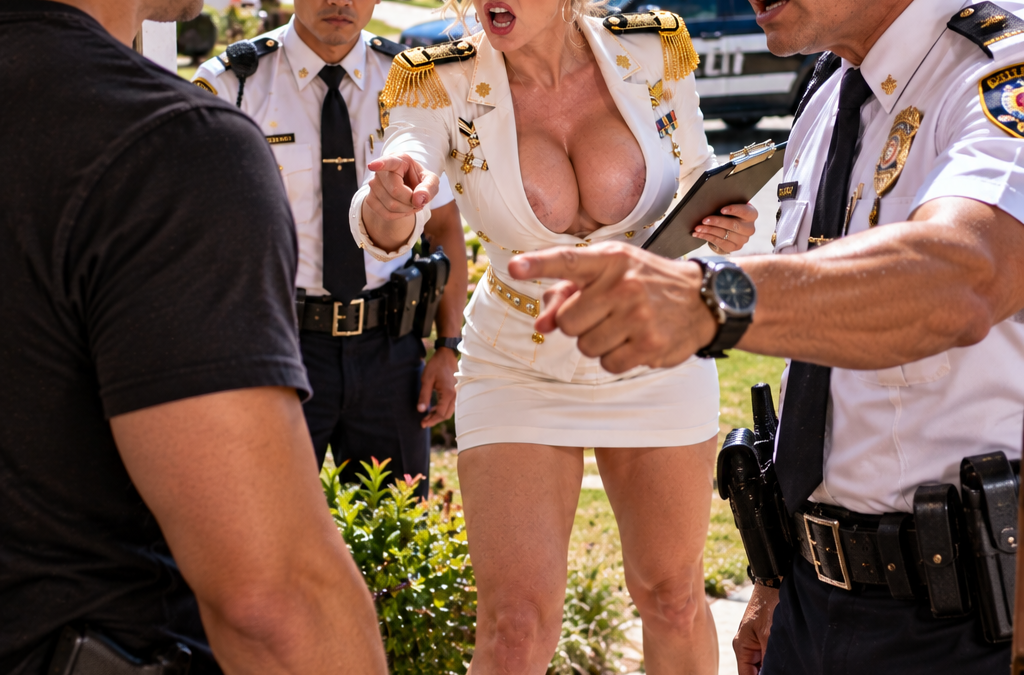
𝗣𝗔𝗥𝗧 𝟮
I returned to rinsing soap from the car.
Karen didn’t leave.
“The children need to play more quietly.”
“They’re children.”
“That isn’t an excuse.”
“They’re playing during the afternoon.”
She sighed.
“You’re new here, so maybe you don’t understand the standards yet.”
I turned off the hose.
“I understand the written rules.”
“The board has discretion.”
“For what?”
“For problem households.”
That phrase caught my attention.
“Problem households?”
“Yes.”
“We’ve been here less than a month.”
“And there have already been complaints.”
I studied her.
Karen lifted her chin slightly, clearly expecting the discussion to end.
I asked, “Can you show me the provision giving individual board members authority to create special restrictions for specific households?”
Her expression changed.
It wasn’t dramatic.
Just a tiny tightening around the eyes.
“That’s board policy.”
“Then I’d like it in writing from the board.”
“I’m telling you now.”
“I understand what you’re telling me.”
“Then there shouldn’t be a problem.”
“I’d still like the written policy.”
Karen’s smile disappeared.
“You seem determined to make something simple difficult.”
“No.”
I picked up the hose again.
“I’m asking which rule I’m violating.”
She stared at me for several seconds.
Then turned sharply and walked away.
I thought I’d handled it correctly.
Stay calm.
Ask for documentation.
Don’t escalate.
That works with reasonable people.
Karen was not reasonable.
About a week later, a package disappeared from a porch several houses down.
I knew nothing about it.
Neither did my children.
They were at school when the package went missing.
The first I heard about it came from our neighbor, Ernesto.
He stopped me one evening while I was taking out the trash.
“Can I tell you something?”
“Sure.”
He looked uncomfortable.
“Karen’s been talking.”
That was already enough to make me sigh.
“About what?”
“Package stolen from the Rivera house.”
“Okay.”
“She’s saying your kids were around there.”
I stared at him.
“My kids were at school.”
“I know.”
“Does she?”
“I told her.”
“What did she say?”
Ernesto scratched the side of his face.
“She said children lie.”
Something cold settled in my stomach.
Complaining about noise was irritating.
Accusing children of theft was different.
“Did she actually say they stole it?”
“Not exactly. She keeps saying things like maybe somebody should ask your children what they saw.”
“That’s an accusation with extra words.”
“Basically.”
I thanked him.
That night, I told Maria.
She went from confused to furious in seconds.
“She’s talking about our children?”
“Apparently.”
“They weren’t even home.”
“I know.”
“You need to stop this.”
“I will.”
Because of my work, I understood the importance of records.
Rumors are difficult to fight once people start repeating them as facts.
So I documented the accusation and spoke with the appropriate local officials simply to establish that it had been brought to my attention and that my children could not have been involved.
No dramatic investigation followed.
The package issue disappeared.
But Karen did not.
A plant pot went missing from someone’s yard.
Somehow she mentioned our children again.
A bicycle was left unattended and couldn’t be found for several hours.
Karen reportedly asked whether anyone had seen “the new family’s kids” near it.
The bicycle was eventually found behind the owner’s house.
No apology.
She just moved to the next complaint.
Some neighbors knew what she was doing.
Others didn’t.
That was the damage.
You could see it in little ways.
A mother who used to smile at Maria suddenly became formal.
One neighbor watched my son too carefully when he walked past their house.
My daughter came inside one afternoon and asked me something that still makes me angry when I remember it.
“Dad, why does that white lady hate us?”
I crouched in front of her.
“She doesn’t hate you.”
“She stares.”
“Some adults forget how to mind their own business.”
My daughter giggled.
I smiled.
But inside I was furious.
I spoke with the HOA president.
His name was Roberto.
Older guy.
Polite.
Seemed tired before I even finished explaining.
He listened.
Then sighed.
“Karen can be intense.”
“She accused my children of stealing.”
“She said they were suspects?”
“She told people they were near the house.”
“Maybe she was asking questions.”
“They were at school.”
Roberto rubbed his forehead.
“I’ll speak with her.”
“Good.”
“But I don’t want this turning into neighborhood drama.”
I stared at him.
“It already is.”
“Board members handle day-to-day complaints.”
“Board members shouldn’t invent crimes.”
He leaned back.
“Give me a little time.”
I did.
That was another mistake.
Karen interpreted silence as permission.
Soon the fake rules started arriving faster.
One notice claimed our car was parked facing the wrong direction inside our driveway.
Several other houses had cars facing exactly the same way.
Another claimed our children were temporarily prohibited from using the common playground because of “repeated disruptive behavior.”
I checked the bylaws.
No authority for that.
A third notice said we needed special permission to dry laundry outside because it created “visual disorder.”
We weren’t drying laundry across the street.
It was behind our own house.
Each time, I requested the exact rule.
Each time, Karen gave some variation of the same answer.
“Community standards.”
“Board discretion.”
“New-member policy.”
“Special enforcement procedures.”
Never a section number.
Never a valid citation.
Never board minutes.
Nothing.
So I followed every real rule.
And ignored the fake ones.
Our dues were paid.
The lawn stayed clean.
We followed parking regulations.
The kids played during permitted hours.
If music was on, it went down before quiet time.
Karen couldn’t legitimately accuse us of anything.
So she invented more.
Then came the fines.
The first was small.
Noise violation.
A few hundred pesos.
I sent a written response requesting the bylaw authority.
No answer.
Then another.
Unauthorized common-area use.
Another amount.
Then parking.
Then “failure to comply with board directive.”
That one was my favorite.
She had essentially fined me for refusing to obey a rule she couldn’t prove existed.
I didn’t pay.
Maria started becoming anxious.
Every time someone approached the house, she looked toward the window.
“I hate this.”
“I know.”
“What if they put a lien or something?”
“They can’t just invent debt.”
“Can they make us move?”
“No.”
“Are you sure?”
I hated that question.
Not because I wasn’t sure.
Because Karen had succeeded in making my wife afraid inside the home we’d bought specifically to give our family peace.
“I’m sure.”
Maria looked toward the window.
“She watches the kids.”
“I know.”
“Do something.”
“I’m documenting everything.”
“You’re a police officer.”
That sentence bothered me.
“At work.”
“She doesn’t know that.”
“And I don’t want to use my badge in a neighborhood argument.”
Maria’s eyes hardened.
“This stopped being a neighborhood argument when she accused our kids of stealing.”
She was right.
But there was still a line I didn’t want to cross.
Police authority isn’t a personal weapon.
I wasn’t going to flash my badge at an HOA member because she irritated me.
So I kept using civilian channels.
Written complaints.
Board requests.
Documentation.
Then Karen got the subdivision security involved.
The regular gate guards had always been friendly.
Suddenly, things changed.
I’d drive home.
They’d stop me longer than everyone else.
“Sir, where are you coming from?”
“Work.”
“Do you have identification?”
“You know I live here.”
“Just procedure.”
Guests coming to our house faced extra questioning.
One of Maria’s relatives was made to wait nearly twenty minutes while security supposedly verified whether we were allowed visitors.
When I challenged it, the guard looked embarrassed.
“Sir, we were told your residence requires enhanced checks.”
“By whom?”
He hesitated.
I already knew.
“Karen?”
He looked away.
That was enough.
I complained again to Roberto.
This time I was less patient.
“She’s interfering with access to my home.”
“I’ll handle it.”
“You said that before.”
“I’m speaking to the security supervisor.”
“Good.”
“Please don’t escalate this.”
I looked at him.
“I am not the one escalating.”
For a few days, the gate situation improved.
Then Karen apparently decided subtle harassment wasn’t enough.
The confrontation happened on a weekday afternoon.
Maria had taken the kids out.
I was home alone.
I had changed out of my work clothes, eaten something, and was sitting in the living room going through messages on my phone.
Then someone hammered on the front door.
Not knocked.
Hammered.
Three hard blows.
I stood.
Another series came before I reached the hallway.
When I opened the door, three men were standing outside.
All wearing matching dark uniforms.
Not police uniforms.
Not subdivision security uniforms either.
Their shirts had patches with some ridiculous wording similar to:
HOA COMPLIANCE OFFICER
The largest man stood closest to the door.
Mid-thirties.
Thick arms.
Sunglasses.
Utility belt.
I noticed handcuffs clipped to it.
No firearm that I could see.
The second man held a clipboard with several pages attached.
The third stood slightly behind them, watching the street.
Something about their positioning bothered me immediately.
“Can I help you?”
Clipboard guy looked down at his papers.
“Mr. Santos?”
“Yes.”
“We’re here on behalf of the homeowners association.”
“About?”
“Outstanding penalties and compliance actions.”
I leaned against the doorframe.
“What organization are you with?”
“HOA compliance.”
“That’s not an organization.”
The big man frowned.
“We’re authorized by the board.”
“Which board member?”
Clipboard guy didn’t hesitate.
“Ms. Whitmore.”
Of course.
He started reading.
Noise fines.
Playground violation.
Parking infraction.
Failure to comply.
Unauthorized external drying.
My imaginary criminal empire.
The total had grown to several thousand pesos.
When he finished, he held out a paper.
“You need to settle the balance.”
“No.”
All three men looked at me.
Clipboard guy cleared his throat.
“Sir, these are official association penalties.”
“No, they aren’t.”
“They’ve been assessed.”
“That doesn’t make them valid.”
The large man stepped closer.
“You need to cooperate.”
“I’m cooperating.”
“Then pay.”
“No.”
His posture changed.
Tiny movement.
Shoulders wider.
Chest forward.
The kind of physical intimidation people use when they want you thinking about size instead of law.
He said, “If you refuse, we can take further action.”
“What action?”
“Detention.”
For a second, I honestly thought I’d misheard him.
“What?”
“We can hold you until compliance is established.”
I stared at him.
Behind his sunglasses, I couldn’t see his eyes.
I looked at clipboard guy.
He nodded as though this were perfectly normal.
“Failure to comply with lawful HOA enforcement can result in detention.”
That sentence was so legally absurd I almost laughed.
Instead I said, “Who told you that?”
“We have authority.”
“From whom?”
“The association.”
“An HOA cannot give you police powers.”
The third man shifted closer to the doorway.
“Sir, don’t make this complicated.”
I looked at him.
“Step back.”
He didn’t.
Instead he planted one foot near the threshold.
Not inside.
But positioned so closing the door would be difficult.
My instincts changed immediately.
Until then, they had been three idiots delivering paperwork.
Now one was obstructing my doorway.
“Move away from the door.”
The big man spoke.
“Nobody is going anywhere until this is resolved.”
“You need to leave my property.”
Clipboard guy shook his head.
“We have orders.”
“Your orders don’t override the law.”
“Sir—”
“Leave.”
The big man smiled.
Not pleasantly.
“People who don’t follow community rules eventually learn.”
I felt my heartbeat slow.
That happens sometimes under pressure.
Not calm exactly.
Focus.
“What does that mean?”
“It means don’t make us put you in cuffs.”
I looked at the handcuffs hanging from his belt.
Then at him.
“You’re threatening to handcuff me?”
“If necessary.”
“For an HOA fine.”
“For noncompliance.”
Clipboard guy added, “We can take you in.”
“Where?”
He hesitated.
That was interesting.
“To the compliance office.”
“Against my will?”
“If that’s what it takes.”
There it was.
Clear.
I wanted there to be no misunderstanding.
So I asked one more time.
“You’re saying that if I don’t pay these HOA fines, you will detain me, put me in handcuffs, and take me somewhere against my will?”
The big man took another step closer.
“Correct.”
Clipboard guy said, “We are the law around here, sir.”
That was the moment.
Not because the phrase offended me.
Because it made clear how dangerously confused they were.
I could have revealed myself immediately.
Instead I gave them one final opportunity.
“Gentlemen, you do not have lawful authority to detain me over HOA penalties. Leave now.”
The big man smirked.
“Last warning.”
“No.”
He reached toward the handcuffs.
Not pulled them.
Reached.
Enough.
I held up one finger.
“Wait here.”
Clipboard guy smiled.
“Going to get the payment?”
“You’ll see.”
I stepped inside.
The third man moved as if he might follow.
I turned.
“Do not enter my house.”
Something in my voice stopped him.
I walked to the bedroom.
Opened the drawer.
Inside was my badge and identification.
I picked them up.
For the first time since moving into the subdivision, I wished Karen had bothered learning something real about the people she targeted.
Then I went back.
All three men were still there.
The big one had removed his sunglasses.
“Ready to cooperate?”
“Yes.”
His mouth curved into a satisfied smile.
I stepped onto the porch.
Then held up my credentials.
“I’m a police officer with the Philippine National Police.”
Nobody spoke.
The transformation was immediate.
Big man’s face went blank.
Clipboard guy’s mouth opened.
The third man actually took one step backward.
I continued.
“You are currently at my residence threatening to unlawfully detain me over a private homeowners association dispute.”
The big man looked toward my badge.
Then toward the street.
“Sir, we didn’t know—”
“I know you didn’t.”
Clipboard guy lifted both hands.
“This is a misunderstanding.”
“No.”
I shook my head.
“I asked you repeatedly what authority you had.”
“We were given instructions.”
“Instructions are not law.”
“Karen told us—”
“Stop talking over me.”
Silence.
I looked at all three.
“You threatened detention.”
Nobody answered.
“You threatened handcuffs.”
The big man swallowed.
“We were trying to get compliance.”
“You claimed arrest authority you do not possess.”
“Sir—”
“You blocked my doorway after I told you to leave.”
The third man immediately stepped farther away.
“I wasn’t blocking—”
“I told you to move.”
He said nothing.
The big man finally found his voice.
“Officer, we were just following what the HOA gave us.”
I almost laughed.
“Then this is an expensive lesson in checking whether the person giving you orders actually has authority.”
Clipboard guy looked terrified now.
“Are we free to go?”
“No.”
His face drained.
I took out my phone.
“I’m calling this in.”
The third man looked toward the street again.
“Don’t run.”
He stopped.
I called the local station.
Identified myself.
Explained the situation.
Requested officers respond.
While we waited, the three men began talking.
A lot.
Fear does that.
The big man said they had been told I was a dangerous troublemaker.
Clipboard guy said Karen had described us as chronic rule violators.
The third said she’d told them normal warnings weren’t working.
Then one of them said something that caught my attention.
“She told us to scare you.”
I looked at him.
“Exact words?”
He glanced at the others.
“Basically.”
“What were the exact words?”
He swallowed.
“She said you only understand pressure.”
Clipboard guy interrupted.
“She said be firm.”
The third shook his head.
“She said make him understand there are consequences.”
The big man glared at him.
“Stop talking.”
I looked at the big man.
“No, let him.”
The third continued.
“She said if you resisted, we could threaten detention.”
“Threaten?”
He nodded.
“She said you would pay once you thought you might get arrested.”
That was important.
“Anything else?”
“Extra pay.”
Clipboard guy looked furious.
“Shut up.”
I turned to him.
“Extra pay?”
The third man nodded again.
“She said she’d add something if we handled it firmly.”
I memorized the wording.
When the responding officers arrived, the neighborhood was already watching.
Curtains moved.
Doors opened.
Ernesto stood across the street pretending to inspect a plant he’d owned for years.
The uniformed officers came toward the porch.
One recognized me.
He looked at the three men.
Then at their fake compliance patches.
His expression was almost impossible to describe.
“What happened?”
I gave him the facts.
No dramatics.
No revenge.
Just facts.
Threat of detention.
Claimed authority.
Handcuffs.
Refusal to leave.
Blocking the doorway.
Statements involving Karen.
The three men were taken for proper processing.
They did not resist.
By then they had realized how badly they’d misjudged the situation.
I spent the next several hours giving a full statement and making sure everything was documented correctly.
The potential issues included threats associated with wrongful detention, falsely presenting themselves as possessing authority they did not have, and related harassment.
Ultimately, because they had never physically restrained me, because no detention actually occurred, and because they cooperated once genuine police became involved, their consequences were relatively limited.
Fines.
Administrative trouble.
A very unpleasant lesson.
I had no interest in destroying three men’s lives simply because they were stupid enough to believe Karen Whitmore.
But I did make one thing very clear in my report.
She sent them.
I named her.
I documented every previous incident.
And suddenly the HOA had a problem much larger than noisy children.
News traveled through the subdivision before I got home.
By evening, everyone knew.
Details were wrong, of course.
Somebody said there had been a SWAT team.
Somebody else said I’d arrested six men.
One rumor had Karen physically present.
She wasn’t.
But everyone understood the basic truth.
Three men claiming HOA enforcement authority had gone to my home and threatened a police officer with arrest powers they did not possess.
Maria was waiting when I returned.
She hugged me.
Then pushed me away.
“Are you okay?”
“I’m fine.”
“They didn’t touch you?”
“No.”
“The kids?”
“They weren’t there.”
Her face softened slightly.
Thank God.
Then anger returned.
“She sent them?”
“They said she did.”
Maria walked toward the kitchen.
Stopped.
Turned.
“This has to end.”
“I know.”
“No more letters that she ignores. No more polite conversations.”
“I know.”
“I’m serious.”
“So am I.”
That night, after the children went to bed, Maria and I sat at the dining table.
My folder was open.
Months of nonsense.
Fake noise notices.
Playground restrictions.
Parking complaints.
Laundry rule.
Fine letters.
My responses.
The security issue.
Notes from neighbors.
The package accusation.
And now a police report.
When I saw everything together, I realized how slowly Karen had normalized her behavior.
Any single incident could be dismissed.
A rude board member.
A mistaken complaint.
An overzealous warning.
But together?
It was a campaign.
She had targeted my family.
And every time I refused to submit, she’d increased the pressure.
Maria touched one of the notices.
“Why us?”
I thought about it.
“I don’t know.”
“Because we’re new?”
“Maybe.”
“Because you’re quiet?”
“Could be.”
“Because the kids annoyed her?”
“Maybe.”
Maria shook her head.
“I don’t understand people like that.”
I did.
I’d encountered versions of Karen throughout my career.
Not HOA women in white outfits specifically.
People addicted to small amounts of authority.
A tiny title.
A uniform.
Access to a clipboard.
A subordinate employee.
A little control over someone else’s life.
For healthy people, responsibility makes them careful.
For people like Karen, responsibility becomes proof they deserve more power.
She had started by telling children where they could play.
When that didn’t work, she invented penalties.
When the penalties didn’t work, she interfered with security.
When that didn’t work, she sent men to my door.
The pattern was clear.
“She needs to be removed,” I said.
Maria nodded.
“Then do it.”
Not as a police officer.
As a homeowner.
That distinction mattered.
I knew better than to use my position for personal revenge.
Everything from that point forward would be documented.
Formal.
By the book.
The way Karen claimed to love rules, she was about to receive an education in what real procedure looked like.
I prepared a written complaint against her.
Not emotional.
Not insulting.
Dates.
Times.
Documents.
First: false noise allegation.
Second: invented rule restricting children’s play.
Third: defamatory insinuations connecting my children to theft without evidence.
Fourth: discriminatory enforcement regarding parking.
Fifth: fabricated playground restriction.
Sixth: outdoor laundry restriction unsupported by governing documents.
Seventh: invalid fines.
Eighth: interference with gate security and guest access.
Ninth: authorization of private individuals to confront me at my residence.
Tenth: threats of unlawful detention and falsely claimed arrest authority.
I attached copies of the actual HOA bylaws.
My correspondence.
My police report.
Statements from the three men.
Statements from neighbors willing to discuss Karen’s pattern of behavior.
Ernesto signed one.
Another resident, Liza, came forward after hearing what happened.
She told me Karen had once fined her for installing a small potted plant beside her gate.
“She said it blocked emergency access.”
“Did it?”
“No.”
“Did you pay?”
Liza looked embarrassed.
“Yes.”
“Why?”
“I wanted her to leave me alone.”
That was when I realized how Karen had accumulated power.
Not because her rules were legitimate.
Because most people calculated that paying a small fake fine was easier than fighting her.
Another neighbor showed me a warning for having visitors “too frequently.”
There was no such rule.
Another had been told his teenage son couldn’t use the basketball court after six, despite normal hours extending later.
Karen had built a private enforcement system inside the actual HOA.
And nobody had stopped her because each victim thought they were alone.
My complaint changed that.
The board could no longer dismiss everything as neighborhood drama.
There was now a police incident attached to their association.
Roberto called me.
His voice sounded completely different from our previous conversations.
“Can we meet?”
“Officially?”
He hesitated.
“Yes.”
“Then send notice in writing.”
Silence.
“You want formal notice?”
“Absolutely.”
He understood.
I wasn’t doing hallway conversations anymore.
The board scheduled a hearing.
By the time the meeting came, Karen knew exactly what I’d submitted.
She arrived early.
White uniform.
Of course.
This one was almost theatrical.
Tight white skirt.
Structured jacket.
Decorative gold braid.
Deep neckline.
High heels.
She looked less like an HOA board member than someone auditioning to command a yacht.
Her beauty was still there.
So was the confidence.
But something had changed.
She wasn’t controlling the room.
People were talking around her instead of waiting for her to speak.
Several homeowners had come specifically because of my complaint.
Karen sat beside Roberto.
When I entered, her eyes locked onto me.
She smiled.
No warmth.
“Officer.”
Interesting.
That was the first time she’d addressed me that way.
“Karen.”
She leaned back.
“I suppose we’re using titles now.”
“You’re the one who started.”
Her smile vanished.
I sat across from the board.
Maria came with me.
I didn’t wear my uniform.
No badge displayed.
I wanted there to be no question.
I was there as Mr. Santos.
Homeowner.
Father.
The meeting opened.
Roberto summarized the complaint.
Then Karen spoke immediately.
“This entire situation has been grossly exaggerated.”
I said nothing.
She continued.
“Mr. Santos has had an adversarial attitude toward association authority since his family arrived.”
Roberto looked toward me.
“Would you like to respond?”
“After she finishes.”
Karen looked annoyed.
“I have repeatedly tried to work with this family.”
Maria’s hand tightened around mine under the table.
Karen continued.
“Instead, every attempt at enforcement becomes an argument about technicalities.”
I almost smiled.
Technicalities.
Like whether the rule existed.
“His children have caused repeated disturbances.”
Roberto interrupted.
“Which rule?”
Karen blinked.
“I’m sorry?”
“The complaint includes a request that you identify the bylaw provision prohibiting daytime ball play.”
Karen shifted.
“It’s covered under nuisance standards.”
“Which section?”
She opened a folder.
Flipped pages.
Then said, “The board has broad authority to address disturbances.”
Another board member, Cecilia, leaned forward.
“That isn’t the question.”
Karen’s face tightened.
Cecilia continued.
“Which provision prohibits children playing ball in their own yard during daytime hours?”
Karen looked toward me.
“This is exactly the type of hostile legalism he has used from the beginning.”
Cecilia stared.
“Karen.”
Silence.
“You issued the notice. What rule did he violate?”
Karen had no answer.
They moved to the playground ban.
Same problem.
Parking.
Same.
Laundry.
Same.
Each invented rule collapsed the moment somebody other than me asked for documentation.
Then came the fines.
The treasurer had reviewed them before the meeting.
He looked deeply uncomfortable.
“These aren’t in our official assessment register.”
Karen turned.
“They were preliminary enforcement penalties.”
“We don’t have preliminary enforcement penalties.”
“They were intended for board confirmation.”
“Did the board confirm them?”
Karen hesitated.
“No.”
“Then why were they presented as amounts owed?”
“They would have become owed.”
I watched Roberto’s expression change.
Not anger yet.
Fear.
He was beginning to understand how much liability Karen had created while he’d been trying to avoid “neighborhood drama.”
Then we reached the theft rumors.
Karen denied accusing my children.
“I never said they stole anything.”
I spoke for the first time.
“Did you tell residents my children had been seen near the Rivera property?”
“I might have asked questions.”
“They were at school.”
“I didn’t know that.”
“Did you correct the rumor afterward?”
“I never created a rumor.”
Ernesto raised his hand from the audience.
“You told me their children should be questioned.”
Karen turned.
“That’s not what I said.”
“It is.”
Another neighbor spoke.
“You told me the same thing.”
Karen’s face reddened.
“This is turning into a witch hunt.”
I stayed silent.
She was destroying herself.
Then Roberto brought up the three men.
The room changed.
Everyone became quieter.
“Did you authorize individuals to visit Mr. Santos’s residence regarding the fines?”
Karen straightened.
“I asked our compliance contractors to communicate with him.”
“Compliance contractors?”
“Yes.”
The treasurer frowned.
“When did we hire compliance contractors?”
Karen didn’t answer immediately.
Cecilia asked, “Was there a board vote?”
“They were temporary.”
“Paid from what account?”
“They weren’t formally retained.”
“Then what are they?”
Karen’s voice sharpened.
“People I asked to help resolve an escalating situation.”
Roberto stared at her.
“Did you tell them they could detain him?”
“No.”
Immediate.
Too immediate.
“Did you tell them they could threaten arrest?”
“Absolutely not.”
I opened my folder.
“Three separate statements say otherwise.”
Karen looked at me.
Her eyes were cold.
“Three men trying to avoid responsibility.”
“One said you told them I would pay if I believed I could be arrested.”
“That’s a lie.”
“Another said you promised additional money if they handled me firmly.”
“Also a lie.”
“Did you promise them money?”
She hesitated.
Everyone noticed.
“I may have discussed compensation.”
The room murmured.
Karen raised her voice.
“They misunderstood instructions.”
I finally leaned forward.
“All three?”
She looked directly at me.
“You’re using your profession to intimidate everyone in this room.”
There it was.
The reversal.
I was now the bully.
“How?”
“You arrested people sent by the association.”
“No.”
I shook my head.
“I identified myself after they threatened unlawful detention and then requested local officers respond.”
“You could have handled it differently.”
“I asked them to leave.”
“You humiliated them.”
“They threatened to handcuff me.”
“They were trying to enforce compliance.”
“With what lawful authority?”
Karen slapped one palm against the table.
“You always do that.”
The room went silent.
I stared at her.
“Do what?”
“Demand sections. Demand documents. Demand authority. You know exactly what the association expects.”
I felt Maria shift beside me.
I kept my voice calm.
“Yes.”
Karen blinked.
“Excuse me?”
“I know exactly what the association expects.”
I pulled out the bylaws.
“Because I read them.”
A few people smiled.
Karen did not.
“I pay every legitimate due.”
I placed receipts on the table.
“I comply with every legitimate rule.”
Another document.
“I requested clarification each time you issued something unsupported.”
Emails.
Letters.
“I never used my police position against you. In fact, you didn’t know what I did until three men you sent to my house threatened me with handcuffs.”
Karen stared.
I continued.
“My children didn’t steal packages.”
Silence.
“They didn’t violate playground rules because those rules don’t exist.”
Silence.
“My car wasn’t illegally parked.”
Silence.
“Our laundry wasn’t prohibited.”
Silence.
“And those fines were never approved by this board.”
I looked around the table.
“If insisting that association officers follow their own governing documents is bullying, then none of us have meaningful rules. We just have Karen.”
The silence afterward was heavy.
Karen’s face flushed bright red.
“You arrogant—”
Roberto raised his hand.
“Enough.”
She turned.
“You’re letting him turn this board against me.”
“No.”
Roberto looked exhausted.
“You did that yourself.”
For the first time since I’d known her, Karen had no immediate answer.
Cecilia made the motion.
Remove Karen Whitmore from the board.
Another member seconded.
Karen stood.
“You cannot be serious.”
Nobody responded.
She looked around.
“I have spent years protecting this community.”
Cecilia said quietly, “From children?”
A few people laughed.
Karen turned toward her.
“That’s inappropriate.”
“So were fake fines.”
Karen grabbed her folder.
“This entire meeting is compromised.”
Roberto said, “Sit down.”
She stared at him.
“You don’t tell me to sit down.”
He stared back.
“Karen. Sit down.”
For years, she had operated because Roberto avoided confrontation.
That ended right there.
Karen slowly sat.
The vote proceeded.
She was removed.
Not suspended.
Removed.
Her authority ended at that table.
The fake fines against us were formally canceled.
The board ordered all special enforcement notations attached to our address deleted.
The playground restriction vanished.
The parking warning disappeared.
The laundry violation disappeared.
The noise penalties disappeared.
They also began reviewing other actions Karen had taken without board approval.
Several neighbors had fines reversed.
Liza got hers canceled.
The resident with the visitor warning received a written apology.
The regular gate security was instructed that my household should be treated like every other resident.
No enhanced checks.
No special watch list.
No Karen.
For the first time in months, driving through the gate felt normal.
The guard waved.
“Good evening, sir.”
“Good evening.”
That was all.
Beautiful.
The legal follow-up took longer.
The three men faced consequences for what they’d done, but because they had not actually restrained me and had cooperated afterward, the matter did not destroy their lives.
I was fine with that.
I wanted accountability.
Not revenge.
Karen’s situation was more complicated because her role in directing them had to be evaluated separately.
There were additional meetings.
Statements.
Lawyers.
Association review.
She no longer had board authority, which was the outcome that mattered most to my family.
People sometimes asked whether I wished she’d faced something harsher.
No.
What I wanted was for her to stop having power over my home.
That happened.
And without Karen controlling the narrative, neighbors started talking.
That was when I realized how many people she’d intimidated.
She had told one elderly homeowner his garden ornaments required a permit.
They didn’t.
She told another family their visitors couldn’t park overnight anywhere in the subdivision.
False.
She threatened a young couple with fines because their baby’s crying supposedly violated nighttime noise rules.
A baby.
Karen had actually warned parents about their infant crying.
Why did nobody stop her earlier?
The answer was embarrassingly simple.
Each demand seemed small.
Pay the fine.
Move the car.
Remove the decoration.
Keep the kids inside.
Don’t argue.
People were busy.
They had jobs.
Families.
Problems bigger than the HOA.
Karen understood that.
She used inconvenience as a weapon.
Make fighting cost more energy than surrender.
Most people surrendered.
I didn’t because my profession had trained me to ask one question people like Karen hate.
What authority do you actually have?
After her removal, she disappeared from the common areas for a while.
No clipboard.
No white uniform marching around the streets.
No inspections.
No staring at children.
The atmosphere changed almost immediately.
My kids noticed before I did.
One Saturday morning, my son ran inside.
“Dad!”
I looked up from coffee.
“What?”
“Can we use the playground?”
I froze.
Then realized why he was asking.
“Of course.”
“Is that lady there?”
“No.”
“You sure?”
My chest tightened.
“Even if she was, you can still use it.”
He smiled.
“Okay.”
Then disappeared outside.
I watched through the window.
My daughter followed him.
Other children were already there.
Within minutes, they were running around yelling and laughing.
Normal children.
Normal noise.
Nothing happened.
No notice appeared.
No clipboard.
No fake penalty.
Maria stood beside me.
“Look at them.”
“I am.”
“That’s all we wanted.”
I nodded.
Peace shouldn’t feel like winning a war.
But sometimes it does.
A few weeks later, I saw Karen for the first time since the hearing.
I was outside washing the car again.
Almost exactly where we’d had our first real argument.
She was walking down the opposite sidewalk.
No clipboard.
But she was wearing another white military-style outfit.
Tight jacket.
Gold buttons.
Deep neckline.
White trousers.
Some habits apparently survived political collapse.
She saw me.
Stopped.
I turned off the hose.
Neither of us spoke for several seconds.
Then she crossed the street.
I stayed where I was.
“Happy?”
Her voice was low.
“About?”
“You know what.”
I shrugged.
“My family has peace again.”
“You destroyed my reputation.”
“No.”
Her jaw tightened.
“You used your police connections.”
“I filed a complaint.”
“Same thing.”
“No.”
I shook my head.
“It isn’t.”
“You had people arrested.”
“Three men threatened unlawful detention at my home.”
“They were trying to collect dues.”
“Fake fines.”
“They believed they were valid.”
“Because you told them.”
Karen looked away.
For the first time, she seemed tired rather than angry.
Then the anger returned.
“You could have paid.”
There it was.
After everything.
“You still think I should have paid?”
“It would have avoided all of this.”
I almost smiled.
“No, Karen.”
I leaned against the car.
“You could have avoided all of this by not inventing a rule about children playing ball.”
Her face tightened.
“You always have to be right.”
“This was never about being right.”
“What was it about?”
“My children.”
That stopped her.
I continued.
“You could have complained about my car for ten years and I would’ve thought you were ridiculous.”
She said nothing.
“You started telling people my kids were thieves.”
“I never—”
“Then you tried banning them from the playground.”
Silence.
“You made my wife afraid we might somehow lose our home.”
Her eyes shifted.
“You interfered with our guests.”
Nothing.
“And finally, you sent three men to my door to frighten me into giving you money.”
“I didn’t tell them to threaten you.”
“They said you did.”
“They lied.”
“All three.”
Karen crossed her arms.
“You think everyone believes you because you’re a cop.”
“No.”
I looked at her.
“They believe me because I kept the paperwork.”
That landed.
I saw it.
Months of notices.
Emails.
Reports.
Board records.
Karen had relied on conversations and intimidation.
I had relied on evidence.
She stared at me.
Then said, “I was trying to maintain standards.”
“You were trying to maintain control.”
Her eyes hardened.
“You don’t know me.”
“I know enough.”
For a moment, neither of us moved.
Then she smiled.
That old Karen smile.
Beautiful.
Cold.
Superior.
Except now it had no authority behind it.
No board title.
No fake fines.
No security instructions.
No compliance officers.
Just a woman standing on a sidewalk.
She said, “Enjoy your little victory.”
I picked up the hose.
“I already am.”
She walked away.
I never had another real confrontation with her.
Eventually she sold her house and left the subdivision.
Nobody organized a farewell party.
At least none that I heard about.
Roberto stayed HOA president for a while, but his style changed.
Maybe the experience scared him.
Maybe it taught him that avoiding conflict isn’t the same as solving it.
The board adopted clearer procedures.
Individual members couldn’t issue fines alone.
Complaints had to reference actual rules.
Enforcement actions required documentation.
Security couldn’t impose special restrictions on households without formal authorization.
Nothing revolutionary.
Just safeguards that should have existed from the beginning.
The strange thing was that after all the drama, our family eventually got what we’d originally moved there for.
A boring neighborhood.
I mean that as the highest compliment possible.
Kids rode bicycles.
Neighbors argued occasionally about parking.
Somebody’s dog barked too much.
A basketball sometimes rolled into the street.
People had birthday parties.
Laundry dried outside.
Life happened.
No self-appointed neighborhood commander marched around deciding who deserved punishment.
My children grew more comfortable.
My daughter stopped asking why Karen hated us.
My son stopped looking toward the street before kicking his ball.
Maria stopped checking the gate every time someone knocked.
And I stopped keeping the HOA folder on top of my desk.
I didn’t throw it away.
I’m not insane.
It’s still filed.
Occupational habit.
But I no longer needed it within reach.
People who hear the story usually focus on the moment I showed the three men my badge.
I understand why.
It’s dramatic.
Three guys threatening to arrest someone and discovering he’s actually a police officer sounds like something written for television.
But that isn’t the part I remember most.
I remember the months before it.
My daughter asking why someone hated her.
Maria worrying about our house.
Neighbors looking suspiciously at children who had done nothing.
A stack of fake fines.
The gradual feeling that our home was becoming somewhere we had to defend ourselves.
Karen didn’t become dangerous when she sent three men to my door.
She became dangerous much earlier.
When everyone started treating small abuses of power as easier to tolerate than confront.
That was how she built the confidence to escalate.
Nobody challenged the fake plant fine.
So she invented a parking rule.
Nobody challenged the parking rule.
So she restricted a playground.
Nobody challenged that.
So she manipulated security.
Then she sent men wearing matching shirts to someone’s house and convinced them they were “the law.”
Power trips rarely begin with handcuffs.
They begin with people deciding something isn’t worth arguing about.
Sometimes that’s the right decision.
Life is too short to fight every petty person.
But there comes a point when refusing to push back teaches the wrong lesson.
Karen thought silence meant permission.
She thought politeness meant weakness.
She thought my reluctance to mention my profession meant I was someone she could frighten.
She was wrong.
Not because I had a badge.
Because I had patience.
Records.
Witnesses.
And eventually, enough evidence that even the people who had spent months trying to avoid neighborhood drama could no longer pretend there wasn’t a problem.
Years of police work taught me something I later realized applies just as well to HOAs.
Real authority is usually less theatrical than fake authority.
Real authority comes with limits.
Procedures.
Accountability.
Paperwork.
People trained to use legitimate power understand that they are constrained by it.
Karen loved the appearance of authority.
The white pseudo-military uniforms.
The clipboard.
The special instructions.
The title.
The people she could order around.
But she hated the limits.
She hated being asked where a rule was written.
She hated needing board approval.
She hated documentation.
She hated due process whenever it prevented her from getting the answer she wanted.
And the three men she sent to my house made the same mistake.
They thought authority was posture.
Matching shirts.
Handcuffs on a belt.
A loud voice.
Standing in somebody’s doorway.
Saying, “We are the law around here.”
It isn’t.
Real authority doesn’t become more legitimate because you say it louder.
A few months after everything ended, I was washing the car one Saturday when my children started playing ball in the yard.
The same thing that had started the entire mess.
My son kicked too hard.
The ball sailed over the hedge and bounced into the road.
A security guard happened to be walking past.
My son froze.
Old habit.
The guard picked up the ball.
Looked at him.
Then tossed it back.
“Careful near the cars.”
“Yes, sir.”
That was it.
My son caught the ball and ran back toward his sister.
No notice.
No fine.
No special policy.
I watched them continue playing.
Maria opened the front door.
“Lunch.”
The kids groaned.
“Now.”
They dropped the ball and ran inside.
She looked at me.
“You coming?”
“In a minute.”
She smiled and disappeared.
I stood beside the car for a moment longer.
Quiet street.
Children laughing somewhere nearby.
A guard walking away.
Normal life.
That was the victory.
Not Karen losing her position.
Not the fines being canceled.
Not the shocked expressions when I showed my badge.
Just that.
My family living in our home without being afraid of the person with the loudest voice.
And sometimes, when I pass the drawer where I keep my badge off duty, I remember those three men standing on my porch.
The biggest one telling me they were the law.
I remember walking inside without arguing.
Opening the drawer.
Picking up my credentials.
Then watching his entire understanding of the situation collapse when I returned.
People like Karen spend a lot of energy making themselves appear powerful.
She had her white uniform.
Her clipboard.
Her invented fines.
Her private compliance officers.
Her threats.
For months, she kept increasing the pressure because she believed sooner or later I would become afraid enough to obey.
Instead, she pushed until she finally reached the one house in the subdivision where pretending to have police authority was an especially bad idea.
And after all those months of demanding that my family follow rules that never existed, the thing that finally ended her reign was very simple.
For once, everyone made Karen follow the real ones.
𝗧𝗛𝗘 𝗘𝗡𝗗
Three HOA Officers Came to My Door to Arrest Me Over a Fake Fine—They Had No Idea What I Did for a Living
The biggest man blocked my front door and told me he could put me in handcuffs if I refused to obey the homeowners association.
His two partners stood behind him in matching uniforms while my neighbor watched from across the street.
None of them knew the badge they were pretending to have authority over was sitting twenty feet behind me.
My family had moved into the subdivision because I wanted less trouble in my life, not more.
That was the irony.
I had spent years with the Philippine National Police dealing with arguments that turned violent, traffic stops that became unpredictable, frightened victims, angry suspects, domestic disputes, drunk men convinced they were invincible, and people who thought authority was something you proved by shouting louder than everyone else.
When I went home, I wanted none of that.
I wanted to be a husband.
A father.
The guy washing his car on Saturday morning while his kids kicked a ball around the yard.
That was it.
My wife, Maria, and I had two children, a son and a daughter, both young enough to believe every empty patch of grass existed specifically so they could run across it.
When we first saw the house, that was one of the things we liked.
The subdivision was gated, quiet, and clean.
There were sidewalks.
A small playground.
A basketball court.
Enough trees to keep the streets shaded.
The houses weren’t huge, but they were comfortable, and the neighbors seemed like the kind of people who waved when they passed each other.
The HOA rules looked ordinary.
Keep your property reasonably clean.
Don’t block roads.
Don’t blast music late at night.
Pay association dues.
Respect common spaces.
Nothing unreasonable.
I read the bylaws before we signed anything.
Occupational habit.
When your job teaches you anything, it’s that people often remember rules differently once those rules become inconvenient.
So I kept the documents.
Printed copy in a folder.
Digital copy on my computer.
The subdivision knew almost nothing about what I did professionally.
That was intentional.
I didn’t drive home in uniform unless I had no choice.
I didn’t introduce myself as Officer Santos.
I didn’t tell neighbors stories about work.
I didn’t show anyone my badge.
Off duty, I wanted to be ordinary.
For the first few weeks, I was.
Then I met Karen Whitmore.
Everyone eventually started calling her HOA Karen behind her back, but Karen was her actual first name.
She was an American woman in her early forties who had married a Filipino businessman years earlier and settled permanently in the country.
She was beautiful in a way that made people notice when she entered a room.
Tall.
Blonde.
Perfectly styled hair.
Carefully applied makeup even in the middle of the afternoon.
She had a very curvy figure and an unusually large chest that she seemed determined to make part of every first impression.
Her favorite clothes were bizarre white military-inspired uniforms that she wore despite having absolutely no military role.
A fitted white jacket pulled tightly around her waist.
Gold buttons.
Decorative shoulder pieces.
A plunging neckline.
White pencil skirt or fitted trousers.
Sometimes white heels.
If you didn’t know better, you might have assumed she was an admiral from a country that existed only in her imagination.
Karen liked people looking at her.
More than that, she liked people listening to her.
She wasn’t HOA president.
That became important later.
She was simply one board member.
But she behaved as if the entire subdivision had been issued to her personally.
She walked the streets carrying a clipboard.
She checked parked cars.
She inspected yards.
She questioned contractors.
She spoke to security guards like commissioned officers.
And she had mastered that particular kind of smile used by people who enjoy telling others they’re doing something wrong.
Our first interaction lasted maybe ten seconds.
I was outside watering some newly planted shrubs.
She walked past.
I smiled.
“Good morning.”
Karen looked at the house.
Then at me.
“New owners?”
“Yes.”
Her eyes traveled across the driveway.
The plants.
The windows.
The front yard.
Finally back to me.
“I’m Karen. HOA board.”
Not I’m on the HOA board.
HOA board.
As if it were a rank.
“Nice to meet you.”
She nodded once.
“Make sure you’ve read the rules.”
“I have.”
Something about that answer seemed to disappoint her.
Then she walked away.
I forgot about it almost immediately.
A few days later, my kids were playing with a ball in the front yard.
Nothing wild.
My son would kick it toward my daughter.
She’d miss.
They’d laugh.
They weren’t in the street.
They weren’t hitting cars.
It was maybe four in the afternoon.
The next morning, I found a notice taped to our gate.
NOISE VIOLATION.
According to the note, children playing ball on residential lots constituted a disturbance of community peace.
I read it twice.
Then went inside and opened the HOA bylaws.
There was no rule against ball games.
The only relevant section prohibited excessive noise during designated quiet hours.
My children had been playing hours before those restrictions started.
I threw the note away.
That should have been the end of it.
It wasn’t.
Several days later, I was washing the car when Karen appeared.
White fitted trousers this time.
White military-style jacket.
Gold buttons.
Deep neckline.
Clipboard under one arm.
She stopped on the sidewalk.
“Mr. Santos.”
“Karen.”
“Did you receive my notice?”
So she’d written it personally.
“About the kids?”
“Yes.”
“I did.”
“And?”
“And I checked the bylaws.”
Her smile tightened.
“Good.”
“There’s no rule against them playing ball.”
Karen shifted her weight.
“Residents have complained about the noise.”
“What residents?”
“I’m not obligated to identify complainants.”
“Okay.”
I returned to rinsing soap from the car.
Karen didn’t leave.
“The children need to play more quietly.”
“They’re children.”
“That isn’t an excuse.”
“They’re playing during the afternoon.”
She sighed.
“You’re new here, so maybe you don’t understand the standards yet.”
I turned off the hose.
“I understand the written rules.”
“The board has discretion.”
“For what?”
“For problem households.”
That phrase caught my attention.
“Problem households?”
“Yes.”
“We’ve been here less than a month.”
“And there have already been complaints.”
I studied her.
Karen lifted her chin slightly, clearly expecting the discussion to end.
I asked, “Can you show me the provision giving individual board members authority to create special restrictions for specific households?”
Her expression changed.
It wasn’t dramatic.
Just a tiny tightening around the eyes.
“That’s board policy.”
“Then I’d like it in writing from the board.”
“I’m telling you now.”
“I understand what you’re telling me.”
“Then there shouldn’t be a problem.”
“I’d still like the written policy.”
Karen’s smile disappeared.
“You seem determined to make something simple difficult.”
“No.”
I picked up the hose again.
“I’m asking which rule I’m violating.”
She stared at me for several seconds.
Then turned sharply and walked away.
I thought I’d handled it correctly.
Stay calm.
Ask for documentation.
Don’t escalate.
That works with reasonable people.
Karen was not reasonable.
About a week later, a package disappeared from a porch several houses down.
I knew nothing about it.
Neither did my children.
They were at school when the package went missing.
The first I heard about it came from our neighbor, Ernesto.
He stopped me one evening while I was taking out the trash.
“Can I tell you something?”
“Sure.”
He looked uncomfortable.
“Karen’s been talking.”
That was already enough to make me sigh.
“About what?”
“Package stolen from the Rivera house.”
“Okay.”
“She’s saying your kids were around there.”
I stared at him.
“My kids were at school.”
“I know.”
“Does she?”
“I told her.”
“What did she say?”
Ernesto scratched the side of his face.
“She said children lie.”
Something cold settled in my stomach.
Complaining about noise was irritating.
Accusing children of theft was different.
“Did she actually say they stole it?”
“Not exactly. She keeps saying things like maybe somebody should ask your children what they saw.”
“That’s an accusation with extra words.”
“Basically.”
I thanked him.
That night, I told Maria.
She went from confused to furious in seconds.
“She’s talking about our children?”
“Apparently.”
“They weren’t even home.”
“I know.”
“You need to stop this.”
“I will.”
Because of my work, I understood the importance of records.
Rumors are difficult to fight once people start repeating them as facts.
So I documented the accusation and spoke with the appropriate local officials simply to establish that it had been brought to my attention and that my children could not have been involved.
No dramatic investigation followed.
The package issue disappeared.
But Karen did not.
A plant pot went missing from someone’s yard.
Somehow she mentioned our children again.
A bicycle was left unattended and couldn’t be found for several hours.
Karen reportedly asked whether anyone had seen “the new family’s kids” near it.
The bicycle was eventually found behind the owner’s house.
No apology.
She just moved to the next complaint.
Some neighbors knew what she was doing.
Others didn’t.
That was the damage.
You could see it in little ways.
A mother who used to smile at Maria suddenly became formal.
One neighbor watched my son too carefully when he walked past their house.
My daughter came inside one afternoon and asked me something that still makes me angry when I remember it.
“Dad, why does that white lady hate us?”
I crouched in front of her.
“She doesn’t hate you.”
“She stares.”
“Some adults forget how to mind their own business.”
My daughter giggled.
I smiled.
But inside I was furious.
I spoke with the HOA president.
His name was Roberto.
Older guy.
Polite.
Seemed tired before I even finished explaining.
He listened.
Then sighed.
“Karen can be intense.”
“She accused my children of stealing.”
“She said they were suspects?”
“She told people they were near the house.”
“Maybe she was asking questions.”
“They were at school.”
Roberto rubbed his forehead.
“I’ll speak with her.”
“Good.”
“But I don’t want this turning into neighborhood drama.”
I stared at him.
“It already is.”
“Board members handle day-to-day complaints.”
“Board members shouldn’t invent crimes.”
He leaned back.
“Give me a little time.”
I did.
That was another mistake.
Karen interpreted silence as permission.
Soon the fake rules started arriving faster.
One notice claimed our car was parked facing the wrong direction inside our driveway.
Several other houses had cars facing exactly the same way.
Another claimed our children were temporarily prohibited from using the common playground because of “repeated disruptive behavior.”
I checked the bylaws.
No authority for that.
A third notice said we needed special permission to dry laundry outside because it created “visual disorder.”
We weren’t drying laundry across the street.
It was behind our own house.
Each time, I requested the exact rule.
Each time, Karen gave some variation of the same answer.
“Community standards.”
“Board discretion.”
“New-member policy.”
“Special enforcement procedures.”
Never a section number.
Never a valid citation.
Never board minutes.
Nothing.
So I followed every real rule.
And ignored the fake ones.
Our dues were paid.
The lawn stayed clean.
We followed parking regulations.
The kids played during permitted hours.
If music was on, it went down before quiet time.
Karen couldn’t legitimately accuse us of anything.
So she invented more.
Then came the fines.
The first was small.
Noise violation.
A few hundred pesos.
I sent a written response requesting the bylaw authority.
No answer.
Then another.
Unauthorized common-area use.
Another amount.
Then parking.
Then “failure to comply with board directive.”
That one was my favorite.
She had essentially fined me for refusing to obey a rule she couldn’t prove existed.
I didn’t pay.
Maria started becoming anxious.
Every time someone approached the house, she looked toward the window.
“I hate this.”
“I know.”
“What if they put a lien or something?”
“They can’t just invent debt.”
“Can they make us move?”
“No.”
“Are you sure?”
I hated that question.
Not because I wasn’t sure.
Because Karen had succeeded in making my wife afraid inside the home we’d bought specifically to give our family peace.
“I’m sure.”
Maria looked toward the window.
“She watches the kids.”
“I know.”
“Do something.”
“I’m documenting everything.”
“You’re a police officer.”
That sentence bothered me.
“At work.”
“She doesn’t know that.”
“And I don’t want to use my badge in a neighborhood argument.”
Maria’s eyes hardened.
“This stopped being a neighborhood argument when she accused our kids of stealing.”
She was right.
But there was still a line I didn’t want to cross.
Police authority isn’t a personal weapon.
I wasn’t going to flash my badge at an HOA member because she irritated me.
So I kept using civilian channels.
Written complaints.
Board requests.
Documentation.
Then Karen got the subdivision security involved.
The regular gate guards had always been friendly.
Suddenly, things changed.
I’d drive home.
They’d stop me longer than everyone else.
“Sir, where are you coming from?”
“Work.”
“Do you have identification?”
“You know I live here.”
“Just procedure.”
Guests coming to our house faced extra questioning.
One of Maria’s relatives was made to wait nearly twenty minutes while security supposedly verified whether we were allowed visitors.
When I challenged it, the guard looked embarrassed.
“Sir, we were told your residence requires enhanced checks.”
“By whom?”
He hesitated.
I already knew.
“Karen?”
He looked away.
That was enough.
I complained again to Roberto.
This time I was less patient.
“She’s interfering with access to my home.”
“I’ll handle it.”
“You said that before.”
“I’m speaking to the security supervisor.”
“Good.”
“Please don’t escalate this.”
I looked at him.
“I am not the one escalating.”
For a few days, the gate situation improved.
Then Karen apparently decided subtle harassment wasn’t enough.
The confrontation happened on a weekday afternoon.
Maria had taken the kids out.
I was home alone.
I had changed out of my work clothes, eaten something, and was sitting in the living room going through messages on my phone.
Then someone hammered on the front door.
Not knocked.
Hammered.
Three hard blows.
I stood.
Another series came before I reached the hallway.
When I opened the door, three men were standing outside.
All wearing matching dark uniforms.
Not police uniforms.
Not subdivision security uniforms either.
Their shirts had patches with some ridiculous wording similar to:
HOA COMPLIANCE OFFICER
The largest man stood closest to the door.
Mid-thirties.
Thick arms.
Sunglasses.
Utility belt.
I noticed handcuffs clipped to it.
No firearm that I could see.
The second man held a clipboard with several pages attached.
The third stood slightly behind them, watching the street.
Something about their positioning bothered me immediately.
“Can I help you?”
Clipboard guy looked down at his papers.
“Mr. Santos?”
“Yes.”
“We’re here on behalf of the homeowners association.”
“About?”
“Outstanding penalties and compliance actions.”
I leaned against the doorframe.
“What organization are you with?”
“HOA compliance.”
“That’s not an organization.”
The big man frowned.
“We’re authorized by the board.”
“Which board member?”
Clipboard guy didn’t hesitate.
“Ms. Whitmore.”
Of course.
He started reading.
Noise fines.
Playground violation.
Parking infraction.
Failure to comply.
Unauthorized external drying.
My imaginary criminal empire.
The total had grown to several thousand pesos.
When he finished, he held out a paper.
“You need to settle the balance.”
“No.”
All three men looked at me.
Clipboard guy cleared his throat.
“Sir, these are official association penalties.”
“No, they aren’t.”
“They’ve been assessed.”
“That doesn’t make them valid.”
The large man stepped closer.
“You need to cooperate.”
“I’m cooperating.”
“Then pay.”
“No.”
His posture changed.
Tiny movement.
Shoulders wider.
Chest forward.
The kind of physical intimidation people use when they want you thinking about size instead of law.
He said, “If you refuse, we can take further action.”
“What action?”
“Detention.”
For a second, I honestly thought I’d misheard him.
“What?”
“We can hold you until compliance is established.”
I stared at him.
Behind his sunglasses, I couldn’t see his eyes.
I looked at clipboard guy.
He nodded as though this were perfectly normal.
“Failure to comply with lawful HOA enforcement can result in detention.”
That sentence was so legally absurd I almost laughed.
Instead I said, “Who told you that?”
“We have authority.”
“From whom?”
“The association.”
“An HOA cannot give you police powers.”
The third man shifted closer to the doorway.
“Sir, don’t make this complicated.”
I looked at him.
“Step back.”
He didn’t.
Instead he planted one foot near the threshold.
Not inside.
But positioned so closing the door would be difficult.
My instincts changed immediately.
Until then, they had been three idiots delivering paperwork.
Now one was obstructing my doorway.
“Move away from the door.”
The big man spoke.
“Nobody is going anywhere until this is resolved.”
“You need to leave my property.”
Clipboard guy shook his head.
“We have orders.”
“Your orders don’t override the law.”
“Sir—”
“Leave.”
The big man smiled.
Not pleasantly.
“People who don’t follow community rules eventually learn.”
I felt my heartbeat slow.
That happens sometimes under pressure.
Not calm exactly.
Focus.
“What does that mean?”
“It means don’t make us put you in cuffs.”
I looked at the handcuffs hanging from his belt.
Then at him.
“You’re threatening to handcuff me?”
“If necessary.”
“For an HOA fine.”
“For noncompliance.”
Clipboard guy added, “We can take you in.”
“Where?”
He hesitated.
That was interesting.
“To the compliance office.”
“Against my will?”
“If that’s what it takes.”
There it was.
Clear.
I wanted there to be no misunderstanding.
So I asked one more time.
“You’re saying that if I don’t pay these HOA fines, you will detain me, put me in handcuffs, and take me somewhere against my will?”
The big man took another step closer.
“Correct.”
Clipboard guy said, “We are the law around here, sir.”
That was the moment.
Not because the phrase offended me.
Because it made clear how dangerously confused they were.
I could have revealed myself immediately.
Instead I gave them one final opportunity.
“Gentlemen, you do not have lawful authority to detain me over HOA penalties. Leave now.”
The big man smirked.
“Last warning.”
“No.”
He reached toward the handcuffs.
Not pulled them.
Reached.
Enough.
I held up one finger.
“Wait here.”
Clipboard guy smiled.
“Going to get the payment?”
“You’ll see.”
I stepped inside.
The third man moved as if he might follow.
I turned.
“Do not enter my house.”
Something in my voice stopped him.
I walked to the bedroom.
Opened the drawer.
Inside was my badge and identification.
I picked them up.
For the first time since moving into the subdivision, I wished Karen had bothered learning something real about the people she targeted.
Then I went back.
All three men were still there.
The big one had removed his sunglasses.
“Ready to cooperate?”
“Yes.”
His mouth curved into a satisfied smile.
I stepped onto the porch.
Then held up my credentials.
“I’m a police officer with the Philippine National Police.”
Nobody spoke.
The transformation was immediate.
Big man’s face went blank.
Clipboard guy’s mouth opened.
The third man actually took one step backward.
I continued.
“You are currently at my residence threatening to unlawfully detain me over a private homeowners association dispute.”
The big man looked toward my badge.
Then toward the street.
“Sir, we didn’t know—”
“I know you didn’t.”
Clipboard guy lifted both hands.
“This is a misunderstanding.”
“No.”
I shook my head.
“I asked you repeatedly what authority you had.”
“We were given instructions.”
“Instructions are not law.”
“Karen told us—”
“Stop talking over me.”
Silence.
I looked at all three.
“You threatened detention.”
Nobody answered.
“You threatened handcuffs.”
The big man swallowed.
“We were trying to get compliance.”
“You claimed arrest authority you do not possess.”
“Sir—”
“You blocked my doorway after I told you to leave.”
The third man immediately stepped farther away.
“I wasn’t blocking—”
“I told you to move.”
He said nothing.
The big man finally found his voice.
“Officer, we were just following what the HOA gave us.”
I almost laughed.
“Then this is an expensive lesson in checking whether the person giving you orders actually has authority.”
Clipboard guy looked terrified now.
“Are we free to go?”
“No.”
His face drained.
I took out my phone.
“I’m calling this in.”
The third man looked toward the street again.
“Don’t run.”
He stopped.
I called the local station.
Identified myself.
Explained the situation.
Requested officers respond.
While we waited, the three men began talking.
A lot.
Fear does that.
The big man said they had been told I was a dangerous troublemaker.
Clipboard guy said Karen had described us as chronic rule violators.
The third said she’d told them normal warnings weren’t working.
Then one of them said something that caught my attention.
“She told us to scare you.”
I looked at him.
“Exact words?”
He glanced at the others.
“Basically.”
“What were the exact words?”
He swallowed.
“She said you only understand pressure.”
Clipboard guy interrupted.
“She said be firm.”
The third shook his head.
“She said make him understand there are consequences.”
The big man glared at him.
“Stop talking.”
I looked at the big man.
“No, let him.”
The third continued.
“She said if you resisted, we could threaten detention.”
“Threaten?”
He nodded.
“She said you would pay once you thought you might get arrested.”
That was important.
“Anything else?”
“Extra pay.”
Clipboard guy looked furious.
“Shut up.”
I turned to him.
“Extra pay?”
The third man nodded again.
“She said she’d add something if we handled it firmly.”
I memorized the wording.
When the responding officers arrived, the neighborhood was already watching.
Curtains moved.
Doors opened.
Ernesto stood across the street pretending to inspect a plant he’d owned for years.
The uniformed officers came toward the porch.
One recognized me.
He looked at the three men.
Then at their fake compliance patches.
His expression was almost impossible to describe.
“What happened?”
I gave him the facts.
No dramatics.
No revenge.
Just facts.
Threat of detention.
Claimed authority.
Handcuffs.
Refusal to leave.
Blocking the doorway.
Statements involving Karen.
The three men were taken for proper processing.
They did not resist.
By then they had realized how badly they’d misjudged the situation.
I spent the next several hours giving a full statement and making sure everything was documented correctly.
The potential issues included threats associated with wrongful detention, falsely presenting themselves as possessing authority they did not have, and related harassment.
Ultimately, because they had never physically restrained me, because no detention actually occurred, and because they cooperated once genuine police became involved, their consequences were relatively limited.
Fines.
Administrative trouble.
A very unpleasant lesson.
I had no interest in destroying three men’s lives simply because they were stupid enough to believe Karen Whitmore.
But I did make one thing very clear in my report.
She sent them.
I named her.
I documented every previous incident.
And suddenly the HOA had a problem much larger than noisy children.
News traveled through the subdivision before I got home.
By evening, everyone knew.
Details were wrong, of course.
Somebody said there had been a SWAT team.
Somebody else said I’d arrested six men.
One rumor had Karen physically present.
She wasn’t.
But everyone understood the basic truth.
Three men claiming HOA enforcement authority had gone to my home and threatened a police officer with arrest powers they did not possess.
Maria was waiting when I returned.
She hugged me.
Then pushed me away.
“Are you okay?”
“I’m fine.”
“They didn’t touch you?”
“No.”
“The kids?”
“They weren’t there.”
Her face softened slightly.
Thank God.
Then anger returned.
“She sent them?”
“They said she did.”
Maria walked toward the kitchen.
Stopped.
Turned.
“This has to end.”
“I know.”
“No more letters that she ignores. No more polite conversations.”
“I know.”
“I’m serious.”
“So am I.”
That night, after the children went to bed, Maria and I sat at the dining table.
My folder was open.
Months of nonsense.
Fake noise notices.
Playground restrictions.
Parking complaints.
Laundry rule.
Fine letters.
My responses.
The security issue.
Notes from neighbors.
The package accusation.
And now a police report.
When I saw everything together, I realized how slowly Karen had normalized her behavior.
Any single incident could be dismissed.
A rude board member.
A mistaken complaint.
An overzealous warning.
But together?
It was a campaign.
She had targeted my family.
And every time I refused to submit, she’d increased the pressure.
Maria touched one of the notices.
“Why us?”
I thought about it.
“I don’t know.”
“Because we’re new?”
“Maybe.”
“Because you’re quiet?”
“Could be.”
“Because the kids annoyed her?”
“Maybe.”
Maria shook her head.
“I don’t understand people like that.”
I did.
I’d encountered versions of Karen throughout my career.
Not HOA women in white outfits specifically.
People addicted to small amounts of authority.
A tiny title.
A uniform.
Access to a clipboard.
A subordinate employee.
A little control over someone else’s life.
For healthy people, responsibility makes them careful.
For people like Karen, responsibility becomes proof they deserve more power.
She had started by telling children where they could play.
When that didn’t work, she invented penalties.
When the penalties didn’t work, she interfered with security.
When that didn’t work, she sent men to my door.
The pattern was clear.
“She needs to be removed,” I said.
Maria nodded.
“Then do it.”
Not as a police officer.
As a homeowner.
That distinction mattered.
I knew better than to use my position for personal revenge.
Everything from that point forward would be documented.
Formal.
By the book.
The way Karen claimed to love rules, she was about to receive an education in what real procedure looked like.
I prepared a written complaint against her.
Not emotional.
Not insulting.
Dates.
Times.
Documents.
First: false noise allegation.
Second: invented rule restricting children’s play.
Third: defamatory insinuations connecting my children to theft without evidence.
Fourth: discriminatory enforcement regarding parking.
Fifth: fabricated playground restriction.
Sixth: outdoor laundry restriction unsupported by governing documents.
Seventh: invalid fines.
Eighth: interference with gate security and guest access.
Ninth: authorization of private individuals to confront me at my residence.
Tenth: threats of unlawful detention and falsely claimed arrest authority.
I attached copies of the actual HOA bylaws.
My correspondence.
My police report.
Statements from the three men.
Statements from neighbors willing to discuss Karen’s pattern of behavior.
Ernesto signed one.
Another resident, Liza, came forward after hearing what happened.
She told me Karen had once fined her for installing a small potted plant beside her gate.
“She said it blocked emergency access.”
“Did it?”
“No.”
“Did you pay?”
Liza looked embarrassed.
“Yes.”
“Why?”
“I wanted her to leave me alone.”
That was when I realized how Karen had accumulated power.
Not because her rules were legitimate.
Because most people calculated that paying a small fake fine was easier than fighting her.
Another neighbor showed me a warning for having visitors “too frequently.”
There was no such rule.
Another had been told his teenage son couldn’t use the basketball court after six, despite normal hours extending later.
Karen had built a private enforcement system inside the actual HOA.
And nobody had stopped her because each victim thought they were alone.
My complaint changed that.
The board could no longer dismiss everything as neighborhood drama.
There was now a police incident attached to their association.
Roberto called me.
His voice sounded completely different from our previous conversations.
“Can we meet?”
“Officially?”
He hesitated.
“Yes.”
“Then send notice in writing.”
Silence.
“You want formal notice?”
“Absolutely.”
He understood.
I wasn’t doing hallway conversations anymore.
The board scheduled a hearing.
By the time the meeting came, Karen knew exactly what I’d submitted.
She arrived early.
White uniform.
Of course.
This one was almost theatrical.
Tight white skirt.
Structured jacket.
Decorative gold braid.
Deep neckline.
High heels.
She looked less like an HOA board member than someone auditioning to command a yacht.
Her beauty was still there.
So was the confidence.
But something had changed.
She wasn’t controlling the room.
People were talking around her instead of waiting for her to speak.
Several homeowners had come specifically because of my complaint.
Karen sat beside Roberto.
When I entered, her eyes locked onto me.
She smiled.
No warmth.
“Officer.”
Interesting.
That was the first time she’d addressed me that way.
“Karen.”
She leaned back.
“I suppose we’re using titles now.”
“You’re the one who started.”
Her smile vanished.
I sat across from the board.
Maria came with me.
I didn’t wear my uniform.
No badge displayed.
I wanted there to be no question.
I was there as Mr. Santos.
Homeowner.
Father.
The meeting opened.
Roberto summarized the complaint.
Then Karen spoke immediately.
“This entire situation has been grossly exaggerated.”
I said nothing.
She continued.
“Mr. Santos has had an adversarial attitude toward association authority since his family arrived.”
Roberto looked toward me.
“Would you like to respond?”
“After she finishes.”
Karen looked annoyed.
“I have repeatedly tried to work with this family.”
Maria’s hand tightened around mine under the table.
Karen continued.
“Instead, every attempt at enforcement becomes an argument about technicalities.”
I almost smiled.
Technicalities.
Like whether the rule existed.
“His children have caused repeated disturbances.”
Roberto interrupted.
“Which rule?”
Karen blinked.
“I’m sorry?”
“The complaint includes a request that you identify the bylaw provision prohibiting daytime ball play.”
Karen shifted.
“It’s covered under nuisance standards.”
“Which section?”
She opened a folder.
Flipped pages.
Then said, “The board has broad authority to address disturbances.”
Another board member, Cecilia, leaned forward.
“That isn’t the question.”
Karen’s face tightened.
Cecilia continued.
“Which provision prohibits children playing ball in their own yard during daytime hours?”
Karen looked toward me.
“This is exactly the type of hostile legalism he has used from the beginning.”
Cecilia stared.
“Karen.”
Silence.
“You issued the notice. What rule did he violate?”
Karen had no answer.
They moved to the playground ban.
Same problem.
Parking.
Same.
Laundry.
Same.
Each invented rule collapsed the moment somebody other than me asked for documentation.
Then came the fines.
The treasurer had reviewed them before the meeting.
He looked deeply uncomfortable.
“These aren’t in our official assessment register.”
Karen turned.
“They were preliminary enforcement penalties.”
“We don’t have preliminary enforcement penalties.”
“They were intended for board confirmation.”
“Did the board confirm them?”
Karen hesitated.
“No.”
“Then why were they presented as amounts owed?”
“They would have become owed.”
I watched Roberto’s expression change.
Not anger yet.
Fear.
He was beginning to understand how much liability Karen had created while he’d been trying to avoid “neighborhood drama.”
Then we reached the theft rumors.
Karen denied accusing my children.
“I never said they stole anything.”
I spoke for the first time.
“Did you tell residents my children had been seen near the Rivera property?”
“I might have asked questions.”
“They were at school.”
“I didn’t know that.”
“Did you correct the rumor afterward?”
“I never created a rumor.”
Ernesto raised his hand from the audience.
“You told me their children should be questioned.”
Karen turned.
“That’s not what I said.”
“It is.”
Another neighbor spoke.
“You told me the same thing.”
Karen’s face reddened.
“This is turning into a witch hunt.”
I stayed silent.
She was destroying herself.
Then Roberto brought up the three men.
The room changed.
Everyone became quieter.
“Did you authorize individuals to visit Mr. Santos’s residence regarding the fines?”
Karen straightened.
“I asked our compliance contractors to communicate with him.”
“Compliance contractors?”
“Yes.”
The treasurer frowned.
“When did we hire compliance contractors?”
Karen didn’t answer immediately.
Cecilia asked, “Was there a board vote?”
“They were temporary.”
“Paid from what account?”
“They weren’t formally retained.”
“Then what are they?”
Karen’s voice sharpened.
“People I asked to help resolve an escalating situation.”
Roberto stared at her.
“Did you tell them they could detain him?”
“No.”
Immediate.
Too immediate.
“Did you tell them they could threaten arrest?”
“Absolutely not.”
I opened my folder.
“Three separate statements say otherwise.”
Karen looked at me.
Her eyes were cold.
“Three men trying to avoid responsibility.”
“One said you told them I would pay if I believed I could be arrested.”
“That’s a lie.”
“Another said you promised additional money if they handled me firmly.”
“Also a lie.”
“Did you promise them money?”
She hesitated.
Everyone noticed.
“I may have discussed compensation.”
The room murmured.
Karen raised her voice.
“They misunderstood instructions.”
I finally leaned forward.
“All three?”
She looked directly at me.
“You’re using your profession to intimidate everyone in this room.”
There it was.
The reversal.
I was now the bully.
“How?”
“You arrested people sent by the association.”
“No.”
I shook my head.
“I identified myself after they threatened unlawful detention and then requested local officers respond.”
“You could have handled it differently.”
“I asked them to leave.”
“You humiliated them.”
“They threatened to handcuff me.”
“They were trying to enforce compliance.”
“With what lawful authority?”
Karen slapped one palm against the table.
“You always do that.”
The room went silent.
I stared at her.
“Do what?”
“Demand sections. Demand documents. Demand authority. You know exactly what the association expects.”
I felt Maria shift beside me.
I kept my voice calm.
“Yes.”
Karen blinked.
“Excuse me?”
“I know exactly what the association expects.”
I pulled out the bylaws.
“Because I read them.”
A few people smiled.
Karen did not.
“I pay every legitimate due.”
I placed receipts on the table.
“I comply with every legitimate rule.”
Another document.
“I requested clarification each time you issued something unsupported.”
Emails.
Letters.
“I never used my police position against you. In fact, you didn’t know what I did until three men you sent to my house threatened me with handcuffs.”
Karen stared.
I continued.
“My children didn’t steal packages.”
Silence.
“They didn’t violate playground rules because those rules don’t exist.”
Silence.
“My car wasn’t illegally parked.”
Silence.
“Our laundry wasn’t prohibited.”
Silence.
“And those fines were never approved by this board.”
I looked around the table.
“If insisting that association officers follow their own governing documents is bullying, then none of us have meaningful rules. We just have Karen.”
The silence afterward was heavy.
Karen’s face flushed bright red.
“You arrogant—”
Roberto raised his hand.
“Enough.”
She turned.
“You’re letting him turn this board against me.”
“No.”
Roberto looked exhausted.
“You did that yourself.”
For the first time since I’d known her, Karen had no immediate answer.
Cecilia made the motion.
Remove Karen Whitmore from the board.
Another member seconded.
Karen stood.
“You cannot be serious.”
Nobody responded.
She looked around.
“I have spent years protecting this community.”
Cecilia said quietly, “From children?”
A few people laughed.
Karen turned toward her.
“That’s inappropriate.”
“So were fake fines.”
Karen grabbed her folder.
“This entire meeting is compromised.”
Roberto said, “Sit down.”
She stared at him.
“You don’t tell me to sit down.”
He stared back.
“Karen. Sit down.”
For years, she had operated because Roberto avoided confrontation.
That ended right there.
Karen slowly sat.
The vote proceeded.
She was removed.
Not suspended.
Removed.
Her authority ended at that table.
The fake fines against us were formally canceled.
The board ordered all special enforcement notations attached to our address deleted.
The playground restriction vanished.
The parking warning disappeared.
The laundry violation disappeared.
The noise penalties disappeared.
They also began reviewing other actions Karen had taken without board approval.
Several neighbors had fines reversed.
Liza got hers canceled.
The resident with the visitor warning received a written apology.
The regular gate security was instructed that my household should be treated like every other resident.
No enhanced checks.
No special watch list.
No Karen.
For the first time in months, driving through the gate felt normal.
The guard waved.
“Good evening, sir.”
“Good evening.”
That was all.
Beautiful.
The legal follow-up took longer.
The three men faced consequences for what they’d done, but because they had not actually restrained me and had cooperated afterward, the matter did not destroy their lives.
I was fine with that.
I wanted accountability.
Not revenge.
Karen’s situation was more complicated because her role in directing them had to be evaluated separately.
There were additional meetings.
Statements.
Lawyers.
Association review.
She no longer had board authority, which was the outcome that mattered most to my family.
People sometimes asked whether I wished she’d faced something harsher.
No.
What I wanted was for her to stop having power over my home.
That happened.
And without Karen controlling the narrative, neighbors started talking.
That was when I realized how many people she’d intimidated.
She had told one elderly homeowner his garden ornaments required a permit.
They didn’t.
She told another family their visitors couldn’t park overnight anywhere in the subdivision.
False.
She threatened a young couple with fines because their baby’s crying supposedly violated nighttime noise rules.
A baby.
Karen had actually warned parents about their infant crying.
Why did nobody stop her earlier?
The answer was embarrassingly simple.
Each demand seemed small.
Pay the fine.
Move the car.
Remove the decoration.
Keep the kids inside.
Don’t argue.
People were busy.
They had jobs.
Families.
Problems bigger than the HOA.
Karen understood that.
She used inconvenience as a weapon.
Make fighting cost more energy than surrender.
Most people surrendered.
I didn’t because my profession had trained me to ask one question people like Karen hate.
What authority do you actually have?
After her removal, she disappeared from the common areas for a while.
No clipboard.
No white uniform marching around the streets.
No inspections.
No staring at children.
The atmosphere changed almost immediately.
My kids noticed before I did.
One Saturday morning, my son ran inside.
“Dad!”
I looked up from coffee.
“What?”
“Can we use the playground?”
I froze.
Then realized why he was asking.
“Of course.”
“Is that lady there?”
“No.”
“You sure?”
My chest tightened.
“Even if she was, you can still use it.”
He smiled.
“Okay.”
Then disappeared outside.
I watched through the window.
My daughter followed him.
Other children were already there.
Within minutes, they were running around yelling and laughing.
Normal children.
Normal noise.
Nothing happened.
No notice appeared.
No clipboard.
No fake penalty.
Maria stood beside me.
“Look at them.”
“I am.”
“That’s all we wanted.”
I nodded.
Peace shouldn’t feel like winning a war.
But sometimes it does.
A few weeks later, I saw Karen for the first time since the hearing.
I was outside washing the car again.
Almost exactly where we’d had our first real argument.
She was walking down the opposite sidewalk.
No clipboard.
But she was wearing another white military-style outfit.
Tight jacket.
Gold buttons.
Deep neckline.
White trousers.
Some habits apparently survived political collapse.
She saw me.
Stopped.
I turned off the hose.
Neither of us spoke for several seconds.
Then she crossed the street.
I stayed where I was.
“Happy?”
Her voice was low.
“About?”
“You know what.”
I shrugged.
“My family has peace again.”
“You destroyed my reputation.”
“No.”
Her jaw tightened.
“You used your police connections.”
“I filed a complaint.”
“Same thing.”
“No.”
I shook my head.
“It isn’t.”
“You had people arrested.”
“Three men threatened unlawful detention at my home.”
“They were trying to collect dues.”
“Fake fines.”
“They believed they were valid.”
“Because you told them.”
Karen looked away.
For the first time, she seemed tired rather than angry.
Then the anger returned.
“You could have paid.”
There it was.
After everything.
“You still think I should have paid?”
“It would have avoided all of this.”
I almost smiled.
“No, Karen.”
I leaned against the car.
“You could have avoided all of this by not inventing a rule about children playing ball.”
Her face tightened.
“You always have to be right.”
“This was never about being right.”
“What was it about?”
“My children.”
That stopped her.
I continued.
“You could have complained about my car for ten years and I would’ve thought you were ridiculous.”
She said nothing.
“You started telling people my kids were thieves.”
“I never—”
“Then you tried banning them from the playground.”
Silence.
“You made my wife afraid we might somehow lose our home.”
Her eyes shifted.
“You interfered with our guests.”
Nothing.
“And finally, you sent three men to my door to frighten me into giving you money.”
“I didn’t tell them to threaten you.”
“They said you did.”
“They lied.”
“All three.”
Karen crossed her arms.
“You think everyone believes you because you’re a cop.”
“No.”
I looked at her.
“They believe me because I kept the paperwork.”
That landed.
I saw it.
Months of notices.
Emails.
Reports.
Board records.
Karen had relied on conversations and intimidation.
I had relied on evidence.
She stared at me.
Then said, “I was trying to maintain standards.”
“You were trying to maintain control.”
Her eyes hardened.
“You don’t know me.”
“I know enough.”
For a moment, neither of us moved.
Then she smiled.
That old Karen smile.
Beautiful.
Cold.
Superior.
Except now it had no authority behind it.
No board title.
No fake fines.
No security instructions.
No compliance officers.
Just a woman standing on a sidewalk.
She said, “Enjoy your little victory.”
I picked up the hose.
“I already am.”
She walked away.
I never had another real confrontation with her.
Eventually she sold her house and left the subdivision.
Nobody organized a farewell party.
At least none that I heard about.
Roberto stayed HOA president for a while, but his style changed.
Maybe the experience scared him.
Maybe it taught him that avoiding conflict isn’t the same as solving it.
The board adopted clearer procedures.
Individual members couldn’t issue fines alone.
Complaints had to reference actual rules.
Enforcement actions required documentation.
Security couldn’t impose special restrictions on households without formal authorization.
Nothing revolutionary.
Just safeguards that should have existed from the beginning.
The strange thing was that after all the drama, our family eventually got what we’d originally moved there for.
A boring neighborhood.
I mean that as the highest compliment possible.
Kids rode bicycles.
Neighbors argued occasionally about parking.
Somebody’s dog barked too much.
A basketball sometimes rolled into the street.
People had birthday parties.
Laundry dried outside.
Life happened.
No self-appointed neighborhood commander marched around deciding who deserved punishment.
My children grew more comfortable.
My daughter stopped asking why Karen hated us.
My son stopped looking toward the street before kicking his ball.
Maria stopped checking the gate every time someone knocked.
And I stopped keeping the HOA folder on top of my desk.
I didn’t throw it away.
I’m not insane.
It’s still filed.
Occupational habit.
But I no longer needed it within reach.
People who hear the story usually focus on the moment I showed the three men my badge.
I understand why.
It’s dramatic.
Three guys threatening to arrest someone and discovering he’s actually a police officer sounds like something written for television.
But that isn’t the part I remember most.
I remember the months before it.
My daughter asking why someone hated her.
Maria worrying about our house.
Neighbors looking suspiciously at children who had done nothing.
A stack of fake fines.
The gradual feeling that our home was becoming somewhere we had to defend ourselves.
Karen didn’t become dangerous when she sent three men to my door.
She became dangerous much earlier.
When everyone started treating small abuses of power as easier to tolerate than confront.
That was how she built the confidence to escalate.
Nobody challenged the fake plant fine.
So she invented a parking rule.
Nobody challenged the parking rule.
So she restricted a playground.
Nobody challenged that.
So she manipulated security.
Then she sent men wearing matching shirts to someone’s house and convinced them they were “the law.”
Power trips rarely begin with handcuffs.
They begin with people deciding something isn’t worth arguing about.
Sometimes that’s the right decision.
Life is too short to fight every petty person.
But there comes a point when refusing to push back teaches the wrong lesson.
Karen thought silence meant permission.
She thought politeness meant weakness.
She thought my reluctance to mention my profession meant I was someone she could frighten.
She was wrong.
Not because I had a badge.
Because I had patience.
Records.
Witnesses.
And eventually, enough evidence that even the people who had spent months trying to avoid neighborhood drama could no longer pretend there wasn’t a problem.
Years of police work taught me something I later realized applies just as well to HOAs.
Real authority is usually less theatrical than fake authority.
Real authority comes with limits.
Procedures.
Accountability.
Paperwork.
People trained to use legitimate power understand that they are constrained by it.
Karen loved the appearance of authority.
The white pseudo-military uniforms.
The clipboard.
The special instructions.
The title.
The people she could order around.
But she hated the limits.
She hated being asked where a rule was written.
She hated needing board approval.
She hated documentation.
She hated due process whenever it prevented her from getting the answer she wanted.
And the three men she sent to my house made the same mistake.
They thought authority was posture.
Matching shirts.
Handcuffs on a belt.
A loud voice.
Standing in somebody’s doorway.
Saying, “We are the law around here.”
It isn’t.
Real authority doesn’t become more legitimate because you say it louder.
A few months after everything ended, I was washing the car one Saturday when my children started playing ball in the yard.
The same thing that had started the entire mess.
My son kicked too hard.
The ball sailed over the hedge and bounced into the road.
A security guard happened to be walking past.
My son froze.
Old habit.
The guard picked up the ball.
Looked at him.
Then tossed it back.
“Careful near the cars.”
“Yes, sir.”
That was it.
My son caught the ball and ran back toward his sister.
No notice.
No fine.
No special policy.
I watched them continue playing.
Maria opened the front door.
“Lunch.”
The kids groaned.
“Now.”
They dropped the ball and ran inside.
She looked at me.
“You coming?”
“In a minute.”
She smiled and disappeared.
I stood beside the car for a moment longer.
Quiet street.
Children laughing somewhere nearby.
A guard walking away.
Normal life.
That was the victory.
Not Karen losing her position.
Not the fines being canceled.
Not the shocked expressions when I showed my badge.
Just that.
My family living in our home without being afraid of the person with the loudest voice.
And sometimes, when I pass the drawer where I keep my badge off duty, I remember those three men standing on my porch.
The biggest one telling me they were the law.
I remember walking inside without arguing.
Opening the drawer.
Picking up my credentials.
Then watching his entire understanding of the situation collapse when I returned.
People like Karen spend a lot of energy making themselves appear powerful.
She had her white uniform.
Her clipboard.
Her invented fines.
Her private compliance officers.
Her threats.
For months, she kept increasing the pressure because she believed sooner or later I would become afraid enough to obey.
Instead, she pushed until she finally reached the one house in the subdivision where pretending to have police authority was an especially bad idea.
And after all those months of demanding that my family follow rules that never existed, the thing that finally ended her reign was very simple.
For once, everyone made Karen follow the real ones.