𝗙𝗨𝗟𝗟 𝗦𝗧𝗢𝗥𝗬 They spent years laughing at the version of me they were allowed to see.
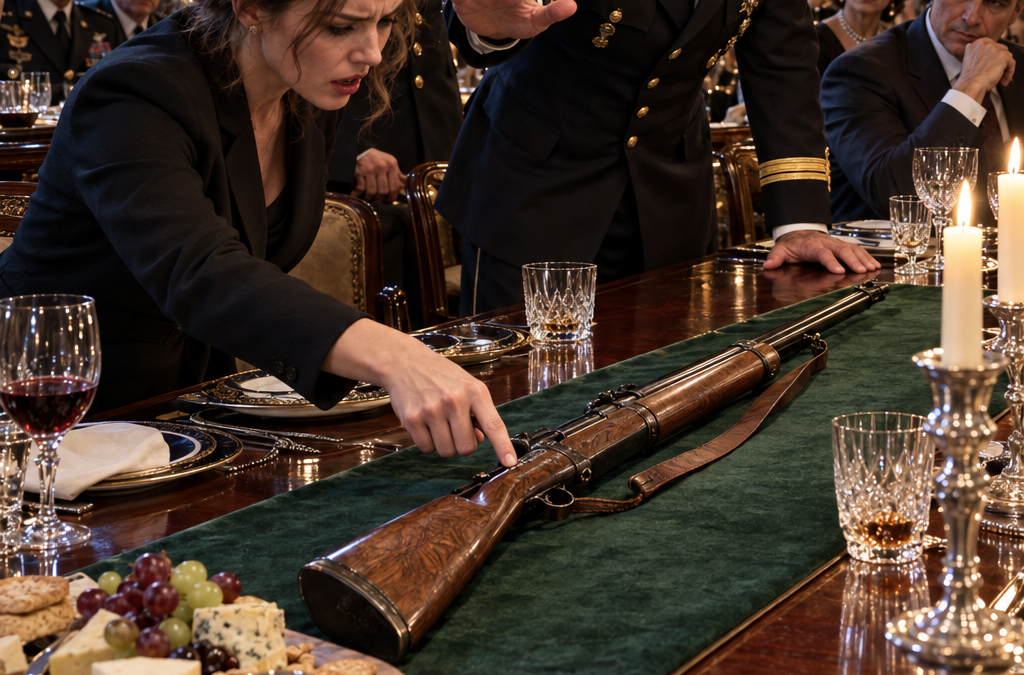
𝗙𝗨𝗟𝗟 𝗦𝗧𝗢𝗥𝗬
I would not.
Victor left. Ethan returned to the dining room. I drove home through wet Beltway traffic and told myself the evening had been exactly what I expected.
Three days later, an envelope appeared in the secure internal mail tray outside my office.
Inside was my access packet for the Cedar Ridge systems evaluation.
Nothing unusual there.
The second page was the approved observer roster.
My father’s name appeared under retired senior leaders.
Ethan’s appeared under candidate personnel.
Victor Hale’s appeared under industry technical liaison.
And beside Victor’s name, someone had handwritten a note in red ink.
Verify sponsor relationship with M. Mercer before admission.
I read it twice.
Then I closed my office door.
For the first time since that dinner, I wondered whether my father’s performance over the rifle had been covering something larger than contempt.
My father had always understood institutions better than people.
Give him a chain of command, a mission statement, a crisis with measurable objectives, and he became calm enough to make everyone around him calmer. Give him a daughter whose ambition did not fit the story he had prepared for her, and he acted as if the problem could be corrected through repetition.
When I was seventeen and told him I was interested in intelligence analysis and strategic studies, he heard desk work.
When I graduated near the top of my class and entered federal service, he heard bureaucrat.
When my assignments moved into spaces I was not permitted to discuss, he interpreted my silence as proof that nothing interesting was happening.
My mother had been different.
Anne Mercer had loved complicated people without flattening them into roles. She loved Dad without pretending he was easy. She loved Ethan without turning him into a symbol. She loved me without requiring my life to flatter her expectations.
After cancer took her when I was twenty-eight, Dad became more rigid, as if grief had hardened every part of him she used to soften.
Ethan became the obvious place for him to put everything he had lost.
At first, I understood it.
Then I watched understanding become excuse.
Dad attended Ethan’s promotions. Helped him prepare for boards. Introduced him to retired commanders. Recommended instructors. Found mentors. Mentioned names. Made calls. Eventually he began describing Ethan’s career as “the continuation of the Mercer line,” even though Ethan’s last name had once been Cole and his biological father had been every bit as real as ours.
Ethan never objected in public.
Privately, he drank too quickly at family dinners and left before dessert.
I should have noticed sooner.
A week after the rifle dinner, Ethan texted me at six in the morning.
Can we talk somewhere Dad won’t show up?
We met at a coffee shop near the Pentagon. He arrived ten minutes late, looking like he had slept in his clothes.
“You remember when I said I didn’t ask him to make calls?” he asked.
“I remember.”
He stared into his coffee. “He’s been doing more than that.”
I waited.
“He sends people things.”
“What things?”
“Training notes. Assessment rumors. Stuff he hears from Pike or guys he still knows.”
My stomach tightened, but I kept my face neutral.
“Be specific.”
Ethan looked irritated. “I don’t know what’s sensitive and what isn’t.”
“Then tell me what you received.”
“A practice sequence for Cedar Ridge.”
“When?”
“Two weeks ago.”
“From Dad?”
“Yes.”
“Where did he get it?”
“He said a friend sent it.”
“What did it contain?”
Ethan looked around the coffee shop before answering. “Distances. Lane sequence. Environmental scenarios. Equipment checks. A note about a possible extended confirmation shot.”
I did not move.
The public description of the event included equipment checks and standard range qualification. It did not include a possible extended confirmation shot.
“Did the document have markings?” I asked.
“I don’t remember.”
“You need to remember.”
“Claire, relax.”
I looked at him until he stopped speaking.
Then I said, “Forwarding evaluation material to candidates before they take the evaluation can get people removed from programs. Depending on the source, it can do more than that.”
His face lost color.
“Dad said everyone gets coaching.”
“Coaching is not the issue.”
“I didn’t ask for the file.”
“But you used it?”
He looked away.
That answered me.
Anger came slowly. Not at Ethan first, though some of it belonged to him. Most of it went straight to my father. Dad understood access rules. He had enforced them for decades. He could not pretend retirement had turned those rules into suggestions just because his own son was involved.
“Who else received it?” I asked.
“I don’t know.”
“Did Hale?”
Ethan looked back sharply. “Why are you asking about Victor?”
“Because he was asking Dad about the test at dinner.”
“He’s been around for months.”
“How many months?”
“I don’t know. Six. Maybe longer.”
“Doing what?”
“Dad says Halcyon wants experienced military feedback.”
“That isn’t what I asked.”
Ethan rubbed his forehead. “Dad’s on some advisory group. Unpaid, I think.”
Of course he was.
After retirement, my father had accumulated positions the way other men collected fishing rods. Veterans’ councils. Readiness panels. Defense-industry roundtables. Academy alumni boards. Heritage foundations. Some were legitimate. Some existed mainly to put recognizable names on letterhead.
“You need to send me exactly what he sent you,” I said.
Ethan’s expression hardened. “Are you investigating me?”
“No.”
“That sounded like an investigation.”
“It sounded like your sister telling you not to walk blindly into a range evaluation carrying material you may not have been authorized to receive.”
His jaw worked.
Finally, he nodded.
That afternoon, the document appeared in my personal encrypted inbox. I did not open it from home. The next morning, I entered a controlled workspace and asked a compliance officer named Marisol Kent to sit beside me.
The file was not classified.
That was the good news.
The bad news was that it had been marked LIMITED DISTRIBUTION — TECHNICAL ASSESSMENT WORKING DRAFT.
Candidates were not on the distribution list.
Neither were retired generals.
Marisol read the footer twice.
“Where did you get this?”
“Family member.”
She looked at me.
I could see the question forming, followed by the realization that she should not ask it casually.
“I need guidance,” I said. “Not favors.”
She nodded.
We documented receipt and sent the material to the evaluation integrity office. Then I returned to my ordinary desk, where three policy binders and a half-finished procurement memo sat waiting beneath fluorescent lights.
At 4:17 that afternoon, my father called.
I watched his name glow on the screen until the fourth ring.
“Hi, Dad.”
“Ethan tells me you frightened him over some training notes.”
Straight to it.
“I advised him to be careful.”
“You made it sound like he committed a crime.”
“I didn’t.”
“Ray sends material to half the people he mentors.”
That sentence landed heavily.
“Colonel Pike sent it?” I asked.
Silence.
Not long.
Long enough.
Dad recovered. “That is not what I said.”
“No. It isn’t.”
His voice sharpened. “Claire, you work around policy. You know how these things are. Drafts circulate.”
“Then you shouldn’t need me to explain why distribution labels exist.”
“Oh, for God’s sake.”
There he was. The version of my father who appeared whenever a conversation stopped obeying him.
“You have always done this,” he said. “You take ordinary professional relationships and turn them into rules.”
“I didn’t create the rule.”
“You enjoy enforcing it.”
I almost laughed.
Instead I asked, “Why is Victor Hale being sponsored into Cedar Ridge under your name?”
Silence again.
This time longer.
“Where did you hear that?”
“I saw the observer roster.”
“What were you doing with the observer roster?”
“My job.”
The words came out before I could stop them.
Dad gave a humorless chuckle. “Yes. The policy job.”
Something inside me went completely still.
“See you at Cedar Ridge,” I said.
He began to answer.
I ended the call.
Two hours later, an internal notice appeared on my secure terminal.
The evaluation-integrity office had accepted the working draft for review.
Below the acknowledgment was a second note.
Please do not discuss this submission with candidate Ethan Mercer, retired Brig. Gen. Michael Mercer, Col. Raymond Pike, or Halcyon Dynamics personnel pending source verification.
Four names.
Three had been at my father’s dinner.
The fourth was my brother.
And for the first time, I realized Cedar Ridge might not simply expose what my father believed about me.
It might expose what he had done to Ethan.
The morning of the evaluation, Cedar Ridge looked nothing like civilians imagine military test facilities should look. There were no heroic flags snapping in the wind. No music. No ceremony. The sky was flat November gray, frost silvered the grass beyond the parking area, and temporary signs directed visitors toward beige modular buildings that smelled like bad coffee and printer toner.
People moved with clipped purpose. Officers checked credentials. Contractors pretended not to watch one another. Technicians hauled cases onto carts. Soldiers stood in small groups, breathing steam into the cold.
I arrived alone.
Dad had texted the night before.
Leaving 0530. You may come if you insist.
I replied that I had transportation.
His answer was a thumbs-up.
At security, my public credential identified me as a Department of Defense civilian observer. That was deliberate. The officer checking names did not look twice, and I preferred it that way.
Dad stood on the observation deck with Colonel Pike and Victor Hale. Ethan was below them at a preparation table, checking equipment with careful hands.
Dad saw me first.
His expression registered surprise, annoyance, and something else. Maybe the realization that when I said I would be there, I had meant it.
He walked over.
“You made it.”
“You sound disappointed.”
“Don’t start.”
“I didn’t.”
He glanced at my badge. “Civilian observer?”
“Yes.”
“You couldn’t get something through your office?”
“This is through my office.”
He looked at the badge again as if the words might rearrange themselves into something he respected.
Before he could continue, Victor Hale approached wearing an expensive field jacket with a HALCYON DYNAMICS patch over the chest.
“Claire,” he said. “Good to see the policy world represented.”
“Victor.”
He held out his hand.
I shook it.
Dad relaxed immediately, which told me more about their relationship than anything he had said over the phone.
Victor gestured toward the range. “Big day. Platform’s been performing beautifully.”
“Then the data should be easy to defend.”
His smile hesitated.
Dad gave me a warning look.
I walked away.
The evaluation began just after eight.
Ethan’s first series was competent but uneven. He settled into the shorter engagements, recovered from an early miss, and completed the next sequence within required time. At longer distance, though, the tension began to show in his shoulders.
Dad leaned over the barrier after every relay.
Once, a range safety officer told him to step back.
Five minutes later, he was leaning forward again.
“Watch him,” a woman beside me murmured.
I turned.
She was in her fifties, compact and gray-haired, wearing the insignia of a chief warrant officer. Her badge read CWO MARISOL VALE — CERTIFICATION LEAD.
“I am,” I said.
“Not the shooter.”
She nodded toward Dad.
“He’s been trying to coach from the gallery since seven-thirty.”
“That sounds like him.”
Her eyes moved briefly to my badge, then back to my face. “Family?”
“Unfortunately visible?”
“Only to someone who has one.”
I almost smiled.
On the next relay, Ethan missed twice before connecting at the edge of the plate. The call was acceptable, but marginal.
Dad’s face tightened.
Victor whispered something to him.
Colonel Pike stared straight ahead.
That combination interested me.
Between relays, Ethan came toward the water station beneath the gallery. I met him at the railing.
“How are you doing?” I asked.
“Fine.”
“You don’t look fine.”
“Dad’s losing his mind.”
“Dad loses his mind when people fail to follow the script in his head.”
Ethan drank water.
Then he said, “The sequence changed.”
I looked at him.
“The packet he sent me doesn’t match this.”
“Good.”
His head snapped up. “You knew?”
“I knew it shouldn’t have been in your possession.”
“Claire, I trained for what he gave me.”
“That was the mistake.”
He stared at me with exhausted anger.
“Easy for you to say.”
“Yes,” I said. “Today it is.”
He flinched.
I regretted the cruelty immediately, but before I could correct it, Dad’s voice carried down from the gallery.
“Ethan. Back to prep.”
Ethan looked at him.
Something crossed his face. Not obedience exactly. Habit.
He turned and went back.
The next hour deteriorated slowly. Nothing catastrophic happened. That would have been simpler. Instead Ethan remained just good enough to continue and just inconsistent enough for Dad’s need to control the outcome to become obvious.
Dad whispered to Colonel Pike.
Pike shook his head.
Dad spoke to Victor.
Victor checked his phone.
Then a communications specialist came through the interior range door carrying a red-bordered folder.
Everyone with real test experience noticed.
Chief Vale took the folder and read for perhaps twenty seconds.
Then she stepped toward the line.
“Attention on the range.”
Conversation stopped.
“We have an amendment from the technical assessment committee. Final platform confirmation will include an extended-distance cold-bore engagement against the north-ridge target. One round. Platform certification dependent on confirmed strike.”
A technician uncovered the distant target feed on the monitor.
The gallery went silent.
The distance appeared on the screen.
1,950 meters.
I heard Victor Hale inhale.
Dad leaned forward.
Ethan did not move.
Chief Vale looked across the candidates.
“Who is prepared to take the confirmation?”
Dad spoke before anyone else.
“Ethan.”
It was not his decision to make.
Vale looked up toward the gallery.
“General Mercer, observers do not nominate shooters.”
Dad’s face reddened. “My apologies.”
But he was already looking at Ethan.
Everything we worked for, his expression said.
Ethan stepped to the bench. I watched him study the distant ridge. He checked the available environmental data, looked through the optic, lowered his head, checked again, then stayed still for nearly a minute.
Dad gripped the railing.
Victor stood beside him.
Colonel Pike had moved half a step away from both men.
Finally, Ethan straightened.
Then he did something that surprised me.
He stepped back.
“Chief Vale.”
“Yes?”
“I don’t have a firing solution I’m willing to certify as responsible under these conditions.”
No one moved.
Ethan swallowed.
“I’m declining the shot.”
Dad whispered something I could not hear.
Ethan heard it.
His shoulders stiffened.
Vale nodded once. “Declination accepted.”
That should have been the end of it.
It was, in fact, the most professional decision Ethan had made all morning.
Then Dad leaned over the railing and said, loud enough for half the deck to hear, “You trained for this exact scenario.”
The silence changed.
Chief Vale looked up.
Colonel Pike closed his eyes.
Victor Hale turned toward Dad so quickly it was almost comic.
And Ethan, still standing beside the rifle, looked at our father with disbelief so naked it hurt to see.
Chief Vale spoke carefully.
“General Mercer, what exactly do you mean by ‘this exact scenario’?”
Dad opened his mouth.
Nothing came out.
I set down my coffee.
Because at that moment, everyone on the range stopped looking at Ethan.
They started looking at my father.
My father had spent most of his life knowing what to say when a room turned toward him. I had watched him handle angry subordinates, skeptical senators, grieving families, television cameras, and once, during childhood, a drunk neighbor who arrived at our front door convinced Dad had insulted him at a veterans’ fundraiser.
He had a practiced calm that made confusion seem temporary and his authority seem permanent.
At Cedar Ridge, for perhaps the first time in my life, I watched that machinery fail.
“I meant he trained for extended-distance engagements,” Dad said.
Chief Vale did not blink.
“You said exact scenario.”
“A figure of speech.”
Ethan stared at the concrete.
Victor Hale said quietly, “Mike.”
That was a mistake.
Chief Vale looked at him next.
Colonel Pike stepped forward. “Chief, perhaps we should continue the evaluation and address observer comments separately.”
“No, sir.”
Her answer was respectful and immediate.
“The integrity office issued pre-event guidance this morning regarding potential unauthorized circulation of assessment material. I need the lane held.”
Dad looked at Pike.
Pike did not look back.
A range officer called a hold.
The active line went safe.
Technicians stepped away from equipment.
Every sound on the deck became too loud. Boots on concrete. A radio squawk. A metal thermos being placed on a bench.
Ethan removed his hearing protection.
“I told Claire,” he said.
Dad’s head turned.
“What?”
“I told her about the packet.”
Dad stared at me.
The anger arrived before the fear.
“You reported me?”
“I reported a document.”
“You had no idea what it was.”
“That is why I reported it.”
“You could have spoken to me.”
“I did.”
“When?”
“On the phone, when I asked why Victor Hale was sponsored under your name.”
Victor took one step backward.
Dad saw it.
That hurt him more than my words.
Chief Vale raised a hand.
“This discussion is over for now. Candidate Mercer, remain available. Colonel Pike, General Mercer, Mr. Hale, please wait in the administration area.”
Then she looked toward me.
“Ms. Mercer, I’ll need a statement regarding the material you received.”
“Of course.”
Dad gave a short, disbelieving laugh.
“A statement.”
I ignored him.
Vale turned back toward the range. “We still have an uncertified platform and an open test requirement. Qualified operational personnel only. Any authorized shooter currently on site?”
Nobody answered.
I knew why.
This was not a casual demonstration. The shot would become part of the platform record, and under the amended protocol, the person taking it needed credentials tied to operational long-range certification.
I remained where I was.
For ten seconds.
Maybe twelve.
I thought about walking away.
It would have been easier.
My role in the integrity review did not require me to step onto that range. My family had already created enough spectacle for one morning. I had survived years by staying quiet, by letting people underestimate the shape of my work, by refusing to perform competence for people who had not earned access to it.
Then Chief Vale looked at the roster tablet and frowned.
“Secondary authorized operator is listed as present,” she said to the range supervisor. “Identity compartmented.”
The supervisor checked his screen.
“Yes, Chief.”
Vale looked around the gallery.
I closed my eyes for half a second.
Of course.
Someone at headquarters had activated my secondary credential after the protocol changed.
I put my coffee down.
Dad was still watching me when I moved toward the gate.
“Claire,” he said. “Where are you going?”
I opened the latch.
Chief Vale turned sharply.
“Ma’am, active-side access is restricted.”
“I know.”
“You need to return to the gallery.”
“I’m the secondary operator.”
For the first time all day, Victor Hale forgot to control his face.
Dad actually smiled.
Not because he believed me.
Because he thought I had finally embarrassed myself beyond repair.
“Claire,” he said in the voice he used when trying to protect someone from their own foolishness, “this is not a policy conference.”
I walked to the biometric station.
Chief Vale watched me carefully.
“Credential?”
“Secondary partition.”
She pointed to the reader.
I placed my thumb against the glass.
The console remained dark for a moment.
Then two ascending tones sounded.
Green text appeared.
TIER ONE OPERATIONAL ACCESS VERIFIED.
The range supervisor stopped breathing loudly enough that I heard the change.
A second line appeared.
OPERATOR IDENTIFIER REQUIRED.
I entered the identifier I had used for seven years.
WRAITH.
Chief Vale looked at the screen.
Then at me.
Then back at the screen.
Dad’s smile disappeared.
Nobody applauded. Nobody gasped theatrically. Real professionals generally do not behave that way when confronted with unexpected information.
Instead, people became extremely still.
Chief Vale’s posture changed first.
“Clear the station,” she said.
A technician moved immediately.
She looked at me. “Credential current?”
“Yes.”
“Platform familiarity?”
“Enough for certification.”
“Any conflict with the integrity review?”
“No. My report concerns distribution of candidate preparation material, not platform performance.”
She nodded.
Dad walked toward the barrier.
“Claire.”
I looked at him.
“What is this?”
There were a thousand possible answers.
I chose the one that mattered least.
“My work.”
He looked as if I had spoken in another language.
I went to the firing position.
I will not romanticize what happened next. Long-range precision work is not magic. It is not instinct. It is not some noble merging of warrior and weapon. It is discipline, observation, repetition, and the ability to remain boringly methodical while everyone around you desperately wants the moment to become dramatic.
I checked the platform.
I checked the available environmental data.
I studied the ridge.
Then I settled behind the rifle and let the noise of the gallery disappear.
For years my father had imagined that people who worked behind secure doors and computer screens were standing somewhere behind the real work.
He had never understood that some jobs required you to look ordinary precisely because the work was not.
I breathed.
The world narrowed.
The cold air. The ridge. The instrument readings. The faint movement of wind over distance. The math beneath the calm. The knowledge that a room full of people had mistaken silence for absence.
I took the shot.
The wait afterward felt longer than it was.
Nobody spoke.
Then the distant target system registered the strike.
Center zone.
A faint metallic report came back across the range.
Chief Vale looked at the monitor.
“Confirmed.”
I cleared the platform and stood.
Only then did I look toward the gallery.
Ethan’s expression was not resentment.
It was relief.
That surprised me.
Dad looked older.
Victor Hale looked terrified.
Colonel Pike looked like a man mentally reviewing every conversation he had held during the previous six months.
Chief Vale handed me the electronic log.
“Operator signature.”
I signed.
Dad found his voice.
“How long?”
I handed the tablet back.
“This isn’t the place.”
“How long have you been doing this?”
“Dad.”
“How long?”
“Nine years.”
He stared at me.
For one fleeting second, I saw pain instead of anger.
Then Chief Vale’s radio crackled. She listened. Her expression hardened.
“Understood.”
She looked toward Colonel Pike and Victor.
“Administration wants all three sponsors separated pending interviews.”
Dad frowned.
“Three?”
Vale glanced at her tablet. “General Mercer, Colonel Pike, and Mr. Hale.”
Ethan stepped toward us.
“There’s something else,” he said.
Dad turned.
Ethan’s face was pale.
“The packet Dad gave me wasn’t the first one.”
And suddenly my successful shot no longer seemed like the most important thing that had happened that morning.
They put us in separate rooms in the Cedar Ridge administration building, a beige-walled place with government furniture and framed photographs of test teams standing beside equipment that had been obsolete for twenty years.
I spent forty minutes giving a factual statement to two evaluation-integrity officers. I told them when Ethan contacted me, what he sent, what my father said on the phone, and what I had observed at dinner.
I did not speculate.
Speculation is one of the easiest ways to ruin a clean record.
When they asked about my father’s relationship with Halcyon Dynamics, I said only what I knew. Victor Hale had attended our family dinner. Dad appeared comfortable with him. Dad’s name had been listed as Victor’s sponsor for Cedar Ridge.
“What about Colonel Pike?” one interviewer asked.
“I know him socially through my father.”
“Did your father ever indicate Colonel Pike was providing candidate material?”
“He implied it accidentally during a phone call. I cannot establish whether the implication was accurate.”
The interviewer nodded.
That mattered.
People think investigations are built from dramatic revelations. Most are built from disciplined distinctions between what you know, what someone said, what you inferred, and what a document can prove.
Afterward, I waited in a corridor.
Ethan came out nearly an hour later.
He looked exhausted.
“You okay?” I asked.
“No.”
“Good answer.”
He laughed once, without humor, then sat beside me.
For a while neither of us spoke.
Finally he said, “There were four packets.”
I turned.
“He started sending them when I made the advanced program.”
“Dad?”
“Yes.”
“What were they?”
“Notes. Draft standards. Instructor comments. Once, a copy of a scoring matrix.”
My stomach sank.
“Did you ever ask where he got them?”
“At first.”
“And?”
“He said old friends wanted me to succeed.”
I looked at him.
Ethan’s eyes filled with anger.
“At some point I stopped asking because I wanted to believe I’d earned everything.”
There it was.
Not corruption in the cinematic sense. No bags of money. No secret bank accounts. No foreign handlers whispering in parking garages.
Something more ordinary.
And, in our family, more destructive.
A father opening doors for the son he had chosen to carry his legacy.
A son convincing himself the doors had opened naturally.
“What did you tell them?” I asked.
“Everything.”
I nodded.
He stared at his hands.
“I’m probably done.”
“Maybe.”
“You could say something comforting.”
“I could lie.”
He gave me a sideways look.
That almost became a smile.
Then his face changed.
“Claire, why didn’t you ever tell me?”
“About my work?”
“Yes.”
“I couldn’t tell you most of it.”
“You could have said something.”
That was exactly what Dad had said in my imagination a hundred times.
I leaned back against the wall.
“When?”
Ethan frowned.
“When would I have said it? During the dinners where Dad told you courage ran through you and asked me to refill wine? During Christmas when you laughed because he called my job PowerPoint warfare? At his retirement dinner when he introduced me to four generals as the child who ‘escaped the family business’?”
Ethan closed his eyes.
“I know.”
“No,” I said quietly. “I don’t think you did.”
“I do now.”
The anger I expected did not come.
What came instead was tiredness.
“You were not the only one he was using,” I said.
Ethan looked at me.
“He used me as the disappointment so he could make your success look bigger. He used you as the success so he could keep being General Mercer after retirement.”
Ethan stared across the corridor.
“That sounds right.”
A door opened.
Colonel Pike emerged with an attorney from the installation legal office. He looked at us and stopped.
“Claire.”
“Colonel.”
He hesitated, then sat in the chair across from us.
“I owe you both an apology.”
Ethan stiffened.
Pike looked at him first. “Your father asked me for informal guidance. I gave him more than I should have.”
“Did you send the packets?” Ethan asked.
“Two of them.”
“What about the others?”
“I don’t know.”
Pike rubbed his forehead. “I thought Mike was mentoring you. I told myself nothing I sent would change your actual ability. That was convenient.”
“Did Hale get them?” I asked.
Pike looked toward me.
“I never sent Hale anything.”
“But Dad?”
“I don’t know.”
That answer sounded truthful.
A door opened farther down the hall.
Victor Hale came out accompanied by two investigators. He was not handcuffed. Nothing dramatic had happened.
But the confident man from my father’s dining room was gone.
He avoided looking at us.
One investigator carried a clear evidence sleeve containing a phone.
My father’s phone.
Dad emerged next.
He saw us sitting together.
For an instant, he seemed relieved.
Then he noticed Pike.
His face hardened.
“Ray.”
Pike stood.
“Don’t.”
Dad stopped.
Pike’s voice remained low.
“Don’t make me responsible for the part you chose.”
My father looked from him to Ethan.
Then to me.
“What did they tell you?”
“Nothing,” I said.
“Claire, this has gotten ridiculous.”
Ethan stood.
“No.”
Dad turned toward him.
“This is not ridiculous.”
Ethan’s voice shook.
“I told them about the packets.”
Dad’s face changed.
“You what?”
“All four.”
“Ethan.”
“I told them you coached me from material I wasn’t supposed to have.”
“I was helping you.”
“You were making it impossible for me to know whether I was actually good enough.”
“That’s nonsense.”
“No, Dad. It isn’t.”
People in the corridor had gone quiet.
Ethan stepped closer. Not threatening. Just finally unwilling to retreat.
“You kept telling everyone I was the continuation of the family. You never asked whether I wanted to be.”
Dad stared at him.
“You wanted this,” Dad said.
“I wanted you to be proud of me.”
The sentence landed harder than any accusation.
My father’s mouth opened.
Closed.
Ethan continued.
“I don’t know when those became the same thing.”
Dad looked at me as though I might rescue him.
I did not.
An investigator approached.
“General Mercer, we need you back inside.”
Dad turned mechanically.
Before the door closed behind him, he looked over his shoulder at Ethan.
Not at me.
That was when I understood something I should have recognized years earlier.
Dad’s favoritism had not meant Ethan was free.
It meant Ethan had been trapped in a different role.
And our father had spent years calling both cages love.
The review lasted six weeks.
Dad called me seventeen times during the first three days.
I answered once.
“I need to explain,” he said.
“No.”
“Claire.”
“You are in an active administrative review.”
“I’m your father.”
“That is not an exception to the instruction they gave you.”
“You sound like a regulation.”
“And you still sound surprised regulations apply to you.”
Silence.
Then he said, “Victor used me.”
That was the first time I heard fear in his voice.
I looked out my apartment window at traffic moving over wet pavement below.
“How?”
“He asked questions.”
“You answered them.”
“He made everything sound routine.”
“You answered him.”
“He said Halcyon needed senior-user perspective.”
“You gave it.”
“You don’t understand how these relationships work.”
I almost admired the reflex.
Even then, with his access under review and multiple people giving statements about material he had improperly distributed, his mind still reached for the explanation in which I was naïve.
“I understand enough,” I said.
Then I ended the call.
The investigation eventually established something less dramatic than espionage and more damaging than Dad wanted to admit.
Halcyon Dynamics had been competing for a major platform contract. Victor Hale had cultivated retired senior officers as informal advocates, inviting them to technical dinners, charity events, veterans’ panels, and private briefings. Most of that was legal.
My father had gone further.
He had joined an unpaid senior advisory council that Halcyon described publicly as independent.
It was not particularly independent.
Victor gave Dad early access to talking points and internal performance claims. Dad promoted Halcyon’s platform in professional circles, introduced Victor to active officers, and helped him obtain observer access to Cedar Ridge.
In return, Victor fed Dad information gathered from technical personnel about how the platform would likely be evaluated.
Dad used some of that information to coach Ethan.
Colonel Pike supplied two working drafts directly.
Victor supplied portions of two others.
Nobody had sold state secrets.
Nobody went to prison.
That disappointed the part of the internet that would have preferred a cleaner villain.
Real life was uglier because everyone involved had a sentence that sounded reasonable when spoken alone.
I was helping my son.
I was supporting innovation.
I was mentoring a promising soldier.
I assumed the information was already circulating.
I thought it was harmless.
I didn’t know he would forward it.
The problem appeared only when the sentences were placed beside one another.
Then a system of entitlement became visible.
Dad resigned from two advisory organizations before they could remove him. The Army suspended his visitor sponsorship privileges at Cedar Ridge and several associated facilities. Colonel Pike received formal administrative action and was reassigned away from evaluation oversight. Halcyon’s participation in the certification process was frozen pending independent procurement review.
Ethan’s advanced-program selection was voided.
Not as punishment for misconduct, the final letter carefully explained, but because the integrity of his preparation could not be established.
He took that hardest.
For three days, he did not answer anyone.
Then, on a Sunday afternoon, he appeared at my apartment carrying groceries.
“Are you planning to cook?” I asked.
“No.”
“Then why do you have groceries?”
“I didn’t know what people bring when they’re having a career crisis.”
I looked inside the bag.
Pasta. Ground coffee. Two oranges. Laundry detergent.
“You brought detergent?”
“It was on sale.”
For the first time in weeks, I laughed.
He stayed for dinner.
Eventually he said, “I appealed.”
“I assumed you would.”
“I withdrew it this morning.”
“Why?”
“Because the appeal was mostly Dad’s idea.”
That was progress.
Ethan twisted his fork through pasta.
“I’m going back to my unit.”
“Okay.”
“I might apply again next year.”
“Okay.”
“You don’t think I should?”
“I think you should decide whether you want the work when nobody is watching.”
He sat with that.
Then he nodded.
“What about you?” he asked.
“What about me?”
“Did the range thing cause problems?”
“No.”
“You just walked onto a military firing line, entered some terrifying credential, hit a target nobody wanted to touch, and returned to drinking coffee.”
“That summary is flattering.”
“What does Wraith mean?”
“No.”
He smiled.
“Had to try.”
I smiled back.
It was perhaps the first ordinary conversation we had held since childhood.
Dad, meanwhile, had become silent.
At first I assumed his attorneys had finally convinced him to stop calling.
Then Christmas approached, and the silence felt deliberate.
On December 22, Ethan texted me.
Dad canceled dinner.
A second message arrived.
Says he isn’t feeling well.
I knew what that meant.
Our father could face public criticism better than private shame.
The morning after Christmas, I drove to his house.
Not because I had forgiven him.
Not because I was worried he had spent the holiday alone.
I went because my mother’s possessions were still stored in the attic, and I had postponed sorting them for seven years.
Dad opened the door wearing a gray sweater and old jeans.
He looked smaller outside a uniformed crowd.
“I wasn’t expecting you.”
“I’m here for Mom’s boxes.”
His expression fell.
“Oh.”
He stepped aside.
The dining room looked exactly as it had on the night of the dinner except for one thing.
Grandpa’s Browning no longer lay on the table.
“It’s with a gunsmith,” Dad said when he saw me looking.
I turned.
He rubbed his thumb against his palm.
“You were right.”
I said nothing.
“The crack.”
“I know.”
“You knew?”
“I knew what I saw.”
He looked toward the empty table.
“If Ethan had fired it without inspection—”
“But he didn’t.”
“No.”
Dad swallowed.
Then he said something I never expected.
“I didn’t dismiss you because I thought you were wrong.”
I stared at him.
He looked ashamed.
“I dismissed you because Victor was standing there.”
The room seemed to narrow.
“What does Victor have to do with Grandpa’s rifle?”
“Nothing.”
“Then why?”
Dad lowered his eyes.
“Because I had spent years telling men like him what kind of family I had.”
There it was.
The deeper thing.
Not ignorance.
Performance.
He had known enough to look.
He had simply preferred not to look while an audience was watching.
I followed him into the kitchen because some conversations are too ugly for formal rooms. He made coffee neither of us wanted and stood beside the counter instead of sitting. Snow had started outside, thin white grains moving sideways across the backyard where Ethan and I had built a crooked treehouse twenty-five years earlier.
“What kind of family did you tell them you had?” I asked.
Dad stared into his mug.
“A military family.”
“That isn’t an answer.”
“A family that served.”
“Still not an answer.”
His jaw tightened.
For a moment, I saw the familiar impulse to outrank the conversation.
Then it passed.
“I told them Ethan was following me.”
“And me?”
He looked toward the window.
“I said you had chosen another path.”
“That sounds polite.”
“I called you the policy one.”
“The policy girl.”
His eyes closed briefly.
“Yes.”
“Why?”
He took longer than I expected.
“Because people understood it.”
I laughed once.
“People understood the version where your son was brave and your daughter was administrative.”
“That’s not how I meant it.”
“That is exactly how you meant it.”
He did not argue.
So I continued.
“You made Ethan carry your reputation. You made me carry the part of the family you were embarrassed by. Then you spent years rewarding him for staying inside your story and punishing me for leaving it.”
Dad put the mug down.
“I was proud of you.”
“Privately?”
“Yes.”
“That doesn’t help.”
“I didn’t know what you were doing.”
“You didn’t need to know.”
He looked at me.
“I needed you to be curious.”
That stopped him.
I had never said it that plainly before.
“You didn’t have to know I had operational credentials,” I said. “You didn’t have to know where I went or what I did. You could have asked whether I liked my work. You could have asked why I disappeared for weeks. You could have believed I might have reasons for not telling you things.”
“I thought you were shutting me out.”
“I was obeying my obligations.”
“I know that now.”
“No,” I said. “You know the impressive version now.”
He frowned.
“The version where I can hit a difficult target. The version that makes sense to a general. What I need you to understand is that if all I had ever done was write policy memos in a federal building, the way you treated me would still have been wrong.”
He stared at me.
That sentence seemed harder for him than the revelation at Cedar Ridge.
Because it removed the escape route.
He could not repair the past by upgrading his opinion of my résumé.
“I’m sorry,” he said.
I believed him.
That was inconvenient.
People imagine apologies simplify things. Sometimes they make decisions harder because genuine remorse does not automatically create genuine repair.
“I believe you,” I said.
His eyes lifted.
“But I’m not going back to the way things were.”
The hope left his face.
“What does that mean?”
“It means I’m not coming to dinners where my life becomes material for your audience. It means I’m not helping you rehabilitate your reputation. It means if we have a relationship, it happens privately and slowly.”
He nodded.
“And Ethan?”
“That’s between you and Ethan.”
Dad rubbed his forehead.
“I ruined his program.”
“You interfered with it.”
“I thought I was helping.”
“I know.”
“I wanted him to have opportunities.”
“No,” I said. “You wanted certainty.”
He looked at me.
“You wanted to know exactly what your children meant. Ethan was the warrior. I was the bureaucrat. Mom was the peacemaker. Everybody had a job.”
Dad sat down finally.
“And what was I?”
The question surprised me.
I thought about it.
“The audience.”
His face folded inward.
I did not enjoy saying it.
That mattered to me.
I had spent years imagining that if my father ever understood how thoroughly he had misjudged me, vindication would feel warm.
It did not.
It felt like standing in the remains of a structure after discovering the damage was real.
I went upstairs.
My mother’s boxes were labeled in her handwriting.
WINTER CLOTHES.
PHOTOS.
CLAIRE SCHOOL.
ETHAN SCHOOL.
KITCHEN / KEEP.
I sat on the attic floor for nearly two hours.
In the CLAIRE SCHOOL box, I found debate trophies, report cards, college brochures, and an envelope containing every article I had ever published before my work moved into spaces that did not produce bylines.
My father appeared at the attic door.
“Your mother kept everything.”
“I know.”
He remained there.
After a moment he said, “There’s something else.”
My body tensed.
Dad held out a folder.
Inside were copies of letters he had written on Ethan’s behalf over six years.
Recommendations.
Introductions.
Requests for consideration.
Most were within normal limits.
A few were not.
One asked Colonel Pike to “ensure Ethan receives exposure to the right evaluators before formal selection.”
Another told a program director that Ethan was “the last active continuation of a three-generation service legacy.”
I looked up.
“Last?”
Dad’s face reddened.
“I wrote that four years ago.”
“I was already serving.”
“I didn’t know in what capacity.”
“You knew I worked for Defense.”
He said nothing.
That sentence on the page bothered me more than the policy-girl jokes ever had.
Because jokes disappear into rooms.
Letters become records.
“Why are you showing me this?” I asked.
“I sent copies to the investigators.”
“Good.”
“I thought you should see them from me.”
I closed the folder.
“That does not fix it.”
“I know.”
For once, he seemed to.
I carried my mother’s boxes downstairs.
At the front door, Dad said, “Claire.”
I turned.
“I am proud of you.”
Months earlier, those words might have broken something open inside me.
Instead I felt strangely calm.
“I believe you.”
He waited.
I understood what he wanted.
So I gave him the truth.
“But I don’t need it anymore.”
His face tightened.
Then he nodded.
I left.
Three weeks later, Ethan called me after midnight.
“I got reassigned.”
“Bad?”
“Different.”
“Different how?”
“Training safety and evaluation support.”
I smiled in the dark.
“That sounds suspiciously responsible.”
“Don’t tell Dad.”
“I wouldn’t dream of it.”
He laughed.
Then became quiet.
“Claire?”
“Yeah?”
“I think I’m relieved.”
That was the moment I knew at least one of us had escaped the role Dad built for us.
By spring, the Cedar Ridge review had become old news inside the small professional circles that cared about such things. Halcyon Dynamics remained eligible to compete for future work, but the platform evaluation was repeated under a new team with outside oversight. The company lost several months. A senior government-relations executive resigned. Its advisory council dissolved after lawyers decided the word independent had been doing more work than the facts could support.
Victor Hale never contacted me.
Colonel Pike sent one handwritten note.
I was wrong. I am sorry.
I kept it because simple apologies are rare.
Dad disappeared from the panels and military dinners that had once filled his calendar. For the first few months, people called constantly. Then less often. Institutions are remarkably efficient at continuing without the people who once believed they were indispensable.
Ethan settled into his new assignment.
To everyone’s surprise except mine, he was good at it.
He had spent enough time being pressured toward bad decisions that he became almost obsessive about giving younger soldiers permission to make safe ones. When trainees hesitated, he did not mock them. When they admitted uncertainty, he did not treat it as weakness.
One afternoon, he sent me a photograph of a whiteboard.
Someone had written:
IF YOU CANNOT ACCOUNT FOR THE OUTCOME, YOU ARE NOT READY TO ACT.
Beneath it, Ethan had added:
CONFIDENCE IS NOT DATA.
I texted back:
Policy girl approves.
He replied with an insult involving binders.
That was how we became siblings again.
Not through a grand apology.
Through ordinary contact after the competition was gone.
My relationship with Dad became smaller.
That was not the same as becoming worse.
Once every few weeks, we met for breakfast.
No officers.
No contractors.
No stories told loudly enough for the next table to hear.
At first, the silence nearly killed him. He kept reaching for anecdotes about people I did not know, achievements that belonged to thirty years earlier, or questions phrased as opportunities to give advice.
Eventually, he began asking normal things.
Did I like my apartment?
Was I sleeping enough?
Had I heard from Ethan?
Was the book I carried any good?
Sometimes I answered.
Sometimes I did not.
He learned that access to a daughter works much like every other kind of access. It can be limited, and it does not become permanent simply because you once had it.
In April, the gunsmith returned Grandpa’s Browning after repairing and inspecting it.
Dad did not give it back to Ethan.
Instead, he called both of us.
We met at the house on a Sunday. The rifle rested inside its case on the dining table.
No green felt.
No crystal glasses.
No audience.
Dad stood across from us.
“I made a mistake with this,” he said.
Ethan glanced at me.
Dad continued, “Not the crack. Before that.”
He touched the edge of the case.
“I turned it into a prize.”
Neither of us spoke.
“It belonged to your grandfather,” Dad said. “It should stay in the family, but I’m not deciding what it means anymore.”
Ethan looked at the rifle.
Then at me.
“You want it?”
“No.”
He laughed.
“Neither do I.”
Dad looked surprised.
Ethan shrugged. “Put it in the cabinet with Grandpa’s letters. Let it be his.”
Something changed in Dad’s face.
He closed the case.
“All right.”
That was all.
No ceremony.
It was the healthiest thing we had ever done with an heirloom.
Two weeks later, I received the final inspector-general closure notice.
Most of it contained exactly what I expected. Corrective actions completed. Referral matters closed. Procurement safeguards updated. Access sponsorship procedures revised.
At the bottom was an attachment.
FAMILY / PERSONAL ASSOCIATION DISCLOSURE REVIEW.
I opened it.
Victor Hale had documented the dinner at my father’s house as an informal stakeholder engagement.
The guest list was attached.
My name appeared beside a note:
Claire Mercer — DoD policy staff. Possible future relationship. Father describes limited operational relevance.
I stared at the sentence.
Months earlier, it would have infuriated me.
Instead I laughed.
Not because it was funny.
Because the arrogance was almost elegant.
Victor had sat ten feet from me while evaluating my usefulness based on my father’s description. Dad had dismissed my warning about the damaged rifle partly because Victor was watching. Later, Victor had encouraged Dad’s access. Dad had used that access to shape Ethan’s preparation. That preparation became the thread investigators pulled until the entire arrangement came apart.
No secret fortune.
No dramatic revenge.
No triumphant speech.
Just consequence.
They had underestimated the wrong thing.
Not me, exactly.
They had underestimated how dangerous it was to build professional decisions on vanity.
I closed the report.
That evening, I drove west out of Washington toward a federal training site where my team was scheduled to begin a weeklong evaluation.
My assignment was changing.
After nearly a decade in work that required long absences and careful silence, I had accepted a senior role overseeing operational standards and field integration. It meant fewer deployments, more mentoring, and, ironically, more policy.
When I told Ethan, he laughed for almost a full minute.
“So after all this,” he said, “you really are becoming the policy girl?”
“Apparently.”
“Dad’s going to love that.”
“Dad doesn’t get a vote.”
The first morning at the site, I stood behind a group of younger personnel while an instructor explained the day’s exercises.
One of them, a woman in her twenties, raised her hand.
She had noticed something inconsistent in the equipment checklist.
The instructor glanced down.
For a second, I saw the temptation every experienced person feels: to assume the younger person has misunderstood.
Then he stopped himself.
“Show me.”
She did.
She was right.
They paused the exercise. Corrected the problem. Moved on.
Nobody laughed.
Nobody told her to step away.
Nobody suggested competence belonged to someone else.
I stood there with coffee warming my hands and thought about a dining room in Virginia, green felt beneath an old rifle, my father’s palm striking a mahogany table because his daughter had noticed something he did not want noticed.
For years, I believed the deepest wound was that he had underestimated me.
I had been wrong.
The real damage came from the fact that he had decided who all of us were before we had finished becoming ourselves.
He made Ethan responsible for preserving a legacy.
He made me responsible for disappointing it.
Then he called those roles love because admitting otherwise would have required him to change.
Cedar Ridge did not fix our family.
It ended the performance.
Ethan no longer needed to be Dad’s warrior.
Dad no longer had an audience willing to confuse his certainty with truth.
And I no longer carried the secret hope that one perfect achievement might finally make my father see me correctly.
He sees me better now.
That is different.
Sometimes better is enough.
A few months later, on my thirty-eighth birthday, Dad mailed me a card.
Inside, he wrote only three lines.
I hope your work matters to you.
I hope your life belongs to you.
I’m learning to leave the rest alone.
I read it twice.
Then I put it in a drawer.
I did not cry.
I did not call him.
That evening, Ethan came over with takeout and a grocery-store cake he had nearly dropped in the parking lot. We ate on my balcony while the lights came on across Northern Virginia, and he told me about a young soldier who had challenged an instructor’s assumption that morning and turned out to be right.
“Did you listen?” I asked.
Ethan gave me an offended look.
“I’m not Dad.”
“No,” I said.
He smiled.
“No. I’m not.”
My phone buzzed once on the table.
A message from Dad.
Happy birthday. No need to call. Hope it was a good day.
I looked at it.
Then I turned the phone facedown.
Ethan cut another slice of cake.
Traffic moved below us.
Somewhere across the river, people were still sitting in offices writing policies other people would later pretend were less important than action. Somewhere else, people were taking actions that would fail because no one had respected the boring work that came before them.
I had lived on both sides long enough to know better.
There had been seven silent seconds at Cedar Ridge between my shot and the confirmation from the distant steel. For a long time, I remembered those seconds as the moment my father finally discovered who I was.
Eventually, I understood that I had it backward.
I had known who I was before I walked onto that range.
The shot changed nothing about my worth.
It only removed his excuse for refusing to see it.
And once that excuse was gone, what happened next belonged to him.
What happened next to me belonged entirely to me.