𝗙𝗨𝗟𝗟 𝗦𝗧𝗢𝗥𝗬 The New CEO Fired Me as an Obsolete Disabled Engineer—Then Her Factory Learned Who Owned the Technology Keeping It Alive
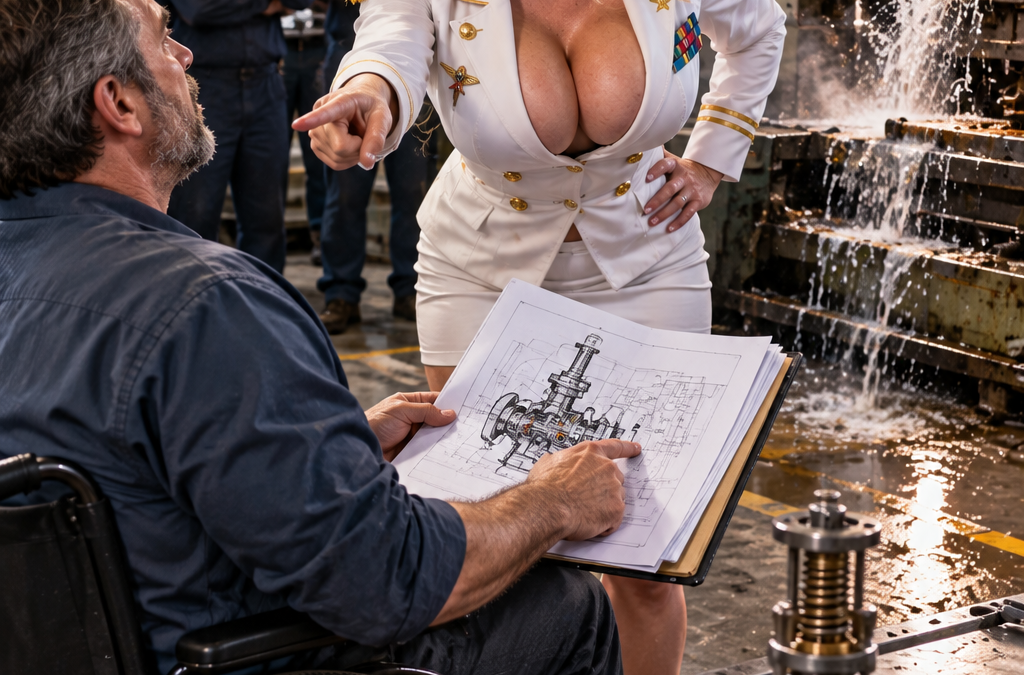
𝗙𝗨𝗟𝗟 𝗦𝗧𝗢𝗥𝗬
By the time they detected the full temperature rise, transmitted the data, triggered the controller, and opened coolant flow, the internal machine temperature could already be outside the ideal operating range.
I started thinking mechanically.
Metal expands predictably with heat.
What if thermal expansion itself controlled the response?
No software.
No delay.
No external computer.
I spent evenings in my home workshop experimenting.
Different alloys.
Different shapes.
Different spring tensions.
I designed a mechanical thermal sensor linked to a specialized flow-control valve.
As the internal temperature changed, the alloy element expanded and physically adjusted coolant flow.
Instant response.
No processor.
No network.
No algorithm.
Just thermodynamics doing what thermodynamics always does.
It took months to get right.
I built early prototypes with my own tools at home.
Bought materials myself.
Paid for test pieces myself.
And, because I had learned the hard way that good ideas become complicated once money gets involved, I spoke to a patent attorney before bringing the final version to work.
The patent application went in under my name.
Then I showed George.
He held the prototype in his hands.
“This little thing fixes my problem?”
“Maybe.”
“That’s not very confident.”
“I’m an engineer. Confidence comes after testing.”
He laughed.
We installed it on the worst machine.
I still remember watching that first production run.
Temperature climbed.
The valve reacted.
Coolant flow changed immediately.
Temperature stabilized.
Another cycle.
Stable.
Another.
Stable.
We ran harder.
Still stable.
For the first time in months, the machine completed a full production shift without a thermal fault.
George found me near the test bench the next morning.
“I want these everywhere.”
“That could get expensive.”
“I’ll pay.”
“I’m not talking manufacturing cost.”
He looked at me.
I explained the patent.
Some owners would have become angry.
Some would have argued I developed the idea because of a company problem, therefore it belonged to the company.
George asked one question.
“Did you design it on company time?”
“No.”
“Company materials?”
“No.”
“You already filed?”
“Yes.”
He nodded.
“Then it’s yours.”
That was George.
Fair.
Sometimes aggressively fair.
He could scream at a supplier for being two hours late and then turn around and pay an employee for a full week after their house burned down.
We went to lawyers.
The company needed my technology.
I needed something different.
Security.
I did not want to spend the rest of my career wondering whether the next executive would see my wheelchair and decide I was inconvenient.
So we created an unusual deal.
I granted the company an exclusive license to use my patented thermal valve and sensor system across its machinery.
The royalty?
One dollar per year.
George thought I was joking.
I wasn’t.
“You could make a lot more,” he said.
“I know.”
“Then why one dollar?”
“Because I want something else.”
“What?”
“My job.”
The agreement became very specific.
The one-dollar license remained valid only while I remained voluntarily employed by the company under my agreed employment terms.
If I resigned voluntarily, we would negotiate what happened next.
If I were fired for legitimate cause, there were separate provisions.
But if the company terminated me without cause—or if a future buyer acquired the company and simply eliminated my position—the discounted license immediately vanished.
Not later.
Immediately.
The company would then owe standard market-rate royalties for use of the patented technology, including retroactive royalties for the relevant fiscal period.
And if they wanted to keep using my system, they would have to negotiate a new license at market rates.
The agreement protected both sides.
The company saved an enormous amount of money.
I gained employment security.
George signed.
I signed.
The lawyers signed off.
Then everyone went back to work.
For years, it functioned perfectly.
We installed versions of my system across the factory.
I improved the valve.
Modified alloys.
Changed seals.
Created maintenance procedures.
Designed replacement parts.
The machines became more reliable.
Production increased.
Scrap dropped.
Shutdowns became rare.
I knew every valve in that factory.
And the floor crews knew me.
They didn’t treat me as the engineer in the wheelchair.
I was just Daniel.
If a machine sounded wrong, someone rolled over to my bench.
If I needed access under a machine, technicians helped position equipment.
If someone needed a diagnostic opinion, I gave it.
We adapted.
That is what good workplaces do.
Years passed.
Then George retired.
He had been talking about it for a while.
Grandchildren.
Travel.
Fishing.
He wanted a life that did not smell like cutting fluid.
Eventually, he sold the company to a private equity group.
The new owners held meetings.
Gave presentations.
Talked about preserving the company’s culture.
They said all the familiar things.
“We’re investing for growth.”
“We value the existing team.”
“We’re building on a strong foundation.”
“No major disruptions are planned.”
People wanted to believe them.
So did I.
Then they brought in Karen.
She was forty-one.
American.
Blond.
Beautiful.
And completely aware of it.
She had the kind of appearance people noticed immediately: long styled hair, sharp features, expensive makeup, and a dramatic figure with a very large chest she emphasized with clothing that made factory executives look at the ceiling when speaking to her.
Her favorite outfit was unlike anything I had ever seen worn by a CEO in manufacturing.
A white military-style uniform.
Tight.
Gold buttons.
Decorative shoulder details.
A fitted waist.
And a neckline cut so deeply that it seemed designed less for corporate leadership than for an extravagant yacht party.
The first time she walked through the factory in it, one machinist later told me he spent ten minutes trying to figure out which branch of the armed forces had started issuing high heels.
Karen carried herself like rank should physically clear a path in front of her.
She had charm when she wanted something.
She could laugh softly, lean closer, compliment someone, and make them feel as if they had her full attention.
Then the moment she decided someone was beneath her, the warmth vanished.
Her voice became cold.
Her eyes became dismissive.
She loved authority more than she loved understanding what the authority was responsible for.
She was also obsessed with modernization.
Especially anything involving artificial intelligence.
Every meeting seemed to include the word AI.
AI forecasting.
AI scheduling.
AI maintenance.
AI quality prediction.
AI workforce optimization.
I wasn’t anti-technology.
Far from it.
I had worked with automation my entire career.
Good technology is useful.
Bad technology with good marketing is expensive.
Karen couldn’t tell the difference.
On her first factory tour, she barely spoke to operators.
She spoke to managers.
She asked questions about labor cost per unit.
Utilization.
Overtime.
Headcount.
She stood beside machines worth hundreds of thousands of dollars without asking the technicians who kept them running what problems they had.
Then she saw me.
I was at my test bench inspecting one of the valve assemblies.
Karen stopped.
Her eyes went first to the wheelchair.
Then to the bench.
Then to me.
“Are you an employee?”
“Yes.”
“What department?”
“Mechanical engineering.”
She looked at my badge.
“Part-time?”
“Yes.”
Her expression changed.
Not dramatically.
Just enough.
“Why?”
“My employment agreement.”
“That wasn’t my question.”
“Medical reasons.”
Her eyes flicked toward the wheelchair again.
“I see.”
Three words.
I already knew.
The next day, my manager came to see me.
He looked uncomfortable.
“Karen asked why you’re part-time.”
“I assumed she might.”
“I explained.”
“And?”
“She wants to know why we don’t replace you with a full-time engineer.”
I laughed.
He didn’t.
“She said the department would get more hours for the same headcount.”
“She thinks engineering output is measured in body-hours?”
“Apparently.”
“What did you tell her?”
“That you’re the senior mechanical engineer responsible for the thermal systems.”
“And?”
“She asked whether someone younger could learn them.”
That hurt more than it should have.
Not because I thought I was young.
I wasn’t.
But younger was not a technical qualification.
Neither was walking.
My manager added, “I told her your role is specialized.”
“What did she say?”
He hesitated.
“Nothing helpful.”
Two weeks later, Karen changed my work location.
She told facilities my wheelchair created a “traffic-flow safety concern” near the main production area.
I asked for the safety assessment.
There wasn’t one.
I asked what specific hazard had been identified.
She said the new floor layout needed clear movement lanes.
I’d worked in that position for years without a single incident.
It didn’t matter.
My test bench was moved away from the main floor to a smaller side area.
I complied.
There are battles worth fighting immediately.
That one wasn’t.
Not yet.
I kept working.
Then Karen hired the consultant.
He called himself an AI industrial optimization specialist.
Young guy.
Designer sneakers.
Expensive watch.
Tablet.
Never touched a wrench that I saw.
He walked beside Karen through the plant pointing at things.
They eventually stopped at my workstation.
The consultant picked up one of our maintenance logs.
“You inspect these manually?”
“Yes.”
“How often?”
“Depends on the machine.”
He looked amused.
“Manual preventive inspection is pretty outdated.”
I looked at him.
“Metal isn’t.”
He smiled as though I had made a joke.
“We can install external sensors, aggregate the readings, and use predictive modeling to determine maintenance intervals.”
“External sensors measuring what?”
“Temperature. Vibration. Cycle load. Performance data.”
“Where?”
He pointed vaguely toward one of the stamping systems.
“Strategic locations.”
“That machine’s failure point is internal.”
“We can model internal conditions from external data.”
“Not accurately under rapid thermal cycling.”
The consultant looked at Karen.
Then back at me.
“AI can identify patterns humans miss.”
“Sure.”
My agreement made him smile.
Then I continued.
“It can also confidently model the wrong thing if you feed it the wrong measurements.”
His smile disappeared.
Karen folded her arms beneath the white jacket.
“You seem resistant.”
“To sensors?”
“To progress.”
“I designed half the system you’re standing beside.”
The consultant gave a small laugh.
Karen didn’t.
She liked the consultant because he spoke her language.
Digital transformation.
Legacy inefficiency.
Human bottlenecks.
Predictive optimization.
Scalable intelligence.
I spoke about thermal expansion, seal degradation, heat transfer, valve response time, and metal fatigue.
One language sounded modern.
The other sounded old.
Karen preferred modern.
She signed a massive contract.
Over the next month, technicians attached digital sensors to machine exteriors.
Cables appeared everywhere.
A new control room was built with large screens.
Charts.
Heat maps.
Graphs.
Dashboards.
The screens looked fantastic.
That should always make an engineer nervous.
Meanwhile, Karen’s attitude toward me worsened.
HR questioned my part-time schedule.
I showed them my contract.
They backed off.
Karen assigned me a site-inspection task involving access to elevated platforms.
I reminded HR that I physically could not climb ladders.
They reassigned it.
Then another impossible physical task appeared.
And another.
I finally asked my manager, “Is she trying to make me quit?”
He didn’t answer.
He didn’t need to.
I began documenting everything.
Not because I knew exactly what was coming.
Because experience had taught me that when a manager starts constructing reasons why you don’t fit, paper becomes memory that cannot be intimidated.
Then the AI control system went live.
Karen turned it into an event.
Managers gathered in the new control room.
The consultant gave a presentation.
Production targets appeared on the screens.
Green bars.
Percentage improvements.
Projected output gains.
Karen stood at the front wearing the white uniform beneath a spotless white hard hat.
She looked delighted.
The system began increasing machine speeds.
At first, everything seemed fine.
Output rose.
Cycle times decreased.
The dashboards stayed green.
People smiled.
The consultant pointed toward a screen.
“See? Thermal performance is stable.”
I looked at the machine.
Not the screen.
The external casing temperature looked normal.
But I knew what was happening inside.
Rapid cycling generated internal heat faster than the casing reflected it.
The mechanical valve system could compensate within limits.
But the valves were designed with maintenance and manual calibration in mind.
The AI kept increasing load.
I rolled over to Karen.
“We need to slow Line Three.”
She didn’t look at me.
“The system is within parameters.”
“The external sensors are.”
“That’s what the system monitors.”
“That’s the problem.”
The consultant sighed.
Karen turned.
“What now?”
“Internal core temperature is rising faster than the external sensors can detect.”
“The AI says it’s stable.”
“The AI doesn’t know what it isn’t measuring.”
The consultant stepped closer.
“Our model accounts for thermal lag.”
“Your model hasn’t run this equipment under these parameters long enough.”
He smirked.
“That’s why machine learning exists.”
I looked at Karen.
“Reduce speed.”
Her eyes hardened.
“No.”
“Karen.”
“Do not interrupt a live production optimization because you’re uncomfortable with new technology.”
“This isn’t discomfort.”
“You’ve opposed this project from the beginning.”
“Because the system can’t replace the mechanical safeguards.”
“No one said it would.”
“He did.”
The consultant shifted.
Karen’s voice rose enough for several managers to hear.
“You need to stop being negative.”
I felt heat crawl up my neck.
Not from embarrassment.
Anger.
“You’re pushing the machines beyond their established thermal envelope.”
“The AI is more efficient than manual human judgment.”
“This isn’t judgment. It’s heat transfer.”
She smiled.
A patronizing little smile.
“Daniel, I understand that this technology makes some people nervous.”
Some people.
Old people.
Disabled people.
People Karen thought belonged to yesterday.
“But the company cannot build its future around outdated methods just because certain employees are comfortable with them.”
I stared at her.
“Then don’t blame the machine when physics refuses your strategy.”
Her smile vanished.
“Go back to your workstation.”
I did.
Not because she was right.
Because I had warned her.
The next morning, HR called me upstairs.
I knew before entering.
Karen sat behind a glass desk in the executive office.
White uniform.
Gold buttons.
Perfect hair.
Beside her sat the HR manager.
A folder lay on the desk.
Karen didn’t greet me.
She didn’t ask how I was.
She didn’t pretend.
“We’ve completed a review of engineering staffing.”
I locked my wheelchair beside the table.
“Okay.”
“The company is moving toward a more automated predictive-maintenance model.”
“I know.”
“Your current role has become redundant.”
There it was.
I looked at HR.
The manager’s eyes dropped.
Karen continued.
“We need employees who can support a full-time modern production structure.”
“What does that mean?”
“It means the business cannot justify maintaining a part-time position with limited physical flexibility when the function can be automated.”
There are sentences you hear once and remember word for word.
That was one.
Limited physical flexibility.
She had found the corporate language for my wheelchair.
I kept my voice calm.
“Are you terminating my employment?”
“Yes.”
“Without cause?”
She hesitated.
Then lifted her chin.
“This is restructuring.”
“So yes.”
“Effective immediately.”
I nodded.
Then asked, “Have you reviewed my employment agreement?”
Karen looked annoyed.
“HR has reviewed your file.”
I turned to the HR manager.
“Have you reviewed the licensing agreement tied to the thermal valve patents?”
The manager frowned.
“Licensing agreement?”
Karen waved one hand.
“This isn’t relevant.”
“It is extremely relevant.”
“We are discussing your position.”
“My position is contractually tied to technology currently installed across your production floor.”
Karen actually laughed.
“Daniel, the company owns the technology used in company equipment.”
“No.”
Her smile faded.
“No?”
“I own the patents.”
Karen glanced at HR.
I continued.
“George licensed them to the company.”
“George no longer owns the company.”
“The agreement transferred with the sale.”
She leaned back.
“Any ancient arrangement you had with the old owner does not override the new corporate structure.”
“It isn’t ancient.”
“You know what I mean.”
“I know what the contract means.”
Karen sighed.
This time she softened her voice.
Almost flirtatiously patient.
The same technique I had watched her use on directors when she wanted agreement.
“Daniel, I understand this is emotional for you.”
I felt something inside me go cold.
“Don’t.”
She blinked.
“Don’t what?”
“Don’t explain my emotions to me.”
Her expression hardened.
I continued.
“Before you terminate me, pull the legal file.”
“This decision has been made.”
“Karen.”
I leaned forward.
“Read the agreement.”
“I don’t need to.”
“You do.”
“No.”
“Call legal.”
“Daniel—”
“Call them.”
The HR manager shifted nervously.
Karen noticed.
And that was enough to make her dig in.
Authority mattered more to her than caution.
“I am the CEO of this company.”
“Yes.”
“I understand our intellectual property portfolio.”
“You clearly don’t.”
Her cheeks reddened.
“The valves are installed on company machines.”
“Yes.”
“Therefore the company owns them.”
“No.”
“You were employed when they were implemented.”
“I patented them before licensing them.”
“That distinction is irrelevant.”
“It is literally the distinction patents exist for.”
She stood.
Her white jacket tightened across her chest as she placed both hands on the desk.
“Enough.”
I said nothing.
“You have thirty minutes to clear your personal belongings.”
The HR manager looked even more uncomfortable.
“You are not authorized to remove company equipment, manuals, documents, or components.”
“Understood.”
“And after thirty minutes, your access badge will be deactivated.”
I looked directly at her.
“One last time.”
Karen stared back.
“Review the licensing agreement before you do this.”
“No.”
“Are you certain?”
Her mouth curved.
“Absolutely.”
I nodded.
“Okay.”
That’s all I said.
Okay.
The malicious compliance started with the word Karen wanted most.
Agreement.
The HR manager followed me downstairs.
I went to my workspace.
My coworkers watched.
Some knew what was happening.
Most didn’t.
I packed my personal tools.
My reference books.
A jacket.
A framed photograph.
A few notebooks that contained personal material.
Nothing belonging to the company.
I did not touch a valve.
Did not remove a drawing.
Did not take a maintenance manual.
Did not copy a file.
Did not sabotage anything.
I followed Karen’s instruction exactly.
Thirty minutes later, I rolled through the front doors.
For the first time in many years, nobody stopped me with a machine question.
Nobody asked for calibration help.
I reached my modified van.
Transferred in.
Folded the chair system.
Then sat behind the wheel.
I expected anger.
Instead, I felt grief.
George had given me a chance when other companies saw only the wheelchair.
I had spent years making that factory better.
I had friends inside.
Machines I knew almost like people.
And a woman who had been there a few months had decided I was obsolete because my body didn’t fit her image of modern efficiency.
Then I remembered the contract.
Grief became something else.
I drove home.
Went into my study.
Opened the fireproof cabinet.
Pulled out my copy.
There it was.
The licensing agreement.
My signature.
George’s.
Attorney certifications.
Patent numbers.
Termination provisions.
I called Martin, the lawyer who had drafted it years earlier.
“Daniel?”
“Hi, Martin.”
“How are you?”
“I’ve been fired.”
Silence.
Then, “For cause?”
“No.”
“Did you resign?”
“No.”
“Acquisition termination?”
“New CEO says AI made me redundant.”
Another silence.
Then he said, very carefully, “Did they review the license?”
“I told her to.”
“And?”
“She said she didn’t need to.”
Martin exhaled.
Not quite a laugh.
“Send me the termination paperwork.”
I did.
He called back fifteen minutes later.
“Do you want to enforce?”
“Yes.”
“You understand what that means?”
“Yes.”
“The dollar license ends.”
“I know.”
“Retroactive market royalties become due.”
“I know.”
“They’ll fight.”
“Let them.”
“And continued use without a new license becomes infringement.”
“Yes.”
Martin paused.
“You sound calm.”
“I gave her three chances to read the contract.”
“Fair enough.”
We spent the afternoon preparing formal notice.
It was not emotional.
Good legal letters rarely are.
The letter stated that my involuntary termination without cause had triggered the relevant clause.
The one-dollar annual license was void.
The company’s discounted right to use the patented thermal sensor and flow-control technology had ended.
Retroactive royalties for the current fiscal period were immediately due at standard market rate.
Martin calculated the number based on production volume, installed systems, and industry licensing benchmarks.
When he told me the amount, even I went quiet.
It was enormous.
Large enough to erase most of the company’s annual profit.
Then came the harder part.
If the company wanted continued legal use of the technology, it would need to negotiate a new license at market terms.
If they continued using it without an agreement, we would pursue patent infringement claims and seek an injunction stopping use.
Martin sent everything.
Certified mail.
Email.
Karen.
HR.
Private equity board.
Corporate counsel.
While the notice traveled, the factory began proving me right.
A former coworker called three days later.
“Daniel.”
His voice sounded strange.
“What happened?”
“You sitting down?”
I looked at the wheelchair.
“Technically always.”
He laughed once.
Nervously.
Then said, “Line Three is dead.”
My stomach tightened.
“What failed?”
“Thermal runaway.”
“How bad?”
“Bad.”
He explained.
After firing me, Karen had approved another production-speed increase.
The AI system interpreted the initial performance improvement as proof that more output was available.
External sensor readings remained within modeled limits.
So it pushed harder.
The internal thermal load climbed.
Without my inspections and adjustments, one of the valves degraded.
The system didn’t understand the failure.
It saw acceptable casing temperatures and continued demanding output.
Eventually the internal machine core overheated severely.
Metal expanded.
A component seized.
The stamping machine locked in the middle of production.
A large batch of expensive material was ruined.
Internal parts were damaged.
Nobody was hurt.
That mattered more than anything.
I closed my eyes.
“Maintenance?”
“They’re trying.”
“Do they have a spare valve assembly?”
“No.”
Of course they didn’t.
I made replacement components as needed.
The design wasn’t sold through normal industrial suppliers.
“Karen told them to order one.”
“From where?”
“Exactly.”
Despite everything, I didn’t enjoy hearing it.
I knew the machine.
I knew the people trying to repair it.
A damaged production line meant overtime, missed deadlines, stress.
Karen deserved consequences.
The technicians didn’t.
My coworker continued.
“The AI guy says they can bypass your valve.”
I opened my eyes.
“They cannot.”
“Maintenance told him that.”
“What did Karen say?”
“She told them to figure it out.”
Of course.
A few hours later, apparently, Karen received Martin’s email.
According to three separate people who later told me the story, she read the first page.
Turned pale.
Then started shouting.
She called HR.
Demanded my file.
Demanded the patent paperwork.
Demanded the original acquisition documents.
The dusty legal folder she had refused to read was finally placed on her desk.
This time, she read it.
Every word.
The agreement was valid.
The company had never purchased my patent.
The private equity acquisition had transferred existing contracts.
Karen had terminated me without cause.
The one-dollar license had disappeared the moment my employment ended.
There was no loophole saying a new CEO could ignore the agreement because she disliked it.
There was no “AI modernization” exception.
There was no clause saying a wheelchair made intellectual property free.
Karen tried to keep production running anyway.
But, as I had warned her repeatedly, physics remained unimpressed.
Without the specialized valves, machines could run only at reduced loads.
Even the machines whose valves remained functional now presented a legal problem.
Continued use without a license exposed the company to infringement.
The board received Martin’s notice too.
Unlike Karen, they read contracts.
Their lawyers reviewed everything.
The result was immediate.
The company faced three simultaneous disasters.
First, the royalty bill.
Second, a production crisis.
Third, potential litigation capable of shutting down use of the technology entirely.
All because Karen wanted to remove one part-time engineer from payroll.
The board did not ask Karen to negotiate with me.
They bypassed her.
Martin called.
“The private equity group wants an emergency meeting.”
“With Karen?”
“No.”
That told me everything.
We met downtown in a neutral conference room.
I wore a dark jacket.
Nothing expensive.
Nothing dramatic.
I rolled in beside Martin.
Across the table sat the private equity firm’s senior director and corporate attorney.
No Karen.
No AI consultant.
No giant screens.
Just contracts.
The corporate attorney started.
“Mr. Carter, we’ve reviewed the agreement.”
“And?”
“We recognize that your termination activated the clause.”
Martin said nothing.
The attorney continued.
“The company wants to resolve this commercially.”
I almost smiled.
Commercially.
A word people use when they already know legal threats won’t help.
The senior director leaned forward.
“We’d like to preserve the prior arrangement.”
“No.”
He glanced at Martin.
Martin didn’t move.
“Perhaps with an increased annual payment.”
“The prior arrangement existed because I traded royalty value for employment security.”
The director nodded.
“We understand.”
“No, you understand now.”
That stung him.
I didn’t care.
“I offered your CEO a chance to review the agreement before firing me.”
The attorney nodded.
“We’re aware.”
“She refused.”
“We’re aware of that as well.”
“Then the old deal is gone.”
Martin opened our proposal.
“Retroactive royalties are payable in full.”
The director looked at the number.
His mouth tightened.
“And the ongoing license?”
“Standard market rate.”
He leaned back.
“This would have a substantial impact on operating margin.”
I spoke.
“Firing me had a substantial impact on operating margin.”
He gave me a tired look.
“We’re trying to move forward.”
“So am I.”
“What flexibility do you have?”
“None.”
Martin remained silent beside me.
I knew that silence was deliberate.
Let me decide.
The director tried again.
“The company is already absorbing losses from the equipment failure and the AI implementation.”
“That is not my financial responsibility.”
“We inherited some poor decisions.”
“You hired the person who made them.”
He didn’t answer.
I continued.
“For years, this company used my technology for one dollar annually.”
The attorney nodded.
“I could have demanded normal royalties from George.”
“You didn’t.”
“Because he respected the agreement.”
I looked at the senior director.
“He gave me employment security when I needed it.”
The room became quiet.
“I kept my side.”
I tapped the contract.
“The company decided not to keep theirs.”
The director looked at Martin.
“Is the rate really nonnegotiable?”
Martin looked at me.
I answered.
“Yes.”
They asked for a break.
We waited.
Twenty minutes later, they returned.
They agreed.
Retroactive royalties.
Full payment.
New market-rate license.
Continued permitted use of my patented valves under strict terms.
The dollar deal was dead permanently.
We signed.
A few days later, the wire transfer arrived.
I stared at the number on my banking screen.
For years I had chosen job security instead of royalties.
Karen had taken the job away.
So the royalty value came back.
With interest, metaphorically speaking.
The new licensing agreement gave me more income than I had ever expected to make.
Enough that I didn’t need another employer.
Possibly ever.
Then the board turned its attention to Karen.
I wasn’t there.
I learned the details later.
They reviewed her conduct.
The firing.
Her refusal to examine existing contracts.
The disability-related comments.
Her attempts to assign me tasks inconsistent with my accommodations.
The AI program.
The production increases.
The machine failure.
The enormous consulting expense.
The legal exposure.
The board concluded that her decisions constituted gross negligence.
Karen was fired.
Not reassigned.
Not offered coaching.
Fired.
The AI consultant’s contract was terminated.
The flashy control room lost most of its purpose.
Some sensors stayed because data collection itself was useful.
The expensive fantasy that algorithms could replace the physical engineering system was abandoned.
The company recruited a new management team.
Experienced manufacturing people.
People who understood that technology should support engineering judgment rather than replace knowledge they hadn’t bothered to understand.
They asked me to return.
The new president called personally.
“We’d like you back.”
I looked around my home workshop.
Tools.
Metal stock.
Prototype parts.
A half-finished design sitting on my bench.
“No.”
“We’ll restore your prior schedule.”
“No.”
“Full benefits.”
“No.”
“We’ll increase salary.”
I smiled.
“You really haven’t read the new license, have you?”
He laughed.
“Fair point.”
Then his voice softened.
“We could use you.”
That was harder.
Not because of management.
Because of the workers.
I missed them.
I missed the floor.
The sound.
The problems.
The satisfaction of finding a mechanical failure nobody else understood.
But something inside me had changed.
For years, security had been the thing I valued most.
I had been injured.
Then struggled to find work.
George gave me a place where my skill mattered more than the wheelchair.
I had been terrified of losing that place.
That’s why I traded millions in potential licensing revenue for a one-dollar agreement tied to employment.
Now the fear was gone.
Karen had done the thing I’d spent years trying to protect myself from.
She fired me.
And I survived.
More than survived.
“I appreciate the offer,” I said.
“But I’m done working for other people’s organizational charts.”
He understood.
These days, I work from home.
Not because I have to.
Because I want to.
My workshop is fully accessible.
Every bench is at the right height.
Tools are arranged where I can reach them.
I have a small milling machine.
A lathe.
CAD setup.
3D printer.
Electronics bench, even though I still prefer mechanical solutions.
I design strange little things now.
Some practical.
Some useless.
I have patents in progress.
A few licensing conversations.
Nothing urgent.
No quarterly targets.
No CEO standing behind me telling me steel would behave more efficiently if it embraced innovation.
Some mornings I work for six hours.
Others, twenty minutes.
Sometimes I spend an afternoon reading.
Sometimes I roll outside and watch neighbors arguing over lawn sprinklers.
My life became quieter.
For a while, I wondered whether I should thank Karen.
Not literally.
I don’t intend to send her a gift basket.
But she forced an ending I never would have chosen for myself.
The old agreement had become part of my identity.
One dollar for security.
Security had mattered because, after my injury, employment felt fragile.
Karen thought that fragility made me disposable.
She looked at a disabled older engineer working part-time and saw cost.
She didn’t see the years.
Didn’t see the patent.
Didn’t see the machines running cooler because of something I had designed in my garage.
Didn’t see the expertise people on the floor depended on.
Didn’t see the contract.
She saw a wheelchair.
A limited schedule.
A salary line.
And an opportunity to tell investors she had modernized the company.
That was her mistake.
Not believing in AI.
AI wasn’t the villain.
Tools are tools.
The mistake was believing a fashionable tool eliminated the need to understand the system it was being applied to.
The AI model did what it was asked.
It watched external sensor data.
It optimized based on those signals.
The signals were incomplete.
The model couldn’t know that unless someone who understood the machinery told the people using it.
I told them.
They chose not to listen.
That isn’t artificial intelligence replacing human intelligence.
That’s human arrogance using technology as an excuse.
Karen believed the dashboard because it told her what she wanted.
More production.
Lower labor.
Higher efficiency.
Green indicators.
The physical machine told a different story.
Heat.
Friction.
Expansion.
Failure.
And physics always gets the final vote.
The other thing I eventually understood was that George had given me more than employment.
When everyone else saw my wheelchair first, he gave me a problem.
That sounds small.
It wasn’t.
He didn’t ask whether I was inspiring.
He asked whether I could stop a machine from overheating.
I could.
That gave me myself back.
Years later, Karen tried to reverse that.
She reduced me to the chair again.
Part-time.
Physically restricted.
Inefficient.
Outdated.
She thought my value disappeared because I couldn’t climb a ladder.
But knowledge doesn’t live in someone’s legs.
Experience doesn’t become obsolete because a person moves differently.
And dignity shouldn’t depend on whether somebody currently appears useful to the person holding the budget.
I heard that Karen tried to blame the board after she was fired.
Then the HR department.
Then the old owner for signing a “ridiculous contract.”
Apparently, she also claimed I had deliberately hidden the patent arrangement from her.
That one made me laugh.
I had told her.
In the termination meeting.
To her face.
Read the agreement.
Call legal.
Check the patents.
Three opportunities.
She said she didn’t need to.
That’s the part I remember most.
Not the royalty payment.
Not the broken machine.
Not even the look people described on her face when she finally read the contract.
I remember sitting across from her while she had every chance to stop.
She could have paused.
Asked a question.
Opened a file.
Called one attorney.
Five minutes.
That was all it would have taken.
Instead, she chose certainty.
People often think incompetence means not knowing something.
It doesn’t.
Nobody knows everything.
Good leaders know that.
Incompetence becomes dangerous when someone doesn’t know something and is too arrogant to check.
Karen didn’t lose her job because she didn’t understand patent licensing.
Most CEOs aren’t patent attorneys.
She lost it because she was warned about something she didn’t understand and decided her title made understanding unnecessary.
That attitude infected everything she did.
She didn’t understand my role, so she assumed I was unnecessary.
She didn’t understand the mechanical valves, so she assumed software could replace them.
She didn’t understand the contract, so she assumed corporate ownership erased it.
She didn’t understand the thermal behavior, so she assumed the dashboard was right.
She didn’t understand disability, so she assumed accommodation meant inefficiency.
Every disaster came from the same place.
She believed uncertainty was weakness.
George taught me the opposite.
Whenever he didn’t understand something, he would ask.
“Show me.”
“Explain it.”
“What am I missing?”
That’s why his company grew.
Not because he always knew the answer.
Because he respected the people who did.
I still hear from former coworkers.
The factory recovered.
Production stabilized.
My valves are maintained under procedures I helped document years ago.
The new managers stopped trying to push the machines beyond sensible limits.
The AI disaster became one of those stories new employees hear without knowing whether to believe it.
One technician told me Karen’s old office was converted into a conference room.
Apparently someone removed the giant white leather executive chair she’d ordered.
I asked where it went.
“Storage.”
That seemed appropriate.
A few months ago, George visited me.
He had heard the story.
Of course he had.
Retired factory owners still know everything happening in their factories.
He rolled a stool beside my workbench.
Looked around.
Then said, “You know, when I signed that one-dollar agreement, my lawyer told me I was crazy.”
“You were.”
“He said someday someone would fire you without reading it.”
“You should’ve listened.”
“I did.”
“What?”
George smiled.
“That’s why the clause was there.”
I laughed.
Then he looked at the prototype on my bench.
“What does that do?”
I explained.
He listened.
Same as always.
No pretending.
No interrupting.
No telling me some software could do it better before he understood what “it” was.
At one point, he picked up a small component.
“This yours too?”
“Yes.”
“Patent?”
“Working on it.”
He put it down carefully.
“You charging a dollar again?”
“Absolutely not.”
He laughed so hard he had to wipe his eyes.
Later, after he left, I sat alone in the workshop.
The sun was coming through the windows.
Metal shavings glittered under the bench.
For a second, I thought about the man I had been after the accident.
Angry.
Scared.
Certain that the wheelchair had reduced the number of futures available to me.
I wanted security so badly that I gave away valuable technology for one dollar just to make sure someone couldn’t casually discard me.
Maybe that was understandable.
Maybe it was fear.
Probably both.
Then someone casually discarded me anyway.
And somehow, that became the thing that finally freed me from needing their permission to feel secure.
Karen thought she was eliminating an obsolete employee.
She freed an inventor from his employment contract.
She thought she was saving a part-time salary.
She converted a one-dollar license into market-rate royalties.
She thought she was replacing old-fashioned engineering with artificial intelligence.
She discovered that the “old-fashioned engineering” was the only reason her machines could survive the production rates she wanted.
And she thought my wheelchair meant I had no leverage.
That was perhaps the biggest mistake.
Leverage isn’t always visible.
Sometimes it looks like a title.
Sometimes a bank account.
Sometimes a lawyer.
Sometimes a patent.
Sometimes it looks like a quiet man sitting in a wheelchair beside a machine everyone else assumes will keep running forever.
Until he leaves.
I never wanted the factory to fail.
I want to make that clear.
When my former coworker told me the machine had overheated, I wasn’t celebrating.
People worked there.
Families depended on those paychecks.
A catastrophic machine failure can hurt someone.
Thankfully, nobody was injured.
That mattered far more than vindication.
I would never sabotage equipment.
Never remove critical parts.
Never intentionally create danger.
I didn’t have to.
Karen ordered me not to touch company equipment.
So I didn’t.
She ordered me to leave.
So I left.
She fired the person who inspected and calibrated the system.
She increased production anyway.
She trusted incomplete measurements.
The machine failed because reality continued behaving normally after Karen decided normal rules no longer applied.
That is what made the entire thing so absurd.
I didn’t defeat her.
A contract did.
A valve did.
Thermal expansion did.
Her own signatures and decisions did.
All I did was stop protecting her from consequences.
The last time I heard anything about Karen directly was nearly a year later.
A former colleague said she’d applied for another executive role in manufacturing.
He didn’t know whether she got it.
I didn’t ask.
I had reached a point where her future no longer interested me.
Mine did.
That was another kind of freedom.
I spend less time thinking about what happened now.
But occasionally I find myself holding one of the valve assemblies in my workshop.
It’s not impressive to look at.
A small piece of engineered metal.
No glowing screens.
No artificial intelligence.
No dramatic graphics.
You could hold the essential mechanism in two hands.
Yet that little device taught me more about people than most management books ever could.
Systems survive because someone understands them.
Respect that person.
It doesn’t matter whether they’re young or old.
Standing or sitting.
Full-time or part-time.
Wearing a tailored suit or grease-stained work clothes.
If you don’t understand why something works, don’t assume the person maintaining it is unnecessary simply because everything currently seems fine.
Sometimes everything seems fine precisely because they’re there.
Karen walked into a functioning factory and saw waste.
She saw too many workers.
Too much manual inspection.
Too much experience.
Too little automation.
She assumed stability happened naturally.
It didn’t.
Stability was being maintained.
Quietly.
Every day.
By people she rarely bothered to ask.
And that is the mistake arrogant leaders make again and again.
They inherit something that works and confuse inheritance with proof of their own genius.
Then they remove the people holding it together.
For a while, nothing happens.
Then a bearing screams.
A valve sticks.
A customer leaves.
A deadline is missed.
A machine stops.
And suddenly everybody wants to know who used to understand the system.
In Karen’s case, the answer was the old disabled engineer she had given thirty minutes to leave.
By then, I was already home.
And the one-dollar deal was gone forever.
𝗧𝗛𝗘 𝗘𝗡𝗗
The New CEO Fired Me as an Obsolete Disabled Engineer—Then Her Factory Learned Who Owned the Technology Keeping It Alive
Karen looked at my wheelchair, called me an outdated expense, and gave me thirty minutes to disappear from the factory I had helped keep alive for almost two decades.
She was so certain artificial intelligence had made me useless that she refused to read the contract I begged her to check.
By the time she finally opened that file, one of her machines was already destroying itself.
I have been a mechanical engineer for most of my adult life.
Not the kind who spends every day making colorful presentations about theoretical systems.
I like metal.
Bearings.
Valves.
Springs.
Heat.
Pressure.
Machines you can touch.
Machines that make noise when they’re unhappy.
Machines that tell you something is wrong long before a computer dashboard catches up, if you know how to listen.
There is something honest about mechanical systems.
They do not care about titles.
They do not care how expensive your suit is.
They do not care whether your business card says CEO.
If a shaft is misaligned, it fails.
If a bearing has no lubrication, it burns.
If metal expands beyond tolerance, no motivational speech in the world will convince it otherwise.
Physics is brutally fair.
People are more complicated.
I learned that after the accident.
I was thirty-two when it happened.
Different company.
Different factory.
Different life.
We were servicing a piece of heavy equipment when part of the support system failed.
I remember noise.
Someone shouting.
Then metal coming down.
There are pieces of that day I still don’t remember clearly.
Maybe that’s a blessing.
I remember waking up in the hospital.
I remember my wife sitting beside me, holding my hand with both of hers.
I remember a doctor explaining spinal damage in a voice so gentle that I understood how bad the news was before he finished the sentence.
I remember asking when I would walk again.
Nobody answered immediately.
That silence changed my life.
The doctors did everything they could.
Surgeries.
Rehabilitation.
Months of physical therapy.
More procedures.
More therapy.
Eventually the truth became impossible to negotiate with.
I wasn’t going to walk again.
People love telling stories about overcoming adversity because those stories usually skip the ugly parts.
The anger.
The humiliation of needing help with things you once did without thinking.
The first time you realize a doorway is too narrow.
The first time you arrive somewhere and discover that the only accessible entrance is around the back beside the dumpsters.
The first job interview where a person’s eyes move from your résumé to your wheelchair and you know the interview is already over.
I hated those months.
Then I got tired of hating them.
I still had my brain.
I still understood machines.
I could still design.
I could still solve problems.
My legs didn’t know that.
The engineering did.
So I started looking for work.
It was difficult.
Some companies were polite.
Some less so.
One interviewer spent twenty minutes asking whether I could “handle the physical demands of a dynamic manufacturing environment” even though the position involved mostly design work.
Another company loved my qualifications until they realized they’d have to modify a workstation.
Then I met George.
George owned a manufacturing company producing specialized metal components for automotive and aerospace customers.
It was not glamorous.
The factory was loud, hot, dirty, and busy.
Exactly my kind of place.
George interviewed me himself.
He was in his late fifties then.
Big hands.
Gray mustache.
Shirt sleeves rolled up.
He didn’t stare at the wheelchair.
Didn’t ask awkward inspirational questions.
Didn’t tell me how brave I was.
He pushed a set of thermal failure reports across his desk.
“Our stamping machines keep overheating.”
I looked through them.
“How often?”
“Too often.”
“What fails?”
“Valves. Sometimes sensors. Sometimes we lose a whole batch before shutdown.”
“Internal temperature?”
“Spikes faster than the electronic system detects.”
I read for another minute.
Then asked, “Can I see the machine?”
That was the interview.
George rolled with me onto the floor.
We spent almost an hour around the worst machine.
I looked at the cooling lines.
The valve layout.
Existing sensors.
Flow rates.
The timing of each production cycle.
Then I told him, “Your control system is reacting too late.”
“I know.”
“No. I mean mechanically late. You’re measuring after the temperature is already climbing faster than the coolant response.”
“What would you do?”
“Stop waiting for a computer to decide the machine is hot.”
George smiled.
“Go on.”
I did.
He hired me before lunch.
Because of my medical appointments and the fatigue that still came with long days, we agreed on a part-time schedule.
George didn’t care.
“Fix the machine,” he said. “Then we’ll worry about hours.”
I spent the next several months obsessed with that overheating problem.
The electronic temperature sensors weren’t necessarily bad.
They were simply wrong for the speed and conditions of the process.
By the time they detected the full temperature rise, transmitted the data, triggered the controller, and opened coolant flow, the internal machine temperature could already be outside the ideal operating range.
I started thinking mechanically.
Metal expands predictably with heat.
What if thermal expansion itself controlled the response?
No software.
No delay.
No external computer.
I spent evenings in my home workshop experimenting.
Different alloys.
Different shapes.
Different spring tensions.
I designed a mechanical thermal sensor linked to a specialized flow-control valve.
As the internal temperature changed, the alloy element expanded and physically adjusted coolant flow.
Instant response.
No processor.
No network.
No algorithm.
Just thermodynamics doing what thermodynamics always does.
It took months to get right.
I built early prototypes with my own tools at home.
Bought materials myself.
Paid for test pieces myself.
And, because I had learned the hard way that good ideas become complicated once money gets involved, I spoke to a patent attorney before bringing the final version to work.
The patent application went in under my name.
Then I showed George.
He held the prototype in his hands.
“This little thing fixes my problem?”
“Maybe.”
“That’s not very confident.”
“I’m an engineer. Confidence comes after testing.”
He laughed.
We installed it on the worst machine.
I still remember watching that first production run.
Temperature climbed.
The valve reacted.
Coolant flow changed immediately.
Temperature stabilized.
Another cycle.
Stable.
Another.
Stable.
We ran harder.
Still stable.
For the first time in months, the machine completed a full production shift without a thermal fault.
George found me near the test bench the next morning.
“I want these everywhere.”
“That could get expensive.”
“I’ll pay.”
“I’m not talking manufacturing cost.”
He looked at me.
I explained the patent.
Some owners would have become angry.
Some would have argued I developed the idea because of a company problem, therefore it belonged to the company.
George asked one question.
“Did you design it on company time?”
“No.”
“Company materials?”
“No.”
“You already filed?”
“Yes.”
He nodded.
“Then it’s yours.”
That was George.
Fair.
Sometimes aggressively fair.
He could scream at a supplier for being two hours late and then turn around and pay an employee for a full week after their house burned down.
We went to lawyers.
The company needed my technology.
I needed something different.
Security.
I did not want to spend the rest of my career wondering whether the next executive would see my wheelchair and decide I was inconvenient.
So we created an unusual deal.
I granted the company an exclusive license to use my patented thermal valve and sensor system across its machinery.
The royalty?
One dollar per year.
George thought I was joking.
I wasn’t.
“You could make a lot more,” he said.
“I know.”
“Then why one dollar?”
“Because I want something else.”
“What?”
“My job.”
The agreement became very specific.
The one-dollar license remained valid only while I remained voluntarily employed by the company under my agreed employment terms.
If I resigned voluntarily, we would negotiate what happened next.
If I were fired for legitimate cause, there were separate provisions.
But if the company terminated me without cause—or if a future buyer acquired the company and simply eliminated my position—the discounted license immediately vanished.
Not later.
Immediately.
The company would then owe standard market-rate royalties for use of the patented technology, including retroactive royalties for the relevant fiscal period.
And if they wanted to keep using my system, they would have to negotiate a new license at market rates.
The agreement protected both sides.
The company saved an enormous amount of money.
I gained employment security.
George signed.
I signed.
The lawyers signed off.
Then everyone went back to work.
For years, it functioned perfectly.
We installed versions of my system across the factory.
I improved the valve.
Modified alloys.
Changed seals.
Created maintenance procedures.
Designed replacement parts.
The machines became more reliable.
Production increased.
Scrap dropped.
Shutdowns became rare.
I knew every valve in that factory.
And the floor crews knew me.
They didn’t treat me as the engineer in the wheelchair.
I was just Daniel.
If a machine sounded wrong, someone rolled over to my bench.
If I needed access under a machine, technicians helped position equipment.
If someone needed a diagnostic opinion, I gave it.
We adapted.
That is what good workplaces do.
Years passed.
Then George retired.
He had been talking about it for a while.
Grandchildren.
Travel.
Fishing.
He wanted a life that did not smell like cutting fluid.
Eventually, he sold the company to a private equity group.
The new owners held meetings.
Gave presentations.
Talked about preserving the company’s culture.
They said all the familiar things.
“We’re investing for growth.”
“We value the existing team.”
“We’re building on a strong foundation.”
“No major disruptions are planned.”
People wanted to believe them.
So did I.
Then they brought in Karen.
She was forty-one.
American.
Blond.
Beautiful.
And completely aware of it.
She had the kind of appearance people noticed immediately: long styled hair, sharp features, expensive makeup, and a dramatic figure with a very large chest she emphasized with clothing that made factory executives look at the ceiling when speaking to her.
Her favorite outfit was unlike anything I had ever seen worn by a CEO in manufacturing.
A white military-style uniform.
Tight.
Gold buttons.
Decorative shoulder details.
A fitted waist.
And a neckline cut so deeply that it seemed designed less for corporate leadership than for an extravagant yacht party.
The first time she walked through the factory in it, one machinist later told me he spent ten minutes trying to figure out which branch of the armed forces had started issuing high heels.
Karen carried herself like rank should physically clear a path in front of her.
She had charm when she wanted something.
She could laugh softly, lean closer, compliment someone, and make them feel as if they had her full attention.
Then the moment she decided someone was beneath her, the warmth vanished.
Her voice became cold.
Her eyes became dismissive.
She loved authority more than she loved understanding what the authority was responsible for.
She was also obsessed with modernization.
Especially anything involving artificial intelligence.
Every meeting seemed to include the word AI.
AI forecasting.
AI scheduling.
AI maintenance.
AI quality prediction.
AI workforce optimization.
I wasn’t anti-technology.
Far from it.
I had worked with automation my entire career.
Good technology is useful.
Bad technology with good marketing is expensive.
Karen couldn’t tell the difference.
On her first factory tour, she barely spoke to operators.
She spoke to managers.
She asked questions about labor cost per unit.
Utilization.
Overtime.
Headcount.
She stood beside machines worth hundreds of thousands of dollars without asking the technicians who kept them running what problems they had.
Then she saw me.
I was at my test bench inspecting one of the valve assemblies.
Karen stopped.
Her eyes went first to the wheelchair.
Then to the bench.
Then to me.
“Are you an employee?”
“Yes.”
“What department?”
“Mechanical engineering.”
She looked at my badge.
“Part-time?”
“Yes.”
Her expression changed.
Not dramatically.
Just enough.
“Why?”
“My employment agreement.”
“That wasn’t my question.”
“Medical reasons.”
Her eyes flicked toward the wheelchair again.
“I see.”
Three words.
I already knew.
The next day, my manager came to see me.
He looked uncomfortable.
“Karen asked why you’re part-time.”
“I assumed she might.”
“I explained.”
“And?”
“She wants to know why we don’t replace you with a full-time engineer.”
I laughed.
He didn’t.
“She said the department would get more hours for the same headcount.”
“She thinks engineering output is measured in body-hours?”
“Apparently.”
“What did you tell her?”
“That you’re the senior mechanical engineer responsible for the thermal systems.”
“And?”
“She asked whether someone younger could learn them.”
That hurt more than it should have.
Not because I thought I was young.
I wasn’t.
But younger was not a technical qualification.
Neither was walking.
My manager added, “I told her your role is specialized.”
“What did she say?”
He hesitated.
“Nothing helpful.”
Two weeks later, Karen changed my work location.
She told facilities my wheelchair created a “traffic-flow safety concern” near the main production area.
I asked for the safety assessment.
There wasn’t one.
I asked what specific hazard had been identified.
She said the new floor layout needed clear movement lanes.
I’d worked in that position for years without a single incident.
It didn’t matter.
My test bench was moved away from the main floor to a smaller side area.
I complied.
There are battles worth fighting immediately.
That one wasn’t.
Not yet.
I kept working.
Then Karen hired the consultant.
He called himself an AI industrial optimization specialist.
Young guy.
Designer sneakers.
Expensive watch.
Tablet.
Never touched a wrench that I saw.
He walked beside Karen through the plant pointing at things.
They eventually stopped at my workstation.
The consultant picked up one of our maintenance logs.
“You inspect these manually?”
“Yes.”
“How often?”
“Depends on the machine.”
He looked amused.
“Manual preventive inspection is pretty outdated.”
I looked at him.
“Metal isn’t.”
He smiled as though I had made a joke.
“We can install external sensors, aggregate the readings, and use predictive modeling to determine maintenance intervals.”
“External sensors measuring what?”
“Temperature. Vibration. Cycle load. Performance data.”
“Where?”
He pointed vaguely toward one of the stamping systems.
“Strategic locations.”
“That machine’s failure point is internal.”
“We can model internal conditions from external data.”
“Not accurately under rapid thermal cycling.”
The consultant looked at Karen.
Then back at me.
“AI can identify patterns humans miss.”
“Sure.”
My agreement made him smile.
Then I continued.
“It can also confidently model the wrong thing if you feed it the wrong measurements.”
His smile disappeared.
Karen folded her arms beneath the white jacket.
“You seem resistant.”
“To sensors?”
“To progress.”
“I designed half the system you’re standing beside.”
The consultant gave a small laugh.
Karen didn’t.
She liked the consultant because he spoke her language.
Digital transformation.
Legacy inefficiency.
Human bottlenecks.
Predictive optimization.
Scalable intelligence.
I spoke about thermal expansion, seal degradation, heat transfer, valve response time, and metal fatigue.
One language sounded modern.
The other sounded old.
Karen preferred modern.
She signed a massive contract.
Over the next month, technicians attached digital sensors to machine exteriors.
Cables appeared everywhere.
A new control room was built with large screens.
Charts.
Heat maps.
Graphs.
Dashboards.
The screens looked fantastic.
That should always make an engineer nervous.
Meanwhile, Karen’s attitude toward me worsened.
HR questioned my part-time schedule.
I showed them my contract.
They backed off.
Karen assigned me a site-inspection task involving access to elevated platforms.
I reminded HR that I physically could not climb ladders.
They reassigned it.
Then another impossible physical task appeared.
And another.
I finally asked my manager, “Is she trying to make me quit?”
He didn’t answer.
He didn’t need to.
I began documenting everything.
Not because I knew exactly what was coming.
Because experience had taught me that when a manager starts constructing reasons why you don’t fit, paper becomes memory that cannot be intimidated.
Then the AI control system went live.
Karen turned it into an event.
Managers gathered in the new control room.
The consultant gave a presentation.
Production targets appeared on the screens.
Green bars.
Percentage improvements.
Projected output gains.
Karen stood at the front wearing the white uniform beneath a spotless white hard hat.
She looked delighted.
The system began increasing machine speeds.
At first, everything seemed fine.
Output rose.
Cycle times decreased.
The dashboards stayed green.
People smiled.
The consultant pointed toward a screen.
“See? Thermal performance is stable.”
I looked at the machine.
Not the screen.
The external casing temperature looked normal.
But I knew what was happening inside.
Rapid cycling generated internal heat faster than the casing reflected it.
The mechanical valve system could compensate within limits.
But the valves were designed with maintenance and manual calibration in mind.
The AI kept increasing load.
I rolled over to Karen.
“We need to slow Line Three.”
She didn’t look at me.
“The system is within parameters.”
“The external sensors are.”
“That’s what the system monitors.”
“That’s the problem.”
The consultant sighed.
Karen turned.
“What now?”
“Internal core temperature is rising faster than the external sensors can detect.”
“The AI says it’s stable.”
“The AI doesn’t know what it isn’t measuring.”
The consultant stepped closer.
“Our model accounts for thermal lag.”
“Your model hasn’t run this equipment under these parameters long enough.”
He smirked.
“That’s why machine learning exists.”
I looked at Karen.
“Reduce speed.”
Her eyes hardened.
“No.”
“Karen.”
“Do not interrupt a live production optimization because you’re uncomfortable with new technology.”
“This isn’t discomfort.”
“You’ve opposed this project from the beginning.”
“Because the system can’t replace the mechanical safeguards.”
“No one said it would.”
“He did.”
The consultant shifted.
Karen’s voice rose enough for several managers to hear.
“You need to stop being negative.”
I felt heat crawl up my neck.
Not from embarrassment.
Anger.
“You’re pushing the machines beyond their established thermal envelope.”
“The AI is more efficient than manual human judgment.”
“This isn’t judgment. It’s heat transfer.”
She smiled.
A patronizing little smile.
“Daniel, I understand that this technology makes some people nervous.”
Some people.
Old people.
Disabled people.
People Karen thought belonged to yesterday.
“But the company cannot build its future around outdated methods just because certain employees are comfortable with them.”
I stared at her.
“Then don’t blame the machine when physics refuses your strategy.”
Her smile vanished.
“Go back to your workstation.”
I did.
Not because she was right.
Because I had warned her.
The next morning, HR called me upstairs.
I knew before entering.
Karen sat behind a glass desk in the executive office.
White uniform.
Gold buttons.
Perfect hair.
Beside her sat the HR manager.
A folder lay on the desk.
Karen didn’t greet me.
She didn’t ask how I was.
She didn’t pretend.
“We’ve completed a review of engineering staffing.”
I locked my wheelchair beside the table.
“Okay.”
“The company is moving toward a more automated predictive-maintenance model.”
“I know.”
“Your current role has become redundant.”
There it was.
I looked at HR.
The manager’s eyes dropped.
Karen continued.
“We need employees who can support a full-time modern production structure.”
“What does that mean?”
“It means the business cannot justify maintaining a part-time position with limited physical flexibility when the function can be automated.”
There are sentences you hear once and remember word for word.
That was one.
Limited physical flexibility.
She had found the corporate language for my wheelchair.
I kept my voice calm.
“Are you terminating my employment?”
“Yes.”
“Without cause?”
She hesitated.
Then lifted her chin.
“This is restructuring.”
“So yes.”
“Effective immediately.”
I nodded.
Then asked, “Have you reviewed my employment agreement?”
Karen looked annoyed.
“HR has reviewed your file.”
I turned to the HR manager.
“Have you reviewed the licensing agreement tied to the thermal valve patents?”
The manager frowned.
“Licensing agreement?”
Karen waved one hand.
“This isn’t relevant.”
“It is extremely relevant.”
“We are discussing your position.”
“My position is contractually tied to technology currently installed across your production floor.”
Karen actually laughed.
“Daniel, the company owns the technology used in company equipment.”
“No.”
Her smile faded.
“No?”
“I own the patents.”
Karen glanced at HR.
I continued.
“George licensed them to the company.”
“George no longer owns the company.”
“The agreement transferred with the sale.”
She leaned back.
“Any ancient arrangement you had with the old owner does not override the new corporate structure.”
“It isn’t ancient.”
“You know what I mean.”
“I know what the contract means.”
Karen sighed.
This time she softened her voice.
Almost flirtatiously patient.
The same technique I had watched her use on directors when she wanted agreement.
“Daniel, I understand this is emotional for you.”
I felt something inside me go cold.
“Don’t.”
She blinked.
“Don’t what?”
“Don’t explain my emotions to me.”
Her expression hardened.
I continued.
“Before you terminate me, pull the legal file.”
“This decision has been made.”
“Karen.”
I leaned forward.
“Read the agreement.”
“I don’t need to.”
“You do.”
“No.”
“Call legal.”
“Daniel—”
“Call them.”
The HR manager shifted nervously.
Karen noticed.
And that was enough to make her dig in.
Authority mattered more to her than caution.
“I am the CEO of this company.”
“Yes.”
“I understand our intellectual property portfolio.”
“You clearly don’t.”
Her cheeks reddened.
“The valves are installed on company machines.”
“Yes.”
“Therefore the company owns them.”
“No.”
“You were employed when they were implemented.”
“I patented them before licensing them.”
“That distinction is irrelevant.”
“It is literally the distinction patents exist for.”
She stood.
Her white jacket tightened across her chest as she placed both hands on the desk.
“Enough.”
I said nothing.
“You have thirty minutes to clear your personal belongings.”
The HR manager looked even more uncomfortable.
“You are not authorized to remove company equipment, manuals, documents, or components.”
“Understood.”
“And after thirty minutes, your access badge will be deactivated.”
I looked directly at her.
“One last time.”
Karen stared back.
“Review the licensing agreement before you do this.”
“No.”
“Are you certain?”
Her mouth curved.
“Absolutely.”
I nodded.
“Okay.”
That’s all I said.
Okay.
The malicious compliance started with the word Karen wanted most.
Agreement.
The HR manager followed me downstairs.
I went to my workspace.
My coworkers watched.
Some knew what was happening.
Most didn’t.
I packed my personal tools.
My reference books.
A jacket.
A framed photograph.
A few notebooks that contained personal material.
Nothing belonging to the company.
I did not touch a valve.
Did not remove a drawing.
Did not take a maintenance manual.
Did not copy a file.
Did not sabotage anything.
I followed Karen’s instruction exactly.
Thirty minutes later, I rolled through the front doors.
For the first time in many years, nobody stopped me with a machine question.
Nobody asked for calibration help.
I reached my modified van.
Transferred in.
Folded the chair system.
Then sat behind the wheel.
I expected anger.
Instead, I felt grief.
George had given me a chance when other companies saw only the wheelchair.
I had spent years making that factory better.
I had friends inside.
Machines I knew almost like people.
And a woman who had been there a few months had decided I was obsolete because my body didn’t fit her image of modern efficiency.
Then I remembered the contract.
Grief became something else.
I drove home.
Went into my study.
Opened the fireproof cabinet.
Pulled out my copy.
There it was.
The licensing agreement.
My signature.
George’s.
Attorney certifications.
Patent numbers.
Termination provisions.
I called Martin, the lawyer who had drafted it years earlier.
“Daniel?”
“Hi, Martin.”
“How are you?”
“I’ve been fired.”
Silence.
Then, “For cause?”
“No.”
“Did you resign?”
“No.”
“Acquisition termination?”
“New CEO says AI made me redundant.”
Another silence.
Then he said, very carefully, “Did they review the license?”
“I told her to.”
“And?”
“She said she didn’t need to.”
Martin exhaled.
Not quite a laugh.
“Send me the termination paperwork.”
I did.
He called back fifteen minutes later.
“Do you want to enforce?”
“Yes.”
“You understand what that means?”
“Yes.”
“The dollar license ends.”
“I know.”
“Retroactive market royalties become due.”
“I know.”
“They’ll fight.”
“Let them.”
“And continued use without a new license becomes infringement.”
“Yes.”
Martin paused.
“You sound calm.”
“I gave her three chances to read the contract.”
“Fair enough.”
We spent the afternoon preparing formal notice.
It was not emotional.
Good legal letters rarely are.
The letter stated that my involuntary termination without cause had triggered the relevant clause.
The one-dollar annual license was void.
The company’s discounted right to use the patented thermal sensor and flow-control technology had ended.
Retroactive royalties for the current fiscal period were immediately due at standard market rate.
Martin calculated the number based on production volume, installed systems, and industry licensing benchmarks.
When he told me the amount, even I went quiet.
It was enormous.
Large enough to erase most of the company’s annual profit.
Then came the harder part.
If the company wanted continued legal use of the technology, it would need to negotiate a new license at market terms.
If they continued using it without an agreement, we would pursue patent infringement claims and seek an injunction stopping use.
Martin sent everything.
Certified mail.
Email.
Karen.
HR.
Private equity board.
Corporate counsel.
While the notice traveled, the factory began proving me right.
A former coworker called three days later.
“Daniel.”
His voice sounded strange.
“What happened?”
“You sitting down?”
I looked at the wheelchair.
“Technically always.”
He laughed once.
Nervously.
Then said, “Line Three is dead.”
My stomach tightened.
“What failed?”
“Thermal runaway.”
“How bad?”
“Bad.”
He explained.
After firing me, Karen had approved another production-speed increase.
The AI system interpreted the initial performance improvement as proof that more output was available.
External sensor readings remained within modeled limits.
So it pushed harder.
The internal thermal load climbed.
Without my inspections and adjustments, one of the valves degraded.
The system didn’t understand the failure.
It saw acceptable casing temperatures and continued demanding output.
Eventually the internal machine core overheated severely.
Metal expanded.
A component seized.
The stamping machine locked in the middle of production.
A large batch of expensive material was ruined.
Internal parts were damaged.
Nobody was hurt.
That mattered more than anything.
I closed my eyes.
“Maintenance?”
“They’re trying.”
“Do they have a spare valve assembly?”
“No.”
Of course they didn’t.
I made replacement components as needed.
The design wasn’t sold through normal industrial suppliers.
“Karen told them to order one.”
“From where?”
“Exactly.”
Despite everything, I didn’t enjoy hearing it.
I knew the machine.
I knew the people trying to repair it.
A damaged production line meant overtime, missed deadlines, stress.
Karen deserved consequences.
The technicians didn’t.
My coworker continued.
“The AI guy says they can bypass your valve.”
I opened my eyes.
“They cannot.”
“Maintenance told him that.”
“What did Karen say?”
“She told them to figure it out.”
Of course.
A few hours later, apparently, Karen received Martin’s email.
According to three separate people who later told me the story, she read the first page.
Turned pale.
Then started shouting.
She called HR.
Demanded my file.
Demanded the patent paperwork.
Demanded the original acquisition documents.
The dusty legal folder she had refused to read was finally placed on her desk.
This time, she read it.
Every word.
The agreement was valid.
The company had never purchased my patent.
The private equity acquisition had transferred existing contracts.
Karen had terminated me without cause.
The one-dollar license had disappeared the moment my employment ended.
There was no loophole saying a new CEO could ignore the agreement because she disliked it.
There was no “AI modernization” exception.
There was no clause saying a wheelchair made intellectual property free.
Karen tried to keep production running anyway.
But, as I had warned her repeatedly, physics remained unimpressed.
Without the specialized valves, machines could run only at reduced loads.
Even the machines whose valves remained functional now presented a legal problem.
Continued use without a license exposed the company to infringement.
The board received Martin’s notice too.
Unlike Karen, they read contracts.
Their lawyers reviewed everything.
The result was immediate.
The company faced three simultaneous disasters.
First, the royalty bill.
Second, a production crisis.
Third, potential litigation capable of shutting down use of the technology entirely.
All because Karen wanted to remove one part-time engineer from payroll.
The board did not ask Karen to negotiate with me.
They bypassed her.
Martin called.
“The private equity group wants an emergency meeting.”
“With Karen?”
“No.”
That told me everything.
We met downtown in a neutral conference room.
I wore a dark jacket.
Nothing expensive.
Nothing dramatic.
I rolled in beside Martin.
Across the table sat the private equity firm’s senior director and corporate attorney.
No Karen.
No AI consultant.
No giant screens.
Just contracts.
The corporate attorney started.
“Mr. Carter, we’ve reviewed the agreement.”
“And?”
“We recognize that your termination activated the clause.”
Martin said nothing.
The attorney continued.
“The company wants to resolve this commercially.”
I almost smiled.
Commercially.
A word people use when they already know legal threats won’t help.
The senior director leaned forward.
“We’d like to preserve the prior arrangement.”
“No.”
He glanced at Martin.
Martin didn’t move.
“Perhaps with an increased annual payment.”
“The prior arrangement existed because I traded royalty value for employment security.”
The director nodded.
“We understand.”
“No, you understand now.”
That stung him.
I didn’t care.
“I offered your CEO a chance to review the agreement before firing me.”
The attorney nodded.
“We’re aware.”
“She refused.”
“We’re aware of that as well.”
“Then the old deal is gone.”
Martin opened our proposal.
“Retroactive royalties are payable in full.”
The director looked at the number.
His mouth tightened.
“And the ongoing license?”
“Standard market rate.”
He leaned back.
“This would have a substantial impact on operating margin.”
I spoke.
“Firing me had a substantial impact on operating margin.”
He gave me a tired look.
“We’re trying to move forward.”
“So am I.”
“What flexibility do you have?”
“None.”
Martin remained silent beside me.
I knew that silence was deliberate.
Let me decide.
The director tried again.
“The company is already absorbing losses from the equipment failure and the AI implementation.”
“That is not my financial responsibility.”
“We inherited some poor decisions.”
“You hired the person who made them.”
He didn’t answer.
I continued.
“For years, this company used my technology for one dollar annually.”
The attorney nodded.
“I could have demanded normal royalties from George.”
“You didn’t.”
“Because he respected the agreement.”
I looked at the senior director.
“He gave me employment security when I needed it.”
The room became quiet.
“I kept my side.”
I tapped the contract.
“The company decided not to keep theirs.”
The director looked at Martin.
“Is the rate really nonnegotiable?”
Martin looked at me.
I answered.
“Yes.”
They asked for a break.
We waited.
Twenty minutes later, they returned.
They agreed.
Retroactive royalties.
Full payment.
New market-rate license.
Continued permitted use of my patented valves under strict terms.
The dollar deal was dead permanently.
We signed.
A few days later, the wire transfer arrived.
I stared at the number on my banking screen.
For years I had chosen job security instead of royalties.
Karen had taken the job away.
So the royalty value came back.
With interest, metaphorically speaking.
The new licensing agreement gave me more income than I had ever expected to make.
Enough that I didn’t need another employer.
Possibly ever.
Then the board turned its attention to Karen.
I wasn’t there.
I learned the details later.
They reviewed her conduct.
The firing.
Her refusal to examine existing contracts.
The disability-related comments.
Her attempts to assign me tasks inconsistent with my accommodations.
The AI program.
The production increases.
The machine failure.
The enormous consulting expense.
The legal exposure.
The board concluded that her decisions constituted gross negligence.
Karen was fired.
Not reassigned.
Not offered coaching.
Fired.
The AI consultant’s contract was terminated.
The flashy control room lost most of its purpose.
Some sensors stayed because data collection itself was useful.
The expensive fantasy that algorithms could replace the physical engineering system was abandoned.
The company recruited a new management team.
Experienced manufacturing people.
People who understood that technology should support engineering judgment rather than replace knowledge they hadn’t bothered to understand.
They asked me to return.
The new president called personally.
“We’d like you back.”
I looked around my home workshop.
Tools.
Metal stock.
Prototype parts.
A half-finished design sitting on my bench.
“No.”
“We’ll restore your prior schedule.”
“No.”
“Full benefits.”
“No.”
“We’ll increase salary.”
I smiled.
“You really haven’t read the new license, have you?”
He laughed.
“Fair point.”
Then his voice softened.
“We could use you.”
That was harder.
Not because of management.
Because of the workers.
I missed them.
I missed the floor.
The sound.
The problems.
The satisfaction of finding a mechanical failure nobody else understood.
But something inside me had changed.
For years, security had been the thing I valued most.
I had been injured.
Then struggled to find work.
George gave me a place where my skill mattered more than the wheelchair.
I had been terrified of losing that place.
That’s why I traded millions in potential licensing revenue for a one-dollar agreement tied to employment.
Now the fear was gone.
Karen had done the thing I’d spent years trying to protect myself from.
She fired me.
And I survived.
More than survived.
“I appreciate the offer,” I said.
“But I’m done working for other people’s organizational charts.”
He understood.
These days, I work from home.
Not because I have to.
Because I want to.
My workshop is fully accessible.
Every bench is at the right height.
Tools are arranged where I can reach them.
I have a small milling machine.
A lathe.
CAD setup.
3D printer.
Electronics bench, even though I still prefer mechanical solutions.
I design strange little things now.
Some practical.
Some useless.
I have patents in progress.
A few licensing conversations.
Nothing urgent.
No quarterly targets.
No CEO standing behind me telling me steel would behave more efficiently if it embraced innovation.
Some mornings I work for six hours.
Others, twenty minutes.
Sometimes I spend an afternoon reading.
Sometimes I roll outside and watch neighbors arguing over lawn sprinklers.
My life became quieter.
For a while, I wondered whether I should thank Karen.
Not literally.
I don’t intend to send her a gift basket.
But she forced an ending I never would have chosen for myself.
The old agreement had become part of my identity.
One dollar for security.
Security had mattered because, after my injury, employment felt fragile.
Karen thought that fragility made me disposable.
She looked at a disabled older engineer working part-time and saw cost.
She didn’t see the years.
Didn’t see the patent.
Didn’t see the machines running cooler because of something I had designed in my garage.
Didn’t see the expertise people on the floor depended on.
Didn’t see the contract.
She saw a wheelchair.
A limited schedule.
A salary line.
And an opportunity to tell investors she had modernized the company.
That was her mistake.
Not believing in AI.
AI wasn’t the villain.
Tools are tools.
The mistake was believing a fashionable tool eliminated the need to understand the system it was being applied to.
The AI model did what it was asked.
It watched external sensor data.
It optimized based on those signals.
The signals were incomplete.
The model couldn’t know that unless someone who understood the machinery told the people using it.
I told them.
They chose not to listen.
That isn’t artificial intelligence replacing human intelligence.
That’s human arrogance using technology as an excuse.
Karen believed the dashboard because it told her what she wanted.
More production.
Lower labor.
Higher efficiency.
Green indicators.
The physical machine told a different story.
Heat.
Friction.
Expansion.
Failure.
And physics always gets the final vote.
The other thing I eventually understood was that George had given me more than employment.
When everyone else saw my wheelchair first, he gave me a problem.
That sounds small.
It wasn’t.
He didn’t ask whether I was inspiring.
He asked whether I could stop a machine from overheating.
I could.
That gave me myself back.
Years later, Karen tried to reverse that.
She reduced me to the chair again.
Part-time.
Physically restricted.
Inefficient.
Outdated.
She thought my value disappeared because I couldn’t climb a ladder.
But knowledge doesn’t live in someone’s legs.
Experience doesn’t become obsolete because a person moves differently.
And dignity shouldn’t depend on whether somebody currently appears useful to the person holding the budget.
I heard that Karen tried to blame the board after she was fired.
Then the HR department.
Then the old owner for signing a “ridiculous contract.”
Apparently, she also claimed I had deliberately hidden the patent arrangement from her.
That one made me laugh.
I had told her.
In the termination meeting.
To her face.
Read the agreement.
Call legal.
Check the patents.
Three opportunities.
She said she didn’t need to.
That’s the part I remember most.
Not the royalty payment.
Not the broken machine.
Not even the look people described on her face when she finally read the contract.
I remember sitting across from her while she had every chance to stop.
She could have paused.
Asked a question.
Opened a file.
Called one attorney.
Five minutes.
That was all it would have taken.
Instead, she chose certainty.
People often think incompetence means not knowing something.
It doesn’t.
Nobody knows everything.
Good leaders know that.
Incompetence becomes dangerous when someone doesn’t know something and is too arrogant to check.
Karen didn’t lose her job because she didn’t understand patent licensing.
Most CEOs aren’t patent attorneys.
She lost it because she was warned about something she didn’t understand and decided her title made understanding unnecessary.
That attitude infected everything she did.
She didn’t understand my role, so she assumed I was unnecessary.
She didn’t understand the mechanical valves, so she assumed software could replace them.
She didn’t understand the contract, so she assumed corporate ownership erased it.
She didn’t understand the thermal behavior, so she assumed the dashboard was right.
She didn’t understand disability, so she assumed accommodation meant inefficiency.
Every disaster came from the same place.
She believed uncertainty was weakness.
George taught me the opposite.
Whenever he didn’t understand something, he would ask.
“Show me.”
“Explain it.”
“What am I missing?”
That’s why his company grew.
Not because he always knew the answer.
Because he respected the people who did.
I still hear from former coworkers.
The factory recovered.
Production stabilized.
My valves are maintained under procedures I helped document years ago.
The new managers stopped trying to push the machines beyond sensible limits.
The AI disaster became one of those stories new employees hear without knowing whether to believe it.
One technician told me Karen’s old office was converted into a conference room.
Apparently someone removed the giant white leather executive chair she’d ordered.
I asked where it went.
“Storage.”
That seemed appropriate.
A few months ago, George visited me.
He had heard the story.
Of course he had.
Retired factory owners still know everything happening in their factories.
He rolled a stool beside my workbench.
Looked around.
Then said, “You know, when I signed that one-dollar agreement, my lawyer told me I was crazy.”
“You were.”
“He said someday someone would fire you without reading it.”
“You should’ve listened.”
“I did.”
“What?”
George smiled.
“That’s why the clause was there.”
I laughed.
Then he looked at the prototype on my bench.
“What does that do?”
I explained.
He listened.
Same as always.
No pretending.
No interrupting.
No telling me some software could do it better before he understood what “it” was.
At one point, he picked up a small component.
“This yours too?”
“Yes.”
“Patent?”
“Working on it.”
He put it down carefully.
“You charging a dollar again?”
“Absolutely not.”
He laughed so hard he had to wipe his eyes.
Later, after he left, I sat alone in the workshop.
The sun was coming through the windows.
Metal shavings glittered under the bench.
For a second, I thought about the man I had been after the accident.
Angry.
Scared.
Certain that the wheelchair had reduced the number of futures available to me.
I wanted security so badly that I gave away valuable technology for one dollar just to make sure someone couldn’t casually discard me.
Maybe that was understandable.
Maybe it was fear.
Probably both.
Then someone casually discarded me anyway.
And somehow, that became the thing that finally freed me from needing their permission to feel secure.
Karen thought she was eliminating an obsolete employee.
She freed an inventor from his employment contract.
She thought she was saving a part-time salary.
She converted a one-dollar license into market-rate royalties.
She thought she was replacing old-fashioned engineering with artificial intelligence.
She discovered that the “old-fashioned engineering” was the only reason her machines could survive the production rates she wanted.
And she thought my wheelchair meant I had no leverage.
That was perhaps the biggest mistake.
Leverage isn’t always visible.
Sometimes it looks like a title.
Sometimes a bank account.
Sometimes a lawyer.
Sometimes a patent.
Sometimes it looks like a quiet man sitting in a wheelchair beside a machine everyone else assumes will keep running forever.
Until he leaves.
I never wanted the factory to fail.
I want to make that clear.
When my former coworker told me the machine had overheated, I wasn’t celebrating.
People worked there.
Families depended on those paychecks.
A catastrophic machine failure can hurt someone.
Thankfully, nobody was injured.
That mattered far more than vindication.
I would never sabotage equipment.
Never remove critical parts.
Never intentionally create danger.
I didn’t have to.
Karen ordered me not to touch company equipment.
So I didn’t.
She ordered me to leave.
So I left.
She fired the person who inspected and calibrated the system.
She increased production anyway.
She trusted incomplete measurements.
The machine failed because reality continued behaving normally after Karen decided normal rules no longer applied.
That is what made the entire thing so absurd.
I didn’t defeat her.
A contract did.
A valve did.
Thermal expansion did.
Her own signatures and decisions did.
All I did was stop protecting her from consequences.
The last time I heard anything about Karen directly was nearly a year later.
A former colleague said she’d applied for another executive role in manufacturing.
He didn’t know whether she got it.
I didn’t ask.
I had reached a point where her future no longer interested me.
Mine did.
That was another kind of freedom.
I spend less time thinking about what happened now.
But occasionally I find myself holding one of the valve assemblies in my workshop.
It’s not impressive to look at.
A small piece of engineered metal.
No glowing screens.
No artificial intelligence.
No dramatic graphics.
You could hold the essential mechanism in two hands.
Yet that little device taught me more about people than most management books ever could.
Systems survive because someone understands them.
Respect that person.
It doesn’t matter whether they’re young or old.
Standing or sitting.
Full-time or part-time.
Wearing a tailored suit or grease-stained work clothes.
If you don’t understand why something works, don’t assume the person maintaining it is unnecessary simply because everything currently seems fine.
Sometimes everything seems fine precisely because they’re there.
Karen walked into a functioning factory and saw waste.
She saw too many workers.
Too much manual inspection.
Too much experience.
Too little automation.
She assumed stability happened naturally.
It didn’t.
Stability was being maintained.
Quietly.
Every day.
By people she rarely bothered to ask.
And that is the mistake arrogant leaders make again and again.
They inherit something that works and confuse inheritance with proof of their own genius.
Then they remove the people holding it together.
For a while, nothing happens.
Then a bearing screams.
A valve sticks.
A customer leaves.
A deadline is missed.
A machine stops.
And suddenly everybody wants to know who used to understand the system.
In Karen’s case, the answer was the old disabled engineer she had given thirty minutes to leave.
By then, I was already home.
And the one-dollar deal was gone forever.