𝗙𝗨𝗟𝗟 𝗦𝗧𝗢𝗥𝗬 The HOA Threatened to Destroy the Only Bridge to My Family Land—So I Told Them to Go Ahead
𝗣𝗔𝗥𝗧 𝟮
The angle wasn’t good enough.
We never caught a plate.
I’d remove the debris.
Three days later, more would appear.
Elena eventually said:
“This isn’t random.”
“I know.”
“Do you think it’s them?”
“I think somebody wants us annoyed.”
“Same thing.”
Maybe.
But suspicion isn’t proof.
So I documented.
Photographs.
Dates.
Then someone shot our dog.
Her name was Luna.
Mixed breed.
Sweetest dog we had.
One afternoon she came limping back toward the house whining.
Blood near her hind leg.
We rushed her to a veterinarian.
Pellet.
Air rifle.
Embedded under the skin.
The vet removed it.
She recovered.
But the sight of Elena sitting on the floor beside Luna that night, crying while the dog rested her head on Elena’s knee, changed something in me.
I made a police report.
The officer was sympathetic.
But there were no witnesses.
No clear camera footage.
No proof tying it to anyone.
I wasn’t going to falsely accuse the HOA.
Still, from that day forward, I stopped considering their behavior petty.
Soon afterward, the official-looking violation notices began.
The first said:
UNAPPROVED EXTERIOR COLOR.
Our house had been painted the same shade for years.
Next:
NONCOMPLIANT FENCING.
Then:
UNAUTHORIZED LIVESTOCK.
Livestock.
We had six chickens.
They might have formed a gang, but nobody had informed me.
Another cited:
IMPROPER OUTBUILDING VISIBILITY.
Another:
UNREGISTERED ANIMAL STRUCTURE.
Chicken coop.
Every notice carried a fine.
I paid nothing.
Because they had no authority.
None.
But the envelopes kept coming.
One a week.
Sometimes two.
At first I’d open them and laugh.
Then Elena stopped laughing.
I’d see the envelope in the mailbox and her shoulders would tighten.
Eventually I bought a large storage box and stopped opening them immediately.
They went straight inside.
Date.
Envelope.
File.
My lawyer later told me that decision probably saved us.
I’d spoken to him after the first few months.
He looked over our title.
Survey.
Tax records.
Development map.
HOA notices.
Then leaned back.
“They have no jurisdiction over you.”
“I know.”
“They know?”
“I’ve told them.”
“Then let them keep writing.”
“Can we sue?”
“For annoying letters?”
He shrugged.
“Not yet.”
“What about the dumping?”
“Can you prove it’s them?”
“No.”
“The dog?”
“No.”
“Then document.”
He tapped the box of letters.
“These people either get bored or they escalate.”
“Which do you think?”
He smiled without humor.
“People who send HOA fines to someone outside the HOA?”
He pointed at the box.
“Give them rope.”
So we waited.
They escalated.
The invitation came in writing.
BOUNDARY RESOLUTION MEETING.
Clubhouse.
Wednesday.
Two p.m.
Elena read it.
“Don’t go.”
“I think we should.”
“Why?”
“I want to know what they actually want.”
“We already know.”
“The land.”
She nodded.
“Then why sit in a room with them?”
“Because if they’re willing to put something stupid in writing, I want a copy.”
She sighed.
“You enjoy this too much.”
“I haven’t enjoyed any of it.”
She looked toward Luna sleeping near the door.
Neither of us spoke for a moment.
Then she said:
“Take your lawyer.”
“He can’t come Wednesday.”
“Then don’t sign anything.”
“I won’t.”
The clubhouse was even more ridiculous inside than outside.
Polished stone floors.
Chandeliers.
Leather seating.
Huge windows overlooking the artificial lake.
Mrs. Beltran waited in a conference room.
White fitted skirt.
White military-style jacket.
Gold buttons.
Deep neckline.
Hair perfect.
Leather folder on the table.
Two other board members sat beside her.
A man in his fifties.
A younger woman.
And at the far end, a man in a dark suit who was introduced as counsel.
Mrs. Beltran smiled.
“Thank you for coming.”
“I was curious.”
She didn’t appreciate that answer.
We sat.
She opened the folder.
“We’ve been attempting to resolve this cooperatively.”
“By sending fines to land you don’t govern.”
Her smile tightened.
“This meeting isn’t about past communications.”
“What is it about?”
She slid a document toward me.
“The bridge.”
That surprised me.
I picked it up.
Three pages.
Legal language.
Subdivision letterhead.
Law office information.
The demand claimed the bridge constituted an unauthorized structure connecting to private community infrastructure.
I reread that sentence.
Then another.
Their argument, such as it was, went like this:
The road on the highway side of the bridge ran along land bordering their development.
The HOA had paid for paving improvements.
Drainage.
Lighting.
Therefore, according to them, the road functioned as subdivision infrastructure.
Because my bridge connected to this supposedly private infrastructure, my continued use represented unauthorized access.
It was nonsense.
But it was very polished nonsense.
Mrs. Beltran folded her hands.
“We’d like to avoid unpleasant alternatives.”
“What alternatives?”
“You have two choices.”
There it was.
Not options.
Choices.
“First?”
“You join the association.”
I waited.
“Sign the membership and easement agreement.”
“Pay dues?”
“Yes.”
“Follow your covenants?”
“Naturally.”
“Architectural rules?”
“Yes.”
“Livestock restrictions?”
Her smile returned.
“Those details can be discussed.”
No.
They could not.
“And choice two?”
Mrs. Beltran leaned back.
“The bridge would have to be removed.”
For a second, I honestly thought I’d misunderstood.
“Removed.”
“Demolished.”
The male board member beside her shifted slightly.
The lawyer looked down at his papers.
I stared at her.
“You intend to demolish the bridge.”
“If you refuse a lawful easement arrangement, we will have to secure the perimeter.”
“Secure the perimeter.”
“Correct.”
I looked at the document again.
Then at the lawyer.
“You researched this bridge?”
Mrs. Beltran answered instead.
“Our counsel reviewed the relevant infrastructure issues.”
“Who built it?”
She waved one hand.
“That’s not material.”
“It seems material.”
“The current connection is the issue.”
“How old is the bridge?”
“I don’t see why—”
“Do you know?”
She exhaled.
“The age of the structure does not change our rights.”
That was the moment.
The moment everything became clear.
They didn’t know.
Not really.
They knew the bridge existed.
They knew it ended near property they had improved.
They had decided that meant control.
And they’d built an entire legal strategy on that assumption.
I felt anger.
Not hot anger.
Cold.
Precise.
Then an idea arrived.
A terrible idea.
A beautiful idea.
I placed the document on the table.
“Let me understand exactly.”
Mrs. Beltran smiled again.
“I’m happy to clarify.”
“If I refuse to join the HOA—”
“Yes.”
“Refuse dues.”
“Yes.”
“Refuse your covenants.”
“Yes.”
“You will demolish the bridge.”
“If necessary.”
“No.”
I looked directly at her.
“I want a clear answer.”
The room became quiet.
“You’re saying that if I don’t comply, the association intends to remove the bridge.”
Mrs. Beltran held my eyes.
“That’s correct.”
I nodded.
“Can that be included in the record of this meeting?”
The lawyer finally looked up.
Mrs. Beltran glanced at him.
He said something quietly.
She turned back.
“Our position is already stated in the letter.”
“Good.”
I folded the document.
“I’ll think about it.”
Her expression softened into satisfaction.
I stood.
As I reached the door, she said:
“I hope you make the practical decision.”
I looked back.
“So do I.”
I drove home with my hands shaking.
Not from fear.
Excitement.
Anger.
Adrenaline.
Maybe all three.
Elena knew immediately.
“What happened?”
“They want the bridge.”
Her face went blank.
“What?”
I gave her the document.
She read.
Her mouth opened.
“They can’t.”
“I know.”
“They’re threatening to demolish it?”
“Yes.”
She looked toward the window.
Then back.
“If they do, how do we leave?”
That was the question.
And the reason the plan was possible.
Our bridge was not literally the only physical route out.
It was the only paved route.
At the far back of the property, through forest, an old dirt track connected toward a small town in the neighboring municipality.
Calling it a road was generous.
Overgrown.
Rocky.
Parts became mud during rainy season.
But it worked.
Local farmers had used it years earlier.
We had used it ourselves when bridge repairs temporarily closed the main route.
It added twenty minutes.
Sometimes more.
But we wouldn’t be trapped.
I explained.
Elena stared at me.
Then said:
“No.”
“You haven’t heard the plan.”
“I know that face.”
“What face?”
“The face you make before doing something that creates paperwork.”
I smiled.
She didn’t.
“You’re going to let them destroy it.”
I said nothing.
Her eyes widened.
“You are.”
“They’re threatening to.”
“That’s different from letting them.”
“They think it belongs to them.”
“And?”
“I want them to act on that belief.”
Elena stared for a long time.
Then walked around the kitchen.
“You’re insane.”
“Possibly.”
“What if the government doesn’t care?”
“They will.”
“You don’t know that.”
“It’s national infrastructure.”
“Old national infrastructure.”
“Still registered.”
“What if rebuilding takes years?”
“We have the back road.”
“That road is terrible.”
“I can improve part of it.”
“What about rainy season?”
“We’ll manage.”
She sat.
Covered her face.
For almost a minute, neither of us spoke.
Then she looked up.
“Luna.”
I knew what she meant.
The dog.
The trash.
The letters.
The threats.
Months of pressure.
Elena’s expression changed.
“You really think they will do it.”
“Yes.”
“Actually demolish it.”
“I think Mrs. Beltran needs to prove she controls us.”
“And if she does?”
“Then we stop protecting her from the consequences.”
Silence.
Then my wife said:
“Do it.”
I blinked.
“What?”
She leaned back.
“Do it.”
Then, with more anger than I’d heard from her in months:
“Burn them.”
I wrote the response that night.
Short.
Careful.
I did not say:
I give you permission to demolish government property.
That would have been stupid.
I wrote that I rejected HOA membership.
Rejected dues.
Rejected their covenants.
Rejected the proposed agreement.
Then I stated that if the association genuinely considered the bridge an unauthorized structure affecting property they claimed to control, I would not interfere with whatever lawful action they chose to take on property they believed belonged to them.
Their decision.
Their property claim.
Their action.
Their reasons.
I used no language accepting their ownership.
No language claiming I owned the bridge.
No language instructing demolition.
I simply declined to stop them from doing what they had already threatened to do.
Certified mail.
Signature requested.
Copy saved.
Email sent.
PDF saved.
Printed copy placed in the evidence box.
Elena looked at the stack.
“Enough copies?”
“Maybe one buried in the yard.”
She almost smiled.
Then we waited.
Two weeks.
Nothing.
I began wondering whether their lawyer had finally researched the bridge.
Maybe Mrs. Beltran had cooled down.
Maybe somebody had found the public works records.
Then, one morning, Elena and I were drinking coffee on the porch.
Heavy engine noise drifted from the river.
She looked at me.
I looked at her.
Neither said anything.
Then another engine.
Metal clanking.
A truck reversing.
Beeping.
Elena whispered:
“They’re doing it.”
I stood.
My hands were already shaking.
I grabbed my phone.
Our nephew, Marco, was staying with us that week.
He followed us.
“What happened?”
“Bring your phone.”
“Why?”
“Record everything.”
We walked toward the bridge.
Before we reached the river, I saw the machinery.
Two excavators.
Backhoe.
Dump truck.
Crew.
Then the black SUV.
Mrs. Beltran stood beside it.
Of course she did.
White fitted trousers.
White jacket.
Gold buttons.
Deep neckline.
Sunglasses.
Arms crossed beneath her chest.
She looked like she was supervising an invasion.
Two board members stood nearby.
The lawyer was there.
So was a photographer.
An actual photographer.
That detail told me everything about her mindset.
This wasn’t just demolition.
This was a victory ceremony.
They intended to document the moment they finally broke us.
I turned on my phone.
Marco recorded from another angle.
I approached.
Mrs. Beltran watched me come.
Smug.
“Morning.”
She smiled.
“Good morning.”
“You’re proceeding?”
“Yes.”
I kept the phone visible.
“Just so we’re clear, this demolition is being undertaken by the association?”
Her smile tightened.
“Correct.”
“At your direction?”
“As president.”
“And you’re asserting the bridge is an unauthorized structure connected to property controlled by your community?”
“Yes.”
I paused.
“You’re absolutely certain you want to proceed?”
She looked annoyed.
“We have already explained this.”
“I’m asking again.”
Behind her, the lawyer shifted.
Mrs. Beltran lifted her chin.
“You were given the opportunity to comply.”
“Yes.”
“You refused.”
“Yes.”
“This is the consequence.”
I looked at the machinery.
Then back.
“So you want them to demolish the bridge.”
“Yes.”
Clear.
Perfect.
I stepped away.
She frowned.
“That’s all?”
“That’s all.”
She turned toward the crew.
Made a motion.
The machines moved.
Elena grabbed my hand.
Hard.
I could feel her fingernails.
The first excavator drove onto the bridge.
For a moment, some part of me wanted to stop everything.
That bridge belonged to my childhood.
My father’s childhood.
Decades.
Family memories.
Weddings.
Funerals.
Harvests.
Trips to town.
We’d crossed it thousands of times.
Then the excavator bucket lifted.
Dropped.
Concrete cracked.
The sound echoed across the river.
Elena flinched.
The second hit broke through part of the deck.
Mrs. Beltran smiled.
The crew kept going.
They didn’t dismantle carefully.
They smashed.
Large pieces of concrete fell into the river.
Water exploded upward.
Sediment turned the current brown.
Steel reinforcement twisted from broken sections.
Chunks the size of motorcycles tumbled into the channel.
Rebar protruded from the water like ribs.
The dump truck hauled some material away.
A lot remained below.
At one point, I saw an oily sheen near the machinery.
I kept recording.
Marco kept recording.
Mrs. Beltran posed near the black SUV while the photographer took pictures.
I’m not exaggerating.
She actually wanted photographs.
The male board member looked less comfortable as demolition continued.
The lawyer spent a lot of time on his phone.
Too late.
Near the end, Mrs. Beltran walked over.
The center span was gone.
Only broken sections remained on each bank.
She removed her sunglasses.
“I hope you’ve made alternative arrangements.”
Her tone was almost playful.
I looked at the destroyed bridge.
“I have.”
She smiled.
“Good.”
Then she walked away.
Climbed into the SUV.
Drove off.
I stood there until the vehicles disappeared.
Elena still held my hand.
Then she said:
“What now?”
“Now we eat.”
She stared.
“I’m serious.”
“So am I.”
We went home.
Elena made adobo.
My favorite.
We ate mostly in silence.
There is a strange difference between planning for something and watching it happen.
I had wanted consequences.
But I had also just watched part of my family’s landscape destroyed.
After dinner, I started making calls.
First, the regional environmental office.
Then the Department of Public Works.
Then someone I knew in local government.
My lawyer.
And a journalist I’d met once at a community event.
I emailed everything.
Video.
Photos.
HOA notices.
The original demand.
My response.
Proof of receipt.
Property records.
Bridge location.
I explained that a private association had just demolished a concrete bridge over a flowing river and dropped large quantities of debris into the water.
Then I went to bed.
I expected bureaucracy.
A week.
Two weeks.
Maybe a month.
I was wrong.
Apparently destroying national infrastructure and dumping reinforced concrete into a river is excellent at attracting attention.
Within days, three vehicles arrived near our property.
Environmental agency.
Public Works.
Police.
I met them.
Led them down the alternate route toward the destroyed crossing.
One environmental officer stopped when he saw the river.
Concrete.
Steel.
Sediment.
Debris.
He said:
“Oh.”
Then quieter:
“This is bad.”
He walked closer.
“Really bad.”
He began taking photographs.
Water samples.
Measurements.
Another official examined the remains of the bridge.
Looked at maps.
Checked documents.
Then said to his colleague:
“This is registered.”
The other man nodded.
“National project.”
I said nothing.
The official looked furious.
“Who authorized demolition?”
I handed him copies.
“She did.”
Then showed the video.
Mrs. Beltran on camera.
Yes.
Her direction.
Yes.
Her authority.
Yes.
Unauthorized structure.
Yes.
Proceed.
Yes.
The officer watched twice.
Then the police representative asked for a copy.
I gave them everything.
The investigation moved faster than I had ever seen a government investigation move.
Within days, a formal stop-work order hit the development.
Not just the bridge area.
Construction across the project.
Including preparations for the golf course.
Stopped.
The developer and HOA lawyers challenged it.
Didn’t matter.
Public records confirmed exactly what I already knew.
The bridge was government infrastructure.
The HOA didn’t own it.
They didn’t own the public road it connected to.
They had no authority to demolish it.
And once investigators started looking, the bridge stopped being the only problem.
Turns out Mrs. Beltran’s HOA had been behaving as though public roads near the subdivision were private.
Security checkpoints.
Access restrictions.
Unauthorized fees.
Nonresidents stopped and questioned.
Exactly what had happened to me.
Then environmental inspectors found runoff.
Construction sediment and waste reaching another part of the river system.
Permitting problems.
The decorative artificial lake lacked proper environmental clearance.
Every investigation seemed to uncover another.
The bridge had been the loose thread.
Once government agencies pulled it, the whole sweater came apart.
The fines were enormous.
I never saw every official document.
I won’t pretend I know an exact number.
But the figures discussed were in the tens of millions of pesos.
Far beyond what the HOA had available in reserves.
Then the HOA tried the most HOA solution possible.
Emergency assessments.
They wanted homeowners to contribute additional money to cover costs created by the board.
Residents revolted.
Many had bought specifically because of promised amenities.
Golf course.
Expanded clubhouse.
Improved recreational facilities.
Now construction was stopped.
Some plans were canceled.
Property values dropped.
Owners started selling.
The same people Mrs. Beltran claimed she’d been protecting from the sight of our chicken coop began asking why she’d destroyed government infrastructure.
I heard about the emergency HOA meeting from one of the subdivision residents who’d become friendly with us.
His name was Ramon.
He lived near the river.
He stopped by one afternoon.
“She’s finished.”
“Who?”
He laughed.
“Who do you think?”
“What happened?”
“They removed her.”
“As president?”
“Everything.”
He described the meeting.
Packed clubhouse.
Angry homeowners.
Lawyers.
Board members blaming one another.
Mrs. Beltran apparently arrived in one of her elaborate white outfits.
Gold buttons.
Perfect hair.
Still acting like she could control the room.
She tried to frame the demolition as enforcement.
She said the association had acted on legal advice.
Someone asked whose.
She blamed their lawyer.
The lawyer said his office had advised further verification before demolition.
That changed the atmosphere.
Then someone played my video.
Mrs. Beltran, clear as day:
“Yes.”
“We are removing the unauthorized structure.”
“This is the consequence.”
She tried claiming I had deceived them.
Residents weren’t interested.
One stood and asked:
“Did he operate the excavator?”
No.
“Did he hire the crew?”
No.
“Did he sign the demolition contract?”
No.
“Then why did you destroy the bridge?”
Mrs. Beltran talked about security.
Property values.
Community integrity.
Nobody cared anymore.
She was removed.
Then came criminal complaints.
I’m going to keep that part simple.
There were investigations.
Meetings.
Statements.
Lawyers.
More meetings.
I spent more time in government offices over the next year than I want to remember.
Mrs. Beltran eventually faced serious legal consequences.
She was personally tied to the demolition order.
Personally shown directing it.
Personally recorded taking responsibility.
Ultimately, she ended up behind bars.
The exact charges and procedural history became a maze I have no desire to reconstruct.
What mattered to me was that the system eventually recognized what she’d done.
Then, unbelievably, she tried suing me.
Her argument was essentially that I had deceived her by failing to disclose that the bridge belonged to the government.
When my lawyer told me, I thought he was joking.
“She’s suing me because she didn’t research property she destroyed?”
“Essentially.”
“Did I ever say I owned the bridge?”
“No.”
“Did I ever say she owned it?”
“Also no.”
“Did I tell her to destroy it?”
“No.”
I smiled.
“Then what exactly is the theory?”
“That you knowingly allowed her to proceed under a mistaken assumption.”
I stared.
“Is that illegal?”
“Not like this.”
The case didn’t survive long.
My letter became evidence.
That beautiful little letter.
I had carefully written that I would not join the HOA.
Would not pay dues.
Would not sign their agreement.
And would not interfere if they chose to take action concerning what they claimed was their own property.
I had never represented the bridge as mine.
Never represented it as theirs.
Never lied.
I simply refused to rescue them from their assumptions.
The judge was apparently not impressed by the argument that I had some duty to educate an HOA president before she destroyed infrastructure she didn’t own.
Case dismissed.
The HOA itself didn’t survive either.
Between environmental penalties, infrastructure penalties, legal costs, lawsuits from residents, canceled amenities, falling property values, and the public-relations disaster, it collapsed.
Eventually the association was formally dissolved.
The developer’s expansion plans changed dramatically.
The golf course never materialized as promised.
For years Mrs. Beltran had talked about our land as something standing in the way of progress.
In the end, the thing that stopped progress was her attempt to remove us.
And then came my favorite part.
The bridge was rebuilt.
Public Works prioritized replacement because the destroyed crossing was part of registered national infrastructure.
Engineers came.
Survey crews.
Construction crews.
Proper permits.
Environmental protections.
Real government oversight.
Not a woman in white heels declaring ownership because something touched her subdivision.
The new bridge was better than the old one.
Stronger.
Wider.
Proper drainage.
Improved side barriers.
And a significant portion of the cost was ultimately offset by penalties collected from the organizations responsible for destroying the original.
So yes.
In a very real sense, the HOA helped pay to rebuild the bridge it had already paid to demolish.
The first morning the new bridge officially opened, Elena and I walked across before driving it.
She rested one hand on the concrete barrier.
“Looks different.”
“It is different.”
“I miss the old one.”
“So do I.”
We stood near the center.
River moving beneath us.
For a while, neither spoke.
Then she smiled.
“But this one has a better story.”
I laughed.
“Definitely.”
We drove across.
Into town.
Bought groceries.
Came home.
No security guard stopped us.
No vehicle registration request.
No HOA letters.
No fines.
Our chickens remained unauthorized by an association that no longer existed.
Life became quiet again.
Almost.
There were reporters for a while.
People wanted interviews.
I gave a couple.
Then stopped.
I didn’t want our home turned into a tourist attraction.
The whole reason we’d fought was to preserve a normal life.
Eventually the attention moved elsewhere.
The garden kept growing.
Fruit trees kept producing.
Luna recovered completely from the pellet injury.
She developed a slight hatred of loud vehicles afterward, but otherwise she was fine.
The wedding tree got taller.
The fish pond needed cleaning.
The chickens remained deeply committed to violating whatever architectural standards might still exist in the universe.
And every time I crossed the new bridge, I remembered that meeting.
Mrs. Beltran sitting at the table.
Perfect white jacket.
Gold buttons.
Deep neckline.
Legal letter between us.
Her saying:
“You have two choices.”
Join.
Or lose the bridge.
She believed destroying access would force us to sell.
That was the real goal.
Not security.
Not community standards.
Not architecture.
Land.
The golf course wanted continuity.
Our property interrupted the plan.
Everything else was pressure.
Lowball purchase offer.
HOA invitation.
Security harassment.
Trash.
Notices.
Fines.
Bridge threat.
Each step designed to make staying more painful.
They assumed eventually we’d calculate that leaving was easier.
What they didn’t understand was how different land becomes when your dead are buried there.
My grandfather’s grave isn’t an asset.
My father’s grave isn’t an asset.
Our wedding tree isn’t an asset.
The pond isn’t just water and dirt.
Home doesn’t always behave according to market logic.
That was their first mistake.
Their second was assuming authority where none existed.
Their third was believing confidence could substitute for research.
Mrs. Beltran said the lawyers had checked everything.
They hadn’t.
Or if they had, nobody listened carefully enough.
She said the road was theirs because they’d improved it.
It wasn’t.
She said the bridge was unauthorized.
It wasn’t.
She said they could demolish it.
They couldn’t.
Then they did.
People sometimes ask why I didn’t simply tell her.
Why not say:
“Mrs. Beltran, that bridge belongs to the government.”
Why let them destroy something useful?
It’s a fair question.
I’ve asked myself too.
Especially while using the muddy back road before reconstruction.
Especially during rainy season.
Especially when Elena complained that a twenty-minute detour had turned into forty.
Part of the answer is anger.
I’m not going to pretend I was some emotionless chess player pursuing pure justice.
I was angry.
They’d harassed my family.
Targeted our home.
Possibly—but never proven—hurt our dog.
Dumped debris.
Sent fake fines.
Tried to force us into an organization we didn’t want.
Then threatened the one thing they believed would leave us trapped.
I wanted them to finally experience consequences no threatening letter could undo.
But there’s another reason.
I had already told them no.
Repeatedly.
I’d told them the road was public.
Told them the land wasn’t theirs.
Told them their HOA had no jurisdiction.
They ignored everything that conflicted with the outcome they wanted.
At some point, protecting someone from their own arrogance becomes participation.
They had lawyers.
Surveyors.
Developer records.
Access to government registries.
Money.
People.
Time.
All they needed to do was one basic thing.
Confirm ownership before destroying a bridge.
They didn’t.
Mrs. Beltran wanted the dramatic victory more than she wanted certainty.
That photographer proved it.
I still think about him.
Imagine being so sure you’re right that you hire someone to photograph the destruction.
The footage my nephew recorded became far more valuable.
You can hear the excavators.
See the concrete fall.
See Mrs. Beltran standing beside the SUV.
Hear me ask:
“You’re certain?”
Hear her answer:
“Yes.”
There is no interpretation.
No confusion.
No misunderstanding.
She chose.
People like her often rewrite the past once consequences arrive.
She tried.
Said she’d been misled.
Said she relied on counsel.
Said she was protecting residents.
Said the developer pressured her.
Maybe some of that was partially true.
None changed the video.
That’s one lesson I carried away from everything.
Documentation matters.
Not exciting.
Not dramatic.
But it matters.
Save the letters.
Save envelopes.
Email copies.
Use certified mail.
Take photographs.
Record when legal.
Write dates down.
Because arrogant people often sound strongest in the moment and weakest when confronted months later with their own exact words.
My lawyer told me something after the civil case was dismissed.
We were leaving the courthouse.
He looked exhausted.
I was definitely exhausted.
He said:
“You know what saved you?”
“The bridge being government property?”
“Besides that.”
“My good looks?”
He ignored me.
“Your letter.”
I knew.
“If you’d written, ‘Yes, destroy it,’ they would’ve had room to argue.”
“But I didn’t.”
“No.”
He smiled.
“You let them make every decision themselves.”
That’s the essence of what happened.
I didn’t trick them.
Didn’t forge anything.
Didn’t hide the bridge.
It was physically there.
Public records existed.
Government records existed.
They simply never asked the right question.
Who owns this?
Instead they asked:
How do we use this against him?
That’s a dangerous question when you’re wrong.
Years have passed.
Some things around us changed.
Some of the luxury homes remained.
People moved in and out.
Without the original HOA structure, residents eventually formed smaller arrangements for common maintenance, but nothing with the old board’s reach.
Some owners turned out to be nice.
One family occasionally buys eggs from Elena.
A man from the former subdivision helped me repair a section of fencing after a storm.
The enemy had never really been the residents.
Most of them knew almost nothing about what the board was doing until the fines arrived.
Several lost money.
Some had to sell.
I felt bad for them.
They’d bought homes expecting a golf course.
Instead, they got an environmental investigation and national news.
Ramon, the neighbor who’d kept us informed, once stood beside the new bridge with me.
He said:
“You know, half the subdivision thought you were some crazy old farmer who refused to cooperate.”
“I’m not that old.”
He laughed.
“The board told everyone you were blocking development.”
“I was living on my land.”
“Same thing to them.”
“Apparently.”
He looked toward the river.
“What made you know the government owned it?”
“My father told me.”
“That’s it?”
“Mostly.”
He stared.
“They spent how much money on lawyers?”
“A lot.”
“And nobody just asked somebody’s father?”
I laughed.
“Government registry would’ve worked too.”
He shook his head.
“Unbelievable.”
It was.
And it wasn’t.
Because the more power someone thinks they have, the less likely they are to check whether it actually exists.
Mrs. Beltran didn’t begin with the bridge.
She began with assumption.
Our home didn’t fit the subdivision vision.
Therefore we should sell.
We wouldn’t sell.
Therefore we should join.
We wouldn’t join.
Therefore we were noncompliant.
We ignored the fines.
Therefore access became leverage.
At every step, our refusal wasn’t treated as a legitimate answer.
It was treated as a problem requiring escalation.
That’s why I stopped feeling guilty about the bridge.
The old structure mattered to me.
But so did the principle.
Sometimes the only way to stop someone from crossing boundaries is to let them discover the boundary at full speed.
Mrs. Beltran found hers in the river.
The government rebuilt the bridge.
No one rebuilt her authority.
Every now and then I still use the old forest road.
Not because I need to.
I just like it.
I’ve improved parts with gravel.
Cut back brush.
During dry season it’s actually pleasant.
Twenty extra minutes through trees instead of traffic.
Sometimes Elena comes.
Sometimes Luna used to ride with us before she got too old.
That alternate road was what made the malicious compliance possible.
Without it, I don’t know whether I would’ve risked losing access.
Probably not.
I was angry, not suicidal.
But because we had another route, Mrs. Beltran’s ultimate threat wasn’t ultimate at all.
She just didn’t know that.
That’s another mistake controlling people make.
They assume they understand all your options.
They threaten the one thing they believe you cannot live without.
Job.
Access.
Approval.
Money.
Status.
Then they discover you had another road.
Literally, in my case.
A muddy, miserable, overgrown road.
But another road.
Elena still teases me about the plan.
Whenever I start becoming too confident about some household repair, she’ll say:
“Remember the bridge.”
Usually that’s enough to make me reread the instructions.
One afternoon, years later, we were sitting on the porch drinking coffee again.
Very similar to the morning demolition started.
A truck crossed the new bridge in the distance.
Elena watched it.
“Do you ever regret it?”
I knew exactly what she meant.
“The old bridge?”
“Everything.”
I thought for a while.
“I regret that they made it necessary.”
“That’s not an answer.”
“No.”
I smiled.
“I don’t regret letting them choose.”
She nodded.
Then looked toward the wedding tree.
“They really thought we’d sell.”
“Yes.”
“For a golf course.”
“Apparently.”
She laughed quietly.
“My mother would have haunted them.”
“Your mother would’ve haunted me if I’d sold.”
“Also true.”
We sat there listening to the chickens.
No notices.
No guard.
No subdivision president marching over in white heels.
Just home.
That’s how the story ended for us.
Not with some huge celebration.
Not standing over Mrs. Beltran while she was taken away.
Not laughing while the HOA collapsed.
Those things happened somewhere else, through lawyers and government offices and meetings.
Our ending was quieter.
The bridge came back.
Our land remained ours.
We never joined an HOA.
Never paid one peso in their fake fines.
Never changed the house to match their architecture.
Never removed the chickens.
Never painted the fence.
Never sold the graves of our fathers for a golf course.
The development came to our river expecting everything around it to bend.
Most things did.
Old farms sold.
Fields became roads.
Trees disappeared.
Walls rose.
But our property stayed.
And when the HOA finally threatened to destroy the connection between our home and the outside world, they expected that threat to bring us to the table begging.
Instead, I gave them exactly what they asked for.
I stepped aside.
They destroyed a bridge they didn’t own, polluted a river they didn’t control, halted their own development, triggered investigations into their own misconduct, destroyed their finances, collapsed their association, and paid toward replacing the very bridge they had wanted gone.
All because Mrs. Beltran was too certain of her authority to check whether she actually had any.
So when I cross that new bridge now, I sometimes look toward the subdivision and remember the last thing she said before leaving the demolition site.
“I hope you’ve made some arrangements.”
I had.
She hadn’t.
𝗧𝗛𝗘 𝗘𝗡𝗗
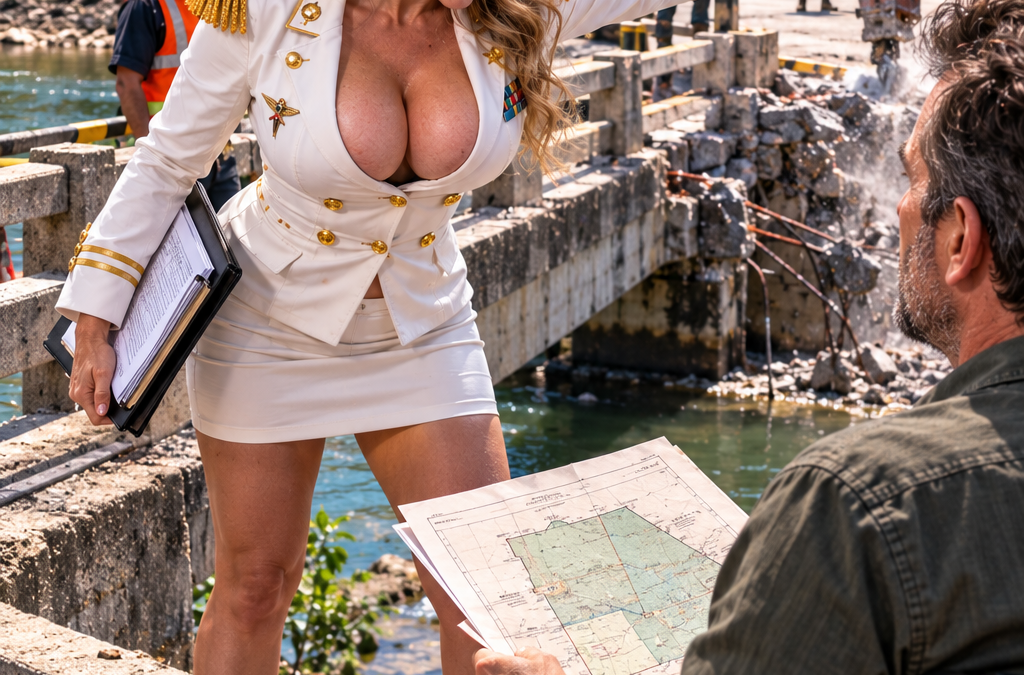
The HOA Threatened to Destroy the Only Bridge to My Family Land—So I Told Them to Go Ahead
When the HOA president told me she would demolish the only paved bridge to my family’s land unless I joined her association, she expected me to panic.
Instead, I asked her to repeat the threat slowly so there could be no misunderstanding.
Then I told her I wouldn’t stop her.
My family had owned that land for generations.
Not figuratively.
Not “we moved there when I was a kid” generations.
I mean before my grandparents were born.
The property sat in the Philippines on the far side of a river, away from the highway and most of the development that had slowly swallowed the surrounding farmland over the years.
It wasn’t a mansion.
It wasn’t a resort.
It wasn’t the kind of place wealthy people photographed for social media.
It was home.
A modest house.
A large garden.
Fruit trees my father had cared for.
A little fish pond he had dug himself.
A chicken coop my wife treated like a second household.
Dogs.
Vegetables.
A few old sheds.
A patch of land where my grandfather was buried.
Another where my father rested.
And near the house stood a tree my wife, Elena, and I had planted on our wedding day.
You couldn’t put a price on things like that.
Well, technically you could.
As I was about to learn, developers would happily try.
The only paved vehicle access from the highway side was an old concrete bridge crossing the river.
That bridge had been there longer than I had.
My father remembered it being old when he was a boy.
It had been constructed decades earlier as part of a national government public-works project when most of the surrounding area was still rice fields, forest, and scattered farms.
Most people barely knew it existed.
There wasn’t much reason for outsiders to cross it.
You turned off a public road, drove toward the river, crossed the bridge, and eventually reached our land.
Simple.
Quiet.
Exactly how we liked it.
Then the developer arrived.
They bought hundreds of hectares on the highway side.
Fields.
Old farms.
Parcels owned by elderly families whose children had already moved away.
Within a few years, bulldozers replaced rice paddies.
Concrete roads appeared.
Drainage systems.
Streetlights.
Walls.
Guardhouses.
Then rows of expensive homes.
Beige roofs.
White walls.
Stone accents.
Landscaped medians.
Decorative fountains.
The developer marketed it as an exclusive gated community.
Luxury living.
Private security.
Future recreational amenities.
And, eventually, a golf course.
The subdivision spread until it occupied almost everything on the highway side of the river near us.
Almost.
Our bridge happened to sit right near one edge of their development.
The road leading to it remained public.
The bridge remained public infrastructure.
Our land remained ours.
At least, legally.
Mrs. Beltran didn’t seem particularly interested in that distinction.
She was the HOA president.
When I first met her, she was around forty, maybe a little older, and beautiful in the intimidating, perfectly maintained way of someone who had turned appearance into part of her authority.
Long dark-blonde hair.
Careful makeup.
Expensive sunglasses.
A very curvy figure, including an unusually large chest that her clothes never exactly tried to conceal.
And for reasons I never understood, she dressed for HOA business like she was the commander of some luxury private army.
White fitted jackets with gold buttons.
Decorative shoulder trim.
Deep neckline.
White pencil skirts or fitted trousers.
High heels.
Always a clipboard or leather folder tucked under one arm.
She looked less like a volunteer neighborhood president and more like she was preparing to inspect troops before boarding a yacht.
At first, though, she was pleasant.
Almost charming.
The first letter we received was polite.
The HOA wanted to know whether we might consider selling.
The developer was interested in expanding its future recreational area.
Their proposed golf course would benefit from “landscape continuity.”
That was the phrase.
Landscape continuity.
What they meant was they wanted our property.
I read the offer.
Then read it again.
I actually laughed.
Elena looked up from the kitchen table.
“What?”
I slid the paper toward her.
She read.
Her eyebrows rose.
“That’s insulting.”
“Very.”
The offer was maybe one-fifth of what comparable land should have been worth.
Possibly less.
And even if they’d offered full market price, we weren’t interested.
My grandfather was buried there.
My father was buried there.
The wedding tree was there.
The pond.
The orchard.
The garden.
The house where our children had grown up.
Money can buy another parcel.
It cannot buy another history.
So we sent back a short, polite response.
Thank you.
Not interested.
We thought that would be the end.
A month later, another letter arrived.
Less friendly.
This one suggested that because our property was “adjacent to the planned community,” we should consider becoming HOA members.
The subdivision, they said, had concerns about visual consistency along the river boundary.
Our land was mentioned specifically.
Our home.
Our chicken coop.
Our fruit trees.
Our fencing.
Apparently the sight of ordinary rural life was offensive to prospective luxury homeowners.
If we joined, we would be required to pay monthly dues.
Submit exterior changes for approval.
Follow architectural guidelines.
Comply with landscaping standards.
Observe livestock restrictions.
Essentially, stop living the way our family had lived for generations so people who moved in last year could enjoy a cleaner view.
Elena wrote the response.
She is much more diplomatic than I am.
She explained that our land had never been included in the subdivision.
Had never been sold to the developer.
Had never been subject to HOA covenants.
Had been registered to our family long before the development existed.
Therefore we had no legal obligation or personal interest in joining.
She printed it.
Signed it.
Handed it to me.
“Too polite?”
I read it.
“Definitely.”
“Good.”
We sent it.
That’s when the friendliness ended.
The first incident involved subdivision security.
One morning I was driving toward town to buy feed and repair supplies.
A security guard stepped partly into the road and raised one hand.
I slowed.
Rolled down the window.
“Morning.”
“Sir, you need to register this vehicle.”
“With who?”
“The association.”
“I’m not in the association.”
“If you’re using the subdivision road, vehicles have to be registered.”
“This is a public road.”
He looked toward the gated entrance several hundred meters away.
“The road services the community.”
“It also services my bridge.”
“Management says all vehicles need stickers.”
“Management is wrong.”
He stiffened.
“I’ll have to report this.”
“Please do.”
I drove away.
I remember thinking it was annoying.
Not dangerous.
Not yet.
Then construction debris started appearing near our gate.
Small piles at first.
Broken bricks.
Drywall.
Chunks of concrete.
Scrap lumber.
Always at night.
Always placed just far enough onto our side that we had to clean it.
I installed a cheap camera.
The angle wasn’t good enough.
We never caught a plate.
I’d remove the debris.
Three days later, more would appear.
Elena eventually said:
“This isn’t random.”
“I know.”
“Do you think it’s them?”
“I think somebody wants us annoyed.”
“Same thing.”
Maybe.
But suspicion isn’t proof.
So I documented.
Photographs.
Dates.
Then someone shot our dog.
Her name was Luna.
Mixed breed.
Sweetest dog we had.
One afternoon she came limping back toward the house whining.
Blood near her hind leg.
We rushed her to a veterinarian.
Pellet.
Air rifle.
Embedded under the skin.
The vet removed it.
She recovered.
But the sight of Elena sitting on the floor beside Luna that night, crying while the dog rested her head on Elena’s knee, changed something in me.
I made a police report.
The officer was sympathetic.
But there were no witnesses.
No clear camera footage.
No proof tying it to anyone.
I wasn’t going to falsely accuse the HOA.
Still, from that day forward, I stopped considering their behavior petty.
Soon afterward, the official-looking violation notices began.
The first said:
UNAPPROVED EXTERIOR COLOR.
Our house had been painted the same shade for years.
Next:
NONCOMPLIANT FENCING.
Then:
UNAUTHORIZED LIVESTOCK.
Livestock.
We had six chickens.
They might have formed a gang, but nobody had informed me.
Another cited:
IMPROPER OUTBUILDING VISIBILITY.
Another:
UNREGISTERED ANIMAL STRUCTURE.
Chicken coop.
Every notice carried a fine.
I paid nothing.
Because they had no authority.
None.
But the envelopes kept coming.
One a week.
Sometimes two.
At first I’d open them and laugh.
Then Elena stopped laughing.
I’d see the envelope in the mailbox and her shoulders would tighten.
Eventually I bought a large storage box and stopped opening them immediately.
They went straight inside.
Date.
Envelope.
File.
My lawyer later told me that decision probably saved us.
I’d spoken to him after the first few months.
He looked over our title.
Survey.
Tax records.
Development map.
HOA notices.
Then leaned back.
“They have no jurisdiction over you.”
“I know.”
“They know?”
“I’ve told them.”
“Then let them keep writing.”
“Can we sue?”
“For annoying letters?”
He shrugged.
“Not yet.”
“What about the dumping?”
“Can you prove it’s them?”
“No.”
“The dog?”
“No.”
“Then document.”
He tapped the box of letters.
“These people either get bored or they escalate.”
“Which do you think?”
He smiled without humor.
“People who send HOA fines to someone outside the HOA?”
He pointed at the box.
“Give them rope.”
So we waited.
They escalated.
The invitation came in writing.
BOUNDARY RESOLUTION MEETING.
Clubhouse.
Wednesday.
Two p.m.
Elena read it.
“Don’t go.”
“I think we should.”
“Why?”
“I want to know what they actually want.”
“We already know.”
“The land.”
She nodded.
“Then why sit in a room with them?”
“Because if they’re willing to put something stupid in writing, I want a copy.”
She sighed.
“You enjoy this too much.”
“I haven’t enjoyed any of it.”
She looked toward Luna sleeping near the door.
Neither of us spoke for a moment.
Then she said:
“Take your lawyer.”
“He can’t come Wednesday.”
“Then don’t sign anything.”
“I won’t.”
The clubhouse was even more ridiculous inside than outside.
Polished stone floors.
Chandeliers.
Leather seating.
Huge windows overlooking the artificial lake.
Mrs. Beltran waited in a conference room.
White fitted skirt.
White military-style jacket.
Gold buttons.
Deep neckline.
Hair perfect.
Leather folder on the table.
Two other board members sat beside her.
A man in his fifties.
A younger woman.
And at the far end, a man in a dark suit who was introduced as counsel.
Mrs. Beltran smiled.
“Thank you for coming.”
“I was curious.”
She didn’t appreciate that answer.
We sat.
She opened the folder.
“We’ve been attempting to resolve this cooperatively.”
“By sending fines to land you don’t govern.”
Her smile tightened.
“This meeting isn’t about past communications.”
“What is it about?”
She slid a document toward me.
“The bridge.”
That surprised me.
I picked it up.
Three pages.
Legal language.
Subdivision letterhead.
Law office information.
The demand claimed the bridge constituted an unauthorized structure connecting to private community infrastructure.
I reread that sentence.
Then another.
Their argument, such as it was, went like this:
The road on the highway side of the bridge ran along land bordering their development.
The HOA had paid for paving improvements.
Drainage.
Lighting.
Therefore, according to them, the road functioned as subdivision infrastructure.
Because my bridge connected to this supposedly private infrastructure, my continued use represented unauthorized access.
It was nonsense.
But it was very polished nonsense.
Mrs. Beltran folded her hands.
“We’d like to avoid unpleasant alternatives.”
“What alternatives?”
“You have two choices.”
There it was.
Not options.
Choices.
“First?”
“You join the association.”
I waited.
“Sign the membership and easement agreement.”
“Pay dues?”
“Yes.”
“Follow your covenants?”
“Naturally.”
“Architectural rules?”
“Yes.”
“Livestock restrictions?”
Her smile returned.
“Those details can be discussed.”
No.
They could not.
“And choice two?”
Mrs. Beltran leaned back.
“The bridge would have to be removed.”
For a second, I honestly thought I’d misunderstood.
“Removed.”
“Demolished.”
The male board member beside her shifted slightly.
The lawyer looked down at his papers.
I stared at her.
“You intend to demolish the bridge.”
“If you refuse a lawful easement arrangement, we will have to secure the perimeter.”
“Secure the perimeter.”
“Correct.”
I looked at the document again.
Then at the lawyer.
“You researched this bridge?”
Mrs. Beltran answered instead.
“Our counsel reviewed the relevant infrastructure issues.”
“Who built it?”
She waved one hand.
“That’s not material.”
“It seems material.”
“The current connection is the issue.”
“How old is the bridge?”
“I don’t see why—”
“Do you know?”
She exhaled.
“The age of the structure does not change our rights.”
That was the moment.
The moment everything became clear.
They didn’t know.
Not really.
They knew the bridge existed.
They knew it ended near property they had improved.
They had decided that meant control.
And they’d built an entire legal strategy on that assumption.
I felt anger.
Not hot anger.
Cold.
Precise.
Then an idea arrived.
A terrible idea.
A beautiful idea.
I placed the document on the table.
“Let me understand exactly.”
Mrs. Beltran smiled again.
“I’m happy to clarify.”
“If I refuse to join the HOA—”
“Yes.”
“Refuse dues.”
“Yes.”
“Refuse your covenants.”
“Yes.”
“You will demolish the bridge.”
“If necessary.”
“No.”
I looked directly at her.
“I want a clear answer.”
The room became quiet.
“You’re saying that if I don’t comply, the association intends to remove the bridge.”
Mrs. Beltran held my eyes.
“That’s correct.”
I nodded.
“Can that be included in the record of this meeting?”
The lawyer finally looked up.
Mrs. Beltran glanced at him.
He said something quietly.
She turned back.
“Our position is already stated in the letter.”
“Good.”
I folded the document.
“I’ll think about it.”
Her expression softened into satisfaction.
I stood.
As I reached the door, she said:
“I hope you make the practical decision.”
I looked back.
“So do I.”
I drove home with my hands shaking.
Not from fear.
Excitement.
Anger.
Adrenaline.
Maybe all three.
Elena knew immediately.
“What happened?”
“They want the bridge.”
Her face went blank.
“What?”
I gave her the document.
She read.
Her mouth opened.
“They can’t.”
“I know.”
“They’re threatening to demolish it?”
“Yes.”
She looked toward the window.
Then back.
“If they do, how do we leave?”
That was the question.
And the reason the plan was possible.
Our bridge was not literally the only physical route out.
It was the only paved route.
At the far back of the property, through forest, an old dirt track connected toward a small town in the neighboring municipality.
Calling it a road was generous.
Overgrown.
Rocky.
Parts became mud during rainy season.
But it worked.
Local farmers had used it years earlier.
We had used it ourselves when bridge repairs temporarily closed the main route.
It added twenty minutes.
Sometimes more.
But we wouldn’t be trapped.
I explained.
Elena stared at me.
Then said:
“No.”
“You haven’t heard the plan.”
“I know that face.”
“What face?”
“The face you make before doing something that creates paperwork.”
I smiled.
She didn’t.
“You’re going to let them destroy it.”
I said nothing.
Her eyes widened.
“You are.”
“They’re threatening to.”
“That’s different from letting them.”
“They think it belongs to them.”
“And?”
“I want them to act on that belief.”
Elena stared for a long time.
Then walked around the kitchen.
“You’re insane.”
“Possibly.”
“What if the government doesn’t care?”
“They will.”
“You don’t know that.”
“It’s national infrastructure.”
“Old national infrastructure.”
“Still registered.”
“What if rebuilding takes years?”
“We have the back road.”
“That road is terrible.”
“I can improve part of it.”
“What about rainy season?”
“We’ll manage.”
She sat.
Covered her face.
For almost a minute, neither of us spoke.
Then she looked up.
“Luna.”
I knew what she meant.
The dog.
The trash.
The letters.
The threats.
Months of pressure.
Elena’s expression changed.
“You really think they will do it.”
“Yes.”
“Actually demolish it.”
“I think Mrs. Beltran needs to prove she controls us.”
“And if she does?”
“Then we stop protecting her from the consequences.”
Silence.
Then my wife said:
“Do it.”
I blinked.
“What?”
She leaned back.
“Do it.”
Then, with more anger than I’d heard from her in months:
“Burn them.”
I wrote the response that night.
Short.
Careful.
I did not say:
I give you permission to demolish government property.
That would have been stupid.
I wrote that I rejected HOA membership.
Rejected dues.
Rejected their covenants.
Rejected the proposed agreement.
Then I stated that if the association genuinely considered the bridge an unauthorized structure affecting property they claimed to control, I would not interfere with whatever lawful action they chose to take on property they believed belonged to them.
Their decision.
Their property claim.
Their action.
Their reasons.
I used no language accepting their ownership.
No language claiming I owned the bridge.
No language instructing demolition.
I simply declined to stop them from doing what they had already threatened to do.
Certified mail.
Signature requested.
Copy saved.
Email sent.
PDF saved.
Printed copy placed in the evidence box.
Elena looked at the stack.
“Enough copies?”
“Maybe one buried in the yard.”
She almost smiled.
Then we waited.
Two weeks.
Nothing.
I began wondering whether their lawyer had finally researched the bridge.
Maybe Mrs. Beltran had cooled down.
Maybe somebody had found the public works records.
Then, one morning, Elena and I were drinking coffee on the porch.
Heavy engine noise drifted from the river.
She looked at me.
I looked at her.
Neither said anything.
Then another engine.
Metal clanking.
A truck reversing.
Beeping.
Elena whispered:
“They’re doing it.”
I stood.
My hands were already shaking.
I grabbed my phone.
Our nephew, Marco, was staying with us that week.
He followed us.
“What happened?”
“Bring your phone.”
“Why?”
“Record everything.”
We walked toward the bridge.
Before we reached the river, I saw the machinery.
Two excavators.
Backhoe.
Dump truck.
Crew.
Then the black SUV.
Mrs. Beltran stood beside it.
Of course she did.
White fitted trousers.
White jacket.
Gold buttons.
Deep neckline.
Sunglasses.
Arms crossed beneath her chest.
She looked like she was supervising an invasion.
Two board members stood nearby.
The lawyer was there.
So was a photographer.
An actual photographer.
That detail told me everything about her mindset.
This wasn’t just demolition.
This was a victory ceremony.
They intended to document the moment they finally broke us.
I turned on my phone.
Marco recorded from another angle.
I approached.
Mrs. Beltran watched me come.
Smug.
“Morning.”
She smiled.
“Good morning.”
“You’re proceeding?”
“Yes.”
I kept the phone visible.
“Just so we’re clear, this demolition is being undertaken by the association?”
Her smile tightened.
“Correct.”
“At your direction?”
“As president.”
“And you’re asserting the bridge is an unauthorized structure connected to property controlled by your community?”
“Yes.”
I paused.
“You’re absolutely certain you want to proceed?”
She looked annoyed.
“We have already explained this.”
“I’m asking again.”
Behind her, the lawyer shifted.
Mrs. Beltran lifted her chin.
“You were given the opportunity to comply.”
“Yes.”
“You refused.”
“Yes.”
“This is the consequence.”
I looked at the machinery.
Then back.
“So you want them to demolish the bridge.”
“Yes.”
Clear.
Perfect.
I stepped away.
She frowned.
“That’s all?”
“That’s all.”
She turned toward the crew.
Made a motion.
The machines moved.
Elena grabbed my hand.
Hard.
I could feel her fingernails.
The first excavator drove onto the bridge.
For a moment, some part of me wanted to stop everything.
That bridge belonged to my childhood.
My father’s childhood.
Decades.
Family memories.
Weddings.
Funerals.
Harvests.
Trips to town.
We’d crossed it thousands of times.
Then the excavator bucket lifted.
Dropped.
Concrete cracked.
The sound echoed across the river.
Elena flinched.
The second hit broke through part of the deck.
Mrs. Beltran smiled.
The crew kept going.
They didn’t dismantle carefully.
They smashed.
Large pieces of concrete fell into the river.
Water exploded upward.
Sediment turned the current brown.
Steel reinforcement twisted from broken sections.
Chunks the size of motorcycles tumbled into the channel.
Rebar protruded from the water like ribs.
The dump truck hauled some material away.
A lot remained below.
At one point, I saw an oily sheen near the machinery.
I kept recording.
Marco kept recording.
Mrs. Beltran posed near the black SUV while the photographer took pictures.
I’m not exaggerating.
She actually wanted photographs.
The male board member looked less comfortable as demolition continued.
The lawyer spent a lot of time on his phone.
Too late.
Near the end, Mrs. Beltran walked over.
The center span was gone.
Only broken sections remained on each bank.
She removed her sunglasses.
“I hope you’ve made alternative arrangements.”
Her tone was almost playful.
I looked at the destroyed bridge.
“I have.”
She smiled.
“Good.”
Then she walked away.
Climbed into the SUV.
Drove off.
I stood there until the vehicles disappeared.
Elena still held my hand.
Then she said:
“What now?”
“Now we eat.”
She stared.
“I’m serious.”
“So am I.”
We went home.
Elena made adobo.
My favorite.
We ate mostly in silence.
There is a strange difference between planning for something and watching it happen.
I had wanted consequences.
But I had also just watched part of my family’s landscape destroyed.
After dinner, I started making calls.
First, the regional environmental office.
Then the Department of Public Works.
Then someone I knew in local government.
My lawyer.
And a journalist I’d met once at a community event.
I emailed everything.
Video.
Photos.
HOA notices.
The original demand.
My response.
Proof of receipt.
Property records.
Bridge location.
I explained that a private association had just demolished a concrete bridge over a flowing river and dropped large quantities of debris into the water.
Then I went to bed.
I expected bureaucracy.
A week.
Two weeks.
Maybe a month.
I was wrong.
Apparently destroying national infrastructure and dumping reinforced concrete into a river is excellent at attracting attention.
Within days, three vehicles arrived near our property.
Environmental agency.
Public Works.
Police.
I met them.
Led them down the alternate route toward the destroyed crossing.
One environmental officer stopped when he saw the river.
Concrete.
Steel.
Sediment.
Debris.
He said:
“Oh.”
Then quieter:
“This is bad.”
He walked closer.
“Really bad.”
He began taking photographs.
Water samples.
Measurements.
Another official examined the remains of the bridge.
Looked at maps.
Checked documents.
Then said to his colleague:
“This is registered.”
The other man nodded.
“National project.”
I said nothing.
The official looked furious.
“Who authorized demolition?”
I handed him copies.
“She did.”
Then showed the video.
Mrs. Beltran on camera.
Yes.
Her direction.
Yes.
Her authority.
Yes.
Unauthorized structure.
Yes.
Proceed.
Yes.
The officer watched twice.
Then the police representative asked for a copy.
I gave them everything.
The investigation moved faster than I had ever seen a government investigation move.
Within days, a formal stop-work order hit the development.
Not just the bridge area.
Construction across the project.
Including preparations for the golf course.
Stopped.
The developer and HOA lawyers challenged it.
Didn’t matter.
Public records confirmed exactly what I already knew.
The bridge was government infrastructure.
The HOA didn’t own it.
They didn’t own the public road it connected to.
They had no authority to demolish it.
And once investigators started looking, the bridge stopped being the only problem.
Turns out Mrs. Beltran’s HOA had been behaving as though public roads near the subdivision were private.
Security checkpoints.
Access restrictions.
Unauthorized fees.
Nonresidents stopped and questioned.
Exactly what had happened to me.
Then environmental inspectors found runoff.
Construction sediment and waste reaching another part of the river system.
Permitting problems.
The decorative artificial lake lacked proper environmental clearance.
Every investigation seemed to uncover another.
The bridge had been the loose thread.
Once government agencies pulled it, the whole sweater came apart.
The fines were enormous.
I never saw every official document.
I won’t pretend I know an exact number.
But the figures discussed were in the tens of millions of pesos.
Far beyond what the HOA had available in reserves.
Then the HOA tried the most HOA solution possible.
Emergency assessments.
They wanted homeowners to contribute additional money to cover costs created by the board.
Residents revolted.
Many had bought specifically because of promised amenities.
Golf course.
Expanded clubhouse.
Improved recreational facilities.
Now construction was stopped.
Some plans were canceled.
Property values dropped.
Owners started selling.
The same people Mrs. Beltran claimed she’d been protecting from the sight of our chicken coop began asking why she’d destroyed government infrastructure.
I heard about the emergency HOA meeting from one of the subdivision residents who’d become friendly with us.
His name was Ramon.
He lived near the river.
He stopped by one afternoon.
“She’s finished.”
“Who?”
He laughed.
“Who do you think?”
“What happened?”
“They removed her.”
“As president?”
“Everything.”
He described the meeting.
Packed clubhouse.
Angry homeowners.
Lawyers.
Board members blaming one another.
Mrs. Beltran apparently arrived in one of her elaborate white outfits.
Gold buttons.
Perfect hair.
Still acting like she could control the room.
She tried to frame the demolition as enforcement.
She said the association had acted on legal advice.
Someone asked whose.
She blamed their lawyer.
The lawyer said his office had advised further verification before demolition.
That changed the atmosphere.
Then someone played my video.
Mrs. Beltran, clear as day:
“Yes.”
“We are removing the unauthorized structure.”
“This is the consequence.”
She tried claiming I had deceived them.
Residents weren’t interested.
One stood and asked:
“Did he operate the excavator?”
No.
“Did he hire the crew?”
No.
“Did he sign the demolition contract?”
No.
“Then why did you destroy the bridge?”
Mrs. Beltran talked about security.
Property values.
Community integrity.
Nobody cared anymore.
She was removed.
Then came criminal complaints.
I’m going to keep that part simple.
There were investigations.
Meetings.
Statements.
Lawyers.
More meetings.
I spent more time in government offices over the next year than I want to remember.
Mrs. Beltran eventually faced serious legal consequences.
She was personally tied to the demolition order.
Personally shown directing it.
Personally recorded taking responsibility.
Ultimately, she ended up behind bars.
The exact charges and procedural history became a maze I have no desire to reconstruct.
What mattered to me was that the system eventually recognized what she’d done.
Then, unbelievably, she tried suing me.
Her argument was essentially that I had deceived her by failing to disclose that the bridge belonged to the government.
When my lawyer told me, I thought he was joking.
“She’s suing me because she didn’t research property she destroyed?”
“Essentially.”
“Did I ever say I owned the bridge?”
“No.”
“Did I ever say she owned it?”
“Also no.”
“Did I tell her to destroy it?”
“No.”
I smiled.
“Then what exactly is the theory?”
“That you knowingly allowed her to proceed under a mistaken assumption.”
I stared.
“Is that illegal?”
“Not like this.”
The case didn’t survive long.
My letter became evidence.
That beautiful little letter.
I had carefully written that I would not join the HOA.
Would not pay dues.
Would not sign their agreement.
And would not interfere if they chose to take action concerning what they claimed was their own property.
I had never represented the bridge as mine.
Never represented it as theirs.
Never lied.
I simply refused to rescue them from their assumptions.
The judge was apparently not impressed by the argument that I had some duty to educate an HOA president before she destroyed infrastructure she didn’t own.
Case dismissed.
The HOA itself didn’t survive either.
Between environmental penalties, infrastructure penalties, legal costs, lawsuits from residents, canceled amenities, falling property values, and the public-relations disaster, it collapsed.
Eventually the association was formally dissolved.
The developer’s expansion plans changed dramatically.
The golf course never materialized as promised.
For years Mrs. Beltran had talked about our land as something standing in the way of progress.
In the end, the thing that stopped progress was her attempt to remove us.
And then came my favorite part.
The bridge was rebuilt.
Public Works prioritized replacement because the destroyed crossing was part of registered national infrastructure.
Engineers came.
Survey crews.
Construction crews.
Proper permits.
Environmental protections.
Real government oversight.
Not a woman in white heels declaring ownership because something touched her subdivision.
The new bridge was better than the old one.
Stronger.
Wider.
Proper drainage.
Improved side barriers.
And a significant portion of the cost was ultimately offset by penalties collected from the organizations responsible for destroying the original.
So yes.
In a very real sense, the HOA helped pay to rebuild the bridge it had already paid to demolish.
The first morning the new bridge officially opened, Elena and I walked across before driving it.
She rested one hand on the concrete barrier.
“Looks different.”
“It is different.”
“I miss the old one.”
“So do I.”
We stood near the center.
River moving beneath us.
For a while, neither spoke.
Then she smiled.
“But this one has a better story.”
I laughed.
“Definitely.”
We drove across.
Into town.
Bought groceries.
Came home.
No security guard stopped us.
No vehicle registration request.
No HOA letters.
No fines.
Our chickens remained unauthorized by an association that no longer existed.
Life became quiet again.
Almost.
There were reporters for a while.
People wanted interviews.
I gave a couple.
Then stopped.
I didn’t want our home turned into a tourist attraction.
The whole reason we’d fought was to preserve a normal life.
Eventually the attention moved elsewhere.
The garden kept growing.
Fruit trees kept producing.
Luna recovered completely from the pellet injury.
She developed a slight hatred of loud vehicles afterward, but otherwise she was fine.
The wedding tree got taller.
The fish pond needed cleaning.
The chickens remained deeply committed to violating whatever architectural standards might still exist in the universe.
And every time I crossed the new bridge, I remembered that meeting.
Mrs. Beltran sitting at the table.
Perfect white jacket.
Gold buttons.
Deep neckline.
Legal letter between us.
Her saying:
“You have two choices.”
Join.
Or lose the bridge.
She believed destroying access would force us to sell.
That was the real goal.
Not security.
Not community standards.
Not architecture.
Land.
The golf course wanted continuity.
Our property interrupted the plan.
Everything else was pressure.
Lowball purchase offer.
HOA invitation.
Security harassment.
Trash.
Notices.
Fines.
Bridge threat.
Each step designed to make staying more painful.
They assumed eventually we’d calculate that leaving was easier.
What they didn’t understand was how different land becomes when your dead are buried there.
My grandfather’s grave isn’t an asset.
My father’s grave isn’t an asset.
Our wedding tree isn’t an asset.
The pond isn’t just water and dirt.
Home doesn’t always behave according to market logic.
That was their first mistake.
Their second was assuming authority where none existed.
Their third was believing confidence could substitute for research.
Mrs. Beltran said the lawyers had checked everything.
They hadn’t.
Or if they had, nobody listened carefully enough.
She said the road was theirs because they’d improved it.
It wasn’t.
She said the bridge was unauthorized.
It wasn’t.
She said they could demolish it.
They couldn’t.
Then they did.
People sometimes ask why I didn’t simply tell her.
Why not say:
“Mrs. Beltran, that bridge belongs to the government.”
Why let them destroy something useful?
It’s a fair question.
I’ve asked myself too.
Especially while using the muddy back road before reconstruction.
Especially during rainy season.
Especially when Elena complained that a twenty-minute detour had turned into forty.
Part of the answer is anger.
I’m not going to pretend I was some emotionless chess player pursuing pure justice.
I was angry.
They’d harassed my family.
Targeted our home.
Possibly—but never proven—hurt our dog.
Dumped debris.
Sent fake fines.
Tried to force us into an organization we didn’t want.
Then threatened the one thing they believed would leave us trapped.
I wanted them to finally experience consequences no threatening letter could undo.
But there’s another reason.
I had already told them no.
Repeatedly.
I’d told them the road was public.
Told them the land wasn’t theirs.
Told them their HOA had no jurisdiction.
They ignored everything that conflicted with the outcome they wanted.
At some point, protecting someone from their own arrogance becomes participation.
They had lawyers.
Surveyors.
Developer records.
Access to government registries.
Money.
People.
Time.
All they needed to do was one basic thing.
Confirm ownership before destroying a bridge.
They didn’t.
Mrs. Beltran wanted the dramatic victory more than she wanted certainty.
That photographer proved it.
I still think about him.
Imagine being so sure you’re right that you hire someone to photograph the destruction.
The footage my nephew recorded became far more valuable.
You can hear the excavators.
See the concrete fall.
See Mrs. Beltran standing beside the SUV.
Hear me ask:
“You’re certain?”
Hear her answer:
“Yes.”
There is no interpretation.
No confusion.
No misunderstanding.
She chose.
People like her often rewrite the past once consequences arrive.
She tried.
Said she’d been misled.
Said she relied on counsel.
Said she was protecting residents.
Said the developer pressured her.
Maybe some of that was partially true.
None changed the video.
That’s one lesson I carried away from everything.
Documentation matters.
Not exciting.
Not dramatic.
But it matters.
Save the letters.
Save envelopes.
Email copies.
Use certified mail.
Take photographs.
Record when legal.
Write dates down.
Because arrogant people often sound strongest in the moment and weakest when confronted months later with their own exact words.
My lawyer told me something after the civil case was dismissed.
We were leaving the courthouse.
He looked exhausted.
I was definitely exhausted.
He said:
“You know what saved you?”
“The bridge being government property?”
“Besides that.”
“My good looks?”
He ignored me.
“Your letter.”
I knew.
“If you’d written, ‘Yes, destroy it,’ they would’ve had room to argue.”
“But I didn’t.”
“No.”
He smiled.
“You let them make every decision themselves.”
That’s the essence of what happened.
I didn’t trick them.
Didn’t forge anything.
Didn’t hide the bridge.
It was physically there.
Public records existed.
Government records existed.
They simply never asked the right question.
Who owns this?
Instead they asked:
How do we use this against him?
That’s a dangerous question when you’re wrong.
Years have passed.
Some things around us changed.
Some of the luxury homes remained.
People moved in and out.
Without the original HOA structure, residents eventually formed smaller arrangements for common maintenance, but nothing with the old board’s reach.
Some owners turned out to be nice.
One family occasionally buys eggs from Elena.
A man from the former subdivision helped me repair a section of fencing after a storm.
The enemy had never really been the residents.
Most of them knew almost nothing about what the board was doing until the fines arrived.
Several lost money.
Some had to sell.
I felt bad for them.
They’d bought homes expecting a golf course.
Instead, they got an environmental investigation and national news.
Ramon, the neighbor who’d kept us informed, once stood beside the new bridge with me.
He said:
“You know, half the subdivision thought you were some crazy old farmer who refused to cooperate.”
“I’m not that old.”
He laughed.
“The board told everyone you were blocking development.”
“I was living on my land.”
“Same thing to them.”
“Apparently.”
He looked toward the river.
“What made you know the government owned it?”
“My father told me.”
“That’s it?”
“Mostly.”
He stared.
“They spent how much money on lawyers?”
“A lot.”
“And nobody just asked somebody’s father?”
I laughed.
“Government registry would’ve worked too.”
He shook his head.
“Unbelievable.”
It was.
And it wasn’t.
Because the more power someone thinks they have, the less likely they are to check whether it actually exists.
Mrs. Beltran didn’t begin with the bridge.
She began with assumption.
Our home didn’t fit the subdivision vision.
Therefore we should sell.
We wouldn’t sell.
Therefore we should join.
We wouldn’t join.
Therefore we were noncompliant.
We ignored the fines.
Therefore access became leverage.
At every step, our refusal wasn’t treated as a legitimate answer.
It was treated as a problem requiring escalation.
That’s why I stopped feeling guilty about the bridge.
The old structure mattered to me.
But so did the principle.
Sometimes the only way to stop someone from crossing boundaries is to let them discover the boundary at full speed.
Mrs. Beltran found hers in the river.
The government rebuilt the bridge.
No one rebuilt her authority.
Every now and then I still use the old forest road.
Not because I need to.
I just like it.
I’ve improved parts with gravel.
Cut back brush.
During dry season it’s actually pleasant.
Twenty extra minutes through trees instead of traffic.
Sometimes Elena comes.
Sometimes Luna used to ride with us before she got too old.
That alternate road was what made the malicious compliance possible.
Without it, I don’t know whether I would’ve risked losing access.
Probably not.
I was angry, not suicidal.
But because we had another route, Mrs. Beltran’s ultimate threat wasn’t ultimate at all.
She just didn’t know that.
That’s another mistake controlling people make.
They assume they understand all your options.
They threaten the one thing they believe you cannot live without.
Job.
Access.
Approval.
Money.
Status.
Then they discover you had another road.
Literally, in my case.
A muddy, miserable, overgrown road.
But another road.
Elena still teases me about the plan.
Whenever I start becoming too confident about some household repair, she’ll say:
“Remember the bridge.”
Usually that’s enough to make me reread the instructions.
One afternoon, years later, we were sitting on the porch drinking coffee again.
Very similar to the morning demolition started.
A truck crossed the new bridge in the distance.
Elena watched it.
“Do you ever regret it?”
I knew exactly what she meant.
“The old bridge?”
“Everything.”
I thought for a while.
“I regret that they made it necessary.”
“That’s not an answer.”
“No.”
I smiled.
“I don’t regret letting them choose.”
She nodded.
Then looked toward the wedding tree.
“They really thought we’d sell.”
“Yes.”
“For a golf course.”
“Apparently.”
She laughed quietly.
“My mother would have haunted them.”
“Your mother would’ve haunted me if I’d sold.”
“Also true.”
We sat there listening to the chickens.
No notices.
No guard.
No subdivision president marching over in white heels.
Just home.
That’s how the story ended for us.
Not with some huge celebration.
Not standing over Mrs. Beltran while she was taken away.
Not laughing while the HOA collapsed.
Those things happened somewhere else, through lawyers and government offices and meetings.
Our ending was quieter.
The bridge came back.
Our land remained ours.
We never joined an HOA.
Never paid one peso in their fake fines.
Never changed the house to match their architecture.
Never removed the chickens.
Never painted the fence.
Never sold the graves of our fathers for a golf course.
The development came to our river expecting everything around it to bend.
Most things did.
Old farms sold.
Fields became roads.
Trees disappeared.
Walls rose.
But our property stayed.
And when the HOA finally threatened to destroy the connection between our home and the outside world, they expected that threat to bring us to the table begging.
Instead, I gave them exactly what they asked for.
I stepped aside.
They destroyed a bridge they didn’t own, polluted a river they didn’t control, halted their own development, triggered investigations into their own misconduct, destroyed their finances, collapsed their association, and paid toward replacing the very bridge they had wanted gone.
All because Mrs. Beltran was too certain of her authority to check whether she actually had any.
So when I cross that new bridge now, I sometimes look toward the subdivision and remember the last thing she said before leaving the demolition site.
“I hope you’ve made some arrangements.”
I had.
She hadn’t.