𝗙𝗨𝗟𝗟 𝗦𝗧𝗢𝗥𝗬 The HOA President Told Me My House Wasn’t Mine Anymore, and She Expected Me to Walk Away
𝗙𝗨𝗟𝗟 𝗦𝗧𝗢𝗥𝗬
Modern offices.
Conference rooms.
Landscaped entrance.
Covered parking.
And, according to drawings she proudly displayed during association meetings, a private presidential office with its own restroom.
The problem was space.
The existing clubhouse lot wasn’t large enough.
Mine was.
The first time Karen approached me about buying it, I was home on vacation.
I was watering the plants when I heard her heels clicking along the sidewalk.
“Well, look who finally decided to visit us.”
I turned.
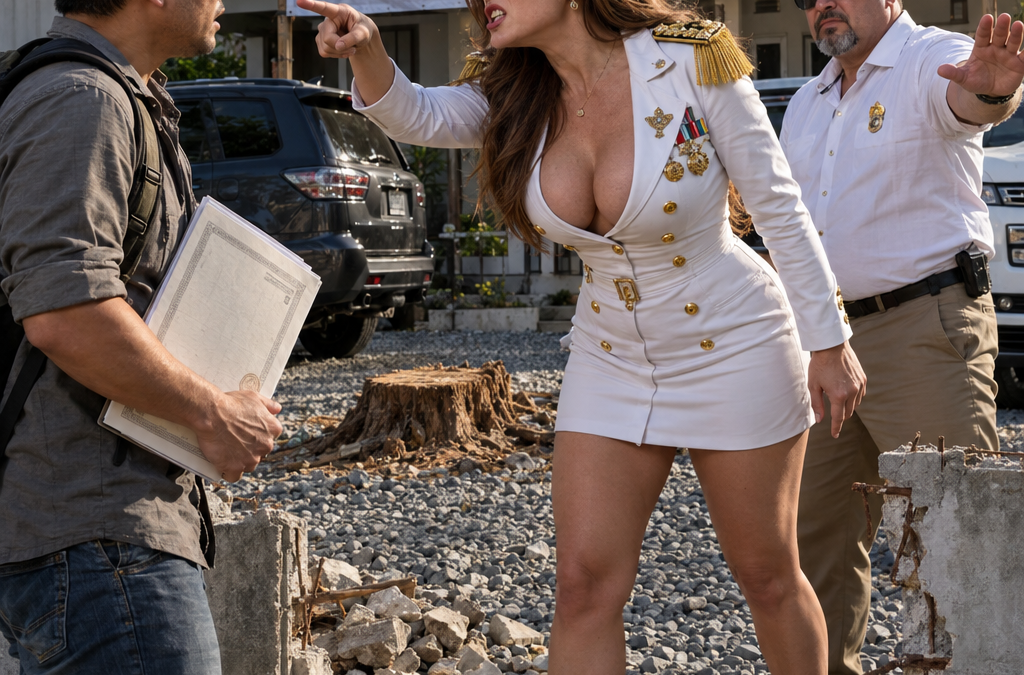
Karen stood outside my gate wearing that immaculate white uniform, oversized sunglasses balanced on her head and a leather folder tucked against her side.
“Good morning, Ms. Whitmore.”
“Oh, please.” She smiled. “Call me Karen.”
She extended her hand through the gate.
Her grip was surprisingly firm.
“I’ve been meaning to speak with you.”
I already knew that tone.
I had heard it from salespeople, recruiters, and distant relatives who were about to ask for money.
She spent ten minutes complimenting my property.
The corner location.
The access road.
The beautiful tree.
Then she leaned against the gate and lowered her voice.
“You know, you’re almost never here.”
“I work overseas.”
“Exactly. And the property just sits here aging.”
“My parents live here.”
“Of course. Lovely people.”
Her smile widened.
“But imagine what the association could do with this space.”
She opened her folder.
Inside was a drawing of the proposed administration building.
My house had been replaced by a parking lot.
My mango tree was gone.
Karen tapped the drawing with a manicured fingernail.
“We could build something extraordinary.”
I looked at the drawing.
Then at her.
“You’re planning to demolish my house?”
“Only if we can reach a mutually beneficial arrangement.”
“It’s not for sale.”
She laughed softly.
“Everything has a price.”
“Not this.”
For a moment, her smile remained in place even though her eyes had changed.
“You’re a practical man. I’m sure you’ll reconsider.”
“No, Karen. I won’t.”
She closed the folder.
“Well, don’t make a permanent decision based on temporary emotions.”
I remember thinking it was a strange thing to say about a house I’d spent ten years buying.
She walked away without another word.
Two months later, she returned.
This time, she brought a written offer.
She stood on my porch with the same smile and handed me a folded sheet of paper.
“I spoke with the board.”
I opened it.
The number was so low I thought something had been left out.
I had paid more for the land alone years earlier.
Property values had nearly doubled since then.
“Is this a joke?”
Karen tilted her head.
“Excuse me?”
“This wouldn’t even cover what I spent buying the lot.”
“The association isn’t a commercial developer. We’re offering you the opportunity to contribute to your community.”
“Then why is there a purchase price?”
Her eyes narrowed.
“Don’t be difficult.”
I handed back the paper.
“The answer is no.”
She didn’t take it.
Instead, she looked past me into the living room.
“Your parents seem much more reasonable.”
Something about that sentence bothered me.
“What do my parents have to do with this?”
“They understand the importance of community progress.”
“They don’t own the property.”
Karen’s expression remained pleasant.
“Families usually make important decisions together.”
“Not this decision.”
I stepped closer.
“Listen carefully. This property isn’t for sale. Not now. Not next year. Not ever. Please stop asking.”
She finally took the paper.
Her fingers tightened around it.
“You may regret being so inflexible.”
“Maybe.”
I closed the gate after she left.
I thought that was the end of it.
I was wrong.
That evening, my mother mentioned that Karen had invited her to tea at the clubhouse.
Apparently, they had been discussing the neighborhood, my work overseas, and how difficult it must be for my parents to maintain such a large property.
I didn’t like it.
Not because my mother couldn’t have friends.
Because Karen had just told me my parents were more reasonable than I was.
So I sent Karen a message.
I wrote it carefully.
My parents were permitted to live in the house, but they had no ownership interest and absolutely no authority to sell, mortgage, transfer, or make agreements involving the property.
Any proposed transaction had to come directly to me.
Her response arrived a few minutes later.
A thumbs-up emoji.
That was all.
I took a screenshot.
At the time, I didn’t know why.
Maybe because something in her expression on my porch had stayed with me.
I also warned my parents.
More than once.
“Don’t sign anything about the house,” I told them during dinner.
My father frowned.
“Who would ask us?”
“Karen.”
My mother rolled her eyes.
“That woman is just trying to improve the subdivision.”
“She wants my land.”
“She’s very educated. She knows what she’s doing.”
“That’s exactly what worries me.”
My mother put down her spoon.
“You think we’re stupid?”
“No.”
“Then why are you treating us like children?”
“I’m not. I’m telling you the house is not for sale.”
She folded her arms.
“As if we would sell your house.”
I repeated the warning in our family group chat before flying back to work.
Neither parent responded to that message.
I should have paid attention.
But life overseas doesn’t give you much room to investigate every uncomfortable feeling.
My contract was extended.
Then extended again.
A coworker resigned, and my supervisor offered additional pay if I stayed to cover his position.
The money was good.
Enough to finally start saving for that second floor.
So I stayed.
I worked.
I sent money home.
Every month, without fail.
And for a while, everything seemed normal.
My mother sent pictures of the house.
Fresh curtains.
Potted plants.
My father’s slippers beside the front door.
The family dog sleeping beneath the window.
Then the pictures became less frequent.
When I asked why, she said her phone camera was broken.
When I offered to buy her another phone, she said it wasn’t necessary.
My father started talking about a new business.
Something modern.
Something online.
He called it “analysis.”
One night, during a video call, I asked what exactly he was analyzing.
“Fights,” he said.
“What kind of fights?”
“Cockfighting.”
I stared at him.
“You’re gambling?”
He looked offended.
“No. I’m studying probabilities.”
He showed me a notebook filled with numbers, arrows, underlined names, and calculations I couldn’t understand.
He explained that certain bloodlines performed better under certain conditions.
That betting platforms were predictable if you understood patterns.
That he had identified a system.
“Dad, that’s gambling.”
“Only if you don’t understand what you’re doing.”
“Where are you getting the money?”
He waved dismissively.
“Small capital.”
“How much?”
“Nothing you need to worry about.”
My mother wasn’t much better.
She had become friends with a woman from church who claimed to be connected to a mining investment opportunity.
Double your money in thirty days.
Guaranteed returns.
Private investors.
Exclusive access.
Every warning sign imaginable.
My mother described it like she had discovered a secret that wealthy people didn’t want ordinary families to know.
She had also started taking a shuttle bus from the mall to a casino with electronic bingo machines.
When I questioned her, she laughed.
“It’s recreation.”
“You’re spending money on gambling.”
“We’re recycling money.”
“Recycling it into what?”
“Profit.”
I wanted to believe they were exaggerating.
I wanted to believe that the allowance I sent every month was enough to cover their expenses and that whatever they were doing was harmless.
Then my mother mentioned Karen again.
“She’s been very helpful,” she said during one call.
“Helpful with what?”
“Just some opportunities.”
“What opportunities?”
“Don’t start interrogating me.”
I asked whether Karen had brought up the house.
My mother immediately changed the subject.
A week later, she told me they were planning some minor improvements.
“What kind?”
“Just cleaning up outside.”
“Send me pictures.”
“The camera is still broken.”
I didn’t sleep well that night.
But I had work in five hours.
And eventually, exhaustion did what it always does.
It made postponing a difficult conversation feel reasonable.
Then my cousin sent that photograph.
The missing fence.
The gravel.
The cars where my mango tree had been.
And the banner announcing an administration building on my property.
After speaking with my cousin, I called my mother.
She answered on the fifth ring.
That was unusual.
My mother almost always answered immediately when I called from overseas.
“Hello, son.”
“What is happening at my house?”
“What do you mean?”
“There’s a banner outside.”
Silence.
Then a bright, unnatural laugh.
“Oh, that. It’s temporary.”
“Why is there a banner saying the homeowners association is building on my property?”
“It’s just a project announcement.”
“Where’s my fence?”
“Your father sold it. It was getting rusty.”
My hand tightened around the phone.
“And the mango tree?”
“That tree was making a mess.”
I shut my eyes.
“Did you sign anything?”
“What?”
“Did you sign any papers involving my house?”
Her voice changed instantly.
“How dare you speak to me like that?”
“I asked a question.”
“After everything I sacrificed for you.”
“Mom.”
“Nine months I carried you. Twenty-two hours of labor. I almost died bringing you into this world.”
“Did you sign something?”
“Children today have no respect.”
“Answer me.”
“You think we’re criminals?”
“I think someone put a construction banner outside a house I own without telling me.”
She began crying.
Then she told me she had a heart condition.
That I was making her sick.
That if something happened to her because of my accusations, I would carry that guilt forever.
I hadn’t raised my voice.
Not once.
Then my father took the phone.
“Son, calm down.”
“Dad, what happened?”
“There’s a small problem.”
“With the house?”
“With the money.”
I felt cold.
“What money?”
He sighed.
“Just come home. We can discuss it.”
“Dad.”
“The important thing is not to panic.”
“What did you do?”
Another pause.
Then he said something I will never forget.
“Don’t worry about the house. Worry about the money.”
That was when I knew this wasn’t a misunderstanding.
It was something much worse.
Over the next two weeks, while I arranged an early end to my contract, pieces of the truth came together.
My cousin spoke with neighbors.
I contacted association members I knew.
I asked questions that made people uncomfortable.
And eventually, a picture emerged.
Karen had never accepted my refusal.
After I returned overseas, she approached my parents repeatedly.
At first, she was friendly.
Coffee at the clubhouse.
Invitations to association functions.
Compliments about how responsibly they had raised a hardworking son.
Then she began talking about the administration building.
She told them the project was inevitable.
She claimed the association possessed special authority to acquire land needed for community development.
It didn’t.
She told them that cooperation would be rewarded.
There would be money.
A lifetime exemption from association dues.
And a commemorative plaque in the new building honoring my father’s contribution.
That last promise apparently mattered a great deal to him.
My father had spent years feeling like a failed businessman.
Karen offered him a chance to be remembered as a community benefactor.
My mother liked being treated as someone important.
Karen knew exactly how to exploit both weaknesses.
But there was a problem.
My parents didn’t own the house.
And I had explicitly told Karen that they couldn’t sell it.
So she introduced them to a fixer.
A man who knew how to obtain documents, navigate municipal offices, and find notaries willing to overlook inconvenient details.
Together, they produced a special power of attorney.
It claimed I had authorized my parents to sell my property.
My name was on it.
My signature was on it.
And it had supposedly been signed and notarized while I was personally present before a notary in the Philippines.
There was just one problem.
On that exact day, I was working on the other side of the planet.
Inside an industrial facility with controlled access gates, badge scanners, surveillance cameras, and a supervisor who signed my attendance records.
Somehow, according to their paperwork, I had managed to be in two countries at once.
My parents used that forged authorization and the original title from my locked cabinet to sell my house and lot to the homeowners association.
The price was approximately one-third of the property’s actual value.
Even worse, the association didn’t pay the entire amount immediately.
Part came from association funds.
Money collected from ordinary homeowners for maintenance, security, repairs, and community expenses.
The rest was promised after approval of the administration building project.
My parents accepted.
Karen obtained possession of the property.
And the money began disappearing almost immediately.
My father placed a significant amount into online cockfighting bets.
At first, he won.
That was the cruelest part.
He won enough to convince himself he had discovered a formula.
He bought a secondhand van and announced that he was returning to the transportation business.
Then the losses started.
He tried to recover them.
He increased his bets.
He borrowed against the van.
He lost again.
My mother invested another large amount with her church acquaintance.
The woman promised enormous returns from a mining venture.
Then she vanished.
My mother lent money to two of her sisters.
Neither paid it back.
And she continued visiting the casino.
By the time I learned the truth, almost every peso was gone.
I remember sitting in my dormitory after my cousin explained what she’d discovered.
I looked at my hands.
Callused palms.
A small scar across my left thumb from an accident at work.
Fingernails permanently roughened by years of industrial labor.
Those hands had earned the money that built my house.
And my parents had exchanged ten years of work for gambling chips, imaginary mining profits, and a woman’s promise to put my father’s name on a wall.
I called my supervisor the next morning.
“I need to go home.”
He studied my face.
“Family emergency?”
“Something like that.”
“How long?”
“I don’t know.”
Ending my contract early cost me money.
More than I wanted to think about.
I lost the chance to collect my completion bonus.
I had to pay for my own flight.
And I left knowing that whatever waited for me in the Philippines might require lawyers, court fees, and months without income.
But every additional day overseas was another day Karen could demolish my house.
So I packed my belongings.
And I went home.
I arrived in the Philippines exhausted, angry, and frightened in a way I had never experienced before.
The taxi ride from the airport felt endless.
I kept checking the photograph on my phone, hoping there had been some terrible misunderstanding.
There wasn’t.
When the taxi turned onto my street, I recognized almost nothing.
The fence was completely gone.
The mango tree had been cut down to the roots.
A large section of the yard had been excavated.
Construction materials were stacked along the driveway.
My front door stood open, held in place with a cinder block.
Two workers were painting the living room.
A miserable shade of beige.
One of them had placed his lunch container on the windowsill I had installed myself.
A plastic sign had been screwed into the wall.
ASSOCIATION PROPERTY.
I stood beneath it with my suitcase in my hand.
For a few seconds, I couldn’t move.
The house smelled like fresh paint and cement dust.
Not like home.
Not like the place I remembered.
I walked into the kitchen.
Several cabinets were missing.
A portion of the dividing wall had been knocked down.
There were electrical wires hanging from an opening near the ceiling.
“Who authorized this?” I asked one of the painters.
He looked uncomfortable.
“The association, sir.”
“Who gave you permission to come into this house?”
He glanced toward the doorway.
“We were told it’s their property.”
Before I could answer, my mother appeared.
She had been living in the back bedroom with my father while the association renovated around them.
She was using a portable stove in what had once been my bathroom because the kitchen was no longer functional.
When she saw me, she made a dramatic sound and rushed forward.
“My son!”
She wrapped her arms around me.
“Thank God you’re home!”
I stood completely still.
She began crying loudly.
Loud enough that neighbors came out to watch.
“Now you can fix everything!”
Those words did something to me.
Not an apology.
Not an explanation.
Not even an acknowledgment of what she’d done.
Just an immediate assumption that I would repair the disaster she had created.
My father appeared behind her.
He looked older than I remembered.
His shoulders had dropped, and his eyes were surrounded by dark circles.
He extended his hand.
“Good. You’re here.”
I stared at it.
He lowered it awkwardly.
“Let’s sit down and discuss the situation.”
“There’s no furniture.”
He glanced toward the living room.
“Yes. Well. They’re renovating.”
“Where’s my furniture?”
“Some things were moved.”
“Where?”
“We’ll sort that out.”
I turned toward him.
“Dad, did you sell my house?”
He swallowed.
“Technically, yes.”
“Technically?”
“There were documents.”
“Did you forge my signature?”
He looked at my mother.
She immediately began crying harder.
“We did it for you.”
I almost laughed.
“For me?”
“The house wasn’t suitable for your future.”
“Who decided that?”
“We were going to invest the money,” she said. “We were going to make enough to build something much better.”
My father nodded quickly.
“That was the plan.”
“What happened to the money?”
He hesitated.
“The system changed.”
I looked at him.
“What system?”
“The betting platform. They adjusted the odds. The information stopped behaving the way it was supposed to.”
“You gambled away my house.”
“I invested.”
“You bet on cockfights.”
“There’s a difference when you understand the analysis.”
I stared at him.
He genuinely believed what he was saying.
Some part of him still thought the right spreadsheet, notebook, or mathematical pattern could recover everything.
My mother reached into a drawer and produced a folded receipt.
On the back, she’d drawn a crude floor plan.
Three bedrooms.
A large kitchen.
A second floor.
A balcony.
“See?” she said eagerly. “This was going to be our new house.”
I looked at the drawing.
“Where were you going to build this?”
“In the province.”
“On what land?”
“We would have figured that out.”
“With what money?”
She lowered the paper.
“Don’t be negative.”
“Mom, you sold my house without permission. You spent the money. And now you’re showing me a drawing?”
She stiffened.
“You’re young. You have your overseas job.”
I waited.
Then she said it.
“You can just buy another one.”
There are sentences that reveal everything about a relationship.
That was one of them.
My mother didn’t see ten years of missed holidays.
She didn’t see the nights I ate instant noodles to save money.
She didn’t see the years I postponed marriage, vacations, or even buying myself decent clothes.
She saw a man who could leave the country and return with more money.
In her mind, I hadn’t lost anything irreplaceable.
I had merely suffered an inconvenience.
I looked at the floor plan one final time.
Then I folded it and placed it on the counter.
“Where are the sale documents?”
My mother wiped her eyes.
“Karen has them.”
“Then I’m going to see Karen.”
My father stood.
“Son, don’t make this worse.”
I looked around the room.
At the missing cabinets.
At the damaged walls.
At the sign identifying my home as association property.
“Worse than what?”
He had no answer.
The clubhouse was less than a minute’s walk away.
I crossed the gravel-covered remains of my front yard and headed straight for it.
Karen’s SUV was parked outside.
White.
Expensive.
Spotless.
Of course it was.
Through the glass doors, I saw her speaking with two contractors.
She wore her signature white military-style uniform, the fitted jacket pulled snugly around her figure, gold buttons catching the fluorescent light. Its plunging neckline and sharp tailoring gave her the appearance of someone who had confused military authority with luxury fashion.
Her blonde hair fell neatly over one shoulder.
A glossy red smile appeared when she noticed me.
“Well, well.”
She opened her arms.
“Our international traveler has returned.”
I didn’t smile.
“I need to see the deed of sale.”
Karen lowered her arms.
“Good afternoon to you, too.”
“And the special power of attorney.”
She gave the contractors a small gesture.
They left.
Then she walked behind her desk and sat down.
“You’re clearly upset.”
“You bought my house from people who don’t own it.”
“That’s an inaccurate characterization.”
“Show me the documents.”
She opened a drawer, removed a folder, and placed it on the desk.
But when I reached for it, she rested one hand on top.
“Before we get into paperwork, you need to understand something.”
“I’m listening.”
“The homeowners association has already invested considerable resources in this project.”
“Using my property.”
“Using property acquired through a legitimate transaction.”
“My parents had no authority to sell it.”
Karen tilted her head.
“Your parents represented themselves as authorized agents.”
“They weren’t.”
“That’s a family dispute.”
“No. That’s fraud.”
Her smile faded.
“Be careful with that word.”
“Why?”
“Because you’re making accusations against an elected official.”
I looked at the folder beneath her hand.
“Did you know I never authorized a sale?”
“We relied on notarized documents.”
“Did you know I told you my parents had no authority?”
She crossed her legs.
“I receive hundreds of messages.”
“Do you remember one from me?”
“Possibly.”
“Where you acknowledged that my parents couldn’t sell the property?”
She looked toward the window.
“I don’t recall the details.”
“You replied with a thumbs-up.”
Karen’s jaw tightened.
Then she leaned forward, her perfume drifting across the desk.
“Let me give you some advice.”
I said nothing.
“You’re a young man with a good income. You’ve been fortunate. Your parents made a decision they believed was best for their family.”
“That wasn’t their decision.”
“Sometimes progress requires sacrifice.”
“Then sacrifice your own house.”
Her expression hardened.
“Excuse me?”
“Your house. Sell it for one-third of its value and build the administration center there.”
“Don’t be ridiculous.”
“Then stop asking me to accept something you wouldn’t accept yourself.”
Karen stood abruptly.
“You are speaking to the president of this association.”
“And you’re speaking to the owner of that property.”
“Former owner.”
The words hung between us.
I felt my face grow hot.
Karen noticed.
And smiled.
“That’s the difficulty you’re having, isn’t it? Accepting that the legal situation has changed.”
She slid the folder toward herself.
“The transfer is complete. The documents were notarized. The association acted in good faith.”
“You knew I said no.”
“Your parents presented valid authorization.”
“You knew they didn’t have it.”
Her voice rose.
“That is enough.”
I stood.
“Then I’ll get copies another way.”
Karen watched me move toward the door.
“You’re going to spend a fortune fighting this.”
I stopped.
“Probably.”
“And you could lose.”
“Maybe.”
She lifted her chin.
“Think carefully before you turn a private family disagreement into a public embarrassment.”
I looked back at her.
“This stopped being private when you hung a banner across my front yard.”
Then I left.
That night, I sat on the edge of my childhood bed in the back bedroom of my own damaged house.
My parents were arguing quietly in the next room.
Outside, a truck unloaded construction materials.
I opened my phone and found the old conversation with Karen.
There it was.
My message clearly stating that my parents had no authority to sell, mortgage, transfer, or agree to anything involving the property.
And beneath it, Karen’s thumbs-up.
I sent her the screenshot.
No explanation.
No threat.
Just the evidence.
The message showed as read within minutes.
She didn’t answer.
The next morning, I went outside and examined the damage more carefully.
My mango tree was completely gone.
Not even the stump remained.
The concrete fence had been demolished.
The gate had vanished.
Two interior walls had been partially removed.
Some of my belongings were missing.
Books.
Tools.
A wooden cabinet I’d bought after my first promotion.
And a framed photograph of my grandfather standing beside me on the day I received the title.
I asked the workers where everything had gone.
They said they didn’t know.
One suggested contacting the association’s storage contractor.
Another said some items might have been thrown away.
I walked back into the house and found my mother sitting on the mattress.
“Where’s Grandpa’s photograph?”
She frowned.
“What photograph?”
“The one from the living room.”
“Oh. They cleared out a lot of old things.”
“Where did they put them?”
“I don’t know.”
I stared at her.
“That photograph was the only copy I had.”
She sighed.
“You’re getting upset over every little thing.”
I walked away before I said something I couldn’t take back.
By afternoon, Karen had sent a security guard to tell me I shouldn’t interfere with construction.
He was a young man I’d known for years.
He looked miserable delivering the message.
“Sir, I’m sorry. Ma’am Karen said the property belongs to the association.”
“Did she tell you to remove me?”
He hesitated.
“She said you don’t have authorization to stop the work.”
I looked past him at the workers measuring the remains of my living room wall.
“Tell her I dispute the sale.”
“Yes, sir.”
“And tell the contractors anything they destroy from now on will be documented.”
He nodded quickly.
I took photographs of everything.
Every crack.
Every missing cabinet.
Every damaged door.
Every pile of rubble.
I photographed the place where my tree had stood.
Then I contacted a lawyer.
Her name was Attorney Isabel Reyes.
She was in her forties, soft-spoken, meticulous, and completely unimpressed by titles.
I brought her copies of every document I could obtain.
The deed of sale.
The alleged authorization.
My title records.
Screenshots.
Photographs.
Messages.
She spent nearly an hour reading without interrupting me.
Then she took off her glasses.
“Let me ask you something very important.”
“Anything.”
“Did you sign this special power of attorney?”
“No.”
“Did you authorize anyone to sign it for you?”
“No.”
“Were you physically present before this notary on the date shown?”
“I was overseas.”
“Can you prove it?”
I opened my folder.
Passport.
Employment certification.
Work schedule.
Travel records.
She examined them.
Then she looked at me.
“If these documents are authentic, and the authorization was forged, your parents had no power to sell the property.”
I leaned forward.
“So the association can’t keep it?”
“Not through a void transaction. But we need to establish the facts properly and deal with the registration.”
I exhaled.
For the first time since seeing that photograph, I felt something other than panic.
“Karen says it’s a family dispute.”
Attorney Reyes gave a small, humorless smile.
“Karen isn’t your lawyer.”
“She says the association acted in good faith.”
“Did you notify her that your parents had no authority?”
I showed her the screenshot.
She read it twice.
Then she asked me to forward the original conversation.
“Keep this.”
“I already saved copies.”
“Good. Because that acknowledgment could become extremely important.”
I asked what would happen to my parents.
She folded her hands.
“That depends on the evidence and the claims involved.”
“They spent the money.”
“Then recovering it may be difficult.”
I stared down at the desk.
“Will I lose the house?”
She didn’t give me the reassuring answer I wanted.
Instead, she said, “We have a strong factual basis, but you need to understand that litigation takes time. There will be expenses. And if construction continues, the damage may increase.”
“Then what do we do?”
“We move quickly.”
That afternoon, she began preparing formal demands and the legal action necessary to challenge the sale, correct the title, and pursue damages.
I contacted my employer.
My supervisor remembered me saying I needed proof of where I’d been.
He sent an official certification of my assignment.
The facility’s security department provided badge-access records.
My supervisor signed a letter confirming I had worked during the period in question.
There were timestamps.
Gate entries.
Shift records.
My passport showed I hadn’t entered the Philippines.
The supposed notarization was dated during a shift when I had been inside the facility for hours.
The evidence was almost absurdly clear.
But Karen wasn’t finished.
Two days after I sent the screenshot, my phone buzzed.
A voice message.
Karen.
Her voice sounded different.
Careful.
Measured.
Almost mechanical.
“There may have been some miscommunication regarding previous discussions. Naturally, the association wishes to maintain an amicable relationship with all homeowners. We’re prepared to consider a reasonable price adjustment in the interest of resolving this situation.”
I listened twice.
Then I forwarded it to Attorney Reyes.
She called immediately.
“Don’t negotiate privately.”
“I’m not planning to.”
“Let me handle the response.”
Karen called again that evening.
I answered.
“I’m offering you a peaceful solution,” she said.
“You mean paying me more for a house I never agreed to sell?”
“I’m talking about compensation.”
“I want my house back.”
“You’re being emotional.”
“You’re trying to buy forgiveness for a forged document.”
Her voice sharpened.
“I never forged anything.”
“Then why did you accept paperwork from people you knew weren’t authorized?”
“We relied on their representations.”
“You relied on people who told you what you wanted to hear.”
There was a long pause.
Then Karen said, “You have no idea how much influence I have in this community.”
I looked around my damaged living room.
“I think I’ve seen enough.”
“You should consider how difficult life here could become.”
“Are you threatening me?”
“I’m explaining reality.”
“Good. Then here’s some reality for you. My lawyer has the documents. My employer has confirmed where I was. And I’ve saved every message you’ve sent.”
Her breathing changed.
“You’ll regret turning this into a fight.”
I ended the call.
For a few seconds, my hand shook.
Not because I believed Karen could legally keep the property forever.
Because I knew someone who had already ignored a direct refusal, used a fraudulent authorization, and demolished part of my house wasn’t going to surrender gracefully.
That night, my parents approached me together.
My mother sat across from me at the dining table, which was now surrounded by construction dust.
My father remained standing.
“We heard you’re taking legal action,” she said.
“Yes.”
“Against the association?”
“And everyone responsible.”
My father’s face tightened.
“What does that mean?”
“It means you signed documents you had no authority to sign.”
My mother pressed a hand to her chest.
“You’re suing your own parents?”
“I asked you not to touch the property.”
“We were trying to improve our circumstances.”
“With my house.”
“Families help each other.”
“I already helped you. You lived here for free.”
She leaned forward.
“Do you know how humiliating it is to depend on your child?”
I stared at her.
“No. But apparently it’s less humiliating than stealing from him.”
My father slammed a hand on the table.
“Watch your mouth.”
I looked at him.
“Where’s the money?”
He didn’t answer.
“How much is left?”
“That’s complicated.”
“How much?”
He looked down.
“Very little.”
My mother began crying again.
“If you take us to court, we’ll have nothing.”
I swallowed.
I wanted to feel nothing.
I wanted their tears to mean nothing.
But they were still my parents.
I’d grown up listening to my father’s stories and eating meals my mother cooked.
I remembered my mother sitting beside my bed when I had a fever.
I remembered my father teaching me to ride a bicycle.
Those memories didn’t disappear simply because they’d betrayed me.
They made the betrayal hurt more.
“Then why did you do it?” I asked quietly.
Neither answered.
“Why wasn’t everything I gave you enough?”
My mother wiped her cheeks.
“Karen said it was a wonderful opportunity.”
“Karen wanted my land.”
“She promised us security.”
“You already had security.”
I gestured around the room.
“Right here.”
My father finally spoke.
“I thought I could multiply the money.”
“And when you lost?”
“I thought I could recover it.”
“And when you lost again?”
He looked away.
My mother reached for my hand.
“Please don’t destroy our lives over a house.”
I pulled my hand back.
“You already destroyed mine.”
Then I stood and left the room.
The next several weeks were some of the hardest of my life.
My savings began disappearing into legal expenses.
My overseas employer needed a decision about whether I would return.
Every day I spent managing the dispute was another day without wages.
And every time I entered my house, I saw another reminder that people had treated my property like something disposable.
Attorney Reyes continued gathering evidence.
The notarial records were a disaster.
The document number associated with my supposed authorization appeared elsewhere in the notary’s records.
Details didn’t match.
The entry had irregularities that demanded explanation.
And the notary involved had previously attracted complaints about questionable documentation.
Then my lawyer placed the forged authorization beside several examples of my actual signature.
I stared at them.
The fake signature had a decorative loop at the end.
I’d never signed my name that way.
Not once.
“Whoever did this wasn’t very careful,” I said.
Attorney Reyes shook her head.
“They probably believed nobody would check.”
That sentence stayed with me.
Nobody would check.
My parents had believed it.
The fixer had believed it.
And Karen had apparently built an entire property acquisition around that assumption.
Then another piece of evidence appeared.
My aunt called me.
She was one of the sisters my mother had lent money to.
They’d been arguing about repayment.
Apparently, my mother had been calling her almost daily, demanding money she no longer had.
My aunt was furious.
“Your mother thinks everybody owes her something,” she snapped.
I almost laughed.
“You’re telling me?”
Then she said she had something I needed to hear.
She forwarded several voice messages.
In one, my mother was speaking casually about the property transaction.
She sounded cheerful.
Confident.
Almost proud.
“We don’t need to bother him overseas,” she said. “The fixer said the signature only has to look close. Nobody really compares these things.”
I played the message again.
And again.
My mother’s voice.
Admitting she knew the signature wasn’t genuine.
My chest tightened so badly that I had to sit down.
For days, I’d been trying to understand whether my parents had been manipulated into believing the sale was legitimate.
That recording answered the question.
They knew.
They knew they needed my authorization.
They knew they didn’t have it.
And they deliberately avoided contacting me because they understood I would refuse.
I sent the recording to Attorney Reyes.
She called back after listening.
“Save the original file. Don’t alter it.”
“Does it help?”
“Very much.”
I looked at my phone.
“That’s my mother.”
Her voice softened.
“I know.”
I couldn’t speak for a moment.
Then I said, “She knew.”
Attorney Reyes didn’t offer a comforting explanation.
She simply said, “Yes.”
A few days later, another unexpected person contacted me.
A member of the HOA board.
He asked to meet somewhere away from the clubhouse.
We sat at a small restaurant beside the highway.
He looked nervous.
He kept glancing at the entrance.
“I don’t want to be involved in this,” he said.
“You already are.”
He winced.
“That’s the problem.”
Then he explained something Karen had neglected to mention.
The board had never properly approved the property purchase.
There had been discussions about expansion.
Preliminary sketches.
Cost estimates.
But no valid member authorization for a transaction of that size.
Karen had pushed the sale through while presenting it as a routine administrative decision.
Some members thought the paperwork had been reviewed.
Others thought the seller had been paid entirely from a separate development allocation.
And nobody seemed to know the full financial picture.
“She told us the owner had agreed,” he said.
“I didn’t.”
“I know that now.”
“Did you see the documents?”
“Only copies.”
He rubbed his forehead.
“She’s been saying you’re trying to extort the association.”
I felt my jaw tighten.
“Extort?”
“She says you agreed through your parents and changed your mind after land values increased.”
“That’s a lie.”
“I believe you.”
He reached into his bag.
Then he placed printed screenshots on the table.
Messages between Karen and my father.
One asked my father to keep the transaction quiet until my overseas contract ended.
Another asked whether I had been making inquiries about the house.
And another suggested avoiding unnecessary communication with me until the administration project was firmly underway.
I stared at the pages.
Karen hadn’t simply overlooked my warning.
She had taken steps to prevent me from finding out.
“Why are you giving me these?” I asked.
The board member looked exhausted.
“Because when this comes out, homeowners are going to ask where their money went.”
He swallowed.
“And I don’t intend to lose everything protecting Karen.”
That meeting changed the entire case.
It also changed the way I viewed Karen.
Until then, a small part of me had wondered whether she’d been reckless, arrogant, or careless enough to believe my parents had genuine authority.
But these messages suggested something much uglier.
She had known I might object.
She had known I was overseas.
And she had treated my absence as an opportunity.
Attorney Reyes filed the appropriate legal claims to have the sale declared void, restore the title, recover the property, and seek compensation for the damage.
My parents were included in the legal action.
So were the parties connected with the fraudulent transfer.
The association was formally confronted with the evidence.
Karen responded through lawyers.
She claimed the association had relied on notarized documentation.
She insisted there had been no intentional wrongdoing.
She argued that my parents had represented themselves as lawful agents.
She described the dispute as an unfortunate disagreement within a family.
And she continued insisting that the administration project was necessary for the community.
But the evidence was no longer confined to my lawyer’s office.
Homeowners started asking questions.
Why had association money been used to purchase private land without proper approval?
Why was construction underway before ownership was secure?
Why had the president ignored a written warning from the registered owner?
And, perhaps most importantly, where had the money gone?
The answers were disastrous.
The association had paid a substantial sum from its operating funds.
The deferred portion of the purchase price had created additional obligations.
Construction expenses had already accumulated.
And recovering the money paid to my parents was going to be difficult because my parents had spent it.
Karen had turned a dream of a grand administration building into a financial crisis affecting everyone in the subdivision.
She didn’t like that people were beginning to understand it.
One afternoon, she appeared outside my house wearing her white uniform and accompanied by two association employees.
Her blonde hair was perfectly arranged.
Her makeup was flawless.
But her expression was furious.
“You’re spreading lies about me.”
I was standing beside the driveway photographing a damaged drainage line.
“What lies?”
“That I stole your property.”
“Did you arrange the purchase?”
“The association purchased it.”
“From people who didn’t own it.”
She stepped closer.
“You are destroying my reputation.”
“You did that yourself.”
Her eyes flashed.
“I’ve dedicated years to improving this subdivision.”
“And you used those years to bully homeowners into doing what you wanted.”
“That’s an outrageous accusation.”
“Then tell me why you asked my father to keep the sale quiet until my contract ended.”
Her expression changed.
Only slightly.
But enough.
“Where did you get that message?”
I didn’t answer.
She looked past me at the house.
“You’re being manipulated by people who want my position.”
I gave a short laugh.
“Karen, I don’t care who runs the HOA. I want my house.”
“You could have accepted a fair settlement.”
“You offered me money for something you had no right to take.”
“We can still negotiate.”
“No.”
Her mouth tightened.
“You’re making a terrible mistake.”
I stepped toward the gate.
“I made my mistake when I trusted the wrong people.”
She held my gaze for another few seconds.
Then she turned sharply and walked back toward her SUV.
The association employees followed without looking at me.
For the first time, Karen had left without getting the last word.
But I didn’t feel victorious.
I felt tired.
Because I still didn’t have my house back.
My savings were shrinking.
My parents were becoming increasingly desperate.
And Karen still controlled the association.
The worst moment came when my overseas supervisor called.
He needed a definite answer.
I could return to work and resume earning money.
Or I could remain in the Philippines and continue managing the legal battle.
If I returned, I’d be leaving the property dispute in my lawyer’s hands while Karen remained influential in the neighborhood.
If I stayed, I’d lose more income.
I’d spent my adult life believing that working harder could solve almost anything.
Now, for the first time, work itself was competing with the thing I’d worked to achieve.
That evening, I sat on the bare concrete floor of my living room.
The furniture was gone.
The walls were damaged.
Through the missing section of the front boundary, I could see headlights moving along the street.
I opened an old photograph.
It showed the house on the day I received the title.
The mango tree was still a sapling.
The paint was fresh.
I was standing beside the front door, smiling like a fool.
I remembered how proud I’d been.
How safe I’d felt.
And then I thought about Karen standing behind her desk, calling me a former owner.
I called my supervisor.
“I need to stay.”
He was quiet for a moment.
“Are you sure?”
“No.”
He waited.
“But I can’t leave this unfinished.”
He said he understood.
When the call ended, I stared at the empty room and wondered whether I had just made the most expensive decision of my life.
A few days later, news of the case spread throughout the subdivision.
At first, residents discussed it in private messages.
Then someone circulated copies of the relevant property information.
Another homeowner obtained details about association expenditures.
A third started asking why the administration project hadn’t been presented for proper member approval.
Soon the entire community was talking.
Karen tried to control the narrative.
She called an emergency meeting.
She described the purchase as an investment in the subdivision’s future.
She said legal complications were normal in development projects.
She insisted the association had acted responsibly.
But by then, too many homeowners had questions.
I attended the general assembly with Attorney Reyes.
The clubhouse was packed.
People stood against the walls.
Others crowded around the open doorway.
Karen stood at the front beneath a faded association banner.
Her tight white military-style jacket gleamed beneath the lights. Gold decorative buttons shone over its deeply cut neckline, and her blonde hair was pulled back into a sleek style that made her look even more severe.
She appeared completely composed.
Until the questions began.
An older homeowner raised his hand.
“Madam President, how much money did we actually pay for this property?”
Karen smiled.
“That information is included in the financial statements.”
“It’s not clear.”
“The treasurer can explain the accounting.”
Another woman stood.
“Why weren’t members allowed to vote?”
Karen’s smile tightened.
“The board exercised its administrative discretion.”
“Was that permitted under our rules?”
“We acted in the community’s best interests.”
A man near the back shouted, “Then why are we facing legal claims?”
The room began murmuring.
Karen raised her hand.
“Order, please.”
Someone laughed.
She looked offended.
“I will not allow this meeting to become a circus.”
Then a retired teacher stood.
She had lived in the subdivision longer than almost anyone.
“Karen,” she said calmly, “did the owner agree to sell?”
Karen straightened.
“His authorized representatives executed the transaction.”
The teacher turned toward me.
“Did you authorize it?”
I stood.
“No.”
The room went quiet.
“I was overseas. I never signed the power of attorney. And before any sale occurred, I told Karen in writing that my parents had no authority to sell my property.”
Karen interrupted.
“That is a misrepresentation.”
Attorney Reyes stood beside me.
“We have the original message and the acknowledgment.”
Karen pointed toward us.
“This is an ongoing legal matter. It is inappropriate to discuss it publicly.”
A homeowner near the front spoke.
“It’s our money.”
Another said, “You used our dues.”
Then someone asked the question Karen seemed least prepared to answer.
“If the sale gets reversed, how do we recover what we paid?”
Karen hesitated.
“The association has legal remedies.”
“Against whom?”
“The relevant parties.”
“Do they still have the money?”
Karen didn’t answer.
The room erupted.
People began talking over one another.
A woman complained that her roof-repair request had been denied because the maintenance budget was insufficient.
A man demanded to know why security improvements had been postponed.
Another homeowner asked whether the association would need to collect additional money.
Karen slammed her palm against the podium.
“Enough!”
The room fell silent.
Her face was flushed.
“I will not be attacked by people who have no understanding of the work required to run this community.”
She looked directly at me.
“This entire problem began because one individual decided to turn a private family disagreement into a public campaign against this administration.”
I felt Attorney Reyes touch my arm.
A warning not to react emotionally.
But I couldn’t stay silent.
I stood again.
“No, Karen.”
She glared at me.
“This began when you decided my refusal didn’t matter.”
I held up my phone.
“You asked to buy my house. I told you no. You offered a ridiculous price. I told you no again.”
The room was silent.
“Then I warned you my parents had no authority to sell.”
Karen opened her mouth.
I continued.
“You acknowledged the warning. And when I went overseas, you arranged a deal with them anyway.”
“That’s not proven.”
“Then why did you ask my father to keep the sale secret until my contract ended?”
Her face lost some of its color.
Someone in the crowd said, “What?”
I looked at the homeowners.
“While I was overseas working to pay for that house, the association bought it using a document bearing a forged signature. They demolished my fence, cut down my tree, removed my belongings, and started tearing out walls.”
I swallowed.
“My parents were wrong. Completely wrong. And they’re going to answer for what they did.”
Then I faced Karen.
“But she knew I hadn’t given them permission.”
Karen’s voice cut through the room.
“You’re lying.”
Attorney Reyes calmly raised a folder.
“The relevant evidence has been submitted through the legal process.”
A board member stood.
The same man who had met me at the restaurant.
“I want the members to know that the board did not receive full disclosure of these communications before the purchase.”
Karen stared at him.
“Sit down.”
He didn’t.
“We also never obtained the required approval for a transaction of this size.”
“That’s confidential board business.”
“No,” he said. “It’s association money.”
The room erupted again.
This time, Karen couldn’t stop it.
Questions flew from every direction.
Homeowners demanded records.
Some called for an independent review.
Others demanded Karen’s resignation.
She tried to speak over them.
Tried to regain control.
Tried to remind everyone that she had been elected to lead.
But her authority had depended on people believing she knew what she was doing.
Now they were realizing that her confidence had concealed decisions they would never have approved.
And those decisions might cost every family in the neighborhood money.
The meeting ended in chaos.
Karen left through a side door.
For once, her heels couldn’t compete with the sound of people shouting behind her.
The weeks that followed were brutal for the association.
More documents surfaced.
Members demanded an accounting.
The amount of money involved became clearer.
And Karen’s position became impossible to defend.
She had exceeded her authority.
She had concealed material information about the property owner’s refusal.
She had pushed a major acquisition without proper member approval.
And she had exposed the association to substantial financial liabilities.
The homeowners voted her out.
I wasn’t present when the final result was announced.
I was sitting in Attorney Reyes’s office reviewing photographs of the damage.
Her phone rang.
She listened for a moment.
Then she looked at me.
“Karen has been removed.”
I didn’t say anything.
My lawyer watched me carefully.
“Are you all right?”
I nodded.
But what I felt wasn’t joy.
It was relief so overwhelming that it almost hurt.
Karen had spent years treating the subdivision like her personal kingdom.
Now the people whose money she’d put at risk had taken her power away.
The new board contacted my lawyer almost immediately.
They weren’t interested in defending Karen’s project.
They wanted to stop the losses.
They reviewed the documents.
They acknowledged the serious defects in the transaction.
And they agreed that continuing to fight over my property would only make the financial damage worse.
The association settled its dispute with me.
It agreed to relinquish its claim to the property, cooperate in restoring the title, repair what could be repaired, and provide compensation for the damage.
The amount wasn’t enormous.
It didn’t fully compensate me for the time, stress, lost income, or emotional destruction.
But the settlement addressed the immediate property dispute.
The court process confirmed the invalidity of the sale and resulted in the title being restored to my name.
I remember the day Attorney Reyes handed me the documents.
I looked at the name printed on the title.
Mine.
Exactly where it belonged.
For a long moment, I couldn’t speak.
“You have your house back,” she said.
I ran my thumb along the edge of the paper.
I had spent years earning the right to hold that document.
Then months fighting to reclaim it.
“Thank you,” I whispered.
She smiled.
“Keep this one somewhere safer.”
Despite everything, I laughed.
It was the first genuine laugh I’d had in months.
But recovering my house wasn’t the end of the consequences.
Not for Karen.
And not for my parents.
Once the new board abandoned the property claim, its attention turned toward recovering association funds.
The members had paid for land the association could not legally retain.
They had also incurred construction and professional expenses.
And the original money paid to my parents was gone.
The new board pursued claims against my parents and the fixer involved in the fraudulent transaction.
It also pursued Karen personally for acting beyond her authority and concealing essential information.
The association’s finances were in such poor condition that the homeowners faced a special assessment.
Every family in Silver Palms received an additional bill to help cover the shortfall.
People were furious.
And they had every right to be.
An elderly couple who had saved carefully for retirement suddenly had to contribute more money.
A young family already struggling with school expenses received a bill they hadn’t expected.
Neighbors who had trusted the association to use their dues responsibly discovered that a corrupt land deal had endangered the funds meant to maintain their community.
Karen had promised them progress.
Instead, she’d delivered debt.
Her reputation collapsed.
The woman who once walked through the neighborhood in a spotless white uniform, inspecting fences and threatening residents with penalties, became the person homeowners blamed for the special assessment arriving in their mailboxes.
The new board removed her from association responsibilities.
Her grand administration building was abandoned.
The office she had imagined for herself was never built.
The glossy architectural drawings disappeared from the clubhouse.
And the expensive white SUV that once sat outside my property no longer appeared at association meetings.
I didn’t see Karen again after the final stages of the dispute.
I heard that she continued claiming she had been betrayed by disloyal board members and ungrateful residents.
That didn’t surprise me.
People like Karen rarely admit that their own decisions caused their downfall.
They simply search for a new person to blame.
But whatever explanations she offered, she no longer controlled my home.
And she no longer controlled the association.
My parents were another matter.
The civil claims against them were substantial.
The association wanted back the money it had paid.
I sought compensation for losses attributable to their conduct.
There were additional legal and financial consequences connected to the fraudulent paperwork.
The combined liabilities were far beyond anything my parents could afford.
They had no meaningful savings.
My father’s secondhand van still had a loan attached to it.
A small inherited parcel of land in the province was partly disputed with an uncle.
My mother’s jewelry, which she loved describing as valuable family heirlooms, turned out to be mostly plated pieces worth very little.
And the bank accounts were almost empty.
Eventually, my parents declared themselves insolvent and went through proceedings to deal with their debts.
In practical terms, whatever assets could legally be reached were sold or exhausted.
The van went first.
My father had been so proud of that vehicle.
He had called it proof that his new business was taking off.
When it was taken away, he reportedly stood in the street arguing that he only needed a little more time to recover his losses.
The provincial land was sold for less than he had hoped because of the existing ownership dispute.
My mother’s jewelry brought in almost nothing.
Their available bank funds disappeared into the debt process.
Even my father’s small pension became a source of arguments as he struggled to establish what money he could legally keep.
And the outstanding claims didn’t magically vanish.
My parents simply reached the point where there was almost nothing left to collect.
The house they had lived in for free was no longer available to them.
I couldn’t let them stay.
Not after everything.
Not after the forged authorization.
Not after the destroyed rooms.
Not after hearing my mother’s own voice explain that nobody would compare the signatures.
I arranged for them to collect their belongings and leave once the legal and practical arrangements allowed it.
My mother called me cruel.
My father called me unreasonable.
Both insisted that I had destroyed the family.
Neither seemed to understand that selling my home had been the act that destroyed our trust.
They also lost most of their friends in the subdivision.
That was a consequence they hadn’t anticipated.
For years, my mother had enjoyed playing the generous hostess.
She offered neighbors coffee.
Attended community functions.
Discussed other people’s business.
And proudly introduced herself as the mother of a son working overseas.
But now those same neighbors were receiving special assessment bills because of the deal she’d helped arrange.
A friendly smile was no longer enough.
People avoided her.
Some confronted her.
Others simply stopped answering her calls.
My father couldn’t show his face at the small gathering places where he’d once bragged about his investments.
The man who had expected a plaque honoring his contribution to the new administration building became known as someone who had helped drain the association’s funds.
Then came the phone call after the van was taken.
I was at home, cleaning dust from a kitchen cabinet that had survived the renovation.
My mother’s name appeared on the screen.
I considered ignoring it.
Then I answered.
She didn’t say hello.
“You’ve killed me.”
I closed my eyes.
“Mom.”
“Do you know what you’ve done to us?”
I said nothing.
“Your father has lost everything. We have nowhere to go. Our friends won’t speak to us.”
I leaned against the counter.
“You knew the house wasn’t yours.”
“We were thinking about the family.”
“You were thinking about money.”
“Money is how families survive!”
“You already had a roof over your heads.”
She began crying.
“You chose property over your own mother.”
I looked around the kitchen.
The association had repaired some of the damage.
The walls had been restored.
The cabinets replaced.
But there were still marks that reminded me of what had happened.
“I chose not to let you steal from me.”
Her voice rose.
“A real son would forgive his parents.”
“Forgiveness doesn’t mean pretending nothing happened.”
“You could have let it go.”
I almost dropped the phone.
“Let it go?”
“You have a good job abroad. You earn more than we ever did. You can buy another house.”
There it was again.
The sentence that explained everything.
I gripped the edge of the counter.
“That house was the job abroad.”
She went quiet.
“It was ten years of my life,” I continued. “Ten years of overtime. Ten years of eating cheap food and sleeping in dormitories. Ten years of missing birthdays and funerals because every extra paycheck brought me closer to owning something.”
I could hear her breathing.
“I didn’t inherit it. I didn’t win it. Nobody handed it to me.”
My voice cracked.
“I earned it.”
She spoke softly.
“So you value ten years more than the woman who gave you life?”
I stared through the kitchen window at the empty patch of dirt where my mango tree had once stood.
Then I answered.
“I value those ten years more than your electronic bingo.”
She gasped.
I continued before she could interrupt.
“And I value my home more than Dad’s gambling notebook. I value my signature more than whatever a fixer charged you to forge it. And I value my future more than spending the rest of my life paying for your mistakes.”
“How can you speak to me like this?”
“Because you still haven’t apologized.”
Silence.
Not a single word.
Then she whispered, “You’ll regret this when we’re gone.”
The line went dead.
I stood there for a long time holding the phone.
I had imagined that confrontation so many times.
I thought I would feel satisfied.
Vindicated.
Free.
Instead, I felt like someone had finally closed a door I’d spent my whole life trying to keep open.
A few days later, my father sent me a long message.
It contained no apology.
No acknowledgment of the forged signature.
No recognition of what I’d lost.
Instead, he explained that he had spent months reviewing his betting records.
According to him, he’d identified the precise errors in his previous calculations.
The platform hadn’t been entirely unpredictable.
He had simply misunderstood certain patterns.
He now had a revised method.
A better system.
All he needed was a small amount of starting capital.
He attached a photograph.
A notebook.
Fresh columns of numbers.
New arrows.
Circles around names.
I stared at it for several minutes.
Then I put the phone down.
I never replied.
There was nothing left to say.
I had spent years trying to protect my parents from the consequences of their decisions.
I’d paid their bills.
Given them a home.
Sent them money.
Excused their irresponsibility.
And convinced myself that love meant absorbing whatever damage they caused.
But every time I rescued them, they seemed to learn the wrong lesson.
They learned that someone else would always pay.
This time, the price had been my entire life savings.
I couldn’t do it again.
So I stopped contacting them.
No more monthly allowance.
No more emergency transfers.
No more answering calls that began with accusations and ended with demands.
It wasn’t easy.
Sometimes I still reached for my phone when something reminded me of my childhood.
A particular meal.
An old song.
A photograph.
Sometimes I remembered my mother making soup when I was sick.
Or my father standing behind me, steadying my bicycle when I was learning to ride.
Those memories remained.
I didn’t need to erase them.
But I also didn’t need to let them become excuses for what had happened.
The house required more repairs than I expected.
The association completed the restoration work covered by our settlement, but not everything could be returned to its original condition.
Some of my belongings were gone permanently.
The old wooden cabinet never came back.
Neither did several tools.
And I never recovered the photograph of my grandfather.
I looked for it.
I contacted people involved in clearing out the house.
I asked about storage.
I searched through boxes.
Nothing.
That loss hurt in a way money couldn’t fix.
There are things you can replace with a paycheck.
A wooden cabinet.
A gate.
A kitchen counter.
But you can’t buy another photograph of a man who’s been dead for years.
You can’t recreate the afternoon it was taken.
And you can’t restore the trust you once had in people who deliberately betrayed you.
The mango tree was another loss.
I remembered planting it.
My hands in the soil.
Sweat dripping from my forehead.
The tiny leaves trembling in the afternoon breeze.
I’d imagined sitting beneath its shade someday.
Maybe with a wife.
Maybe with children.
Maybe alone, drinking coffee and watching the neighborhood wake up.
Karen had looked at that tree and seen an obstacle to parking spaces.
My parents had looked at it and seen something they could remove without asking.
But to me, it had represented a future.
One morning, after the major repairs were completed, I drove to a nursery.
I bought another mango sapling.
It wasn’t identical to the first one.
Nothing ever would be.
But it was healthy.
Its leaves were bright green.
And it had enough room to grow.
I brought it home in the back of a borrowed truck.
Then I dug a hole near the same spot where the old tree had stood.
The soil was harder than I remembered.
Mixed with gravel left from the construction work.
I spent hours removing stones.
My hands blistered.
My back ached.
But I kept digging.
When the hole was ready, I lowered the sapling into place.
I filled the space around the roots.
Pressed the soil down.
And watered it until the ground turned dark.
Then I stood back.
For the first time in months, I wasn’t looking at the damage.
I was looking at something that might grow.
The neighbors gradually returned to normal.
Some apologized for believing Karen.
Others admitted they’d assumed I had agreed to the sale because my mother had said so.
One elderly man brought me fruit from his garden.
A woman from across the street stopped by with a container of homemade food.
The security guard who had once delivered Karen’s warning waved at me whenever I drove through the gate.
The subdivision was still dealing with the financial aftermath.
The special assessment hadn’t disappeared.
The association still had to recover money wherever it legally could.
And the legal claims against those responsible continued according to their separate courses.
But the administration project was finished.
The banner was gone.
The plans were abandoned.
And the clubhouse remained exactly what it had been before Karen decided she needed something grander.
A modest concrete building with a noisy air conditioner.
That always made me smile.
Karen had tried to take someone’s home so she could have a bigger office.
In the end, she didn’t even have the old office.
As for me, I eventually returned to overseas work.
Not immediately.
I needed time to settle the property arrangements and make sure the house was secure.
This time, I didn’t leave original documents in a cabinet.
I arranged proper safekeeping.
Updated my records.
Made sure important notices would reach me directly.
And established clear instructions so nobody could represent themselves as having authority over my property again.
Before I flew out, I stood in the living room.
The walls were freshly painted.
The kitchen worked.
The windows opened and closed properly.
The rooms were quiet.
It wasn’t exactly the house I’d left behind.
Too much had happened.
But it was mine.
I walked outside and checked the young mango tree.
Its leaves had begun turning toward the sunlight.
I watered it.
Then