𝗙𝗨𝗟𝗟 𝗦𝗧𝗢𝗥𝗬 The HOA President Fined Me During a Blizzard—Then Ordered Me to Stop Using the One Machine Keeping Our Mountain Road Open
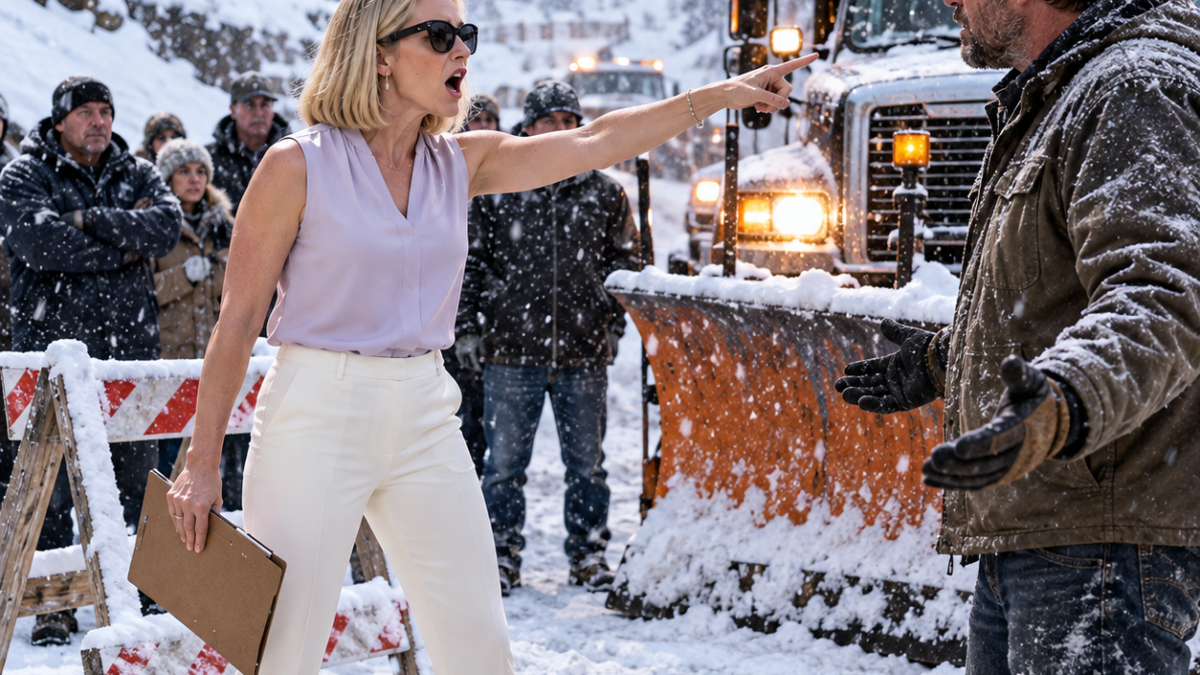
𝗙𝗨𝗟𝗟 𝗦𝗧𝗢𝗥𝗬
I could feel my patience shortening.
But I knew something else too.
I needed to get outside.
The snow was accumulating.
“Fine.”
I stepped back.
“I’m about to leave anyway.”
His expression changed.
“Leave?”
“Plow.”
He looked toward the garage.
“The neighborhood road.”
Then his face became strangely satisfied.
“Actually, we need to discuss that too.”
I should have known.
“What?”
“I’ve been reviewing HOA operations.”
“Of course you have.”
“Your snow-removal activity isn’t authorized.”
I stared.
“Excuse me?”
“You operate heavy commercial machinery on private association property without a formal board-approved service contract.”
“I’m clearing snow.”
“You’re performing maintenance.”
“For free.”
“That doesn’t eliminate liability.”
“Preston.”
“We have no current equipment inspection on file.”
“My equipment is commercially maintained.”
“By whom?”
“My company.”
“Exactly.”
“What does that mean?”
“It means there’s no independent third-party verification.”
I looked at him.
Then out at the storm.
Then back.
“You understand the road has to be cleared continuously during a storm like this?”
“We are going to hire a professional service.”
I waited.
He said it with such confidence that for a moment I wondered whether he’d already contracted one.
“You already have someone?”
“We have options.”
“Have you called them?”
“We have a budget.”
“That wasn’t the question.”
His face tightened.
“We will use professionals.”
“I am a professional.”
“You are a homeowner playing with commercial equipment on community property.”
That one got me.
“Playing.”
“You know what I mean.”
“No, I don’t.”
He pointed toward the garage.
“From this point forward, you are forbidden from performing snow removal or maintenance on HOA roads unless specifically authorized under a signed contract.”
I looked at him carefully.
“You’re telling me not to plow.”
“I’m telling you to stop unauthorized operations.”
“In this storm.”
“We’ll handle it.”
“And you want the generator off.”
“Immediately.”
I nodded slowly.
Preston mistook that for submission.
He puffed his chest slightly.
“Good.”
I asked one last question.
“You are officially instructing me, as HOA president, not to use my equipment on the road?”
“Yes.”
“Correct?”
“Correct.”
“And you’re fining me for running emergency power during an outage.”
“The notice is right there.”
I looked at the piece of paper still in his hand.
“Okay.”
His expression became smug.
“Glad we understand each other.”
He turned.
Walked off the porch.
Then slipped on an icy patch I hadn’t cleared yet.
Caught himself on the railing.
Straightened up.
Pretended nothing happened.
Then marched into the snow.
I closed the door.
My wife was standing in the hallway.
“What was that about?”
I looked toward the generator.
“I’m a noise-polluting liability.”
She stared.
“What?”
“Also, apparently I’m an amateur playing with toys.”
She knew me well enough to recognize the tone.
“What are you going to do?”
I finished my coffee.
“Exactly what he told me.”
Her eyebrows went up.
“What about the road?”
I shrugged.
“Not my problem.”
She stared at me for a second.
Then a smile started.
“Oh.”
“Yeah.”
“You’re serious.”
“Completely.”
I went outside.
Turned off the generator.
The house went silent.
No furnace blower.
No refrigerator hum.
Nothing.
Then I walked into the garage.
Looked at the plow truck.
Didn’t touch it.
Went back inside.
Preston wanted professional management.
He was about to get the full experience.
Within two hours, the temperature inside our house started dropping.
My wife and I put on heavier clothes.
We lit the fireplace.
Closed off unused rooms.
We had blankets.
Plenty of food.
Enough firewood.
We weren’t comfortable, but we were prepared.
The storm intensified around noon.
Whiteout conditions.
I could barely see the tree line from the window.
Wind drove snow sideways so hard that sections of the house creaked.
Normally, in a storm like that, I’d already have been making repeated passes.
That’s the part people who don’t understand mountain snow removal miss.
You don’t wait until the storm ends and then start.
Not when wind is drifting.
You keep the road open while the snow falls.
Otherwise each hour makes the next pass harder.
Drifts compact.
Snow stacks against curves.
Wind fills every cut you make.
Without a plow, the road disappeared fast.
By late afternoon, it was buried.
By the next morning, it was gone.
I mean that literally.
From my upstairs window, I could not tell where pavement ended.
There was only white.
Smooth, wind-shaped snow running from the hillside across the road toward the drop.
In places the drifts were chest-high.
Other places deeper.
Nobody was driving out.
My phone started ringing.
First neighbor.
“Hey, you heading out soon?”
“No.”
Pause.
“What do you mean?”
“Preston banned me from plowing HOA property.”
“What?”
“He says I’m an unauthorized liability.”
“You’re joking.”
“No.”
“But the road—”
“You need to call him.”
Second call.
Older couple farther down.
“You know when you’ll open the road?”
“I’m not authorized.”
“Since when?”
“Yesterday.”
“Who said that?”
“Preston.”
Silence.
Then:
“That idiot.”
Third call.
Family with two kids.
Fourth.
Fifth.
I gave everyone the same answer.
“I’m sorry. Preston told me in writing—or as official board president, anyway—that I cannot operate my equipment on HOA roads. He also threatened fines.”
I wasn’t enjoying their fear.
That’s important.
Some neighbors were older.
Some had children.
I knew the road mattered.
But I also knew that if I ignored Preston’s direct instruction, he’d learn nothing.
Worse, he could later blame me for any damage.
If I touched a snowbank and scratched a sign?
Unauthorized contractor.
If equipment slid?
Liability.
If someone complained?
He’d already established the story.
So I stayed parked.
About an hour later, my phone rang from a number I didn’t recognize.
I answered.
“Hello?”
“Why aren’t you out there?”
Preston.
His voice sounded completely different.
Frantic.
“The road is buried.”
“I know.”
“Nobody can leave.”
“I can see that.”
“My wife can’t even get the SUV out.”
I waited.
“She has an appointment in the valley.”
I couldn’t believe that was the first emergency he chose.
“What kind?”
He hesitated.
“That is not relevant.”
“Okay.”
“Get the plow out.”
I leaned back in my chair.
“I can’t.”
“What do you mean you can’t?”
“Unauthorized equipment.”
Silence.
“You said it wasn’t third-party inspected.”
“Stop being ridiculous.”
“Also, quiet hours.”
“This is an emergency.”
I looked toward my silent generator.
“Interesting.”
“What?”
“Yesterday you told me an emergency wasn’t a license to disturb the community.”
He went quiet.
“That was the generator.”
“Yes.”
“This is different.”
“How?”
“People are trapped.”
“I agree.”
“So go.”
“I’d hate to interfere with the professional service.”
Another silence.
Then I asked:
“When are they arriving?”
Preston’s breathing changed.
“I called three companies.”
“Good.”
“Two won’t come up until the wind dies.”
“Understandable.”
“They say the approach is too dangerous.”
“Also understandable.”
“The third quoted four thousand dollars.”
“For what?”
“A scouting run.”
I bit the inside of my cheek.
“Wow.”
“And they won’t be here until tomorrow.”
“That’s unfortunate.”
“Just get out there.”
“I can’t.”
“I am telling you to.”
“Yesterday you told me not to.”
“I am rescinding that.”
“Do you have a board-approved contract?”
“What?”
“You were very concerned about paperwork.”
“Are you serious?”
“Completely.”
“People are trapped.”
“Sounds like a liability issue.”
“You’re being an asshole.”
“Maybe.”
“Just clear the road and I’ll waive the generator fine.”
I laughed.
“I don’t think so.”
“Excuse me?”
“You don’t get to fine me for using emergency power, ban me from helping, then offer not to punish me if I rescue the situation.”
“What do you want?”
“Nothing right now.”
“You are going to let the neighborhood stay trapped?”
“No.”
“I’m following the rule you created.”
“That’s the same thing.”
“Then maybe it was a bad rule.”
He swore.
I said:
“Call your professionals.”
Then hung up.
A few hours later, I watched the first professional attempt.
From my window, I could see part of the lower approach through gaps in the trees.
A small pickup with a lightweight plow tried coming up from the highway.
It made maybe fifty yards.
Then hit a drift taller than the hood.
The driver stopped.
Got out.
Looked.
Walked around.
Got back in.
Reversed.
Gone.
Professional service.
Apparently mountain weather hadn’t read Preston’s procurement plan.
The neighborhood group chat became chaos.
Photos of buried garage doors.
People asking whether anyone had extra firewood.
Someone worried about medication.
Another person asked whether emergency services could reach us.
Neighbors began demanding answers from Preston.
Preston barely replied.
When he did, he said contractors had been contacted.
That only made people angrier.
Because everyone knew who could open the road.
Me.
And everyone was slowly learning who had explicitly stopped me.
By dinner, someone knocked on my door.
My wife looked out the window.
“It’s him.”
“Alone?”
“No.”
I opened the door.
Preston stood there with two other board members.
All three looked miserable.
Snow clung to their jackets.
Their expensive gloves were soaked.
One man’s hair was flattened against his forehead.
Preston wouldn’t look directly at me.
The board member on his left spoke first.
“We need to talk.”
“Come in.”
They stepped inside near the fireplace.
The difference between my house and theirs was probably obvious.
Still no generator.
Fire only.
I had followed the quiet-hours rule.
The second board member said:
“We owe you an apology.”
I looked at Preston.
He stared at his boots.
“For what?”
“The generator fine.”
I waited.
“And the snowplow issue.”
“Okay.”
“Preston was out of line.”
Preston finally looked up.
“I was trying to protect the association.”
The first board member snapped:
“Not now.”
That surprised me.
He turned back.
“We need the road open.”
“I know.”
“Some people need to work tomorrow.”
“I know.”
“We’ve got elderly residents.”
“I know.”
“If something happens medically—”
“I know.”
He stopped.
I wasn’t trying to be cruel.
I knew every problem.
I’d been preventing them for years.
That’s why Preston’s decision had made me so angry.
He treated the work like a hobby because he’d never had to experience what happened without it.
The board member continued:
“We’re asking you to plow.”
I looked at Preston.
“Officially?”
“Yes,” the board member said.
I walked to my kitchen counter.
Pulled out a sheet of paper.
I’d prepared it earlier.
My wife had watched me type it that afternoon.
Preston stared.
“What’s that?”
“My terms.”
His face changed.
I handed the paper to the board member.
“First, the two-hundred-dollar generator fine is withdrawn in writing.”
He nodded.
“Fine.”
“Not verbally.”
“Understood.”
“Second, emergency clearing tonight is a commercial job.”
Preston looked up.
“What?”
“I don’t perform unauthorized volunteer maintenance anymore.”
The board member kept reading.
I continued.
“My standard emergency rate for a storm of this magnitude is five thousand dollars.”
Preston’s mouth opened.
“Five thousand?”
“Yes.”
“That’s extortion.”
“No.”
“You’ve been doing it free for years.”
“Volunteer service.”
“This is the same road.”
“Different arrangement.”
He stared at me.
“You expect your neighbors to pay five thousand dollars because you’re angry at me?”
“No.”
I pointed toward the paper.
“You asked for professional service.”
“I didn’t mean—”
“You specifically said the HOA had the budget for quality.”
One board member almost smiled.
Preston did not.
I continued.
“Fuel.”
I counted on my fingers.
“Equipment wear.”
“Emergency callout.”
“Six hours minimum in dangerous conditions.”
“Commercial liability.”
“And the fact that your other contractor wants four thousand dollars just to drive up here and look.”
The second board member nodded.
“He’s right.”
Preston turned.
“What?”
“We’re already paying thousands for nothing.”
“That doesn’t mean—”
“We need the road.”
I continued.
“Third condition.”
The board members looked back at the paper.
“Long-term snow maintenance agreement.”
Preston’s eyes narrowed.
“What does that mean?”
“It acknowledges in writing that my equipment is approved for emergency use.”
Nothing.
“That I have authority to operate at any hour during a weather event.”
Nothing.
“And that snowplow noise during emergency clearing isn’t a violation.”
The first board member nodded.
“Reasonable.”
Preston looked betrayed.
“You can’t seriously agree to this.”
The man turned toward him.
“People are trapped.”
“I know.”
“You created this.”
“I was following risk-management principles.”
“You didn’t even hire a backup contractor.”
Preston said nothing.
The second board member pulled a pen from his pocket.
“Where do I sign?”
I pointed.
He signed.
The first signed.
Then both looked at Preston.
He stared at the paper.
“This is outrageous.”
One board member handed him the pen.
“Sign it.”
“I object.”
“Sign it.”
He looked at me.
“This is because of the generator.”
“No.”
“Don’t lie.”
“This is because you insisted everything be professional.”
His jaw tightened.
“Now it is.”
He finally signed.
Hard enough that the pen nearly tore the paper.
I took the agreement.
Checked all three signatures.
“Good.”
Preston glared.
“Now go.”
I folded the document.
“I’ll be out in twenty minutes.”
He turned toward the door.
I added:
“One warning.”
He looked back.
“The plow is loud.”
One board member laughed.
Preston didn’t.
Twenty minutes later, I opened the garage.
There she was.
My plow truck.
Custom build.
Ten-foot V-plow.
Rear sand spreader.
Work lights.
Yellow strobes.
Heavy suspension.
Enough weight and power to move snow that would stop normal trucks cold.
I climbed in.
Turned the key.
The diesel came alive with a deep roar.
After a day of silence, the sound felt incredible.
The whole garage vibrated.
My wife stood near the door wearing a coat.
She smiled.
“Too loud?”
“Definitely.”
“Better be careful.”
“I’ve heard there’s a policy.”
I pulled out.
Strobes reflected through the falling snow.
The first hundred yards told me how bad things had become.
Drifts were packed.
Wind had built huge walls across several turns.
The first pass wasn’t graceful.
It was work.
Slow.
Blade angled.
Back up.
Hit the drift again.
Push.
Reverse.
Reposition.
Sand.
Move forward.
At one switchback, I had to cut the same bank repeatedly just to find the pavement edge.
I knew where the road was from memory.
That’s part of why an outside contractor would’ve struggled even with bigger equipment.
I knew every curve.
Every culvert.
Every drop.
Every place where wind stacked snow.
I spent six hours clearing.
Not playing.
Not casually driving.
Working.
The main road came first.
I opened one lane.
Then widened it.
Then widened again until two vehicles could pass safely.
I cut back snowbanks near blind corners.
Spread sand.
Cleared intersections.
Then driveways.
Every single one.
The neighbors came outside when they heard me.
Some waved.
Some raised fists in the air.
One older woman stood on her porch and clapped.
I cleared her driveway all the way to the garage.
I cleared access to the fire hydrants too.
Emergency equipment had to be able to reach them.
By the time I reached Preston’s property, my shoulders hurt.
His house sat near the top.
Large circular driveway.
Expensive stone mailbox near the entrance.
I lowered the blade.
Cleared everything.
Professionally.
Every inch.
His driveway looked perfect when I finished.
There was one unavoidable consequence of moving that much road snow.
It had to go somewhere.
At the edge of his property, near his decorative mailbox, the road cut produced a wall of packed snow roughly six feet high.
I didn’t hit the mailbox.
Didn’t damage anything.
I’m a professional.
But if Preston wanted to see the mailbox itself again anytime soon, he was going to need a shovel.
I smiled when I drove away.
Just a little.
Around midnight, I completed the last pass.
The road was visible again.
A black ribbon of asphalt between white walls.
Vehicles could get out.
Emergency services could get in.
I parked the truck.
Shut down.
Went inside.
My wife handed me hot coffee.
“How bad?”
“Bad.”
“Road good?”
“Now.”
“Preston?”
“His driveway has never looked better.”
She looked at me.
“What did you do?”
“Nothing.”
She stared.
“Snow had to go somewhere.”
She started laughing.
The next HOA meeting was packed.
And I mean packed.
People who hadn’t attended in years were there.
Standing along walls.
Folding chairs filled.
Neighbors angry enough that nobody cared about spring landscaping projects.
Preston tried anyway.
He opened his binder.
Cleared his throat.
“First item tonight is the spring beautification—”
“Five thousand dollars.”
Someone shouted from the back.
Room erupted.
Preston stopped.
An older neighbor stood.
“I’d like to know why the HOA spent five thousand dollars for one snow clearing when we’ve had that service free for years.”
Preston shifted.
“There were liability concerns.”
Another person shouted:
“We were trapped for a day.”
Preston raised both hands.
“Please.”
Nobody cared.
He tried.
“The board had a responsibility to ensure that contractors operating on association property—”
My wife stood.
She is much better at this kind of thing than I am.
She didn’t yell.
She didn’t need to.
“Maybe everyone should know exactly what happened.”
The room quieted.
Preston looked at her.
She continued.
“The power went out during the storm.”
Nods.
“My husband ran our emergency generator so the furnace would keep working.”
More nods.
“Preston came to our house at six in the morning.”
People looked toward him.
“He issued a two-hundred-dollar noise fine.”
The room erupted.
Preston raised his voice.
“That is an oversimplification.”
My wife continued calmly.
“He told my husband the fine would increase to five hundred if the generator continued.”
Someone near the front said:
“During the outage?”
“Yes.”
Another voice:
“It was ten degrees!”
My wife nodded.
“Then, when my husband said he was going out to plow the road like he has done for years, Preston told him he was forbidden from using his equipment on HOA property because he was an unauthorized liability.”
Silence.
Then chaos.
People turned toward Preston.
He raised his hands.
“I was attempting to standardize operations.”
One man shouted:
“Standardize what? Free snow removal?”
Another:
“You didn’t have another contractor!”
Preston tried to regain control.
“We have an obligation to ensure—”
Then an older man stood.
His name was Walt.
He’d lived on the ridge nearly forty years.
Long before most of us.
Walt didn’t speak often at meetings.
When he did, people listened.
He looked straight at Preston.
“You moved up here from the city.”
Preston stiffened.
“That is irrelevant.”
“No.”
Walt shook his head.
“It isn’t.”
He pointed toward the windows.
“You don’t understand this place.”
Preston tried to answer.
Walt continued.
“You think this is one of your city neighborhoods where the biggest emergency is somebody parking a trailer where you can see it.”
Several people laughed.
“This mountain kills people who get stupid.”
The room became quiet.
Walt continued.
“That man has been getting up before dawn for years so the rest of us can get to work.”
He pointed toward me.
“He did it for free.”
Preston looked away.
“You fined him for keeping his house warm.”
Nothing.
“Then you told him he couldn’t plow.”
Nothing.
“Then the road disappeared.”
Walt shook his head.
“You almost trapped elderly people up here for days because you wanted everyone to know you were president.”
Preston’s face reddened.
“That is not what happened.”
“It is exactly what happened.”
Walt sat down.
Someone immediately said:
“I move to remove Preston as president.”
The room changed.
Preston froze.
Another homeowner seconded.
He looked around.
“You cannot just—”
The board secretary checked the bylaws.
Enough members were present.
Proper motion.
Vote.
Hands started going up.
Almost every one.
Preston stared.
For the first time since I’d known him, he had nothing to say.
He closed his binder.
Stood.
“I resign.”
Nobody stopped him.
He walked out.
Head down.
No speech.
No final warning.
Nothing.
The new board understood mountain life.
We didn’t return completely to the old informal arrangement.
That was probably for the best.
Preston had accidentally made one fair point beneath all the arrogance.
Written expectations are useful.
So the HOA established a simple agreement with my business.
I still clear the road.
But now they reimburse fuel.
I receive a modest stipend for my time.
My commercial insurance information is on file.
Equipment is formally authorized.
Emergency weather operations can happen at any hour.
No one can fine me because a diesel plow is loud at four in the morning while I’m keeping the only road open.
And my generator?
Emergency operation specifically exempted.
Funny how fast bylaws can become reasonable after a real emergency.
The neighborhood returned to normal.
Better than normal, actually.
People started paying more attention to board decisions.
That was probably the best consequence.
Before Preston, most homeowners didn’t care.
They assumed the board understood what it was doing.
Afterward, they asked questions.
Who is the backup snow contractor?
What happens if power is out?
Where are emergency contacts?
Who can authorize work?
What does the HOA actually control during dangerous weather?
Those are good questions.
Preston’s mistake wasn’t wanting professional standards.
There’s nothing wrong with contracts.
Nothing wrong with liability insurance.
Nothing wrong with making sure people operating heavy equipment know what they’re doing.
His mistake was assuming paperwork mattered more than reality.
He banned an existing safety system before replacing it.
That’s not risk management.
That’s creating risk.
If he’d come to me months earlier and said:
“We appreciate what you’ve been doing. We’d like your insurance certificate and a simple written agreement.”
I would’ve said yes.
Probably still for almost nothing.
I had the documents.
My equipment was insured.
My business was legitimate.
No fight necessary.
Instead, he waited until the middle of a blizzard.
Then fined my generator.
Insulted my work.
Called me an amateur.
And ordered me to stop.
So I stopped.
That was the part he didn’t understand.
People like Preston assume rules will only restrict the people beneath them.
They never imagine those people might obey exactly.
He expected me to ignore him when ignoring him benefited the community.
Then if anything went wrong, he could still say:
“I told you not to.”
That’s a perfect arrangement for someone like Preston.
All authority.
No responsibility.
I wasn’t giving him that.
If my equipment was unauthorized, it stayed parked.
If my generator violated quiet hours, it stayed off.
If he wanted professionals, he got professional rates.
The entire conflict came from taking him seriously.
Years later, people still joke about the storm.
Someone will see a heavy snow forecast and ask:
“Has the president approved weather?”
Another neighbor bought a generator and sent me a picture.
Caption:
TOO LOUD?
Walt still lives up there.
Every winter, he calls before the first major storm.
Not because he needs anything.
He just asks:
“Plow still authorized?”
I say:
“Contract signed.”
“Good.”
Then he hangs up.
My wife sometimes says I enjoyed the malicious compliance too much.
She’s probably right.
Especially the mailbox snowbank.
But I’ve never regretted forcing the board to understand what the service was worth.
Free things have a strange problem.
People eventually forget they’re receiving a gift.
The road was always clear.
Therefore, in Preston’s mind, the road clearing wasn’t valuable.
It simply happened.
He never saw the 3 a.m. alarm.
Fuel.
Maintenance.
Blade edges.
Hydraulic repairs.
Insurance.
Time.
Risk.
He saw a neighbor driving a loud truck.
Then he removed that “problem.”
The next morning, he discovered what he’d actually removed.
Access.
That’s a lesson that applies far beyond snowplows.
People notice the cost of a service when the service disappears.
After the storm, the HOA accountant showed the board what a full winter contract with an outside mountain snow company would cost.
Nobody complained about my stipend.
Not one person.
Preston eventually sold his house.
I don’t know whether the board removal caused it.
Maybe mountain living just wasn’t what he expected.
The last time I saw him, a moving company was loading furniture.
I was driving the plow truck home from work.
No snow that day.
Just equipment.
He saw me.
I slowed.
He didn’t wave.
Neither did I.
There was nothing left to say.
His house sold to a family who had lived in Colorado mountain communities before.
The first winter, the new owner walked over while I was checking the plow.
“You’re the snow guy?”
I laughed.
“I guess.”
He held out a thermos.
“My wife made too much coffee.”
That was more like it.
“Thanks.”
“Anything we need to know during storms?”
“Keep cars off the road when I’m clearing.”
“Done.”
“Mark driveway edges if they’re hard to see.”
“Done.”
“If power goes out and you’ve got a generator, run it safely.”
He smiled.
“Even during quiet hours?”
I looked at him.
He laughed.
“I’ve heard the story.”
Of course he had.
The story became neighborhood folklore.
Like most folklore, details changed.
Some people claimed the road was buried ten feet deep everywhere.
Not true.
Someone said Preston’s wife missed an emergency surgery.
Definitely not true.
It was a spa appointment, which somehow made the original situation funnier.
Someone claimed I charged twenty thousand dollars.
No.
Five.
Standard emergency commercial rate for conditions that bad.
Another version said I plowed a wall across Preston’s garage.
Also false.
I cleared his driveway perfectly.
His mailbox simply became temporarily difficult to appreciate.
That’s all.
What matters is the core of it.
A new HOA president arrived believing our community’s informal systems were beneath him.
During a major winter outage, he fined me for an emergency generator.
Then, minutes before I would normally clear the only access road, he formally told me I was forbidden from using my plow on association property because my volunteer work was supposedly an unapproved liability.
I obeyed.
The storm did the rest.
By the next day, nobody needed me to explain why the old system existed.
Nature had explained it.
Forcefully.
I think about that whenever someone tells me mountain people are stubborn.
We are.
Sometimes because experience teaches you which systems work.
You don’t always need a twelve-page operational plan to know that snow should be removed from the road.
You don’t need a consultant to explain that emergency generators make noise.
You don’t need a risk-management seminar to understand that banning the only available plow during a blizzard without securing a replacement is stupid.
Mountain communities depend on competence.
Not titles.
When the temperature drops, nobody cares what business card you carry.
Can you fix the pipe?
Can you clear the tree?
Can you pull a stuck vehicle?
Can you open the road?
Those things matter.
Preston arrived believing leadership meant regulating everyone.
He learned leadership sometimes means recognizing who already knows what they’re doing and getting out of the way.
I don’t hate him.
I was furious then.
Now I mostly think he was dangerously inexperienced and too arrogant to admit it.
That combination causes more damage than simple stupidity.
Ignorant people can learn.
Arrogant people resist the lesson.
Preston needed a buried road, thousands of dollars in emergency costs, and almost an entire neighborhood voting against him before he understood.
Expensive education.
But effective.
I still wake around three during major storms.
My wife hates the alarm.
I get dressed.
Start coffee.
Check wind.
Look at accumulation.
Then head outside.
The diesel starts.
Lights come on.
Sometimes I see porch lights turning on as I pass houses.
People know the sound now.
Nobody complains.
To them, that engine doesn’t mean a noise violation.
It means they’ll be able to leave in the morning.
It means an ambulance could get in.
It means the ridge remains connected to the rest of the world.
Some sounds are worth hearing.
Years after Preston left, we had another major outage.
Big storm.
Temperature below zero.
Power disappeared around midnight.
Generators started all over the neighborhood.
Mine.
Walt’s.
Three houses down.
One near the entrance.
A low mechanical chorus under the wind.
I stepped onto my deck.
Listened.
Then started laughing.
My wife opened the door.
“What?”
“Quiet hours.”
She smiled.
“Should we issue fines?”
“Absolutely.”
“Five hundred after twenty minutes?”
“Minimum.”
Then she shut the door because it was freezing.
The power stayed out for twelve hours.
Pipes didn’t freeze.
People kept their homes warm.
Nobody filed a complaint.
Progress.
The current board has an emergency plan now.
Snow.
Fire.
Power outages.
Medical access.
Contact lists.
Backup contractors.
Actual useful things.
Not because bureaucracy is always bad.
Because good bureaucracy supports reality instead of denying it.
That’s the distinction Preston missed.
Written systems should help people respond to emergencies.
Not stop capable people from responding because the form hasn’t been stamped.
I also changed.
Before that storm, I gave too much away for free.
Not because generosity is bad.
Because free work creates assumptions.
Now everything involving my commercial equipment has at least a simple agreement.
Even if I charge almost nothing.
Insurance.
Scope.
Authorization.
Who pays fuel.
Who accepts responsibility.
Everybody knows.
No gray area.
Preston would’ve approved.
That irony isn’t lost on me.
He wanted professionalization.
In the end, he got it.
Just at five thousand dollars a storm-call lesson.
And with his presidency attached.
If you ask me whether I intentionally let the road disappear to make a point, I’ll answer carefully.
I intentionally followed the president’s direct instruction.
I knew what would happen if no one plowed.
So did he, or he should have.
That’s why I warned him about contractor availability.
He believed money and authority would solve the problem whenever he decided they should.
The mountain disagreed.
Could I have ignored his order and plowed anyway?
Yes.
Physically.
But then what?
He’d fined me already.
He’d called my equipment unauthorized.
He’d created a liability record.
If I had continued after being explicitly prohibited and something happened, he would have been the first person saying:
“We told him not to do this.”
I wasn’t accepting that risk.
That’s the part some people miss when they say I should simply have done the right thing and ignored him.
Helping others doesn’t require volunteering to become the scapegoat for a board president who wants the authority to stop you and the convenience of having you ignore him.
He made the decision.
I made him own it.
Once the full board corrected it in writing, I went out.
And when I went out, I didn’t clear only my driveway.
I cleared everybody.
Main road.
Private drives.
Hydrants.
Even Preston’s place.
I did the work properly because that’s what professionals do.
I didn’t punish the neighborhood.
I charged the HOA exactly what an emergency commercial job was worth after the HOA explicitly ended the volunteer arrangement.
There’s a difference.
The neighbors understood that.
That’s why they voted the way they did.
The old man Walt said it best.
You’re not a leader.
You’re a hazard.
Leadership isn’t how many rules you can enforce.
It’s whether people are safer because you’re there.
Under Preston, we were less safe.
That ended his presidency more than any argument I could have made.
I never needed revenge after that.
Watching the road reopen was enough.
Watching neighbors drive to work the next morning was enough.
Watching the new board sign an agreement that made sense was enough.
Okay.
And the mailbox was satisfying.
I’m only human.
But the best moment came several weeks later.
Another storm.
Not as severe.
Maybe eight inches overnight.
I was out at four.
Plow down.
Engine working.
Snow rolling off the blade.
As I passed Walt’s house, his porch light came on.
He stepped outside in his robe.
Raised a mug.
I flashed the work lights once.
He went back inside.
No forms.
No complaints.
No speeches.
Just neighbors understanding what needed to happen.
That’s the community I’d lived in before Preston arrived.
And after one miserable storm, it’s the community we became again.
The road didn’t just disappear under snow that week.
Preston’s version of authority disappeared with it.
And when I finally pushed the last drift off the pavement and saw black asphalt underneath again, I realized something.
The mountain had done what none of us had been able to do in meetings.
It showed everyone exactly which rules mattered—and which ones became meaningless the moment survival got involved.
𝗧𝗛𝗘 𝗘𝗡𝗗
The HOA President Fined Me During a Blizzard—Then Ordered Me to Stop Using the One Machine Keeping Our Mountain Road Open
Preston told me my generator was too loud, my snowplow was an unauthorized liability, and I was forbidden from clearing the only road off our mountain.
So I shut everything down and followed his instructions exactly.
I’ve lived in the high country for more than a decade, and one thing you learn very quickly is that winter doesn’t care how expensive your house is.
It doesn’t care about HOA bylaws.
It doesn’t care who sits on a board.
It doesn’t care whether your landscaping is professionally maintained or whether you paid extra for imported stone around your fireplace.
When a mountain storm comes in hard enough, every person on that ridge becomes equal.
Cold is cold.
Ice is ice.
And six feet of snow across the only road out doesn’t care who thinks they’re in charge.
Our community sat high on a wooded ridge above the valley.
There was one road in.
One road out.
Nothing else.
The road ran for roughly two miles, twisting through switchbacks and steep grades before meeting the main highway below.
In summer, it was beautiful.
You could look over the edge and see miles of pine forest rolling toward the valley.
In winter, those same views became reminders of how little room you had for error.
One side of the road was mountain.
The other side, in places, was a drop steep enough that if you slid off during a storm, you weren’t casually climbing back up.
If the road wasn’t plowed, nobody went anywhere.
Work?
Forget it.
School?
Not happening.
Groceries?
You’d better have stocked up.
Ambulance?
Good luck.
Fire truck?
Same problem.
That’s why snow removal wasn’t a cosmetic service up there.
It was infrastructure.
It was safety.
For me, it was also part of daily life.
I own a heavy-equipment and excavation business.
Excavators.
Loaders.
Dump trucks.
Commercial plows.
Sanders.
Equipment built for moving dirt, gravel, rock, and especially snow.
I had the machinery.
I had the insurance.
I had more experience running that equipment in mountain weather than most commercial snow contractors working in the valley.
And for years, I used that equipment to help my neighbors.
For free.
Not because the HOA forced me.
Not because I had a contract.
Not because I enjoyed waking up before dawn.
I did it because I lived there too.
When a storm rolled in overnight, I’d be up around three in the morning.
Coffee.
Work boots.
Heavy jacket.
Then out to the garage.
I’d fire up my plow truck while everyone else slept.
The diesel would rumble to life.
Lights would cut through the snow.
I’d start at the top of the ridge and work downward.
First pass would open the road.
Second would widen it.
Then I’d deal with drifts.
Intersections.
Blind corners.
Places where wind pushed snow back across the pavement ten minutes after I’d cleared it.
If conditions were bad enough, I’d keep running until sunrise.
By seven, people could usually get down the mountain.
The old HOA board loved the arrangement.
Why wouldn’t they?
A professional snow contractor willing to service a mountain road on emergency notice could cost tens of thousands over a difficult winter.
I charged the neighborhood nothing.
Maybe somebody brought me coffee.
Maybe a neighbor handed me a case of beer around Christmas.
That was about it.
The board knew I carried commercial insurance through my business.
They knew I maintained my equipment.
They knew I wasn’t some idiot bolting a rusty blade onto a pickup and hoping for the best.
Mostly, they understood how mountain communities work.
Everybody contributes what they can.
One neighbor had a chainsaw and cleared fallen trees.
Another had medical training.
Another kept extra firewood.
I had heavy machinery.
It wasn’t complicated.
Then Preston moved in.
Preston came from a coastal city about a year before everything happened.
He bought one of the largest houses at the top of the ridge.
Beautiful place.
Three-car garage.
Huge windows.
Stone driveway.
He arrived with luxury SUVs, expensive outdoor clothing, and an attitude suggesting the rest of us had somehow been waiting decades for him to explain civilization.
Within months, he got himself elected HOA president.
I wasn’t particularly interested in board politics.
As long as they collected enough money to maintain the common areas and left people alone, I didn’t care who ran meetings.
But Preston cared.
A lot.
His favorite word was professionalize.
Professional landscaping.
Professional management.
Professional security.
Professional contractor relationships.
Professional communication standards.
Professional architectural review.
To Preston, everything we’d been doing informally was evidence that the neighborhood was primitive.
He didn’t see neighbors helping neighbors.
He saw uncontrolled risk.
He didn’t see someone clearing snow because it needed to be done.
He saw undocumented service provision.
One afternoon, not long after he became president, he stopped me near the mailboxes.
“You’re the guy who plows the road, right?”
I nodded.
“Usually.”
“HOA employee?”
“No.”
“Contractor?”
“No.”
He frowned.
“Then who authorizes you?”
I looked at him.
“Snow.”
He didn’t laugh.
“I’m serious.”
“So am I.”
“You just take your commercial equipment onto association roads?”
“When they’re buried.”
“Without board approval?”
“The old board knows.”
“That’s not what I asked.”
I shrugged.
“I live here.”
He gave me the kind of smile people use when they think they’re dealing with someone simple.
“We’ll have to formalize that.”
“Fine.”
Then he walked away.
I forgot about the conversation.
That was my mistake.
The storm came in January.
Forecasts had been warning us for days.
Big system.
Heavy snow.
High wind.
Temperatures dropping hard overnight.
Everyone up there knew what that meant.
People stocked food.
Brought firewood closer to the house.
Checked fuel.
Charged flashlights.
Tested backup power.
By midnight, snow was coming sideways.
Around two in the morning, the electricity flickered.
Came back.
Flickered again.
Then disappeared.
The entire ridge went black.
No streetlights.
No porch lights.
Nothing except occasional headlights and the glow of fireplaces behind windows.
The outside temperature was around ten degrees Fahrenheit and dropping.
That kind of cold changes the stakes.
Without electricity, furnaces that depend on blowers stop moving heat.
Pipes become a concern.
Refrigerators stop.
Well pumps can stop depending on the setup.
Phones eventually die.
I had planned for it.
My backup generator wasn’t one of those little suitcase-sized units meant to keep a television running.
It was a serious machine.
Reliable.
Enough capacity to keep the furnace blower operating, refrigerator cold, a few lights on, and essential circuits alive.
I rolled it onto the back deck.
Connected it safely.
Started it.
The engine settled into a steady low hum.
Not silent.
Generators aren’t.
But inside my house, that sound meant the heat stayed on.
My wife and I went back to bed for a few hours.
Around five-thirty, I woke.
Snow still hammering the windows.
Power still out.
I made coffee.
Checked the weather.
Then started getting ready to plow.
My plan was exactly the same as every serious storm before it.
Get the road open before people needed to leave.
I was halfway through my coffee when someone started pounding on the front door.
Not knocking.
Pounding.
My wife looked toward the entryway.
“Who is that?”
“No idea.”
I opened the door.
Preston stood outside.
His expensive winter jacket was dusted with snow.
Wind pushed flakes around him.
He looked furious.
“Do you have any idea what time it is?”
I looked at the clock behind me.
“About six.”
“Exactly.”
I waited.
He pointed toward the back of my house.
“That machine.”
“My generator?”
“It is unbelievably loud.”
I almost thought he was joking.
“It’s keeping the heat on.”
“I can hear it from my driveway.”
“The power is out.”
“I’m aware.”
“Then why are we having this conversation?”
His jaw tightened.
“We have quiet hours.”
I stared at him.
Outside, the wind howled.
Snow blew across the porch.
Somewhere behind him, half the neighborhood was sitting in dark houses.
“Preston.”
“What?”
“It’s ten degrees.”
“That doesn’t suspend community rules.”
“It’s an emergency generator.”
“An emergency for you does not give you permission to disturb everyone else.”
I actually laughed.
He didn’t.
He reached into his coat.
Pulled out a small notepad.
Started writing.
“What are you doing?”
“Documenting the violation.”
“You’re serious.”
He tore off the page.
“$200.”
I looked at it.
Didn’t take it.
He held it toward me.
“If the generator is still running in twenty minutes, the fine increases to five hundred.”
I stared at him.
“You came through a blizzard to fine me for keeping my furnace running?”
“You were warned about noise standards when you purchased here.”
“I’ve owned this house longer than you’ve lived in the state.”
“That doesn’t exempt you.”
I could feel my patience shortening.
But I knew something else too.
I needed to get outside.
The snow was accumulating.
“Fine.”
I stepped back.
“I’m about to leave anyway.”
His expression changed.
“Leave?”
“Plow.”
He looked toward the garage.
“The neighborhood road.”
Then his face became strangely satisfied.
“Actually, we need to discuss that too.”
I should have known.
“What?”
“I’ve been reviewing HOA operations.”
“Of course you have.”
“Your snow-removal activity isn’t authorized.”
I stared.
“Excuse me?”
“You operate heavy commercial machinery on private association property without a formal board-approved service contract.”
“I’m clearing snow.”
“You’re performing maintenance.”
“For free.”
“That doesn’t eliminate liability.”
“Preston.”
“We have no current equipment inspection on file.”
“My equipment is commercially maintained.”
“By whom?”
“My company.”
“Exactly.”
“What does that mean?”
“It means there’s no independent third-party verification.”
I looked at him.
Then out at the storm.
Then back.
“You understand the road has to be cleared continuously during a storm like this?”
“We are going to hire a professional service.”
I waited.
He said it with such confidence that for a moment I wondered whether he’d already contracted one.
“You already have someone?”
“We have options.”
“Have you called them?”
“We have a budget.”
“That wasn’t the question.”
His face tightened.
“We will use professionals.”
“I am a professional.”
“You are a homeowner playing with commercial equipment on community property.”
That one got me.
“Playing.”
“You know what I mean.”
“No, I don’t.”
He pointed toward the garage.
“From this point forward, you are forbidden from performing snow removal or maintenance on HOA roads unless specifically authorized under a signed contract.”
I looked at him carefully.
“You’re telling me not to plow.”
“I’m telling you to stop unauthorized operations.”
“In this storm.”
“We’ll handle it.”
“And you want the generator off.”
“Immediately.”
I nodded slowly.
Preston mistook that for submission.
He puffed his chest slightly.
“Good.”
I asked one last question.
“You are officially instructing me, as HOA president, not to use my equipment on the road?”
“Yes.”
“Correct?”
“Correct.”
“And you’re fining me for running emergency power during an outage.”
“The notice is right there.”
I looked at the piece of paper still in his hand.
“Okay.”
His expression became smug.
“Glad we understand each other.”
He turned.
Walked off the porch.
Then slipped on an icy patch I hadn’t cleared yet.
Caught himself on the railing.
Straightened up.
Pretended nothing happened.
Then marched into the snow.
I closed the door.
My wife was standing in the hallway.
“What was that about?”
I looked toward the generator.
“I’m a noise-polluting liability.”
She stared.
“What?”
“Also, apparently I’m an amateur playing with toys.”
She knew me well enough to recognize the tone.
“What are you going to do?”
I finished my coffee.
“Exactly what he told me.”
Her eyebrows went up.
“What about the road?”
I shrugged.
“Not my problem.”
She stared at me for a second.
Then a smile started.
“Oh.”
“Yeah.”
“You’re serious.”
“Completely.”
I went outside.
Turned off the generator.
The house went silent.
No furnace blower.
No refrigerator hum.
Nothing.
Then I walked into the garage.
Looked at the plow truck.
Didn’t touch it.
Went back inside.
Preston wanted professional management.
He was about to get the full experience.
Within two hours, the temperature inside our house started dropping.
My wife and I put on heavier clothes.
We lit the fireplace.
Closed off unused rooms.
We had blankets.
Plenty of food.
Enough firewood.
We weren’t comfortable, but we were prepared.
The storm intensified around noon.
Whiteout conditions.
I could barely see the tree line from the window.
Wind drove snow sideways so hard that sections of the house creaked.
Normally, in a storm like that, I’d already have been making repeated passes.
That’s the part people who don’t understand mountain snow removal miss.
You don’t wait until the storm ends and then start.
Not when wind is drifting.
You keep the road open while the snow falls.
Otherwise each hour makes the next pass harder.
Drifts compact.
Snow stacks against curves.
Wind fills every cut you make.
Without a plow, the road disappeared fast.
By late afternoon, it was buried.
By the next morning, it was gone.
I mean that literally.
From my upstairs window, I could not tell where pavement ended.
There was only white.
Smooth, wind-shaped snow running from the hillside across the road toward the drop.
In places the drifts were chest-high.
Other places deeper.
Nobody was driving out.
My phone started ringing.
First neighbor.
“Hey, you heading out soon?”
“No.”
Pause.
“What do you mean?”
“Preston banned me from plowing HOA property.”
“What?”
“He says I’m an unauthorized liability.”
“You’re joking.”
“No.”
“But the road—”
“You need to call him.”
Second call.
Older couple farther down.
“You know when you’ll open the road?”
“I’m not authorized.”
“Since when?”
“Yesterday.”
“Who said that?”
“Preston.”
Silence.
Then:
“That idiot.”
Third call.
Family with two kids.
Fourth.
Fifth.
I gave everyone the same answer.
“I’m sorry. Preston told me in writing—or as official board president, anyway—that I cannot operate my equipment on HOA roads. He also threatened fines.”
I wasn’t enjoying their fear.
That’s important.
Some neighbors were older.
Some had children.
I knew the road mattered.
But I also knew that if I ignored Preston’s direct instruction, he’d learn nothing.
Worse, he could later blame me for any damage.
If I touched a snowbank and scratched a sign?
Unauthorized contractor.
If equipment slid?
Liability.
If someone complained?
He’d already established the story.
So I stayed parked.
About an hour later, my phone rang from a number I didn’t recognize.
I answered.
“Hello?”
“Why aren’t you out there?”
Preston.
His voice sounded completely different.
Frantic.
“The road is buried.”
“I know.”
“Nobody can leave.”
“I can see that.”
“My wife can’t even get the SUV out.”
I waited.
“She has an appointment in the valley.”
I couldn’t believe that was the first emergency he chose.
“What kind?”
He hesitated.
“That is not relevant.”
“Okay.”
“Get the plow out.”
I leaned back in my chair.
“I can’t.”
“What do you mean you can’t?”
“Unauthorized equipment.”
Silence.
“You said it wasn’t third-party inspected.”
“Stop being ridiculous.”
“Also, quiet hours.”
“This is an emergency.”
I looked toward my silent generator.
“Interesting.”
“What?”
“Yesterday you told me an emergency wasn’t a license to disturb the community.”
He went quiet.
“That was the generator.”
“Yes.”
“This is different.”
“How?”
“People are trapped.”
“I agree.”
“So go.”
“I’d hate to interfere with the professional service.”
Another silence.
Then I asked:
“When are they arriving?”
Preston’s breathing changed.
“I called three companies.”
“Good.”
“Two won’t come up until the wind dies.”
“Understandable.”
“They say the approach is too dangerous.”
“Also understandable.”
“The third quoted four thousand dollars.”
“For what?”
“A scouting run.”
I bit the inside of my cheek.
“Wow.”
“And they won’t be here until tomorrow.”
“That’s unfortunate.”
“Just get out there.”
“I can’t.”
“I am telling you to.”
“Yesterday you told me not to.”
“I am rescinding that.”
“Do you have a board-approved contract?”
“What?”
“You were very concerned about paperwork.”
“Are you serious?”
“Completely.”
“People are trapped.”
“Sounds like a liability issue.”
“You’re being an asshole.”
“Maybe.”
“Just clear the road and I’ll waive the generator fine.”
I laughed.
“I don’t think so.”
“Excuse me?”
“You don’t get to fine me for using emergency power, ban me from helping, then offer not to punish me if I rescue the situation.”
“What do you want?”
“Nothing right now.”
“You are going to let the neighborhood stay trapped?”
“No.”
“I’m following the rule you created.”
“That’s the same thing.”
“Then maybe it was a bad rule.”
He swore.
I said:
“Call your professionals.”
Then hung up.
A few hours later, I watched the first professional attempt.
From my window, I could see part of the lower approach through gaps in the trees.
A small pickup with a lightweight plow tried coming up from the highway.
It made maybe fifty yards.
Then hit a drift taller than the hood.
The driver stopped.
Got out.
Looked.
Walked around.
Got back in.
Reversed.
Gone.
Professional service.
Apparently mountain weather hadn’t read Preston’s procurement plan.
The neighborhood group chat became chaos.
Photos of buried garage doors.
People asking whether anyone had extra firewood.
Someone worried about medication.
Another person asked whether emergency services could reach us.
Neighbors began demanding answers from Preston.
Preston barely replied.
When he did, he said contractors had been contacted.
That only made people angrier.
Because everyone knew who could open the road.
Me.
And everyone was slowly learning who had explicitly stopped me.
By dinner, someone knocked on my door.
My wife looked out the window.
“It’s him.”
“Alone?”
“No.”
I opened the door.
Preston stood there with two other board members.
All three looked miserable.
Snow clung to their jackets.
Their expensive gloves were soaked.
One man’s hair was flattened against his forehead.
Preston wouldn’t look directly at me.
The board member on his left spoke first.
“We need to talk.”
“Come in.”
They stepped inside near the fireplace.
The difference between my house and theirs was probably obvious.
Still no generator.
Fire only.
I had followed the quiet-hours rule.
The second board member said:
“We owe you an apology.”
I looked at Preston.
He stared at his boots.
“For what?”
“The generator fine.”
I waited.
“And the snowplow issue.”
“Okay.”
“Preston was out of line.”
Preston finally looked up.
“I was trying to protect the association.”
The first board member snapped:
“Not now.”
That surprised me.
He turned back.
“We need the road open.”
“I know.”
“Some people need to work tomorrow.”
“I know.”
“We’ve got elderly residents.”
“I know.”
“If something happens medically—”
“I know.”
He stopped.
I wasn’t trying to be cruel.
I knew every problem.
I’d been preventing them for years.
That’s why Preston’s decision had made me so angry.
He treated the work like a hobby because he’d never had to experience what happened without it.
The board member continued:
“We’re asking you to plow.”
I looked at Preston.
“Officially?”
“Yes,” the board member said.
I walked to my kitchen counter.
Pulled out a sheet of paper.
I’d prepared it earlier.
My wife had watched me type it that afternoon.
Preston stared.
“What’s that?”
“My terms.”
His face changed.
I handed the paper to the board member.
“First, the two-hundred-dollar generator fine is withdrawn in writing.”
He nodded.
“Fine.”
“Not verbally.”
“Understood.”
“Second, emergency clearing tonight is a commercial job.”
Preston looked up.
“What?”
“I don’t perform unauthorized volunteer maintenance anymore.”
The board member kept reading.
I continued.
“My standard emergency rate for a storm of this magnitude is five thousand dollars.”
Preston’s mouth opened.
“Five thousand?”
“Yes.”
“That’s extortion.”
“No.”
“You’ve been doing it free for years.”
“Volunteer service.”
“This is the same road.”
“Different arrangement.”
He stared at me.
“You expect your neighbors to pay five thousand dollars because you’re angry at me?”
“No.”
I pointed toward the paper.
“You asked for professional service.”
“I didn’t mean—”
“You specifically said the HOA had the budget for quality.”
One board member almost smiled.
Preston did not.
I continued.
“Fuel.”
I counted on my fingers.
“Equipment wear.”
“Emergency callout.”
“Six hours minimum in dangerous conditions.”
“Commercial liability.”
“And the fact that your other contractor wants four thousand dollars just to drive up here and look.”
The second board member nodded.
“He’s right.”
Preston turned.
“What?”
“We’re already paying thousands for nothing.”
“That doesn’t mean—”
“We need the road.”
I continued.
“Third condition.”
The board members looked back at the paper.
“Long-term snow maintenance agreement.”
Preston’s eyes narrowed.
“What does that mean?”
“It acknowledges in writing that my equipment is approved for emergency use.”
Nothing.
“That I have authority to operate at any hour during a weather event.”
Nothing.
“And that snowplow noise during emergency clearing isn’t a violation.”
The first board member nodded.
“Reasonable.”
Preston looked betrayed.
“You can’t seriously agree to this.”
The man turned toward him.
“People are trapped.”
“I know.”
“You created this.”
“I was following risk-management principles.”
“You didn’t even hire a backup contractor.”
Preston said nothing.
The second board member pulled a pen from his pocket.
“Where do I sign?”
I pointed.
He signed.
The first signed.
Then both looked at Preston.
He stared at the paper.
“This is outrageous.”
One board member handed him the pen.
“Sign it.”
“I object.”
“Sign it.”
He looked at me.
“This is because of the generator.”
“No.”
“Don’t lie.”
“This is because you insisted everything be professional.”
His jaw tightened.
“Now it is.”
He finally signed.
Hard enough that the pen nearly tore the paper.
I took the agreement.
Checked all three signatures.
“Good.”
Preston glared.
“Now go.”
I folded the document.
“I’ll be out in twenty minutes.”
He turned toward the door.
I added:
“One warning.”
He looked back.
“The plow is loud.”
One board member laughed.
Preston didn’t.
Twenty minutes later, I opened the garage.
There she was.
My plow truck.
Custom build.
Ten-foot V-plow.
Rear sand spreader.
Work lights.
Yellow strobes.
Heavy suspension.
Enough weight and power to move snow that would stop normal trucks cold.
I climbed in.
Turned the key.
The diesel came alive with a deep roar.
After a day of silence, the sound felt incredible.
The whole garage vibrated.
My wife stood near the door wearing a coat.
She smiled.
“Too loud?”
“Definitely.”
“Better be careful.”
“I’ve heard there’s a policy.”
I pulled out.
Strobes reflected through the falling snow.
The first hundred yards told me how bad things had become.
Drifts were packed.
Wind had built huge walls across several turns.
The first pass wasn’t graceful.
It was work.
Slow.
Blade angled.
Back up.
Hit the drift again.
Push.
Reverse.
Reposition.
Sand.
Move forward.
At one switchback, I had to cut the same bank repeatedly just to find the pavement edge.
I knew where the road was from memory.
That’s part of why an outside contractor would’ve struggled even with bigger equipment.
I knew every curve.
Every culvert.
Every drop.
Every place where wind stacked snow.
I spent six hours clearing.
Not playing.
Not casually driving.
Working.
The main road came first.
I opened one lane.
Then widened it.
Then widened again until two vehicles could pass safely.
I cut back snowbanks near blind corners.
Spread sand.
Cleared intersections.
Then driveways.
Every single one.
The neighbors came outside when they heard me.
Some waved.
Some raised fists in the air.
One older woman stood on her porch and clapped.
I cleared her driveway all the way to the garage.
I cleared access to the fire hydrants too.
Emergency equipment had to be able to reach them.
By the time I reached Preston’s property, my shoulders hurt.
His house sat near the top.
Large circular driveway.
Expensive stone mailbox near the entrance.
I lowered the blade.
Cleared everything.
Professionally.
Every inch.
His driveway looked perfect when I finished.
There was one unavoidable consequence of moving that much road snow.
It had to go somewhere.
At the edge of his property, near his decorative mailbox, the road cut produced a wall of packed snow roughly six feet high.
I didn’t hit the mailbox.
Didn’t damage anything.
I’m a professional.
But if Preston wanted to see the mailbox itself again anytime soon, he was going to need a shovel.
I smiled when I drove away.
Just a little.
Around midnight, I completed the last pass.
The road was visible again.
A black ribbon of asphalt between white walls.
Vehicles could get out.
Emergency services could get in.
I parked the truck.
Shut down.
Went inside.
My wife handed me hot coffee.
“How bad?”
“Bad.”
“Road good?”
“Now.”
“Preston?”
“His driveway has never looked better.”
She looked at me.
“What did you do?”
“Nothing.”
She stared.
“Snow had to go somewhere.”
She started laughing.
The next HOA meeting was packed.
And I mean packed.
People who hadn’t attended in years were there.
Standing along walls.
Folding chairs filled.
Neighbors angry enough that nobody cared about spring landscaping projects.
Preston tried anyway.
He opened his binder.
Cleared his throat.
“First item tonight is the spring beautification—”
“Five thousand dollars.”
Someone shouted from the back.
Room erupted.
Preston stopped.
An older neighbor stood.
“I’d like to know why the HOA spent five thousand dollars for one snow clearing when we’ve had that service free for years.”
Preston shifted.
“There were liability concerns.”
Another person shouted:
“We were trapped for a day.”
Preston raised both hands.
“Please.”
Nobody cared.
He tried.
“The board had a responsibility to ensure that contractors operating on association property—”
My wife stood.
She is much better at this kind of thing than I am.
She didn’t yell.
She didn’t need to.
“Maybe everyone should know exactly what happened.”
The room quieted.
Preston looked at her.
She continued.
“The power went out during the storm.”
Nods.
“My husband ran our emergency generator so the furnace would keep working.”
More nods.
“Preston came to our house at six in the morning.”
People looked toward him.
“He issued a two-hundred-dollar noise fine.”
The room erupted.
Preston raised his voice.
“That is an oversimplification.”
My wife continued calmly.
“He told my husband the fine would increase to five hundred if the generator continued.”
Someone near the front said:
“During the outage?”
“Yes.”
Another voice:
“It was ten degrees!”
My wife nodded.
“Then, when my husband said he was going out to plow the road like he has done for years, Preston told him he was forbidden from using his equipment on HOA property because he was an unauthorized liability.”
Silence.
Then chaos.
People turned toward Preston.
He raised his hands.
“I was attempting to standardize operations.”
One man shouted:
“Standardize what? Free snow removal?”
Another:
“You didn’t have another contractor!”
Preston tried to regain control.
“We have an obligation to ensure—”
Then an older man stood.
His name was Walt.
He’d lived on the ridge nearly forty years.
Long before most of us.
Walt didn’t speak often at meetings.
When he did, people listened.
He looked straight at Preston.
“You moved up here from the city.”
Preston stiffened.
“That is irrelevant.”
“No.”
Walt shook his head.
“It isn’t.”
He pointed toward the windows.
“You don’t understand this place.”
Preston tried to answer.
Walt continued.
“You think this is one of your city neighborhoods where the biggest emergency is somebody parking a trailer where you can see it.”
Several people laughed.
“This mountain kills people who get stupid.”
The room became quiet.
Walt continued.
“That man has been getting up before dawn for years so the rest of us can get to work.”
He pointed toward me.
“He did it for free.”
Preston looked away.
“You fined him for keeping his house warm.”
Nothing.
“Then you told him he couldn’t plow.”
Nothing.
“Then the road disappeared.”
Walt shook his head.
“You almost trapped elderly people up here for days because you wanted everyone to know you were president.”
Preston’s face reddened.
“That is not what happened.”
“It is exactly what happened.”
Walt sat down.
Someone immediately said:
“I move to remove Preston as president.”
The room changed.
Preston froze.
Another homeowner seconded.
He looked around.
“You cannot just—”
The board secretary checked the bylaws.
Enough members were present.
Proper motion.
Vote.
Hands started going up.
Almost every one.
Preston stared.
For the first time since I’d known him, he had nothing to say.
He closed his binder.
Stood.
“I resign.”
Nobody stopped him.
He walked out.
Head down.
No speech.
No final warning.
Nothing.
The new board understood mountain life.
We didn’t return completely to the old informal arrangement.
That was probably for the best.
Preston had accidentally made one fair point beneath all the arrogance.
Written expectations are useful.
So the HOA established a simple agreement with my business.
I still clear the road.
But now they reimburse fuel.
I receive a modest stipend for my time.
My commercial insurance information is on file.
Equipment is formally authorized.
Emergency weather operations can happen at any hour.
No one can fine me because a diesel plow is loud at four in the morning while I’m keeping the only road open.
And my generator?
Emergency operation specifically exempted.
Funny how fast bylaws can become reasonable after a real emergency.
The neighborhood returned to normal.
Better than normal, actually.
People started paying more attention to board decisions.
That was probably the best consequence.
Before Preston, most homeowners didn’t care.
They assumed the board understood what it was doing.
Afterward, they asked questions.
Who is the backup snow contractor?
What happens if power is out?
Where are emergency contacts?
Who can authorize work?
What does the HOA actually control during dangerous weather?
Those are good questions.
Preston’s mistake wasn’t wanting professional standards.
There’s nothing wrong with contracts.
Nothing wrong with liability insurance.
Nothing wrong with making sure people operating heavy equipment know what they’re doing.
His mistake was assuming paperwork mattered more than reality.
He banned an existing safety system before replacing it.
That’s not risk management.
That’s creating risk.
If he’d come to me months earlier and said:
“We appreciate what you’ve been doing. We’d like your insurance certificate and a simple written agreement.”
I would’ve said yes.
Probably still for almost nothing.
I had the documents.
My equipment was insured.
My business was legitimate.
No fight necessary.
Instead, he waited until the middle of a blizzard.
Then fined my generator.
Insulted my work.
Called me an amateur.
And ordered me to stop.
So I stopped.
That was the part he didn’t understand.
People like Preston assume rules will only restrict the people beneath them.
They never imagine those people might obey exactly.
He expected me to ignore him when ignoring him benefited the community.
Then if anything went wrong, he could still say:
“I told you not to.”
That’s a perfect arrangement for someone like Preston.
All authority.
No responsibility.
I wasn’t giving him that.
If my equipment was unauthorized, it stayed parked.
If my generator violated quiet hours, it stayed off.
If he wanted professionals, he got professional rates.
The entire conflict came from taking him seriously.
Years later, people still joke about the storm.
Someone will see a heavy snow forecast and ask:
“Has the president approved weather?”
Another neighbor bought a generator and sent me a picture.
Caption:
TOO LOUD?
Walt still lives up there.
Every winter, he calls before the first major storm.
Not because he needs anything.
He just asks:
“Plow still authorized?”
I say:
“Contract signed.”
“Good.”
Then he hangs up.
My wife sometimes says I enjoyed the malicious compliance too much.
She’s probably right.
Especially the mailbox snowbank.
But I’ve never regretted forcing the board to understand what the service was worth.
Free things have a strange problem.
People eventually forget they’re receiving a gift.
The road was always clear.
Therefore, in Preston’s mind, the road clearing wasn’t valuable.
It simply happened.
He never saw the 3 a.m. alarm.
Fuel.
Maintenance.
Blade edges.
Hydraulic repairs.
Insurance.
Time.
Risk.
He saw a neighbor driving a loud truck.
Then he removed that “problem.”
The next morning, he discovered what he’d actually removed.
Access.
That’s a lesson that applies far beyond snowplows.
People notice the cost of a service when the service disappears.
After the storm, the HOA accountant showed the board what a full winter contract with an outside mountain snow company would cost.
Nobody complained about my stipend.
Not one person.
Preston eventually sold his house.
I don’t know whether the board removal caused it.
Maybe mountain living just wasn’t what he expected.
The last time I saw him, a moving company was loading furniture.
I was driving the plow truck home from work.
No snow that day.
Just equipment.
He saw me.
I slowed.
He didn’t wave.
Neither did I.
There was nothing left to say.
His house sold to a family who had lived in Colorado mountain communities before.
The first winter, the new owner walked over while I was checking the plow.
“You’re the snow guy?”
I laughed.
“I guess.”
He held out a thermos.
“My wife made too much coffee.”
That was more like it.
“Thanks.”
“Anything we need to know during storms?”
“Keep cars off the road when I’m clearing.”
“Done.”
“Mark driveway edges if they’re hard to see.”
“Done.”
“If power goes out and you’ve got a generator, run it safely.”
He smiled.
“Even during quiet hours?”
I looked at him.
He laughed.
“I’ve heard the story.”
Of course he had.
The story became neighborhood folklore.
Like most folklore, details changed.
Some people claimed the road was buried ten feet deep everywhere.
Not true.
Someone said Preston’s wife missed an emergency surgery.
Definitely not true.
It was a spa appointment, which somehow made the original situation funnier.
Someone claimed I charged twenty thousand dollars.
No.
Five.
Standard emergency commercial rate for conditions that bad.
Another version said I plowed a wall across Preston’s garage.
Also false.
I cleared his driveway perfectly.
His mailbox simply became temporarily difficult to appreciate.
That’s all.
What matters is the core of it.
A new HOA president arrived believing our community’s informal systems were beneath him.
During a major winter outage, he fined me for an emergency generator.
Then, minutes before I would normally clear the only access road, he formally told me I was forbidden from using my plow on association property because my volunteer work was supposedly an unapproved liability.
I obeyed.
The storm did the rest.
By the next day, nobody needed me to explain why the old system existed.
Nature had explained it.
Forcefully.
I think about that whenever someone tells me mountain people are stubborn.
We are.
Sometimes because experience teaches you which systems work.
You don’t always need a twelve-page operational plan to know that snow should be removed from the road.
You don’t need a consultant to explain that emergency generators make noise.
You don’t need a risk-management seminar to understand that banning the only available plow during a blizzard without securing a replacement is stupid.
Mountain communities depend on competence.
Not titles.
When the temperature drops, nobody cares what business card you carry.
Can you fix the pipe?
Can you clear the tree?
Can you pull a stuck vehicle?
Can you open the road?
Those things matter.
Preston arrived believing leadership meant regulating everyone.
He learned leadership sometimes means recognizing who already knows what they’re doing and getting out of the way.
I don’t hate him.
I was furious then.
Now I mostly think he was dangerously inexperienced and too arrogant to admit it.
That combination causes more damage than simple stupidity.
Ignorant people can learn.
Arrogant people resist the lesson.
Preston needed a buried road, thousands of dollars in emergency costs, and almost an entire neighborhood voting against him before he understood.
Expensive education.
But effective.
I still wake around three during major storms.
My wife hates the alarm.
I get dressed.
Start coffee.
Check wind.
Look at accumulation.
Then head outside.
The diesel starts.
Lights come on.
Sometimes I see porch lights turning on as I pass houses.
People know the sound now.
Nobody complains.
To them, that engine doesn’t mean a noise violation.
It means they’ll be able to leave in the morning.
It means an ambulance could get in.
It means the ridge remains connected to the rest of the world.
Some sounds are worth hearing.
Years after Preston left, we had another major outage.
Big storm.
Temperature below zero.
Power disappeared around midnight.
Generators started all over the neighborhood.
Mine.
Walt’s.
Three houses down.
One near the entrance.
A low mechanical chorus under the wind.
I stepped onto my deck.
Listened.
Then started laughing.
My wife opened the door.
“What?”
“Quiet hours.”
She smiled.
“Should we issue fines?”
“Absolutely.”
“Five hundred after twenty minutes?”
“Minimum.”
Then she shut the door because it was freezing.
The power stayed out for twelve hours.
Pipes didn’t freeze.
People kept their homes warm.
Nobody filed a complaint.
Progress.
The current board has an emergency plan now.
Snow.
Fire.
Power outages.
Medical access.
Contact lists.
Backup contractors.
Actual useful things.
Not because bureaucracy is always bad.
Because good bureaucracy supports reality instead of denying it.
That’s the distinction Preston missed.
Written systems should help people respond to emergencies.
Not stop capable people from responding because the form hasn’t been stamped.
I also changed.
Before that storm, I gave too much away for free.
Not because generosity is bad.
Because free work creates assumptions.
Now everything involving my commercial equipment has at least a simple agreement.
Even if I charge almost nothing.
Insurance.
Scope.
Authorization.
Who pays fuel.
Who accepts responsibility.
Everybody knows.
No gray area.
Preston would’ve approved.
That irony isn’t lost on me.
He wanted professionalization.
In the end, he got it.
Just at five thousand dollars a storm-call lesson.
And with his presidency attached.
If you ask me whether I intentionally let the road disappear to make a point, I’ll answer carefully.
I intentionally followed the president’s direct instruction.
I knew what would happen if no one plowed.
So did he, or he should have.
That’s why I warned him about contractor availability.
He believed money and authority would solve the problem whenever he decided they should.
The mountain disagreed.
Could I have ignored his order and plowed anyway?
Yes.
Physically.
But then what?
He’d fined me already.
He’d called my equipment unauthorized.
He’d created a liability record.
If I had continued after being explicitly prohibited and something happened, he would have been the first person saying:
“We told him not to do this.”
I wasn’t accepting that risk.
That’s the part some people miss when they say I should simply have done the right thing and ignored him.
Helping others doesn’t require volunteering to become the scapegoat for a board president who wants the authority to stop you and the convenience of having you ignore him.
He made the decision.
I made him own it.
Once the full board corrected it in writing, I went out.
And when I went out, I didn’t clear only my driveway.
I cleared everybody.
Main road.
Private drives.
Hydrants.
Even Preston’s place.
I did the work properly because that’s what professionals do.
I didn’t punish the neighborhood.
I charged the HOA exactly what an emergency commercial job was worth after the HOA explicitly ended the volunteer arrangement.
There’s a difference.
The neighbors understood that.
That’s why they voted the way they did.
The old man Walt said it best.
You’re not a leader.
You’re a hazard.
Leadership isn’t how many rules you can enforce.
It’s whether people are safer because you’re there.
Under Preston, we were less safe.
That ended his presidency more than any argument I could have made.
I never needed revenge after that.
Watching the road reopen was enough.
Watching neighbors drive to work the next morning was enough.
Watching the new board sign an agreement that made sense was enough.
Okay.
And the mailbox was satisfying.
I’m only human.
But the best moment came several weeks later.
Another storm.
Not as severe.
Maybe eight inches overnight.
I was out at four.
Plow down.
Engine working.
Snow rolling off the blade.
As I passed Walt’s house, his porch light came on.
He stepped outside in his robe.
Raised a mug.
I flashed the work lights once.
He went back inside.
No forms.
No complaints.
No speeches.
Just neighbors understanding what needed to happen.
That’s the community I’d lived in before Preston arrived.
And after one miserable storm, it’s the community we became again.
The road didn’t just disappear under snow that week.
Preston’s version of authority disappeared with it.
And when I finally pushed the last drift off the pavement and saw black asphalt underneath again, I realized something.
The mountain had done what none of us had been able to do in meetings.
It showed everyone exactly which rules mattered—and which ones became meaningless the moment survival got involved.