𝗙𝗨𝗟𝗟 𝗦𝗧𝗢𝗥𝗬 The Scar That Should Have Stayed Buried
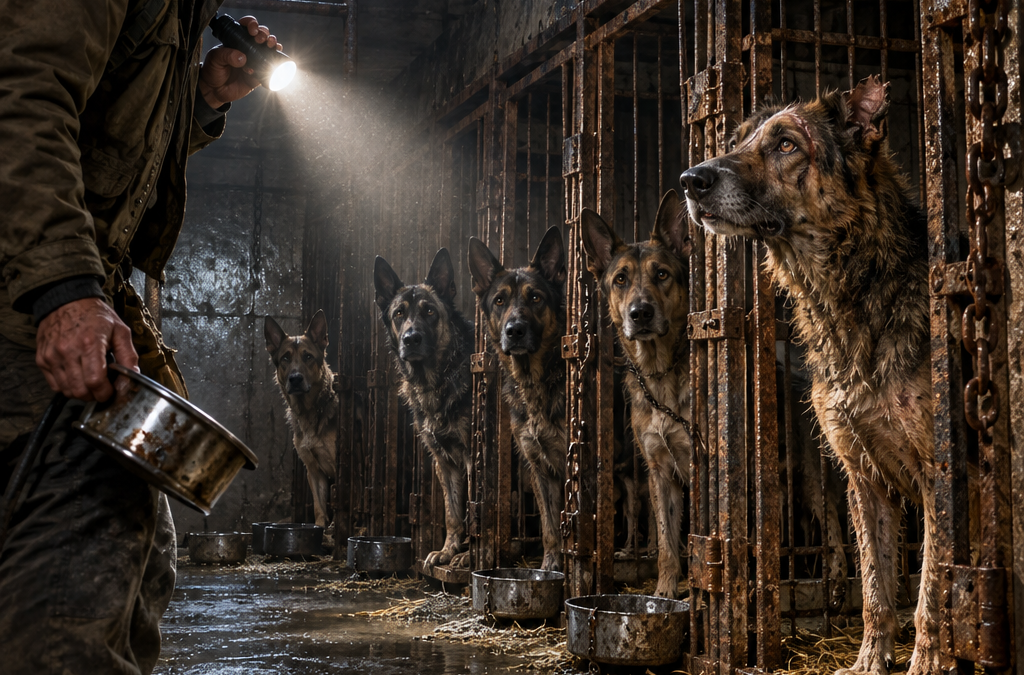
𝗣𝗔𝗥𝗧 𝟮
I looked back at Ranger.
His brown eyes were open. Watching me.
“War.”
By eleven that night, the house smelled of antiseptic, wet fur, smoke, and old memories. Tessa had fallen asleep in a chair near the fireplace, one hand resting near the smallest Shepherd’s blanket. Ranger lay closest to the hearth. His breathing had steadied, but every time I moved, one ear shifted toward me.
I went into the kitchen and opened a phone I had not touched since leaving the teams.
It was old, encrypted, and technically should have been turned in.
I had kept it because retirement had made me careless in some ways and more paranoid in others.
There was only one person I trusted enough to call.
Commander Noah Breckenridge answered after six rings.
“Mercer?”
His voice sounded rough with sleep and suspicion. Noah never assumed a late call was harmless.
“I need you to look up a military dog.”
There was silence.
“Grant, it’s almost two in the morning here.”
“Ranger. Working canine designation R-417.”
The silence changed.
I heard movement. A chair. A breath. Then typing.
“Grant,” Noah said slowly.
“What?”
“That dog is dead.”
“No, he isn’t.”
“What are you talking about?”
“He’s lying on my kitchen floor.”
Noah said nothing.
I sent the first photograph. Ranger’s face. Then the scar. Then the microchip readout. Then the old tattoo inside his ear.
I watched the message receipts appear.
For nearly a minute, there was no sound except the crackle of fire and the soft breathing of dogs behind me.
Finally Noah whispered, “Where did you find him?”
“Under my barn.”
“Listen to me carefully,” he said. “Do not call local police. Do not post anything. Do not tell anybody else.”
That tone was not caution.
It was fear wearing a uniform.
“Noah.”
“I’m serious.”
“Why?”
“I’m checking the previous owner of your property.”
Keys clicked faster.
I looked through the kitchen doorway. Ranger had lifted his head.
“Noah,” I said.
“The man who owned your ranch wasn’t Everett Sloan.”
“That’s the name on the deed.”
“It was an alias.”
“For who?”
Another pause.
When Noah answered, his voice had lost whatever sleep remained in it.
“Charles Vickers.”
I knew that name.
Anyone who had worked in classified environments overseas knew it.
Charles Vickers had been logistics director for Aegis North Tactical, one of the largest private defense contractors attached to operations no one talked about in public. Transport, equipment, private security, classified movement of assets. Aegis had been everywhere, always just behind the official line, always expensive, always useful, always too close to things that disappeared.
“He vanished after a federal procurement investigation six years ago,” Noah said.
I stared at the five dogs in my living room.
“What does that have to do with Ranger?”
“I don’t know yet.”
Headlights appeared between the trees outside my kitchen window.
Two sets.
Slow.
No engine noise I could hear through the thick glass, but the light moved deliberately up my private road.
“Noah,” I said quietly.
“What?”
“I have company.”
The vehicles stopped beyond the front gate.
Ranger stood.
He did not rise like a wounded dog.
He rose like a soldier.
His head lowered. His ears came forward. His body changed.
Tessa woke in the living room.
“What is it?” she whispered.
Then a red laser dot slid across the far wall.
I dropped.
“Tessa!” I shouted.
Glass exploded behind me.
Ranger barked once.
The other four dogs surged upright.
And through the phone, Noah yelled, “Grant, get out of there! Aegis North accessed the property records twelve minutes ago.”
I crawled across broken glass, grabbed the rifle from behind the kitchen cabinet, and killed the lights.
The house vanished into darkness.
Outside, boots moved across gravel.
Someone whispered, “Thermal shows two people.”
Another voice answered, “Dogs?”
“Five heat signatures.”
Then came the sentence that told me exactly what kind of men had arrived.
“Recover animals. No witnesses.”
Tessa heard it.
Her face went white.
I handed her the satellite phone from the emergency drawer. “Pantry. Now. Take the four smaller dogs with you if they’ll move.”
“What about Ranger?”
Ranger stood beside the front door.
The starving animal I had carried from a bunker hours earlier was gone.
What stood there now was a war dog.
“He comes with me.”
“Grant—”
“Lock yourself in. Call 911. Then call Noah back. Tell him Aegis is here.”
“What are you going to do?”
I checked the chamber.
“Make them regret coming.”
The rear door blew inward before she could answer.
Training is not memory in the way people think memory is. You do not stop and recall it. You do not organize it in your mind. When violence enters a room, real training arrives faster than thought.
I moved before the debris settled.
The first intruder came through the kitchen with night-vision goggles and a suppressed rifle. I drove my shoulder into him before he raised the weapon. My bad knee screamed. His rifle clattered across tile.
The second man entered behind him.
Ranger hit him.
Not the throat.
Not the face.
The weapon arm.
Perfect controlled aggression.
The man slammed against the wall with Ranger clamped to his sleeve and forearm, screaming as the dog pinned him without killing him.
“Release!”
Ranger let go instantly.
The first attacker reached for a pistol. I kicked it away and put my rifle against his cheek.
“Who sent you?”
He smiled through blood on his lip. “You have no idea what you found.”
“Try me.”
Gunfire ripped through the front windows.
I dragged him behind the island as rounds chewed through cabinets and tile. Tessa screamed from the pantry. The other dogs erupted into furious barking.
Then headlights washed across the front yard.
For one terrible second, I thought more attackers had arrived.
Sirens followed.
County deputies hit the driveway hard, tires sliding in snow and mud. Blue and red light tore through the broken house. The remaining men outside retreated into the timber before the deputies could box them in.
By the time law enforcement secured the ranch, three attackers had escaped, two were injured, and one had been abandoned.
The prisoner carried no identification.
No phone.
No insignia.
Nothing that tied him to Aegis North.
Nothing except Ranger.
When deputies brought the man through my living room, Ranger’s lips peeled back from his teeth.
It was not random aggression.
It was recognition.
The prisoner saw him and stopped breathing.
“R-417,” he whispered.
Every voice in the room died.
I stepped closer. “You know this dog.”
He said nothing.
A deputy pushed him toward the door.
Ranger growled again.
The prisoner looked at me with something I had not expected.
Not arrogance.
Fear.
Not fear of me.
Fear of whoever might be watching.
“You should have left the bunker closed,” he said.
“What did you do to these dogs?”
“It wasn’t me.”
“Who?”
His eyes flicked toward the deputies. Then toward the security camera above my shattered front door.
He swallowed.
“Aegis Lazarus Division.”
“What is Lazarus?”
He gave a humorless laugh. “You really were retired.”
Then he said something I did not understand until much later.
“Dead heroes are easier to steal from.”
Federal agents arrived before sunrise.
So did Noah.
He stepped out of a government SUV in a gray coat, jaw tight, eyes older than they had been the last time I saw him. We had not spoken in person in three years. There was no handshake. Men like us did not waste time pretending reunions mattered more than emergencies.
He walked straight into my house.
Tessa was asleep on the couch with one of the rescued dogs against her leg. The living room looked like a war had passed through it because one had. Broken glass. Bullet holes. Blood on tile. Mud tracked across rugs. Dogs wrapped in blankets in front of the fireplace.
Ranger lay nearest the hearth.
Noah stopped when he saw him.
“My God.”
“Start talking,” I said.
He removed a folder from his bag and set it on my kitchen table.
“Aegis North had a classified subcontract transporting military working dogs between overseas commands.”
“I know.”
“What you don’t know is that seventeen dogs were reported killed during operations between 2018 and 2024 without recoverable remains.”
My stomach tightened.
“Seventeen.”
“Ranger was one.”
“And the other four?”
“Missing military assets from different units.”
I looked toward the dogs.
They slept like survivors, not pets.
Noah opened the folder. “Aegis created false loss reports. When operations became chaotic enough, their people diverted selected dogs before extraction.”
“Why?”
“Money.”
Of course.
In the end, it was almost always money.
“Elite military dogs can detect explosives, track humans, clear buildings, operate around aircraft, gunfire, vehicles, crowds, and chaos,” Noah said. “Their bloodlines and training profiles are extremely valuable.”
“So they were selling them.”
“Worse.”
He slid photographs across the table.
Kennel facilities.
Training yards.
Shipping containers.
Breeding records.
Rows of dogs behind chain-link fencing.
“They were building private canine programs for foreign security companies, criminal networks, and anyone else willing to pay.”
I stared at the images until my vision blurred.
Ranger had not been lost.
He had been stolen.
“What does Vickers have to do with it?” I asked.
“We think he got scared. He copied records. Then he disappeared. Two years later, he died under suspicious circumstances.”
“And someone kept feeding the dogs.”
“Probably an automated system, maintained remotely for a while.”
I remembered the empty food hopper beneath the barn.
“The system failed,” I said.
Noah nodded. “Which forced this into the open.”
Something still did not fit.
“Why Ranger?”
Noah looked away.
That was when I knew the answer would hurt.
“Noah.”
He exhaled. “Ranger was considered unusable.”
“Why?”
“He refused every new handler.”
For the first time that night, I almost smiled. “That sounds like him.”
“No, Grant. I mean he became violent whenever Aegis personnel attempted operational control.”
I looked at Ranger.
He had belonged to Eli. Not on paper. Not legally. Not in the cold language of the military.
In every way that mattered.
“Then why keep him alive?”
“They needed him.”
“For what?”
Noah hesitated.
“Behavioral control.”
“That makes no sense.”
“It will.”
He slid one final photograph across the table.
At first my mind rejected what my eyes saw.
The image was grainy, captured from surveillance footage only three months earlier. A thin man walked between rows of kennels inside an underground facility. His hair was longer. His face was gaunt. A scar crossed his neck. He moved like someone who had been injured and kept going because stopping had never been an option.
My knees nearly gave out.
“No.”
Noah said nothing.
I picked up the photograph.
Eli Vaughn.
My best friend.
A man I had mourned for four years.
Alive.
I looked at Noah. “You told me DNA confirmed his death.”
“It did.”
“Then explain that.”
“We reopened the evidence this morning.” His voice dropped. “The DNA sample used to identify Eli came from blood stored during a previous medical evaluation.”
I could not breathe.
“They faked it.”
“Yes.”
Four years of grief turned into something colder than anger.
“Where is he?”
“We don’t know.”
Behind me, Ranger rose unsteadily.
He crossed the room toward the table, each step careful, painful, determined. He sniffed the photograph. His body went still.
Then he whined.
I had never heard Ranger whine in combat.
Not once.
He placed one paw over Eli’s picture.
Then he looked at me.
I understood him perfectly.
Find him.
Officially, the federal government told me to stay home.
Unofficially, Noah gave me coordinates.
That was the thing about Noah Breckenridge. He knew how to obey orders without always following them.
The intelligence pointed to an abandoned timber-processing complex outside Baker City, Oregon, nearly six hours from my ranch. Aegis had purchased the property through shell companies. Satellite imagery showed new electrical infrastructure, heat signatures beneath the old mill, and heavy trucks entering after midnight.
No trucks came during the day.
“We raid it tomorrow,” Noah said.
“Eli might not have tomorrow.”
“Grant.”
“If they know Ranger was discovered, they know Lazarus is compromised. They’ll move him.”
Noah did not argue.
Because he knew I was right.
At sunset, I loaded my truck.
Tessa caught me in the garage.
“You’re actually going.”
“Yes.”
“You can barely walk normally after three hours.”
“My knee isn’t going to rescue Eli.”
“You think you’re still twenty-nine.”
I looked at her. “No. At twenty-nine, I thought I couldn’t die.”
“And now?”
I glanced toward Ranger.
He stood by the truck, weak but alert, already certain he was coming.
“Now I know exactly what death costs.”
Tessa stepped in front of me. “That dog is severely malnourished.”
“He’ll stay in the truck.”
Ranger stared at me.
Tessa almost laughed despite herself. “Sure he will.”
Six hours later, snow fell across the Blue Mountains.
The old mill sat in a valley surrounded by pine forest, fencing, and darkness broken by security lights. From a ridge above it, I counted fourteen guards outside.
Too many.
I was not there to win a war.
I needed proof.
And Eli.
Ranger waited in the truck until he decided he was done waiting. By the time I reached the drainage culvert on the west side of the property, he was behind me, moving low and quiet through snow.
I should have sent him back.
I did not.
Some partnerships are older than reason.
Inside, the old mill had been transformed into something that made my blood go cold.
Concrete corridors.
Electronic doors.
Kennels.
Dozens of them.
German Shepherds. Belgian Malinois. Dutch Shepherds. Some bore military tattoos. Others were younger, second-generation animals born inside whatever nightmare Aegis had built.
They watched me pass without barking.
That silence hurt worse than noise.
A large room beyond the kennels glowed with harsh white light. Training equipment filled the space. Bite sleeves. Harnesses. Tracking materials. Medical restraints.
Then I heard a voice.
“You cannot force loyalty.”
I froze.
Another man answered, “We aren’t paying you for philosophy.”
The first voice was older than I remembered. Rougher. Dragged over gravel and pain.
But I knew it.
Eli.
I edged forward.
He sat in a metal chair with his wrists secured. He had lost thirty pounds, maybe forty. His left hand was bandaged. A scar marked his neck. But his eyes were the same. Tired, furious, impossible to own.
A tall man in a dark suit stood across from him.
“You will prepare the dogs for transfer,” the man said.
“No.”
The suited man struck the table. “Your usefulness depends on cooperation.”
Eli laughed.
It sounded terrible.
“You kidnapped the wrong guy.”
“You have cooperated for four years.”
“I kept the dogs alive.”
“That is cooperation.”
“No,” Eli said. “That was the only thing stopping me from killing every one of you.”
The man leaned closer. “Ranger is dead.”
Eli’s face changed.
The suit smiled. “Your favorite animal finally starved in Idaho.”
Eli shut his eyes.
That was when I stepped through the doorway.
“No, he didn’t.”
Both men turned.
The suited man reached into his jacket. I crossed the distance and drove him into the wall hard enough to knock the breath from him, then ripped the pistol from his hand.
Eli did not move.
He just stared at me.
His lips parted. “Grant?”
“Unfortunately.”
His eyes filled.
For a moment, the room disappeared. The kennels, the facility, the danger, all of it fell away beneath the impossible fact of him breathing in front of me.
He had been dead.
I had carried that death inside me for four years.
Now he was looking at me like he was not sure I was real.
“You got old,” he whispered.
“You look worse.”
A laugh broke out of him.
Then he started crying.
Not loudly. Not dramatically. Just silently, as if his body had finally found a crack in the wall he had built around himself.
I cut the restraints.
The second he stood, his legs failed.
I caught him.
“I’m sorry,” he whispered.
“For what?”
“The dogs.”
“You kept them alive.”
“You don’t understand.”
“Then explain later.”
Alarms erupted.
Red lights flashed.
Eli looked toward the service door. “They know.”
“I figured.”
“How many came with you?”
“One.”
His expression sharpened. “One team?”
“One person.”
“Grant.”
“And one dog.”
Eli stopped breathing.
“No.”
I opened the service door.
Ranger stood beyond it.
For the first time in four years, Eli Vaughn saw his dog.
Ranger froze.
So did Eli.
Then Eli fell to his knees.
The Shepherd crossed the room slowly at first, as if afraid the vision might vanish. Then faster. His weakened body slammed into Eli’s chest hard enough that both of them nearly toppled.
Eli buried his face against Ranger’s neck.
“My boy,” he broke.
Ranger made a sound between a bark and a cry.
I turned away.
Some reunions do not belong to witnesses.
We had maybe thirty seconds.
When Eli stood again, something in him had changed. He was not healed. No one heals in half a minute. But he was awake in a way he had not been when I entered.
“How bad?” he asked.
“Fourteen outside. Unknown inside.”
He looked toward the kennel block. “Forty-three adult dogs. Twenty-six juveniles.”
“We can’t take them all.”
“No.”
He picked up the pistol I had taken from the suited man.
“We free them.”
At the main control panel, Eli’s hands moved with the certainty of a man who had spent years memorizing the prison built around him.
“What are you doing?” I asked.
“Giving Aegis a problem.”
He pulled the emergency release.
Dozens of kennel doors opened.
The dogs did not charge.
They stepped out quietly, one by one, watching Eli.
He raised his hand.
Every dog sat.
Even after everything I had seen, a chill moved through me.
“These people think training is control,” Eli said.
“What is it really?”
He looked at Ranger.
“Trust.”
Boots thundered closer.
Eli lifted his hand again and gave one command.
“Home.”
The dogs moved.
Not attacking.
Escaping.
They flowed through emergency exits, maintenance tunnels, loading doors, drainage passages. Aegis personnel panicked as their multimillion-dollar program vanished into the Oregon forest.
Then Noah’s voice boomed over loudspeakers outside.
“Federal agents! Drop your weapons!”
Eli stared at me. “You brought one person?”
I shrugged. “I made a phone call.”
The raid should have ended everything.
It did not.
Aegis North sacrificed the Oregon facility within hours. Executives claimed rogue employees had acted without authorization. Files disappeared. Accounts emptied. Servers were remotely destroyed. Three senior managers vanished overseas before warrants could reach them.
But Eli had something they did not know how to erase.
Memory.
For seventeen days, he sat with federal investigators and named people.
Contractors.
Politicians.
Military procurement officers.
Corporate attorneys.
Foreign buyers.
No one had expected him to survive long enough to talk.
The most important name was Malcolm Voss.
Founder of Aegis North.
Publicly, Voss was a decorated former Army officer turned billionaire defense executive. Privately, according to Eli, he had created Lazarus.
The philosophy was simple.
War created confusion.
Confusion created inventory.
Whenever a military dog disappeared during a chaotic operation, Aegis evaluated whether the loss could be falsified. Some dogs died. Others were stolen. Handlers were lied to. Families were given folded flags, sealed boxes, and reports written by men who knew exactly what they were burying.
Ranger had been taken during the same extraction in which Eli was captured.
“Why keep you?” I asked.
Eli sat on my porch three weeks after the rescue, wrapped in a blanket he pretended not to need. Ranger slept at his feet. Snow covered the pasture. The mountains stood blue and distant under a pale morning sky.
“I knew too much,” he said.
“So kill you.”
“They almost did.”
He stared into his coffee.
“Then Ranger attacked three handlers.”
I smiled. “Sounds right.”
“Aegis had dogs worth millions they couldn’t control. Voss decided I was more valuable alive.”
“What did they make you do?”
“Train.”
His voice went flat.
“Every day.”
The humor left me.
“I’m sorry.”
“Don’t.”
“For what?”
“Don’t apologize for surviving when I survived too.”
I recognized the sentence.
I had told him something like it years earlier after a mission where too many men came home in pieces and too many did not come home at all.
Tessa stepped onto the porch carrying medication.
“Time.”
Eli groaned. “Yes, doctor.”
“And Ranger’s antibiotics.”
“Yes, doctor.”
She looked at me. “And your knee.”
“I’m fine.”
She stared.
I took the bottle.
Eli watched her walk back inside.
“You like her.”
“I’m going to throw you off the porch.”
“You definitely like her.”
It was the first time I heard him laugh like himself.
For a few minutes, everything felt almost normal.
Then Noah’s SUV appeared.
Normal ended.
He came inside without removing his coat.
“Voss knows Eli is cooperating.”
Eli nodded. “I assumed.”
“No,” Noah said. “He knows details.”
I stood. “How?”
“We have a leak inside the investigation.”
He placed a phone on the table and played a video.
Malcolm Voss appeared in an elegant office. Silver hair. Calm smile. American flag behind him. He looked like the kind of man committees trusted because his suits were expensive and his crimes were hidden behind contracts.
“Chief Vaughn,” Voss said, “I’m told you’ve been recovering well.”
Eli went rigid.
“You always believed loyalty could not be purchased. Perhaps you were right. Fear, however, remains remarkably affordable.”
The camera moved.
A woman sat tied to a chair.
Eli stopped breathing.
“Mom.”
Judith Vaughn was seventy-one years old, a retired elementary-school teacher, and the woman whose hand I had held at Eli’s funeral while she whispered her son’s name into a flag.
Voss appeared again.
“Midnight tomorrow. Bring the Lazarus archive copied from Oregon. Come alone.”
The screen went black.
Eli was already standing.
“No,” I said.
He turned on me. “Move.”
“No.”
“That is my mother.”
“And Voss knows exactly what you’ll do.”
“I don’t care.”
“You will when both of you are dead.”
He grabbed my jacket.
I grabbed his.
For several seconds we stood like that, two old teammates ready to fight each other because neither of us knew what else to do with fear.
Then Judith’s voice came from the phone.
A second recording.
“Eli, honey, if you are watching this, don’t you dare trade those files for me.”
Eli froze.
His mother stared directly into the camera.
“You spent your whole life protecting people. I will not be used to make you protect criminals.”
Someone behind the camera shouted.
Judith did not flinch.
“And Grant, if you’re there, stop my idiot son from doing something stupid.”
Despite everything, I almost laughed.
Eli covered his face. “That sounds like her.”
Noah paused the video.
“We traced background audio.”
“To where?” I asked.
“Possibly Spokane. Rail noise, aircraft frequency, industrial ventilation. We narrowed it to three locations.”
I looked at Eli.
He understood at once.
Three targets.
One night.
Not enough people.
Except we had something Voss did not understand.
The dogs.
Four of the Shepherds we had found under my barn remained at the ranch with Ranger. Two had been trained for explosive detection. One for human tracking. One for tactical search. They were weak, recovering, and officially retired by nobody.
But they were alive.
I looked at an old family photograph Eli kept in his wallet. Judith smiling on a porch, a blue scarf around her neck.
“Do you have anything that smells like your mother?”
Eli stared at me.
Then at Ranger.
“No.”
“You know it might work.”
“Absolutely not.”
“Why?”
“He almost died.”
“So did we.”
“Grant.”
“This isn’t a combat deployment.”
“It becomes one the second bullets start.”
Tessa had been standing in the doorway long enough to hear all of it.
“You’re both idiots,” she said.
“Thank you,” I replied.
She looked at Ranger. “But the dog decides.”
Eli blinked. “What?”
“Not you. Not Grant.”
She took Judith’s scarf from the photograph box and placed it on the floor.
Ranger sniffed it.
Then he looked at Eli.
Tessa opened the front door.
Cold wind swept through the house.
Ranger walked outside, stopped beside my truck, and sat.
Eli closed his eyes.
“You stubborn son of a—”
Ranger barked once.
For the first time since returning home, Eli smiled like a SEAL again.
“Fine,” he said, grabbing his jacket. “We bring Mom home.”
The scent led us to the third location.
An abandoned aircraft-parts warehouse north of Spokane.
Federal teams surrounded the area from two miles out. Nobody moved closer because Voss had warned that surveillance would trigger Judith’s death.
So Eli and I entered through a drainage channel beneath the western fence.
Ranger came with us.
Noah hated the plan.
Tessa hated it more.
Judith would have hated it most.
That meant it was probably the correct plan.
Inside the warehouse, old machinery formed a maze of steel shelves, hanging chains, and dead production lines. Ranger moved ahead, nose low, body controlled. Every few yards he stopped, tested the air, then continued.
He froze near a stack of crates.
Passive indication.
Explosives.
Eli whispered, “Trip device.”
I found the wire.
Voss expected us.
We bypassed it.
Twenty yards farther, Ranger froze again.
Human scent.
Judith.
Eli touched Ranger’s shoulder. “Find.”
The dog moved.
Upstairs. Across a catwalk. Through an old office corridor where fluorescent lights flickered like dying nerves.
We heard voices.
“You think he’ll come?”
“Vaughn?” a man said, laughing. “He crossed half the world for dogs. He’ll come for his mother.”
They were right.
What they underestimated was how he would come.
Two guards stood outside an office.
We took them silently.
Inside, Judith sat tied to a chair.
She looked up, saw Eli, and frowned.
“I told you not to come.”
Eli almost cried laughing.
“Hi, Mom.”
“You never listen.”
“No, ma’am.”
I cut her restraints.
She slapped his shoulder.
Then she hugged him with both arms.
Four years of false death.
Four years of grieving.
Their real reunion happened in a freezing warehouse while armed men searched for us downstairs.
Judith held Eli’s face between her hands.
“I knew something was wrong.”
“You buried me,” he whispered.
“I buried an empty box.”
“You didn’t know that.”
“A mother knows things.”
Ranger approached.
Judith stared at him.
“Oh my God.”
She dropped to her knees.
“Ranger?”
His tail thumped wildly.
She hugged him too.
That moment nearly cost us.
A gunshot shattered the office window.
We hit the floor.
Voss’s voice came over the building intercom.
“Touching.”
Eli’s face hardened. “I’m going to kill him.”
“Get in line,” I said.
We moved Judith into the stairwell.
Before I could signal Noah, steel doors slammed shut across the lower exits.
A monitor flickered on.
Voss looked out at us with the calm of a man who had mistaken money for invincibility.
“I spent thirty years learning something your government never understood,” he said. “People admire loyalty but reward efficiency.”
Eli stared at the screen. “You tortured people and stole dogs.”
“I built an industry.”
“You built a prison.”
“History will decide.”
“No,” I said. “The FBI will.”
Voss smiled. “Assuming you leave.”
Smoke began sliding into the corridor.
Not fire.
Chemical suppression gas.
We covered Judith’s face with cloth and moved down. Ranger led us, choosing low routes, fresh air, gaps beneath the structure. The dog remembered every lesson.
At the bottom, we reached the loading bay.
Six armed contractors waited beyond one doorway.
Bad geometry.
Eli looked at me.
I knew that look.
“No.”
“You don’t know what I’m thinking.”
“You always make that face before doing something stupid.”
Then Ranger vanished.
“Ranger!”
A maintenance opening ran beneath a line of shelves.
Seconds later, shouting erupted on the far side of the bay.
The contractors turned.
That was the opening.
We moved.
The firefight lasted less than twenty seconds.
Federal agents breached the warehouse the moment I triggered the emergency beacon. Glass broke. Flash devices detonated. Commands filled the air.
“Federal agents!”
“Weapons down!”
“Down!”
Judith stayed behind steel cover.
Eli ran after Voss.
I followed.
We found him near the private hangar.
A helicopter waited outside, rotors beginning to turn. Voss stood beside it with a pistol in his hand and disbelief on his face.
Eli raised his weapon.
For a second, nobody moved.
Voss smiled. “You won’t shoot.”
“Why?”
“Because you still think you’re better than me.”
Eli’s hands were perfectly steady.
“You kept me in darkness for four years.”
“Yes.”
“You made my mother bury me.”
Voss said nothing.
“You hurt dogs because they wouldn’t obey you.”
“They’re animals.”
That sentence changed Eli’s expression.
Not rage.
Pity.
“You never understood any of it,” Eli said.
“What?”
“Why they wouldn’t obey you.”
Voss frowned.
Eli lowered his weapon.
“Because loyalty isn’t fear.”
Voss raised his pistol.
Ranger came from nowhere.
He slammed into Voss’s arm. The gun spun across concrete. Agents rushed in as Voss hit the ground screaming, Ranger holding him by the sleeve.
Not tearing.
Not killing.
Holding.
Eli approached.
“Release.”
Ranger let go at once.
Voss stared at the dog, terrified.
Eli knelt beside him.
“That is the difference between us.”
Agents handcuffed Malcolm Voss.
Judith reached the hangar moments later. She hugged Eli. Then me. Then Ranger.
Noah walked over, staring down at the dog.
“I suppose this means I have to write the strangest federal incident report of my career.”
I looked at Ranger.
“Put him down as cooperating witness.”
Aegis North collapsed over the next six months.
Not dramatically.
Corporations rarely die dramatically.
They die through subpoenas, frozen accounts, sealed indictments, canceled contracts, panicked board meetings, and former friends turning government witness before someone else does.
Malcolm Voss was charged with conspiracy, kidnapping, fraud, unlawful detention, trafficking in stolen government property, obstruction, and enough additional crimes that Noah eventually stopped listing them.
Eleven executives were arrested.
Four military procurement officials were prosecuted.
Investigators located three additional Lazarus facilities.
More dogs were recovered.
So were records identifying families who had been lied to.
That part hurt most.
Handlers who had mourned dogs they believed died beside their sons and daughters learned those animals had survived. Some reunions were possible. Others came too late.
One elderly handler named Robert Keane drove from Arizona to meet a retired Shepherd named Titan.
Titan was thirteen. Arthritic. Nearly blind.
Robert stepped into the rehabilitation enclosure and whispered, “Titan?”
For two seconds, nothing happened.
Then Titan began running.
Bad hips. Crooked legs. Didn’t matter.
He crossed the grass and buried his head against Robert’s chest. The old man collapsed to his knees, and everyone watching turned away.
Even Noah.
Especially Noah.
The government wanted Ranger returned.
Technically, he remained federal property.
Eli responded with language that cannot be repeated in polite company.
Three weeks later, someone inside the Department of Defense discovered a miraculous administrative solution. Ranger was officially retired. Ownership transferred to Eli.
The other four dogs found beneath my barn were retired after medical review.
Two went to former handlers.
One joined a veteran rehabilitation program.
The smallest female, Nova, stayed with me.
I told everyone it was temporary.
Nobody believed me.
Tessa certainly did not.
“Temporary dogs don’t usually have custom orthopedic beds,” she said one afternoon.
“She needs support.”
“Or engraved food bowls?”
“She might forget her name.”
“Her name is printed on the bowl, Grant.”
“She can read.”
Tessa stared at me.
I stared back.
Nova wagged her tail.
Tessa laughed.
That laugh became one of my favorite sounds.
My ranch changed.
The place I had bought to disappear became busy.
Eli moved into the guest cabin. Judith visited every Sunday and cooked as if feeding a small battalion was a moral obligation. Tessa came by almost daily until eventually coming by and living there began to look suspiciously similar. Noah appeared whenever Washington became unbearable and pretended he was only there to check on official matters.
Then veterans started coming.
Some had injuries anyone could see.
Others carried damage that did not show until a door slammed, a car backfired, or a quiet room became too quiet.
We built kennels.
Not cages.
Open runs facing pasture. Training fields. A veterinary room. A small lodge. Trails through the timber where men and women who had forgotten how to walk without scanning rooftops learned to breathe beside dogs who understood nightmares without needing explanations.
We called it Second Watch.
The program paired retired military working dogs with former service members struggling to transition home.
No press launch.
No billionaire donors.
No dramatic speeches.
Just work.
One veteran named Connor had not slept more than three consecutive hours in two years. We paired him with a retired Malinois named Scout. The first night Scout slept beside his bed, Connor slept seven hours.
Another veteran, Denise, had stopped leaving her apartment after losing part of her leg overseas. A Shepherd named June gave her a reason to walk outside every morning.
People arrived believing they were rescuing dogs.
Usually, the dogs returned the favor.
Eli struggled.
Freedom was not a switch.
Some nights I found him outside at three in the morning, sitting on the porch steps with Ranger pressed against his leg.
The first winter, he confessed something without looking at me.
“I still hear the kennels.”
I sat beside him.
“So do I.”
“You weren’t there.”
“No.”
“Then how?”
“I have my own noises.”
He understood.
Combat veterans do not always need details.
“Does it stop?” he asked.
I listened to the wind move through the pines.
“No.”
He looked at me.
I shrugged. “But other sounds get louder.”
Across the pasture, Judith laughed at something Tessa said. Nova barked because she had stolen one of Eli’s gloves and wanted the world to admire her work. Ranger answered with a deep, aging woof. Somewhere in the lodge, Connor was arguing with Scout as if the dog understood every word.
Eli smiled.
“Yeah,” he said.
The hidden bunker remained beneath the northern ridge.
For months, I avoided it.
Then one spring morning, Eli and I walked there together. The steel door stood open. Sunlight reached farther inside than it had the day I found Ranger.
The empty kennels remained bolted to the floor.
Eli touched one.
“This where you found him?”
“Right there.”
He stood silently.
Then he pointed to the concrete wall.
Something had been scratched into it.
I had not noticed before.
Five lines.
Repeated again and again.
Maybe from claws.
Maybe from desperation.
Eli placed his hand against them.
“I thought he was dead.”
“So did I.”
“Four years.”
“I know.”
He swallowed.
“What do we do with this place?”
I had thought about that.
“Destroy it.”
Eli considered the answer, then shook his head.
“No.”
“Why?”
“Open it.”
“To what?”
He looked up toward the narrow square of sky beyond the hatch.
“Sunlight.”
That summer, we removed the roof panels and part of the concrete shell. The underground prison became an open memorial garden. We planted pine, mountain wildflowers, and five aspens where the cages had stood.
No plaques.
No names.
Just life growing where something had once been buried.
Ranger loved sleeping beneath the trees.
Three years after I found the hidden barn, a black SUV came up my driveway.
Old instincts made me watch it until the driver stepped out.
Noah.
More gray in his hair now. Same government posture. Same way of carrying secrets like they were boxes no one else could be trusted to lift.
He had a cardboard box under one arm.
“Please tell me that isn’t classified,” I said.
“Not anymore.”
We sat on the porch.
Nova slept near my boots. Ranger, older now, muzzle silver, rested beside Eli. Tessa came outside carrying coffee and wearing the ring I had given her five months earlier.
Turns out a man who moves to Idaho to avoid human beings can still make poor long-term predictions.
Noah opened the box.
Inside were photographs.
Recovered Lazarus records.
The final archive.
“There’s something you should see.”
He handed one photograph to Eli.
It showed Ranger as a young dog, maybe ten months old, standing beside him during training. Another showed them overseas. Another showed the moment Aegis loaded Ranger onto a truck after the operation everyone believed had killed him.
Eli’s jaw tightened.
Then Noah produced a final image.
Charles Vickers, the previous owner of my ranch, stood beside Ranger inside the hidden bunker.
“What is this?” I asked.
“Vickers wasn’t part of Lazarus at the end.”
I leaned forward. “What?”
“He helped build the logistics network. Then he discovered what Voss was doing.”
Eli looked up. “He turned?”
“Apparently.”
Noah explained that Vickers had spent years quietly diverting animals away from Aegis facilities. The five dogs beneath my property had not been stored for sale.
They had been stolen back.
Hidden.
Protected.
“Then why leave them locked there?” I asked.
“He was supposed to return.”
Noah placed another document on the table.
“Vickers died forty-eight hours after sending evidence to a federal investigator. The investigator disappeared. The evidence never reached authorities.”
“What happened to the feeding system?”
“Vickers built redundant automated supplies. Someone maintained them afterward.”
“Who?”
Noah smiled faintly.
“We finally found her.”
A woman stepped out of the SUV.
Early sixties. Short silver hair. Nervous hands. Eyes already wet before she reached the porch.
Ranger stood.
The woman stopped.
“Oh,” she whispered.
Her eyes filled completely.
“Hello, big guy.”
Ranger walked toward her. He sniffed her hand. Then his tail moved.
Her name was Marianne Vickers.
Charles’s younger sister.
For nearly two years after her brother’s death, she had secretly visited the bunker every month. Food. Water. Medication. She had never opened the kennels because Charles had warned her the dogs were highly trained and potentially dangerous.
Then she had suffered a stroke.
Three months in rehabilitation.
By the time she recovered, she believed the animals had died. She had been too afraid and ashamed to return.
“I’m sorry,” she whispered to Ranger.
Eli shook his head.
“You kept him alive.”
“I failed them.”
“No.”
Eli knelt beside Ranger.
“You kept him alive long enough for Grant to find him.”
Marianne cried.
So did Eli.
I pretended not to.
Tessa noticed.
She said nothing.
That evening we gathered beneath the five aspens.
Judith cooked too much food. Noah complained about Idaho mosquitoes. Tessa laughed when Nova stole half a hamburger from my plate. Eli threw a tennis ball for Ranger.
The ball bounced once and rolled through the grass.
Years earlier, Ranger would have exploded after it.
Now he watched it land, then looked at Eli as if asking whether the effort was worth it.
Eli laughed.
“Go.”
Ranger trotted after the ball.
Slowly.
Happily.
That was enough.
Later, after everyone went home or inside, I stayed outside on the porch.
The mountains were dark. Stars stretched above the property. The old barn stood quiet at the edge of the field, no longer a place of secrets, just weathered wood under moonlight.
When I first bought the ranch, I thought silence was what I needed.
I thought healing meant escaping memories.
I was wrong.
Silence leaves too much room for ghosts.
What saved me was noise.
Dogs barking.
Friends arguing.
Judith laughing.
Tessa calling my name from the kitchen.
Eli cursing because Ranger had stolen his boot again.
Life.
Messy, inconvenient, demanding life.
I looked toward the barn and thought about the storm that had knocked down the pine tree. The buried hatch. The rusted lock. The moment my flashlight found five starving dogs standing in military formation beneath my land.
I found Ranger.
Ranger led me to Eli.
Eli exposed Lazarus.
Lazarus brought down Aegis.
Aegis led us to dozens of stolen dogs.
Those dogs brought hundreds of veterans to Second Watch.
Everything had started with one scar on a dog who should have been dead.
Sometimes I wonder what would have happened if that pine had not fallen.
If I had never walked past the barn.
If my shovel had never hit steel.
Maybe Ranger would have died underground.
Maybe Eli would have disappeared forever.
Maybe Malcolm Voss would still be selling loyalty to the highest bidder.
Maybe I would still be alone, mistaking isolation for peace.
Instead, Ranger walked onto the porch and lowered himself carefully beside me.
His muzzle was gray now. His movements slower. But his eyes were still Ranger’s eyes.
I scratched behind his ear.
“You did good, buddy.”
His tail struck the boards once.
Inside the house, Eli called, “Grant! Tessa says if you don’t bring that dog inside, neither of you gets dessert.”
I looked at Ranger.
He looked at me.
“We should probably obey.”
He stood slowly.
I stood with him.
Together, we walked toward the warm light spilling from the kitchen, toward voices, laughter, old friends, stubborn dogs, and the kind of peace neither of us had known how to ask for.
For the first time in a very long time, neither of us had any reason to look back.