𝗙𝗨𝗟𝗟 𝗦𝗧𝗢𝗥𝗬 She Threatened to Take My House Over Something I Legally Kept Locked Inside—Then She Learned What I Did for a Living
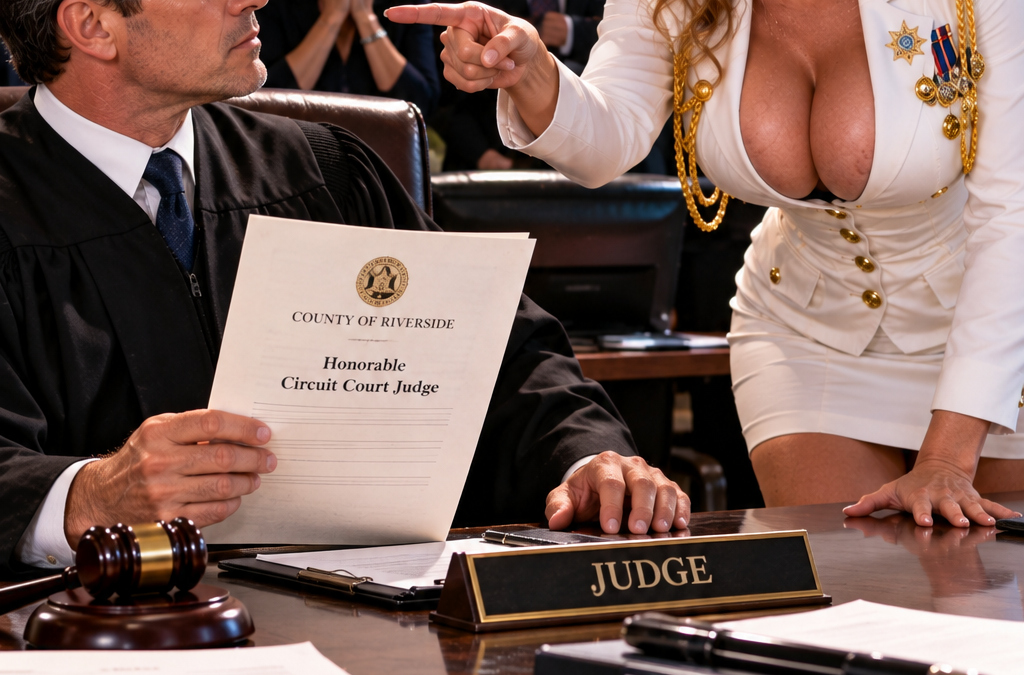
𝗣𝗔𝗥𝗧 𝟮
My wife appeared in the doorway.
“Who was that?”
“The HOA president.”
“Oh no.”
“Exactly.”
I honestly believed that would be the end of it.
Maybe she had been having a bad morning.
Maybe she enjoyed flexing authority at new people and would calm down once she realized I wasn’t interested.
I underestimated her badly.
The first official fine arrived about ten days later.
Fifty dollars.
Trash bins left visible beyond the permitted retrieval time.
The HOA rules said trash containers had to be returned out of sight by six in the evening on collection day.
I had brought ours in at approximately 6:15.
Fifteen minutes.
When I read the notice, I thought it had to be automated.
Then I noticed Patrice’s handwritten notation at the bottom.
Observed at 6:07 p.m.
She had personally watched our house closely enough to know the exact time our trash cans remained outside.
My wife read it over my shoulder.
“You have got to be kidding.”
“I wish.”
“Are you going to fight it?”
I looked at the fifty-dollar amount.
Part of me wanted to.
The larger part of me wanted peace.
“It’s fifty dollars.”
“So?”
“So I’m not spending three evenings arguing with a woman who patrols garbage cans with a stopwatch.”
“You’re paying it?”
“Just this once.”
That sentence would come back to haunt me.
I paid.
A few days later, the second fine arrived.
Seventy-five dollars.
My wife had planted flowers around the front walkway.
She had used ordinary brown mulch from the garden store.
Patrice claimed the approved community palette required dark brown mulch.
I read the letter twice.
Then walked outside.
The difference between our mulch and the supposedly approved mulch was so subtle I honestly couldn’t tell them apart unless I had the bags sitting next to each other.
My wife stood with her hands on her hips.
“She wants me to dig all of this out?”
“Within forty-eight hours.”
“Is she insane?”
“Possibly.”
“This isn’t even a real difference.”
“I know.”
“Are you paying this one too?”
I looked at her.
She was already stressed.
We had barely unpacked.
The last thing I wanted was to turn our first month in the house into open warfare with the HOA.
“Yes.”
My wife shook her head.
“We’re teaching her this works.”
That time, she was right.
Patrice became a constant presence.
Every afternoon, sooner or later, I would see that white uniform moving somewhere along the street.
Binder tucked against her hip.
Heels clicking.
Sunglasses on.
She walked slowly past houses and inspected them.
Grass.
Driveways.
Porches.
Mailboxes.
Garbage cans.
Windows.
She once stood on the sidewalk outside our property with an actual plastic ruler and measured the grass near our mailbox.
I was watching from the window.
My wife came up beside me.
“What is she doing?”
“Measuring our grass.”
“Why?”
“I assume she’s trying to solve a major national emergency.”
Patrice looked toward our window.
We stepped back instinctively.
My wife laughed.
Then stopped.
“This isn’t funny anymore.”
No.
It wasn’t.
A few days later, Patrice yelled at my wife because the garage door had been open for twenty minutes while she cleaned her car.
Twenty minutes.
My wife came inside furious.
“She walked onto the driveway.”
“What did she say?”
“That open garages create visual disorder.”
I rubbed my forehead.
“And what did you say?”
“That she needed a hobby.”
I tried not to laugh.
“She didn’t like that.”
“I imagine not.”
The fines kept coming.
Sometimes small.
Sometimes absurd.
It became obvious Patrice didn’t care about protecting property values.
She cared about demonstrating that resistance had a cost.
Then the gun safe arrived.
I’ve been a hunter and target shooter for most of my adult life.
I own several firearms.
Nothing unusual.
Nothing illegal.
They were legally acquired and kept responsibly.
When we bought the new house, I decided to upgrade my storage.
I ordered a large steel safe specifically designed for secure firearm storage.
Heavy walls.
Multiple locking bolts.
Combination lock.
Fire-resistant construction.
The thing weighed an absurd amount.
The delivery company sent four men with heavy-duty dollies.
I opened the garage and cleared a path.
The crew had almost reached the final position when I heard the heels.
Of course.
Patrice appeared at the end of the driveway.
Same white uniform style.
This one was especially fitted, with gold trim and a neckline low enough that one of the delivery men visibly looked away when she approached.
She didn’t stop at the property line.
Didn’t ask permission.
She simply walked into my garage.
“What is that?”
I stared at her.
“A safe.”
She pointed.
“A safe for what?”
“Personal property.”
“Why do you need one that large?”
“Because I bought a large safe.”
She walked closer.
One delivery worker stepped aside.
Patrice inspected the combination lock.
Then she noticed the delivery invoice resting on a nearby box.
Before I could move it, she leaned over and read the description.
Her eyes widened.
“Firearm storage?”
Her voice became suddenly louder.
I stayed calm.
“Yes.”
Her head snapped toward me.
“You have guns?”
I didn’t answer immediately.
Not because I was ashamed.
Because I was deciding whether the question deserved an answer.
Finally I said, “I legally own firearms.”
Her face turned red.
“You’re bringing weapons into this neighborhood?”
“They’re already in the neighborhood.”
One delivery man coughed into his fist to hide a laugh.
Patrice’s eyes flashed.
“This is not funny.”
“No.”
I gestured toward the driveway.
“And you need to step out of my garage.”
“Weapons are prohibited.”
“No, they’re not.”
“They make residents feel unsafe.”
“You just discovered they exist.”
“I feel unsafe.”
“That doesn’t create a rule.”
Patrice stepped closer.
“I am telling you, as president, weapons are not allowed in this community.”
I held her gaze.
“There is no HOA restriction on legally owned items stored inside private residences.”
“There is now.”
“No.”
Her chest rose as she took a sharp breath.
“You do not tell me no.”
“I just did.”
One of the delivery workers suddenly became extremely interested in tightening a strap on the dolly.
Patrice jabbed one finger toward the safe.
“Those weapons will be removed by tomorrow morning.”
“No.”
“Then I’ll fine you.”
“No.”
“Thousands.”
“No.”
“I’ll place a lien on this house.”
I stopped smiling.
“You want to repeat that?”
She leaned closer.
“I will fine you until you cannot afford to stay here.”
Her voice dropped.
“And then I will take your house.”
The garage went quiet.
Even the delivery workers stopped moving.
My professional instincts took over.
I spoke slowly.
Clearly.
“Patrice, leave my property.”
Her eyes narrowed.
“You have until tomorrow.”
“Leave.”
She turned sharply.
White heels striking concrete.
At the edge of the driveway, she looked back.
“You’re going to learn how things work here.”
Then she walked away.
One of the delivery men waited until she was out of earshot.
“Man.”
I looked at him.
He shook his head.
“I wouldn’t want her running my neighborhood.”
I sighed.
“Neither do I.”
We finished installing the safe.
I thanked the crew.
Then I went inside.
My wife had heard most of the confrontation through the open interior door.
“She threatened the house?”
“Yes.”
“Over something in a locked safe?”
“Yes.”
“Can she do that?”
“No.”
“You’re sure?”
I looked at her.
This wasn’t a casual question anymore.
She was worried.
When someone says lien and take your house with enough confidence, it creates fear even when you know the law is on your side.
“I’m sure.”
My wife searched my face.
“You have that look.”
“What look?”
“The courtroom look.”
I smiled faintly.
“Do I?”
“Yes.”
I kissed her forehead.
“Then Patrice should probably be worried.”
Two days later, an envelope was taped to our front door.
Not mailed.
Taped.
Large HOA logo at the top.
FORMAL NOTICE OF VIOLATION.
Fine: $1,000.
I read the paragraph beneath it.
Possession of firearms in violation of community safety standards.
Then I reached the final sentence.
Fine shall double every seven days until prohibited items are permanently removed from the premises.
My wife stood behind me.
“One thousand dollars?”
“Yes.”
“Doubling?”
“Yes.”
“How much would that become?”
“Enough that she hopes we’ll panic.”
“Are we?”
“No.”
I removed the notice carefully.
Something had changed in me.
Trash cans were stupid.
Mulch was petty.
Measuring grass was harassment.
This was different.
This was someone fabricating authority out of thin air and attaching serious financial threats to it.
I walked directly to Patrice’s house.
She lived in one of the most elaborate homes in the subdivision.
Perfect landscaping.
Stone façade.
Decorative fountain.
Flower beds arranged with almost obsessive precision.
I knocked.
She opened the door quickly.
She was wearing another fitted white uniform and holding a glass of wine despite it still being fairly early.
The smile on her face told me she had expected me.
“Are they gone?”
“No.”
Her smile widened.
“Then I assume you brought a check.”
“No.”
I held up the notice.
“I came to give you a warning.”
She laughed.
“A warning?”
“Yes.”
“To me?”
“Yes.”
Her amusement irritated me less than she probably expected.
I had dealt with arrogant people professionally for years.
The louder they got, the quieter I tended to become.
“You have exceeded your authority.”
Her smile disappeared slightly.
“The HOA does not have the power to invent restrictions on lawful personal property kept inside a private residence.”
“I already told you the rule.”
“There is no rule.”
“I created one.”
“That is not how association governance works.”
Her eyes narrowed.
“Do not lecture me.”
“I’m not lecturing you.”
I kept my voice level.
“I’m giving you an opportunity to correct this before it becomes much more serious.”
Patrice leaned against the doorframe.
“This is my community.”
“No.”
“I have been president for years.”
“Still no.”
“I know the rules better than you.”
“Apparently not.”
Her face flushed.
I continued.
“State law protects lawful ownership and storage. The association cannot simply create a conflicting restriction because you personally dislike something.”
Patrice laughed directly in my face.
Loud.
Mocking.
Then she said a sentence I will remember for the rest of my life.
“The Constitution does not apply here.”
I stared at her.
“What did you just say?”
“This is a private neighborhood.”
She smiled.
“I decide what is acceptable.”
There are moments when someone makes such a profound mistake that the best thing you can do is make absolutely certain they meant it.
“So your position is that because you’re HOA president, constitutional and state protections stop at the gate?”
“Correct.”
I almost admired the confidence.
Almost.
“You will remove the weapons.”
“No.”
“You will pay the thousand-dollar fine.”
“No.”
“Then it doubles next week.”
“It won’t.”
“I’ll lien your house.”
“No.”
“And if necessary, I’ll force you to sell.”
I looked directly into her eyes.
“Patrice, I’m telling you for the last time.”
She rolled her eyes.
“Your conduct is unlawful.”
“I don’t care what you think.”
“This isn’t an opinion.”
“You are a resident.”
“Yes.”
“I am president.”
“For now.”
Her eyebrows rose.
“What is that supposed to mean?”
“It means you should withdraw the fine immediately.”
“And if I don’t?”
“There will be consequences.”
For the first time, her expression became openly vicious.
“Honey.”
She crossed her arms beneath her chest.
“Pay by Friday.”
Then she pointed toward the sidewalk.
“And get off my porch before I fine you for trespassing.”
The irony was almost beautiful.
She slammed the door.
I stood there for a few seconds.
Then I walked home.
I was no longer angry.
I was focused.
Patrice believed she had just intimidated another homeowner.
She thought I was going to spend the next few days calculating how quickly the fines could grow.
She thought my wife and I would eventually decide losing our privacy was preferable to losing our house.
What Patrice did not know was that I was a county judge.
I had intentionally never mentioned it.
Most people in the neighborhood didn’t know.
I had no desire to introduce myself with my occupation.
I wasn’t Judge Whoever when I watered my lawn.
I was just the guy who lived in that house with his wife.
But professionally, I spent my days evaluating laws, statutes, legal arguments, procedural authority, and exactly the kind of overreach Patrice had just committed.
She had picked possibly the worst homeowner in the subdivision to bluff about the law.
I spent the next three days preparing.
Not because I needed three days to understand the issue.
Because I wanted everything airtight.
I read every page of the HOA governing documents.
Declaration.
Bylaws.
Enforcement provisions.
Assessment authority.
Fine procedures.
Rule-amendment process.
There was no firearm prohibition.
Not one.
I checked again.
Nothing.
Then I reviewed the state statutes governing homeowner associations.
I reviewed the relevant preemption provisions.
I pulled the controlling language regarding local restrictions.
I organized everything in a thick folder.
Tabs.
Highlighted sections.
Copies for board members.
My wife watched me at the dining-room table.
“You’re enjoying this.”
“No.”
She gave me a look.
“Maybe a little.”
“You alphabetized the exhibits.”
“That’s called professionalism.”
“You used colored tabs.”
“That’s called superior professionalism.”
She smiled for the first time in days.
Then her expression grew serious.
“What if the board sides with her?”
“They might.”
“And then?”
“Then we pursue the appropriate legal remedy.”
“Would that mean suing them?”
“If necessary.”
She sat across from me.
“I hate this.”
“So do I.”
“I wanted a garden.”
“I know.”
“Not litigation.”
“I know.”
She looked down.
“We haven’t even been here two months.”
I reached across the table and took her hand.
“We’re not leaving because somebody with a binder thinks fear is authority.”
The monthly HOA meeting was scheduled for Tuesday evening.
The clubhouse sat beside the pool.
When we arrived, plastic folding chairs filled most of the room.
My wife and I took seats in the second row.
Neighbors talked quietly.
I recognized several from Patrice’s daily patrols.
An older man from across the street.
A family with two children.
A woman who lived near the entrance.
Most looked tired before the meeting even started.
Patrice arrived ten minutes late.
Of course.
The doors opened.
Conversation stopped.
She entered in another bright white, tightly fitted military-style uniform, gold buttons catching the fluorescent light. Her deep neckline, dramatic hair, and high heels looked almost surreal against the cheap folding chairs and bulletin board advertising pool maintenance.
She walked toward the front table like a queen approaching a throne.
Binder in hand.
No apology for being late.
She sat between the vice president and treasurer.
Then began.
For the first forty minutes, I learned that Patrice’s behavior toward us wasn’t unusual.
She publicly scolded a man for parking a small boat in his driveway for two hours while cleaning it.
“You know recreational equipment cannot be stored visibly.”
“I wasn’t storing it.”
“It was visible.”
“I was washing it.”
“Visibility is visibility.”
He looked exhausted.
Then she moved to another homeowner.
A child’s bicycle had been left on a front porch.
Fine.
A woman tried to explain that her eight-year-old had forgotten it after dinner.
Patrice cut her off.
“Parenting is not an exemption from community standards.”
My wife leaned toward me.
“She’s unbelievable.”
I whispered, “Keep watching.”
Another resident questioned landscaping charges.
Patrice dismissed him.
Another tried to challenge a warning.
Patrice threatened escalation.
The pattern was obvious.
She humiliated people publicly.
She threatened liens.
She made minor inconvenience sound like existential danger.
And everyone in the room had learned that resistance meant becoming her next project.
Finally, the meeting reached open floor.
“Residents may now raise new business or contest violations.”
I stood.
Patrice saw me.
A smile appeared.
She leaned back in her chair.
“Well.”
Every head turned.
“Our newest resident.”
I remained standing.
She looked at the room.
“Perhaps he’s here to publicly apologize for introducing dangerous contraband into our neighborhood.”
My wife’s hand tightened around the edge of her chair.
I stayed calm.
Patrice continued.
“Did you bring the thousand-dollar check?”
The room became silent.
Someone behind me whispered, “Thousand?”
I said, “I’m here to address the fine.”
“Good.”
“I am formally requesting that it be withdrawn immediately and removed from my account.”
Patrice laughed.
Not a chuckle.
A theatrical laugh for the benefit of the room.
“Request denied.”
A few residents shifted uncomfortably.
“The fine stands.”
I opened my folder.
“On what authority?”
“You violated the community safety standard.”
“Which section?”
She blinked.
“What?”
“Which section of the governing documents prohibits the lawful possession of firearms inside a private residence?”
“I told you.”
“That isn’t a citation.”
Her face reddened.
“I am the president.”
“Yes.”
“And as president, I have authority to establish emergency safety rules.”
“No.”
Her eyes narrowed.
“Yes.”
I removed a copy of the bylaws.
“New rules require board action and, depending on the restriction, approval under the procedures described here.”
I held up the relevant page.
“You cannot create a rule unilaterally and retroactively fine someone for violating it.”
Patrice slammed one palm against the table.
“I created the rule for the safety of this community.”
“No vote?”
Silence.
“No notice?”
She stared at me.
“No amendment?”
The vice president slowly turned toward her.
Patrice said, “I do not need permission to keep residents safe.”
“Yes, you do.”
A murmur moved through the room.
I continued.
“You also told me directly that the Constitution does not apply within this neighborhood.”
Her chin lifted.
“Because this is private property.”
Someone actually laughed quietly in the back.
Patrice snapped her head toward the sound.
I continued.
“State law applies.”
I removed another document.
“And the applicable state preemption provisions prohibit local restrictions of this nature.”
She waved one hand.
“I don’t care about pages you printed from the internet.”
“They’re statutes.”
“You don’t understand them.”
That sentence nearly made me smile.
Patrice leaned forward.
Her cleavage pressed against the deep opening of the white uniform as she glared at me.
“I know the law better than you do.”
The room went still.
My wife looked at me.
She knew what was coming.
Patrice continued.
“I have run this neighborhood for years.”
I closed the folder.
She mistook that for surrender.
Her smile returned.
“If you don’t pay, I’ll file a lien.”
Nobody moved.
“And if you continue refusing to comply, I’ll take the house.”
That was enough.
I looked directly at her.
“You do not know the law better than I do.”
Patrice laughed.
“And why is that?”
“Because I’m a county judge.”
The room changed instantly.
No dramatic music.
No applause.
Just silence.
Complete silence.
Patrice’s expression froze.
The color began draining from her face.
The arrogant smile vanished.
Her mouth opened.
Closed.
Opened again.
The vice president turned slowly toward me.
“You’re a judge?”
“Yes.”
Patrice finally found her voice.
“You never said that.”
“You never asked.”
Her eyes darted toward the residents.
Then back to me.
I continued.
“And as a judge, I spend a significant portion of my professional life dealing with questions of legal authority.”
She swallowed.
“You’re trying to intimidate me.”
“No.”
I kept my voice calm.
“I gave you multiple opportunities to correct this privately.”
“You threatened me.”
“I warned you.”
“Same thing.”
“No.”
I took another document from the folder.
“You invented a restriction that doesn’t appear in the governing documents.”
Patrice stared.
“You imposed a one-thousand-dollar fine.”
Her lips tightened.
“You threatened to double it every week.”
The vice president picked up his pen.
I continued.
“You threatened a lien against my home if I refused to pay.”
A whisper moved through the room.
“And you specifically told me you would force me to sell.”
“I was enforcing safety rules.”
“You were demanding money using a fabricated rule backed by threats against my property.”
Patrice’s face was now pale.
I said, “You should become familiar with the concept of extortion.”
Several people reacted.
The treasurer looked sharply toward Patrice.
She shook her head.
“That’s ridiculous.”
“Is it?”
“I was keeping guns out of the neighborhood.”
“No.”
I pointed toward the binder in front of her.
“You are a resident who volunteered to help administer an association.”
Patrice’s expression twisted.
“I am president.”
“You do not have police powers.”
The room stayed silent.
“You do not have legislative authority.”
I spoke slowly.
“You cannot declare yourself exempt from the governing documents.”
Her eyes became wet.
Whether from anger or fear, I couldn’t tell.
“And you certainly cannot invent a financial obligation, threaten a homeowner’s title, and then say the law doesn’t apply to you.”
She looked at the vice president.
“Are you going to let him speak to me this way?”
The man didn’t respond.
That frightened her more than anything I had said.
I opened another section of the folder.
“I have prepared a formal demand.”
Patrice’s eyes widened.
“For what?”
“An audit.”
The room erupted in quiet conversation.
I stepped forward and handed the document to the vice president.
He accepted it.
I turned slightly so the room could hear me.
“Because the president has demonstrated a willingness to invent unauthorized rules and impose financial penalties based on those rules, I am requesting an immediate independent review of HOA fines and financial records.”
Patrice shot to her feet.
“No.”
The vice president looked down at the document.
She pointed at me.
“You cannot do that.”
“Yes, I can request it.”
“This is retaliation.”
“No.”
“Because I won’t let you endanger children with guns.”
My wife stood.
“They’re locked in a safe inside our house.”
Patrice pointed toward her.
“Sit down.”
The room changed again.
My wife didn’t.
The vice president said, “Patrice.”
She ignored him.
I continued.
“If the fine is not withdrawn, I will pursue appropriate civil remedies against the association.”
Patrice’s breathing became shallow.
“And I will refer the facts surrounding your conduct to the appropriate state authorities for review.”
The anger in the room became almost physical.
Not directed at me.
At her.
One neighbor spoke.
“Wait.”
Everyone turned.
He was the man with the boat.
“You can audit the fines?”
The vice president said, “We can.”
Another resident raised her voice.
“What about old fines?”
The treasurer looked uncomfortable.
“We would need to review—”
“How many rules did she invent?”
Another homeowner stood.
“She fined me for a basketball hoop that was approved ten years ago.”
Someone else said, “She threatened a lien against me over landscaping.”
Patrice looked around wildly.
“Stop.”
Nobody stopped.
A woman in the third row stood.
“You made me pay six hundred dollars last year.”
“That was legitimate.”
“Was it?”
“Yes!”
“Show us the rule.”
Patrice clutched the binder.
The vice president finally stood.
“Enough.”
The room quieted.
He looked at Patrice.
Not me.
Her.
“Did the board approve this firearm rule?”
Patrice swallowed.
“It was a safety measure.”
“That wasn’t my question.”
She shifted.
“I have executive authority.”
“Did we vote?”
“No.”
The vice president looked toward the treasurer.
“Were you aware of it?”
“No.”
Patrice’s voice rose.
“I don’t need a committee meeting every time a dangerous situation appears.”
The vice president held up the notice I had given him.
“Did you issue this one-thousand-dollar fine personally?”
“Yes.”
“Without board authorization?”
“I am president.”
He stared at her.
“Did you threaten a lien?”
Patrice’s lips trembled.
“He refused to comply.”
“Did you?”
“Yes.”
Someone behind me cursed under his breath.
The vice president’s expression changed from confusion to disgust.
“Patrice, did you invent a rule and try to fine a judge a thousand dollars?”
Her eyes filled with tears.
“I was protecting us.”
That was the moment the dictator disappeared.
The woman who had spent weeks marching around in a white military-style uniform, glaring through windows and measuring grass with a ruler, suddenly looked small.
Her shoulders folded inward.
Her voice broke.
“He has weapons.”
I said nothing.
“He’s dangerous.”
My wife shook her head.
Patrice looked around the room desperately.
“You should all be thanking me.”
No one did.
The vice president stared at her.
“You are out of your mind.”
She flinched.
“I have given years to this community.”
He turned toward the residents.
“Under the emergency procedures available to the board, I’m calling for an immediate vote regarding Patrice’s position.”
Her head snapped around.
“What?”
“Removal.”
Her mouth fell open.
“You cannot.”
“We can.”
“I am the president.”
“Not if the board removes you.”
Patrice stepped toward him.
Her heels struck the clubhouse floor.
“You wouldn’t dare.”
The vice president’s face hardened.
“That attitude is exactly why we’re here.”
The room erupted in applause.
Patrice turned toward the residents.
Her face was stunned.
For years, fear had looked like respect.
Now she could finally see the difference.
The vice president raised his hand.
“All board members in favor of removing Patrice from the presidency and board pending full review?”
His hand went up.
The treasurer’s hand went up.
Another director’s hand rose.
Then another.
Unanimous.
The vice president looked at Patrice.
“The vote passes.”
She stood completely motionless.
“You’re removed from the board effective immediately.”
Patrice’s face crumpled.
“No.”
“We will also conduct a full audit of fines and financial transactions for the previous three years.”
“No.”
“If money was improperly spent or diverted, restitution will be required.”
Patrice hugged the thick binder against her chest.
“This is unfair.”
Nobody answered.
Tears spilled down her cheeks.
Real this time.
“I gave my life to this neighborhood.”
One resident laughed bitterly.
“You made everybody miserable.”
Patrice looked toward him.
“I kept this place perfect!”
“You measured my grass.”
“Because you people don’t care!”
A woman in the back said, “We care. We just don’t want you stalking us.”
Patrice shook her head violently.
“You’re ungrateful.”
She looked around.
“All of you.”
Nobody defended her.
Not one person.
“You’re going to destroy this community.”
Silence.
“You’ll regret this.”
Still silence.
Then her eyes found me.
“This is your fault.”
I held her gaze.
“No.”
“You came here and poisoned everyone against me.”
“No.”
“You embarrassed me.”
“No.”
Her voice cracked.
“You did this.”
I spoke quietly.
“You issued the fine.”
She stared at me.
“You threatened the lien.”
Her fingers tightened around the binder.
“You told me the law didn’t apply here.”
She had nothing left.
No rule.
No threat.
No title strong enough to hide behind.
Patrice turned.
Ran toward the doors.
The heels that once clicked with such confidence now stumbled slightly as she pushed through the clubhouse exit.
The doors slammed behind her.
Nobody followed.
For several seconds, the room stayed quiet.
Then the vice president sat down slowly.
He rubbed both hands over his face.
“I think we owe a lot of people an apology.”
Someone said, “That’s an understatement.”
A few residents laughed.
The vice president looked toward me.
“Judge—”
I raised one hand.
“Please don’t call me that here.”
A small smile crossed his face.
“Fair enough.”
He held up the fine notice.
“My first action as acting president is to withdraw this.”
He tore it once.
Then again.
The room applauded.
I wasn’t expecting that.
I didn’t particularly want applause.
What I wanted was for my wife to stop feeling afraid inside the house we had worked so hard to buy.
The vice president continued.
“And if you’re willing, I would appreciate your help reviewing the bylaws.”
“I’m willing.”
“We clearly have a mess.”
“Yes.”
He glanced toward the door Patrice had slammed.
“A large one.”
Over the next several weeks, the board conducted the audit.
An outside accountant was brought in.
Old fines were reviewed.
Records were compared against actual HOA authority.
Residents started coming forward with stories.
Unauthorized landscaping fines.
Improper parking penalties.
Threats.
Fees.
Warnings Patrice had created without a vote.
Some were valid.
Many were not.
The financial records produced the biggest surprise.
Patrice had not simply stolen cash and deposited it into her personal account.
That would almost have been simpler.
Instead, she had been diverting association fine revenue toward extravagant landscaping projects near her own property.
Decorative stonework.
Specialty shrubs.
Upgraded irrigation.
Premium seasonal plantings.
Lighting.
Services the community had never approved.
All clustered suspiciously close to her home.
The neighborhood had effectively been funding Patrice’s private landscaping preferences through fines she aggressively collected from everyone else.
My wife stared at the accountant’s preliminary summary.
“She taxed everybody to make her yard prettier.”
“That’s the simple version.”
“That’s insane.”
“Also the simple version.”
The board sent Patrice a substantial reimbursement demand.
She owed the association money.
A lot of it.
The irony wasn’t lost on anybody.
The woman who had threatened liens against homeowners for imaginary violations was now receiving legitimate financial demands because of her own conduct.
Her public life changed almost overnight.
The patrols stopped.
No more white uniform moving up and down the sidewalk.
No more ruler.
No more binder.
No more staring through windows.
Patrice rarely left her house.
When she did, she looked completely different.
I saw her once walking toward the mailbox in sweatpants and a sweatshirt.
No heels.
No gold buttons.
No deep-cut white jacket.
No audience.
She kept her head down.
A neighbor waved.
She didn’t respond.
She collected her mail and went straight back inside.
My wife watched from our kitchen window.
“I almost feel sorry for her.”
I looked at her.
“Almost?”
“Almost.”
We both laughed.
The firearm fine disappeared from our records.
So did the absurd mulch fine after the board reviewed how Patrice had enforced it.
Several other homeowners received refunds or credits.
The board rewrote enforcement procedures so one person could never again manufacture penalties without oversight.
New rules had to be voted on properly.
Violation notices had to cite actual governing provisions.
Lien threats required formal review.
Financial decisions above certain amounts required multiple signatures and documentation.
In other words, the HOA started behaving like an organization instead of Patrice’s private government.
The neighborhood changed.
You could feel it.
People stood outside and talked longer.
Garage doors stayed open without anyone glancing nervously down the street.
A neighbor cleaned his boat in the driveway again.
Nobody died.
Civilization continued.
One afternoon I saw a child’s bicycle lying on a porch.
I smiled.
My wife noticed.
“What?”
“Nothing.”
She followed my eyes.
Then laughed.
“We should fine them.”
“Two hundred dollars.”
“Five hundred. Dangerous bicycle.”
“Lien the house.”
“Obviously.”
We were joking because we finally could.
The tension was gone.
That mattered more than I expected.
When you spend long enough being watched, your body learns the routine.
You hear footsteps outside and look through the blinds.
You see an envelope on the door and your stomach tightens.
You leave a trash bin out for ten extra minutes and wonder whether somebody photographed it.
It takes time to stop doing that.
One evening, not long after the audit began, my wife and I sat in the backyard.
She had planted the first section of the garden she had imagined during our original house tour.
Flowers along the fence.
Herbs in raised planters.
A few young shrubs.
Nothing extravagant.
Nothing installed with association money stolen from fines.
Just ours.
She handed me a drink.
“You know what bothers me the most?”
“What?”
“We paid those first fines.”
“The trash and mulch?”
“Yes.”
I nodded.
“I’ve thought about that.”
“We knew they were ridiculous.”
“We did.”
“But we paid because we didn’t want trouble.”
“Yes.”
She stared toward the garden.
“And it made her worse.”
I didn’t answer immediately.
Because she was right.
Patrice didn’t interpret compromise as goodwill.
She interpreted it as proof that intimidation worked.
The first fine wasn’t expensive enough to fight.
The second wasn’t worth ruining a weekend over.
Then came the monitoring.
The shouting.
The garage.
The safe.
The thousand dollars.
The threatened lien.
The threat to our house.
Every time she crossed a line and met no immediate consequence, she concluded that the line didn’t exist.
“What would you do differently?” my wife asked.
“Now?”
“Yes.”
I thought about it.
“I wouldn’t go to war over every trash can.”
She smiled.
“Good.”
“But I would challenge the first invalid fine.”
“Immediately?”
“Yes.”
“Why?”
“Because bullies measure boundaries too.”
She looked at me.
“They push until they find one.”
“And Patrice never found one.”
“Not until the meeting.”
The most dangerous thing about Patrice had never been her HOA title.
It wasn’t the white uniform.
It wasn’t the money.
It wasn’t even the threats.
It was the fact that everybody had become tired.
She had trained residents to ask themselves the wrong question.
Not Is Patrice right?
But Is fighting Patrice worth it?
Fifty dollars to avoid an argument.
Seventy-five dollars to keep the peace.
Change the mulch.
Move the bicycle.
Close the garage.
Don’t clean the boat.
Keep your head down.
One compromise at a time, she expanded her authority far beyond anything the homeowners had ever agreed to.
Then she reached my garage.
And found something she personally disliked.
She never bothered asking whether she had authority.
In her mind, the answer was automatic.
She wanted something.
Therefore she could order it.
When I refused, she didn’t reconsider.
She increased the fine.
When I cited law, she didn’t research it.
She announced that law did not apply.
When I warned her, she threatened my house.
That arrogance destroyed her.
Not my profession.
People in the neighborhood later liked telling the story as though Patrice’s fatal mistake was picking a fight with a judge.
I understood why.
It made for a satisfying punch line.
She bullied the wrong person.
But that wasn’t really what happened.
She would have been wrong if I were a plumber.
A teacher.
An accountant.
A mechanic.
Retired.
Unemployed.
Anything.
My job didn’t make my rights stronger than anyone else’s.
It simply made me more familiar with the tools necessary to defend them.
That distinction mattered to me.
Months later, the acting president asked me to attend another meeting.
This one felt entirely different.
People spoke without being interrupted.
Residents challenged proposed rules.
Board members actually listened.
A landscaping budget came up.
Someone in the back said, “Just make sure none of it ends up around Patrice’s house.”
The room burst out laughing.
Even the board members smiled.
I leaned toward my wife.
“This is what HOA democracy looks like.”
She whispered, “Plastic chairs and trauma?”
“Mostly.”
The board eventually adopted cleaner procedures.
The audit concluded.
Patrice was required to reimburse the association for the unapproved expenditures tied to her property.
Whether she paid immediately or through some negotiated arrangement wasn’t really my concern.
I didn’t need revenge.
I wanted boundaries restored.
They were.
The gun safe stayed exactly where it was.
Locked.
Secure.
Inside my garage.
Just as it had been from the beginning.
The firearms remained stored responsibly.
The community did not descend into chaos.
No emergency occurred.
No danger materialized.
The only actual threat Patrice had uncovered was the threat to her own ego when someone said no.
A year after we moved in, my wife and I celebrated our anniversary in the house.
Not our wedding anniversary.
The anniversary of getting the keys.
She thought that was ridiculous.
Then she cooked dinner anyway.
We ate outside.
The backyard had transformed.
The garden was established.
The grass was healthy.
The street was quiet.
At one point a child rode past our house on a bicycle.
The bike was bright red.
The kid dropped it on a friend’s front lawn and ran inside.
My wife looked at me.
I looked at her.
Neither of us spoke.
Then we started laughing.
That was when I knew the house finally felt like home.
Not because Patrice had lost.
Because we no longer organized our days around her.
She had become irrelevant.
That was a punishment far more appropriate for someone addicted to control than anything I could have designed.
She had wanted to be the center of every decision.
Now nobody asked her.
Nobody feared her.
Nobody waited for her approval.
Nobody cared what color mulch she preferred.
Sometimes I saw her at a distance.
She never approached us.
Her eyes occasionally met mine.
Then she looked away.
I didn’t smile triumphantly.
Didn’t wave the statute book.
Didn’t remind her who I was.
There was no need.
Every ordinary afternoon in that neighborhood told the story.
A garage door standing open.
A bicycle on a porch.
A boat being washed.
Someone’s grass slightly too tall.
Neighbors talking instead of hiding from the HOA president.
Life.
Normal life.
The kind we had wanted from the beginning.
And every time I opened my garage and saw that heavy steel safe against the wall, I remembered Patrice standing there in her white uniform, telling me she could take my home because something inside my private residence made her uncomfortable.
She believed the binder in her hand made her powerful.
She believed president meant ruler.
She believed fear was consent.
She believed the law ended wherever her authority began.
She was wrong about all of it.
The Constitution did apply there.
State law applied there.
The HOA bylaws applied there.
Due process applied there.
And most importantly, consequences applied there.
Patrice learned that lesson in a folding chair under fluorescent lights in front of the same residents she had spent years intimidating.
She had walked into that meeting expecting a thousand-dollar check and a public apology.
She walked out without her presidency, without her board seat, and with an audit waiting for her.
My wife once asked me whether I thought Patrice regretted threatening us.
I told her probably.
“But does she regret what she did?”
My wife asked.
That was harder.
Maybe Patrice regretted being caught.
Maybe she regretted choosing someone who knew exactly how to challenge her.
Maybe she regretted the audit.
The bill.
The humiliation.
I don’t know whether she ever understood the deeper problem.
She had treated other people’s homes like extensions of her ego.
She had confused volunteering to manage shared community interests with owning the people who lived there.
And once someone believes that deeply in their own authority, losing the title doesn’t necessarily fix the person.
But it fixed the neighborhood.
That was enough for me.
We never moved.
We never removed the safe.
We never let her take our house.
And the last time I saw Patrice walk to her mailbox with her head down, no binder in sight, I realized something almost funny.
She had told me I needed to learn how things worked in her community.
In the end, she was the one who got the lesson.
𝗧𝗛𝗘 𝗘𝗡𝗗
She Threatened to Take My House Over Something I Legally Kept Locked Inside—Then She Learned What I Did for a Living
The HOA president told me the Constitution did not apply inside her neighborhood.
Then she threatened to fine me thousands of dollars, put a lien on my house, and force my wife and me out if I refused to obey her.
She had no idea she was saying all of that to a county judge.
My wife and I spent months looking for the right house.
Not the biggest.
Not the newest.
Not the most expensive place we could qualify for.
We wanted somewhere we could actually imagine staying for the rest of our lives.
A large backyard mattered to my wife because she loved gardening and had spent years making do with planters on apartment balconies.
A spacious garage mattered to me because I hunted, did a fair amount of target shooting, and also liked having enough room for tools without stacking everything on top of itself.
Most of all, we wanted quiet.
I had spent a large part of my professional life dealing with disputes.
Property disputes.
Contract disputes.
Neighbors fighting over boundaries that differed by six inches.
People spending ten thousand dollars in legal fees to prove they were right about a tree branch.
When I came home, I wanted the opposite of conflict.
I wanted dinner with my wife.
A dog eventually.
Coffee in the backyard.
Maybe a garden.
A life that didn’t require me to think about statutes after six o’clock.
After touring dozens of houses, we found one that checked almost every box.
The street curved gently through a beautiful subdivision lined with mature trees.
The houses were well maintained without looking completely identical.
There was a community pool near the entrance, a walking trail along one edge of the property, and common landscaping that was maintained professionally.
The house itself had four bedrooms, a wide driveway, a two-car garage, and the kind of backyard where my wife immediately started pointing at empty sections of grass and telling me what she wanted to plant there.
The only thing that made me hesitate was the HOA.
I had never been a fan.
My real estate agent noticed me rereading the disclosure packet during the showing.
“You look concerned.”
“HOA.”
She smiled.
“They’re pretty standard here.”
“That’s what everybody says before something becomes a lawsuit.”
“You’re impossible.”
“Occupational hazard.”
She assured us that the association mostly handled the pool, landscaping in common areas, and basic appearance standards.
I read the governing documents myself.
Nothing jumped out.
No bizarre restrictions.
No overreaching language about private property inside the home.
No clauses that made me immediately want to run.
So my wife and I decided the house was worth the risk.
We made an offer.
It was accepted.
We were thrilled.
Moving day came in the middle of one of the hottest weeks of the year.
By ten in the morning, I had already sweated through my shirt.
We rented a large moving truck, recruited a few friends, and spent hours carrying furniture and boxes into the house.
My wife was inside trying to figure out which boxes belonged upstairs.
I was in the driveway with a heavy box of books pressed against my chest when I heard heels striking pavement.
Not normal walking.
Fast.
Sharp.
Deliberate.
I looked up.
A woman was marching straight toward me.
She was around forty, maybe early forties, strikingly attractive and obviously aware of it.
Her blonde hair was styled in polished waves that somehow hadn’t moved despite the heat.
Her makeup was flawless.
She had the kind of carefully maintained face and figure that suggested money, time, and a very strong belief that people should notice her when she entered a room.
The outfit was what really caught my attention.
She wore a fitted white military-style uniform with decorative gold buttons, structured shoulders, and a deep-cut neckline that emphasized her very large chest. The fabric hugged her waist so tightly that it looked custom tailored.
White skirt.
White high heels.
Gold earrings.
A thick binder tucked under one arm.
If she had been carrying a riding crop instead of HOA documents, she could have walked onto a movie set without changing clothes.
She stopped about two feet from me.
No smile.
No introduction.
No welcome to the neighborhood.
She pointed past me.
“You need to move that vehicle immediately.”
I adjusted the box in my arms.
“Hi.”
“The truck.”
She tapped one fingernail against the binder.
“It is blocking the sidewalk.”
I glanced over.
The loading ramp extended from the back of the truck down our driveway. The edge crossed the sidewalk by a few inches.
There was still enough room for someone to walk around safely.
“We’re moving in.”
“I can see that.”
“We’ll be finished in a few hours.”
“That is unacceptable.”
Her tone had the crispness of someone issuing an order to an employee.
I set the box down before I dropped it.
“We’ve got furniture in there that takes several people to move.”
“Then move faster.”
I stared at her.
She stared back.
Finally, she placed one hand against the front of her white jacket.
“I’m Patrice.”
She waited.
When I didn’t react quickly enough, she added, “President of the homeowners association.”
There was a slight emphasis on president.
A title she clearly considered equivalent to governor, chief justice, and commanding general.
I nodded.
“Nice to meet you.”
She didn’t return the courtesy.
“Association rules state that sidewalks must remain clear for pedestrian access.”
“Understood.”
“Move the truck.”
“We’re going to finish unloading the heavy items first.”
Her mouth tightened.
“I’m giving you a verbal warning.”
I almost smiled.
“A verbal warning.”
“Yes.”
“For moving into my house.”
“For blocking pedestrian access.”
She opened the binder as though preparing to record a battlefield violation.
“You have ten minutes.”
“Ten?”
“If the truck isn’t moved, I’ll issue a one-hundred-dollar fine.”
Behind her, one of my friends had stopped carrying a lamp and was pretending not to listen.
I looked at Patrice.
She had an arrogant little smirk at the corner of her mouth.
This wasn’t about the sidewalk.
I recognized the type immediately.
The rules were just a stage.
What mattered to her was the moment someone obeyed.
“We’ll move it when the heavy furniture is unloaded.”
I picked up the box.
Then I turned my back on her.
Patrice gasped.
Actually gasped.
I heard her mutter, “Unbelievable.”
Then something about disrespectful new residents.
The heels struck the pavement again.
Fast.
Angry.
When I looked back, she was marching down the street with her binder pressed against her chest.
One of my friends grinned.
“Made a friend already?”
“Apparently.”
My wife appeared in the doorway.
“Who was that?”
“The HOA president.”
“Oh no.”
“Exactly.”
I honestly believed that would be the end of it.
Maybe she had been having a bad morning.
Maybe she enjoyed flexing authority at new people and would calm down once she realized I wasn’t interested.
I underestimated her badly.
The first official fine arrived about ten days later.
Fifty dollars.
Trash bins left visible beyond the permitted retrieval time.
The HOA rules said trash containers had to be returned out of sight by six in the evening on collection day.
I had brought ours in at approximately 6:15.
Fifteen minutes.
When I read the notice, I thought it had to be automated.
Then I noticed Patrice’s handwritten notation at the bottom.
Observed at 6:07 p.m.
She had personally watched our house closely enough to know the exact time our trash cans remained outside.
My wife read it over my shoulder.
“You have got to be kidding.”
“I wish.”
“Are you going to fight it?”
I looked at the fifty-dollar amount.
Part of me wanted to.
The larger part of me wanted peace.
“It’s fifty dollars.”
“So?”
“So I’m not spending three evenings arguing with a woman who patrols garbage cans with a stopwatch.”
“You’re paying it?”
“Just this once.”
That sentence would come back to haunt me.
I paid.
A few days later, the second fine arrived.
Seventy-five dollars.
My wife had planted flowers around the front walkway.
She had used ordinary brown mulch from the garden store.
Patrice claimed the approved community palette required dark brown mulch.
I read the letter twice.
Then walked outside.
The difference between our mulch and the supposedly approved mulch was so subtle I honestly couldn’t tell them apart unless I had the bags sitting next to each other.
My wife stood with her hands on her hips.
“She wants me to dig all of this out?”
“Within forty-eight hours.”
“Is she insane?”
“Possibly.”
“This isn’t even a real difference.”
“I know.”
“Are you paying this one too?”
I looked at her.
She was already stressed.
We had barely unpacked.
The last thing I wanted was to turn our first month in the house into open warfare with the HOA.
“Yes.”
My wife shook her head.
“We’re teaching her this works.”
That time, she was right.
Patrice became a constant presence.
Every afternoon, sooner or later, I would see that white uniform moving somewhere along the street.
Binder tucked against her hip.
Heels clicking.
Sunglasses on.
She walked slowly past houses and inspected them.
Grass.
Driveways.
Porches.
Mailboxes.
Garbage cans.
Windows.
She once stood on the sidewalk outside our property with an actual plastic ruler and measured the grass near our mailbox.
I was watching from the window.
My wife came up beside me.
“What is she doing?”
“Measuring our grass.”
“Why?”
“I assume she’s trying to solve a major national emergency.”
Patrice looked toward our window.
We stepped back instinctively.
My wife laughed.
Then stopped.
“This isn’t funny anymore.”
No.
It wasn’t.
A few days later, Patrice yelled at my wife because the garage door had been open for twenty minutes while she cleaned her car.
Twenty minutes.
My wife came inside furious.
“She walked onto the driveway.”
“What did she say?”
“That open garages create visual disorder.”
I rubbed my forehead.
“And what did you say?”
“That she needed a hobby.”
I tried not to laugh.
“She didn’t like that.”
“I imagine not.”
The fines kept coming.
Sometimes small.
Sometimes absurd.
It became obvious Patrice didn’t care about protecting property values.
She cared about demonstrating that resistance had a cost.
Then the gun safe arrived.
I’ve been a hunter and target shooter for most of my adult life.
I own several firearms.
Nothing unusual.
Nothing illegal.
They were legally acquired and kept responsibly.
When we bought the new house, I decided to upgrade my storage.
I ordered a large steel safe specifically designed for secure firearm storage.
Heavy walls.
Multiple locking bolts.
Combination lock.
Fire-resistant construction.
The thing weighed an absurd amount.
The delivery company sent four men with heavy-duty dollies.
I opened the garage and cleared a path.
The crew had almost reached the final position when I heard the heels.
Of course.
Patrice appeared at the end of the driveway.
Same white uniform style.
This one was especially fitted, with gold trim and a neckline low enough that one of the delivery men visibly looked away when she approached.
She didn’t stop at the property line.
Didn’t ask permission.
She simply walked into my garage.
“What is that?”
I stared at her.
“A safe.”
She pointed.
“A safe for what?”
“Personal property.”
“Why do you need one that large?”
“Because I bought a large safe.”
She walked closer.
One delivery worker stepped aside.
Patrice inspected the combination lock.
Then she noticed the delivery invoice resting on a nearby box.
Before I could move it, she leaned over and read the description.
Her eyes widened.
“Firearm storage?”
Her voice became suddenly louder.
I stayed calm.
“Yes.”
Her head snapped toward me.
“You have guns?”
I didn’t answer immediately.
Not because I was ashamed.
Because I was deciding whether the question deserved an answer.
Finally I said, “I legally own firearms.”
Her face turned red.
“You’re bringing weapons into this neighborhood?”
“They’re already in the neighborhood.”
One delivery man coughed into his fist to hide a laugh.
Patrice’s eyes flashed.
“This is not funny.”
“No.”
I gestured toward the driveway.
“And you need to step out of my garage.”
“Weapons are prohibited.”
“No, they’re not.”
“They make residents feel unsafe.”
“You just discovered they exist.”
“I feel unsafe.”
“That doesn’t create a rule.”
Patrice stepped closer.
“I am telling you, as president, weapons are not allowed in this community.”
I held her gaze.
“There is no HOA restriction on legally owned items stored inside private residences.”
“There is now.”
“No.”
Her chest rose as she took a sharp breath.
“You do not tell me no.”
“I just did.”
One of the delivery workers suddenly became extremely interested in tightening a strap on the dolly.
Patrice jabbed one finger toward the safe.
“Those weapons will be removed by tomorrow morning.”
“No.”
“Then I’ll fine you.”
“No.”
“Thousands.”
“No.”
“I’ll place a lien on this house.”
I stopped smiling.
“You want to repeat that?”
She leaned closer.
“I will fine you until you cannot afford to stay here.”
Her voice dropped.
“And then I will take your house.”
The garage went quiet.
Even the delivery workers stopped moving.
My professional instincts took over.
I spoke slowly.
Clearly.
“Patrice, leave my property.”
Her eyes narrowed.
“You have until tomorrow.”
“Leave.”
She turned sharply.
White heels striking concrete.
At the edge of the driveway, she looked back.
“You’re going to learn how things work here.”
Then she walked away.
One of the delivery men waited until she was out of earshot.
“Man.”
I looked at him.
He shook his head.
“I wouldn’t want her running my neighborhood.”
I sighed.
“Neither do I.”
We finished installing the safe.
I thanked the crew.
Then I went inside.
My wife had heard most of the confrontation through the open interior door.
“She threatened the house?”
“Yes.”
“Over something in a locked safe?”
“Yes.”
“Can she do that?”
“No.”
“You’re sure?”
I looked at her.
This wasn’t a casual question anymore.
She was worried.
When someone says lien and take your house with enough confidence, it creates fear even when you know the law is on your side.
“I’m sure.”
My wife searched my face.
“You have that look.”
“What look?”
“The courtroom look.”
I smiled faintly.
“Do I?”
“Yes.”
I kissed her forehead.
“Then Patrice should probably be worried.”
Two days later, an envelope was taped to our front door.
Not mailed.
Taped.
Large HOA logo at the top.
FORMAL NOTICE OF VIOLATION.
Fine: $1,000.
I read the paragraph beneath it.
Possession of firearms in violation of community safety standards.
Then I reached the final sentence.
Fine shall double every seven days until prohibited items are permanently removed from the premises.
My wife stood behind me.
“One thousand dollars?”
“Yes.”
“Doubling?”
“Yes.”
“How much would that become?”
“Enough that she hopes we’ll panic.”
“Are we?”
“No.”
I removed the notice carefully.
Something had changed in me.
Trash cans were stupid.
Mulch was petty.
Measuring grass was harassment.
This was different.
This was someone fabricating authority out of thin air and attaching serious financial threats to it.
I walked directly to Patrice’s house.
She lived in one of the most elaborate homes in the subdivision.
Perfect landscaping.
Stone façade.
Decorative fountain.
Flower beds arranged with almost obsessive precision.
I knocked.
She opened the door quickly.
She was wearing another fitted white uniform and holding a glass of wine despite it still being fairly early.
The smile on her face told me she had expected me.
“Are they gone?”
“No.”
Her smile widened.
“Then I assume you brought a check.”
“No.”
I held up the notice.
“I came to give you a warning.”
She laughed.
“A warning?”
“Yes.”
“To me?”
“Yes.”
Her amusement irritated me less than she probably expected.
I had dealt with arrogant people professionally for years.
The louder they got, the quieter I tended to become.
“You have exceeded your authority.”
Her smile disappeared slightly.
“The HOA does not have the power to invent restrictions on lawful personal property kept inside a private residence.”
“I already told you the rule.”
“There is no rule.”
“I created one.”
“That is not how association governance works.”
Her eyes narrowed.
“Do not lecture me.”
“I’m not lecturing you.”
I kept my voice level.
“I’m giving you an opportunity to correct this before it becomes much more serious.”
Patrice leaned against the doorframe.
“This is my community.”
“No.”
“I have been president for years.”
“Still no.”
“I know the rules better than you.”
“Apparently not.”
Her face flushed.
I continued.
“State law protects lawful ownership and storage. The association cannot simply create a conflicting restriction because you personally dislike something.”
Patrice laughed directly in my face.
Loud.
Mocking.
Then she said a sentence I will remember for the rest of my life.
“The Constitution does not apply here.”
I stared at her.
“What did you just say?”
“This is a private neighborhood.”
She smiled.
“I decide what is acceptable.”
There are moments when someone makes such a profound mistake that the best thing you can do is make absolutely certain they meant it.
“So your position is that because you’re HOA president, constitutional and state protections stop at the gate?”
“Correct.”
I almost admired the confidence.
Almost.
“You will remove the weapons.”
“No.”
“You will pay the thousand-dollar fine.”
“No.”
“Then it doubles next week.”
“It won’t.”
“I’ll lien your house.”
“No.”
“And if necessary, I’ll force you to sell.”
I looked directly into her eyes.
“Patrice, I’m telling you for the last time.”
She rolled her eyes.
“Your conduct is unlawful.”
“I don’t care what you think.”
“This isn’t an opinion.”
“You are a resident.”
“Yes.”
“I am president.”
“For now.”
Her eyebrows rose.
“What is that supposed to mean?”
“It means you should withdraw the fine immediately.”
“And if I don’t?”
“There will be consequences.”
For the first time, her expression became openly vicious.
“Honey.”
She crossed her arms beneath her chest.
“Pay by Friday.”
Then she pointed toward the sidewalk.
“And get off my porch before I fine you for trespassing.”
The irony was almost beautiful.
She slammed the door.
I stood there for a few seconds.
Then I walked home.
I was no longer angry.
I was focused.
Patrice believed she had just intimidated another homeowner.
She thought I was going to spend the next few days calculating how quickly the fines could grow.
She thought my wife and I would eventually decide losing our privacy was preferable to losing our house.
What Patrice did not know was that I was a county judge.
I had intentionally never mentioned it.
Most people in the neighborhood didn’t know.
I had no desire to introduce myself with my occupation.
I wasn’t Judge Whoever when I watered my lawn.
I was just the guy who lived in that house with his wife.
But professionally, I spent my days evaluating laws, statutes, legal arguments, procedural authority, and exactly the kind of overreach Patrice had just committed.
She had picked possibly the worst homeowner in the subdivision to bluff about the law.
I spent the next three days preparing.
Not because I needed three days to understand the issue.
Because I wanted everything airtight.
I read every page of the HOA governing documents.
Declaration.
Bylaws.
Enforcement provisions.
Assessment authority.
Fine procedures.
Rule-amendment process.
There was no firearm prohibition.
Not one.
I checked again.
Nothing.
Then I reviewed the state statutes governing homeowner associations.
I reviewed the relevant preemption provisions.
I pulled the controlling language regarding local restrictions.
I organized everything in a thick folder.
Tabs.
Highlighted sections.
Copies for board members.
My wife watched me at the dining-room table.
“You’re enjoying this.”
“No.”
She gave me a look.
“Maybe a little.”
“You alphabetized the exhibits.”
“That’s called professionalism.”
“You used colored tabs.”
“That’s called superior professionalism.”
She smiled for the first time in days.
Then her expression grew serious.
“What if the board sides with her?”
“They might.”
“And then?”
“Then we pursue the appropriate legal remedy.”
“Would that mean suing them?”
“If necessary.”
She sat across from me.
“I hate this.”
“So do I.”
“I wanted a garden.”
“I know.”
“Not litigation.”
“I know.”
She looked down.
“We haven’t even been here two months.”
I reached across the table and took her hand.
“We’re not leaving because somebody with a binder thinks fear is authority.”
The monthly HOA meeting was scheduled for Tuesday evening.
The clubhouse sat beside the pool.
When we arrived, plastic folding chairs filled most of the room.
My wife and I took seats in the second row.
Neighbors talked quietly.
I recognized several from Patrice’s daily patrols.
An older man from across the street.
A family with two children.
A woman who lived near the entrance.
Most looked tired before the meeting even started.
Patrice arrived ten minutes late.
Of course.
The doors opened.
Conversation stopped.
She entered in another bright white, tightly fitted military-style uniform, gold buttons catching the fluorescent light. Her deep neckline, dramatic hair, and high heels looked almost surreal against the cheap folding chairs and bulletin board advertising pool maintenance.
She walked toward the front table like a queen approaching a throne.
Binder in hand.
No apology for being late.
She sat between the vice president and treasurer.
Then began.
For the first forty minutes, I learned that Patrice’s behavior toward us wasn’t unusual.
She publicly scolded a man for parking a small boat in his driveway for two hours while cleaning it.
“You know recreational equipment cannot be stored visibly.”
“I wasn’t storing it.”
“It was visible.”
“I was washing it.”
“Visibility is visibility.”
He looked exhausted.
Then she moved to another homeowner.
A child’s bicycle had been left on a front porch.
Fine.
A woman tried to explain that her eight-year-old had forgotten it after dinner.
Patrice cut her off.
“Parenting is not an exemption from community standards.”
My wife leaned toward me.
“She’s unbelievable.”
I whispered, “Keep watching.”
Another resident questioned landscaping charges.
Patrice dismissed him.
Another tried to challenge a warning.
Patrice threatened escalation.
The pattern was obvious.
She humiliated people publicly.
She threatened liens.
She made minor inconvenience sound like existential danger.
And everyone in the room had learned that resistance meant becoming her next project.
Finally, the meeting reached open floor.
“Residents may now raise new business or contest violations.”
I stood.
Patrice saw me.
A smile appeared.
She leaned back in her chair.
“Well.”
Every head turned.
“Our newest resident.”
I remained standing.
She looked at the room.
“Perhaps he’s here to publicly apologize for introducing dangerous contraband into our neighborhood.”
My wife’s hand tightened around the edge of her chair.
I stayed calm.
Patrice continued.
“Did you bring the thousand-dollar check?”
The room became silent.
Someone behind me whispered, “Thousand?”
I said, “I’m here to address the fine.”
“Good.”
“I am formally requesting that it be withdrawn immediately and removed from my account.”
Patrice laughed.
Not a chuckle.
A theatrical laugh for the benefit of the room.
“Request denied.”
A few residents shifted uncomfortably.
“The fine stands.”
I opened my folder.
“On what authority?”
“You violated the community safety standard.”
“Which section?”
She blinked.
“What?”
“Which section of the governing documents prohibits the lawful possession of firearms inside a private residence?”
“I told you.”
“That isn’t a citation.”
Her face reddened.
“I am the president.”
“Yes.”
“And as president, I have authority to establish emergency safety rules.”
“No.”
Her eyes narrowed.
“Yes.”
I removed a copy of the bylaws.
“New rules require board action and, depending on the restriction, approval under the procedures described here.”
I held up the relevant page.
“You cannot create a rule unilaterally and retroactively fine someone for violating it.”
Patrice slammed one palm against the table.
“I created the rule for the safety of this community.”
“No vote?”
Silence.
“No notice?”
She stared at me.
“No amendment?”
The vice president slowly turned toward her.
Patrice said, “I do not need permission to keep residents safe.”
“Yes, you do.”
A murmur moved through the room.
I continued.
“You also told me directly that the Constitution does not apply within this neighborhood.”
Her chin lifted.
“Because this is private property.”
Someone actually laughed quietly in the back.
Patrice snapped her head toward the sound.
I continued.
“State law applies.”
I removed another document.
“And the applicable state preemption provisions prohibit local restrictions of this nature.”
She waved one hand.
“I don’t care about pages you printed from the internet.”
“They’re statutes.”
“You don’t understand them.”
That sentence nearly made me smile.
Patrice leaned forward.
Her cleavage pressed against the deep opening of the white uniform as she glared at me.
“I know the law better than you do.”
The room went still.
My wife looked at me.
She knew what was coming.
Patrice continued.
“I have run this neighborhood for years.”
I closed the folder.
She mistook that for surrender.
Her smile returned.
“If you don’t pay, I’ll file a lien.”
Nobody moved.
“And if you continue refusing to comply, I’ll take the house.”
That was enough.
I looked directly at her.
“You do not know the law better than I do.”
Patrice laughed.
“And why is that?”
“Because I’m a county judge.”
The room changed instantly.
No dramatic music.
No applause.
Just silence.
Complete silence.
Patrice’s expression froze.
The color began draining from her face.
The arrogant smile vanished.
Her mouth opened.
Closed.
Opened again.
The vice president turned slowly toward me.
“You’re a judge?”
“Yes.”
Patrice finally found her voice.
“You never said that.”
“You never asked.”
Her eyes darted toward the residents.
Then back to me.
I continued.
“And as a judge, I spend a significant portion of my professional life dealing with questions of legal authority.”
She swallowed.
“You’re trying to intimidate me.”
“No.”
I kept my voice calm.
“I gave you multiple opportunities to correct this privately.”
“You threatened me.”
“I warned you.”
“Same thing.”
“No.”
I took another document from the folder.
“You invented a restriction that doesn’t appear in the governing documents.”
Patrice stared.
“You imposed a one-thousand-dollar fine.”
Her lips tightened.
“You threatened to double it every week.”
The vice president picked up his pen.
I continued.
“You threatened a lien against my home if I refused to pay.”
A whisper moved through the room.
“And you specifically told me you would force me to sell.”
“I was enforcing safety rules.”
“You were demanding money using a fabricated rule backed by threats against my property.”
Patrice’s face was now pale.
I said, “You should become familiar with the concept of extortion.”
Several people reacted.
The treasurer looked sharply toward Patrice.
She shook her head.
“That’s ridiculous.”
“Is it?”
“I was keeping guns out of the neighborhood.”
“No.”
I pointed toward the binder in front of her.
“You are a resident who volunteered to help administer an association.”
Patrice’s expression twisted.
“I am president.”
“You do not have police powers.”
The room stayed silent.
“You do not have legislative authority.”
I spoke slowly.
“You cannot declare yourself exempt from the governing documents.”
Her eyes became wet.
Whether from anger or fear, I couldn’t tell.
“And you certainly cannot invent a financial obligation, threaten a homeowner’s title, and then say the law doesn’t apply to you.”
She looked at the vice president.
“Are you going to let him speak to me this way?”
The man didn’t respond.
That frightened her more than anything I had said.
I opened another section of the folder.
“I have prepared a formal demand.”
Patrice’s eyes widened.
“For what?”
“An audit.”
The room erupted in quiet conversation.
I stepped forward and handed the document to the vice president.
He accepted it.
I turned slightly so the room could hear me.
“Because the president has demonstrated a willingness to invent unauthorized rules and impose financial penalties based on those rules, I am requesting an immediate independent review of HOA fines and financial records.”
Patrice shot to her feet.
“No.”
The vice president looked down at the document.
She pointed at me.
“You cannot do that.”
“Yes, I can request it.”
“This is retaliation.”
“No.”
“Because I won’t let you endanger children with guns.”
My wife stood.
“They’re locked in a safe inside our house.”
Patrice pointed toward her.
“Sit down.”
The room changed again.
My wife didn’t.
The vice president said, “Patrice.”
She ignored him.
I continued.
“If the fine is not withdrawn, I will pursue appropriate civil remedies against the association.”
Patrice’s breathing became shallow.
“And I will refer the facts surrounding your conduct to the appropriate state authorities for review.”
The anger in the room became almost physical.
Not directed at me.
At her.
One neighbor spoke.
“Wait.”
Everyone turned.
He was the man with the boat.
“You can audit the fines?”
The vice president said, “We can.”
Another resident raised her voice.
“What about old fines?”
The treasurer looked uncomfortable.
“We would need to review—”
“How many rules did she invent?”
Another homeowner stood.
“She fined me for a basketball hoop that was approved ten years ago.”
Someone else said, “She threatened a lien against me over landscaping.”
Patrice looked around wildly.
“Stop.”
Nobody stopped.
A woman in the third row stood.
“You made me pay six hundred dollars last year.”
“That was legitimate.”
“Was it?”
“Yes!”
“Show us the rule.”
Patrice clutched the binder.
The vice president finally stood.
“Enough.”
The room quieted.
He looked at Patrice.
Not me.
Her.
“Did the board approve this firearm rule?”
Patrice swallowed.
“It was a safety measure.”
“That wasn’t my question.”
She shifted.
“I have executive authority.”
“Did we vote?”
“No.”
The vice president looked toward the treasurer.
“Were you aware of it?”
“No.”
Patrice’s voice rose.
“I don’t need a committee meeting every time a dangerous situation appears.”
The vice president held up the notice I had given him.
“Did you issue this one-thousand-dollar fine personally?”
“Yes.”
“Without board authorization?”
“I am president.”
He stared at her.
“Did you threaten a lien?”
Patrice’s lips trembled.
“He refused to comply.”
“Did you?”
“Yes.”
Someone behind me cursed under his breath.
The vice president’s expression changed from confusion to disgust.
“Patrice, did you invent a rule and try to fine a judge a thousand dollars?”
Her eyes filled with tears.
“I was protecting us.”
That was the moment the dictator disappeared.
The woman who had spent weeks marching around in a white military-style uniform, glaring through windows and measuring grass with a ruler, suddenly looked small.
Her shoulders folded inward.
Her voice broke.
“He has weapons.”
I said nothing.
“He’s dangerous.”
My wife shook her head.
Patrice looked around the room desperately.
“You should all be thanking me.”
No one did.
The vice president stared at her.
“You are out of your mind.”
She flinched.
“I have given years to this community.”
He turned toward the residents.
“Under the emergency procedures available to the board, I’m calling for an immediate vote regarding Patrice’s position.”
Her head snapped around.
“What?”
“Removal.”
Her mouth fell open.
“You cannot.”
“We can.”
“I am the president.”
“Not if the board removes you.”
Patrice stepped toward him.
Her heels struck the clubhouse floor.
“You wouldn’t dare.”
The vice president’s face hardened.
“That attitude is exactly why we’re here.”
The room erupted in applause.
Patrice turned toward the residents.
Her face was stunned.
For years, fear had looked like respect.
Now she could finally see the difference.
The vice president raised his hand.
“All board members in favor of removing Patrice from the presidency and board pending full review?”
His hand went up.
The treasurer’s hand went up.
Another director’s hand rose.
Then another.
Unanimous.
The vice president looked at Patrice.
“The vote passes.”
She stood completely motionless.
“You’re removed from the board effective immediately.”
Patrice’s face crumpled.
“No.”
“We will also conduct a full audit of fines and financial transactions for the previous three years.”
“No.”
“If money was improperly spent or diverted, restitution will be required.”
Patrice hugged the thick binder against her chest.
“This is unfair.”
Nobody answered.
Tears spilled down her cheeks.
Real this time.
“I gave my life to this neighborhood.”
One resident laughed bitterly.
“You made everybody miserable.”
Patrice looked toward him.
“I kept this place perfect!”
“You measured my grass.”
“Because you people don’t care!”
A woman in the back said, “We care. We just don’t want you stalking us.”
Patrice shook her head violently.
“You’re ungrateful.”
She looked around.
“All of you.”
Nobody defended her.
Not one person.
“You’re going to destroy this community.”
Silence.
“You’ll regret this.”
Still silence.
Then her eyes found me.
“This is your fault.”
I held her gaze.
“No.”
“You came here and poisoned everyone against me.”
“No.”
“You embarrassed me.”
“No.”
Her voice cracked.
“You did this.”
I spoke quietly.
“You issued the fine.”
She stared at me.
“You threatened the lien.”
Her fingers tightened around the binder.
“You told me the law didn’t apply here.”
She had nothing left.
No rule.
No threat.
No title strong enough to hide behind.
Patrice turned.
Ran toward the doors.
The heels that once clicked with such confidence now stumbled slightly as she pushed through the clubhouse exit.
The doors slammed behind her.
Nobody followed.
For several seconds, the room stayed quiet.
Then the vice president sat down slowly.
He rubbed both hands over his face.
“I think we owe a lot of people an apology.”
Someone said, “That’s an understatement.”
A few residents laughed.
The vice president looked toward me.
“Judge—”
I raised one hand.
“Please don’t call me that here.”
A small smile crossed his face.
“Fair enough.”
He held up the fine notice.
“My first action as acting president is to withdraw this.”
He tore it once.
Then again.
The room applauded.
I wasn’t expecting that.
I didn’t particularly want applause.
What I wanted was for my wife to stop feeling afraid inside the house we had worked so hard to buy.
The vice president continued.
“And if you’re willing, I would appreciate your help reviewing the bylaws.”
“I’m willing.”
“We clearly have a mess.”
“Yes.”
He glanced toward the door Patrice had slammed.
“A large one.”
Over the next several weeks, the board conducted the audit.
An outside accountant was brought in.
Old fines were reviewed.
Records were compared against actual HOA authority.
Residents started coming forward with stories.
Unauthorized landscaping fines.
Improper parking penalties.
Threats.
Fees.
Warnings Patrice had created without a vote.
Some were valid.
Many were not.
The financial records produced the biggest surprise.
Patrice had not simply stolen cash and deposited it into her personal account.
That would almost have been simpler.
Instead, she had been diverting association fine revenue toward extravagant landscaping projects near her own property.
Decorative stonework.
Specialty shrubs.
Upgraded irrigation.
Premium seasonal plantings.
Lighting.
Services the community had never approved.
All clustered suspiciously close to her home.
The neighborhood had effectively been funding Patrice’s private landscaping preferences through fines she aggressively collected from everyone else.
My wife stared at the accountant’s preliminary summary.
“She taxed everybody to make her yard prettier.”
“That’s the simple version.”
“That’s insane.”
“Also the simple version.”
The board sent Patrice a substantial reimbursement demand.
She owed the association money.
A lot of it.
The irony wasn’t lost on anybody.
The woman who had threatened liens against homeowners for imaginary violations was now receiving legitimate financial demands because of her own conduct.
Her public life changed almost overnight.
The patrols stopped.
No more white uniform moving up and down the sidewalk.
No more ruler.
No more binder.
No more staring through windows.
Patrice rarely left her house.
When she did, she looked completely different.
I saw her once walking toward the mailbox in sweatpants and a sweatshirt.
No heels.
No gold buttons.
No deep-cut white jacket.
No audience.
She kept her head down.
A neighbor waved.
She didn’t respond.
She collected her mail and went straight back inside.
My wife watched from our kitchen window.
“I almost feel sorry for her.”
I looked at her.
“Almost?”
“Almost.”
We both laughed.
The firearm fine disappeared from our records.
So did the absurd mulch fine after the board reviewed how Patrice had enforced it.
Several other homeowners received refunds or credits.
The board rewrote enforcement procedures so one person could never again manufacture penalties without oversight.
New rules had to be voted on properly.
Violation notices had to cite actual governing provisions.
Lien threats required formal review.
Financial decisions above certain amounts required multiple signatures and documentation.
In other words, the HOA started behaving like an organization instead of Patrice’s private government.
The neighborhood changed.
You could feel it.
People stood outside and talked longer.
Garage doors stayed open without anyone glancing nervously down the street.
A neighbor cleaned his boat in the driveway again.
Nobody died.
Civilization continued.
One afternoon I saw a child’s bicycle lying on a porch.
I smiled.
My wife noticed.
“What?”
“Nothing.”
She followed my eyes.
Then laughed.
“We should fine them.”
“Two hundred dollars.”
“Five hundred. Dangerous bicycle.”
“Lien the house.”
“Obviously.”
We were joking because we finally could.
The tension was gone.
That mattered more than I expected.
When you spend long enough being watched, your body learns the routine.
You hear footsteps outside and look through the blinds.
You see an envelope on the door and your stomach tightens.
You leave a trash bin out for ten extra minutes and wonder whether somebody photographed it.
It takes time to stop doing that.
One evening, not long after the audit began, my wife and I sat in the backyard.
She had planted the first section of the garden she had imagined during our original house tour.
Flowers along the fence.
Herbs in raised planters.
A few young shrubs.
Nothing extravagant.
Nothing installed with association money stolen from fines.
Just ours.
She handed me a drink.
“You know what bothers me the most?”
“What?”
“We paid those first fines.”
“The trash and mulch?”
“Yes.”
I nodded.
“I’ve thought about that.”
“We knew they were ridiculous.”
“We did.”
“But we paid because we didn’t want trouble.”
“Yes.”
She stared toward the garden.
“And it made her worse.”
I didn’t answer immediately.
Because she was right.
Patrice didn’t interpret compromise as goodwill.
She interpreted it as proof that intimidation worked.
The first fine wasn’t expensive enough to fight.
The second wasn’t worth ruining a weekend over.
Then came the monitoring.
The shouting.
The garage.
The safe.
The thousand dollars.
The threatened lien.
The threat to our house.
Every time she crossed a line and met no immediate consequence, she concluded that the line didn’t exist.
“What would you do differently?” my wife asked.
“Now?”
“Yes.”
I thought about it.
“I wouldn’t go to war over every trash can.”
She smiled.
“Good.”
“But I would challenge the first invalid fine.”
“Immediately?”
“Yes.”
“Why?”
“Because bullies measure boundaries too.”
She looked at me.
“They push until they find one.”
“And Patrice never found one.”
“Not until the meeting.”
The most dangerous thing about Patrice had never been her HOA title.
It wasn’t the white uniform.
It wasn’t the money.
It wasn’t even the threats.
It was the fact that everybody had become tired.
She had trained residents to ask themselves the wrong question.
Not Is Patrice right?
But Is fighting Patrice worth it?
Fifty dollars to avoid an argument.
Seventy-five dollars to keep the peace.
Change the mulch.
Move the bicycle.
Close the garage.
Don’t clean the boat.
Keep your head down.
One compromise at a time, she expanded her authority far beyond anything the homeowners had ever agreed to.
Then she reached my garage.
And found something she personally disliked.
She never bothered asking whether she had authority.
In her mind, the answer was automatic.
She wanted something.
Therefore she could order it.
When I refused, she didn’t reconsider.
She increased the fine.
When I cited law, she didn’t research it.
She announced that law did not apply.
When I warned her, she threatened my house.
That arrogance destroyed her.
Not my profession.
People in the neighborhood later liked telling the story as though Patrice’s fatal mistake was picking a fight with a judge.
I understood why.
It made for a satisfying punch line.
She bullied the wrong person.
But that wasn’t really what happened.
She would have been wrong if I were a plumber.
A teacher.
An accountant.
A mechanic.
Retired.
Unemployed.
Anything.
My job didn’t make my rights stronger than anyone else’s.
It simply made me more familiar with the tools necessary to defend them.
That distinction mattered to me.
Months later, the acting president asked me to attend another meeting.
This one felt entirely different.
People spoke without being interrupted.
Residents challenged proposed rules.
Board members actually listened.
A landscaping budget came up.
Someone in the back said, “Just make sure none of it ends up around Patrice’s house.”
The room burst out laughing.
Even the board members smiled.
I leaned toward my wife.
“This is what HOA democracy looks like.”
She whispered, “Plastic chairs and trauma?”
“Mostly.”
The board eventually adopted cleaner procedures.
The audit concluded.
Patrice was required to reimburse the association for the unapproved expenditures tied to her property.
Whether she paid immediately or through some negotiated arrangement wasn’t really my concern.
I didn’t need revenge.
I wanted boundaries restored.
They were.
The gun safe stayed exactly where it was.
Locked.
Secure.
Inside my garage.
Just as it had been from the beginning.
The firearms remained stored responsibly.
The community did not descend into chaos.
No emergency occurred.
No danger materialized.
The only actual threat Patrice had uncovered was the threat to her own ego when someone said no.
A year after we moved in, my wife and I celebrated our anniversary in the house.
Not our wedding anniversary.
The anniversary of getting the keys.
She thought that was ridiculous.
Then she cooked dinner anyway.
We ate outside.
The backyard had transformed.
The garden was established.
The grass was healthy.
The street was quiet.
At one point a child rode past our house on a bicycle.
The bike was bright red.
The kid dropped it on a friend’s front lawn and ran inside.
My wife looked at me.
I looked at her.
Neither of us spoke.
Then we started laughing.
That was when I knew the house finally felt like home.
Not because Patrice had lost.
Because we no longer organized our days around her.
She had become irrelevant.
That was a punishment far more appropriate for someone addicted to control than anything I could have designed.
She had wanted to be the center of every decision.
Now nobody asked her.
Nobody feared her.
Nobody waited for her approval.
Nobody cared what color mulch she preferred.
Sometimes I saw her at a distance.
She never approached us.
Her eyes occasionally met mine.
Then she looked away.
I didn’t smile triumphantly.
Didn’t wave the statute book.
Didn’t remind her who I was.
There was no need.
Every ordinary afternoon in that neighborhood told the story.
A garage door standing open.
A bicycle on a porch.
A boat being washed.
Someone’s grass slightly too tall.
Neighbors talking instead of hiding from the HOA president.
Life.
Normal life.
The kind we had wanted from the beginning.
And every time I opened my garage and saw that heavy steel safe against the wall, I remembered Patrice standing there in her white uniform, telling me she could take my home because something inside my private residence made her uncomfortable.
She believed the binder in her hand made her powerful.
She believed president meant ruler.
She believed fear was consent.
She believed the law ended wherever her authority began.
She was wrong about all of it.
The Constitution did apply there.
State law applied there.
The HOA bylaws applied there.
Due process applied there.
And most importantly, consequences applied there.
Patrice learned that lesson in a folding chair under fluorescent lights in front of the same residents she had spent years intimidating.
She had walked into that meeting expecting a thousand-dollar check and a public apology.
She walked out without her presidency, without her board seat, and with an audit waiting for her.
My wife once asked me whether I thought Patrice regretted threatening us.
I told her probably.
“But does she regret what she did?”
My wife asked.
That was harder.
Maybe Patrice regretted being caught.
Maybe she regretted choosing someone who knew exactly how to challenge her.
Maybe she regretted the audit.
The bill.
The humiliation.
I don’t know whether she ever understood the deeper problem.
She had treated other people’s homes like extensions of her ego.
She had confused volunteering to manage shared community interests with owning the people who lived there.
And once someone believes that deeply in their own authority, losing the title doesn’t necessarily fix the person.
But it fixed the neighborhood.
That was enough for me.
We never moved.
We never removed the safe.
We never let her take our house.
And the last time I saw Patrice walk to her mailbox with her head down, no binder in sight, I realized something almost funny.
She had told me I needed to learn how things worked in her community.
In the end, she was the one who got the lesson.