𝗙𝗨𝗟𝗟 𝗦𝗧𝗢𝗥𝗬 She Threatened to Foreclose on My House—There Was Just One Problem: I Never Belonged to Her HOA
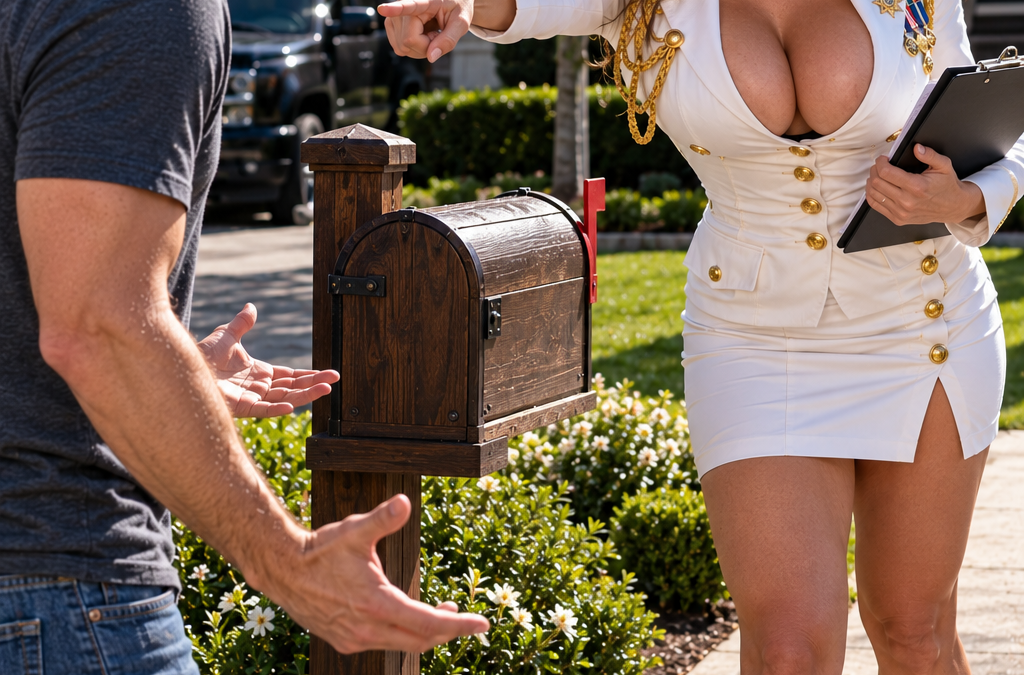
𝗙𝗨𝗟𝗟 𝗦𝗧𝗢𝗥𝗬
The sweetheart landed exactly the way she intended it to.
Condescending.
Personal.
A little flirtatious in a way that made the insult somehow worse.
“No,” I said. “The newer section is part of the HOA. This property is in the original development.”
She tilted her head.
“That isn’t how neighborhoods work.”
“It is how deeds work.”
Her smile faded by half.
I continued.
“My title is clear. No HOA declaration. No covenant. No membership.”
She scribbled something on the clipboard.
I watched her.
“What are you writing?”
“A note.”
“About what?”
“Noncompliance.”
I almost laughed.
“I just told you I’m not subject to your rules.”
She stepped onto the driveway.
The heels clicked against the concrete.
For someone claiming authority over property boundaries, she didn’t appear particularly respectful of them.
“You’re new,” she said. “I understand that new residents sometimes need time to adjust.”
“There’s nothing to adjust to.”
“You purchased a house in our community.”
“I purchased a house near your HOA.”
She gave me a long look.
Then her eyes drifted over my property again.
“You’ll find that cooperation makes life much easier here.”
I folded my arms.
“You’ll find that knowing where your legal authority ends makes life easier everywhere.”
Something changed in her face.
There it was.
The instant someone accustomed to automatic submission encountered resistance.
Her expression stayed polished, but the warmth disappeared.
“Replace the mailbox.”
“No.”
She wrote something else.
“We’ll see.”
Then she turned and walked away.
I stood there for several seconds watching the white uniform disappear down the sidewalk.
My wife came out through the garage.
“Who was that?”
“Apparently the president of an organization we don’t belong to.”
“What did she want?”
“Our mailbox.”
My wife looked at it.
“What about it?”
“It has committed crimes.”
She laughed.
“What?”
“Wrong color. Insufficient gold.”
I told her what Shayla had said.
My wife shook her head.
“Well, that’s weird.”
“Very.”
“You think she’ll come back?”
“No.”
I was wrong.
A week later, there was an envelope taped to our front door.
Across the top, in bold letters, it said:
NOTICE OF COVENANT VIOLATION.
I read it twice.
The violation was the mailbox.
The letter gave us fourteen days to replace it with the “approved community model.”
Failure to comply would result in a seventy-five-dollar fine.
At the bottom was Shayla’s signature.
Under her name:
PRESIDENT.
She had written the title in capital letters.
My wife came up behind me.
“Is that from her?”
“Yep.”
“What does it say?”
“That our mailbox remains a menace to civilization.”
She took the paper.
Her smile disappeared.
“Seventy-five dollars?”
“Meaningless.”
“Can she do that?”
“No.”
“Are you sure?”
“Absolutely.”
I took a photo of the notice.
Then I dropped it into the recycling bin.
I made one mistake.
I assumed ridiculous behavior would remain ridiculous.
It became aggressive instead.
Three days later, another notice arrived.
This one cited an “unauthorized exterior seasonal decoration.”
My wife had hung a wreath on the front door.
Not a giant inflatable snowman.
Not flashing neon lights.
A wreath.
The supposed fine was fifty dollars.
Two days later came another.
Garage door open beyond permitted duration.
I had been in the garage the entire time using a table saw.
Another fifty dollars.
Then another mailbox notice.
The amount increased.
Then an “administrative processing fee.”
Then a late fee attached to the first fine I didn’t owe.
I saved everything.
At first, I found it more irritating than threatening.
My wife didn’t.
She would get home before me some afternoons and find another envelope taped to the door.
By the third week, I could see her checking the porch before she even put her bag down.
One evening, she laid four notices across the kitchen counter.
“This is over four hundred dollars now.”
“I know.”
“What happens if it keeps going?”
“Nothing.”
“You keep saying that.”
“Because we don’t owe it.”
She rubbed her forehead.
“I know we don’t belong to the HOA, but what if they send it to collections?”
“Then we dispute it.”
“What if they sue?”
“They lose.”
“What if—”
I put my hand gently over hers.
“Listen to me. They cannot manufacture authority over property they don’t govern.”
Her eyes moved toward the papers.
“She sounds so certain.”
“That doesn’t make her right.”
My wife was quiet.
Then she said, “What if we just change the mailbox?”
“No.”
She looked at me.
“It’s just a mailbox.”
“I know.”
“So why fight about it?”
“Because then it won’t be about the mailbox.”
She didn’t answer.
I picked up one of the notices.
“Today it’s the mailbox. Tomorrow it’s the wreath. Then the garage. Then it’s paint colors. Parking. Landscaping. Whatever she decides.”
“But maybe she’d leave us alone.”
“No. She’d learn that threatening us works.”
I put the paper down.
“You don’t pay a debt you don’t owe because a bully is making you uncomfortable. That teaches the bully to send a bigger bill.”
My wife sighed.
“I hate this.”
“So do I.”
That night, I pulled out our closing documents.
I didn’t rely on memory.
I didn’t rely on what the seller told me.
I wanted everything.
I logged into the county property records.
I found the HOA declaration.
Downloaded it.
Printed it.
Then I read the whole thing.
The association’s properties were identified by legal description and lot number.
The boundary was clear.
The newer development had been recorded separately.
My lot was in the original section.
Not listed.
Not included.
Not ambiguous.
I pulled the older subdivision plat.
Same result.
I pulled our deed.
Nothing.
I checked title documents.
Nothing.
By midnight, I had an entire folder showing exactly what I already knew.
Shayla had no legal relationship to my house whatsoever.
I thought perhaps seeing the documents would solve it.
That was naïve.
A few evenings later, I spotted her coming down the street.
She was doing what I’d started calling her inspection patrol.
Same clipboard.
Same deliberate walk.
Same white military-style outfit, this time with a fitted jacket whose gold buttons strained slightly across her chest whenever she moved. The neckline was cut deep enough that it seemed designed less for modesty than for commanding attention.
She stopped periodically to write something down.
One neighbor hurried outside to move garbage cans before she reached his driveway.
That told me more about Shayla than any introduction could.
I carried my folder outside.
“Shayla.”
She stopped.
Her expression immediately changed when she saw me.
“What?”
“I think we can end this.”
“Have you replaced the mailbox?”
“No.”
She sighed theatrically.
“Then we’re wasting time.”
“I’ve got the recorded declaration.”
I opened the folder.
“My property isn’t part of the association.”
She didn’t look down.
“I’m aware of what you’re claiming.”
“I’m not claiming anything. I’m showing you county records.”
I held out the declaration.
She lifted one hand.
Palm toward me.
Like a traffic officer stopping a car.
“I don’t need to look at that.”
I thought I’d misheard her.
“What?”
“I’ve lived in this neighborhood nineteen years.”
“Okay.”
“I know which properties are part of my community.”
“Your community isn’t a legal description.”
Her lips tightened.
“The HOA serves this entire area.”
“No. It doesn’t.”
“Yes.”
“No.”
Her eyes hardened.
I tapped the document.
“This lists every bound lot.”
She looked past it.
“Documents can say anything.”
I actually stared at her.
There are sentences so stupid that your brain needs an extra second to process them.
“Documents can say anything?”
“Correct.”
“This document created your HOA.”
She folded her arms.
“That doesn’t change community standards.”
“It’s literally the document that gives your association authority.”
She looked bored.
“I am not going to stand here debating technicalities.”
“Property ownership isn’t a technicality.”
“You live here.”
“Yes.”
“You benefit from the community.”
“I pay city taxes.”
“You benefit from association maintenance.”
“Your HOA doesn’t maintain my property.”
“It maintains the character of the neighborhood.”
“Not my section.”
She smiled again.
That same polished smile.
“Honey, you’re making this harder than it needs to be.”
The word honey irritated me more this time.
“I’m trying to save you from making a serious mistake.”
Her smile sharpened.
“Are you threatening me?”
“No. I’m warning you.”
She stepped closer.
She smelled like expensive perfume.
“Be careful.”
“About what?”
“Your attitude.”
I almost laughed.
Instead I kept my voice calm.
“Shayla, you are sending financial demands to a property your organization does not govern. I’m giving you recorded documents proving it. If you continue after receiving notice that the fines are invalid, this becomes something more serious than a neighborhood disagreement.”
She stared at me.
For a moment, neither of us spoke.
Then she leaned closer.
Her voice dropped almost to a whisper.
“Honey, I can have you removed from this neighborhood.”
I blinked.
“What?”
“One phone call.”
“To who?”
She smiled.
“I’ve done it before.”
“Done what?”
“Had problem residents removed.”
I stared at her.
“You’ve evicted people from houses they own?”
“That’s right.”
Then she winked.
Actually winked.
Not nervously.
Not jokingly.
She winked as though she had just shared an insider secret about how power really worked.
I felt the entire interaction change.
Until then, Shayla had been annoying.
Now she was dangerous.
Not because I believed she could legally evict me.
She couldn’t.
But people who believed they had unlimited authority sometimes did tremendous damage before someone stopped them.
“I own my house,” I said.
“For now.”
The words were quiet.
Her expression was almost playful.
Then she turned and continued down the street.
I watched her go.
When I went inside, my wife was sitting on the couch.
“How’d it go?”
“She winked at me.”
My wife frowned.
“What?”
“She said she could have us removed from the neighborhood.”
“What does that mean?”
“No idea.”
I sat beside her.
“She claims she’s evicted homeowners before.”
My wife’s face changed immediately.
“Can she?”
“No.”
“You’re sure?”
“Yes.”
“But you’re worried.”
I looked toward the front window.
“I’m worried she’s stupid enough to try something she doesn’t understand.”
That night, I stopped treating Shayla like a nuisance.
I started treating her like a liability.
The first thing I did was figure out the actual structure of the HOA.
Shayla loved talking as if she personally was the association.
She wasn’t.
There was a board.
Several directors.
A treasurer.
A secretary.
More importantly, there was a professional property management company.
That company handled dues.
Budgets.
Official association records.
Vendor relationships.
Insurance.
Compliance processes.
All the boring administrative systems that existed partly to prevent amateurs with inflated egos from exposing an association to lawsuits.
I found the management company’s contact information.
Then I prepared an email.
No emotion.
No insults.
Just facts.
I attached my recorded deed.
The subdivision plat.
The HOA declaration.
Title documentation.
Photos of every violation notice.
Then I wrote:
My property is not, and has never been, a member of your association.
The attached county records establish that fact.
Despite this, your board president, Shayla Bennett, has issued repeated covenant violation notices and monetary fines against my property.
She has also verbally threatened to have me removed from my home.
Please confirm whether these actions have been authorized by the board or your management company and advise how you intend to correct the matter.
I read the email twice.
Then I sent it.
The reply came the next afternoon.
Its tone could not have been more different from Shayla’s.
Professional.
Careful.
Measured.
The management company thanked me for providing the documentation.
They stated they were reviewing the association boundaries and records.
They said the matter would be investigated immediately.
No threats.
No sweetheart.
No nonsense about community spirit.
My wife read the email over my shoulder.
“That sounds good.”
“It is.”
“So this might be over?”
“Maybe.”
It wasn’t.
Because while competent adults were investigating what Shayla had done, Shayla escalated.
I came home three days later and saw a sheet of paper taped to the center of my front door.
Not slipped under the mat.
Not mailed.
Taped at eye level.
The heading was larger than the previous notices.
NOTICE OF INTENT TO FILE LIEN.
I didn’t move for several seconds.
Then I pulled the paper down.
The notice claimed I had failed to pay association dues and accumulated violation fines.
Association dues.
I had never owed association dues.
The total was now a little over six hundred dollars.
The letter stated that failure to pay could result in a lien against my property.
It went further.
If the debt remained unresolved, the HOA reserved the right to pursue all available remedies.
Including foreclosure.
I read that word twice.
Foreclosure.
My wife walked up behind me.
“What is it?”
I handed her the paper.
I watched the color leave her face.
“They can take the house?”
“No.”
“But it says—”
“They can’t.”
Her fingers trembled slightly.
“Then why would she write it?”
“To scare us.”
“Well, it’s working.”
I took the notice back.
I understood exactly what she meant.
Even when you know a threat is legally baseless, there is something primal about seeing the word foreclosure attached to the address where you sleep.
A house isn’t just an asset.
It is shelter.
Safety.
Savings.
Future.
Home.
Threaten somebody’s home and their body reacts before logic catches up.
My own stomach had tightened when I read it.
Then another emotion took over.
Anger.
Not reckless anger.
Focused anger.
Because Shayla had finally moved beyond pretend violation notices.
A lien was not a clipboard complaint.
A lien was a recorded claim against title.
If someone knowingly recorded a false lien against a property for a nonexistent debt, that could create significant legal exposure.
Depending on the circumstances, it could amount to slander of title and other claims.
And Shayla had just put her intentions in writing.
Signed.
Dated.
I scanned the notice immediately.
Then I forwarded it to the management company.
I wrote one sentence.
Adding this to the file. Please confirm whether the HOA board has authorized a lien against a property that is not a member of the association.
I sent it.
Then I sat at the kitchen table.
My wife stood across from me.
“What now?”
“We stop talking to Shayla privately.”
“Why?”
“Because this needs witnesses.”
I knew the HOA had a regular board meeting coming up.
Normally I would never voluntarily attend an HOA meeting.
I can think of few places I’d rather spend an evening less.
But this one mattered.
I checked the meeting rules.
The session was open.
Even though I wasn’t a member, members of the public could attend.
I printed multiple copies of everything.
The declaration.
The plat.
My title paperwork.
Every notice Shayla had sent.
Including the foreclosure threat.
The night of the meeting, my wife asked if she should come.
“No.”
“Why not?”
“Because if Shayla turns it into theater, one of us should stay calm.”
My wife gave me a look.
“And that’s you?”
“I’ll do my best.”
She smiled faintly.
It was the first time either of us had joked about the situation in days.
“Please don’t get arrested.”
“I have no intention of getting arrested at an HOA meeting.”
“That wasn’t what I asked.”
I kissed her forehead.
“I’ll be fine.”
The clubhouse sat inside the newer development.
I arrived a few minutes early.
About fifteen or twenty people were sitting in folding chairs.
At the front was a long table.
Shayla sat in the center.
Of course she did.
She was wearing another white military-style uniform.
This one was even more theatrical than the others.
The jacket fit tightly around her waist and chest, the neckline plunging low beneath a row of gold decorative trim. Her hair fell neatly over one shoulder. She had crossed her legs under the table and was shuffling papers with the dramatic seriousness of someone preparing to negotiate a peace treaty instead of discussing pool hours.
Two board members sat beside her.
An older man with gray hair and reading glasses.
A younger woman with a laptop.
I chose a chair near the back.
Shayla looked up.
Saw me.
Her entire face changed.
For a fraction of a second, she looked alarmed.
Then her expression hardened.
She leaned toward the younger board member and whispered something.
The meeting started.
For the first twenty minutes, nothing interesting happened.
Landscaping contract.
Pool maintenance.
Budget numbers.
Someone complained about teenagers staying too late near the basketball court.
Another homeowner wanted clarification about garbage pickup.
Shayla controlled the discussion with obvious pleasure.
She interrupted people.
Corrected them.
Cut off one older woman because her comment was “outside the scope of the agenda.”
Every few minutes, Shayla glanced toward me.
I didn’t react.
Then they reached old business.
Shayla could have let the meeting move on.
She could have waited for the management company’s investigation.
She could have avoided discussing me entirely.
But people like Shayla rarely resist an audience.
She straightened in her chair.
“There is one additional compliance matter.”
The room quieted.
“We have an ongoing issue with a property owner who has refused to meet community standards, refused to pay assessed fines, and has behaved in an openly hostile manner toward association leadership.”
Several heads turned.
Shayla looked directly at me.
A small smile appeared.
“Perhaps the gentleman would like to explain himself.”
There was something almost seductive about the way she delivered it, a slow tilt of the head, a smoky little smile designed to make the accusation feel like entertainment.
She wanted a public confrontation.
Fine.
I stood.
“Sure.”
The room went silent.
“My property is not part of this HOA.”
Shayla rolled her eyes.
I continued.
“It has never been part of this HOA.”
A few residents looked confused.
“My house is located in the older section of the neighborhood, which existed decades before this association was created. The HOA declaration identifies the properties bound to it by lot number.”
I held up the folder.
“My lot isn’t listed.”
Shayla made a dismissive sound.
I ignored her.
“I also have the recorded subdivision plat, my deed, and title records. There is no covenant binding my property to this association.”
The older board member leaned forward.
“You have those records with you?”
“Yes.”
Shayla cut in.
“He’s twisting the situation.”
I looked at the board.
“I’ve never paid HOA dues because I don’t owe HOA dues. The previous owner wasn’t a member either.”
Shayla’s jaw tightened.
“Despite that,” I continued, “your president has issued more than a dozen purported violation notices and fines against my property.”
People started whispering.
I kept going.
“She fined us for our mailbox.”
Someone looked toward another person.
“For a wreath on my front door.”
The younger board member frowned.
“For leaving my garage door open while I was physically working inside my garage.”
Shayla pushed back from the table.
“These are standard—”
“And last week,” I said, louder but still calm, “she taped a notice to my door threatening to file a lien against my home for these nonexistent debts.”
The room changed.
You could feel it.
Whispers stopped.
The younger board member turned toward Shayla.
The older man removed his glasses.
I pulled the notice from the folder.
“The letter also threatens possible foreclosure.”
Someone near the front said, “Foreclosure?”
Another person whispered, “Jesus.”
Shayla laughed sharply.
“He’s being dramatic.”
I looked at her.
“I’m quoting your letter.”
“You’ve refused to comply.”
“With an association I don’t belong to.”
“Everyone on these streets is part of this community.”
“Community and association are not the same thing.”
She turned toward the room.
“This is exactly what I’ve been dealing with. He moves here and immediately decides the standards everyone else follows shouldn’t apply to him.”
I nodded.
“Correct.”
That threw her off.
“What?”
“Your HOA rules do not apply to my property.”
“You’re a freeloader.”
“On what?”
“You benefit from everything we do.”
“What does your HOA pay for on my property?”
“That isn’t the point.”
“It is precisely the point.”
She slapped one palm on the table.
“You bought into this neighborhood.”
“I bought a house.”
“Which makes you part of the neighborhood.”
“Yes.”
“And therefore the association.”
“No.”
She looked at the audience as if asking them to appreciate how unreasonable I was being.
Nobody laughed.
The older board member held out his hand.
“May I see the declaration?”
I walked forward.
Shayla tried to stop the exchange.
“We don’t need to turn this into some legal circus.”
The man ignored her.
I placed the documents on the table.
“This is the recorded declaration.”
I pointed.
“These are the bound lots.”
He put his glasses back on.
I handed him the plat.
“This is the original section.”
He began reading.
Shayla leaned toward him.
“Howard, this isn’t necessary.”
He held up one finger without looking at her.
The room became very quiet.
I returned to my seat.
Shayla started speaking again.
“The association has always maintained standards throughout the area.”
Howard kept reading.
“We’ve worked for nineteen years to preserve property values.”
He turned a page.
“People don’t get to move in and decide they’re exempt from everything just because of some technicality.”
Howard looked up.
“Shayla.”
She stopped.
He pointed at the page.
“His lot isn’t in here.”
The silence was beautiful.
Shayla stared at him.
“What?”
“His lot.”
Howard checked another page.
“It’s not listed.”
She leaned closer.
“That can’t be right.”
He looked at the plat.
“None of the old section is included.”
“I’ve always understood—”
“Understood what?”
“That the standards applied to the entire area.”
Howard took his glasses off.
“You assumed?”
Shayla straightened.
“I’ve lived here nineteen years.”
“That wasn’t my question.”
She looked around the room.
“I’ve been enforcing standards consistently.”
The younger board member spoke.
“On properties outside the HOA?”
Shayla turned toward her.
“Don’t start.”
The young woman’s eyebrows rose.
Howard lifted one of my violation notices.
“Who authorized these fines?”
Shayla hesitated.
“The association has standing enforcement authority.”
“Who authorized these specific fines?”
“As president, I handle routine compliance.”
“Did the board vote?”
Her face tightened.
“For a mailbox?”
“For fines against a non-member.”
“No one thought it required—”
“Did the board vote?”
“No.”
A murmur moved through the room.
Howard picked up the lien notice.
“And this?”
Shayla’s expression changed.
“That’s preliminary.”
“Who authorized it?”
“It was a warning.”
“That’s not what I asked.”
She looked at the younger board member.
Then back at Howard.
“I was protecting association interests.”
“Did the board authorize a lien?”
Silence.
Howard’s voice sharpened.
“Did we even know about this?”
The younger board member said quietly, “I didn’t.”
Everyone looked at Shayla.
I watched the confidence drain from her.
Not disappear.
Shayla had too much ego for that.
But crack.
For the first time, she understood that the people at the table weren’t following her lead.
Then another woman spoke from the side of the room.
I hadn’t noticed her before.
She was dressed professionally, with a laptop and a stack of folders.
“My name is Rachel Martin. I’m here representing the property management company.”
Shayla’s head snapped toward her.
Rachel continued calmly.
“Our office received documentation from this homeowner earlier this week.”
Shayla looked at me.
If hatred could leave marks, I’d have been bleeding.
Rachel continued.
“We reviewed the recorded association declaration and preliminary title information.”
“And?” Howard asked.
“Our initial review confirms that his property is not subject to the association declaration.”
Several people murmured.
Rachel raised a hand.
“Additionally, official violation notices should not be issued against properties outside the association’s jurisdiction.”
Shayla interrupted.
“I was protecting property values.”
Rachel didn’t even look rattled.
“Threatening a lien is significantly more serious.”
“I said I wasn’t actually going to—”
Rachel turned toward her.
“If a lien were recorded against a property that owes no association debt, the HOA could face substantial legal exposure.”
Shayla’s face reddened.
Rachel continued.
“And if the board did not authorize the action, there may be questions regarding whether the person issuing the notice was acting within her authority.”
Everyone understood what she meant.
Including Shayla.
For years, Shayla had wrapped herself in the protection of the HOA.
Suddenly, the professionals were explaining that the shield might not cover her.
“I have given nineteen years to this neighborhood,” Shayla said.
Her voice rose.
“Nineteen years.”
Nobody answered.
“I have spent countless hours keeping standards from collapsing.”
Howard leaned back.
“This isn’t about landscaping standards.”
“Yes, it is.”
“No.”
He held up the lien threat.
“This is about you threatening someone’s title.”
She pointed toward me.
“Because he refuses to cooperate.”
“He doesn’t belong to the HOA.”
“He lives here!”
Howard’s voice finally rose.
“That’s irrelevant!”
The room went still.
Shayla stared at him.
He continued.
“He does not owe us dues.”
“He benefits—”
“He does not owe us dues.”
“He should.”
“That’s not how property law works.”
For once, somebody else said the sentence I had been saying for weeks.
Shayla turned toward the audience.
“So that’s it?”
Her voice shook now.
“You’re all going to side with him?”
Nobody answered.
She laughed bitterly.
“Some man moves in here two months ago and suddenly everything I’ve done means nothing.”
A homeowner near the aisle spoke.
“No one’s saying that.”
“Yes, you are!”
She pointed toward me.
“He won’t even install the correct mailbox.”
Someone in the audience actually laughed.
That made her angrier.
“This is funny to you?”
Howard rubbed his forehead.
“Shayla, this isn’t about the mailbox.”
“Yes, it is!”
“No. It’s about you threatening foreclosure.”
“I never would have actually foreclosed!”
The words came out loud.
Clear.
And fatal.
I spoke from the back.
“You wrote it down.”
She turned toward me.
I held her gaze.
“And you signed it.”
Her mouth opened.
Nothing came out.
That was the moment her control finally collapsed.
She tried several arguments at once.
The notice was only preliminary.
She was trying to encourage compliance.
The management company didn’t understand local practice.
The old section should have joined years ago.
I was exploiting a loophole.
Howard interrupted each attempt with the same question.
“Where is the authority?”
She had none.
Then the younger board member asked something even worse.
“Shayla, have you issued fines like this to other non-member properties?”
The room went silent again.
Shayla didn’t answer.
The younger woman repeated the question.
“Have you?”
“I don’t appreciate being interrogated.”
“That isn’t a no.”
“I’m president.”
Howard said, “Currently.”
Shayla stared at him.
“What does that mean?”
He closed the folder.
“I think we need to address your authority immediately.”
“You cannot be serious.”
“I am.”
“You don’t have grounds.”
Rachel from the management company spoke carefully.
“The board has a duty to mitigate potential liability once it becomes aware of unauthorized actions.”
Shayla looked from one face to another.
The people she had dominated for years were avoiding her eyes.
Not because they feared her.
Because they were embarrassed to be associated with her.
Howard proposed an emergency motion.
Shayla shot to her feet.
“You cannot do this without notice.”
Rachel corrected her.
“Removal from an officer position may be addressed under the emergency board provisions if the governing documents permit it. Director removal may require additional procedure depending on the bylaws.”
Shayla whipped toward her.
“Whose side are you on?”
“The association’s.”
“I am the association.”
“No,” Rachel said.
It was the quietest sentence spoken all night.
And somehow the most devastating.
“You are an officer of the association.”
A few homeowners shifted in their chairs.
Shayla stood behind the table, breathing hard.
Her perfect white jacket, her gold buttons, the heels, the clipboard, all the theatrical signals of authority suddenly looked ridiculous.
Costume pieces without power behind them.
Howard called the vote.
Shayla tried to interrupt.
Nobody listened.
The board voted to remove her as president.
Effective immediately.
The younger board member voted yes.
Howard voted yes.
Another director participating remotely voted yes.
Shayla stared at them.
“You’re making a mistake.”
Howard said nothing.
She looked around the room.
“You’ll regret this.”
No response.
“You think this neighborhood will maintain itself?”
Someone near the back muttered, “Probably more peacefully.”
A few people laughed.
Shayla heard it.
Her face flushed so deeply that even beneath her makeup I could see the color.
Then she looked directly at me.
“This is your fault.”
I stood.
“No.”
She pointed a manicured finger at me.
“You came in here looking for trouble.”
“I bought a house outside your HOA.”
“You humiliated me.”
“You threatened my home.”
Her voice dropped.
“I could still make things difficult for you.”
Howard stood.
“Shayla.”
She ignored him.
She took one step toward me.
The room was dead quiet.
I didn’t move.
“You think a few documents protect you from everything?”
“They protected me from you.”
Her jaw clenched.
The old flirtatious arrogance was gone.
What remained was anger.
Raw and personal.
I continued.
“You had every opportunity to stop.”
“You don’t get to lecture me.”
“I showed you the declaration.”
“You were disrespectful.”
“I sent it to management.”
“You went behind my back.”
“You threatened foreclosure.”
“Because you refused to cooperate!”
“With rules that don’t apply to me.”
She opened her mouth.
Nothing.
I lowered my voice.
“This was never about the mailbox.”
Her eyes narrowed.
“It was about whether I would let you tell me what I was allowed to do on property you don’t govern.”
Her breathing slowed.
She knew everyone was listening.
“You chose wrong.”
She glared at me for another few seconds.
Then she grabbed her clipboard.
Howard said, “Leave the association records.”
Her grip tightened.
“What?”
“The records belong to the HOA.”
Slowly, she placed the clipboard back on the table.
Then she walked toward the exit.
For the first time since I met her, she crossed a room and nobody moved out of her way.
She had to walk around chairs like everybody else.
The door slammed behind her.
Nobody spoke for several seconds.
Then Howard exhaled.
“Well.”
Someone laughed nervously.
Rachel closed her laptop.
“I recommend we document everything that occurred tonight.”
Howard nodded.
Then he looked at me.
“Sir, I’d like to apologize.”
“You don’t need to apologize for something you didn’t know about.”
“We should have known.”
That was fair.
The younger board member looked genuinely upset.
“I had no idea she was sending those notices.”
“I believe you.”
“She made it sound like everything went through management.”
“Apparently it didn’t.”
Rachel nodded.
“We’ll be reviewing prior enforcement activity.”
Howard picked up my documents again.
“And you will receive something in writing confirming that your property is outside the association.”
“I’d appreciate that.”
“Every fine will be voided.”
“They were never valid.”
He gave a tired smile.
“No. They weren’t.”
A few people approached me after the meeting.
Some were curious.
Some were embarrassed.
Several were relieved.
One older woman quietly said, “I’m glad someone finally challenged her.”
“What did she do to you?”
The woman looked toward the door Shayla had gone through.
“Nothing as bad as threatening my house.”
Then she smiled sadly.
“But she made living here exhausting.”
That stayed with me.
Because that was Shayla’s real legacy.
Not property values.
Not landscaping standards.
Exhaustion.
She made people feel watched.
Judged.
Vulnerable.
She transformed minor choices into confrontations until surrender became easier than disagreement.
People didn’t obey her because she was right.
They obeyed because fighting every little battle required more energy than most people had.
The next afternoon, I received an email from the management company.
A formal letter was attached.
It confirmed that my property was not part of the homeowners association.
It had never been part of the homeowners association.
I owed no dues.
I owed no fines.
Every violation notice Shayla issued was void.
No lien would be filed.
No foreclosure action could be initiated by the association against my property based on any of those supposed violations.
The letter included an apology.
It also stated that Shayla no longer possessed authority to act on behalf of the association.
I printed it.
Not because I needed another piece of paper.
Because after weeks of somebody telling my wife and me that official-looking documents could take away our home, I wanted one official-looking document saying she couldn’t.
When my wife got home, I left it on the kitchen counter.
She read the first paragraph.
Then the second.
Then she sat down.
“It’s really over?”
“With the HOA, yes.”
She looked at me.
“With her?”
“I think so.”
“You think?”
I smiled.
“She has no authority anymore.”
“That wasn’t what I asked.”
Fair point.
For the next few days, I half expected Shayla to appear.
She didn’t.
The violation notices stopped immediately.
No more envelopes on the door.
No more fines.
No more warnings.
Our mailbox remained exactly where it had always been.
Brown wood.
No black paint.
No three-inch gold vinyl.
My wife’s wreath stayed on the door until she decided to take it down.
Not because Shayla ordered her.
Because Christmas was over.
I worked in the garage with the door open.
Nobody fined me.
The strangest part was how quickly the neighborhood atmosphere changed.
People seemed to linger outside longer.
Neighbors who had barely spoken before started talking in driveways.
One man across the street replaced a dead shrub and laughed that he kept waiting for Shayla to appear from behind a tree with a clipboard.
Another resident told me he’d received seven fines the previous year over minor landscaping issues and had paid every one simply because he didn’t have the energy to argue.
The board began reviewing enforcement procedures.
The management company insisted that future violation notices go through proper administrative channels.
No officer could invent fines independently.
Nothing involving liens could happen without documented board review and legal verification.
All of which seemed obvious.
But obvious systems usually exist because someone once proved they were necessary.
A few weeks later, I saw Shayla again.
I was bringing groceries inside.
She was walking on the opposite side of the street.
No clipboard.
No uniform.
She wore jeans, sunglasses, and a sweater.
Without the white military-style jacket and gold buttons, she looked strangely ordinary.
She noticed me.
Stopped.
For a moment, I thought she might cross the street.
She didn’t.
She lowered her sunglasses slightly.
Our eyes met.
I nodded once.
She gave me a look full of everything she wasn’t allowed to say anymore.
Then her eyes shifted toward my mailbox.
Still brown.
Still wooden.
Still completely non-compliant with standards that had never applied to it.
I couldn’t help myself.
I smiled.
Her lips tightened.
Then she kept walking.
I went inside.
My wife was unpacking groceries.
“You saw her?”
“Yep.”
“What happened?”
“She looked at the mailbox.”
“And?”
“Mailbox survived.”
My wife laughed.
A real laugh this time.
No stress underneath it.
No fear.
That was when I realized how much the whole thing had affected us.
We had bought the house because we wanted somewhere peaceful.
Within weeks, a stranger had managed to make us feel like our home was conditional.
Like ownership itself could be overridden by whoever had the loudest voice and the most official stationery.
And if I had paid that first seventy-five-dollar fine, I sometimes wondered where it would have ended.
Probably nowhere good.
The mailbox would have changed.
Then the wreath.
Then the garage.
Then maybe paint.
Parking.
Landscaping.
Whatever Shayla wanted.
More importantly, paying would have created a record she could point to.
See?
He pays fines.
He acknowledges the association.
That’s why the first line mattered.
Not because I loved my mailbox.
I didn’t.
I barely thought about it before Shayla arrived.
It mattered because authority has boundaries.
A person can’t create power over you simply by behaving as though she already has it.
Shayla’s entire system depended on confidence.
She dressed like authority.
Spoke like authority.
Issued paperwork that looked like authority.
Threatened consequences as though authority belonged to her naturally.
Most people never checked.
That was the trick.
The first time I challenged her, she dismissed my explanation.
The second time, she dismissed the documents.
When I warned her that she was creating legal exposure, she threatened me.
When I contacted management, she escalated to a lien.
Each time reality pushed against her version of the world, she didn’t reconsider.
She pushed harder.
That was ultimately why she lost.
She could have stopped after the first conversation.
She could have looked at the deed.
She could have checked the declaration.
She could have apologized.
She could even have blamed a misunderstanding and walked away with most of her reputation intact.
Instead, every time she reached a point where a reasonable person would retreat, Shayla doubled down.
A mailbox became fines.
Fines became threats.
Threats became a lien notice.
The lien notice became foreclosure language.
And foreclosure language became the piece of paper that destroyed her credibility in front of her own board.
She didn’t lose because I outshouted her.
I never needed to.
She lost because eventually she had to sit in a room where facts mattered more than confidence.
Months later, our home finally became the place I thought we were buying.
Quiet.
Ordinary.
Boring.
Perfect.
On weekends, I sometimes worked in the garage with the door open for hours.
My wife planted flowers wherever she wanted.
Nobody measured them.
Nobody inspected the wreath.
Nobody taped violation notices to the door.
HOA meetings still happened down in the newer section, but I never attended another one.
I didn’t belong there.
That had been the point from the beginning.
Occasionally I would see one of the black post-mounted mailboxes with the regulation gold numbers when I drove through the newer streets.
They were fine.
Nothing wrong with them.
If someone voluntarily buys a house subject to rules requiring that mailbox, then those are the rules they agreed to.
But when I turned onto my street and saw my old wooden mailbox leaning slightly toward the road, I always felt a strange little flicker of satisfaction.
Not because it was beautiful.
It wasn’t.
Not because it made some grand political statement.
It didn’t.
It was just mine.
On my property.
Outside Shayla’s HOA.
And nobody could change that simply because a woman with a clipboard, a white uniform, and an addiction to control said otherwise.
The most dangerous thing Shayla told me wasn’t that my mailbox was wrong.
It wasn’t even that she could fine me.
It was the sentence she whispered when she thought intimidation would finish the argument.
“I can have you removed from this neighborhood.”
She wanted me to believe my home belonged to me only as long as she allowed it.
Instead, she learned something different.
My house had survived without her permission for decades before I arrived.
It would survive without her permission after she was gone.
And the last time I checked, the mailbox was still brown.
𝗧𝗛𝗘 𝗘𝗡𝗗
She Threatened to Foreclose on My House—There Was Just One Problem: I Never Belonged to Her HOA
Two weeks after I moved into what I thought was the quietest neighborhood I had ever lived in, a beautiful woman in a white military-style uniform appeared at the end of my driveway and informed me that my mailbox violated her rules.
A month later, she was threatening to put a lien on my home and take the house away from me.
The problem was that she had absolutely no legal authority over me.
When my wife and I bought the house, peace was the main thing we were looking for.
Not luxury.
Not prestige.
Not some gated development with a golf course, private security, and a clubhouse that looked like a resort.
Peace.
We had spent years renting in places where parking was a daily competition, neighbors treated midnight like an acceptable time to start home renovations, and landlords could turn the smallest maintenance request into a week-long argument.
By the time we were finally able to buy, I wanted a house with a yard, a garage, enough distance from the neighbors that we didn’t hear every conversation through the walls, and as little unnecessary bureaucracy as possible.
The neighborhood we found seemed almost perfect.
It was older, established, and a little mismatched in the way I liked.
The houses in the front section had been built decades earlier. Some were brick. Some had siding. A few had wide front porches. Trees were mature enough that their branches met over parts of the street in summer.
People had different fences.
Different mailboxes.
Different paint colors.
It looked like a neighborhood where real people lived rather than a development designed by one person with access to only three architectural templates.
At the back, though, the character changed.
Years after the original neighborhood had been built, a developer had purchased several empty parcels and constructed a newer section.
Those houses were more uniform.
Same general shape.
Same roofing colors.
Same narrow landscaping beds.
Same black mailboxes with gold house numbers.
That section had formed a homeowners association.
My house hadn’t.
That distinction was explained to me during the purchase.
The seller mentioned it almost casually while we were standing in the kitchen during the final walkthrough.
“You might get somebody from the HOA knocking at some point,” he said.
I looked at him.
“The HOA?”
“The newer development behind us.”
“I thought this house wasn’t in it.”
“It isn’t.”
“Then why would they knock?”
He gave me the kind of tired smile that told me there was history behind the answer.
“They’ve tried before.”
That got my attention.
“What do you mean, tried?”
“They like to act like the entire neighborhood belongs to them.”
“And it doesn’t?”
“No.”
I asked my real estate agent before signing anything.
She confirmed it.
Then I asked the title company.
They confirmed it too.
There was no declaration binding my property.
No covenant.
No mandatory association membership.
No recorded obligation to pay dues.
No architectural restrictions connected to the HOA.
The newer development had its own declaration, its own legal description, its own list of lots.
My house was not one of them.
The HOA boundary stopped several properties away.
My lot belonged to the original development that predated the association by decades.
I remember sitting at the closing table looking through the documents one final time.
The title representative pointed to the relevant sections.
“Clean title,” she said. “No HOA encumbrance.”
“Definitely?”
“Definitely.”
That mattered to me.
I wasn’t philosophically opposed to every HOA in existence. If people voluntarily purchased homes under certain recorded covenants and wanted an association to maintain shared facilities, fine.
What I didn’t want was somebody telling me my front door needed approval before I could paint it.
If I wanted a blue door, I wanted a blue door.
If my wife wanted a Christmas wreath in November, she could hang one.
If I wanted my garage open while I worked inside, I didn’t want to check a handbook first.
I bought the house.
We moved in.
The first two weeks were exactly what I hoped for.
Quiet mornings.
Friendly neighbors.
A backyard that actually felt private.
My wife started unpacking boxes and planning what she wanted to plant near the porch.
I organized the garage.
For the first time in years, I felt like the place where I lived actually belonged to me.
Then I met Shayla.
I had been carrying a cardboard box out to the garage one afternoon when I noticed someone standing at the end of my driveway.
At first I thought she was waiting for somebody.
Then I realized she was studying my property.
Not looking.
Studying.
She held a clipboard against one hip while slowly scanning from the roofline to the garage, then to the flower beds, then finally to my mailbox.
She looked around forty.
She was undeniably beautiful, and she clearly knew it.
Her dark hair was glossy and styled perfectly despite the heat. Her makeup was immaculate. Her lips were painted a deep red. She wore high heels that looked completely impractical for neighborhood walking.
What really caught my attention was the outfit.
It resembled a ceremonial military uniform, except no actual military in the world would have approved the tailoring.
The jacket was bright white, fitted tightly to her body, with polished gold buttons and sharp decorative shoulders. The neckline plunged low enough to emphasize her very large chest, and the narrow waist made the whole thing look more like a costume of authority than a uniform.
She wore a matching white skirt.
Everything about her said she wanted to be noticed.
Everything about the clipboard said she wanted to be obeyed.
I walked toward her.
“Hi.”
She didn’t return the greeting.
She pointed her pen toward the street.
“Your mailbox is non-compliant.”
I stopped.
“My mailbox?”
“The approved community mailbox is black, post-mounted, with three-inch gold vinyl numbering.”
I looked at my mailbox.
It was wooden.
Dark brown.
Perfectly ordinary.
It had probably been there fifteen years.
I looked back at her.
“Okay.”
Her eyebrows lifted.
“Okay?”
“It’s a mailbox.”
“It violates community standards.”
“Which community?”
Her mouth tightened slightly.
“This community.”
I set the box I was carrying on the driveway.
“And you are?”
The question clearly offended her.
“Shayla Bennett.”
She waited.
I waited.
Finally she added, “President of the homeowners association.”
She said president the way someone else might say admiral.
“Oh.”
She glanced toward my mailbox again.
“You’ll need to replace that.”
“No, I won’t.”
Her eyes came back to me.
“Excuse me?”
“My house isn’t in your HOA.”
For the first time, she smiled.
It wasn’t friendly.
It was the kind of smile people use when they believe they’re about to correct someone less informed than they are.
“Everyone in this neighborhood is part of the association, sweetheart.”
The sweetheart landed exactly the way she intended it to.
Condescending.
Personal.
A little flirtatious in a way that made the insult somehow worse.
“No,” I said. “The newer section is part of the HOA. This property is in the original development.”
She tilted her head.
“That isn’t how neighborhoods work.”
“It is how deeds work.”
Her smile faded by half.
I continued.
“My title is clear. No HOA declaration. No covenant. No membership.”
She scribbled something on the clipboard.
I watched her.
“What are you writing?”
“A note.”
“About what?”
“Noncompliance.”
I almost laughed.
“I just told you I’m not subject to your rules.”
She stepped onto the driveway.
The heels clicked against the concrete.
For someone claiming authority over property boundaries, she didn’t appear particularly respectful of them.
“You’re new,” she said. “I understand that new residents sometimes need time to adjust.”
“There’s nothing to adjust to.”
“You purchased a house in our community.”
“I purchased a house near your HOA.”
She gave me a long look.
Then her eyes drifted over my property again.
“You’ll find that cooperation makes life much easier here.”
I folded my arms.
“You’ll find that knowing where your legal authority ends makes life easier everywhere.”
Something changed in her face.
There it was.
The instant someone accustomed to automatic submission encountered resistance.
Her expression stayed polished, but the warmth disappeared.
“Replace the mailbox.”
“No.”
She wrote something else.
“We’ll see.”
Then she turned and walked away.
I stood there for several seconds watching the white uniform disappear down the sidewalk.
My wife came out through the garage.
“Who was that?”
“Apparently the president of an organization we don’t belong to.”
“What did she want?”
“Our mailbox.”
My wife looked at it.
“What about it?”
“It has committed crimes.”
She laughed.
“What?”
“Wrong color. Insufficient gold.”
I told her what Shayla had said.
My wife shook her head.
“Well, that’s weird.”
“Very.”
“You think she’ll come back?”
“No.”
I was wrong.
A week later, there was an envelope taped to our front door.
Across the top, in bold letters, it said:
NOTICE OF COVENANT VIOLATION.
I read it twice.
The violation was the mailbox.
The letter gave us fourteen days to replace it with the “approved community model.”
Failure to comply would result in a seventy-five-dollar fine.
At the bottom was Shayla’s signature.
Under her name:
PRESIDENT.
She had written the title in capital letters.
My wife came up behind me.
“Is that from her?”
“Yep.”
“What does it say?”
“That our mailbox remains a menace to civilization.”
She took the paper.
Her smile disappeared.
“Seventy-five dollars?”
“Meaningless.”
“Can she do that?”
“No.”
“Are you sure?”
“Absolutely.”
I took a photo of the notice.
Then I dropped it into the recycling bin.
I made one mistake.
I assumed ridiculous behavior would remain ridiculous.
It became aggressive instead.
Three days later, another notice arrived.
This one cited an “unauthorized exterior seasonal decoration.”
My wife had hung a wreath on the front door.
Not a giant inflatable snowman.
Not flashing neon lights.
A wreath.
The supposed fine was fifty dollars.
Two days later came another.
Garage door open beyond permitted duration.
I had been in the garage the entire time using a table saw.
Another fifty dollars.
Then another mailbox notice.
The amount increased.
Then an “administrative processing fee.”
Then a late fee attached to the first fine I didn’t owe.
I saved everything.
At first, I found it more irritating than threatening.
My wife didn’t.
She would get home before me some afternoons and find another envelope taped to the door.
By the third week, I could see her checking the porch before she even put her bag down.
One evening, she laid four notices across the kitchen counter.
“This is over four hundred dollars now.”
“I know.”
“What happens if it keeps going?”
“Nothing.”
“You keep saying that.”
“Because we don’t owe it.”
She rubbed her forehead.
“I know we don’t belong to the HOA, but what if they send it to collections?”
“Then we dispute it.”
“What if they sue?”
“They lose.”
“What if—”
I put my hand gently over hers.
“Listen to me. They cannot manufacture authority over property they don’t govern.”
Her eyes moved toward the papers.
“She sounds so certain.”
“That doesn’t make her right.”
My wife was quiet.
Then she said, “What if we just change the mailbox?”
“No.”
She looked at me.
“It’s just a mailbox.”
“I know.”
“So why fight about it?”
“Because then it won’t be about the mailbox.”
She didn’t answer.
I picked up one of the notices.
“Today it’s the mailbox. Tomorrow it’s the wreath. Then the garage. Then it’s paint colors. Parking. Landscaping. Whatever she decides.”
“But maybe she’d leave us alone.”
“No. She’d learn that threatening us works.”
I put the paper down.
“You don’t pay a debt you don’t owe because a bully is making you uncomfortable. That teaches the bully to send a bigger bill.”
My wife sighed.
“I hate this.”
“So do I.”
That night, I pulled out our closing documents.
I didn’t rely on memory.
I didn’t rely on what the seller told me.
I wanted everything.
I logged into the county property records.
I found the HOA declaration.
Downloaded it.
Printed it.
Then I read the whole thing.
The association’s properties were identified by legal description and lot number.
The boundary was clear.
The newer development had been recorded separately.
My lot was in the original section.
Not listed.
Not included.
Not ambiguous.
I pulled the older subdivision plat.
Same result.
I pulled our deed.
Nothing.
I checked title documents.
Nothing.
By midnight, I had an entire folder showing exactly what I already knew.
Shayla had no legal relationship to my house whatsoever.
I thought perhaps seeing the documents would solve it.
That was naïve.
A few evenings later, I spotted her coming down the street.
She was doing what I’d started calling her inspection patrol.
Same clipboard.
Same deliberate walk.
Same white military-style outfit, this time with a fitted jacket whose gold buttons strained slightly across her chest whenever she moved. The neckline was cut deep enough that it seemed designed less for modesty than for commanding attention.
She stopped periodically to write something down.
One neighbor hurried outside to move garbage cans before she reached his driveway.
That told me more about Shayla than any introduction could.
I carried my folder outside.
“Shayla.”
She stopped.
Her expression immediately changed when she saw me.
“What?”
“I think we can end this.”
“Have you replaced the mailbox?”
“No.”
She sighed theatrically.
“Then we’re wasting time.”
“I’ve got the recorded declaration.”
I opened the folder.
“My property isn’t part of the association.”
She didn’t look down.
“I’m aware of what you’re claiming.”
“I’m not claiming anything. I’m showing you county records.”
I held out the declaration.
She lifted one hand.
Palm toward me.
Like a traffic officer stopping a car.
“I don’t need to look at that.”
I thought I’d misheard her.
“What?”
“I’ve lived in this neighborhood nineteen years.”
“Okay.”
“I know which properties are part of my community.”
“Your community isn’t a legal description.”
Her lips tightened.
“The HOA serves this entire area.”
“No. It doesn’t.”
“Yes.”
“No.”
Her eyes hardened.
I tapped the document.
“This lists every bound lot.”
She looked past it.
“Documents can say anything.”
I actually stared at her.
There are sentences so stupid that your brain needs an extra second to process them.
“Documents can say anything?”
“Correct.”
“This document created your HOA.”
She folded her arms.
“That doesn’t change community standards.”
“It’s literally the document that gives your association authority.”
She looked bored.
“I am not going to stand here debating technicalities.”
“Property ownership isn’t a technicality.”
“You live here.”
“Yes.”
“You benefit from the community.”
“I pay city taxes.”
“You benefit from association maintenance.”
“Your HOA doesn’t maintain my property.”
“It maintains the character of the neighborhood.”
“Not my section.”
She smiled again.
That same polished smile.
“Honey, you’re making this harder than it needs to be.”
The word honey irritated me more this time.
“I’m trying to save you from making a serious mistake.”
Her smile sharpened.
“Are you threatening me?”
“No. I’m warning you.”
She stepped closer.
She smelled like expensive perfume.
“Be careful.”
“About what?”
“Your attitude.”
I almost laughed.
Instead I kept my voice calm.
“Shayla, you are sending financial demands to a property your organization does not govern. I’m giving you recorded documents proving it. If you continue after receiving notice that the fines are invalid, this becomes something more serious than a neighborhood disagreement.”
She stared at me.
For a moment, neither of us spoke.
Then she leaned closer.
Her voice dropped almost to a whisper.
“Honey, I can have you removed from this neighborhood.”
I blinked.
“What?”
“One phone call.”
“To who?”
She smiled.
“I’ve done it before.”
“Done what?”
“Had problem residents removed.”
I stared at her.
“You’ve evicted people from houses they own?”
“That’s right.”
Then she winked.
Actually winked.
Not nervously.
Not jokingly.
She winked as though she had just shared an insider secret about how power really worked.
I felt the entire interaction change.
Until then, Shayla had been annoying.
Now she was dangerous.
Not because I believed she could legally evict me.
She couldn’t.
But people who believed they had unlimited authority sometimes did tremendous damage before someone stopped them.
“I own my house,” I said.
“For now.”
The words were quiet.
Her expression was almost playful.
Then she turned and continued down the street.
I watched her go.
When I went inside, my wife was sitting on the couch.
“How’d it go?”
“She winked at me.”
My wife frowned.
“What?”
“She said she could have us removed from the neighborhood.”
“What does that mean?”
“No idea.”
I sat beside her.
“She claims she’s evicted homeowners before.”
My wife’s face changed immediately.
“Can she?”
“No.”
“You’re sure?”
“Yes.”
“But you’re worried.”
I looked toward the front window.
“I’m worried she’s stupid enough to try something she doesn’t understand.”
That night, I stopped treating Shayla like a nuisance.
I started treating her like a liability.
The first thing I did was figure out the actual structure of the HOA.
Shayla loved talking as if she personally was the association.
She wasn’t.
There was a board.
Several directors.
A treasurer.
A secretary.
More importantly, there was a professional property management company.
That company handled dues.
Budgets.
Official association records.
Vendor relationships.
Insurance.
Compliance processes.
All the boring administrative systems that existed partly to prevent amateurs with inflated egos from exposing an association to lawsuits.
I found the management company’s contact information.
Then I prepared an email.
No emotion.
No insults.
Just facts.
I attached my recorded deed.
The subdivision plat.
The HOA declaration.
Title documentation.
Photos of every violation notice.
Then I wrote:
My property is not, and has never been, a member of your association.
The attached county records establish that fact.
Despite this, your board president, Shayla Bennett, has issued repeated covenant violation notices and monetary fines against my property.
She has also verbally threatened to have me removed from my home.
Please confirm whether these actions have been authorized by the board or your management company and advise how you intend to correct the matter.
I read the email twice.
Then I sent it.
The reply came the next afternoon.
Its tone could not have been more different from Shayla’s.
Professional.
Careful.
Measured.
The management company thanked me for providing the documentation.
They stated they were reviewing the association boundaries and records.
They said the matter would be investigated immediately.
No threats.
No sweetheart.
No nonsense about community spirit.
My wife read the email over my shoulder.
“That sounds good.”
“It is.”
“So this might be over?”
“Maybe.”
It wasn’t.
Because while competent adults were investigating what Shayla had done, Shayla escalated.
I came home three days later and saw a sheet of paper taped to the center of my front door.
Not slipped under the mat.
Not mailed.
Taped at eye level.
The heading was larger than the previous notices.
NOTICE OF INTENT TO FILE LIEN.
I didn’t move for several seconds.
Then I pulled the paper down.
The notice claimed I had failed to pay association dues and accumulated violation fines.
Association dues.
I had never owed association dues.
The total was now a little over six hundred dollars.
The letter stated that failure to pay could result in a lien against my property.
It went further.
If the debt remained unresolved, the HOA reserved the right to pursue all available remedies.
Including foreclosure.
I read that word twice.
Foreclosure.
My wife walked up behind me.
“What is it?”
I handed her the paper.
I watched the color leave her face.
“They can take the house?”
“No.”
“But it says—”
“They can’t.”
Her fingers trembled slightly.
“Then why would she write it?”
“To scare us.”
“Well, it’s working.”
I took the notice back.
I understood exactly what she meant.
Even when you know a threat is legally baseless, there is something primal about seeing the word foreclosure attached to the address where you sleep.
A house isn’t just an asset.
It is shelter.
Safety.
Savings.
Future.
Home.
Threaten somebody’s home and their body reacts before logic catches up.
My own stomach had tightened when I read it.
Then another emotion took over.
Anger.
Not reckless anger.
Focused anger.
Because Shayla had finally moved beyond pretend violation notices.
A lien was not a clipboard complaint.
A lien was a recorded claim against title.
If someone knowingly recorded a false lien against a property for a nonexistent debt, that could create significant legal exposure.
Depending on the circumstances, it could amount to slander of title and other claims.
And Shayla had just put her intentions in writing.
Signed.
Dated.
I scanned the notice immediately.
Then I forwarded it to the management company.
I wrote one sentence.
Adding this to the file. Please confirm whether the HOA board has authorized a lien against a property that is not a member of the association.
I sent it.
Then I sat at the kitchen table.
My wife stood across from me.
“What now?”
“We stop talking to Shayla privately.”
“Why?”
“Because this needs witnesses.”
I knew the HOA had a regular board meeting coming up.
Normally I would never voluntarily attend an HOA meeting.
I can think of few places I’d rather spend an evening less.
But this one mattered.
I checked the meeting rules.
The session was open.
Even though I wasn’t a member, members of the public could attend.
I printed multiple copies of everything.
The declaration.
The plat.
My title paperwork.
Every notice Shayla had sent.
Including the foreclosure threat.
The night of the meeting, my wife asked if she should come.
“No.”
“Why not?”
“Because if Shayla turns it into theater, one of us should stay calm.”
My wife gave me a look.
“And that’s you?”
“I’ll do my best.”
She smiled faintly.
It was the first time either of us had joked about the situation in days.
“Please don’t get arrested.”
“I have no intention of getting arrested at an HOA meeting.”
“That wasn’t what I asked.”
I kissed her forehead.
“I’ll be fine.”
The clubhouse sat inside the newer development.
I arrived a few minutes early.
About fifteen or twenty people were sitting in folding chairs.
At the front was a long table.
Shayla sat in the center.
Of course she did.
She was wearing another white military-style uniform.
This one was even more theatrical than the others.
The jacket fit tightly around her waist and chest, the neckline plunging low beneath a row of gold decorative trim. Her hair fell neatly over one shoulder. She had crossed her legs under the table and was shuffling papers with the dramatic seriousness of someone preparing to negotiate a peace treaty instead of discussing pool hours.
Two board members sat beside her.
An older man with gray hair and reading glasses.
A younger woman with a laptop.
I chose a chair near the back.
Shayla looked up.
Saw me.
Her entire face changed.
For a fraction of a second, she looked alarmed.
Then her expression hardened.
She leaned toward the younger board member and whispered something.
The meeting started.
For the first twenty minutes, nothing interesting happened.
Landscaping contract.
Pool maintenance.
Budget numbers.
Someone complained about teenagers staying too late near the basketball court.
Another homeowner wanted clarification about garbage pickup.
Shayla controlled the discussion with obvious pleasure.
She interrupted people.
Corrected them.
Cut off one older woman because her comment was “outside the scope of the agenda.”
Every few minutes, Shayla glanced toward me.
I didn’t react.
Then they reached old business.
Shayla could have let the meeting move on.
She could have waited for the management company’s investigation.
She could have avoided discussing me entirely.
But people like Shayla rarely resist an audience.
She straightened in her chair.
“There is one additional compliance matter.”
The room quieted.
“We have an ongoing issue with a property owner who has refused to meet community standards, refused to pay assessed fines, and has behaved in an openly hostile manner toward association leadership.”
Several heads turned.
Shayla looked directly at me.
A small smile appeared.
“Perhaps the gentleman would like to explain himself.”
There was something almost seductive about the way she delivered it, a slow tilt of the head, a smoky little smile designed to make the accusation feel like entertainment.
She wanted a public confrontation.
Fine.
I stood.
“Sure.”
The room went silent.
“My property is not part of this HOA.”
Shayla rolled her eyes.
I continued.
“It has never been part of this HOA.”
A few residents looked confused.
“My house is located in the older section of the neighborhood, which existed decades before this association was created. The HOA declaration identifies the properties bound to it by lot number.”
I held up the folder.
“My lot isn’t listed.”
Shayla made a dismissive sound.
I ignored her.
“I also have the recorded subdivision plat, my deed, and title records. There is no covenant binding my property to this association.”
The older board member leaned forward.
“You have those records with you?”
“Yes.”
Shayla cut in.
“He’s twisting the situation.”
I looked at the board.
“I’ve never paid HOA dues because I don’t owe HOA dues. The previous owner wasn’t a member either.”
Shayla’s jaw tightened.
“Despite that,” I continued, “your president has issued more than a dozen purported violation notices and fines against my property.”
People started whispering.
I kept going.
“She fined us for our mailbox.”
Someone looked toward another person.
“For a wreath on my front door.”
The younger board member frowned.
“For leaving my garage door open while I was physically working inside my garage.”
Shayla pushed back from the table.
“These are standard—”
“And last week,” I said, louder but still calm, “she taped a notice to my door threatening to file a lien against my home for these nonexistent debts.”
The room changed.
You could feel it.
Whispers stopped.
The younger board member turned toward Shayla.
The older man removed his glasses.
I pulled the notice from the folder.
“The letter also threatens possible foreclosure.”
Someone near the front said, “Foreclosure?”
Another person whispered, “Jesus.”
Shayla laughed sharply.
“He’s being dramatic.”
I looked at her.
“I’m quoting your letter.”
“You’ve refused to comply.”
“With an association I don’t belong to.”
“Everyone on these streets is part of this community.”
“Community and association are not the same thing.”
She turned toward the room.
“This is exactly what I’ve been dealing with. He moves here and immediately decides the standards everyone else follows shouldn’t apply to him.”
I nodded.
“Correct.”
That threw her off.
“What?”
“Your HOA rules do not apply to my property.”
“You’re a freeloader.”
“On what?”
“You benefit from everything we do.”
“What does your HOA pay for on my property?”
“That isn’t the point.”
“It is precisely the point.”
She slapped one palm on the table.
“You bought into this neighborhood.”
“I bought a house.”
“Which makes you part of the neighborhood.”
“Yes.”
“And therefore the association.”
“No.”
She looked at the audience as if asking them to appreciate how unreasonable I was being.
Nobody laughed.
The older board member held out his hand.
“May I see the declaration?”
I walked forward.
Shayla tried to stop the exchange.
“We don’t need to turn this into some legal circus.”
The man ignored her.
I placed the documents on the table.
“This is the recorded declaration.”
I pointed.
“These are the bound lots.”
He put his glasses back on.
I handed him the plat.
“This is the original section.”
He began reading.
Shayla leaned toward him.
“Howard, this isn’t necessary.”
He held up one finger without looking at her.
The room became very quiet.
I returned to my seat.
Shayla started speaking again.
“The association has always maintained standards throughout the area.”
Howard kept reading.
“We’ve worked for nineteen years to preserve property values.”
He turned a page.
“People don’t get to move in and decide they’re exempt from everything just because of some technicality.”
Howard looked up.
“Shayla.”
She stopped.
He pointed at the page.
“His lot isn’t in here.”
The silence was beautiful.
Shayla stared at him.
“What?”
“His lot.”
Howard checked another page.
“It’s not listed.”
She leaned closer.
“That can’t be right.”
He looked at the plat.
“None of the old section is included.”
“I’ve always understood—”
“Understood what?”
“That the standards applied to the entire area.”
Howard took his glasses off.
“You assumed?”
Shayla straightened.
“I’ve lived here nineteen years.”
“That wasn’t my question.”
She looked around the room.
“I’ve been enforcing standards consistently.”
The younger board member spoke.
“On properties outside the HOA?”
Shayla turned toward her.
“Don’t start.”
The young woman’s eyebrows rose.
Howard lifted one of my violation notices.
“Who authorized these fines?”
Shayla hesitated.
“The association has standing enforcement authority.”
“Who authorized these specific fines?”
“As president, I handle routine compliance.”
“Did the board vote?”
Her face tightened.
“For a mailbox?”
“For fines against a non-member.”
“No one thought it required—”
“Did the board vote?”
“No.”
A murmur moved through the room.
Howard picked up the lien notice.
“And this?”
Shayla’s expression changed.
“That’s preliminary.”
“Who authorized it?”
“It was a warning.”
“That’s not what I asked.”
She looked at the younger board member.
Then back at Howard.
“I was protecting association interests.”
“Did the board authorize a lien?”
Silence.
Howard’s voice sharpened.
“Did we even know about this?”
The younger board member said quietly, “I didn’t.”
Everyone looked at Shayla.
I watched the confidence drain from her.
Not disappear.
Shayla had too much ego for that.
But crack.
For the first time, she understood that the people at the table weren’t following her lead.
Then another woman spoke from the side of the room.
I hadn’t noticed her before.
She was dressed professionally, with a laptop and a stack of folders.
“My name is Rachel Martin. I’m here representing the property management company.”
Shayla’s head snapped toward her.
Rachel continued calmly.
“Our office received documentation from this homeowner earlier this week.”
Shayla looked at me.
If hatred could leave marks, I’d have been bleeding.
Rachel continued.
“We reviewed the recorded association declaration and preliminary title information.”
“And?” Howard asked.
“Our initial review confirms that his property is not subject to the association declaration.”
Several people murmured.
Rachel raised a hand.
“Additionally, official violation notices should not be issued against properties outside the association’s jurisdiction.”
Shayla interrupted.
“I was protecting property values.”
Rachel didn’t even look rattled.
“Threatening a lien is significantly more serious.”
“I said I wasn’t actually going to—”
Rachel turned toward her.
“If a lien were recorded against a property that owes no association debt, the HOA could face substantial legal exposure.”
Shayla’s face reddened.
Rachel continued.
“And if the board did not authorize the action, there may be questions regarding whether the person issuing the notice was acting within her authority.”
Everyone understood what she meant.
Including Shayla.
For years, Shayla had wrapped herself in the protection of the HOA.
Suddenly, the professionals were explaining that the shield might not cover her.
“I have given nineteen years to this neighborhood,” Shayla said.
Her voice rose.
“Nineteen years.”
Nobody answered.
“I have spent countless hours keeping standards from collapsing.”
Howard leaned back.
“This isn’t about landscaping standards.”
“Yes, it is.”
“No.”
He held up the lien threat.
“This is about you threatening someone’s title.”
She pointed toward me.
“Because he refuses to cooperate.”
“He doesn’t belong to the HOA.”
“He lives here!”
Howard’s voice finally rose.
“That’s irrelevant!”
The room went still.
Shayla stared at him.
He continued.
“He does not owe us dues.”
“He benefits—”
“He does not owe us dues.”
“He should.”
“That’s not how property law works.”
For once, somebody else said the sentence I had been saying for weeks.
Shayla turned toward the audience.
“So that’s it?”
Her voice shook now.
“You’re all going to side with him?”
Nobody answered.
She laughed bitterly.
“Some man moves in here two months ago and suddenly everything I’ve done means nothing.”
A homeowner near the aisle spoke.
“No one’s saying that.”
“Yes, you are!”
She pointed toward me.
“He won’t even install the correct mailbox.”
Someone in the audience actually laughed.
That made her angrier.
“This is funny to you?”
Howard rubbed his forehead.
“Shayla, this isn’t about the mailbox.”
“Yes, it is!”
“No. It’s about you threatening foreclosure.”
“I never would have actually foreclosed!”
The words came out loud.
Clear.
And fatal.
I spoke from the back.
“You wrote it down.”
She turned toward me.
I held her gaze.
“And you signed it.”
Her mouth opened.
Nothing came out.
That was the moment her control finally collapsed.
She tried several arguments at once.
The notice was only preliminary.
She was trying to encourage compliance.
The management company didn’t understand local practice.
The old section should have joined years ago.
I was exploiting a loophole.
Howard interrupted each attempt with the same question.
“Where is the authority?”
She had none.
Then the younger board member asked something even worse.
“Shayla, have you issued fines like this to other non-member properties?”
The room went silent again.
Shayla didn’t answer.
The younger woman repeated the question.
“Have you?”
“I don’t appreciate being interrogated.”
“That isn’t a no.”
“I’m president.”
Howard said, “Currently.”
Shayla stared at him.
“What does that mean?”
He closed the folder.
“I think we need to address your authority immediately.”
“You cannot be serious.”
“I am.”
“You don’t have grounds.”
Rachel from the management company spoke carefully.
“The board has a duty to mitigate potential liability once it becomes aware of unauthorized actions.”
Shayla looked from one face to another.
The people she had dominated for years were avoiding her eyes.
Not because they feared her.
Because they were embarrassed to be associated with her.
Howard proposed an emergency motion.
Shayla shot to her feet.
“You cannot do this without notice.”
Rachel corrected her.
“Removal from an officer position may be addressed under the emergency board provisions if the governing documents permit it. Director removal may require additional procedure depending on the bylaws.”
Shayla whipped toward her.
“Whose side are you on?”
“The association’s.”
“I am the association.”
“No,” Rachel said.
It was the quietest sentence spoken all night.
And somehow the most devastating.
“You are an officer of the association.”
A few homeowners shifted in their chairs.
Shayla stood behind the table, breathing hard.
Her perfect white jacket, her gold buttons, the heels, the clipboard, all the theatrical signals of authority suddenly looked ridiculous.
Costume pieces without power behind them.
Howard called the vote.
Shayla tried to interrupt.
Nobody listened.
The board voted to remove her as president.
Effective immediately.
The younger board member voted yes.
Howard voted yes.
Another director participating remotely voted yes.
Shayla stared at them.
“You’re making a mistake.”
Howard said nothing.
She looked around the room.
“You’ll regret this.”
No response.
“You think this neighborhood will maintain itself?”
Someone near the back muttered, “Probably more peacefully.”
A few people laughed.
Shayla heard it.
Her face flushed so deeply that even beneath her makeup I could see the color.
Then she looked directly at me.
“This is your fault.”
I stood.
“No.”
She pointed a manicured finger at me.
“You came in here looking for trouble.”
“I bought a house outside your HOA.”
“You humiliated me.”
“You threatened my home.”
Her voice dropped.
“I could still make things difficult for you.”
Howard stood.
“Shayla.”
She ignored him.
She took one step toward me.
The room was dead quiet.
I didn’t move.
“You think a few documents protect you from everything?”
“They protected me from you.”
Her jaw clenched.
The old flirtatious arrogance was gone.
What remained was anger.
Raw and personal.
I continued.
“You had every opportunity to stop.”
“You don’t get to lecture me.”
“I showed you the declaration.”
“You were disrespectful.”
“I sent it to management.”
“You went behind my back.”
“You threatened foreclosure.”
“Because you refused to cooperate!”
“With rules that don’t apply to me.”
She opened her mouth.
Nothing.
I lowered my voice.
“This was never about the mailbox.”
Her eyes narrowed.
“It was about whether I would let you tell me what I was allowed to do on property you don’t govern.”
Her breathing slowed.
She knew everyone was listening.
“You chose wrong.”
She glared at me for another few seconds.
Then she grabbed her clipboard.
Howard said, “Leave the association records.”
Her grip tightened.
“What?”
“The records belong to the HOA.”
Slowly, she placed the clipboard back on the table.
Then she walked toward the exit.
For the first time since I met her, she crossed a room and nobody moved out of her way.
She had to walk around chairs like everybody else.
The door slammed behind her.
Nobody spoke for several seconds.
Then Howard exhaled.
“Well.”
Someone laughed nervously.
Rachel closed her laptop.
“I recommend we document everything that occurred tonight.”
Howard nodded.
Then he looked at me.
“Sir, I’d like to apologize.”
“You don’t need to apologize for something you didn’t know about.”
“We should have known.”
That was fair.
The younger board member looked genuinely upset.
“I had no idea she was sending those notices.”
“I believe you.”
“She made it sound like everything went through management.”
“Apparently it didn’t.”
Rachel nodded.
“We’ll be reviewing prior enforcement activity.”
Howard picked up my documents again.
“And you will receive something in writing confirming that your property is outside the association.”
“I’d appreciate that.”
“Every fine will be voided.”
“They were never valid.”
He gave a tired smile.
“No. They weren’t.”
A few people approached me after the meeting.
Some were curious.
Some were embarrassed.
Several were relieved.
One older woman quietly said, “I’m glad someone finally challenged her.”
“What did she do to you?”
The woman looked toward the door Shayla had gone through.
“Nothing as bad as threatening my house.”
Then she smiled sadly.
“But she made living here exhausting.”
That stayed with me.
Because that was Shayla’s real legacy.
Not property values.
Not landscaping standards.
Exhaustion.
She made people feel watched.
Judged.
Vulnerable.
She transformed minor choices into confrontations until surrender became easier than disagreement.
People didn’t obey her because she was right.
They obeyed because fighting every little battle required more energy than most people had.
The next afternoon, I received an email from the management company.
A formal letter was attached.
It confirmed that my property was not part of the homeowners association.
It had never been part of the homeowners association.
I owed no dues.
I owed no fines.
Every violation notice Shayla issued was void.
No lien would be filed.
No foreclosure action could be initiated by the association against my property based on any of those supposed violations.
The letter included an apology.
It also stated that Shayla no longer possessed authority to act on behalf of the association.
I printed it.
Not because I needed another piece of paper.
Because after weeks of somebody telling my wife and me that official-looking documents could take away our home, I wanted one official-looking document saying she couldn’t.
When my wife got home, I left it on the kitchen counter.
She read the first paragraph.
Then the second.
Then she sat down.
“It’s really over?”
“With the HOA, yes.”
She looked at me.
“With her?”
“I think so.”
“You think?”
I smiled.
“She has no authority anymore.”
“That wasn’t what I asked.”
Fair point.
For the next few days, I half expected Shayla to appear.
She didn’t.
The violation notices stopped immediately.
No more envelopes on the door.
No more fines.
No more warnings.
Our mailbox remained exactly where it had always been.
Brown wood.
No black paint.
No three-inch gold vinyl.
My wife’s wreath stayed on the door until she decided to take it down.
Not because Shayla ordered her.
Because Christmas was over.
I worked in the garage with the door open.
Nobody fined me.
The strangest part was how quickly the neighborhood atmosphere changed.
People seemed to linger outside longer.
Neighbors who had barely spoken before started talking in driveways.
One man across the street replaced a dead shrub and laughed that he kept waiting for Shayla to appear from behind a tree with a clipboard.
Another resident told me he’d received seven fines the previous year over minor landscaping issues and had paid every one simply because he didn’t have the energy to argue.
The board began reviewing enforcement procedures.
The management company insisted that future violation notices go through proper administrative channels.
No officer could invent fines independently.
Nothing involving liens could happen without documented board review and legal verification.
All of which seemed obvious.
But obvious systems usually exist because someone once proved they were necessary.
A few weeks later, I saw Shayla again.
I was bringing groceries inside.
She was walking on the opposite side of the street.
No clipboard.
No uniform.
She wore jeans, sunglasses, and a sweater.
Without the white military-style jacket and gold buttons, she looked strangely ordinary.
She noticed me.
Stopped.
For a moment, I thought she might cross the street.
She didn’t.
She lowered her sunglasses slightly.
Our eyes met.
I nodded once.
She gave me a look full of everything she wasn’t allowed to say anymore.
Then her eyes shifted toward my mailbox.
Still brown.
Still wooden.
Still completely non-compliant with standards that had never applied to it.
I couldn’t help myself.
I smiled.
Her lips tightened.
Then she kept walking.
I went inside.
My wife was unpacking groceries.
“You saw her?”
“Yep.”
“What happened?”
“She looked at the mailbox.”
“And?”
“Mailbox survived.”
My wife laughed.
A real laugh this time.
No stress underneath it.
No fear.
That was when I realized how much the whole thing had affected us.
We had bought the house because we wanted somewhere peaceful.
Within weeks, a stranger had managed to make us feel like our home was conditional.
Like ownership itself could be overridden by whoever had the loudest voice and the most official stationery.
And if I had paid that first seventy-five-dollar fine, I sometimes wondered where it would have ended.
Probably nowhere good.
The mailbox would have changed.
Then the wreath.
Then the garage.
Then maybe paint.
Parking.
Landscaping.
Whatever Shayla wanted.
More importantly, paying would have created a record she could point to.
See?
He pays fines.
He acknowledges the association.
That’s why the first line mattered.
Not because I loved my mailbox.
I didn’t.
I barely thought about it before Shayla arrived.
It mattered because authority has boundaries.
A person can’t create power over you simply by behaving as though she already has it.
Shayla’s entire system depended on confidence.
She dressed like authority.
Spoke like authority.
Issued paperwork that looked like authority.
Threatened consequences as though authority belonged to her naturally.
Most people never checked.
That was the trick.
The first time I challenged her, she dismissed my explanation.
The second time, she dismissed the documents.
When I warned her that she was creating legal exposure, she threatened me.
When I contacted management, she escalated to a lien.
Each time reality pushed against her version of the world, she didn’t reconsider.
She pushed harder.
That was ultimately why she lost.
She could have stopped after the first conversation.
She could have looked at the deed.
She could have checked the declaration.
She could have apologized.
She could even have blamed a misunderstanding and walked away with most of her reputation intact.
Instead, every time she reached a point where a reasonable person would retreat, Shayla doubled down.
A mailbox became fines.
Fines became threats.
Threats became a lien notice.
The lien notice became foreclosure language.
And foreclosure language became the piece of paper that destroyed her credibility in front of her own board.
She didn’t lose because I outshouted her.
I never needed to.
She lost because eventually she had to sit in a room where facts mattered more than confidence.
Months later, our home finally became the place I thought we were buying.
Quiet.
Ordinary.
Boring.
Perfect.
On weekends, I sometimes worked in the garage with the door open for hours.
My wife planted flowers wherever she wanted.
Nobody measured them.
Nobody inspected the wreath.
Nobody taped violation notices to the door.
HOA meetings still happened down in the newer section, but I never attended another one.
I didn’t belong there.
That had been the point from the beginning.
Occasionally I would see one of the black post-mounted mailboxes with the regulation gold numbers when I drove through the newer streets.
They were fine.
Nothing wrong with them.
If someone voluntarily buys a house subject to rules requiring that mailbox, then those are the rules they agreed to.
But when I turned onto my street and saw my old wooden mailbox leaning slightly toward the road, I always felt a strange little flicker of satisfaction.
Not because it was beautiful.
It wasn’t.
Not because it made some grand political statement.
It didn’t.
It was just mine.
On my property.
Outside Shayla’s HOA.
And nobody could change that simply because a woman with a clipboard, a white uniform, and an addiction to control said otherwise.
The most dangerous thing Shayla told me wasn’t that my mailbox was wrong.
It wasn’t even that she could fine me.
It was the sentence she whispered when she thought intimidation would finish the argument.
“I can have you removed from this neighborhood.”
She wanted me to believe my home belonged to me only as long as she allowed it.
Instead, she learned something different.
My house had survived without her permission for decades before I arrived.
It would survive without her permission after she was gone.
And the last time I checked, the mailbox was still brown.