𝗙𝗨𝗟𝗟 𝗦𝗧𝗢𝗥𝗬 She Filled My Garage With Her Property While I Was Gone—Then Told Me I Wasn’t Allowed to Touch It
𝗣𝗔𝗥𝗧 𝟮
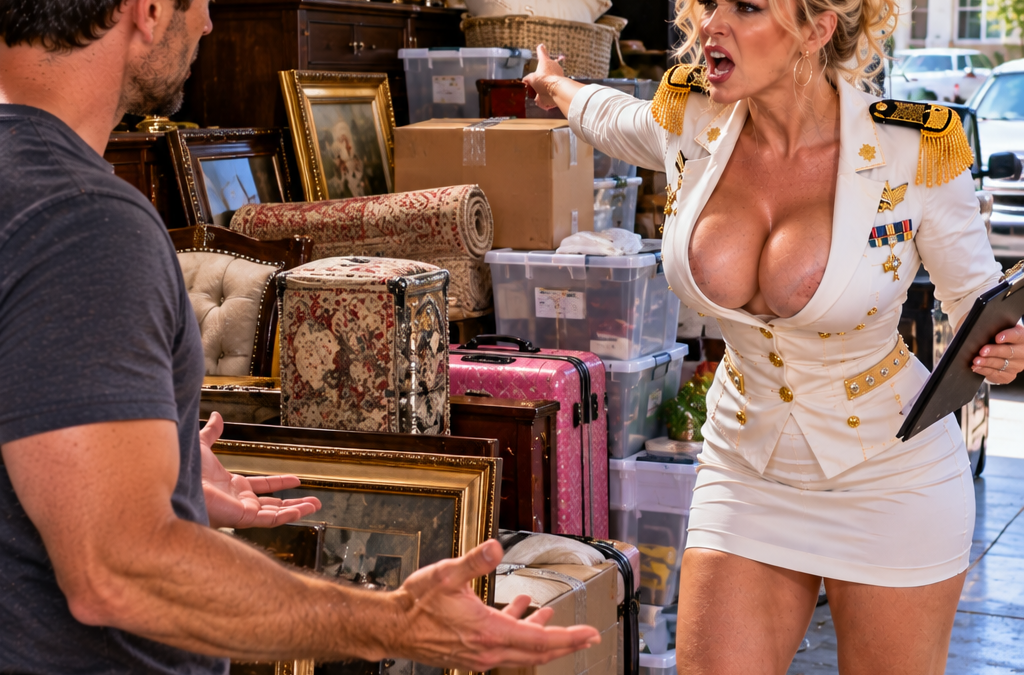
She folded one arm beneath the other, clipboard still in hand.
“The side door wasn’t properly locked.”
“You tried my garage door?”
Her expression sharpened.
“Don’t make it sound dramatic.”
“You came onto my property and opened my garage.”
“The door was practically open.”
“It was closed.”
“It wasn’t secure.”
“That’s not an invitation.”
She rolled her eyes.
“I didn’t break anything.”
“You entered my garage without permission.”
“You’re acting like I burglarized you.”
“You did enter a private building while I was gone.”
“To store things.”
“Your things.”
“Yes.”
“In my garage.”
She sighed.
“You’re repeating yourself.”
I felt my jaw tighten.
“Because you don’t seem to understand the problem.”
She shifted the clipboard against her chest.
“I understand perfectly. You weren’t here. The garage wasn’t being used. I needed temporary storage. That’s what neighbors do.”
“No.”
She blinked.
“No?”
“Neighbors ask.”
Her expression became colder.
“I didn’t have a way to reach you.”
“You have my number.”
“I wasn’t going to bother you while you were working.”
That almost made me laugh.
“How considerate.”
“Exactly.”
“That was sarcasm.”
“I know.”
I walked into the garage and pointed toward the elliptical.
“All of this leaves today.”
She laughed.
Not nervously.
Not because she thought I was joking.
She laughed because she genuinely believed I didn’t have the authority to make that decision.
“Today?”
“Yes.”
“I’m busy.”
“Not my problem.”
“I have a luncheon tomorrow.”
I stared.
“And my design team is coming Thursday.”
“What does that have to do with my garage?”
“I can’t organize a moving crew around your mood.”
“My mood?”
She gestured at the junk.
“My basement renovation isn’t finished.”
“Then rent a storage unit.”
“Why would I pay for storage when this space is sitting unused?”
That sentence crossed some line inside me.
“It’s not unused.”
“You’ve been gone six weeks.”
“I own it.”
“Ownership isn’t the point.”
I looked at her.
“What exactly is the point, then?”
She leaned slightly toward me.
Perfume mixed with the damp smell of her basement rug.
“Community.”
I almost admired the performance.
“Community means you get to take over my garage?”
“Community means people help one another instead of being selfish.”
I stared into my own garage.
Blocked workbench.
Buried tools.
Furniture touching my epoxy floor.
Boxes stacked against cabinets.
I turned back.
“You have twenty-four hours.”
Her face changed.
“What?”
“Get a crew. Get a truck. Get your property out of my garage.”
“I’m not doing that.”
“Then I will.”
Her eyes narrowed.
“Excuse me?”
“I said twenty-four hours.”
She laughed again.
“You won’t touch my property.”
“It’s on my property.”
“That doesn’t make it yours.”
“Correct. Which is why you need to remove it.”
“I’m not moving anything until my basement is finished.”
“How long?”
“Probably another month.”
I stared.
“Maybe two.”
For a moment, I thought she was baiting me.
Nobody could be that unreasonable by accident.
But Constance’s face remained calm.
“Two months.”
“Possibly.”
“You expect me not to use my garage for two months.”
“You barely use it.”
“I’m a mechanic.”
“You work somewhere else.”
“It’s my workshop.”
She shrugged.
“Then use part of it.”
There was no part.
She had filled nearly everything.
My original source described a mechanic returning after six weeks away to discover his detached two-car garage packed with Constance’s boxes, furniture, exercise equipment, rugs, and other belongings after she noticed the side door had not been fully secured.
I took a slow breath.
“Twenty-four hours.”
Constance shifted her weight.
“You should calm down.”
“I am calm.”
“No, you’re being aggressive.”
“I’m giving you a full day to remove things you put inside my building without permission.”
She glanced toward my house.
“What are you going to do?”
“Handle it.”
Her lips curled into a small smile.
“You won’t.”
I said nothing.
“What?” she asked. “Call the police over a neighborly misunderstanding?”
Maybe.
“Take me to court?”
Possibly.
“Be serious.”
She turned.
“Just be a team player for once.”
Then she walked back across my driveway.
Halfway to her yard, she called over one shoulder.
“I’ll move it when I’m ready.”
I stood there watching her disappear into her house.
Then I looked inside the garage.
A legal fight was possible.
So was calling the police.
I could document everything.
Send a formal demand.
Get a lawyer.
Maybe ask what procedures applied to abandoned property.
Those were the mature options.
Unfortunately, I had slept badly for six weeks and spent the last ten minutes being told that my garage no longer belonged to me because Constance had decided her convenience was more important.
I walked inside.
Closed the door.
Made a sandwich.
And tried to calm down.
It didn’t work.
I kept thinking about the way she’d smiled.
You won’t do anything.
That sentence bothered me more than the boxes.
Because it explained everything.
Constance hadn’t made a mistake.
She had calculated me.
She’d decided I was too reasonable to create consequences.
She knew moving her belongings out herself would cost money and effort.
She knew taking them to a storage unit would require renting one.
She knew putting them in my garage was outrageous.
She simply believed outrage wasn’t the same as consequence.
People like her survive on that distinction.
They push until someone finally stops being polite.
I finished eating.
Walked back outside.
Opened the garage again.
Then I inspected the contents more carefully.
Most of it didn’t look valuable.
Maybe some pieces were sentimental.
Maybe she had expensive things buried in boxes.
But visually?
Old furniture.
Clothes.
Decorations.
Books.
Housewares.
Exercise equipment.
Rug.
Framed art.
Stuff that looked as if she’d cleared a basement and decided sorting it was too much work.
Then an idea occurred to me.
Not a legally elegant idea.
Not something I’d necessarily recommend.
But at that moment?
It felt perfect.
I took out my phone.
Started photographing.
Wide shot of the garage.
Elliptical.
Rug.
Boxes.
Furniture.
Artwork.
Clothes.
Patio chairs.
Then I opened Facebook Marketplace.
Craigslist.
Local Buy Nothing groups.
Neighborhood resale pages.
I created a listing.
MASSIVE GARAGE CLEANOUT — EVERYTHING FREE — PICKUP TODAY.
Then the description.
Moving and clearing everything immediately.
First come, first served.
Free vintage clothes.
Exercise equipment.
Furniture.
Home decor.
Area rug.
Books.
Kitchen items.
Mystery boxes.
Bring a truck.
Bring help.
Take what you want.
Everything must go tonight.
Then I added my address.
For one second, my thumb hovered above POST.
I knew exactly what I was doing.
I also knew Constance had been given a deadline.
She had refused it before it even began.
I hit post.
Then I opened the main garage door.
The overhead door rattled upward.
Late-afternoon light flooded the garage.
I switched on every LED fixture.
The entire mountain of property became visible from the street.
Then I went inside the house.
My phone buzzed before I reached the kitchen.
Is the elliptical still available?
Another.
Can I come now?
Another.
Is the rug free?
Then:
I have a truck and can be there in five minutes.
My phone began vibrating continuously.
People love free stuff.
Especially when the listing includes the phrase first come, first served.
I poured a drink.
Sat near the front window.
Opened the blinds enough to see the driveway.
At 5:15 p.m., an old pickup truck pulled up.
Two college-aged guys got out.
They walked toward the garage.
One looked around.
“Hello?”
I opened the front door.
“Everything in the garage that’s not attached to the walls is available.”
They looked at each other.
Then at the elliptical.
“Seriously?”
“Seriously.”
They moved faster after that.
The elliptical was large, old, and ugly.
It took both of them to wrestle it out.
One nearly lost his grip.
The other started laughing.
Eventually they shoved it into the truck bed.
“Thank you, man.”
“No problem.”
They drove away.
Before their truck had cleared the curb, a minivan arrived.
Family of four.
Parents.
Two teenagers.
They immediately started loading boxes.
“All free?”
“All free.”
The father opened one.
“Kitchen stuff.”
His wife said, “Take it.”
They moved with the efficiency of people who had attended free curb alerts before.
Another car arrived.
Then another.
Within fifteen minutes, the driveway looked like a small estate sale.
Except nobody was paying.
A woman in a flannel shirt carried out three framed pictures.
A man in work boots rolled the damp rug over his shoulder.
Two women sorted through clothing bins.
One teenager found an old stereo component and carried it away like treasure.
Somebody took the patio chairs.
Somebody else took both end tables.
People opened mystery boxes.
Books.
Old dishes.
Seasonal decorations.
Coats.
Lamps.
I stood near the garage watching the impossible happen.
My workshop was reappearing.
One square foot at a time.
Tool cabinet.
Workbench corner.
Air compressor.
Pegboard.
Floor.
Clean gray epoxy.
I felt lighter every minute.
And then Constance’s front door opened.
I saw her before she saw me.
She stepped onto her porch.
Still wearing the white outfit.
Clipboard in hand.
She looked toward the street, probably expecting an ordinary evening.
Then she froze.
A stranger was walking out of my garage carrying a wooden nightstand.
Behind him, a woman carried two plastic bins loaded with clothes.
Constance stared.
Her clipboard slipped from her hand.
It hit the porch.
She didn’t bend down.
For about three seconds, her brain simply stopped.
Then she screamed.
“STOP!”
Every person near my garage turned.
Constance ran down her front steps.
Her heels struck the pavement hard.
“STOP RIGHT NOW!”
A young guy carrying a box labeled COOKBOOKS stood in the driveway.
He looked around.
Constance charged toward him.
“What are you doing?”
He blinked.
“Free pickup.”
“Put that down!”
“The post says—”
“That is my property!”
He looked toward the garage.
Then toward my house.
“Lady, the homeowner posted it.”
“I don’t care!”
She grabbed for the box.
He stepped backward.
“Don’t touch me.”
“Give me that!”
“No.”
Constance’s eyes bulged.
She wasn’t accustomed to random strangers refusing direct commands.
“It’s mine!”
“Then why is it in somebody else’s garage?”
That was not the question to ask.
She turned toward my house.
Her face had gone red.
“WHERE IS HE?”
I stayed where I was for another few seconds.
She marched into the garage.
Three people were still inside collecting things.
“EVERYBODY OUT!”
They turned.
“You’re stealing!”
One woman looked terrified.
“We saw an online listing.”
“I don’t care what you saw! This is mine!”
Another man put down a lamp.
“Not worth it.”
Constance pulled out her phone.
“I’m calling the police!”
That worked.
Nobody wanted involvement in a criminal dispute.
The remaining pickup crowd moved quickly.
One guy carried the items he’d already loaded.
Another abandoned a small table.
Cars started.
Doors slammed.
Within less than a minute, the driveway cleared.
I watched vehicles disappear.
Then looked into the garage.
Empty.
Almost completely.
One broken plastic coat hanger remained in the center of the epoxy floor.
Constance stood beside it.
Her expensive white suit was slightly rumpled from running.
Her chest rose rapidly.
Her hands shook.
She looked around at the empty space.
Then at her phone.
Then back at the empty space.
I decided that was the right moment.
I opened the front door.
Walked down the driveway slowly.
Hands in my pockets.
“Evening, Constance.”
She spun around.
Her face was almost unrecognizable with rage.
“You!”
I stopped outside the garage.
“Nice night.”
“What did you do?”
I looked around.
“Cleaned.”
“WHERE IS MY PROPERTY?”
“Distributed.”
“You gave my things away!”
“You said you’d move them eventually.”
Her mouth dropped open.
“I told you not to touch anything!”
“And I told you to remove it.”
“You had no right!”
She pointed toward the empty garage.
“That furniture was worth thousands!”
I raised my eyebrows.
“Really?”
“Four thousand dollars at least!”
“Interesting.”
“My grandmother’s rug was in there!”
“The damp one?”
Her voice cracked.
“That was an heirloom!”
“Then storing it in somebody else’s garage without permission was an unusual choice.”
She stared at me.
“You stole from me.”
“No.”
“You gave away my property!”
“After you entered my property without permission and refused to remove it.”
“That’s theft!”
“Call the police.”
Her eyes widened slightly.
“I will.”
“Go ahead.”
“You think I’m bluffing?”
“No.”
I pulled out my phone.
“Actually, before you call, there’s something else you might want to know.”
She stared.
“What?”
I opened the security-camera app.
I had cameras around the outside of my property.
Not inside the garage at that time.
But one covered the side entrance.
Another covered the driveway.
I found the saved clip from earlier.
Constance walking over.
Our conversation.
Her standing in front of the garage.
Her saying she’d placed the items there because the space had been empty.
I raised the phone.
“You admitted you entered the garage.”
Her face changed.
“I did not break in.”
“I didn’t say you damaged the door.”
“It wasn’t locked.”
“It was closed.”
“You left it unsecured.”
“That doesn’t make it public.”
She took a step toward me.
“Delete that.”
“No.”
“You’re recording me without permission.”
“Exterior security camera.”
She looked toward the corner of the house.
For the first time, she seemed to notice it.
I continued.
“And there’s something else.”
“What?”
“You said your basement was still under renovation.”
“It is.”
“Funny.”
She crossed her arms.
I had spent part of the afternoon making a few calls.
Not because I was planning anything.
Curiosity.
One of our mail carriers knew half the neighborhood.
I’d learned Constance’s basement renovation had apparently been finished weeks earlier.
More interestingly, I knew she operated a small interior-design business.
I’d seen delivery vans.
Samples.
Clients.
I asked carefully.
The pieces started fitting together.
“Your basement isn’t being renovated anymore.”
She stared at me.
“What are you talking about?”
“It finished about a month ago.”
“That’s none of your business.”
“Then why was your stuff still here?”
Her eyes flickered.
“Because I hadn’t organized everything.”
“Business inventory?”
Silence.
“Furniture samples?”
Nothing.
“Decor?”
She swallowed.
“Personal property.”
“Some of it.”
I stepped toward the garage.
“You were using my garage as free storage for your business.”
“That’s ridiculous.”
“Is it?”
“Yes.”
“You didn’t want to pay for commercial storage.”
“I didn’t need commercial storage.”
“Apparently.”
Her eyes narrowed.
“You’re making things up because you know what you did was illegal.”
“Maybe.”
That wasn’t a concession.
It was bait.
“But storing business inventory in a residential accessory building that isn’t yours might create some interesting zoning questions too.”
Her face changed again.
Not much.
Enough.
“You’re threatening me.”
“I’m telling you that if we’re calling authorities, we can call everybody.”
She laughed nervously.
“You wouldn’t.”
“Try me.”
For the first time since I’d known Constance, her confidence cracked.
Only slightly.
But it cracked.
I continued.
“You came onto my property while I was gone.”
She said nothing.
“You discovered a door wasn’t fully locked.”
Nothing.
“You opened it.”
Her jaw tightened.
“You filled the building with your belongings.”
Nothing.
“Then when I returned, you told me I couldn’t touch them for months.”
Her eyes lowered.
“You said I wouldn’t do anything.”
She looked up again.
“I was trying to solve a temporary problem.”
“You made your problem mine.”
“We’re neighbors.”
“Neighbors ask permission.”
Her voice softened.
“What kind of person gives away somebody’s things?”
“What kind of person fills another person’s garage without asking?”
“My grandmother’s rug—”
“Stop.”
She blinked.
I had no interest in hearing about sentiment after the fact.
“If it was priceless, you should have treated it like it was priceless.”
Tears began collecting in her eyes.
Maybe real.
Maybe strategic.
I didn’t care.
“You are cruel.”
I looked at her.
“I’m tired.”
“That’s your excuse?”
“No.”
I gestured toward the garage.
“That’s my explanation.”
Her gaze followed.
Empty workbench accessible again.
Tools visible.
Floor clear.
Space restored.
“My garage.”
She whispered, “You could have called me.”
“I did better.”
“What?”
“I told you face-to-face.”
She said nothing.
“You had twenty-four hours.”
“You didn’t wait twenty-four hours!”
There it was.
The strongest point she had.
And she was right.
I had acted almost immediately.
I knew that.
So I didn’t lie.
“No.”
Her eyes widened.
“You admit it?”
“Yes.”
“I knew it.”
She grabbed her phone.
“I’m calling the police.”
“Okay.”
Her thumb hovered.
I said, “And I’ll show them the video of you admitting you entered and stored your property here without consent.”
She hesitated.
“I’ll also provide the information about the business inventory.”
Her thumb stopped.
“Then we can let everybody decide how they want to handle it.”
She looked at me.
“You’re blackmailing me.”
“No.”
“You just threatened me.”
“I told you what information I would provide if the dispute becomes official.”
She lowered the phone slightly.
“I can sue you.”
“You can talk to a lawyer.”
“I’ll destroy you online.”
That almost made me laugh.
Of course.
Her favorite weapon.
The neighborhood page.
Passive aggression upgraded to public outrage.
I looked directly at her.
“If you post lies about me, I’ll post the security video.”
Her mouth tightened.
“And if you tell people you had permission, I’ll post our conversation.”
“You wouldn’t dare.”
“I’ve already had a very long day.”
She stared.
I continued.
“Constance, I don’t want another conversation about this.”
“You gave away thousands of dollars of property.”
“You put it in my garage.”
“That doesn’t give you ownership.”
“I never said it did.”
“Then what gives you the right?”
I was silent.
Because the honest answer was complicated.
Morally satisfying didn’t automatically mean legally clean.
I knew that.
But Constance had crossed far enough into my life that sympathy was hard to reach.
She looked around again.
Empty floor.
Broken coat hanger.
Nothing else.
Then her shoulders dropped.
Not dramatically.
A few inches.
The rage faded into something closer to shock.
“My grandmother’s rug.”
Her voice was quieter now.
I said nothing.
“That was the last thing I had from her.”
I believed her.
And for one second, I felt bad.
Then I remembered the condition of it.
Rolled up damp.
Pushed into someone else’s garage.
Stored without permission because she didn’t want to rent space.
“You treated it like junk.”
She looked at me.
“That’s not fair.”
“Neither was coming home after six weeks and finding your belongings blocking every tool I own.”
“We’re supposed to be neighbors.”
“Yes.”
“Neighbors help each other.”
“Yes.”
She looked almost hopeful.
I finished.
“Neighbors also don’t break into each other’s garages.”
Her face hardened again.
“I did not break in.”
“We’ve covered this.”
She bent down.
Picked up the broken coat hanger.
For one strange moment, that was all that remained of the storage empire she’d built in my garage.
She stared at it.
Then dropped it.
“You’re going to regret this.”
“Maybe.”
“I mean it.”
“I know.”
She turned.
Walked toward her house.
Her heels didn’t click with the same confidence anymore.
At the edge of the driveway, she turned back.
“This isn’t over.”
I smiled.
“Lock your basement.”
She stared.
Then walked away.
I stood there another minute.
Then went into the garage.
The silence felt amazing.
I swept the floor.
Picked up scraps of cardboard.
Removed the coat hanger.
Wiped dust from the workbench.
Then I pulled my car inside.
It fit.
Imagine that.
I lowered the main door.
Went to the side entrance.
Closed it.
Turned the deadbolt.
This time I made absolutely certain the bolt seated fully.
Click.
Locked.
Over the next several days, I waited.
Part of me expected police.
Nothing.
A lawyer’s letter.
Nothing.
A neighborhood Facebook war.
Nothing.
Constance was quiet.
Suspiciously quiet.
When she saw me outside, she turned away.
For someone who previously seemed unable to walk past another human being without correcting them, the silence was remarkable.
Then one evening, another neighbor named Greg walked over while I was working in the driveway.
He looked toward Constance’s house.
Then at me.
“What happened?”
“With what?”
He grinned.
“Don’t do that.”
“I have no idea what you’re talking about.”
“Half the neighborhood saw twenty cars outside your house.”
“Garage cleanout.”
“Whose garage?”
“Mine.”
“Whose stuff?”
I looked at him.
Greg started laughing.
“Oh, man.”
“What?”
“She told my wife you stole four thousand dollars’ worth of furniture.”
“Did she mention where the furniture was?”
“No.”
“Interesting omission.”
He leaned against the fence.
“She says she’s talking to a lawyer.”
“Could be.”
“You worried?”
“A little.”
That answer surprised him.
I wasn’t going to pretend I was invincible.
Giving away another person’s property can create legal problems even when that property was placed on your land without permission.
Real life is messy.
I had acted while angry.
Satisfying stories become much less satisfying when an attorney sends an invoice.
But Constance had her own exposure.
Unauthorized entry.
Possible business storage.
Video.
And her own recorded refusal to remove things.
Neither of us had perfectly clean hands.
That may have been why nothing happened.
People who threaten lawsuits often become much quieter after actual lawyers explain uncertainty.
A week passed.
Then two.
Constance removed several passive-aggressive neighborhood posts she’d written about “respecting other people’s property.”
That made me laugh.
She never named me.
Nobody asked.
Life gradually returned to normal.
My garage became mine again.
I replaced the old side-door deadbolt with a better one.
Added another camera.
Installed contact sensors.
Maybe excessive.
I didn’t care.
The first Saturday after everything settled, I spent the entire day working on a transmission.
Music on.
Garage door open.
Tools exactly where they belonged.
Around noon, Constance drove past in her SUV.
She slowed.
Our eyes met.
She kept going.
No clipboard.
No lecture.
Nothing.
That felt better than any argument.
But the story stayed with me because the part that disturbed me most wasn’t really the stuff.
It was the assumption.
Constance had looked at a building I owned.
Seen that I wasn’t home.
Found a door that hadn’t latched properly.
And translated that into permission.
Not because she misunderstood ownership.
She understood perfectly well that the garage was mine.
She simply believed her need outweighed my right to say no.
That’s a very particular kind of entitlement.
She wasn’t thinking:
Maybe he’ll help me.
She was thinking:
He’s not using it, so I can.
Then when I returned, she didn’t apologize.
She didn’t say she’d made a bad judgment.
She didn’t immediately offer to remove everything.
She told me when I would get my own garage back.
A month.
Maybe two.
That was the point where the conflict became something bigger than storage.
Constance believed my ownership was theoretical when it inconvenienced her.
The same woman who would have lost her mind if I parked a wheel on her driveway considered my entire garage fair game because she’d decided the space was temporarily underutilized.
And she had counted on politeness.
That’s what people like Constance do.
They borrow your patience and call it permission.
They cross one boundary.
You don’t react.
So the boundary moves.
They make another demand.
You compromise.
Then the compromise becomes precedent.
Eventually they are standing inside your garage telling you that you are unreasonable for wanting it back.
I don’t think Constance expected me to give everything away.
Frankly, I barely expected myself to.
It was impulsive.
Extreme.
Potentially legally risky.
I can admit that.
If someone asked me today for responsible legal advice in the same situation, I wouldn’t tell them to open Facebook Marketplace.
I’d tell them to document everything.
Call the police if appropriate.
Send a written demand.
Talk to an attorney.
Research local abandoned-property laws.
Do it cleanly.
That would be the adult answer.
But I also won’t pretend I regretted seeing my garage empty again.
The memory is too satisfying.
That battered pickup backing away with the elliptical.
The minivan swallowing box after box.
Random strangers carrying artwork, furniture, clothes, rugs.
A whole improvised army of bargain hunters restoring my workshop faster than any moving company could have.
Then Constance stepping onto her porch.
Stopping.
Clipboard falling.
Her expression as she finally understood that “You won’t do anything” had been a bad prediction.
I’ll probably remember that for the rest of my life.
What surprised me most was how quickly things disappeared.
We accumulate objects slowly.
One purchase.
One gift.
One box pushed into a basement corner.
Years pass.
Then suddenly a free listing appears online and twenty strangers can erase decades of accumulation in under an hour.
That thought bothered me after the anger faded.
Some of those items probably had stories.
Maybe the rug really had belonged to her grandmother.
Maybe the framed artwork came from family.
Maybe old clothes held memories.
I don’t know.
Constance had treated them as storage overflow.
I treated them as obstruction.
Neither interpretation necessarily captured their full value.
But choices carry consequences.
If you place important things on another person’s property without permission and then refuse to retrieve them, you are trusting that person to care more about your possessions than you cared about their boundaries.
That’s a dangerous gamble.
Constance lost.
Months passed.
Her basement was eventually full again.
I know because contractors stopped coming and she started hosting people.
She never used my garage again.
Nobody did.
One evening, maybe four months later, I was outside washing my car.
Constance came to the fence.
I noticed she’d stopped wearing the military-style outfits as often.
That day she had jeans and a sweater.
She stood there quietly.
I turned off the hose.
“What?”
She hesitated.
That alone was new.
“I found the rug.”
I stared.
“What?”
“The rug.”
“The one from the garage?”
She nodded.
“Someone posted it online.”
I almost laughed.
“Really?”
“A woman in another neighborhood had taken it.”
“Did you get it back?”
“Yes.”
There was no anger in her voice.
Not much, anyway.
“That’s good.”
She looked at me.
“You still shouldn’t have done what you did.”
“Probably.”
That answer surprised her.
“You admit it?”
“I admit it was extreme.”
She crossed her arms.
“So you know you were wrong.”
“I know I was angry.”
“That’s not an excuse.”
“No.”
For once, we agreed.
Then I said, “Neither was an unlocked door.”
She looked away.
The silence stretched.
Finally she said, “I didn’t think you’d mind.”
I almost smiled.
“That’s not true.”
Her eyes returned.
“You didn’t think I’d stop you.”
That landed.
She didn’t answer.
I continued.
“If you really thought I wouldn’t mind, you would’ve called me.”
“I told you—”
“You had my number.”
She stopped.
“If you’d asked, I might have said yes to a few boxes for a week.”
Her expression changed.
“You would have?”
“Maybe.”
“Then all of this was unnecessary.”
“No.”
She frowned.
“You not asking was the entire problem.”
Constance was quiet.
Then she said something I never expected.
“I should have asked.”
No apology.
Not exactly.
But close enough that I didn’t want to ruin it.
“Yes.”
She nodded once.
Turned.
Then walked home.
That was probably the most normal conversation we ever had.
We were never friends.
I don’t think either of us wanted to be.
But the relationship changed.
She stopped giving me instructions.
Stopped commenting on my driveway.
Stopped posting things clearly aimed at me.
When she needed something, she asked.
Once, during a storm, a branch from her tree fell partly across our shared property line.
She came to the fence.
“Would you help me move it?”
Not:
You need to move this.
Not:
This is blocking my side.
A question.
“Sure.”
We moved it together.
Progress.
I never trusted her fully again.
The cameras stayed.
The deadbolt stayed upgraded.
But the war ended.
Years later, when I tell the story, people usually divide immediately into two camps.
One group says Constance deserved everything.
She entered private property.
Used it without permission.
Refused to remove her belongings.
So whatever happened afterward was her problem.
The other group says I crossed a line.
Her wrongdoing didn’t make her property mine.
Giving it away was still wrong.
There is truth in both.
Real life isn’t a Reddit verdict.
It doesn’t always divide neatly into hero and villain.
Constance was absolutely wrong to use my garage.
I was absolutely furious.
And furious people don’t always choose the cleanest remedy.
What matters to me now is understanding why I did it.
It wasn’t about old furniture.
It was about six weeks away working until my hands hurt.
Coming home exhausted.
Seeing a door open.
Thinking I’d been robbed.
Then discovering somebody had occupied my private space instead.
And before I’d even processed that violation, the person responsible walked up and told me my own garage would remain unavailable until she decided otherwise.
Something in me snapped.
Not violently.
Not physically.
But the part that wanted to keep negotiating disappeared.
I had spent years being the neighbor who ignored her.
Let the comments go.
Rolled my eyes at the clipboard.
Avoided Facebook drama.
Walked away from minor provocations.
She interpreted restraint as weakness.
Maybe I helped teach her that.
That’s another uncomfortable lesson.
Sometimes repeatedly accepting small disrespect doesn’t create peace.
It creates expectation.
You think you’re avoiding conflict.
The other person thinks you’ve accepted the arrangement.
Then when you finally enforce a boundary, they experience it as sudden aggression because they forgot the boundary existed.
Constance had forgotten.
My garage reminded her.
I still work as a mechanic.
I still obsess over that workspace.
The pegboard has changed.
More tools now.
Different compressor.
Better lighting.
The epoxy floor has a few stains these days because perfection gets harder with age and actual use.
But I still know where everything belongs.
Every time I leave town, I check the side deadbolt twice.
Sometimes three times.
My girlfriend once stood behind me with our luggage and said, “It’s locked.”
“I know.”
“You checked it.”
“I know.”
“Twice.”
“I know.”
“Are you checking again?”
“Yes.”
She laughed.
I didn’t.
Trauma comes in strange forms.
Some people check the stove.
I check the garage.
Constance eventually sold her house.
Not because of me.
At least, I don’t think so.
She moved to another part of town.
The new neighbors were a young couple with two kids and an old pickup.
On move-in day, the husband walked over.
“Hey, I’m Matt.”
We shook hands.
He pointed toward my garage.
“You’re the mechanic?”
“That’s me.”
“Constance said you’re very protective of that building.”
I stared at him.
Then started laughing.
“What?”
“Nothing.”
He looked confused.
“What did she tell you?”
“That I shouldn’t leave anything on your property.”
I laughed harder.
“Good advice.”
He smiled.
“She seemed intense.”
“You have no idea.”
The new neighbors were easy.
Normal.
They asked before borrowing tools.
I asked before trimming branches near their fence.
Their kids occasionally kicked balls into my yard.
Nobody filed a complaint.
Nobody posted online.
Nobody wore decorative military uniforms while carrying clipboards.
Peace turned out to be incredibly boring.
I loved it.
One night, years after the garage incident, I was cleaning the workbench and found an old printout folded behind a cabinet.
It was the original Marketplace listing.
I’d printed it at some point.
MASSIVE GARAGE CLEANOUT.
EVERYTHING MUST GO.
FREE PICKUP.
I read it and shook my head.
I couldn’t believe how angry I’d been.
Couldn’t believe I’d actually posted my address and invited half the town.
Couldn’t believe how quickly people arrived.
Then I remembered Constance standing in the center of the empty garage with one broken coat hanger at her feet.
I laughed.
Maybe I shouldn’t have.
But I did.
Because whatever complicated moral judgment belonged to that story, one part was still simple.
The garage had never been hers.
Not for a day.
Not for an hour.
Not because I was away.
Not because the door hadn’t latched.
Not because her basement needed space.
Not because she was busy.
Not because she considered herself more organized, wealthier, more important, or more entitled to convenience than I was.
You don’t gain rights to someone’s property because you believe they aren’t using it efficiently enough.
You don’t turn trespassing into community spirit because you use a friendly word.
And you don’t get to decide when someone else regains control of their own space.
Constance tried.
For six weeks, she used my garage as if it belonged to her.
When I came home, she expected another month.
Maybe two.
She told me there was nothing I would do about it.
That part was her biggest mistake.
Not because I’m particularly intimidating.
I’m not.
Not because I had some grand revenge plan.
I didn’t.
Her mistake was assuming boundaries only exist when the person enforcing them is standing there.
They don’t.
My garage was mine while I was home.
It was mine while I was at work.
It was mine while I was sleeping.
And it remained mine while I was fourteen hundred miles away.
An unlocked door didn’t change that.
An empty driveway didn’t change that.
Her need for free storage didn’t change that.
Years later, I sometimes wonder where all those things ended up.
Maybe the elliptical is still collecting laundry in some college apartment.
Maybe somebody refinished the nightstand.
Maybe the paintings are hanging in rooms where nobody knows anything about Constance.
Maybe some family got good use out of the patio furniture.
Maybe the clothes ended up donated again.
And apparently, at least one heirloom rug found its way home.
There’s something strangely comforting about that.
Constance lost her free warehouse.
I got my workshop back.
A bunch of strangers got things they wanted.
And eventually both of us learned something.
She learned that other people’s property is not unused space waiting for her to claim.
I learned that anger can solve one problem while creating several new ones.
Neither lesson was cheap.
But they stuck.
The last image I always come back to is simple.
After everyone left that evening, I stood alone inside the garage.
No boxes.
No furniture.
No elliptical.
No damp rug.
Just the workbench.
The tools.
The pegboard.
The clean floor.
My space.
I pulled my car inside.
Then I lowered the heavy garage door.
Walked to the side entrance.
Closed it.
Turned the new deadbolt slowly until I felt it seat deep into the frame.
Click.
This time, there was no question.
Locked.
And for the first time since coming home, everything was exactly where it belonged.
𝗧𝗛𝗘 𝗘𝗡𝗗
She Filled My Garage With Her Property While I Was Gone—Then Told Me I Wasn’t Allowed to Touch It
The first thing I noticed after six weeks away was that my garage door wasn’t fully closed.
The second was that somebody had filled my workspace from floor to ceiling with things that didn’t belong to me.
By the time my neighbor walked over and calmly told me her property would be staying there for months, exhaustion was the only thing keeping me from losing my mind.
I’m a mechanic.
Not the guy at a quick-lube shop who changes oil all day and goes home without wanting to see another wrench.
I mean I’ve loved machines for as long as I can remember.
Engines make sense to me.
Metal makes sense.
A bad bearing tells you it’s dying.
A leaking seal leaves evidence.
A bent component doesn’t smile at you while insisting it isn’t bent.
People can be harder.
My garage was the one place in my life where everything stayed where I put it.
I owned a small older house in a quiet neighborhood, nothing fancy, but the property had one thing I’d cared about almost as much as the house itself when I bought it.
A detached two-car garage.
To most people, it was probably just a rectangular building with a roll-up door.
To me, it was my workshop.
My sanctuary.
I’d spent years getting it right.
Heavy-duty workbench along one wall.
Floor-to-ceiling tool racks.
Socket organizers labeled by size.
A pegboard so neatly arranged that friends occasionally accused me of having a psychological problem.
Compressed air lines.
Diagnostic equipment.
Electrical tools.
Torque wrenches.
Pullers.
Jacks.
Specialty tools I’d collected one paycheck at a time.
The floor had a gray epoxy coating I’d installed myself after an entire weekend of grinding, cleaning, patching, priming, and swearing.
There were no oil stains.
No junk piles.
No random boxes full of things I might need someday.
Everything had a place.
When I walked into that garage after a difficult day, my shoulders relaxed.
That was important because my next-door neighbor had the opposite effect.
Her name was Constance.
She was around forty, blonde, strikingly attractive, and painfully aware of it.
She had expensive-looking hair, perfect makeup, a dramatic figure, and the habit of dressing as if every trip to the mailbox might turn into a magazine shoot.
Her favorite outfit was a ridiculous white military-inspired suit that seemed specifically designed to make authority look seductive.
The jacket fit tightly through the waist and even tighter across her very large chest. Gold buttons ran down the front, decorative epaulets sat on her shoulders, and the neckline plunged low enough that nobody could possibly mistake it for a real uniform.
She often paired it with a fitted white skirt and heels.
Then she carried a clipboard.
I never understood the clipboard.
Constance wasn’t on an HOA board.
We didn’t even have an HOA.
She wasn’t a city inspector.
She wasn’t a neighborhood official.
She didn’t work in property management.
She simply liked holding something official-looking while telling other adults what to do.
She considered herself the queen of the neighborhood.
Nobody had elected her.
Nobody had asked.
That had never slowed her down.
Constance drove a large luxury SUV that she could barely fit between the lines of her own driveway, yet she had endless opinions about everyone else’s parking.
She complained about trash cans.
Lawn edging.
Packages left on porches.
Music.
Dogs.
People pressure-washing their driveways too early.
Kids leaving bicycles in front yards.
A neighbor once told me she had complained because his visiting brother parked facing the “wrong direction” in a driveway.
Not the street.
His own driveway.
She didn’t ask people for favors either.
Constance issued assignments.
“Can you move that?” became, “That needs to be moved.”
“Would you mind helping?” became, “I need you to come over.”
She disguised demands beneath phrases like community spirit and being neighborly.
And if you refused, she’d stare at you as if you’d violated an agreement you didn’t remember signing.
Then came passive-aggressive posts on the neighborhood Facebook page.
“Some people apparently no longer understand basic courtesy.”
She never named anyone.
She didn’t have to.
We’d had our share of minor clashes.
Nothing serious.
I generally ignored her.
That worked because our properties were separate and I had no reason to care whether she approved of my behavior.
Then I got an opportunity for a six-week industrial maintenance contract halfway across the country.
The job was brutal.
Fourteen-hour shifts.
Heavy equipment.
Long days in a plant where everything smelled faintly of hot steel and hydraulic fluid.
But the money was excellent.
Too good to turn down.
My girlfriend wasn’t living with me at the time, so the house would be empty.
Before leaving, I shut everything down.
Water checked.
Thermostat adjusted.
Mail held.
Lights on timers.
House locked.
Garage locked.
At least, I believed it was.
The garage had a heavy roll-up door and a separate side entrance.
The side door used an older mechanical deadbolt.
That morning, I was leaving for the airport around four.
I was tired.
Rushing.
Carrying luggage.
Apparently I pulled the door shut and turned the lock enough that it clicked without fully throwing the deadbolt.
I wouldn’t learn that detail until later.
Constance learned it first.
While I was working fourteen-hour shifts hundreds of miles away, she decided to renovate her basement.
A normal person renovating a basement might rent a storage unit.
Maybe a portable storage container.
Maybe use their own garage.
Constance looked at my apparently unoccupied property and found a more attractive solution.
Free storage.
My garage.
I arrived home after six weeks completely exhausted.
The contract had paid well, but by the end I was living on bad coffee, hotel sleep, and pure stubbornness.
All I wanted was a hot shower.
A real meal.
And twelve hours unconscious in my own bed.
I pulled into the driveway sometime in the afternoon.
The house looked normal.
Grass a little high.
Mail slot empty because of the hold.
No broken windows.
Nothing immediately strange.
Then I walked toward the garage.
The side door was slightly open.
Maybe half an inch.
I stopped.
Every bit of fatigue disappeared.
My stomach tightened instantly.
I knew exactly what was inside that garage.
Thousands of dollars in tools.
Air compressor.
Diagnostics.
Specialty equipment.
Battery chargers.
Power tools.
Things that could disappear into a truck in fifteen minutes.
I dropped my bag.
Walked quickly toward the door.
My first thought was burglary.
I pictured empty racks.
Drawers yanked open.
Tools gone.
Maybe even damage to the car parts I’d been storing.
I grabbed the handle.
Pulled the door open.
Then just stood there.
Nothing was gone.
I almost wished it had been.
My garage was packed.
Packed.
Not a few boxes.
Not one item temporarily placed inside.
Packed from the floor to nearly the ceiling with somebody else’s possessions.
Cardboard boxes were stacked in unstable towers.
Old plastic tubs.
A rusted elliptical machine had been shoved directly in front of my workbench.
A rolled-up area rug lay across the floor and smelled faintly of damp basement mixed with perfume.
Plastic patio chairs were stacked beside my tool chest.
Framed artwork leaned against the wall.
Old lamps.
Kitchen equipment.
Furniture.
Bags of clothes.
Decorations.
Storage bins.
Two small end tables.
Something wrapped in moving blankets.
My organized workshop looked like a thrift store had exploded inside it.
My tools were still there.
I could see pieces of the pegboard behind a wall of boxes.
My workbench had practically disappeared.
The garage was unusable.
I couldn’t park inside.
I couldn’t reach half my tools.
I couldn’t even walk from one end to the other without climbing around furniture.
I stood there trying to process it.
Six weeks of fourteen-hour days.
A flight.
Drive home.
No sleep.
And now someone had somehow transformed my private workshop into a storage warehouse.
Then I heard heels.
Click.
Click.
Click.
Across my driveway.
I already knew who it was before I turned around.
Constance was walking toward me.
White jacket.
Gold buttons.
Deep neckline.
White heels.
Clipboard tucked against her hip.
She looked completely relaxed.
Actually, she looked pleased.
“Oh, good,” she called. “You’re finally back.”
I stared at her.
She smiled.
“I was starting to wonder when the house would look occupied again.”
I pointed into the garage.
“Constance.”
“Yes?”
“What is this?”
She looked past me.
At the mountain of junk.
Then back.
“What?”
I thought maybe exhaustion was affecting my ability to communicate.
“Why is your stuff in my garage?”
She gave a dismissive little laugh.
“Oh, that.”
That.
I stepped aside so she could see all of it.
“Yes. That.”
“I’m redoing my basement.”
I waited.
She continued as if this explained everything.
“I needed somewhere dry to keep some things.”
“You put them in my garage.”
“Your garage was empty.”
“No. It wasn’t.”
“You weren’t using it.”
“I was out of town.”
“Exactly.”
The confidence in her voice was almost impressive.
I stared.
“How did you get in?”
She folded one arm beneath the other, clipboard still in hand.
“The side door wasn’t properly locked.”
“You tried my garage door?”
Her expression sharpened.
“Don’t make it sound dramatic.”
“You came onto my property and opened my garage.”
“The door was practically open.”
“It was closed.”
“It wasn’t secure.”
“That’s not an invitation.”
She rolled her eyes.
“I didn’t break anything.”
“You entered my garage without permission.”
“You’re acting like I burglarized you.”
“You did enter a private building while I was gone.”
“To store things.”
“Your things.”
“Yes.”
“In my garage.”
She sighed.
“You’re repeating yourself.”
I felt my jaw tighten.
“Because you don’t seem to understand the problem.”
She shifted the clipboard against her chest.
“I understand perfectly. You weren’t here. The garage wasn’t being used. I needed temporary storage. That’s what neighbors do.”
“No.”
She blinked.
“No?”
“Neighbors ask.”
Her expression became colder.
“I didn’t have a way to reach you.”
“You have my number.”
“I wasn’t going to bother you while you were working.”
That almost made me laugh.
“How considerate.”
“Exactly.”
“That was sarcasm.”
“I know.”
I walked into the garage and pointed toward the elliptical.
“All of this leaves today.”
She laughed.
Not nervously.
Not because she thought I was joking.
She laughed because she genuinely believed I didn’t have the authority to make that decision.
“Today?”
“Yes.”
“I’m busy.”
“Not my problem.”
“I have a luncheon tomorrow.”
I stared.
“And my design team is coming Thursday.”
“What does that have to do with my garage?”
“I can’t organize a moving crew around your mood.”
“My mood?”
She gestured at the junk.
“My basement renovation isn’t finished.”
“Then rent a storage unit.”
“Why would I pay for storage when this space is sitting unused?”
That sentence crossed some line inside me.
“It’s not unused.”
“You’ve been gone six weeks.”
“I own it.”
“Ownership isn’t the point.”
I looked at her.
“What exactly is the point, then?”
She leaned slightly toward me.
Perfume mixed with the damp smell of her basement rug.
“Community.”
I almost admired the performance.
“Community means you get to take over my garage?”
“Community means people help one another instead of being selfish.”
I stared into my own garage.
Blocked workbench.
Buried tools.
Furniture touching my epoxy floor.
Boxes stacked against cabinets.
I turned back.
“You have twenty-four hours.”
Her face changed.
“What?”
“Get a crew. Get a truck. Get your property out of my garage.”
“I’m not doing that.”
“Then I will.”
Her eyes narrowed.
“Excuse me?”
“I said twenty-four hours.”
She laughed again.
“You won’t touch my property.”
“It’s on my property.”
“That doesn’t make it yours.”
“Correct. Which is why you need to remove it.”
“I’m not moving anything until my basement is finished.”
“How long?”
“Probably another month.”
I stared.
“Maybe two.”
For a moment, I thought she was baiting me.
Nobody could be that unreasonable by accident.
But Constance’s face remained calm.
“Two months.”
“Possibly.”
“You expect me not to use my garage for two months.”
“You barely use it.”
“I’m a mechanic.”
“You work somewhere else.”
“It’s my workshop.”
She shrugged.
“Then use part of it.”
There was no part.
She had filled nearly everything.
My original source described a mechanic returning after six weeks away to discover his detached two-car garage packed with Constance’s boxes, furniture, exercise equipment, rugs, and other belongings after she noticed the side door had not been fully secured.
I took a slow breath.
“Twenty-four hours.”
Constance shifted her weight.
“You should calm down.”
“I am calm.”
“No, you’re being aggressive.”
“I’m giving you a full day to remove things you put inside my building without permission.”
She glanced toward my house.
“What are you going to do?”
“Handle it.”
Her lips curled into a small smile.
“You won’t.”
I said nothing.
“What?” she asked. “Call the police over a neighborly misunderstanding?”
Maybe.
“Take me to court?”
Possibly.
“Be serious.”
She turned.
“Just be a team player for once.”
Then she walked back across my driveway.
Halfway to her yard, she called over one shoulder.
“I’ll move it when I’m ready.”
I stood there watching her disappear into her house.
Then I looked inside the garage.
A legal fight was possible.
So was calling the police.
I could document everything.
Send a formal demand.
Get a lawyer.
Maybe ask what procedures applied to abandoned property.
Those were the mature options.
Unfortunately, I had slept badly for six weeks and spent the last ten minutes being told that my garage no longer belonged to me because Constance had decided her convenience was more important.
I walked inside.
Closed the door.
Made a sandwich.
And tried to calm down.
It didn’t work.
I kept thinking about the way she’d smiled.
You won’t do anything.
That sentence bothered me more than the boxes.
Because it explained everything.
Constance hadn’t made a mistake.
She had calculated me.
She’d decided I was too reasonable to create consequences.
She knew moving her belongings out herself would cost money and effort.
She knew taking them to a storage unit would require renting one.
She knew putting them in my garage was outrageous.
She simply believed outrage wasn’t the same as consequence.
People like her survive on that distinction.
They push until someone finally stops being polite.
I finished eating.
Walked back outside.
Opened the garage again.
Then I inspected the contents more carefully.
Most of it didn’t look valuable.
Maybe some pieces were sentimental.
Maybe she had expensive things buried in boxes.
But visually?
Old furniture.
Clothes.
Decorations.
Books.
Housewares.
Exercise equipment.
Rug.
Framed art.
Stuff that looked as if she’d cleared a basement and decided sorting it was too much work.
Then an idea occurred to me.
Not a legally elegant idea.
Not something I’d necessarily recommend.
But at that moment?
It felt perfect.
I took out my phone.
Started photographing.
Wide shot of the garage.
Elliptical.
Rug.
Boxes.
Furniture.
Artwork.
Clothes.
Patio chairs.
Then I opened Facebook Marketplace.
Craigslist.
Local Buy Nothing groups.
Neighborhood resale pages.
I created a listing.
MASSIVE GARAGE CLEANOUT — EVERYTHING FREE — PICKUP TODAY.
Then the description.
Moving and clearing everything immediately.
First come, first served.
Free vintage clothes.
Exercise equipment.
Furniture.
Home decor.
Area rug.
Books.
Kitchen items.
Mystery boxes.
Bring a truck.
Bring help.
Take what you want.
Everything must go tonight.
Then I added my address.
For one second, my thumb hovered above POST.
I knew exactly what I was doing.
I also knew Constance had been given a deadline.
She had refused it before it even began.
I hit post.
Then I opened the main garage door.
The overhead door rattled upward.
Late-afternoon light flooded the garage.
I switched on every LED fixture.
The entire mountain of property became visible from the street.
Then I went inside the house.
My phone buzzed before I reached the kitchen.
Is the elliptical still available?
Another.
Can I come now?
Another.
Is the rug free?
Then:
I have a truck and can be there in five minutes.
My phone began vibrating continuously.
People love free stuff.
Especially when the listing includes the phrase first come, first served.
I poured a drink.
Sat near the front window.
Opened the blinds enough to see the driveway.
At 5:15 p.m., an old pickup truck pulled up.
Two college-aged guys got out.
They walked toward the garage.
One looked around.
“Hello?”
I opened the front door.
“Everything in the garage that’s not attached to the walls is available.”
They looked at each other.
Then at the elliptical.
“Seriously?”
“Seriously.”
They moved faster after that.
The elliptical was large, old, and ugly.
It took both of them to wrestle it out.
One nearly lost his grip.
The other started laughing.
Eventually they shoved it into the truck bed.
“Thank you, man.”
“No problem.”
They drove away.
Before their truck had cleared the curb, a minivan arrived.
Family of four.
Parents.
Two teenagers.
They immediately started loading boxes.
“All free?”
“All free.”
The father opened one.
“Kitchen stuff.”
His wife said, “Take it.”
They moved with the efficiency of people who had attended free curb alerts before.
Another car arrived.
Then another.
Within fifteen minutes, the driveway looked like a small estate sale.
Except nobody was paying.
A woman in a flannel shirt carried out three framed pictures.
A man in work boots rolled the damp rug over his shoulder.
Two women sorted through clothing bins.
One teenager found an old stereo component and carried it away like treasure.
Somebody took the patio chairs.
Somebody else took both end tables.
People opened mystery boxes.
Books.
Old dishes.
Seasonal decorations.
Coats.
Lamps.
I stood near the garage watching the impossible happen.
My workshop was reappearing.
One square foot at a time.
Tool cabinet.
Workbench corner.
Air compressor.
Pegboard.
Floor.
Clean gray epoxy.
I felt lighter every minute.
And then Constance’s front door opened.
I saw her before she saw me.
She stepped onto her porch.
Still wearing the white outfit.
Clipboard in hand.
She looked toward the street, probably expecting an ordinary evening.
Then she froze.
A stranger was walking out of my garage carrying a wooden nightstand.
Behind him, a woman carried two plastic bins loaded with clothes.
Constance stared.
Her clipboard slipped from her hand.
It hit the porch.
She didn’t bend down.
For about three seconds, her brain simply stopped.
Then she screamed.
“STOP!”
Every person near my garage turned.
Constance ran down her front steps.
Her heels struck the pavement hard.
“STOP RIGHT NOW!”
A young guy carrying a box labeled COOKBOOKS stood in the driveway.
He looked around.
Constance charged toward him.
“What are you doing?”
He blinked.
“Free pickup.”
“Put that down!”
“The post says—”
“That is my property!”
He looked toward the garage.
Then toward my house.
“Lady, the homeowner posted it.”
“I don’t care!”
She grabbed for the box.
He stepped backward.
“Don’t touch me.”
“Give me that!”
“No.”
Constance’s eyes bulged.
She wasn’t accustomed to random strangers refusing direct commands.
“It’s mine!”
“Then why is it in somebody else’s garage?”
That was not the question to ask.
She turned toward my house.
Her face had gone red.
“WHERE IS HE?”
I stayed where I was for another few seconds.
She marched into the garage.
Three people were still inside collecting things.
“EVERYBODY OUT!”
They turned.
“You’re stealing!”
One woman looked terrified.
“We saw an online listing.”
“I don’t care what you saw! This is mine!”
Another man put down a lamp.
“Not worth it.”
Constance pulled out her phone.
“I’m calling the police!”
That worked.
Nobody wanted involvement in a criminal dispute.
The remaining pickup crowd moved quickly.
One guy carried the items he’d already loaded.
Another abandoned a small table.
Cars started.
Doors slammed.
Within less than a minute, the driveway cleared.
I watched vehicles disappear.
Then looked into the garage.
Empty.
Almost completely.
One broken plastic coat hanger remained in the center of the epoxy floor.
Constance stood beside it.
Her expensive white suit was slightly rumpled from running.
Her chest rose rapidly.
Her hands shook.
She looked around at the empty space.
Then at her phone.
Then back at the empty space.
I decided that was the right moment.
I opened the front door.
Walked down the driveway slowly.
Hands in my pockets.
“Evening, Constance.”
She spun around.
Her face was almost unrecognizable with rage.
“You!”
I stopped outside the garage.
“Nice night.”
“What did you do?”
I looked around.
“Cleaned.”
“WHERE IS MY PROPERTY?”
“Distributed.”
“You gave my things away!”
“You said you’d move them eventually.”
Her mouth dropped open.
“I told you not to touch anything!”
“And I told you to remove it.”
“You had no right!”
She pointed toward the empty garage.
“That furniture was worth thousands!”
I raised my eyebrows.
“Really?”
“Four thousand dollars at least!”
“Interesting.”
“My grandmother’s rug was in there!”
“The damp one?”
Her voice cracked.
“That was an heirloom!”
“Then storing it in somebody else’s garage without permission was an unusual choice.”
She stared at me.
“You stole from me.”
“No.”
“You gave away my property!”
“After you entered my property without permission and refused to remove it.”
“That’s theft!”
“Call the police.”
Her eyes widened slightly.
“I will.”
“Go ahead.”
“You think I’m bluffing?”
“No.”
I pulled out my phone.
“Actually, before you call, there’s something else you might want to know.”
She stared.
“What?”
I opened the security-camera app.
I had cameras around the outside of my property.
Not inside the garage at that time.
But one covered the side entrance.
Another covered the driveway.
I found the saved clip from earlier.
Constance walking over.
Our conversation.
Her standing in front of the garage.
Her saying she’d placed the items there because the space had been empty.
I raised the phone.
“You admitted you entered the garage.”
Her face changed.
“I did not break in.”
“I didn’t say you damaged the door.”
“It wasn’t locked.”
“It was closed.”
“You left it unsecured.”
“That doesn’t make it public.”
She took a step toward me.
“Delete that.”
“No.”
“You’re recording me without permission.”
“Exterior security camera.”
She looked toward the corner of the house.
For the first time, she seemed to notice it.
I continued.
“And there’s something else.”
“What?”
“You said your basement was still under renovation.”
“It is.”
“Funny.”
She crossed her arms.
I had spent part of the afternoon making a few calls.
Not because I was planning anything.
Curiosity.
One of our mail carriers knew half the neighborhood.
I’d learned Constance’s basement renovation had apparently been finished weeks earlier.
More interestingly, I knew she operated a small interior-design business.
I’d seen delivery vans.
Samples.
Clients.
I asked carefully.
The pieces started fitting together.
“Your basement isn’t being renovated anymore.”
She stared at me.
“What are you talking about?”
“It finished about a month ago.”
“That’s none of your business.”
“Then why was your stuff still here?”
Her eyes flickered.
“Because I hadn’t organized everything.”
“Business inventory?”
Silence.
“Furniture samples?”
Nothing.
“Decor?”
She swallowed.
“Personal property.”
“Some of it.”
I stepped toward the garage.
“You were using my garage as free storage for your business.”
“That’s ridiculous.”
“Is it?”
“Yes.”
“You didn’t want to pay for commercial storage.”
“I didn’t need commercial storage.”
“Apparently.”
Her eyes narrowed.
“You’re making things up because you know what you did was illegal.”
“Maybe.”
That wasn’t a concession.
It was bait.
“But storing business inventory in a residential accessory building that isn’t yours might create some interesting zoning questions too.”
Her face changed again.
Not much.
Enough.
“You’re threatening me.”
“I’m telling you that if we’re calling authorities, we can call everybody.”
She laughed nervously.
“You wouldn’t.”
“Try me.”
For the first time since I’d known Constance, her confidence cracked.
Only slightly.
But it cracked.
I continued.
“You came onto my property while I was gone.”
She said nothing.
“You discovered a door wasn’t fully locked.”
Nothing.
“You opened it.”
Her jaw tightened.
“You filled the building with your belongings.”
Nothing.
“Then when I returned, you told me I couldn’t touch them for months.”
Her eyes lowered.
“You said I wouldn’t do anything.”
She looked up again.
“I was trying to solve a temporary problem.”
“You made your problem mine.”
“We’re neighbors.”
“Neighbors ask permission.”
Her voice softened.
“What kind of person gives away somebody’s things?”
“What kind of person fills another person’s garage without asking?”
“My grandmother’s rug—”
“Stop.”
She blinked.
I had no interest in hearing about sentiment after the fact.
“If it was priceless, you should have treated it like it was priceless.”
Tears began collecting in her eyes.
Maybe real.
Maybe strategic.
I didn’t care.
“You are cruel.”
I looked at her.
“I’m tired.”
“That’s your excuse?”
“No.”
I gestured toward the garage.
“That’s my explanation.”
Her gaze followed.
Empty workbench accessible again.
Tools visible.
Floor clear.
Space restored.
“My garage.”
She whispered, “You could have called me.”
“I did better.”
“What?”
“I told you face-to-face.”
She said nothing.
“You had twenty-four hours.”
“You didn’t wait twenty-four hours!”
There it was.
The strongest point she had.
And she was right.
I had acted almost immediately.
I knew that.
So I didn’t lie.
“No.”
Her eyes widened.
“You admit it?”
“Yes.”
“I knew it.”
She grabbed her phone.
“I’m calling the police.”
“Okay.”
Her thumb hovered.
I said, “And I’ll show them the video of you admitting you entered and stored your property here without consent.”
She hesitated.
“I’ll also provide the information about the business inventory.”
Her thumb stopped.
“Then we can let everybody decide how they want to handle it.”
She looked at me.
“You’re blackmailing me.”
“No.”
“You just threatened me.”
“I told you what information I would provide if the dispute becomes official.”
She lowered the phone slightly.
“I can sue you.”
“You can talk to a lawyer.”
“I’ll destroy you online.”
That almost made me laugh.
Of course.
Her favorite weapon.
The neighborhood page.
Passive aggression upgraded to public outrage.
I looked directly at her.
“If you post lies about me, I’ll post the security video.”
Her mouth tightened.
“And if you tell people you had permission, I’ll post our conversation.”
“You wouldn’t dare.”
“I’ve already had a very long day.”
She stared.
I continued.
“Constance, I don’t want another conversation about this.”
“You gave away thousands of dollars of property.”
“You put it in my garage.”
“That doesn’t give you ownership.”
“I never said it did.”
“Then what gives you the right?”
I was silent.
Because the honest answer was complicated.
Morally satisfying didn’t automatically mean legally clean.
I knew that.
But Constance had crossed far enough into my life that sympathy was hard to reach.
She looked around again.
Empty floor.
Broken coat hanger.
Nothing else.
Then her shoulders dropped.
Not dramatically.
A few inches.
The rage faded into something closer to shock.
“My grandmother’s rug.”
Her voice was quieter now.
I said nothing.
“That was the last thing I had from her.”
I believed her.
And for one second, I felt bad.
Then I remembered the condition of it.
Rolled up damp.
Pushed into someone else’s garage.
Stored without permission because she didn’t want to rent space.
“You treated it like junk.”
She looked at me.
“That’s not fair.”
“Neither was coming home after six weeks and finding your belongings blocking every tool I own.”
“We’re supposed to be neighbors.”
“Yes.”
“Neighbors help each other.”
“Yes.”
She looked almost hopeful.
I finished.
“Neighbors also don’t break into each other’s garages.”
Her face hardened again.
“I did not break in.”
“We’ve covered this.”
She bent down.
Picked up the broken coat hanger.
For one strange moment, that was all that remained of the storage empire she’d built in my garage.
She stared at it.
Then dropped it.
“You’re going to regret this.”
“Maybe.”
“I mean it.”
“I know.”
She turned.
Walked toward her house.
Her heels didn’t click with the same confidence anymore.
At the edge of the driveway, she turned back.
“This isn’t over.”
I smiled.
“Lock your basement.”
She stared.
Then walked away.
I stood there another minute.
Then went into the garage.
The silence felt amazing.
I swept the floor.
Picked up scraps of cardboard.
Removed the coat hanger.
Wiped dust from the workbench.
Then I pulled my car inside.
It fit.
Imagine that.
I lowered the main door.
Went to the side entrance.
Closed it.
Turned the deadbolt.
This time I made absolutely certain the bolt seated fully.
Click.
Locked.
Over the next several days, I waited.
Part of me expected police.
Nothing.
A lawyer’s letter.
Nothing.
A neighborhood Facebook war.
Nothing.
Constance was quiet.
Suspiciously quiet.
When she saw me outside, she turned away.
For someone who previously seemed unable to walk past another human being without correcting them, the silence was remarkable.
Then one evening, another neighbor named Greg walked over while I was working in the driveway.
He looked toward Constance’s house.
Then at me.
“What happened?”
“With what?”
He grinned.
“Don’t do that.”
“I have no idea what you’re talking about.”
“Half the neighborhood saw twenty cars outside your house.”
“Garage cleanout.”
“Whose garage?”
“Mine.”
“Whose stuff?”
I looked at him.
Greg started laughing.
“Oh, man.”
“What?”
“She told my wife you stole four thousand dollars’ worth of furniture.”
“Did she mention where the furniture was?”
“No.”
“Interesting omission.”
He leaned against the fence.
“She says she’s talking to a lawyer.”
“Could be.”
“You worried?”
“A little.”
That answer surprised him.
I wasn’t going to pretend I was invincible.
Giving away another person’s property can create legal problems even when that property was placed on your land without permission.
Real life is messy.
I had acted while angry.
Satisfying stories become much less satisfying when an attorney sends an invoice.
But Constance had her own exposure.
Unauthorized entry.
Possible business storage.
Video.
And her own recorded refusal to remove things.
Neither of us had perfectly clean hands.
That may have been why nothing happened.
People who threaten lawsuits often become much quieter after actual lawyers explain uncertainty.
A week passed.
Then two.
Constance removed several passive-aggressive neighborhood posts she’d written about “respecting other people’s property.”
That made me laugh.
She never named me.
Nobody asked.
Life gradually returned to normal.
My garage became mine again.
I replaced the old side-door deadbolt with a better one.
Added another camera.
Installed contact sensors.
Maybe excessive.
I didn’t care.
The first Saturday after everything settled, I spent the entire day working on a transmission.
Music on.
Garage door open.
Tools exactly where they belonged.
Around noon, Constance drove past in her SUV.
She slowed.
Our eyes met.
She kept going.
No clipboard.
No lecture.
Nothing.
That felt better than any argument.
But the story stayed with me because the part that disturbed me most wasn’t really the stuff.
It was the assumption.
Constance had looked at a building I owned.
Seen that I wasn’t home.
Found a door that hadn’t latched properly.
And translated that into permission.
Not because she misunderstood ownership.
She understood perfectly well that the garage was mine.
She simply believed her need outweighed my right to say no.
That’s a very particular kind of entitlement.
She wasn’t thinking:
Maybe he’ll help me.
She was thinking:
He’s not using it, so I can.
Then when I returned, she didn’t apologize.
She didn’t say she’d made a bad judgment.
She didn’t immediately offer to remove everything.
She told me when I would get my own garage back.
A month.
Maybe two.
That was the point where the conflict became something bigger than storage.
Constance believed my ownership was theoretical when it inconvenienced her.
The same woman who would have lost her mind if I parked a wheel on her driveway considered my entire garage fair game because she’d decided the space was temporarily underutilized.
And she had counted on politeness.
That’s what people like Constance do.
They borrow your patience and call it permission.
They cross one boundary.
You don’t react.
So the boundary moves.
They make another demand.
You compromise.
Then the compromise becomes precedent.
Eventually they are standing inside your garage telling you that you are unreasonable for wanting it back.
I don’t think Constance expected me to give everything away.
Frankly, I barely expected myself to.
It was impulsive.
Extreme.
Potentially legally risky.
I can admit that.
If someone asked me today for responsible legal advice in the same situation, I wouldn’t tell them to open Facebook Marketplace.
I’d tell them to document everything.
Call the police if appropriate.
Send a written demand.
Talk to an attorney.
Research local abandoned-property laws.
Do it cleanly.
That would be the adult answer.
But I also won’t pretend I regretted seeing my garage empty again.
The memory is too satisfying.
That battered pickup backing away with the elliptical.
The minivan swallowing box after box.
Random strangers carrying artwork, furniture, clothes, rugs.
A whole improvised army of bargain hunters restoring my workshop faster than any moving company could have.
Then Constance stepping onto her porch.
Stopping.
Clipboard falling.
Her expression as she finally understood that “You won’t do anything” had been a bad prediction.
I’ll probably remember that for the rest of my life.
What surprised me most was how quickly things disappeared.
We accumulate objects slowly.
One purchase.
One gift.
One box pushed into a basement corner.
Years pass.
Then suddenly a free listing appears online and twenty strangers can erase decades of accumulation in under an hour.
That thought bothered me after the anger faded.
Some of those items probably had stories.
Maybe the rug really had belonged to her grandmother.
Maybe the framed artwork came from family.
Maybe old clothes held memories.
I don’t know.
Constance had treated them as storage overflow.
I treated them as obstruction.
Neither interpretation necessarily captured their full value.
But choices carry consequences.
If you place important things on another person’s property without permission and then refuse to retrieve them, you are trusting that person to care more about your possessions than you cared about their boundaries.
That’s a dangerous gamble.
Constance lost.
Months passed.
Her basement was eventually full again.
I know because contractors stopped coming and she started hosting people.
She never used my garage again.
Nobody did.
One evening, maybe four months later, I was outside washing my car.
Constance came to the fence.
I noticed she’d stopped wearing the military-style outfits as often.
That day she had jeans and a sweater.
She stood there quietly.
I turned off the hose.
“What?”
She hesitated.
That alone was new.
“I found the rug.”
I stared.
“What?”
“The rug.”
“The one from the garage?”
She nodded.
“Someone posted it online.”
I almost laughed.
“Really?”
“A woman in another neighborhood had taken it.”
“Did you get it back?”
“Yes.”
There was no anger in her voice.
Not much, anyway.
“That’s good.”
She looked at me.
“You still shouldn’t have done what you did.”
“Probably.”
That answer surprised her.
“You admit it?”
“I admit it was extreme.”
She crossed her arms.
“So you know you were wrong.”
“I know I was angry.”
“That’s not an excuse.”
“No.”
For once, we agreed.
Then I said, “Neither was an unlocked door.”
She looked away.
The silence stretched.
Finally she said, “I didn’t think you’d mind.”
I almost smiled.
“That’s not true.”
Her eyes returned.
“You didn’t think I’d stop you.”
That landed.
She didn’t answer.
I continued.
“If you really thought I wouldn’t mind, you would’ve called me.”
“I told you—”
“You had my number.”
She stopped.
“If you’d asked, I might have said yes to a few boxes for a week.”
Her expression changed.
“You would have?”
“Maybe.”
“Then all of this was unnecessary.”
“No.”
She frowned.
“You not asking was the entire problem.”
Constance was quiet.
Then she said something I never expected.
“I should have asked.”
No apology.
Not exactly.
But close enough that I didn’t want to ruin it.
“Yes.”
She nodded once.
Turned.
Then walked home.
That was probably the most normal conversation we ever had.
We were never friends.
I don’t think either of us wanted to be.
But the relationship changed.
She stopped giving me instructions.
Stopped commenting on my driveway.
Stopped posting things clearly aimed at me.
When she needed something, she asked.
Once, during a storm, a branch from her tree fell partly across our shared property line.
She came to the fence.
“Would you help me move it?”
Not:
You need to move this.
Not:
This is blocking my side.
A question.
“Sure.”
We moved it together.
Progress.
I never trusted her fully again.
The cameras stayed.
The deadbolt stayed upgraded.
But the war ended.
Years later, when I tell the story, people usually divide immediately into two camps.
One group says Constance deserved everything.
She entered private property.
Used it without permission.
Refused to remove her belongings.
So whatever happened afterward was her problem.
The other group says I crossed a line.
Her wrongdoing didn’t make her property mine.
Giving it away was still wrong.
There is truth in both.
Real life isn’t a Reddit verdict.
It doesn’t always divide neatly into hero and villain.
Constance was absolutely wrong to use my garage.
I was absolutely furious.
And furious people don’t always choose the cleanest remedy.
What matters to me now is understanding why I did it.
It wasn’t about old furniture.
It was about six weeks away working until my hands hurt.
Coming home exhausted.
Seeing a door open.
Thinking I’d been robbed.
Then discovering somebody had occupied my private space instead.
And before I’d even processed that violation, the person responsible walked up and told me my own garage would remain unavailable until she decided otherwise.
Something in me snapped.
Not violently.
Not physically.
But the part that wanted to keep negotiating disappeared.
I had spent years being the neighbor who ignored her.
Let the comments go.
Rolled my eyes at the clipboard.
Avoided Facebook drama.
Walked away from minor provocations.
She interpreted restraint as weakness.
Maybe I helped teach her that.
That’s another uncomfortable lesson.
Sometimes repeatedly accepting small disrespect doesn’t create peace.
It creates expectation.
You think you’re avoiding conflict.
The other person thinks you’ve accepted the arrangement.
Then when you finally enforce a boundary, they experience it as sudden aggression because they forgot the boundary existed.
Constance had forgotten.
My garage reminded her.
I still work as a mechanic.
I still obsess over that workspace.
The pegboard has changed.
More tools now.
Different compressor.
Better lighting.
The epoxy floor has a few stains these days because perfection gets harder with age and actual use.
But I still know where everything belongs.
Every time I leave town, I check the side deadbolt twice.
Sometimes three times.
My girlfriend once stood behind me with our luggage and said, “It’s locked.”
“I know.”
“You checked it.”
“I know.”
“Twice.”
“I know.”
“Are you checking again?”
“Yes.”
She laughed.
I didn’t.
Trauma comes in strange forms.
Some people check the stove.
I check the garage.
Constance eventually sold her house.
Not because of me.
At least, I don’t think so.
She moved to another part of town.
The new neighbors were a young couple with two kids and an old pickup.
On move-in day, the husband walked over.
“Hey, I’m Matt.”
We shook hands.
He pointed toward my garage.
“You’re the mechanic?”
“That’s me.”
“Constance said you’re very protective of that building.”
I stared at him.
Then started laughing.
“What?”
“Nothing.”
He looked confused.
“What did she tell you?”
“That I shouldn’t leave anything on your property.”
I laughed harder.
“Good advice.”
He smiled.
“She seemed intense.”
“You have no idea.”
The new neighbors were easy.
Normal.
They asked before borrowing tools.
I asked before trimming branches near their fence.
Their kids occasionally kicked balls into my yard.
Nobody filed a complaint.
Nobody posted online.
Nobody wore decorative military uniforms while carrying clipboards.
Peace turned out to be incredibly boring.
I loved it.
One night, years after the garage incident, I was cleaning the workbench and found an old printout folded behind a cabinet.
It was the original Marketplace listing.
I’d printed it at some point.
MASSIVE GARAGE CLEANOUT.
EVERYTHING MUST GO.
FREE PICKUP.
I read it and shook my head.
I couldn’t believe how angry I’d been.
Couldn’t believe I’d actually posted my address and invited half the town.
Couldn’t believe how quickly people arrived.
Then I remembered Constance standing in the center of the empty garage with one broken coat hanger at her feet.
I laughed.
Maybe I shouldn’t have.
But I did.
Because whatever complicated moral judgment belonged to that story, one part was still simple.
The garage had never been hers.
Not for a day.
Not for an hour.
Not because I was away.
Not because the door hadn’t latched.
Not because her basement needed space.
Not because she was busy.
Not because she considered herself more organized, wealthier, more important, or more entitled to convenience than I was.
You don’t gain rights to someone’s property because you believe they aren’t using it efficiently enough.
You don’t turn trespassing into community spirit because you use a friendly word.
And you don’t get to decide when someone else regains control of their own space.
Constance tried.
For six weeks, she used my garage as if it belonged to her.
When I came home, she expected another month.
Maybe two.
She told me there was nothing I would do about it.
That part was her biggest mistake.
Not because I’m particularly intimidating.
I’m not.
Not because I had some grand revenge plan.
I didn’t.
Her mistake was assuming boundaries only exist when the person enforcing them is standing there.
They don’t.
My garage was mine while I was home.
It was mine while I was at work.
It was mine while I was sleeping.
And it remained mine while I was fourteen hundred miles away.
An unlocked door didn’t change that.
An empty driveway didn’t change that.
Her need for free storage didn’t change that.
Years later, I sometimes wonder where all those things ended up.
Maybe the elliptical is still collecting laundry in some college apartment.
Maybe somebody refinished the nightstand.
Maybe the paintings are hanging in rooms where nobody knows anything about Constance.
Maybe some family got good use out of the patio furniture.
Maybe the clothes ended up donated again.
And apparently, at least one heirloom rug found its way home.
There’s something strangely comforting about that.
Constance lost her free warehouse.
I got my workshop back.
A bunch of strangers got things they wanted.
And eventually both of us learned something.
She learned that other people’s property is not unused space waiting for her to claim.
I learned that anger can solve one problem while creating several new ones.
Neither lesson was cheap.
But they stuck.
The last image I always come back to is simple.
After everyone left that evening, I stood alone inside the garage.
No boxes.
No furniture.
No elliptical.
No damp rug.
Just the workbench.
The tools.
The pegboard.
The clean floor.
My space.
I pulled my car inside.
Then I lowered the heavy garage door.
Walked to the side entrance.
Closed it.
Turned the new deadbolt slowly until I felt it seat deep into the frame.
Click.
This time, there was no question.
Locked.
And for the first time since coming home, everything was exactly where it belonged.