𝗙𝗨𝗟𝗟 𝗦𝗧𝗢𝗥𝗬 The Influencer Mom Threatened to Destroy My Business Unless I Let Her Daughter Walk Up to a Yellowstone Bison
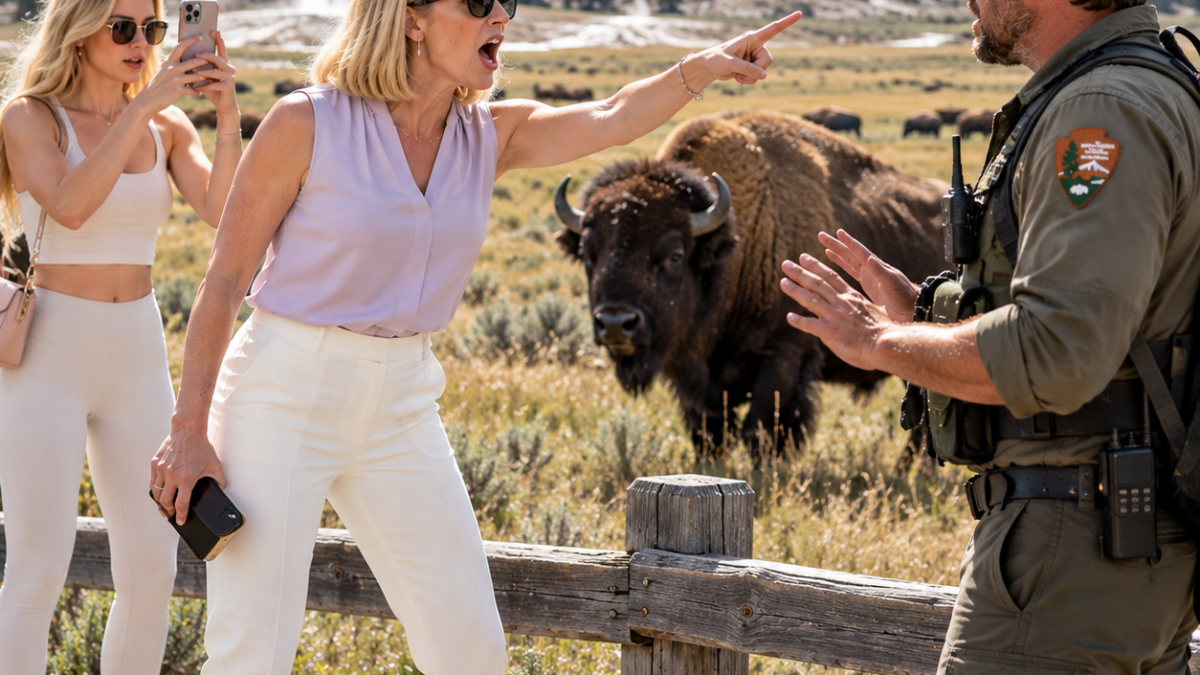
𝗣𝗔𝗥𝗧 𝟮
Wildlife doesn’t read our itinerary.
I told them that.
Mom said:
“We really need bison.”
“That’s what we’re looking for.”
“No, I mean we need them.”
“For the content?”
She looked at me like I was slow.
“Yes.”
I nodded.
“Animals move. We’ll do our best.”
She sighed.
Her daughter’s time, she explained, was valuable.
They had deliverables.
Specific shots.
Brand commitments.
Deadlines.
She said “deliverables” like I was an assistant producer who had failed to arrange livestock.
Then she asked:
“Do you know any secret locations where we can get closer?”
“No.”
She laughed.
“Every guide has secret spots.”
“Guides have good viewing locations.”
“So yes.”
“No. Not secret places where rules stop applying.”
Her expression flattened.
“What if we pace beside a herd?”
“We don’t.”
“For a moving shot.”
“No.”
“Why?”
“Because we don’t harass wildlife.”
“We’d be in the vehicle.”
“We still don’t chase animals for footage.”
The daughter looked up from her phone.
“How fast can they actually run?”
“Faster than you.”
She laughed.
“I’m serious.”
“I run.”
“They don’t care.”
I explained that bison can accelerate quickly and are capable of outrunning people over short distances.
They’re not cows standing in a pasture waiting for selfies.
They’re huge wild animals.
Mom looked unconvinced.
The daughter asked:
“Are the rangers chill?”
I knew exactly what she meant.
“Rangers are professional.”
“Like, do they actually care if you’re a little close?”
“Yes.”
She made a face.
Then lifted her phone.
Recording.
Her entire personality changed.
“We’re being soooo safe, guys.”
She smiled into the camera.
“We’ve got a professional guide, so nobody freak out.”
Then she winked.
I kept driving.
Paycheck.
Think about paycheck.
Eventually we found what they wanted.
A wide open meadow.
Small group of bison grazing roughly a hundred yards away.
Morning air cold enough that you could see breath.
One large bull stood slightly separated from the others.
Massive.
Dark head.
Heavy shoulders.
Winter coat shedding in patches.
The kind of animal that makes people underestimate distance because he looks like a slow-moving wall.
I pulled into a designated safe area.
Stopped.
Turned to them.
“All right. This is excellent viewing.”
The daughter was already filming.
I said:
“We stay near the vehicle.”
Mom opened her door slightly.
I continued:
“No approaching. Use your zoom. If you want a shot with the bison behind you, I can help frame it from here.”
The daughter stepped out onto the roadside.
Stayed near the van.
Perfectly fine.
She filmed.
Took pictures.
For several minutes, everything was normal.
I relaxed a little.
The bull lifted his head.
Looked toward us.
Huffed.
Not charging.
Not even necessarily agitated.
Just aware.
I said:
“See that?”
The daughter zoomed.
“He’s looking right at me.”
“He’s looking at us.”
Mom leaned between the seats.
“This is our moment.”
Then:
“Honey, get your selfie.”
I turned.
“No.”
Mom looked at me.
“No?”
“We can get the selfie here.”
“She needs to be closer.”
“No.”
The daughter lowered her phone.
“I need a scale shot.”
“I can frame one.”
“No, like me in the field.”
“Not happening.”
Mom smiled.
It was a very unpleasant smile.
“Just that little patch.”
She pointed.
“Ten seconds.”
“No.”
“You haven’t even considered it.”
“I consider this every day.”
The daughter said:
“People can’t tell how big he is without a human in the frame.”
“Great. I’ll put you in the foreground from here.”
“That’s not the same.”
“No.”
Mom’s eyes narrowed.
“You’re making this difficult.”
“I’m making it safe.”
She folded her arms.
“We paid for a VIP experience.”
“You are getting one.”
“Doesn’t feel very VIP.”
“It’s the same bison for everyone.”
She didn’t like that.
The daughter pouted.
“I just need one.”
I pointed toward the safe viewing position.
“Stand there. I’ll show you how to make him look huge without getting closer.”
Mom said:
“This is customer service, sweetheart.”
I felt something in my jaw tighten.
Still smiling.
“Yes, ma’am.”
“Then provide the service.”
“I am.”
She leaned closer.
“Do you want a good review?”
There it was.
I looked at her.
She continued.
“My daughter has more than half a million followers.”
“Okay.”
“Do you understand what that means for a small company like yours?”
“Probably the same thing it meant when you asked for the tour free.”
Her face changed.
I probably shouldn’t have said that.
But it was true.
She stared.
“You’ve seen our correspondence.”
“My boss forwarded the earlier inquiry.”
“That was a partnership proposal.”
“Okay.”
“We offer enormous value to brands.”
“I’m sure.”
She stepped closer.
“So don’t be stupid.”
The daughter looked embarrassed.
“Mom.”
“No.”
Mom kept her eyes on me.
“One bad story from us can do real damage.”
I tapped my body camera.
“For your safety and ours, I’m going to state this clearly.”
Her eyes moved to the camera.
“This is your second warning. Do not approach the bison.”
“You’re recording us?”
“Company safety policy.”
“You didn’t tell me.”
“It was disclosed in your booking materials, and I mentioned it at pickup.”
She looked at her daughter.
Daughter shrugged.
“He did.”
Mom’s lips tightened.
I continued.
“We will help you get great images from a safe distance.”
Mom turned away.
“This is ridiculous.”
She looked at her daughter.
“We’ve done safaris before.”
The daughter said:
“Maybe just use the zoom.”
Mom ignored her.
“The guide sits there and we do what we want.”
“This isn’t a safari.”
“This is America.”
“Correct.”
“We paid.”
“Correct.”
“So get out.”
For a second, I wasn’t sure who she was ordering.
Then she slid the van door open.
I put the vehicle in park.
Both hands visible.
Voice calm.
“Please do not leave the safe viewing area.”
She looked back.
“If you choose to ignore my instruction, I cannot physically restrain you. I will contact park rangers.”
She rolled her eyes.
“You are not calling police over a photograph.”
“Rangers.”
“Whatever.”
“There are fines for approaching wildlife.”
She laughed.
“Please.”
Then she said something I’ll never forget.
“We donate to conservation. We practically fund places like this.”
I reached down.
Confirmed the camera was recording.
Then I spoke slowly.
“This is your third documented warning.”
The daughter stopped smiling.
I continued.
“Do not approach the bison. You risk serious injury or death.”
The daughter looked at her mother.
“Mom.”
“What?”
“He sounds serious.”
“He is bluffing.”
I said:
“I’m not bluffing.”
Mom swung one leg out.
“Ma’am.”
She paused.
“I cannot physically stop you from leaving the vehicle.”
Then:
“But if you approach that animal, I will report it.”
She stepped out.
The daughter hesitated.
I hoped she would stay.
Then Mom waved.
“Come on.”
The daughter followed.
Phone in hand.
Tiny designer purse across her body.
White sneakers touching dirt for probably the first time in their lives.
I grabbed my radio.
Gave location.
Reported two guests disregarding wildlife safety instructions.
Turned on hazard lights.
Then repeated the warning for the camera.
The bull watched them.
I watched the bull.
That’s the problem with wild animals.
People think they’re motionless until they’re not.
The two women moved farther into the field.
Not sprinting.
Not rushing.
That careful half-confident walk people do when they know they’re breaking a rule but still want to look relaxed.
The daughter raised her phone.
Tried to position the bison behind her shoulder.
Mom whispered loudly:
“Chin up.”
Then:
“Turn a little.”
The daughter adjusted.
I was calling the ranger line now.
“Two individuals approaching a bull bison after repeated guide warnings.”
I gave the location.
“Incident in progress.”
The bull lifted his head higher.
Mom looked back at me.
Made an annoyed hand gesture.
Basically:
Stop ruining it.
Then she turned away again.
The daughter smiled into her phone.
Head tilt.
Lips pursed.
Bison in background.
Perfect content.
For about two seconds.
Then the bull charged.
People imagine something that large has to build speed slowly.
It doesn’t.
The sound comes first.
A deep explosive thump.
Hooves.
Dirt.
Breath.
Then that enormous body is moving far faster than anything that size should move.
I’ve watched bison run hundreds of times.
Maybe more.
It still scares me.
Every time.
“BACK TO THE VEHICLE!”
The daughter screamed.
Her phone flew out of her hand.
Mom grabbed the daughter’s arm.
Tried to pivot.
One of Mom’s white shoes came off.
She nearly fell.
The daughter turned so hard the purse strap twisted across her body.
The bull kept coming.
Not hunting them.
Not stalking.
Driving them out.
But that distinction feels very theoretical when two thousand pounds of muscle is coming toward you.
They scrambled backward.
Mom screamed.
The daughter screamed louder.
The tiny purse snapped loose.
Hit the ground.
The bull came through.
Hoof.
Horn.
Leather.
Gone.
That designer purse exploded.
Not literally exploded.
But close enough.
The leather tore.
Contents scattered.
Something shiny went flying.
The daughter’s phone hit a rock.
Screen shattered instantly into a spiderweb.
The bull stopped.
Stomped.
Snorted.
Then turned away.
That was it.
Message delivered.
Leave me alone.
He went back toward the meadow as if nothing interesting had happened.
Mom and daughter sprinted for the van.
I kept my voice controlled.
“Behind the vehicle.”
They came around.
Mom had grass stuck to her knees.
One legging calf torn.
One shoe missing.
Her perfect hair wasn’t perfect anymore.
The daughter was shaking so badly she could barely open the van door.
She climbed inside.
Sat down.
Started crying.
Not dramatic crying.
Real fear.
I handed her water.
“Slow breaths.”
Mom got inside.
She was breathing hard.
I radioed:
“Situation stable. Subjects back at vehicle. No obvious major injury.”
Then I checked them.
Scrapes.
No obvious broken bones.
No horn contact.
They were incredibly lucky.
I gave them the first aid kit.
“Check your legs.”
The daughter stared at me.
“My phone.”
I looked toward the field.
Not moving.
“We’re not going back for it right now.”
“My phone.”
“I understand.”
“It’s destroyed.”
“Better the phone.”
She looked at me like that was cruel.
Maybe it sounded cruel.
But I meant it.
Better the phone.
Better the purse.
Better leggings.
Better a shoe.
Anything except a person.
Then Mom started.
Not:
Thank God.
Not:
That was terrifying.
Not:
We shouldn’t have done that.
“You ruined our day.”
I stared at her.
“What?”
“This is your fault.”
I genuinely had no response ready.
“You are supposed to protect guests.”
“I warned you not to approach.”
“You just stood there.”
“I told you three times.”
“You should have stopped him.”
“The bison?”
“Yes.”
I looked at her.
“With what?”
She glared.
“What kind of guide lets an animal charge clients?”
The answer escaped before professionalism could stop it.
“Would you have preferred interpretive dance?”
The daughter made a sound that might have been a laugh despite crying.
Mom stared at me.
“Excuse me?”
I immediately returned to neutral.
“I gave you repeated safety instructions. You ignored them. I called rangers. I cannot physically control a wild bison.”
“You could have distracted it.”
“No.”
“Thrown something.”
“Absolutely not.”
“Driven toward it.”
“No.”
“You did nothing.”
“I prevented this exact situation as much as I legally could.”
She shook her head.
“We paid for VIP treatment.”
I looked at the destroyed purse visible in the dirt.
“Wildlife doesn’t have a VIP tier.”
That made things worse.
Mom began talking about litigation.
Refund.
Negligence.
Trauma.
Public relations.
Then she said:
“We are very generous with good service.”
I waited.
“And ruthless with bad service.”
It sounded rehearsed.
Something from an online business seminar.
I said:
“We’re going to the ranger station.”
Her face changed.
“For what?”
“Incident report.”
“No.”
“Yes.”
“We are not wasting our day.”
“This has to be documented.”
“You’re not a cop.”
“Correct.”
“You cannot detain us.”
“Correct.”
“I’m offering to drive you to the ranger station as required by company policy after a wildlife safety incident.”
She crossed her arms.
“I don’t consent.”
I nodded toward the camera.
“Then I’m ending the tour.”
That got her.
The daughter looked up.
“No.”
Mom turned.
“We still need footage.”
I said:
“Then ranger station first.”
Silence.
Mom picked up her phone.
Fine.
We drove.
The daughter kept staring at her broken backup situation—she apparently had another phone in her bag inside the van.
Mom made a call.
Speakerphone.
I assumed manager, husband, lawyer, assistant, somebody.
Her version of events transformed almost instantly.
“Our guide allowed us to get into a dangerous situation.”
I looked ahead.
“He never properly explained the risk.”
Body camera still recording.
“We were standing in an approved area.”
Not true.
“He refused to intervene.”
I said nothing.
Then she looked directly at me.
“Admit it. You didn’t warn us clearly.”
I kept my eyes on the road.
“That is not accurate.”
“See?”
She said into the phone.
“Hostile.”
I almost laughed.
Didn’t.
She kept talking.
By the time we reached the station, I had been promoted from guide to villain.
I abandoned them.
Encouraged unsafe behavior.
Failed to protect them.
Threatened them with fines.
Ruined a birthday.
Refused special accommodations.
The rangers were unimpressed.
They separated statements.
Asked questions.
Viewed relevant footage.
Mom repeated that she had not been adequately warned.
One ranger said:
“Okay.”
Very calmly.
He watched the video.
Then replayed part.
My voice:
“Please do not approach the bison.”
Another section.
“This is your second warning.”
Then:
“This is your third documented warning. Do not approach the bison. You risk serious injury or death.”
The ranger paused.
Looked at Mom.
Silence.
Mom said:
“That was after we’d already decided.”
The ranger’s expression didn’t change.
“That doesn’t make the warning disappear.”
“We weren’t that close.”
He looked at the footage again.
Then filled out paperwork.
There was a citation.
Approaching wildlife.
Not a trivial amount.
Mom stared at the number.
“This is ridiculous.”
“You can appeal.”
“I will.”
“Instructions are on the form.”
“My lawyer will handle this.”
“Okay.”
No fear.
No argument.
No excitement.
Rangers hear “my lawyer” the way bartenders hear “one more.”
The daughter sat quietly.
Sweater wrapped around her lower body to hide the torn leggings.
She looked embarrassed.
Honestly, I felt bad for her.
Not enough to excuse what she’d done.
But enough to notice the difference.
Mom was furious about being challenged.
Daughter looked like she’d realized she’d almost been seriously injured for a photograph.
When everything was documented, I offered to end the tour.
Mom immediately said no.
“We paid for the day.”
The daughter looked surprised too.
Mom continued:
“The day is not ruined.”
Five minutes earlier it had been completely ruined.
Apparently content deadlines were stronger than trauma.
Before we left, Mom turned to me.
“You will not discuss this.”
“I don’t discuss client incidents publicly.”
“This is private.”
“We document safety incidents.”
“If this footage appears anywhere, your company will regret it.”
I said:
“Our documentation is handled according to policy.”
That was all.
The rest of the tour was bizarre.
Quiet.
The daughter used her backup phone.
From inside the van.
Which was the smartest wildlife decision she’d made all morning.
She filmed scenery.
Elk.
Thermal areas.
All from approved locations.
Mom moved between sulking and suddenly complimenting me.
“This van is actually very comfortable.”
Ten minutes later:
“That was a nice viewpoint.”
Then silence.
I kept everything professional.
No sarcasm.
No lecture.
I had no desire to fight.
I just wanted to finish the day without another emergency.
At the final drop-off, Mom stood beside the van.
Back in control.
Makeup repaired.
Hair adjusted.
One shoe replaced with something from luggage.
She looked me directly in the eye.
“I expect your company to make this right.”
“I’ll pass along your feedback.”
“The full tour should be comped.”
“I don’t handle billing.”
“We experienced trauma.”
“I’ll note that.”
“And I expect an apology.”
“I’ll pass that along too.”
She leaned closer.
“You understand that a bad review from us can crush a small business.”
I looked at her.
Then smiled.
“I’ll pass that along.”
She didn’t appreciate the repetition.
The daughter gave me a small awkward wave.
Then they went inside.
I drove back to the office.
Uploaded the body camera footage.
Completed the incident report.
Noted the ranger interaction.
Noted the citation.
Noted injuries.
Noted the offer to terminate the tour.
Then I went home.
Had the beer I’d been thinking about since approximately 9:14 that morning.
Slept beautifully.
Next morning, there was an email waiting.
Actually several.
One from Mom.
One forwarded by my boss.
One short message from him.
His was simple.
Come by before your shift.
That’s never comforting.
I arrived expecting some version of:
Customer is angry.
Let’s discuss what you could have done differently.
Instead my boss had Mom’s email open on one monitor and my body camera footage on the other.
He pointed at the chair.
“Sit.”
I sat.
He looked at me.
“You did exactly what you’re supposed to do.”
My shoulders relaxed.
“Thanks.”
“Rangers have the footage.”
“Good.”
“I sent the full incident segment to attach to their file.”
“Okay.”
Then he turned the monitor.
Mom’s email was incredible.
According to her:
I had failed to protect paying clients.
Encouraged them into an unsafe situation.
Then abandoned them.
I had been rude.
Hostile.
Unprofessional.
Refused to stop at “secret locations.”
Threatened them with fines despite not being law enforcement.
Shown no concern after the charge.
Denied them adequate service.
She demanded a full refund.
Public apology.
Compensation for damaged property.
And then came the follower count.
Her daughter had a large and highly engaged audience.
Their brand was “generous with positive recommendations.”
But if the situation wasn’t resolved, they were prepared to share the experience publicly and contact media.
Then the best line:
“If this is how you treat the help, imagine how you treat the wildlife.”
I read it twice.
“The help?”
My boss nodded.
“Apparently.”
“That’s me?”
“Congratulations.”
I laughed.
Then noticed he wasn’t particularly angry.
“You seem calm.”
He clicked another tab.
“She already posted.”
Of course she had.
The daughter had posted a story.
Mom had too.
It was exactly what you’d expect.
Crying.
Long captions.
Vague language.
“We trusted professionals.”
“Our birthday experience became terrifying.”
“Sometimes businesses forget compassion.”
No video of the charge.
No video of them walking into the meadow.
No audio of warnings.
No mention of the third warning.
No citation.
No:
Mom told the guide half a million followers could damage his company.
Instead it was framed as a simple request rejected by an inflexible guide.
My boss watched part of the story.
Then closed it.
“She hasn’t named us directly.”
“But?”
“Enough clues.”
I nodded.
“What now?”
He tapped the body camera file.
“Rangers handle the citation.”
“Okay.”
“As for this—”
He paused.
Our company didn’t publicly post client footage for entertainment.
That mattered.
But we had occasionally contributed anonymized clips to wildlife safety education.
Guide training.
Public awareness.
Local news packages.
Educational pages showing exactly why distance rules exist.
Faces blurred.
Identifying information removed.
Not revenge.
Prevention.
Every year, somebody approaches wildlife because they think the warnings are exaggerated.
Sometimes seeing the consequences works better than another sign.
My boss said:
“We anonymize it.”
I looked at him.
“You’re sure?”
“Legal will review.”
“Okay.”
“Faces blurred.”
“Obviously.”
“Voices altered enough to protect identity.”
“Yes.”
“Company branding removed.”
“Yes.”
“Location generalized.”
“Yes.”
“Keep the warnings.”
I smiled.
“All three?”
“Especially all three.”
The edited clip was simple.
No dramatic music.
No jokes.
No captions calling anybody stupid.
Timestamp.
First warning.
Second warning.
Third warning.
Them stepping beyond the safe area.
The bull charging.
Scramble.
Destroyed purse.
Broken phone.
Return to the vehicle.
Educational context about safe wildlife viewing.
That was it.
It went to a public safety page that often shared anonymized national park incidents.
Then somebody reposted it to one of those online communities dedicated to people learning painful lessons.
It spread.
I didn’t know at first.
I went to work.
My next guests were four retired teachers.
Best group I’d had in weeks.
They listened.
Asked thoughtful questions.
Wanted to know why bison move differently in winter.
One of them took notes.
When I said:
“Please stay here.”
All four stayed there.
Beautiful.
At lunch, I checked my phone.
Messages.
My boss.
Coworkers.
The educational clip had started traveling.
People were connecting it to the influencer’s own story.
Not because faces were visible.
They weren’t.
But because her followers recognized details.
The timing.
The Yellowstone trip.
The birthday.
The damaged purse she’d complained about.
Somebody asked under her post:
“Is this you?”
Then another.
Then:
“Wait, did the guide warn you three times?”
Then the comments changed.
Not all.
Influencers always have defenders.
But enough.
“Why would you approach a bison?”
“This is incredibly unsafe.”
“You’re encouraging followers to ignore park rules.”
“You could have gotten the animal euthanized if someone had been seriously hurt.”
“Why blame the guide?”
The daughter initially deleted comments.
Then stopped.
There were too many.
Her follower count was visible.
I watched it drop.
Not millions.
Not career-ending.
But noticeable.
Brands notice that kind of thing too.
Safe.
Positive.
Aspirational.
Those are useful brand words.
“Nearly got charged by a bison after ignoring three recorded warnings” is less useful.
That afternoon Mom emailed again.
This time, lawsuit.
Defamation.
Privacy.
Reputational harm.
Unauthorized release.
My boss forwarded it to counsel.
Then replied with something so dry it deserved framing:
The footage had been anonymized.
Used for wildlife safety education.
Handled according to applicable policy.
Relevant original footage was already part of an official incident record.
No identifying information had been published by us.
That was all.
No argument.
No emotional response.
Legal copied.
Mom sent another message.
We didn’t engage.
The citation stood.
She could appeal it.
That was between her and the park.
The company refunded nothing.
Her one-star review appeared two days later.
First sentence referred to me as “the help.”
That didn’t play well.
Our company responded:
“We prioritize guest safety and compliance with park regulations. We regret that you did not enjoy your experience.”
No accusation.
No details.
No fight.
Just that.
The internet did the rest.
The safety clip kept spreading.
Former park employees commented.
Guides shared it.
Wildlife educators reposted versions with reminders about distance.
People used screenshots for PSA-style posts.
One former ranger wrote something that stuck with me.
They said guides often have to remain calm while somebody is screaming at them for enforcing rules designed to keep that same person alive.
Exactly.
That’s the hardest part.
Not knowing the rules.
Staying calm.
Because when somebody is angry that they can’t get close to wildlife, they don’t want a lecture.
They want permission.
And when you refuse, some of them decide you’re the problem.
I kept thinking about the daughter.
More than the mother.
Because I don’t think the daughter started the day intending to do anything especially dangerous.
She wanted content.
She wanted attention.
She wanted the perfect shot.
That’s normal in her world.
Her mother turned every boundary into an obstacle.
When the daughter hesitated, Mom said the guide was bluffing.
When the daughter suggested zooming, Mom pushed closer.
When danger arrived, Mom blamed everyone except herself.
That’s the part people didn’t see in the pretty posts.
By the end of the tour, the daughter listened.
She filmed from the vehicle.
Stayed behind barriers.
Asked once before moving somewhere.
Maybe fear taught her what my explanations couldn’t.
I hope so.
Because the point of sharing safety footage isn’t humiliation.
It really isn’t.
I’ve seen ugly comments online.
People saying they wished the bull had hit them.
I don’t.
I wouldn’t wish that on anybody.
I’ve seen what large animals can do.
There’s nothing funny about a crushed pelvis.
Nothing satisfying about airlifting a twenty-one-year-old out of a park because she wanted a photograph.
Nothing poetic about a wild animal being destroyed after a human ignores boundaries.
The best outcome was exactly what happened.
Broken phone.
Ruined purse.
Scraped legs.
Huge scare.
Everybody alive.
Bison alive.
Lesson available.
That’s enough.
For a few weeks, coworkers called me “the help.”
I walked into the office one morning and found a little paper sign taped above my desk.
THE HELP
I laughed hard enough that my boss came out.
“Who did that?”
“No idea.”
He looked at the guides.
Everyone suddenly became fascinated by their computers.
Eventually the joke died.
The story didn’t.
New guides watched the clip during training.
My boss used it when explaining why body cameras existed.
Not to spy on clients.
To preserve reality.
Because people remember incidents differently under stress.
Especially when money, reputation, or legal consequences are involved.
The video wasn’t dramatic.
That was what made it powerful.
My voice stayed boring.
“Please do not approach.”
Then again.
“This is your second warning.”
Then:
“This is your third documented warning. You risk injury or death.”
Then Mom:
“We have half a million followers.”
Then the charge.
There isn’t much argument left after that.
One morning several months later, I had another private group.
Parents.
Two teenagers.
At almost the same meadow, we saw a bull grazing at distance.
One teenager lifted her phone.
“Can I go down there for a picture?”
Before I answered, her father said:
“No.”
I smiled.
The girl said:
“I wasn’t going close.”
Her dad pointed toward the bison.
“That’s what the internet lady said.”
I looked at him.
He looked at me.
Then grinned.
“You know the video?”
He asked.
I considered lying.
“Yeah.”
“Guide sounds a lot like you.”
I smiled.
“Lots of guides sound tired.”
He laughed.
The daughter stayed put.
Got her picture.
Great picture, actually.
Nobody got charged.
Nobody lost a purse.
Nobody threatened a lawsuit.
That’s what success looks like in my job.
Nothing happened.
People sometimes ask me what the scariest animal in Yellowstone is.
Bears?
Bison?
Wolves?
Moose?
Honestly?
A confident tourist who thinks warning signs are suggestions.
Wild animals are remarkably predictable compared to people.
Bison usually tell you when they’re uncomfortable.
Head up.
Stare.
Huff.
Posture.
Distance.
Humans get the same warning and think:
This will look amazing on Instagram.
I don’t hate social media.
I use it.
Our company uses it.
Photography inspires people to care about public lands.
Videos can make someone across the world want to protect an animal they’ve never seen.
That’s powerful.
But the moment the image becomes more important than the animal, everything gets backward.
The bison is not a prop.
The geyser is not a spa.
The bear is not your content partner.
You’re visiting their environment.
That’s the relationship.
Mom never understood that.
Maybe she still doesn’t.
Last I heard, the daughter’s follower count eventually stabilized.
She kept posting.
Fashion.
Travel.
Lifestyle.
For a while, wildlife disappeared from her page.
Then months later she posted from another national park.
This time, every picture was taken from designated areas.
One caption even mentioned respecting wildlife distance.
Maybe coincidence.
Maybe not.
I hope she learned.
Her mother never apologized.
No surprise.
The threats eventually stopped.
No lawsuit.
No media campaign.
No destruction of our company.
We kept operating.
Reviews stayed strong.
Actually, we got several bookings from people who had seen the safety clip and liked that we took wildlife rules seriously.
That irony made my boss extremely happy.
He said:
“Maybe exposure really is priceless.”
I told him never to say that again.
He laughed.
The destroyed purse became the visual everybody remembered.
Expensive leather lying in dirt.
Strap torn.
Contents scattered.
Bison walking away.
It became a metaphor online.
People made jokes.
I understand why.
But what I remember is the sound.
The charge.
That first heavy thud.
Because when you hear it in person, all the comedy disappears.
A bison covering ground toward somebody who has nowhere smart to go is terrifying.
I remember yelling.
I remember the daughter dropping her phone.
I remember Mom losing a shoe.
I remember knowing there was nothing I could safely do if the bull committed fully.
That’s the helplessness people don’t understand when they demand:
“Why didn’t you save them?”
Guides reduce risk.
We don’t control nature.
I can’t order a bull to stop.
I can’t jump between a guest and two thousand pounds of animal.
I can’t tackle an adult client because she wants a selfie.
My best tool is the warning.
Sometimes three warnings.
After that, consequences move faster than I do.
Months later, one of the rangers involved ran into me at a gas station.
He recognized the van.
Walked over.
“You’re the bison influencer guy.”
“I was hoping that wouldn’t become my professional title.”
He laughed.
“Could be worse.”
“How?”
“You could be the influencer.”
Fair.
He asked whether we’d heard anything else.
I told him no.
He said the footage had become useful in ranger training too.
Not because the guests were special.
Because the sequence was clear.
Instruction.
Refusal.
Escalation.
Consequence.
That’s what makes a good safety example.
No ambiguity.
Before he left, he said:
“You did fine.”
I appreciated that more than I expected.
Tour guiding can be weird.
People think the job is showing scenery.
Most days, yes.
Some days, you’re the only person standing between a bad decision and a helicopter bill.
And sometimes the person making the bad decision has half a million people online telling her she’s special.
That doesn’t change physics.
That’s the lesson.
Follower counts are not protective equipment.
Money isn’t.
VIP bookings aren’t.
Good reviews aren’t.
Connections aren’t.
Nature doesn’t negotiate.
If I tell someone:
Stay fifty yards away.
I’m not protecting a rule.
I’m protecting them.
If a ranger issues a citation, it isn’t because the park hates visitors.
It’s because enough visitors have already demonstrated what happens without boundaries.
And if a bison lowers its head and starts moving?
The argument is over.
No lawyer.
No Yelp review.
No PR team.
Just distance.
I still guide that same area.
I still pass the meadow.
Sometimes I think about that morning.
The cold air.
Bull grazing.
Daughter framing her shot.
Mom saying:
“This is our moment.”
She was right.
It was their moment.
Just not the one they expected.
They wanted a viral photograph.
Instead, they became an anonymous safety lesson used to teach thousands of strangers why you don’t walk toward Yellowstone wildlife.
Mom threatened that half a million followers could damage our little company.
In the end, all those followers did was make sure a lot more people heard the warning she refused to listen to.
𝗧𝗛𝗘 𝗘𝗡𝗗
The Influencer Mom Threatened to Destroy My Business Unless I Let Her Daughter Walk Up to a Yellowstone Bison
The influencer mom told me half a million followers could ruin my company if I didn’t let her daughter walk into a Yellowstone meadow for the perfect bison selfie.
I warned them three times.
Then I turned on my body camera and watched them step over the line anyway.
I guide wildlife tours in Yellowstone National Park for a living.
Full time.
This isn’t something I do on weekends because I like taking pretty pictures of elk.
It’s my job.
I drive people through the park, explain the history, talk about geology without making everyone regret asking, help them spot wildlife, answer the same twelve questions about bears every single day, and, most importantly, try to keep visitors from getting themselves hurt.
My boss likes to say I’m one part teacher, one part driver, one part bouncer, and two parts babysitter.
He’s not wrong.
Most people are great.
They come because Yellowstone means something to them.
Retired couples who saved for years.
Families whose kids have never seen a wild animal larger than a raccoon.
Photographers who will sit in freezing weather for forty minutes waiting for an elk to turn its head three degrees.
People on anniversary trips.
People crossing something off a bucket list.
Those are the guests I love.
You show them a bison herd moving through morning fog and they go quiet.
You explain that the ground they’re standing on sits above one of the largest volcanic systems on Earth, and suddenly even teenagers look up from their phones.
You watch somebody see Old Faithful for the first time, and for a few seconds they’re eight years old again.
That’s a good day.
Then there are the other guests.
The ones who arrive believing the entire national park has been arranged as a backdrop for them personally.
Those are the people who make me earn every dollar.
Private tours can be especially unpredictable.
The booking request for this one looked normal at first.
Early pickup.
Private vehicle.
Wildlife focus.
Scenic overlooks.
Bison and geysers listed as priorities.
Some filming planned.
Nothing unusual.
They requested vegan snacks.
Fine.
Extra blankets.
Fine.
Charging cables for phones.
Fine.
Then I saw the name attached to the booking.
I recognized it.
Not because I followed her.
I didn’t.
My boss had forwarded me an email months earlier because he thought it was funny.
The message had come from a woman representing her daughter, a social media influencer with around half a million followers.
They wanted a private Yellowstone experience.
In exchange, they suggested, our company could receive “high-value exposure.”
If you’ve worked in tourism, hospitality, photography, restaurants, or basically anywhere influencers exist, you know what “exposure” usually means.
Free.
They wanted the tour free.
My boss had politely explained that our guides accepted money, not exposure.
Apparently they disappeared for a while.
Then they came back.
This time, the booking was legitimate.
Paid in full.
Private tour.
Tip pre-authorized.
Everything normal.
So I didn’t care about the history.
People change their minds.
Money had cleared.
We had guests.
My job was to give them a good experience.
I also don’t have anything against influencers as a profession.
Some are professional.
Some are polite.
Some understand that being able to make a living from an audience is a job like any other job.
It’s the ones who look at a national park and see a movie set that worry me.
Because Yellowstone is beautiful.
And Yellowstone is dangerous.
Those things exist together.
The geysers don’t care how many followers you have.
Thermal crust doesn’t care if you’re verified.
A grizzly doesn’t recognize brand partnerships.
And a bison definitely doesn’t care that you need a “western aesthetic.”
People forget that.
Last season, our company had several incidents where guests ignored a guide’s instructions and later claimed no warning had been given.
Nothing catastrophic, thankfully.
But enough arguments.
Enough complaints.
Enough:
“Nobody told us.”
Or:
“The guide encouraged it.”
So the company changed policy.
We started wearing body cameras.
Nothing dramatic.
Not livestreamed.
Not uploaded automatically.
They existed for documentation.
If somebody started making a dangerous choice, we stated the rule clearly.
If they continued, we stated it again.
Camera kept rolling.
It protected guests.
It protected guides.
It protected the company.
And if rangers ever needed to know exactly what happened, we had an objective record.
I liked the policy.
I’ve learned that people’s memories become surprisingly creative when consequences arrive.
The morning of the tour, I pulled up to their lodge before sunrise.
Coffee in my thermos.
Fresh memory card.
Vehicle fueled.
Blankets folded.
First aid kit checked.
Bear spray where it belonged.
Body camera clipped to my jacket.
I had that particular feeling I get before private tours.
Optimism mixed with suspicion.
The daughter came out first.
She looked exactly like someone traveling specifically to create content.
Fresh blowout.
Full makeup before dawn.
Matching athletic set.
White sneakers that had probably never touched mud.
Long nails.
Tiny crossbody designer purse.
Phone already recording.
She stood outside the lodge doing what looked like a casual morning stretch, except she repeated the stretch three times while checking the screen after each one.
I parked.
Watched.
Not my business.
Then she smiled at the phone and did a little laugh.
Stopped recording.
Looked completely neutral.
Started recording again.
Immediate smile.
That was the first time I thought:
This is going to be a long day.
Then her mother came out.
Her mother was somewhere in her forties.
Blonde.
Beautiful.
Very polished.
Very curvy.
Expensive white fitted jacket over an athletic top, gold zipper details, tight black leggings, spotless white sneakers, oversized sunglasses, immaculate makeup.
She carried herself like the hotel belonged to her and everybody working there had been personally assigned to improve her morning.
She reached the van.
Looked at me.
Up.
Down.
Then said:
“You’re the driver.”
Not a question.
“I’m your guide.”
I smiled.
“Good morning.”
She walked past me.
Tapped the side of the van with one manicured fingernail.
“At least the vehicle is decent.”
That’s when I checked the red indicator on my body camera.
Recording.
Good.
The daughter introduced herself using her Instagram name before her real name.
She was turning twenty-one.
This was her birthday content trip.
Her followers loved wildlife.
They were doing a “western nature era.”
Her phrase, not mine.
She wanted candid bison footage.
Something “intimate.”
Something that showed scale.
Something people hadn’t seen a thousand times.
That last request always makes me nervous.
Yellowstone has millions of visitors.
If a safe picture exists, somebody has probably taken it already.
I loaded their bags.
We got inside.
Then I gave my usual opening safety talk.
Wildlife distance.
Stay on boardwalks near thermal areas.
Never feed animals.
Never approach them.
Don’t call them toward you.
Don’t block roads.
If I say we’re leaving, we’re leaving.
If I tell you to get back into the vehicle, that is not a creative suggestion.
The daughter nodded while adjusting her phone stabilizer.
Mom stared out the window.
I talked briefly about thermal features.
How thin crust can cover boiling water.
How rescue from thermal areas isn’t like pulling somebody out of a swimming pool.
How wild animals are exactly that.
Wild.
Mom interrupted.
“We’re not idiots.”
I glanced at the mirror.
“Great.”
“We’ve been on safaris.”
She said it as if that settled the issue.
“Excellent.”
The daughter added:
“In Africa.”
“I assumed.”
Mom looked at me in the mirror.
“Then you understand we know how to behave around animals.”
I smiled.
“Perfect. Makes my job easier.”
We rolled out.
The first hour was actually good.
Cold morning.
Beautiful light.
We found elk far off near a ridge.
The daughter got genuinely nice footage of steam hanging low over the landscape.
Sunrise hit the hills.
For a while, even the mother seemed impressed.
I explained how the temperature shifts change animal movement.
Talked about migration.
The daughter asked a few decent questions.
I thought maybe I’d judged them too quickly.
Then I started talking about the geology.
After maybe forty seconds, the daughter asked:
“Can we skip the science part?”
Mom laughed.
“We’re really here for the animals.”
“Absolutely.”
I changed direction.
No point forcing information on people who don’t want it.
I knew a couple of morning pullouts where bison often grazed.
No guarantee.
Wildlife doesn’t read our itinerary.
I told them that.
Mom said:
“We really need bison.”
“That’s what we’re looking for.”
“No, I mean we need them.”
“For the content?”
She looked at me like I was slow.
“Yes.”
I nodded.
“Animals move. We’ll do our best.”
She sighed.
Her daughter’s time, she explained, was valuable.
They had deliverables.
Specific shots.
Brand commitments.
Deadlines.
She said “deliverables” like I was an assistant producer who had failed to arrange livestock.
Then she asked:
“Do you know any secret locations where we can get closer?”
“No.”
She laughed.
“Every guide has secret spots.”
“Guides have good viewing locations.”
“So yes.”
“No. Not secret places where rules stop applying.”
Her expression flattened.
“What if we pace beside a herd?”
“We don’t.”
“For a moving shot.”
“No.”
“Why?”
“Because we don’t harass wildlife.”
“We’d be in the vehicle.”
“We still don’t chase animals for footage.”
The daughter looked up from her phone.
“How fast can they actually run?”
“Faster than you.”
She laughed.
“I’m serious.”
“I run.”
“They don’t care.”
I explained that bison can accelerate quickly and are capable of outrunning people over short distances.
They’re not cows standing in a pasture waiting for selfies.
They’re huge wild animals.
Mom looked unconvinced.
The daughter asked:
“Are the rangers chill?”
I knew exactly what she meant.
“Rangers are professional.”
“Like, do they actually care if you’re a little close?”
“Yes.”
She made a face.
Then lifted her phone.
Recording.
Her entire personality changed.
“We’re being soooo safe, guys.”
She smiled into the camera.
“We’ve got a professional guide, so nobody freak out.”
Then she winked.
I kept driving.
Paycheck.
Think about paycheck.
Eventually we found what they wanted.
A wide open meadow.
Small group of bison grazing roughly a hundred yards away.
Morning air cold enough that you could see breath.
One large bull stood slightly separated from the others.
Massive.
Dark head.
Heavy shoulders.
Winter coat shedding in patches.
The kind of animal that makes people underestimate distance because he looks like a slow-moving wall.
I pulled into a designated safe area.
Stopped.
Turned to them.
“All right. This is excellent viewing.”
The daughter was already filming.
I said:
“We stay near the vehicle.”
Mom opened her door slightly.
I continued:
“No approaching. Use your zoom. If you want a shot with the bison behind you, I can help frame it from here.”
The daughter stepped out onto the roadside.
Stayed near the van.
Perfectly fine.
She filmed.
Took pictures.
For several minutes, everything was normal.
I relaxed a little.
The bull lifted his head.
Looked toward us.
Huffed.
Not charging.
Not even necessarily agitated.
Just aware.
I said:
“See that?”
The daughter zoomed.
“He’s looking right at me.”
“He’s looking at us.”
Mom leaned between the seats.
“This is our moment.”
Then:
“Honey, get your selfie.”
I turned.
“No.”
Mom looked at me.
“No?”
“We can get the selfie here.”
“She needs to be closer.”
“No.”
The daughter lowered her phone.
“I need a scale shot.”
“I can frame one.”
“No, like me in the field.”
“Not happening.”
Mom smiled.
It was a very unpleasant smile.
“Just that little patch.”
She pointed.
“Ten seconds.”
“No.”
“You haven’t even considered it.”
“I consider this every day.”
The daughter said:
“People can’t tell how big he is without a human in the frame.”
“Great. I’ll put you in the foreground from here.”
“That’s not the same.”
“No.”
Mom’s eyes narrowed.
“You’re making this difficult.”
“I’m making it safe.”
She folded her arms.
“We paid for a VIP experience.”
“You are getting one.”
“Doesn’t feel very VIP.”
“It’s the same bison for everyone.”
She didn’t like that.
The daughter pouted.
“I just need one.”
I pointed toward the safe viewing position.
“Stand there. I’ll show you how to make him look huge without getting closer.”
Mom said:
“This is customer service, sweetheart.”
I felt something in my jaw tighten.
Still smiling.
“Yes, ma’am.”
“Then provide the service.”
“I am.”
She leaned closer.
“Do you want a good review?”
There it was.
I looked at her.
She continued.
“My daughter has more than half a million followers.”
“Okay.”
“Do you understand what that means for a small company like yours?”
“Probably the same thing it meant when you asked for the tour free.”
Her face changed.
I probably shouldn’t have said that.
But it was true.
She stared.
“You’ve seen our correspondence.”
“My boss forwarded the earlier inquiry.”
“That was a partnership proposal.”
“Okay.”
“We offer enormous value to brands.”
“I’m sure.”
She stepped closer.
“So don’t be stupid.”
The daughter looked embarrassed.
“Mom.”
“No.”
Mom kept her eyes on me.
“One bad story from us can do real damage.”
I tapped my body camera.
“For your safety and ours, I’m going to state this clearly.”
Her eyes moved to the camera.
“This is your second warning. Do not approach the bison.”
“You’re recording us?”
“Company safety policy.”
“You didn’t tell me.”
“It was disclosed in your booking materials, and I mentioned it at pickup.”
She looked at her daughter.
Daughter shrugged.
“He did.”
Mom’s lips tightened.
I continued.
“We will help you get great images from a safe distance.”
Mom turned away.
“This is ridiculous.”
She looked at her daughter.
“We’ve done safaris before.”
The daughter said:
“Maybe just use the zoom.”
Mom ignored her.
“The guide sits there and we do what we want.”
“This isn’t a safari.”
“This is America.”
“Correct.”
“We paid.”
“Correct.”
“So get out.”
For a second, I wasn’t sure who she was ordering.
Then she slid the van door open.
I put the vehicle in park.
Both hands visible.
Voice calm.
“Please do not leave the safe viewing area.”
She looked back.
“If you choose to ignore my instruction, I cannot physically restrain you. I will contact park rangers.”
She rolled her eyes.
“You are not calling police over a photograph.”
“Rangers.”
“Whatever.”
“There are fines for approaching wildlife.”
She laughed.
“Please.”
Then she said something I’ll never forget.
“We donate to conservation. We practically fund places like this.”
I reached down.
Confirmed the camera was recording.
Then I spoke slowly.
“This is your third documented warning.”
The daughter stopped smiling.
I continued.
“Do not approach the bison. You risk serious injury or death.”
The daughter looked at her mother.
“Mom.”
“What?”
“He sounds serious.”
“He is bluffing.”
I said:
“I’m not bluffing.”
Mom swung one leg out.
“Ma’am.”
She paused.
“I cannot physically stop you from leaving the vehicle.”
Then:
“But if you approach that animal, I will report it.”
She stepped out.
The daughter hesitated.
I hoped she would stay.
Then Mom waved.
“Come on.”
The daughter followed.
Phone in hand.
Tiny designer purse across her body.
White sneakers touching dirt for probably the first time in their lives.
I grabbed my radio.
Gave location.
Reported two guests disregarding wildlife safety instructions.
Turned on hazard lights.
Then repeated the warning for the camera.
The bull watched them.
I watched the bull.
That’s the problem with wild animals.
People think they’re motionless until they’re not.
The two women moved farther into the field.
Not sprinting.
Not rushing.
That careful half-confident walk people do when they know they’re breaking a rule but still want to look relaxed.
The daughter raised her phone.
Tried to position the bison behind her shoulder.
Mom whispered loudly:
“Chin up.”
Then:
“Turn a little.”
The daughter adjusted.
I was calling the ranger line now.
“Two individuals approaching a bull bison after repeated guide warnings.”
I gave the location.
“Incident in progress.”
The bull lifted his head higher.
Mom looked back at me.
Made an annoyed hand gesture.
Basically:
Stop ruining it.
Then she turned away again.
The daughter smiled into her phone.
Head tilt.
Lips pursed.
Bison in background.
Perfect content.
For about two seconds.
Then the bull charged.
People imagine something that large has to build speed slowly.
It doesn’t.
The sound comes first.
A deep explosive thump.
Hooves.
Dirt.
Breath.
Then that enormous body is moving far faster than anything that size should move.
I’ve watched bison run hundreds of times.
Maybe more.
It still scares me.
Every time.
“BACK TO THE VEHICLE!”
The daughter screamed.
Her phone flew out of her hand.
Mom grabbed the daughter’s arm.
Tried to pivot.
One of Mom’s white shoes came off.
She nearly fell.
The daughter turned so hard the purse strap twisted across her body.
The bull kept coming.
Not hunting them.
Not stalking.
Driving them out.
But that distinction feels very theoretical when two thousand pounds of muscle is coming toward you.
They scrambled backward.
Mom screamed.
The daughter screamed louder.
The tiny purse snapped loose.
Hit the ground.
The bull came through.
Hoof.
Horn.
Leather.
Gone.
That designer purse exploded.
Not literally exploded.
But close enough.
The leather tore.
Contents scattered.
Something shiny went flying.
The daughter’s phone hit a rock.
Screen shattered instantly into a spiderweb.
The bull stopped.
Stomped.
Snorted.
Then turned away.
That was it.
Message delivered.
Leave me alone.
He went back toward the meadow as if nothing interesting had happened.
Mom and daughter sprinted for the van.
I kept my voice controlled.
“Behind the vehicle.”
They came around.
Mom had grass stuck to her knees.
One legging calf torn.
One shoe missing.
Her perfect hair wasn’t perfect anymore.
The daughter was shaking so badly she could barely open the van door.
She climbed inside.
Sat down.
Started crying.
Not dramatic crying.
Real fear.
I handed her water.
“Slow breaths.”
Mom got inside.
She was breathing hard.
I radioed:
“Situation stable. Subjects back at vehicle. No obvious major injury.”
Then I checked them.
Scrapes.
No obvious broken bones.
No horn contact.
They were incredibly lucky.
I gave them the first aid kit.
“Check your legs.”
The daughter stared at me.
“My phone.”
I looked toward the field.
Not moving.
“We’re not going back for it right now.”
“My phone.”
“I understand.”
“It’s destroyed.”
“Better the phone.”
She looked at me like that was cruel.
Maybe it sounded cruel.
But I meant it.
Better the phone.
Better the purse.
Better leggings.
Better a shoe.
Anything except a person.
Then Mom started.
Not:
Thank God.
Not:
That was terrifying.
Not:
We shouldn’t have done that.
“You ruined our day.”
I stared at her.
“What?”
“This is your fault.”
I genuinely had no response ready.
“You are supposed to protect guests.”
“I warned you not to approach.”
“You just stood there.”
“I told you three times.”
“You should have stopped him.”
“The bison?”
“Yes.”
I looked at her.
“With what?”
She glared.
“What kind of guide lets an animal charge clients?”
The answer escaped before professionalism could stop it.
“Would you have preferred interpretive dance?”
The daughter made a sound that might have been a laugh despite crying.
Mom stared at me.
“Excuse me?”
I immediately returned to neutral.
“I gave you repeated safety instructions. You ignored them. I called rangers. I cannot physically control a wild bison.”
“You could have distracted it.”
“No.”
“Thrown something.”
“Absolutely not.”
“Driven toward it.”
“No.”
“You did nothing.”
“I prevented this exact situation as much as I legally could.”
She shook her head.
“We paid for VIP treatment.”
I looked at the destroyed purse visible in the dirt.
“Wildlife doesn’t have a VIP tier.”
That made things worse.
Mom began talking about litigation.
Refund.
Negligence.
Trauma.
Public relations.
Then she said:
“We are very generous with good service.”
I waited.
“And ruthless with bad service.”
It sounded rehearsed.
Something from an online business seminar.
I said:
“We’re going to the ranger station.”
Her face changed.
“For what?”
“Incident report.”
“No.”
“Yes.”
“We are not wasting our day.”
“This has to be documented.”
“You’re not a cop.”
“Correct.”
“You cannot detain us.”
“Correct.”
“I’m offering to drive you to the ranger station as required by company policy after a wildlife safety incident.”
She crossed her arms.
“I don’t consent.”
I nodded toward the camera.
“Then I’m ending the tour.”
That got her.
The daughter looked up.
“No.”
Mom turned.
“We still need footage.”
I said:
“Then ranger station first.”
Silence.
Mom picked up her phone.
Fine.
We drove.
The daughter kept staring at her broken backup situation—she apparently had another phone in her bag inside the van.
Mom made a call.
Speakerphone.
I assumed manager, husband, lawyer, assistant, somebody.
Her version of events transformed almost instantly.
“Our guide allowed us to get into a dangerous situation.”
I looked ahead.
“He never properly explained the risk.”
Body camera still recording.
“We were standing in an approved area.”
Not true.
“He refused to intervene.”
I said nothing.
Then she looked directly at me.
“Admit it. You didn’t warn us clearly.”
I kept my eyes on the road.
“That is not accurate.”
“See?”
She said into the phone.
“Hostile.”
I almost laughed.
Didn’t.
She kept talking.
By the time we reached the station, I had been promoted from guide to villain.
I abandoned them.
Encouraged unsafe behavior.
Failed to protect them.
Threatened them with fines.
Ruined a birthday.
Refused special accommodations.
The rangers were unimpressed.
They separated statements.
Asked questions.
Viewed relevant footage.
Mom repeated that she had not been adequately warned.
One ranger said:
“Okay.”
Very calmly.
He watched the video.
Then replayed part.
My voice:
“Please do not approach the bison.”
Another section.
“This is your second warning.”
Then:
“This is your third documented warning. Do not approach the bison. You risk serious injury or death.”
The ranger paused.
Looked at Mom.
Silence.
Mom said:
“That was after we’d already decided.”
The ranger’s expression didn’t change.
“That doesn’t make the warning disappear.”
“We weren’t that close.”
He looked at the footage again.
Then filled out paperwork.
There was a citation.
Approaching wildlife.
Not a trivial amount.
Mom stared at the number.
“This is ridiculous.”
“You can appeal.”
“I will.”
“Instructions are on the form.”
“My lawyer will handle this.”
“Okay.”
No fear.
No argument.
No excitement.
Rangers hear “my lawyer” the way bartenders hear “one more.”
The daughter sat quietly.
Sweater wrapped around her lower body to hide the torn leggings.
She looked embarrassed.
Honestly, I felt bad for her.
Not enough to excuse what she’d done.
But enough to notice the difference.
Mom was furious about being challenged.
Daughter looked like she’d realized she’d almost been seriously injured for a photograph.
When everything was documented, I offered to end the tour.
Mom immediately said no.
“We paid for the day.”
The daughter looked surprised too.
Mom continued:
“The day is not ruined.”
Five minutes earlier it had been completely ruined.
Apparently content deadlines were stronger than trauma.
Before we left, Mom turned to me.
“You will not discuss this.”
“I don’t discuss client incidents publicly.”
“This is private.”
“We document safety incidents.”
“If this footage appears anywhere, your company will regret it.”
I said:
“Our documentation is handled according to policy.”
That was all.
The rest of the tour was bizarre.
Quiet.
The daughter used her backup phone.
From inside the van.
Which was the smartest wildlife decision she’d made all morning.
She filmed scenery.
Elk.
Thermal areas.
All from approved locations.
Mom moved between sulking and suddenly complimenting me.
“This van is actually very comfortable.”
Ten minutes later:
“That was a nice viewpoint.”
Then silence.
I kept everything professional.
No sarcasm.
No lecture.
I had no desire to fight.
I just wanted to finish the day without another emergency.
At the final drop-off, Mom stood beside the van.
Back in control.
Makeup repaired.
Hair adjusted.
One shoe replaced with something from luggage.
She looked me directly in the eye.
“I expect your company to make this right.”
“I’ll pass along your feedback.”
“The full tour should be comped.”
“I don’t handle billing.”
“We experienced trauma.”
“I’ll note that.”
“And I expect an apology.”
“I’ll pass that along too.”
She leaned closer.
“You understand that a bad review from us can crush a small business.”
I looked at her.
Then smiled.
“I’ll pass that along.”
She didn’t appreciate the repetition.
The daughter gave me a small awkward wave.
Then they went inside.
I drove back to the office.
Uploaded the body camera footage.
Completed the incident report.
Noted the ranger interaction.
Noted the citation.
Noted injuries.
Noted the offer to terminate the tour.
Then I went home.
Had the beer I’d been thinking about since approximately 9:14 that morning.
Slept beautifully.
Next morning, there was an email waiting.
Actually several.
One from Mom.
One forwarded by my boss.
One short message from him.
His was simple.
Come by before your shift.
That’s never comforting.
I arrived expecting some version of:
Customer is angry.
Let’s discuss what you could have done differently.
Instead my boss had Mom’s email open on one monitor and my body camera footage on the other.
He pointed at the chair.
“Sit.”
I sat.
He looked at me.
“You did exactly what you’re supposed to do.”
My shoulders relaxed.
“Thanks.”
“Rangers have the footage.”
“Good.”
“I sent the full incident segment to attach to their file.”
“Okay.”
Then he turned the monitor.
Mom’s email was incredible.
According to her:
I had failed to protect paying clients.
Encouraged them into an unsafe situation.
Then abandoned them.
I had been rude.
Hostile.
Unprofessional.
Refused to stop at “secret locations.”
Threatened them with fines despite not being law enforcement.
Shown no concern after the charge.
Denied them adequate service.
She demanded a full refund.
Public apology.
Compensation for damaged property.
And then came the follower count.
Her daughter had a large and highly engaged audience.
Their brand was “generous with positive recommendations.”
But if the situation wasn’t resolved, they were prepared to share the experience publicly and contact media.
Then the best line:
“If this is how you treat the help, imagine how you treat the wildlife.”
I read it twice.
“The help?”
My boss nodded.
“Apparently.”
“That’s me?”
“Congratulations.”
I laughed.
Then noticed he wasn’t particularly angry.
“You seem calm.”
He clicked another tab.
“She already posted.”
Of course she had.
The daughter had posted a story.
Mom had too.
It was exactly what you’d expect.
Crying.
Long captions.
Vague language.
“We trusted professionals.”
“Our birthday experience became terrifying.”
“Sometimes businesses forget compassion.”
No video of the charge.
No video of them walking into the meadow.
No audio of warnings.
No mention of the third warning.
No citation.
No:
Mom told the guide half a million followers could damage his company.
Instead it was framed as a simple request rejected by an inflexible guide.
My boss watched part of the story.
Then closed it.
“She hasn’t named us directly.”
“But?”
“Enough clues.”
I nodded.
“What now?”
He tapped the body camera file.
“Rangers handle the citation.”
“Okay.”
“As for this—”
He paused.
Our company didn’t publicly post client footage for entertainment.
That mattered.
But we had occasionally contributed anonymized clips to wildlife safety education.
Guide training.
Public awareness.
Local news packages.
Educational pages showing exactly why distance rules exist.
Faces blurred.
Identifying information removed.
Not revenge.
Prevention.
Every year, somebody approaches wildlife because they think the warnings are exaggerated.
Sometimes seeing the consequences works better than another sign.
My boss said:
“We anonymize it.”
I looked at him.
“You’re sure?”
“Legal will review.”
“Okay.”
“Faces blurred.”
“Obviously.”
“Voices altered enough to protect identity.”
“Yes.”
“Company branding removed.”
“Yes.”
“Location generalized.”
“Yes.”
“Keep the warnings.”
I smiled.
“All three?”
“Especially all three.”
The edited clip was simple.
No dramatic music.
No jokes.
No captions calling anybody stupid.
Timestamp.
First warning.
Second warning.
Third warning.
Them stepping beyond the safe area.
The bull charging.
Scramble.
Destroyed purse.
Broken phone.
Return to the vehicle.
Educational context about safe wildlife viewing.
That was it.
It went to a public safety page that often shared anonymized national park incidents.
Then somebody reposted it to one of those online communities dedicated to people learning painful lessons.
It spread.
I didn’t know at first.
I went to work.
My next guests were four retired teachers.
Best group I’d had in weeks.
They listened.
Asked thoughtful questions.
Wanted to know why bison move differently in winter.
One of them took notes.
When I said:
“Please stay here.”
All four stayed there.
Beautiful.
At lunch, I checked my phone.
Messages.
My boss.
Coworkers.
The educational clip had started traveling.
People were connecting it to the influencer’s own story.
Not because faces were visible.
They weren’t.
But because her followers recognized details.
The timing.
The Yellowstone trip.
The birthday.
The damaged purse she’d complained about.
Somebody asked under her post:
“Is this you?”
Then another.
Then:
“Wait, did the guide warn you three times?”
Then the comments changed.
Not all.
Influencers always have defenders.
But enough.
“Why would you approach a bison?”
“This is incredibly unsafe.”
“You’re encouraging followers to ignore park rules.”
“You could have gotten the animal euthanized if someone had been seriously hurt.”
“Why blame the guide?”
The daughter initially deleted comments.
Then stopped.
There were too many.
Her follower count was visible.
I watched it drop.
Not millions.
Not career-ending.
But noticeable.
Brands notice that kind of thing too.
Safe.
Positive.
Aspirational.
Those are useful brand words.
“Nearly got charged by a bison after ignoring three recorded warnings” is less useful.
That afternoon Mom emailed again.
This time, lawsuit.
Defamation.
Privacy.
Reputational harm.
Unauthorized release.
My boss forwarded it to counsel.
Then replied with something so dry it deserved framing:
The footage had been anonymized.
Used for wildlife safety education.
Handled according to applicable policy.
Relevant original footage was already part of an official incident record.
No identifying information had been published by us.
That was all.
No argument.
No emotional response.
Legal copied.
Mom sent another message.
We didn’t engage.
The citation stood.
She could appeal it.
That was between her and the park.
The company refunded nothing.
Her one-star review appeared two days later.
First sentence referred to me as “the help.”
That didn’t play well.
Our company responded:
“We prioritize guest safety and compliance with park regulations. We regret that you did not enjoy your experience.”
No accusation.
No details.
No fight.
Just that.
The internet did the rest.
The safety clip kept spreading.
Former park employees commented.
Guides shared it.
Wildlife educators reposted versions with reminders about distance.
People used screenshots for PSA-style posts.
One former ranger wrote something that stuck with me.
They said guides often have to remain calm while somebody is screaming at them for enforcing rules designed to keep that same person alive.
Exactly.
That’s the hardest part.
Not knowing the rules.
Staying calm.
Because when somebody is angry that they can’t get close to wildlife, they don’t want a lecture.
They want permission.
And when you refuse, some of them decide you’re the problem.
I kept thinking about the daughter.
More than the mother.
Because I don’t think the daughter started the day intending to do anything especially dangerous.
She wanted content.
She wanted attention.
She wanted the perfect shot.
That’s normal in her world.
Her mother turned every boundary into an obstacle.
When the daughter hesitated, Mom said the guide was bluffing.
When the daughter suggested zooming, Mom pushed closer.
When danger arrived, Mom blamed everyone except herself.
That’s the part people didn’t see in the pretty posts.
By the end of the tour, the daughter listened.
She filmed from the vehicle.
Stayed behind barriers.
Asked once before moving somewhere.
Maybe fear taught her what my explanations couldn’t.
I hope so.
Because the point of sharing safety footage isn’t humiliation.
It really isn’t.
I’ve seen ugly comments online.
People saying they wished the bull had hit them.
I don’t.
I wouldn’t wish that on anybody.
I’ve seen what large animals can do.
There’s nothing funny about a crushed pelvis.
Nothing satisfying about airlifting a twenty-one-year-old out of a park because she wanted a photograph.
Nothing poetic about a wild animal being destroyed after a human ignores boundaries.
The best outcome was exactly what happened.
Broken phone.
Ruined purse.
Scraped legs.
Huge scare.
Everybody alive.
Bison alive.
Lesson available.
That’s enough.
For a few weeks, coworkers called me “the help.”
I walked into the office one morning and found a little paper sign taped above my desk.
THE HELP
I laughed hard enough that my boss came out.
“Who did that?”
“No idea.”
He looked at the guides.
Everyone suddenly became fascinated by their computers.
Eventually the joke died.
The story didn’t.
New guides watched the clip during training.
My boss used it when explaining why body cameras existed.
Not to spy on clients.
To preserve reality.
Because people remember incidents differently under stress.
Especially when money, reputation, or legal consequences are involved.
The video wasn’t dramatic.
That was what made it powerful.
My voice stayed boring.
“Please do not approach.”
Then again.
“This is your second warning.”
Then:
“This is your third documented warning. You risk injury or death.”
Then Mom:
“We have half a million followers.”
Then the charge.
There isn’t much argument left after that.
One morning several months later, I had another private group.
Parents.
Two teenagers.
At almost the same meadow, we saw a bull grazing at distance.
One teenager lifted her phone.
“Can I go down there for a picture?”
Before I answered, her father said:
“No.”
I smiled.
The girl said:
“I wasn’t going close.”
Her dad pointed toward the bison.
“That’s what the internet lady said.”
I looked at him.
He looked at me.
Then grinned.
“You know the video?”
He asked.
I considered lying.
“Yeah.”
“Guide sounds a lot like you.”
I smiled.
“Lots of guides sound tired.”
He laughed.
The daughter stayed put.
Got her picture.
Great picture, actually.
Nobody got charged.
Nobody lost a purse.
Nobody threatened a lawsuit.
That’s what success looks like in my job.
Nothing happened.
People sometimes ask me what the scariest animal in Yellowstone is.
Bears?
Bison?
Wolves?
Moose?
Honestly?
A confident tourist who thinks warning signs are suggestions.
Wild animals are remarkably predictable compared to people.
Bison usually tell you when they’re uncomfortable.
Head up.
Stare.
Huff.
Posture.
Distance.
Humans get the same warning and think:
This will look amazing on Instagram.
I don’t hate social media.
I use it.
Our company uses it.
Photography inspires people to care about public lands.
Videos can make someone across the world want to protect an animal they’ve never seen.
That’s powerful.
But the moment the image becomes more important than the animal, everything gets backward.
The bison is not a prop.
The geyser is not a spa.
The bear is not your content partner.
You’re visiting their environment.
That’s the relationship.
Mom never understood that.
Maybe she still doesn’t.
Last I heard, the daughter’s follower count eventually stabilized.
She kept posting.
Fashion.
Travel.
Lifestyle.
For a while, wildlife disappeared from her page.
Then months later she posted from another national park.
This time, every picture was taken from designated areas.
One caption even mentioned respecting wildlife distance.
Maybe coincidence.
Maybe not.
I hope she learned.
Her mother never apologized.
No surprise.
The threats eventually stopped.
No lawsuit.
No media campaign.
No destruction of our company.
We kept operating.
Reviews stayed strong.
Actually, we got several bookings from people who had seen the safety clip and liked that we took wildlife rules seriously.
That irony made my boss extremely happy.
He said:
“Maybe exposure really is priceless.”
I told him never to say that again.
He laughed.
The destroyed purse became the visual everybody remembered.
Expensive leather lying in dirt.
Strap torn.
Contents scattered.
Bison walking away.
It became a metaphor online.
People made jokes.
I understand why.
But what I remember is the sound.
The charge.
That first heavy thud.
Because when you hear it in person, all the comedy disappears.
A bison covering ground toward somebody who has nowhere smart to go is terrifying.
I remember yelling.
I remember the daughter dropping her phone.
I remember Mom losing a shoe.
I remember knowing there was nothing I could safely do if the bull committed fully.
That’s the helplessness people don’t understand when they demand:
“Why didn’t you save them?”
Guides reduce risk.
We don’t control nature.
I can’t order a bull to stop.
I can’t jump between a guest and two thousand pounds of animal.
I can’t tackle an adult client because she wants a selfie.
My best tool is the warning.
Sometimes three warnings.
After that, consequences move faster than I do.
Months later, one of the rangers involved ran into me at a gas station.
He recognized the van.
Walked over.
“You’re the bison influencer guy.”
“I was hoping that wouldn’t become my professional title.”
He laughed.
“Could be worse.”
“How?”
“You could be the influencer.”
Fair.
He asked whether we’d heard anything else.
I told him no.
He said the footage had become useful in ranger training too.
Not because the guests were special.
Because the sequence was clear.
Instruction.
Refusal.
Escalation.
Consequence.
That’s what makes a good safety example.
No ambiguity.
Before he left, he said:
“You did fine.”
I appreciated that more than I expected.
Tour guiding can be weird.
People think the job is showing scenery.
Most days, yes.
Some days, you’re the only person standing between a bad decision and a helicopter bill.
And sometimes the person making the bad decision has half a million people online telling her she’s special.
That doesn’t change physics.
That’s the lesson.
Follower counts are not protective equipment.
Money isn’t.
VIP bookings aren’t.
Good reviews aren’t.
Connections aren’t.
Nature doesn’t negotiate.
If I tell someone:
Stay fifty yards away.
I’m not protecting a rule.
I’m protecting them.
If a ranger issues a citation, it isn’t because the park hates visitors.
It’s because enough visitors have already demonstrated what happens without boundaries.
And if a bison lowers its head and starts moving?
The argument is over.
No lawyer.
No Yelp review.
No PR team.
Just distance.
I still guide that same area.
I still pass the meadow.
Sometimes I think about that morning.
The cold air.
Bull grazing.
Daughter framing her shot.
Mom saying:
“This is our moment.”
She was right.
It was their moment.
Just not the one they expected.
They wanted a viral photograph.
Instead, they became an anonymous safety lesson used to teach thousands of strangers why you don’t walk toward Yellowstone wildlife.
Mom threatened that half a million followers could damage our little company.
In the end, all those followers did was make sure a lot more people heard the warning she refused to listen to.