𝗙𝗨𝗟𝗟 𝗦𝗧𝗢𝗥𝗬 My Landlord Threatened My Home Because I Wouldn’t Feed His Pregnant Wife—So I Followed the Lease Exactly
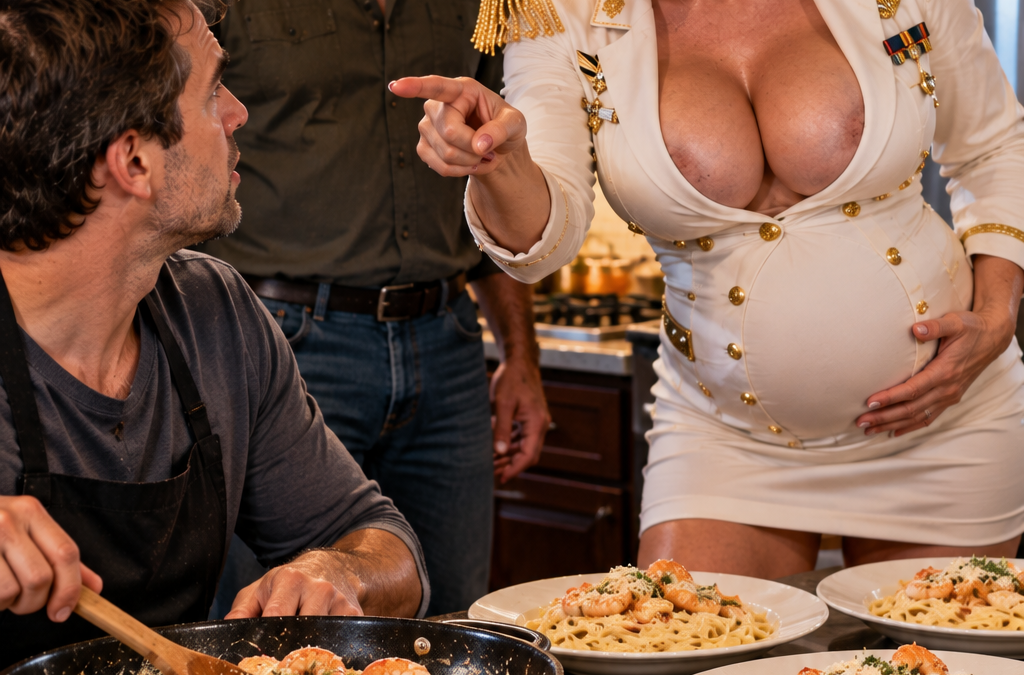
𝗙𝗨𝗟𝗟 𝗦𝗧𝗢𝗥𝗬
She stirred her coffee.
“I thought you had made extra.”
“I made lunch.”
Her smile thinned.
“Of course.”
There was something about the way she said it.
Not disappointment.
Judgment.
I poured my coffee.
Karen watched me.
“Pregnancy cravings are brutal.”
“I’m sure.”
“You wouldn’t understand.”
“Probably not.”
She laughed softly.
Not because anything was funny.
Then she said, “It just seemed strange after you shared before.”
There it was.
The shrimp Alfredo had not been interpreted as kindness.
It had been interpreted as precedent.
“I shared because I had extra.”
“Right.”
She took another sip.
“I guess I misunderstood what kind of person you were.”
I almost laughed.
Instead I carried my coffee downstairs.
That afternoon, I decided I needed to make one serious attempt at peace.
I was not interested in spending months fighting over food.
I sent Mark a polite message referring to the lease.
I explained that I bought groceries according to my own budget.
I reminded him that our agreement stated food was separate.
Then I offered a compromise.
I had professional cooking experience.
If they wanted regular cooked meals, I would happily prepare one family dinner each week in exchange for fifty dollars off my rent per meal.
Two hundred dollars off each month.
They would buy the ingredients.
I would provide the labor.
Honestly, it was a generous offer.
Private meal preparation costs money.
My time had value.
Mark responded with laughing emojis.
Then:
You’re serious?
Yes.
He answered:
We’re not paying you to make dinner in our own kitchen.
That sentence irritated me more than it should have.
I replied:
Then we’ll keep food separate, as stated in the lease.
No answer.
I made my decision that night.
I was leaving when the lease ended on October 31.
I started searching immediately.
Within days, I found a small studio that would give me a month-to-month lease while I finished saving.
It wasn’t as cheap.
It wasn’t as spacious.
But nobody upstairs would be calculating the number of fish fillets on my plate.
From that moment forward, I stopped trying to preserve a relationship that didn’t exist.
I followed the lease.
Exactly.
Food separate.
If they wanted rules, I would respect the rules.
Every delicious inch of them.
The first meal was red-wine-braised short ribs with baked macaroni and cheese.
I didn’t make it to torture them.
Not entirely.
I genuinely wanted short ribs.
But I will admit that when I remembered Mark’s laughing response to my meal proposal, I chose the most aromatic version I knew.
I browned the ribs hard.
Garlic.
Onion.
Herbs.
Red wine.
Stock.
Then into the oven low and slow.
The smell began quietly.
Within thirty minutes, it was everywhere.
By the second hour, the entire main floor smelled like a high-end restaurant on a winter night.
Rich beef.
Wine.
Rosemary.
Roasted garlic.
Butter.
Cheese from the macaroni browning in the oven.
Mark and Karen were sitting in the adjoining living room.
They could see the kitchen from their couch.
I could feel them watching me.
I stirred the sauce.
Didn’t look over.
Karen finally spoke.
“What is that?”
“Short ribs.”
Silence.
Then Mark said, “Smells good.”
“Thanks.”
I checked the oven.
Karen shifted on the couch.
“How much did you make?”
There it was.
I turned.
“Enough for dinner and lunch.”
Her lips pressed together.
“Of course.”
I smiled.
Then returned to cooking.
They glared at me for nearly an hour.
I didn’t offer anything.
When the food was done, I cleaned every surface.
Washed the pots.
Wiped the stove.
Packed the leftovers.
Then carried everything downstairs.
The only thing I left behind was the smell.
I sat on my couch eating tender short ribs while imagining them upstairs opening a frozen burrito.
Petty?
Yes.
But extremely satisfying.
The next night I made hot-honey fried chicken.
Again, the living room went silent when the smell reached them.
Karen watched me fry the chicken.
Mark looked toward the kitchen every few minutes.
Nobody spoke.
I didn’t offer.
Afterward I cleaned.
Packed my leftovers.
Went downstairs.
A few days later, I made coconut curry chicken with saffron rice and a mango lassi.
That was when things stopped being merely uncomfortable.
I had the curry simmering on the stove.
Coconut milk.
Ginger.
Garlic.
Spices.
The kitchen smelled incredible.
I blended mango, yogurt, milk, and cardamom for the lassi.
Then realized I’d left my cardamom powder downstairs.
Mark had been wandering around the kitchen while I cooked.
Not doing anything useful.
Opening cabinets.
Closing drawers.
Looking inside the refrigerator.
Moving objects for no obvious reason.
He was making me uncomfortable.
Eventually he went back to the living room.
I needed the cardamom.
So I went downstairs.
Halfway down, something bothered me.
I can’t explain it.
Maybe Mark’s strange cabinet routine.
Maybe Karen’s expression.
Maybe instinct.
I grabbed the cardamom.
Then came back upstairs quietly.
I didn’t close the basement door.
I climbed slowly.
Peered around the doorway.
And saw Karen standing over my curry.
She had lifted the lid.
Not just standing nearby.
Not checking the stove.
She had the lid in her hand and was leaning over the pot.
My stomach dropped.
“What the hell are you doing?”
Karen jumped.
The lid clattered against the pot.
She turned.
For one instant she looked guilty.
Then the arrogance returned.
“I’m looking.”
“At my food?”
“It’s my kitchen.”
“Put the lid down.”
She did.
I came fully into the room.
“What were you doing?”
“I just told you.”
“No. You were standing over my food after I left the room.”
Karen rolled her eyes.
“Don’t be dramatic.”
“Did you touch it?”
“What?”
“Did you touch my food?”
Her expression hardened.
“Excuse me?”
“Did you put anything in it?”
That offended her.
Or she pretended it did.
“Are you accusing me of poisoning you?”
“I’m asking what you did.”
Karen planted one hand on her hip.
Her white jacket pulled tightly across her chest as she stared at me.
“I live here. I am allowed to see what is happening in my own kitchen.”
“Not inside my pot.”
“You’re being ridiculous.”
“Then explain why you waited until I went downstairs.”
Her eyes flicked toward the living room.
Mark didn’t move.
That told me everything.
He’d been involved somehow.
Maybe he’d told her the coast was clear.
Maybe the cabinet nonsense had been distraction.
I couldn’t prove it.
But I knew what I’d seen.
Karen gave an exaggerated shrug.
“I smelled something good. I looked.”
“And that’s all?”
She smiled.
“Paranoid much?”
Then she turned and walked out.
No apology.
No explanation.
Nothing.
I stood there staring at the curry.
I hated that I even had to question whether it was safe.
Eventually I ate it.
But after that, I stopped leaving food unattended.
I bought a lock for the mini fridge.
Another for my pantry.
I installed a Ring camera downstairs.
If they were willing to hover over my food when they thought I couldn’t see them, I wasn’t going to assume boundaries meant anything anymore.
Two days later, I baked bread.
Fresh dough.
Flour on my hands.
Yeast.
Salt.
Warm water.
I let it rise downstairs, then brought it up and put it in the oven.
Alongside it, I roasted a Cornish game hen with rosemary, garlic, and truffle butter I’d gotten from work.
The smell was obscene.
In the best possible way.
This time I stayed in the kitchen.
I brought a book.
Sat at the table.
Read while my dinner cooked.
Nobody was touching anything.
About an hour later, Mark entered.
He opened the freezer.
Pulled out a frozen pizza.
“I need the oven.”
I looked at the timer.
“I’ll be done in about twenty minutes.”
He frowned.
“We need to eat.”
“So do I.”
“This is our kitchen.”
“And the lease gives me shared use.”
His jaw moved.
For a moment, I thought we’d finally have the real argument.
Then he threw the frozen pizza onto the counter.
“Twenty minutes.”
“That’s what I said.”
He went back to the living room.
Karen watched him sit.
Then stared at me.
I read my book.
When my food finished, I removed it.
Cleaned everything.
The oven was already hot.
Since Mark’s pizza was sitting on the counter, I left the oven on for him.
Courtesy.
That was apparently another mistake.
About thirty minutes after I went downstairs, my phone buzzed.
Mark.
Do you intend to burn the house down and kill my family?
I actually laughed out loud.
I typed:
What?
You left the oven on.
I stared at the message.
Then wrote:
I thought you were cooking the pizza you said you needed the oven for. I left it on so you wouldn’t have to preheat again.
He responded quickly.
It’s fine. It just upset Karen.
Of course it did.
Then:
Maybe you could make it up to her by giving her some of that bread.
I looked at the loaf cooling beside me.
Beautiful crust.
Perfect color.
I wrote:
Sorry. That’s for my lunch tomorrow.
Then, because I wanted the paper trail, I added:
My offer still stands to cook one family meal per week for reduced rent if you purchase ingredients.
No response.
For two days, they barely spoke to me.
That was fine.
I preferred silence.
Then came the French onion soup.
I was sitting in the kitchen reading while onions caramelized.
The soup needed patience.
Low heat.
Butter.
Onions slowly turning deep brown.
I had stock ready.
Bread for croutons.
Cheese.
I was using one burner.
That detail matters.
One.
The rest of the kitchen was quiet.
Mark was sitting in the living room looking at his phone.
Karen was beside him.
She wore another fitted white outfit, the jacket open low and tight across her chest.
She caught me looking once.
Not at her body.
At her expression.
She smiled.
Not pleasantly.
Mark checked his phone.
Then stood.
“I’m going upstairs.”
I barely noticed.
Three minutes later, everything in the kitchen died.
Stove.
Lights.
Refrigerator hum.
Gone.
The living room lights stayed on.
I froze.
Karen stood almost immediately.
“What did you do?”
I looked at her.
“Nothing.”
“The power!”
“I see that.”
She stormed toward the kitchen.
Pregnancy hadn’t reduced her ability to move quickly when she was angry.
“You overloaded something.”
“I’m using one burner.”
“You are constantly running appliances.”
“Not right now.”
“This house has older wiring.”
“Then why is the living room still on?”
Her face tightened.
Footsteps came down the stairs.
Mark appeared.
Calm.
Too calm.
He looked around.
“Huh.”
I watched him.
Karen said, “She blew the kitchen.”
Mark glanced toward me.
“Probably the breaker.”
“With one burner?”
He shrugged.
“Old wiring.”
Then he went back upstairs.
Power returned a few minutes later.
Magically.
I said nothing.
Finished the soup.
Cleaned the kitchen.
Went downstairs.
My phone buzzed almost immediately.
Mark.
Maybe take it easy with cooking. The wiring is fragile.
I stared at that message for a long time.
Now I was angry.
Not irritated.
Not amused.
Angry.
Because this wasn’t about food anymore.
They were interfering with my ability to use part of the property I rented.
And worse, they were trying to convince me I was causing the problem.
The kitchen wiring had handled the oven, stovetop, and blender simultaneously when I made curry and the mango lassi.
Now one burner supposedly overloaded the system?
No.
I believed Mark had flipped the breaker.
I couldn’t prove it.
But I believed it.
I took screenshots.
Saved every message.
Created a folder.
Landlord texts.
Lease.
Photos of the kitchen after I cleaned.
Receipts.
Video from downstairs.
Move-out plan.
From then on, I treated every interaction like something I might eventually need to show someone else.
Karen noticed.
“What are you doing?”
She asked that one evening when I took a picture of the spotless stove before going downstairs.
“Documenting.”
“Documenting what?”
“How I leave the kitchen.”
“Why?”
I looked at her.
“Just being responsible.”
She knew.
I saw it.
Her eyes narrowed.
“You seem determined to make living here unpleasant.”
That nearly took my breath away.
“Me?”
“Yes.”
“I cook my own food, clean everything, pay rent, and stay downstairs.”
“You parade elaborate meals in front of a pregnant woman.”
I stared at her.
“Parade?”
“Don’t pretend you don’t know what you’re doing.”
“I’m preparing dinner.”
“You deliberately choose things that smell strong.”
“I cook food.”
“Every night it’s something.”
“Because I eat every night.”
Her face flushed.
“You know exactly how cruel that is.”
Something inside me finally snapped.
Not loudly.
Quietly.
I set my grocery bag on the counter.
“Karen, my eating dinner is not cruelty.”
“You don’t understand pregnancy.”
“No. But I understand grocery bills.”
“We’re not asking for everything.”
“You complained over half my salmon.”
“Because you made extra.”
“For lunch.”
“You could make more.”
“If you pay for it.”
Her eyes flashed.
“There you go again.”
“Yes. There I go again expecting adults to buy their own food.”
She stepped closer.
“Watch how you speak to me in my house.”
I didn’t move.
“I pay to live here.”
“It’s still our house.”
“And this kitchen is shared under my lease.”
Her expression became cold.
“You really like waving that lease around.”
“Because it’s the agreement.”
“You think a piece of paper makes you untouchable?”
I felt a chill.
“Untouchable?”
Karen smiled.
“We could decide this arrangement isn’t working.”
There it was again.
The house.
The threat.
My home used as pressure.
I looked at her for several seconds.
“October thirty-first.”
“What?”
“That’s when I’m leaving.”
For the first time, she looked surprised.
“You found somewhere?”
“Yes.”
She recovered quickly.
“Good.”
“Good.”
“I think that’s best.”
“So do I.”
Karen lifted her chin.
“Maybe wherever you go next, you’ll learn that sharing is basic courtesy.”
I picked up my groceries.
“Maybe wherever I go next, my landlord will understand rent isn’t a meal subscription.”
Her face went red.
I walked downstairs before she could answer.
After that, the tension changed.
Before, they had wanted my food.
Now they also knew they were losing control over me.
That made them meaner.
Mark became obsessed with rules.
Not actual lease rules.
New rules.
Kitchen usage windows.
Noise concerns.
Smells.
He once texted me asking if I could avoid “heavy cooking” after seven.
The lease had no cooking-hour restrictions.
I replied with the relevant section.
No response.
Karen started appearing in the kitchen whenever I cooked.
Always watching.
Sometimes commenting.
“More garlic?”
“Yes.”
“That’s a lot of butter.”
“Okay.”
“Do you really need all that cheese?”
“I do.”
“You cook very rich food.”
“Thank you.”
“It wasn’t a compliment.”
“I know.”
She hated that I wouldn’t fight.
What she wanted was emotional control.
If I yelled, she could call me unstable.
If I apologized, she’d push harder.
So I became painfully polite.
And I kept cooking.
Not just fancy food.
Food I wanted.
Roasted chicken.
Risotto.
Steak.
Pasta.
Fresh bread.
Soup.
Rice bowls.
Everything portioned for me and sometimes lunch the next day.
Never them.
One night, I came upstairs and found Karen standing beside my locked pantry wardrobe downstairs.
The Ring camera had already notified me.
“What are you doing?”
She turned.
“Nothing.”
“Why are you in my basement?”
“I heard something.”
“What?”
“I don’t know.”
She looked toward the lock.
“Why is that locked?”
“Because it’s mine.”
Her face changed.
“You don’t trust us?”
I laughed.
I couldn’t help it.
Karen’s eyes hardened.
“I’m serious.”
“So am I.”
“You installed a camera too.”
“Yes.”
“Are you recording us?”
“You’re in my rented space.”
“You have no right to record my family.”
“It’s pointed at my belongings and the entrance.”
She stepped toward me.
“Take it down.”
“No.”
“Mark will deal with this.”
“He can read the lease.”
That night, Mark sent a long message.
He called the camera “hostile.”
He said Karen felt “unsafe.”
He suggested that my behavior was making the home environment uncomfortable.
I saved it.
Then answered:
The camera is located inside my rented basement space and monitors my personal belongings. It does not record private areas used by your family. If you believe this violates the lease, please identify the relevant clause in writing.
He never did.
By then, my new studio was confirmed.
Deposit paid.
Move-in date October 31.
I started packing slowly.
The sight of boxes seemed to irritate Karen even more.
She wanted me gone, but she didn’t like being the one abandoned.
That was my read, anyway.
Control mattered to her more than the actual outcome.
A week before move-out, Mark stopped me in the kitchen.
“We need to discuss cleaning.”
“What about it?”
“After you leave.”
“I’ll clean my unit.”
“Professional standard.”
“What does the lease require?”
His jaw tightened.
“Reasonably clean.”
“Then that’s what you’ll get.”
“Karen thinks the downstairs carpet may need professional treatment.”
“There are no stains.”
“She smelled cooking downstairs.”
I stared at him.
“Cooking?”
“Food odors.”
“The kitchen is upstairs.”
“Smells travel.”
“Are you planning to charge my deposit for food smells?”
“I didn’t say that.”
“You implied it.”
Mark stepped closer.
“You’re always looking for a fight.”
“No. I’m always asking you to say clearly what you mean.”
His face darkened.
“You’ve made this whole situation difficult.”
“You asked me to feed your wife.”
“I asked you to be considerate.”
“You threatened my lease over salmon.”
“That isn’t what happened.”
“I have the text.”
That stopped him.
I watched his expression change.
“What?”
“I saved everything.”
He stared.
“The salmon message. The oven message. The wiring message. Everything.”
I kept my voice calm.
“And I take pictures of the kitchen after I use it.”
Mark looked toward the basement door.
“The camera too?”
“Yes.”
His whole posture changed.
Not dramatically.
But enough.
People become much more reasonable when they realize their behavior exists somewhere outside their own memory.
He stepped back.
“I don’t think there’s any reason to make this adversarial.”
I nearly smiled.
“Neither do I.”
From that day until move-out, the breaker never mysteriously failed again.
Nobody entered my basement.
Nobody touched my food.
Interesting coincidence.
October 30 was my last full night.
I considered ordering takeout.
Then decided against it.
I wanted one final dinner.
Not revenge.
Closure.
I made shrimp Alfredo.
The same meal I’d made on my first night.
Same garlic.
Same cream.
Same Parmesan.
Same kind of shrimp.
But this time, I made exactly enough for myself.
Karen came into the kitchen while I was finishing the sauce.
She stopped.
I saw recognition.
“Is that the same thing?”
“As what?”
“Your first night.”
“Oh.”
I looked at the pan.
“Yeah.”
For once, she didn’t sound angry.
She sounded almost nostalgic.
“That was really good.”
“Thanks.”
She rested one hand on the counter.
Her white jacket was unbuttoned lower than usual, stretched over her pregnant stomach and chest.
For a few seconds, neither of us spoke.
Then she said, “You know this whole thing didn’t have to get so weird.”
I almost couldn’t believe it.
“No.”
“It didn’t.”
She looked at me.
“We liked having you here at first.”
“Until I didn’t give you salmon.”
Her mouth tightened.
“You’re still stuck on that.”
“It started everything.”
“It wasn’t about salmon.”
“Then what was it about?”
Karen looked away.
I waited.
Finally she said, “It felt disrespectful.”
“How?”
“We rent you part of our home.”
“For money.”
“You keep saying that.”
“Because it matters.”
“We let you use our kitchen.”
“The kitchen access is included in the rent.”
Her face hardened again.
The moment of honesty vanished.
“You always have to make everything transactional.”
“No.”
I turned off the burner.
“You made it transactional the moment you threatened my housing because I didn’t give you dinner.”
“I never threatened you.”
“Mark did.”
“He was defending me.”
“From my lunch?”
Karen folded her arms.
“Forget it.”
“I wish I could.”
She stared at the Alfredo.
Then asked quietly, “Is there extra?”
I looked at her.
I genuinely thought she was joking.
She wasn’t.
After all of it.
The messages.
The threats.
The glares.
The pot.
The breaker.
The arguments.
The locks.
The camera.
The move.
Karen still looked at my food and believed asking was normal.
“No.”
Her jaw tightened.
“Of course not.”
I plated dinner.
Cleaned the kitchen.
Packed my pan.
Then carried my final meal downstairs.
The next morning I moved out.
I had already boxed almost everything.
A coworker helped me with the heavier furniture.
My studio wasn’t beautiful.
The building was older.
The bathroom was tiny.
The view was mostly another building.
But when I opened the door, I saw something the basement had never given me.
A kitchen.
My kitchen.
Small stove.
Small oven.
Tiny counter.
But mine.
No shared living room beside it.
No landlord staring from a couch.
No pregnant Karen lifting the lid of my pots.
No texts about salmon.
No threats over bread.
I returned to the basement that afternoon for the final walk-through.
Mark came downstairs.
Karen followed.
She wore white, of course.
A fitted white jacket with gold buttons, deep neckline, white trousers.
Even at the end, she dressed like she was reporting to command.
The basement was spotless.
Carpet vacuumed.
Bathroom scrubbed.
Walls clean.
Mini fridge gone.
Pantry wardrobe gone.
Camera removed.
Mark walked around looking for something.
Anything.
He opened the bathroom door.
Checked corners.
Looked inside the closet.
Karen ran one finger across a shelf.
Nothing.
Finally Mark said, “Looks fine.”
I nodded.
“Good.”
Karen looked toward the empty space where my mini fridge had been.
“So you’re really going.”
I almost laughed.
“I told you I was.”
She shrugged.
“We’ll find someone else.”
“I’m sure.”
Mark held out a paper confirming the move-out condition.
I read it before signing.
He noticed.
“You really don’t trust anybody, do you?”
I looked at him.
“I trust agreements.”
That silenced him.
I signed.
Took my copy.
Picked up my last bag.
At the basement door, Karen said, “For what it’s worth, I think this could’ve worked if you’d been more flexible.”
I turned.
“Flexible how?”
She hesitated.
Then smiled.
That same beautiful, condescending smile from the day I’d moved in.
“You know.”
I did.
Give them salmon.
Give them bread.
Give them short ribs.
Give them curry.
Give them whatever smelled good enough to want.
And once that became normal, keep doing it.
Because kindness had been reclassified as obligation.
“No,” I said. “I don’t.”
Then I left.
The studio cost more.
My savings grew more slowly for a while.
But I never regretted moving.
The first dinner I cooked there was simple.
Garlic chicken.
Roasted potatoes.
Green beans.
Nothing elaborate.
I cooked with music playing.
No one stared at me.
No one counted portions.
No one asked whether the second piece was theirs.
I ate at the little table beside my window.
And halfway through dinner, I realized something.
I wasn’t listening for footsteps.
At the basement, I’d developed the habit without noticing.
Cooking had stopped being relaxing.
I was always listening.
For Mark leaving the couch.
For Karen entering the kitchen.
For cabinets opening.
For the basement door.
For the power cutting out.
For my phone buzzing with another ridiculous message.
In my studio, there was only the refrigerator hum and music.
I sat there longer than I needed to.
It felt like my body was learning that no one was coming.
By New Year’s, I was close to my savings goal again.
Work was going well.
I kept cooking.
Of course I did.
Cooking had been part of my life long before Mark and Karen decided aromas created legal ownership.
Sometimes coworkers came over.
Sometimes I brought food to work.
Sometimes I shared with neighbors.
I didn’t stop being generous.
That mattered to me.
For a while, I had worried that the experience would make me guarded.
That I’d become the kind of person who never offered anybody anything because someone might take advantage.
But generosity hadn’t been the problem.
Entitlement had.
There is a difference.
If I offer you a plate of food, that’s kindness.
If you expect the next plate because I offered the first one, that’s entitlement.
If you become angry when I say no, that’s control.
And if you threaten my housing because I refuse?
That’s something else entirely.
Months later, one of my old coworkers asked whether I ever heard from Mark and Karen.
“No.”
“Do you think they found another tenant?”
“Probably.”
She laughed.
“Think the new person cooks?”
“For their sake, I hope not.”
She knew the story.
Everybody at work did.
They had watched me pack lunches during those weeks.
Short ribs.
Curry.
Fresh bread.
French onion soup.
They had heard the latest absurdity every few days.
My coworker shook her head.
“I still can’t believe someone demanded salmon from their tenant.”
I smiled.
“Not demanded.”
“Oh?”
“Apparently I was supposed to understand.”
“Understand what?”
“That pregnancy rewrites property law.”
She laughed so hard she nearly spilled her coffee.
The funny version of the story became easier with time.
The salmon.
The bread.
The frozen pizza.
The magical breaker.
Karen investigating my curry like a raccoon caught opening a trash can.
Those parts became funny.
But the part I never laughed about was the first text.
We may need to reconsider this lease.
Because that was where the line had been crossed.
I had been trying to save money.
They knew my lease was short.
They knew moving early would cost me.
And they used that insecurity to pressure me over something as absurd as dinner.
That’s why I stopped giving in.
Not because I cared about one piece of salmon.
I could have given Karen the second fillet.
It probably would’ve cost me six or seven dollars.
I could have cut her some bread.
Shared curry.
Made larger meals.
Maybe that would have kept the peace.
For a week.
Maybe two.
But people who respond to boundaries with pressure rarely become less entitled when you reward them.
The first meal would become two.
Then every Sunday.
Then every time Karen had a craving.
Then, “You’re already cooking.”
Then, “It doesn’t cost that much.”
Then, “We’re letting you use our kitchen.”
Then, “We opened our home to you.”
I could already see the road.
The only question was how far down it I wanted to travel.
So I stopped at the beginning.
I followed the lease.
Their food was theirs.
My food was mine.
That’s exactly what they had demanded when I moved in.
They simply hadn’t expected the rule to apply in both directions.
And in the end, that was what bothered them most.
Not the salmon.
Not the garlic.
Not the bread.
Not even the smell drifting through their living room while they ate frozen pizza.
They had created a boundary believing only I would be bound by it.
Then they discovered boundaries have two sides.
On my first night in that house, I had offered them shrimp Alfredo because I had extra and wanted to be kind.
On my last night, I cooked the same meal.
Same smell.
Same sauce.
Same kind of shrimp.
Karen asked whether there was extra.
There wasn’t.
And for once, I didn’t feel guilty about saying no.
𝗧𝗛𝗘 𝗘𝗡𝗗
My Landlord Threatened My Home Because I Wouldn’t Feed His Pregnant Wife—So I Followed the Lease Exactly
The first time my landlord hinted that my housing depended on whether I fed his wife, I thought I had misunderstood him.
Then he put it in writing.
That was when I stopped treating their entitlement like an awkward misunderstanding and started treating my lease like a weapon.
I was thirty-one when I moved into the basement apartment, and at first I thought I had gotten lucky.
The place wasn’t glamorous, but I wasn’t looking for glamorous.
I was saving money.
That was the entire point.
The basement had its own bedroom, bathroom, and small living area. I had enough room for a couch, a narrow table, a little television, and a mini fridge I’d bought secondhand from a coworker. There was no full kitchen downstairs, so the rental agreement gave me access to the kitchen on the main floor.
That kitchen was shared with my landlord, Mark, his wife, Karen, and their seven-year-old daughter.
Mark was forty-seven.
Karen was forty-four and several months pregnant.
Their daughter was quiet, picky with food, and honestly the only person in the house who never caused me any problems.
The arrangement had been explained very clearly before I moved in.
Food was separate.
Completely separate.
Mark had emphasized that point repeatedly during the tour.
He had opened their refrigerator and pointed toward one side.
“Our groceries are ours.”
“Understood.”
“I don’t want confusion.”
“There won’t be.”
He opened one cabinet.
“Same with pantry food. We don’t share.”
“That’s fine.”
Karen had been standing near the kitchen island while he talked.
She was striking.
There wasn’t really another word for her.
She had carefully styled blonde hair, a beautiful face, and the kind of figure people noticed even when she was trying to look casual.
Karen rarely actually dressed casually, though.
For reasons I never understood, she loved fitted white military-inspired outfits—tight white jackets with bright gold buttons, decorative shoulder pieces, narrow skirts or trousers, and deep-cut collars that emphasized her very large chest.
The outfits weren’t real uniforms.
They were fashion pieces.
But Karen wore them with the authority of someone who had appointed herself commander of every room she entered.
She had a habit of standing with one hand on her hip and looking at people as if she were waiting for them to disappoint her.
That day, during the tour, she smiled at me.
“We’ve had people get too comfortable before.”
I wasn’t sure what that meant.
“I buy my own groceries.”
“Good.”
Her smile sharpened.
“We’re very particular about boundaries.”
That sentence would become funnier later.
At the time, I took it seriously.
The lease itself backed them up.
It specifically said that any food or drinks purchased by the landlord’s family were off-limits to me and that I was responsible for feeding myself and cleaning any mess I created while using the kitchen.
Perfectly reasonable.
I had no problem with it.
I worked in food service and had almost a decade of professional kitchen experience, including years in fine dining. Cooking wasn’t something I tolerated because I had to eat.
I loved it.
After a long shift, chopping garlic or reducing a sauce actually calmed me down.
I kept my own ingredients in my mini fridge downstairs and used a small wardrobe as a pantry.
My pots.
My pans.
My spices.
My utensils.
My ingredients.
I never touched theirs.
Not once.
Mark and Karen, on the other hand, barely cooked.
Their freezer looked like a museum dedicated to convenience food.
Frozen burritos.
Pizza.
Microwave dinners.
Hot Pockets.
Boxes of waffles.
Their pantry was mostly ramen, chips, canned soup, and snack cakes.
Again, none of my business.
People eat what they want.
The trouble started because I made one mistake.
I was nice.
On my first evening in the house, I made shrimp Alfredo.
Nothing complicated.
I had gotten shrimp free from work, so I had more than I needed.
I sautéed garlic in butter, added cream, Parmesan, seasoning, tossed the pasta, cooked the shrimp, and suddenly the whole kitchen smelled like something you’d pay twenty-five dollars for at a restaurant.
Mark appeared first.
He leaned into the kitchen.
“That smells incredible.”
Karen appeared behind him.
She had changed into one of her white outfits, a fitted jacket open low across her chest, and she actually closed her eyes when she smelled the sauce.
“What are you making?”
“Shrimp Alfredo.”
She moved closer.
“From scratch?”
“Yeah.”
Mark looked at the pan.
“You made a lot.”
I laughed.
That should have been my warning.
Instead I said, “I have extra if you guys want some.”
Karen’s eyes opened.
“Seriously?”
“Sure.”
They accepted immediately.
I plated some for them.
Their daughter didn’t want any because she didn’t like shrimp.
Mark ate almost everything before I finished cleaning the skillet.
Karen told me twice how good it was.
“This is better than restaurants.”
“Thanks.”
“You cook like this normally?”
“Pretty often.”
She stared at me for a moment.
Then smiled.
“Well, we’re going to enjoy having you here.”
I thought that was a compliment.
It was actually a prophecy.
A few days later, I made oven-baked salmon with cilantro-lime rice.
Again, simple.
I seasoned two salmon fillets, baked them, finished the rice with lime juice, cilantro, salt, and a little butter.
One piece was dinner.
The other was lunch for work the next day.
I cleaned the kitchen.
Packed tomorrow’s portion.
Took my plate downstairs.
And started eating.
Halfway through dinner, my phone buzzed.
Mark.
I assumed maybe I’d forgotten something upstairs.
The message said:
If you’re going to play in our faces like that, we may need to reconsider this lease.
I stared at the screen.
I read it again.
Then a third time.
I genuinely didn’t know what he was talking about.
I typed:
What do you mean?
His response came almost immediately.
Karen smelled the salmon. She thought you were making enough for everyone.
I looked down at my plate.
Then toward the container in my mini fridge.
Another message appeared.
You made two pieces. You could have given her one.
My confusion shifted into irritation.
I wrote:
The second piece is my lunch tomorrow.
Three dots.
Then:
She’s pregnant.
I waited.
Apparently that was the entire argument.
Pregnancy meant ownership of my salmon.
He continued.
She was really craving it after smelling it.
I put my fork down.
Then came the line that changed how I saw both of them.
We opened our home to you. You should be more considerate.
Opened their home?
I paid rent.
They hadn’t rescued me from a bus station.
We had a contract.
I transferred money every month in exchange for a basement unit and kitchen access.
This wasn’t charity.
I started typing something angry.
Deleted it.
Typed again.
Deleted that too.
Because the real problem wasn’t salmon.
The real problem was the threat in the first message.
We may need to reconsider this lease.
That was my home.
Temporary or not, that was where I lived.
My lease was only sixty days initially, then month-to-month.
I had moved in on September 1 because I was trying to save for something better. My original plan had been to stay about four months, build my savings, then move.
Suddenly I understood exactly how vulnerable that arrangement made me.
Mark knew it too.
Maybe he hadn’t consciously thought, Give my wife your food or lose your home.
But that was the pressure he was applying.
I reread the lease.
Food separate.
Their food off-limits to me.
My responsibility to feed myself.
There wasn’t a single sentence saying I had to feed them.
I slept badly that night.
The next morning, I saw Karen in the kitchen.
She was drinking coffee beside the island.
White fitted trousers.
White jacket.
Gold buttons.
Deep neckline.
Perfect makeup at seven-thirty in the morning.
She looked at me.
I looked at her.
“Morning.”
“Morning.”
That was it.
Then, as I opened the fridge to grab milk for my coffee, she said casually, “The salmon smelled good.”
I turned.
“It was.”
She stirred her coffee.
“I thought you had made extra.”
“I made lunch.”
Her smile thinned.
“Of course.”
There was something about the way she said it.
Not disappointment.
Judgment.
I poured my coffee.
Karen watched me.
“Pregnancy cravings are brutal.”
“I’m sure.”
“You wouldn’t understand.”
“Probably not.”
She laughed softly.
Not because anything was funny.
Then she said, “It just seemed strange after you shared before.”
There it was.
The shrimp Alfredo had not been interpreted as kindness.
It had been interpreted as precedent.
“I shared because I had extra.”
“Right.”
She took another sip.
“I guess I misunderstood what kind of person you were.”
I almost laughed.
Instead I carried my coffee downstairs.
That afternoon, I decided I needed to make one serious attempt at peace.
I was not interested in spending months fighting over food.
I sent Mark a polite message referring to the lease.
I explained that I bought groceries according to my own budget.
I reminded him that our agreement stated food was separate.
Then I offered a compromise.
I had professional cooking experience.
If they wanted regular cooked meals, I would happily prepare one family dinner each week in exchange for fifty dollars off my rent per meal.
Two hundred dollars off each month.
They would buy the ingredients.
I would provide the labor.
Honestly, it was a generous offer.
Private meal preparation costs money.
My time had value.
Mark responded with laughing emojis.
Then:
You’re serious?
Yes.
He answered:
We’re not paying you to make dinner in our own kitchen.
That sentence irritated me more than it should have.
I replied:
Then we’ll keep food separate, as stated in the lease.
No answer.
I made my decision that night.
I was leaving when the lease ended on October 31.
I started searching immediately.
Within days, I found a small studio that would give me a month-to-month lease while I finished saving.
It wasn’t as cheap.
It wasn’t as spacious.
But nobody upstairs would be calculating the number of fish fillets on my plate.
From that moment forward, I stopped trying to preserve a relationship that didn’t exist.
I followed the lease.
Exactly.
Food separate.
If they wanted rules, I would respect the rules.
Every delicious inch of them.
The first meal was red-wine-braised short ribs with baked macaroni and cheese.
I didn’t make it to torture them.
Not entirely.
I genuinely wanted short ribs.
But I will admit that when I remembered Mark’s laughing response to my meal proposal, I chose the most aromatic version I knew.
I browned the ribs hard.
Garlic.
Onion.
Herbs.
Red wine.
Stock.
Then into the oven low and slow.
The smell began quietly.
Within thirty minutes, it was everywhere.
By the second hour, the entire main floor smelled like a high-end restaurant on a winter night.
Rich beef.
Wine.
Rosemary.
Roasted garlic.
Butter.
Cheese from the macaroni browning in the oven.
Mark and Karen were sitting in the adjoining living room.
They could see the kitchen from their couch.
I could feel them watching me.
I stirred the sauce.
Didn’t look over.
Karen finally spoke.
“What is that?”
“Short ribs.”
Silence.
Then Mark said, “Smells good.”
“Thanks.”
I checked the oven.
Karen shifted on the couch.
“How much did you make?”
There it was.
I turned.
“Enough for dinner and lunch.”
Her lips pressed together.
“Of course.”
I smiled.
Then returned to cooking.
They glared at me for nearly an hour.
I didn’t offer anything.
When the food was done, I cleaned every surface.
Washed the pots.
Wiped the stove.
Packed the leftovers.
Then carried everything downstairs.
The only thing I left behind was the smell.
I sat on my couch eating tender short ribs while imagining them upstairs opening a frozen burrito.
Petty?
Yes.
But extremely satisfying.
The next night I made hot-honey fried chicken.
Again, the living room went silent when the smell reached them.
Karen watched me fry the chicken.
Mark looked toward the kitchen every few minutes.
Nobody spoke.
I didn’t offer.
Afterward I cleaned.
Packed my leftovers.
Went downstairs.
A few days later, I made coconut curry chicken with saffron rice and a mango lassi.
That was when things stopped being merely uncomfortable.
I had the curry simmering on the stove.
Coconut milk.
Ginger.
Garlic.
Spices.
The kitchen smelled incredible.
I blended mango, yogurt, milk, and cardamom for the lassi.
Then realized I’d left my cardamom powder downstairs.
Mark had been wandering around the kitchen while I cooked.
Not doing anything useful.
Opening cabinets.
Closing drawers.
Looking inside the refrigerator.
Moving objects for no obvious reason.
He was making me uncomfortable.
Eventually he went back to the living room.
I needed the cardamom.
So I went downstairs.
Halfway down, something bothered me.
I can’t explain it.
Maybe Mark’s strange cabinet routine.
Maybe Karen’s expression.
Maybe instinct.
I grabbed the cardamom.
Then came back upstairs quietly.
I didn’t close the basement door.
I climbed slowly.
Peered around the doorway.
And saw Karen standing over my curry.
She had lifted the lid.
Not just standing nearby.
Not checking the stove.
She had the lid in her hand and was leaning over the pot.
My stomach dropped.
“What the hell are you doing?”
Karen jumped.
The lid clattered against the pot.
She turned.
For one instant she looked guilty.
Then the arrogance returned.
“I’m looking.”
“At my food?”
“It’s my kitchen.”
“Put the lid down.”
She did.
I came fully into the room.
“What were you doing?”
“I just told you.”
“No. You were standing over my food after I left the room.”
Karen rolled her eyes.
“Don’t be dramatic.”
“Did you touch it?”
“What?”
“Did you touch my food?”
Her expression hardened.
“Excuse me?”
“Did you put anything in it?”
That offended her.
Or she pretended it did.
“Are you accusing me of poisoning you?”
“I’m asking what you did.”
Karen planted one hand on her hip.
Her white jacket pulled tightly across her chest as she stared at me.
“I live here. I am allowed to see what is happening in my own kitchen.”
“Not inside my pot.”
“You’re being ridiculous.”
“Then explain why you waited until I went downstairs.”
Her eyes flicked toward the living room.
Mark didn’t move.
That told me everything.
He’d been involved somehow.
Maybe he’d told her the coast was clear.
Maybe the cabinet nonsense had been distraction.
I couldn’t prove it.
But I knew what I’d seen.
Karen gave an exaggerated shrug.
“I smelled something good. I looked.”
“And that’s all?”
She smiled.
“Paranoid much?”
Then she turned and walked out.
No apology.
No explanation.
Nothing.
I stood there staring at the curry.
I hated that I even had to question whether it was safe.
Eventually I ate it.
But after that, I stopped leaving food unattended.
I bought a lock for the mini fridge.
Another for my pantry.
I installed a Ring camera downstairs.
If they were willing to hover over my food when they thought I couldn’t see them, I wasn’t going to assume boundaries meant anything anymore.
Two days later, I baked bread.
Fresh dough.
Flour on my hands.
Yeast.
Salt.
Warm water.
I let it rise downstairs, then brought it up and put it in the oven.
Alongside it, I roasted a Cornish game hen with rosemary, garlic, and truffle butter I’d gotten from work.
The smell was obscene.
In the best possible way.
This time I stayed in the kitchen.
I brought a book.
Sat at the table.
Read while my dinner cooked.
Nobody was touching anything.
About an hour later, Mark entered.
He opened the freezer.
Pulled out a frozen pizza.
“I need the oven.”
I looked at the timer.
“I’ll be done in about twenty minutes.”
He frowned.
“We need to eat.”
“So do I.”
“This is our kitchen.”
“And the lease gives me shared use.”
His jaw moved.
For a moment, I thought we’d finally have the real argument.
Then he threw the frozen pizza onto the counter.
“Twenty minutes.”
“That’s what I said.”
He went back to the living room.
Karen watched him sit.
Then stared at me.
I read my book.
When my food finished, I removed it.
Cleaned everything.
The oven was already hot.
Since Mark’s pizza was sitting on the counter, I left the oven on for him.
Courtesy.
That was apparently another mistake.
About thirty minutes after I went downstairs, my phone buzzed.
Mark.
Do you intend to burn the house down and kill my family?
I actually laughed out loud.
I typed:
What?
You left the oven on.
I stared at the message.
Then wrote:
I thought you were cooking the pizza you said you needed the oven for. I left it on so you wouldn’t have to preheat again.
He responded quickly.
It’s fine. It just upset Karen.
Of course it did.
Then:
Maybe you could make it up to her by giving her some of that bread.
I looked at the loaf cooling beside me.
Beautiful crust.
Perfect color.
I wrote:
Sorry. That’s for my lunch tomorrow.
Then, because I wanted the paper trail, I added:
My offer still stands to cook one family meal per week for reduced rent if you purchase ingredients.
No response.
For two days, they barely spoke to me.
That was fine.
I preferred silence.
Then came the French onion soup.
I was sitting in the kitchen reading while onions caramelized.
The soup needed patience.
Low heat.
Butter.
Onions slowly turning deep brown.
I had stock ready.
Bread for croutons.
Cheese.
I was using one burner.
That detail matters.
One.
The rest of the kitchen was quiet.
Mark was sitting in the living room looking at his phone.
Karen was beside him.
She wore another fitted white outfit, the jacket open low and tight across her chest.
She caught me looking once.
Not at her body.
At her expression.
She smiled.
Not pleasantly.
Mark checked his phone.
Then stood.
“I’m going upstairs.”
I barely noticed.
Three minutes later, everything in the kitchen died.
Stove.
Lights.
Refrigerator hum.
Gone.
The living room lights stayed on.
I froze.
Karen stood almost immediately.
“What did you do?”
I looked at her.
“Nothing.”
“The power!”
“I see that.”
She stormed toward the kitchen.
Pregnancy hadn’t reduced her ability to move quickly when she was angry.
“You overloaded something.”
“I’m using one burner.”
“You are constantly running appliances.”
“Not right now.”
“This house has older wiring.”
“Then why is the living room still on?”
Her face tightened.
Footsteps came down the stairs.
Mark appeared.
Calm.
Too calm.
He looked around.
“Huh.”
I watched him.
Karen said, “She blew the kitchen.”
Mark glanced toward me.
“Probably the breaker.”
“With one burner?”
He shrugged.
“Old wiring.”
Then he went back upstairs.
Power returned a few minutes later.
Magically.
I said nothing.
Finished the soup.
Cleaned the kitchen.
Went downstairs.
My phone buzzed almost immediately.
Mark.
Maybe take it easy with cooking. The wiring is fragile.
I stared at that message for a long time.
Now I was angry.
Not irritated.
Not amused.
Angry.
Because this wasn’t about food anymore.
They were interfering with my ability to use part of the property I rented.
And worse, they were trying to convince me I was causing the problem.
The kitchen wiring had handled the oven, stovetop, and blender simultaneously when I made curry and the mango lassi.
Now one burner supposedly overloaded the system?
No.
I believed Mark had flipped the breaker.
I couldn’t prove it.
But I believed it.
I took screenshots.
Saved every message.
Created a folder.
Landlord texts.
Lease.
Photos of the kitchen after I cleaned.
Receipts.
Video from downstairs.
Move-out plan.
From then on, I treated every interaction like something I might eventually need to show someone else.
Karen noticed.
“What are you doing?”
She asked that one evening when I took a picture of the spotless stove before going downstairs.
“Documenting.”
“Documenting what?”
“How I leave the kitchen.”
“Why?”
I looked at her.
“Just being responsible.”
She knew.
I saw it.
Her eyes narrowed.
“You seem determined to make living here unpleasant.”
That nearly took my breath away.
“Me?”
“Yes.”
“I cook my own food, clean everything, pay rent, and stay downstairs.”
“You parade elaborate meals in front of a pregnant woman.”
I stared at her.
“Parade?”
“Don’t pretend you don’t know what you’re doing.”
“I’m preparing dinner.”
“You deliberately choose things that smell strong.”
“I cook food.”
“Every night it’s something.”
“Because I eat every night.”
Her face flushed.
“You know exactly how cruel that is.”
Something inside me finally snapped.
Not loudly.
Quietly.
I set my grocery bag on the counter.
“Karen, my eating dinner is not cruelty.”
“You don’t understand pregnancy.”
“No. But I understand grocery bills.”
“We’re not asking for everything.”
“You complained over half my salmon.”
“Because you made extra.”
“For lunch.”
“You could make more.”
“If you pay for it.”
Her eyes flashed.
“There you go again.”
“Yes. There I go again expecting adults to buy their own food.”
She stepped closer.
“Watch how you speak to me in my house.”
I didn’t move.
“I pay to live here.”
“It’s still our house.”
“And this kitchen is shared under my lease.”
Her expression became cold.
“You really like waving that lease around.”
“Because it’s the agreement.”
“You think a piece of paper makes you untouchable?”
I felt a chill.
“Untouchable?”
Karen smiled.
“We could decide this arrangement isn’t working.”
There it was again.
The house.
The threat.
My home used as pressure.
I looked at her for several seconds.
“October thirty-first.”
“What?”
“That’s when I’m leaving.”
For the first time, she looked surprised.
“You found somewhere?”
“Yes.”
She recovered quickly.
“Good.”
“Good.”
“I think that’s best.”
“So do I.”
Karen lifted her chin.
“Maybe wherever you go next, you’ll learn that sharing is basic courtesy.”
I picked up my groceries.
“Maybe wherever I go next, my landlord will understand rent isn’t a meal subscription.”
Her face went red.
I walked downstairs before she could answer.
After that, the tension changed.
Before, they had wanted my food.
Now they also knew they were losing control over me.
That made them meaner.
Mark became obsessed with rules.
Not actual lease rules.
New rules.
Kitchen usage windows.
Noise concerns.
Smells.
He once texted me asking if I could avoid “heavy cooking” after seven.
The lease had no cooking-hour restrictions.
I replied with the relevant section.
No response.
Karen started appearing in the kitchen whenever I cooked.
Always watching.
Sometimes commenting.
“More garlic?”
“Yes.”
“That’s a lot of butter.”
“Okay.”
“Do you really need all that cheese?”
“I do.”
“You cook very rich food.”
“Thank you.”
“It wasn’t a compliment.”
“I know.”
She hated that I wouldn’t fight.
What she wanted was emotional control.
If I yelled, she could call me unstable.
If I apologized, she’d push harder.
So I became painfully polite.
And I kept cooking.
Not just fancy food.
Food I wanted.
Roasted chicken.
Risotto.
Steak.
Pasta.
Fresh bread.
Soup.
Rice bowls.
Everything portioned for me and sometimes lunch the next day.
Never them.
One night, I came upstairs and found Karen standing beside my locked pantry wardrobe downstairs.
The Ring camera had already notified me.
“What are you doing?”
She turned.
“Nothing.”
“Why are you in my basement?”
“I heard something.”
“What?”
“I don’t know.”
She looked toward the lock.
“Why is that locked?”
“Because it’s mine.”
Her face changed.
“You don’t trust us?”
I laughed.
I couldn’t help it.
Karen’s eyes hardened.
“I’m serious.”
“So am I.”
“You installed a camera too.”
“Yes.”
“Are you recording us?”
“You’re in my rented space.”
“You have no right to record my family.”
“It’s pointed at my belongings and the entrance.”
She stepped toward me.
“Take it down.”
“No.”
“Mark will deal with this.”
“He can read the lease.”
That night, Mark sent a long message.
He called the camera “hostile.”
He said Karen felt “unsafe.”
He suggested that my behavior was making the home environment uncomfortable.
I saved it.
Then answered:
The camera is located inside my rented basement space and monitors my personal belongings. It does not record private areas used by your family. If you believe this violates the lease, please identify the relevant clause in writing.
He never did.
By then, my new studio was confirmed.
Deposit paid.
Move-in date October 31.
I started packing slowly.
The sight of boxes seemed to irritate Karen even more.
She wanted me gone, but she didn’t like being the one abandoned.
That was my read, anyway.
Control mattered to her more than the actual outcome.
A week before move-out, Mark stopped me in the kitchen.
“We need to discuss cleaning.”
“What about it?”
“After you leave.”
“I’ll clean my unit.”
“Professional standard.”
“What does the lease require?”
His jaw tightened.
“Reasonably clean.”
“Then that’s what you’ll get.”
“Karen thinks the downstairs carpet may need professional treatment.”
“There are no stains.”
“She smelled cooking downstairs.”
I stared at him.
“Cooking?”
“Food odors.”
“The kitchen is upstairs.”
“Smells travel.”
“Are you planning to charge my deposit for food smells?”
“I didn’t say that.”
“You implied it.”
Mark stepped closer.
“You’re always looking for a fight.”
“No. I’m always asking you to say clearly what you mean.”
His face darkened.
“You’ve made this whole situation difficult.”
“You asked me to feed your wife.”
“I asked you to be considerate.”
“You threatened my lease over salmon.”
“That isn’t what happened.”
“I have the text.”
That stopped him.
I watched his expression change.
“What?”
“I saved everything.”
He stared.
“The salmon message. The oven message. The wiring message. Everything.”
I kept my voice calm.
“And I take pictures of the kitchen after I use it.”
Mark looked toward the basement door.
“The camera too?”
“Yes.”
His whole posture changed.
Not dramatically.
But enough.
People become much more reasonable when they realize their behavior exists somewhere outside their own memory.
He stepped back.
“I don’t think there’s any reason to make this adversarial.”
I nearly smiled.
“Neither do I.”
From that day until move-out, the breaker never mysteriously failed again.
Nobody entered my basement.
Nobody touched my food.
Interesting coincidence.
October 30 was my last full night.
I considered ordering takeout.
Then decided against it.
I wanted one final dinner.
Not revenge.
Closure.
I made shrimp Alfredo.
The same meal I’d made on my first night.
Same garlic.
Same cream.
Same Parmesan.
Same kind of shrimp.
But this time, I made exactly enough for myself.
Karen came into the kitchen while I was finishing the sauce.
She stopped.
I saw recognition.
“Is that the same thing?”
“As what?”
“Your first night.”
“Oh.”
I looked at the pan.
“Yeah.”
For once, she didn’t sound angry.
She sounded almost nostalgic.
“That was really good.”
“Thanks.”
She rested one hand on the counter.
Her white jacket was unbuttoned lower than usual, stretched over her pregnant stomach and chest.
For a few seconds, neither of us spoke.
Then she said, “You know this whole thing didn’t have to get so weird.”
I almost couldn’t believe it.
“No.”
“It didn’t.”
She looked at me.
“We liked having you here at first.”
“Until I didn’t give you salmon.”
Her mouth tightened.
“You’re still stuck on that.”
“It started everything.”
“It wasn’t about salmon.”
“Then what was it about?”
Karen looked away.
I waited.
Finally she said, “It felt disrespectful.”
“How?”
“We rent you part of our home.”
“For money.”
“You keep saying that.”
“Because it matters.”
“We let you use our kitchen.”
“The kitchen access is included in the rent.”
Her face hardened again.
The moment of honesty vanished.
“You always have to make everything transactional.”
“No.”
I turned off the burner.
“You made it transactional the moment you threatened my housing because I didn’t give you dinner.”
“I never threatened you.”
“Mark did.”
“He was defending me.”
“From my lunch?”
Karen folded her arms.
“Forget it.”
“I wish I could.”
She stared at the Alfredo.
Then asked quietly, “Is there extra?”
I looked at her.
I genuinely thought she was joking.
She wasn’t.
After all of it.
The messages.
The threats.
The glares.
The pot.
The breaker.
The arguments.
The locks.
The camera.
The move.
Karen still looked at my food and believed asking was normal.
“No.”
Her jaw tightened.
“Of course not.”
I plated dinner.
Cleaned the kitchen.
Packed my pan.
Then carried my final meal downstairs.
The next morning I moved out.
I had already boxed almost everything.
A coworker helped me with the heavier furniture.
My studio wasn’t beautiful.
The building was older.
The bathroom was tiny.
The view was mostly another building.
But when I opened the door, I saw something the basement had never given me.
A kitchen.
My kitchen.
Small stove.
Small oven.
Tiny counter.
But mine.
No shared living room beside it.
No landlord staring from a couch.
No pregnant Karen lifting the lid of my pots.
No texts about salmon.
No threats over bread.
I returned to the basement that afternoon for the final walk-through.
Mark came downstairs.
Karen followed.
She wore white, of course.
A fitted white jacket with gold buttons, deep neckline, white trousers.
Even at the end, she dressed like she was reporting to command.
The basement was spotless.
Carpet vacuumed.
Bathroom scrubbed.
Walls clean.
Mini fridge gone.
Pantry wardrobe gone.
Camera removed.
Mark walked around looking for something.
Anything.
He opened the bathroom door.
Checked corners.
Looked inside the closet.
Karen ran one finger across a shelf.
Nothing.
Finally Mark said, “Looks fine.”
I nodded.
“Good.”
Karen looked toward the empty space where my mini fridge had been.
“So you’re really going.”
I almost laughed.
“I told you I was.”
She shrugged.
“We’ll find someone else.”
“I’m sure.”
Mark held out a paper confirming the move-out condition.
I read it before signing.
He noticed.
“You really don’t trust anybody, do you?”
I looked at him.
“I trust agreements.”
That silenced him.
I signed.
Took my copy.
Picked up my last bag.
At the basement door, Karen said, “For what it’s worth, I think this could’ve worked if you’d been more flexible.”
I turned.
“Flexible how?”
She hesitated.
Then smiled.
That same beautiful, condescending smile from the day I’d moved in.
“You know.”
I did.
Give them salmon.
Give them bread.
Give them short ribs.
Give them curry.
Give them whatever smelled good enough to want.
And once that became normal, keep doing it.
Because kindness had been reclassified as obligation.
“No,” I said. “I don’t.”
Then I left.
The studio cost more.
My savings grew more slowly for a while.
But I never regretted moving.
The first dinner I cooked there was simple.
Garlic chicken.
Roasted potatoes.
Green beans.
Nothing elaborate.
I cooked with music playing.
No one stared at me.
No one counted portions.
No one asked whether the second piece was theirs.
I ate at the little table beside my window.
And halfway through dinner, I realized something.
I wasn’t listening for footsteps.
At the basement, I’d developed the habit without noticing.
Cooking had stopped being relaxing.
I was always listening.
For Mark leaving the couch.
For Karen entering the kitchen.
For cabinets opening.
For the basement door.
For the power cutting out.
For my phone buzzing with another ridiculous message.
In my studio, there was only the refrigerator hum and music.
I sat there longer than I needed to.
It felt like my body was learning that no one was coming.
By New Year’s, I was close to my savings goal again.
Work was going well.
I kept cooking.
Of course I did.
Cooking had been part of my life long before Mark and Karen decided aromas created legal ownership.
Sometimes coworkers came over.
Sometimes I brought food to work.
Sometimes I shared with neighbors.
I didn’t stop being generous.
That mattered to me.
For a while, I had worried that the experience would make me guarded.
That I’d become the kind of person who never offered anybody anything because someone might take advantage.
But generosity hadn’t been the problem.
Entitlement had.
There is a difference.
If I offer you a plate of food, that’s kindness.
If you expect the next plate because I offered the first one, that’s entitlement.
If you become angry when I say no, that’s control.
And if you threaten my housing because I refuse?
That’s something else entirely.
Months later, one of my old coworkers asked whether I ever heard from Mark and Karen.
“No.”
“Do you think they found another tenant?”
“Probably.”
She laughed.
“Think the new person cooks?”
“For their sake, I hope not.”
She knew the story.
Everybody at work did.
They had watched me pack lunches during those weeks.
Short ribs.
Curry.
Fresh bread.
French onion soup.
They had heard the latest absurdity every few days.
My coworker shook her head.
“I still can’t believe someone demanded salmon from their tenant.”
I smiled.
“Not demanded.”
“Oh?”
“Apparently I was supposed to understand.”
“Understand what?”
“That pregnancy rewrites property law.”
She laughed so hard she nearly spilled her coffee.
The funny version of the story became easier with time.
The salmon.
The bread.
The frozen pizza.
The magical breaker.
Karen investigating my curry like a raccoon caught opening a trash can.
Those parts became funny.
But the part I never laughed about was the first text.
We may need to reconsider this lease.
Because that was where the line had been crossed.
I had been trying to save money.
They knew my lease was short.
They knew moving early would cost me.
And they used that insecurity to pressure me over something as absurd as dinner.
That’s why I stopped giving in.
Not because I cared about one piece of salmon.
I could have given Karen the second fillet.
It probably would’ve cost me six or seven dollars.
I could have cut her some bread.
Shared curry.
Made larger meals.
Maybe that would have kept the peace.
For a week.
Maybe two.
But people who respond to boundaries with pressure rarely become less entitled when you reward them.
The first meal would become two.
Then every Sunday.
Then every time Karen had a craving.
Then, “You’re already cooking.”
Then, “It doesn’t cost that much.”
Then, “We’re letting you use our kitchen.”
Then, “We opened our home to you.”
I could already see the road.
The only question was how far down it I wanted to travel.
So I stopped at the beginning.
I followed the lease.
Their food was theirs.
My food was mine.
That’s exactly what they had demanded when I moved in.
They simply hadn’t expected the rule to apply in both directions.
And in the end, that was what bothered them most.
Not the salmon.
Not the garlic.
Not the bread.
Not even the smell drifting through their living room while they ate frozen pizza.
They had created a boundary believing only I would be bound by it.
Then they discovered boundaries have two sides.
On my first night in that house, I had offered them shrimp Alfredo because I had extra and wanted to be kind.
On my last night, I cooked the same meal.
Same smell.
Same sauce.
Same kind of shrimp.
Karen asked whether there was extra.
There wasn’t.
And for once, I didn’t feel guilty about saying no.