𝗙𝗨𝗟𝗟 𝗦𝗧𝗢𝗥𝗬 My Boss Stole My Wages, Fired Me for Asking Questions, and Dared Me to Report Her—So I Did
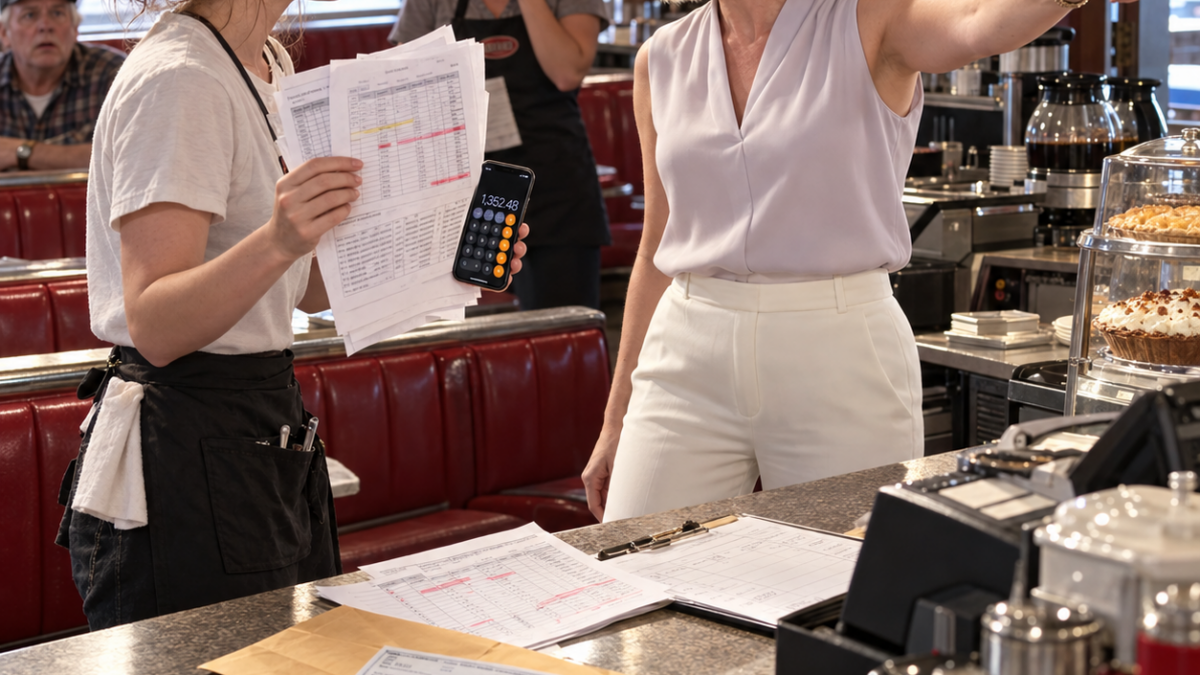
𝗙𝗨𝗟𝗟 𝗦𝗧𝗢𝗥𝗬
Door closed.
She stayed there several minutes.
Then came out carrying envelopes.
No written breakdown.
No calculation sheet.
No record showing total tips collected.
Just envelopes.
Melissa told me quietly:
“Count what you personally handle.”
“What do you mean?”
“Remember your tables.”
“I can’t remember every dollar.”
“You’ll start.”
“Why?”
“If you have a big night and the envelope’s tiny, you’ll want to know.”
That worried me.
But my first week wasn’t busy enough to prove anything.
I was new.
Small section.
Lots of mistakes.
Maybe my envelope should have been small.
Then I had my first great Friday.
Everything clicked.
I had two large parties and several smaller tables.
One couple tipped twenty-five percent.
A family left nearly thirty dollars.
A group of six left more than forty.
I wasn’t exactly calculating every penny while working, but by the end of the night I knew I had personally handled at least a hundred dollars in cash tips.
Probably more.
We pooled everything.
Karen disappeared into the office.
She returned.
My envelope contained a little over forty dollars.
I counted twice.
Melissa was across the room.
Our eyes met.
She barely moved her head.
A tiny shake.
That’s when I knew.
I wanted to ask Karen immediately.
I didn’t.
Fear beat anger.
I went home.
Opened a notebook.
Wrote the date.
Listed every table I remembered.
Approximate bill.
Approximate tip.
Shift hours.
Amount received.
That notebook became my insurance policy.
The next paycheck made everything worse.
Karen handed checks out dramatically during a staff meeting.
“Remember,” she announced, “your real money is the tips. Government steals half the hourly anyway.”
Everybody ignored her.
I opened mine.
The hourly rate looked wrong.
Not just low.
Below what I had expected even for tipped work.
Then I checked the hours.
Twenty-three.
I stared.
I had documented around thirty-two.
Nine hours missing.
Nine.
I went home and compared everything.
It wasn’t one missing shift.
That would almost have been easier.
The time disappeared in pieces.
Thirty minutes before clock-in.
Forty minutes after clock-out.
An hour here.
Twenty minutes there.
Every shift had been shaved.
Exactly the pattern Melissa warned me about.
I still doubted myself.
Maybe I calculated incorrectly.
Maybe there were rules I didn’t understand.
Maybe breaks.
Maybe payroll periods.
That is what wage theft often relies on.
Not ignorance exactly.
Uncertainty.
You’re young.
You’re inexperienced.
Your boss sounds confident.
Maybe you’re wrong.
So I didn’t confront Karen yet.
I documented more carefully.
Next pay period, I tracked everything.
Scheduled arrival.
Actual arrival.
When Karen permitted clock-in.
When she told me to clock out.
When I stopped working.
Every side-work period.
Tips handled.
Tips returned.
Then paycheck two arrived.
Same pattern.
Hours missing.
Rate wrong.
Tip money impossible to reconcile.
I started using a spreadsheet.
My mother calls this “quiet rage organizing.”
Don’t scream.
Don’t threaten.
Make columns.
Date.
Scheduled shift.
Actual arrival.
Clock-in.
Clock-out.
Actual departure.
Unpaid work.
Tips collected.
Tip payout.
Paycheck hours.
Differences.
I took phone pictures of the weekly schedule.
Pictures of time cards whenever I could.
I kept every pay stub.
I photographed handwritten instructions Karen left.
Soon I had evidence.
Not proof of every stolen dollar.
But a pattern.
A very clear pattern.
Meanwhile, the diner culture made more sense.
Karen ran everything through fear and favoritism.
If she liked you, you got Friday and Saturday night.
Large section.
Regular customers.
Better tips.
If you questioned her, suddenly you worked Tuesday afternoon near the bathrooms.
She told stories constantly about former employees.
“Lazy.”
“Entitled.”
“Dishonest.”
“Couldn’t handle real work.”
One afternoon, a teenage busser quietly asked why an hour was missing from his check.
Karen exploded in front of everyone.
“Are you accusing me of stealing?”
The kid went pale.
“No.”
“Then don’t stand there acting like I owe you money because you forgot when you clocked out.”
“I just thought—”
“You thought wrong.”
He never asked again.
A cook once mentioned overtime.
Karen laughed.
“We don’t do overtime.”
The cook said:
“I worked over forty.”
“Then I cut you under forty next week.”
“That’s not how overtime—”
“I said we don’t do overtime.”
Conversation over.
Employees complained privately.
Melissa.
Line cooks.
Dishwasher.
Busser.
Everyone had stories.
Missing hours.
Tip envelopes too small.
Unpaid side work.
But whenever someone suggested reporting it, the same hopeless responses came.
“She’ll deny everything.”
“Who’s going to believe us?”
“I need the job.”
“I’ve got kids.”
“She’ll cut my shifts.”
“She knows everybody in town.”
That last one mattered.
Small towns have their own economy of fear.
Karen knew other restaurant owners.
Or claimed she did.
People believed she could make calls.
Tell people someone was difficult.
Destroy a reference.
Most employees couldn’t risk it.
I was scared too.
But my situation was different.
I was broke.
Not trapped.
No children.
No mortgage.
No spouse relying on the insurance.
If I lost the job, I would suffer.
But I could recover.
Karen sensed my vulnerability before I recognized my leverage.
The breaking point came during the worst week I ever worked there.
A server’s child got sick.
A line cook disappeared midweek and never returned.
Karen panicked.
Suddenly, the college kid she always treated like disposable labor became essential.
She scheduled me constantly.
Double shifts.
Extra evening.
Weekend.
At least forty-five hours I could directly prove from clock activity and schedules.
Once you added the unpaid prep and side work, I was probably over fifty.
I barely attended to school.
I submitted an assignment late.
I fell asleep once in the campus library with my laptop open.
I survived on coffee and scraps from the kitchen.
But I kept telling myself:
The paycheck will be worth it.
I actually made a budget.
Rent.
Groceries.
Gas.
A late utility payment.
Maybe buy something besides noodles.
Payday arrived.
Karen walked around with her stack of checks.
“Here you go.”
I opened mine.
Smaller than the previous check.
At first I thought I had the wrong envelope.
I checked the name.
Mine.
Hours listed:
Thirty-seven.
No overtime.
No forty-five.
Definitely none of the extra unpaid work.
Same improper hourly rate.
There was also some vague adjustment line I didn’t understand.
I felt something inside me change.
Not an explosion.
A click.
Fear had been protecting Karen.
That morning, fear stopped working.
I didn’t confront her immediately.
That was probably the smartest thing I did.
I finished the shift.
Went home.
Spread everything across my bedroom floor.
Notebook.
Pay stubs.
Schedules.
Photographs.
Spreadsheet.
Time cards.
For hours, I reconstructed every shift.
I highlighted discrepancies.
Red for unpaid hours.
Yellow for tip issues.
Blue for times Karen had required work outside the clock.
Then I calculated the amount.
A little over four hundred dollars.
In about two months.
Four hundred dollars that should have paid my rent.
Bought groceries.
Filled my gas tank.
Paid for books.
Four hundred dollars taken from somebody who sometimes counted coins before buying food.
That night I printed everything.
Put it into a cheap plastic binder.
The next shift, I carried it into work.
I almost lost my nerve.
Karen was already angry when I arrived.
She was yelling at the dishwasher because a stack of plates still had water spots.
I thought:
Not today.
Then I realized if not today, there would always be another reason.
I waited until the dinner room was quiet.
Two tables occupied.
No one at the counter.
Karen sat in her favorite booth reviewing invoices.
I approached.
“Can we talk?”
She didn’t look up.
“About?”
“My paycheck.”
Her pen stopped.
Then continued.
“What about it?”
“I think there are mistakes.”
She sighed dramatically.
“Can this wait?”
“I’d rather do it now.”
That got her attention.
Karen looked up.
Her eyes narrowed.
“Fine.”
She stood.
“Back.”
We walked into a storage room.
The door closed.
Karen crossed her arms.
“What?”
I took the binder from my backpack.
“I’ve been keeping track of my hours.”
Her expression changed immediately.
Small.
But I saw it.
“And?”
“My paychecks don’t match.”
“They do.”
“I have examples.”
I opened the binder.
“I worked five shifts here.”
I pointed.
“This schedule was posted by you.”
“So?”
“The check only reflects four days.”
Karen stared at the page.
I continued.
“And here. I was here from four-thirty until almost eleven, but payroll only counted from five-fifteen to ten-twenty.”
“That’s clock time.”
“I was working before five-fifteen.”
“You weren’t serving.”
“I was rolling silverware because you told me to.”
Karen leaned against a shelf.
“Anything else?”
“My hourly rate doesn’t appear correct.”
“It is.”
“And I have questions about tips.”
That did it.
Karen laughed.
Right in my face.
A long, genuine laugh.
Not nervous.
Not defensive.
Amused.
“Oh, honey.”
I hated the way she said honey.
“You’ve made a spreadsheet?”
“Yes.”
“This is adorable.”
I felt my face burning.
“I just want the pay corrected.”
Karen shook her head.
“You clearly have no idea how businesses work.”
“I understand hours worked should appear on the paycheck.”
“Systems round.”
“Not nine hours.”
“Everyone loses a little time.”
“Why?”
“Because that’s life.”
I stared at her.
She stepped closer.
Her voice took on the patronizing sweetness she used when she thought charm could end resistance.
“You’re young.”
“So?”
“You haven’t had many real jobs.”
“No.”
“Exactly.”
She touched the binder.
“Real workplaces aren’t school. Everything isn’t perfectly calculated so nobody’s feelings get hurt.”
“This is money, not feelings.”
Her eyes hardened.
“If you wanted guaranteed salary, you should’ve gotten a real degree and an office job.”
“I am getting a degree.”
“You know what I mean.”
“I still worked those hours.”
Karen’s smile disappeared.
“This is the service industry, honey. Not a charity.”
That sentence almost made me laugh.
She was acting like paying wages would be charity.
I pointed at the pay stub.
“The rate is below the legal tipped wage.”
“You don’t know the law.”
“I looked it up.”
That was the moment the conversation stopped being dismissive.
Karen became angry.
“You looked it up?”
“Yes.”
“You’re researching me now?”
“No. I’m checking my paycheck.”
“You have a lot of time for someone who claims they’re overworked.”
I breathed slowly.
“I’d like the missing pay corrected.”
“No.”
The bluntness surprised me.
“No?”
“No.”
“What about the hours?”
“Accurate.”
“They aren’t.”
“In my records, they are.”
“What about the tip pool?”
Her face changed.
“Be very careful.”
“I’m asking how it’s calculated.”
“Are you accusing me of stealing tips?”
I could hear Melissa’s warning in my head.
I chose my words carefully.
“I am saying the envelopes don’t consistently match what we put into the pool.”
Karen stepped closer.
“You know, I have employees who have been here years.”
“I know.”
“None of them come into my business waving spreadsheets.”
“Maybe they should.”
I regretted it the second I said it.
Karen’s expression went completely cold.
“There it is.”
“What?”
“The attitude.”
“This isn’t attitude.”
“College kids.”
She laughed once.
“You always think you know everything.”
“I know what I worked.”
“And I know what I paid.”
“Those aren’t the same.”
Karen stared at me.
Then said the sentence that changed her life.
“If you don’t like how I run my business, go file a complaint with the Department of Labor.”
I didn’t move.
She smiled.
“Go ahead.”
I could almost hear the challenge.
“See how far that gets you.”
I looked at her.
Karen continued.
“I’ve been doing this for years.”
There it was.
Not a mistake.
Not payroll software.
Not rounding.
Pride.
“Nobody’s ever done a damn thing about it.”
For years.
The words sat between us.
I think Karen realized too late how they sounded.
But instead of stopping, she doubled down.
She looked at my binder.
Then at me.
“You know what?”
“What?”
“I don’t like your attitude.”
I felt cold.
“You’re firing me?”
“If you think I’m stealing from you, clearly this isn’t the place for you.”
“I’m asking about missing wages.”
“Turn in your apron.”
“Seriously?”
“I don’t have some college kid coming in here telling me how to run my diner.”
She pointed toward the door.
“Get out.”
For several seconds, I couldn’t move.
I needed that job.
Even knowing she was stealing from me, I needed the money that remained.
Rent was due.
I had no replacement lined up.
No savings.
Karen knew that.
That’s why she looked so confident.
I closed the binder.
“Okay.”
Her eyebrows rose.
Probably expected begging.
I walked out.
Melissa saw me.
I untied my apron.
Handed it to her.
“I got fired.”
Her eyes widened.
“For asking?”
I nodded.
Karen came out behind me.
Loud enough for everyone to hear, she announced:
“Some people just can’t handle hard work.”
I kept walking.
If I had answered, I might have said something that hurt me later.
I reached my car.
Closed the door.
Then my hands started shaking.
Not anger only.
Fear.
What now?
How do I pay rent?
How fast can I find another job?
Should I apologize?
That thought actually crossed my mind.
Apologize to the woman stealing from me because at least she gave me some money.
That’s how desperation warps people.
Then I remembered her voice.
Go file a complaint with the Department of Labor.
See how far that gets you.
I drove home.
Put the binder on my desk.
Opened my laptop.
Searched for the state Department of Labor.
The complaint page was easier to find than I expected.
There was an online wage form.
Unpaid wages.
Tip violations.
Off-the-clock work.
Overtime.
Minimum wage.
I stared at it.
Part of me still hesitated.
Reporting felt huge.
Official.
Aggressive.
I didn’t want to destroy anyone.
I wanted my four hundred dollars.
Then I remembered:
I’ve been doing this for years.
I started filling out the form.
Name.
Employer.
Address.
Dates worked.
Hourly rate.
Actual hours.
Wages received.
Description.
Then a question:
Have other employees experienced similar issues?
I stopped.
Melissa.
The busser.
Cook.
Dishwasher.
Former employees Karen called lazy.
I didn’t click submit.
Instead, I texted Melissa.
She replied almost immediately.
I told her:
She fired me after I showed her the missing hours. I’m filing a wage complaint. Have you ever wanted to report your missing pay?
The typing bubble appeared.
Disappeared.
Appeared again.
Then:
Wait. She fired you for asking about your check?
Yes.
Another message.
She literally told me to go to Labor.
Melissa replied:
Holy crap.
Then:
I’ve been there for years. She’s stolen so much from me.
I stared.
Then:
What do you need?
That message opened everything.
I asked whether other current or former workers might talk.
Melissa said:
Give me an hour.
My phone became nonstop notifications.
Former server.
Current busser.
Cook.
Dishwasher.
Another server who had quit six months earlier.
Same stories.
Hours missing.
Off-the-clock work.
Tip money disappearing.
Overtime never paid.
Employees suddenly removed from schedules after asking questions.
And some had evidence.
Photos of schedules.
Pay stubs.
Texts.
One former employee had a message from Karen ordering her to arrive early to prepare silverware before clocking in.
Another screenshot contained the sentence:
I don’t pay kids to roll silverware. If you work here you help where I tell you.
Timestamp.
Karen’s phone number.
I stared at it.
This wasn’t my four hundred dollars anymore.
This was a system.
I submitted the Department of Labor complaint.
Then I realized we probably needed professional help.
I had no money for an attorney.
So I searched:
Wage theft lawyer free consultation.
I sent several messages explaining the situation.
I expected nothing.
The next morning, my phone rang.
Employment-law office.
The intake person listened while I described:
Improper wage rate.
Missing hours.
Unpaid prep.
Unpaid side work.
Tip pooling.
No overtime.
Retaliatory firing.
Other employees.
Documentation.
There was a pause.
“How many other workers?”
“At least six who will talk.”
“Current and former?”
“Yes.”
“Do they have records?”
“Some.”
“And the owner fired you immediately after you presented wage discrepancies?”
“Yes.”
“Would you come into our office?”
I looked at my binder.
“When?”
“As soon as you can.”
The attorney’s office was forty minutes away.
I brought everything.
My cheap plastic binder looked ridiculous on the polished conference table.
But once I opened it, nobody laughed.
The attorney asked questions.
Precise ones.
When did Karen instruct you to arrive?
When were you allowed to clock in?
Could you identify dates?
Did she control the tip pool?
Was she included in distribution?
Were employees told how totals were calculated?
Did you perform non-tipped cleaning work at the lower rate?
How often did you exceed forty hours?
What exactly did she say before firing you?
I answered everything.
Then he looked at my spreadsheet.
“This is very thorough.”
That was one of the best compliments I’d ever received.
I said:
“My mom calls it quiet rage organizing.”
He laughed.
“Tell your mom I approve.”
Then he explained the situation.
Several practices I described potentially violated wage laws.
But the phrase that stuck with me was:
“Retaliation for asserting wage rights.”
I repeated it.
“What?”
“Employers generally cannot lawfully fire someone because they complained about wages they’re entitled to receive.”
“So firing me made it worse?”
His expression suggested the answer was obvious.
“Potentially much worse.”
I almost laughed.
Karen had not just refused to fix the issue.
She had created a new one.
I asked about cost.
“I don’t have money.”
“We would consider handling this on contingency.”
Meaning they were paid from recovery if the case succeeded.
If nothing happened, I wasn’t writing hourly checks I couldn’t afford.
I agreed.
They still recommended continuing with the Department of Labor complaint.
Now I could identify their office as representative counsel.
Over the next few weeks, my unemployment became an unpaid second job.
I met coworkers in coffee shops.
Library corners.
Park benches.
Melissa’s kitchen.
We compared records.
What started as scattered complaints became patterns.
No overtime.
Almost ever.
Yet people remembered sixty-hour holiday weeks.
Double shifts.
Six-day schedules.
The tip pool was a mess.
We couldn’t reconstruct every night, but there were enough large events where several people remembered specific amounts to show serious inconsistencies.
Then the attorney focused on tipped wages.
Karen had been paying below the appropriate minimum while failing to comply with conditions required to lawfully take a tip credit.
She also required extensive non-tipped work.
Cleaning bathrooms.
Deep cleaning.
Prep.
Silverware.
Kitchen cleaning.
At the same subminimum wage.
The attorney called it systematic.
That word mattered.
Systematic.
Not mistake.
Not confusion.
Not bad bookkeeping.
A business model.
Karen had built labor theft into daily operations.
Once the legal office had enough documentation, they sent a formal demand and notice of representation on behalf of several workers.
Karen received it.
We knew because she immediately started contacting people.
Her first messages were sweet.
We’re family.
Let’s talk.
There’s been confusion.
No need for lawyers.
We can work this out.
Then, when people didn’t respond, the mask fell.
You’re lying.
You’re stealing from me.
I’ll blacklist you.
You’ll never work in this town again.
One former server received:
You better fix this or I’ll make sure nobody around here hires you.
She sent the screenshot to the attorney.
His response was essentially:
Do not answer.
Save everything.
Karen, in the middle of accusations that she retaliated against employees for asserting wage rights, had begun sending written threats to employees asserting wage rights.
She could not stop herself.
The Department of Labor contacted me too.
They had my complaint.
Apparently other people filed as well.
They requested documentation.
I sent digital copies.
Schedules.
Time-card photos.
Pay stubs.
Spreadsheet.
Messages.
They requested records from Karen.
Payroll.
Hours.
Tip logs.
Employment documents.
That process did not go well for her.
Remember the statement:
I’ve been doing this for years.
Karen thought longevity proved immunity.
To investigators, longevity meant potential scope.
The investigator eventually went to the diner.
Melissa texted me when it happened.
They’re here.
Who?
LABOR.
Then:
Karen looks like she’s going to explode.
According to employees still working, Karen initially tried acting casual.
“Routine government thing.”
“No big deal.”
Then she started reminding employees how generous she’d always been.
That was not persuasive.
People had reached their limit.
Melissa told investigators everything.
Unpaid prep.
Tip jar.
Shaved time.
Threats.
The busser talked.
The cooks talked.
Even the quiet dishwasher reportedly described unpaid work.
Karen had spent years relying on workers being too frightened to speak individually.
An investigation gave them permission to speak together.
That changed everything.
Our attorney filed a formal wage lawsuit separately.
Karen responded exactly as I expected.
She went public.
The diner posted a long social media rant.
Government overreach.
Greedy former employees.
Young people refusing to work.
Frivolous legal claims.
Small businesses under attack.
Karen portrayed herself as a hardworking entrepreneur being targeted by lazy workers who wanted “free money.”
That post might have helped her if former employees had stayed silent.
They didn’t.
Comments appeared.
I worked there. This happened to me too.
She made us work before clock-in.
Tips were always missing.
I quit because she wouldn’t pay overtime.
Customers began asking questions.
Karen deleted comments.
Screenshots spread anyway.
Our town was small.
Gossip moved faster than formal notices.
Regulars learned why servers seemed to rotate constantly.
People started connecting stories.
The “family diner” image cracked.
Then the Department of Labor audit findings came.
Unrecorded hours.
Improper wage practices.
Overtime violations.
Problems with the tip credit.
Back wages due.
Penalties.
When the attorney told us, I felt something I hadn’t expected.
Vindication.
Not excitement.
Relief that I hadn’t imagined it.
Karen had spent months teaching employees to distrust their own math.
The government had now put in writing:
No.
Your math was not the problem.
The diner owed wages.
Our separate lawsuit continued.
Nobody pretended going to trial would be easy.
The attorney explained risks.
Time.
Cost.
Collection.
Even winning a large judgment on paper is useless if there’s no money left.
Karen’s business was already deteriorating.
Customers stopped coming.
Staff left.
Recruiting became difficult because word spread.
People applied, worked a few shifts, heard stories, and disappeared.
Karen responded by cutting hours.
Closing sections.
Working the floor herself.
Employees said she became even more abusive.
She blamed them for the legal bills.
Blamed the town for betraying her.
Blamed the government.
Blamed me.
Especially me.
Apparently, my name came up often.
“The college kid.”
She refused to say my actual name.
At first, that bothered me.
Then I realized she needed me to be a stereotype.
A spoiled student.
A lazy child.
Anything except what I actually was.
An employee who counted.
One day, I passed the diner on the bus.
The parking lot was half empty.
The neon sign looked dim.
For years, Karen’s confidence came from a simple assumption:
Everybody needed her more than she needed them.
Employees needed shifts.
Customers needed the only late-night diner.
Workers needed references.
Everyone would tolerate anything.
Then employees stopped tolerating.
Customers found other places.
Karen discovered a business isn’t a building.
It’s the people inside it.
Eventually, our attorney scheduled a group meeting.
Several of us sat around a conference table.
Melissa beside me.
Former cooks.
Servers.
Busser.
The attorney explained that Karen’s side had made a settlement offer.
He showed us numbers.
Back pay.
Tip-related recovery.
Additional money connected to retaliation claims for some employees.
I would receive more because of the circumstances surrounding my firing.
He didn’t pressure us.
We could reject it.
Push toward trial.
Potentially seek more.
But there was risk.
The diner was bleeding financially.
State back-pay orders.
Penalties.
Karen’s legal fees.
Declining revenue.
Turnover.
If we pushed too long, there might be less available to collect.
We talked.
Melissa had worked there for years.
Her amount was significant.
Not life-changing.
But enough to pay down credit cards.
Catch up on bills.
Breathe.
Another employee had medical debt.
Someone else needed a car repaired.
My share was enough to pay the debt I had accumulated, cover part of my remaining tuition, and create something I’d never had before:
A small emergency fund.
We accepted.
Signing settlement paperwork was incredibly boring.
No dramatic courtroom.
No judge pounding a gavel.
No Karen screaming.
Just signatures.
Initials.
Pages.
Then waiting.
A few weeks later, the money arrived.
I sat in my apartment staring at my bank balance.
For the first time in months, I wasn’t calculating whether buying groceries would make rent impossible.
I paid bills.
Bought actual food.
Paid tuition.
Put money aside.
Then I called Melissa.
“Did yours come?”
“Yes.”
“How do you feel?”
There was a long pause.
“Angry.”
I understood.
Because receiving stolen wages years later doesn’t make you grateful.
It makes you realize what you were denied when you needed it.
The diner survived a little longer.
Barely.
Karen cut operating hours.
Closed earlier.
Closed whole dining sections.
Tried running shifts with too few people.
Customers waited.
Food quality dropped.
More regulars left.
More employees quit.
Karen blamed everybody.
Then one afternoon, a friend texted me a photograph.
The diner’s front door.
Handwritten sign.
CLOSED UNTIL FURTHER NOTICE.
I stared at it.
A few weeks later, another photo.
FOR LEASE.
The neon sign was dark.
Blinds closed.
Parking lot empty.
The place Karen always bragged she had built from nothing was gone.
My first reaction was satisfaction.
I won’t lie.
Then something more complicated came.
People lost jobs.
Some employees who had never been involved still needed paychecks.
Regulars lost a place they’d visited for years.
A small local business disappeared.
I understood why somebody could look at the outcome and say:
Was all of that worth four hundred dollars?
But it had never been only four hundred dollars.
That was the number she took from me in two months.
How much from Melissa over years?
How much from cooks?
Servers?
Bussers?
Teenagers working their first jobs?
How many people skipped groceries while Karen kept wages?
How many thought they were bad at budgeting because their paychecks were quietly shortened?
How many were told they had attitude when they asked?
The diner did not close because I submitted a truthful complaint.
It closed because the business model couldn’t survive paying people legally while carrying the consequences of years spent not doing so.
That distinction matters.
I never invented evidence.
Never lied.
Never sabotaged equipment.
Never harassed customers.
Never threatened Karen.
Never exaggerated hours.
I documented.
I asked politely.
Karen laughed.
Then she told me:
Go report me.
So I did.
Years later, the moment I remember most is not seeing the FOR LEASE sign.
It isn’t the settlement check.
It isn’t the Department of Labor finding violations.
It’s the storage room.
Karen leaning against the shelf.
Beautiful.
Perfect makeup.
White military-style uniform.
Gold buttons.
Confidence radiating from her.
Me standing in cheap work shoes holding a plastic binder.
She looked powerful.
I felt terrified.
She had money.
Business.
Connections.
Authority.
I had a spreadsheet.
But a spreadsheet built from facts is surprisingly dangerous to somebody whose power depends on nobody checking the math.
Karen’s biggest mistake wasn’t stealing from me.
That was immoral and illegal, but she had apparently survived doing it for years.
Her biggest mistake was believing survival meant invincibility.
Every previous worker who stayed silent became evidence in Karen’s mind that she could continue.
Every person who quit quietly taught her the wrong lesson.
Every employee who accepted missing wages strengthened her confidence.
By the time I confronted her, she wasn’t even careful.
She bragged.
I’ve been doing this for years.
Nobody has ever done anything.
Then she practically handed me instructions.
Go file a complaint.
Some people have asked whether I think she genuinely expected me to do it.
Absolutely not.
Karen thought the sentence was humiliation.
A way of saying:
You are powerless.
She expected me to leave the diner, panic about rent, find another job, and disappear.
I almost did.
That is what makes me think about all the employees who came before me.
Maybe some had evidence.
Maybe some knew.
Maybe they sat in their cars shaking after Karen fired them.
Maybe they went home and decided survival mattered more than justice.
I don’t blame them.
I almost made the same choice.
The only reason I didn’t was the binder.
Documentation created courage.
Once I saw every discrepancy lined up, the problem stopped feeling vague.
I wasn’t emotional.
I wasn’t confused.
I wasn’t misremembering.
I had dates.
Times.
Photographs.
Numbers.
Then other employees added theirs.
One spreadsheet became statements.
Statements became evidence.
Evidence became an investigation.
Investigation became back-pay orders.
The case became settlement.
Karen believed workers were isolated.
She had spent years making sure they felt isolated.
The moment we compared notes, her system broke.
Melissa once told me after everything ended:
“You know why you got her?”
“Why?”
“You were new.”
I laughed.
“How is that good?”
“You weren’t used to it yet.”
That stayed with me.
Melissa had been there long enough for exploitation to become normal.
Missing twenty minutes didn’t shock her anymore.
Forty dollars missing from tips made her angry, but not surprised.
Off-the-clock work was routine.
She had adapted.
Humans are frighteningly good at adapting to unfairness.
I arrived before the unfairness had enough time to become normal.
The first missing nine hours still looked insane to me.
The first forty-dollar tip envelope still looked wrong.
I asked the obvious question.
Why?
Karen had no legal answer.
Only intimidation.
My experience also changed how I understand the phrase:
We’re a family here.
Healthy workplaces can feel like families.
People care.
Support each other.
Cover emergencies.
Celebrate birthdays.
There’s nothing wrong with that.
But Karen used family as a substitute for compensation.
Family rolls silverware unpaid.
Family stays late.
Family doesn’t count every minute.
Family doesn’t complain about tips.
Family doesn’t bring lawyers.
Family should be grateful.
Funny how her definition of family always required employees to sacrifice and never required Karen to sacrifice profit.
The moment lawyers appeared, family language vanished.
Then we were traitors.
Frauds.
Lazy kids.
People attacking a small business.
That told me what “family” had really meant.
Compliance.
Years afterward, I visited the area again after moving away.
The diner building had another restaurant.
Different sign.
New paint.
Same basic layout.
I went inside.
Part curiosity.
Part closure.
The cracked red booths were gone.
Walls repainted.
No faded photographs.
A young server greeted me.
I ordered coffee.
Sitting there felt strange.
I could still picture Karen at the booth counting cash.
Melissa carrying plates.
Me rolling silverware before clock-in.
The storage-room door where I got fired.
A manager passed my table and asked:
“Everything okay?”
“Yeah.”
And it was.
Before leaving, I tipped the server.
Cash.
Twenty-five percent.
She picked it up.
“Thank you.”
“You keep your tips?”
She looked confused.
“Yes?”
I laughed.
“Good.”
She probably thought I was strange.
That was fine.
I never found out exactly what happened to Karen afterward.
People told stories.
She blamed government regulations.
She blamed legal expenses.
She blamed disloyal employees.
She claimed the town had turned against her.
Maybe she opened something elsewhere.
Maybe she got a normal job.
Maybe she still tells the story of the ungrateful college student who destroyed her business.
If so, I imagine I am the villain.
People like Karen often need villains because villains are easier than mirrors.
But if she remembers me, I hope she remembers one specific moment.
Not the lawsuit.
Not the audit.
The day she looked at a broke student holding evidence and said:
Go ahead.
Report me.
She had every opportunity before that sentence.
She could have looked at the binder and said:
Let me check payroll.
Could have fixed the missing hours.
Corrected the rate.
Opened the tip records.
Paid what was owed.
Stopped requiring unpaid work.
She could even have denied intentional wrongdoing while correcting future practices.
Would I still have reported everything?
Maybe.
But the story would have been different.
Instead, Karen laughed.
Bragged.
Fired me.
Then told me exactly where to go.
So I went.
I often think about how easily the whole thing could have ended with me apologizing.
Imagine that version.
Karen fires me.
I panic.
I say:
I’m sorry. I need the job.
She lets me stay.
Maybe puts me in the bad section for a month.
I keep working unpaid time.
She keeps shaving checks.
Eventually I quit.
Another student replaces me.
Then another.
Karen keeps doing it.
Five more years.
Ten.
How much money disappears?
How many employees learn that speaking up gets them punished?
That is why I reject the idea that reporting her was somehow cruel.
Consequences can hurt people.
That does not automatically make the person who exposed wrongdoing responsible for the harm.
If a bridge inspector reports a dangerous bridge and the bridge closes, commuters are inconvenienced.
The answer is not to blame the inspector.
The answer is to ask why the bridge was allowed to become dangerous.
Karen’s diner depended on practices that couldn’t survive scrutiny.
I did not create that weakness.
I discovered it.
She had built the diner from nothing, as she reminded us constantly.
But over the years, she had also built something else.
A pile of unpaid minutes.
Missing tips.
Shaved time cards.
Overtime avoided.
Threats.
Retaliation.
Every little shortcut looked insignificant by itself.
Ten minutes.
Twenty minutes.
Five dollars.
A shift removed.
A warning.
A threat.
Then one day, all those little things were gathered into one file.
That was when they became heavy.
My cheap binder did not close the diner.
Karen filled it.
Page by page.
Shift by shift.
Employee by employee.
I just carried it to someone willing to read it.
And that’s the part I remember whenever someone in authority tells me:
That’s just how things work.
Maybe.
Maybe not.
Check.
Document.
Ask questions.
Keep receipts.
Take screenshots.
Write dates down while they’re fresh.
Because memory can be challenged.
Confidence can be intimidating.
Power can make people doubt themselves.
Records are harder to bully.
Karen had spent years counting on everybody around her being too desperate, exhausted, embarrassed, or frightened to keep records.
She happened to fire the one broke college student who dealt with anger by making spreadsheets.
That was bad luck for her.
Or maybe it was inevitable.
A system built on silence eventually meets someone willing to speak.
A system built on confusion eventually meets someone who checks the math.
A system built on fear eventually meets someone with slightly less to lose.
For Karen, that person happened to be me.
By the time the diner’s lights went dark, I no longer felt like the scared student in the storage room.
I had graduated.
Found better work.
Learned what my time was worth.
And learned something even more important.
No employer does you a favor by paying only part of what you’ve earned.
No manager gets to convert desperation into permission.
No “family” culture overrides wage laws.
And being young doesn’t mean being stupid.
The owner looked at me and saw exactly what she’d exploited for years.
A broke student.
Easy labor.
Replaceable.
Scared.
She was right about three of those things.
I was broke.
I was scared.
And she could replace me.
What she didn’t understand was that replacing me wouldn’t erase the evidence.
When she fired me, she assumed she had removed the problem from her diner.
Instead, she removed the only reason I still had to stay quiet.
That was the moment everything changed.
She thought she was throwing me out.
What she really did was give me enough free time to organize the case.
And when she told me to report her, she expected fear to finish the conversation.
Instead, I treated it like instructions.
𝗧𝗛𝗘 𝗘𝗡𝗗
My Boss Stole My Wages, Fired Me for Asking Questions, and Dared Me to Report Her—So I Did
I was a broke college student when my boss laughed at the spreadsheet proving she had stolen more than four hundred dollars from my paychecks.
Then she fired me for having an “attitude” and told me to go complain to the Department of Labor if I thought I was so smart.
So I went home, opened the website, and did exactly what she told me to do.
At that point in my life, four hundred dollars might as well have been four thousand.
My financial aid covered tuition and just enough of my school expenses to create the illusion that I wasn’t completely broke.
Everything else was on me.
Rent.
Food.
Gas.
Books.
Phone bill.
The random forty-dollar online access code professors somehow expected students to buy after already spending hundreds on textbooks.
My parents weren’t in a position to help much.
They weren’t wealthy people refusing to support me.
They simply didn’t have extra money.
So I survived the way a lot of students do.
Cheap food.
Ramen.
Peanut butter.
Coffee strong enough to remove paint.
A mental calculator that never turned off.
If I bought groceries today, could I still put gas in my car Friday?
If I paid the electric bill now, could the phone bill wait another week?
Could I stretch twenty dollars until payday?
That kind of life makes you tolerate things you would walk away from under better circumstances.
I needed a job that fit around classes.
The diner looked like the answer.
It was the only traditional sit-down restaurant in our small town that stayed open late.
Everybody simply called it The Diner.
There was technically a name painted on the sign, but the neon had lost two letters years earlier and nobody cared.
The building looked exactly how you’d imagine a small-town greasy spoon.
Cracked red vinyl booths.
A long counter with metal stools.
Faded photographs of the town hanging on beige walls.
A pie display near the register.
Coffee that seemed to have been brewing since the previous presidential administration.
The entire place smelled permanently of fryer oil, bacon, and industrial cleaning solution.
Regular customers loved it.
Truck drivers.
Older couples.
Night-shift workers.
Students.
People who had been sitting in the same booth every Thursday morning for fifteen years.
The owner loved describing it as “a family place.”
That phrase should have terrified me.
Her name was Karen Whitmore.
She was around forty.
Beautiful in a way that made her seem younger until she started talking.
Long blond hair.
Sharp blue eyes.
Expensive makeup.
A curvy figure with a very large chest that she emphasized with outfits wildly overdressed for a diner.
Her favorite was a fitted white military-style uniform with gold buttons, a deep neckline, and a narrow waist.
It wasn’t an actual military uniform.
It looked more like something a television villain would wear while commanding a yacht.
But Karen wore it constantly.
She liked looking authoritative.
She also liked being looked at.
When a male customer she liked came in, she could become almost flirtatious.
Hand on his shoulder.
Bright laugh.
Slight lean across the counter.
Extra coffee.
Warm smile.
When she dealt with employees, the warmth depended entirely on whether you were useful.
Karen loved saying she had built the diner “from nothing.”
According to her, everything good that happened there existed because she worked harder than everyone else.
Everything bad was caused by taxes, government regulations, lazy employees, young people, suppliers, inflation, customers who complained, or “nobody wanting to work anymore.”
She chain-smoked behind the building while lecturing anyone nearby about work ethic.
The first time I saw the handwritten SERVER WANTED — EVENINGS/WEEKENDS sign taped inside the front window, I didn’t know any of that.
I saw income.
I walked in between lunch and dinner.
The diner was almost empty.
One older man sat at the counter drinking coffee.
Karen was in a booth counting cash.
She looked up when I approached.
Then looked me over from shoes to face like she was deciding whether I might steal silverware.
“Yes?”
“I saw the hiring sign.”
“You serving anywhere now?”
“No.”
“Ever served?”
“No, but—”
She sighed.
I hurried.
“I learn fast. I can work nights and weekends.”
“You in school?”
“Yes.”
She gave another sigh, like education itself was an inconvenience.
“College kids always want schedules changed.”
“My classes are fixed. I can give you my availability.”
“Can you work Fridays?”
“Yes.”
“Saturdays?”
“Yes.”
“Sundays?”
“Most.”
“Thick skin?”
I blinked.
“I guess.”
Karen leaned back.
“This isn’t one of those places where everybody gets their feelings protected. Customers get cranky. Kitchen gets cranky. I get cranky. You need to work.”
“I can work.”
“How badly do you need the job?”
That question should have bothered me.
Instead, I answered honestly.
“Pretty badly.”
A little smile appeared.
I didn’t understand that smile until later.
Karen slid a paper application across the table.
“Fill it out.”
I did.
When I returned it, she glanced at maybe half of it.
“You can start tomorrow.”
“Really?”
“Five o’clock.”
“Great.”
“Wear black pants. I’ll get you an apron.”
I waited.
“Anything else?”
“What else?”
“Tax paperwork?”
She waved a manicured hand.
“Later.”
No W-4.
No I-9.
No proper onboarding.
Nothing.
I should have walked out.
Instead, I thanked her.
Because I needed rent money more than I needed to listen to the warning in my head.
My training consisted of following a server named Melissa.
Melissa was in her mid-thirties and had the exhausted calm of someone who had witnessed years of restaurant insanity and no longer believed anything could surprise her.
She could carry five plates at once.
Remember six tables’ drink orders without writing anything down.
Refill coffee without interrupting conversation.
And communicate entire paragraphs through facial expressions.
My first shift, she showed me the register, the coffee station, table numbers, side work, and which customers would complain if their eggs weren’t exactly the right shade of yellow.
Then, while Karen was in the kitchen, Melissa lowered her voice.
“Keep track of your own hours.”
I looked at her.
“What?”
“Write down when you arrive and when you leave.”
“Does the clock mess up?”
Melissa gave me a look.
“Just keep track.”
“Okay.”
“And take pictures of your schedule.”
“Why?”
“Just do it.”
She started walking away, then turned.
“Also, clock in as soon as she’ll let you.”
“As soon as she’ll let me?”
“You’ll understand.”
I didn’t.
Not yet.
The first lesson came the following evening.
Karen had told me to arrive thirty minutes before the dinner shift.
I got there at four-thirty.
I reached for the old punch clock.
Karen physically took the time card from my hand.
“Not yet, honey.”
I stared.
“You told me four-thirty.”
“I told you to be here at four-thirty.”
“Right.”
“We don’t clock in to stand around.”
“What am I supposed to do?”
She pointed at a tub filled with silverware.
“Roll those.”
I looked at the clock.
“So I’m working?”
“You’re preparing.”
I genuinely thought I had misunderstood.
“When do I clock in?”
“When customers come.”
“Then why come early?”
Karen smiled.
“Because the restaurant needs to be ready before customers come.”
That sentence made absolutely no sense.
But she already turned away.
So I rolled silverware.
Fork.
Knife.
Napkin.
Roll.
Stack.
Again.
For almost fifty minutes.
Off the clock.
Karen wandered through the dining room criticizing table settings while complaining loudly about how difficult it was to find hardworking employees.
At one point she passed me and said:
“See? You’re learning teamwork.”
I nodded.
I needed the job.
At 5:18, the first dinner rush started.
Karen finally pointed at the punch clock.
“Now.”
I clocked in.
That pattern repeated.
Come early.
Don’t clock in.
Prep.
Roll silverware.
Fill condiments.
Restock napkins.
Wipe menus.
Then clock in when Karen decided enough paying customers existed.
The reverse happened during slow periods.
If business dropped, Karen would say:
“Go ahead and clock out.”
Then two minutes later:
“Before you leave, finish side work.”
Side work might take forty minutes.
Sweep.
Clean coffee station.
Restock ketchup bottles.
Roll more silverware.
Wipe booths.
Take trash out.
If another table walked in while I was doing it, Karen would sometimes tell me to take them.
“Should I clock back in?”
She would look offended.
“For one table?”
“Yes?”
“Don’t be ridiculous.”
At first, I told myself maybe restaurants worked differently from other jobs.
I was inexperienced.
Karen knew that.
She used it.
Then came the tip pool.
The official version sounded reasonable.
Servers contributed their cash tips at the end of the night.
Tips were pooled and distributed according to hours and sections so everyone shared fairly.
The reality felt much less transparent.
At closing, we counted our cash.
Put it into a jar.
Karen took the jar into the back office.
Door closed.
She stayed there several minutes.
Then came out carrying envelopes.
No written breakdown.
No calculation sheet.
No record showing total tips collected.
Just envelopes.
Melissa told me quietly:
“Count what you personally handle.”
“What do you mean?”
“Remember your tables.”
“I can’t remember every dollar.”
“You’ll start.”
“Why?”
“If you have a big night and the envelope’s tiny, you’ll want to know.”
That worried me.
But my first week wasn’t busy enough to prove anything.
I was new.
Small section.
Lots of mistakes.
Maybe my envelope should have been small.
Then I had my first great Friday.
Everything clicked.
I had two large parties and several smaller tables.
One couple tipped twenty-five percent.
A family left nearly thirty dollars.
A group of six left more than forty.
I wasn’t exactly calculating every penny while working, but by the end of the night I knew I had personally handled at least a hundred dollars in cash tips.
Probably more.
We pooled everything.
Karen disappeared into the office.
She returned.
My envelope contained a little over forty dollars.
I counted twice.
Melissa was across the room.
Our eyes met.
She barely moved her head.
A tiny shake.
That’s when I knew.
I wanted to ask Karen immediately.
I didn’t.
Fear beat anger.
I went home.
Opened a notebook.
Wrote the date.
Listed every table I remembered.
Approximate bill.
Approximate tip.
Shift hours.
Amount received.
That notebook became my insurance policy.
The next paycheck made everything worse.
Karen handed checks out dramatically during a staff meeting.
“Remember,” she announced, “your real money is the tips. Government steals half the hourly anyway.”
Everybody ignored her.
I opened mine.
The hourly rate looked wrong.
Not just low.
Below what I had expected even for tipped work.
Then I checked the hours.
Twenty-three.
I stared.
I had documented around thirty-two.
Nine hours missing.
Nine.
I went home and compared everything.
It wasn’t one missing shift.
That would almost have been easier.
The time disappeared in pieces.
Thirty minutes before clock-in.
Forty minutes after clock-out.
An hour here.
Twenty minutes there.
Every shift had been shaved.
Exactly the pattern Melissa warned me about.
I still doubted myself.
Maybe I calculated incorrectly.
Maybe there were rules I didn’t understand.
Maybe breaks.
Maybe payroll periods.
That is what wage theft often relies on.
Not ignorance exactly.
Uncertainty.
You’re young.
You’re inexperienced.
Your boss sounds confident.
Maybe you’re wrong.
So I didn’t confront Karen yet.
I documented more carefully.
Next pay period, I tracked everything.
Scheduled arrival.
Actual arrival.
When Karen permitted clock-in.
When she told me to clock out.
When I stopped working.
Every side-work period.
Tips handled.
Tips returned.
Then paycheck two arrived.
Same pattern.
Hours missing.
Rate wrong.
Tip money impossible to reconcile.
I started using a spreadsheet.
My mother calls this “quiet rage organizing.”
Don’t scream.
Don’t threaten.
Make columns.
Date.
Scheduled shift.
Actual arrival.
Clock-in.
Clock-out.
Actual departure.
Unpaid work.
Tips collected.
Tip payout.
Paycheck hours.
Differences.
I took phone pictures of the weekly schedule.
Pictures of time cards whenever I could.
I kept every pay stub.
I photographed handwritten instructions Karen left.
Soon I had evidence.
Not proof of every stolen dollar.
But a pattern.
A very clear pattern.
Meanwhile, the diner culture made more sense.
Karen ran everything through fear and favoritism.
If she liked you, you got Friday and Saturday night.
Large section.
Regular customers.
Better tips.
If you questioned her, suddenly you worked Tuesday afternoon near the bathrooms.
She told stories constantly about former employees.
“Lazy.”
“Entitled.”
“Dishonest.”
“Couldn’t handle real work.”
One afternoon, a teenage busser quietly asked why an hour was missing from his check.
Karen exploded in front of everyone.
“Are you accusing me of stealing?”
The kid went pale.
“No.”
“Then don’t stand there acting like I owe you money because you forgot when you clocked out.”
“I just thought—”
“You thought wrong.”
He never asked again.
A cook once mentioned overtime.
Karen laughed.
“We don’t do overtime.”
The cook said:
“I worked over forty.”
“Then I cut you under forty next week.”
“That’s not how overtime—”
“I said we don’t do overtime.”
Conversation over.
Employees complained privately.
Melissa.
Line cooks.
Dishwasher.
Busser.
Everyone had stories.
Missing hours.
Tip envelopes too small.
Unpaid side work.
But whenever someone suggested reporting it, the same hopeless responses came.
“She’ll deny everything.”
“Who’s going to believe us?”
“I need the job.”
“I’ve got kids.”
“She’ll cut my shifts.”
“She knows everybody in town.”
That last one mattered.
Small towns have their own economy of fear.
Karen knew other restaurant owners.
Or claimed she did.
People believed she could make calls.
Tell people someone was difficult.
Destroy a reference.
Most employees couldn’t risk it.
I was scared too.
But my situation was different.
I was broke.
Not trapped.
No children.
No mortgage.
No spouse relying on the insurance.
If I lost the job, I would suffer.
But I could recover.
Karen sensed my vulnerability before I recognized my leverage.
The breaking point came during the worst week I ever worked there.
A server’s child got sick.
A line cook disappeared midweek and never returned.
Karen panicked.
Suddenly, the college kid she always treated like disposable labor became essential.
She scheduled me constantly.
Double shifts.
Extra evening.
Weekend.
At least forty-five hours I could directly prove from clock activity and schedules.
Once you added the unpaid prep and side work, I was probably over fifty.
I barely attended to school.
I submitted an assignment late.
I fell asleep once in the campus library with my laptop open.
I survived on coffee and scraps from the kitchen.
But I kept telling myself:
The paycheck will be worth it.
I actually made a budget.
Rent.
Groceries.
Gas.
A late utility payment.
Maybe buy something besides noodles.
Payday arrived.
Karen walked around with her stack of checks.
“Here you go.”
I opened mine.
Smaller than the previous check.
At first I thought I had the wrong envelope.
I checked the name.
Mine.
Hours listed:
Thirty-seven.
No overtime.
No forty-five.
Definitely none of the extra unpaid work.
Same improper hourly rate.
There was also some vague adjustment line I didn’t understand.
I felt something inside me change.
Not an explosion.
A click.
Fear had been protecting Karen.
That morning, fear stopped working.
I didn’t confront her immediately.
That was probably the smartest thing I did.
I finished the shift.
Went home.
Spread everything across my bedroom floor.
Notebook.
Pay stubs.
Schedules.
Photographs.
Spreadsheet.
Time cards.
For hours, I reconstructed every shift.
I highlighted discrepancies.
Red for unpaid hours.
Yellow for tip issues.
Blue for times Karen had required work outside the clock.
Then I calculated the amount.
A little over four hundred dollars.
In about two months.
Four hundred dollars that should have paid my rent.
Bought groceries.
Filled my gas tank.
Paid for books.
Four hundred dollars taken from somebody who sometimes counted coins before buying food.
That night I printed everything.
Put it into a cheap plastic binder.
The next shift, I carried it into work.
I almost lost my nerve.
Karen was already angry when I arrived.
She was yelling at the dishwasher because a stack of plates still had water spots.
I thought:
Not today.
Then I realized if not today, there would always be another reason.
I waited until the dinner room was quiet.
Two tables occupied.
No one at the counter.
Karen sat in her favorite booth reviewing invoices.
I approached.
“Can we talk?”
She didn’t look up.
“About?”
“My paycheck.”
Her pen stopped.
Then continued.
“What about it?”
“I think there are mistakes.”
She sighed dramatically.
“Can this wait?”
“I’d rather do it now.”
That got her attention.
Karen looked up.
Her eyes narrowed.
“Fine.”
She stood.
“Back.”
We walked into a storage room.
The door closed.
Karen crossed her arms.
“What?”
I took the binder from my backpack.
“I’ve been keeping track of my hours.”
Her expression changed immediately.
Small.
But I saw it.
“And?”
“My paychecks don’t match.”
“They do.”
“I have examples.”
I opened the binder.
“I worked five shifts here.”
I pointed.
“This schedule was posted by you.”
“So?”
“The check only reflects four days.”
Karen stared at the page.
I continued.
“And here. I was here from four-thirty until almost eleven, but payroll only counted from five-fifteen to ten-twenty.”
“That’s clock time.”
“I was working before five-fifteen.”
“You weren’t serving.”
“I was rolling silverware because you told me to.”
Karen leaned against a shelf.
“Anything else?”
“My hourly rate doesn’t appear correct.”
“It is.”
“And I have questions about tips.”
That did it.
Karen laughed.
Right in my face.
A long, genuine laugh.
Not nervous.
Not defensive.
Amused.
“Oh, honey.”
I hated the way she said honey.
“You’ve made a spreadsheet?”
“Yes.”
“This is adorable.”
I felt my face burning.
“I just want the pay corrected.”
Karen shook her head.
“You clearly have no idea how businesses work.”
“I understand hours worked should appear on the paycheck.”
“Systems round.”
“Not nine hours.”
“Everyone loses a little time.”
“Why?”
“Because that’s life.”
I stared at her.
She stepped closer.
Her voice took on the patronizing sweetness she used when she thought charm could end resistance.
“You’re young.”
“So?”
“You haven’t had many real jobs.”
“No.”
“Exactly.”
She touched the binder.
“Real workplaces aren’t school. Everything isn’t perfectly calculated so nobody’s feelings get hurt.”
“This is money, not feelings.”
Her eyes hardened.
“If you wanted guaranteed salary, you should’ve gotten a real degree and an office job.”
“I am getting a degree.”
“You know what I mean.”
“I still worked those hours.”
Karen’s smile disappeared.
“This is the service industry, honey. Not a charity.”
That sentence almost made me laugh.
She was acting like paying wages would be charity.
I pointed at the pay stub.
“The rate is below the legal tipped wage.”
“You don’t know the law.”
“I looked it up.”
That was the moment the conversation stopped being dismissive.
Karen became angry.
“You looked it up?”
“Yes.”
“You’re researching me now?”
“No. I’m checking my paycheck.”
“You have a lot of time for someone who claims they’re overworked.”
I breathed slowly.
“I’d like the missing pay corrected.”
“No.”
The bluntness surprised me.
“No?”
“No.”
“What about the hours?”
“Accurate.”
“They aren’t.”
“In my records, they are.”
“What about the tip pool?”
Her face changed.
“Be very careful.”
“I’m asking how it’s calculated.”
“Are you accusing me of stealing tips?”
I could hear Melissa’s warning in my head.
I chose my words carefully.
“I am saying the envelopes don’t consistently match what we put into the pool.”
Karen stepped closer.
“You know, I have employees who have been here years.”
“I know.”
“None of them come into my business waving spreadsheets.”
“Maybe they should.”
I regretted it the second I said it.
Karen’s expression went completely cold.
“There it is.”
“What?”
“The attitude.”
“This isn’t attitude.”
“College kids.”
She laughed once.
“You always think you know everything.”
“I know what I worked.”
“And I know what I paid.”
“Those aren’t the same.”
Karen stared at me.
Then said the sentence that changed her life.
“If you don’t like how I run my business, go file a complaint with the Department of Labor.”
I didn’t move.
She smiled.
“Go ahead.”
I could almost hear the challenge.
“See how far that gets you.”
I looked at her.
Karen continued.
“I’ve been doing this for years.”
There it was.
Not a mistake.
Not payroll software.
Not rounding.
Pride.
“Nobody’s ever done a damn thing about it.”
For years.
The words sat between us.
I think Karen realized too late how they sounded.
But instead of stopping, she doubled down.
She looked at my binder.
Then at me.
“You know what?”
“What?”
“I don’t like your attitude.”
I felt cold.
“You’re firing me?”
“If you think I’m stealing from you, clearly this isn’t the place for you.”
“I’m asking about missing wages.”
“Turn in your apron.”
“Seriously?”
“I don’t have some college kid coming in here telling me how to run my diner.”
She pointed toward the door.
“Get out.”
For several seconds, I couldn’t move.
I needed that job.
Even knowing she was stealing from me, I needed the money that remained.
Rent was due.
I had no replacement lined up.
No savings.
Karen knew that.
That’s why she looked so confident.
I closed the binder.
“Okay.”
Her eyebrows rose.
Probably expected begging.
I walked out.
Melissa saw me.
I untied my apron.
Handed it to her.
“I got fired.”
Her eyes widened.
“For asking?”
I nodded.
Karen came out behind me.
Loud enough for everyone to hear, she announced:
“Some people just can’t handle hard work.”
I kept walking.
If I had answered, I might have said something that hurt me later.
I reached my car.
Closed the door.
Then my hands started shaking.
Not anger only.
Fear.
What now?
How do I pay rent?
How fast can I find another job?
Should I apologize?
That thought actually crossed my mind.
Apologize to the woman stealing from me because at least she gave me some money.
That’s how desperation warps people.
Then I remembered her voice.
Go file a complaint with the Department of Labor.
See how far that gets you.
I drove home.
Put the binder on my desk.
Opened my laptop.
Searched for the state Department of Labor.
The complaint page was easier to find than I expected.
There was an online wage form.
Unpaid wages.
Tip violations.
Off-the-clock work.
Overtime.
Minimum wage.
I stared at it.
Part of me still hesitated.
Reporting felt huge.
Official.
Aggressive.
I didn’t want to destroy anyone.
I wanted my four hundred dollars.
Then I remembered:
I’ve been doing this for years.
I started filling out the form.
Name.
Employer.
Address.
Dates worked.
Hourly rate.
Actual hours.
Wages received.
Description.
Then a question:
Have other employees experienced similar issues?
I stopped.
Melissa.
The busser.
Cook.
Dishwasher.
Former employees Karen called lazy.
I didn’t click submit.
Instead, I texted Melissa.
She replied almost immediately.
I told her:
She fired me after I showed her the missing hours. I’m filing a wage complaint. Have you ever wanted to report your missing pay?
The typing bubble appeared.
Disappeared.
Appeared again.
Then:
Wait. She fired you for asking about your check?
Yes.
Another message.
She literally told me to go to Labor.
Melissa replied:
Holy crap.
Then:
I’ve been there for years. She’s stolen so much from me.
I stared.
Then:
What do you need?
That message opened everything.
I asked whether other current or former workers might talk.
Melissa said:
Give me an hour.
My phone became nonstop notifications.
Former server.
Current busser.
Cook.
Dishwasher.
Another server who had quit six months earlier.
Same stories.
Hours missing.
Off-the-clock work.
Tip money disappearing.
Overtime never paid.
Employees suddenly removed from schedules after asking questions.
And some had evidence.
Photos of schedules.
Pay stubs.
Texts.
One former employee had a message from Karen ordering her to arrive early to prepare silverware before clocking in.
Another screenshot contained the sentence:
I don’t pay kids to roll silverware. If you work here you help where I tell you.
Timestamp.
Karen’s phone number.
I stared at it.
This wasn’t my four hundred dollars anymore.
This was a system.
I submitted the Department of Labor complaint.
Then I realized we probably needed professional help.
I had no money for an attorney.
So I searched:
Wage theft lawyer free consultation.
I sent several messages explaining the situation.
I expected nothing.
The next morning, my phone rang.
Employment-law office.
The intake person listened while I described:
Improper wage rate.
Missing hours.
Unpaid prep.
Unpaid side work.
Tip pooling.
No overtime.
Retaliatory firing.
Other employees.
Documentation.
There was a pause.
“How many other workers?”
“At least six who will talk.”
“Current and former?”
“Yes.”
“Do they have records?”
“Some.”
“And the owner fired you immediately after you presented wage discrepancies?”
“Yes.”
“Would you come into our office?”
I looked at my binder.
“When?”
“As soon as you can.”
The attorney’s office was forty minutes away.
I brought everything.
My cheap plastic binder looked ridiculous on the polished conference table.
But once I opened it, nobody laughed.
The attorney asked questions.
Precise ones.
When did Karen instruct you to arrive?
When were you allowed to clock in?
Could you identify dates?
Did she control the tip pool?
Was she included in distribution?
Were employees told how totals were calculated?
Did you perform non-tipped cleaning work at the lower rate?
How often did you exceed forty hours?
What exactly did she say before firing you?
I answered everything.
Then he looked at my spreadsheet.
“This is very thorough.”
That was one of the best compliments I’d ever received.
I said:
“My mom calls it quiet rage organizing.”
He laughed.
“Tell your mom I approve.”
Then he explained the situation.
Several practices I described potentially violated wage laws.
But the phrase that stuck with me was:
“Retaliation for asserting wage rights.”
I repeated it.
“What?”
“Employers generally cannot lawfully fire someone because they complained about wages they’re entitled to receive.”
“So firing me made it worse?”
His expression suggested the answer was obvious.
“Potentially much worse.”
I almost laughed.
Karen had not just refused to fix the issue.
She had created a new one.
I asked about cost.
“I don’t have money.”
“We would consider handling this on contingency.”
Meaning they were paid from recovery if the case succeeded.
If nothing happened, I wasn’t writing hourly checks I couldn’t afford.
I agreed.
They still recommended continuing with the Department of Labor complaint.
Now I could identify their office as representative counsel.
Over the next few weeks, my unemployment became an unpaid second job.
I met coworkers in coffee shops.
Library corners.
Park benches.
Melissa’s kitchen.
We compared records.
What started as scattered complaints became patterns.
No overtime.
Almost ever.
Yet people remembered sixty-hour holiday weeks.
Double shifts.
Six-day schedules.
The tip pool was a mess.
We couldn’t reconstruct every night, but there were enough large events where several people remembered specific amounts to show serious inconsistencies.
Then the attorney focused on tipped wages.
Karen had been paying below the appropriate minimum while failing to comply with conditions required to lawfully take a tip credit.
She also required extensive non-tipped work.
Cleaning bathrooms.
Deep cleaning.
Prep.
Silverware.
Kitchen cleaning.
At the same subminimum wage.
The attorney called it systematic.
That word mattered.
Systematic.
Not mistake.
Not confusion.
Not bad bookkeeping.
A business model.
Karen had built labor theft into daily operations.
Once the legal office had enough documentation, they sent a formal demand and notice of representation on behalf of several workers.
Karen received it.
We knew because she immediately started contacting people.
Her first messages were sweet.
We’re family.
Let’s talk.
There’s been confusion.
No need for lawyers.
We can work this out.
Then, when people didn’t respond, the mask fell.
You’re lying.
You’re stealing from me.
I’ll blacklist you.
You’ll never work in this town again.
One former server received:
You better fix this or I’ll make sure nobody around here hires you.
She sent the screenshot to the attorney.
His response was essentially:
Do not answer.
Save everything.
Karen, in the middle of accusations that she retaliated against employees for asserting wage rights, had begun sending written threats to employees asserting wage rights.
She could not stop herself.
The Department of Labor contacted me too.
They had my complaint.
Apparently other people filed as well.
They requested documentation.
I sent digital copies.
Schedules.
Time-card photos.
Pay stubs.
Spreadsheet.
Messages.
They requested records from Karen.
Payroll.
Hours.
Tip logs.
Employment documents.
That process did not go well for her.
Remember the statement:
I’ve been doing this for years.
Karen thought longevity proved immunity.
To investigators, longevity meant potential scope.
The investigator eventually went to the diner.
Melissa texted me when it happened.
They’re here.
Who?
LABOR.
Then:
Karen looks like she’s going to explode.
According to employees still working, Karen initially tried acting casual.
“Routine government thing.”
“No big deal.”
Then she started reminding employees how generous she’d always been.
That was not persuasive.
People had reached their limit.
Melissa told investigators everything.
Unpaid prep.
Tip jar.
Shaved time.
Threats.
The busser talked.
The cooks talked.
Even the quiet dishwasher reportedly described unpaid work.
Karen had spent years relying on workers being too frightened to speak individually.
An investigation gave them permission to speak together.
That changed everything.
Our attorney filed a formal wage lawsuit separately.
Karen responded exactly as I expected.
She went public.
The diner posted a long social media rant.
Government overreach.
Greedy former employees.
Young people refusing to work.
Frivolous legal claims.
Small businesses under attack.
Karen portrayed herself as a hardworking entrepreneur being targeted by lazy workers who wanted “free money.”
That post might have helped her if former employees had stayed silent.
They didn’t.
Comments appeared.
I worked there. This happened to me too.
She made us work before clock-in.
Tips were always missing.
I quit because she wouldn’t pay overtime.
Customers began asking questions.
Karen deleted comments.
Screenshots spread anyway.
Our town was small.
Gossip moved faster than formal notices.
Regulars learned why servers seemed to rotate constantly.
People started connecting stories.
The “family diner” image cracked.
Then the Department of Labor audit findings came.
Unrecorded hours.
Improper wage practices.
Overtime violations.
Problems with the tip credit.
Back wages due.
Penalties.
When the attorney told us, I felt something I hadn’t expected.
Vindication.
Not excitement.
Relief that I hadn’t imagined it.
Karen had spent months teaching employees to distrust their own math.
The government had now put in writing:
No.
Your math was not the problem.
The diner owed wages.
Our separate lawsuit continued.
Nobody pretended going to trial would be easy.
The attorney explained risks.
Time.
Cost.
Collection.
Even winning a large judgment on paper is useless if there’s no money left.
Karen’s business was already deteriorating.
Customers stopped coming.
Staff left.
Recruiting became difficult because word spread.
People applied, worked a few shifts, heard stories, and disappeared.
Karen responded by cutting hours.
Closing sections.
Working the floor herself.
Employees said she became even more abusive.
She blamed them for the legal bills.
Blamed the town for betraying her.
Blamed the government.
Blamed me.
Especially me.
Apparently, my name came up often.
“The college kid.”
She refused to say my actual name.
At first, that bothered me.
Then I realized she needed me to be a stereotype.
A spoiled student.
A lazy child.
Anything except what I actually was.
An employee who counted.
One day, I passed the diner on the bus.
The parking lot was half empty.
The neon sign looked dim.
For years, Karen’s confidence came from a simple assumption:
Everybody needed her more than she needed them.
Employees needed shifts.
Customers needed the only late-night diner.
Workers needed references.
Everyone would tolerate anything.
Then employees stopped tolerating.
Customers found other places.
Karen discovered a business isn’t a building.
It’s the people inside it.
Eventually, our attorney scheduled a group meeting.
Several of us sat around a conference table.
Melissa beside me.
Former cooks.
Servers.
Busser.
The attorney explained that Karen’s side had made a settlement offer.
He showed us numbers.
Back pay.
Tip-related recovery.
Additional money connected to retaliation claims for some employees.
I would receive more because of the circumstances surrounding my firing.
He didn’t pressure us.
We could reject it.
Push toward trial.
Potentially seek more.
But there was risk.
The diner was bleeding financially.
State back-pay orders.
Penalties.
Karen’s legal fees.
Declining revenue.
Turnover.
If we pushed too long, there might be less available to collect.
We talked.
Melissa had worked there for years.
Her amount was significant.
Not life-changing.
But enough to pay down credit cards.
Catch up on bills.
Breathe.
Another employee had medical debt.
Someone else needed a car repaired.
My share was enough to pay the debt I had accumulated, cover part of my remaining tuition, and create something I’d never had before:
A small emergency fund.
We accepted.
Signing settlement paperwork was incredibly boring.
No dramatic courtroom.
No judge pounding a gavel.
No Karen screaming.
Just signatures.
Initials.
Pages.
Then waiting.
A few weeks later, the money arrived.
I sat in my apartment staring at my bank balance.
For the first time in months, I wasn’t calculating whether buying groceries would make rent impossible.
I paid bills.
Bought actual food.
Paid tuition.
Put money aside.
Then I called Melissa.
“Did yours come?”
“Yes.”
“How do you feel?”
There was a long pause.
“Angry.”
I understood.
Because receiving stolen wages years later doesn’t make you grateful.
It makes you realize what you were denied when you needed it.
The diner survived a little longer.
Barely.
Karen cut operating hours.
Closed earlier.
Closed whole dining sections.
Tried running shifts with too few people.
Customers waited.
Food quality dropped.
More regulars left.
More employees quit.
Karen blamed everybody.
Then one afternoon, a friend texted me a photograph.
The diner’s front door.
Handwritten sign.
CLOSED UNTIL FURTHER NOTICE.
I stared at it.
A few weeks later, another photo.
FOR LEASE.
The neon sign was dark.
Blinds closed.
Parking lot empty.
The place Karen always bragged she had built from nothing was gone.
My first reaction was satisfaction.
I won’t lie.
Then something more complicated came.
People lost jobs.
Some employees who had never been involved still needed paychecks.
Regulars lost a place they’d visited for years.
A small local business disappeared.
I understood why somebody could look at the outcome and say:
Was all of that worth four hundred dollars?
But it had never been only four hundred dollars.
That was the number she took from me in two months.
How much from Melissa over years?
How much from cooks?
Servers?
Bussers?
Teenagers working their first jobs?
How many people skipped groceries while Karen kept wages?
How many thought they were bad at budgeting because their paychecks were quietly shortened?
How many were told they had attitude when they asked?
The diner did not close because I submitted a truthful complaint.
It closed because the business model couldn’t survive paying people legally while carrying the consequences of years spent not doing so.
That distinction matters.
I never invented evidence.
Never lied.
Never sabotaged equipment.
Never harassed customers.
Never threatened Karen.
Never exaggerated hours.
I documented.
I asked politely.
Karen laughed.
Then she told me:
Go report me.
So I did.
Years later, the moment I remember most is not seeing the FOR LEASE sign.
It isn’t the settlement check.
It isn’t the Department of Labor finding violations.
It’s the storage room.
Karen leaning against the shelf.
Beautiful.
Perfect makeup.
White military-style uniform.
Gold buttons.
Confidence radiating from her.
Me standing in cheap work shoes holding a plastic binder.
She looked powerful.
I felt terrified.
She had money.
Business.
Connections.
Authority.
I had a spreadsheet.
But a spreadsheet built from facts is surprisingly dangerous to somebody whose power depends on nobody checking the math.
Karen’s biggest mistake wasn’t stealing from me.
That was immoral and illegal, but she had apparently survived doing it for years.
Her biggest mistake was believing survival meant invincibility.
Every previous worker who stayed silent became evidence in Karen’s mind that she could continue.
Every person who quit quietly taught her the wrong lesson.
Every employee who accepted missing wages strengthened her confidence.
By the time I confronted her, she wasn’t even careful.
She bragged.
I’ve been doing this for years.
Nobody has ever done anything.
Then she practically handed me instructions.
Go file a complaint.
Some people have asked whether I think she genuinely expected me to do it.
Absolutely not.
Karen thought the sentence was humiliation.
A way of saying:
You are powerless.
She expected me to leave the diner, panic about rent, find another job, and disappear.
I almost did.
That is what makes me think about all the employees who came before me.
Maybe some had evidence.
Maybe some knew.
Maybe they sat in their cars shaking after Karen fired them.
Maybe they went home and decided survival mattered more than justice.
I don’t blame them.
I almost made the same choice.
The only reason I didn’t was the binder.
Documentation created courage.
Once I saw every discrepancy lined up, the problem stopped feeling vague.
I wasn’t emotional.
I wasn’t confused.
I wasn’t misremembering.
I had dates.
Times.
Photographs.
Numbers.
Then other employees added theirs.
One spreadsheet became statements.
Statements became evidence.
Evidence became an investigation.
Investigation became back-pay orders.
The case became settlement.
Karen believed workers were isolated.
She had spent years making sure they felt isolated.
The moment we compared notes, her system broke.
Melissa once told me after everything ended:
“You know why you got her?”
“Why?”
“You were new.”
I laughed.
“How is that good?”
“You weren’t used to it yet.”
That stayed with me.
Melissa had been there long enough for exploitation to become normal.
Missing twenty minutes didn’t shock her anymore.
Forty dollars missing from tips made her angry, but not surprised.
Off-the-clock work was routine.
She had adapted.
Humans are frighteningly good at adapting to unfairness.
I arrived before the unfairness had enough time to become normal.
The first missing nine hours still looked insane to me.
The first forty-dollar tip envelope still looked wrong.
I asked the obvious question.
Why?
Karen had no legal answer.
Only intimidation.
My experience also changed how I understand the phrase:
We’re a family here.
Healthy workplaces can feel like families.
People care.
Support each other.
Cover emergencies.
Celebrate birthdays.
There’s nothing wrong with that.
But Karen used family as a substitute for compensation.
Family rolls silverware unpaid.
Family stays late.
Family doesn’t count every minute.
Family doesn’t complain about tips.
Family doesn’t bring lawyers.
Family should be grateful.
Funny how her definition of family always required employees to sacrifice and never required Karen to sacrifice profit.
The moment lawyers appeared, family language vanished.
Then we were traitors.
Frauds.
Lazy kids.
People attacking a small business.
That told me what “family” had really meant.
Compliance.
Years afterward, I visited the area again after moving away.
The diner building had another restaurant.
Different sign.
New paint.
Same basic layout.
I went inside.
Part curiosity.
Part closure.
The cracked red booths were gone.
Walls repainted.
No faded photographs.
A young server greeted me.
I ordered coffee.
Sitting there felt strange.
I could still picture Karen at the booth counting cash.
Melissa carrying plates.
Me rolling silverware before clock-in.
The storage-room door where I got fired.
A manager passed my table and asked:
“Everything okay?”
“Yeah.”
And it was.
Before leaving, I tipped the server.
Cash.
Twenty-five percent.
She picked it up.
“Thank you.”
“You keep your tips?”
She looked confused.
“Yes?”
I laughed.
“Good.”
She probably thought I was strange.
That was fine.
I never found out exactly what happened to Karen afterward.
People told stories.
She blamed government regulations.
She blamed legal expenses.
She blamed disloyal employees.
She claimed the town had turned against her.
Maybe she opened something elsewhere.
Maybe she got a normal job.
Maybe she still tells the story of the ungrateful college student who destroyed her business.
If so, I imagine I am the villain.
People like Karen often need villains because villains are easier than mirrors.
But if she remembers me, I hope she remembers one specific moment.
Not the lawsuit.
Not the audit.
The day she looked at a broke student holding evidence and said:
Go ahead.
Report me.
She had every opportunity before that sentence.
She could have looked at the binder and said:
Let me check payroll.
Could have fixed the missing hours.
Corrected the rate.
Opened the tip records.
Paid what was owed.
Stopped requiring unpaid work.
She could even have denied intentional wrongdoing while correcting future practices.
Would I still have reported everything?
Maybe.
But the story would have been different.
Instead, Karen laughed.
Bragged.
Fired me.
Then told me exactly where to go.
So I went.
I often think about how easily the whole thing could have ended with me apologizing.
Imagine that version.
Karen fires me.
I panic.
I say:
I’m sorry. I need the job.
She lets me stay.
Maybe puts me in the bad section for a month.
I keep working unpaid time.
She keeps shaving checks.
Eventually I quit.
Another student replaces me.
Then another.
Karen keeps doing it.
Five more years.
Ten.
How much money disappears?
How many employees learn that speaking up gets them punished?
That is why I reject the idea that reporting her was somehow cruel.
Consequences can hurt people.
That does not automatically make the person who exposed wrongdoing responsible for the harm.
If a bridge inspector reports a dangerous bridge and the bridge closes, commuters are inconvenienced.
The answer is not to blame the inspector.
The answer is to ask why the bridge was allowed to become dangerous.
Karen’s diner depended on practices that couldn’t survive scrutiny.
I did not create that weakness.
I discovered it.
She had built the diner from nothing, as she reminded us constantly.
But over the years, she had also built something else.
A pile of unpaid minutes.
Missing tips.
Shaved time cards.
Overtime avoided.
Threats.
Retaliation.
Every little shortcut looked insignificant by itself.
Ten minutes.
Twenty minutes.
Five dollars.
A shift removed.
A warning.
A threat.
Then one day, all those little things were gathered into one file.
That was when they became heavy.
My cheap binder did not close the diner.
Karen filled it.
Page by page.
Shift by shift.
Employee by employee.
I just carried it to someone willing to read it.
And that’s the part I remember whenever someone in authority tells me:
That’s just how things work.
Maybe.
Maybe not.
Check.
Document.
Ask questions.
Keep receipts.
Take screenshots.
Write dates down while they’re fresh.
Because memory can be challenged.
Confidence can be intimidating.
Power can make people doubt themselves.
Records are harder to bully.
Karen had spent years counting on everybody around her being too desperate, exhausted, embarrassed, or frightened to keep records.
She happened to fire the one broke college student who dealt with anger by making spreadsheets.
That was bad luck for her.
Or maybe it was inevitable.
A system built on silence eventually meets someone willing to speak.
A system built on confusion eventually meets someone who checks the math.
A system built on fear eventually meets someone with slightly less to lose.
For Karen, that person happened to be me.
By the time the diner’s lights went dark, I no longer felt like the scared student in the storage room.
I had graduated.
Found better work.
Learned what my time was worth.
And learned something even more important.
No employer does you a favor by paying only part of what you’ve earned.
No manager gets to convert desperation into permission.
No “family” culture overrides wage laws.
And being young doesn’t mean being stupid.
The owner looked at me and saw exactly what she’d exploited for years.
A broke student.
Easy labor.
Replaceable.
Scared.
She was right about three of those things.
I was broke.
I was scared.
And she could replace me.
What she didn’t understand was that replacing me wouldn’t erase the evidence.
When she fired me, she assumed she had removed the problem from her diner.
Instead, she removed the only reason I still had to stay quiet.
That was the moment everything changed.
She thought she was throwing me out.
What she really did was give me enough free time to organize the case.
And when she told me to report her, she expected fear to finish the conversation.
Instead, I treated it like instructions.