Karen Sent Fake HOA Cops to My Door, Then Had My Car Towed From a Neighborhood I Never Agreed to Join
Karen Sent Fake HOA Cops to My Door, Then Had My Car Towed From a Neighborhood I Never Agreed to Join
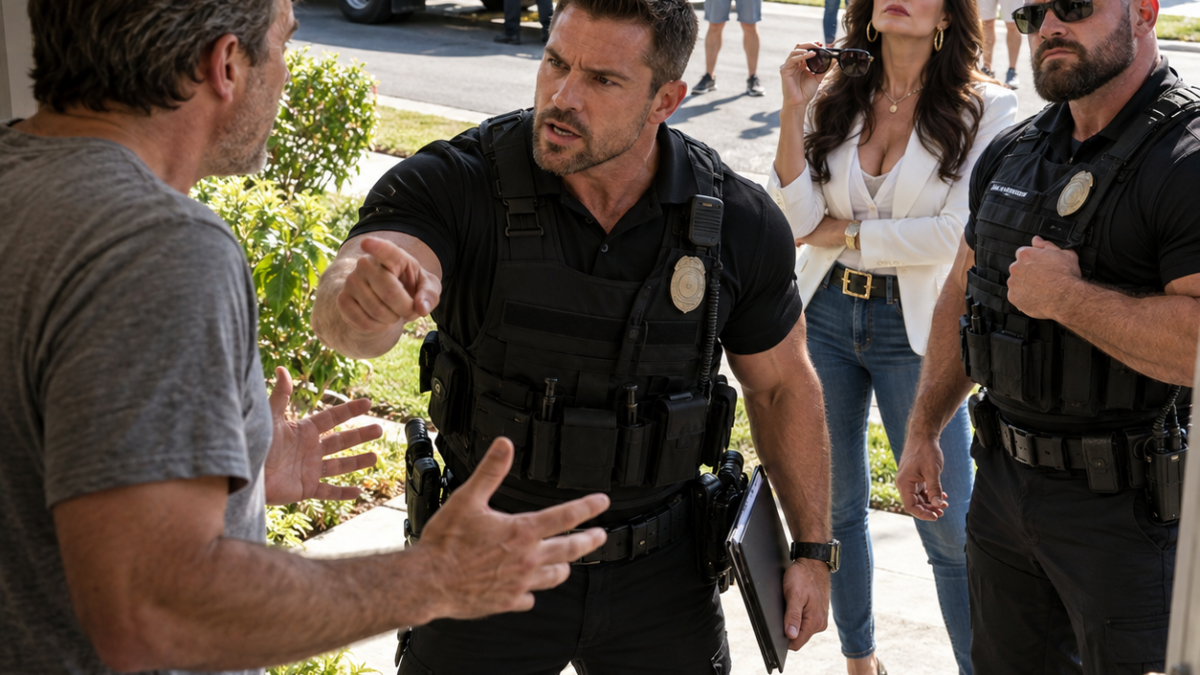
The two men at my front door wore black uniforms, fake badges, and the kind of stern expressions people practice when they want authority without earning it.
They told me I had missed too many HOA meetings, demanded my ID, and warned me I could be arrested if I kept refusing to comply.
There was only one problem: I had never joined their HOA, never signed a single document, and never gave Karen permission to turn my quiet neighborhood into her private little police state.
For years, my neighborhood was exactly what I wanted.
Not fancy. Not gated. Not one of those places with a fountain at the entrance and a sign pretending every house behind it belonged in a luxury magazine. It was just a quiet suburban street with decent people, older trees, kids riding bikes in the afternoon, and neighbors who waved without needing to know every detail of your life.
I loved that about it.
People mostly minded their own business. Lawns got mowed. Trash cans went out and came back in. Occasionally someone hosted a cookout or parked a car on the street overnight, and nobody behaved like civilization was collapsing because of it.
Crime was almost nonexistent.
The loudest thing that happened most weeks was someone’s dog barking at a delivery truck.
When I bought my house, one of the reasons I chose it was because there was no HOA.
I had heard enough horror stories online to know I did not want strangers voting on what shade my front door could be, how long my grass could grow, or whether my mailbox looked too independent. I wanted a house I could afford in a neighborhood that felt safe and simple.
For a long time, that was exactly what I had.
Then Karen moved from being just another neighbor with opinions to being the woman who decided the entire neighborhood needed to be organized under her control.
Karen was probably in her early forties, but she carried herself like she had spent most of her life being told she was special and had never questioned it. She had glossy dark hair, expensive sunglasses, sharp cheekbones, and a wardrobe of fitted blazers, tight jeans, and heels that made every sidewalk sound like a courtroom. She was beautiful in a way that seemed deliberate, like every part of her appearance had been chosen to make people hesitate before disagreeing.
Her voice could be sweet when she wanted agreement.
It became ice when she didn’t get it.
Before the HOA, she was annoying but manageable.
She complained about delivery trucks blocking the street.
She complained about kids leaving bikes too close to sidewalks.
She complained about Halloween decorations going up too early and Christmas lights staying up too late.
Most of us ignored her.
That was our first mistake.
People like Karen do not interpret silence as disinterest.
They interpret it as permission.
A few months before everything really started, flyers began appearing in mailboxes announcing the formation of a new homeowner association.
Apparently, Karen and a handful of like-minded neighbors had spent months talking to lawyers, collecting signatures, filing paperwork, and convincing people that our peaceful neighborhood needed “structure,” “community standards,” and “long-term property protection.”
That was Karen’s language.
Everything she wanted was always for protection.
Protection from falling property values.
Protection from inconsistency.
Protection from outsiders.
Protection from the horrifying possibility that someone might paint a fence without committee approval.
At first, I was not furious about the HOA existing.
I didn’t like it, but I understood that people were allowed to form associations if they wanted to. What mattered to me was that the neighborhood had not had one when I bought my house. That meant I could not be forced into it unless I voluntarily joined.
And I had absolutely no intention of doing that.
The first letters were polite.
Glossy paper.
Nice logo.
“An invitation to become part of a stronger community.”
I threw the first one away.
Then another came.
Then another.
Membership benefits.
Community meetings.
Security patrols.
Neighborhood improvement plans.
Discounted landscaping vendor lists.
I finally wrote back.
Very simple.
Thank you for the invitation, but I am not interested in joining the HOA. Please remove me from future membership mailings.
I thought that would be enough.
That may have been the last truly naïve thought I had about Karen.
The letters kept coming.
Only now they were less friendly.
“Reminder: HOA membership is essential to preserving neighborhood standards.”
“Your participation is expected.”
“Failure to engage harms the community.”
I ignored them because, legally, they meant nothing.
Karen could send all the dramatic stationery she wanted. A letter does not create a contract. An invitation does not create consent.
Then the doorbell started ringing.
part2
It happened one evening while I was about to make dinner.
I remember that because I had just put a pan on the stove when the bell rang.
Not once.
Not politely.
Over and over.
A hard, rapid, excessive ringing that instantly made my shoulders tense.
I looked through the peephole and saw two men dressed head to toe in black.
Black shirts.
Black pants.
Black boots.
Black belts.
Stern faces.
For one confused second, I thought they might be police officers.
Then I opened the door.
The taller one stood with his feet apart, shoulders squared, chin lifted. He had a laminated badge hanging from his chest and a patch on his sleeve with the HOA logo. The shorter one held a clipboard like it gave him legal authority.
“Can I help you?” I asked.
The tall one looked me up and down.
“We’re here on behalf of the HOA.”
That was when I noticed the details.
No department name.
No city seal.
No actual badge.
Just laminated paper in a cheap plastic holder with his photo, name, and the HOA logo badly pasted behind it.
The design looked like a middle-school PowerPoint project.
I almost laughed.
Almost.
The tall one continued.
“You’ve missed several general meetings without being excused.”
I blinked.
“Excused by who?”
“The board.”
“I’m not part of your HOA.”
The shorter man crossed his arms.
“Lying won’t get you out of responsibility.”
That sentence changed the entire tone of the conversation.
I had been confused.
Now I was annoyed.
“I’m not lying. I never joined.”
The tall one looked down at his clipboard.
“Our records show this address is within the neighborhood.”
“Yes. The neighborhood. Not the HOA.”
“The HOA governs the neighborhood.”
“No, it governs the people who joined it.”
They exchanged a look like I was a child repeating something I had heard online.
The shorter one stepped forward slightly.
“You need to show respect when speaking to officers.”
Officers.
That word landed hard.
“Officers of what?”
He tapped the laminated badge.
“HOA enforcement.”
“That’s not law enforcement.”
His face tightened.
“You don’t want to make this difficult.”
“I’m not making anything difficult. You came to my door pretending I owe you explanations.”
The taller one lifted his badge closer to my face.
I leaned back.
“Is that laminated?”
His eyes narrowed.
“Excuse me?”
“Your badge. Is it laminated paper?”
The shorter one’s face flushed.
“We have authority to enforce HOA policy.”
“Not on me.”
“You are part of the HOA.”
“Prove it.”
That flustered them more than I expected.
The tall one looked at the clipboard again, flipping pages like somewhere in that stack was the magic document that would make me obey.
“Your address is listed.”
“That’s not proof of membership.”
“You reside in the community.”
“Still not proof.”
“You’ve failed to attend meetings.”
“Because I’m not a member.”
“You’ve failed to pay dues.”
“Because I’m not a member.”
“You’ve failed to respond to notices.”
“Because I’m not a member.”
The shorter one jabbed a finger toward me.
“Talking in circles won’t help you.”
“I’m not talking in circles. I’m saying one true thing repeatedly because you keep pretending not to hear it.”
That was when the tall one asked for my ID.
I actually laughed then.
Not loudly, but enough.
“No.”
His expression hardened.
“You are required to identify yourself.”
“No, I’m not.”
“If you have nothing to hide, you should have no problem showing ID.”
That old trick.
Only guilty people want privacy.
Only dishonest people know their rights.
Only unreasonable people refuse random men in fake uniforms.
I kept my voice calm.
“You are not government officials. You are not police. You have no legal authority to demand my ID at my own front door.”
The shorter man said, “Refusal may result in arrest.”
That word hung between us.
Arrest.
From two guys wearing laminated HOA badges on my porch.
I stared at them for a long second.
Then I said, “Leave.”
The tall one looked surprised.
“We’re not finished.”
“We are absolutely finished.”
“You’re making a serious mistake.”
“No. You are. Get off my property before I call the real police and explain that two men in fake badges are threatening to arrest me.”
For the first time, uncertainty flickered across his face.
The shorter one opened his mouth, probably to say something stupid, but the taller one stopped him with a glance.
“This will be reported to the board.”
“Please spell my name correctly.”
“You haven’t given us your name.”
“Exactly.”
I closed the door.
Then I stood there, heart pounding harder than I wanted to admit.
It should have ended there.
Of course it didn’t.
After the fake officers came to my door, the letters changed from annoying to threatening.
Violation notice.
Failure to attend general meetings.
Fine assessed.
Failure to pay monthly dues.
Past due balance.
Noncompliance warning.
Each envelope carried the HOA logo Karen loved so much, and each one used more aggressive language than the last.
At first, the fines were small.
Then they grew.
Late fees.
Administrative fees.
Security enforcement fees.
Processing fees.
I had no idea what half of them meant, and I’m pretty sure neither did they.
Then came the word that made me stop laughing.
Foreclosure.
One letter stated that unpaid dues and accumulated fines could result in a lien against my property and possible foreclosure proceedings.
I knew it was nonsense.
I knew they had no legal basis.
But I will be honest: seeing foreclosure printed in bold letters above your address still does something to your stomach.
It does not matter how certain you are.
It does not matter how many times you tell yourself they cannot do this.
A house is not just an asset.
It is where you sleep.
It is where your life is.
It is the place you return to after bad days.
And Karen was weaponizing paperwork against mine.
The fake officers kept coming too.
Sometimes they rang the bell.
Sometimes they left notices.
Sometimes they stood near the sidewalk with clipboards when I got home from work.
Once, I pulled into my driveway and found them waiting beside a dark SUV with an HOA ENFORCEMENT magnet slapped onto the door.
The tall one smiled as I got out.
“We were hoping to speak with you.”
“I’m not interested.”
“You can’t keep ignoring the board.”
“I can ignore anyone I have no contract with.”
“You’re escalating this.”
“No. You’re trespassing.”
He looked around dramatically.
“We’re on public sidewalk.”
“Then stay there.”
They started appearing so often that I stopped answering the doorbell.
One afternoon, a friend came over and rang twice. I ignored it because I assumed it was them. He had to call me from my porch.
“Dude, are you home? I can literally hear your TV.”
That was when I realized Karen had managed to change how I felt inside my own house.
That made me angry in a way the letters never had.
But the final straw came on a Saturday morning.
I had planned to run errands.
Groceries.
Hardware store.
Maybe coffee.
Nothing exciting.
I grabbed my keys, opened the front door, and stopped cold.
My car was gone.
For several seconds, my brain refused to understand what my eyes were seeing.
The driveway was empty.
I looked up and down the street.
Nothing.
My first thought was theft.
Somebody had stolen my car in the middle of the night.
Then I saw the paper taped to my front door.
HOA VIOLATION NOTICE.
Vehicle towed for noncompliance.
Street parking prohibited overnight.
I read it twice.
Then a third time.
My car had been parked on the street because I had cleaned out part of my garage and needed the driveway clear for a delivery. Street parking was legal in my neighborhood. I knew it was legal because I had checked city rules before. People parked overnight all the time.
The HOA may have created some rule for its members.
But I was not a member.
And even if I had been, they had no authority to tow my car from a public street without legal cause.
I called the tow company first.
The woman who answered sounded bored until I explained the situation.
“Who authorized the tow?” I asked.
“Homeowners association enforcement.”
“Do they have city authority for overnight parking?”
A pause.
“It says HOA violation.”
“I am not in the HOA.”
Another pause.
“Do you have proof?”
“Yes.”
She sighed.
“Bring your ID and registration.”
I had to call the same friend I had accidentally ignored days earlier and ask him to drive me to the tow yard.
He was furious on my behalf.
“So they’re stealing cars now?”
“Apparently borrowing them aggressively.”
At the tow yard, I explained again that I was not in the HOA and that overnight street parking was legal. The manager reviewed the paperwork, made a few calls, and looked increasingly uncomfortable.
Eventually, he handed me my keys.
“No fee.”
I stared at him.
“Really?”
“This shouldn’t have been towed.”
That was the first decent thing anyone connected to this mess had said in weeks.
I got my car back, but something shifted in me that day.
Before, I had hoped if I stayed calm and ignored Karen’s circus long enough, she would get bored.
Now I understood she was not going to stop.
She had escalated from letters to fake officers to threats to towing my car.
If I continued treating it as an annoyance, she would keep treating my restraint as weakness.
So I called an attorney.
Not a stranger from a billboard.
A family friend named Melissa who had helped people I knew with civil issues before. I explained everything: the new HOA, the letters, the fake enforcement officers, the ID demand, the arrest threat, the dues, the foreclosure warning, the car towing.
Melissa listened without interrupting.
When I finished, she was quiet for a moment.
Then she said, “Start collecting everything.”
“Already threw some letters away.”
“Keep every new one. Photograph everything. Save envelopes. Save doorbell footage. Write down dates. Get proof from the county that your property is not part of the HOA. Also, get a copy of your deed.”
“Do I need a restraining order?”
“Maybe eventually, but first we send a cease-and-desist. And you should file a police report about the towing and the impersonation threats.”
“Impersonation?”
“They threatened arrest while presenting themselves as officers, correct?”
“HOA officers.”
She made a sound that was not quite a laugh.
“That may be their problem.”
For the next two weeks, I became organized in a way Karen probably should have feared.
I created folders.
Physical and digital.
I saved every violation notice.
Scanned every envelope.
Downloaded every Ring doorbell video showing the fake officers at my door, waiting near the house, or leaving papers.
I copied the note from the tow.
I got a written statement from the tow yard confirming the car had been released without fee after they determined the HOA violation was not valid.
I pulled my deed.
Then I went to the county office and requested records showing my property had not been included in any HOA filing and that I had never consented to join.
That part mattered.
The clerk was confused at first.
“You need proof you’re not in an HOA?”
“Yes.”
“Usually people want proof they are.”
“Long story.”
She raised an eyebrow.
“HOA president?”
“How did you guess?”
She smiled like she had seen enough of humanity to guess a lot.
Once Melissa had everything, she drafted the cease-and-desist letter.
It was not emotional.
It did not rant.
It did not accuse Karen of being insane, even though I personally felt that would have been accurate.
It simply laid out facts.
I was not a member of the HOA.
My property was not subject to its governing documents.
The HOA had no authority to assess dues, fines, or penalties against me.
The HOA had no authority to send representatives to my property demanding identification.
The HOA had no authority to threaten arrest, foreclosure, liens, or towing.
All harassment, demands for payment, enforcement attempts, and contact by HOA enforcement personnel were to stop immediately.
Future violations would result in legal action.
We sent it certified mail.
Then I went to the police.
I did not expect much.
Honestly, I thought they might tell me it was civil and send me away. But I brought everything anyway.
Doorbell footage.
Letters.
Tow documents.
The foreclosure threats.
The video of the fake officers flashing laminated badges and telling me refusal could result in arrest.
The officer taking my report watched that clip twice.
Then he called another officer over.
They watched it again.
“Are these guys licensed security?” one asked.
“I have no idea.”
“Did they identify themselves as police?”
“They said officers. HOA enforcement. Then threatened arrest.”
He exchanged a look with the other officer.
That look gave me more satisfaction than I expected.
The police warned the HOA about the illegal tow situation.
Then they investigated the two men who had been showing up at my house.
I later learned they were not licensed security professionals at all. They were homeowners Karen had appointed to her enforcement committee. Their uniforms were privately purchased. Their badges were homemade. Their “authority” was entirely imaginary.
But threats are not imaginary.
Neither is impersonation.
When the police arrested them, the neighborhood exploded with gossip.
Apparently, seeing HOA enforcement officers put into actual police cars made an impression.
The story spread in about three hours.
By dinner, neighbors I barely knew were texting, calling, or stopping me near the mailbox.
“Is it true?”
“Did they really arrest those guys?”
“Did Karen send them?”
“I heard they threatened you.”
“I got one of those dues letters too.”
That last one interested me.
I was not the only person Karen had pressured.
Some people had joined the HOA because they thought they had to.
Some had paid fees they never owed because the letters looked official.
Some had allowed enforcement people to inspect their properties because they believed refusal might cause legal trouble.
Karen’s strategy had relied on confusion.
Mine broke that confusion open.
Once people realized the HOA did not automatically control everyone, the fear started draining out of the neighborhood faster than Karen could patch it.
The first HOA meeting after the arrests was packed.
I did not attend because, again, I was not a member.
But I heard about it from half the street.
Karen tried to control the room.
Of course she did.
She stood at the front in a navy blazer, gold necklace, perfect hair, and that sharp smile, insisting the enforcement committee had acted independently and that the HOA had only sought neighborhood unity.
People did not buy it.
Someone asked why non-members were receiving dues notices.
Someone else asked why fake officers had been sent to doors.
A retired man demanded to know whether liens had been threatened against people who never signed HOA documents.
A woman said she had joined only because Karen told her all homeowners were required to enroll.
The room turned on her.
Not all at once.
But steadily.
One question became five.
Five became twenty.
Karen’s polished confidence started cracking.
Membership began dropping after that.
People who had joined voluntarily began requesting resignations or legal clarification. Others demanded financial records. Rumors surfaced about inflated fees, absurd policies, and Karen’s habit of treating the HOA like a personal kingdom.
The enforcement committee was dissolved almost immediately.
The remaining “officers” lost their little badges, their uniforms, and whatever imagined status they had enjoyed while strutting around the neighborhood.
They went from feared to ridiculous overnight.
It is hard to intimidate people with a clipboard once two of your friends have been arrested for pretending the clipboard came with handcuffs.
Karen sent me one final letter.
Not directly. Through the HOA.
It claimed they had received my cease-and-desist and would “review the matter internally.”
Melissa replied with three sentences.
Any further contact regarding dues, fines, membership, enforcement, or violations would be treated as continued harassment.
That was the last official communication I received.
But the unofficial fallout continued for months.
A few neighbors apologized for not speaking up sooner.
One admitted he had seen the fake officers waiting near my house and thought it looked wrong but didn’t want to get involved.
Another told me Karen had approached him before the HOA formed and said people like me were “bad for neighborhood cohesion.”
Cohesion.
That was the word she used when she meant obedience.
The HOA survived, technically.
But smaller.
Weaker.
And much less confident.
Karen did not remain president for long. Enough people inside the association got angry about the arrests, the legal exposure, and the fact that membership was dropping that they forced a leadership vote.
She lost.
Not gracefully.
I heard she stood up afterward and gave a speech about betrayal, selfishness, and the decline of community values.
Nobody clapped.
That detail came from my next-door neighbor, who said it with such joy that I believed every word.
Life slowly returned to normal after that.
The doorbell stopped making my stomach drop.
No more black-clad men on my porch.
No more violation letters.
No more dues notices.
No more foreclosure threats printed by people with no legal right to threaten anything.
I parked my car wherever city law allowed me to park it.
Street.
Driveway.
Garage.
Without asking Karen’s permission.
I kept copies of every document, of course.
The file still exists.
Letters.
Videos.
County records.
Cease-and-desist.
Police report.
Tow-yard statement.
I hope I never need it again, but owning a home teaches you that paper is armor when dealing with people who lie confidently.
The strangest part is that I would have left the HOA alone if it had left me alone.
I did not care if some neighbors wanted meetings, committees, and matching mailbox numbers. I did not care if Karen wanted to spend her evenings debating landscaping guidelines with people who voluntarily joined her little club.
That was their business.
All she had to do was respect one boundary.
One simple legal fact.
No means no.
I did not consent.
I did not sign.
I did not join.
Karen could not accept that.
People like her mistake refusal for rebellion. They cannot let anyone stand outside their structure because one person outside proves the structure is optional.
That was why she pushed so hard.
Not because my house mattered.
Not because my car mattered.
Not because I missed meetings I had no duty to attend.
Because my existence outside her HOA reminded everyone else that Karen’s power had limits.
In the end, she proved that better than I ever could have.
Her letters showed people how far she would go.
Her fake officers showed them how ridiculous her authority really was.
Her illegal tow showed them the danger of giving small people official-looking paper and no accountability.
And the arrests showed them the difference between real law and laminated fantasy.
I still live in the same house.
The neighborhood is quieter now, though not exactly the same. People talk more openly. They ask for documents before believing claims. They question fees. They know where the HOA boundary actually is.
Sometimes, when I see Karen driving by, she looks straight ahead with both hands on the wheel, pretending not to notice me.
I always notice her.
I do not wave.
I do not glare.
I just stand there on my property, in my non-HOA house, with my legally parked car nearby, and enjoy the peace she failed to take.
That is enough.
Karen wanted me scared into joining.
Instead, she scared the whole neighborhood awake.
And every time my doorbell rings now, I answer it without fear.
Because I know the difference between authority and theater.
And so does Karen.
𝗧𝗛𝗘 𝗘𝗡𝗗
Karen Sent Fake HOA Cops to My Door, Then Had My Car Towed From a Neighborhood I Never Agreed to Join
The two men at my front door wore black uniforms, fake badges, and the kind of stern expressions people practice when they want authority without earning it.
They told me I had missed too many HOA meetings, demanded my ID, and warned me I could be arrested if I kept refusing to comply.
There was only one problem: I had never joined their HOA, never signed a single document, and never gave Karen permission to turn my quiet neighborhood into her private little police state.
For years, my neighborhood was exactly what I wanted.
Not fancy. Not gated. Not one of those places with a fountain at the entrance and a sign pretending every house behind it belonged in a luxury magazine. It was just a quiet suburban street with decent people, older trees, kids riding bikes in the afternoon, and neighbors who waved without needing to know every detail of your life.
I loved that about it.
People mostly minded their own business. Lawns got mowed. Trash cans went out and came back in. Occasionally someone hosted a cookout or parked a car on the street overnight, and nobody behaved like civilization was collapsing because of it.
Crime was almost nonexistent.
The loudest thing that happened most weeks was someone’s dog barking at a delivery truck.
When I bought my house, one of the reasons I chose it was because there was no HOA.
I had heard enough horror stories online to know I did not want strangers voting on what shade my front door could be, how long my grass could grow, or whether my mailbox looked too independent. I wanted a house I could afford in a neighborhood that felt safe and simple.
For a long time, that was exactly what I had.
Then Karen moved from being just another neighbor with opinions to being the woman who decided the entire neighborhood needed to be organized under her control.
Karen was probably in her early forties, but she carried herself like she had spent most of her life being told she was special and had never questioned it. She had glossy dark hair, expensive sunglasses, sharp cheekbones, and a wardrobe of fitted blazers, tight jeans, and heels that made every sidewalk sound like a courtroom. She was beautiful in a way that seemed deliberate, like every part of her appearance had been chosen to make people hesitate before disagreeing.
Her voice could be sweet when she wanted agreement.
It became ice when she didn’t get it.
Before the HOA, she was annoying but manageable.
She complained about delivery trucks blocking the street.
She complained about kids leaving bikes too close to sidewalks.
She complained about Halloween decorations going up too early and Christmas lights staying up too late.
Most of us ignored her.
That was our first mistake.
People like Karen do not interpret silence as disinterest.
They interpret it as permission.
A few months before everything really started, flyers began appearing in mailboxes announcing the formation of a new homeowner association.
Apparently, Karen and a handful of like-minded neighbors had spent months talking to lawyers, collecting signatures, filing paperwork, and convincing people that our peaceful neighborhood needed “structure,” “community standards,” and “long-term property protection.”
That was Karen’s language.
Everything she wanted was always for protection.
Protection from falling property values.
Protection from inconsistency.
Protection from outsiders.
Protection from the horrifying possibility that someone might paint a fence without committee approval.
At first, I was not furious about the HOA existing.
I didn’t like it, but I understood that people were allowed to form associations if they wanted to. What mattered to me was that the neighborhood had not had one when I bought my house. That meant I could not be forced into it unless I voluntarily joined.
And I had absolutely no intention of doing that.
The first letters were polite.
Glossy paper.
Nice logo.
“An invitation to become part of a stronger community.”
I threw the first one away.
Then another came.
Then another.
Membership benefits.
Community meetings.
Security patrols.
Neighborhood improvement plans.
Discounted landscaping vendor lists.
I finally wrote back.
Very simple.
Thank you for the invitation, but I am not interested in joining the HOA. Please remove me from future membership mailings.
I thought that would be enough.
That may have been the last truly naïve thought I had about Karen.
The letters kept coming.
Only now they were less friendly.
“Reminder: HOA membership is essential to preserving neighborhood standards.”
“Your participation is expected.”
“Failure to engage harms the community.”
I ignored them because, legally, they meant nothing.
Karen could send all the dramatic stationery she wanted. A letter does not create a contract. An invitation does not create consent.
Then the doorbell started ringing.
part2
It happened one evening while I was about to make dinner.
I remember that because I had just put a pan on the stove when the bell rang.
Not once.
Not politely.
Over and over.
A hard, rapid, excessive ringing that instantly made my shoulders tense.
I looked through the peephole and saw two men dressed head to toe in black.
Black shirts.
Black pants.
Black boots.
Black belts.
Stern faces.
For one confused second, I thought they might be police officers.
Then I opened the door.
The taller one stood with his feet apart, shoulders squared, chin lifted. He had a laminated badge hanging from his chest and a patch on his sleeve with the HOA logo. The shorter one held a clipboard like it gave him legal authority.
“Can I help you?” I asked.
The tall one looked me up and down.
“We’re here on behalf of the HOA.”
That was when I noticed the details.
No department name.
No city seal.
No actual badge.
Just laminated paper in a cheap plastic holder with his photo, name, and the HOA logo badly pasted behind it.
The design looked like a middle-school PowerPoint project.
I almost laughed.
Almost.
The tall one continued.
“You’ve missed several general meetings without being excused.”
I blinked.
“Excused by who?”
“The board.”
“I’m not part of your HOA.”
The shorter man crossed his arms.
“Lying won’t get you out of responsibility.”
That sentence changed the entire tone of the conversation.
I had been confused.
Now I was annoyed.
“I’m not lying. I never joined.”
The tall one looked down at his clipboard.
“Our records show this address is within the neighborhood.”
“Yes. The neighborhood. Not the HOA.”
“The HOA governs the neighborhood.”
“No, it governs the people who joined it.”
They exchanged a look like I was a child repeating something I had heard online.
The shorter one stepped forward slightly.
“You need to show respect when speaking to officers.”
Officers.
That word landed hard.
“Officers of what?”
He tapped the laminated badge.
“HOA enforcement.”
“That’s not law enforcement.”
His face tightened.
“You don’t want to make this difficult.”
“I’m not making anything difficult. You came to my door pretending I owe you explanations.”
The taller one lifted his badge closer to my face.
I leaned back.
“Is that laminated?”
His eyes narrowed.
“Excuse me?”
“Your badge. Is it laminated paper?”
The shorter one’s face flushed.
“We have authority to enforce HOA policy.”
“Not on me.”
“You are part of the HOA.”
“Prove it.”
That flustered them more than I expected.
The tall one looked at the clipboard again, flipping pages like somewhere in that stack was the magic document that would make me obey.
“Your address is listed.”
“That’s not proof of membership.”
“You reside in the community.”
“Still not proof.”
“You’ve failed to attend meetings.”
“Because I’m not a member.”
“You’ve failed to pay dues.”
“Because I’m not a member.”
“You’ve failed to respond to notices.”
“Because I’m not a member.”
The shorter one jabbed a finger toward me.
“Talking in circles won’t help you.”
“I’m not talking in circles. I’m saying one true thing repeatedly because you keep pretending not to hear it.”
That was when the tall one asked for my ID.
I actually laughed then.
Not loudly, but enough.
“No.”
His expression hardened.
“You are required to identify yourself.”
“No, I’m not.”
“If you have nothing to hide, you should have no problem showing ID.”
That old trick.
Only guilty people want privacy.
Only dishonest people know their rights.
Only unreasonable people refuse random men in fake uniforms.
I kept my voice calm.
“You are not government officials. You are not police. You have no legal authority to demand my ID at my own front door.”
The shorter man said, “Refusal may result in arrest.”
That word hung between us.
Arrest.
From two guys wearing laminated HOA badges on my porch.
I stared at them for a long second.
Then I said, “Leave.”
The tall one looked surprised.
“We’re not finished.”
“We are absolutely finished.”
“You’re making a serious mistake.”
“No. You are. Get off my property before I call the real police and explain that two men in fake badges are threatening to arrest me.”
For the first time, uncertainty flickered across his face.
The shorter one opened his mouth, probably to say something stupid, but the taller one stopped him with a glance.
“This will be reported to the board.”
“Please spell my name correctly.”
“You haven’t given us your name.”
“Exactly.”
I closed the door.
Then I stood there, heart pounding harder than I wanted to admit.
It should have ended there.
Of course it didn’t.
After the fake officers came to my door, the letters changed from annoying to threatening.
Violation notice.
Failure to attend general meetings.
Fine assessed.
Failure to pay monthly dues.
Past due balance.
Noncompliance warning.
Each envelope carried the HOA logo Karen loved so much, and each one used more aggressive language than the last.
At first, the fines were small.
Then they grew.
Late fees.
Administrative fees.
Security enforcement fees.
Processing fees.
I had no idea what half of them meant, and I’m pretty sure neither did they.
Then came the word that made me stop laughing.
Foreclosure.
One letter stated that unpaid dues and accumulated fines could result in a lien against my property and possible foreclosure proceedings.
I knew it was nonsense.
I knew they had no legal basis.
But I will be honest: seeing foreclosure printed in bold letters above your address still does something to your stomach.
It does not matter how certain you are.
It does not matter how many times you tell yourself they cannot do this.
A house is not just an asset.
It is where you sleep.
It is where your life is.
It is the place you return to after bad days.
And Karen was weaponizing paperwork against mine.
The fake officers kept coming too.
Sometimes they rang the bell.
Sometimes they left notices.
Sometimes they stood near the sidewalk with clipboards when I got home from work.
Once, I pulled into my driveway and found them waiting beside a dark SUV with an HOA ENFORCEMENT magnet slapped onto the door.
The tall one smiled as I got out.
“We were hoping to speak with you.”
“I’m not interested.”
“You can’t keep ignoring the board.”
“I can ignore anyone I have no contract with.”
“You’re escalating this.”
“No. You’re trespassing.”
He looked around dramatically.
“We’re on public sidewalk.”
“Then stay there.”
They started appearing so often that I stopped answering the doorbell.
One afternoon, a friend came over and rang twice. I ignored it because I assumed it was them. He had to call me from my porch.
“Dude, are you home? I can literally hear your TV.”
That was when I realized Karen had managed to change how I felt inside my own house.
That made me angry in a way the letters never had.
But the final straw came on a Saturday morning.
I had planned to run errands.
Groceries.
Hardware store.
Maybe coffee.
Nothing exciting.
I grabbed my keys, opened the front door, and stopped cold.
My car was gone.
For several seconds, my brain refused to understand what my eyes were seeing.
The driveway was empty.
I looked up and down the street.
Nothing.
My first thought was theft.
Somebody had stolen my car in the middle of the night.
Then I saw the paper taped to my front door.
HOA VIOLATION NOTICE.
Vehicle towed for noncompliance.
Street parking prohibited overnight.
I read it twice.
Then a third time.
My car had been parked on the street because I had cleaned out part of my garage and needed the driveway clear for a delivery. Street parking was legal in my neighborhood. I knew it was legal because I had checked city rules before. People parked overnight all the time.
The HOA may have created some rule for its members.
But I was not a member.
And even if I had been, they had no authority to tow my car from a public street without legal cause.
I called the tow company first.
The woman who answered sounded bored until I explained the situation.
“Who authorized the tow?” I asked.
“Homeowners association enforcement.”
“Do they have city authority for overnight parking?”
A pause.
“It says HOA violation.”
“I am not in the HOA.”
Another pause.
“Do you have proof?”
“Yes.”
She sighed.
“Bring your ID and registration.”
I had to call the same friend I had accidentally ignored days earlier and ask him to drive me to the tow yard.
He was furious on my behalf.
“So they’re stealing cars now?”
“Apparently borrowing them aggressively.”
At the tow yard, I explained again that I was not in the HOA and that overnight street parking was legal. The manager reviewed the paperwork, made a few calls, and looked increasingly uncomfortable.
Eventually, he handed me my keys.
“No fee.”
I stared at him.
“Really?”
“This shouldn’t have been towed.”
That was the first decent thing anyone connected to this mess had said in weeks.
I got my car back, but something shifted in me that day.
Before, I had hoped if I stayed calm and ignored Karen’s circus long enough, she would get bored.
Now I understood she was not going to stop.
She had escalated from letters to fake officers to threats to towing my car.
If I continued treating it as an annoyance, she would keep treating my restraint as weakness.
So I called an attorney.
Not a stranger from a billboard.
A family friend named Melissa who had helped people I knew with civil issues before. I explained everything: the new HOA, the letters, the fake enforcement officers, the ID demand, the arrest threat, the dues, the foreclosure warning, the car towing.
Melissa listened without interrupting.
When I finished, she was quiet for a moment.
Then she said, “Start collecting everything.”
“Already threw some letters away.”
“Keep every new one. Photograph everything. Save envelopes. Save doorbell footage. Write down dates. Get proof from the county that your property is not part of the HOA. Also, get a copy of your deed.”
“Do I need a restraining order?”
“Maybe eventually, but first we send a cease-and-desist. And you should file a police report about the towing and the impersonation threats.”
“Impersonation?”
“They threatened arrest while presenting themselves as officers, correct?”
“HOA officers.”
She made a sound that was not quite a laugh.
“That may be their problem.”
For the next two weeks, I became organized in a way Karen probably should have feared.
I created folders.
Physical and digital.
I saved every violation notice.
Scanned every envelope.
Downloaded every Ring doorbell video showing the fake officers at my door, waiting near the house, or leaving papers.
I copied the note from the tow.
I got a written statement from the tow yard confirming the car had been released without fee after they determined the HOA violation was not valid.
I pulled my deed.
Then I went to the county office and requested records showing my property had not been included in any HOA filing and that I had never consented to join.
That part mattered.
The clerk was confused at first.
“You need proof you’re not in an HOA?”
“Yes.”
“Usually people want proof they are.”
“Long story.”
She raised an eyebrow.
“HOA president?”
“How did you guess?”
She smiled like she had seen enough of humanity to guess a lot.
Once Melissa had everything, she drafted the cease-and-desist letter.
It was not emotional.
It did not rant.
It did not accuse Karen of being insane, even though I personally felt that would have been accurate.
It simply laid out facts.
I was not a member of the HOA.
My property was not subject to its governing documents.
The HOA had no authority to assess dues, fines, or penalties against me.
The HOA had no authority to send representatives to my property demanding identification.
The HOA had no authority to threaten arrest, foreclosure, liens, or towing.
All harassment, demands for payment, enforcement attempts, and contact by HOA enforcement personnel were to stop immediately.
Future violations would result in legal action.
We sent it certified mail.
Then I went to the police.
I did not expect much.
Honestly, I thought they might tell me it was civil and send me away. But I brought everything anyway.
Doorbell footage.
Letters.
Tow documents.
The foreclosure threats.
The video of the fake officers flashing laminated badges and telling me refusal could result in arrest.
The officer taking my report watched that clip twice.
Then he called another officer over.
They watched it again.
“Are these guys licensed security?” one asked.
“I have no idea.”
“Did they identify themselves as police?”
“They said officers. HOA enforcement. Then threatened arrest.”
He exchanged a look with the other officer.
That look gave me more satisfaction than I expected.
The police warned the HOA about the illegal tow situation.
Then they investigated the two men who had been showing up at my house.
I later learned they were not licensed security professionals at all. They were homeowners Karen had appointed to her enforcement committee. Their uniforms were privately purchased. Their badges were homemade. Their “authority” was entirely imaginary.
But threats are not imaginary.
Neither is impersonation.
When the police arrested them, the neighborhood exploded with gossip.
Apparently, seeing HOA enforcement officers put into actual police cars made an impression.
The story spread in about three hours.
By dinner, neighbors I barely knew were texting, calling, or stopping me near the mailbox.
“Is it true?”
“Did they really arrest those guys?”
“Did Karen send them?”
“I heard they threatened you.”
“I got one of those dues letters too.”
That last one interested me.
I was not the only person Karen had pressured.
Some people had joined the HOA because they thought they had to.
Some had paid fees they never owed because the letters looked official.
Some had allowed enforcement people to inspect their properties because they believed refusal might cause legal trouble.
Karen’s strategy had relied on confusion.
Mine broke that confusion open.
Once people realized the HOA did not automatically control everyone, the fear started draining out of the neighborhood faster than Karen could patch it.
The first HOA meeting after the arrests was packed.
I did not attend because, again, I was not a member.
But I heard about it from half the street.
Karen tried to control the room.
Of course she did.
She stood at the front in a navy blazer, gold necklace, perfect hair, and that sharp smile, insisting the enforcement committee had acted independently and that the HOA had only sought neighborhood unity.
People did not buy it.
Someone asked why non-members were receiving dues notices.
Someone else asked why fake officers had been sent to doors.
A retired man demanded to know whether liens had been threatened against people who never signed HOA documents.
A woman said she had joined only because Karen told her all homeowners were required to enroll.
The room turned on her.
Not all at once.
But steadily.
One question became five.
Five became twenty.
Karen’s polished confidence started cracking.
Membership began dropping after that.
People who had joined voluntarily began requesting resignations or legal clarification. Others demanded financial records. Rumors surfaced about inflated fees, absurd policies, and Karen’s habit of treating the HOA like a personal kingdom.
The enforcement committee was dissolved almost immediately.
The remaining “officers” lost their little badges, their uniforms, and whatever imagined status they had enjoyed while strutting around the neighborhood.
They went from feared to ridiculous overnight.
It is hard to intimidate people with a clipboard once two of your friends have been arrested for pretending the clipboard came with handcuffs.
Karen sent me one final letter.
Not directly. Through the HOA.
It claimed they had received my cease-and-desist and would “review the matter internally.”
Melissa replied with three sentences.
Any further contact regarding dues, fines, membership, enforcement, or violations would be treated as continued harassment.
That was the last official communication I received.
But the unofficial fallout continued for months.
A few neighbors apologized for not speaking up sooner.
One admitted he had seen the fake officers waiting near my house and thought it looked wrong but didn’t want to get involved.
Another told me Karen had approached him before the HOA formed and said people like me were “bad for neighborhood cohesion.”
Cohesion.
That was the word she used when she meant obedience.
The HOA survived, technically.
But smaller.
Weaker.
And much less confident.
Karen did not remain president for long. Enough people inside the association got angry about the arrests, the legal exposure, and the fact that membership was dropping that they forced a leadership vote.
She lost.
Not gracefully.
I heard she stood up afterward and gave a speech about betrayal, selfishness, and the decline of community values.
Nobody clapped.
That detail came from my next-door neighbor, who said it with such joy that I believed every word.
Life slowly returned to normal after that.
The doorbell stopped making my stomach drop.
No more black-clad men on my porch.
No more violation letters.
No more dues notices.
No more foreclosure threats printed by people with no legal right to threaten anything.
I parked my car wherever city law allowed me to park it.
Street.
Driveway.
Garage.
Without asking Karen’s permission.
I kept copies of every document, of course.
The file still exists.
Letters.
Videos.
County records.
Cease-and-desist.
Police report.
Tow-yard statement.
I hope I never need it again, but owning a home teaches you that paper is armor when dealing with people who lie confidently.
The strangest part is that I would have left the HOA alone if it had left me alone.
I did not care if some neighbors wanted meetings, committees, and matching mailbox numbers. I did not care if Karen wanted to spend her evenings debating landscaping guidelines with people who voluntarily joined her little club.
That was their business.
All she had to do was respect one boundary.
One simple legal fact.
No means no.
I did not consent.
I did not sign.
I did not join.
Karen could not accept that.
People like her mistake refusal for rebellion. They cannot let anyone stand outside their structure because one person outside proves the structure is optional.
That was why she pushed so hard.
Not because my house mattered.
Not because my car mattered.
Not because I missed meetings I had no duty to attend.
Because my existence outside her HOA reminded everyone else that Karen’s power had limits.
In the end, she proved that better than I ever could have.
Her letters showed people how far she would go.
Her fake officers showed them how ridiculous her authority really was.
Her illegal tow showed them the danger of giving small people official-looking paper and no accountability.
And the arrests showed them the difference between real law and laminated fantasy.
I still live in the same house.
The neighborhood is quieter now, though not exactly the same. People talk more openly. They ask for documents before believing claims. They question fees. They know where the HOA boundary actually is.
Sometimes, when I see Karen driving by, she looks straight ahead with both hands on the wheel, pretending not to notice me.
I always notice her.
I do not wave.
I do not glare.
I just stand there on my property, in my non-HOA house, with my legally parked car nearby, and enjoy the peace she failed to take.
That is enough.
Karen wanted me scared into joining.
Instead, she scared the whole neighborhood awake.
And every time my doorbell rings now, I answer it without fear.
Because I know the difference between authority and theater.
And so does Karen.