𝗙𝗨𝗟𝗟 𝗦𝗧𝗢𝗥𝗬 Karen Called 911 to Ban Me From My Own Parking Lot, Then Found Out I Owned Every Space
PART 2
I glanced at the signs I had paid to install.
They were clear.
Business parking.
Private property.
No residential language anywhere.
“This is not a residential lot,” I said. “It belongs to the commercial strip.”
Karen gave me a look that said she had expected ignorance and found it insulting that I came prepared with basic facts.
“No. Half of it is for the businesses. The rest is neighborhood overflow.”
“That is completely untrue.”
She stepped closer.
“I have seen you here multiple times.”
“That is also true.”
“You leave your car here overnight.”
“Sometimes.”
“So you admit it.”
“I admit I park here.”
She smiled like she had just trapped me.
“You are abusing parking meant for residents.”
“No. I’m using a private lot.”
“Exactly. Private for residents.”
I stared at her for a second, trying to decide if she was confused, entitled, or both.
“Who told you that?”
“I know the rules.”
“What rules?”
“The community parking rules.”
“There are no community parking rules for this lot.”
Karen pulled out her phone and pointed it at me.
“What’s your name?”
I took a step back.
“Why?”
“Because I’m documenting this.”
“Documenting what?”
“Your illegal use of community parking.”
I almost laughed, but the camera made it less funny.
She began recording.
“State your name.”
“No.”
“Where do you live?”
“Also no.”
“You don’t get to refuse.”
“I absolutely do.”
Her lips pressed together.
That was when her voice shifted from bossy to sweet in a way that felt even more fake.
“Listen, I’m trying to be nice. People like you think you can take advantage because nobody wants confrontation. But I watch this lot. I know who belongs here.”
“Do you?”
“Yes.”
“Then you should know I belong here.”
She scoffed.
“You do not.”
I considered telling her right then that I owned the lot.
It would have been easy.
One sentence.
Actually, I own the property.
But Karen was not letting me speak for more than three words at a time, and some small part of me wanted to see how far she would go while standing on someone else’s land and pretending to guard it.
She pointed toward one of my signs.
“See? Unauthorized vehicles may be towed. That means I can have you towed.”
I looked at the sign.
Then at her.
“That sign does not say what you think it says.”
“It says unauthorized vehicles may be towed.”
“Right.”
“And you are unauthorized.”
“No.”
“Yes.”
“By who?”
“By me.”
That actually made me smile.
Karen hated that.
Her face hardened.
“You think this is funny?”
“I think it is very strange.”
“You’ve been warned. If I see your car here again, I’m calling the police.”
“That seems unnecessary.”
“No. What’s unnecessary is people like you stealing parking from residents who actually live here.”
I opened my mouth to respond, but she threw up one hand.
“I am done discussing this.”
That was impressive, considering she had never actually discussed anything.
She stepped backward, still glaring.
“Next time, I’ll have you handled.”
Then she turned and marched away like she had just saved the neighborhood from lawlessness.
I stood beside my car for a moment, watching her disappear around the corner.
The lot was quiet.
The signs were still there.
My businesses were dark.
My car sat in the spot I had parked in for years.
I remember thinking, What planet does she live on?
Then I forgot about her.
That was my mistake.
People like Karen rarely burn out after one confrontation. They usually take silence as proof that they won.
A few days later, on a Saturday afternoon, I drove to the lot to drop off paperwork at the UPS store and check on a minor maintenance issue behind the building.
Saturday was busy. The coffee shop had a line. The salon was open. A few customers were going in and out with packages.
I pulled in and immediately saw her.
Karen stood near the center of the parking lot holding a small notebook and pen.
She was writing down license plate numbers.
Actual license plate numbers.
She wore fitted white pants, a pale blue blouse, large sunglasses, and wedge sandals that clicked sharply against the pavement as she moved from car to car.
For a second, I just sat there in disbelief.
One of the salon employees, Maria, was standing in the doorway with her arms crossed, watching Karen like she was a raccoon that had wandered into the building.
I got out.
Karen saw me.
The reaction was immediate.
Her spine straightened. Her chin lifted. The notebook snapped shut.
Then she marched toward me.
“You.”
I sighed.
“Good afternoon to you too.”
She did not stop walking until she was close enough to make the confrontation uncomfortable.
“I told you not to park here again.”
“And I ignored that because you have no authority here.”
Her nostrils flared.
“That is it.”
She pulled out her phone.
“What are you doing?”
“Calling the police.”
“Karen—”
Her eyes flashed.
“How do you know my name?”
I didn’t, actually. I had heard Maria mutter it once when Karen bothered the coffee shop about a delivery van parked too close to the alley. But watching her react made me realize she liked knowing things about other people far more than she liked being known.
“I hear things.”
“Good. Then you know I don’t make empty threats.”
She tapped her screen and put the phone to her ear.
I should have stopped her.
Maybe I should have told her right then who I was, shown her proof, ended the circus before it started.
But something about her standing in my parking lot, threatening me with my own signs, after writing down my customers’ plates, pushed me past patience.
So I waited.
When the dispatcher answered, Karen’s voice changed dramatically.
It became breathless, urgent, almost theatrical.
“Yes, I need police assistance at the community parking lot behind the shops on Mercer Avenue. There’s a man illegally trespassing and refusing to leave. He keeps using resident parking even after being warned.”
I folded my arms.
Maria’s eyebrows climbed so high they almost disappeared into her hairline.
Karen glanced at me while talking.
“Yes, I have his license plate. He’s here now. I feel unsafe because he’s being aggressive.”
I laughed once under my breath.
That was apparently a mistake.
Karen turned away and said louder, “Now he’s laughing at me.”
I stopped laughing.
Not because I was afraid of her.
Because the moment someone starts telling police they feel unsafe, even when they created the entire situation, you realize how fast stupidity can become dangerous.
I stayed exactly where I was.
Hands visible.
Voice calm.
No sudden movements.
She kept going.
“He’s done this repeatedly. I’ve documented everything. This parking is for residents and guests, and he refuses to comply.”
When she hung up, she looked triumphant.
“You should have listened.”
I looked around the lot.
Customers were staring now.
A man coming out of the UPS store slowed down with a package in his hands. Two women near the coffee shop whispered to each other. One of my tenants, Raj from the UPS store, stepped outside and caught my eye.
He mouthed, You okay?
I nodded.
Karen saw him.
“Do not interfere,” she barked. “This is a police matter.”
Raj stared at her.
Then looked at me like, Is she serious?
I shrugged.
The officers arrived faster than I expected.
Two cruisers pulled into the lot, lights on but no sirens. Karen practically floated toward them. I swear she looked taller from pure excitement.
She started talking before the first officer had fully stepped out.
“Thank God you’re here. This man has been repeatedly trespassing and taking resident spaces. I warned him, but he refuses to leave, and he is acting very hostile.”
The officer held up a hand.
“Ma’am, slow down.”
“He parks here all the time.”
“Okay.”
“He leaves his car overnight.”
“Okay.”
“This lot is for residents, and he is not a resident.”
The second officer looked toward the signs.
Then toward the storefronts.
Then toward me.
He did not look convinced, but he stayed professional.
“Sir, can we see some ID?”
“Sure.”
I handed over my license.
Karen made a noise.
“See? He doesn’t even live in the building.”
The officer glanced at the address on my license.
“This is one block away.”
“Exactly.”
He ignored her.
“Sir, do you have business here?”
“Several kinds.”
Karen cut in.
“He always says that.”
The officer looked at her.
“Ma’am, please let him answer.”
That alone seemed to wound her.
I kept my voice even.
“First, I came to use the UPS store and check something behind the building. Second, I park here sometimes because I’m allowed to. Third, I own the commercial strip and the parking lot.”
The silence that followed was beautiful.
Karen blinked.
Maria covered her mouth with one hand.
Raj stepped fully outside.
The officer looked at me.
“You own the lot?”
“Yes.”
Karen laughed sharply.
“He does not.”
I pulled out my phone.
“I don’t carry original deeds around, but I have photos of the property documents, tax records, and lease agreements. The business owners can also confirm they make rent payments to me.”
Karen’s face flushed.
“He’s lying.”
Raj raised his hand slightly.
“He’s not.”
Karen whipped around.
“You stay out of this.”
Maria called from the salon doorway, “He owns the building.”
Karen looked at her like betrayal had just entered the room wearing salon smocks.
The officer took my phone and reviewed the documents.
I showed him the property record, the parcel map, the business lease summary, and the management contact information attached to my name.
He handed the phone back.
“Looks sufficient for now.”
Karen stepped closer.
“No. No, that can’t be right. I know the owner.”
That surprised me.
“You know the owner?”
“Yes.”
“What’s his name?”
She opened her mouth.
Nothing came out.
The second officer’s expression barely changed, but I could tell he was fighting exhaustion.
“Ma’am, did you know this gentleman owned the property before you called?”
Karen recovered slightly.
“I was acting in good faith based on community rules.”
“There are no community rules posted here,” I said. “There are private parking signs for my businesses.”
She pointed toward the sign.
“Exactly. Unauthorized vehicles may be towed.”
“By me.”
Her lips parted.
I could see the realization reach her in stages.
First confusion.
Then disbelief.
Then anger.
Then humiliation.
She had called the police on the person with actual authority over the thing she was trying to control.
The officer turned to her.
“Ma’am, this is private property. If the owner says he is allowed to park here, he is allowed to park here.”
“But residents use this lot.”
“With permission?”
Karen looked at me.
I smiled politely.
“After hours, I usually don’t mind. During business hours, it is for customers and employees.”
The officer continued.
“You also can’t call 911 because someone parks on property you don’t own.”
“I didn’t call 911. I called the police.”
“Same concern. False or unnecessary reports are serious.”
Karen’s face went pale.
“I was trying to maintain order.”
“That is not your job here.”
Her mouth tightened.
That sentence hit harder than any fine could have.
Karen’s entire posture seemed built around the idea that order was always her job, everywhere, especially when nobody asked.
The officer told her to leave the lot unless she had legitimate business at one of the stores.
For once, Karen listened.
She walked away stiffly, her heels striking the pavement like each step was a personal insult.
Once she reached the sidewalk, she turned back and glared at me.
I gave her a small wave.
That may have been petty.
I do not regret it.
After the officers left, the lot returned to normal in that strange way public embarrassment dissolves. Customers resumed errands. Maria went back into the salon. Raj shook his head and laughed.
“She has been bothering people all morning,” he said.
“Taking plates?”
“Yes. She told a customer she was going to have their car removed.”
“From my lot.”
“Apparently from her lot.”
I rubbed my forehead.
“I’ll handle it.”
I thought the police warning would be enough.
It should have been enough.
A rational person would have stayed away forever.
Karen was not rational.
The next morning, Maria texted me a video.
No message.
Just the video.
I opened it while drinking coffee at my kitchen counter.
There was Karen, back in the lot.
This time she was alone, walking between cars with her phone held out, recording license plates, filming my signs, taking close-ups of the pavement like she expected to find a secret deed written in asphalt.
She muttered to herself throughout the video.
“This is wrong. They can’t just take resident parking. This whole thing is corrupt.”
At one point, she leaned close to a windshield and filmed someone’s temporary permit.
My patience ended.
I called the non-emergency number and asked to speak with one of the officers from the previous day. Luckily, I had the incident number.
Then I drove to the lot.
By the time I arrived, Karen was still there.
Standing near the salon window.
Writing in her notebook again.
She looked up when she saw me.
Her expression shifted instantly from concentration to defiance.
“You are harassing me now.”
I got out of my car.
“No, Karen. I’m removing you from my property.”
She laughed.
“You can’t do that.”
“I absolutely can.”
“You are retaliating because I exposed you.”
“Exposed me as the owner?”
Her face reddened.
“You think you’re clever.”
“I think you’re trespassing.”
She pointed the pen at me.
“I am collecting evidence.”
“For what?”
“For the city.”
“The city does not own this lot.”
“For the residents.”
“The residents do not own this lot.”
“For whoever needs to know what you’re doing.”
I looked past her as a cruiser pulled in.
Karen turned.
Her confidence flickered.
The same officer from the day before stepped out, followed by another.
“Ma’am,” he said, and he already sounded tired.
Karen rushed toward him.
“Officer, he is trying to intimidate me for documenting illegal parking.”
The officer looked at me.
I showed him Maria’s video.
Then I said the words that ended Karen’s imaginary career as parking commissioner.
“As the property owner, I am formally trespassing her from this lot. She is not allowed to return unless she is a paying customer entering one of the businesses for legitimate business, and she may not patrol, photograph customers’ vehicles, harass tenants, or interfere with parking.”
Karen gasped.
“You cannot ban me.”
The officer turned to her.
“He can.”
“This is discrimination.”
“Against what protected class?”
“I’m a resident.”
“Resident of where?”
“The neighborhood.”
The officer closed his eyes briefly.
Living near a place is not a legal category, but Karen said it like she had identified a constitutional violation.
The officer explained clearly that she had been formally trespassed by the property owner. If she returned to patrol the lot, harass customers, or interfere with the businesses, she could be arrested.
Karen looked at me.
Her face was no longer pale.
It was bright red.
“You’ll regret this.”
The officer’s tone sharpened.
“Ma’am.”
She looked back at him.
“I’m leaving.”
“Good.”
She stormed out of the lot.
This time, she did not look victorious.
She looked exposed.
Word spread fast.
It turns out Karen had annoyed almost every business in that strip at some point.
She had told salon customers they could not park overnight.
She had complained to the coffee shop that their delivery van blocked “community flow.”
She had lectured UPS customers for taking “resident-adjacent spaces,” whatever that meant.
Nobody had taken her seriously enough to call me because she always disappeared before things escalated.
Now everyone knew.
Karen had no authority.
None.
She had simply found a parking lot, decided it should belong to residents, and appointed herself to enforce rules that existed only in her head.
The week after she was trespassed, the entire atmosphere changed.
Employees seemed more relaxed.
Customers stopped getting weird notes on their windshields.
Raj joked that he missed the free entertainment.
Maria said, “I don’t. That woman has the energy of a complaint form.”
I put up two new signs.
PRIVATE PROPERTY.
PARKING FOR BUSINESS CUSTOMERS AND EMPLOYEES ONLY.
NO RESIDENTIAL OR OVERFLOW PARKING DURING BUSINESS HOURS.
VIOLATORS MAY BE TOWED AT OWNER’S DISCRETION.
I also added small cameras covering the lot entrance and rear spaces.
Not because I wanted to become the parking tyrant Karen imagined me to be.
Because I had learned that generosity without boundaries is an invitation for entitled people to rewrite your kindness into their right.
After hours, I still allowed some parking.
But I became more intentional about it.
The businesses had my number. If someone caused trouble, they called me. If a car blocked a delivery or stayed too long, I handled it.
Quietly.
Legally.
Without a clipboard.
Karen tried to fight back through gossip.
Of course she did.
I heard from a tenant in a nearby apartment building that she told people I was “privatizing community resources.”
That phrase made me laugh so hard I nearly spilled coffee.
Community resources.
My parking lot.
On my deed.
Behind my building.
Maintained with my money.
Insured by me.
Taxed to me.
Apparently, if Karen wanted something badly enough, ownership became selfish.
She also claimed I had embarrassed her publicly.
That part was true, though I would argue she did most of the work herself.
She filed a complaint with the city alleging unlawful parking restrictions.
An inspector came out, reviewed the lot, checked the signs, confirmed it was private property serving commercial units, and closed the complaint.
She emailed the condo association, even though the condo association had no relationship to my property. From what I heard, they told her to stop involving them in disputes outside their jurisdiction.
She left a one-star review for the coffee shop mentioning “hostile parking enforcement.”
The owner responded publicly:
“We do not control the parking lot. Also, you have been banned by the property owner for harassing customers.”
The review disappeared within a day.
That response was printed and taped behind the coffee counter for a week.
I pretended not to notice.
For nearly a month, Karen stayed away.
Then one evening, I saw her standing across the street.
Not in the lot.
Not on my property.
Across the street.
She wore a black dress, high sandals, and sunglasses even though the sun was almost gone. She stood near a streetlight, arms crossed, staring at the lot like a queen exiled from a country she still believed belonged to her.
I was locking my car.
She called out, “You know this neighborhood used to look out for each other.”
I looked over.
“Is that what you were doing? Looking out for people?”
“Somebody had to.”
“No, Karen. Nobody had to.”
She walked closer but stopped before reaching the property line.
At least she had learned something.
“You let strangers park there whenever they want.”
“After hours, if they don’t cause problems.”
“But not residents.”
“Residents are allowed when they behave like everyone else.”
Her eyes narrowed.
“So now you decide who behaves?”
“On my property? Yes.”
That landed.
She looked away.
For the first time, her confidence seemed less like power and more like habit.
“You could have just told me you owned it.”
“I tried to tell you the lot was private business parking. You didn’t listen.”
“You made me look stupid.”
“No. You called the police before checking who owned the land.”
She looked back at me.
“I was trying to protect the neighborhood.”
“From a man parking in his own lot?”
Her mouth tightened.
“People abuse things when nobody enforces rules.”
“People also abuse rules when nobody asks who gave them authority.”
For once, Karen had no quick answer.
A car passed between us.
When it was gone, she had already turned away.
That was the last time she spoke to me.
The neighborhood eventually forgot the details, the way neighborhoods always do.
People remembered the broad version.
Karen called the cops on the owner of the parking lot.
Karen got banned from the lot she tried to control.
Karen thought she knew the owner and didn’t even know his name.
It became one of those stories employees told new hires.
“See that lot? Don’t worry, you can park there. Just don’t be like Karen.”
I still park in my corner spot.
Sometimes during the day.
Sometimes after hours.
Sometimes overnight.
Nobody bothers me.
The businesses are doing fine. The coffee place expanded its morning hours. The salon added another stylist. The UPS store still sends me texts whenever someone leaves a vehicle somewhere stupid.
Parking is still difficult in the neighborhood.
That has not changed.
But the lot is peaceful because authority is clear now.
Not loud.
Not dramatic.
Clear.
That is the part Karen never understood.
Real authority does not need to perform constantly.
I own the lot, but I do not stand in the middle of it writing down plate numbers.
I have the legal right to tow vehicles, but I do not threaten everyone who pauses too long near a sign.
I can ban someone from the property, but I only did it after she called police, harassed customers, filmed vehicles, and returned after being warned.
Karen loved the appearance of authority.
The notebook.
The phone camera.
The accusations.
The stance.
The way people glanced at her and wondered whether she had power.
But authority without legitimacy is just theater.
And the moment real authority arrived—the deed, the business owners, the officers, the trespass notice—her whole performance collapsed.
Sometimes I think about the first night she confronted me.
If she had asked instead of ordered, I probably would have explained.
If she had said, “Hey, I live nearby and I’m confused about who can park here,” I would have told her the truth.
I might even have said, “After hours, I don’t mind if residents use it as long as they don’t cause trouble.”
She could have gotten what she wanted simply by acting like a normal human being.
But Karen did not want permission.
Permission would have meant acknowledging someone else owned the space.
She wanted control.
That was why the truth offended her so deeply.
She did not lose parking.
She lost the fantasy that she had been in charge.
That was punishment enough.
Well, that and being legally banned from the very lot she tried to police.
The signs are still there.
The cameras are still up.
The businesses still operate.
Cars still come and go.
And sometimes, when I pull into my usual corner spot and see Karen across the street pretending not to look, I remember her pointing at my own sign and telling me she could have me towed.
Every time, I smile a little.
Not because I enjoy conflict.
I don’t.
I enjoy peace.
But peace means more when you know exactly who tried to take it from you and failed.
Karen wanted to protect a parking lot that was never hers.
In the end, the only person she successfully removed from it was herself.
𝗧𝗛𝗘 𝗘𝗡𝗗
Karen Called 911 to Ban Me From My Own Parking Lot, Then Found Out I Owned Every Space
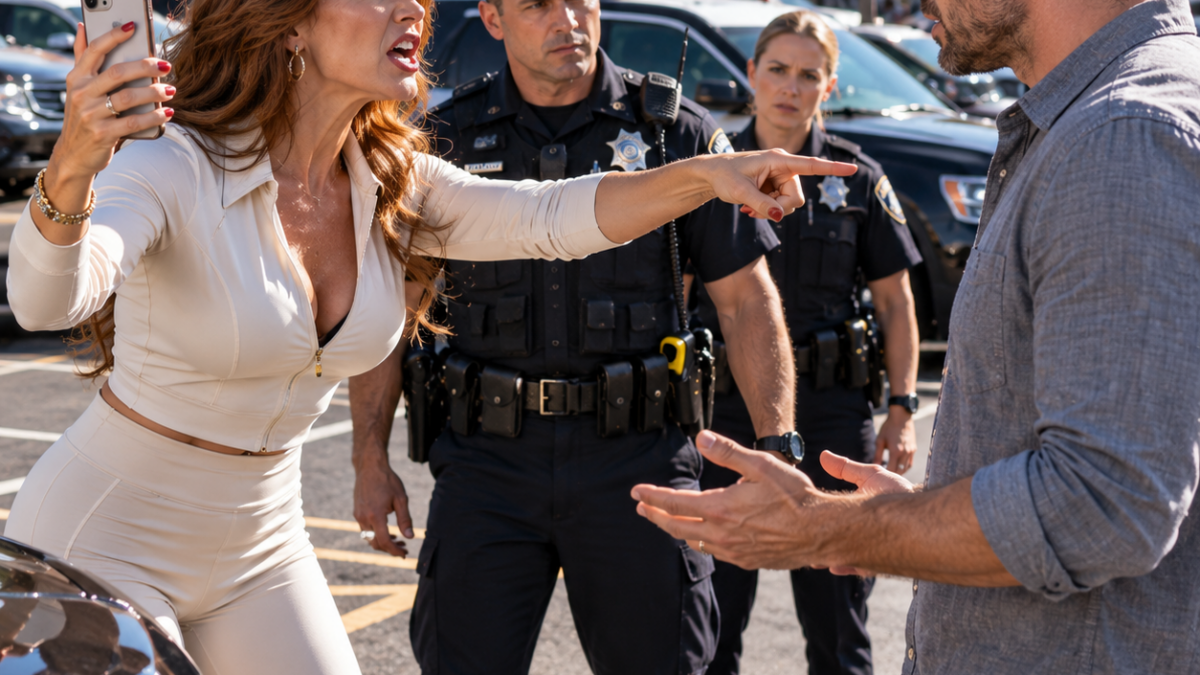
Karen stood in my parking lot with her phone raised like a weapon, telling the police I was trespassing and stealing spaces from residents.
She had no idea the strip of stores behind her paid rent to me, the signs she kept pointing at belonged to me, and every painted line under her expensive shoes was on land I owned.
By the time the officers told her the truth, her face had gone pale—but instead of walking away, she made the mistake of coming back.
I live in a mixed-use neighborhood, the kind of place some people love and other people complain about at every city meeting.
There are small houses, apartment buildings, coffee shops, barber shops, old brick storefronts, corner markets, and a few newer condo buildings where people seem to spend more time arguing about parking than actually living their lives. It is not perfectly quiet, and it is not perfectly organized, but that is exactly why I like it.
A little chaos makes a neighborhood feel alive.
I own a small commercial strip about a block from my house.
Nothing flashy. Nothing that would make anyone think I was secretly some real estate mogul. It is just a short row of storefronts with a tiny hair salon, a local coffee place, and a UPS store. Behind the building is a private parking lot.
That lot belongs to me.
Not the city.
Not the condo association nearby.
Not the residents who hate looking for street parking after work.
Me.
The lot exists for employees and customers of the businesses during business hours. I had signs installed years ago making that clear.
PRIVATE PARKING FOR BUSINESS CUSTOMERS AND EMPLOYEES ONLY.
UNAUTHORIZED VEHICLES MAY BE TOWED.
OWNER NOT RESPONSIBLE FOR DAMAGE OR THEFT.
I had never been aggressive about enforcing it because, honestly, I try not to be a jerk unless somebody forces me into the role.
During the day, the spaces need to stay available for the businesses. That matters. Customers cannot pick up packages, get coffee, or go into the salon if every spot is taken by someone who parked there before walking home to their apartment.
After hours, though, I generally do not care.
If the stores are closed, the employees have left, and somebody wants to leave their car there for a couple of hours because street parking is a nightmare, I usually let it slide. I know the neighborhood. Parking is brutal. I live a block away, and even I keep one of my cars in the lot because my garage is mostly storage and finding a street spot after six o’clock can feel like trying to win a small war.
So yes, technically, I could tow after hours.
In practice, I did not.
I believed in being reasonable.
Then Karen found the lot.
Karen was one of those women who seemed to believe confidence could replace ownership. She was probably in her mid-forties, beautiful in a sharp, intimidating way, with long auburn hair, expensive sunglasses, tight designer athleisure, and the kind of glossy lipstick that somehow made every insult look more deliberate.
She lived somewhere nearby, though not in any building connected to my property.
I had seen her before, usually marching down the sidewalk with a coffee in one hand and her phone in the other, looking like she was late to supervise a crisis she had invented herself.
She had the walk of someone who had never been told no enough times.
The first time she confronted me, it was after hours.
The stores were closed. The lot was mostly empty. I pulled into my usual corner spot, parked, and opened my back door to grab a few things I had left in the car.
That was when I heard footsteps behind me.
Not casual footsteps.
Angry footsteps.
The kind made by someone who has already decided they are right before they know what is happening.
Then came a sharp little tongue click.
I turned around.
Karen was standing a few feet away, arms crossed, sunglasses pushed up into her hair, looking at me like she had caught me breaking into her personal wine cellar.
“You can’t park here.”
No hello.
No question.
No attempt to figure out who I was.
Just an order.
I looked around the nearly empty lot, then back at her.
“Excuse me?”
She pointed at my car.
“You cannot park here. This is private parking.”
“I know.”
That seemed to annoy her.
“Then why are you parked here?”
“Because I’m allowed to be.”
Her eyes narrowed.
“No, you’re not.”
I closed the back door slowly.
“Do you work at one of the businesses?”
She gave a short, offended laugh.
“I live here.”
“Not in this parking lot, I hope.”
Her mouth tightened.
“This lot is for residents and guests only.”
That was the first time I realized we were not having a normal conversation.
PART 2
I glanced at the signs I had paid to install.
They were clear.
Business parking.
Private property.
No residential language anywhere.
“This is not a residential lot,” I said. “It belongs to the commercial strip.”
Karen gave me a look that said she had expected ignorance and found it insulting that I came prepared with basic facts.
“No. Half of it is for the businesses. The rest is neighborhood overflow.”
“That is completely untrue.”
She stepped closer.
“I have seen you here multiple times.”
“That is also true.”
“You leave your car here overnight.”
“Sometimes.”
“So you admit it.”
“I admit I park here.”
She smiled like she had just trapped me.
“You are abusing parking meant for residents.”
“No. I’m using a private lot.”
“Exactly. Private for residents.”
I stared at her for a second, trying to decide if she was confused, entitled, or both.
“Who told you that?”
“I know the rules.”
“What rules?”
“The community parking rules.”
“There are no community parking rules for this lot.”
Karen pulled out her phone and pointed it at me.
“What’s your name?”
I took a step back.
“Why?”
“Because I’m documenting this.”
“Documenting what?”
“Your illegal use of community parking.”
I almost laughed, but the camera made it less funny.
She began recording.
“State your name.”
“No.”
“Where do you live?”
“Also no.”
“You don’t get to refuse.”
“I absolutely do.”
Her lips pressed together.
That was when her voice shifted from bossy to sweet in a way that felt even more fake.
“Listen, I’m trying to be nice. People like you think you can take advantage because nobody wants confrontation. But I watch this lot. I know who belongs here.”
“Do you?”
“Yes.”
“Then you should know I belong here.”
She scoffed.
“You do not.”
I considered telling her right then that I owned the lot.
It would have been easy.
One sentence.
Actually, I own the property.
But Karen was not letting me speak for more than three words at a time, and some small part of me wanted to see how far she would go while standing on someone else’s land and pretending to guard it.
She pointed toward one of my signs.
“See? Unauthorized vehicles may be towed. That means I can have you towed.”
I looked at the sign.
Then at her.
“That sign does not say what you think it says.”
“It says unauthorized vehicles may be towed.”
“Right.”
“And you are unauthorized.”
“No.”
“Yes.”
“By who?”
“By me.”
That actually made me smile.
Karen hated that.
Her face hardened.
“You think this is funny?”
“I think it is very strange.”
“You’ve been warned. If I see your car here again, I’m calling the police.”
“That seems unnecessary.”
“No. What’s unnecessary is people like you stealing parking from residents who actually live here.”
I opened my mouth to respond, but she threw up one hand.
“I am done discussing this.”
That was impressive, considering she had never actually discussed anything.
She stepped backward, still glaring.
“Next time, I’ll have you handled.”
Then she turned and marched away like she had just saved the neighborhood from lawlessness.
I stood beside my car for a moment, watching her disappear around the corner.
The lot was quiet.
The signs were still there.
My businesses were dark.
My car sat in the spot I had parked in for years.
I remember thinking, What planet does she live on?
Then I forgot about her.
That was my mistake.
People like Karen rarely burn out after one confrontation. They usually take silence as proof that they won.
A few days later, on a Saturday afternoon, I drove to the lot to drop off paperwork at the UPS store and check on a minor maintenance issue behind the building.
Saturday was busy. The coffee shop had a line. The salon was open. A few customers were going in and out with packages.
I pulled in and immediately saw her.
Karen stood near the center of the parking lot holding a small notebook and pen.
She was writing down license plate numbers.
Actual license plate numbers.
She wore fitted white pants, a pale blue blouse, large sunglasses, and wedge sandals that clicked sharply against the pavement as she moved from car to car.
For a second, I just sat there in disbelief.
One of the salon employees, Maria, was standing in the doorway with her arms crossed, watching Karen like she was a raccoon that had wandered into the building.
I got out.
Karen saw me.
The reaction was immediate.
Her spine straightened. Her chin lifted. The notebook snapped shut.
Then she marched toward me.
“You.”
I sighed.
“Good afternoon to you too.”
She did not stop walking until she was close enough to make the confrontation uncomfortable.
“I told you not to park here again.”
“And I ignored that because you have no authority here.”
Her nostrils flared.
“That is it.”
She pulled out her phone.
“What are you doing?”
“Calling the police.”
“Karen—”
Her eyes flashed.
“How do you know my name?”
I didn’t, actually. I had heard Maria mutter it once when Karen bothered the coffee shop about a delivery van parked too close to the alley. But watching her react made me realize she liked knowing things about other people far more than she liked being known.
“I hear things.”
“Good. Then you know I don’t make empty threats.”
She tapped her screen and put the phone to her ear.
I should have stopped her.
Maybe I should have told her right then who I was, shown her proof, ended the circus before it started.
But something about her standing in my parking lot, threatening me with my own signs, after writing down my customers’ plates, pushed me past patience.
So I waited.
When the dispatcher answered, Karen’s voice changed dramatically.
It became breathless, urgent, almost theatrical.
“Yes, I need police assistance at the community parking lot behind the shops on Mercer Avenue. There’s a man illegally trespassing and refusing to leave. He keeps using resident parking even after being warned.”
I folded my arms.
Maria’s eyebrows climbed so high they almost disappeared into her hairline.
Karen glanced at me while talking.
“Yes, I have his license plate. He’s here now. I feel unsafe because he’s being aggressive.”
I laughed once under my breath.
That was apparently a mistake.
Karen turned away and said louder, “Now he’s laughing at me.”
I stopped laughing.
Not because I was afraid of her.
Because the moment someone starts telling police they feel unsafe, even when they created the entire situation, you realize how fast stupidity can become dangerous.
I stayed exactly where I was.
Hands visible.
Voice calm.
No sudden movements.
She kept going.
“He’s done this repeatedly. I’ve documented everything. This parking is for residents and guests, and he refuses to comply.”
When she hung up, she looked triumphant.
“You should have listened.”
I looked around the lot.
Customers were staring now.
A man coming out of the UPS store slowed down with a package in his hands. Two women near the coffee shop whispered to each other. One of my tenants, Raj from the UPS store, stepped outside and caught my eye.
He mouthed, You okay?
I nodded.
Karen saw him.
“Do not interfere,” she barked. “This is a police matter.”
Raj stared at her.
Then looked at me like, Is she serious?
I shrugged.
The officers arrived faster than I expected.
Two cruisers pulled into the lot, lights on but no sirens. Karen practically floated toward them. I swear she looked taller from pure excitement.
She started talking before the first officer had fully stepped out.
“Thank God you’re here. This man has been repeatedly trespassing and taking resident spaces. I warned him, but he refuses to leave, and he is acting very hostile.”
The officer held up a hand.
“Ma’am, slow down.”
“He parks here all the time.”
“Okay.”
“He leaves his car overnight.”
“Okay.”
“This lot is for residents, and he is not a resident.”
The second officer looked toward the signs.
Then toward the storefronts.
Then toward me.
He did not look convinced, but he stayed professional.
“Sir, can we see some ID?”
“Sure.”
I handed over my license.
Karen made a noise.
“See? He doesn’t even live in the building.”
The officer glanced at the address on my license.
“This is one block away.”
“Exactly.”
He ignored her.
“Sir, do you have business here?”
“Several kinds.”
Karen cut in.
“He always says that.”
The officer looked at her.
“Ma’am, please let him answer.”
That alone seemed to wound her.
I kept my voice even.
“First, I came to use the UPS store and check something behind the building. Second, I park here sometimes because I’m allowed to. Third, I own the commercial strip and the parking lot.”
The silence that followed was beautiful.
Karen blinked.
Maria covered her mouth with one hand.
Raj stepped fully outside.
The officer looked at me.
“You own the lot?”
“Yes.”
Karen laughed sharply.
“He does not.”
I pulled out my phone.
“I don’t carry original deeds around, but I have photos of the property documents, tax records, and lease agreements. The business owners can also confirm they make rent payments to me.”
Karen’s face flushed.
“He’s lying.”
Raj raised his hand slightly.
“He’s not.”
Karen whipped around.
“You stay out of this.”
Maria called from the salon doorway, “He owns the building.”
Karen looked at her like betrayal had just entered the room wearing salon smocks.
The officer took my phone and reviewed the documents.
I showed him the property record, the parcel map, the business lease summary, and the management contact information attached to my name.
He handed the phone back.
“Looks sufficient for now.”
Karen stepped closer.
“No. No, that can’t be right. I know the owner.”
That surprised me.
“You know the owner?”
“Yes.”
“What’s his name?”
She opened her mouth.
Nothing came out.
The second officer’s expression barely changed, but I could tell he was fighting exhaustion.
“Ma’am, did you know this gentleman owned the property before you called?”
Karen recovered slightly.
“I was acting in good faith based on community rules.”
“There are no community rules posted here,” I said. “There are private parking signs for my businesses.”
She pointed toward the sign.
“Exactly. Unauthorized vehicles may be towed.”
“By me.”
Her lips parted.
I could see the realization reach her in stages.
First confusion.
Then disbelief.
Then anger.
Then humiliation.
She had called the police on the person with actual authority over the thing she was trying to control.
The officer turned to her.
“Ma’am, this is private property. If the owner says he is allowed to park here, he is allowed to park here.”
“But residents use this lot.”
“With permission?”
Karen looked at me.
I smiled politely.
“After hours, I usually don’t mind. During business hours, it is for customers and employees.”
The officer continued.
“You also can’t call 911 because someone parks on property you don’t own.”
“I didn’t call 911. I called the police.”
“Same concern. False or unnecessary reports are serious.”
Karen’s face went pale.
“I was trying to maintain order.”
“That is not your job here.”
Her mouth tightened.
That sentence hit harder than any fine could have.
Karen’s entire posture seemed built around the idea that order was always her job, everywhere, especially when nobody asked.
The officer told her to leave the lot unless she had legitimate business at one of the stores.
For once, Karen listened.
She walked away stiffly, her heels striking the pavement like each step was a personal insult.
Once she reached the sidewalk, she turned back and glared at me.
I gave her a small wave.
That may have been petty.
I do not regret it.
After the officers left, the lot returned to normal in that strange way public embarrassment dissolves. Customers resumed errands. Maria went back into the salon. Raj shook his head and laughed.
“She has been bothering people all morning,” he said.
“Taking plates?”
“Yes. She told a customer she was going to have their car removed.”
“From my lot.”
“Apparently from her lot.”
I rubbed my forehead.
“I’ll handle it.”
I thought the police warning would be enough.
It should have been enough.
A rational person would have stayed away forever.
Karen was not rational.
The next morning, Maria texted me a video.
No message.
Just the video.
I opened it while drinking coffee at my kitchen counter.
There was Karen, back in the lot.
This time she was alone, walking between cars with her phone held out, recording license plates, filming my signs, taking close-ups of the pavement like she expected to find a secret deed written in asphalt.
She muttered to herself throughout the video.
“This is wrong. They can’t just take resident parking. This whole thing is corrupt.”
At one point, she leaned close to a windshield and filmed someone’s temporary permit.
My patience ended.
I called the non-emergency number and asked to speak with one of the officers from the previous day. Luckily, I had the incident number.
Then I drove to the lot.
By the time I arrived, Karen was still there.
Standing near the salon window.
Writing in her notebook again.
She looked up when she saw me.
Her expression shifted instantly from concentration to defiance.
“You are harassing me now.”
I got out of my car.
“No, Karen. I’m removing you from my property.”
She laughed.
“You can’t do that.”
“I absolutely can.”
“You are retaliating because I exposed you.”
“Exposed me as the owner?”
Her face reddened.
“You think you’re clever.”
“I think you’re trespassing.”
She pointed the pen at me.
“I am collecting evidence.”
“For what?”
“For the city.”
“The city does not own this lot.”
“For the residents.”
“The residents do not own this lot.”
“For whoever needs to know what you’re doing.”
I looked past her as a cruiser pulled in.
Karen turned.
Her confidence flickered.
The same officer from the day before stepped out, followed by another.
“Ma’am,” he said, and he already sounded tired.
Karen rushed toward him.
“Officer, he is trying to intimidate me for documenting illegal parking.”
The officer looked at me.
I showed him Maria’s video.
Then I said the words that ended Karen’s imaginary career as parking commissioner.
“As the property owner, I am formally trespassing her from this lot. She is not allowed to return unless she is a paying customer entering one of the businesses for legitimate business, and she may not patrol, photograph customers’ vehicles, harass tenants, or interfere with parking.”
Karen gasped.
“You cannot ban me.”
The officer turned to her.
“He can.”
“This is discrimination.”
“Against what protected class?”
“I’m a resident.”
“Resident of where?”
“The neighborhood.”
The officer closed his eyes briefly.
Living near a place is not a legal category, but Karen said it like she had identified a constitutional violation.
The officer explained clearly that she had been formally trespassed by the property owner. If she returned to patrol the lot, harass customers, or interfere with the businesses, she could be arrested.
Karen looked at me.
Her face was no longer pale.
It was bright red.
“You’ll regret this.”
The officer’s tone sharpened.
“Ma’am.”
She looked back at him.
“I’m leaving.”
“Good.”
She stormed out of the lot.
This time, she did not look victorious.
She looked exposed.
Word spread fast.
It turns out Karen had annoyed almost every business in that strip at some point.
She had told salon customers they could not park overnight.
She had complained to the coffee shop that their delivery van blocked “community flow.”
She had lectured UPS customers for taking “resident-adjacent spaces,” whatever that meant.
Nobody had taken her seriously enough to call me because she always disappeared before things escalated.
Now everyone knew.
Karen had no authority.
None.
She had simply found a parking lot, decided it should belong to residents, and appointed herself to enforce rules that existed only in her head.
The week after she was trespassed, the entire atmosphere changed.
Employees seemed more relaxed.
Customers stopped getting weird notes on their windshields.
Raj joked that he missed the free entertainment.
Maria said, “I don’t. That woman has the energy of a complaint form.”
I put up two new signs.
PRIVATE PROPERTY.
PARKING FOR BUSINESS CUSTOMERS AND EMPLOYEES ONLY.
NO RESIDENTIAL OR OVERFLOW PARKING DURING BUSINESS HOURS.
VIOLATORS MAY BE TOWED AT OWNER’S DISCRETION.
I also added small cameras covering the lot entrance and rear spaces.
Not because I wanted to become the parking tyrant Karen imagined me to be.
Because I had learned that generosity without boundaries is an invitation for entitled people to rewrite your kindness into their right.
After hours, I still allowed some parking.
But I became more intentional about it.
The businesses had my number. If someone caused trouble, they called me. If a car blocked a delivery or stayed too long, I handled it.
Quietly.
Legally.
Without a clipboard.
Karen tried to fight back through gossip.
Of course she did.
I heard from a tenant in a nearby apartment building that she told people I was “privatizing community resources.”
That phrase made me laugh so hard I nearly spilled coffee.
Community resources.
My parking lot.
On my deed.
Behind my building.
Maintained with my money.
Insured by me.
Taxed to me.
Apparently, if Karen wanted something badly enough, ownership became selfish.
She also claimed I had embarrassed her publicly.
That part was true, though I would argue she did most of the work herself.
She filed a complaint with the city alleging unlawful parking restrictions.
An inspector came out, reviewed the lot, checked the signs, confirmed it was private property serving commercial units, and closed the complaint.
She emailed the condo association, even though the condo association had no relationship to my property. From what I heard, they told her to stop involving them in disputes outside their jurisdiction.
She left a one-star review for the coffee shop mentioning “hostile parking enforcement.”
The owner responded publicly:
“We do not control the parking lot. Also, you have been banned by the property owner for harassing customers.”
The review disappeared within a day.
That response was printed and taped behind the coffee counter for a week.
I pretended not to notice.
For nearly a month, Karen stayed away.
Then one evening, I saw her standing across the street.
Not in the lot.
Not on my property.
Across the street.
She wore a black dress, high sandals, and sunglasses even though the sun was almost gone. She stood near a streetlight, arms crossed, staring at the lot like a queen exiled from a country she still believed belonged to her.
I was locking my car.
She called out, “You know this neighborhood used to look out for each other.”
I looked over.
“Is that what you were doing? Looking out for people?”
“Somebody had to.”
“No, Karen. Nobody had to.”
She walked closer but stopped before reaching the property line.
At least she had learned something.
“You let strangers park there whenever they want.”
“After hours, if they don’t cause problems.”
“But not residents.”
“Residents are allowed when they behave like everyone else.”
Her eyes narrowed.
“So now you decide who behaves?”
“On my property? Yes.”
That landed.
She looked away.
For the first time, her confidence seemed less like power and more like habit.
“You could have just told me you owned it.”
“I tried to tell you the lot was private business parking. You didn’t listen.”
“You made me look stupid.”
“No. You called the police before checking who owned the land.”
She looked back at me.
“I was trying to protect the neighborhood.”
“From a man parking in his own lot?”
Her mouth tightened.
“People abuse things when nobody enforces rules.”
“People also abuse rules when nobody asks who gave them authority.”
For once, Karen had no quick answer.
A car passed between us.
When it was gone, she had already turned away.
That was the last time she spoke to me.
The neighborhood eventually forgot the details, the way neighborhoods always do.
People remembered the broad version.
Karen called the cops on the owner of the parking lot.
Karen got banned from the lot she tried to control.
Karen thought she knew the owner and didn’t even know his name.
It became one of those stories employees told new hires.
“See that lot? Don’t worry, you can park there. Just don’t be like Karen.”
I still park in my corner spot.
Sometimes during the day.
Sometimes after hours.
Sometimes overnight.
Nobody bothers me.
The businesses are doing fine. The coffee place expanded its morning hours. The salon added another stylist. The UPS store still sends me texts whenever someone leaves a vehicle somewhere stupid.
Parking is still difficult in the neighborhood.
That has not changed.
But the lot is peaceful because authority is clear now.
Not loud.
Not dramatic.
Clear.
That is the part Karen never understood.
Real authority does not need to perform constantly.
I own the lot, but I do not stand in the middle of it writing down plate numbers.
I have the legal right to tow vehicles, but I do not threaten everyone who pauses too long near a sign.
I can ban someone from the property, but I only did it after she called police, harassed customers, filmed vehicles, and returned after being warned.
Karen loved the appearance of authority.
The notebook.
The phone camera.
The accusations.
The stance.
The way people glanced at her and wondered whether she had power.
But authority without legitimacy is just theater.
And the moment real authority arrived—the deed, the business owners, the officers, the trespass notice—her whole performance collapsed.
Sometimes I think about the first night she confronted me.
If she had asked instead of ordered, I probably would have explained.
If she had said, “Hey, I live nearby and I’m confused about who can park here,” I would have told her the truth.
I might even have said, “After hours, I don’t mind if residents use it as long as they don’t cause trouble.”
She could have gotten what she wanted simply by acting like a normal human being.
But Karen did not want permission.
Permission would have meant acknowledging someone else owned the space.
She wanted control.
That was why the truth offended her so deeply.
She did not lose parking.
She lost the fantasy that she had been in charge.
That was punishment enough.
Well, that and being legally banned from the very lot she tried to police.
The signs are still there.
The cameras are still up.
The businesses still operate.
Cars still come and go.
And sometimes, when I pull into my usual corner spot and see Karen across the street pretending not to look, I remember her pointing at my own sign and telling me she could have me towed.
Every time, I smile a little.
Not because I enjoy conflict.
I don’t.
I enjoy peace.
But peace means more when you know exactly who tried to take it from you and failed.
Karen wanted to protect a parking lot that was never hers.
In the end, the only person she successfully removed from it was herself.