𝗙𝗨𝗟𝗟 𝗦𝗧𝗢𝗥𝗬 I Never Imagined the Hardest Goodbye Would Be to a Cat Who Never Stopped Talking
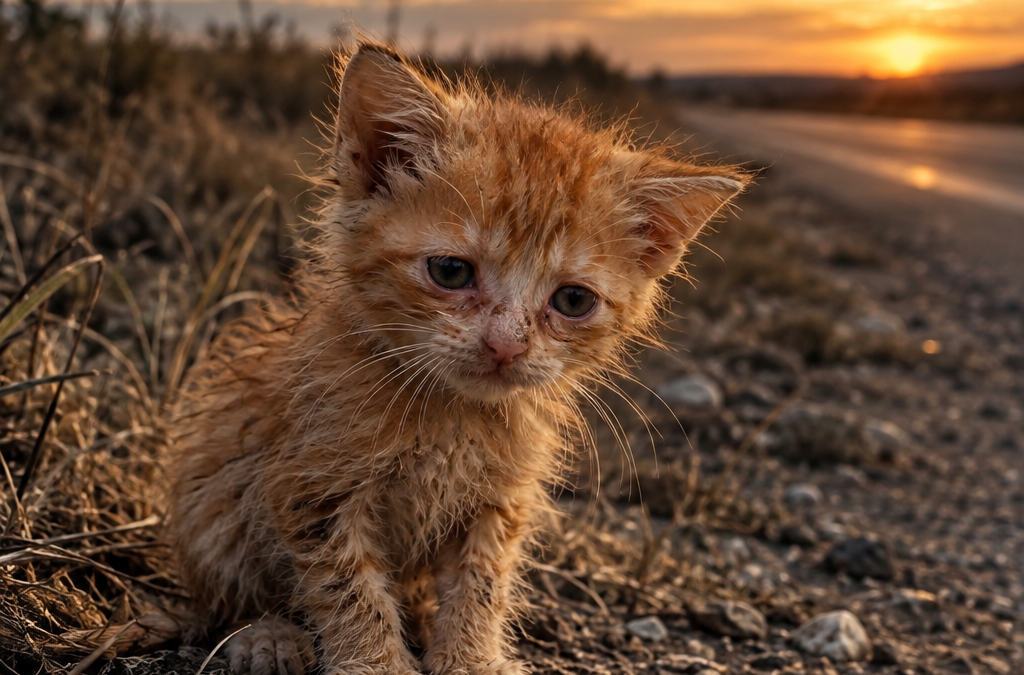
𝗙𝗨𝗟𝗟 𝗦𝗧𝗢𝗥𝗬
He was so expressive that even when I couldn’t understand exactly what he wanted, I could usually tell how he felt about the situation.
A short sound could mean curiosity.
A drawn-out complaint could mean impatience.
And when he delivered one of his more dramatic performances, there was no mistaking the fact that he considered himself deeply wronged.
“Chunk, explain to me what’s wrong.”
“MEEEEOW.”
“That doesn’t help.”
“Mrrrow!”
“You’re being very sassy.”
He would stare at me.
And I would stare right back.
Then one of us would lose the argument.
It was usually me.
I sometimes wondered what my mother thought about all of this.
After all, she was the one who had been so certain that one cat was enough.
Now she was sharing her home with a creature who seemed determined to hold family meetings whenever the mood struck him.
One day, while Chunk was making his feelings known about something I couldn’t even identify, I looked at her and laughed.
“Remember when you didn’t want another cat?”
She gave me the kind of look mothers give when they know exactly where a conversation is going.
“Don’t start.”
“He’s your son now.”
Chunk meowed.
I pointed toward him.
“See? He agrees.”
She tried to look unimpressed.
It didn’t work.
Because the truth was that she’d fallen for him, too.
And not just the sweet parts.
She loved the same strange personality that made him so impossible to ignore.
That was something I didn’t understand about love when I first begged her to meet those kittens.
I thought adoption would mean giving a helpless animal somewhere safe to sleep.
I thought we’d feed him, care for him, and make sure nothing bad happened to him again.
All of that was true.
But I hadn’t understood the other half.
We weren’t just making room for a cat.
We were making room for an entire personality.
For habits we couldn’t predict.
For affection that would arrive on its own terms.
For demands and complaints and little moments of absurdity that would eventually become some of our favorite memories.
Chunk wasn’t interested in being the perfect pet.
He was interested in being himself.
And for reasons I still can’t entirely explain, that made him even easier to love.
There was another side to him, though.
A side that could surprise people after they’d listened to him argue for several minutes.
Chunk had one of the loudest purrs I had ever heard.
When he settled down close to someone he trusted, that little engine inside his chest would start running.
At first it was a soft vibration.
Then it grew louder.
And louder.
Sometimes it sounded less like a cat purring and more like a machine struggling to start.
I could put my hand against him and feel the vibration traveling through his body.
It was one of my favorite things about him.
Not because the sound was unusual, although it certainly was.
But because of what it meant.
For a cat who seemed to have an opinion about absolutely everything, purring was the moment when he didn’t need to argue.
He could simply be happy.
There was something deeply comforting about that.
Sometimes I’d sit beside him without saying anything.
No questions.
No teasing.
No ridiculous conversations.
Just my hand resting gently against his fur while that enormous purr filled the space between us.
And I’d think about how his life had started.
Somewhere out there, years earlier, two little kittens had been abandoned with no understanding of what would happen next.
One of them had become this warm, loudly purring animal beside me.
He didn’t have to worry about whether someone would feed him.
He didn’t have to wonder whether he was allowed inside.
He didn’t need to search for a safe place to rest.
He had a family.
He had a home.
And he had developed the rather remarkable belief that every person in that home existed, at least in part, to serve his interests.
Especially when food was involved.
If Chunk has one great weakness, it’s his relationship with his food bowl.
Or more specifically, his relationship with the possibility that his food bowl might not contain enough food.
I have never met another cat who can turn a few visible inches of empty bowl into such an emergency.
It doesn’t matter if there’s food sitting around the edges.
It doesn’t matter if he ate recently.
If he looks down and sees the bottom of the bowl, we have a problem.
A serious problem.
At least according to him.
He’ll stand there and stare.
Then he’ll look at you.
Then back at the bowl.
Then back at you again.
And finally, when you’ve had plenty of time to recognize your terrible failure as a caretaker, he’ll start talking.
“Meow.”
“Chunk, there’s food in there.”
“MEEEEOW.”
“Look.”
I would point toward the remaining food.
He would inspect the bowl as if I were attempting to deceive him.
Then he’d look at me again.
And complain.
I could almost hear the words he would say if he spoke English.
Are you seriously expecting me to live like this?
What made it so funny was how personally offended he seemed.
This wasn’t a cat quietly requesting an additional serving.
This was a cat who believed he had discovered a serious injustice.
And he wanted answers.
Sometimes we’d laugh so hard that it became difficult to keep explaining ourselves.
“Chunk, you’re not starving.”
“Mrrrow!”
“You literally have food.”
Another complaint.
“I can’t believe we’re having this conversation.”
But we did have it.
Over and over.
Because Chunk had never shown much interest in reconsidering his position.
A bowl that looked nearly empty was unacceptable.
End of discussion.
Of course, feeding time wasn’t his only opportunity to demonstrate his appetite.
If someone was eating nearby, Chunk noticed.
Always.
You could sit down with food and convince yourself he wasn’t paying attention.
Then you’d glance over and see him watching.
Completely focused.
He didn’t necessarily rush forward or demand whatever you had immediately.
Sometimes he was patient.
Almost suspiciously patient.
He would sit nearby with that unmistakable expression of a cat who was calculating his chances.
His eyes followed the movement of your hands.
He watched the food.
He watched your face.
And he seemed to be waiting for the exact moment when you might decide sharing was a good idea.
“Chunk.”
He’d look at me.
“This isn’t for you.”
A small meow.
“No.”
He would continue watching.
I would try to ignore him.
And inevitably, a minute later, I would look up again.
Still there.
Still hopeful.
Still utterly convinced that persistence was a reasonable strategy.
But there was one particular object that made him forget almost everything else.
Wooden chopsticks.
I have no idea why.
To this day, I couldn’t give you a convincing explanation for his obsession with them.
I only know that the moment someone started eating with a pair of wooden chopsticks, Chunk suddenly became very interested in whatever was happening.
It didn’t matter what food we were eating.
That was the funniest part.
It wasn’t always about getting a bite.
He wanted the chopsticks themselves.
I could be sitting peacefully with a meal, talking to someone, when I’d notice that familiar orange face appearing nearby.
“Chunk.”
His eyes would go straight to my hands.
“Don’t even think about it.”
He would watch the chopsticks move.
Back and forth.
Up and down.
Completely captivated.
Sometimes I’d stop and hold still just to see what he’d do.
His gaze would remain fixed on them.
“Seriously? This is what you want?”
He’d meow.
“Of course it is.”
There are certain mysteries in life that simply don’t need solving.
Chunk’s love for wooden chopsticks is one of them.
He liked them.
He wanted them.
And he made no effort to pretend otherwise.
Over the years, we learned that life with Chunk meant constantly discovering new things about his personality.
We learned that he could be sweet and demanding within the same minute.
We learned that he could argue loudly with someone and then curl up beside that same person as if nothing had happened.
We learned that his curiosity could be as persistent as his appetite.
And we learned that the phrase “Chunk, what are you doing?” would become one of the most frequently used sentences in our home.
Sometimes I would catch him somewhere he didn’t belong.
He’d look at me.
I’d look at him.
“You know you’re not supposed to be here.”
A meow.
“Don’t argue.”
Another meow.
And I would find myself laughing again.
He was our spicy boy.
That’s what we called him when his attitude became impossible to ignore.
Not because he was mean.
He wasn’t.
Not because he didn’t love us.
He did.
But because he had this enormous sense of self-importance packed into one orange body.
He wanted things done his way.
He wanted his complaints acknowledged.
He wanted affection when he asked for it.
And if the food bowl failed to meet his expectations, the entire household was apparently supposed to know.
I used to joke about his round little body, too.
With a name like Chunk, it was difficult not to.
We loved his softness, his comfortable shape, and the way he seemed perfectly satisfied with himself.
But eventually, something that had always been a source of affectionate teasing became a responsibility we couldn’t ignore.
Chunk was getting a little too heavy.
At first, it wasn’t something we treated as a serious concern.
He was still our happy, opinionated boy.
He still talked.
He still purred.
He still showed tremendous enthusiasm for food.
But loving an animal means paying attention to more than what makes you smile.
It means noticing when something that seems harmless could become a problem later.
When we took Chunk to the veterinarian, we learned that he was getting close to being overweight.
It wasn’t the dramatic medical crisis people sometimes expect in stories about animals.
There was no sudden emergency.
No devastating diagnosis.
No terrible moment when we thought we might lose him.
But it was important.
Because his health mattered more than the jokes we’d made about his appetite.
And we wanted to keep him with us for as long as possible.
I remember feeling a little guilty.
Not because we had knowingly done something wrong.
We loved him and wanted him to be happy.
But it was a reminder that affection and responsible care don’t always look the same.
Sometimes affection means giving your cat the treat he’s begging for.
And sometimes responsible care means looking into those pleading eyes and saying no.
With Chunk, that second part was particularly difficult.
He was already an expert at acting as though an almost empty bowl was a personal tragedy.
Now we needed to pay closer attention to his portions and follow the veterinarian’s advice.
Which meant that our famously talkative cat suddenly had something new to complain about.
“Chunk, you’ve had enough.”
“MEEEEOW.”
“I know.”
Another complaint.
“You’re fine.”
He stared at me.
“I promise you’re fine.”
If a cat could accuse someone of betrayal with a single expression, Chunk had perfected the technique.
He didn’t understand that we were trying to protect him from future health problems.
He didn’t know that maintaining a healthy weight could make a real difference to his comfort and well-being.
He only knew that his family, the people who had always made sure he had everything he needed, were suddenly being less generous with food.
And he had thoughts about that.
Plenty of thoughts.
There were moments when it would have been easier to give in.
A little extra food.
One more treat.
Anything to make him stop looking at us as if we’d forgotten everything we knew about love.
But we stayed with the plan.
We listened to the advice we’d been given.
We reminded ourselves that being responsible for another life sometimes meant making decisions that wouldn’t be appreciated immediately.
And slowly, the effort paid off.
Chunk reached a healthier weight.
The worry that had begun to settle over us eased.
We could look at him and feel confident that we were doing something good for him, even if he probably considered the entire process unnecessary.
That experience changed the way I thought about caring for him.
When I was younger, I had wanted to bring home a kitten because I couldn’t bear the thought of him being alone.
I had imagined love mainly as warmth and protection.
A safe home.
Soft places to sleep.
Good food.
Someone to hold him.
But years later, I understood that the love that keeps an animal healthy is sometimes less sentimental.
It’s paying attention.
It’s listening when a veterinarian tells you something you don’t particularly want to hear.
It’s choosing what’s good for your pet instead of what’s easiest for you.
And sometimes it’s enduring a very dramatic argument with an orange cat who believes his dinner has been unfairly reduced.
Thankfully, Chunk never lost his personality.
His body changed.
His attitude did not.
If anything, the experience confirmed something we already knew.
Chunk was going to be Chunk no matter what.
He could be a healthier weight and still behave as though an empty patch of food bowl was a national emergency.
He could receive all the affection in the world and still demand more.
He could be perfectly comfortable and still find reasons to complain.
And he could finish an argument with me, walk over a moment later, and ask for a kiss.
“Chunk, you give me a kiss?”
He’d move his face toward mine.
Sometimes I’d get the affection I was asking for.
Sometimes I would get something that was definitely not a kiss.
“That’s not a kiss!”
He would look entirely unconcerned.
“Oh my goodness, Chunk.”
Then I’d laugh and try again.
“Kisses?”
A little sound.
“Kisses.”
That was how our relationship worked.
There was no guarantee that asking him for something meant he would cooperate.
But there was always a good chance he’d make me laugh.
And often, when I least expected it, he’d give me a moment of tenderness so simple that I couldn’t imagine loving him any more than I already did.
The strange thing about loving an animal for years is that you stop noticing some of the details that would amaze a stranger.
They become part of the familiar shape of your life.
Chunk’s eyes were like that for me.
I’d looked into them countless times before I really began appreciating how unusual they were.
They had this beautiful mixture of colors, with hints of orange and blue that made them seem different depending on the light.
Sometimes I would catch him looking up at me and become momentarily distracted by them.
“Chunk, you have the prettiest eyes.”
He would answer.
Of course he would.
Then there were the little tufts of fur sticking out from the ends of his ears.
Such a small detail.
Easy to overlook.
But once you noticed them, it was impossible not to recognize how perfectly they belonged to him.
His ears made him look slightly mischievous even when he was doing absolutely nothing.
And given Chunk’s personality, that seemed appropriate.
I loved those little details.
The color of his fur.
The way his eyes changed in the light.
The shape of his face when he was deeply interested in something.
The extraordinary volume of his purring.
Even the sound of his complaints.
I loved how unmistakably himself he was.
But Chunk also had interests that none of us could have predicted.
For example, shoes.
I don’t mean that he occasionally sat near a pair of shoes.
I mean that shoes seemed to have a special place in his heart.
Old shoes.
Dirty shoes.
Smelly shoes.
Shoes that I would never have imagined could be appealing to a creature with any sense of smell.
It didn’t matter.
If Chunk found them, there was a good chance he would curl up nearby and make himself comfortable.
I remember coming across him beside a pair and just staring.
“Chunk.”
He glanced up.
“Why?”
A meow.
“Out of all the places you could sleep, why here?”
He didn’t seem interested in answering.
Or maybe he had answered and I simply didn’t speak enough cat to appreciate the explanation.
He would settle in as if the shoes had been placed there specifically for his comfort.
And I would wonder what he found so appealing.
Maybe he liked the familiar smell of the people who wore them.
Maybe they made him feel close to us even when we weren’t sitting beside him.
Or maybe he was just a weird little orange cat who loved shoes.
I never needed to know which explanation was correct.
There was something touching about it regardless.
Because Chunk didn’t always choose the softest or most expensive place to rest.
Sometimes he chose something that smelled like us.
And there is a quiet kind of affection in that.
We spend so much time trying to show animals we love them through things we can buy.
Beds.
Toys.
Treats.
Comfortable spaces arranged just for them.
Then your cat ignores all of it and curls up beside an old pair of shoes.
And somehow that says more than any carefully chosen gift ever could.
Bags were another obsession.
Especially suitcases.
I don’t know what it is about an open suitcase that makes a cat feel as though the universe has presented him with a personal invitation.
But Chunk could look at one and immediately recognize an opportunity.
There were times we’d find him sleeping inside a suitcase, completely relaxed, as if he’d been waiting all day for someone to bring him a portable bedroom.
He would be curled up among whatever was inside, looking perfectly content.
“Chunk!”
An ear would move.
“What are you doing in there?”
A sleepy sound.
“That isn’t your bed.”
He would continue resting.
I would sigh.
And then, inevitably, I’d find myself smiling.
There was something absurdly sweet about seeing him tucked inside luggage.
Part of me wanted to believe he was trying to make sure we wouldn’t go anywhere without him.
But that may have been more about what I wanted than what he was thinking.
To him, the suitcase was probably just another interesting place to sleep.
Still, I couldn’t help imagining what it would be like if we could pack our favorite moments as easily as clothes.
All those afternoons.
All those conversations.
Every ridiculous argument about food.
Every loud purr.
Every moment I’d found him sleeping somewhere he didn’t belong.
If I could have put them all in a suitcase and carried them with me, I would have.
I didn’t realize how much I would someday want to do exactly that.
For years, Chunk was woven so completely into our family’s routine that I barely thought about what life would look like without him nearby.
There was always a new little story.
A fresh complaint.
A funny sound.
A moment when someone would call out his name from another room, followed by the unmistakable noise of Chunk responding.
He had become part of the atmosphere of home.
Not just another animal living there.
A presence.
And he had a remarkable way of making ordinary moments feel memorable.
You could be having an unremarkable day.
Nothing exciting.
Nothing worth telling anyone about.
Then Chunk would look at you and release some extraordinarily dramatic meow, and suddenly everyone was laughing.
He didn’t need to understand our problems to make them feel lighter.
He didn’t need to know what kind of day we’d had.
He simply arrived as himself.
Loud.
Warm.
Ridiculous.
Affectionate.
And sometimes that was enough.
I began to understand that happiness didn’t always arrive as a major event.
Sometimes it was the sound of a familiar cat greeting you when you came into a room.
Sometimes it was watching your mother talk to him as though he were another person in the family.
Sometimes it was finding him curled up beside a pair of shoes and realizing that even his strangest habits had become comforting.
And sometimes it was just knowing he was there.
I think that’s why the change in our living arrangements affected me more deeply than I expected.
By then, Chunk had been part of our lives for years.
He wasn’t that abandoned kitten anymore.
He was grown.
Confident.
Healthy.
Set in his ways.
And completely convinced that his family would continue accommodating his personality.
But my own life was changing.
I eventually moved into a house with three cats.
I loved those cats, too.
They each deserved a safe, comfortable environment, just as Chunk did.
And if loving Chunk had taught me anything, it was that responsible care meant thinking about what an animal needed rather than simply doing what I wanted.
Because there was a problem.
Chunk didn’t get along well with other cats.
It wasn’t a detail we could ignore.
He had never been the kind of cat who easily welcomed every other feline into his space, and the idea of putting him into a house with three cats raised questions that love alone couldn’t answer.
I wanted him with me.
Of course I did.
I had been the one who begged my mother to meet him in the first place.
I was the one who had looked at a tiny orange kitten and decided that I wanted him in our family.
I had spent years talking to him, laughing at him, loving him.
And now I was facing the possibility of living somewhere he wouldn’t be.
There was a part of me that resisted the idea immediately.
He’s my cat, I thought.
I’ve loved him all these years.
Why shouldn’t he come with me?
But the more I thought about it, the more I understood how selfish that question could become.
Because it wasn’t really about whether I loved him.
It was about what would make him happy.
Chunk was comfortable with my parents.
He knew their home.
He knew the rhythms of their lives.
He had familiar places to sleep, familiar people to talk to, and all the things that helped him feel secure.
He could continue being the opinionated, affectionate little creature he had always been.
Moving him into a household with three other cats could take away that comfort.
And for what?
So I wouldn’t have to miss him?
I hated that realization.
I hated that doing the right thing didn’t feel like doing something kind.
I wanted the right choice to be the easy one.
I wanted the answer to be simple.
I wanted to take my cat with me and believe everything would somehow work itself out.
But I loved him too much to pretend that my feelings were the only ones that mattered.
So Chunk stayed with my parents.
There wasn’t a dramatic goodbye.
No tragedy.
No reason for anyone to think the situation was terrible.
He still had a loving family.
He was safe.
He was cared for.
He wasn’t being abandoned or sent away.
In fact, he wasn’t leaving at all.
I was.
And maybe that’s why it hurt in such an unexpected way.
When you leave a pet in a home where he’s happy, there’s no obvious villain in the story.
No one has done anything wrong.
There’s no terrible injustice to fix.
You’re simply growing up, moving forward, and discovering that some of the things you love can’t follow you into every new chapter of your life.
I remember looking at Chunk and wishing I could explain all of that to him.
He was so talkative that sometimes it was easy to forget he couldn’t understand the complicated thoughts running through my head.
We had spent years pretending to have conversations.
But this was one conversation I couldn’t make him understand.
I could say, “I’m going to miss you.”
He might meow.
I could say, “You know I love you, right?”
He might purr.
I could tell him that he would stay where he was happiest, that I would come visit, that my parents would look after him.
But he wouldn’t understand the future the way I did.
He lived in the present.
And in that moment, all he knew was that I was there.
I sat near him and watched him with an ache in my chest that surprised me.
There he was.
My ridiculous orange boy.
The same cat who once treated a glimpse of the bottom of his food bowl as a personal disaster.
The same cat who stole everyone’s attention during meals.
The same cat who slept inside suitcases and curled up beside shoes.
He hadn’t changed.
His world was still the world he knew.
Mine was the one changing.
“Chunk,” I said softly.
He looked at me.
“I’m going to be living somewhere else.”
A small meow.
“I know. I wish I could explain it better.”
He blinked.
“You’re staying here with Mom and Dad.”
Another little sound.
I reached toward him and stroked his fur.
“You’re going to be okay.”
The funny thing was, I knew he would.
My parents loved him.
They understood him.
They knew his habits better than almost anyone.
They knew about the food bowl.
They knew about the chopsticks.
They knew exactly how dramatic he could become when he wanted something.
They also knew the tenderness beneath all that attitude.
He was staying with people who adored him.
The one who needed reassurance was me.
Because I had gotten used to a very particular kind of companionship.
The kind that doesn’t demand explanations.
The kind that doesn’t care whether you’ve accomplished anything impressive.
The kind that greets you simply because you’ve come into the room.
Chunk had never expected me to be anything other than the person he knew.
And I was suddenly going to have a life where his voice wasn’t always within earshot.
I tried to remind myself that distance wasn’t the same as losing someone.
I could visit.
My parents weren’t strangers.
Chunk wasn’t disappearing.
But logic doesn’t make every emotion easier.
The first time you realize that a familiar part of your daily life will now have to be something you deliberately make time for, you begin to understand how much you took its presence for granted.
I’d never needed to arrange a visit just to hear Chunk meow.
I’d never needed an excuse to sit beside him.
I’d never needed to wonder when I’d get to see his face again.
He’d just been there.
And suddenly, being with him would require a decision.
A trip.
A little effort.
That may sound insignificant.
But I think anyone who has deeply loved an animal understands it.
It’s not only the big moments you miss when you no longer live together.
It’s the small ones.
The ones you barely noticed while they were happening.
The unexpected greeting.
The sound of paws moving nearby.
The quiet satisfaction of knowing a creature you love is asleep somewhere in the same house.
I knew I would miss those things.
I just hadn’t realized how much.
When I settled into my own home, life continued.
There were things to do.
Responsibilities.
Routines.
Three cats who needed attention and care.
I loved the life I was building.
And that mattered, too.
I never wanted my affection for Chunk to make me less present for the animals who lived with me.
They deserved the same patience and kindness he had received.
Still, something was missing.
Sometimes I’d think about Chunk without any particular reason.
I’d hear a cat vocalize and remember his absurdly dramatic voice.
I’d see an open bag and imagine his orange body curled inside.
I’d notice someone using wooden chopsticks and immediately think about how interested he would have been.
There were ordinary moments when I wanted to turn around and say something to him.
And then I’d remember he wasn’t there.
That was the strange part.
He wasn’t gone from my life.
He was simply somewhere else.
Safe.
Loved.
Probably complaining.
But not beside me.
At first, I told myself I wouldn’t need to visit too often.
I was an adult.
I had my own home.
My own responsibilities.
My own cats.
I could see Chunk whenever I visited my parents, and that would be enough.
It sounded reasonable.
Then I’d think about his face.
And suddenly I had a very good reason to stop by.
Or at least, that’s what I told myself.
The truth is that I probably visited my parents more often than I strictly needed to.
And I’m pretty sure everyone knew why.
I wanted to see Chunk.
I missed that orange face.
I missed his voice.
I missed the way he looked at me as if he had been preparing an entire list of complaints and was finally ready to deliver them.
Sometimes I would go to my parents’ house and feel myself becoming excited before I even saw him.
Not because anything extraordinary was about to happen.
But because somewhere inside that familiar home was a cat who had become one of the most important little creatures in my life.
And I was about to see him again.
“Chunk?”
A sound from somewhere nearby.
I would smile.
“Hi, Chunk!”
Another meow.
“There you are.”
There was always something so comforting about hearing him answer.
That familiar voice.
That familiar attitude.
He didn’t need to know that I’d missed him.
He didn’t need to understand what it meant for me to be standing there again.
He just had to be himself.
And he always was.
I would crouch down or sit beside him.
“What’s going on?”
A meow.
“Oh, really?”
Another sound.
“Have you been good?”
Sometimes he’d respond with a long, indignant complaint.
I would laugh.
“That’s what I thought.”
Within minutes, we’d be talking as if no time had passed.
That was one of the things I loved most about visiting him.
There was no awkwardness.
No need to rebuild the connection.
No feeling that I had become a stranger simply because I lived somewhere else.
Chunk still recognized the people who loved him.
He still had all the same habits.
And he still seemed completely willing to engage in our ridiculous conversations.
I might have a busy week.
I might have responsibilities waiting for me.
I might be tired or distracted by all the little worries of ordinary adulthood.
But when I sat beside Chunk, those things became less important for a little while.
He wanted attention.
He wanted affection.
Sometimes he wanted food.
Often, he wanted to complain about something.
And I could give him my attention without having to solve every other problem in my life first.
That became a kind of peace I didn’t know I needed.
There is something extraordinary about being loved by an animal who has never cared about your achievements, your mistakes, or your complicated plans for the future.
Chunk doesn’t know whether I’ve had a productive day.
He doesn’t care whether I’m successful.
He doesn’t ask me to justify how I spend my time.
He knows my voice.
He knows my presence.
He knows that when I come close and speak to him, something familiar is happening.
And that is enough.
I began to treasure those visits differently from the way I had treasured our years living together.
Before, affection had been available whenever I wanted it.
Now, I noticed the details more.
The way he looked up when I spoke.
The little sounds he made in response.
The warmth of his body when he settled near me.
The powerful purr that seemed much too loud for one cat.
The tiny tufts of fur at the ends of his ears.
The color in his eyes.
The way his expression changed when he realized I might be asking him if he wanted a treat.
“Chunk, is it time for a treat?”
His attention would sharpen.
“Yeah?”
A little meow.
“Should we go find one?”
Another response.
And there it was again.
That wonderful, ridiculous feeling that I was having a conversation with someone who understood far more than he should.
I learned to enjoy those moments without trying to make them mean too much.
Sometimes a meow is just a meow.
Sometimes a cat wants a treat because treats are delicious.
And sometimes an animal curls up next to you because you’re warm and comfortable.
I don’t think love becomes less meaningful when you accept those simple explanations.
I think it becomes more honest.
Chunk doesn’t need to think like a human being to matter deeply to me.
He doesn’t need to understand every word I say.
He doesn’t need to experience love exactly as I do.
He’s a cat.
A wonderfully strange, opinionated, affectionate cat.
And loving him means appreciating him for what he is rather than turning him into something else.
Over time, I noticed something else during my visits.
My mother and father had their own relationship with Chunk.
Of course they did.
He lived with them.
They shared the ordinary daily moments I was no longer there to witness.
They knew what time he expected food.
They knew which places he liked to sleep.
They heard his little conversations throughout the day.
They were the people whose routines revolved around him now.
And instead of making me jealous, that realization made me feel grateful.
I thought back to the beginning.
To the moment my mother told me we didn’t need another cat.
To the way I’d kept insisting that she should just come meet those two abandoned kittens.
She hadn’t known what she was agreeing to.
Neither had I.
We’d imagined adopting a small animal who needed a home.
We hadn’t imagined the personality that would gradually fill that home.
We hadn’t anticipated the conversations.
The loud purring.
The chopsticks.
The dramatic food complaints.
The suitcases.
The shoes.
We hadn’t known that years later, after I had moved out, Chunk would still be such an important part of our family.
I would look at my parents interacting with him and think about how different things might have been if my mother had refused to meet those kittens.
Not because our lives would necessarily have been unhappy.
We had already been a family.
We had love.
We had a home.
But we wouldn’t have had Chunk.
And once you’ve known a particular kind of love, it’s difficult to imagine all the ordinary days that would have existed without it.
All the laughter we would have missed.
All the moments when he made someone smile.
All the silly arguments.
All the times his loud purr brought a little comfort.
My mother could have said no.
She had every practical reason to.
And I couldn’t have blamed her.
But she said yes.
She opened her heart to one more animal.
And that decision gave Chunk a home while giving the rest of us something we hadn’t known we needed.
I think about that whenever I see him now.
Sometimes he’ll be in one of his affectionate moods.
He’ll want to sit close.
He’ll accept kisses or offer some strange version of affection that only makes sense to him.
Other times, he’ll be deeply offended by something entirely trivial.
I might arrive to find him studying his food bowl as though it contains evidence of a terrible injustice.
“Chunk.”
He looks up.
“What happened?”
“Mrrrow.”
“Is this about food again?”
Another complaint.
I laugh.
“Of course it is.”
Then I remind him that he’s healthy, loved, and absolutely not starving.
He doesn’t appear convinced.
And somehow I find myself loving him just as much in that moment as I do when he’s curled up beside me, purring.
Maybe more.
Because real love isn’t limited to the easy parts of another creature’s personality.
It’s learning who they are.
It’s making space for their peculiarities.
It’s choosing to care for them even when they’re difficult, demanding, or impossible to reason with.
And it’s understanding that those same qualities are often what make them unforgettable.
Chunk isn’t always the sweet little angel someone might imagine when they hear about an abandoned kitten finding a home.
Sometimes he’s obnoxious.
Sometimes he’s pushy.
Sometimes he’s convinced we’re doing everything wrong.
He can make an incredible amount of noise over something that doesn’t matter at all.
But beneath all that attitude is a cat who wants to be near the people he loves.
And that is the part that always gets me.
Because when he’s finished making demands, when the food has been handled and the imaginary injustice has been addressed, he often wants nothing more than to settle beside someone.
He wants company.
He wants affection.
He wants to be included.
He doesn’t necessarily care what you’re doing.
You could be relaxing, talking, or simply sitting quietly.
If he wants to be close, he’ll find a way to join you.
And when that loud purr begins, all the dramatic arguments seem to disappear.
What’s left is the same little creature I once couldn’t stop thinking about.
The abandoned kitten who needed someone to choose him.
Except now he’s safe enough to be demanding.
Loved enough to be ridiculous.
Secure enough to complain about the bottom of his food bowl.
And comfortable enough to sleep wherever he pleases, even if that happens to be inside someone’s suitcase.
Sometimes I think that may be one of the most beautiful parts of his story.
He doesn’t act grateful every second of the day.
He doesn’t spend his life behaving like a creature who once had nothing.
He expects good things.
He expects care.
He expects love.
And while that can make him hilariously demanding, there’s something wonderful about it.
The abandoned kitten learned that the world could be kind.
He learned that people would feed him, protect him, and make room for him.
He learned that he could speak up and someone would pay attention.
He learned that home was a place where he was allowed to be himself.
And now, after all these years, he seems to take that love completely for granted.
I don’t mean that as an insult.
I mean it as a victory.
Because no animal should have to spend its entire life feeling afraid that affection might disappear.
No cat should have to treat every meal as if it could be the last.
Chunk has never needed to understand how fortunate he was to be rescued.
He only needed the chance to live without fear.
And we gave him that chance.
I didn’t think about any of this when I was younger.
Back then, I had a much simpler understanding of what adoption meant.
I saw two kittens who needed homes.
I wanted to help.
I convinced my mother to meet them.
And I was delighted when she agreed to bring Chunk into our family.
At the time, I thought that was the happy ending.
The kitten was adopted.
He was safe.
Everything worked out.
But the longer I’ve loved him, the more I’ve realized that adoption isn’t the end of the story.
It’s the beginning of a promise.
A promise you keep in hundreds of small, ordinary ways.
You feed them.
You pay attention.
You learn their habits.
You notice when something is wrong.
You take them to the veterinarian.
You make difficult decisions about their health.
You find out what makes them comfortable.
You accept that they will sometimes behave in ways you don’t understand.
You make room for them in your routines.
And eventually, you discover they’ve made room for themselves in your heart so completely that you can’t imagine who you would have been without them.
I kept that promise to Chunk when he was little.
My parents kept it as he grew.
And when my life changed, keeping that promise meant letting him remain where he was happiest, even though I wanted him with me.
That was probably the hardest part for me to accept.
Love isn’t always about holding on.
Sometimes it’s about knowing when your own wishes shouldn’t come first.
I could have insisted that Chunk belong wherever I lived.
I could have focused on how much I missed him.
I could have convinced myself that because I was the person who wanted him adopted, I had some special right to make every decision about his future.
But Chunk isn’t an object that belongs to whoever wanted him first.
He’s a living creature with feelings, habits, and needs of his own.
And I owe him the same consideration I would want anyone to show something I love.
So he lives with my parents.
And I visit.
Often.
Probably more often than I can reasonably explain.
Sometimes I tell myself I’m going over to see everyone.
And that’s true.
I love my family.
I enjoy spending time with them.
But there is usually one particular orange face I’m hoping to see.
One voice I want to hear.
One cat I want to hold close for a little while.
I can laugh at myself for that now.
I don’t feel the need to pretend otherwise.
I miss him.
And I’m lucky that missing him doesn’t have to mean losing him.
Every visit gives me another chance to see him happy.
Another chance to hear him complain.
Another chance to remind myself that the little kitten I once begged my mother to adopt grew into a cat who has everything he needs.
And perhaps that’s why the goodbyes have become easier.
Not because I love him less.
But because I know where he belongs.
One of my favorite things to do is sit with him near the end of a visit.
By then, he has usually had ample opportunity to tell me about the state of his food bowl, examine anything interesting I brought with me, and demand whatever attention he considers appropriate.
Eventually, he settles.
Sometimes beside me.
Sometimes close enough that I can reach over and touch his fur.
I talk to him quietly.
Not because I expect him to understand every word.
But because talking to Chunk is one of the ways I’ve always loved him.
“You’re a good boy, you know that?”
A little sound.
“Even when you’re being bad.”
His ears move.
“Especially when you’re being bad.”
Then he starts purring.
That familiar, impossibly loud purr.
And I remember the first time I held him in my heart as something more than just a kitten I thought was cute.
I remember worrying about where he would end up.
I remember begging my mother to give him a chance.
I remember the way she softened when she finally met him.
And I remember saying those words.
“You’re adopted.”
At the time, I said them with the excitement of someone who had gotten exactly what she wanted.
I didn’t know how much meaning they would eventually carry.
I didn’t know that years later, the cat I was adopting would be comforting me through changes in my own life simply by continuing to exist in his familiar, ridiculous way.
I didn’t know that the little orange kitten would grow up to have such strong opinions.
I definitely didn’t know he would develop a fascination with wooden chopsticks.
And I couldn’t have imagined that someday I’d be standing at the door of my parents’ house, reluctant to leave because a cat was watching me with those beautiful eyes.
Sometimes, when I’m getting ready to go, I’ll stop and look for him one more time.
“Chunk?”
He answers.
Of course he does.
I find him wherever he’s settled.
Maybe he’s relaxing somewhere comfortable.
Maybe he’s near a pair of shoes.
Maybe he’s looking at me as though he suspects I’m about to do something that inconveniences him.
I crouch beside him.
“Hey, buddy.”
A meow.
“I have to go.”
He looks at me.
I stroke his head.
“I’ll come see you again.”
Another little sound.
I smile.
“You better be good.”
He responds.
And I laugh because, after all these years, I know perfectly well that being good isn’t always high on his list of priorities.
Then I ask him for a kiss.
Sometimes he cooperates.
Sometimes he gives me the cat equivalent of telling me to mind my own business.
Either way, I love him.
I tell him goodbye.
And I leave knowing he’s exactly where he should be.
That feeling matters more to me now than I can explain.
Because there was a time when I believed bringing Chunk home was the most important thing I could ever do for him.
Now I understand that giving him a home was only the first part.
The real gift was making sure he could keep having one.
Even when circumstances changed.
Even when I moved.
Even when I had to accept that the place where he felt most comfortable wasn’t the same place where I lived.
Our family had changed since 2014.
I had changed.
The years had moved forward in all the ordinary, unavoidable ways that years do.
But Chunk remained a constant.
A loud, affectionate, slightly ridiculous constant.
And somehow, whenever I visited, he made home feel like home again.
I think back to my mother’s original words.
“One cat is enough.”
It’s funny how often I remember that sentence.
Not because I want to tease her forever, although I probably will.
But because it reminds me how easily our lives can be shaped by small decisions.
She could have refused to come see the kittens.
I could have accepted her first answer.
We could have gone on with our lives and never known what we were missing.
Chunk would still have needed a home, and I hope someone else would have given him a wonderful one.
But it wouldn’t have been ours.
We wouldn’t have known his voice.
We wouldn’t have learned to recognize the different kinds of meows.
We wouldn’t have laughed at his dramatic complaints.
We wouldn’t have watched him sleeping in suitcases or discovered that he considered wooden chopsticks one of the most fascinating inventions in human history.
We wouldn’t have worried about his weight, celebrated his healthier body, or learned how much responsibility could exist inside such a simple bond.
And I wouldn’t have had the experience of loving him enough to let him stay somewhere else.
So much of what Chunk taught me happened without him ever knowing there was a lesson involved.
He taught me that love can be loud.
That comfort can sound like an engine starting inside a cat’s chest.
That a home isn’t defined by how many rooms it has or how perfectly everything is arranged, but by whether the creatures living there feel safe enough to be themselves.
He taught me that affection doesn’t always arrive politely.
Sometimes it demands food.
Sometimes it interrupts your meal.
Sometimes it climbs into your luggage.
Sometimes it talks back.
And sometimes it just sits quietly beside you until you realize you aren’t lonely anymore.
But perhaps the most important thing he taught me was that loving someone doesn’t mean needing to be with them every moment.
It means wanting them to be happy.
Even when happiness requires a little distance.
Even when you wish things could be different.
Even when you have to drive over to your parents’ house because the orange cat you love is living there instead of with you.
I don’t know what Chunk remembers about his earliest days.
I don’t know whether he has any memory of being abandoned.
I don’t know whether the journey from that lonely place to his foster home left an impression on him that he could recognize.
I can’t ask him.
Well, I can ask him.
But his answer would probably be a very dramatic meow.
And I’d still have no idea what he meant.
What I do know is that he no longer lives that uncertain life.
He has people who adore him.
He has a warm home.
He has familiar places to sleep.
He has food carefully provided to keep him healthy, no matter how strongly he objects to the portions.
He has shoes to curl up beside.
Suitcases to climb into whenever the opportunity presents itself.
And an entire family willing to listen when he has something to say.
He has grown from an abandoned orange kitten into a deeply loved cat with a personality far larger than anyone could have expected.
And somehow, after all these years, he still makes me feel the same tenderness I felt the first time I saw him.
Not because he’s helpless anymore.
He’s very far from helpless.
Chunk is quite confident that he knows how things should be done.
I love him because he’s himself.
Because he’s funny.
Because he’s difficult.
Because he’s affectionate.
Because he makes the people around him happy without having the slightest idea that he’s doing anything special.
And because, even though I don’t live with him anymore, he will always be part of what home means to me.
Sometimes I wonder what would happen if I could go back to 2014 for just a moment.
If I could stand beside my younger self as she begged her mother to come meet two abandoned kittens.
I wonder what I would say to her.
Maybe I’d tell her that she was about to meet a cat who would never stop talking.
Maybe I’d warn her about the food bowl arguments.
Or the chopsticks.
Or the fact that this tiny orange kitten would someday inspire more trips to her parents’ house than she ever expected to make.
Maybe I’d tell her that the cat she was so desperate to bring home would one day teach her something important about letting go.
But I don’t think I would tell her any of that.
I think I’d just tell her to keep asking.
To be patient with her mother.
To understand that adopting an animal is a serious commitment.
And to appreciate every ordinary day that follows.
Because those ordinary days will become the memories she carries with her.
And one day, when she’s standing at the door getting ready to leave, she’ll look down at that orange cat and understand exactly how much those memories matter.
The last time I leaned close to Chunk and asked him for a kiss, he responded in his usual unpredictable way.
I laughed.
“Chunk, that’s not a kiss.”
He looked at me.
“Kisses,” I tried again.
A little meow.
“Oh, you’re impossible.”
He gave me that familiar expression, the one that always makes me feel as if he’s judging something I just said.
Then he settled beside me, warm and content.
His purring started.
Low at first.
Then louder.
That extraordinary little engine.
I rested my hand against him and listened.
For a moment, neither of us needed to say anything.
I thought about the kitten he’d once been.
About the family that had welcomed him.
About all the years between then and now.
And about the fact that he was still here, still loved, still completely and unapologetically Chunk.
Eventually, I stood up.
“I love you, buddy.”
He looked at me.
I smiled.
“Be good for Mom and Dad.”
A meow.
“Yeah, I know. You’ll think about it.”
I laughed one last time, said goodbye, and headed for the door.
There was no sadness in leaving him that day.
Only the familiar ache of wishing I had a little more time, softened by the certainty that I would see him again.
Because Chunk wasn’t waiting for someone to rescue him anymore.
He wasn’t the abandoned kitten whose future I couldn’t stop worrying about.
He was home.
He had been home for years.
And when I thought of the little orange face that had once changed my mother’s mind, I finally understood something I hadn’t understood back then.
The greatest thing we ever gave Chunk wasn’t a house, a food bowl, or a place to sleep.
It was the certainty that he belonged somewhere.
And in return, he gave us a thousand small reasons to be glad we belonged to him.
I still hear his voice whenever I visit.
He still complains when his bowl doesn’t meet his standards.
He still wants attention, still loves his strange little comforts, and still purrs loudly enough to make the room feel different.
My mother still has the cat she once insisted we didn’t need.
And I still have the little orange boy I couldn’t walk away from.
The only difference is that now, when I tell Chunk, “You’re adopted,” I understand what those words were really supposed to mean.
They weren’t just a promise that we were taking him home that day.
They were a promise that, wherever life took the rest of us, he would never have to wonder whether he had a family again.
And after all these years, that’s still a promise we’re keeping.