𝗙𝗨𝗟𝗟 𝗦𝗧𝗢𝗥𝗬 I Came Home From a Three-Year Deployment and Found My Neighbor Charging Strangers to Park on My Land
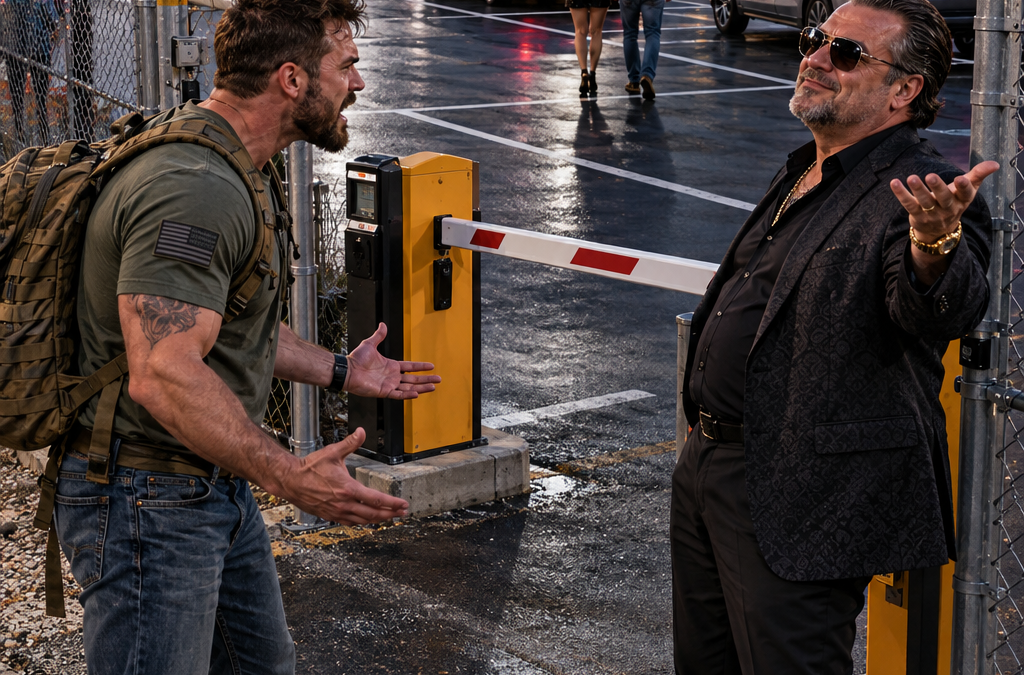
𝗣𝗔𝗥𝗧 𝟮
When I finally returned to Korea in early spring after three full years, everything felt familiar and unfamiliar at the same time.
That’s one of the strangest things about being away for a long period.
You remember a city a certain way.
Then you return and discover that everyone else kept living while you were gone.
Businesses changed.
Roads changed.
Friends got married.
People moved.
New apartment buildings appeared where there used to be empty dirt.
I had given up my old apartment before deployment, so my first couple weeks back were consumed by practical life.
Find housing.
See my family.
Deal with paperwork.
Unpack.
Sleep at normal hours.
Remember how to exist outside a deployment routine.
About two weeks after returning, I decided to visit my land.
Saturday afternoon.
Nice weather.
I drove toward Gyeonggi Province expecting the same half-developed neighborhood I remembered.
At first, I thought I had taken a wrong road.
The area had changed dramatically.
Apartment buildings now stood where empty fields had been.
There was a convenience store.
Restaurants.
Coffee shops.
New sidewalks.
More traffic.
The neighborhood had grown while I was gone.
I felt excited.
Development meant the land was probably worth considerably more than when I’d purchased it.
Maybe holding the property had turned out even better than expected.
I turned onto the street.
Then slowed down.
There were more buildings than I remembered.
I checked the navigation.
Kept driving.
Then I reached the location of my lot.
And stopped.
For maybe a full minute, I remained inside my car staring through the windshield.
I thought I had the wrong address.
I checked my phone.
Looked at the map.
Looked outside.
Checked again.
No mistake.
The half-acre parcel I owned had disappeared beneath a professional parking lot.
Not a few cars parked informally on dirt.
Not somebody temporarily using the land.
A parking lot.
Smooth black asphalt covered almost the entire property.
Fresh-looking white lines divided the surface into neat rows of spaces.
There were approximately thirty parking spaces.
A chain-link fence surrounded the perimeter.
Fence posts had been set in concrete.
At the entrance was a sliding gate with an automated barrier arm.
Beside it stood a payment kiosk.
Weatherproof housing.
QR scanner.
Directional signs.
Lighting.
At the gate, somebody had attached a sign.
PREMIUM VIP PARKING
CLUB ECLIPSE GUESTS ONLY
I read it twice.
Club Eclipse.
I looked across the street.
There it was.
A nightclub.
Modern façade.
Dark tinted windows.
Purple LED trim around the entrance.
Even though it was closed during the afternoon, everything about it screamed expensive nightlife.
I got out of my car.
My hands were actually shaking.
I walked toward the fence.
There was a padlock on an equipment box near the gate.
The pavement was professionally laid.
Drainage appeared to have been installed.
Whoever built it had spent serious money.
I walked the entire perimeter of the property.
Every angle made the situation worse.
It wasn’t possible that somebody had accidentally crossed a boundary with a few parking spaces.
The entire parcel had been taken.
Paved.
Fenced.
Commercialized.
I stood at one corner and tried to understand the thought process that led someone to look at land they did not own and decide to build a revenue-generating business on top of it.
Then I started taking pictures.
Everything.
Entrance.
Fence.
Signs.
Barrier arms.
Payment kiosk.
Parking layout.
The nightclub across the street.
Street numbers.
Property markers I could still identify.
I took far more photographs than I probably needed.
Then I drove home and pulled out my property documents.
For one irrational minute, I wondered if I’d missed something during the deployment.
A tax issue.
A government acquisition.
Some notice.
Anything.
I checked my records.
The deed was still mine.
Taxes had been paid every year.
My name remained attached to the parcel.
Nobody had purchased it.
Nobody had leased it.
Nobody had asked permission.
I had not signed anything.
Someone had simply built a business on my land.
The next evening, I returned.
Sunday around ten at night.
Club Eclipse was open.
Now I understood why the parking lot existed.
The place was busy.
Cars approached from both directions.
Drivers pulled into the entrance lane.
Stopped at the kiosk.
Scanned the displayed QR code.
Paid.
The barrier lifted.
Cars entered.
I stood across the street for almost an hour watching.
Twenty-eight of the thirty spaces were occupied at one point.
The rate displayed on the system was 5,000 won per hour.
It wasn’t a fortune per vehicle.
But thirty spaces turning over on a busy nightclub schedule added up.
Somebody had built a profitable parking operation on land I had been paying taxes on for three years.
I started doing the math in my head.
Then stopped.
The amount wasn’t even the part that made me angriest.
It was the certainty.
The fence.
The automated gate.
The payment kiosk.
Nobody invests that kind of money unless they believe they’re entitled to use the property.
I wanted to know who had made that decision.
Monday morning, I went to Club Eclipse.
The club was closed, but I could see a man inside near the bar doing inventory.
I knocked on the glass.
He looked toward me.
Then ignored me.
I knocked again.
Eventually he came to the door and opened it just enough to talk.
“We’re closed.”
“I need to speak with the owner.”
“We open at eight.”
“It’s about the parking lot.”
That got his attention.
He looked me over.
“Wait here.”
A few minutes later, another man came from the back.
Late thirties.
Well dressed.
Designer jeans.
Fitted black shirt.
Expensive watch.
Everything about him suggested he had worked hard to build an image of somebody successful enough that other people should take him seriously.
He looked at me without smiling.
“I’m Kevin Song.”
He gestured toward the parking lot.
“You wanted to talk about parking?”
“Yes.”
“What about it?”
“I own the land.”
He stared at me.
“The parking lot?”
“The property underneath it.”
One eyebrow rose.
I continued.
“I bought it four years ago. I’ve been overseas on a military deployment for three years. I came home two weeks ago and discovered someone paved my property.”
Kevin laughed.
Not because something was funny.
It was the laugh people use when they want you to understand that your statement isn’t worth taking seriously.
“You own that lot?”
“Yes.”
“That’s rich.”
I had brought copies of documents.
“I have the deed.”
Kevin looked across the street.
“So you just left it there.”
“What?”
“You abandoned it for three years.”
“I didn’t abandon anything.”
“You weren’t using it.”
“That’s irrelevant.”
He crossed his arms.
“The place was an eyesore.”
“It was vacant land.”
“Exactly.”
I stared at him.
Kevin continued.
“This neighborhood developed. Businesses moved in. Apartments went up. People needed services.”
“And that gave you permission to pave land you don’t own?”
“I improved it.”
I almost laughed.
“You improved my property without asking.”
“You should be thanking me.”
There are sentences so arrogant that your brain takes an extra second to process them.
That was one.
“Thanking you.”
“Yes.”
“Because you built a business on my land.”
“You were doing nothing with it.”
“Because it’s mine.”
Kevin’s mouth tightened.
“That kind of thinking is why neighborhoods sit undeveloped for years.”
I took a breath.
I had learned overseas that anger is often most useful when you don’t show it immediately.
“I need you to remove everything.”
His expression changed.
“What?”
“The fence. Paving. Gates. Kiosks. Signs. Everything.”
“You’re joking.”
“No.”
“Do you have any idea how much this cost?”
“No.”
“Twenty million won just for the asphalt.”
I said nothing.
“Then the fencing. Control systems. Payment equipment. Lighting.”
He stepped closer.
“I have nearly fifty million won invested across that lot.”
“I didn’t authorize you to spend fifty won.”
Kevin’s jaw tightened.
“You think you’re going to show up after three years and make me rip it apart?”
“Yes.”
He laughed again.
“You really are serious.”
“Completely.”
“I checked that property.”
“Did you check the registry?”
His answer came too quickly.
“The land was empty.”
“That isn’t what I asked.”
“I talked to people nearby.”
“Did you check ownership?”
“Nobody knew who owned it.”
“That information is public.”
Kevin rolled his eyes.
“You army guys come back and think everything is some regulation checklist.”
His tone shifted.
Condescending.
“You left land sitting empty while the whole area developed.”
“I was deployed.”
“And?”
“And I still owned it.”
“You want to know what I think?”
“Not particularly.”
“I think you were stupid.”
I stared at him.
“You bought land and abandoned it.”
“I paid taxes every year.”
“Congratulations.”
He gestured across the street.
“I turned useless dirt into something valuable.”
“You turned somebody else’s land into your parking business.”
“My customers needed parking.”
“Then you should have bought a lot.”
“This one was perfect.”
“That doesn’t make it yours.”
Kevin stepped closer.
He lowered his voice.
“Here’s reality.”
I almost smiled.
I was beginning to understand what kind of man I was dealing with.
“I have the keys.”
He pointed toward the parking lot.
“I have the gate system.”
Another gesture.
“I built it.”
He tapped his chest.
“I paid for it.”
Then he looked me in the eye.
“If you think you can do better, run it yourself.”
I didn’t answer.
He smiled.
“You can’t.”
I felt the anger rise in my face.
Kevin continued.
“Because you don’t understand the system. You don’t understand the business.”
He looked me up and down.
“You’ve spent three years playing in the dirt in Africa.”
That sentence almost ended my attempt at civility.
Instead, I spoke slowly.
“I was working as a combat engineer supporting a United Nations peacekeeping mission.”
“Whatever.”
He waved one hand.
“This is business.”
“On my land.”
“My parking lot.”
“No.”
“Yes.”
He leaned closer.
“And I am not removing a damn thing.”
I held his gaze.
“If you have a problem with that,” he continued, “call a lawyer.”
He smiled.
“Call police.”
Another shrug.
“I don’t care.”
Then he said the words that would become my favorite part of the entire story.
“You’re not touching my parking lot.”
Kevin turned around.
Walked toward the back office.
Conversation over.
I stood there another few seconds.
Then left.
I didn’t call police.
Not yet.
I called a lawyer.
I found a property attorney with experience in land disputes and arranged a consultation as quickly as possible.
I arrived with everything.
Deed.
Tax records.
Photographs.
Maps.
Notes from my conversation with Kevin.
The attorney was a woman a few years older than me who had the kind of calm manner that immediately made me feel slightly less insane.
I explained the situation.
She listened.
Occasionally asked a question.
“How long were you outside the country?”
“Three years.”
“Continuous tax payments?”
“Yes.”
“Any lease?”
“No.”
“Written permission?”
“No.”
“Verbal permission?”
“Absolutely not.”
“Did you know construction occurred?”
“No.”
She reviewed the deed.
Checked the parcel description.
Looked at my photographs.
Then sat back.
“This is more straightforward than it feels.”
“That would be nice.”
“You own the land.”
“I know.”
“And the parking facility is permanently attached to the land.”
“Yes.”
She began explaining the principle.
Under Korean property law, fixtures and permanent improvements attached to land generally accede to the landowner.
Pavement.
Fence structures.
Gate installations.
The practical result was almost ridiculous.
Kevin had not merely trespassed and built something on my property.
He had potentially built improvements that legally became part of my property.
I stared at her.
“So you’re telling me…”
She smiled slightly.
“Yes.”
“The parking lot belongs to me.”
“The land unquestionably belongs to you.”
“Right.”
“And under the circumstances you’ve described, the permanent improvements are part of that land.”
“The gates?”
“Yes.”
“Fence?”
“Yes.”
“Asphalt?”
“Yes.”
“Kiosks?”
“We would examine particular equipment separately depending on how it’s installed, but the overall parking facility is on your property and he cannot simply assert ownership over the land because he paid for construction.”
I sat there trying not to laugh.
Kevin had spent close to fifty million won improving property he didn’t own.
“What can I do?”
“You have several options.”
“Such as?”
“Demand removal.”
“I tried that.”
“He refused.”
“Very confidently.”
“You can seek damages for unauthorized use.”
“Okay.”
“You can seek restoration.”
“Okay.”
She paused.
“Or you can take control of your property.”
I looked at her.
“Of the parking operation?”
“You would need to do it carefully.”
“Legally.”
“Exactly.”
She explained that Kevin might attempt to claim reimbursement for improvements if he could establish good faith.
That would require arguing that he genuinely believed he had a lawful basis to build.
But that argument was weak.
Property ownership in Korea was not some unknowable village secret.
Records could be checked.
Kevin admitted he never contacted an owner.
He had simply seen an empty lot, asked around casually, and decided the absence of a visible person meant permission.
“That’s good faith?” I asked.
My lawyer gave me a look.
“We’ll let him try to explain it.”
I smiled.
“What would you recommend?”
“First, hire counsel.”
“I assume that’s you.”
“If you’d like.”
“I would.”
“Second, document absolutely everything.”
“Already started.”
“Good.”
“Third?”
“Decide what outcome you want.”
I thought of Kevin standing in his nightclub.
Run it yourself.
“I think I know.”
That week, I studied the parking operation.
Not to damage it.
Not to sabotage anything.
I wanted to understand what had been installed on my land so I could lawfully assume control without creating unnecessary disputes over equipment.
The system was commercially ordinary.
Automated entrance barrier.
Automated exit.
Payment kiosks.
QR-based payment.
Basic control electronics.
I had spent three years working around engineering systems in much harsher conditions.
Nothing about a parking gate intimidated me.
Still, I was careful.
I consulted my lawyer.
Photographed every component.
Recorded the condition of the property.
Set up a legitimate business-payment account.
Purchased replacement access and control components appropriate for a parking facility.
Prepared new signage.
And waited until a night when the lot was empty and the club was closed.
After midnight, I entered my own property.
I replaced the necessary control components rather than destroying Kevin’s equipment.
I changed access locks on boxes attached to my property.
I changed the payment information so future parking revenue would go into an account I controlled.
I installed my own sign.
PUBLIC PARKING
5,000 WON PER HOUR
I photographed everything before and after.
Serial numbers.
Connections.
Equipment condition.
Nothing was smashed.
Nothing was stolen.
Nothing was hidden.
By the time I finished, the parking facility remained almost visually identical.
Same asphalt.
Same painted spaces.
Same barrier arms.
Same fence.
The only meaningful difference was that Kevin no longer controlled it.
I did.
I drove home around two in the morning.
Didn’t sleep much.
Part of me expected police to arrive.
Another part kept replaying Kevin’s words.
Run it yourself.
So I did.
Wednesday night, Club Eclipse opened.
I parked across the street around nine.
At first, nothing happened.
Then cars started arriving.
The first driver pulled up.
Scanned my new payment code.
The system processed the payment.
Barrier opened.
The car entered.
I stared at my phone.
There it was.
First payment.
From my land.
The next car arrived.
Then another.
Everything worked.
Around ten, Kevin came outside with another man.
Probably a manager.
He looked toward the entrance.
Stopped.
Walked across the street.
He tried his key on one of the control boxes.
Didn’t work.
Tried again.
Harder.
Still nothing.
Then he pulled out his phone.
Tapped.
Looked at the gate.
Nothing.
He became visibly agitated.
Then he looked across the road.
Saw me.
I got out.
Walked toward him.
“Evening.”
His face was red.
“What the hell did you do?”
“I took your advice.”
“What?”
“You told me to run it myself.”
His jaw dropped slightly.
“So I am.”
“You broke into my equipment.”
“No.”
“You hacked my payment system!”
“No.”
“Then where is my money going?”
“My parking customers are paying my parking business.”
“This is my parking lot.”
I looked down at the asphalt.
“Interesting.”
“You know what I mean.”
“I know exactly what you mean.”
“You changed my locks.”
“I changed locks on equipment located on my property.”
“You replaced my system.”
“With equipment I own.”
“You cannot do this.”
“My lawyer disagrees.”
Kevin stared at me.
“This is theft.”
“Call police.”
That surprised him.
“What?”
“You told me Monday to call police.”
I gestured toward his phone.
“Go ahead.”
His expression changed.
Then he actually called.
Ten minutes later, two officers arrived.
Kevin intercepted them before they reached me.
He spoke rapidly.
“He broke into my parking system.”
One officer raised a hand.
Kevin kept going.
“He vandalized commercial equipment. He’s diverting payments. Customers are paying him money that belongs to my business.”
The officer turned toward me.
“Sir?”
I had my documents waiting.
I handed over the property deed.
“This parking lot sits entirely on my land.”
The officer looked down.
“I purchased the property four years ago. I was deployed overseas for three years. During that period, he built this facility without my knowledge or permission.”
The officer compared the property description with the location.
I continued.
“I returned recently, discovered the parking lot, asked him to remove it, and he refused.”
Kevin interrupted.
“The land was abandoned.”
The officer looked up.
“Was it your land?”
Kevin paused.
“No, but—”
“Did the owner give you permission?”
“Nobody was using it.”
“That isn’t what I asked.”
Kevin became louder.
“I improved it.”
The officer looked toward the paved lot.
“Did you verify ownership before construction?”
“I asked people.”
“Did you verify ownership?”
Kevin looked furious.
“The point is he broke my equipment.”
I said, “Nothing was destroyed.”
Kevin pointed at me.
“He changed everything.”
“I replaced control hardware and access on my own property. Original components have been preserved.”
The officer looked between us.
Then handed the deed back to me.
“This appears to be a civil property dispute.”
Kevin stared.
“Civil?”
“The land records show he owns the parcel.”
“But I built the lot!”
“That may be something you pursue through a civil claim.”
“I want him arrested.”
“For managing his own property?”
“He’s stealing revenue.”
The officer stayed calm.
“Sir, we cannot resolve ownership of improvements through an arrest here.”
Kevin’s face went from red to something closer to purple.
“This is unbelievable.”
The second officer spoke.
“You should contact an attorney.”
“I have an attorney.”
“Then contact him.”
The officers left.
Kevin stood beside me in silence.
Cars continued entering.
A barrier lifted behind us.
One driver’s payment appeared on my phone.
Kevin heard the gate motor.
His jaw tightened.
“You’re going to regret this.”
“Maybe.”
“I’ll sue you for everything you have.”
“Okay.”
“I spent fifty million won on this.”
“I remember.”
“You’re going to repay all of it.”
I shrugged.
“Talk to your lawyer.”
Then I smiled.
“I’ve already talked to mine.”
Kevin turned and stormed back toward the nightclub.
I stayed.
For the next few hours, cars entered and left.
The system worked flawlessly.
By the end of that night, the numbers surprised even me.
Over the first weekend, I spent a lot of time near the property.
Not because I wanted a confrontation.
I wanted to make sure nothing failed.
Lights.
Barrier.
Payments.
Security.
Kevin didn’t touch anything.
His customers continued using the lot because, from their perspective, very little had changed.
They came to Club Eclipse.
Needed somewhere to park.
Saw the lot.
Paid.
Went inside.
Only now the money went to the actual landowner.
The following week, my lawyer received a letter from Kevin’s attorney.
The letter demanded that I immediately stop operating the parking facility.
Restore Kevin’s access.
Return the previous payment system.
And account for revenue collected.
My lawyer’s response was significantly more enjoyable.
She explained that Kevin had constructed and operated a commercial facility on land belonging to her client without permission.
She cited the applicable property-law principles.
Confirmed my ownership.
Then added that if Kevin wanted litigation, we would counterclaim for three years of unauthorized commercial use, damages, and any additional losses associated with his occupation of my land.
I asked her what she thought after sending it.
“Do you think they’ll sue?”
“Yes.”
“Really?”
“Men like Mr. Song often sue because admitting the mistake feels worse.”
She was right.
Kevin sued.
The case lasted almost eight months.
Eight months sounds long when the basic question seems so simple.
Whose land is it?
Mine.
Did Kevin have permission?
No.
But litigation has a way of creating complexity around obvious facts.
Kevin’s lawyers tried everything.
They suggested I had abandoned the property.
I hadn’t.
Taxes were paid.
Title remained registered.
My military deployment did not transfer ownership to strangers.
They raised theories involving adverse possession.
The timeline didn’t support them.
They argued Kevin had acted in good faith.
We pointed to the public property registry he could have checked before spending fifty million won.
At one stage, they even suggested I had somehow allowed the situation to happen so I could later claim the parking facility.
That theory was particularly insulting.
Apparently I had spent three years in South Sudan as part of a sophisticated plot to trick a nightclub owner into paving land I had no idea he wanted.
My lawyer enjoyed dismantling that argument.
There were document requests.
Statements.
Hearings.
Maps.
Receipts.
Tax records.
Proof of military deployment.
Property registration.
Construction invoices from Kevin.
Payment histories.
Everything.
The more evidence appeared, the worse his position became.
One important hearing remains clear in my memory.
The judge asked Kevin’s attorney a simple question.
“Did your client verify ownership before construction?”
The lawyer began explaining.
The lot appeared vacant.
Local people apparently didn’t know the owner.
The property had been unused.
The judge interrupted.
“Was ownership information publicly available?”
Silence.
“Yes, Your Honor.”
“How difficult was it to obtain?”
Another pause.
“It was accessible through the property records.”
“How long would such a check reasonably take?”
The lawyer hesitated.
“A few minutes.”
The judge looked down at the file.
“So before spending tens of millions of won developing this property, your client did not spend several minutes checking who owned it.”
Kevin’s attorney shifted.
“No, Your Honor.”
That was the case in one sentence.
Eventually, the court ruled in my favor.
The land belonged to me.
The permanent parking improvements constructed without my permission remained with the property under the applicable law.
Kevin was not entitled to the reimbursement he wanted because his claim of good-faith construction failed.
He had not reasonably verified ownership.
He had simply assumed absence meant opportunity.
His claims against me were dismissed.
I was legally entitled to continue operating the parking facility.
When my lawyer called me with the final result, I sat silently for several seconds.
“You still there?” she asked.
“Yes.”
“You won.”
“I heard you.”
“You don’t sound excited.”
“I think I’m processing the fact that he spent fifty million won building me a parking lot.”
She laughed.
“That is one interpretation.”
It should have ended there.
It didn’t.
Court proceedings created documents.
Documents attracted attention.
And somebody eventually noticed something else.
Kevin had built the entire parking lot without proper municipal approvals.
No construction permits.
No valid commercial-use permission.
No proper registration for the parking operation.
I had assumed a facility that professional had gone through normal approvals.
Kevin apparently believed permits were another problem for other people.
The city opened its own investigation.
He received fines.
Not small ones.
Combined with his legal fees, loss of parking revenue, and the cost he’d sunk into developing my property, the financial pressure became serious.
Club Eclipse began struggling.
I heard pieces through local business owners.
Kevin was behind on certain bills.
Suppliers wanted payment.
Customers complained about changes.
The club had already been operating with tight margins, and the parking revenue had apparently been more important to his business model than I’d realized.
Six months after the lawsuit ended, Club Eclipse closed.
One week the purple sign was there.
The next, workers were removing it.
For a while, the building sat empty.
Then a restaurant leased the space.
I met the restaurant owner before they opened.
He walked across the street and introduced himself.
“You own the parking lot?”
“Yes.”
He smiled.
“I’ve heard the story.”
I sighed.
“Of course.”
“Can we recommend your lot to customers?”
“Absolutely.”
We worked out nothing complicated.
No exclusive agreement.
No strange arrangement.
Customers could park like anyone else.
The restaurant benefited from convenient parking.
I benefited from steady traffic.
It was the kind of normal business relationship Kevin could have proposed three years earlier if he had bothered to find out who owned the land.
Instead, he took it.
The parking revenue stayed strong.
I improved the facility.
Better lighting.
Clearer pedestrian markings.
More visible rates.
Security cameras.
Routine maintenance.
I kept the price around 5,000 won per hour because it was reasonable for the area and people were already accustomed to it.
The lot became something I never planned.
A business.
A surprisingly profitable one.
The irony wasn’t lost on me.
I had originally bought the half-acre as a passive investment.
Hold the dirt.
Wait for development.
Maybe build something later.
Kevin accelerated the entire process without asking.
He spent the money.
He hired the contractors.
He paved.
Fenced.
Striped.
Installed gates.
Created demand by operating a nightclub across the street.
Then he looked me in the face and said:
Run it yourself.
So I did.
People sometimes ask whether I felt guilty.
About Kevin losing the parking operation.
About his club closing.
About taking control of equipment he’d paid for.
The honest answer is no.
Not because I enjoyed watching his business fail.
I didn’t.
But there was a simple fact I couldn’t get around.
He knew the lot wasn’t his.
Maybe he didn’t know who owned it.
But those are not the same thing.
A vacant house doesn’t become yours because nobody answers the door.
An empty car doesn’t become yours because the owner isn’t sitting inside.
Unused land doesn’t become public property because the owner is overseas.
Kevin understood property perfectly when it involved his nightclub.
I guarantee he would not have accepted someone walking into Club Eclipse, installing a vending machine, collecting money for three years, then saying:
You weren’t using this corner.
I improved it.
He understood ownership.
He simply believed his need mattered more than mine.
That was why our first conversation mattered so much.
If Kevin had reacted differently, the entire ending could have changed.
Imagine he had said:
“I made a terrible mistake. I genuinely thought the lot was abandoned. Let me show you what I spent. Can we negotiate a lease?”
I would have listened.
I had just returned from three years overseas.
I hadn’t decided what to do with the property.
A functioning parking business generating rental income might have been attractive.
We could have negotiated.
Lease.
Revenue share.
Purchase offer.
Something.
Instead, Kevin laughed.
Called me a fool.
Mocked my deployment.
Refused to remove anything.
Told me I couldn’t touch “his” parking lot.
Then dared me to run it myself.
He turned a solvable property problem into a war of ego.
And once I discovered the law already put ownership on my side, I stopped feeling obligated to protect him from the consequences of his own arrogance.
The deployment was another reason I couldn’t simply shrug it off.
For three years, I had been away doing exactly what my government assigned me to do.
I wasn’t vacationing.
I wasn’t hiding.
I wasn’t neglecting taxes.
My absence was temporary and lawful.
The property remained mine every day I was gone.
Kevin looked at that absence and saw weakness.
That’s what bothered me.
He assumed the owner wasn’t around to stop him.
So permission became unnecessary.
He relied on the idea that by the time anyone objected, his investment would be too large to challenge.
Fifty million won already spent.
Commercial system already installed.
Customers already using it.
Surely the owner would simply accept reality.
Maybe Kevin expected to offer a small amount later.
Maybe he expected adverse possession eventually.
Maybe he didn’t think beyond the next busy Saturday night.
I’ll never know.
But I know what he told me.
“You should be grateful.”
That sentence stays with me.
Grateful.
For taking my property.
People like Kevin often describe violations in language that makes them sound generous.
He didn’t steal use of my land.
He “improved” it.
He didn’t operate without permission.
He “took initiative.”
He didn’t fail to check title.
“Nobody knew who owned it.”
He didn’t build a commercial business where he had no rights.
He created “something useful.”
Every phrase removed me from the equation.
That was the mental trick.
If he never imagined the owner’s rights as real, he never had to feel like he was taking anything.
When I appeared, I ruined that story.
Suddenly the empty lot had a person attached.
A deed.
Tax records.
Three years of military deployment.
And a lawyer.
I think that was why Kevin became so hostile so quickly.
My existence made his own behavior impossible to romanticize.
His fifty-million-won “improvement” became an unauthorized construction project on someone else’s land.
His parking revenue became money earned through property he had no right to occupy.
His fence became a fence keeping the actual owner out.
His gate became a barrier controlling access to my own parcel.
No wonder he preferred calling me foolish.
It was easier than admitting what he had done.
Running the parking lot taught me more about business than I expected.
At first, I thought it would be nearly passive.
Gate opens.
People park.
Money arrives.
Reality, of course, is never that clean.
Lights fail.
Payment systems need updates.
Drivers ignore arrows.
Someone loses a phone.
People dispute charges.
Snow and rain create maintenance issues.
Paint fades.
Cameras need checking.
A barrier arm eventually breaks because someone tries to follow another car out too closely.
Still, I enjoyed it.
Maybe because the facility combined two parts of my life.
Engineering.
Problem-solving.
Ownership.
It was mine not merely on paper anymore.
I actively managed it.
I improved it.
I knew every drainage point and control cabinet.
I knew when weekend demand peaked.
I knew which nearby restaurants created weekday traffic.
The land had transformed while I was away.
Then, strangely, it became part of my post-deployment life.
There were evenings when I stood near the entrance watching cars come in and remembered the first Saturday I had returned.
That sick feeling.
Seeing the fence.
Thinking somebody had somehow taken the property from me.
Then I’d look at the same asphalt years later and realize the exact thing that had once represented violation had become an asset.
The physical lot didn’t change much.
My relationship to it did.
Kevin disappeared from the neighborhood after Club Eclipse closed.
I heard he moved on to another business eventually.
I don’t know whether it succeeded.
I didn’t follow him.
The point was never to destroy his life.
I just wanted control of my land.
The courts gave me that.
Everything else came from his own business decisions.
Once, long after the lawsuit, I ran into a former Club Eclipse employee at a restaurant.
He recognized me immediately.
“You’re the parking guy.”
I laughed.
“I guess.”
He shook his head.
“Kevin hated you.”
“I gathered that.”
“He talked about the lot constantly.”
“I’m sure.”
“He genuinely believed you would give up.”
That surprised me.
“Why?”
The employee shrugged.
“He thought military people don’t have time for lawsuits.”
I stared at him.
“He thought you’d sell him the land cheap just to end it.”
There it was.
Maybe that had been the strategy.
Build first.
Create facts on the ground.
Make removal expensive.
Then when the owner appears, offer a deal from a position of strength.
If so, he miscalculated badly.
“Did he ever tell you he checked who owned it?”
The former employee laughed.
“No.”
“Never?”
“He said the owner was gone.”
“That’s different.”
“I know.”
He smiled.
“Everybody knows now.”
We left it there.
I sometimes wonder what would have happened if I had returned another three years later.
Would Kevin have tried to make an adverse possession argument stronger?
Would he have expanded the lot?
Built something else?
Tried to forge a lease?
I don’t know.
I’m glad I didn’t find out.
What I do know is that paying property taxes automatically was one of the most important boring decisions I made before deployment.
Those records mattered.
My deed mattered.
Documentation mattered.
When Kevin called police and shouted that I was stealing his parking revenue, I didn’t need to out-yell him.
I had paper.
When his attorney threatened me, my lawyer had paper.
When the case reached a judge, the judge looked at paper.
Ownership records.
Tax payments.
Deployment timeline.
Construction history.
No permission.
The truth didn’t need to be dramatic.
It just needed to be documented.
There is another thing I want to be clear about.
I did not win because I was a soldier.
Military service did not make my property rights greater than Kevin’s would have been if the situation were reversed.
I mention the deployment because it explains why I was absent.
That’s all.
An office worker living abroad for three years would have had the same basic rights.
A student studying overseas.
A retiree traveling.
Anyone.
Ownership doesn’t require you to stand on your land every morning and prove you’re still interested.
Property does not become free to use because the owner has obligations somewhere else.
Kevin confused absence with abandonment.
The court didn’t.
Years later, the neighborhood looks completely different from the place where I bought that empty lot in my twenties.
Development kept coming.
The land value increased considerably.
More businesses opened.
More apartments.
More traffic.
Parking became even more valuable.
What started as an unintended side business turned into one of the better investments I could have made.
Technically, Kevin made part of that investment for me.
That’s the joke my friends never stop making.
They’ll ask:
“How’s the parking empire?”
“Still there.”
“Send Kevin a thank-you card yet?”
“No.”
“You should.”
“I really shouldn’t.”
One friend suggested engraving a plaque near the gate.
FUNDED BY KEVIN SONG’S FAILURE TO CHECK PUBLIC RECORDS.
I declined.
Funny privately.
Unnecessary publicly.
My revenge, if you want to call it that, didn’t need a plaque.
Every car that parked there was enough.
I eventually upgraded the original gate equipment entirely.
Not because anything was wrong with the legal ownership.
Technology just ages.
Payment methods changed.
Newer systems were more reliable.
When the old components came out, I kept one of the original access keys Kevin had once tried to use after I changed the locks.
It sits in a drawer.
Not displayed.
Not framed.
Just there.
A tiny reminder of one strange night.
I can still picture him standing by the control box.
Turning the key.
Nothing.
Again.
Nothing.
Phone out.
Codes rejected.
Then looking across the street and seeing me.
“What the hell did you do?”
I took your advice.
I’m running it myself.
Of everything that happened—the police, lawsuit, court ruling, permits, Club Eclipse closing—that moment remains my favorite.
Not because Kevin was humiliated.
Because the logic was so clean.
He had told me I couldn’t control my own land.
He had told me only he understood the business.
He had told me the system was his because he had built it.
And then, with all the confidence in the world, he said that if I thought I could do better, I should run it.
So I maliciously complied.
I ran it.
Better than he expected.
For much longer than he ever did.
And unlike Kevin, I had one advantage no amount of arrogance could replace.
The land underneath it was actually mine.
𝗧𝗛𝗘 𝗘𝗡𝗗
I Came Home From a Three-Year Deployment and Found My Neighbor Charging Strangers to Park on My Land
I left South Korea for what was supposed to be a temporary military deployment and came home three years later expecting to find the vacant half-acre lot I had bought before leaving.
Instead, I found asphalt, fences, payment gates, thirty marked parking spaces, and strangers paying money to use my property.
When the nightclub owner across the street laughed in my face and told me there was nothing I could do about it, he made one mistake: he dared a combat engineer to figure out exactly what the law allowed me to do next.
I bought the land when I was in my mid-twenties.
At that point in my life, buying half an acre of undeveloped property felt like the smartest and most adult thing I had ever done.
I wasn’t wealthy.
I was serving in the Republic of Korea Army and working as a structural engineer. I had a steady income, lived fairly simply, and had spent years saving as much as I could.
The lot was in Gyeonggi Province, in one of those neighborhoods that looked like it couldn’t decide whether it wanted to remain semi-rural or become part of the growing urban edge.
There were a few houses.
Some empty parcels.
Small roads.
Scattered businesses.
A couple construction sites.
Nothing particularly exciting.
That was part of the appeal.
The land was affordable because development hadn’t fully reached it yet.
My plan was intentionally vague.
Maybe I’d eventually build a small house there.
Maybe I’d sell when land values went up.
Maybe I’d hold it for ten years.
I wasn’t in a hurry.
To me, the most important thing was simply owning something.
Something permanent.
Military life has a way of reminding you that very little is permanent.
Assignments change.
Units change.
Housing changes.
You pack your things, move, unpack, then repeat the process.
That little parcel of land was different.
It didn’t move.
I signed the papers.
Registered the property.
Set the taxes to automatic payment.
Locked the deed and related documents somewhere safe.
Then, approximately two months later, I received deployment orders.
South Sudan.
I was assigned to the Hanbit Unit supporting UNMISS—the United Nations Mission in South Sudan.
As a combat engineer, the work involved exactly the kind of things I had trained for.
Infrastructure.
Road repair.
Engineering support.
Construction.
Keeping systems functioning in difficult conditions.
When people hear “deployment,” they often imagine nonstop dramatic military operations.
Reality is usually much less cinematic.
A lot of it is work.
Long days.
Heat.
Dust.
Equipment maintenance.
Planning.
Fixing something that broke yesterday so somebody else can use it tomorrow.
The assignment was important, and I was proud to be there.
But before I left, I still thought of it as temporary.
One year.
Maybe a little longer.
The land back home required nothing from me.
It was vacant.
There was no building to maintain.
No tenant.
No plumbing.
No electricity.
No lawn worth worrying about.
I had the deed.
The taxes were being paid.
What could possibly happen to an empty piece of land while I was gone?
That question sounds stupid to me now.
The first year passed.
Then the mission extended.
I stayed.
Another year.
Then another.
The work was meaningful, and I had become valuable to the unit because I had experience with infrastructure projects and knew the systems.
Deployment pay was good.
Professionally, I was learning more in a few years than I could have learned in a decade of ordinary work.
So when extensions came, I accepted them.
One year became two.
Two became three.
Every once in a while, I thought about the property.
It existed in the back of my mind as a future problem in the best possible way.
When I get home, I’ll decide what to build.
When I get home, I’ll look at the neighborhood.
When I get home, maybe the land will be worth more.
I never imagined I needed somebody physically guarding it.
After all, ownership records don’t disappear because you’re overseas.
At least, that’s what I thought.
When I finally returned to Korea in early spring after three full years, everything felt familiar and unfamiliar at the same time.
That’s one of the strangest things about being away for a long period.
You remember a city a certain way.
Then you return and discover that everyone else kept living while you were gone.
Businesses changed.
Roads changed.
Friends got married.
People moved.
New apartment buildings appeared where there used to be empty dirt.
I had given up my old apartment before deployment, so my first couple weeks back were consumed by practical life.
Find housing.
See my family.
Deal with paperwork.
Unpack.
Sleep at normal hours.
Remember how to exist outside a deployment routine.
About two weeks after returning, I decided to visit my land.
Saturday afternoon.
Nice weather.
I drove toward Gyeonggi Province expecting the same half-developed neighborhood I remembered.
At first, I thought I had taken a wrong road.
The area had changed dramatically.
Apartment buildings now stood where empty fields had been.
There was a convenience store.
Restaurants.
Coffee shops.
New sidewalks.
More traffic.
The neighborhood had grown while I was gone.
I felt excited.
Development meant the land was probably worth considerably more than when I’d purchased it.
Maybe holding the property had turned out even better than expected.
I turned onto the street.
Then slowed down.
There were more buildings than I remembered.
I checked the navigation.
Kept driving.
Then I reached the location of my lot.
And stopped.
For maybe a full minute, I remained inside my car staring through the windshield.
I thought I had the wrong address.
I checked my phone.
Looked at the map.
Looked outside.
Checked again.
No mistake.
The half-acre parcel I owned had disappeared beneath a professional parking lot.
Not a few cars parked informally on dirt.
Not somebody temporarily using the land.
A parking lot.
Smooth black asphalt covered almost the entire property.
Fresh-looking white lines divided the surface into neat rows of spaces.
There were approximately thirty parking spaces.
A chain-link fence surrounded the perimeter.
Fence posts had been set in concrete.
At the entrance was a sliding gate with an automated barrier arm.
Beside it stood a payment kiosk.
Weatherproof housing.
QR scanner.
Directional signs.
Lighting.
At the gate, somebody had attached a sign.
PREMIUM VIP PARKING
CLUB ECLIPSE GUESTS ONLY
I read it twice.
Club Eclipse.
I looked across the street.
There it was.
A nightclub.
Modern façade.
Dark tinted windows.
Purple LED trim around the entrance.
Even though it was closed during the afternoon, everything about it screamed expensive nightlife.
I got out of my car.
My hands were actually shaking.
I walked toward the fence.
There was a padlock on an equipment box near the gate.
The pavement was professionally laid.
Drainage appeared to have been installed.
Whoever built it had spent serious money.
I walked the entire perimeter of the property.
Every angle made the situation worse.
It wasn’t possible that somebody had accidentally crossed a boundary with a few parking spaces.
The entire parcel had been taken.
Paved.
Fenced.
Commercialized.
I stood at one corner and tried to understand the thought process that led someone to look at land they did not own and decide to build a revenue-generating business on top of it.
Then I started taking pictures.
Everything.
Entrance.
Fence.
Signs.
Barrier arms.
Payment kiosk.
Parking layout.
The nightclub across the street.
Street numbers.
Property markers I could still identify.
I took far more photographs than I probably needed.
Then I drove home and pulled out my property documents.
For one irrational minute, I wondered if I’d missed something during the deployment.
A tax issue.
A government acquisition.
Some notice.
Anything.
I checked my records.
The deed was still mine.
Taxes had been paid every year.
My name remained attached to the parcel.
Nobody had purchased it.
Nobody had leased it.
Nobody had asked permission.
I had not signed anything.
Someone had simply built a business on my land.
The next evening, I returned.
Sunday around ten at night.
Club Eclipse was open.
Now I understood why the parking lot existed.
The place was busy.
Cars approached from both directions.
Drivers pulled into the entrance lane.
Stopped at the kiosk.
Scanned the displayed QR code.
Paid.
The barrier lifted.
Cars entered.
I stood across the street for almost an hour watching.
Twenty-eight of the thirty spaces were occupied at one point.
The rate displayed on the system was 5,000 won per hour.
It wasn’t a fortune per vehicle.
But thirty spaces turning over on a busy nightclub schedule added up.
Somebody had built a profitable parking operation on land I had been paying taxes on for three years.
I started doing the math in my head.
Then stopped.
The amount wasn’t even the part that made me angriest.
It was the certainty.
The fence.
The automated gate.
The payment kiosk.
Nobody invests that kind of money unless they believe they’re entitled to use the property.
I wanted to know who had made that decision.
Monday morning, I went to Club Eclipse.
The club was closed, but I could see a man inside near the bar doing inventory.
I knocked on the glass.
He looked toward me.
Then ignored me.
I knocked again.
Eventually he came to the door and opened it just enough to talk.
“We’re closed.”
“I need to speak with the owner.”
“We open at eight.”
“It’s about the parking lot.”
That got his attention.
He looked me over.
“Wait here.”
A few minutes later, another man came from the back.
Late thirties.
Well dressed.
Designer jeans.
Fitted black shirt.
Expensive watch.
Everything about him suggested he had worked hard to build an image of somebody successful enough that other people should take him seriously.
He looked at me without smiling.
“I’m Kevin Song.”
He gestured toward the parking lot.
“You wanted to talk about parking?”
“Yes.”
“What about it?”
“I own the land.”
He stared at me.
“The parking lot?”
“The property underneath it.”
One eyebrow rose.
I continued.
“I bought it four years ago. I’ve been overseas on a military deployment for three years. I came home two weeks ago and discovered someone paved my property.”
Kevin laughed.
Not because something was funny.
It was the laugh people use when they want you to understand that your statement isn’t worth taking seriously.
“You own that lot?”
“Yes.”
“That’s rich.”
I had brought copies of documents.
“I have the deed.”
Kevin looked across the street.
“So you just left it there.”
“What?”
“You abandoned it for three years.”
“I didn’t abandon anything.”
“You weren’t using it.”
“That’s irrelevant.”
He crossed his arms.
“The place was an eyesore.”
“It was vacant land.”
“Exactly.”
I stared at him.
Kevin continued.
“This neighborhood developed. Businesses moved in. Apartments went up. People needed services.”
“And that gave you permission to pave land you don’t own?”
“I improved it.”
I almost laughed.
“You improved my property without asking.”
“You should be thanking me.”
There are sentences so arrogant that your brain takes an extra second to process them.
That was one.
“Thanking you.”
“Yes.”
“Because you built a business on my land.”
“You were doing nothing with it.”
“Because it’s mine.”
Kevin’s mouth tightened.
“That kind of thinking is why neighborhoods sit undeveloped for years.”
I took a breath.
I had learned overseas that anger is often most useful when you don’t show it immediately.
“I need you to remove everything.”
His expression changed.
“What?”
“The fence. Paving. Gates. Kiosks. Signs. Everything.”
“You’re joking.”
“No.”
“Do you have any idea how much this cost?”
“No.”
“Twenty million won just for the asphalt.”
I said nothing.
“Then the fencing. Control systems. Payment equipment. Lighting.”
He stepped closer.
“I have nearly fifty million won invested across that lot.”
“I didn’t authorize you to spend fifty won.”
Kevin’s jaw tightened.
“You think you’re going to show up after three years and make me rip it apart?”
“Yes.”
He laughed again.
“You really are serious.”
“Completely.”
“I checked that property.”
“Did you check the registry?”
His answer came too quickly.
“The land was empty.”
“That isn’t what I asked.”
“I talked to people nearby.”
“Did you check ownership?”
“Nobody knew who owned it.”
“That information is public.”
Kevin rolled his eyes.
“You army guys come back and think everything is some regulation checklist.”
His tone shifted.
Condescending.
“You left land sitting empty while the whole area developed.”
“I was deployed.”
“And?”
“And I still owned it.”
“You want to know what I think?”
“Not particularly.”
“I think you were stupid.”
I stared at him.
“You bought land and abandoned it.”
“I paid taxes every year.”
“Congratulations.”
He gestured across the street.
“I turned useless dirt into something valuable.”
“You turned somebody else’s land into your parking business.”
“My customers needed parking.”
“Then you should have bought a lot.”
“This one was perfect.”
“That doesn’t make it yours.”
Kevin stepped closer.
He lowered his voice.
“Here’s reality.”
I almost smiled.
I was beginning to understand what kind of man I was dealing with.
“I have the keys.”
He pointed toward the parking lot.
“I have the gate system.”
Another gesture.
“I built it.”
He tapped his chest.
“I paid for it.”
Then he looked me in the eye.
“If you think you can do better, run it yourself.”
I didn’t answer.
He smiled.
“You can’t.”
I felt the anger rise in my face.
Kevin continued.
“Because you don’t understand the system. You don’t understand the business.”
He looked me up and down.
“You’ve spent three years playing in the dirt in Africa.”
That sentence almost ended my attempt at civility.
Instead, I spoke slowly.
“I was working as a combat engineer supporting a United Nations peacekeeping mission.”
“Whatever.”
He waved one hand.
“This is business.”
“On my land.”
“My parking lot.”
“No.”
“Yes.”
He leaned closer.
“And I am not removing a damn thing.”
I held his gaze.
“If you have a problem with that,” he continued, “call a lawyer.”
He smiled.
“Call police.”
Another shrug.
“I don’t care.”
Then he said the words that would become my favorite part of the entire story.
“You’re not touching my parking lot.”
Kevin turned around.
Walked toward the back office.
Conversation over.
I stood there another few seconds.
Then left.
I didn’t call police.
Not yet.
I called a lawyer.
I found a property attorney with experience in land disputes and arranged a consultation as quickly as possible.
I arrived with everything.
Deed.
Tax records.
Photographs.
Maps.
Notes from my conversation with Kevin.
The attorney was a woman a few years older than me who had the kind of calm manner that immediately made me feel slightly less insane.
I explained the situation.
She listened.
Occasionally asked a question.
“How long were you outside the country?”
“Three years.”
“Continuous tax payments?”
“Yes.”
“Any lease?”
“No.”
“Written permission?”
“No.”
“Verbal permission?”
“Absolutely not.”
“Did you know construction occurred?”
“No.”
She reviewed the deed.
Checked the parcel description.
Looked at my photographs.
Then sat back.
“This is more straightforward than it feels.”
“That would be nice.”
“You own the land.”
“I know.”
“And the parking facility is permanently attached to the land.”
“Yes.”
She began explaining the principle.
Under Korean property law, fixtures and permanent improvements attached to land generally accede to the landowner.
Pavement.
Fence structures.
Gate installations.
The practical result was almost ridiculous.
Kevin had not merely trespassed and built something on my property.
He had potentially built improvements that legally became part of my property.
I stared at her.
“So you’re telling me…”
She smiled slightly.
“Yes.”
“The parking lot belongs to me.”
“The land unquestionably belongs to you.”
“Right.”
“And under the circumstances you’ve described, the permanent improvements are part of that land.”
“The gates?”
“Yes.”
“Fence?”
“Yes.”
“Asphalt?”
“Yes.”
“Kiosks?”
“We would examine particular equipment separately depending on how it’s installed, but the overall parking facility is on your property and he cannot simply assert ownership over the land because he paid for construction.”
I sat there trying not to laugh.
Kevin had spent close to fifty million won improving property he didn’t own.
“What can I do?”
“You have several options.”
“Such as?”
“Demand removal.”
“I tried that.”
“He refused.”
“Very confidently.”
“You can seek damages for unauthorized use.”
“Okay.”
“You can seek restoration.”
“Okay.”
She paused.
“Or you can take control of your property.”
I looked at her.
“Of the parking operation?”
“You would need to do it carefully.”
“Legally.”
“Exactly.”
She explained that Kevin might attempt to claim reimbursement for improvements if he could establish good faith.
That would require arguing that he genuinely believed he had a lawful basis to build.
But that argument was weak.
Property ownership in Korea was not some unknowable village secret.
Records could be checked.
Kevin admitted he never contacted an owner.
He had simply seen an empty lot, asked around casually, and decided the absence of a visible person meant permission.
“That’s good faith?” I asked.
My lawyer gave me a look.
“We’ll let him try to explain it.”
I smiled.
“What would you recommend?”
“First, hire counsel.”
“I assume that’s you.”
“If you’d like.”
“I would.”
“Second, document absolutely everything.”
“Already started.”
“Good.”
“Third?”
“Decide what outcome you want.”
I thought of Kevin standing in his nightclub.
Run it yourself.
“I think I know.”
That week, I studied the parking operation.
Not to damage it.
Not to sabotage anything.
I wanted to understand what had been installed on my land so I could lawfully assume control without creating unnecessary disputes over equipment.
The system was commercially ordinary.
Automated entrance barrier.
Automated exit.
Payment kiosks.
QR-based payment.
Basic control electronics.
I had spent three years working around engineering systems in much harsher conditions.
Nothing about a parking gate intimidated me.
Still, I was careful.
I consulted my lawyer.
Photographed every component.
Recorded the condition of the property.
Set up a legitimate business-payment account.
Purchased replacement access and control components appropriate for a parking facility.
Prepared new signage.
And waited until a night when the lot was empty and the club was closed.
After midnight, I entered my own property.
I replaced the necessary control components rather than destroying Kevin’s equipment.
I changed access locks on boxes attached to my property.
I changed the payment information so future parking revenue would go into an account I controlled.
I installed my own sign.
PUBLIC PARKING
5,000 WON PER HOUR
I photographed everything before and after.
Serial numbers.
Connections.
Equipment condition.
Nothing was smashed.
Nothing was stolen.
Nothing was hidden.
By the time I finished, the parking facility remained almost visually identical.
Same asphalt.
Same painted spaces.
Same barrier arms.
Same fence.
The only meaningful difference was that Kevin no longer controlled it.
I did.
I drove home around two in the morning.
Didn’t sleep much.
Part of me expected police to arrive.
Another part kept replaying Kevin’s words.
Run it yourself.
So I did.
Wednesday night, Club Eclipse opened.
I parked across the street around nine.
At first, nothing happened.
Then cars started arriving.
The first driver pulled up.
Scanned my new payment code.
The system processed the payment.
Barrier opened.
The car entered.
I stared at my phone.
There it was.
First payment.
From my land.
The next car arrived.
Then another.
Everything worked.
Around ten, Kevin came outside with another man.
Probably a manager.
He looked toward the entrance.
Stopped.
Walked across the street.
He tried his key on one of the control boxes.
Didn’t work.
Tried again.
Harder.
Still nothing.
Then he pulled out his phone.
Tapped.
Looked at the gate.
Nothing.
He became visibly agitated.
Then he looked across the road.
Saw me.
I got out.
Walked toward him.
“Evening.”
His face was red.
“What the hell did you do?”
“I took your advice.”
“What?”
“You told me to run it myself.”
His jaw dropped slightly.
“So I am.”
“You broke into my equipment.”
“No.”
“You hacked my payment system!”
“No.”
“Then where is my money going?”
“My parking customers are paying my parking business.”
“This is my parking lot.”
I looked down at the asphalt.
“Interesting.”
“You know what I mean.”
“I know exactly what you mean.”
“You changed my locks.”
“I changed locks on equipment located on my property.”
“You replaced my system.”
“With equipment I own.”
“You cannot do this.”
“My lawyer disagrees.”
Kevin stared at me.
“This is theft.”
“Call police.”
That surprised him.
“What?”
“You told me Monday to call police.”
I gestured toward his phone.
“Go ahead.”
His expression changed.
Then he actually called.
Ten minutes later, two officers arrived.
Kevin intercepted them before they reached me.
He spoke rapidly.
“He broke into my parking system.”
One officer raised a hand.
Kevin kept going.
“He vandalized commercial equipment. He’s diverting payments. Customers are paying him money that belongs to my business.”
The officer turned toward me.
“Sir?”
I had my documents waiting.
I handed over the property deed.
“This parking lot sits entirely on my land.”
The officer looked down.
“I purchased the property four years ago. I was deployed overseas for three years. During that period, he built this facility without my knowledge or permission.”
The officer compared the property description with the location.
I continued.
“I returned recently, discovered the parking lot, asked him to remove it, and he refused.”
Kevin interrupted.
“The land was abandoned.”
The officer looked up.
“Was it your land?”
Kevin paused.
“No, but—”
“Did the owner give you permission?”
“Nobody was using it.”
“That isn’t what I asked.”
Kevin became louder.
“I improved it.”
The officer looked toward the paved lot.
“Did you verify ownership before construction?”
“I asked people.”
“Did you verify ownership?”
Kevin looked furious.
“The point is he broke my equipment.”
I said, “Nothing was destroyed.”
Kevin pointed at me.
“He changed everything.”
“I replaced control hardware and access on my own property. Original components have been preserved.”
The officer looked between us.
Then handed the deed back to me.
“This appears to be a civil property dispute.”
Kevin stared.
“Civil?”
“The land records show he owns the parcel.”
“But I built the lot!”
“That may be something you pursue through a civil claim.”
“I want him arrested.”
“For managing his own property?”
“He’s stealing revenue.”
The officer stayed calm.
“Sir, we cannot resolve ownership of improvements through an arrest here.”
Kevin’s face went from red to something closer to purple.
“This is unbelievable.”
The second officer spoke.
“You should contact an attorney.”
“I have an attorney.”
“Then contact him.”
The officers left.
Kevin stood beside me in silence.
Cars continued entering.
A barrier lifted behind us.
One driver’s payment appeared on my phone.
Kevin heard the gate motor.
His jaw tightened.
“You’re going to regret this.”
“Maybe.”
“I’ll sue you for everything you have.”
“Okay.”
“I spent fifty million won on this.”
“I remember.”
“You’re going to repay all of it.”
I shrugged.
“Talk to your lawyer.”
Then I smiled.
“I’ve already talked to mine.”
Kevin turned and stormed back toward the nightclub.
I stayed.
For the next few hours, cars entered and left.
The system worked flawlessly.
By the end of that night, the numbers surprised even me.
Over the first weekend, I spent a lot of time near the property.
Not because I wanted a confrontation.
I wanted to make sure nothing failed.
Lights.
Barrier.
Payments.
Security.
Kevin didn’t touch anything.
His customers continued using the lot because, from their perspective, very little had changed.
They came to Club Eclipse.
Needed somewhere to park.
Saw the lot.
Paid.
Went inside.
Only now the money went to the actual landowner.
The following week, my lawyer received a letter from Kevin’s attorney.
The letter demanded that I immediately stop operating the parking facility.
Restore Kevin’s access.
Return the previous payment system.
And account for revenue collected.
My lawyer’s response was significantly more enjoyable.
She explained that Kevin had constructed and operated a commercial facility on land belonging to her client without permission.
She cited the applicable property-law principles.
Confirmed my ownership.
Then added that if Kevin wanted litigation, we would counterclaim for three years of unauthorized commercial use, damages, and any additional losses associated with his occupation of my land.
I asked her what she thought after sending it.
“Do you think they’ll sue?”
“Yes.”
“Really?”
“Men like Mr. Song often sue because admitting the mistake feels worse.”
She was right.
Kevin sued.
The case lasted almost eight months.
Eight months sounds long when the basic question seems so simple.
Whose land is it?
Mine.
Did Kevin have permission?
No.
But litigation has a way of creating complexity around obvious facts.
Kevin’s lawyers tried everything.
They suggested I had abandoned the property.
I hadn’t.
Taxes were paid.
Title remained registered.
My military deployment did not transfer ownership to strangers.
They raised theories involving adverse possession.
The timeline didn’t support them.
They argued Kevin had acted in good faith.
We pointed to the public property registry he could have checked before spending fifty million won.
At one stage, they even suggested I had somehow allowed the situation to happen so I could later claim the parking facility.
That theory was particularly insulting.
Apparently I had spent three years in South Sudan as part of a sophisticated plot to trick a nightclub owner into paving land I had no idea he wanted.
My lawyer enjoyed dismantling that argument.
There were document requests.
Statements.
Hearings.
Maps.
Receipts.
Tax records.
Proof of military deployment.
Property registration.
Construction invoices from Kevin.
Payment histories.
Everything.
The more evidence appeared, the worse his position became.
One important hearing remains clear in my memory.
The judge asked Kevin’s attorney a simple question.
“Did your client verify ownership before construction?”
The lawyer began explaining.
The lot appeared vacant.
Local people apparently didn’t know the owner.
The property had been unused.
The judge interrupted.
“Was ownership information publicly available?”
Silence.
“Yes, Your Honor.”
“How difficult was it to obtain?”
Another pause.
“It was accessible through the property records.”
“How long would such a check reasonably take?”
The lawyer hesitated.
“A few minutes.”
The judge looked down at the file.
“So before spending tens of millions of won developing this property, your client did not spend several minutes checking who owned it.”
Kevin’s attorney shifted.
“No, Your Honor.”
That was the case in one sentence.
Eventually, the court ruled in my favor.
The land belonged to me.
The permanent parking improvements constructed without my permission remained with the property under the applicable law.
Kevin was not entitled to the reimbursement he wanted because his claim of good-faith construction failed.
He had not reasonably verified ownership.
He had simply assumed absence meant opportunity.
His claims against me were dismissed.
I was legally entitled to continue operating the parking facility.
When my lawyer called me with the final result, I sat silently for several seconds.
“You still there?” she asked.
“Yes.”
“You won.”
“I heard you.”
“You don’t sound excited.”
“I think I’m processing the fact that he spent fifty million won building me a parking lot.”
She laughed.
“That is one interpretation.”
It should have ended there.
It didn’t.
Court proceedings created documents.
Documents attracted attention.
And somebody eventually noticed something else.
Kevin had built the entire parking lot without proper municipal approvals.
No construction permits.
No valid commercial-use permission.
No proper registration for the parking operation.
I had assumed a facility that professional had gone through normal approvals.
Kevin apparently believed permits were another problem for other people.
The city opened its own investigation.
He received fines.
Not small ones.
Combined with his legal fees, loss of parking revenue, and the cost he’d sunk into developing my property, the financial pressure became serious.
Club Eclipse began struggling.
I heard pieces through local business owners.
Kevin was behind on certain bills.
Suppliers wanted payment.
Customers complained about changes.
The club had already been operating with tight margins, and the parking revenue had apparently been more important to his business model than I’d realized.
Six months after the lawsuit ended, Club Eclipse closed.
One week the purple sign was there.
The next, workers were removing it.
For a while, the building sat empty.
Then a restaurant leased the space.
I met the restaurant owner before they opened.
He walked across the street and introduced himself.
“You own the parking lot?”
“Yes.”
He smiled.
“I’ve heard the story.”
I sighed.
“Of course.”
“Can we recommend your lot to customers?”
“Absolutely.”
We worked out nothing complicated.
No exclusive agreement.
No strange arrangement.
Customers could park like anyone else.
The restaurant benefited from convenient parking.
I benefited from steady traffic.
It was the kind of normal business relationship Kevin could have proposed three years earlier if he had bothered to find out who owned the land.
Instead, he took it.
The parking revenue stayed strong.
I improved the facility.
Better lighting.
Clearer pedestrian markings.
More visible rates.
Security cameras.
Routine maintenance.
I kept the price around 5,000 won per hour because it was reasonable for the area and people were already accustomed to it.
The lot became something I never planned.
A business.
A surprisingly profitable one.
The irony wasn’t lost on me.
I had originally bought the half-acre as a passive investment.
Hold the dirt.
Wait for development.
Maybe build something later.
Kevin accelerated the entire process without asking.
He spent the money.
He hired the contractors.
He paved.
Fenced.
Striped.
Installed gates.
Created demand by operating a nightclub across the street.
Then he looked me in the face and said:
Run it yourself.
So I did.
People sometimes ask whether I felt guilty.
About Kevin losing the parking operation.
About his club closing.
About taking control of equipment he’d paid for.
The honest answer is no.
Not because I enjoyed watching his business fail.
I didn’t.
But there was a simple fact I couldn’t get around.
He knew the lot wasn’t his.
Maybe he didn’t know who owned it.
But those are not the same thing.
A vacant house doesn’t become yours because nobody answers the door.
An empty car doesn’t become yours because the owner isn’t sitting inside.
Unused land doesn’t become public property because the owner is overseas.
Kevin understood property perfectly when it involved his nightclub.
I guarantee he would not have accepted someone walking into Club Eclipse, installing a vending machine, collecting money for three years, then saying:
You weren’t using this corner.
I improved it.
He understood ownership.
He simply believed his need mattered more than mine.
That was why our first conversation mattered so much.
If Kevin had reacted differently, the entire ending could have changed.
Imagine he had said:
“I made a terrible mistake. I genuinely thought the lot was abandoned. Let me show you what I spent. Can we negotiate a lease?”
I would have listened.
I had just returned from three years overseas.
I hadn’t decided what to do with the property.
A functioning parking business generating rental income might have been attractive.
We could have negotiated.
Lease.
Revenue share.
Purchase offer.
Something.
Instead, Kevin laughed.
Called me a fool.
Mocked my deployment.
Refused to remove anything.
Told me I couldn’t touch “his” parking lot.
Then dared me to run it myself.
He turned a solvable property problem into a war of ego.
And once I discovered the law already put ownership on my side, I stopped feeling obligated to protect him from the consequences of his own arrogance.
The deployment was another reason I couldn’t simply shrug it off.
For three years, I had been away doing exactly what my government assigned me to do.
I wasn’t vacationing.
I wasn’t hiding.
I wasn’t neglecting taxes.
My absence was temporary and lawful.
The property remained mine every day I was gone.
Kevin looked at that absence and saw weakness.
That’s what bothered me.
He assumed the owner wasn’t around to stop him.
So permission became unnecessary.
He relied on the idea that by the time anyone objected, his investment would be too large to challenge.
Fifty million won already spent.
Commercial system already installed.
Customers already using it.
Surely the owner would simply accept reality.
Maybe Kevin expected to offer a small amount later.
Maybe he expected adverse possession eventually.
Maybe he didn’t think beyond the next busy Saturday night.
I’ll never know.
But I know what he told me.
“You should be grateful.”
That sentence stays with me.
Grateful.
For taking my property.
People like Kevin often describe violations in language that makes them sound generous.
He didn’t steal use of my land.
He “improved” it.
He didn’t operate without permission.
He “took initiative.”
He didn’t fail to check title.
“Nobody knew who owned it.”
He didn’t build a commercial business where he had no rights.
He created “something useful.”
Every phrase removed me from the equation.
That was the mental trick.
If he never imagined the owner’s rights as real, he never had to feel like he was taking anything.
When I appeared, I ruined that story.
Suddenly the empty lot had a person attached.
A deed.
Tax records.
Three years of military deployment.
And a lawyer.
I think that was why Kevin became so hostile so quickly.
My existence made his own behavior impossible to romanticize.
His fifty-million-won “improvement” became an unauthorized construction project on someone else’s land.
His parking revenue became money earned through property he had no right to occupy.
His fence became a fence keeping the actual owner out.
His gate became a barrier controlling access to my own parcel.
No wonder he preferred calling me foolish.
It was easier than admitting what he had done.
Running the parking lot taught me more about business than I expected.
At first, I thought it would be nearly passive.
Gate opens.
People park.
Money arrives.
Reality, of course, is never that clean.
Lights fail.
Payment systems need updates.
Drivers ignore arrows.
Someone loses a phone.
People dispute charges.
Snow and rain create maintenance issues.
Paint fades.
Cameras need checking.
A barrier arm eventually breaks because someone tries to follow another car out too closely.
Still, I enjoyed it.
Maybe because the facility combined two parts of my life.
Engineering.
Problem-solving.
Ownership.
It was mine not merely on paper anymore.
I actively managed it.
I improved it.
I knew every drainage point and control cabinet.
I knew when weekend demand peaked.
I knew which nearby restaurants created weekday traffic.
The land had transformed while I was away.
Then, strangely, it became part of my post-deployment life.
There were evenings when I stood near the entrance watching cars come in and remembered the first Saturday I had returned.
That sick feeling.
Seeing the fence.
Thinking somebody had somehow taken the property from me.
Then I’d look at the same asphalt years later and realize the exact thing that had once represented violation had become an asset.
The physical lot didn’t change much.
My relationship to it did.
Kevin disappeared from the neighborhood after Club Eclipse closed.
I heard he moved on to another business eventually.
I don’t know whether it succeeded.
I didn’t follow him.
The point was never to destroy his life.
I just wanted control of my land.
The courts gave me that.
Everything else came from his own business decisions.
Once, long after the lawsuit, I ran into a former Club Eclipse employee at a restaurant.
He recognized me immediately.
“You’re the parking guy.”
I laughed.
“I guess.”
He shook his head.
“Kevin hated you.”
“I gathered that.”
“He talked about the lot constantly.”
“I’m sure.”
“He genuinely believed you would give up.”
That surprised me.
“Why?”
The employee shrugged.
“He thought military people don’t have time for lawsuits.”
I stared at him.
“He thought you’d sell him the land cheap just to end it.”
There it was.
Maybe that had been the strategy.
Build first.
Create facts on the ground.
Make removal expensive.
Then when the owner appears, offer a deal from a position of strength.
If so, he miscalculated badly.
“Did he ever tell you he checked who owned it?”
The former employee laughed.
“No.”
“Never?”
“He said the owner was gone.”
“That’s different.”
“I know.”
He smiled.
“Everybody knows now.”
We left it there.
I sometimes wonder what would have happened if I had returned another three years later.
Would Kevin have tried to make an adverse possession argument stronger?
Would he have expanded the lot?
Built something else?
Tried to forge a lease?
I don’t know.
I’m glad I didn’t find out.
What I do know is that paying property taxes automatically was one of the most important boring decisions I made before deployment.
Those records mattered.
My deed mattered.
Documentation mattered.
When Kevin called police and shouted that I was stealing his parking revenue, I didn’t need to out-yell him.
I had paper.
When his attorney threatened me, my lawyer had paper.
When the case reached a judge, the judge looked at paper.
Ownership records.
Tax payments.
Deployment timeline.
Construction history.
No permission.
The truth didn’t need to be dramatic.
It just needed to be documented.
There is another thing I want to be clear about.
I did not win because I was a soldier.
Military service did not make my property rights greater than Kevin’s would have been if the situation were reversed.
I mention the deployment because it explains why I was absent.
That’s all.
An office worker living abroad for three years would have had the same basic rights.
A student studying overseas.
A retiree traveling.
Anyone.
Ownership doesn’t require you to stand on your land every morning and prove you’re still interested.
Property does not become free to use because the owner has obligations somewhere else.
Kevin confused absence with abandonment.
The court didn’t.
Years later, the neighborhood looks completely different from the place where I bought that empty lot in my twenties.
Development kept coming.
The land value increased considerably.
More businesses opened.
More apartments.
More traffic.
Parking became even more valuable.
What started as an unintended side business turned into one of the better investments I could have made.
Technically, Kevin made part of that investment for me.
That’s the joke my friends never stop making.
They’ll ask:
“How’s the parking empire?”
“Still there.”
“Send Kevin a thank-you card yet?”
“No.”
“You should.”
“I really shouldn’t.”
One friend suggested engraving a plaque near the gate.
FUNDED BY KEVIN SONG’S FAILURE TO CHECK PUBLIC RECORDS.
I declined.
Funny privately.
Unnecessary publicly.
My revenge, if you want to call it that, didn’t need a plaque.
Every car that parked there was enough.
I eventually upgraded the original gate equipment entirely.
Not because anything was wrong with the legal ownership.
Technology just ages.
Payment methods changed.
Newer systems were more reliable.
When the old components came out, I kept one of the original access keys Kevin had once tried to use after I changed the locks.
It sits in a drawer.
Not displayed.
Not framed.
Just there.
A tiny reminder of one strange night.
I can still picture him standing by the control box.
Turning the key.
Nothing.
Again.
Nothing.
Phone out.
Codes rejected.
Then looking across the street and seeing me.
“What the hell did you do?”
I took your advice.
I’m running it myself.
Of everything that happened—the police, lawsuit, court ruling, permits, Club Eclipse closing—that moment remains my favorite.
Not because Kevin was humiliated.
Because the logic was so clean.
He had told me I couldn’t control my own land.
He had told me only he understood the business.
He had told me the system was his because he had built it.
And then, with all the confidence in the world, he said that if I thought I could do better, I should run it.
So I maliciously complied.
I ran it.
Better than he expected.
For much longer than he ever did.
And unlike Kevin, I had one advantage no amount of arrogance could replace.
The land underneath it was actually mine.