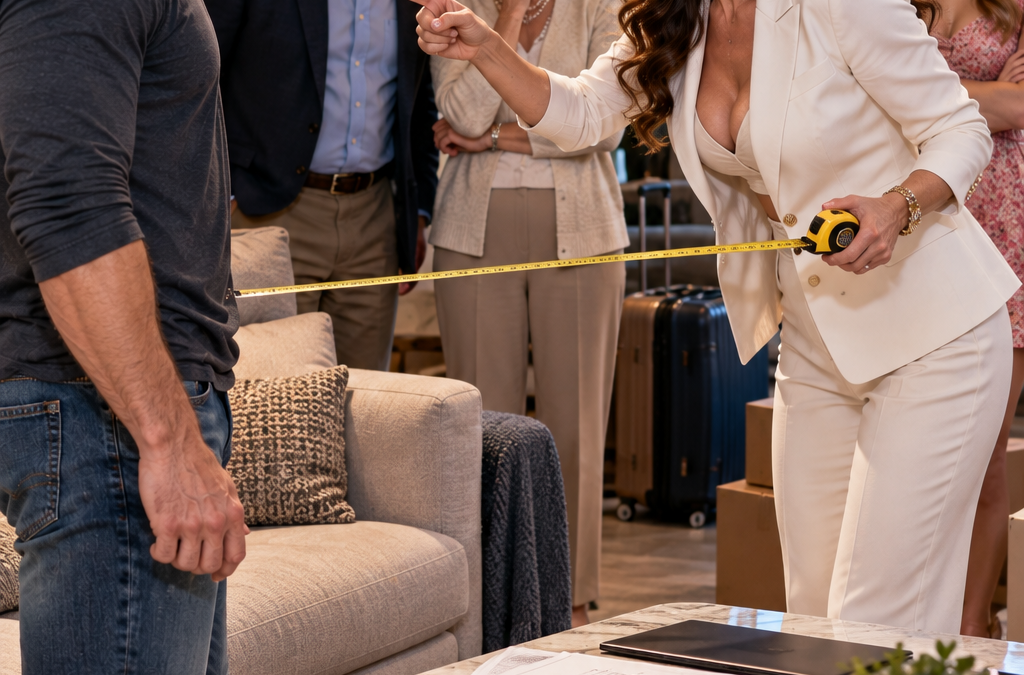
FULL ENDING My Family Walked Into My Home With a Tape Measure and Told Me My Sister Would Be Taking It
𝗙𝗨𝗟𝗟 𝗦𝗧𝗢𝗥𝗬
I was.
I was also lonely.
Those two feelings lived inside me together, and nobody cared enough to notice they were tearing at each other.
At first, I tried to earn my way back into my parents’ sight.
I cleaned without being asked. I brought Rose water. I let her choose movies. I stayed quiet when she threw tantrums. I got good grades for a while because I thought maybe an A on a test would make my mother smile the way she smiled when Rose finished half a sandwich.
It did not work.
If I got an A, Karen said, “Good. Now don’t make noise. Rose is resting.”
If I got a B, she said, “Do you have any idea how much stress we’re under already?”
My father usually stood behind her, tired and silent, looking at me like I was another bill they had forgotten to pay.
The day I ran away, I did not plan it well.
Children in pain rarely do.
I packed one sandwich, a bottle of water, and a sweatshirt. I left after school because nobody came to pick me up and nobody would notice if I walked the wrong direction. I remember thinking, with the desperate logic of an eleven-year-old, that if I disappeared, they would finally worry about me. They would finally search for me. My mother would cry for me. My father would call my name. They would realize they had been hurting me, and when I came home, everything would change.
I made it as far as the bridge near my school.
By sunset, I was cold.
By midnight, I was terrified.
I cried so hard my throat hurt. Every noise sounded like danger. Every shadow looked alive. My sandwich was gone before dark, and the water tasted like plastic. I kept imagining my parents calling the police, driving around town, begging people for help.
In the morning, a staff member from school found me curled under the bridge.
She gasped when she saw me.
“Oh my God. Thomas?”
I remember the warmth of the school office afterward. A blanket around my shoulders. Someone pressing a cup of hot chocolate into my hands. The principal kneeling in front of me, speaking softly. Then police officers arrived. Then my parents.
Karen came in first, furious.
Not relieved.
Furious.
My father followed, his jaw tight, his face red.
Before they could start yelling, one of the officers asked the question that split my childhood open.
“Why didn’t you file a missing person report?”
My parents froze.
I looked at them.
So did the principal.
So did the officer.
Karen opened her mouth. Closed it. Her face flushed.
My father stared at the floor.
And in that silence, everyone understood.
They had not reported me missing because they had not noticed I was gone.
Not that night.
Not until the school called.
Something inside me went quiet after that.
I was grounded for months. Karen said I had embarrassed the family. My father said I had pulled a selfish stunt. Rose cried because everyone was upset, and somehow by dinner that night, I had become the villain for upsetting her.
From then on, I was not just the forgotten child.
I was the difficult one.
The dramatic one.
The troublemaker.
Rose noticed quickly.
Children learn the rules of a house faster than adults think. Rose learned that if she cried, people came running. If she pointed at me, I got blamed. If she wanted something, all she had to do was make my parents feel that old terror again—the terror of almost losing her—and they would give it.
“Thomas did it!” she screamed once after knocking over a lamp.
I had not even been in the room.
Karen still yelled my name like a curse.
Another time, Rose spilled juice on my school project and smiled while I stared at the ruined pages.
“You can do it again,” she said.
When I told my mother, she sighed.
“She’s still recovering emotionally. Don’t be cruel.”
Rose recovered physically.
The rest of us were never allowed to recover from her recovery.
School became harder. I was bullied, though I never said much about it. What would have been the point? Home was not a refuge. Home was another place where I had to protect myself.
Teachers tried to help. A few noticed I drifted off, forgot assignments, struggled to focus. Looking back, I probably had some learning difficulties that could have been managed if anyone had paid attention. But my parents were too busy praising Rose for existing and punishing me for needing anything.
By high school, I had learned to survive by expecting nothing.
That did not mean I stopped wanting.
Wanting is stubborn.
I wanted my mother to look at me and really see me. I wanted my father to stand up for me just once. I wanted Rose to stop smirking when she got her way. I wanted to attend normal teenage things and not feel guilty for having a life outside my sister’s needs.
Prom was the night that taught me wanting was dangerous.
I was eighteen, and I had saved for months to rent a cheap suit. My girlfriend at the time, Megan, had picked out a blue dress and kept sending me pictures of shoes she might wear. I had bought flowers. I had cleaned my old beat-up car until it looked almost respectable. It was not about dancing. It was about having one night that belonged to me.
That afternoon, Karen appeared in my doorway.
“Thomas, you need to drive Rose to a party tonight.”
I looked up slowly.
“I can’t.”
Her eyebrows lifted.
“Excuse me?”
“It’s prom. You know that. I’ve been planning it for months.”
Karen waved a hand as if brushing away a fly.
“This is a big night for your sister.”
“It’s a party.”
“It’s important to her.”
“So is prom to me.”
My mother’s face hardened.
“Don’t be selfish.”
There it was again.
The family anthem.
I stood, anger rising in my chest.
“She can get a ride with someone else.”
“She’s anxious about that.”
“Then Dad can take her.”
“Your father is tired.”
“So am I.”
Karen stepped closer.
Even then, she was beautiful when she was angry. Especially then. Her eyes sharpened. Her voice softened into something dangerous.
“You will take your sister to that party, and you will keep your phone on in case she needs to come home early.”
“What about Megan?”
“She’ll understand if she cares about you.”
Megan did not understand.
She cried on the phone when I told her. Not because she was cruel, but because she had watched me get used over and over, and she hated that I still obeyed. We broke up not long after. Not in some dramatic screaming match. More like two tired teenagers realizing my family had taken up too much space between us.
Rose went to her party.
I sat in my car outside a convenience store in my cheap suit, waiting for a call.
She called after midnight, laughing, and told me to hurry up.
When she got in the car, she smelled like cheap perfume and someone else’s cigarette smoke.
“You look pathetic,” she said, glancing at my suit.
I drove her home in silence.
For three more years, I stayed in that house.
I worked whatever jobs I could get. Retail. Data entry. Office errands. Anything that paid. My grades had not opened many doors, so I squeezed through whatever cracks I could find. Eventually, I landed a low-paid internship doing general office administration, and from there, I worked like my life depended on it.
Because it did.
I saved quietly.
I did not tell Karen. I did not tell my father. I definitely did not tell Rose.
The first place I rented was small, old, and full of problems. The kitchen faucet whined. The bathroom tile was ugly. The heater had moods. The upstairs neighbor walked like he was trying to punish the floor.
I loved it.
Every inch.
Because it was mine.
The day I moved, I packed while my family was out. I took my clothes, documents, old photos, a few books, and anything I could fit into my car. I left behind furniture, childhood trophies, and a hundred memories I did not want badly enough to carry.
I did not give them my address.
That evening, I returned for one final dinner.
I waited until everyone was sitting down.
“I moved out,” I said.
All three of them looked at me.
Karen blinked first.
“What do you mean, you moved out?”
“I mean I’ve rented an apartment. My things are already there. This is my last dinner living here.”
Rose shrugged, barely looking up from her phone.
“Okay.”
My father frowned. “Where?”
“That doesn’t matter.”
Karen’s hand tightened around her fork.
“Thomas.”
I stood before she could take control of the conversation.
“You’ve spent most of my life acting like I barely exist. So I’m doing everyone a favor and getting out of your way.”
Karen’s face changed then.
Not enough.
But a little.
I saw something flash in her eyes—fear, maybe. Regret. Surprise that furniture could speak before leaving the room.
“I’m always a phone call away if there’s an emergency,” I said. “But I’m done living here.”
I walked to the door.
“Thomas,” she called.
I turned.
She stepped toward me, stopped, and opened her mouth.
For one stupid, fragile second, I thought she might say it.
I’m sorry.
I love you.
Please be safe.
Something.
Anything.
But silence sat between us like all the years she had wasted.
I nodded once, opened the door, and left.
I cried the whole drive to my apartment.
Not because I regretted leaving.
Because some part of me had still hoped they would ask me to stay for the right reasons.
They did not.
My life after that was not instantly perfect. Freedom is wonderful, but it is also lonely when you have never been taught how to live without guilt. For months, I startled at quiet. I waited for someone to call my name in anger. I ate dinner standing at the counter because sitting alone at a table felt strange.
But slowly, my apartment became home.
I bought mismatched plates from a thrift store. I learned to cook three decent meals. I slept through the night. I watched movies without someone demanding I turn them off because Rose wanted the room. I kept my own schedule. I paid my bills. I breathed.
My family rarely contacted me.
When they did, it was usually because they wanted something.
Come home for Christmas.
Help your father move boxes.
Pick Rose up.
Can you bring money for the kids’ gifts?
By then, Rose had married a man named Kyle, who had all the ambition of a damp towel. They had two children quickly, neither planned as far as I could tell. Rose and Kyle lived with my parents. Neither worked consistently. Rose posted online about being a “full-time mama” while Karen and my father did most of the actual parenting. Kyle played video games and talked about business ideas he never started.
For a while, I thought maybe my parents were finally seeing the cost of what they had created.
Karen looked more tired every holiday. Still beautiful, still polished, but thinner around the eyes. My father had started snapping at small things. Rose remained Rose—dramatic, entitled, convinced discomfort was something other people should solve for her.
I kept my distance.
And my life improved.
I got promoted. Then changed jobs. Then got promoted again. I studied at night to make up for the education I had missed when I was younger and drowning. I learned systems, scheduling, billing, office operations. I became the person managers trusted because I understood what it meant to work harder than people expected.
Eventually, I bought a condo closer to the city.
Not huge, but nice. Two bedrooms. Big windows. A small balcony. A kitchen with clean lines and enough counter space to make me feel rich. The mortgage terrified me, but signing those papers felt like reclaiming a future nobody in my family had ever imagined for me.
I told no one in my family where it was.
Somehow, they found out.
The knock came on a Saturday afternoon.
I remember because I had just made coffee and was standing barefoot in the kitchen, enjoying the kind of quiet I had once thought only other people deserved.
The knock was loud. Impatient.
When I opened the door, my entire past stood in the hallway.
Karen.
My father.
Rose.
Kyle.
Two children.
For a second, I could not speak.
Karen smiled brightly, the way she used to smile at teachers and neighbors when she wanted to look like the perfect mother.
“Thomas,” she said. “Sweetheart.”
I did not move.
“How did you get my address?”
She brushed past the question the way she brushed past anything inconvenient.
“We’ll talk inside.”
Then Rose stepped forward with the kids, and before I could process what was happening, they were in my home.
All of them.
Rose walked in first like she had arrived at a hotel room already booked in her name.
“Oh my God,” she squealed. “Yes. This is perfect.”
My father smiled at her.
“See? We told you.”
Kyle whistled, looking around. “Way better than I expected.”
The kids ran toward my couch.
“Shoes,” I snapped automatically.
Everyone froze.
Karen gave me a look.
“They’re children.”
“It’s my home.”
Rose rolled her eyes but kicked off her shoes dramatically. The kids did the same and immediately started climbing on my furniture.
My father walked toward the living room wall, holding his hands out as if measuring.
“The crib could go there if you move that bookcase.”
“What?” I said.
Kyle opened the second bedroom door.
“This one can be for us. Kids can sleep in the living room until we figure something out.”
My blood went cold.
Rose spun in the center of my living room, eyes shining.
“We’ll need to get rid of that sofa,” she said. “It’s too masculine. And the dining table is tiny. But the light is good.”
Karen clasped her hands together, smiling at Rose.
“I knew you’d love it.”
I shut the front door slowly.
The click of the lock sounded very loud.
“Someone,” I said, “is going to explain what is happening. Right now.”
Karen turned to me, still smiling.
“Oh, don’t look so dramatic. We just think it’s time to make some practical family arrangements.”
“Practical.”
“Yes. Your sister has a family. She needs space.”
Rose flopped onto my couch.
“And you don’t.”
I stared at her.
Karen stepped in with the tone she used when pretending cruelty was kindness.
“Thomas, sweetheart, you’re alone. You don’t need all this. Rose has children. She and Kyle need a fresh start.”
Kyle nodded like he had contributed anything to any start in his life.
I looked from one face to the next.
“You came here to ask if Rose could move in?”
Rose laughed.
“Ask?”
My father cleared his throat.
“We thought it made sense.”
“No,” I said slowly. “You thought my sister would live in my condo.”
Karen’s smile faltered.
“It’s not like you would be out on the street. You could come back home for a while.”
Home.
The word nearly made me sick.
“That house was never my home.”
Karen’s eyes sharpened.
“Don’t be hurtful.”
“Hurtful?”
Rose groaned.
“Here we go.”
I turned to her.
“And how exactly would you pay the mortgage?”
Kyle leaned against my kitchen counter.
“Well, we figured you’d keep paying that. Since it’s in your name.”
I felt something inside my head go very still.
“You figured I would pay the mortgage on a condo you live in?”
Rose waved a hand.
“We could help with bills when we can.”
“You don’t have jobs.”
“I have kids.”
“That’s not income.”
Karen’s voice hardened.
“Thomas, this is family.”
“No,” I said. “This is theft with better lighting.”
My father finally spoke.
“Watch your tone.”
I laughed once.
It sounded nothing like humor.
“My tone?”
The kids had gone quiet. Even they could feel the room changing.
Rose sat forward, her pretty face twisting into the same smug cruelty she had worn since childhood.
“Oh my God, stop acting like you’re some victim. You’ve always been so dramatic. If you don’t want to live with Mom and Dad, maybe you can go back under that bridge.”
Silence.
Complete silence.
My mother did not gasp.
My father did not correct her.
Kyle snorted.
Rose smiled.
And I was eleven again.
Cold. Hungry. Curled beneath concrete. Waiting for parents who had not noticed I was missing.
Something broke then.
Or maybe something finally healed wrong enough to become strong.
I looked at Karen first.
“You heard that.”
Her lips pressed together.
“Rose didn’t mean—”
“She meant every word.”
Karen looked away.
That was all the answer I needed.
Years of swallowed words rose in me so fast I could barely breathe.
“You stood in that school office,” I said, my voice low, “while a police officer asked why you never reported me missing.”
Karen went pale.
“You don’t need to bring that up.”
“I slept under a bridge because I thought maybe if I disappeared, my parents would care. And you didn’t even notice.”
My father’s face darkened.
“That was a long time ago.”
“It was my childhood.”
Rose rolled her eyes.
“Oh, please.”
I turned on her so sharply she flinched.
“No. You don’t get to talk now.”
Her mouth opened.
“I said shut up.”
The room froze.
I had never spoken to her like that.
Not once.
“You learned early that if you pointed at me, they’d blame me. If you cried, they’d punish me. If you wanted something, they’d take it from me. My room. My time. My prom. My peace. And now you walked into my home thinking you could take that too?”
Rose’s face flushed.
“You’re insane.”
“No. I’m awake.”
Karen stepped toward me.
“Thomas, calm down.”
I faced her.
“You don’t get to tell me to calm down in the home I bought after surviving you.”
She recoiled as if I had slapped her.
Good.
“You turned me into a servant in my own family,” I said. “You called it understanding. You called it being older. You called it helping. But what you meant was that Rose mattered and I didn’t.”
“That is not true,” Karen whispered.
“Then say one time you chose me.”
Her eyes glistened.
“Thomas—”
“One time.”
She said nothing.
My father looked at the floor.
Rose crossed her arms, but her confidence was cracking.
I pointed toward the door.
“Get out.”
Karen’s face hardened, panic turning into anger.
“Don’t do this.”
“I said get out.”
My father stepped forward.
“You will not throw your mother out like this.”
I met his eyes.
“You watched her erase me.”
He stopped.
“You watched all of it. And every time you could have said something, you chose silence because it was easier to disappoint me than confront her.”
His mouth opened.
No words came.
I looked at Rose.
“You are a spoiled, entitled leech who has never had to carry the consequences of her own life. But you’re not carrying them into my home.”
Rose jumped up from the couch.
“How dare you?”
“With pleasure.”
Kyle grabbed one of the kids’ hands, suddenly less casual now that free housing was leaving the room.
Karen tried one last time.
“Where is your compassion?”
I laughed again, and this time it hurt.
“You spent all of mine.”
Nobody moved.
So I moved for them.
I opened the door.
“Out.”
My father guided the kids into the hall. Kyle followed quickly. Rose stormed past me, muttering that I was pathetic, selfish, bitter, jealous, alone.
I let each word fall to the floor where it belonged.
Karen stopped in the doorway.
For a second, she looked older than I had ever seen her. Not glamorous. Not powerful. Just frightened and tired.
“You’re making a mistake,” she said.
“No,” I answered. “I made the mistake of letting you in.”
Then I shut the door.
Bolted it.
Locked the chain.
And slid down against it until I was sitting on the floor, shaking so hard my teeth nearly clicked together.
The silence after they left was not peaceful at first.
It was enormous.
It filled the rooms they had invaded, pressed against the windows, hummed in the walls. I sat there for a long time, waiting for guilt to come crashing in and drown me.
It did come.
Guilt always knows the way back.
It told me I had gone too far. That they were family. That Rose had children. That my mother looked hurt. That maybe my father was just weak, not cruel. That maybe I should have handled it calmly. That maybe I really was selfish.
But beneath the guilt, there was something else.
Relief.
Small at first.
Then larger.
Then undeniable.
I had said no.
Not quietly. Not politely. Not in a way they could twist. I had said no so clearly that even Karen could not pretend she had misunderstood.
Over the next few weeks, they tried.
Of course they did.
Karen called first. I did not answer.
My father texted: You need to apologize to your mother.
I blocked him.
Rose sent a long message accusing me of hating her children. I blocked her too.
Kyle messaged me once: Bro, this got out of hand. We can talk like adults.
I blocked him before finishing the sentence.
Then they started showing up.
The first time, Karen came alone. I saw her through the peephole, perfectly dressed, holding a paper bag like she had brought baked goods instead of emotional manipulation.
“Thomas,” she called softly. “Please open the door.”
I stood on the other side, silent.
“I know we all said things.”
I almost laughed.
We.
“I’m your mother.”
For years, that sentence had been a key. It opened guilt. It opened duty. It opened the part of me still waiting under that bridge.
This time, it opened nothing.
She left after fifteen minutes.
The next visit was my father. He knocked hard.
“This is childish,” he said through the door. “Families fight. Open up.”
I did not.
Then Rose came with the kids.
That was the lowest move.
She had one of them knock.
“Uncle Thomas?” a little voice called.
I closed my eyes.
I loved those children in the abstract way you can love innocents attached to people who hurt you. They had done nothing wrong. But I also knew bait when I heard it.
I did not open the door.
After that, I emailed one message to all of them.
Do not come to my home again. Do not contact me unless there is a true medical emergency involving death or immediate danger. I am not offering housing, money, rides, childcare, or emotional support. Any further uninvited visit will be treated as harassment.
Then I blocked every number and email address I could.
Going no contact sounds clean when people say it online.
It is not clean.
It is messy, grief-soaked work.
For months, I questioned myself constantly. I woke at night from dreams where Karen stood in my childhood doorway telling me I was selfish. I heard Rose laughing about the bridge. I imagined my father sitting in his chair, disappointed and silent. I wondered if cutting them off made me cruel like them.
But without their voices, other voices got louder.
My own, mostly.
I started therapy. Not because I wanted to talk about feelings in some dramatic way, but because I realized I had no idea how to live without defending my right to exist. My therapist listened to stories I had always told myself were normal family conflicts and gently, firmly, called them what they were.
Neglect.
Parentification.
Emotional abuse.
Scapegoating.
Those words did not fix everything. But they gave shape to the fog.
My career improved because my mind was no longer split between work and family dread. I took on bigger projects. I stopped apologizing before speaking in meetings. I learned that my caution, my attention to detail, my ability to anticipate problems—things born from surviving my childhood—could become strengths when used somewhere safe.
Within a year, I got a major promotion.
A real one.
More money. More responsibility. An office with a door that closed. My manager told me I had earned it because I was dependable under pressure.
I almost cried in the elevator afterward.
Dependable under pressure.
My family had called that useful.
Work called it valuable.
There is a difference.
Two years after I cut contact, I met Emily.
She was smart, direct, funny in a dry way that caught me off guard. We met through a mutual friend at a birthday dinner I almost skipped. She worked in nonprofit operations and had the unnerving habit of asking simple questions that made hiding impossible.
On our fourth date, she asked about my family.
I gave the short version.
She listened without interrupting.
When I finished, she said, “Thomas, that’s horrible.”
I shrugged because that was what I did.
“It wasn’t all bad.”
“I didn’t say it was all bad. I said it was horrible.”
Something about the distinction stayed with me.
Emily did not treat my past like gossip. She did not try to force forgiveness. She did not tell me I would regret cutting them off. She did not say but they’re your family, as if biology were a magic spell that turned cruelty into love.
She simply believed me.
Being believed is a quiet kind of rescue.
We have been together for three years now.
Recently, we got engaged.
The first time she stayed over at my condo, she looked around and said, “This place feels peaceful.”
I stood in the kitchen, remembering Rose measuring walls with her hands.
“Yeah,” I said. “It does.”
I heard about my family through mutual acquaintances.
For a while, Karen and my father tried to keep the story flattering to themselves. They told people I had become cold. That I had always been resentful of Rose. That I had overreacted when they “suggested” a temporary arrangement.
But stories leak.
People eventually learned they had shown up planning to move Rose into my home while expecting me to keep paying the mortgage. People learned Rose had joked about the bridge. People learned I had gone no contact after years of being used.
Sympathy shifted.
Not everywhere. Some relatives preferred the old version because it required less discomfort. But enough people stopped repeating Karen’s script that she lost control of it.
Meanwhile, the practical problem remained.
My parents had been planning to downsize.
That was what I later discovered.
Their finances were not as stable as they pretended. Supporting Rose, Kyle, and two children had drained them. They had assumed—without asking me—that I would take Rose’s family or at least contribute money. My condo was supposed to become their solution. I was supposed to be the safety valve for every bad choice they had made.
When I refused, the pressure stayed where it belonged.
With them.
At first, Karen tried to handle it the way she handled everything: denial, appearances, and blaming me.
Then bills piled up.
My father, who had spent years avoiding conflict, finally reached his limit. According to a cousin, he told Rose and Kyle they had six months to get jobs or move out.
Kyle lasted three weeks before leaving.
Apparently, fatherhood, employment, and accountability were not part of his long-term vision.
Rose was left with two children and no skills she had bothered to develop. For the first time in her life, the world did not rearrange itself because she cried. She moved into a small apartment and got her first real job at twenty-five.
I wish I could say I felt nothing when I heard.
I felt plenty.
Sadness for the children.
A grim satisfaction that reality had finally introduced itself.
Anger that it took this long.
And a strange, distant grief for the sister Rose might have been if my parents had loved her enough to teach her no.
Because that is the thing about golden children people forget.
Being spoiled is not the same as being loved well.
Rose was not raised. She was protected from consequences until consequences became her entire life.
That was not my fault.
It was not my job to fix.
The last message I ever received from Karen came through an email address I had forgotten to block.
The subject line was: Please read.
I should have deleted it.
Instead, I opened it.
Thomas,
I know you may not want to hear from me. I have thought a lot about what happened. Your father and I did not realize how much we took you for granted. We were scared after Rose got sick, and maybe we overcorrected. I am sorry if you felt unloved. I hope someday you can forgive us. We are still your family.
Mom
I read it three times.
Not because it moved me.
Because I was searching for the apology hidden inside the almost-apology.
I am sorry if you felt unloved.
Not I am sorry we neglected you.
Not I am sorry we failed to report you missing.
Not I am sorry we made you miss prom.
Not I am sorry we tried to take your home.
If you felt.
Even then, she could not fully step into the truth.
I closed the email.
I did not respond.
There was a time when that message would have destroyed me. I would have read it as proof that maybe she cared. I would have drafted replies. I would have softened my memories to make room for her comfort. I would have wondered if I owed her another chance.
But by then, I had built a life too solid to hand back to people who only wanted access when they needed something.
I had a career.
A home.
A partner who loved me without requiring me to disappear.
Friends who showed up because they wanted to, not because they needed me to drive someone somewhere.
Peace.
And peace, once you have earned it the hard way, becomes something you guard.
Sometimes I still think about the boy under the bridge.
I wish I could go back to him.
I wish I could sit beside him in the cold and tell him the truth: They should be looking for you. They should be terrified. Their failure to notice you are gone is not proof that you are unworthy of being found.
I would tell him he will survive that night.
I would tell him he will survive the years after it too.
I would tell him one day he will have a key to a home nobody can take from him.
And when the people who forgot him finally arrive with a tape measure and a plan to erase him again, he will not beg to be loved.
He will open the door.
He will tell them to leave.
And this time, they will be the ones standing outside.
𝗧𝗛𝗘 𝗘𝗡𝗗
My Family Walked Into My Home With a Tape Measure and Told Me My Sister Would Be Taking It
They didn’t ask if my sister could stay with me.
They walked into the apartment I had bled myself dry to buy and started deciding where her furniture would go.
Before Rose was born, I used to believe my family was normal.
That is one of the cruelest parts of being a child. You trust the shape of your world before you know enough to question it. If your mother kisses your forehead at night, you think love is permanent. If your father throws you in the air and catches you, you think safety is something that never runs out. If people clap when you draw crooked houses with orange suns in the corner, you think your existence is something worth celebrating.
For the first few years of my life, that was how it felt.
My mother, Karen, was beautiful in the way people noticed immediately. Even when I was little, I understood that other adults treated her differently. She had glossy dark hair, a soft laugh she used when she wanted something, and a way of touching a person’s arm while speaking that made them feel chosen. She dressed carefully, even to go grocery shopping, and always smelled like perfume and expensive lotion. People called her charming.
At home, charm was something she turned on and off.
My father was quieter, broad-shouldered, practical, the kind of man who believed conflict disappeared if everyone simply did what Karen wanted fast enough. He adored her. Or maybe he feared disappointing her. As a child, I could not tell the difference. To me, they were just Mom and Dad, and I belonged to them.
Then Rose was born.
At first, it was fine. Really, it was. I was five when she came home, tiny and red-faced and louder than anything I had ever heard. My parents were tired, but they still loved me. I got to hold her with pillows under my arms. I got to help pick out little socks. I remember feeling proud when people said I was a good big brother.
For a few years, we were a family of four in the ordinary way. Rose got attention because she was small, and I got attention because I was growing. Nobody seemed forgotten. Nobody seemed chosen over anyone else.
Then Rose got sick.
I was eight. She was three.
I remember the hospital smell more than anything. Disinfectant. Plastic. Coffee. Fear. Adults whispering around corners. My father sitting with his elbows on his knees, staring at the floor. My mother gripping a paper cup with both hands, her makeup gone, her eyes hollow in a way I had never seen before.
Rose was seriously ill for a long time. Years, really. Three years of appointments, emergencies, late-night phone calls, medications, specialists, and my parents living in a state of panic so constant it became the weather of our house.
And I understood.
At least, I tried to.
I understood Rose might die. I understood my parents were terrified. I understood I had to be quiet, helpful, patient, good. I learned not to ask for things. I learned to heat up food in the microwave. I learned to do homework at the kitchen table while my mother cried on the phone in the next room.
When Rose finally recovered, everyone acted like the world had been returned to us.
But the family that came back from the hospital was not the one that had left.
My parents did not just love Rose after that.
They worshiped her.
And somewhere during that worship, I became background noise.
Part 2
The first thing they took was my room.
Not physically, not all at once. They did it in that calm, parental voice adults use when they have already decided your pain is too inconvenient to count.
“Thomas,” my mother said one afternoon, standing in my doorway with her hands on her hips, “we need to move Rose into this room.”
I looked up from my homework.
“What?”
“She needs more space. She’s been through so much.”
I was eleven then, old enough to feel the unfairness but still young enough to hope fairness mattered.
“But this is my room.”
Karen gave me a smile that did not soften her face.
“You can take the smaller one. You’re older. You understand.”
That sentence became the law of my childhood.
You’re older. You understand.
Rose screamed? I had to understand.
Rose broke something? I had to understand.
Rose wanted my toy, my chair, my snack, my time, my plans? I had to understand.
My parents rearranged the house around her like she was the sun and the rest of us were furniture.
For weeks after she came home, people visited with gifts. Balloons. Dolls. Stuffed animals. Cards. Flowers. Everyone said how brave she was, how strong, how miraculous. I stood nearby and smiled because that was what good brothers did. Sometimes visitors would glance at me and say, “You must be so happy to have your sister back.”
I was.
I was also lonely.
Those two feelings lived inside me together, and nobody cared enough to notice they were tearing at each other.
At first, I tried to earn my way back into my parents’ sight.
I cleaned without being asked. I brought Rose water. I let her choose movies. I stayed quiet when she threw tantrums. I got good grades for a while because I thought maybe an A on a test would make my mother smile the way she smiled when Rose finished half a sandwich.
It did not work.
If I got an A, Karen said, “Good. Now don’t make noise. Rose is resting.”
If I got a B, she said, “Do you have any idea how much stress we’re under already?”
My father usually stood behind her, tired and silent, looking at me like I was another bill they had forgotten to pay.
The day I ran away, I did not plan it well.
Children in pain rarely do.
I packed one sandwich, a bottle of water, and a sweatshirt. I left after school because nobody came to pick me up and nobody would notice if I walked the wrong direction. I remember thinking, with the desperate logic of an eleven-year-old, that if I disappeared, they would finally worry about me. They would finally search for me. My mother would cry for me. My father would call my name. They would realize they had been hurting me, and when I came home, everything would change.
I made it as far as the bridge near my school.
By sunset, I was cold.
By midnight, I was terrified.
I cried so hard my throat hurt. Every noise sounded like danger. Every shadow looked alive. My sandwich was gone before dark, and the water tasted like plastic. I kept imagining my parents calling the police, driving around town, begging people for help.
In the morning, a staff member from school found me curled under the bridge.
She gasped when she saw me.
“Oh my God. Thomas?”
I remember the warmth of the school office afterward. A blanket around my shoulders. Someone pressing a cup of hot chocolate into my hands. The principal kneeling in front of me, speaking softly. Then police officers arrived. Then my parents.
Karen came in first, furious.
Not relieved.
Furious.
My father followed, his jaw tight, his face red.
Before they could start yelling, one of the officers asked the question that split my childhood open.
“Why didn’t you file a missing person report?”
My parents froze.
I looked at them.
So did the principal.
So did the officer.
Karen opened her mouth. Closed it. Her face flushed.
My father stared at the floor.
And in that silence, everyone understood.
They had not reported me missing because they had not noticed I was gone.
Not that night.
Not until the school called.
Something inside me went quiet after that.
I was grounded for months. Karen said I had embarrassed the family. My father said I had pulled a selfish stunt. Rose cried because everyone was upset, and somehow by dinner that night, I had become the villain for upsetting her.
From then on, I was not just the forgotten child.
I was the difficult one.
The dramatic one.
The troublemaker.
Rose noticed quickly.
Children learn the rules of a house faster than adults think. Rose learned that if she cried, people came running. If she pointed at me, I got blamed. If she wanted something, all she had to do was make my parents feel that old terror again—the terror of almost losing her—and they would give it.
“Thomas did it!” she screamed once after knocking over a lamp.
I had not even been in the room.
Karen still yelled my name like a curse.
Another time, Rose spilled juice on my school project and smiled while I stared at the ruined pages.
“You can do it again,” she said.
When I told my mother, she sighed.
“She’s still recovering emotionally. Don’t be cruel.”
Rose recovered physically.
The rest of us were never allowed to recover from her recovery.
School became harder. I was bullied, though I never said much about it. What would have been the point? Home was not a refuge. Home was another place where I had to protect myself.
Teachers tried to help. A few noticed I drifted off, forgot assignments, struggled to focus. Looking back, I probably had some learning difficulties that could have been managed if anyone had paid attention. But my parents were too busy praising Rose for existing and punishing me for needing anything.
By high school, I had learned to survive by expecting nothing.
That did not mean I stopped wanting.
Wanting is stubborn.
I wanted my mother to look at me and really see me. I wanted my father to stand up for me just once. I wanted Rose to stop smirking when she got her way. I wanted to attend normal teenage things and not feel guilty for having a life outside my sister’s needs.
Prom was the night that taught me wanting was dangerous.
I was eighteen, and I had saved for months to rent a cheap suit. My girlfriend at the time, Megan, had picked out a blue dress and kept sending me pictures of shoes she might wear. I had bought flowers. I had cleaned my old beat-up car until it looked almost respectable. It was not about dancing. It was about having one night that belonged to me.
That afternoon, Karen appeared in my doorway.
“Thomas, you need to drive Rose to a party tonight.”
I looked up slowly.
“I can’t.”
Her eyebrows lifted.
“Excuse me?”
“It’s prom. You know that. I’ve been planning it for months.”
Karen waved a hand as if brushing away a fly.
“This is a big night for your sister.”
“It’s a party.”
“It’s important to her.”
“So is prom to me.”
My mother’s face hardened.
“Don’t be selfish.”
There it was again.
The family anthem.
I stood, anger rising in my chest.
“She can get a ride with someone else.”
“She’s anxious about that.”
“Then Dad can take her.”
“Your father is tired.”
“So am I.”
Karen stepped closer.
Even then, she was beautiful when she was angry. Especially then. Her eyes sharpened. Her voice softened into something dangerous.
“You will take your sister to that party, and you will keep your phone on in case she needs to come home early.”
“What about Megan?”
“She’ll understand if she cares about you.”
Megan did not understand.
She cried on the phone when I told her. Not because she was cruel, but because she had watched me get used over and over, and she hated that I still obeyed. We broke up not long after. Not in some dramatic screaming match. More like two tired teenagers realizing my family had taken up too much space between us.
Rose went to her party.
I sat in my car outside a convenience store in my cheap suit, waiting for a call.
She called after midnight, laughing, and told me to hurry up.
When she got in the car, she smelled like cheap perfume and someone else’s cigarette smoke.
“You look pathetic,” she said, glancing at my suit.
I drove her home in silence.
For three more years, I stayed in that house.
I worked whatever jobs I could get. Retail. Data entry. Office errands. Anything that paid. My grades had not opened many doors, so I squeezed through whatever cracks I could find. Eventually, I landed a low-paid internship doing general office administration, and from there, I worked like my life depended on it.
Because it did.
I saved quietly.
I did not tell Karen. I did not tell my father. I definitely did not tell Rose.
The first place I rented was small, old, and full of problems. The kitchen faucet whined. The bathroom tile was ugly. The heater had moods. The upstairs neighbor walked like he was trying to punish the floor.
I loved it.
Every inch.
Because it was mine.
The day I moved, I packed while my family was out. I took my clothes, documents, old photos, a few books, and anything I could fit into my car. I left behind furniture, childhood trophies, and a hundred memories I did not want badly enough to carry.
I did not give them my address.
That evening, I returned for one final dinner.
I waited until everyone was sitting down.
“I moved out,” I said.
All three of them looked at me.
Karen blinked first.
“What do you mean, you moved out?”
“I mean I’ve rented an apartment. My things are already there. This is my last dinner living here.”
Rose shrugged, barely looking up from her phone.
“Okay.”
My father frowned. “Where?”
“That doesn’t matter.”
Karen’s hand tightened around her fork.
“Thomas.”
I stood before she could take control of the conversation.
“You’ve spent most of my life acting like I barely exist. So I’m doing everyone a favor and getting out of your way.”
Karen’s face changed then.
Not enough.
But a little.
I saw something flash in her eyes—fear, maybe. Regret. Surprise that furniture could speak before leaving the room.
“I’m always a phone call away if there’s an emergency,” I said. “But I’m done living here.”
I walked to the door.
“Thomas,” she called.
I turned.
She stepped toward me, stopped, and opened her mouth.
For one stupid, fragile second, I thought she might say it.
I’m sorry.
I love you.
Please be safe.
Something.
Anything.
But silence sat between us like all the years she had wasted.
I nodded once, opened the door, and left.
I cried the whole drive to my apartment.
Not because I regretted leaving.
Because some part of me had still hoped they would ask me to stay for the right reasons.
They did not.
My life after that was not instantly perfect. Freedom is wonderful, but it is also lonely when you have never been taught how to live without guilt. For months, I startled at quiet. I waited for someone to call my name in anger. I ate dinner standing at the counter because sitting alone at a table felt strange.
But slowly, my apartment became home.
I bought mismatched plates from a thrift store. I learned to cook three decent meals. I slept through the night. I watched movies without someone demanding I turn them off because Rose wanted the room. I kept my own schedule. I paid my bills. I breathed.
My family rarely contacted me.
When they did, it was usually because they wanted something.
Come home for Christmas.
Help your father move boxes.
Pick Rose up.
Can you bring money for the kids’ gifts?
By then, Rose had married a man named Kyle, who had all the ambition of a damp towel. They had two children quickly, neither planned as far as I could tell. Rose and Kyle lived with my parents. Neither worked consistently. Rose posted online about being a “full-time mama” while Karen and my father did most of the actual parenting. Kyle played video games and talked about business ideas he never started.
For a while, I thought maybe my parents were finally seeing the cost of what they had created.
Karen looked more tired every holiday. Still beautiful, still polished, but thinner around the eyes. My father had started snapping at small things. Rose remained Rose—dramatic, entitled, convinced discomfort was something other people should solve for her.
I kept my distance.
And my life improved.
I got promoted. Then changed jobs. Then got promoted again. I studied at night to make up for the education I had missed when I was younger and drowning. I learned systems, scheduling, billing, office operations. I became the person managers trusted because I understood what it meant to work harder than people expected.
Eventually, I bought a condo closer to the city.
Not huge, but nice. Two bedrooms. Big windows. A small balcony. A kitchen with clean lines and enough counter space to make me feel rich. The mortgage terrified me, but signing those papers felt like reclaiming a future nobody in my family had ever imagined for me.
I told no one in my family where it was.
Somehow, they found out.
The knock came on a Saturday afternoon.
I remember because I had just made coffee and was standing barefoot in the kitchen, enjoying the kind of quiet I had once thought only other people deserved.
The knock was loud. Impatient.
When I opened the door, my entire past stood in the hallway.
Karen.
My father.
Rose.
Kyle.
Two children.
For a second, I could not speak.
Karen smiled brightly, the way she used to smile at teachers and neighbors when she wanted to look like the perfect mother.
“Thomas,” she said. “Sweetheart.”
I did not move.
“How did you get my address?”
She brushed past the question the way she brushed past anything inconvenient.
“We’ll talk inside.”
Then Rose stepped forward with the kids, and before I could process what was happening, they were in my home.
All of them.
Rose walked in first like she had arrived at a hotel room already booked in her name.
“Oh my God,” she squealed. “Yes. This is perfect.”
My father smiled at her.
“See? We told you.”
Kyle whistled, looking around. “Way better than I expected.”
The kids ran toward my couch.
“Shoes,” I snapped automatically.
Everyone froze.
Karen gave me a look.
“They’re children.”
“It’s my home.”
Rose rolled her eyes but kicked off her shoes dramatically. The kids did the same and immediately started climbing on my furniture.
My father walked toward the living room wall, holding his hands out as if measuring.
“The crib could go there if you move that bookcase.”
“What?” I said.
Kyle opened the second bedroom door.
“This one can be for us. Kids can sleep in the living room until we figure something out.”
My blood went cold.
Rose spun in the center of my living room, eyes shining.
“We’ll need to get rid of that sofa,” she said. “It’s too masculine. And the dining table is tiny. But the light is good.”
Karen clasped her hands together, smiling at Rose.
“I knew you’d love it.”
I shut the front door slowly.
The click of the lock sounded very loud.
“Someone,” I said, “is going to explain what is happening. Right now.”
Karen turned to me, still smiling.
“Oh, don’t look so dramatic. We just think it’s time to make some practical family arrangements.”
“Practical.”
“Yes. Your sister has a family. She needs space.”
Rose flopped onto my couch.
“And you don’t.”
I stared at her.
Karen stepped in with the tone she used when pretending cruelty was kindness.
“Thomas, sweetheart, you’re alone. You don’t need all this. Rose has children. She and Kyle need a fresh start.”
Kyle nodded like he had contributed anything to any start in his life.
I looked from one face to the next.
“You came here to ask if Rose could move in?”
Rose laughed.
“Ask?”
My father cleared his throat.
“We thought it made sense.”
“No,” I said slowly. “You thought my sister would live in my condo.”
Karen’s smile faltered.
“It’s not like you would be out on the street. You could come back home for a while.”
Home.
The word nearly made me sick.
“That house was never my home.”
Karen’s eyes sharpened.
“Don’t be hurtful.”
“Hurtful?”
Rose groaned.
“Here we go.”
I turned to her.
“And how exactly would you pay the mortgage?”
Kyle leaned against my kitchen counter.
“Well, we figured you’d keep paying that. Since it’s in your name.”
I felt something inside my head go very still.
“You figured I would pay the mortgage on a condo you live in?”
Rose waved a hand.
“We could help with bills when we can.”
“You don’t have jobs.”
“I have kids.”
“That’s not income.”
Karen’s voice hardened.
“Thomas, this is family.”
“No,” I said. “This is theft with better lighting.”
My father finally spoke.
“Watch your tone.”
I laughed once.
It sounded nothing like humor.
“My tone?”
The kids had gone quiet. Even they could feel the room changing.
Rose sat forward, her pretty face twisting into the same smug cruelty she had worn since childhood.
“Oh my God, stop acting like you’re some victim. You’ve always been so dramatic. If you don’t want to live with Mom and Dad, maybe you can go back under that bridge.”
Silence.
Complete silence.
My mother did not gasp.
My father did not correct her.
Kyle snorted.
Rose smiled.
And I was eleven again.
Cold. Hungry. Curled beneath concrete. Waiting for parents who had not noticed I was missing.
Something broke then.
Or maybe something finally healed wrong enough to become strong.
I looked at Karen first.
“You heard that.”
Her lips pressed together.
“Rose didn’t mean—”
“She meant every word.”
Karen looked away.
That was all the answer I needed.
Years of swallowed words rose in me so fast I could barely breathe.
“You stood in that school office,” I said, my voice low, “while a police officer asked why you never reported me missing.”
Karen went pale.
“You don’t need to bring that up.”
“I slept under a bridge because I thought maybe if I disappeared, my parents would care. And you didn’t even notice.”
My father’s face darkened.
“That was a long time ago.”
“It was my childhood.”
Rose rolled her eyes.
“Oh, please.”
I turned on her so sharply she flinched.
“No. You don’t get to talk now.”
Her mouth opened.
“I said shut up.”
The room froze.
I had never spoken to her like that.
Not once.
“You learned early that if you pointed at me, they’d blame me. If you cried, they’d punish me. If you wanted something, they’d take it from me. My room. My time. My prom. My peace. And now you walked into my home thinking you could take that too?”
Rose’s face flushed.
“You’re insane.”
“No. I’m awake.”
Karen stepped toward me.
“Thomas, calm down.”
I faced her.
“You don’t get to tell me to calm down in the home I bought after surviving you.”
She recoiled as if I had slapped her.
Good.
“You turned me into a servant in my own family,” I said. “You called it understanding. You called it being older. You called it helping. But what you meant was that Rose mattered and I didn’t.”
“That is not true,” Karen whispered.
“Then say one time you chose me.”
Her eyes glistened.
“Thomas—”
“One time.”
She said nothing.
My father looked at the floor.
Rose crossed her arms, but her confidence was cracking.
I pointed toward the door.
“Get out.”
Karen’s face hardened, panic turning into anger.
“Don’t do this.”
“I said get out.”
My father stepped forward.
“You will not throw your mother out like this.”
I met his eyes.
“You watched her erase me.”
He stopped.
“You watched all of it. And every time you could have said something, you chose silence because it was easier to disappoint me than confront her.”
His mouth opened.
No words came.
I looked at Rose.
“You are a spoiled, entitled leech who has never had to carry the consequences of her own life. But you’re not carrying them into my home.”
Rose jumped up from the couch.
“How dare you?”
“With pleasure.”
Kyle grabbed one of the kids’ hands, suddenly less casual now that free housing was leaving the room.
Karen tried one last time.
“Where is your compassion?”
I laughed again, and this time it hurt.
“You spent all of mine.”
Nobody moved.
So I moved for them.
I opened the door.
“Out.”
My father guided the kids into the hall. Kyle followed quickly. Rose stormed past me, muttering that I was pathetic, selfish, bitter, jealous, alone.
I let each word fall to the floor where it belonged.
Karen stopped in the doorway.
For a second, she looked older than I had ever seen her. Not glamorous. Not powerful. Just frightened and tired.
“You’re making a mistake,” she said.
“No,” I answered. “I made the mistake of letting you in.”
Then I shut the door.
Bolted it.
Locked the chain.
And slid down against it until I was sitting on the floor, shaking so hard my teeth nearly clicked together.
The silence after they left was not peaceful at first.
It was enormous.
It filled the rooms they had invaded, pressed against the windows, hummed in the walls. I sat there for a long time, waiting for guilt to come crashing in and drown me.
It did come.
Guilt always knows the way back.
It told me I had gone too far. That they were family. That Rose had children. That my mother looked hurt. That maybe my father was just weak, not cruel. That maybe I should have handled it calmly. That maybe I really was selfish.
But beneath the guilt, there was something else.
Relief.
Small at first.
Then larger.
Then undeniable.
I had said no.
Not quietly. Not politely. Not in a way they could twist. I had said no so clearly that even Karen could not pretend she had misunderstood.
Over the next few weeks, they tried.
Of course they did.
Karen called first. I did not answer.
My father texted: You need to apologize to your mother.
I blocked him.
Rose sent a long message accusing me of hating her children. I blocked her too.
Kyle messaged me once: Bro, this got out of hand. We can talk like adults.
I blocked him before finishing the sentence.
Then they started showing up.
The first time, Karen came alone. I saw her through the peephole, perfectly dressed, holding a paper bag like she had brought baked goods instead of emotional manipulation.
“Thomas,” she called softly. “Please open the door.”
I stood on the other side, silent.
“I know we all said things.”
I almost laughed.
We.
“I’m your mother.”
For years, that sentence had been a key. It opened guilt. It opened duty. It opened the part of me still waiting under that bridge.
This time, it opened nothing.
She left after fifteen minutes.
The next visit was my father. He knocked hard.
“This is childish,” he said through the door. “Families fight. Open up.”
I did not.
Then Rose came with the kids.
That was the lowest move.
She had one of them knock.
“Uncle Thomas?” a little voice called.
I closed my eyes.
I loved those children in the abstract way you can love innocents attached to people who hurt you. They had done nothing wrong. But I also knew bait when I heard it.
I did not open the door.
After that, I emailed one message to all of them.
Do not come to my home again. Do not contact me unless there is a true medical emergency involving death or immediate danger. I am not offering housing, money, rides, childcare, or emotional support. Any further uninvited visit will be treated as harassment.
Then I blocked every number and email address I could.
Going no contact sounds clean when people say it online.
It is not clean.
It is messy, grief-soaked work.
For months, I questioned myself constantly. I woke at night from dreams where Karen stood in my childhood doorway telling me I was selfish. I heard Rose laughing about the bridge. I imagined my father sitting in his chair, disappointed and silent. I wondered if cutting them off made me cruel like them.
But without their voices, other voices got louder.
My own, mostly.
I started therapy. Not because I wanted to talk about feelings in some dramatic way, but because I realized I had no idea how to live without defending my right to exist. My therapist listened to stories I had always told myself were normal family conflicts and gently, firmly, called them what they were.
Neglect.
Parentification.
Emotional abuse.
Scapegoating.
Those words did not fix everything. But they gave shape to the fog.
My career improved because my mind was no longer split between work and family dread. I took on bigger projects. I stopped apologizing before speaking in meetings. I learned that my caution, my attention to detail, my ability to anticipate problems—things born from surviving my childhood—could become strengths when used somewhere safe.
Within a year, I got a major promotion.
A real one.
More money. More responsibility. An office with a door that closed. My manager told me I had earned it because I was dependable under pressure.
I almost cried in the elevator afterward.
Dependable under pressure.
My family had called that useful.
Work called it valuable.
There is a difference.
Two years after I cut contact, I met Emily.
She was smart, direct, funny in a dry way that caught me off guard. We met through a mutual friend at a birthday dinner I almost skipped. She worked in nonprofit operations and had the unnerving habit of asking simple questions that made hiding impossible.
On our fourth date, she asked about my family.
I gave the short version.
She listened without interrupting.
When I finished, she said, “Thomas, that’s horrible.”
I shrugged because that was what I did.
“It wasn’t all bad.”
“I didn’t say it was all bad. I said it was horrible.”
Something about the distinction stayed with me.
Emily did not treat my past like gossip. She did not try to force forgiveness. She did not tell me I would regret cutting them off. She did not say but they’re your family, as if biology were a magic spell that turned cruelty into love.
She simply believed me.
Being believed is a quiet kind of rescue.
We have been together for three years now.
Recently, we got engaged.
The first time she stayed over at my condo, she looked around and said, “This place feels peaceful.”
I stood in the kitchen, remembering Rose measuring walls with her hands.
“Yeah,” I said. “It does.”
I heard about my family through mutual acquaintances.
For a while, Karen and my father tried to keep the story flattering to themselves. They told people I had become cold. That I had always been resentful of Rose. That I had overreacted when they “suggested” a temporary arrangement.
But stories leak.
People eventually learned they had shown up planning to move Rose into my home while expecting me to keep paying the mortgage. People learned Rose had joked about the bridge. People learned I had gone no contact after years of being used.
Sympathy shifted.
Not everywhere. Some relatives preferred the old version because it required less discomfort. But enough people stopped repeating Karen’s script that she lost control of it.
Meanwhile, the practical problem remained.
My parents had been planning to downsize.
That was what I later discovered.
Their finances were not as stable as they pretended. Supporting Rose, Kyle, and two children had drained them. They had assumed—without asking me—that I would take Rose’s family or at least contribute money. My condo was supposed to become their solution. I was supposed to be the safety valve for every bad choice they had made.
When I refused, the pressure stayed where it belonged.
With them.
At first, Karen tried to handle it the way she handled everything: denial, appearances, and blaming me.
Then bills piled up.
My father, who had spent years avoiding conflict, finally reached his limit. According to a cousin, he told Rose and Kyle they had six months to get jobs or move out.
Kyle lasted three weeks before leaving.
Apparently, fatherhood, employment, and accountability were not part of his long-term vision.
Rose was left with two children and no skills she had bothered to develop. For the first time in her life, the world did not rearrange itself because she cried. She moved into a small apartment and got her first real job at twenty-five.
I wish I could say I felt nothing when I heard.
I felt plenty.
Sadness for the children.
A grim satisfaction that reality had finally introduced itself.
Anger that it took this long.
And a strange, distant grief for the sister Rose might have been if my parents had loved her enough to teach her no.
Because that is the thing about golden children people forget.
Being spoiled is not the same as being loved well.
Rose was not raised. She was protected from consequences until consequences became her entire life.
That was not my fault.
It was not my job to fix.
The last message I ever received from Karen came through an email address I had forgotten to block.
The subject line was: Please read.
I should have deleted it.
Instead, I opened it.
Thomas,
I know you may not want to hear from me. I have thought a lot about what happened. Your father and I did not realize how much we took you for granted. We were scared after Rose got sick, and maybe we overcorrected. I am sorry if you felt unloved. I hope someday you can forgive us. We are still your family.
Mom
I read it three times.
Not because it moved me.
Because I was searching for the apology hidden inside the almost-apology.
I am sorry if you felt unloved.
Not I am sorry we neglected you.
Not I am sorry we failed to report you missing.
Not I am sorry we made you miss prom.
Not I am sorry we tried to take your home.
If you felt.
Even then, she could not fully step into the truth.
I closed the email.
I did not respond.
There was a time when that message would have destroyed me. I would have read it as proof that maybe she cared. I would have drafted replies. I would have softened my memories to make room for her comfort. I would have wondered if I owed her another chance.
But by then, I had built a life too solid to hand back to people who only wanted access when they needed something.
I had a career.
A home.
A partner who loved me without requiring me to disappear.
Friends who showed up because they wanted to, not because they needed me to drive someone somewhere.
Peace.
And peace, once you have earned it the hard way, becomes something you guard.
Sometimes I still think about the boy under the bridge.
I wish I could go back to him.
I wish I could sit beside him in the cold and tell him the truth: They should be looking for you. They should be terrified. Their failure to notice you are gone is not proof that you are unworthy of being found.
I would tell him he will survive that night.
I would tell him he will survive the years after it too.
I would tell him one day he will have a key to a home nobody can take from him.
And when the people who forgot him finally arrive with a tape measure and a plan to erase him again, he will not beg to be loved.
He will open the door.
He will tell them to leave.
And this time, they will be the ones standing outside.