She Went Door to Door With a Collar Buried Into Her Neck—Then One Surgeon Refused to Let Her Leave His Life
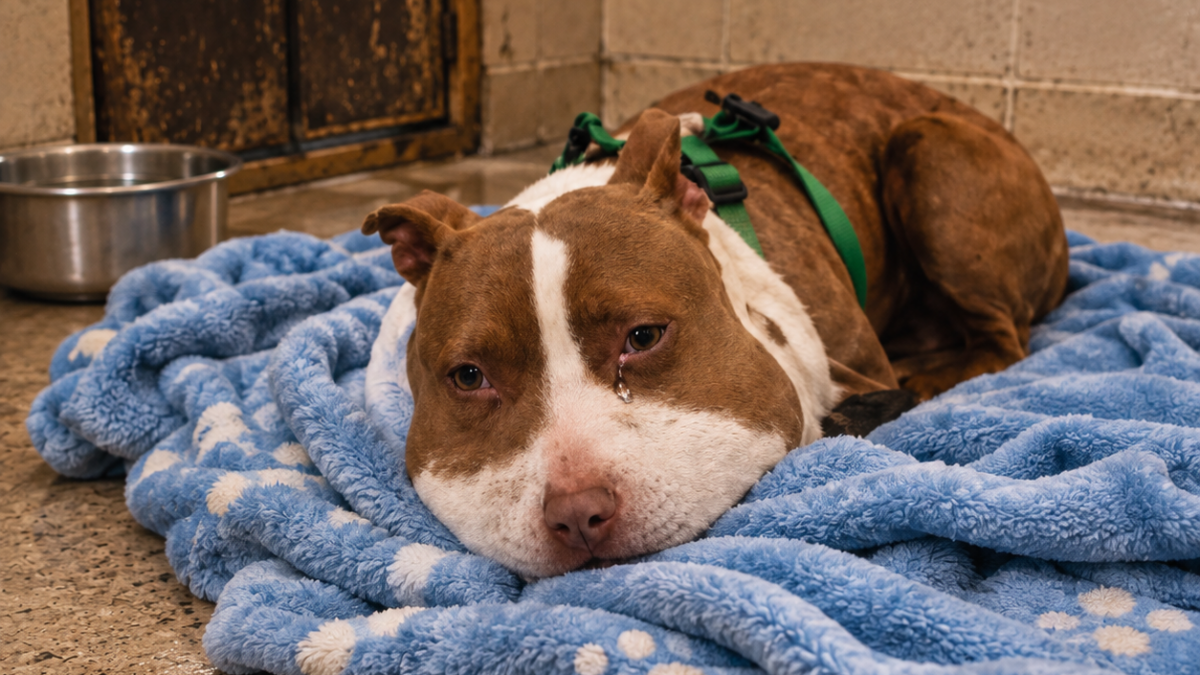
The first time I saw Mika’s photograph, I thought an old piece of fabric was wrapped around her neck until I realized her skin had grown over it. She had been wandering from door to door for days, approaching strangers she had never met as if she somehow understood that the next person might be the one who finally stopped and helped her. What happened after we found her turned a desperate rescue into a six-hour surgical fight—and uncovered a story none of us were prepared to forget.
My name is Erin Cole, and I had been coordinating field rescues for a small nonprofit in Northern California for seven years when Mika’s picture appeared in my inbox.
The message came from a woman named Teresa.
This dog keeps showing up at houses in our neighborhood. Something is wrong with her neck. Please come before she disappears again.
I opened the attached image.
Mika was standing on a cracked driveway beside a blue recycling bin. She was small, maybe twenty-five pounds, with reddish-brown fur, white paws, and ears that seemed too large for her narrow face.
Then I looked at her neck.
Something dark circled it.
At first, I assumed collar.
Then I zoomed in.
The skin had swollen around the material.
Parts of it were no longer visible.
A deep wound ran beneath it, wet and red, with hair stuck to drainage.
I called Teresa immediately.
“When was this taken?”
“Yesterday.”
“Where is she now?”
“I don’t know.”
My stomach dropped.
“She left?”
“She always leaves. She comes up to a porch, waits, then moves to another house.”
“How long has she been doing that?”
“Four or five days. Maybe longer.”
“Does anyone know who owns her?”
“No.”
“Has anyone tried catching her?”
“People put food out. She gets nervous if you move too fast.”
I grabbed my keys.
My partner, Marcus, met me in the rescue van.
For nearly three hours we drove the neighborhood slowly, stopping whenever someone said they had seen the little red dog.
“She was here this morning.”
“She went toward Maple Street.”
“She slept under my hedge last night.”
“She came right to the porch but wouldn’t let me touch her neck.”
Every answer was almost useful.
Almost.
Then, near sunset, Marcus pointed through the windshield.
“There.”
Mika stood at the end of a driveway.
She looked even smaller than she had in the picture.
I opened the van door and crouched.
“Mika?”
I had invented the name on the drive.
She looked at me.
No collar tag.
No response to the name.
Still, she didn’t run.
I placed a piece of chicken on the pavement.
She approached slowly.
One step.
Stop.
Another.
Her body was thin beneath the dirty coat. Her movements were careful, and when she turned her head, I saw how badly the material had cut into her neck.
The smell reached me.
Infection.
Strong enough that Marcus reacted from several feet away.
“Oh, God.”
Mika came closer.
She ate the chicken.
I offered another.
This time she took it from my fingers.
“You’ve been looking for somebody, haven’t you?”
Her eyes stayed on mine.
I moved my hand toward her shoulder, nowhere near the wound.
She flinched.
Then stayed.
That was permission enough.
Marcus brought a blanket.
Together, we lifted her carefully into the van.
Mika didn’t fight.
She pressed her body against my chest as if exhaustion had finally overcome fear.
At the veterinary hospital, Dr. Daniel Reeves took one look at her neck and stopped smiling.
“How long has that been embedded?”
“We don’t know.”
He examined the swollen tissue without touching more than necessary.
“We need imaging, bloodwork, cultures, and surgery.”
“Tonight?”
“As soon as she’s stable enough.”
“How dangerous?”
He looked directly at me.
“Very.”
“Because of infection?”
“That. Dehydration. Tissue damage. We don’t know how deep this goes until we’re in there.”
I stared at Mika through the treatment-room glass.
She had spent days knocking on strangers’ doors because she had nowhere else to go.
Now she had finally found people willing to open one.
I turned back to Daniel.
“Do whatever you need.”
He nodded.
Then added quietly:
“This could take hours.”
Behind him, Mika lifted her head.
And for the first time since we found her, she wagged her tail.
PART 2:
That tiny tail wag frightened me more than if she had done nothing.
Because hope creates responsibility.
Before that moment, Mika was a rescue case.
An injured stray.
A dog with an embedded collar.
A medical emergency.
Then she looked through the glass, saw me standing there, and wagged once.
Suddenly she was expecting something.
I walked into the treatment room.
“Don’t start trusting me yet.”
Mika watched me.
“You have terrible timing.”
Dr. Reeves was already shaving a small area on her front leg for the IV catheter.
A technician named Rachel adjusted the warming blanket beneath her.
Mika tolerated everything quietly.
Too quietly.
Dogs in severe distress often stop protesting because they simply don’t have enough energy left.
I had learned not to confuse compliance with comfort.
“How dehydrated?” I asked.
“Significant,” Rachel answered.
“Temperature?”
“Elevated.”
“Infection?”
Dr. Reeves looked at the neck.
“Almost certainly extensive.”
He leaned toward Mika’s mouth and checked her gums.
Pale.
Not white.
But enough that I noticed.
“What’s her blood count?”
“Lab is running.”
“What do you think the material is?”
Dr. Reeves examined the visible section.
“Looks like some kind of woven collar or strap. Nylon, maybe fabric reinforced.”
“How does something like that become buried?”
He straightened.
“Usually it starts too tight or stays on as an animal grows. Swelling makes it tighter. Skin gets damaged. Infection increases swelling. Then tissue begins growing around whatever remains.”
I hated every sentence.
“How long?”
“No way to know exactly.”
“Weeks?”
“Possible.”
“Months?”
“Also possible.”
I looked at Mika.
She turned her head slightly and winced.
“Someone saw this happen.”
Dr. Reeves did not answer.
He didn’t need to.
Collars do not bury themselves into necks overnight.
At some point, the wound would have been obvious.
At some point, someone could have removed the collar.
At some point, someone could have asked for help.
Instead, Mika had been walking house to house.
Trying doors.
Waiting on porches.
Looking at strangers.
That thought made me furious.
Marcus saw it.
“Don’t.”
“What?”
“You’ve got that face.”
“What face?”
“The one where you start trying to arrest people yourself.”
“I have never arrested anyone.”
“Exactly.”
I looked at Mika.
“I just want to know who did this.”
“We’ll work on that.”
“After surgery.”
“After surgery.”
Everything became after surgery.
Legal questions.
Owner search.
Microchip.
Neighbors.
How long she had been wandering.
Where she came from.
Everything had to wait because Mika’s body could not.
Her lab work came back an hour later.
Anemia.
High white blood cell count.
Dehydration.
Low protein.
Electrolyte abnormalities.
Not catastrophic enough to make surgery impossible.
Bad enough to make it dangerous.
Dr. Reeves spoke with the anesthesia specialist, Dr. Claire Morton, who was still in the hospital because another emergency procedure had run late.
She came into the room wearing navy scrubs and reading Mika’s chart.
“How old?”
“Maybe two to three,” I said.
She looked at Mika’s teeth.
“Probably closer to two.”
“What are you worried about?”
“Everything predictable.”
“That’s comforting.”
Claire ignored me.
“Infection. Blood pressure instability. Blood loss depending on tissue involvement. Airway swelling. We don’t know whether the strap has affected deeper structures.”
Mika watched us discuss her as if she had no idea her body was the subject.
Claire crouched.
“Hi, sweetheart.”
Mika smelled her hand.
Did not pull away.
Claire’s face softened.
Then became professional again.
“We stabilize tonight. Surgery first thing in the morning if her numbers improve.”
“What happens if they don’t?”
“We reassess.”
“And if the infection spreads?”
“We’re already treating aggressively.”
I looked at Dr. Reeves.
“Can she wait until morning?”
“If she becomes unstable, we move sooner. Right now, giving fluids, antibiotics, pain control, and a few hours of stabilization may improve her chance under anesthesia.”
I nodded.
I understood.
Still hated waiting.
That night, I stayed.
Marcus left around midnight after promising to return at six.
Rachel brought Mika soft food.
Mika sniffed it.
Turned away.
“Not hungry?”
Rachel offered a little with her fingers.
Nothing.
I sat beside the kennel.
“What did you eat out there?”
Mika’s eyes stayed half closed.
“Garbage?”
Ear movement.
“People’s porch food?”
Nothing.
“Chicken?”
Her nose moved.
Rachel smiled.
“She heard that.”
We tried plain boiled chicken in tiny pieces.
Mika ate one.
Then another.
Then stopped.
Enough.
At 1:30 a.m., she finally slept deeply.
I watched her.
The visible portion of the collar was dark with dried material and medical cleaning solution.
I could not stop imagining what it must have felt like.
Every swallow.
Every turn of the head.
Every time she lay down.
Every day the swelling tightened.
The human neck is one of the most vulnerable parts of the body.
Dogs are no different.
And still she had been walking.
Door to door.
Trying.
At two in the morning, I received a message from Teresa.
Did you find her?
I replied.
Yes. She’s hospitalized. Surgery tomorrow.
Three dots appeared.
Then:
Is she going to live?
I stared at the question.
Finally:
We don’t know yet.
Teresa called immediately.
“I should have done more.”
“Teresa—”
“I saw her two days before I messaged you.”
I closed my eyes.
“What happened?”
“She came to my house. I gave her water. She wouldn’t let me touch her neck. I thought maybe somebody nearby owned her.”
“You called eventually.”
“Eventually.”
Her voice broke.
“She left, and I went to work.”
“Most people don’t know what to do with a frightened stray.”
“I could have called sooner.”
“Yes.”
Silence.
I did not lie to make her feel better.
Could an earlier call have reduced suffering?
Probably.
Would guilt help Mika now?
No.
“You called when you understood.”
“I keep thinking about her walking away.”
“Then remember that feeling next time.”
“What?”
“Next time you see something and think somebody else probably handled it, call anyway.”
She started crying softly.
“I will.”
“Good.”
I hung up.
Mika had not moved.
I whispered, “You’re changing people already.”
At 5:45, Marcus arrived carrying two coffees and three breakfast sandwiches.
“You look terrible.”
“Thank you.”
“Professional assessment.”
“Did you sleep?”
“Yes.”
“Traitor.”
He handed me coffee.
“Any change?”
“She ate chicken.”
“That’s good.”
“Bloodwork repeat at six.”
“Good.”
We sat in silence.
At 6:20, Dr. Reeves came in.
I stood immediately.
“Well?”
“Better hydration. Electrolytes improving. White count still high, obviously.”
“Surgery?”
He nodded.
“Eight o’clock.”
My stomach dropped.
I had spent all night waiting for that answer.
Now I wanted more time.
“How long?”
“Could be two hours. Could be six.”
The original estimate had become real.
“What determines that?”
“How much tissue we have to debride. Whether the collar is superficial or passes through multiple layers. Whether there are pockets of infection we can’t see externally.”
“Will you close everything today?”
“Not necessarily. In contaminated wounds, sometimes partial closure or staged reconstruction is safer.”
I looked at him.
“In English?”
“We may remove the collar and dead tissue today, control infection, and leave portions open or use drains rather than sealing bacteria inside.”
“Will she look bad afterward?”
He stared at me.
“Erin.”
“What?”
“You’re worried about appearance?”
“No. I’m trying to prepare.”
“She may look worse before she looks better.”
That became true.
At 7:35, they gave Mika pre-anesthetic medication.
I knelt beside her.
She was already sleepy.
“You went to all those doors.”
Her eyes stayed on me.
“You finally picked the expensive one.”
Marcus snorted behind me.
I kept talking.
“You don’t get to quit now.”
Mika licked once at my thumb.
Barely.
Dr. Reeves said, “We need her.”
I stood.
The gurney rolled away.
And just like that, the only thing left for me to do was wait.
Waiting during surgery is one of the most humiliating human experiences.
You become useless.
There is no treatment you can perform.
No form to fill.
No call to make that changes the outcome.
You sit.
You interpret every door opening as news.
You look at clocks until time becomes personal.
At 9:12, no update.
At 10:03, Rachel came into the lobby.
I stood.
“Is she okay?”
“Yes.”
“Why are you here?”
“Getting additional wound irrigation supplies.”
“Is that normal?”
“For this case, yes.”
“That answer contains nothing.”
Rachel squeezed my shoulder and left.
At 10:46, Dr. Morton called the front desk.
Blood pressure had dipped.
Corrected.
Still stable.
At 11:30, Marcus bought vending-machine crackers.
I hated them.
Ate all of them.
At 12:08, I texted Dr. Reeves.
No reply.
Then immediately regretted being the person who texts a surgeon mid-operation.
At 12:37, the double doors opened.
Dr. Reeves walked out.
Mask hanging around his neck.
His scrubs were marked.
I stood.
“Well?”
“She’s alive.”
Everything inside me released at once.
“Is it out?”
“All of it.”
“The collar?”
“Yes.”
“How bad?”
He sat.
That scared me.
“Very.”
“How very?”
“The strap was deeply embedded through multiple areas around the neck. There were extensive pockets of infection, necrotic tissue, and granulation tissue. Some portions had skin growing over them completely.”
I felt nauseated.
“How long?”
“Still impossible to say exactly. But not days.”
“Weeks?”
“Minimum.”
“Months?”
He looked at me.
“Possible.”
I covered my face.
Marcus asked, “Did you get pictures?”
“Yes.”
“Evidence?”
“Yes.”
“Good.”
Dr. Reeves continued.
“We had to remove a lot of damaged tissue.”
“Can she heal?”
“Yes.”
“You sound sure.”
“More sure than six hours ago.”
“Six?”
He checked the clock.
“Five hours fifty-one minutes.”
Six hours.
Almost exactly.
“Can I see her?”
“In recovery shortly.”
“What did the collar look like?”
He showed us a sealed evidence bag.
Inside was a narrow strip of filthy woven material.
Blue once, maybe.
Dark now.
Sections stiff with old drainage and tissue.
I stared.
“That tiny thing did all this?”
Dr. Reeves nodded.
The worst tools of suffering are often ordinary things left in place too long.
I wanted to smash something.
Instead, I photographed the evidence label.
Time.
Date.
Case number.
We were not losing the chain of documentation.
Mika’s story was not going to become one more mystery everybody felt sorry about and then forgot.
When I finally saw her, my heart broke again.
Almost her entire neck had been shaved.
Bandages covered part of the surgical area.
Drains exited from two points.
The wound edges looked angry even after cleaning.
She was asleep.
Her face looked younger without the dirty fur around it.
Small.
Too small.
I sat beside her recovery kennel.
“You look terrible.”
Rachel laughed quietly.
I added, “But significantly less strangled.”
Dr. Reeves heard from the doorway.
“Medical terminology remains available if you need it.”
“I’m emotional.”
“That does not excuse terminology.”
Mika’s ear twitched.
I leaned closer.
“Hey.”
Her eyes opened.
Unfocused.
Closed again.
Alive.
Enough.
The first forty-eight hours were rough.
Fever.
Pain.
Drainage.
Nausea.
Blood pressure monitoring.
The infection was resistant to one of the initial antibiotics, so treatment changed after culture results came back.
Her appetite disappeared again.
Dr. Reeves warned us.
“This is expected.”
“I hate expected.”
“I know.”
“She needs calories.”
“She does.”
“What happens if she won’t eat?”
“We support nutrition.”
“How?”
“Depending on progression, appetite support, assisted feeding, possibly temporary feeding tube if necessary.”
I immediately imagined worst case.
Dr. Reeves read my face.
“Stop.”
“I didn’t say anything.”
“You said several disasters with your eyebrows.”
Mika eventually spared us the feeding tube.
On day three after surgery, she ate a small amount of chicken from Rachel.
Day four, more.
Day five, she ate from a bowl.
I took a picture.
Marcus said, “You have approximately twelve hundred photographs of this dog.”
“Documentation.”
“You have seven of her sleeping from the same angle.”
“Medical continuity.”
“You’re attached.”
“No.”
He looked at me.
“Fine.”
I looked back at Mika.
Maybe.
Trust came differently than appetite.
Mika remained suspicious of hands near her neck.
Understandably.
Bandage changes were difficult.
Not because she became aggressive.
Because she froze.
Her entire body locked.
Eyes wide.
Breathing shallow.
We could not explain that the hands touching the place that hurt were now trying to help.
Rachel discovered the first breakthrough.
She sat beside Mika without doing anything.
No treatment.
No food.
No reaching.
Just sat.
Ten minutes.
Fifteen.
Mika moved closer.
Rachel still didn’t touch her.
Twenty.
Mika rested her chin on Rachel’s thigh.
Rachel texted me a photo.
Look.
I drove to the clinic even though I was supposed to be at home.
“Ridiculous,” Marcus said when I called.
“Correct.”
The next day, I tried the same thing.
Sat.
Waited.
Mika watched.
Then came closer.
Not to my lap.
Beside my foot.
That counted.
“You can be suspicious.”
She looked at me.
“Just keep checking.”
Over the next two weeks, Mika began collecting safe people.
Rachel.
Me.
Marcus, though he pretended not to care.
Dr. Reeves.
One night-shift technician named Omar who sang old country songs badly during medication rounds.
Mika adored him.
I blamed impaired judgment from antibiotics.
The hyperbaric oxygen therapy began after the surgical team decided it might help support wound healing in areas where tissue viability remained uncertain.
The first session terrified Mika.
New chamber.
New sounds.
New pressure.
We introduced it slowly.
Dr. Reeves explained every medical rationale to me twice because I asked the same questions differently until I trusted the answer.
“Does this actually help?”
“In selected wound cases, it can support oxygen delivery to damaged tissues and may assist healing alongside—not instead of—proper wound care.”
“So it’s not magic.”
“No.”
“Good.”
“Why good?”
“Magic makes people sloppy.”
He looked at me strangely.
“Fair.”
Mika tolerated the sessions better after the third time.
By the fifth, she would enter with less hesitation.
Weeks passed.
The wound changed.
At first, the neck looked like evidence.
Raw.
Shaved.
Drains.
Bandages.
Then gradually it looked like healing.
Healthy granulation tissue.
Reduced swelling.
Less drainage.
Better skin color.
The smell disappeared.
That mattered to me more than I expected.
The first day I realized I could sit beside Mika without smelling infection, I cried.
Marcus found me.
“Why are you crying now?”
“It doesn’t smell.”
He stared.
“That is possibly the least romantic sentence ever.”
“You didn’t smell her before.”
“I did.”
“Then you understand.”
He did.
While Mika healed, we searched for where she had come from.
Animal control scanned for a chip.
None.
We canvassed the neighborhoods where she had been seen.
One woman recognized Mika.
“I saw her about a week before Teresa posted.”
“Where?”
“Two streets over.”
“Alone?”
“Yes.”
“Collar visible?”
The woman frowned.
“I thought she had a scarf.”
A scarf.
I almost laughed from anger.
Someone else remembered feeding her behind a convenience store.
Another person said she had been sleeping under a parked trailer.
Nobody knew an owner.
Then a fifteen-year-old boy named Caleb contacted us.
His mother drove him to the rescue.
Caleb looked nervous.
“I think I know where she lived.”
Every person in the room became still.
“Tell me.”
He showed us a picture on his phone.
Taken two months earlier.
A small red-and-white dog behind a chain-link fence.
Same white marking on the chest.
Same ears.
Mika.
The collar was visible.
Tight.
But not yet buried as deeply.
“Where is this?”
Caleb gave us an address.
A rental house six miles from where Mika was found.
“How do you know her?”
“My friend used to live next door.”
“Used to?”
“They moved.”
“Who owned the dog?”
“A guy named Trevor.”
“Last name?”
“Banks, I think.”
“What happened?”
Caleb swallowed.
“The dog was always outside.”
“How long?”
“Months.”
“Did you ever see the neck?”
“Not like now.”
He looked sick.
“Sometimes she scratched at the collar.”
“Did anyone say anything?”
“My friend’s mom did.”
“What did Trevor say?”
“He said she was fine.”
I closed my eyes.
“When did Mika disappear?”
“I don’t know. Maybe three weeks ago.”
“Before we found her?”
“Yes.”
Animal control opened the investigation formally.
Trevor Banks still lived at the address.
When officers arrived, he initially claimed Mika had run away.
He called her “Ruby.”
That was the first real name attached to her.
I hated it immediately because it belonged to the life that hurt her.
Officer Dana Price handled the case.
She was methodical.
Calm.
Not impressed by my anger.
She obtained photographs.
Neighbor statements.
Rental records.
Text messages.
One neighbor had messaged Trevor six weeks earlier.
Your dog’s collar is cutting her neck. You need to take it off.
Trevor replied:
Mind your business. She bites when I touch it.
I read the screenshot.
Then again.
“He knew.”
Dana nodded.
“He was warned.”
“Did he seek help?”
“No evidence yet.”
“He says she bites.”
“Does she?”
“Not once.”
“Could she have when he touched the wound?”
“Absolutely. Pain response is possible.”
“Then what?”
“Then responsible care means getting professional help.”
Exactly.
Another message appeared from two weeks later.
Her neck looks infected. I can help take her to the low-cost clinic.
Trevor replied:
I said leave it alone.
That one mattered more than anything.
Help had been offered.
Transport.
Clinic.
Specific.
He refused.
Then Mika disappeared.
Trevor claimed she slipped through a damaged gate.
Investigators found the gate.
Possible.
Could we prove he dumped her?
No.
Could we prove he knowingly allowed a collar to remain despite visible injury and warnings?
Much stronger.
The medical evidence matched progression over time.
Dr. Reeves reviewed the older photograph.
“Definitely already too tight.”
“Would a reasonable person notice?”
“Yes.”
“Could this condition become as severe as Mika’s within a few days?”
“No.”
“How long?”
“Progressive injury like this requires time.”
The legal case became slow.
Mika healed faster than the courts moved.
By six weeks, she no longer needed daily bandages.
By eight, skin covered most of the wound.
Hair began growing in.
Not evenly.
There would always be a scar.
A wide band around part of her neck where the damage had been deepest.
The scar looked like the ghost of a collar.
I hated it.
Mika did not care.
She discovered toys.
Her first favorite was a green rubber ball.
Not because we gave it to her intentionally.
It rolled out of a donation box.
Mika saw it.
Pounced.
Missed.
Backed away.
Then attacked again.
For five minutes, everyone stopped working.
The dog who had spent weeks moving carefully because turning her head hurt was now throwing herself after a ball.
Omar leaned against the counter.
“That’s it. She’s cured.”
Dr. Reeves walked past.
“She is not.”
“Emotionally.”
“That is also not how medicine works.”
Mika grabbed the ball and ran.
For the first time, I heard her bark.
High.
Sharp.
Demanding.
Everyone laughed.
“Again,” Rachel said.
She rolled the ball.
Mika chased.
That sound became normal.
I loved normal.
Mika’s personality grew larger than her medical chart.
She was affectionate but selective.
Goofy.
Fast.
Stubborn.
She loved sitting on clean laundry.
Hated nail trims.
Liked women first but eventually trusted men who gave her space.
She adored Dr. Reeves, which was unfair because I did most of the emotional worrying.
When he entered, Mika wagged hard enough to curve her whole body.
“You operated on her,” I said.
“Yes.”
“She should associate you with pain.”
“Or competence.”
“You’re unbearable.”
Mika jumped against his leg.
He scratched her chest, never touching the scar without warning.
One afternoon, I walked into the hospital and found him sitting on the floor with Mika asleep against his side.
He was reading a chart.
I stopped.
He looked up.
“What?”
“Nothing.”
“You’re staring.”
“I’ve never seen you voluntarily sit on a hospital floor.”
“This is clinically necessary.”
“Sure.”
Mika sighed.
He rubbed her shoulder.
Something changed in that moment.
Not dramatically.
I just noticed he was no longer treating her like a patient he expected to discharge.
He was thinking about what happened after.
So was his partner, Laura.
I met Laura during one of Mika’s follow-up appointments.
She arrived carrying coffee for Daniel.
Mika immediately walked over.
Laura crouched.
“Hi, you.”
Mika sniffed her.
Then leaned.
Laura looked at Daniel.
“This is the one?”
He nodded.
The one.
That phrase caught my attention.
“What have you been saying about her?”
Daniel looked guilty.
“Nothing inappropriate.”
Laura laughed.
“He talks about her constantly.”
“That sounds inappropriate.”
Mika climbed partly into Laura’s lap.
Laura smiled.
“Oh, no.”
Daniel sighed.
I knew that sigh.
Danger.
The good kind.
Over the next month, Laura visited more often.
Sometimes officially bringing food.
Sometimes apparently because the hospital existed and Mika was in it.
They had another dog at home, a calm older spaniel mix named Milo.
We began discussing foster placement because Mika no longer needed hospitalization.
I had several approved homes.
Daniel rejected all of them.
Not formally.
He found questions.
“This one has three dogs.”
“Yes.”
“Could overwhelm her.”
“Maybe.”
“This one has toddlers.”
“Also experienced.”
“Still a lot.”
“This couple works outside the home.”
“Most people do.”
“She may have separation anxiety.”
I stared.
“You want her.”
“No.”
“You absolutely want her.”
“I am evaluating risk.”
“You are sabotaging foster applications.”
“I am not.”
Laura entered carrying a leash.
“We’re fostering her.”
Daniel looked at her.
I smiled.
“Interesting.”
Laura shrugged.
“I got tired of watching him pretend.”
Daniel said, “Temporary.”
We all looked at him.
“No one believes you,” Marcus said from across the hall.
The first home introduction with Milo happened slowly.
Neutral yard.
Parallel walk.
No forced greeting.
Milo was eleven.
Cream-colored.
Patient.
Mildly arthritic.
Mika bounced once.
Milo looked at her as if youth were a personal insult.
Perfect.
They sniffed.
Walked.
Mika tried to initiate play.
Milo refused.
She tried again.
He moved behind Laura.
Daniel said, “Good boundaries.”
Within twenty minutes, Mika walked beside him.
Within an hour, she lay six feet away.
Foster approved.
The first night, Mika refused the dog bed.
Not from fear.
She climbed onto their couch.
Laura sent me a photo.
Foster has selected furniture.
Daniel added:
We have lost control.
I replied:
Day one. Strong work.
Mika’s first week was messy.
She paced when Daniel left for work.
Even though Laura remained home.
She followed Laura room to room.
If a door closed, Mika waited outside.
The first time Laura picked up a collar, Mika froze.
They had bought a soft, wide harness specifically to avoid pressure on her neck.
But the sound of a buckle was enough.
Laura immediately put it down.
No force.
No “she needs to get over it.”
We developed a desensitization plan.
Harness appears.
Treat.
Harness moves.
Treat.
Touch shoulder.
Treat.
Clip somewhere away from neck.
Treat.
Days.
Not minutes.
Eventually Mika put her head through voluntarily.
Laura cried.
Daniel filmed.
Mika received chicken.
Everyone won.
The legal hearing happened four months after rescue.
By then, Mika’s scar had matured enough that photographs from intake looked almost unbelievable.
I brought both.
Before.
Now.
Trevor sat across the courtroom.
Thirty-four.
Work boots.
Clean shirt.
Ordinary face.
That bothered me.
People responsible for neglect rarely look like villains.
They look like people.
That complexity never excuses what happened.
It simply makes punishment feel less cinematic.
Trevor’s attorney argued that Mika was difficult to handle.
That she resisted collar removal.
That Trevor lacked money for veterinary care.
That she escaped before he could “resolve the issue.”
Dana presented the messages.
Offer of transport.
Offer of low-cost clinic.
Warnings.
Trevor telling neighbors to mind their business.
Dr. Reeves testified.
The attorney asked, “Could the wound have worsened significantly after the dog escaped?”
“Yes.”
My stomach tightened.
Then Daniel continued:
“But the embedded-collar injury was already established before escape based on the dated photographs. This was not a new injury.”
“Could a dog bite someone attempting to remove a painful collar?”
“Yes.”
“So my client may have been unable to safely remove it.”
“He did not need to remove it himself.”
“What should he have done?”
“Seek veterinary or animal-control assistance.”
“If he couldn’t afford surgery?”
“Call a rescue. Surrender the animal. Contact the clinic he was offered. Request assistance. There are multiple alternatives to leaving an increasingly embedded collar untreated.”
The attorney paused.
“Are all those options guaranteed?”
“No.”
“Then you cannot say he had access to definitive care.”
Daniel leaned slightly forward.
“I can say he had access to asking.”
That sentence stayed with me.
Access to asking.
So many cases begin because someone decides shame, fear, money, inconvenience, or pride means they cannot ask.
The prosecutor showed the message:
I can help take her to the low-cost clinic.
Trevor’s reply:
Leave it alone.
That was the center.
Not poverty.
Refusal.
Trevor eventually accepted a plea agreement on animal-neglect charges.
Permanent surrender of Mika.
Fines.
Restitution toward medical expenses.
Probation.
Animal ownership restrictions for a court-defined period.
Required humane-care education.
Some online followers wanted jail.
Longer.
Harsher.
Public humiliation.
I understood the anger.
I had wanted revenge too.
Then I watched Mika sleeping on Daniel and Laura’s couch.
She did not need Trevor to suffer.
She needed him unable to hurt her again.
The permanent surrender mattered.
The restrictions mattered.
The documentation mattered.
The education requirement mattered.
The rest belonged to the legal system.
After court, Trevor approached me in the hallway.
I almost walked away.
“Erin.”
I turned.
“How is she?”
I stared.
“You’ve seen the public updates.”
“I stopped looking.”
“Why?”
His face tightened.
“Because I know.”
“Know what?”
“What she looks like now.”
I said nothing.
He continued.
“She was a good dog.”
The phrase enraged me.
“She was a good dog then too.”
“I know.”
“No. You knew she was hurting.”
He looked down.
“She wouldn’t let me near the collar.”
“So you left it?”
“I kept thinking it would loosen.”
“Skin was growing over it.”
“I know.”
“Your neighbor offered transportation.”
“I was embarrassed.”
That word.
Again.
Embarrassed.
I almost laughed.
“Mika went door to door with an infected strap cutting into her neck because you were embarrassed?”
His eyes filled.
“Yes.”
At least he did not lie.
“Do you understand how close she came to losing tissue permanently? How infected it was? Six hours of surgery.”
“I know.”
“Do you?”
He nodded.
“I saw the pictures.”
I wanted to hurt him with words.
I had several ready.
Then I thought of Mika.
Not the intake Mika.
The current Mika.
Stealing socks from Laura.
Chasing the green ball.
Sleeping beside Milo.
That life did not need me carrying Trevor forever.
I said, “If another animal ever depends on you again, ask before pride becomes pain.”
He nodded.
“I will.”
“You may not get that chance under the order.”
“I know.”
I walked away.
No forgiveness.
No dramatic reconciliation.
Just an ending to our involvement.
Mika’s adoption became official six months after rescue.
Everyone knew before the paperwork.
Even Daniel.
Eventually.
The rescue director called him.
“Mika is cleared for adoption.”
“Okay.”
“We have applications.”
Long silence.
“What applications?”
I nearly laughed hearing about it later.
“Qualified ones.”
“Why?”
“Because she is an adoptable dog.”
“She has medical history.”
“Yes.”
“Behavioral considerations.”
“Yes.”
“Needs ongoing monitoring.”
“Yes.”
“May have future scar complications.”
“Possibly.”
The director paused.
“Daniel, do you want the form?”
Another silence.
“Yes.”
Laura later told me he filled it out that night.
Twenty-three pages of overthinking for a process the rescue had already essentially approved.
Under:
Why do you want to adopt Mika?
Daniel wrote:
Because I know what her neck looked like when nobody was responsible for tomorrow, and I want to be responsible for every tomorrow I can give her.
I hated him for writing something that made me cry.
Adoption day happened at the hospital.
Not the rescue office.
That felt right.
Rachel brought cupcakes.
Marcus brought dog treats.
Omar sang badly.
Milo attended and slept through half the ceremony.
Laura signed first.
Daniel signed second.
Mika stepped on the papers with one front paw.
I took the photo.
Daniel looked at me.
“Legal?”
“Binding.”
“Good.”
Then Laura clipped Mika’s harness.
No freezing.
No panic.
Mika looked toward the door.
Tail high.
She walked out.
The dog who had once wandered from door to door searching for help finally left through one that belonged to her.
Home became ordinary quickly.
That was my favorite part.
Mika discovered mornings.
Laura woke at six.
Mika preferred five forty-five.
Breakfast at six fifteen.
Walk at six forty-five.
Daniel left for the hospital around seven thirty.
Mika initially followed him to the door.
Then waited.
Then paced.
For several weeks, she checked windows.
Laura worked hybrid hours and adjusted.
No huge goodbye.
No frantic reunion.
Predictability.
Daniel leaves.
Daniel returns.
Again.
Again.
Again.
Eventually Mika stopped waiting at the door.
One morning, Daniel realized she had stayed asleep when he picked up his keys.
He stood watching her.
Laura whispered, “Go.”
“She didn’t notice.”
“That is success.”
Daniel looked personally offended.
“She used to care.”
“She trusts you’re coming back.”
He left.
Then texted me from the hospital.
She ignored me.
I replied:
Congratulations.
Her scar became less sensitive with time.
Hair grew around most of it.
Not through the deepest section.
A pale curved line remained visible if you knew where to look.
Daniel checked it constantly.
Too constantly.
Laura once caught him examining the scar at midnight.
“Anything wrong?”
“No.”
“Then leave the dog alone.”
“I’m monitoring.”
“You are neurotic.”
“Professionally cautious.”
Mika rolled over.
Laura scratched her belly.
Problem solved.
The hyperbaric sessions ended.
Antibiotics ended.
Routine wound checks became normal vet visits.
For the first time, Mika had a medical chart not dominated by crisis.
Vaccines.
Weight.
Dental check.
Heartworm prevention.
Routine bloodwork.
Boring.
I loved boring.
One year after rescue, the hospital invited Mika back for a staff anniversary photo.
She entered the same treatment area where she once arrived smelling of infection.
Now she pulled toward Rachel.
Tail going.
Rachel knelt.
“You remember me?”
Mika climbed into her lap.
Omar walked in.
Mika abandoned Rachel.
“Traitor,” Rachel said.
Omar sang one terrible line.
Mika wagged.
Daniel shook his head.
“She has no standards.”
I watched.
The scar was visible.
No bandage.
No drainage.
No smell.
No collar.
Just skin.
That day, one of the newer technicians asked:
“Is this the embedded collar dog?”
I answered before anyone else.
“Her name is Mika.”
The technician blushed.
“Right. Sorry.”
I smiled.
“No problem.”
But it mattered.
Animals can become their injuries in rescue storytelling.
The burned dog.
The broken-leg dog.
The tumor dog.
The embedded-collar dog.
Useful labels for cases.
Dangerous labels for lives.
Mika was more.
By eighteen months post-rescue, she loved hiking.
Short trails first.
Then longer.
Always harness.
Never pressure on the neck.
She loved creeks.
Hated bridges.
Chased leaves.
Was terrified of one inflatable Halloween skeleton.
Daniel bought another inflatable skeleton the next year.
Laura threatened divorce.
Mika’s relationship with Milo became one of the funniest parts of the house.
Milo was old.
Mika was not.
Every morning she tried to play.
Milo gave her approximately one minute.
Then walked away.
Mika followed.
He stopped.
Looked at her.
She stopped.
He continued.
Dog communication is often cleaner than ours.
Eventually Mika learned his schedule.
Play before breakfast.
Leave old man alone after.
Nap near him in afternoon.
Steal his bed after dinner.
Milo tolerated all of it.
Then at age thirteen, Milo developed lymphoma.
Daniel knew before the biopsy returned.
He had seen too many cases.
Laura hated that he knew.
For months they treated him.
Good months.
Milo still ate.
Walked.
Slept beside Mika.
Then declined.
The final week, Mika changed around him.
No play bows.
No stealing bed.
She lay nearby.
When Milo stopped getting up easily, Mika stayed close.
On his final morning, Daniel arranged home euthanasia.
I came.
Not as rescue coordinator.
As friend.
Milo lay on his favorite rug.
Laura cried quietly.
Daniel held his head.
Mika paced at first.
Then settled beside him.
After Milo died, we let Mika approach.
She sniffed.
Waited.
Sniffed again.
Then lay down.
Daniel whispered, “She knows.”
Maybe.
At minimum, she knew something had changed.
Milo did not disappear through a door and never return.
That mattered.
For weeks afterward, Mika searched less than we expected.
She slept on his bed.
She became more attached to Laura.
Grief did not reopen every old wound.
That surprised me.
Trauma does not always wait like a trap.
Sometimes enough safety really changes the future.
Two years after Mika’s adoption, the rescue received a letter from Trevor.
Not to Mika.
To the organization.
He had completed court-mandated humane-care education and probation requirements.
He had not acquired another animal.
The letter said:
I spent a long time telling myself I couldn’t afford her care. That was true in one sense and false in another. I could not afford surgery. I could afford to call. I could afford to accept help. I could afford to surrender her. What I could not afford was being embarrassed, so I made her pay for my pride.
I read that sentence three times.
He continued.
I do not expect anyone to forgive me. I am writing because the class I resented taught me about low-cost clinics, surrender programs, emergency funds, and rescue networks. I had been offered one of those options and rejected it. I understand now that refusing help is also a choice.
He enclosed a small restitution payment beyond what the court required.
Not much.
Enough for antibiotics for another dog.
The director asked me what I thought.
“Use it.”
“Should we tell Daniel?”
“Yes.”
Daniel read the letter.
Said nothing for a long time.
Laura asked, “Does it make you angry?”
“Yes.”
“Does it help?”
“Some.”
“Do you want to respond?”
“No.”
He looked at Mika asleep on the couch.
“She doesn’t need correspondence.”
Exactly.
Redemption, if Trevor had any, would have to exist separately from Mika.
She was not responsible for making him feel better.
That principle became important in our work.
We did not force symbolic reunions.
Did not bring offenders to meet recovered animals.
Did not turn dogs into forgiveness ceremonies.
Mika’s healing belonged to Mika.
Trevor’s accountability belonged to Trevor.
Years passed.
The story of her door-to-door search spread widely online.
People focused on that part.
A dog somehow asking strangers for help.
Was that literally what Mika understood?
Impossible to know.
Maybe she was simply hungry.
Maybe porches meant food.
Maybe human houses meant temporary shelter.
Maybe she followed smells.
I became careful not to humanize beyond what we could support.
But emotionally, the metaphor remained true.
She kept approaching.
Despite fear.
Despite pain.
She did not disappear completely into hiding.
Something brought her to doors.
Eventually one opened into treatment.
Then another opened into home.
The rescue created a small program because of her.
We called it Open Door Medical Assistance.
Not free surgery for everyone.
Impossible.
But a hotline and referral system for owners or finders facing urgent wounds, embedded collars, abscesses, broken bones, and similar problems.
The goal was simple:
Ask before the situation becomes catastrophic.
We kept a list.
Low-cost clinics.
Payment assistance organizations.
Foster options.
Surrender pathways.
Transportation volunteers.
Emergency grants.
Not every caller qualified.
Not every case could be funded.
But people got answers.
The program’s first major case was a young husky with fishing line wrapped deeply around one hind leg.
The owner called before infection became advanced.
Surgery was shorter.
Recovery easier.
Leg saved.
I thought about Mika’s six hours.
Earlier help changes everything.
Another caller had a cat with a tight flea collar embedded under long fur.
Caught early.
Removed.
Antibiotics.
No major reconstruction.
Again:
Earlier.
A woman once called crying.
“My dog has a wound under his collar. I don’t have money. I’m scared you’ll take him.”
I asked, “Do you want him to get care?”
“Yes.”
“Then start there.”
We connected her with a low-cost clinic and grant.
The dog recovered.
She kept him.
That case mattered to me because accountability and compassion do not always require separation.
Some people need resources.
Some need education.
Some situations are neglect.
Some are crisis.
The job is to look closely enough to tell the difference.
Mika’s case had taught us the cost of refusing to ask.
Open Door tried to make asking easier.
Daniel became one of its biggest donors.
He hated public recognition.
So Laura put his name on one annual fundraiser anyway.
He threatened to stop donating.
He did not.
Mika attended one event.
Terrible idea.
Too many people.
Too much attention.
One woman knelt suddenly and reached for Mika’s neck.
Mika recoiled.
Daniel stepped between them immediately.
“Please don’t touch her neck.”
The woman looked offended.
“I was just petting.”
“She has a trauma history.”
“Oh.”
Mika moved behind Laura.
We left early.
Afterward, Daniel said, “No more events.”
Agreed.
Mika did not owe strangers access to her body because they knew her story.
That became another lesson.
Rescue stories create public affection.
Public affection can become entitlement.
People wanted to hug her.
Touch the scar.
Photograph it.
We started setting firmer boundaries in our storytelling.
Love from a distance is still love.
Mika preferred home.
At four, she had become athletic.
Strong.
Shiny coat.
The red fur deepened.
Her white paws looked almost too clean for the dog I remembered from the streets.
Laura called her “the redhead.”
Daniel called her “Mika.”
When she stole food, “criminal.”
She developed a tomato obsession.
I accused her of copying another rescue dog’s storyline.
Nobody understood.
One summer, Daniel planted cherry tomatoes.
Mika discovered them.
At first one.
Then three.
Then she learned to pull them directly from low vines.
Daniel installed a little garden fence.
Mika learned to squeeze through.
Laura filmed.
“Your surgeon brain has been defeated by a twenty-eight-pound dog.”
Daniel stared through the window.
“She is exploiting structural weakness.”
Mika emerged with tomato.
Tail high.
Normal life.
The best kind.
At five, Mika developed a small lump near the old scar.
Daniel panicked so aggressively that Laura called me before calling the hospital.
“He thinks it’s scar cancer.”
“Is that a phrase?”
“Apparently now.”
Biopsy.
Benign inflammatory tissue.
Daniel apologized to nobody.
“I was correct to investigate.”
Laura agreed.
I agreed too.
Anxiety is only funny after pathology comes back benign.
The scar occasionally became irritated from harness rubbing.
We adjusted fit.
Used softer materials.
Regular checks.
No collars.
Ever.
Mika never needed one.
Her tags attached to the harness.
That choice became symbolic without us intending it.
The thing once used carelessly enough to hurt her never touched her neck again.
At six, she began visiting the hospital with Daniel occasionally on quiet administrative days.
Not treatment days.
No clinical floor during active cases.
Just office time.
She had a bed beneath his desk.
Staff brought treats.
New surgeons heard the story.
One resident saw the scar and asked:
“How deep was it?”
Daniel pulled up the old operative notes.
They reviewed.
I once walked in during a teaching discussion.
Mika slept beneath the table while six veterinary professionals discussed embedded collar injuries.
She snored.
Daniel pointed at one image.
“This is why you don’t underestimate small constricting materials. Damage may be deeper than external appearance suggests.”
I smiled.
Mika had become a teaching case.
Not because suffering should be useful.
But because once suffering happened, knowledge could prevent repetition.
The hospital added embedded-collar management photos—deidentified where appropriate—to training.
Early identification.
Pain control.
Wound culture.
Surgical planning.
Reconstruction.
Aftercare.
And the most important part:
Remove the cause early.
No six-hour rescue if the collar comes off before the skin breaks.
That became Mika’s medical legacy.
Her emotional legacy was different.
At seven, Daniel and Laura decided to foster another dog.
A terrier named Chip.
Fearful.
Not injured.
Just shut down.
Mika initially ignored him.
Good.
No forced friendship.
Chip hid behind a chair.
Mika slept on the couch.
Second day, Chip came out.
Mika looked.
Did nothing.
Third day, they sniffed.
Fourth, Chip followed her outside.
Within two weeks, he copied her routines.
Door.
Yard.
Kitchen.
Bed.
Laura said, “She’s teaching him.”
Maybe.
More accurately, Chip observed a dog who acted as if the house was safe.
Sometimes that is enough.
Chip was adopted after six weeks.
Mika searched for him one evening.
Then resumed normal life.
The next foster lasted three months.
Another followed.
Mika never became maternal.
She became predictable.
That was better.
Predictability is underrated medicine for fear.
At eight, gray appeared around her muzzle.
Daniel objected.
“Too early.”
Laura said, “You are also graying.”
“That is unrelated.”
“It is very related.”
Mika did not care.
At nine, she slowed slightly.
Nothing major.
At ten, mild arthritis.
At eleven, heart murmur.
Small.
Monitored.
The dog rescued young enough that we worried about surviving anesthesia had become a senior.
Every gray hair felt like a victory.
I had learned this from too many rescue dogs.
Old age is only sad if you forget the alternative.
Mika had almost lost tomorrow at two.
Now she had thousands.
One autumn evening, Teresa visited.
The woman who first called.
She had stayed involved with Open Door over the years, mostly coordinating neighborhood reports.
Mika recognized her scent?
Maybe.
Hard to know.
She greeted her anyway.
Teresa cried instantly.
“I haven’t seen her in person since the rescue.”
Mika wagged.
Teresa touched her shoulder.
Avoided the neck.
“Look at you.”
I stood nearby.
Teresa said, “I still feel guilty.”
“About waiting?”
“Yes.”
Mika leaned into her.
Teresa cried harder.
“I should’ve called the first day.”
“Yes.”
She looked at me, surprised by the directness.
I added, “And because you know that now, how many times have you called since?”
She thought.
“Probably thirty.”
“How many animals got help?”
“Some.”
“Then use guilt as fuel, not a home.”
She laughed through tears.
“You rehearsed that?”
“No.”
“Sounds rehearsed.”
Mika sneezed.
Conversation over.
Years later, Teresa would become one of the program’s best dispatch volunteers.
She never ignored uncertain cases.
Better to check.
That became her rule.
Mika’s legal case faded into history.
Trevor completed probation.
Ownership restrictions ended eventually.
We were notified through standard records.
He had not acquired another dog.
Years later, I heard through the humane-care course coordinator that he volunteered once a month at a community pet-food pantry.
I did not know whether that was still true.
Did not investigate.
Not my job.
Part of me felt uneasy.
Should someone who neglected Mika work around animal resources?
Another part saw value.
He was not handling animals.
He was handing food to people who might be one crisis away from making a terrible decision.
If his experience made him say:
Ask now.
Take help.
Don’t wait.
Good.
Accountability should ideally create safer behavior later.
It does not erase what happened.
Nothing can.
Mika never knew.
That was fine.
At twelve, Mika lost some hearing.
At thirteen, her arthritis required daily medication.
She still stole tomatoes when given the opportunity.
Less efficiently.
Daniel began leaving one low tomato within reach intentionally.
Laura caught him.
“You’re enabling.”
“She’s old.”
“She has medication.”
“She deserves joy.”
“She deserves controlled potassium.”
“Not relevant.”
Mika took tomato.
Daniel smiled.
Case closed.
At thirteen and a half, her heart murmur worsened.
Cardiology.
Medication.
Monitoring.
Laura hated the pills.
Mika loved pill pockets.
No issue.
The scar remained healthy.
After all those years, it was simply part of her.
Sometimes younger staff who did not know the story noticed.
“What’s around her neck?”
“A scar.”
“What happened?”
Daniel answered differently depending on the day.
“Embedded collar injury.”
Or:
“She had a hard beginning.”
Or simply:
“Old wound.”
He no longer told the entire story every time.
Mika’s body did not have to become a public exhibit forever.
At fourteen, she stopped going upstairs.
Daniel slept downstairs for three nights until they installed a ramp system and moved her preferred bed.
Laura said, “You know we could just close the upstairs.”
Daniel said, “She likes the bedroom.”
Mika had options.
At fifteen, kidney values began changing.
Again, slowly.
Diet.
More monitoring.
Fluids later.
The first time Daniel gave subcutaneous fluids at home, Mika looked betrayed.
“This is literally my profession,” he told her.
Mika walked away.
Laura said, “She has reviewed your work.”
He ignored them both.
We started quality-of-life tracking.
Not because the end was immediate.
Because planning before crisis is kinder.
Appetite.
Mobility.
Comfort.
Engagement.
Sleep.
Interest in favorite things.
Tomatoes.
Yes, tomatoes became a category.
If Mika refused a tomato, we would worry.
For almost another year, she did not.
Then came a January morning.
Rain.
Cold.
Mika stayed in bed.
Laura offered breakfast.
No.
Chicken.
No.
Tomato.
Mika smelled it.
Turned away.
Laura called Daniel at the hospital.
He left mid-shift.
Another surgeon covered.
By noon, they were at the clinic.
Bloodwork showed progression.
Kidneys worse.
Heart limiting aggressive fluid therapy.
Complicated.
Daniel sat with the internist.
“What can we fix?”
Some things.
“What can we reverse?”
Very little.
“What can we improve?”
Maybe nausea.
Hydration carefully.
Comfort.
He knew medicine too well.
That made it harder.
People assume doctors handle their own animals better.
They don’t.
Knowledge removes comforting ignorance.
Mika spent one night hospitalized.
Daniel hated it.
So did she.
She paced.
Whined.
Would not settle even with staff she knew.
The next morning, Daniel said:
“Home.”
The internist agreed.
Supportive care at home.
For ten days, Mika rallied.
Ate.
Walked into the yard.
One tomato.
Half, actually.
Laura sent me the photo.
Still stealing.
Good.
Then another decline.
No emergency.
Just tired.
Daniel called me.
“I think it’s time.”
I drove over.
The house was quiet.
Mika lay on her bed near the sliding glass door.
Gray muzzle.
Thin body.
Scar still visible under red-and-white fur.
Laura sat beside her.
Daniel was on the floor.
He looked worse than Mika.
“Hey,” I said.
Mika’s eyes opened.
Tail movement.
Small.
Still there.
I sat.
“You took your time getting old.”
Daniel laughed once.
Then covered his face.
Laura rubbed his back.
For years, he had been the surgeon.
The calm person.
The one explaining risk.
Now he was simply the man losing his dog.
Dr. Reeves had long since become department chief.
He had arranged for a colleague, Dr. Sofia Grant, to come to the house because he could not perform the final procedure himself.
“I thought I could,” he admitted.
“No,” I said.
He looked at me.
“No?”
“No. You’ve done enough medical things to her.”
He laughed through tears.
“Fair.”
Sofia arrived near sunset.
Before anything happened, we sat.
No rush.
Mika slept.
Woke.
Drank a little water.
Laura offered tomato.
Mika licked it once.
Enough.
The rain outside intensified.
I thought of all those doors.
Mika wet.
Infected.
Walking up driveways.
Waiting.
People unsure what to do.
Some feeding.
Some photographing.
Some moving on.
Eventually Teresa calling.
Us finding her.
Hospital.
Six hours.
Hyperbaric chamber.
Bandages.
Scar.
Foster.
Home.
Years.
I touched Mika’s shoulder.
“Do you remember doors?”
Of course she didn’t answer.
Daniel said, “She definitely remembers refrigerators.”
Laura smiled.
Good.
Humor belonged here too.
Sofia explained the process.
Daniel knew every word.
Still listened.
That mattered.
When the sedative was ready, Daniel stopped her.
“One second.”
He stood.
Went to the hallway closet.
Returned holding something.
A sealed evidence bag.
I recognized it.
The old collar.
The rescue had retained it through the case, then released it years ago. Daniel had apparently kept it in his medical archive box.
I stared.
“You kept that?”
“I thought I needed to remember.”
Laura looked surprised.
“You never told me.”
He held it.
Dark.
Old.
Harmless now.
For a moment, I worried he planned something symbolic.
Put it near Mika.
Absolutely not.
Instead, he walked to the trash.
Dropped the evidence bag in.
Closed the lid.
“That doesn’t belong in the room.”
I started crying.
“Good.”
He sat back beside Mika.
No collar.
No object from the pain.
Only home.
Sofia administered the sedative.
Mika relaxed.
Her head became heavy in Laura’s lap.
Daniel placed one hand under her chin.
Careful.
Always careful with the neck even after all these years.
Habit.
Love.
Trauma memory.
Maybe all three.
He whispered:
“You spent so long trying to find a door.”
Mika breathed.
“You found ours.”
Laura cried openly.
I stared at the scar.
The physical mark Trevor’s neglect left behind.
It had once defined the entire emergency.
Now it was one line on an old body full of history.
Daniel continued.
“You don’t have to look anymore.”
Mika’s eyes closed.
“You’re home.”
Sofia waited.
No one rushed.
Then Daniel nodded.
The final medication went in.
One slow breath.
Another.
Then stillness.
Rain moved across the glass.
Laura bent over Mika.
Daniel stayed frozen.
His hand beneath the same jaw he had supported after surgery fifteen years earlier.
Sofia quietly checked her heart.
Then looked at Daniel.
He closed his eyes.
For a long time, nobody spoke.
Finally Daniel said:
“She doesn’t hurt.”
“No,” Sofia answered.
I thought about the collar.
For weeks, months maybe, every movement of Mika’s neck had meant pain.
At the end, nothing around it.
No pressure.
No infection.
No bandage.
No leash.
Only Daniel’s hand.
That was the reversal.
Not dramatic revenge.
Gentleness where pain used to live.
We stayed until dark.
Afterward, Daniel and Laura had Mika cremated.
Her ashes went into a simple wooden box.
No elaborate urn.
Beside it, they placed the green rubber ball from the hospital.
The original was long destroyed.
This was a replacement they had bought years later.
Close enough.
They kept her harness too.
Soft.
Wide.
The only kind she ever wore.
The rescue held no big public memorial.
Instead, Open Door created a permanent emergency assistance grant in her name.
The Mika Fund — Ask Before It’s Too Late.
That phrase came directly from Trevor’s letter.
Not credited to him.
The lesson belonged to the case now.
The fund paid for things owners often delay because of cost:
Wound exams.
Sedation for painful collar removal.
Initial imaging.
Antibiotics.
Transportation.
Emergency surrender intake.
One of the first cases was a young hound with a cable tie embedded under his armpit.
The owner had discovered it after the dog came home from being missing.
She had no money.
She called immediately.
We paid the exam and removal.
No six-hour surgery.
No deep reconstruction.
The dog went home the same day.
I cried in my car afterward.
Not because the case was dramatic.
Because it wasn’t.
Boring rescue is the dream.
Another case involved a shepherd whose collar had become too tight as he gained weight while an elderly owner was hospitalized.
The caretaker noticed redness.
Called.
Early.
Resolved.
No catastrophe.
Mika’s legacy became absence.
Absence of emergencies that never developed.
You cannot photograph prevention as easily as rescue.
There is no shocking before-and-after.
Just a dog who never got worse.
That is better.
Open Door expanded.
Veterinary students volunteered.
Transportation network grew.
We partnered with shelters.
The intake script changed.
Instead of:
Why did you wait?
We started with:
What is happening now, and what can we do next?
Accountability could come later when necessary.
Fear shuts people down.
A terrified person may hide a problem until an animal pays.
We learned to create an entrance before judgment.
Not because neglect should be excused.
Because animals benefit when humans ask sooner.
That was Mika’s deepest lesson.
Trevor had access to asking.
He refused.
So we made asking easier for the next person.
Years after Mika’s death, Daniel still worked at the hospital.
Older.
More gray.
Less willing to sit on floors because his knees complained.
Laura joked that Mika had taken the only good years of his joints.
One afternoon, a young stray came in with a collar cutting into his neck.
Not deeply embedded.
Early stage.
Animal control had caught him quickly.
The resident called Daniel for surgical consult.
He entered.
Saw the wound.
Stopped.
I happened to be there dropping off paperwork.
His face changed.
“Daniel?”
“I’m fine.”
He crouched.
The dog backed away.
Daniel did not move closer.
He sat.
Waited.
The resident looked confused.
“We need to examine him.”
“We will.”
“We may need sedation.”
“Probably.”
Daniel remained still.
The dog eventually smelled his hand.
He whispered:
“Good.”
No dramatic memory speech.
No mention of Mika.
Just patience.
The dog received care.
Recovered.
Adopted.
That evening, Daniel texted me.
I threw the collar away years ago. Kept the lesson.
I stared at the message for a long time.
That was exactly right.
Objects do not have to remain for memory to matter.
The scar had been on Mika’s neck.
The lesson was in us.
Teresa continued volunteering into her seventies.
Marcus eventually retired from field rescue.
He still denied being attached to Mika despite having approximately four hundred photos of her in his phone.
Rachel became nursing supervisor.
Omar finally learned two songs well enough not to offend music entirely.
The hospital changed.
People changed.
Mika’s old treatment room became a dental suite after renovations.
The exact kennel where she first slept no longer existed.
I thought that would upset me.
It didn’t.
Places should evolve.
Memories do not require walls.
A framed photograph hung in the staff corridor.
Not the embedded-collar intake image.
A later picture.
Mika standing in Daniel and Laura’s backyard.
Red coat glowing.
White paws.
Mouth open.
Green ball at her feet.
If you looked closely, the scar was visible.
Most people did not notice.
Under the photo:
MIKA — SHE KEPT LOOKING UNTIL A DOOR OPENED.
New employees asked.
“What’s the story?”
Someone would tell the short version.
Stray dog.
Embedded collar.
Six-hour surgery.
Surgeon fostered.
Adopted.
Lived fifteen more years.
That last part always got the reaction.
“Fifteen?”
Yes.
That became my favorite number.
Not six hours.
Not wound measurements.
Not hospital cost.
Fifteen years.
The medical emergency took one day to correct structurally.
The life afterward took fifteen years to prove what that day was for.
Time.
That is what rescue buys when it works.
Time for a dog to become more than the worst photograph ever taken of her.
Time for the scar to become background.
Time to steal tomatoes.
Annoy an old dog.
Teach foster dogs safety.
Develop arthritis.
Get gray.
Become loved so ordinarily that people forget there was once any question.
Mika got that.
Sometimes people ask if I believe dogs know when they are rescued.
I still don’t know.
I think Mika knew pain became less.
I think she learned the hospital meant food, medicine, and familiar people.
I think she learned Daniel’s footsteps.
Laura’s voice.
Milo’s bed.
The refrigerator.
The yard.
The difference between a strap tightening and a harness resting safely on her shoulders.
Maybe that is enough.
We want animals to understand our moral story.
You were abandoned.
We saved you.
Now you are grateful.
Dogs live more directly.
This hurts.
This doesn’t.
This person returns.
This hand waits.
This house is warm.
This bowl fills.
This door opens.
Safety is evidence accumulated through repetition.
Mika got thousands of repetitions.
That was healing.
Not one surgery.
One surgery saved tissue.
Years saved trust.
I sometimes drive through the old neighborhood where we found her.
The blue recycling bin is gone.
The driveway has been resurfaced.
Teresa’s house was sold.
The vacant lot at the corner became townhomes.
Nothing remains that would tell a stranger a wounded red dog once moved through those streets approaching doors.
That is fine.
I do not need a plaque.
I need the doors that opened afterward.
The hospital.
Daniel and Laura’s home.
The clinics funded by Open Door.
The houses of animals helped because someone called early.
Those are Mika’s monuments.
One evening, years after her death, a woman called our hotline.
Young voice.
Crying.
“My puppy’s collar is stuck.”
Every part of me became alert.
“How stuck?”
“There’s a wound under it.”
“Can you safely remove it?”
“He snaps when I touch it.”
Old sentence.
Same fear.
Different chance.
“What’s your address?”
“I don’t have money.”
“We’ll deal with that.”
“Are you going to take him?”
“Right now, I’m going to help you get him examined.”
Silence.
Then:
“Okay.”
She came.
The puppy was sedated.
Collar removed.
Wound cleaned.
Antibiotics.
Pain medication.
Home that evening.
The injury was early.
No surgery.
No deep tissue loss.
No six-hour fight.
The young woman cried in the parking lot.
“I thought you’d judge me.”
I said, “You called.”
“I almost waited.”
“But you didn’t.”
She held the puppy.
“Why did you help so fast?”
I thought of Mika.
Not the wound.
The doors.
“Because I’ve seen what waiting can do.”
That was all.
The puppy healed.
No viral story.
No dramatic fundraiser.
No strangers following updates.
Perfect.
That is the kind of ending rescue people secretly want.
Nothing worth posting.
Just pain stopped early.
Mika’s life had been dramatic because help came late.
Her legacy made some lives less dramatic because help came sooner.
That is better than fame.
At the annual Open Door meeting, we sometimes read case numbers.
Embedded collars prevented from worsening.
Animals transported.
Emergency surrenders.
Subsidized wound treatments.
Boring data.
Daniel loved it.
“Look at that.”
One year: forty-seven early interventions.
Another: sixty-two.
Numbers.
Each one a life that did not need Mika’s six-hour surgery.
That was her revenge against neglect.
Make neglect harder to hide.
Make help easier to access.
Make “I didn’t know who to call” less true.
Make “I was embarrassed” less powerful.
Make the next animal suffer less.
There are worse legacies.
Years later, Trevor’s name appeared one final time.
A small donation to Open Door.
No letter.
No note.
Just payment.
I did not know whether it came directly from him or through some administrative process.
I did not care enough to investigate.
The money funded transportation for a dog with an abscess.
Useful.
That was enough.
Forgiveness is not always a scene.
Sometimes it is simply refusing to let anger waste resources.
I never decided whether I forgave Trevor.
I did decide he no longer owned space in Mika’s ending.
That space belonged to Daniel.
Laura.
Milo.
Rachel.
Marcus.
Omar.
Teresa.
The countless ordinary days after surgery.
And Mika herself.
Especially her.
The final photograph Daniel gave me was taken two weeks before she died.
Mika lying on the couch.
Gray face.
Scar visible.
Half a tomato near one paw.
Eyes closed.
Completely relaxed.
No medical equipment.
No dramatic composition.
Just old.
Safe.
Home.
I keep it beside the first picture Teresa sent.
The driveway photo.
Embedded collar.
Thin body.
Eyes uncertain.
Two versions of the same dog.
People who see them say:
“I can’t believe that’s Mika.”
I can.
Because rescue did not replace her.
It gave her time to become herself.
The dog in the first photograph is still Mika.
Not less worthy because she looked sick.
Not merely a “before.”
She was already the dog who kept approaching.
Already gentle.
Already trying.
The second photograph is what happened when the world finally answered.
People sometimes say the most beautiful part is that a surgeon adopted the dog he saved.
It is beautiful.
But not the most beautiful part to me.
The most beautiful part is simpler.
Mika stopped searching.
That was all.
For days she went from house to house.
Porch to porch.
Unknown door after unknown door.
Whether she understood help exactly, we will never know.
But she kept approaching people.
Then one day, after surgery, recovery, foster care, and adoption, there was no next door.
She had one.
Daniel would leave for work.
Return through it.
Laura would open it after walks.
Milo would wait behind it.
Groceries came through it.
Friends.
Foster dogs.
Seasons.
Years.
Eventually Mika no longer watched the door anxiously.
She slept.
Because she knew.
People who belonged to that house came back.
The door did not mean abandonment.
It meant home.
On the final evening of her life, rain touched the windows while Mika rested on her bed.
No wandering.
No waiting outside.
No infected collar.
No stranger deciding whether to help.
Everyone who mattered was already inside.
That is what I think about when I remember her.
Not the six-hour operation.
Not the legal case.
Not the embedded strap.
A door.
Closed against the rain.
Warm light inside.
Mika asleep.
And no reason left to knock anywhere else.

