PART 2: OUR OLD SHELTER DOG STOPPED EATING FOR SEVEN DAYS—THEN I FOUND A 3-YEAR-OLD NOTE HIDDEN BENEATH HIS PAWS:
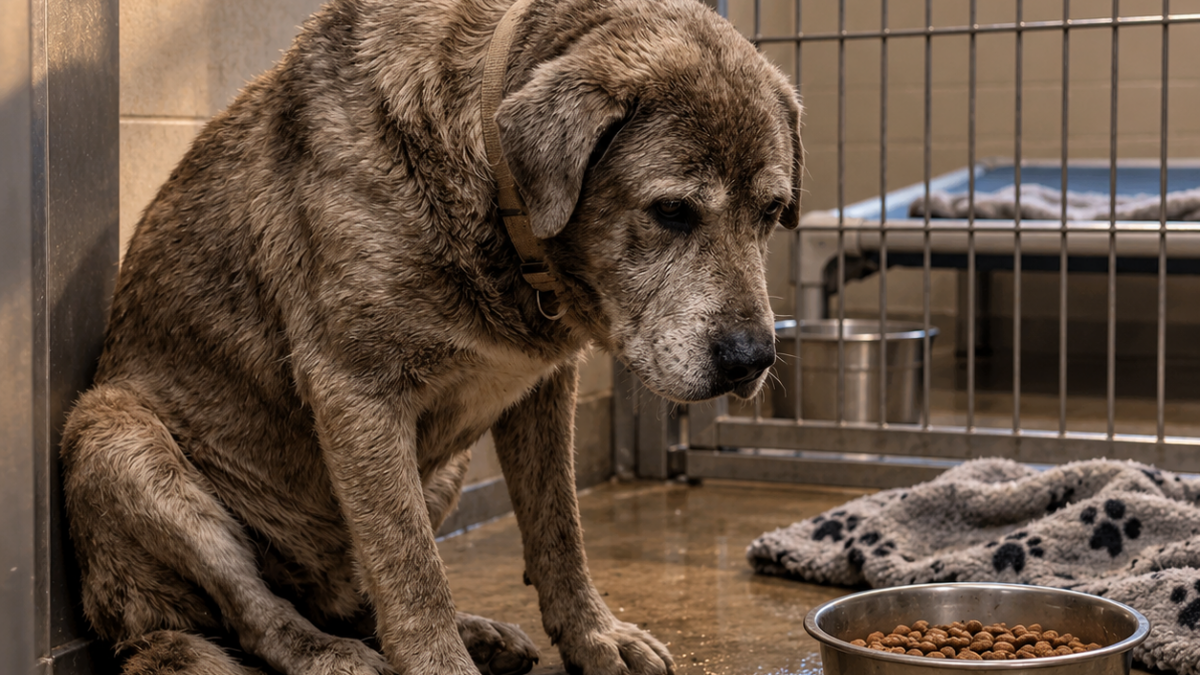
For seven years I had worked inside an animal shelter and thought I understood the difference between fear, illness, anger, and grief, but when our oldest dog suddenly stopped eating and began turning his face toward the wall, I realized there was a kind of heartbreak no medical test could explain.
By the seventh day, Max had lost enough weight that I was spending my nights beside his kennel, offering food from my palm and whispering promises I wasn’t sure he could believe, while every examination kept telling us the same frustrating thing—physically, there was no clear reason for him to be giving up.
Then, before sunrise one winter morning, I found an old piece of paper tucked beneath his front paws, folded so carefully and worn so thin that I knew someone had once believed the words inside it were important enough to keep hidden.
My name is Sarah.
I had been working at our city animal shelter for seven years when all of this happened, which was long enough to learn that shelters contain two completely different worlds at the same time.
There is the world visitors see.
Bright adoption photographs.
Dogs wagging their tails.
Cats reaching through kennel doors.
Happy families kneeling beside the animal they have decided to take home.
Then there is the world behind those moments.
The frightened intake at midnight.
The animal who shakes for three days before accepting food.
The senior dog everyone says is sweet before walking toward the puppy kennels.
The quiet kennel that remains occupied month after month while the names around it keep changing.
Max belonged to that second world.
He had been with us for almost three years.
Someone found him wandering alone near the industrial side of town one bitter November morning. He had no identification we could trace, and every attempt to locate an owner led nowhere.
We estimated that he was already a senior.
Large mixed breed.
Gray around the muzzle.
Brown-and-black coat fading with age.
Gentle eyes.
Painfully polite.
That is the best way I can describe Max.
He never rushed for food.
Never barked when another dog received attention.
Never threw himself against the kennel when visitors walked past.
He waited.
If I sat beside him, he would eventually walk over and lower his heavy head onto my knees.
Then he would look up at me without demanding anything.
Three years passed like that.
Puppies came and left.
Young dogs came and left.
Even animals with complicated medical histories sometimes came after Max and went home before him.
People liked Max.
They simply never chose him.
“He’s wonderful,” they would say.
Then:
“But we’re looking for something younger.”
Max never knew those words.
But dogs understand patterns.
A person approaches.
A hand reaches through the kennel.
A few kind words.
Then footsteps leave.
Again.
Again.
Again.
Still, Max remained gentle.
Until that winter.
One Monday morning, I placed his breakfast inside the kennel.
He sniffed it.
Then walked away.
I wasn’t concerned.
Dogs skip meals occasionally.
Tuesday came.
The bowl remained full.
Wednesday, I warmed his food and offered it from my hand.
Max turned his head.
Thursday, I brought chicken.
His favorite.
Nothing.
By Friday, I was sitting beside him with tears burning behind my eyes.
“Come on, old man.”
Max curled tighter in the corner.
“Just one bite.”
Nothing.
Our veterinarian examined him repeatedly.
Bloodwork.
Abdominal checks.
Temperature.
Teeth.
Everything we reasonably could assess.
There were normal senior-dog concerns, but nothing that explained the sudden refusal to eat.
By the seventh day, I was frightened.
Max looked smaller.
His shoulders seemed sharper beneath his coat.
Even his eyes had changed.
At night, after everyone else went home, I began sitting beside him.
I scratched his ears.
Told him stories.
Talked about nothing.
Some nights I begged.
“You cannot do this to me.”
Max would sigh.
Then rest his head down again.
That Sunday night I barely slept.
Before dawn Monday, I returned to the shelter.
The building was still dark when I entered Max’s run.
He lay in his usual corner.
But this time, something was beneath his paws.
A tiny square of paper.
Old.
Yellowed.
Folded over and over.
I knelt.
“Where did you get that?”
Max raised his head.
And the way he looked at me made every hair on my arms stand up.
I reached carefully toward the paper.
He didn’t stop me.
The edges were soft from age, as though someone had handled it countless times.
My fingers began trembling before I even unfolded it.
I had no idea then that the few sentences written inside would send me searching through three years of Max’s missing history—and lead me to the reason he had spent so long waiting for someone who never walked through our shelter doors.
PART 2
I sat down on the concrete floor before opening the paper completely.
I don’t know why.
Maybe some part of me already understood that I didn’t want to be standing when I read it.
Max remained in front of me.
His gray muzzle rested on one paw.
His eyes stayed on my hands.
The writing was faded.
Blue ink.
Uneven pressure.
Some letters barely visible where the folds crossed them.
At the top was a name.
**Daniel Harper.**
Underneath it:
**If Max is with you, please read this before deciding what kind of dog he is.**
My heart started beating harder.
I looked at Max.
“Is this yours?”
His ear moved.
I continued.
**Max has been with me for nine years. He is gentle, but when he is frightened, he waits. He has always waited for me.**
I stopped.
Waits.
There are ordinary words that become unbearable when they suddenly explain years.
Max had spent three years in our shelter doing exactly that.
Waiting.
Not demanding.
Not fighting.
Not protesting.
Waiting.
I read on.
**I am being moved into long-term medical care. I have been told I may not be able to come home again. My sister promised she would care for Max, but if something goes wrong and he ends up alone, please contact my daughter, Emily Harper. She lives in Cedar Falls.**
Below that was a phone number.
And one final paragraph.
**Please don’t mistake his silence for indifference. Max watches doors when he is scared. He sleeps near whoever he trusts. If he refuses food, sit with him. Don’t force him. Tell him, “Easy, Max. I’m here.” Those words have always helped.**
My vision blurred.
The last line was written smaller.
Almost as if Daniel had added it afterward.
**He stayed beside me during the worst years of my life. If I cannot stay beside him now, please make sure somebody does.**
I folded forward.
One hand covered my mouth.
For three years, we had wondered where Max came from.
Three years.
And the answer had apparently been lying somewhere inside the shelter all along.
### Where Had The Note Been?
That question came later.
At first, I could only stare at him.
“Easy, Max.”
His head lifted.
My voice cracked.
“I’m here.”
Max stood.
Slowly.
He walked toward me.
His nails clicked softly against the concrete.
Then he lowered his head into my lap.
Exactly as he had done hundreds of times before.
Except this time, I understood the gesture differently.
I placed my hand behind his ear.
“Daniel taught you that, didn’t he?”
Max closed his eyes.
I cried into the fur on top of his head.
### We Found The Answer In His Old Bedding
When my coworkers arrived, we searched Max’s kennel carefully.
The shelter had replaced bedding dozens of times over three years, but Max possessed one old canvas mat that had moved with him from run to run.
It had originally arrived with him from animal control.
The bottom seam had recently split.
Inside was a shallow fabric pocket.
Probably something the manufacturer had included for padding or identification.
That pocket was empty.
Except for small scraps of aged paper.
The note must have been hidden inside the mat all along.
Three years.
Maybe Max had smelled it.
Maybe not.
Maybe the torn seam had simply released it that morning.
I don’t pretend to know.
What mattered was the information.
We finally had a name.
### Emily Harper
I called the number immediately.
Disconnected.
Of course.
The note was at least three years old.
Maybe older.
I searched our original intake file.
Max had been found several miles from where Daniel’s last known address eventually turned out to be.
That explained nothing.
So I started digging.
Not because shelters normally become private investigators.
We don’t.
We don’t have the staff, time, or authority.
But this time, I could not stop.
A name.
A daughter.
A town.
That was more than we had ever had.
I called the animal-control officer who had originally picked Max up.
He remembered almost nothing.
“Big older dog?”
“Yes.”
“Industrial road?”
“Yes.”
“No collar, right?”
“That’s what the report says.”
“Yeah. I remember he wouldn’t get in the truck at first.”
“What happened?”
“He kept looking behind me.”
Those words hit me.
“Behind you?”
“Toward the road.”
“Like he was waiting for somebody?”
The officer became quiet.
“Maybe.”
### Daniel’s Address
A public directory led me to an old address.
A modest house on Linden Street.
Sold almost three years earlier.
I drove there after work.
I knew it might accomplish nothing.
Still, I went.
Different car in the driveway.
Different curtains.
Children’s bicycles near the porch.
I didn’t knock.
The current owners didn’t owe me explanations.
Instead, I asked an older neighbor who was outside bringing in trash cans whether she remembered Daniel Harper.
Her expression changed instantly.
“Danny?”
I nearly stopped breathing.
“You knew him?”
“Twenty years.”
“Did he have a dog?”
She smiled sadly.
“That big boy?”
My throat tightened.
“Max?”
“Oh, yes.”
There it was.
Confirmation.
For the first time, Max’s life before us became real.
Not theory.
Not paper.
Real.
### Daniel And Max
Her name was Mrs. Coleman.
She invited me onto her porch.
Daniel had been a retired city bus mechanic.
His wife had died several years before his health worsened.
Max had belonged to both of them originally.
After she died, Max became Daniel’s constant companion.
“You never saw one without the other.”
Mrs. Coleman smiled.
“Danny used to take that dog down the block twice every morning, no matter the weather.”
“What happened?”
Her smile disappeared.
“Daniel had a stroke.”
My chest tightened.
“He went into rehabilitation first. Then a care facility.”
“And Max?”
“I thought his sister took him.”
I showed her the photograph from the shelter.
Mrs. Coleman covered her mouth.
“Oh, my Lord.”
“It’s him?”
“That’s Max.”
Tears filled her eyes.
“That’s absolutely him.”
### Three Years
Mrs. Coleman looked horrified.
“He’s been in a shelter all this time?”
“Yes.”
“I thought…”
She stopped.
“What?”
“I thought he’d gone to family.”
“So did Daniel.”
### The Sister
I asked whether she remembered a name.
Margaret.
Daniel’s older sister.
She lived about forty minutes away.
Mrs. Coleman hadn’t heard from her in years.
Then she told me something else.
“Daniel died about three months after he left the house.”
Silence filled the porch.
I had suspected it.
Hearing it was different.
Max’s person had not simply failed to return.
Daniel had never been able to.
### I Went Back To The Shelter
It was after eight.
Technically, I should have gone home.
Instead, I drove directly to Max.
The building was mostly dark.
I turned on one hallway light.
He lifted his head.
I opened the kennel.
Sat.
“Easy, Max.”
He stood.
Came to me.
“I’m here.”
He placed his head on my knee.
I touched him slowly.
“I found Daniel.”
Max closed his eyes.
My throat tightened.
“He didn’t leave because he wanted to.”
Of course Max couldn’t understand.
But I needed to say it.
“He was sick.”
I swallowed.
“He thought you were going somewhere safe.”
Max sighed.
“You were loved.”
That sentence broke me.
“You were loved the whole time.”
### Max Ate Three Pieces Of Chicken
That night.
Three.
I counted.
I shouldn’t have.
I did.
I placed the pieces beside my leg.
Didn’t offer them from my fingers.
Didn’t tell him to eat.
I talked.
About Daniel.
About Mrs. Coleman.
About absolutely nothing.
Then Max leaned forward.
One piece.
I looked away immediately.
Second.
Third.
I texted our veterinarian:
**He ate.**
Her reply came seconds later.
**HOW MUCH?**
**Three pieces.**
**Good. Don’t push.**
I didn’t.
### The Search For Emily
The next two days became a strange combination of shelter work and detective work.
Emily Harper.
Cedar Falls.
Old phone number.
I found several possibilities.
One social-media account had not been updated publicly in years.
Another person with the same name was obviously too young.
I contacted the local church listed in Daniel’s old obituary.
Yes.
I eventually found the obituary.
Reading it felt intrusive.
Necessary.
**Daniel Robert Harper, age 76…**
Survived by daughter Emily.
Sister Margaret.
His late wife, Susan.
There was no mention of Max.
Obituaries rarely list everything that matters.
The church secretary could not give me personal information.
Good.
She did agree to pass along my phone number if she still had contact with Emily.
Then I waited.
Max understood waiting.
I was beginning to hate it.
### Wednesday
No call.
Max ate half a meal.
### Thursday
Nothing.
Max drank normally.
Walked outside with a volunteer.
### Friday
My phone rang while I was cleaning kennels.
Unknown number.
I almost ignored it.
“Sarah?”
“Yes?”
“This is Emily Harper.”
Everything inside me stopped.
### “You Have Max?”
Her voice broke on his name.
“Yes.”
A breath.
“Oh my God.”
I leaned against the wall.
“You know him?”
“He was my dad’s dog.”
“I found a note.”
Silence.
Then crying.
Not loud.
The kind someone tries to hide.
“My father wrote one?”
“Yes.”
“What does it say?”
I asked if she was somewhere safe to talk.
She said yes.
So I read it.
Every word.
When I finished, Emily didn’t speak for almost a minute.
Then:
“I thought Max was dead.”
My hand tightened around the phone.
“What?”
### The Story Emily Had Been Told
When Daniel suffered the stroke, Emily had been living nearly six hours away.
She came immediately.
But Daniel’s recovery was complicated.
Medical decisions.
Rehabilitation.
Selling his house.
Insurance.
Everything at once.
Margaret, Daniel’s sister, offered to handle Max.
Emily trusted her.
“She told me she found him a home.”
“What kind of home?”
“A retired couple with property.”
Emily’s voice shook.
“She said Dad knew.”
“Did he?”
“I don’t know.”
According to Emily, Daniel’s speech had been affected after the stroke.
He struggled to communicate clearly.
Still, he asked about Max constantly.
Sometimes only by saying the dog’s name.
Emily believed Margaret’s story because she needed to.
There had been too much else happening.
After Daniel died, Emily asked for the new family’s contact information.
Margaret kept delaying.
Then eventually said Max had slipped through an open gate and disappeared.
“I searched.”
Emily whispered.
“I posted online. I called shelters near Dad’s neighborhood.”
Our shelter was farther away.
Different municipal intake network.
Max had been found outside the original search radius.
“I thought he was gone.”
### Why Had Max Been Found Miles Away?
That answer came later.
For now, I asked:
“Can you come?”
Emily started crying again.
“Yes.”
### Saturday Morning
Emily arrived before we opened.
I was terrified.
Not of her.
For Max.
Three years is a long time.
Would he remember?
Would the reunion overwhelm him?
Would nothing happen at all?
People expect animals to perform recognition because humans need emotional certainty.
Sometimes they do.
Sometimes they don’t.
I told Emily that before she entered.
“Please don’t expect a movie scene.”
She nodded.
“I just want to see him.”
She carried something folded over one arm.
A red-and-black flannel jacket.
“My dad’s.”
My chest hurt.
“I kept it.”
### Max Was Outside
I chose the quiet fenced courtyard instead of his kennel.
Less pressure.
Max lay near the wall.
Emily stood behind the gate.
She saw him.
Her hand went over her mouth.
“Max.”
His head lifted.
That was all.
Emily began crying.
I whispered:
“Slow.”
She nodded.
Then opened the gate.
One step.
“Max.”
His ears moved.
Another.
“Hey, buddy.”
Max stood.
Not fast.
Old joints.
He stared.
Emily stopped.
She did not approach further.
Good.
Max sniffed the air.
Then I saw it.
His tail moved.
Once.
Small.
Uncertain.
Emily’s knees almost gave way.
“Oh, Max.”
He walked toward her.
One step.
Pause.
Another.
Emily held Daniel’s jacket near her knees.
Max’s nose lifted.
He reached it.
Sniffed.
Then stopped completely.
His entire body trembled.
Emily dropped to her knees.
“Easy, Max.”
I closed my eyes.
The phrase.
Daniel’s phrase.
**Easy, Max. I’m here.**
Emily whispered:
“I’m here.”
Max pressed his face into the jacket.
Then into her chest.
Emily wrapped her arms around him.
Not tightly.
She sobbed into his fur.
“I’m sorry.”
Max’s tail moved again.
Then again.
I turned away because the moment no longer belonged to me.
### Max Ate From Her Hand
Ten minutes later.
Not much.
But enough.
Emily sat on the ground.
Max beside her.
She tore tiny pieces of chicken.
Placed them on her palm.
“Remember when Dad used to get mad because I fed you from the table?”
Max ate.
Emily laughed through tears.
“You remember food, apparently.”
Another piece.
He ate it.
By the time she left that afternoon, Max had finished nearly a full meal.
### I Thought The Story Was Over
I was wrong.
### Emily Couldn’t Take Him
That was the next heartbreak.
She lived in an apartment building that did not allow large dogs.
She was already negotiating with management.
But there were other problems.
Her husband had serious allergies.
Their housing situation was complicated.
Emily looked devastated telling me.
“You must think I’m horrible.”
“No.”
“I found him after three years and I can’t even take him home.”
“No.”
She stared at the floor.
“I don’t want him thinking I’m leaving again.”
I understood that.
Maybe too well.
### “Then Don’t Disappear.”
She looked at me.
“You can’t take him home today.”
I sat beside her.
“But you can come back.”
That was the important difference.
### She Did
Tuesday.
Then Saturday.
Then Wednesday.
Emily became part of Max’s routine.
She drove nearly three hours each way.
Sometimes she stayed twenty minutes.
Sometimes two hours.
Always the jacket.
Always:
“Easy, Max.”
Max began eating normally again.
Not immediately.
Gradually.
The veterinarian monitored his weight.
The decline stopped.
Then reversed slightly.
The dog who had seemed to be fading began getting up when Emily’s car arrived.
### But A Shelter Was Still A Shelter
That became the next problem.
Max was healthier.
Emotionally more engaged.
Still homeless.
Three years had already been too long.
Now we understood his history.
That made watching him return to his kennel after each visit harder.
### Visitors
People came for younger dogs.
Some stopped at Max.
Read his updated profile.
**Senior. Gentle. Quiet home preferred.**
One couple spent twenty minutes with him.
I felt hope.
Then they adopted a two-year-old Labrador mix.
I was happy for that dog.
I cried in the supply closet anyway.
Shelter work allows contradictory emotions.
### Emily Wanted To Help Find His Home
“I failed him once.”
“You didn’t know.”
“I should have checked.”
“Emily.”
“I should have.”
I didn’t argue.
Guilt sometimes needs to speak before it can listen.
She continued:
“I can’t undo three years.”
“No.”
“I can make sure he doesn’t spend a fourth one here.”
That became our mission.
### Max’s Story Spread
Not sensationally.
We posted truthfully.
Senior dog.
Previous owner had entered medical care.
Family separation led to years in shelter.
Now seeking quiet permanent home.
We did not publish private medical details about Daniel.
We did not turn grief into entertainment.
Still, people responded.
Applications came.
Most were wrong.
Young children and high-energy dogs.
Long workdays.
Second-floor apartments without elevators.
People moved by the story but unprepared for the dog.
Emotion is not the same thing as suitability.
We waited.
Max had waited enough.
I wanted the next decision to be right.
### Then Came Frank
Seventy.
Widower.
One-story house.
Fenced backyard.
Retired.
No other pets.
Previous dog had lived to sixteen.
His application contained one sentence I remember.
**I am not looking for a young dog because I am not a young man. Maybe an old dog and an old man can stop pretending we need to start at the beginning.**
I read it twice.
Then gave it to Emily.
She cried.
Naturally.
At that point, crying had become our shared hobby.
### Frank Met Max
No fanfare.
He entered the courtyard.
Sat in a chair.
Ignored Max.
Excellent beginning.
After ten minutes, Frank said:
“Hello, Max.”
Max looked.
Frank didn’t reach.
Another ten minutes.
Max approached.
Sniffed his shoes.
Frank smiled.
“You take your time.”
My chest tightened.
Daniel had done that.
Emily later told me her father used to say nearly the same thing.
### The First Visit Lasted An Hour
Frank barely touched Max.
Before leaving, he asked:
“Can I come back tomorrow?”
Yes.
### Second Visit
He brought a blanket.
Not for Max.
For himself because it was cold.
Max lay on the edge.
Frank didn’t move him.
### Third
Max placed his head against Frank’s knee.
I went into the office and cried.
Again.
### Emily’s Fear
She wanted Frank to be right.
She was terrified he would be.
“If Max goes home with him…”
“He’ll have a home.”
“I know.”
She wiped her face.
“It just feels like losing him again.”
I understood.
“Different this time.”
“How?”
“You’ll know where he is.”
She looked at me.
“You can visit.”
Another breath.
“And Frank wants you involved.”
That mattered.
### Frank’s Answer
When we explained Max’s relationship with Emily, Frank said:
“Why would I take away someone else he loves?”
Simple.
No jealousy.
No ownership.
Max was not an object being transferred.
He was a life carrying relationships.
### The Home Visit
Frank’s house was quiet.
Old hardwood floors.
Ramp from the back porch because his previous dog had developed mobility problems.
Dog bed near his recliner.
Water bowls already placed.
Photographs of his late wife.
Photographs of his old shepherd, Molly.
Grief lived there too.
But so did warmth.
### “He Can Sleep Wherever He Wants.”
Frank said.
“Even your bed?”
He smiled.
“Especially if he can get up there before I do.”
### Adoption Day
I dreaded it.
Happy.
Terrified.
Max had lived at the shelter for almost three years.
That morning, staff gathered quietly.
No balloons.
No loud celebration.
Max hated commotion.
Emily came.
Daniel’s jacket folded over her arm.
Frank came.
A new blue collar in his hand.
He looked at the worn one Max had been wearing from the shelter.
“I figured I should ask before changing anything.”
Emily smiled.
“Dad always bought blue.”
So blue stayed.
### I Took Max Out One Last Time
He leaned against my leg.
I crouched.
“Old man.”
He looked up.
“You really scared me.”
His tail moved.
“I thought you were leaving before we figured out what you were waiting for.”
Max touched his nose to my chin.
I cried immediately.
“Very manipulative.”
### The Paper
I had placed Daniel’s original note inside a protective sleeve.
Emily had read it many times.
She asked whether Frank should have a copy.
Frank said:
“I want the copy.”
Emily looked surprised.
He continued:
“Original belongs with you.”
Then he looked toward Max.
“But I want to know the instructions.”
I smiled.
“Easy, Max.”
“I’m here.”
Frank nodded.
“I can remember that.”
### The Door Opened
Max walked toward Frank’s car.
Then stopped.
Turned.
Looked back at the shelter.
My heart broke.
Not because I thought he wanted to stay.
Because this place had become his world after everything else vanished.
Even an imperfect refuge can become familiar.
I knelt.
“Go.”
Max looked at me.
Emily said softly:
“Easy, Max.”
Frank opened the back door.
A padded ramp led upward.
Max stepped in.
Daniel’s jacket went beside him.
Door closed.
I expected panic.
Max stood.
Watched through the window.
Frank got into the driver’s seat.
Emily touched the glass.
“I’ll see you Saturday.”
Max sat.
The car pulled away.
### The Empty Kennel
I hated it.
For years, I had wanted that kennel empty.
That afternoon, I stood inside it and cried.
There was gray fur on the blanket.
A dent where his body usually rested.
Empty bowl.
Melissa appeared behind me.
“You good?”
“No.”
“Same.”
We stood there.
Then animal control arrived with another dog.
Shelter life does not wait for emotional closure.
Max’s kennel was needed.
I changed the bedding.
Washed the bowl.
Updated the board.
**MAX — ADOPTED**
I stared at the word.
Three years.
One week without food.
One piece of paper.
Then home.
### Frank Sent A Photograph That Night
Max asleep beside his recliner.
Not hiding.
Not pacing.
Sleeping.
Caption:
**He ate dinner. Twice. I may have overdone it.**
I laughed.
Then cried.
Obviously.
### Saturday
Emily visited.
Frank sent another photo.
Max with his head on her lap.
Daniel’s jacket underneath.
Three lives meeting through one dog.
### One Month
Max gained two pounds.
The veterinarian approved one.
We adjusted portions.
Frank complained Max had become demanding.
I replied:
**That means he feels safe. Congratulations.**
### The Door Ritual
At Frank’s house, Max slept near the front door for the first week.
That worried me.
Then his position moved.
Door.
Hallway.
Living room.
Beside recliner.
Eventually:
Bedroom.
### First Night On Frank’s Bed
Frank called me.
“It happened.”
“What?”
“He’s on the bed.”
I laughed.
“Congratulations.”
“He’s taking most of it.”
“Sounds accurate.”
“He snores.”
“No.”
“He absolutely snores.”
### Emily Visited Daniel’s Grave
She told me later.
She brought a photograph of Max sleeping in Frank’s house.
She sat there for almost an hour.
“I told Dad.”
Her voice shook.
“What?”
“That Max finally got home.”
I didn’t know what to say.
So I said nothing.
Sometimes silence is respect.
### Margaret
I knew the question would return.
Daniel’s sister.
What had actually happened?
Emily wanted answers.
I worried about reopening something we could no longer change.
Still, she deserved truth.
### She Called Margaret
Not in anger at first.
Just:
“Did you give Max to a family?”
Silence.
Then excuses.
Things had been complicated.
Daniel’s medical needs.
Selling the house.
Margaret had her own health issues.
Max was large.
Hard to manage.
She had tried.
Then, eventually, an admission.
She had contacted someone who claimed he could take Max.
A man living outside the city.
No formal transfer.
No verification.
She handed Max over.
Weeks later, when Emily asked questions, Margaret could no longer reach the man.
Instead of admitting she didn’t know where Max was, she said he had escaped.
### Emily Was Furious
Understandably.
“So she lied to Dad?”
“I don’t know exactly what Daniel was told.”
“She lied to me.”
“Yes.”
“I spent three years thinking he ran away.”
“Yes.”
“And Max spent three years in a shelter.”
“Yes.”
Her anger was enormous.
I let it be.
### “I Want Her To Know What She Did.”
“She should.”
Emily looked at me.
“But what do you want after that?”
Silence.
That question matters.
Anger wants punishment.
Grief often wants time returned.
No confrontation can give that.
### Emily Met Margaret
Privately.
I did not attend.
Later, she told me what happened.
Margaret cried.
Apologized.
Admitted she had been overwhelmed.
Admitted she chose the easier lie when the truth became embarrassing.
Emily did not forgive her that day.
She didn’t need to.
### But The Revenge Was Not Margaret’s Pain
That would have been too small.
The real reversal was happening elsewhere.
While Margaret faced what she had done, Max was sleeping in sunlight at Frank’s house.
Eating breakfast.
Walking through a fenced yard.
Waiting for Emily’s visits.
Living.
### That Was Better
Max had lost three years to uncertainty.
We could not return them.
But we could refuse to let those three years own the rest.
### Frank Understood
One afternoon, I visited.
Max recognized my car.
He came to the door.
Tail wagging.
I sat on Frank’s porch.
Max placed his head on my knee.
Same gesture.
I laughed.
“You remember me.”
Frank smiled.
“He remembers everybody who matters.”
That line stayed with me.
### Max Didn’t Have To Choose One Person
Daniel mattered.
Emily mattered.
I mattered.
Frank mattered.
Love can expand without erasing.
### Daniel Had Written:
**If I cannot stay beside him now, please make sure somebody does.**
Somebody did.
Then another somebody.
Then another.
### Max’s Health
He was still old.
Love did not make his arthritis disappear.
It did not reverse age.
Some mornings were stiff.
Some days appetite dipped.
Frank monitored him closely.
Senior life has its realities.
The happy ending was not immortality.
It was comfort.
### One Morning Frank Called
My stomach dropped seeing his number early.
“Sarah.”
“What happened?”
“Nothing bad.”
I exhaled.
“Never start calls like that.”
“Sorry.”
“What’s going on?”
“He woke me up for breakfast.”
Silence.
Then I laughed.
The dog who had once refused food for seven days had begun waking an old man because breakfast was late.
“There’s your miracle.”
### Not A Miracle
Actually.
Routine.
Safety.
Connection.
Medical care.
Time.
But if Frank wanted to call it one, I wasn’t arguing.
### Max Became Bossy
Apparently.
He barked once when dinner was fifteen minutes late.
Frank recorded it.
I watched the video six times.
Max.
Barking.
Demanding.
Alive.
### The Shelter Staff Celebrated
We remembered the dog facing the wall.
The full bowl untouched.
The paper beneath his paws.
Now he was shouting about dinner.
Perfect.
### Emily’s Guilt Changed
At first:
I failed him.
Later:
I found him.
Important difference.
She could not change what she didn’t know.
Once she knew, she showed up.
Again.
Again.
Again.
That mattered.
### She Stopped Asking Max For Forgiveness
Good.
Dogs should not have to carry human guilt.
She simply loved him.
### Margaret Asked To See Him
Months later.
Emily didn’t answer immediately.
Neither did Frank.
They talked.
Finally, Emily agreed.
On conditions.
Quiet.
No dramatic apology around Max.
No expectation of affection.
### Margaret Arrived
Older than I imagined.
Small.
Nervous.
She sat in Frank’s living room.
Max entered.
Looked at her.
I wasn’t there, but Emily described it.
Max sniffed.
Nothing dramatic.
No recognition anyone could prove.
No anger.
No fear.
He walked away and lay beside Frank.
Margaret started crying.
“I’m sorry.”
Max slept.
### That Was Almost Too Perfect
Not revenge.
Perspective.
Humans were carrying the moral weight.
Max was resting.
### Emily Eventually Forgave Margaret Partially
Not because the lie became acceptable.
Because living permanently inside anger kept Margaret at the center of Max’s story.
Max deserved better.
So did Emily.
### Frank’s House Became The Center
Not the lie.
Not the shelter.
Not even Daniel’s note.
Home.
### The First Winter
Max loved the fireplace.
Frank put a rug nearby.
Max occupied it daily.
Emily brought an old framed photograph.
Daniel sitting on a porch.
Younger Max beside him.
Frank placed it on a shelf.
No weirdness.
No competition.
Past welcomed into present.
### “He Had A Good Life Before.”
Frank said.
“And he has one now.”
Exactly.
### That Is The Kind Of Ending I Believe In
Not pretending the first love never existed.
Not claiming rescue makes everything before irrelevant.
Continuity.
### Max Was Loved By Daniel
### Then Lost
### Then Waited
### Then Found Again
Not by Daniel.
But by people carrying pieces of Daniel’s intention forward.
### The Note Became Famous At Our Shelter
Not publicly.
Among us.
Whenever a new staff member asked why we sometimes spent extra time searching old collars, carriers, bedding seams, I told them about Max.
Check everything.
People leave information in strange places.
### We Found Other Notes
Nothing as dramatic.
Medication instructions.
Old phone numbers.
A child’s drawing.
One collar with a grandmother’s address written beneath the lining.
Context matters.
### Max Changed Procedure
We added a more careful intake checklist for personal items.
Photograph belongings before discarding damaged material.
Inspect seams.
Record handwritten information.
Small changes.
Real consequences.
### Daniel’s Letter Helped Dogs He Never Met
That felt like another kind of victory.
### Three Years Later
Max was still alive.
Very old.
Much slower.
Frank joked that the dog had decided retirement suited him.
He slept most of the day.
Still ate.
Still loved Emily’s visits.
Still recognized me.
### His Face Was Almost Completely Gray
When I saw him, I had trouble reconciling the dog in front of me with the Max who arrived on the industrial road years earlier.
Then he put his head on my knee.
Same dog.
### “Easy, Max.”
I said.
His eyes closed.
“I’m here.”
The phrase had traveled through time.
Daniel.
Emily.
Me.
Frank.
Words can become homes too.
### Frank Heard Me
“Daniel used to say that?”
“According to the note.”
Frank nodded.
“I say it sometimes.”
Of course he did.
### The Note Was Copied Again
Emily gave Frank a framed copy.
Not fancy.
Simple wood.
It hung near Max’s bed.
I thought that would feel sad.
It didn’t.
It felt like a promise fulfilled.
### One Line Underlined
**Please make sure somebody stays beside him.**
Frank had underlined it.
### He Did
### When Max Had Bad Nights
Frank sat on the floor.
Seventy-year-old knees and all.
I scolded him.
“Use a chair.”
“Max is down here.”
“Your knees are not.”
“He’s worth it.”
Hard to argue.
### Sarah Before Max
I believed shelter work required emotional armor.
You had to care without being destroyed.
True.
But sometimes armor becomes distance.
Max reminded me that slowing down was not weakness.
### A Full Shelter Makes You Efficient
Efficiency saves lives.
But context can also save lives.
Balance.
### Max Needed More Than A Meal Plan
He needed his story understood.
Once we understood, we could respond properly.
### His Refusal To Eat Was Never Something I Could Reduce To A Single Cause
He was elderly.
Shelter stress.
Years of waiting.
Maybe seasonal memory.
Maybe physical changes too subtle to detect immediately.
I would never claim Daniel’s note medically “cured” him.
That would be dishonest.
But finding the note changed what we did.
We sat differently.
We searched.
We reconnected him with Emily.
We moved toward the right home.
That changed his life.
### The Paper Did Not Save Max
The information did.
The people acting on it did.
Max did his part too.
He accepted another bite.
Then another.
### Healing Usually Works Like That
Not one dramatic switch.
A chain.
### One Bite
### One Visit
### One Person Returning
### One Quiet House
### One New Routine
### Life Rebuilt
### The Second Great Scare
Years later, Max stopped eating breakfast.
Frank called immediately.
My heart remembered everything.
We got him examined.
This time, there was a physical cause.
A manageable gastrointestinal issue.
Treatment.
He began eating again.
Frank joked:
“You could have just told me your stomach hurt.”
Max stared.
### The Difference Was Huge
First time:
No history.
No explanation.
Shelter.
Waiting.
Second time:
Home.
Person who noticed immediately.
Veterinarian who knew him.
Support.
That is what belonging changes.
Problems still happen.
You don’t face them alone.
### Emily Said:
“That’s what Dad wanted.”
Yes.
### Max Had Become Part Of Frank’s Life Too
Not just a rescued dog he was caring for.
When Frank’s wife’s birthday came around, he sometimes became quiet.
Max stayed near him.
Old dog.
Old man.
Two lives carrying previous loves.
### Frank Told Me Once:
“He doesn’t ask me to stop missing her.”
I knew exactly what he meant.
“And I don’t ask him to stop missing Daniel.”
That might be the best description of their bond.
### They Did Not Repair One Another
They accompanied.
That is more realistic.
And sometimes more beautiful.
### Sunset Walks
Slow.
Half a block.
Then shorter.
Frank never pulled.
Max sniffed.
Stopped.
Looked around.
Time expanded.
### Emily Joined Sometimes
Three figures.
Frank.
Emily.
Max.
Daniel absent physically.
Present in story.
### The Industrial Road
Emily wanted to see where Max had been found.
Eventually, we drove there.
Not with Max.
No reason to make him revisit anything.
Just us.
Gray warehouses.
Wide road.
Grass strip.
Traffic.
Nothing special.
Emily stared.
“He was here?”
“Yes.”
“Alone?”
“When they found him.”
She cried.
Then wiped her face.
“I keep wanting the place to explain something.”
“It won’t.”
She nodded.
That is one of grief’s frustrations.
Places rarely explain.
### We Left
No dramatic closure.
Good.
Max’s real life was elsewhere.
### Frank’s Yard
Sun.
Old trees.
Low porch.
That explained more.
### The “Revenge” Everyone Expected
Some people who heard pieces of the story wanted Margaret punished.
Maybe they wanted the unknown man who took Max identified.
Maybe charges.
Maybe public shame.
But we did not know enough facts.
And Max’s life was not improved by turning speculation into certainty.
Accountability mattered.
Truth mattered.
Emily confronting Margaret mattered.
But vengeance?
Max did not need it.
### His Revenge Was Breakfast
Seriously.
The dog who once turned away from food eventually barked at Frank because breakfast was late.
Every time I heard that story, I smiled.
### His Revenge Was Sleeping Deeply
No kennel door.
No footsteps making him raise his head.
### His Revenge Was Being Expected
Frank noticed if Max drank less water.
Emily noticed if his gait changed.
I still received pictures.
No more invisible dog in kennel 17.
### His Revenge Was Becoming Inconvenient
Vet bills.
Special food.
Ramps.
Medication.
Laundry.
Hair.
Wonderful inconveniences.
### Disposable Things Are Easy
Love makes things inconvenient.
Max finally had people willing to be inconvenienced.
### That Was Justice Enough
### One Christmas
Frank sent a photograph.
Max lying near a tree.
Blue collar.
Red-and-black jacket folded under his head.
I stared for a long time.
Daniel’s jacket.
Still part of the family.
### Emily Had Given It To Frank
“For Max.”
Frank never washed it with strong detergent.
“Old smell is long gone.”
Emily said.
“Doesn’t matter.”
Frank answered.
Maybe not.
The object had become symbolic for humans.
For Max, perhaps simply comfortable.
Both uses valid.
### The Note
Original remained with Emily.
Copy at Frank’s house.
Copy in Max’s shelter record.
Daniel’s instructions existed in three places.
### His Fear Had Once Been:
What happens to Max when I’m gone?
Years later, answer everywhere.
He is loved.
### I Wished Daniel Could Know
That feeling never left.
### Sometimes I Imagined Telling Him
Not some impossible supernatural scene.
Just words.
“Daniel, we found the note.”
“Emily found Max again.”
“He ate.”
“He went home.”
“He sleeps beside another old man who understands loss.”
“He still hears your phrase.”
“Easy, Max.”
“I’m here.”
### I Hope That Would Have Been Enough
### Max’s Fourth Year After Adoption
His world became very small.
Not sadly.
Comfortably.
Bedroom.
Living room.
Yard.
Vet.
Emily.
Frank.
Food.
Sun.
Older animals often simplify life.
Maybe humans do too.
### Frank Put Another Bed In The Kitchen
Because Max liked being near him while he cooked.
Then one in the bedroom.
Then living room.
Emily joked:
“Your whole house is dog beds.”
Frank said:
“Your point?”
Correct answer.
### The Shelter Became A Place Max Visited Once
For a holiday senior-pet photo event.
We debated whether bringing him back would be stressful.
Frank tested the parking lot.
Max seemed relaxed.
We brought him inside briefly.
I was nervous.
What would he remember?
Kennel sounds.
Disinfectant.
Voices.
Max walked into the lobby.
Sniffed.
Then headed toward the treat jar.
I laughed so hard I cried.
### He Did Not Go Toward His Old Kennel
He Did Not Freeze
He did not stare at the door.
Treat jar.
That was all.
### The Shelter Had Become Just A Building
Another victory.
### Melissa Knelt
“Max?”
He walked over.
Head on knee.
Same.
She started crying.
“Rude.”
I laughed.
### He Left With Frank
Without looking back.
Perfect.
### Memory Does Not Require Returning
Max proved that.
### The Year My Shelter Repainted
Kennel 17 changed color.
New door.
New drainage.
Nothing physically remained of Max’s three years there.
At first, that bothered me.
Then I realized:
Good.
Let the kennel change.
Max had.
### We Hung No Plaque
No dramatic memorial.
We simply kept the lessons.
### Check The History
### Slow Down
### Don’t Mistake Silence For Lack Of Feeling
### Senior Does Not Mean Done
### And Sometimes The Animal Who Seems To Have Given Up Is Waiting For One Piece Of Context You Haven’t Found Yet
### Frank Called Me One Autumn Evening
His voice softer than usual.
“Max is slowing down.”
I sat.
“How much?”
“Enough.”
We talked.
Veterinary appointments.
Comfort.
Quality of life.
No crisis yet.
But time becoming visible.
I hated it.
### Emily Came More Often
Not because she wanted to hover.
Because she knew.
### Max Still Ate
Important.
Still enjoyed yard.
Still leaned against Frank.
Still lifted his head when Emily said his name.
### So They Kept Living
Not mourning early.
That matters.
### Anticipatory Grief Can Steal Good Days
Frank understood.
“I lost enough days worrying about losing people.”
He said.
“I’m not giving Max’s away.”
### Winter Again
The same season when he once stopped eating.
This time:
Warm kitchen.
Breakfast.
Medication hidden badly in cheese.
Frank.
Max.
I visited.
Snow outside.
### He Was Frail
Yes.
But his eyes still had that intelligence.
I sat.
“Max.”
His ears turned.
“Easy.”
He stood slowly.
Walked over.
Head on knee.
I had to look away.
### The Gesture Survived Everything
Street.
Shelter.
Grief.
Home.
Age.
### I Whispered:
“You really made us work for this ending.”
Frank laughed.
Max sighed.
### Emily Arrived Later
She carried a photograph.
Daniel and Max.
She placed it on the table.
“Dad would’ve loved Frank.”
Frank replied:
“I’m not sure. I stole his dog.”
Emily laughed through tears.
“No. You finished what he was trying to do.”
Silence.
That landed.
### What Daniel Was Trying To Do
Make sure somebody stayed.
### Somebody Did
### More Than One
### Max’s Final Chapter
I won’t turn it into something graphic.
It doesn’t need that.
Age eventually asks questions love cannot answer with more time.
What matters is this:
Max was not alone.
Frank was there.
Emily was there.
I came too.
We sat in his living room.
Not shelter.
Home.
The red-and-black jacket beneath his head.
His blue collar loose enough for comfort.
Sun through the window.
### I Said His Name First
Always.
“Max.”
His eyes opened.
I placed my hand near him.
He leaned slightly.
Permission.
Then touch.
### Emily Whispered:
“Easy, Max.”
Frank finished:
“I’m here.”
My heart broke.
Because the phrase had traveled all the way from Daniel’s handwritten note into Max’s final safe room.
### Nobody Asked Max To Be Brave
Nobody asked him to stay for us.
Love sometimes means holding on.
Sometimes it means refusing to make someone hold on only because you are afraid of goodbye.
### His Last Days Were Gentle
That is enough.
### After
Frank’s house became quiet.
Painfully.
Emily worried about him.
So did I.
### Frank Kept Max’s Bowl For Weeks
Water bowl too.
Then one morning, he called.
“I moved them.”
“How was that?”
“Terrible.”
“Yeah.”
“But okay.”
Both can be true.
### Daniel’s Jacket
Frank gave it back to Emily.
She held it.
Then said:
“No.”
She folded it again.
“You keep it.”
Frank cried.
“Why?”
“Because it belongs to Max’s home.”
Which one?
Exactly.
### The Blue Collar
Emily kept that.
Inside the box with Daniel’s original note.
Not because Max needed it anymore.
Humans do.
### Frank Eventually Fostered A Senior Dog
Not immediately.
Months later.
He called me.
“I am not adopting.”
Shelter workers know that sentence.
“Of course.”
“Temporary.”
“Absolutely.”
The dog stayed.
Naturally.
### His Name Was Henry
He was twelve.
Demanding.
Loved cheese.
Frank complained constantly.
Perfect.
### Emily Visited Henry Too
Not as replacement.
Life continuing.
### Max’s Influence Spread
Daniel loved Max.
Max loved Daniel.
Daniel tried to protect Max.
A hidden note reached me.
I found Emily.
Emily helped Max reconnect with his past.
Frank gave him a future.
After Max was gone, Frank opened his home to another old dog.
That is how love survives sometimes.
Not magically.
Through decisions.
### One Decision After Another
Sit.
Search.
Call.
Return.
Adopt.
Stay.
### Seven Years At The Shelter Had Taught Me About Rescue
Max changed the definition.
Before him, I thought rescue meant moving an animal from danger into safety.
Still true.
But incomplete.
### Rescue Can Also Mean Recovering A Story
Because without Max’s story, we saw a dog refusing food.
With it, we saw a dog whose entire life had been shaped by waiting.
That changed the care.
### It Changed Me
### I No Longer Say:
“He’s shutting down.”
Without asking:
“What changed?”
### I No Longer Say:
“She’s difficult.”
Without asking:
“What is she protecting?”
### I No Longer Say:
“He doesn’t care.”
Silence can be enormous care with nowhere to go.
### Max Taught Me That
### Years Later
A new volunteer once asked about the framed copy of an old handwritten note kept in our staff room.
Not the whole thing.
Just one line.
**If I cannot stay beside him now, please make sure somebody does.**
She asked:
“What’s that from?”
I smiled.
“A dog named Max.”
### I Told Her The Story
Not all at once.
The short version.
Old dog.
Stopped eating.
Paper beneath paws.
Previous owner.
Daughter.
New home.
She cried.
Shelter tradition.
### Then She Asked:
“Was the note what saved him?”
I thought.
“No.”
“What did?”
“People taking it seriously.”
That is the truth.
Words without action are paper.
Daniel’s note mattered because we listened.
### Max Had Been Waiting For Someone To Listen
Maybe for years.
### The First Day He Refused Food
I thought I was losing him.
In a way, I was.
The Max who could keep waiting indefinitely had reached his limit.
Something had to change.
### The Paper Changed What We Saw
### Emily Changed What He Remembered
### Frank Changed Where He Belonged
### Max Changed All Of Us
### The Most Satisfying Ending
Is not Margaret crying.
Not Emily confronting anyone.
Not even the adoption photograph.
My favorite moment came months after Max went home.
Frank sent me a video.
Breakfast.
6:11 a.m.
Frank moving slowly in the kitchen.
Max standing behind him.
Tail wagging.
Then Max barked.
One sharp bark.
Frank laughed.
“I’m going as fast as I can.”
Max barked again.
I watched it over and over.
### The Dog Who Would Not Eat
Demanding breakfast.
That is the ending.
### That Was His Revenge Against Grief
Against waiting.
Against being overlooked.
Against three years of watching other dogs go home.
He became impatient for breakfast because he expected tomorrow.
Think about that.
Expectation itself had changed.
### In The Shelter
Max waited for something that never arrived.
### At Frank’s House
Max waited for breakfast because he knew it would.
### That Is Trust
### That Is Home
### That Is Why The Little Piece Of Paper Mattered
Not because it revealed some shocking villain.
Because it corrected the story.
Max had not come from nowhere.
He had belonged.
Deeply.
He had lost.
Deeply.
And the silence we had mistaken for simple age or resignation contained years of love.
### Once We Understood That
We stopped trying to make him become a different dog.
We helped him become Max again.
### Gentle
### Patient
### Stubborn About Food
Eventually
### Loyal
### Loved
### When I Think Back To That Dawn
I can still see the shelter before lights came on.
Blue-gray winter light through the windows.
My shoes squeaking on the floor.
Max in the corner.
Paper under paws.
### I Remember The Trembling In My Hands
I remember thinking:
Please don’t let this be something terrible.
It was terrible.
And beautiful.
Both.
### Daniel’s Time Had Run Out
His words did not.
### Max’s Patience Had Nearly Run Out
Our time to understand him almost had too.
### But We Found The Note
### We Said The Words
“Easy, Max.”
### We Stayed
### Then Max Took One Bite
And another.
### Sometimes That Is How A Life Turns Around
Not with fireworks.
Not with some impossible miracle.
A meal.
A voice.
A familiar jacket.
A daughter returning.
An old man opening his house.
### Quiet Things
### Strong Things
### The Last Time I Saw Max Healthy
Before age really slowed him, he stood in Frank’s yard under a tree.
Sun on his gray face.
Emily beside him.
Frank on the porch.
I called:
“Max.”
He turned.
Not quickly.
But immediately.
He walked to me.
Placed his head against my leg.
### I Knelt
“You know, you caused a lot of trouble.”
Tail wag.
“We lost sleep.”
Wag.
“I cried in multiple closets because of you.”
Wag.
“No remorse?”
Max leaned harder.
I laughed.
### Frank Said:
“That’s his apology.”
“Terrible apology.”
### It Was Enough
### What Happened Under Max’s Paws That Morning Did Not Change His Past
Nothing could.
Daniel was still gone.
Three shelter years still existed.
Mistakes still happened.
### It Changed What Came Next
That is the only kind of change rescue can promise.
### What Comes Next
### Max Got A Home
### Emily Got The Truth
### Frank Got A Companion
### Daniel’s Final Request Was Honored
### And I Got A Lesson I Have Never Forgotten
When an animal goes quiet, listen harder.
Silence is not emptiness.
Sometimes silence is grief.
Sometimes it is memory.
Sometimes it is a frightened heart that has spent too long expecting a familiar person to walk through the door.
### And Sometimes
If you are lucky,
there is still enough time to sit down beside that animal and say:
“Easy.”
“I’m here.”
### Max Taught Me The Rest
Being there once is kindness.
Being there tomorrow is trust.
Being there long enough that an old dog begins barking because breakfast is late—
that is home.
### So No
The little piece of paper did not magically cure Max.
It did something more important.
It told us who he was.
And once we knew who he was,
we finally understood what he had been asking for all along.
Not pity.
Not pressure.
Not another person walking past his kennel saying he was sweet before choosing someone younger.
### He Needed Someone To Stay
Daniel had known that.
Emily learned it.
I learned it.
Frank lived it.
### Max Finally Believed It
That was enough.
### If I Could Speak To Daniel
I would tell him:
Your dog waited.
Longer than he should have had to.
But he was found.
Your daughter came.
He remembered her.
He ate again.
He went home with a man who understood what it meant to miss somebody.
He slept in sunlight.
He demanded breakfast.
He was loved until the end.
### And Daniel—
Somebody stayed beside him.
Just like you asked.
### That Is The Ending
Not a dog disappearing into grief.
A dog living beyond it.
Not forgotten.
Not replaced.
Carried forward.
### Max’s Story Was Divided Into Two Parts
Before the note.
After.
But maybe that is too simple.
His real life had many parts.
Daniel.
Loss.
Shelter.
Waiting.
Emily.
Frank.
Home.
### The Paper Only Helped Us Turn The Page
Max did the rest.
### And Every Time I Hear An Old Dog Bark For Breakfast Now
I smile.
Because somewhere inside that ordinary complaint is one of the strongest things an animal can possess.
Expectation.
The belief that food will come.
The belief that someone will answer.
The belief that tomorrow is worth waking up for.
### Max Got That Back
And after seven days of watching him turn away from every bowl I placed in front of him,
after nights sitting beside his kennel wondering whether love and medicine would be enough,
after three years of watching everyone else get chosen first,
I cannot imagine a more satisfying revenge against everything that had tried to convince that old dog his life was already over.
He ate.
He trusted.
He went home.
And eventually—
he stopped waiting for the past to return,
because the future had finally come looking for him.

