PART 2: We Carried Their Elderly Owner Out of Her Apartment—Then I Saw Her Two Dogs Still Waiting Beside the Chair
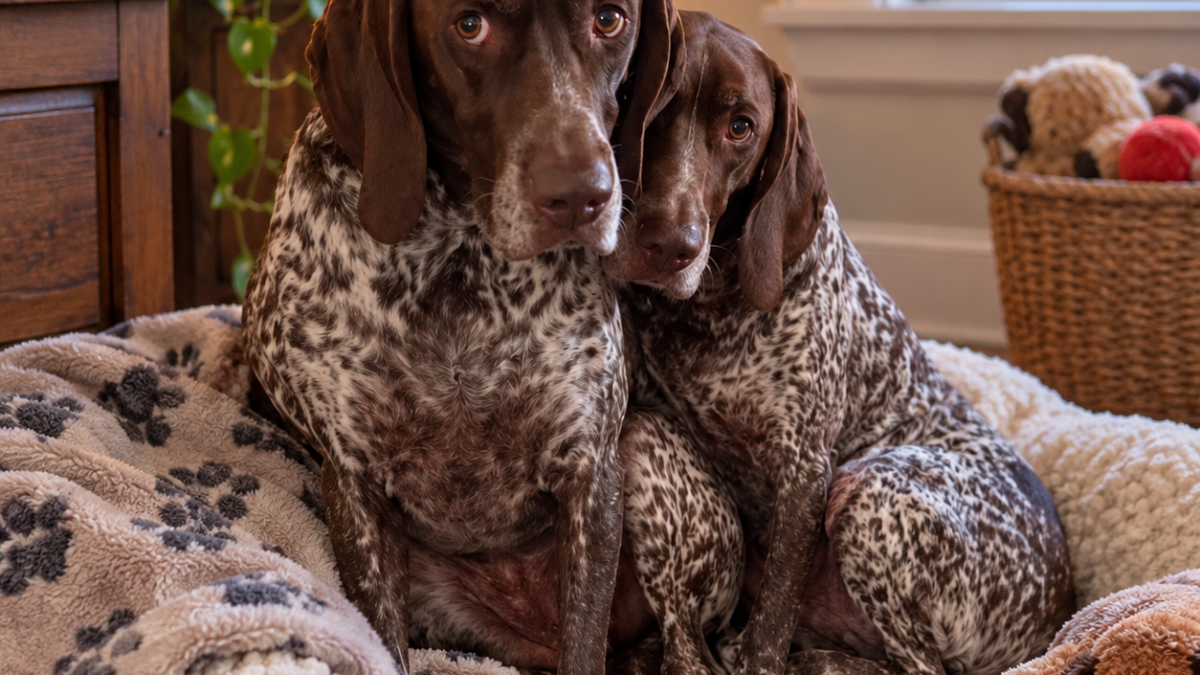
We had already finished the hardest part of the call and were preparing to carry an elderly woman from the apartment when I noticed two German Shorthaired Pointers pressed so tightly together against the wall that their shoulders overlapped, both of them staring at the chair where their owner would never sit up and call them for another morning walk.
I had worked emergency scenes for years and thought I understood what grief looked like, but nothing in my training prepared me for the silence of those two dogs as strangers entered their home, touched the woman who had been their entire world, and slowly carried her toward a door they seemed to believe she would eventually come back through.
I thought the most painful thing I would remember from that afternoon was the moment we left them behind, but I had no idea that less than twenty-four hours later I would learn they were being sent to a shelter with no family coming for them—and that someone there was already discussing whether separating them might make them easier to place.
My name is Daniel Hayes, and at the time I had worked emergency medical services for almost twelve years.
You learn to compartmentalize.
You have to.
You walk into houses on the worst days of people’s lives, do your job, finish the paperwork, clean the equipment, and move on to the next call.
If you carried every family home with you, you wouldn’t last.
At least, that’s what we tell ourselves.
The call came shortly after nine on a Tuesday morning.
“Welfare check. Elderly female. Neighbor hasn’t seen her in three days.”
Police arrived first.
By the time my partner, Mike, and I got there, the apartment door was already open.
The neighbor stood in the hallway with both hands pressed together beneath her chin.
“She walks them every morning,” she kept saying.
“Every morning at seven.”
The officers had gone inside.
One came back out and quietly shook his head.
No dramatic emergency.
No frantic rush.
The woman had apparently passed peacefully in her chair sometime earlier.
Her name was Margaret Collins.
Eighty-one years old.
Widowed.
Lived alone.
The room told us more than any report could.
A book rested beside her chair.
A folded blanket lay across her lap.
Two leashes hung from hooks near the front door.
Two stainless-steel bowls sat in the kitchen.
And beside the wall were the dogs.
One was slightly larger, with a dark liver-colored head and white ticking across his chest.
The other had more white around his muzzle.
Both were thin enough that three days without their normal routine had already begun to show.
Neither barked.
Neither growled.
They simply watched.
When we moved toward Margaret’s chair, the younger-looking dog stood.
The other stood with him.
One step.
Then they stopped.
“Easy,” Mike whispered.
The dogs didn’t look at him.
Their eyes stayed on Margaret.
I had seen human family members do the same thing.
That strange refusal to look anywhere else because if you keep watching long enough, perhaps reality will change.
We worked carefully.
Respectfully.
The larger dog began trembling when we moved Margaret.
His companion immediately pressed his shoulder against him.
That image stopped me.
Not one dog comforting the other.
Both doing it at once.
As if neither knew who was supposed to be strong.
I crouched several feet away.
“Hey, guys.”
Nothing.
“My name’s Daniel.”
Ridiculous, maybe.
But talking felt better than silence.
The white-muzzled dog finally looked at me.
His eyes were tired.
Confused.
I held out my hand.
He didn’t approach.
I didn’t blame him.
We were strangers changing everything.
When we carried Margaret toward the hallway, both dogs followed three steps.
Then an officer gently blocked them.
The larger dog gave one soft whine.
The first sound either of them had made.
It went straight through me.
Outside, while we loaded our equipment, I heard two officers talking.
“No relatives locally.”
“What about the dogs?”
“Animal services.”
“Both?”
“Yeah.”
“Together?”
The officer shrugged.
“If they have space.”
If.
That word stayed with me.
I climbed into the ambulance.
Mike started the engine.
We drove away.
Neither of us spoke for almost five minutes.
Then he said:
“You thinking about those dogs?”
“Yeah.”
“Me too.”
I stared through the windshield.
I could still see them against that wall.
Body against body.
Trying to hold together the only piece of home they had left.
And for the first time in years, I knew I wasn’t going to leave a call at work.
PART 2
I slept badly.
Every time I closed my eyes, I saw the dogs.
Not Margaret.
That sounds terrible.
But Margaret had been peaceful.
Whatever had happened, her struggle was over.
The dogs were still inside the story.
Still waiting for an answer.
At 6:15 the next morning, I gave up pretending I was going back to sleep and went into the kitchen.
My wife, Emily, found me drinking coffee in the dark.
“You okay?”
“Yeah.”
She opened the refrigerator.
“No.”
I looked at her.
“What?”
“You only drink coffee in the dark when you’re thinking about work.”
I smiled despite myself.
“That’s oddly specific.”
“Eleven years of marriage.”
I told her.
Margaret.
The chair.
The dogs.
The shelter.
The possibility they might be separated.
Emily listened without interrupting.
Then she asked:
“What do you want to do?”
“I don’t know.”
“That’s not true.”
I sighed.
“I want to know where they went.”
“Then find out.”
“I can’t just call animal control about dogs from a scene.”
“Why not?”
“I don’t know.”
She looked at me.
“Daniel, people call shelters about dogs every day.”
Fair.
At eight, I called.
I explained who I was.
The woman on the phone put me on hold.
Three minutes later, she returned.
“Yes, we received two German Shorthaired Pointers yesterday from that address.”
My shoulders relaxed slightly.
“Are they okay?”
“They’re stable.”
“Can you tell me their names?”
Pause.
“According to the intake paperwork, Jasper and Milo.”
Jasper and Milo.
Names changed them instantly.
They weren’t “the dogs” anymore.
“Are they together?”
Another pause.
“For now.”
I gripped the phone.
“What does that mean?”
“We had to kennel them separately overnight for medical evaluation, but their runs are adjacent.”
“Why separately?”
“Standard intake. Vaccination status uncertain, individual assessments, feeding, medical exams.”
That made sense.
Still hurt.
“Can they see each other?”
“Yes.”
“Can I visit?”
“Are you family?”
“No.”
“Potential adopter?”
I opened my mouth.
Closed it.
Emily stood across the kitchen watching me.
“Maybe.”
The woman gave me visitor hours.
## THE SHELTER
I had been inside animal shelters before.
Usually for emergency transport calls or community events.
This time felt different.
The county facility was clean but loud.
Dogs barked from concrete runs.
Staff moved quickly.
Phones rang.
A washing machine ran somewhere behind the reception desk.
The shelter manager, Karen Alvarez, came out to meet me.
“You’re the paramedic?”
“EMT, technically.”
“Sorry.”
“Doesn’t matter.”
She shook my hand.
“I’m Karen.”
“Daniel.”
“I heard you were at the owner’s apartment.”
“Yes.”
Her face softened.
“I’m sorry.”
“How are the dogs?”
She hesitated.
“Complicated.”
My stomach tightened.
“Medical?”
“Not primarily.”
She led me through a secure hallway.
The barking grew louder.
Then we reached two adjacent kennels.
Jasper was on the left.
Milo on the right.
I recognized them immediately.
Jasper, the darker one, stood when he saw me.
Milo remained curled against the divider between the runs.
Not against the back wall.
Against the divider.
Jasper walked over and lay down on the other side.
Their bodies lined up through the metal barrier.
I stopped.
Karen noticed.
“That’s basically what they’ve done since intake.”
“They won’t move?”
“They do. But not much unless they’re together.”
“What happens when you take one out?”
“Milo panics.”
“And Jasper?”
“Shuts down.”
She unlocked Jasper’s run.
A staff member clipped on a leash and led him into a small meet-and-greet room.
Milo immediately stood.
Whined.
Paced.
Then began scratching lightly at the divider.
“Okay,” Karen said. “Bring Jasper back.”
The moment Jasper returned, Milo settled.
I stared.
“They’re bonded.”
“Very.”
“So keep them together.”
Karen looked at me.
“I’d like to.”
That phrase sounded dangerous.
“But?”
“Bonded adult pairs are hard to place.”
My jaw tightened.
“You haven’t even tried.”
“I’m not saying we won’t.”
“Then why are you already talking about separating them?”
She crossed her arms.
“I’m talking about reality.”
“They lost their owner yesterday.”
“I know.”
“You’re evaluating their lifelong bond based on twenty-four hours in a shelter?”
“No.”
Her voice stayed calm.
“We’re evaluating what will give them the best chance of leaving.”
“Together.”
“Hopefully.”
“Not hopefully.”
Karen looked at me for several seconds.
Then said:
“You care about them.”
“Yes.”
“Good.”
She handed me a clipboard.
“Fill out a foster application.”
I stared at her.
“What?”
“You said not hopefully.”
She nodded toward the form.
“Help me make it possible.”
## EMILY’S FACE
I brought the application home.
Emily looked at it.
Then at me.
“Daniel.”
“I haven’t agreed to anything.”
“The form is filled out.”
“Mostly.”
“Your signature is at the bottom.”
“Technicality.”
She laughed.
Then became serious.
“Two German Shorthaired Pointers?”
“Temporarily.”
“How temporary?”
“I don’t know.”
“That’s what people say before we own two dogs.”
We already had one cat named Lucy who considered every living thing a personal insult.
That mattered.
“We don’t even know how they are with cats.”
“Exactly.”
“I’m just applying.”
Emily sat down.
“Do you want them?”
I thought about Jasper and Milo lying on opposite sides of the kennel divider.
“I want them not to be separated.”
“Different question.”
“I know.”
She studied me.
Then sighed.
“Submit it.”
## MARGARET’S NEIGHBOR
The next afternoon, I got a call from the shelter.
Karen had spoken with Margaret’s neighbor, the woman who originally requested the welfare check.
Her name was Rosa Martinez.
She had information about the dogs.
I met her outside Margaret’s apartment building.
She was in her late sixties, small, silver hair, sharp eyes.
“You were there,” she said.
“Yes.”
“I remember you.”
“I’m sorry about Margaret.”
Rosa looked toward the building.
“She was my friend.”
We stood quietly.
Then she asked:
“You are trying to help Jasper and Milo?”
“Yes.”
Her face changed.
Relief.
“They must stay together.”
“I agree.”
“No. You do not understand.”
She pointed toward a bench.
“Sit.”
So I sat.
## THEIR STORY
Margaret had adopted Jasper first.
Six years earlier.
He had been three.
His previous owner had surrendered him after moving into assisted living.
A year later, Margaret adopted Milo.
Milo had come from a hunting household where he had apparently never adjusted well to kennel life.
“He cried all night at the shelter,” Rosa said.
“Margaret heard him.”
“That sounds like her.”
“You knew her one day.”
“I know.”
Rosa smiled sadly.
“She always picked the sad ones.”
Jasper and Milo bonded almost immediately.
They walked together.
Slept together.
Ate in the same room.
When Jasper had surgery for a benign growth two years earlier, Milo refused dinner until Jasper returned home.
“When Margaret went to the hospital last winter,” Rosa continued, “I kept them.”
“Together?”
“Of course.”
“How long?”
“Nine days.”
“Any separation anxiety?”
“Only if one dog went outside without the other.”
I wrote everything down.
Rosa looked at me.
“Why are you writing?”
“Because the shelter needs evidence they’re bonded.”
“Evidence?”
“I know.”
She looked angry.
“Anyone with eyes has evidence.”
She wasn’t wrong.
Still, documentation mattered.
“Do you know if Margaret had family?”
“A niece in Arizona.”
“Coming?”
Rosa shook her head.
“They were not close.”
“What about the dogs?”
“She said she cannot take them.”
That hurt.
Not because the niece was cruel.
We didn’t know her circumstances.
Maybe housing.
Finances.
Health.
Life.
But the result remained.
Jasper and Milo had no one.
Rosa lowered her voice.
“Margaret worried about this.”
“What?”
“What would happen to them if she went first.”
I looked at her.
“Did she make arrangements?”
“She tried.”
## THE LETTER
Margaret had written a letter.
Not legally binding.
Not a will amendment.
Just a handwritten note kept in a kitchen drawer.
Rosa had seen it months before.
She believed police might have taken personal documents during the next-of-kin process.
The note said, according to Rosa:
**Please keep Jasper and Milo together. They have already lost enough homes between them.**
That sentence hit me harder than I expected.
“Do you know where it is?”
“No.”
“Can we find it?”
“I will ask.”
## THE SHELTER MEETING
Karen listened while I explained.
She didn’t argue.
“That helps.”
“So you’ll guarantee they stay together.”
She shook her head.
“I can’t guarantee what I don’t control.”
“You’re the manager.”
“I’m the manager of a county shelter with finite kennel space and policies.”
“There it is again.”
“What?”
“Reality.”
She sighed.
“Daniel, I am on your side.”
“Then why does it sound like you’re preparing me for separation?”
“Because I refuse to lie to you.”
Silence.
She continued.
“If they remain here too long, stress will increase. If no bonded-pair adopter appears, we have to consider options.”
“Separating them.”
“Potentially.”
“They won’t handle it.”
“We don’t know that long-term.”
“We know what happens for ten minutes.”
Karen’s face hardened slightly.
“And I know what happens when kennels fill.”
That stopped me.
This wasn’t a cartoon villain.
She wasn’t trying to break them apart.
She was balancing too many lives.
Still, I refused to accept separation as inevitable.
“Give me time.”
“How much?”
“Two weeks.”
She laughed without humor.
“You think bonded adult pointers find homes in two weeks?”
“I don’t know.”
“You sound like me now.”
“Two weeks.”
She thought.
“One.”
“Ten days.”
“Fine.”
## FOSTER TEST
Our home visit happened two days later.
Lucy the cat failed emotionally.
Not behaviorally.
She saw Jasper through a baby gate and transformed into a creature I can only describe as pure contempt.
Jasper backed away.
Good.
Milo looked away.
Better.
Neither lunged.
Neither barked.
Both responded to handler correction.
Karen’s foster coordinator, Beth, nodded.
“Promising.”
Emily whispered:
“Lucy is planning murder.”
“She plans murder when the mail arrives.”
Fair.
We set up a controlled foster weekend.
Jasper and Milo came home Friday afternoon.
The moment they entered, they inspected every room together.
Never more than a few feet apart.
Lucy observed from upstairs.
Her face said the lease had been violated.
## THE FIRST NIGHT
I put two dog beds in the living room.
They ignored one.
Both squeezed onto the larger bed.
Jasper’s head on Milo’s back.
Milo’s nose against Jasper’s leg.
Emily stood beside me.
“Oh no.”
“What?”
“We’re in trouble.”
“They’re foster dogs.”
“Daniel.”
“Temporary.”
She pointed.
“Look at them.”
I looked.
“Temporary can still sleep.”
“You’re an idiot.”
Probably.
## MARGARET’S ROUTINE
Rosa gave us a list.
7:00 a.m. walk.
Breakfast afterward.
Short afternoon outing.
Dinner at 5:30.
Evening walk around 7:00.
Jasper liked carrots.
Milo hated them.
Both knew “bedtime.”
Milo slept under blankets if allowed.
Jasper hated thunderstorms.
Margaret gave them each half a biscuit after the final walk.
I followed the routine.
The dogs changed.
At the shelter, they had looked shut down.
In our home, structure seemed to tell them that the world still had rules.
At 6:50 the first morning, Jasper stood beside the front door.
Milo joined him.
I checked the clock.
“Seven.”
Their tails moved.
Emily looked at me.
“She really walked them every morning.”
“Yeah.”
We went.
## THE EMPTY THIRD POSITION
Walking them hurt.
Not physically.
Emotionally.
They moved side by side with practiced rhythm.
At certain corners, they slowed.
At one intersection, both stopped and looked behind us.
I don’t know if Margaret usually said something there.
Maybe gave them a treat.
Maybe adjusted a leash.
Maybe nothing.
But both dogs waited.
For someone.
I swallowed.
“Come on, guys.”
They followed.
The third position remained empty.
## THE FIRST REAL BREAKDOWN
That night, Milo began pacing.
Door.
Window.
Door.
Hallway.
He whined.
Jasper followed.
We took them outside.
Nothing.
Food.
No.
Water.
No.
Then Milo sat facing the front door.
Jasper beside him.
Emily sat on the floor.
“They think she’s coming.”
I didn’t answer.
What could I say?
Dogs understand absence differently from us.
We should be careful not to turn every behavior into human grief.
But loss changes routines.
Smells vanish.
People stop returning.
Something was missing.
They knew that much.
I sat near them.
Not touching.
After maybe twenty minutes, Jasper moved toward me.
Sniffed my hand.
Then lay down.
Milo followed.
That was the first time they chose to settle near us rather than only each other.
Small step.
Huge.
## THE LETTER APPEARS
Rosa called on day four.
“They found it.”
“What?”
“Margaret’s note.”
The niece had received a box of papers and found the handwritten page.
She photographed it.
The wording was almost exactly what Rosa remembered.
**If something happens to me, please do everything possible to keep Jasper and Milo together. Jasper lost one home before me, Milo had a hard start, and they are happiest when they have each other. I know it may be difficult, but please don’t make them lose one another too.**
Margaret had signed it.
Dated it eight months earlier.
Not legally binding.
Emotionally impossible to ignore.
I sent it to Karen.
She called five minutes later.
“You had to find this.”
“Yes.”
“You’re making my job difficult.”
“Good.”
She sighed.
“I’ll mark them bonded-placement only for now.”
“For now?”
“Daniel.”
“I’ll take it.”
## THE VIRAL POST
The shelter made a post.
Not dramatic.
A photo of Jasper and Milo lying together.
Their story.
Owner passed away.
Bonded pair.
Need home together.
No graphic details.
No guilt.
Within twenty-four hours, thousands of people shared it.
Applications came in.
Most were unusable.
People outside the region with no transport plan.
Apartments that allowed one dog but not two.
Families without secure yards.
People who loved the story but hadn’t researched German Shorthaired Pointers.
These were energetic dogs.
Smart.
Strong.
Not decorative grief symbols.
A sad story does not make a difficult breed easier.
Karen reminded me of that.
“We are not placing them with the first person who cries.”
“I know.”
“Do you?”
“Yes.”
“You cried at intake.”
“That’s different.”
She laughed.
## THE FIRST GOOD APPLICATION
A retired couple.
Large property.
Previous pointer experience.
Perfect references.
I felt sick when Karen told me.
“Why do you sound disappointed?” Emily asked.
“I’m not.”
“You are.”
“They deserve a good home.”
“Yes.”
“They have property.”
“Yes.”
“They know the breed.”
“Yes.”
“So what’s wrong?”
I looked at Jasper asleep near my foot.
“Nothing.”
Emily smiled sadly.
“That’s the problem.”
## THE MEET-AND-GREET
The couple, Frank and Linda Mercer, came on Sunday.
Wonderful people.
Jasper liked Frank immediately.
Milo accepted treats from Linda.
They walked both dogs.
Handled them beautifully.
I hated them.
Not actually.
Emotionally.
Which was worse.
Linda asked:
“Do they sleep together?”
“Usually.”
“We’d keep both beds in our room.”
Good answer.
Frank asked about recall.
Good question.
They had fenced acreage.
Good.
Their previous pointer had lived to fourteen.
Excellent.
On paper, they were better than us.
That evening, Emily asked:
“You want them to go?”
“No.”
“Good.”
I looked at her.
“What?”
“Then stop pretending.”
## THE APPLICATION
We submitted our own adoption application.
Officially.
Karen called.
“I knew it.”
“Don’t enjoy this.”
“I am enjoying this.”
“Are we competitive?”
“Yes.”
My stomach turned.
“With the Mercers?”
“Yes.”
“They’re probably better.”
“Maybe.”
“Helpful.”
“You’re the one who demanded fairness.”
I hated fairness.
## THE HOME DECISION
The adoption committee considered both homes.
The Mercers had more space.
We had an established bond from foster care.
The Mercers had breed experience.
We had observed the dogs through grief and transition.
Both had solid veterinary references.
Both could afford two large dogs.
No simple answer.
Then something changed.
Frank Mercer called Karen.
He withdrew.
Why?
Because he and Linda had spoken after the meet.
“They already looked home,” he said.
Karen told me later.
I didn’t understand.
“At our house?”
“With you.”
Apparently, during the visit, Milo kept returning to Emily.
Jasper checked where I was whenever Frank walked him away.
The Mercers saw it.
Frank told Karen:
**We can give them a good home. I think they already found one.**
I cried.
Obviously.
## ADOPTION DAY
The paperwork felt almost absurd.
Names.
Microchips.
Veterinary records.
Licenses.
Fees.
Signatures.
Two dogs lay under the table.
Unaware their entire legal status was changing.
Karen slid the final page toward me.
“Ready?”
I looked at Emily.
She nodded.
I signed.
Karen stamped something.
“Congratulations.”
“That’s it?”
“That’s it.”
I looked down.
“You’re home.”
Jasper lifted his head.
Milo yawned.
Very emotional.
## MARGARET’S NIECE
A week later, I received an email.
Margaret’s niece, Allison.
She apologized for not taking the dogs.
I wrote back immediately:
**You do not owe me an explanation.**
She did anyway.
Her apartment prohibited dogs over thirty pounds.
Her son had severe allergies.
She had tried contacting friends.
Nothing worked.
Then she wrote:
**I have felt terrible every day since Aunt Margaret died because I knew what those dogs meant to her. Thank you for keeping the promise I couldn’t keep.**
I showed Emily.
We both cried.
Again.
The story was full of crying.
## THE FIRST MONTH
Jasper and Milo became less attached at the hip.
That worried me at first.
Then Beth, the foster coordinator, explained:
“It’s good.”
“How?”
“They’re secure enough to separate inside the house.”
Jasper slept in the kitchen sometimes.
Milo chose the couch.
They still checked for each other.
Still walked together.
Still curled up together often.
But they no longer looked like two animals holding each other up every second.
Safety gave them individuality back.
That mattered.
## JASPER
Jasper was serious.
Loved routines.
Breakfast at 7:30.
Not 7:31.
He learned where the treats lived and would stand beneath the cabinet at appropriate times.
He disliked thunder.
He loved the car.
He had an obsession with tennis balls that bordered on unhealthy.
He preferred me.
I say that objectively.
Emily disagrees.
## MILO
Milo was softer.
More cautious.
Loved blankets.
Hated closed doors.
Would follow Emily from room to room.
He adored Lucy the cat.
Lucy did not consent to this relationship.
Milo learned to lie three feet away from her and stare lovingly.
Lucy considered this harassment.
Eventually she tolerated him.
That was practically marriage by her standards.
## ROSA VISITS
We invited Rosa over.
The moment she walked through the door, both dogs froze.
Then exploded.
Tails.
Whines.
Jumping.
Jasper nearly knocked her down.
Rosa cried immediately.
“Mis niños.”
She sat on the floor.
Both dogs crowded against her.
For ten minutes she couldn’t speak.
Then she looked around.
Two beds.
Leashes.
Food bowls.
Margaret’s routine taped to our refrigerator.
“She would be happy.”
That mattered more than any shelter approval.
## THEIR FIRST RETURN TO THE APARTMENT
This part was difficult.
Allison needed to clear Margaret’s belongings.
She asked whether we wanted some of the dogs’ things.
We went.
Jasper and Milo came.
I wasn’t sure if that was wise.
Beth said it could be okay if controlled.
The moment we entered the hallway, both dogs changed.
Alert.
Fast.
They pulled toward Margaret’s door.
I opened it.
They rushed inside.
Living room.
Kitchen.
Bedroom.
Back to the living room.
Milo went directly to the chair.
Stopped.
Sniffed.
Jasper stood beside him.
My throat closed.
Emily touched my arm.
They stayed there almost a minute.
Then Milo walked away.
Into the bedroom.
Jasper followed.
No breakdown.
No dramatic collapse.
They smelled.
Explored.
Accepted treats.
Then came back to us.
When we left, both walked out willingly.
I looked at the closed door.
Something had ended.
Something else had begun.
## THE BOX
Allison gave us a box.
Inside:
Margaret’s handwritten note.
Veterinary records.
Photos.
Two old collars.
A photograph of Margaret sitting between Jasper and Milo on a park bench.
All three looking terrible at the camera.
Perfect.
We framed it.
It hangs near their leashes.
## THE SHELTER POLICY
Months later, Karen called.
“I blame you.”
“For what?”
“We’re changing bonded-pair guidelines.”
I sat up.
“What?”
Jasper and Milo’s case had forced staff to review how strongly bonded animals were identified and marketed.
Before, separation was often considered relatively early if placement looked difficult.
Now the shelter added a structured bonded-pair assessment.
Behavior during separation.
History.
Owner documentation.
Feeding.
Sleep.
Stress signals.
Professional evaluation.
Not every pair would remain together automatically.
Some animals labeled bonded were simply familiar.
But genuinely dependent pairs received stronger protection and longer joint-placement efforts.
“You did that?”
“No,” Karen said. “They did.”
I smiled.
“What changed your mind?”
“Watching Milo during that first separation.”
“You already saw it.”
“Seeing is one thing. Building policy is another.”
Fair.
“How many dogs will it help?”
“Don’t know yet.”
Enough.
## THE REVENGE
If you need revenge in this story, that was the first part.
Not revenge against Karen.
She had never been the enemy.
The revenge was against the assumption that convenience mattered more than history.
Jasper and Milo had entered the shelter as two intake numbers.
They left as a reason the shelter changed how it looked at every future pair.
Margaret had written:
**Please don’t make them lose one another too.**
She got her wish.
And because she wrote it down, other dogs might someday get theirs.
## THE SECOND BONDED PAIR
Six months later, Karen sent me a photo.
Two senior beagles.
Lucy and Pearl.
Twelve and eleven.
Owner moved into nursing care.
Strongly bonded.
The old policy might have separated them after a few weeks.
The new assessment kept them together.
They were adopted by a retired teacher.
Karen’s text:
**Margaret’s rule.**
I cried at work.
Mike found me.
“What happened?”
I showed him.
He looked at the photo.
“You’re still on those dogs?”
“Apparently.”
He shook his head.
“Soft.”
“Shut up.”
## MIKE’S SECRET
A year after the original call, Mike admitted something.
“Remember the apartment?”
“Obviously.”
“I called the shelter too.”
I stared.
“When?”
“Day after.”
“Why didn’t you tell me?”
“You were already doing everything.”
“What did you ask?”
“If they were together.”
I laughed.
“You idiot.”
“You’re welcome.”
That meant something.
The scene had followed him too.
We just process differently.
## JASPER’S THUNDER
Jasper’s fear of thunderstorms worsened one summer.
Panting.
Pacing.
Trying to hide in the bathtub.
We worked with the vet.
Behavior plan.
Safe space.
Medication when necessary.
Milo would lie near him.
Not touching.
Just near.
That was their bond in a more secure phase.
Not desperate bodies pressed together.
Presence.
The ability to say:
I’m here.
Without becoming one animal.
## MILO’S DOOR PROBLEM
Milo hated when Emily left.
Not severe separation anxiety exactly.
But he watched the door.
For months.
That first night after Margaret died had carved something into his routines.
We worked slowly.
Short departures.
Predictable returns.
No emotional greetings.
No dramatic goodbyes.
Over time, he stopped pacing.
One afternoon, Emily came home and found him asleep.
She texted me:
**HE DIDN’T WAIT AT THE DOOR.**
That was progress.
Some people might think it sad.
I thought it was freedom.
He finally believed doors reopened.
## THE PARK
We found the park Margaret used to visit with them.
Rosa showed us.
A wide walking loop around a pond.
The first time we went, Jasper pulled left at the entrance.
Rosa laughed.
“That’s their direction.”
We followed.
At one bench, both dogs stopped.
The photograph.
Same bench.
Margaret had sat there.
We sat.
Jasper leaned against my leg.
Milo climbed halfway onto Emily’s lap despite being far too large.
Rosa stood behind us.
“You see?”
“What?”
“They’re not replacing her.”
I looked at her.
“They’re continuing.”
That was exactly right.
Love doesn’t require erasing the person who came before.
Our job wasn’t to make Margaret disappear from their lives.
It was to become what came next.
## TWO YEARS
Two years after adoption, the dogs looked younger.
Not literally.
But grief had left their posture.
Jasper ran.
Milo played.
They wrestled.
They stole food.
They destroyed one decorative pillow.
Emily pretended to be furious.
I reminded her they were grieving animals.
She said:
“They’ve been grieving that pillow for twenty minutes.”
Fair.
## THE PILLOW INCIDENT
Feathers everywhere.
Milo in the middle.
Jasper holding part of the fabric.
Lucy watching from the stairs with satisfaction.
I took a photograph.
Sent it to Karen.
Caption:
**THANKS FOR THIS.**
She replied:
**No returns after 30 days.**
## ALLISON VISITS
Margaret’s niece came to town.
She wanted to meet them.
I worried it might be difficult.
It wasn’t.
The dogs didn’t know her well.
They were polite.
She brought Margaret’s old scarf.
Milo smelled it.
Then Jasper.
Both became still.
Not distressed.
Interested.
Jasper lay down beside the scarf.
Allison cried.
“I should’ve done more.”
I stopped her.
“No.”
“I could’ve tried harder.”
“You had limits.”
“But she was my aunt.”
“And you made sure the note got to us.”
She looked at the dogs.
“Was that enough?”
“Look at them.”
Jasper was asleep.
Milo had stolen the scarf.
“Yes.”
## MY JOB CHANGED
The dogs affected how I worked.
Not dramatically.
I didn’t become a different EMT.
But welfare calls changed for me.
If there were animals in the home, I asked more questions.
Who has them?
Has animal control been called?
Is there family?
Are bonded animals together?
One extra minute.
One extra phone call.
Sometimes that mattered.
Once, we responded to an older man being transported to the hospital.
His cat remained behind.
Before Jasper and Milo, I might have assumed the officer had a plan.
Instead, I asked.
Nobody did.
We found the man’s daughter.
She came.
Cat safe.
Small thing.
Huge to the cat.
## THE MAN RECOVERS
Weeks later, the man wrote our station.
Not to thank us for medical care.
To thank us for making sure his cat wasn’t taken to a shelter.
Mike held up the letter.
“This is your fault.”
“Good.”
## FOUR YEARS
Jasper developed arthritis first.
German Shorthaired Pointers don’t like admitting age.
He would run hard.
Then limp.
Vet said shorter walks.
Jasper disagreed.
We adjusted anyway.
Milo slowed slightly to match him.
Again, bond.
Not tragedy.
Accommodation.
## THE FIRST REAL SCARE
Jasper collapsed briefly after exercise.
Emergency vet.
Heart evaluation.
We thought we were losing him.
Milo remained home with Emily while I went.
He paced for hours.
When Jasper returned, Milo sniffed every inch of him.
Then lay against him.
For the first time in years, they pressed together like the apartment wall.
I had to leave the room.
## JASPER RECOVERS
Medication.
Activity limits.
Monitoring.
He improved.
Not young again.
But stable.
We learned to celebrate quieter walks.
More sniffing.
Less running.
Jasper hated retirement.
## MILO BECOMES BRAVE
Strangely, Milo changed as Jasper aged.
The more dependent dog became the steadier one.
He walked ahead.
Entered rooms first.
Waited when Jasper slowed.
At the shelter, we had worried Milo couldn’t function without Jasper.
Years later, Jasper sometimes seemed to borrow confidence from Milo.
Relationships evolve.
That’s why reducing bonded dogs to “one can’t survive without the other” is too simple.
They weren’t frozen in one dynamic.
They grew together.
## MARGARET’S BIRTHDAY
Rosa remembered the date.
We met at the park.
No ceremony.
Just a walk.
At the bench, Rosa brought carrots.
For Jasper.
Milo still hated them.
She laughed.
“She used to carry them in her pocket.”
I gave Jasper one.
He ate it.
Milo looked betrayed.
We gave him chicken.
Balance.
## THE POLICY SPREADS
Another shelter in the region asked Karen for the bonded-pair assessment framework.
Then another.
No headline.
No campaign.
Just staff sharing documents.
I loved that.
Jasper and Milo’s story became paperwork.
That sounds boring.
It was powerful.
Policies outlive emotion.
A viral post disappears.
A checklist remains.
## THE “REVENGE” BECOMES BIGGER
Margaret’s dogs had once faced the possibility of being separated because two large adult dogs were harder to place than one.
Years later, shelter workers were using a formal assessment partly inspired by them before making that decision for other animals.
That was their revenge on the system.
Not destroying it.
Improving it.
The rule that nearly failed them became a rule that protected others.
## ROSA’S HEALTH
Rosa became ill.
Nothing sudden.
Age.
Heart problems.
She stopped driving.
We began bringing Jasper and Milo to her apartment.
The first visit, they recognized the building.
Not Margaret’s apartment.
Rosa’s.
They ran to her.
She sat in a chair.
Both dogs rested at her feet.
She touched their heads.
“Good boys.”
I looked at Emily.
Same posture.
Different chair.
Life continues in echoes.
## ROSA’S LAST VISIT
Years later, Rosa moved into assisted living.
Dogs allowed.
We took them.
Jasper was old now.
Milo too.
Rosa looked smaller.
She cried when they entered.
“Margaret would laugh.”
“Why?”
“You adopted her entire problem.”
I smiled.
“Apparently.”
Rosa held Jasper’s face.
Then Milo’s.
“You stayed together.”
That sentence carried everything.
## JASPER’S LAST YEAR
Jasper reached an age we hadn’t expected when we first met.
His muzzle went gray.
His heart condition progressed.
Arthritis worsened.
Still ate.
Still cared about tennis balls.
He could no longer chase them far.
So I rolled them across the living room.
He would retrieve.
Slowly.
Still proud.
Milo stopped stealing the ball from him.
Respect for elders.
Maybe.
## THE DECISION
One winter, Jasper’s breathing changed.
Vet visit.
More tests.
Heart failure progressing.
Medication adjusted.
We got weeks.
Then months.
Good months.
Short walks.
Warm blankets.
Car rides.
The park.
The bench.
I started measuring days the same way I used to measure emergency calls.
Breathing.
Energy.
Appetite.
Comfort.
Emily reminded me:
“He’s not a patient.”
“I know.”
“He’s Jasper.”
That helped.
## THE LAST WALK
We took both dogs to Margaret’s park.
Jasper moved slowly.
Milo matched him.
At the bench, Jasper stopped.
We sat.
He put his head on my knee.
Milo lay beside him.
Emily took a photograph.
Two old dogs.
No desperation.
No fear.
Together.
The thing Margaret had asked for.
Still true.
## JASPER’S GOODBYE
The vet came to our home.
Milo stayed nearby.
We asked whether he should be present.
The vet said it can help some bonded animals understand the change, provided they aren’t distressed.
Jasper lay on his bed.
The same larger bed both had shared on their first night with us.
I sat beside him.
Emily held his paw.
“Good boy.”
Jasper looked tired.
Peaceful.
Afterward, we allowed Milo to approach.
He sniffed Jasper.
Waited.
Sniffed again.
Then walked away.
No movie scene.
No dramatic cry.
He knew something we could not measure.
## THE FIRST NIGHT WITHOUT JASPER
This was the moment everyone had feared years earlier.
Milo alone.
Would he panic?
Stop eating?
Collapse emotionally?
He searched the house.
Room to room.
Then returned to Jasper’s bed.
Lay down.
Emily sat beside him.
I expected him to break.
Instead, he rested his head on her leg.
He had lost Jasper.
But he had not lost everyone.
That was the difference.
## WHAT THE SHELTER HAD NEVER BEEN ABLE TO KNOW
If Jasper and Milo had been separated immediately after Margaret died, Milo would have lost everything at once.
Margaret.
Home.
Jasper.
Routine.
Security.
Would he have survived?
Probably.
Dogs are resilient.
But why make resilience mandatory when compassion offers another choice?
By keeping them together, Milo had years to build other bonds.
Us.
Lucy.
Rosa.
The house.
The park.
By the time Jasper died naturally, Milo had a wider world.
That was why the original promise mattered.
Keeping bonded animals together is not always about preventing death.
Sometimes it’s about giving them time to grow enough roots that future loss does not pull up the entire tree.
## MILO’S SECOND LIFE
For six months after Jasper died, Milo became quieter.
Then something unexpected happened.
He befriended Lucy.
The cat.
The same cat who had hated their arrival.
Lucy was ancient now too.
They started sleeping near the radiator.
Not touching.
Then touching.
One photograph showed Milo’s nose against Lucy’s back.
I sent it to Karen.
**BONDED PAIR?**
She replied:
**Absolutely not.**
## MILO WITHOUT JASPER
He changed.
Wanted longer sniffing walks.
Less structured pace.
More attention from strangers.
Jasper had always been the serious one.
Without him, Milo became strangely social.
Maybe that part had always existed.
Maybe Jasper’s presence shaped him.
Neither explanation was sad.
Individuals continue.
## MARGARET’S NOTE
I reread it after Jasper died.
**Please don’t make them lose one another too.**
We had kept the promise.
Not forever.
No one can.
But until life itself separated them.
That’s the best any promise can do.
## MILO’S FINAL YEARS
Milo lived almost two more years.
Old.
Slow.
Spoiled.
He slept under blankets just as Rosa had warned.
He developed kidney disease.
We managed it.
He still ate.
Still walked.
Still inspected the front door at seven.
Some routines survive everyone.
## THE MORNING HE DIDN’T GET UP
Milo remained in bed.
Awake.
But tired.
Vet.
Tests.
Age.
Kidneys.
Body slowing.
We had choices.
Hospitalization.
Aggressive support.
Maybe more time.
I thought about Margaret.
Jasper.
All the years.
Then asked the question I’d learned matters most:
“What would the time feel like?”
The veterinarian understood.
We chose comfort.
## THE LAST NIGHT
Milo slept beside us.
Not waiting at the door.
Not searching for Jasper.
Emily lay on the floor.
I sat with my back against the couch.
At one point, Milo lifted his head.
Looked toward the hallway.
Then rested again.
Maybe nothing.
Maybe memory.
I no longer needed to decide.
## MILO’S GOODBYE
At home.
Warm.
On the big bed.
Margaret’s photograph nearby.
Jasper’s collar in a drawer.
My hand on Milo’s head.
Emily whispering:
“You’re okay.”
The veterinarian gave the medication.
Milo relaxed.
No fear.
No shelter.
No wall.
No question about who would stay.
We stayed.
## AFTER BOTH
The house became impossibly quiet.
Lucy walked through every room as if celebrating victory.
Then she sat beside the empty dog bed.
Even she noticed.
I packed the beds slowly.
Kept one.
The big one.
Couldn’t explain why.
## THE SHELTER WALL
Karen invited us back.
The shelter had created a small board about bonded pairs.
No dramatic photos.
Just success stories.
Lucy and Pearl.
Two bonded Chihuahuas.
Senior Labs.
And Jasper and Milo.
Their photograph was not from the intake day.
Karen intentionally chose one from Margaret’s park years later.
Two old dogs on a bench.
Under it:
**JASPER & MILO
THEY LOST THEIR PERSON.
THEY DIDN’T HAVE TO LOSE EACH OTHER.**
I stood there crying.
Karen gave me a tissue.
“You still do this?”
“Apparently.”
## THE BOARD MEETING
The county shelter board formally adopted the updated bonded-animal protocol the following year.
Karen invited me.
I almost didn’t go.
Policy meetings are boring.
Then I remembered what boring policies can do.
The vote passed unanimously.
Afterward, one board member shook my hand.
“Your dogs changed this.”
“Margaret’s dogs.”
He smiled.
“Both.”
Fair.
## THE REVENGE, COMPLETE
There was never a villain.
Not really.
Death wasn’t a villain.
The shelter wasn’t a villain.
Margaret’s niece wasn’t.
Policy wasn’t malicious.
It was simply built for efficiency.
But efficiency can still hurt individuals when nobody stops to look closely.
Jasper and Milo’s revenge was not that someone lost a job or suffered.
It was that the system had to remember them.
Two dogs once nearly became separate adoption listings.
Years later, their names were attached to a policy telling workers to ask one more question before separating the next pair:
**What does this relationship mean to them?**
That is enough revenge for me.
## MIKE AND I RETURN TO THE BUILDING
Years after the original call, we were dispatched to the same apartment building.
Different unit.
Different resident.
Routine medical transport.
When we finished, Mike and I stood outside.
He looked up toward Margaret’s old window.
“Remember?”
“Every day.”
“That’s dramatic.”
“You asked.”
He smiled.
“What happened to that apartment?”
“New tenant years ago.”
“The dogs?”
I looked at him.
“Both gone now.”
His expression changed.
“I’m sorry.”
“They had a good life.”
“Together?”
“Until Jasper died.”
Mike nodded.
“Good.”
That one word meant everything.
## WHAT EMERGENCY WORK TAUGHT ME AFTER THAT
We talk about saving lives.
But sometimes emergency work is about what remains after the ambulance leaves.
Pets.
Neighbors.
Keys.
Medication.
A refrigerator full of food no one will eat.
Two leashes hanging by a door.
People like me are trained to focus on the immediate medical problem.
Necessary.
But Jasper and Milo taught me to look one step wider.
Who depends on this person?
What happens when we leave?
Sometimes the answer is a dog.
Sometimes two.
## MARGARET’S PHOTOGRAPH
The photograph of Margaret between Jasper and Milo hangs in our hallway.
People ask:
“Family?”
I say:
“Yes.”
Technically?
Not by blood.
Doesn’t matter.
She gave us two members of ours.
## IF I COULD GO BACK
I would return to the apartment.
Same silence.
Same chair.
Same dogs against the wall.
I’d crouch again.
Jasper would watch me.
Milo would press against him.
And I would tell them:
“I know you think everything is ending.
“In a way, it is.
“The woman you’re watching won’t stand up again.
“She won’t take those leashes from the hook.
“She won’t say ‘walk.’
“You’re going to be taken somewhere loud.
“You will sleep on opposite sides of a kennel divider.
“Milo, you’re going to panic when Jasper leaves the room.
“Jasper, you’re going to pretend you’re stronger than you are.
“People will talk about whether it would be easier to find you homes separately.
“They won’t be cruel.
“They’ll be trying to solve a hard problem.
“But somebody is going to find a note.
“Margaret thought ahead.
“She asked them not to make you lose one another too.
“I’m going to become very annoying about that sentence.
“My wife will make the mistake of telling me to find out where you are.
“That will ruin our peaceful house forever.
“A cat named Lucy will hate you.
“You’ll love her anyway.
“You’re going to walk every morning at seven because some routines deserve to survive.
“You’re going to visit Margaret’s old park.
“You’ll meet Rosa again.
“You’ll destroy a pillow.
“You’ll make me argue with a shelter manager who secretly agrees with me.
“You’ll get adopted.
“Together.
“You’ll grow old.
“Jasper, your heart will eventually become tired.
“Milo will be beside you until almost the end.
“And when Jasper is gone, Milo, you will discover something none of us knows yet:
“You can keep going.
“Because keeping you together now will give you time to build another home.
“Years later, you will both be gone.
“But somewhere in that shelter, two frightened dogs will be evaluated differently because you existed.
“So right now, you don’t need to understand the strangers in your apartment.
“Just stay close to each other.
“We’ll figure out the rest.”
## WHAT I WOULD TELL MARGARET
This part is harder.
I’d stand beside the chair before we moved her.
I know she couldn’t hear me.
Still.
I’d say:
“We found the note.
“They stayed together.
“Jasper still liked carrots.
“Milo never did.
“Your seven o’clock walk nearly destroyed my sleep schedule.
“They remembered Rosa.
“They remembered the park.
“They remembered enough of you that sometimes I felt like we were borrowing them.
“That’s okay.
“They learned us too.
“Jasper loved tennis balls.
“Milo loved my wife more than me, though I dispute that officially.
“They grew old.
“Really old.
“Jasper left first.
“Milo stayed almost two more years.
“He wasn’t alone.
“Neither of them ever went back to a shelter.
“And that note you wrote because you were afraid of what would happen after you were gone?
“It changed more than their lives.
“Other dogs stayed together because of it.
“You worried nobody would protect them.
“You did.
“Even after you were gone.”
## THE FINAL LESSON
People often say dogs give unconditional love.
Maybe.
I think Jasper and Milo taught me something more specific.
Love creates continuity.
Margaret disappeared from their daily lives.
But pieces of her continued.
Seven o’clock walks.
Carrots.
The park.
The way they slept together.
The command “bedtime.”
The little habits she had built through thousands of ordinary days.
When we adopted them, we didn’t erase her.
We inherited a language she had already taught them.
Then we added our own words.
That’s what family is sometimes.
Not replacement.
Continuation.
## THE BENCH
The park eventually replaced the old bench.
I hated that.
Then Emily suggested we sponsor the new one.
We did.
The plaque says:
**FOR MARGARET, JASPER & MILO
KEEP THE ONES YOU LOVE CLOSE WHILE YOU CAN.**
Rosa’s name is there too, smaller underneath, at Allison’s request.
Sometimes people sit on it without knowing.
Dogs drink from the fountain nearby.
Kids ride bikes.
Ordinary life.
Perfect.
## EPILOGUE
The scene I thought I would never forget did change.
For years, when I remembered Jasper and Milo, I saw the apartment wall.
Two bodies pressed together.
Eyes fixed on Margaret.
Fear.
Confusion.
Loss.
Now the first image is usually different.
The park.
Both dogs old.
Jasper gray around the muzzle.
Milo lying beside him.
Emily holding the leashes.
Rosa laughing.
Sunlight.
A bench.
No one being carried away.
No shelter.
No intake forms.
No discussion of separation.
Just two dogs who had been given enough time for grief to become history instead of identity.
That’s what rescue really gave them.
Not a world without loss.
That wasn’t possible.
Margaret died.
Jasper died.
Eventually Milo died.
Love cannot prevent every ending.
But it can change what happens between them.
Jasper and Milo lost the woman who had been their world.
For one terrible afternoon, they seemed to have nothing but each other.
So we protected that one thing.
And because we did, they slowly gained more.
A house.
Us.
Lucy.
Rosa.
A park.
New routines.
Years.
Enough years that when life finally separated them naturally, neither dog’s entire world disappeared in the same moment.
Margaret’s last request had been simple:
Don’t make them lose one another too.
We didn’t.
Not until time made the decision for us.
And by then, they had already won.
They had stayed together when it mattered most.
They had been loved twice in one lifetime.
And after they were gone, their bond kept protecting dogs they would never meet.
That is the ending I choose to remember.
Not two frightened dogs beside a wall.
Two old dogs on a park bench.
Together.
Exactly where Margaret had hoped they would remain.
For a long time after Milo died, I avoided the park.
Not because I didn’t want to remember him.
Because I remembered too much.
Every path had belonged to someone.
That bend near the pond was where Jasper always pulled slightly to the left because Margaret had apparently let him stop there to sniff the same tree every morning.
The gravel section near the fountain was where Milo used to slow down and look behind him.
The bench held all of them.
Margaret first.
Then Rosa.
Then us.
Then Jasper growing gray.
Milo leaning into Emily.
So after Milo was gone, I stopped going.
I told myself I was busy.
Work.
Weather.
Life.
But the truth was simpler.
I didn’t want to see an empty bench.
About six months passed before Emily finally called me out.
“You’re avoiding it.”
We were in the kitchen.
I knew exactly what she meant.
“No.”
“Daniel.”
“I walk other places.”
“You’re avoiding Margaret’s park.”
I looked down at my coffee.
“Maybe.”
“Why?”
“You know why.”
She sat across from me.
“No. I know what I think. I want to know what you think.”
I hated when she did that.
I had spent years in emergency medicine learning how to answer questions quickly.
Airway?
Clear.
Pulse?
Present.
Blood pressure?
Stable.
Emotional questions are much less efficient.
“I don’t want to see it without them.”
Emily nodded.
“Okay.”
“That’s it?”
“What do you want me to say?”
“I don’t know.”
She looked toward the hallway where Margaret’s photograph still hung.
“Then maybe you aren’t ready.”
That should have relieved me.
Instead, it irritated me.
Because she wasn’t pushing.
And somehow that made me realize I was the one building the wall.
The next Sunday, I drove there alone.
I didn’t tell Emily.
Cowardly, maybe.
The parking lot looked exactly the same.
Families.
Joggers.
A man throwing a ball for a young retriever.
Two children racing scooters.
Ordinary life is offensive when grief expects the world to acknowledge it.
I walked the loop.
No Jasper pulling.
No Milo.
No leashes in my hands.
At the first familiar corner, I stopped.
Nothing happened.
At the fountain, nothing.
At the bench, I almost turned around.
Then I saw someone sitting there.
An older woman.
Beside her were two Beagles.
Both gray around the muzzle.
Both wearing matching red harnesses.
My heart stopped for a second.
Not Jasper and Milo.
Not even close.
But two old dogs.
Together.
The woman noticed me staring.
“Sorry,” I said.
She smiled.
“Do you want the bench?”
“No.”
She moved slightly.
“Plenty of room.”
I sat.
The dogs sniffed my shoes.
One rested his chin on my knee like we’d been friends for years.
“Friendly.”
“Too friendly.”
I scratched his head.
The woman pointed to the plaque.
“Do you know them?”
I looked down.
FOR MARGARET, JASPER & MILO
KEEP THE ONES YOU LOVE CLOSE WHILE YOU CAN.
“Yes.”
“Family?”
I thought about the answer.
“Eventually.”
She smiled.
“Beautiful dogs?”
“Very.”
She looked at her Beagles.
“These two came from the county shelter.”
Something in my chest shifted.
“Together?”
“Yes.”
“Bonded?”
“Very.”
I stared at them.
The woman continued.
“They told me years ago they might have been separated under the old process. But now they do some kind of bonded assessment.”
I laughed.
Not loudly.
Just enough that she looked at me.
“What?”
“Nothing.”
I scratched the dog’s ear.
“What are their names?”
“Henry and June.”
“How long have you had them?”
“Three years.”
The second Beagle climbed against my leg.
Three years.
Three years because of a policy.
A policy because of Jasper and Milo.
Jasper and Milo because of Margaret’s note.
Margaret’s note because she had worried one day she might go first.
Everything connected.
I sat there far longer than I intended.
When I got home, Emily looked at my face.
“You went.”
“Yeah.”
“How was it?”
I took off my coat.
“Full.”
She smiled.
Not empty.
Full.
That word became important to me.
The bench wasn’t empty.
It simply no longer belonged only to our memories.
Life had moved onto it.
Exactly as it should.
A month later, Karen called.
“You busy?”
“Always.”
“Can you come by the shelter?”
“Why?”
“We’re training new staff on bonded-pair assessments.”
“And?”
“And I want you there.”
I laughed.
“I’m an EMT, Karen.”
“Exactly.”
“Exactly what?”
“You aren’t shelter staff.”
“Compelling argument.”
“Come tell them what you saw in that apartment.”
I hesitated.
I had told the story many times.
But mostly emotionally.
Not as training.
“What do you want me to say?”
“The truth.”
So I went.
There were twelve people in the room.
New animal-care attendants.
Two adoption counselors.
A veterinary assistant.
Three volunteers.
On the wall was a slide:
BONDED PAIRS: ATTACHMENT, DEPENDENCE, AND PLACEMENT DECISIONS
Very clinical.
Good.
Karen introduced me.
“This is Daniel Hayes. Years ago, he responded to a welfare check involving the owner of Jasper and Milo.”
A photograph appeared.
Not the shelter intake.
The park bench.
I looked at it.
Two old dogs.
Our dogs.
Karen continued.
“Their case became one of the reasons our assessment process changed.”
She nodded toward me.
“Daniel?”
I stood.
For a second, I had nothing.
Then I remembered the apartment.
The silence.
The dogs pressed against the wall.
So I told them.
Not dramatically.
Margaret had died.
The dogs had stayed beside her.
They entered the shelter.
Milo panicked when Jasper was removed.
Jasper shut down.
Margaret’s note asked that they remain together.
We fostered.
Adopted.
They lived years.
Then Jasper died naturally.
Milo continued because he had built a broader support system.
One young staff member raised her hand.
“Do you think separating them at intake would’ve caused permanent damage?”
I thought.
“I don’t know.”
She looked surprised.
“I thought—”
“I know what you expected me to say.”
I smiled slightly.
“We don’t know alternate futures.”
Karen nodded.
I continued.
“Maybe Milo would’ve adapted. Maybe Jasper would’ve bonded with another dog. Maybe both would’ve been adopted faster.”
Silence.
“But the question isn’t whether they could have survived separation.”
I looked around the room.
“The question is whether separation was necessary.”
That landed differently.
Another volunteer asked:
“How do you know when a pair is actually bonded instead of just comfortable together?”
Karen answered that one.
History.
Behavior.
Distress during separation.
Ability to settle independently.
Feeding changes.
Attachment patterns.
Professional evaluation.
Not every pair needs joint placement.
Not every dog living with another dog is dependent on that relationship.
That mattered.
Emotion should not replace assessment.
Jasper and Milo’s story wasn’t a command to never separate animals.
It was a warning not to assume separation is harmless just because it is convenient.
Afterward, a young adoption counselor approached me.
“My parents adopted two senior dogs together last year.”
“From here?”
“Yes.”
“How are they?”
“Terrible.”
I laughed.
“What?”
“They steal food. Bark at delivery drivers. One sleeps on my dad’s feet and won’t move.”
“Sounds tragic.”
She smiled.
“Exactly.”
That was the whole point.
Dogs rescued from tragedy should eventually become annoying.
Ordinary inconvenience is a sign life continued.
The policy kept growing.
Karen sent updates occasionally.
Not every pair stayed together.
Some assessments showed one dog became more confident alone.
Some supposed “bonded” dogs actually competed for resources and relaxed after separation.
That was important too.
Good policy doesn’t romanticize.
It observes.
But true bonded pairs received more time.
Better marketing.
Joint foster placements when possible.
Potential adopters were educated about cost, exercise needs, medical responsibilities, and realistic logistics.
No guilt.
No “save these poor babies or else.”
Just truth.
Two animals whose welfare was meaningfully connected deserved placement decisions that acknowledged it.
One pair stayed with me.
Two older mixed breeds named Walter and Penny.
Their owner entered long-term care.
Walter was nearly blind.
Penny wasn’t.
In the shelter, Walter followed sound.
But when Penny was present, he followed her.
They slept nose to tail.
Their separation assessment showed Walter became disoriented when Penny left.
Penny, strangely, did fine alone.
The discussion became difficult.
Was the bond mutual?
Did it need to be?
Karen called me.
“Want to know how complicated your legacy is?”
“Absolutely not.”
She told me anyway.
The team debated.
Ultimately, they placed them together because Walter’s welfare depended heavily on Penny and Penny showed no significant negative impact from remaining with him.
A widow named Helen adopted both.
Six months later, she sent a picture.
Walter sleeping against Penny.
Penny sleeping across Helen’s feet.
I stared at it.
Not every relationship is symmetrical.
Still real.
That lesson applied beyond dogs.
I began seeing my own work differently.
In emergency medicine, we talk constantly about independence.
Can this patient live alone?
Can they ambulate?
Can they manage medication?
Can they return home safely?
Important questions.
But sometimes independence becomes an ideal we impose rather than a goal the person actually wants.
Margaret had lived alone.
Technically.
But was she alone?
No.
Jasper and Milo structured her days.
Seven o’clock walk.
Breakfast.
Medication reminders because feeding dogs reminded her to take her own pills, according to Rosa.
Afternoon routine.
Company.
Touch.
Noise.
Responsibility.
People.
The dogs.
Her neighbor.
Her life had been a network.
When she died, the network tore in several directions.
That made me think more carefully when we transported older patients.
One evening, we responded to a seventy-six-year-old man named Mr. Parker after a fall.
Nothing dramatic.
Likely hip fracture.
As we prepared to transport him, a small terrier paced beside the stretcher.
The officer said:
“Animal control can take the dog if needed.”
Old me might have nodded.
New me asked:
“Who normally helps with the dog?”
Mr. Parker, in pain, immediately said:
“My sister.”
“Phone number?”
He gave it.
Mike called.
She lived fifteen minutes away.
She came before we left.
The terrier went home with her.
Mr. Parker relaxed visibly.
Small thing.
But not small to him.
In the ambulance, he said:
“Thank you for asking.”
I thought of Jasper and Milo.
“Had good teachers.”
Years later, I received a photograph from Karen.
A whiteboard in the shelter intake area.
At the top:
WHO DEPENDS ON WHOM?
Under it:
Animal names.
Medication needs.
Behavioral notes.
Bonded status.
Foster options.
It wasn’t specifically Jasper and Milo’s rule.
Policy evolves beyond origin stories.
That’s healthy.
But I knew where one thread began.
An apartment wall.
Two dogs.
Margaret.
I printed the photo and put it in my locker.
Mike saw it.
“What is that?”
“Work.”
“This is dog work.”
“Still work.”
He shook his head.
“You’ve become unbearable.”
“Policy reformer.”
“Dog nerd.”
Both true.
Rosa died several years after Milo.
Her son called us.
She had passed peacefully at the assisted-living facility.
For a few minutes, I couldn’t speak.
Rosa had been the last person who knew Jasper and Milo before us in an intimate way.
The last living bridge to Margaret’s daily routines.
We attended the memorial.
On a table were photographs.
Rosa younger.
Rosa with family.
Rosa with Margaret.
And one photo I’d never seen.
Margaret standing between Jasper and Milo outside the apartment building.
Rosa beside them.
All four looking away from the camera at different things.
Terrible photograph.
Perfect.
Rosa’s son handed me an envelope.
“Mom wanted you to have this.”
Inside was a note in Rosa’s handwriting.
You kept Margaret’s boys together. Thank you for letting an old woman stop worrying about what happened to them.
I sat down.
Emily read over my shoulder.
Neither of us spoke.
That was another part of rescue people rarely talk about.
Sometimes saving an animal helps a human grief finish more gently.
Rosa had carried Margaret’s worry.
We had taken part of it.
Not all rescue moves in one direction.
Years passed.
Karen retired.
At her farewell gathering, she gave me a folder.
Inside were summaries of bonded pairs placed under the revised protocol.
Names.
Photos.
Notes.
Some stayed together for years.
Some lost one partner after adoption.
Some adapted.
Some adopters sent Christmas cards.
At the front, Karen had written:
You were right to be annoying.
I laughed.
“Frame that.”
“I might.”
She hugged me.
“Jasper and Milo were lucky.”
I shook my head.
“They had Margaret.”
“Then you.”
“Then everyone.”
Karen smiled.
“That’s usually how rescue works.”
Exactly.
No single hero.
Margaret loved them first.
Rosa noticed when something was wrong.
The neighbor made the call.
Police entered.
We responded.
Animal services took custody.
Shelter staff cared for them.
Margaret’s niece found the note.
Karen bent policy.
Emily opened our house.
The Mercers withdrew because they saw the dogs were already home.
Veterinarians carried them through old age.
No hero.
A chain.
Break one link and the ending changes.
That realization made me less interested in heroic rescue stories.
Real rescue is rarely one dramatic act.
It is coordination.
Someone notices.
Someone calls.
Someone drives.
Someone fills out paperwork.
Someone pays.
Someone cleans kennels.
Someone says:
Wait. These two shouldn’t be separated yet.
That sentence may not look heroic.
It can change a life.
The bench at the park eventually became worn.
One winter, the city planned to replace it again.
They called because our name was on the sponsorship record.
“Would you like the same plaque?”
I said yes.
Then stopped.
“Actually, add one line.”
The new plaque reads:
FOR MARGARET, JASPER & MILO
KEEP THE ONES YOU LOVE CLOSE WHILE YOU CAN.
AND WHEN YOU CAN’T, MAKE SURE SOMEONE KNOWS WHAT MATTERS TO THEM.
Longer.
Less poetic.
More useful.
Emily laughed when she saw it.
“That’s very you.”
“What does that mean?”
“You turned grief into instructions.”
She was right.
Maybe that’s how emergency workers cope.
Make a protocol.
Build a checklist.
Turn pain into something the next person can use.
Margaret’s note became that.
If you have animals who depend on one another, write it down.
If you have a pet and live alone, identify who should take them.
Put names in your phone.
Tell neighbors.
Update microchips.
Create backup plans.
Love deserves logistics.
I wish Margaret’s note had been legally incorporated into a formal pet-care plan.
It would have made everything easier.
But her handwritten page was enough to make people stop.
Sometimes that is how change begins.
Years later, Allison—Margaret’s niece—contacted me again.
She had moved.
New home.
No allergy issue now that her son was grown.
Attached was a photograph.
A senior German Shorthaired Pointer asleep on her sofa.
I called immediately.
“You got a dog?”
She laughed.
“Apparently Aunt Margaret finally won.”
His name was Chester.
Ten years old.
Owner had died.
I went silent.
Allison understood.
“Yes.”
“From a shelter?”
“Yes.”
“Alone?”
“He lived with another dog, but they weren’t bonded. The other was adopted separately.”
“Did they assess?”
“Yes.”
I smiled.
Of course I asked.
Allison said:
“I couldn’t take Jasper and Milo then.”
“I know.”
“I carried guilt about that for years.”
“You shouldn’t.”
“I know that now.”
She paused.
“But when I saw Chester’s profile, I thought maybe I finally had room for one piece of what Aunt Margaret taught me.”
That mattered.
Margaret’s care was still moving through people.
Not as obligation.
Influence.
Chester lived three years with Allison.
She sent updates.
He loved sleeping beside the heater.
Hated squirrels.
Very different from Jasper and Milo.
Good.
Nobody needed a replacement.
One evening, after a long shift, I stopped at Margaret’s bench.
I was older now.
Closer to retirement than I liked admitting.
My knees hurt.
EMS will do that.
A young man sat at the far end with two dogs.
One large.
One small.
Completely mismatched.
The small dog stood on the large one’s leash.
Chaos.
I laughed.
The man looked apologetic.
“Sorry.”
“No problem.”
He read the plaque.
“Did you know these dogs?”
“Yeah.”
“Were they yours?”
“Eventually.”
He smiled.
“Sounds like a story.”
“It is.”
“Sad?”
I looked across the pond.
Children feeding ducks.
Dogs pulling leashes.
Someone jogging badly.
“At first.”
“Then?”
“Long.”
He laughed.
“That’s a weird answer.”
Maybe.
But long was the victory.
Margaret’s life had been long enough to love them.
Their second home lasted long enough for Jasper to die old.
Milo lived long enough afterward to prove the bond had supported him rather than imprisoned him.
Policy lasted long enough to help other dogs.
Rosa lived long enough to know they were safe.
Long is underrated.
People want happy.
I want long.
Long enough for ordinary days to outnumber terrible ones.
Long enough for grief to change shape.
Long enough for a shelter policy to become routine instead of reform.
Long enough for people to forget it was ever controversial.
That is success.
When I retired from emergency services, Mike gave a speech.
Bad decision.
He told stories I had hoped were forgotten.
A call involving a raccoon in a kitchen.
A patient who tried to pay us with frozen steaks.
The time I ripped my pants climbing a fence.
Then he became serious.
“Daniel always asks one more question.”
I looked at him.
He continued.
“Sometimes it’s annoying.”
Everyone laughed.
“But somewhere along the way, he started asking what happens after we leave.”
I knew immediately.
Jasper.
Milo.
“He taught a lot of us to do the same.”
My throat tightened.
Mike looked toward Emily.
“Blame the dogs.”
I laughed through tears.
After retirement, I volunteered at the shelter twice a week.
Not because I wanted another career.
Because apparently I had learned nothing about boundaries.
Karen’s replacement, Maya Singh, put me through volunteer orientation like everyone else.
“Do I get credit for institutional history?”
“No.”
“Years of service?”
“No.”
“Emotional trauma?”
“Definitely no.”
Fair.
My favorite job was walking senior dogs.
Slow.
No hurry.
I liked the ones nobody considered dramatic.
Eleven-year-old mutts.
Arthritic hounds.
Dogs with white faces.
The ones people passed because puppies were louder.
Sometimes two would arrive together.
Every time, staff assessed.
Sometimes bonded.
Sometimes not.
I never interfered unless asked.
That was growth.
One afternoon, two elderly pointers arrived.
I froze when I saw them.
Liver and white.
Same breed.
Different dogs.
Owner entering hospice.
Names: Beau and Scout.
Staff looked at me carefully.
“Don’t.”
“I didn’t say anything.”
“Your face did.”
Assessment took days.
They were attached but not dependent.
Scout actually relaxed more when Beau wasn’t present.
The team decided separate placement would be appropriate if needed.
Old Daniel might have fought emotionally.
New Daniel accepted evidence.
They were adopted separately within a week.
Both did beautifully.
That was another lesson from Jasper and Milo’s legacy.
The goal was never to force animals to stay together because the story felt better.
The goal was to see them accurately.
Compassion without observation becomes projection.
Jasper and Milo deserved togetherness because that served them.
Beau and Scout deserved separate opportunities because that served them.
Same policy.
Different answer.
That is what a mature system looks like.
On the tenth anniversary of Jasper and Milo’s adoption, Emily and I visited the bench at sunrise.
No ceremony.
No social media.
Just us.
I brought two tennis balls.
One for Jasper.
One for Milo, even though Milo had never cared much about them.
Emily brought carrots.
“He’s dead, Daniel.”
“I know.”
“And Milo hated carrots.”
“I know.”
“Then why?”
“Tradition.”
She rolled her eyes.
We left the balls in the dog-toy box near the park entrance.
Carrots went to a rabbit we saw near the shrubs.
Margaret would’ve laughed.
We sat.
Emily leaned against me.
“Do you ever think about what would’ve happened if you hadn’t called the shelter?”
“Yes.”
“Too much?”
“Less now.”
Maybe someone else would have adopted them together.
Maybe Rosa would’ve found a solution.
Maybe Karen would’ve protected the bond anyway.
I no longer needed to imagine myself as the single point between good and bad outcomes.
That was ego disguised as responsibility.
What mattered was that someone acted.
Many people did.
That’s why the story ended well.
Before leaving, I touched the plaque.
Not dramatically.
Just one hand against cold metal.
Margaret.
Jasper.
Milo.
Three names.
So much life behind them.
If I could go back now, older and less certain of everything, I would not tell the younger version of myself:
You have to save those dogs.
I would tell him:
Pay attention.
Ask what happens next.
Then help where you can.
Don’t confuse caring with controlling the outcome.
Don’t turn shelter workers into villains because they have constraints you don’t understand.
Don’t turn grief into a story about yourself.
Listen.
Document.
Offer.
Stay useful.
And when a dead woman’s handwritten note tells you what mattered most to her, don’t dismiss it because it isn’t legally perfect.
Sometimes love leaves instructions in ordinary handwriting.
Take them seriously.
I would tell Jasper and Milo even less.
They didn’t need speeches.
They needed time.
Time together.
Time to understand Margaret wasn’t returning.
Time to learn our house.
Time to hate Lucy.
Time to trust doors.
Time to destroy pillows.
Time to become old.
Time for the world to grow larger than the apartment where everything ended.
They got that.
When Jasper died, Milo still had a home.
When Milo died, we still had the story.
When we die, the policy may still exist.
And eventually, nobody at the shelter will remember why the bonded-pair assessment was introduced.
That is fine.
Maybe ideal.
Good systems shouldn’t depend on people remembering tragedies forever.
They should absorb the lesson until compassion becomes routine.
One day, years from now, a shelter worker may look at two frightened dogs, review their history, observe their behavior, and say:
“These two need to stay together.”
They may never know Jasper.
Never know Milo.
Never know Margaret.
Never know a paramedic once sat in an ambulance unable to stop thinking about two dogs against a wall.
They don’t need to.
The lesson will already be there.
And that is how I finally understand the ending.
Jasper and Milo were not saved from loss.
Nobody can save anyone from all loss.
They lost Margaret.
Later they lost each other.
We lost them.
The victory was different.
They were protected from unnecessary loss.
That is a smaller claim.
A more honest one.
And sometimes it is exactly what love can do.
We couldn’t give Margaret back.
But we didn’t take Jasper away from Milo when Milo needed him most.
We couldn’t keep Jasper forever.
But by the time Jasper’s heart failed, Milo had learned that home contained more than one relationship.
We couldn’t keep Milo forever.
But he left this world in the same kind of safety Margaret had once tried to build around him.
We couldn’t stop endings.
We could change the space between them.
So when I think of those two dogs now, I no longer see them pressed against that wall.
I see Jasper carrying a tennis ball he refused to surrender.
I see Milo sleeping under a blanket with only his nose visible.
I see Lucy glaring at both of them.
Rosa laughing.
Emily holding both leashes.
Margaret’s note on our table.
The park.
The bench.
The pillow explosion.
Old gray faces.
Two dogs who got to become more than the saddest day of their lives.
And somewhere in a shelter, another pair gets one more chance because Jasper and Milo once needed one.
That’s enough.
More than enough.
They stayed together when it mattered.
They were loved after losing love.
They grew old.
And when their story ended, it did not close behind them.
It left the door open for the next two.

