PART 2: Tito Was Hit, Dragged to the Roadside, and Left to Di3—Then Two Witnesses Told Us Who Was Driving
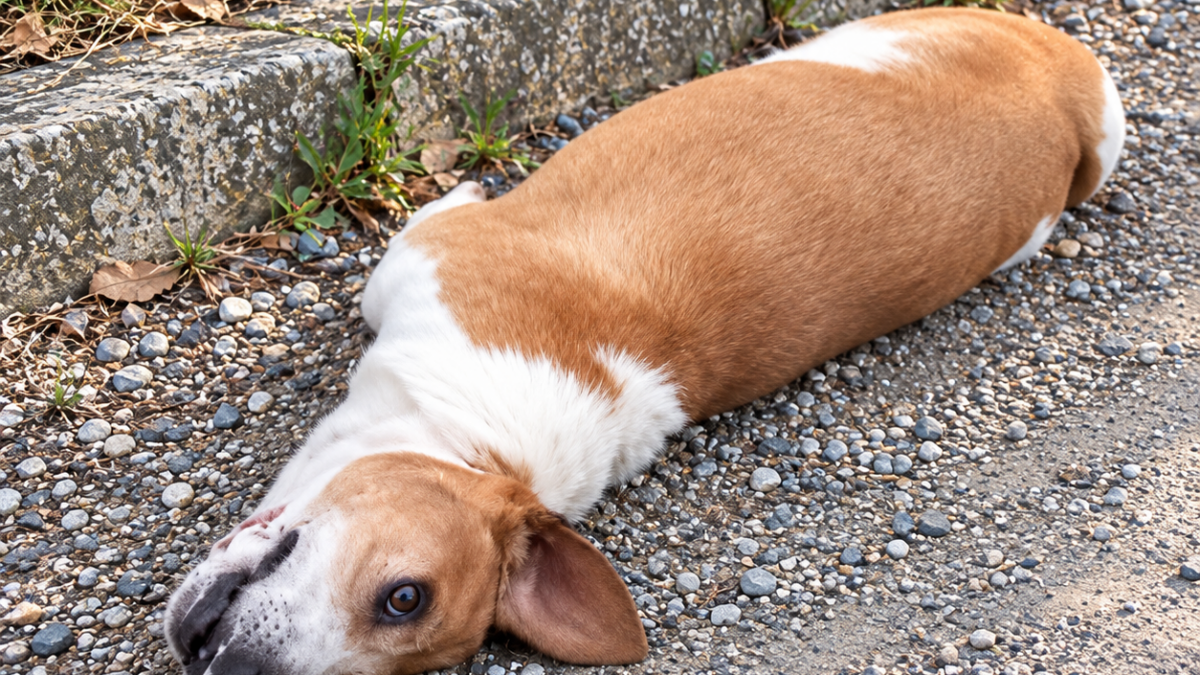
PART 2
The magnetic sign read:
**MERCER VETERINARY CENTER**
Underneath it was the name **Dr. Owen Mercer, DVM**.
I stared at the photograph until the letters blurred.
“You know him?” Denise asked.
“I know the clinic.”
Almost everyone in our county did.
Mercer Veterinary Center had been around for years. It wasn’t some back-room operation nobody had heard of. They sponsored little-league teams, donated gift certificates to charity auctions, and advertised themselves as a family practice that treated animals “like their own.”
I had referred lost-pet owners there before.
I had stood in their lobby.
Dr. Shah read the photograph again.
“A veterinarian?”
Carlos gave a bitter laugh.
“That’s what the sign says.”
None of us knew exactly what had happened before the collision. The witnesses had seen Tito dart toward the highway from a strip of scrub beside an empty lot. Nobody knew where he came from. No owner had been standing nearby. There was no leash dragging behind him.
The impact itself looked accidental.
What happened afterward was the part neither witness could understand.
Carlos had been driving two cars behind Mercer.
“He hit the brakes,” he told the responding officer later. “He didn’t just keep going. He stopped.”
Mercer got out.
Tito was lying in the lane.
Denise, who had been approaching from the opposite direction, pulled onto the shoulder and ran over.
According to both witnesses, Tito was breathing.
His eyes were open.
He made one small movement with his front leg.
Denise remembered saying, “Don’t move his neck. He’s alive.”
Mercer reportedly crouched, looked at Tito for several seconds, then took hold of him near the shoulders and dragged him into the grass.
Carlos shouted that he should call an emergency clinic.
Mercer replied, “He’s done.”
Then he left.
The police report recorded those statements.
Officer Leila Grant from county animal control came to the hospital on the third morning.
I showed her the photograph.
She already had the vehicle information from Denise.
“I’m interviewing him today,” she said.
“What can actually happen?”
“I don’t know yet.”
“He’s a veterinarian.”
“I know.”
“He knew better.”
Grant gave me a look that stopped me.
“Claire, I need evidence, not outrage.”
“I’m allowed to be outraged.”
“Yes.”
She tucked the report into her folder.
“I’m just telling you outrage doesn’t prove a charge.”
I folded my arms.
“Fine.”
She softened slightly.
“How’s Tito?”
That was the name we had given him.
No microchip.
No tag.
No owner had called.
One of the overnight technicians said he needed something other than “the road dog” written across his chart, and Tito was the first name someone suggested.
It stuck.
“Still critical.”
Grant looked through the window.
Tito lay beneath blankets with a soft neck brace stabilizing his cervical injury. Tubes ran around him. His jaw had been temporarily stabilized.
“Can he hear?”
“We think so.”
“See?”
“We don’t know.”
She nodded.
“Call me if his condition changes.”
Then she left to speak with the man who had hit him.
I stayed with Tito.
That afternoon marked seventy-two hours.
We had spent three days preparing ourselves for almost anything.
Cardiac arrest.
Seizures.
Respiratory failure.
Permanent paralysis.
Dr. Shah ran repeated neurological examinations.
At first, the results barely changed.
Then, during the final check that evening, she pinched lightly between the toes of Tito’s right hind paw.
The paw twitched.
I nearly shouted.
“Did you see that?”
She held up one hand.
“Let me repeat it.”
She tested again.
Nothing.
My hope dropped.
Then she tried the other hind leg.
A tiny contraction moved beneath the skin.
Dr. Shah sat back.
“That could be reflexive.”
“But it moved.”
“Yes.”
“That’s better than nothing.”
She smiled despite herself.
“Yes. It is.”
For the first time in three days, I drove home with something other than dread in my chest.
It was small.
Maybe meaningless.
But Tito had moved.
The next morning he moved again.
Not enough to stand.
Not even enough to lift a paw.
But when a technician touched his back foot, Tito pulled slightly away.
Dr. Shah documented it.
Neurological recovery after severe trauma is cruel because it refuses to give clean answers.
One movement can mean everything.
Or almost nothing.
We waited.
On day five, Tito opened his mouth when I touched water to his lips.
His fractured jaw prevented normal eating.
He couldn’t chew.
He struggled to coordinate swallowing.
Dr. Shah worried about aspiration.
“He needs nutrition,” I said.
“I know.”
“What can we do?”
“We stabilize him enough for a feeding tube.”
“When?”
“When anesthesia stops being more dangerous than starvation.”
That answer followed us for three more days.
By day eight, his blood pressure and neurological status had improved enough.
The tube was placed.
I stood beside his bed afterward while liquid nutrition moved slowly into his body.
For the first time since the accident, Tito was receiving enough calories to do more than survive one hour at a time.
“You hear that?” I whispered.
His ear moved faintly.
“You’ve got food in you now.”
His eyes stared toward the sound of my voice.
At the time, I believed he was looking at me.
I didn’t yet understand that he probably couldn’t see me at all.
Officer Grant called that afternoon.
“I talked to Mercer.”
I stepped into the hallway.
“And?”
“He acknowledges hitting the dog.”
“At least there’s that.”
“He says the dog ran directly in front of him and there was no way to avoid the collision.”
“That’s consistent with the witnesses.”
“He says he moved Tito because leaving him in the roadway could cause another accident.”
I rubbed my forehead.
“And leaving?”
“He claims he believed the dog was dead.”
“Denise told him Tito was breathing.”
“He disputes that.”
“Carlos heard her.”
“I know.”
“He’s lying.”
“Maybe.”
“Leila.”
“Claire.”
Her voice sharpened.
“This is exactly what I mean. I can’t write ‘Claire thinks he’s lying’ into a report.”
I shut my eyes.
“What else did he say?”
“He had an emergency appointment waiting at his clinic and assumed the witnesses would contact animal control.”
I laughed.
It came out harsher than I expected.
“A veterinarian saw a dog with massive head trauma and assumed strangers would handle it?”
“I’m telling you his statement.”
“Did he call his clinic?”
“Yes.”
“To tell them what happened?”
“No. Phone records indicate he called to say he was running late.”
That silenced me.
Grant continued.
“He never called animal control. Never called law enforcement. Never called an emergency hospital.”
“Of course he didn’t.”
“There may also be a nearby convenience store camera that catches part of the roadway. We’re trying to get the footage.”
“Will that matter?”
“It might.”
Before hanging up she added, “There’s also a licensing-board issue separate from anything my office does.”
Dr. Mercer was not just a driver.
His professional conduct could be reviewed independently.
For the first time, I thought there might be consequences.
Then Tito had a seizure.
Everything else disappeared.
It happened late on day eight.
A technician yelled for Dr. Shah.
Tito’s body stiffened.
His limbs jerked.
The monitors erupted.
I stood uselessly outside the treatment bay while they worked.
The seizure stopped after medication.
Then came another.
Shorter.
Dr. Shah emerged forty minutes later.
Her hair had come loose from its clip.
“What does this mean?”
“It means the brain injury is reminding us it’s still there.”
“Is he worse?”
“Tonight? Yes.”
“Will he die?”
She exhaled.
“I still can’t promise he won’t.”
Hope with Tito never came in a straight line.
He would improve enough to make us breathe.
Then something would drag us backward.
That night I sat outside his kennel.
He was sedated again.
“You’re making this very difficult.”
No response.
“You know that?”
His ear barely shifted.
I leaned against the wall.
“We gave you a name. There’s paperwork now. You can’t just quit.”
It was ridiculous.
I knew that.
Still, I talked.
By sunrise, no further seizures had occurred.
Day nine passed.
Then day ten.
His paws began making more purposeful movements.
On day eleven, he tried to reposition himself.
He couldn’t.
But he tried.
On day twelve, Dr. Shah brought a spoonful of soft food.
“Why are you smiling?” I asked.
“Because we’re going to see if he can use his tongue.”
Tito’s jaw had begun stabilizing enough for cautious trials.
She placed a tiny amount of wet food against his lower lip.
For several seconds, nothing happened.
Then Tito’s tongue appeared.
Slowly.
He licked.
I put both hands over my mouth.
Dr. Shah laughed.
“He licked it.”
“I saw.”
“It doesn’t mean he can eat a meal.”
“I don’t care.”
Tito licked again.
The technician behind us started clapping.
Dr. Shah pointed at her.
“Don’t excite him.”
The clapping stopped immediately.
We all stood there smiling like idiots over half a teaspoon of dog food.
Recovery rearranges your definition of victory.
Before Tito, I thought success meant walking out of the hospital.
With him, success became a tongue touching food.
A paw flexing.
A head turning toward a voice.
Three days later, he lifted his head.
Only for a second.
The first attempt ended with his cheek falling back into the blanket.
The second lasted longer.
The third time, he held it up.
Crooked.
His neck leaned sharply to the right.
“Is that from the cervical damage?” I asked.
“Partly,” Dr. Shah said. “Possibly neurological too.”
“Will it straighten?”
“I don’t know.”
He looked permanently curious, his head angled toward one shoulder.
At first it broke my heart.
Later, it became simply Tito.
The first time he stood happened almost a month after the accident.
Three technicians supported him with a harness.
His legs shook.
His paws spread wide.
His head tilted hard to one side.
I crouched several feet in front of him.
“Come on.”
His ears moved.
“Tito.”
One front paw slid forward.
Then a hind paw.
His body swayed.
Everyone held their breath.
He stood for perhaps four seconds.
Then collapsed into the harness.
I burst into tears.
One of the technicians laughed at me.
“You cry at everything.”
“You were crying over the food.”
“That was different.”
It wasn’t.
Then came the examination that changed the way we understood his recovery.
Tito was moving more.
He reacted to sound.
He responded to smell.
But something about his navigation felt wrong.
He walked into the side of the padded pen.
He stepped directly toward a chair leg.
When Dr. Shah moved a hand toward his eyes, he didn’t blink unless air touched his face.
An ophthalmologist examined him.
I waited outside.
The appointment lasted almost an hour.
When they finished, the ophthalmologist sat with us.
“The eyes themselves aren’t the main problem.”
“What does that mean?”
“The trauma damaged the visual pathways associated with the brain injury.”
“Can he see anything?”
“Possibly light-dark changes. I can’t confirm useful vision.”
“Will it come back?”
She paused.
“That is unlikely.”
I looked through the window at Tito.
He stood with his head tilted.
He could finally stand.
He could finally take steps.
And now we knew he would probably never see those steps.
I felt angry.
Not at him.
Not even immediately at Mercer.
At the sheer unfairness of it.
Tito had survived.
But survival kept sending invoices.
Broken jaw.
Crooked neck.
Blindness.
Neurological deficits.
Weeks of rehabilitation.
I sat beside him later.
“Tito.”
His tail wagged.
That stopped me.
He couldn’t see me.
But he knew my voice.
“Tito.”
Another wag.
I moved to the other side of the room.
“Tito.”
His head turned toward me.
He located sound.
I shook a treat bag.
His nose lifted.
He found smell.
A technician squeaked a toy.
His ears shot forward.
Tito tried to move toward it.
He bumped a foam block.
Paused.
Adjusted.
Continued.
Dr. Shah stood beside me.
“He doesn’t know he’s tragic.”
I looked at her.
“What?”
“You do.”
She pointed at Tito.
“He’s trying to find a squeaky toy.”
I started laughing.
She was right.
Tito was not standing there mourning his sight.
He was learning another way through the room.
That changed something in me.
The foster placement came six weeks after the accident.
Her name was Nora Bennett, and she had been fostering special-needs dogs for more than a decade.
Blind dogs.
Deaf dogs.
Dogs recovering from spinal surgery.
Dogs that needed wheelchairs.
Her home looked strange when I first walked in.
Different textures covered the floor.
A rug near the back door.
A rubber mat near the water.
A runner down the hallway.
Furniture stayed in fixed positions.
Small bells hung from the collars of her resident dogs so blind fosters could track them.
“You’re basically running an airport,” I told her.
Nora laughed.
“For dogs.”
Tito entered slowly.
He wore a padded harness with a handle.
His nose worked constantly.
He mapped the doorway.
The wall.
The edge of a table.
Nora didn’t guide him immediately.
“Let him solve the easy parts.”
“He’ll hit something.”
“Yes.”
“That sounds terrible.”
“He’ll hit things softly until he learns.”
I hovered.
Nora looked at me.
“You can leave.”
“I’m observing.”
“You’re interfering from six feet away.”
“I’m not doing anything.”
“You’re worrying loudly.”
I hated her instantly.
Within three days, I understood why she was so good.
Tito learned the house.
The mat meant water.
The textured strip beside the patio door meant outside.
The rug in the hallway led toward his sleeping area.
Nora used simple verbal cues.
“Step.”
“Stop.”
“Left.”
“Right.”
“Easy.”
At first Tito collided with everything.
Then fewer things.
Then almost nothing.
His neck remained crooked.
His head tilt affected his balance, particularly when turning quickly.
Nora adapted.
Slow turns.
Wide pathways.
No furniture rearranging.
I visited five days after placement.
Tito heard my voice before I entered the room.
His tail began thumping.
Then he walked directly toward me.
Not perfectly.
But directly.
I knelt.
“You know who I am?”
He shoved his head against my chest.
I cried.
Nora sighed.
“You really do cry at everything.”
“Be quiet.”
Within two months, Tito was rolling in the grass.
That was the moment I knew we had crossed from survival into living.
Nora sent me a video.
Tito walked onto the lawn.
Sniffed.
Dropped one shoulder.
Rolled completely onto his back.
His legs kicked.
His crooked head disappeared into the grass.
Then he stood and shook himself.
He nearly fell.
Recovered.
Did it again.
I watched the video five times.
His toys changed too.
Bright colors meant nothing.
Sound mattered.
Squeakers.
Crinkles.
Rubber balls containing bells.
Nora could hide one behind a chair and squeak it once.
Tito would search.
Nose down.
Ears turning.
Sometimes he overshot.
Sometimes he found the wall first.
Eventually, he found the toy.
He looked absurdly proud every time.
He also loved physical contact.
That surprised me.
After the amount of painful handling he endured, I expected him to become touch-sensitive.
Instead he became a dog who leaned into people.
If someone sat on the floor, Tito found them.
He curled against their legs.
Pressed his shoulder into their hip.
Rested his tilted head wherever it fit.
He slept beside Nora’s older dog, Beans, a twelve-year-old mutt with one functional ear and no patience.
Beans initially hated Tito.
Tito didn’t know.
He kept lying beside him.
Eventually Beans surrendered.
They became inseparable.
While Tito rebuilt himself, the case involving Dr. Mercer moved forward.
The convenience-store footage existed.
The camera was distant, but it captured the collision.
Tito ran into the road.
Mercer hit the brakes.
There was no evidence the impact had been intentional or avoidable.
Then the video showed him exit the vehicle.
Denise approached.
Carlos approached.
Mercer crouched beside Tito.
Even from a distance, it was obvious Tito’s body moved.
Mercer dragged him to the grass.
He stood there for less than a minute.
Then returned to his car and left.
No phone call.
No attempt to transport Tito.
No medical aid.
Officer Grant called me after investigators reviewed the footage.
“It doesn’t show everything Denise and Carlos described, but it supports the timeline.”
“What happens now?”
“The county attorney is reviewing whether his conduct violated local animal-welfare and accident-reporting provisions.”
“And the veterinary board?”
“They have their own investigation.”
Months passed.
Mercer’s attorney sent a statement maintaining that he believed Tito was beyond help and that his first priority had been clearing a traffic hazard.
That phrase made me furious.
Traffic hazard.
Tito had become a traffic hazard.
I read the statement while Tito was in Nora’s yard learning to follow a bell.
The irony felt obscene.
Then I made a mistake.
I posted about it.
Not the veterinarian’s name.
Not the clinic.
But enough anger spilled into the rescue’s social page that Susan, our director, called me into her office the next morning.
“You need to stop.”
“I didn’t identify him.”
“People are guessing.”
“That’s not my fault.”
“It will become our problem.”
“He left Tito there.”
“I know.”
“He’s a veterinarian.”
“I know.”
“He gets to call him a traffic hazard and I’m supposed to say nothing?”
Susan folded her hands.
“You’re supposed to let the investigation work.”
I stood.
“What if it doesn’t?”
“Then we live with that.”
I hated the answer.
She continued.
“Tito needs you more than you need revenge.”
That shut me up.
Because she was right.
Again.
I deleted the post.
Not because my anger disappeared.
Because Tito’s story could not become a weapon in a fight he didn’t understand.
Justice eventually came in quieter forms.
The county case did not produce the dramatic criminal prosecution some people wanted. The impact itself had been an accident, and proving a specific criminal intent after it was difficult.
But Mercer’s conduct after the collision did not disappear.
Under a settlement with local authorities, he accepted responsibility for failing to report and appropriately respond to an injured domestic animal after the crash, paid penalties, and contributed toward Tito’s emergency-care costs.
The licensing-board matter carried more weight professionally.
Denise testified.
Carlos testified.
Dr. Shah provided Tito’s medical records.
The board reviewed the roadside video and Mercer’s own statements.
Months later, a disciplinary order was issued.
Public reprimand.
A period of professional probation.
Mandatory continuing education in emergency triage and veterinary ethics.
A temporary restriction on unsupervised emergency practice.
The details sounded bureaucratic.
Maybe they were.
But the order contained one sentence I read repeatedly.
It said Mercer’s conduct had failed to meet the professional judgment and humane-care standards expected of a licensed veterinarian.
That mattered.
Not because it made Tito whole.
Nothing could restore his vision.
Nothing could straighten his neck.
But the profession Dr. Mercer belonged to had looked at what happened and refused to pretend it was normal.
I never spoke to him.
He never apologized to me.
He didn’t need to.
I wasn’t the one lying in the grass.
By the time the disciplinary decision became public, Tito had moved past all of us.
He was ready for adoption.
At least medically.
Emotionally, he was as ready as Tito could be.
He knew his foster home.
He trusted people.
He followed sound cues.
He ate normally.
His jaw had healed with a slight irregularity but caused little trouble.
His head remained tilted.
His blindness was permanent.
We wrote an adoption profile.
Not tragic.
Nora insisted.
“No sad begging.”
“I wasn’t going to beg.”
“You were absolutely going to write, ‘After everything he survived—’”
I looked at my laptop.
That was literally the first sentence.
Nora reached over and deleted it.
“Hey.”
“Tell people who he is now.”
So we did.
**Tito is a young adult dog who loves squeaky toys, grass, warm blankets, other calm dogs, and leaning his entire body against your legs. He is blind and has a permanent head tilt from a past brain injury. He navigates well in familiar spaces and responds beautifully to verbal cues. He needs a patient home willing to keep pathways consistent and help him learn new environments.**
I read it twice.
“He sounds normal.”
“He is normal.”
“He’s blind.”
“Blind is normal for Tito.”
I stopped arguing.
The first adoption event was difficult.
Tito wore a blue harness marked **BLIND DOG—PLEASE SPEAK BEFORE TOUCHING**.
People stopped.
Asked questions.
Petted him.
Told us how sweet he was.
Then adopted other dogs.
At the end of the event, I loaded Tito into Nora’s car.
“You okay?”
She looked at me.
“He had fun.”
“That wasn’t what I asked.”
“I’m fine.”
She wasn’t.
Neither was I.
The second event went similarly.
A couple spent nearly an hour with him.
They seemed serious.
Then the woman asked, “What happens if we move the furniture?”
“Move it gradually.”
“What if we travel?”
“He can travel, but he needs help mapping unfamiliar places.”
“What about stairs?”
“He can learn them with cues, but gates and supervision are important.”
She looked at her husband.
I knew.
They chose another dog.
I couldn’t blame them.
That became the hardest lesson of Tito’s waiting period.
People were not rejecting him because they were bad.
Many were simply honest about what they could handle.
A blind dog with neurological damage requires thought.
Consistency.
Patience.
Not everyone has those things available.
Knowing that did not make it hurt less when Tito went home without a family.
Months passed.
His adoption-event routine became familiar.
Harness.
Car.
Blanket.
Squeaky toy.
Water.
We would set up his area away from the loudest kennels.
He greeted people.
Accepted treats.
Leaned against children.
Sometimes someone promised to apply.
Sometimes they did.
Then something changed.
One family had three steep staircases.
Another worked twelve-hour shifts.
One applicant wanted Tito to live primarily outdoors.
Immediate denial.
Another wanted him because she said blind dogs were “inspirational.”
Nora ended the meeting early.
“What was wrong with her?” I asked.
“She wanted a symbol.”
“Maybe she would have loved him.”
“Maybe.”
Nora clipped Tito’s leash.
“But he needs someone who wants a dog.”
Tito did not care about any of this.
That was both comforting and painful.
After every failed adoption event, he climbed into Nora’s car and went home.
Beans was there.
His bed was there.
Dinner was there.
The next morning Tito rolled in the yard.
He never counted disappointments.
I did.
One hundred days.
Two hundred.
Three hundred.
The anniversary of the accident arrived.
December 10.
A full year.
I hated that date.
Nora refused to let me turn it into mourning.
She threw Tito a “still here” party.
No hats.
He hated hats.
There were dog-safe cupcakes.
Beans stole one.
Tito found his by smell.
Several rescue volunteers came.
Denise came too.
She had not seen him in months.
When she entered the yard and said his name, Tito froze.
His ears turned toward her.
Then his tail started wagging.
Denise knelt.
“You don’t remember me.”
Tito walked toward her.
She began crying before he reached her.
“I thought you were dead.”
He pressed his head against her chest.
She wrapped both arms around him.
“I really thought you were dead.”
Carlos came later.
Tito greeted him the same way.
The two people who had refused to leave him beside the road finally got to see him run.
Not straight.
Tito rarely did anything perfectly straight.
But he ran.
Nora squeaked a ball.
Tito launched across the grass.
Head tilted.
Ears forward.
He found the sound.
Denise laughed through tears.
Carlos shook his head.
“Mercer said he was done.”
I looked at Tito.
“No.”
He wasn’t.
After the first year, something in me became impatient.
Not with Tito.
With waiting.
I contacted every special-needs rescue network I knew.
Shared his profile with trainers.
Veterinary rehabilitation clinics.
Blind-dog groups.
Still nothing.
One woman drove two hours to meet him.
She adored him.
Tito adored her.
Then she called the next day.
“I’m so sorry.”
My stomach dropped.
“What happened?”
“My landlord changed his mind.”
I sat at my kitchen table after the call and cried.
Not dramatically.
Quietly.
I was tired.
Tito had fought for everything.
Breathing.
Eating.
Standing.
Walking.
Navigating.
Why did the final thing—being chosen—seem so difficult?
Nora called that evening.
“You’re doing it again.”
“What?”
“Making his life tragic.”
“He’s been waiting more than a year.”
“He lives with me.”
“That’s not the same as a permanent home.”
“He doesn’t know the word permanent.”
“I do.”
Nora was quiet.
Then she said, “Maybe you need to stop measuring his life by whether someone has signed adoption papers.”
I didn’t like hearing that.
But the next morning, I visited.
Tito was asleep on the couch.
Beans was pressed against his back.
Sunlight warmed both of them.
He heard me.
Tail thump.
He didn’t look like a dog waiting in despair.
He looked like a dog having a nap.
So I stopped saying he was “still waiting” around him.
I started saying he was available.
There was a difference.
Then March came.
Spring adoption events always drew bigger crowds.
On March 23, 2024, I almost left Tito home.
He seemed tired that morning.
Nora checked him.
“He’s fine.”
“You sure?”
“Yes.”
“We could bring somebody else.”
“Tito likes events.”
“He likes the treat table.”
“Exactly.”
So he came.
The event was held outside a pet-supply store.
A dozen rescues had tents set up across the parking lot.
Children ran everywhere.
Dogs barked.
Shopping carts rattled.
Tito lay on his blanket chewing a rubber toy while I answered questions.
Around noon, a woman stopped.
She was in her forties, with short dark hair and a canvas tote bag over one shoulder.
Beside her stood a man about the same age and a teenage girl carrying a package of squeaky toys.
The woman read Tito’s sign.
“Can we meet him?”
“Absolutely. Just say his name first.”
She crouched several feet away.
“Tito?”
His ears turned.
She smiled.
“Hi, Tito.”
He stood.
Walked toward her.
Stopped slightly to her left.
She held out the back of her hand.
Tito found it with his nose.
Then leaned into her knee.
The teenage girl laughed.
“He just hugged you.”
“Apparently.”
The man knelt too.
“What happened to his neck?”
“Old trauma from the accident.”
“Does it hurt?”
“No. Not according to his specialists.”
“Is his blindness complete?”
“As far as useful vision, yes.”
The woman didn’t make the sound I had learned to dread.
No “oh.”
No pity.
She asked, “What cues does he know?”
I looked at her.
“Stop. Step. Easy. Left. Right. Careful. Outside. Bed.”
“How does he do in a new house?”
“He needs time to map it.”
“Do you use scent markers?”
“Sometimes.”
“Textured rugs?”
“Yes.”
The teenage girl looked at her mother.
“You’ve done this before.”
The woman smiled.
“Our last dog went blind from glaucoma when he was eleven.”
My heart changed rhythm.
“What was his name?”
“Charlie.”
“How long was he blind?”
“Almost three years.”
The man added, “Long enough to train us.”
I laughed.
That was the first moment.
Not the moment I knew.
But the moment I stopped protecting myself.
Their names were Hannah and Joel Ramirez.
Their daughter was Sophie.
They had lost Charlie eight months earlier.
They had not come specifically looking for a blind dog.
They had not come looking for a project.
They had come because the house felt empty.
Sophie squeaked the toy in her hand.
Tito’s head snapped toward the sound.
“Can I?”
I nodded.
She tossed it gently.
The toy bounced.
Squeaked.
Tito trotted after it.
He overshot by a foot.
Turned.
Found it.
Sophie grinned.
“He’s good.”
“He’s very good.”
Tito carried the toy back.
Not to me.
To Sophie.
She threw it again.
The next hour felt different from every adoption meeting before it.
They didn’t ask how much extra work Tito would be.
They asked what routine made him confident.
They didn’t ask whether the head tilt would go away.
They asked whether certain harnesses helped his balance.
They didn’t ask whether blindness shortened his life.
They asked what kind of toys he liked.
Joel asked about stairs.
“Four from the patio to the yard.”
“He can do four with cues.”
“I can build a ramp.”
I almost laughed.
“Everyone says that.”
He pulled out his phone.
There were photographs of ramps he had built for Charlie.
Actual ramps.
Good ones.
Hannah asked about other dogs.
They didn’t have one.
Just a cat.
That created caution.
Tito liked calm dogs.
Cats were unknown.
We arranged a later controlled assessment.
Then Hannah asked the question nobody had asked in months.
“Where does he like to sleep?”
I swallowed.
“Warm places.”
She smiled.
“We have a fireplace.”
The application arrived before they left the parking lot.
I did not celebrate.
Not yet.
I had learned.
The home inspection happened four days later.
Fenced yard.
Single-story house.
Four patio steps already blocked until Joel could add the ramp.
Furniture positioned with wide pathways.
A large rug between the living room and kitchen.
The cat, Miso, had multiple elevated escape areas.
Good veterinary references.
Good personal references.
Then the cat introduction.
Tito entered wearing his harness.
Miso watched from behind a baby gate.
Tito smelled him immediately.
His ears moved.
He approached.
Miso hissed.
Tito stopped.
Backed up.
Turned toward Sophie’s voice.
“Good boy.”
The second attempt went better.
By the third, Miso regarded Tito as beneath serious concern.
Nora looked at me.
“You’re going to cry.”
“Not yet.”
“You’re absolutely going to cry.”
“Be quiet.”
The final meeting took place at the Ramirez house.
We wanted Tito to spend several hours there before committing.
He entered slowly.
Nose working.
Sophie guided him verbally but did not pull.
“Step.”
Tito crossed the threshold.
“Easy.”
He found the rug.
Hannah sat on the couch.
Joel stayed near the kitchen.
Nobody crowded him.
Tito mapped the room.
Chair.
Coffee table.
Wall.
Rug.
Couch.
Sophie.
Then he walked toward the fireplace.
Cold that day.
He sniffed the hearth.
Turned.
Lay down.
Everyone laughed.
“Warm place,” Hannah said.
“He has standards.”
After twenty minutes, Tito stood and explored again.
He found the water.
Found the back door.
Found the first step.
Joel blocked him.
“Ramp tomorrow, buddy.”
Tito returned to the living room.
Miso sat on the sofa back.
Tito had no idea.
Eventually he walked to Hannah.
She put one hand down.
He rested his crooked head against her shin.
Then he fell asleep.
I looked at Nora.
She was crying.
“You’re crying.”
“Shut up.”
The adoption was finalized that afternoon.
March 23, 2024.
Four hundred sixty-nine days after Tito had been left beside County Road Twelve.
I had written that number on the paperwork because I wanted to remember it.
Then I almost crossed it out.
Tito didn’t know it had been 469 days.
He didn’t know he had been rejected.
He didn’t know he had waited longer than most dogs.
He knew Hannah smelled familiar.
Sophie’s voice meant toy.
Joel had treats.
There was a soft rug.
That was enough.
At the rescue office, we signed the papers.
Hannah’s hand shook slightly.
“This feels huge.”
“It is.”
“What if he’s scared tonight?”
“He probably will be.”
“What do we do?”
“Keep things quiet. Don’t move furniture. Walk him through his route. Let him decide where to sleep.”
“What if he cries?”
“Stay close.”
Joel nodded.
“What if he doesn’t eat?”
“Call me.”
Sophie smiled.
“She’s going to make us call every hour.”
“I might.”
Nora handed Hannah Tito’s medical binder.
It was thick.
Hannah flipped through it.
“Brain injury. Jaw fracture. cervical trauma…”
She stopped.
“God.”
I looked at Tito.
He was trying to locate a squeaker beneath a chair.
“He doesn’t read his chart.”
She smiled.
“Good.”
Before they left, Denise came.
I had called her that morning.
I didn’t tell her why.
When she walked into the lobby and saw the Ramirez family standing beside Tito, she understood.
“No.”
I nodded.
Denise covered her mouth.
“Tito.”
He turned toward her voice.
Walked over.
She knelt.
“You’re going home?”
Tail wag.
“Oh, buddy.”
She buried her face against his neck.
Carlos arrived ten minutes later.
He shook Joel’s hand.
“Take care of him.”
“We will.”
Carlos looked at Tito.
“You were supposed to be dead.”
Tito sneezed.
Everyone laughed.
It broke the tension.
Outside, Joel had placed a ramp against the back of their SUV.
Not because Tito couldn’t climb with help.
Because they wanted the first step of his new life to be easy.
Sophie climbed in first.
“Tito.”
He heard her.
Walked up.
Paused halfway.
I held my breath.
Then he continued.
Inside the SUV was a thick bed.
His blanket from Nora’s house.
Three squeaky toys.
One had already annoyed me during the paperwork.
Perfect.
I touched Tito’s shoulder.
“Okay.”
His tail moved.
“You know what to do.”
He had no idea.
Neither did I.
The door closed.
The SUV pulled away.
I stood beside Nora.
For nearly a minute, neither of us spoke.
Then she said, “You can cry now.”
I did.
The first update arrived thirty-four minutes later.
A photograph.
Tito standing in the Ramirez living room.
His head tilted.
Sophie crouched several feet away squeaking a toy.
Caption:
**He found the water, the couch, and me. In that order.**
The second photograph came that night.
Tito asleep in front of the fireplace.
Miso on the sofa above him.
Caption:
**Cat remains unconvinced.**
The next morning, video.
Joel had finished the ramp.
Tito followed Hannah’s voice down it into the yard.
He hesitated when his paws reached the grass.
Then his nose dropped.
He walked.
Mapped the fence.
Found a bush.
Found Sophie.
She squeaked a ball.
Tito ran.
Not carefully.
Ran.
The camera shook because Hannah was laughing.
He missed the toy.
Turned.
Found it by sound.
Grabbed it.
Brought it back.
I watched the video six times.
Then forwarded it to Dr. Shah.
She replied almost immediately.
**Is that him?**
**That’s him.**
Three dots appeared.
Then:
**I didn’t think he’d live through the first night.**
I looked at Tito running across the screen.
Neither had I.
The legal case involving Mercer faded after that.
Not because it became unimportant.
Because Tito finally gave us something better to talk about.
Months later, I learned Mercer had completed the terms of his professional discipline.
His clinic remained open under conditions set by the board.
Some clients left.
Others stayed.
People asked me whether I thought the punishment was enough.
I never found a satisfying answer.
What number balances blindness?
What fine equals a brain injury?
What professional sanction pays for nights when a dog cannot move?
There is no equation.
I stopped trying to create one.
The consequences that mattered most were already visible.
Tito lived.
The man who said “He’s done” had been wrong.
Spectacularly wrong.
Tito’s first months with the Ramirez family were not perfect.
He walked into a screen door.
Twice.
Miso slapped him on the nose once when Tito accidentally stepped too close to his food.
Tito learned quickly.
Miso learned Tito was harmless.
Within three months, Hannah sent me a photograph of them sleeping on the same rug.
“Traitor,” I said to the cat through my phone.
Tito also discovered that Joel dropped food while cooking.
His kitchen navigation became suspiciously excellent.
Sophie taught him names for toys.
Not by sight.
By sound and texture.
“Duck” was a crinkly yellow toy.
“Pig” squeaked loudly.
“Ball” contained a bell.
She could say, “Find Pig.”
Tito searched.
Sometimes he brought Duck.
Sophie never cared.
His crooked neck never straightened.
His sight never returned.
Neither fact seemed particularly important inside that house.
A year after adoption, I visited.
Tito heard my car before I reached the porch.
I could hear him barking from inside.
Hannah opened the door.
“Tito, who’s here?”
I stepped inside.
“Hey, trouble.”
His entire body changed.
Tail.
Shoulders.
Ears.
He ran toward my voice.
Nearly hit the wall.
Corrected.
Then crashed directly into my legs.
I knelt.
“There you are.”
He pressed his head against my chest.
Older.
Heavier.
Healthy.
Miso watched from a chair with open contempt.
Sophie came downstairs.
“He still remembers you.”
“I hope so. I spent enough money on him.”
Hannah laughed.
Tito dragged a squeaky pig toward me.
“Of course.”
We went outside.
The yard had changed.
Joel had added textured pavers near the patio so Tito could feel when he was approaching the ramp.
Small wind chimes hung near one corner of the fence.
Not loud.
Just enough to give him an auditory landmark.
Sophie stood twenty feet away.
“Tito!”
His ears turned.
She squeaked the ball.
He launched.
The crooked neck gave his gait a strange rhythm.
Blind eyes stared nowhere.
It didn’t matter.
He followed sound.
Grass beneath his paws.
Family voices around him.
He found the ball.
Sophie ran in the opposite direction.
“Tito!”
He turned.
Ran toward her.
I stood beside Hannah.
“He looks good.”
“He is.”
“Any problems?”
“He snores.”
“Serious condition.”
“Very.”
She smiled.
Then looked at him.
“You know what surprised me?”
“What?”
“How quickly we stopped noticing.”
“His blindness?”
“All of it.”
Tito ran past us after Sophie.
Hannah continued.
“The head. The way he walks. Visitors notice.”
She shrugged.
“I just see Tito.”
I thought about the roadside.
His body motionless in the grass.
Only his eyes moving.
At the time, those eyes were the one piece of him that still seemed alive.
Later, we learned they would never show him the world again.
For a long time, I treated that as one of the cruelest parts of his story.
Standing in that yard, I understood it differently.
Tito could not see the fence Joel built.
He could not see Sophie waiting with the squeaky ball.
He could not see Hannah smiling.
He could not see the sunlight across the grass.
But he knew all of it was there.
Sound.
Smell.
Touch.
Routine.
Memory.
Safety.
He knew home without seeing it.
Denise visited later that spring.
It was the first time she had been to Tito’s new house.
When he heard her voice, his tail started immediately.
She sat in the grass.
Tito found her.
She put both hands around his face.
“You’re still here.”
Tito licked her chin.
Denise laughed.
“I know. I know.”
She looked toward me.
“Sometimes I still think about that day.”
“So do I.”
“What if Carlos hadn’t stopped?”
“You would have.”
“What if I’d been five minutes later?”
“Don’t.”
She looked at Tito.
“I hate those questions.”
“Then stop asking them.”
She rubbed his ears.
“I wish I could.”
The truth is rescue is full of those questions.
What if?
What if the call came later?
What if the clinic was full?
What if Tito stopped breathing?
What if the seizure didn’t stop?
What if Nora didn’t foster?
What if Hannah never walked past our tent on March 23?
You can spend a lifetime torturing yourself with alternate endings.
Tito never did.
He lived the one he got.
Two years after his adoption, I returned for his annual rescue reunion.
Tito was grayer around the muzzle.
His head remained tilted.
He still ran.
A little slower.
Sophie was preparing for college.
She sat on the back steps with Tito leaning against her.
“You’re leaving him?” I teased.
“Don’t start.”
“How dare you?”
“I’m thirty minutes away.”
“Tito doesn’t understand miles.”
She rubbed his neck.
“He’ll have Mom.”
Hannah called from the kitchen, “Apparently I’m second choice.”
Joel answered, “Third. The pig toy outranks you.”
The squeaker sounded.
Tito stood immediately.
Everyone laughed.
That was the family he had waited 469 days to find.
Not perfect.
Real.
Loud.
Warm.
Full of stupid jokes.
The kind of place where a blind dog could walk into the coffee table and nobody gasped.
Someone just moved the cup.
I eventually stopped introducing Tito as “the dog who was hit by a veterinarian.”
That had become the least interesting thing about him.
He was Tito.
The dog who could locate a cheese wrapper from two rooms away.
The dog who hated rain.
The dog who preferred sleeping with his crooked head hanging off the edge of the bed.
The dog who memorized the path from the living room to the yard in less than a day.
The dog who somehow knew when Sophie came home before the garage door opened.
The dog who spent 469 days waiting for adoption without understanding that he was waiting.
Years later, the rescue replaced the old photo board in our lobby.
Tito’s intake photograph had always been there.
His body on a hospital blanket.
Bandaged jaw.
Neck supported.
Eyes open but unfocused.
I took it down.
Not because I wanted to forget.
Because we had another photograph.
Tito in the Ramirez yard.
Running.
A red squeaky ball in his mouth.
Head tilted.
Ears flying.
Behind him, Sophie was laughing.
We put that one up instead.
Underneath it, Susan asked what caption we should use.
I thought about everything.
Mercer saying, “He’s done.”
Dr. Shah saying she didn’t know whether he would live.
The feeding tube.
The first lick of food.
The first moving paw.
The first stand.
Blindness.
The foster house.
Four hundred sixty-nine days.
Then home.
I wrote five words.
**HE WASN’T DONE. NOT EVEN CLOSE.**
A few weeks later, a woman came into the rescue carrying an injured dog.
Not Tito’s kind of injury.
Nothing nearly as severe.
The dog had recently lost one eye after an infection.
The woman was frightened.
“He seems different,” she told me.
“He is.”
“Will he be okay?”
I looked toward Tito’s photograph.
“Different and okay can happen at the same time.”
She followed my eyes.
“Is that dog blind?”
“Yes.”
“He runs?”
“Yes.”
“How?”
I smiled.
“Very loudly.”
She laughed.
It was a small thing.
But I thought about Tito afterward.
His body had spent the first weeks after the accident teaching us to lower our expectations.
Then he spent the rest of his life proving we had lowered them too far.
One summer evening, Hannah sent me another video.
No message.
Just the video.
Tito was in the backyard.
Older now.
Sophie stood somewhere off-camera.
A squeak.
Tito’s ears lifted.
Another squeak.
He ran.
The camera followed him across the grass.
He veered slightly left.
Corrected.
His crooked head bounced with every stride.
The toy squeaked again.
Tito found it.
His tail went wild.
Then Hannah’s voice came from behind the camera.
“Bring it home, Tito.”
He turned toward her.
For a moment, the dog who once couldn’t move a paw stood completely still.
Listening.
Then he ran toward the sound of home.
[END OF STORY]



