PART 2: Three Years After My Father Died, I Finally Opened the House From His Will—An Old Pit Bull Was Waiting Beside a Letter With My Name
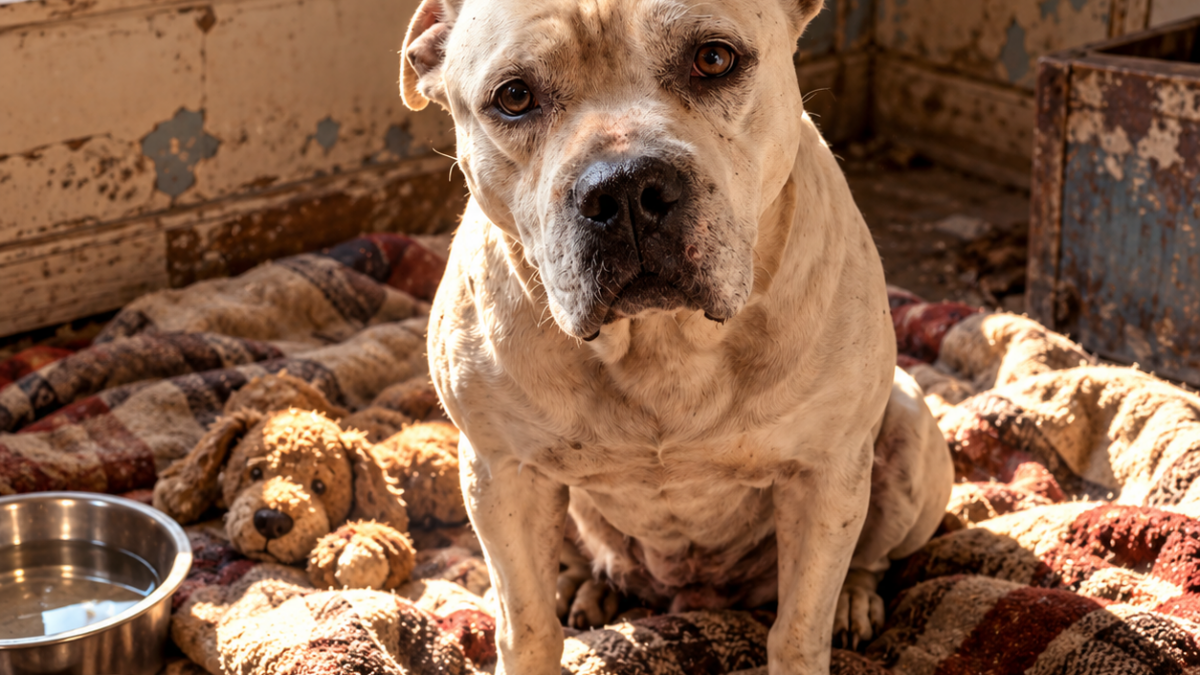
Three years after my father died, I finally unlocked the stone house his attorney had been asking me to visit, expecting to find an old watch, a box of photographs, or perhaps one last letter—and instead I found an enormous white-muzzled pit bull sitting alone in the living room, staring at me as if my face belonged to a memory he had been protecting.
I had spent my entire adult life designing bridges across places other people considered impossible to cross, yet standing in that dusty room, with my father’s handwriting folded beside the dog’s paw, I realized there had been a distance between my father and me that I had never known how to measure.
Then I read the first page, saw the name of a man who had spent the previous three years trying to buy the land beneath my feet, and understood that Bruce was not the only thing my father had been waiting for me to come home and find.
My name is James Peterson. I was forty-two years old then, a structural engineer specializing in bridges, and for most of my career I had lived wherever the next impossible project happened to be.
Seattle.
Alaska.
British Columbia.
Chile.
Two weeks after my father’s funeral, I boarded a plane for a massive bridge project in South America that was already months behind schedule. I told myself I would be gone eighteen months.
It became three years.
That sounds terrible when I write it plainly.
The truth is more complicated, but not kinder.
My father, Thomas Peterson, had died at seventy-four after a sudden cardiac event. I returned to Pennsylvania for the funeral, stayed twelve days, signed enough estate documents to make my head hurt, and then left because nearly four hundred people on another continent were waiting for engineering decisions only a handful of us were authorized to make.
Work became convenient.
Grief was easier when disguised as responsibility.
My father’s attorney, Robert Hayes, emailed me every few months.
**There is one personal bequest your father wanted you to receive in person.**
I kept answering:
**When this phase is finished.**
Then:
**After the load tests.**
Then:
**Once the opening inspection is complete.**
Three years passed.
When I finally returned, Robert gave me an address instead of a box.
“Your father was very specific,” he said.
“About what?”
“You’ll understand when you get there.”
I hated lawyer answers.
The address led me outside Millbrook, the small Pennsylvania town where my father had spent his final years, to a stone cottage near the edge of fourteen acres of meadow and woods.
The grass was nearly knee-high.
The porch needed paint.
One shutter hung crooked.
I thought the place was abandoned.
The front door was unlocked.
“Hello?”
Nothing.
Inside smelled like dust, old wood, and a house closed too long.
Photographs covered one wall.
My father fishing.
My mother before she died.
Me at twelve holding a crooked model bridge made from popsicle sticks.
Then something moved near the fireplace.
I stopped.
A huge pit bull sat in the corner.
Or what had once been a huge pit bull.
Age had softened him.
His coat was mostly cream and gray now, his muzzle almost completely white. His chest was broad, his neck thick, but his eyes looked tired in a way I understood immediately.
He did not bark.
Did not stand.
He simply watched me.
“Easy.”
His tail touched the floor once.
Then I saw the paper beside his front paw.
Folded.
My name written across the outside.
**JAMES**
My father’s handwriting.
I sat on the floor several feet from the dog and opened it.
The first line read:
**James, this is Bruce. I know you don’t understand yet why I’m leaving an old dog to a son who spends half his life on airplanes, but give me five pages before you start arguing with a dead man.**
I laughed.
Then covered my face.
That was exactly how my father talked.
When I looked up, Bruce was still watching me.
I continued reading.
**Bruce found me after your mother died, when I was doing a poor job admitting how empty this place had become. I thought I rescued him. That was pride talking.**
The next paragraph made my hands stop shaking.
**If Graham Pike tells you this property was promised to him, do not sign anything. If he says the old bridge makes this land worthless, do not believe that either. Everything you need is still here. Bruce knows this house better than anyone. Start with the red cabinet in the workshop.**
I lowered the pages.
Outside, somewhere beyond the meadow, I heard the distant growl of heavy machinery.
Bruce’s ears lifted.
His entire body stiffened.
Then, for the first time, he stood.
Slowly.
Painfully.
He walked to the window and stared toward the tree line.
A yellow excavator was moving on the neighboring property.
Bruce gave one low warning bark.
I looked back at my father’s letter.
Then at the land.
Then at the dog I had not known existed.
And for the first time in three years, I had the unmistakable feeling that my father was still trying to tell me something.
PART 2
The first thing I need to make clear is this:
Bruce had not spent three years alone in that house.
I learned that about ten minutes after I finished the first page of my father’s letter and heard a truck pull into the driveway.
A woman in her late sixties climbed out carrying two grocery bags and a ring of keys large enough to open a county jail.
She saw my rental car.
Stopped.
Then hurried toward the porch.
When she entered and saw me sitting on the floor beside Bruce, she put both grocery bags down and covered her mouth.
“You came.”
I stood.
“I’m James.”
“I know exactly who you are.”
Bruce’s tail started moving.
Not politely.
Joyfully.
The old dog crossed the room and leaned against her legs.
She bent carefully and kissed the top of his head.
“Hello, old man.”
Then she looked at me again.
“My name is Ruth Alvarez. Your father hired me to help with Bruce and the property.”
“Hired you?”
“Before he died.”
“How often?”
“Twice a day at first. Once he got older, three times. My grandson covers evenings if I’m away.”
Relief hit me so strongly I had to sit again.
The uncut grass made the house look neglected, but inside I began noticing what panic had hidden.
Fresh water.
Dog medication arranged by date.
Food sealed in bins.
Clean blankets.
A recently replaced furnace filter.
The dust was mostly in the front room because, Ruth explained, Bruce preferred the rear den and yard.
“Why does the place look abandoned?”
“Your father wanted the meadow left natural. Then the estate dispute froze improvements. Mr. Pike complained about everything, so eventually Robert told us to maintain only what was necessary until you came.”
“Why didn’t anyone tell me about Bruce?”
Ruth gave me a look that contained exactly the amount of judgment I deserved.
“Your father asked us not to force him on you.”
“Force him?”
“He said you’d spent your life solving everyone else’s problems and would turn Bruce into another engineering assignment if we mailed you a photograph.”
That sounded like Dad.
I looked at Bruce.
“What was supposed to happen if I never came?”
“Your father created a pet trust. Bruce would stay with me or go to a named sanctuary if I couldn’t continue.”
“So he wasn’t just waiting indefinitely.”
“No.”
Ruth smiled sadly.
“But your father hoped.”
That hurt more.
## **2. The Five Pages**
I finished the letter at the kitchen table.
Bruce lay beneath it.
Dad wrote about my mother first.
She had died five years before him after a long illness.
I knew he had been lonely.
I had not known how lonely.
After her funeral, I called every Sunday from whatever job site I was on.
Dad always said:
“I’m fine.”
I believed him because it was easier.
Then a rescue volunteer brought Bruce into Dad’s life.
The dog had been about eight then.
His previous owner had died unexpectedly, and no family member could take a large senior pit bull.
Bruce spent seven months in a shelter.
People admired him.
Nobody chose him.
Dad went there intending to donate my mother’s remaining dog supplies from a pet she had owned years earlier.
He came home with Bruce.
Of course.
Dad wrote:
**He was big, gray around the muzzle, stubborn, and disliked being told what to do. I suppose I recognized family.**
I laughed.
Ruth, pouring coffee, smiled.
“He said that constantly.”
Dad continued:
**For the first month Bruce slept facing the front door. I thought he was protecting me. Later I realized he was waiting for the man who had not come back. Eventually he stopped waiting and started living here. That distinction became important to me.**
Then:
**You and I have spent too much of our lives assuming leaving and abandoning are the same thing. They are not. You left because you had a life. I let you. That was my job.**
I stopped reading.
For three years I had carried a private accusation against myself.
I left.
Dad knew.
Apparently he had forgiven me before I asked.
## **3. Graham Pike**
The final two pages changed tone.
Graham Pike owned **Pike Development Group**, a regional company building subdivisions and commercial projects around three counties.
Ten years earlier, he had bought nearly two hundred acres west of Dad’s property.
The problem was access.
The most direct route from his planned subdivision to State Route 18 crossed a narrow creek on Dad’s side.
There was already a bridge.
A beautiful little stone arch built in 1912.
Too narrow for modern subdivision traffic.
Historically interesting.
Structurally stronger than it looked.
Dad’s fourteen acres sat between Pike’s development and the state highway.
Pike wanted an easement.
Dad said no.
Then Pike wanted to buy the entire property.
Dad still said no.
Not because the offer was terrible.
Because the meadow contained a wetland corridor, mature sycamores, and the creek where my mother used to walk every evening.
Dad was sentimental.
I am an engineer.
We often disagreed about sentiment.
But even I understood.
Then Dad wrote something that made me sit straighter.
**Graham will tell you the stone bridge is failing. He has a report saying replacement is inevitable and that the property has limited value without major work. The report is wrong. I know because he showed it to me, and because whoever wrote it made three mistakes you will see before breakfast.**
I smiled despite myself.
Dad knew exactly how to bait me.
Tell an engineer there are three errors.
We will forget meals.
## **4. The Red Cabinet**
The workshop stood behind the cottage.
Old timber building.
Metal roof.
Ruth unlocked it.
Bruce followed.
He moved stiffly, but the moment we entered, his energy changed.
This had been Dad’s real room.
Tools.
Fishing gear.
Survey maps.
Wood shavings.
A coffee mug with a crack down the side.
And in the corner:
A red steel cabinet.
Locked.
Ruth handed me another key.
“Your father said you’d know what to do.”
“Use the key?”
“He sometimes overestimated how dramatic he was.”
I opened it.
Inside were five binders.
Property deeds.
Environmental reports.
Inspection photographs.
Correspondence.
And a copy of the structural assessment Pike had used to justify a low purchase offer.
I sat at Dad’s workbench.
Read the first page.
Then the second.
By the third, I was angry.
Not emotional anger.
Professional anger.
Different species.
The report described the bridge as a “three-span masonry structure.”
It had one arch.
It said the foundation was concrete.
It was cut stone.
It reported a deck width almost four feet wider than reality.
Those were the three mistakes Dad mentioned.
But there was more.
The report cited measurements that appeared copied from another bridge entirely.
I checked the engineer’s seal.
Real firm.
Real engineer.
Maybe legitimate report attached to the wrong property.
Maybe clerical error.
Maybe worse.
I refused to guess.
Dad had trained me better than that.
## **5. The First Call to Robert**
I called the attorney.
“What exactly has Pike been claiming?”
Robert sounded relieved.
“You opened the cabinet.”
“Yes.”
“Your father would be insufferable about being right.”
“He usually was.”
Robert explained the dispute.
Six months before Dad died, Pike presented a purchase option allegedly signed two years earlier.
It gave Pike Development the right to buy the fourteen acres for $310,000.
Current appraised value was closer to $720,000.
Dad denied signing it.
The signature looked plausible.
But he said it was not his.
He hired Robert.
Robert challenged the option.
Then Dad died before the case resolved.
Because I was abroad and the estate had other assets sufficient to operate, Robert preserved the property and disputed the option rather than pushing me for immediate litigation.
Pike’s attorneys kept offering settlements.
I had skimmed summaries.
God, I hated admitting that.
“What did I authorize?”
“Nothing permanent.”
“Did Pike enter the property?”
“Not legally.”
I looked toward the window.
The excavator was on the neighboring tract.
Not ours.
Yet.
“Why does he care so much?”
“The access road.”
Of course.
## **6. The Bridge**
I walked there that afternoon.
Bruce came.
Ruth insisted he could handle the distance.
“He walks there every day.”
The meadow sloped toward a wooded creek.
Then I saw it.
The bridge.
Stone arch.
Moss along the parapets.
Single narrow lane.
The kind of bridge most modern engineers would call obsolete and then secretly photograph because old masons knew things textbooks forgot.
Dad had maintained it beautifully.
I inspected visually.
No formal conclusion.
No instruments.
But immediately obvious:
Not collapsing.
Some mortar loss.
Vegetation.
Drainage issue near one abutment.
Minor parapet displacement.
Repairable from what I could see.
Certainly not the emergency described in Pike’s report.
Bruce stood at the center.
Looked down at the water.
Then back toward the meadow.
Ruth said:
“Your dad used to sit here every evening.”
“Why?”
“Your mother liked this bridge.”
I knew.
Suddenly the fight made sense.
Not financially.
Personally.
## **7. Bruce’s Story**
On the walk back, Ruth told me how Bruce and Dad became inseparable.
Dad took him everywhere dogs were allowed.
Hardware store.
Creek.
Workshop.
Farmers market.
Bruce hated thunder.
Loved scrambled eggs.
Would not swim.
Stole work gloves.
And every evening at six, he waited near the workshop gate for Dad to finish.
When Dad died, Bruce waited there for eleven days.
Ruth brought him inside at night.
Every morning he returned to the gate.
Then one morning, he stopped.
Went to Dad’s chair.
Lay beneath it.
“That was when I knew he understood as much as he was going to,” Ruth said.
I looked at Bruce.
“How long before he was normal?”
Ruth smiled sadly.
“What’s normal?”
Fair.
## **8. My Father’s Will**
Robert met me the next morning.
The will itself was straightforward.
House I grew up in had already been sold after Mom died.
Investments divided between me and charities.
Personal effects to me.
The stone cottage and fourteen acres?
Placed in a testamentary trust.
Terms:
I had first right to receive them outright if I personally visited, reviewed Dad’s letter, and accepted responsibility for Bruce’s future care plan.
Not necessarily adopt him.
That distinction mattered.
If I declined, land would pass to a conservation nonprofit and Bruce’s trust would continue separately.
Dad had built choice into everything.
I asked:
“Why the strange condition?”
Robert smiled.
“Your father said if I simply sent you documents, you’d sign them between two bridge inspections and call it grief processing.”
I hated how accurate dead people can remain.
## **9. Pike Arrives**
Graham Pike did not wait long.
Black SUV.
Tailored outdoor jacket.
Early sixties.
Confident.
He stepped onto the porch like he had been expected.
Bruce stood beside me.
No barking.
Just watching.
“James Peterson?”
“Yes.”
“Graham Pike.”
“I know.”
His eyes flicked to Bruce.
“That dog’s still here.”
Something about the phrasing bothered me.
“Apparently.”
Pike smiled.
“I’m sorry about your father. Tom and I disagreed, but I respected him.”
“Did he respect you?”
A pause.
Then a diplomatic smile.
“Your father was stubborn.”
“So I’ve heard.”
Pike wanted to talk business.
Of course.
## **10. The Offer**
He offered $760,000.
More than the current appraised value.
That got my attention.
Not because I wanted to sell.
Because nobody overpays for land without getting something more valuable.
“What do you need?” I asked.
“Nothing complicated.”
“Then you wouldn’t offer seven-sixty.”
His smile disappeared slightly.
“Access.”
There it was.
The development on his side was stalled because the county required a second emergency access route before approving the next phase.
Building a new bridge farther north would cost several million.
My father’s crossing could be widened or replaced for far less.
If Pike owned the land, problem solved.
“I need to review the estate dispute.”
“There doesn’t have to be a dispute.”
“You filed an option.”
“Your father signed one.”
“He said he didn’t.”
“People remember things differently.”
I looked at Pike.
“Signatures usually don’t.”
He stopped smiling.
## **11. Bruce Reacts**
Pike stepped closer.
Bruce moved between us.
No growl.
No snap.
Just position.
Pike frowned.
“That dog never liked me.”
“You knew him?”
“Your father dragged him everywhere.”
“Interesting.”
“Why?”
“You said ‘that dog’s still here’ like you knew his situation.”
Pike shrugged.
“Small town.”
Maybe.
Then Bruce’s tail lowered.
Pike stepped back.
I noticed something.
Bruce was not afraid of him.
He disliked him.
Different.
Still not evidence.
Dogs do not testify.
But memory has shape.
## **12. Pike’s Version of Dad**
According to Graham:
Dad became unreasonable after Mom died.
Refused sensible offers.
Obsessed over the old bridge.
Accused contractors of entering his land.
Misremembered signing the option.
Graham implied early cognitive decline without saying the words.
I asked:
“Was he diagnosed?”
“I’m not his doctor.”
“Then don’t diagnose him.”
Pike exhaled.
“I’m trying to save you years of legal costs.”
“Generous.”
“James, you build infrastructure. You understand development.”
“Yes.”
“Then you understand that fourteen acres of weeds and an obsolete bridge shouldn’t block housing for three hundred families.”
Good argument.
Almost.
Except the subdivision already had other routes.
More expensive routes.
This was about money.
Not public necessity.
I said:
“Send everything through Robert.”
Pike left.
Bruce watched his SUV until it disappeared.
## **13. The Care Logs**
That afternoon Ruth gave me three binders.
“What are these?”
“Bruce.”
Daily logs.
Food.
Medication.
Veterinary visits.
Walks.
Who entered property.
Anything unusual.
Why?
Because Pike had twice reported the estate for animal neglect.
Animal control investigated.
Both claims unfounded.
Ruth had documentation.
One report alleged Bruce was abandoned alone “for weeks.”
At the exact time Ruth had veterinary receipts, dated photographs, and daily care logs.
Another alleged the dog was aggressive and unsafe.
The investigating officer found Bruce social and under control.
“Why would Pike care about Bruce?”
Ruth’s mouth tightened.
“He didn’t like that your father had somebody here every day.”
There it was.
Bruce’s care created witnesses.
Ruth.
Her grandson.
Vet.
Delivery people.
The property could never quietly become “vacant.”
## **14. The Survey Stakes**
Ruth remembered something else.
Two months before Dad died, she found orange survey flags near the creek.
Dad had not authorized a survey.
He photographed them.
Called Pike.
Pike blamed a subcontractor.
Removed the stakes.
No lawsuit.
But Dad documented everything.
The red cabinet contained photos.
Dates.
Coordinates.
I compared them with Pike’s proposed access-road map.
The stakes matched.
They had been laying out a future roadway across Dad’s property before acquiring the land.
Again:
Not proof of a crime.
Strong evidence they expected control.
## **15. The Signature**
Robert hired a forensic document examiner.
I disliked the phrase.
Sounded theatrical.
The process was not.
Comparisons.
Ink.
Pressure.
Known signatures.
Scans.
Original document.
The conclusion:
The option signature was highly inconsistent with Dad’s genuine signature characteristics and likely not written by him.
More interesting:
The witness signature belonged to a former Pike Development employee named **Carl Morrow**.
Robert found him in Arizona.
Carl agreed to speak.
## **16. Carl Morrow**
Video deposition.
I watched from Robert’s office.
Carl looked miserable before the first question.
He had been Pike’s land acquisition manager.
He said Dad never signed the option in front of him.
The document appeared in a closing packet months later.
Carl signed as witness because his supervisor told him Dad had signed separately and “we just need the file complete.”
“Who instructed you?”
Carl hesitated.
“Graham.”
Pike’s attorney objected to phrasing.
Fine.
Carl continued.
He admitted he should never have signed.
Why speak now?
“Because Mr. Peterson died, and I kept thinking about it.”
I felt no triumph.
Just anger.
Quiet.
Dense.
## **17. Dad Had Known**
The next folder contained an email from Dad to Robert.
**I don’t think Graham forged my signature himself. I think somebody in his office decided a dead-end negotiation needed paperwork. Don’t accuse anybody until we can prove it.**
Dad again.
Precise even when angry.
I realized something.
He had not been fighting recklessly.
He had been preserving evidence.
He knew I would understand evidence better than emotion.
That may have been the most fatherly thing he ever did.
## **18. The Engineering Report**
We contacted the firm whose seal appeared on the bridge assessment.
The engineer was horrified.
His firm had inspected a bridge in another county with similar project numbering.
The report Pike held had pages from that assessment combined with photographs of Dad’s bridge.
The engineer had not signed this assembled version.
His digital seal had been copied from a legitimate report.
That became much more serious.
Pike claimed he had received the report from an outside consultant and did not know it was altered.
Possible.
Investigators would determine that.
For me, one thing became clear:
The “failing bridge” narrative was manufactured.
Dad was right.
## **19. I Wanted to Destroy Pike**
For about forty-eight hours.
Not physically.
Professionally.
Publicly.
I wanted newspapers.
Licensing boards.
County commission.
Every client.
I wanted his name attached forever to what happened.
Then I reread Dad’s letter.
Near the end:
**If you find out Graham crossed a line, don’t become stupid on my behalf. You have lawyers for that. Anger is expensive when billed by the hour.**
I laughed despite myself.
Then:
**Fix what can be fixed. Protect what matters. Don’t confuse revenge with maintenance.**
That stopped me.
My father had somehow anticipated me at my worst.
## **20. Bruce Chooses My Room**
I stayed at the cottage instead of a hotel.
At first Bruce slept in Dad’s old bedroom.
I took the guest room.
Night four, I woke because something heavy leaned against my door.
Bruce.
“Wrong room.”
He looked at me.
I opened the door.
He walked in.
Circled once.
Lay beside the bed.
No ceremony.
Ruth noticed the next morning.
“He hasn’t slept in there since your father died.”
I looked at Bruce.
“That supposed to mean something?”
Ruth smiled.
“You’re the engineer. Measure it.”
I hated everyone in that town.
## **21. The Bridge Inspection**
I refused to inspect the bridge professionally myself because I was now an interested property beneficiary.
Conflict.
So I hired an independent structural engineering firm from Pittsburgh.
Good engineers.
No connection to me.
Their report:
Bridge required masonry repointing.
Drainage improvement.
Minor foundation stabilization.
Load restrictions appropriate.
But structurally serviceable for light private traffic.
Not an imminent failure.
Replacement not necessary unless use dramatically increased.
Exactly.
Pike needed replacement only because Pike wanted subdivision traffic.
Not because the bridge demanded it.
## **22. The Wetland**
Environmental review uncovered another problem for Pike.
The proposed widening route would affect a protected riparian area.
Permitting possible.
Expensive.
Time-consuming.
Alternative northern access on Pike’s own land avoided much of it.
Cost estimate:
$4.8 million.
Now I understood the $760,000 offer.
Cheap land.
Cheaper access.
Huge savings.
Dad’s stubbornness had economic weight.
## **23. Pike’s Second Visit**
He came without lawyers.
I almost refused.
Then allowed it on the porch.
Bruce beside my chair.
Graham looked tired.
“You’ve been busy.”
“Yes.”
“You hired Pittsburgh engineers.”
“Yes.”
“You contacted Carl.”
“Yes.”
His jaw tightened.
“I didn’t forge Tom’s signature.”
“I didn’t say you did.”
“You’re implying it.”
“No. Carl says you told him to witness a signature he didn’t see.”
“He misunderstood.”
“That’s for lawyers.”
Graham looked toward the meadow.
“Your father hated me.”
“No.”
He looked surprised.
“He hated being pushed.”
Different.
## **24. Graham’s Argument**
He said his company had already invested millions.
County changed access requirements late.
Financing deadlines were approaching.
Hundreds of jobs.
Contractors.
Buyers.
He needed certainty.
“I offered your father fair money.”
“He said no.”
“Again and again.”
“Yes.”
“You understand how infuriating that is?”
I did.
I work with permits.
Landowners.
Agencies.
People whose “no” can delay years.
Still:
“No is not a drafting error.”
Graham looked at me.
“That sounds like Tom.”
“Good.”
## **25. The Line**
Then Graham said:
“Your father was going to leave this to someone who didn’t even come home.”
Everything inside me went still.
Bruce stood.
I put a hand on his back.
Graham knew immediately he had crossed something.
I said:
“Leave.”
“James—”
“Now.”
He left.
Not dramatic.
No shouting.
But that sentence stayed.
Because it struck the exact guilt I had been carrying.
## **26. Dad’s Answer From Three Years Ago**
That night I found another note inside the red cabinet.
Not addressed to me.
A draft to Graham.
**Do not use my son’s work against him. I raised him to go farther than I did. If you think his absence makes this property unwanted, you understand neither him nor me.**
I sat on the workshop floor.
Bruce beside me.
For three years, I thought Dad might have died disappointed that I was never there enough.
Instead, he had defended the leaving.
Not because it didn’t hurt.
Because he understood why.
I cried harder over that draft than I had at the funeral.
Grief delayed is still grief.
## **27. The Lawsuit**
The estate filed to invalidate the purchase option formally.
Pike Development counterclaimed.
Legal costs rose.
Discovery began.
Emails came out.
Most were ordinary business.
Some were not.
One internal message from Pike’s land team:
**If Tom won’t sign, preserve the signed packet version until legal decides.**
Another:
**Do not circulate the bridge report outside acquisition. Engineering has questions.**
Those two sentences damaged Pike’s position badly.
Still, direct proof Graham personally created forged documents remained uncertain.
Important.
We did not invent certainty.
## **28. Regulatory Review**
The engineering licensing board investigated misuse of the seal.
The consulting subcontractor who assembled the altered report lost its authorization to perform certain work and faced professional sanctions.
Pike Development was cited by the county for submitting unsupported technical documentation during preliminary access discussions.
Additional review followed.
Financing slowed.
Not because I sabotaged anything.
Because paperwork they had relied on could no longer be trusted without verification.
That is how consequences often work.
Bad shortcuts create expensive rechecking.
## **29. The Project Stalls**
Pike’s subdivision did not disappear.
It changed.
The county required the northern emergency access route.
That meant Pike had to build the expensive bridge on his own property.
Investors hated it.
Some phases delayed.
Pike tried once more to buy Dad’s land.
This time:
$930,000.
I stared at the number.
Ruth said:
“Your father would haunt you.”
“Probably.”
But I considered it.
Honestly.
That is important.
Dad did not own me from the grave.
The money could change my life.
Then I walked the meadow with Bruce.
Saw the creek.
My mother’s sycamores.
Dad’s workshop.
The old bridge.
I knew.
No.
## **30. I Accepted the Bequest**
Robert brought the papers.
I signed.
The cottage.
Fourteen acres.
Bridge.
Pet trust responsibility.
But I made one change.
The land would eventually go into a conservation easement, preventing large-scale development while allowing the cottage, workshop, and bridge to be maintained.
I could still live there.
Lease it.
Pass limited rights.
But not turn it into a subdivision.
Robert smiled.
“Your father hoped you’d do something like that.”
“Did he tell you?”
“No.”
“Then stop giving him credit for my decisions.”
Robert laughed.
Fair.
## **31. Bruce Legally Becomes Mine**
The pet trust named me preferred caregiver if I accepted voluntarily.
I had options.
Ruth.
Sanctuary.
Another qualified home.
I filled out the transfer forms anyway.
Bruce was thirteen.
Maybe fourteen.
Expensive veterinary needs ahead.
My work remained international.
Ruth asked:
“Are you sure?”
“No.”
Good answer.
I arranged to reduce travel.
Remote consulting where possible.
Shorter projects.
Ruth remained backup caregiver.
For the first time in twenty years, I adjusted work around life instead of life around work.
Bruce had no idea.
He was eating chicken.
## **32. My Boss**
The conversation went better than expected.
I told my managing partner:
“I’m done with three-year assignments.”
He stared.
“You’re our bridge guy.”
“I’ll still be a bridge guy.”
“You hate management.”
“I still do.”
“What changed?”
I thought about saying grief.
Property.
Litigation.
Instead:
“Old dog.”
He stared longer.
Then laughed.
“Of course.”
We negotiated.
People assume careers collapse if you draw boundaries.
Sometimes they simply adjust.
## **33. Bruce’s First Trip With Me**
I had to return to Philadelphia for a week.
Bruce came.
He hated elevators.
Loved hotel carpet.
Ignored expensive dog bed.
Slept against my suitcase.
I woke one morning with his nose six inches from mine.
“Dad did not mention the staring.”
Tail.
I started talking to him too much.
That happens.
## **34. The Case Settles**
A year after I came home, the civil dispute ended.
Purchase option voided.
Pike Development paid a substantial portion of the estate’s legal fees.
The questionable access documentation was withdrawn.
No easement.
No right to cross the property.
No ownership claim.
Separate regulatory matters remained between Pike, consultants, and agencies.
Graham personally did not admit forging anything.
The settlement stated enough:
The option could not be enforced.
Dad’s land stayed Dad’s.
Now mine.
That was the result we needed.
## **35. Carl Morrow’s Consequence**
Carl cooperated.
Admitted falsely witnessing the document.
Paid a civil penalty.
Lost his professional real-estate license for a period.
He wrote me an apology.
I did not answer for months.
Eventually:
**Thank you for telling the truth when it mattered.**
That was all.
Dad would have liked it.
## **36. Graham Loses the Cheap Route**
Pike built the northern bridge.
$5.2 million final cost.
I know because county infrastructure records are public.
Irony:
It was a good bridge.
I drove across once after it opened.
Professional curiosity.
Ruth asked:
“Did that feel satisfying?”
“Yes.”
“Because it cost him money?”
“Partly.”
“And the other part?”
“Because they built the bridge they should have built in the first place.”
That was the revenge.
Not destruction.
Correcting the route.
## **37. Graham and Me, One Final Time**
We met at a county planning hearing years later.
He had aged.
So had I.
He approached.
“Peterson.”
“Pike.”
He nodded toward the file in my hand.
“Still causing trouble?”
“Professionally.”
He almost smiled.
Then:
“I should’ve walked away when Tom said no.”
“Yes.”
“I kept thinking I could make the numbers persuasive enough.”
“You tried more than numbers.”
His face tightened.
“I know.”
Pause.
“I’m sorry about what I said. About you not coming home.”
I had forgotten he knew where to aim.
“I was angry.”
“So was I.”
“Your father talked about you constantly.”
I looked at him.
“That supposed to help?”
“No.”
Then:
“It’s true.”
We shook hands.
No friendship.
No dramatic forgiveness.
A closed file.
## **38. Bruce and the Red Cabinet**
After the lawsuit ended, I planned to organize Dad’s workshop.
Bruce objected.
Every time I moved something, he inspected it.
I opened the red cabinet.
He came over.
Smelled the lower shelf.
Scratched once.
“Don’t tell me there’s another secret.”
There wasn’t.
Just Dad’s old leather work gloves tucked behind a binder.
Bruce pulled one out.
Carried it to his bed.
Lay down.
I let him keep it.
Some evidence belongs to memory, not court.
## **39. Ruth Tells Me the Truth About Dad’s Last Day**
I had avoided asking.
Finally did.
Dad spent the morning at the workshop.
Felt tired.
Ruth told him to call his doctor.
He refused.
Of course.
He sat on the porch with Bruce.
Ate soup.
At four, he collapsed.
Ruth found him minutes later.
Called emergency services.
Bruce stayed beside him until paramedics moved Dad.
Ruth said:
“He kept trying to follow the stretcher.”
I looked at Bruce sleeping near the fireplace.
“What happened afterward?”
“He waited at the gate.”
I knew that part.
Ruth added:
“Your father wasn’t alone, James.”
That sentence mattered.
I had pictured him alone for three years.
He wasn’t.
Ruth.
Bruce.
Neighbors.
A life.
My absence had not emptied the world.
## **40. I Stop Punishing Myself**
Not immediately.
Grief is stubborn.
But I began understanding:
Dad wanted me to work.
Travel.
Build.
He also wanted me to come home eventually.
Both could be true.
People do not have to choose between love and distance as neatly as we think.
I had returned late.
Still returned.
Bruce understood late arrivals better than anyone.
## **41. The Bridge Restoration**
I decided to repair the old stone bridge.
Properly.
Independent preservation engineer.
Masons experienced with historic structures.
Repointing.
Drainage.
Vegetation removal.
Subtle foundation work.
No widening.
No fake modernization.
It took eight months.
I spent more than was economically rational.
Dad would have approved.
Possibly too much.
## **42. Bruce Inspects**
Every afternoon, I walked him down.
The crew adored him.
He wore a high-visibility dog vest because one mason thought it was funny.
I did not.
Bruce looked like a foreman.
The crew started calling him **Chief Inspector**.
When mortar work finished, Bruce walked across first.
Ruth took a photograph.
Me behind him.
Old arch below.
That became my favorite picture.
Not because I built the bridge.
I didn’t.
I simply helped it keep carrying what it was meant to carry.
## **43. The Cottage Changes**
New roof.
Paint.
Heating.
Kitchen.
But I preserved Dad’s chair.
The wall photographs.
The red cabinet.
I moved in permanently eighteen months after returning.
Sold my condo.
My coworkers thought I had become rural.
I had.
Sort of.
Still flew for projects.
But always returned.
That word mattered.
## **44. Bruce Learns My Schedule**
He started waiting near the driveway when my car turned onto the lane.
Ruth swore he knew the sound.
Maybe.
He stopped waiting at the workshop gate.
That took nearly two years.
One evening I realized he was asleep inside while six o’clock passed.
No pacing.
No gate.
Just sleep.
I sat beside him.
“Good.”
He opened one eye.
Not impressed.
## **45. His Health Declines**
Fourteen.
Then fifteen.
Large pit bulls do not owe us that many years.
Bruce’s arthritis worsened.
Kidney disease appeared.
Heart murmur.
Medication.
Ramps.
Rugs.
Short walks.
The bridge became too far.
We drove.
Ridiculous.
A four-minute drive across our own property.
Worth it.
## **46. Bruce’s Favorite Place**
Middle of the old stone bridge.
He liked lying where sun warmed the stones.
No traffic except my truck and Ruth’s.
I put a bench nearby.
Dad had wanted one.
Never installed it.
I did.
Plaque?
No.
Dad hated plaques.
Just bench.
## **47. I Read Dad’s Letter Again**
Every year.
Different lines mattered.
At first:
**Do not sign anything Pike gives you.**
Then:
**Bruce found me after your mother died.**
Later:
**You left because you had a life. I let you.**
Eventually, the final paragraph became the one.
**If Bruce is still alive when you read this, he will be old. Don’t mistake old for finished. Give him whatever good days he has left. He did that for me.**
That became my rule.
Good days.
Not maximum days.
Good days.
## **48. The Shelter Visit**
I found the rescue where Dad adopted Bruce.
They still had his original file.
Intake photo:
Eight years old.
Brown-and-white then.
Nervous.
Big head.
Eyes turned toward the kennel door.
Returned once by a family after three days because he “wouldn’t settle.”
Dad adopted him four months later.
I stared at the photo.
Bruce had spent his life learning what it meant when people disappeared.
No wonder Dad understood him.
## **49. The Woman Who First Fostered Bruce**
Her name was Melanie.
She remembered him.
“He never liked closed doors.”
That explained a lot.
She asked:
“Thomas okay?”
I had to tell her.
Her face fell.
Then:
“And Bruce?”
“In my truck.”
We brought him out.
She cried.
Bruce smelled her.
Tail moved.
Maybe memory.
Maybe kindness.
Enough.
## **50. Dad Had Sent Updates**
Melanie showed me emails.
Dad sent photographs every six months.
Bruce in snow.
Bruce beside the creek.
Bruce asleep in the workshop.
One email:
**My son builds bridges. Bruce mostly blocks doorways. Both seem proud of their work.**
I laughed until I couldn’t.
Dad had talked about me to people I never knew existed.
Again.
Absence did not mean erasure.
## **51. My Forty-Fifth Birthday**
Ruth baked cake.
Bruce received dog-safe version.
Coworkers video-called.
I sat on the porch.
Three years earlier, I had thought coming home meant pausing my real life.
Now this was my real life.
Projects remained.
But they were no longer the only proof I existed.
## **52. The Conservation Easement**
Finalized.
The meadow could not become high-density development.
Wetland protected.
Old bridge maintained.
Limited future construction near cottage permitted.
I signed.
Robert asked:
“Any regrets?”
“Ask me when land values triple.”
He laughed.
Then:
“Your father would be proud.”
I no longer flinched at people saying that.
Maybe he would.
Maybe he’d complain about the legal fees first.
Both.
## **53. Pike’s Subdivision Opens**
Homes sold.
Families moved in.
Life went on.
Not every conflict needs one side annihilated.
They got houses.
County got proper access.
I kept the meadow.
Bridge survived.
Pike paid for the route his project actually required.
That is what a satisfying ending looks like in engineering:
Load goes where it belongs.
## **54. Bruce Meets Children From the New Neighborhood**
They discovered the walking trail near the public road.
Not our property.
But sometimes parents asked whether they could see the “old bridge dog.”
Bruce loved children.
Unexpectedly.
Would lie still while they petted his enormous head.
One little boy asked:
“Is he dangerous?”
I said:
“He’s old.”
The boy frowned.
“That’s not an answer.”
Smart kid.
“No. He’s not dangerous. But you still ask before touching any dog.”
Better.
## **55. The Last Big Storm**
Bruce was fifteen.
Thunder.
His old fear returned badly.
I sat on the floor.
He tried squeezing under my desk despite not remotely fitting.
“Excellent structural judgment.”
He pressed against my leg.
We stayed there.
I remembered Dad sitting with him through storms.
Same dog.
Different man.
Chain continued.
## **56. The Morning He Couldn’t Cross the Room**
Winter.
Bruce stood.
Back legs failed.
He recovered after a minute.
Vet adjusted medication.
No catastrophe.
Still, the warning was clear.
Time narrowing.
I started keeping a calendar.
Green day.
Yellow.
Green.
Green.
Yellow.
Red.
Not scientific.
Useful.
## **57. Ruth Says What I Don’t Want to Hear**
“You know your father would tell you not to keep him for yourself.”
I got angry.
“I’m not.”
Ruth looked at the calendar.
“You are starting to.”
That hurt because she was right.
Bruce still had good days.
But I had begun negotiating with bad ones instead of observing them.
I called the vet.
We talked honestly.
## **58. The Last Spring**
He made it to spring.
Good.
Grass.
Warm stones.
Bridge.
One final walk halfway across.
Then stopped.
I sat beside him.
Creek below.
Bruce rested his head on my thigh.
I said:
“You know, Dad really oversold you.”
Tail moved.
“He said you’d teach me something.”
Another movement.
“I mostly learned how expensive kidney food is.”
He sighed.
## **59. Dad’s Work Glove**
Bruce still had it.
Worn almost smooth.
He slept with it sometimes.
Not every night.
That mattered.
The object had become comfort, not obsession.
I understood the difference.
## **60. My Last International Assignment**
I turned it down.
Not forever.
Just then.
My managing partner said:
“Because of Bruce?”
“Yes.”
Pause.
“You know he’s a dog.”
“I’m aware.”
Another pause.
“Stay home.”
No argument.
People surprise you.
## **61. Bruce Stops Eating**
Not all at once.
Breakfast half.
Dinner untouched.
Next morning chicken refused.
That was serious.
Vet visit.
Kidneys worse.
Heart weaker.
Could hospitalize.
Fluids.
Tests.
Maybe buy days.
Maybe weeks.
Stress high.
I asked:
“What would you do if he were yours?”
Vet hated the question.
Then answered:
“I’d take him home.”
So I did.
## **62. One Final Week**
Chicken returned briefly.
Sun.
Short porch walk.
Ruth visited.
Melanie called.
Robert came because somehow Dad’s attorney had become family-adjacent.
Bruce received visitors like a retired mayor.
Mostly slept.
Good.
## **63. Graham Pike Sends a Note**
Unexpected.
Robert forwarded it.
**I heard about Bruce. Your father loved that dog more than most people. I hope the old guy gets an easy ending.**
I read it twice.
No manipulation.
Nothing about land.
Just that.
I wrote back:
**Thank you.**
Enough.
## **64. The Last Day**
Bruce could not stand without help.
Breathing still comfortable.
Eyes clear.
I knew.
Home euthanasia scheduled that afternoon.
Ruth came early.
We carried Bruce—not far—onto a thick blanket in the grass near the bridge.
His favorite place.
Sun.
Creek.
Stone warmed beneath us.
Dad’s glove beside him.
I had brought the letter.
Not sure why.
## **65. I Read the Final Paragraph Aloud**
**If Bruce is still alive when you read this, he will be old. Don’t mistake old for finished. Give him whatever good days he has left. He did that for me.**
My voice broke.
I looked at Bruce.
“You did.”
Ruth cried openly.
No dignity.
Good.
Then the last line:
**And James—come home sometimes. Bridges need two sides or they’re just expensive monuments.**
I laughed while crying.
“Terrible metaphor, Dad.”
Ruth said:
“He practiced that line.”
“What?”
“He told me months before he died.”
I stared.
“He practiced a letter joke?”
“Your father was extremely pleased with himself.”
Of course.
## **66. Goodbye**
The veterinarian gave Bruce medication to relax.
His head settled against my leg.
I scratched the white fur behind his ears.
His breathing slowed.
I said:
“Dad’s been waiting long enough.”
I do not know what I believe about what comes after.
That line was for me.
Not theology.
I touched his forehead.
“You can go.”
The final medication came.
One slow breath.
Then another.
Then quiet.
No fear.
No kennel.
No gate.
No waiting.
Sun on stone.
## **67. I Stayed**
For an hour.
Maybe more.
Ruth eventually went back to the cottage.
I sat beside Bruce.
Engineering teaches you to think in loads.
Compression.
Tension.
Failure points.
Redundancy.
Grief does not follow design codes.
You just carry what you can.
Until you can put some of it down.
## **68. Bruce’s Ashes**
I kept part.
Scattered part near the creek where permitted.
Placed no plaque.
Dad would complain.
Instead, I built a second bench.
One on each side of the bridge.
Ruth said:
“Symbolic?”
“No.”
“It’s obviously symbolic.”
“People need places to sit.”
She rolled her eyes.
## **69. The House After Bruce**
Too quiet.
No nails on wood.
No breathing near bed.
No enormous body blocking doorways.
I almost sold.
Not to Pike.
Just considered leaving.
Then I realized something.
I had spent most of my life believing staying was the opposite of ambition.
It isn’t.
Sometimes staying is a decision.
I stayed.
## **70. The Bruce Fund**
Dad’s unused pet-trust balance could legally pass to me.
I redirected most of it to the shelter that first cared for Bruce.
Senior dogs.
Medical costs.
Foster support.
The shelter named it **The Thomas & Bruce Senior Dog Fund**.
I objected to Dad’s name.
Melanie ignored me.
Apparently rescue people do whatever they want.
## **71. The First Dog Helped**
Twelve-year-old boxer mix.
Dental work.
Arthritis medication.
Adopted by a retired teacher.
Robert sent me the photo.
I printed it.
Put it in Dad’s workshop.
That seemed right.
## **72. I Adopt Again**
Not immediately.
Three years.
Then Ruth called.
“No.”
“You don’t know why I’m calling.”
“Yes.”
“Senior dog.”
“No.”
“Ten-year-old pit mix.”
“No.”
“Returned twice.”
I hung up.
Two weeks later, Daisy was sleeping beside my fireplace.
I have no defense.
## **73. Daisy Is Nothing Like Bruce**
Smaller.
Loud.
Loves water.
Hates work gloves.
Steals socks.
Perfect.
I never wanted Bruce replaced.
He wasn’t.
Love is not a single occupancy permit.
## **74. The Red Cabinet**
Still there.
Now contains:
Dad’s letter.
Court settlement.
Bridge inspection.
Bruce’s old collar.
One photograph of me and Bruce on the restored bridge.
I open it less often.
That is progress.
## **75. The Project in Chile**
Years later, I was invited back for an anniversary.
The bridge had become a landmark.
I went.
Stood beneath something I had given three years of my life to.
Beautiful.
Worthwhile.
I did not regret building it.
That surprised me.
For a long time, I thought guilt required regret.
It doesn’t.
I could love the work and still wish I had come home sooner.
Two truths.
## **76. What Dad Actually Wanted**
Not for me to abandon engineering.
Not to live in his cottage forever.
Not even to keep Bruce personally.
He wanted me to stop letting momentum make every choice.
That was different.
I had mistaken professional necessity for fate.
Dad gave me a dog because dogs demand present tense.
Breakfast now.
Walk now.
Medicine now.
Love now.
Useful.
## **77. The Estate Was Never About Money**
I inherited assets.
Yes.
But Dad’s real bequest was friction.
He designed the will so I could not simply sign from abroad.
I had to arrive.
Walk into the house.
Meet Bruce.
Read.
Decide.
I used to think that was manipulative.
Maybe it was.
Effective, though.
## **78. The Revenge People Ask About**
When people hear the Pike part, they want a cleaner ending.
They want Graham bankrupt.
Arrested.
Humiliated.
That did not happen.
His company survived.
He built the expensive bridge.
Paid legal costs.
Lost the option.
Faced regulatory review.
A consultant lost credentials over the altered report.
A former employee faced consequences for false witnessing.
Graham had to accept that my father’s no meant no.
That was enough.
## **79. The Real Revenge**
My father was treated like an old man whose refusal would eventually become irrelevant.
Instead:
His records held.
His signature was defended.
His land remained unsold.
The bridge he was told was worthless was restored.
The subdivision had to build its own access.
His dog lived out his life safely.
And his son finally came home.
If you need revenge, there it is.
Nothing burned.
Nobody was threatened.
Reality simply refused to cooperate with the people who thought patience would erase consent.
## **80. The Last Photograph**
Ruth took it months before Bruce died.
I’m sitting on the old stone bridge.
Bruce beside me.
Dad’s work glove between his paws.
Neither of us looking at the camera.
That is the one on my desk.
Not court documents.
Not Dad’s funeral.
Not the first day in the stone house.
That.
Two stubborn things sharing a bridge.
## **81. The House Was Never Abandoned**
I laugh at my first impression now.
Tall grass.
Dust.
Crooked shutter.
I thought nobody cared.
In reality:
Ruth came daily.
Dad’s trust paid bills.
Bruce had medications.
The meadow was intentionally wild.
The legal dispute had simply frozen cosmetic work.
Appearances are cheap evidence.
Another lesson.
## **82. Bruce Had Not Been Waiting a Thousand Days for Me**
People love telling it that way.
He wasn’t.
He had Ruth.
He had routines.
He had good days.
He missed Dad.
But he did not sit in one corner for three years waiting for a son he’d never met.
When I arrived, he was cautious.
Then curious.
Then attached.
That truth is better.
Love that grows is more interesting than magical recognition.
## **83. Did He Recognize Me?**
Maybe my smell resembled Dad’s slightly.
Maybe my voice.
Maybe nothing.
He stared because I was a stranger in his house.
Over time, he learned me.
That is enough.
I do not need to pretend dogs understand family trees.
## **84. The First Time He Chose Me**
Not the day I arrived.
A month later.
I was leaving for a meeting.
Ruth stood in the kitchen.
Normally Bruce followed her if she had food.
That morning, I opened the truck.
Bruce walked past Ruth.
Climbed in.
Sat.
I looked at her.
“He picked the air conditioning.”
“Sure.”
Maybe.
Still counted.
## **85. The Last Time He Chose Me**
Near the end.
Dad’s glove on one side.
My leg on the other.
Bruce smelled the glove.
Then put his head on me.
No rejection of Dad.
No replacement.
Just present tense.
That is the memory I keep.
## **86. What Three Years Cost**
Time with Dad.
Nothing changes that.
I missed dinners.
Ordinary calls.
Maybe signs of his health declining.
I did not know Bruce.
I missed the beginning of the property fight.
Those are costs.
I do not erase them with a happy ending.
But punishment does not reimburse time either.
So I stopped.
## **87. What Three Years Built**
A bridge.
Thousands of daily crossings.
Work I am proud of.
A team I loved.
Young engineers I trained.
That matters too.
Human lives are not spreadsheets where one line cancels another.
I can regret and value the same years.
Dad probably understood that before I did.
## **88. The Stone Bridge Today**
Still there.
Repointed.
Drains clear.
Load posted.
Inspected on schedule.
Children sometimes stop to look at the creek.
Daisy tries to jump in.
Bruce never would.
I sit on the bench.
Not every day.
Enough.
## **89. Graham’s Northern Bridge**
Also still there.
Modern.
Steel girders.
Concrete deck.
Functional.
I respect it.
People expect me to hate it.
Why?
The bridge did nothing wrong.
Engineers are strange that way.
## **90. Ruth Retires From Caretaking**
She still visits.
Claims she retired.
Then checks my gutters.
Feeds Daisy.
Criticizes paint.
Not retired.
We eat Sunday dinner twice a month.
She became family because Dad trusted her before I knew I needed her.
Another inheritance.
## **91. Robert Retires Too**
He gave me the original will packet.
Said:
“Your father was one of my most annoying clients.”
“Why?”
“He rewrote the Bruce clause nine times.”
“Of course.”
“He was worried about trapping you.”
That surprised me.
“Then why condition the land?”
“Because he wanted you to show up before deciding.”
Not trapping.
Interrupting.
Difference.
## **92. Dad’s Original Draft**
Robert showed me an earlier version.
Dad had written:
**James gets the property if he takes Bruce.**
Then crossed it out.
Replaced with:
**James must meet Bruce and decide freely.**
That small edit told me more than five pages.
Dad did not want guilt to become ownership.
He wanted choice.
## **93. The Choice**
I chose Bruce.
Not because Dad died.
Not because land came with him.
Because after several weeks, I wanted the old dog in my truck.
On my floor.
Blocking my door.
Snoring during conference calls.
Choice turned obligation into relationship.
Dad knew that mattered.
## **94. The Work Glove**
After Bruce died, Daisy found it.
Tried to destroy it.
I rescued it.
Then laughed.
For years I had treated it like sacred evidence.
It was a glove.
Dad used it.
Bruce loved it.
Daisy wanted to chew it.
All true.
I put it in the red cabinet.
Not because it is holy.
Because some things deserve one quiet shelf.
## **95. My Father’s Five Pages**
They are creased now.
I no longer reread them every year.
Maybe every few.
The ink unchanged.
I changed.
That is what letters do.
The words stay.
Reader moves.
## **96. The Sentence I Hated Most**
**Come home sometimes.**
It felt accusing at first.
Then pleading.
Then loving.
Now almost funny.
I do come home.
Even when I travel.
Especially then.
## **97. The Sentence I Love Most**
Not about me.
**Don’t mistake old for finished.**
Bruce got years after Dad.
Not dramatic years.
Good ones.
Walks.
Chicken.
Bridge.
Ruth.
Me.
Sun.
An old dog’s life does not need to be young to matter.
That became part of the senior-dog fund’s motto.
## **98. My Career**
Still bridges.
At fifty, I moved into design review and mentoring.
Less travel.
More teaching.
Young engineers think I chose balance wisely.
I let them believe that for five minutes.
Then I tell them:
“I required a dead father and a pit bull.”
They laugh.
I’m serious.
## **99. The Engineer’s Mistake**
We are trained to solve defined problems.
Inputs.
Constraints.
Loads.
Codes.
Output.
Life refuses clear boundary conditions.
Dad gave me a problem with no formula.
How much distance is too much?
How late is too late?
What do we owe the dead?
What do we owe animals?
When does work become hiding?
No single answer.
Annoying.
## **100. The Final Walk With Bruce**
Not the last day.
Two weeks earlier.
We drove to the bridge.
He could still walk twenty yards.
Slow.
He reached the middle.
Stopped.
Looked down at the creek.
Then at me.
I leaned on the parapet.
“Dad would say the mortar needs checking.”
Bruce panted.
“He’d be right.”
We stood.
Wind.
Water.
Old stone.
I realized I was no longer thinking about what I missed.
Only what was there.
That was new.
## **101. If I Could Speak to Dad**
I would say:
“You could have just called and told me about the dog.”
He would answer:
“You could’ve come home.”
Fair.
Then I would tell him:
The bridge is repaired.
The land is protected.
Pike built elsewhere.
Ruth still bosses me.
Bruce had good years.
I stayed.
That last one would matter.
## **102. If I Could Speak to Bruce**
Less complicated.
“Good boy.”
Maybe:
“Thanks.”
Dogs do not need essays.
Humans do.
## **103. The Old Stone House**
No longer looks abandoned.
Painted shutters.
Garden.
Workshop repaired.
Grass still tall in the meadow.
Intentionally.
People still assume I should mow.
No.
Dad was right.
Wildflowers came back.
Birds too.
Ruth claims Bruce used to chase them.
I don’t believe her.
He barely chased dinner.
## **104. The Property Value**
Worth far more now.
Does not matter.
I could sell subject to conservation restrictions.
Maybe someday.
Staying forever is not required to prove love.
That was another thing I learned.
I am here because I choose to be.
If that changes honestly, I will decide honestly.
Dad would understand.
## **105. The Lesson From Pike**
No is complete.
Even when inconvenient.
Even when expensive.
Even when the person saying it is old.
Even when you think their decision is irrational.
If capacity is intact, consent does not become negotiable because someone else has a better spreadsheet.
That applies beyond land.
## **106. The Lesson From Bruce**
Waiting is not loyalty’s only form.
Bruce waited for Dad.
Then he adapted.
Accepted Ruth.
Accepted me.
Loved again.
Some people romanticize eternal waiting.
I don’t.
The healthier story is that he kept living.
## **107. The Lesson From Dad**
He was not asking me to return to the past.
The cottage was not a museum.
Bruce was not a guilt assignment.
The bridge was not a shrine.
He left me choices wrapped in responsibility.
That is different from asking me to freeze.
## **108. The Most Satisfying Outcome**
One spring morning, years after litigation ended, I drove into town.
Passed Pike’s subdivision.
Families walking dogs.
Children waiting for school bus.
Then crossed their new northern bridge.
Functional.
Safe.
Continued to Dad’s property.
Daisy ran toward the meadow.
Old bridge in sunlight.
No conflict.
Both sides got a future.
Just not the shortcut one side tried to force.
That felt better than revenge.
## **109. The Day I Finally Understood the Will**
Not when I signed.
Not when the court voided the option.
Not when Bruce became mine.
Years later.
I was mentoring a young engineer who wanted to cancel her sister’s wedding trip because our project schedule was tight.
I heard myself say:
“Projects consume whatever you give them. Decide what you’re not willing to give.”
Then I stopped.
Dad’s lesson.
Finally transferred.
She went to the wedding.
The bridge survived.
Of course.
## **110. Why I Tell the Story**
Not because of a miracle dog.
Not because developers are evil.
Not because engineers work too much.
Because ordinary choices accumulate.
Dad chose to adopt an old dog.
Graham chose to push past a no.
Carl chose to sign something he did not witness.
Ruth chose to keep records.
Robert chose to preserve the dispute instead of forcing a rushed settlement.
I chose, eventually, to come home.
Small choices become structure.
Engineers know that.
## **111. The Red Cabinet Now**
I added one folder.
Label:
**BRUCE**
Inside:
Adoption papers.
Vet records.
Photographs.
Pet trust closing documents.
Senior Dog Fund letter.
His collar.
Not an engineering report.
A life.
## **112. The First Photo**
Bruce at the shelter.
Gray muzzle beginning.
Eyes toward door.
The last photo:
Bruce in sun on old bridge.
White muzzle.
Eyes closed.
Between those:
Dad.
Then me.
That is enough biography.
## **113. My Father’s Secret Was Not Bruce**
Not really.
Bruce was the doorway.
The secret was that Dad had built a full life after Mom died.
Friendships.
Land fight.
Routine.
Dog.
Plans.
He did not sit waiting for me.
That realization first hurt.
Then freed me.
Parents continue being people after children leave.
Of course they do.
## **114. My Inheritance**
Legally:
Land.
Cottage.
Workshop.
Investments.
Bruce’s remaining trust obligations.
Emotionally:
A harder thing.
Permission to return without pretending I had never left.
That is what I needed.
## **115. The Ending People Expect**
They expect me to say Dad knew Bruce would save me.
I don’t.
Dad was sentimental, not psychic.
Maybe he hoped.
Maybe he simply needed a responsible plan for his dog.
Maybe both.
We don’t need to turn dead people into prophets.
He made a thoughtful choice.
It worked.
Enough.
## **116. The Ending I Prefer**
Three years after I finally came home, Bruce was asleep near the fireplace.
Dad’s glove under his chin.
I sat at the table reviewing bridge drawings for a project in Oregon.
Ruth came in without knocking.
“You leaving again?”
“For four days.”
“Bruce?”
“With you.”
She nodded.
No accusation.
No fear.
Just plan.
I packed that evening.
Bruce watched.
No pacing.
No anxiety.
He had learned something I had too.
Leaving is not the same as abandoning.
The next morning, I crouched beside him.
“I’ll be back Friday.”
Tail.
I smiled.
“Yeah. I know what that sounds like.”
I left.
Four days later, I returned.
Bruce was in the yard.
He saw my truck.
Stood.
Slowly.
Then walked toward me.
Not running.
Too old.
No drama.
Just certainty.
I got out.
He leaned against my leg.
I put my hand on his broad gray head.
“I came back.”
That moment mattered more than the court case.
More than the property.
More than proving Dad right.
Because there are promises you make with paperwork.
And promises you make by returning.
Bruce had spent enough of his life watching doors.
My father had spent enough of his life telling me not to feel guilty for walking through them.
Eventually I understood both.
Dad did not leave me a dog because he wanted to chain me to his past.
He left me Bruce because Bruce knew something I had forgotten:
A good life is not built by never leaving.
It is built by knowing what is worth coming back to.
And when Bruce finally reached the end of his own long life, years after the day I first found him sitting beside my father’s letter, he did not leave this world waiting in an abandoned house.
He left it on warm grass beside an old stone bridge, with Dad’s glove near one paw, my hand on his head, and the certainty—earned over years, not inherited in a will—that he had not been forgotten.
Neither had my father.
Neither, as it turned out, had I.

