PART 2: They Used Her to Produce Kittens Until She Stopped Making Money—Then They Left Her Outside Like She Meant Nothing
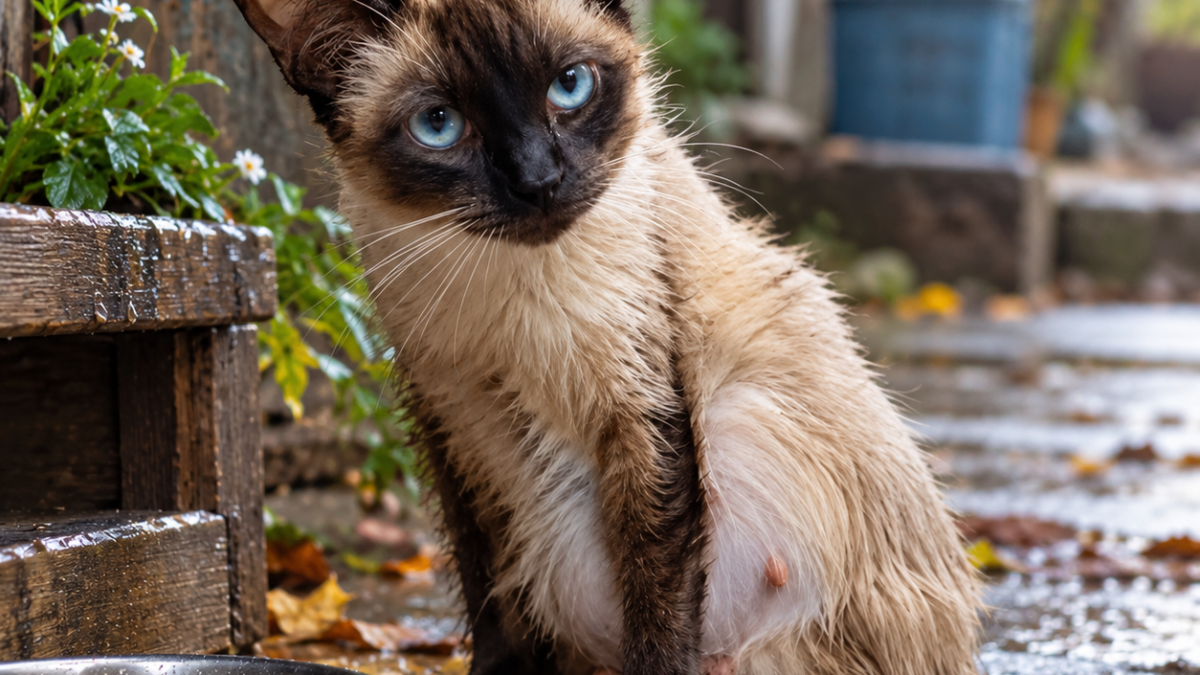
PART 2
The next morning, I arrived at the clinic before visiting hours technically began.
The receptionist saw me through the glass doors and smiled.
“You’re early.”
“I didn’t sleep much.”
“I guessed.”
“How is she?”
“Come see.”
Lea was in a recovery kennel in the treatment room.
When I stepped inside, she lifted her head.
For a second, she simply stared at me.
Then she stood.
Slowly.
Her legs were still weak, but she walked toward the kennel door.
That movement almost broke me.
“Hi, girl.”
She pressed her forehead against the bars.
The technician opened the kennel.
Lea came straight into my arms.
The day before, she had tolerated being held.
Now she chose it.
There was a difference.
I sat in a chair with her wrapped against my chest.
Dr. Bennett came in carrying her test results.
“Some good news first.”
“I like good news.”
“Her kidneys look okay. Liver values aren’t perfect, but nothing that makes me think we’re dealing with irreversible failure. Her anemia is moderate, not critical.”
“And the bad news?”
He sat.
“She has significant inflammation around several mammary glands. It may be related to repeated nursing, hormonal cycling or previous infections. We also need to monitor her reproductive tract closely.”
“Can you spay her?”
“Eventually, yes. But not today.”
“Why not?”
“She’s too depleted. I want her stronger first.”
I looked down at Lea.
She had fallen asleep with one paw curled against my sleeve.
“What would happen if she got pregnant again?”
Dr. Bennett’s expression answered before his words did.
“I would strongly advise against it.”
My anger returned.
Not the hot kind.
The cold kind.
The kind that makes you think clearly.
“I found old advertisements.”
His eyebrows lifted.
“Advertisements?”
I showed him.
He scrolled through them.
Each photo was another version of Lea beside kittens.
Different blankets.
Different years.
Different litters.
Always the same cat.
He stopped at the final comment.
“No point keeping her anymore.”
“Yeah.”
He handed my phone back.
“Save everything.”
“I already did.”
“Good.”
“Can anything be done?”
“That depends on where she came from, what regulations apply and what can actually be proven.”
I understood.
One neglected cat did not automatically explain an entire operation.
And anger was not evidence.
So I decided not to confront anyone.
Not yet.
Instead, I documented.
Screenshots.
Dates.
Descriptions.
Photos.
Names.
Phone numbers attached to listings.
Addresses when available.
One advertisement led to another.
Then another.
A social-media page appeared.
There were more Siamese cats.
Some adult.
Some kittens.
The page had been active for years.
The posts were polished.
Blue-eyed kittens posed on blankets.
Words like “exclusive,” “premium,” “champion look,” and “rare coloring.”
There were photos of happy buyers holding kittens.
Nothing about the adult females once their litters were sold.
I searched the page for Lea.
She appeared repeatedly.
Sometimes by name.
Sometimes only as “our proven female.”
One post praised her for producing a large litter.
Another announced she had been “paired again.”
Another said reservations were open before the kittens were even born.
My friend Maria, the rescue volunteer who had found the listings, sat beside me at my kitchen table.
“This goes back years.”
“I know.”
“Do you think she’s been having kittens this whole time?”
“I don’t want to guess.”
Maria looked at one photo.
Lea looked noticeably younger.
“She may have started very young.”
I closed the laptop.
“I need to stop.”
“Why?”
“Because I’m getting angry enough to do something stupid.”
Maria nodded.
“Then don’t.”
I looked at her.
“That was fast.”
“You’re not useful to Lea if you send an emotional message and give whoever did this time to delete everything.”
That pulled me back.
She was right.
“What do we do?”
“Document first. Report second.”
So we did.
I contacted county animal services and a local animal-welfare investigator.
I explained exactly what I knew.
No exaggeration.
A Siamese cat had been found outside a veterinary clinic.
Her physical condition suggested repeated breeding.
Online listings appeared to identify the cat and indicated she had been used repeatedly for litters.
The final messages suggested she was no longer considered profitable.
I sent the screenshots.
The investigator called me the next day.
Her name was Elena Ramirez.
She spoke in a calm, careful voice.
“I need to be clear about something.”
“Okay.”
“An online statement that sounds callous is not automatically a legal violation.”
“I understand.”
“And repeated breeding isn’t always illegal by itself.”
“I know.”
“But the veterinary records matter.”
I looked toward the guest room where Lea was now temporarily staying.
The clinic had released her into my foster care that morning.
“What do you need?”
“Everything you have. Original links if they’re still active. Screenshots with dates. The veterinary report. Photographs of her condition when found.”
“I can send all of it.”
“And don’t contact the former owner.”
“I wasn’t planning to.”
“Good.”
That night, Lea explored my house for the first time.
Explore may be too generous a word.
She moved three feet from her carrier.
Stopped.
Looked around.
Then retreated.
I had prepared the guest room for her.
Soft bed.
Litter box.
Water.
Food.
A small covered cave where she could hide.
The door remained closed so my other foster animals wouldn’t overwhelm her.
I sat on the floor.
“You don’t have to do anything.”
Lea watched me from inside the carrier.
“I’m not going to pull you out.”
Nothing.
“You can stay there all night if you want.”
I opened a book.
For the next forty minutes, I didn’t look directly at her.
Eventually, I heard a soft sound.
One paw touched the carpet.
Then another.
Lea stepped out.
She smelled the bed.
The water bowl.
The edge of a blanket.
Then she walked toward me.
I stayed still.
She sniffed my knee.
I lowered one hand.
Lea pressed her head into my palm.
That became our first ritual.
No grabbing.
No forcing.
I offered my hand.
She decided.
During the first week, Lea slept more than any cat I had ever fostered.
She ate.
Drank.
Used the litter box.
Then slept.
Sometimes for hours.
Her body seemed to be collecting years of missing rest.
She had no interest in toys.
No curiosity about windows.
No reaction to catnip.
If I rolled a ball past her, she watched it with complete indifference.
But she loved warmth.
I bought a heated pet pad.
The first time I turned it on beneath her blanket, she stepped onto it, circled twice, and sank down with an expression that looked almost confused.
Then she slept there for six hours.
I began to notice small behaviors that made me wonder what her previous life had been like.
If I carried a laundry basket into the room too quickly, she flinched.
If I closed the closet door loudly, she hid.
If I reached over her body instead of approaching from the side, she flattened herself.
But if I sat quietly, she became affectionate.
Painfully affectionate.
She would climb into my lap and press her entire body against me.
Sometimes she kneaded my shirt for several minutes.
Sometimes she tucked her head beneath my arm.
Once, after I stood up to leave the room, she grabbed my sleeve gently with one paw.
I froze.
Lea stared at me.
“I’m coming back.”
She didn’t understand the words.
But I sat down again anyway.
For another ten minutes.
Maybe because she needed it.
Maybe because I did.
Her medical recovery progressed slowly.
She gained a few ounces.
Then a little more.
The inflammation improved with treatment.
Her blood values began moving in the right direction.
Two weeks after I found her, Dr. Bennett finally smiled during an appointment.
“She’s stronger.”
“Strong enough?”
“Almost.”
“For the spay?”
“Give me another week.”
I exhaled.
For some reason, that surgery had become symbolic to me.
It wasn’t simply a medical procedure.
It was the official end of the role other people had forced onto her life.
No more litters.
No more pregnancies.
No more evaluating her worth based on how many kittens she produced.
Her body would finally belong to her.
While Lea recovered, the investigation continued quietly.
Elena didn’t tell me much.
She couldn’t.
But she asked questions.
Did I know whether the previous owner was still selling kittens?
Yes.
The page remained active.
Were there other adult females shown repeatedly?
Yes.
At least four.
Could I identify their names from older posts?
Two of them.
Mira.
Pearl.
There was also a dark seal-point female referred to simply as “Queen B.”
That phrase made my stomach turn.
Not because the term itself was unusual among breeders.
Because I now understood how easily a living animal could disappear behind it.
Queen.
Female.
Producer.
Dam.
Breeding animal.
Words that could be neutral in responsible hands but sounded very different after I’d held Lea’s depleted body.
One evening, Maria called.
“Check the page.”
I opened it.
A new litter had been posted.
Six kittens.
Their mother was Mira.
A delicate Siamese with a narrow face.
The caption announced reservations were available immediately.
Maria said, “Look at the background.”
I enlarged the photograph.
At first, I saw nothing.
Then I noticed it.
A wire enclosure.
Behind Mira.
Another cat was inside.
“Can you tell who that is?”
“No.”
“Scroll to the third photo.”
I did.
The angle changed.
In the back corner, partly hidden behind a plastic container, was another adult cat.
Thin.
Large eyes.
I felt sick.
“Send it to Elena.”
“I already did.”
Good.
We waited.
That was the hardest part.
Waiting while knowing something might be wrong.
Every instinct in rescue tells you to go.
Knock on a door.
Demand answers.
Take animals out.
But real investigations don’t work that way.
You cannot simply enter someone else’s property because a picture upset you.
There must be legal authority.
Evidence.
Procedure.
It was infuriating.
But I kept thinking about Lea.
If we handled this badly, we might help no one.
So I waited.
And while I waited, Lea changed.
The first toy she ever touched was a ridiculous little cloth mouse.
It had been on the floor for days.
She had ignored it.
Then one evening, while I was reading, I heard a soft thump.
I looked up.
Lea had put one paw on the mouse.
She stared at it.
I smiled but didn’t move.
She tapped it again.
The mouse rolled.
Lea’s pupils widened.
Another tap.
Then another.
Suddenly she pounced.
Not gracefully.
Not like an experienced playful cat.
She seemed almost surprised by herself.
The mouse flew under the bed.
Lea rushed after it.
I laughed.
She stopped.
Looked at me.
For one second, I worried I had frightened her.
Then she ran back out with the mouse in her mouth.
That was the first time I saw her tail held high.
“Look at you.”
She dropped the toy.
I rolled it again.
Lea chased it.
We played for nearly ten minutes.
Ten minutes should not have felt historic.
It did.
Three days later, she had surgery.
I barely slept the night before.
Dr. Bennett had told me it was routine.
But nothing felt routine when it involved Lea.
When the clinic called and said she was awake and doing well, I sat at my desk and cried.
Not because anything had gone wrong.
Because something had finally gone right.
I picked her up that afternoon.
Lea was groggy and deeply offended by the recovery collar.
“This is temporary.”
She stared at me.
“You look elegant.”
She continued staring.
“Very fashionable.”
No response.
The technician laughed.
“She’s judging you.”
“She has earned the right.”
For the next ten days, Lea recovered in my bedroom.
I had moved her there because she had become uncomfortable when I slept too far away.
The first night, she stayed in her bed.
The second night, she climbed onto mine.
She walked carefully across the blanket.
Then curled beside my legs.
I woke at three in the morning and found her still there.
For a cat who had spent years being valued for what her body could provide, sleep seemed to become her favorite luxury.
Warm blankets.
A full stomach.
No kittens needing to nurse.
No cage.
No expectation.
Just rest.
On the eleventh day after surgery, Elena called.
“Are you somewhere you can talk?”
I sat down.
“Yes.”
“We executed an inspection today.”
My heart jumped.
“At the breeder’s property?”
“Yes.”
“What did you find?”
She paused.
“I can’t give you every detail yet.”
“Okay.”
“But there are multiple cats being removed temporarily pending veterinary evaluation.”
I stood without realizing it.
“How many?”
“Eleven adults and several kittens.”
I covered my mouth.
“Eleven?”
“Yes.”
“Is Mira there?”
“We believe so.”
“What condition are they in?”
“Mixed.”
That word scared me.
“Mixed how?”
“Some are stable. Several need medical assessment. One adult female is significantly underweight.”
I closed my eyes.
“Can I help?”
“Possibly. We need foster placement.”
“Yes.”
“You don’t even know what I’m asking yet.”
“If you’re asking whether I can take one, yes.”
Elena exhaled softly.
“I suspected that.”
Within forty-eight hours, three rescue groups were coordinating placements.
The kittens went to experienced foster homes.
Several adult cats were transferred to veterinary partners.
Mira ended up with Maria.
And the underweight female Elena had mentioned?
She came to me.
Her name, according to old records, was Pearl.
She was six.
Maybe seven.
White body.
Dark face.
Blue eyes.
And terrified.
When I brought Pearl into the house, I placed her in a separate room.
Lea smelled her beneath the door.
She froze.
Her body stiffened.
I watched carefully.
“Do you know her?”
Lea sniffed again.
Then she made a sound I had never heard from her.
Low.
Questioning.
Pearl answered from the other side.
A soft meow.
Lea sat down.
For several minutes, the two cats remained separated by a closed door.
Then Lea lay beside it.
She stayed there almost an hour.
I called Maria.
“Do you think they remember each other?”
“Maybe.”
“They were shown in the same listings.”
“They could have lived together for years.”
I looked at Lea.
She had tucked her paws beneath her chest, still facing the door.
The next few days, I exchanged bedding between them so they could become familiar with each other’s scent safely.
Lea became increasingly interested.
Pearl remained frightened.
Eventually, after veterinary clearance and careful introductions, I allowed them to see one another through a baby gate.
Pearl froze.
Lea walked forward.
They stared.
Then Pearl made that soft sound again.
Lea responded.
No hissing.
No lunging.
No fear.
Just recognition.
When I finally opened the barrier during a supervised introduction, Pearl stayed in the corner.
Lea walked toward her slowly.
She stopped several inches away.
Pearl leaned forward.
Their noses touched.
Then Pearl rubbed her face against Lea’s cheek.
I sat on the floor and cried.
I don’t know whether they were sisters.
Friends.
Simply cats who had shared the same environment.
But they knew something about each other.
That was enough.
For weeks, Lea became Pearl’s guide.
She showed her the heated bed.
The sunny window.
The kitchen doorway where breakfast appeared.
The couch.
The toy basket.
Pearl watched Lea before trying anything new.
If Lea approached me, Pearl came closer.
If Lea ate, Pearl ate.
If Lea played, Pearl watched.
One afternoon, I saw Pearl touch the same cloth mouse Lea had first played with.
She tapped it once.
Lea pounced.
Pearl jumped backward.
I laughed.
Then Pearl chased her.
For thirty seconds, two cats who had been treated as breeding animals ran through my living room like kittens.
It was one of the most beautiful things I had ever seen.
Meanwhile, the case against the former owner developed.
Again, Elena told me only what she could.
Veterinary reports had documented several concerns.
Records were incomplete.
Some animals had not received appropriate routine care.
There were questions about how many litters had been produced and whether required local registrations had been maintained.
Most important to me, multiple cats had arrived underweight or with untreated conditions.
The investigation expanded.
Then the online page disappeared.
Gone.
Every advertisement.
Every photograph.
Every glowing claim about “premium kittens.”
Maria called me immediately.
“They deleted it.”
“I have everything.”
“So does Elena.”
That night, an email appeared in my rescue inbox.
The sender’s name made my stomach tighten.
It was Lea’s former owner.
I stared at the subject line.
**Regarding my cats**
I did not open it immediately.
I called Elena.
“Don’t respond yet,” she said.
“I wasn’t going to.”
“Forward it to me.”
I did.
Then, after she confirmed it was okay, I read it.
The message was angry but controlled.
The sender claimed there had been a misunderstanding.
The cats had been cared for.
Lea had “wandered off.”
No one had abandoned her.
The social-media comments had been taken out of context.
The removed cats were valuable animals and should be returned.
I read the sentence about Lea wandering off three times.
Then I looked at the photograph I had taken the morning I found her.
Wet cardboard.
Dirty coat.
Collar mark.
Exhausted eyes.
I wanted to answer.
I wanted to type everything I thought.
Instead, I closed the laptop.
Lea was sleeping on the couch.
Pearl beside her.
That was my answer.
Weeks passed.
The cats remained in protective custody while the case moved forward.
Lea was legally transferred permanently to the rescue because her prior ownership had already been disputed and then relinquished through the process.
Pearl and several others followed later.
The kittens were placed only after medical clearance.
Responsible homes.
Spay and neuter requirements.
No breeding.
No resale.
No becoming someone else’s inventory.
Mira recovered with Maria.
Pearl slowly gained weight.
Another older female, Daisy, needed dental treatment and then went to a retired couple.
A male Siamese named Theo turned out to be one of the sweetest cats anyone had ever met and was adopted by a veterinary technician.
Every time one of them went home, Maria and I celebrated.
Not because we were winning against someone.
Because another animal was becoming a pet instead of a product.
Eventually, there was a hearing.
I wasn’t required to testify in person, but my photographs and the veterinary records were submitted.
Elena attended.
The outcome was less dramatic than television would make it.
No courtroom shouting.
No sudden confession.
No judge pounding a gavel while everyone gasped.
Real accountability often looks much quieter.
The breeding operation was shut down.
The owner was prohibited from continuing commercial breeding under the applicable local action.
Financial penalties were imposed.
Several animals were permanently surrendered.
Costs associated with their care were assessed.
Additional compliance restrictions followed.
When Elena called me afterward, I sat in my car outside the grocery store.
“It’s done?”
“For the animals involved in this case, yes.”
I leaned back against the seat.
“Will they get the cats back?”
“No.”
I closed my eyes.
That was the moment.
Not punishment.
Not revenge in the way people usually imagine it.
Just a door closing.
A door that had been open for too long.
No more Lea producing kittens.
No more Pearl.
No more Mira.
No more litters from those animals.
No more deciding their value by how much money they generated.
I drove home.
When I opened the door, Lea appeared first.
Her tail was high.
Pearl followed.
I crouched.
“You’re free.”
Lea rubbed against my leg.
“You have no idea what that means, do you?”
She meowed.
Pearl walked past me toward the kitchen.
“Apparently it means dinner.”
That made me laugh.
The best part of Lea’s recovery came months later.
By then, her body looked completely different.
Her coat had regained its smooth cream color.
Her eyes were bright.
Her weight was healthy.
The irritated areas had healed.
She jumped onto furniture easily.
She raced Pearl through the hallway every evening around ten.
Apparently freedom had a schedule.
But the biggest change wasn’t physical.
Lea had opinions.
Strong ones.
She hated closed bathroom doors.
She believed all chicken should be shared.
She objected loudly if breakfast was late.
She had one particular chair that she considered hers and would stare at guests until they moved.
The cat I found outside the clinic had barely made a sound.
Now Lea talked constantly.
“You’re very demanding for someone who used to pretend she didn’t need anything.”
“Meow.”
“Exactly.”
One day, Dr. Bennett saw her for a follow-up.
He stared when I opened the carrier.
“That’s Lea?”
“Apparently.”
She stepped out.
Tail up.
He laughed.
“You look fantastic.”
Lea walked across the table and head-butted his hand.
He checked her weight.
Her heart.
Her surgical site.
Everything looked good.
Then he leaned back.
“Do you remember the first morning?”
“Every detail.”
“I wasn’t sure how much we’d be able to reverse.”
I looked at Lea.
“What can’t be reversed?”
He understood the question.
“Physically?”
“Yes.”
“Some changes from repeated pregnancies may remain. But they’re not affecting her quality of life right now.”
I nodded.
“And emotionally?”
He smiled slightly.
“That’s your department.”
I thought about it.
People often talk about rescued animals as though love erases everything.
It doesn’t.
Lea still startled at certain sounds.
She sometimes became anxious if placed in a carrier.
Pearl panicked if I moved furniture.
Mira, according to Maria, hid whenever unfamiliar men entered the house.
Healing did not mean forgetting.
It meant the past stopped controlling every decision.
That was enough.
About six months after Lea arrived, something unexpected happened.
A local rescue received three orphaned kittens.
Their mother had not survived an unrelated emergency.
The kittens were old enough to eat softened food but still young enough to seek warmth and comfort constantly.
Maria was fostering them.
One afternoon, she came over with a carrier because we were preparing supplies for an adoption event.
The kittens began crying.
Lea was asleep upstairs.
At the first sound, she appeared on the landing.
She froze.
I saw her entire body change.
Her ears lifted.
Her pupils widened.
She walked down the stairs.
Maria looked at me.
“Should I move them?”
“Maybe.”
Before either of us did anything, Lea approached the carrier.
She sniffed.
One kitten pushed its nose against the door.
Lea sat.
Then she began grooming the kitten through the bars.
Maria covered her mouth.
“Oh.”
I felt something tighten in my chest.
For years, motherhood had been taken from Lea and turned into labor.
Pregnancy.
Nursing.
Kittens removed.
Then another cycle.
I did not want to project human emotions onto her.
I didn’t know what she remembered.
But I knew what I saw.
Gentleness.
Not obligation.
Choice.
We supervised carefully.
Eventually, Lea lay beside the kittens.
They crawled against her.
She groomed them.
She didn’t produce milk, and nobody expected her to.
She simply gave them warmth.
After ten minutes, Lea stood and walked away.
Nobody stopped her.
That mattered.
She came back later.
Again because she chose to.
For the two weeks before the kittens were ready for their new foster placement, Lea spent time with them every day.
Sometimes she cleaned them.
Sometimes she slept nearby.
Sometimes she completely ignored them and sat in her chair.
That became one of the most meaningful differences in her life.
She could walk away.
No one made her stay.
No one measured her by how well she mothered them.
She was simply Lea.
One kitten became particularly attached to her.
A little seal-point female with a white patch under her chin.
We called her Nelly.
Nelly followed Lea everywhere.
If Lea sat on the couch, Nelly climbed onto the couch.
If Lea looked out the window, Nelly tried to look out the same window.
If Lea groomed herself, Nelly copied her badly.
One evening, I found them asleep together.
Nelly’s tiny paw rested across Lea’s face.
Lea looked deeply inconvenienced.
I took a picture.
Later, that photograph spread among our rescue group.
Someone joked that Lea had become a foster grandmother.
I smiled.
But what touched me wasn’t that Lea could still care for kittens.
We already knew she could.
What touched me was that now, caring for them cost her nothing.
No depletion.
No forced pregnancies.
No expectation.
When she wanted space, she had space.
When she wanted affection, she got it.
When she wanted to play, she played.
Her body was not working anymore.
She was living.
Nelly was eventually adopted by a family with an older cat.
On the morning she left, Lea sniffed the carrier.
Nelly reached one paw through the door.
Lea touched noses with her.
Then she walked away and jumped onto the windowsill.
I cried more than she did.
Typical.
A year passed.
Then another.
Lea remained with me.
At first, I called her a foster.
Everyone laughed.
Maria stopped pretending after six months.
“You’re keeping her.”
“I’m evaluating.”
“You bought her a custom window shelf.”
“That proves nothing.”
“It has her name on it.”
“Decorative.”
“You’re ridiculous.”
Maybe.
But I had learned something about adoption decisions.
Sometimes you choose.
Sometimes an animal quietly rearranges your entire house until the paperwork becomes a technicality.
I officially adopted Lea on the anniversary of the morning I found her.
The form asked for the date she entered my care.
I wrote October 14.
Then it asked for her identifying information.
Siamese mix.
Female.
Blue eyes.
Spayed.
I stopped at that word.
Spayed.
Such a small word.
Six letters.
Yet for Lea, it represented the end of an entire chapter.
I signed.
“Congratulations,” Maria said.
“Thank you.”
“How does it feel to finally admit what everyone already knew?”
“Expensive.”
She laughed.
Lea sat in my lap during the drive home.
Not safe, technically, so I eventually moved her back to the carrier.
She complained the entire way.
“You’re legally mine now.”
“Meow.”
“That wasn’t an invitation to argue.”
“Meow.”
“Nothing has changed.”
But something had.
On paper, she belonged to me.
Emotionally, I understood it differently.
I belonged to her too.
Years after the investigation, I occasionally found old screenshots while cleaning files from my computer.
Lea beside litters.
Lea posed on blankets.
Lea described by what she could produce.
The photos no longer made me furious the way they once had.
They made me sad.
Then grateful.
Not grateful for what happened.
Never that.
Grateful that it ended.
One screenshot showed the sentence:
**Excellent breeding queen.**
I looked over at Lea.
She was asleep upside down on the couch with one hind leg hanging over the edge.
Nothing regal about it.
I laughed.
“Excellent queen.”
One eye opened.
“Very dignified.”
She went back to sleep.
The rescue group eventually used Lea’s case as part of an educational campaign about responsible pet acquisition.
We never shared inflammatory details.
We didn’t encourage people to harass anyone.
We focused on questions buyers should ask.
Where are the parent animals?
How often are females bred?
What medical testing is performed?
Can you meet the mother?
What happens to breeding animals when they retire?
Are veterinary records available?
Are kittens being placed at appropriate ages?
Are the cats treated as family members or inventory?
That last question mattered most to me.
Because unethical operations can hide behind beautiful photographs.
A kitten can look healthy in an advertisement while the mother behind the camera is exhausted.
A clean website cannot tell you everything.
A high price does not guarantee high standards.
And an animal’s breed never makes their wellbeing less important.
At one event, a woman approached our booth.
She had been listening while I told Lea’s story.
Not the sensational version.
The real one.
She held a photograph of a Siamese kitten she’d been considering buying.
“I never thought about the mother.”
I nodded.
“Most people don’t.”
“That sounds terrible.”
“It doesn’t make you terrible.”
She looked at the photo.
“I was only thinking about the kitten.”
“That’s normal.”
“What should I ask?”
So I showed her.
That conversation happened again.
And again.
Sometimes people changed their minds about a seller.
Sometimes they chose a responsible breeder who welcomed questions and showed veterinary records.
Sometimes they adopted from shelters.
I didn’t care which responsible path they chose.
I cared that they asked.
Because Lea’s life had once been hidden behind the kittens people wanted.
Now her story made people look behind the photograph.
That felt like a different kind of justice.
A quieter one.
One afternoon, almost three years after I found Lea, Elena called.
I hadn’t spoken to her in months.
“Do you still have that Siamese cat?”
I laughed.
“Lea owns my house.”
“I figured.”
“Why?”
“I’m retiring at the end of the month.”
“Congratulations.”
“Thank you. I was going through some older cases.”
I became quiet.
“Lea’s?”
“Yes.”
“Everything okay?”
“Everything’s closed. I just wanted to tell you something I couldn’t tell you at the time.”
I sat down.
“What?”
“When we entered that property, there was one cat who came directly toward us.”
My heart beat faster.
“Lea?”
“No. Pearl.”
I looked across the room.
Pearl had eventually been adopted by a quiet older woman named Ruth after almost eight months in my care.
“She came toward you?”
“Immediately. Most of the cats moved away. Pearl didn’t.”
I swallowed.
“Why are you telling me this?”
“Because sometimes people think rescued animals are passive in these stories. Like humans do everything and the animals simply wait.”
I listened.
“Pearl came to the front of that enclosure. She made it very easy for us to see her condition. She didn’t hide.”
I smiled through tears.
“She finally asked.”
“Maybe.”
Elena paused.
“And Lea did too.”
“When?”
“When she stayed outside that clinic.”
I thought about the wet cardboard.
The blue eyes.
The tiny hoarse meow.
I had always thought I found Lea.
Maybe that wasn’t entirely true.
She had chosen a veterinary clinic wall.
Of all places.
A building where people came because animals needed help.
Had someone left her there intentionally?
Had she wandered there?
I would never know.
But she stayed.
And when I approached, she didn’t run.
Maybe that was the last bit of hope she still had.
Not enough to chase anyone.
Just enough to wait.
After the call, I drove to visit Pearl.
Ruth welcomed me inside.
Pearl had transformed.
Healthy weight.
Soft coat.
Confident eyes.
She sat on the back of the sofa like she owned the property.
“She does that all day,” Ruth said.
“Lea has a chair.”
“Pearl has the entire sofa.”
We laughed.
I sat near her.
Pearl sniffed my fingers.
Then leaned into my hand.
Ruth looked at me.
“She still sleeps beside me every night.”
“Really?”
“Right against my shoulder.”
I smiled.
“She used to sleep pressed against Lea.”
Ruth had heard the story.
She knew.
“I think some animals spend so long without security that once they find it, they like to keep it close.”
That sentence stayed with me.
When I came home, Lea met me at the door.
Not because she was worried I wouldn’t return.
Because dinner was seven minutes late.
She yelled.
“Yes, I know.”
Another meow.
“I was visiting Pearl.”
Lea followed me into the kitchen.
“She says hello.”
Meow.
“You’re very interested.”
I opened the food.
Lea immediately forgot Pearl existed.
Perfect.
That was what I wanted for her.
Not a life permanently centered on trauma.
A life centered on ordinary things.
Food.
Warmth.
Sunlight.
Annoying me.
Years passed.
Lea entered middle age.
A little gray appeared around her face.
She became less interested in sprinting after toys and more interested in supervising the house.
She still played.
Just selectively.
Her favorite activity became watching birds from the window shelf I had absolutely not purchased because I was keeping her.
Every morning, she sat there while I drank coffee.
Sometimes I thought about the version of Lea in those old advertisements.
Perfect posture.
Bright eyes.
Kittens arranged around her.
The photo looked beautiful.
That was what disturbed me most.
Pain does not always look dramatic from the outside.
Sometimes it looks marketable.
Sometimes the animal still has clean fur.
Sometimes the background is pretty.
Sometimes people compliment the photograph.
You have to ask what happens after the picture is taken.
Lea taught me that.
One October morning, exactly five years after I found her, I woke before sunrise.
The weather had turned cold overnight.
Lea was asleep beside me.
At some point over the years, she had stopped sleeping near my feet and moved closer to my pillow.
I opened my eyes.
Her face was inches from mine.
“Personal space.”
She blinked.
“You’ve heard of it?”
She put one paw on my cheek.
Apparently not.
I laughed.
Then I remembered the date.
Five years.
I got out of bed and went to the kitchen.
Lea followed.
I gave her breakfast.
Then I opened a drawer where I kept an old envelope.
Inside was the collar the clinic staff had found tucked near the cardboard the morning I rescued her.
Not the original collar she had once worn.
Just a worn little fabric piece that had apparently been left near her.
I had kept it for reasons I couldn’t explain.
I looked at it.
Then at Lea.
She ate without concern.
I closed the drawer.
I didn’t need the object anymore.
The story wasn’t there.
The story was walking around my kitchen complaining because I had not provided enough chicken.
Later that day, I took Lea to the clinic.
Not because she was sick.
For her annual exam.
Dr. Bennett had more gray hair now.
So did I.
He opened the carrier.
Lea stepped out confidently.
“Hello, trouble.”
She head-butted him.
He smiled.
“Remember when she weighed almost nothing?”
“Unfortunately.”
He examined her.
Everything looked excellent for her age.
At the end, he gave her a treat.
Lea ate it.
Then searched his hand for another.
“Still demanding.”
“More every year.”
He looked at me.
“You know, I kept one of her original intake photos.”
I stared.
“Why?”
“Teaching.”
“Teaching what?”
“That numbers don’t tell the whole story.”
I waited.
“Her bloodwork looked concerning but manageable. Her weight was low but not unprecedented. None of the individual medical findings sounded dramatic enough to explain what she looked like as a whole.”
He paused.
“Sometimes you have to look at the animal, not just the chart.”
I looked at Lea.
“She taught you something too?”
“Every patient does.”
That made me smile.
On the drive home, Lea complained from the carrier.
I talked to her the entire way.
“You know what today is?”
Meow.
“Five years.”
Silence.
“Five years since you were sitting outside this clinic.”
Meow.
“You don’t care.”
Another meow.
“That’s probably healthy.”
At home, I opened the carrier.
Lea stepped out.
She stretched.
Walked directly to the living room.
Jumped onto her chair.
Turned three times.
Lay down.
Just like that.
No ceremony.
No gratitude.
No understanding of anniversaries.
I stood there watching her.
And I realized that was the happiest ending I could have imagined.
Lea no longer needed to know she had been rescued.
She didn’t need to perform gratitude.
She didn’t need to behave as though every warm bed was a miracle.
Safety had become normal.
Food had become normal.
Affection had become normal.
Choice had become normal.
That was the victory.
Not that she survived something terrible.
That eventually, survival stopped being the most interesting thing about her.
Lea was funny.
Bossy.
Affectionate.
Selective.
Curious.
Terrible at catching toy mice.
Obsessed with chicken.
Suspicious of the vacuum cleaner.
In love with afternoon sunlight.
Those things mattered more than what had been done to her.
Years earlier, someone had written:
**No point keeping her anymore.**
I used to imagine how satisfying it would be to answer that person.
To list everything they had failed to see.
Her intelligence.
Her affection.
The way she comforted Pearl.
The way she gently cared for orphaned kittens without being forced.
The way she greeted me every morning.
The way she made frightened foster cats braver simply by existing near them.
But eventually I realized I didn’t need to send an answer.
Lea herself was the answer.
Every peaceful year she lived afterward contradicted those five words.
No point keeping her?
There was no point in owning an animal if you only valued what she produced.
There was no point in calling yourself her caretaker if her body mattered more than her wellbeing.
There was no point in beautiful advertisements if the animal behind them was exhausted.
But Lea?
There were thousands of reasons for her to be here.
None of them had anything to do with kittens.
She was here because she liked sleeping in sunbeams.
Because Pearl once needed someone familiar beside her.
Because Nelly needed warmth.
Because I needed to learn that rescue was sometimes less about saving a life than returning ownership of that life to the animal who should have had it all along.
A few weeks after her fifth anniversary, our rescue held another educational event.
I brought Lea.
Only because she traveled well now and enjoyed attention.
A little girl approached with her mother.
“Can I pet her?”
“Let Lea decide.”
The girl held out her hand.
Lea sniffed it.
Then rubbed her face against her fingers.
The girl smiled.
“She likes me.”
“She does.”
“What kind of cat is she?”
“Siamese.”
“Did she have babies?”
Her mother looked embarrassed.
“Sorry.”
“It’s okay.”
I crouched beside them.
“She did, a long time ago.”
“Where are they?”
“I don’t know where all of them are.”
The girl thought about that.
“Does she miss them?”
That question stopped me.
“I don’t know.”
The girl stroked Lea gently.
“She looks happy now.”
I smiled.
“She is.”
The answer felt complete.
Not because the past didn’t matter.
Because happiness now mattered too.
At the end of the event, someone took a photograph of Lea sitting on my lap.
When I saw it later, I noticed something.
The image resembled one of those old breeding advertisements.
Same blue eyes.
Same cream coat.
Same elegant face.
But there were no kittens arranged beside her.
No sales caption.
No price.
No promise of future litters.
Just Lea.
The caption our rescue used was simple.
**Lea. Loved for who she is.**
I saved the photograph.
Not because it was dramatic.
Because it corrected something.
Years earlier, her public identity had been reduced to production.
Now the only description that mattered was her name.
Lea.
That was enough.
Late that night, after the event, I sat on the couch.
Lea climbed onto me.
She circled once and settled against my chest.
Her body was warm.
Healthy.
Relaxed.
I ran my fingers over the fur around her neck.
The old collar mark had disappeared years earlier.
You couldn’t see it anymore.
I remembered the first time I touched that spot outside the clinic.
Back then, the worn fur had told me something.
She had belonged somewhere.
Now I understood the deeper truth.
She had never belonged to someone in the way an object belongs to an owner.
Her life had always been hers.
People had simply forgotten that.
For too long, they had measured her worth in litters.
Then in kittens.
Then in money.
And when the numbers stopped working in their favor, they had decided she was finished.
They were wrong.
Lea’s real life had barely begun.
It began on wet cardboard.
It continued in a veterinary cage.
Then a guest room.
Then my bedroom.
Then the entire house.
It expanded into Pearl’s recovery.
Into orphaned kittens.
Into educational events.
Into conversations with people who started asking better questions before buying animals.
Into other cats who were removed from the same place and given quiet homes.
Her former owner had once measured her influence by how many kittens she produced.
They had no idea.
Lea’s greatest impact came after she stopped producing anything at all.
She changed how people thought.
She changed how I rescued.
She helped expose what had been hidden behind polished advertisements.
She became proof that an animal’s value does not disappear when her usefulness to someone else does.
That was her real revenge.
Not suffering.
Not humiliation.
Not watching another person lose everything.
Lea didn’t need any of that.
Her revenge was softer.
And much more complete.
The person who once saw her as inventory lost the right to decide her future.
The breeding operation ended.
The other cats left.
The litters stopped.
And Lea spent the rest of her life doing the one thing nobody had ever allowed her to do before.
Whatever she wanted.
If she wanted to sleep, she slept.
If she wanted affection, she climbed into my lap.
If she wanted solitude, I left her alone.
If she wanted chicken, she demanded it loudly enough for the neighbors to hear.
If she wanted to mother a frightened kitten for ten minutes and then walk away, she could.
Nothing was required.
Nothing was owed.
Nothing about her worth depended on what her body could create.
One evening, many years after the morning outside the clinic, Lea climbed onto the window shelf.
The sunset filled the room with gold.
She sat there watching birds settle into the trees.
I stood in the doorway.
Her face had aged.
The blue eyes were still bright, though.
Still unmistakably hers.
I thought about the exhausted cat on wet cardboard.
For a moment, the two versions of her existed together in my mind.
Then Lea yawned.
Turned away from the window.
Walked across the room.
And jumped onto my bed.
She curled against the pillow.
I smiled.
There was nothing left to prove.
No one left to convince.
No argument to win.
Her life itself had already delivered the verdict.
She had never been worthless.
She had never been disposable.
She had never been “no longer worth keeping.”
The people who looked at her and saw only a source of income had simply been incapable of understanding the most basic truth about her.
Lea’s life did not need to earn its place.
It only needed to be lived.
And at last, it was.

