PART 2: They Took a Photo of a 4-Pound Puppy and Left Her in the Rain—At 4:58 A.M., I Begged Her Not to Give Up
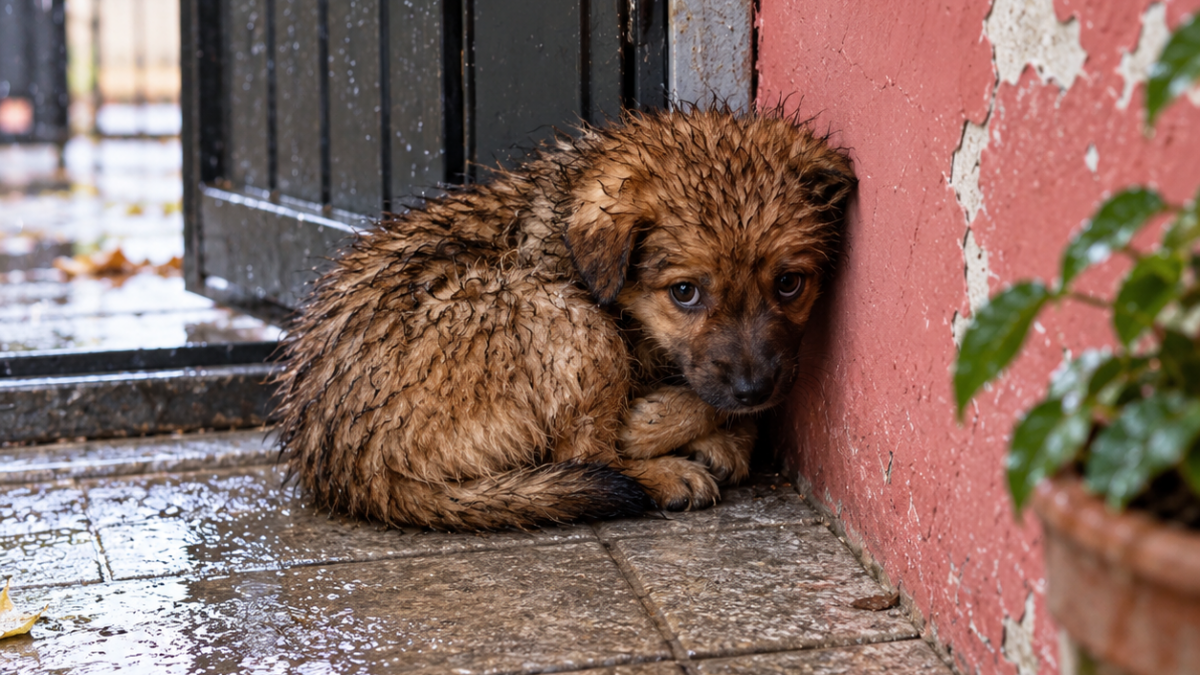
PART 2
Grace’s first night at the clinic was quieter than I expected.
I had imagined machines.
Urgency.
People rushing everywhere.
Instead, most of the work happened in small, careful movements.
Checking fluids.
Monitoring temperature.
Cleaning her injuries.
Changing bedding.
Giving medication.
Watching.
Waiting.
Parvo is cruel partly because support matters so much while the body tries to fight.
There is no magical moment when you give one treatment and everything turns around.
You support.
You replace what the body is losing.
You prevent secondary problems when possible.
You keep going.
And with a puppy as tiny as Grace, every loss mattered.
Every episode of vomiting mattered.
Every hour without food mattered.
Every change in hydration mattered.
I sat beside her kennel until Dr. Parker finally told me to go home.
“Sarah.”
“I’m fine.”
“You’ve been here eight hours.”
“I’m fine.”
“Grace will still need you tomorrow.”
I looked at the puppy.
“What if something changes?”
“We call.”
“What if she wakes up scared?”
“There’s staff here.”
“What if—”
“Sarah.”
I stopped.
Dr. Parker’s voice softened.
“Go shower. Eat something. Sleep.”
I looked at Grace again.
The puppy was already asleep.
“I’ll be back early.”
“I know.”
I left.
I made it halfway home before crying.
Not the dramatic kind.
No sobbing.
Just tears running down my face while I drove.
I kept thinking about the photograph.
Someone standing close enough to photograph her.
Grace looking at a camera.
Then still being there afterward.
Three days.
The thought made me angry.
Anger is useful for about five minutes.
Then you need to do something with it.
So I turned it into a list.
Clean blankets.
Puppy pads.
Extra towels.
Disposable gloves.
Food recommended by the veterinarian.
A heating pad approved for supervised use.
Disinfectant.
Everything I could prepare for the moment Grace eventually left the clinic.
I was already planning for “eventually.”
I had to.
The alternative was too frightening.
## MORNING TWO
Grace was awake when I arrived.
Her head lifted when she heard my voice.
“Hey, little girl.”
Tail movement.
Tiny.
But there.
Dr. Parker smiled.
“She knows you.”
“Or she knows I bring food.”
“Either one works.”
Grace ate several small bites.
I celebrated like she had eaten an entire meal.
Then she drank a little.
Another victory.
Her wounds looked cleaner.
Swelling had begun decreasing.
I allowed myself to believe we might have caught everything in time.
That afternoon, she sat up on her own.
For maybe thirty seconds.
I took a photograph.
Grace wrapped in a white blanket, eyes enormous, ears slightly lowered, tiny paws visible beneath her chest.
She looked exhausted.
But alive.
I sent the photo to our rescue group.
**She’s fighting.**
Everyone responded.
Heart emojis.
Prayers.
Offers to donate.
Offers to foster when she recovered.
One volunteer wrote:
**That little face is going to break hearts one day.**
I smiled.
“Do you hear that, Grace?”
She blinked.
“Apparently you’re beautiful.”
Grace lowered her head and fell asleep.
Not impressed.
## THEN EVERYTHING CHANGED
Parvo does not care that you felt hopeful yesterday.
Grace stopped eating.
At first, we thought she was tired.
Then she refused her favorite soft food.
Then chicken.
Then even the tiny amount she’d been taking willingly.
Vomiting returned.
Her intestinal symptoms worsened.
There was significant blood loss.
The puppy who had looked slightly brighter that morning looked smaller by evening.
I stared at Dr. Parker.
“What happened?”
“This can happen.”
“But she was better.”
“She had a better day.”
“That’s the same thing.”
“No.”
I hated that answer.
A good day is not always improvement.
Sometimes it is only a good day.
Grace needed increased supportive care.
More fluids.
Closer monitoring.
Medications adjusted.
The veterinary team discussed whether she should remain hospitalized continuously.
The clinic was small.
Overnight staffing was limited on certain days.
I knew how to administer fluids under veterinary instruction from years of rescue work.
Dr. Parker knew that.
After a long conversation, we created a plan.
Clinic during the day.
Home monitoring overnight when medically appropriate.
Emergency number always available.
Strict isolation from other dogs.
Disinfection.
Schedules.
Notes.
Alarms.
It became my entire life.
## MY HOUSE BECAME GRACE’S ROOM
I set up a separate room at home.
Nothing entered without being disinfected.
Nothing left casually.
Shoes changed.
Clothes changed.
Hands washed constantly.
Grace had her own bedding.
Bowls.
Supplies.
Waste bags.
Towels.
I became obsessive.
Parvo demands respect.
I had other animals, and I refused to create another emergency while caring for this one.
Grace lay in a small bed surrounded by rolled towels.
She looked impossibly tiny.
The first night she came home, I sat beside her until midnight.
She wouldn’t eat.
I offered food from my finger.
Nothing.
I warmed it slightly.
Nothing.
I tried the veterinarian-approved recovery diet.
Nothing.
“Come on, Grace.”
She turned her face away.
I felt panic rising.
I checked the schedule.
Medication.
Fluids.
Temperature.
Notes.
Everything became numbers because numbers gave me something to control.
12:15 a.m.
Temperature stable.
12:40.
No vomiting.
1:10.
Small amount of water tolerated.
1:30.
Resting.
2:05.
Woke briefly.
2:20.
Tail moved when I spoke.
I wrote that down too.
Maybe not medically useful.
Emotionally essential.
## 4:58 A.M.
The alarm went off at 4:58.
I still remember the exact number because it stayed in my head for years.
Not 5:00.
4:58.
I had set the alarm two minutes early because I was afraid I’d oversleep.
As if two minutes were going to decide everything.
The sound dragged me from the couch.
For a second, I didn’t know where I was.
Then I remembered.
Grace.
I entered her room.
She hadn’t moved much.
My stomach dropped.
“Grace?”
Her eyes opened.
I exhaled.
“Okay.”
I sat beside her.
“Time again.”
Under the plan provided by the clinic, it was time for her next infusion.
I prepared everything exactly as instructed.
Checked it twice.
My hands shook.
Not because I didn’t know what I was doing.
Because she was so small.
Four pounds when found.
And losing weight.
Every part of her felt fragile.
I spoke constantly.
“You’re okay.”
Grace watched me.
“The whole world is sleeping.”
Her ear moved.
“It’s just you and me.”
I started the fluids.
Grace didn’t resist.
That worried me.
A puppy should complain about inconvenience.
A puppy should object.
A puppy should be difficult.
Grace simply lay there.
I touched her head.
“You’re allowed to be mad.”
Nothing.
“Bite my finger if you want.”
Her eyes stayed open.
“I won’t even complain.”
The fluid continued.
At some point, I realized I was crying.
Quietly.
“Please.”
That word slipped out.
Then again.
“Please.”
I wasn’t praying exactly.
Not to anything specific.
I was begging the room.
The medicine.
Her body.
Chance.
“Please don’t make me lose her.”
Grace’s tail moved.
Barely.
I laughed through tears.
“You really are stubborn.”
That tail movement carried me through the next hour.
## THE MORNING DRIVE
At seven, we returned to the clinic.
I carried Grace inside wrapped in two towels.
Dr. Parker took one look at me.
“You slept?”
“Technically.”
“How much?”
“Enough.”
“That’s not a number.”
“Neither is ‘technically.'”
She didn’t laugh.
That told me she was worried.
Grace was weighed.
The number made everyone quiet.
She had lost far too much.
For a puppy who began at roughly four pounds, even small losses were enormous.
Later, at her lowest point, she would be close to half her original rescue weight.
I couldn’t process it.
I looked at the scale.
Then at Grace.
“That’s wrong.”
The technician checked again.
Same result.
“No.”
Dr. Parker touched my arm.
“Sarah.”
“She can’t lose that much.”
“But she has.”
“What do we do?”
“We continue.”
“That’s all?”
“No.”
Dr. Parker looked directly at me.
“We continue everything.”
## DAYS WITHOUT A BREAK
The next stretch blurred together.
Clinic.
Home.
Fluids.
Medication.
Cleaning Grace’s back.
Changing bedding.
Monitoring.
Driving.
Waiting.
Laundry.
Disinfecting.
Trying food.
Watching it remain untouched.
Holding her after vomiting.
Calling Dr. Parker.
Returning to the clinic.
Trying again.
People texted:
**How is she?**
I stopped knowing what to say.
Alive.
Still fighting.
Critical.
Stable for the moment.
Worse than yesterday.
Slightly better than this morning.
There was no simple answer.
Our rescue volunteers offered to help.
I let them handle everything else.
Every other call.
Every adoption message.
Every fundraising question.
Every supply run.
Grace took priority.
One evening, my sister called.
“You haven’t been answering Mom.”
“I’ve been busy.”
“She thinks something happened to you.”
“Something did.”
“Sarah.”
“I’m okay.”
“You sound terrible.”
I looked toward Grace.
She was sleeping.
“I’m scared.”
That was the first time I said it aloud.
My sister became quiet.
“Is she going to make it?”
“I don’t know.”
“What does the vet say?”
“She doesn’t know.”
“Can I come over?”
“No.”
“Why?”
“Isolation.”
“Oh.”
“I’m sorry.”
“Don’t apologize.”
I rubbed my forehead.
“I feel like if I look away for too long, something will happen.”
“Sarah.”
“I know that’s irrational.”
“Do you?”
“Not really.”
My sister stayed on the phone with me while I folded towels.
Sometimes help is just someone refusing to let silence become louder than your fear.
## GRACE’S TAIL
The strange thing about Grace was that her body could look exhausted while her tail still remembered me.
I’d enter the room.
“Grace?”
Tap.
Sometimes only once.
Sometimes twice.
That movement became our language.
Food?
No.
Water?
Maybe.
Medication?
Absolutely not.
Sarah?
Tap.
I started measuring hope in tail movements.
Dr. Parker told me not to.
“Her tail is not a laboratory result.”
“I know.”
“Then stop saying she had three wags like it’s blood work.”
“You’re ruining this for me.”
“I’m protecting you.”
“From optimism?”
“From turning every little change into a guarantee.”
I sighed.
“I hate veterinary medicine.”
“That’s healthy.”
Still, I counted.
I couldn’t help it.
## THE CLOSEST WE CAME
There was one night I thought we were losing her.
Grace had another difficult episode.
Her body seemed exhausted.
She barely responded when I spoke.
I called the emergency number.
Dr. Parker answered.
“Bring her in.”
The clinic wasn’t officially open.
She met me there anyway.
Lights came on one room at a time.
A technician arrived ten minutes later.
Grace was placed on the treatment table.
Dr. Parker worked quickly.
I stood against the wall.
“Tell me something.”
“I’m working.”
“Helen.”
She looked at me.
“I don’t know.”
I hated that.
“You must know whether she’s—”
“No.”
She interrupted.
“I know she is very sick. I know we are treating what we can treat. I know her body has been through more than any puppy should experience.”
She stepped closer.
“And I know she’s still here.”
I looked at Grace.
Still here.
Sometimes that is the only fact you get.
The team stabilized her.
Hours passed.
At 2:00 a.m., Dr. Parker finally sat beside me.
“Go home.”
“No.”
“Sarah.”
“No.”
She sighed.
“Fine.”
So we both stayed.
Grace slept between us.
## THE PHOTOGRAPHER
During that period, I learned who had taken the original photograph.
A local teenager named Noah.
He contacted our rescue after seeing updates.
His message was defensive at first.
**I didn’t leave her because I didn’t care. I thought someone else had called.**
I read it several times.
Part of me wanted to respond angrily.
Three days.
A photograph.
A puppy.
How do you take the picture and leave?
Then I learned more.
Noah was seventeen.
He’d found Grace while walking home.
He was frightened by the birds.
Frightened by her injuries.
He posted the picture in a neighborhood group asking what to do.
Adults commented.
Someone said they would contact animal control.
Noah assumed they had.
The next day, he didn’t return to the location.
Neither did they.
By the third day, our volunteer finally received the image.
Was that acceptable?
No.
But it was different from what I’d imagined.
There wasn’t one coldhearted person taking a dramatic photograph and walking away for fun.
There was something more ordinary.
More dangerous.
Everyone assuming someone else would act.
I replied:
**Next time, call directly and stay until you know help is coming.**
He wrote:
**I will.**
Later, Noah volunteered at a food drive for our rescue.
He never asked people to forget what happened.
He simply did better afterward.
That mattered.
## DAY NINE
Grace lifted her head when I opened a food container.
I froze.
She sniffed.
“Grace?”
Her nose moved again.
I didn’t breathe.
I placed a tiny amount of soft food on my fingertip.
She looked at it.
Looked away.
My heart dropped.
Then she turned back.
Licked once.
I stared.
“Do that again.”
Grace licked.
A tiny smear disappeared.
I started crying immediately.
Of course.
“Again.”
Another lick.
Not eating.
Not really.
But interacting.
Choosing food.
I called Dr. Parker.
“It’s midnight.”
“She licked food.”
Silence.
Then:
“How much?”
“Three licks.”
“Sarah.”
“Four now.”
I heard Dr. Parker laugh.
“Good.”
“That’s good?”
“Yes.”
“Really?”
“Yes. Don’t feed too much too fast.”
“I’m not.”
“And don’t call me after every lick.”
“That’s unreasonable.”
Grace licked again.
Five.
I wrote it down.
## THE FIRST MEAL
The next morning, Grace voluntarily ate several small bites.
Slowly.
I had spent days begging her to eat.
Now I sat perfectly still because I was afraid excitement would somehow scare the appetite away.
One bite.
Pause.
Another.
Grace looked up at me.
“Take your time.”
Another bite.
Dr. Parker entered.
I held up one finger.
She stopped.
We both watched.
Grace ate.
Maybe two teaspoons total.
It felt like Thanksgiving dinner.
When she finished, I covered my face.
Dr. Parker handed me tissues.
“You are exhausting.”
“I know.”
“She’s not cured.”
“I know.”
“She may still have setbacks.”
“I know.”
“But this is good.”
I looked at Grace.
“This is very good.”
## FELIX
Felix entered the story completely by accident.
He was a kitten being fostered by one of our volunteers.
Orange.
Tiny.
Confident beyond reason.
By the time Grace was medically safe enough to begin controlled interaction outside strict isolation, Felix had been tested, vaccinated as appropriate for his age, and cleared by the veterinary team for limited supervised contact.
Grace was eating better but remained frail.
The first time Felix saw her food bowl, he decided it belonged to him.
Grace stared.
Felix walked directly toward it.
“Absolutely not.”
I moved his bowl several feet away.
Felix started eating.
Grace watched.
Then she looked at her own food.
Ate.
Felix ate faster.
Grace seemed offended.
She ate again.
That evening, the two tiny animals ate dinner several feet apart.
I took a photograph.
Grace with her small dish.
Felix with his.
Weeks earlier, Grace had eaten nothing.
Now she had a dinner companion.
The image became one of my favorites.
Not because it was dramatic.
Because it was normal.
Normal had become precious.
## DAY TWELVE
Grace’s eyes became brighter.
That was the first thing everyone noticed.
She started looking around the room rather than staring through it.
She followed sounds.
Watched people.
Her ears lifted more often.
When I brought fresh bedding, she tried to stand before I had finished arranging it.
“Excuse me.”
Tail wag.
“You’re interfering with housekeeping.”
Grace took three shaky steps.
I nearly called Dr. Parker.
Then stopped myself.
Growth.
Not guarantee.
I was learning.
Slowly.
She walked to the opposite end of her little space.
Turned.
Walked back.
Then collapsed into her bed.
Exhausted.
But satisfied.
I sat beside her.
“Show-off.”
Tap.
## THE WOUNDS
The injuries on Grace’s back also began improving.
Treatment had controlled the infection.
New tissue formed.
Her skin looked healthier.
The veterinarian expected some scarring.
I didn’t care.
Scars meant she had lived long enough to heal.
We cleaned the area carefully.
Grace hated it.
Finally.
A normal response.
She squirmed.
Tried to turn around.
Once, she grabbed the edge of the towel in her tiny mouth and refused to release it.
I laughed.
“Where was this attitude a week ago?”
Grace pulled.
“Okay.”
I let her win for five seconds.
Then finished the treatment.
Angry Grace was one of my favorite versions of Grace.
Angry puppies expect a future.
## THE SCALE
Weight gain came slowly.
Painfully slowly.
I had become afraid of the scale.
Every veterinary visit, I watched the numbers.
At first, tiny increases.
An ounce.
Then another.
One day, Dr. Parker smiled before telling me.
“What?”
“She’s up.”
“How much?”
She told me.
I laughed.
Grace was still far below where she needed to be.
But the direction had changed.
Down had become up.
That mattered.
I bought a notebook specifically for Grace.
On the first page:
**FOUND: approx. 4 lb**
Then her lowest weight.
I hated that number.
Then each gain.
Beside the weights, I wrote things medical professionals probably didn’t need:
**Tail wagged at Sarah.**
**Ate 6 bites.**
**Tried to steal Felix’s food.**
**Barked once.**
**Bit towel.**
**Walked to door.**
The notebook became proof that recovery is made of things too small for dramatic headlines.
## THE BARK
Grace barked for the first time on day fourteen.
Not because she was afraid.
Because breakfast was late.
I entered the room carrying supplies.
A tiny:
“Woof.”
I stopped.
Grace stared at me.
“Was that you?”
Another.
Stronger.
I put one hand over my mouth.
“No.”
Grace barked again.
Felix, in the next room, answered with a meow.
I started laughing.
“You’re complaining.”
Grace barked.
“You are actually complaining.”
It was beautiful.
Two weeks earlier, I had begged her to make any sound strong enough to prove she had energy.
Now she was criticizing service.
Progress.
## THE FIRST MORNING I SLEPT
I slept six continuous hours on day fifteen.
I woke in panic.
Sunlight.
My phone.
6:47.
I’d slept.
I ran to Grace’s room.
She was awake.
Sitting.
Looking at me as if I were the irresponsible one.
“I’m sorry.”
Tail wag.
“I overslept.”
Everything on her schedule was still fine.
Nothing had been missed.
I had simply forgotten what deep sleep felt like.
I sat beside her.
“You scared me.”
Grace climbed halfway into my lap.
That was new.
She curled against my stomach.
I held her.
For the first time since the rescue, I allowed myself to imagine her as an adult dog.
Running.
Healthy.
Maybe five pounds heavier.
Ten.
Sleeping on someone’s couch.
Belonging to a family.
The image frightened me.
Hope makes you vulnerable.
But I let myself have it anyway.
## DAY SEVENTEEN
Grace began playing.
The toy was a small stuffed lamb.
Almost as big as her chest.
I moved it slightly.
She watched.
Moved again.
Grace lifted a paw.
Touched it.
I pulled the toy away.
She followed.
Another paw.
Then she bit the lamb’s ear.
I gasped.
“Violence.”
Grace pulled.
I pulled back gently.
Her tail moved wildly.
The first game lasted perhaps thirty seconds.
Grace became tired.
But afterward, she slept with one paw across the toy.
I sent a photograph to Dr. Parker.
She replied:
**Now THAT is a puppy.**
I saved the message.
## DAY TWENTY
We repeated her tests.
I didn’t tell anyone the appointment time.
Superstition.
Maybe.
I didn’t want twenty people waiting for a result.
Grace sat on the exam table wrapped in a pink towel.
She looked dramatically healthier than the tiny animal in the original photograph.
Still thin.
Still recovering.
But alert.
Dr. Parker returned holding the results.
She didn’t speak immediately.
I stood.
“Don’t do that.”
“Do what?”
“Make me wait.”
She smiled.
“Grace has cleared parvo.”
I stared at her.
“What?”
“She beat it.”
I didn’t react.
Not immediately.
My mind seemed unable to process the sentence.
“Say it again.”
“Helen—”
“Grace beat parvo.”
I sat down.
Then cried harder than I had at any point during treatment.
Grace, naturally, tried to climb off the exam table.
Dr. Parker caught her.
“Your mother is having a moment.”
I laughed through tears.
“I’m not her mother.”
Dr. Parker gave me a look.
“Sure.”
Grace licked my hand.
Day twenty.
The news we’d been afraid to imagine.
She had made it.
## NOT FINISHED
Beating parvo did not mean Grace was instantly healthy.
She still needed nutrition.
Skin care.
Monitoring.
Strength.
Vaccinations on the appropriate schedule.
Time.
Most importantly, she needed to learn how to be a puppy instead of a patient.
That transition was harder for me than I expected.
For nearly three weeks, every movement had been medical.
Is she eating?
Drinking?
Vomiting?
Temperature?
Stool?
Weight?
Hydration?
Medication?
Now Dr. Parker told me:
“Let her explore.”
“What if she gets tired?”
“She will.”
“What if—”
“Sarah.”
I sighed.
“Let the puppy be a puppy.”
So I did.
Grace stepped onto grass.
Real grass.
Not wet concrete.
Not a clinic floor.
Not puppy pads.
Grass.
She sniffed one blade for so long I laughed.
Then another.
Then moved forward.
Sunlight hit her back.
Grace stopped.
Closed her eyes.
I took a photograph.
Not for fundraising.
Not for medical records.
For me.
## FOSTER
I could have fostered Grace myself.
Part of me wanted to.
A very large part.
But I had other rescue responsibilities, and she needed a home environment where someone could focus on social development without constantly seeing her as a patient.
That was how Grace met Linda Evans.
Linda was fifty-eight, retired, and one of our most experienced fosters.
She had a quiet house.
A fenced garden.
One older small dog named Rosie.
No chaos.
Perfect.
I brought Grace for a trial visit.
Grace stood behind my ankles.
Linda sat on the floor.
Didn’t call her.
Didn’t reach.
Just spoke to me.
Ten minutes passed.
Grace moved.
Sniffed Linda’s pant leg.
Linda ignored her.
Another five minutes.
Grace climbed into Linda’s lap.
Traitor.
I felt two things simultaneously.
Joy.
And an embarrassing amount of jealousy.
Linda looked at me.
“I think she approves.”
“Apparently.”
Grace settled.
I swallowed.
This was good.
I knew it was good.
Still hurt.
That is rescue.
You fight desperately to make them strong enough to leave you.
Then feel surprised when leaving hurts.
## THE FIRST NIGHT AT LINDA’S
I called at 9:00.
“How is she?”
“Sleeping.”
“Did she eat?”
“Yes.”
“How much?”
“Enough.”
“Any vomiting?”
“No.”
“Bathroom?”
“Normal.”
“Temperature?”
Linda paused.
“Sarah.”
“What?”
“She’s not in intensive care anymore.”
“I know.”
“Do you?”
Silence.
Linda softened.
“She’s fine.”
“Did she cry?”
“Ten minutes.”
My chest tightened.
“For me?”
“Probably.”
“Did you—”
“Then Rosie got into bed with her.”
I smiled.
“Okay.”
“Go sleep.”
Everyone enjoyed telling me to sleep.
## ROSIE
Rosie was eleven.
Tiny.
White with brown ears.
Very serious.
She tolerated most foster puppies rather than liking them.
Grace changed that.
Maybe because Grace was gentle.
Maybe because she respected space.
Maybe because she was almost as small as Rosie.
Within a week, Grace followed Rosie everywhere.
Garden.
Kitchen.
Beds.
Rosie taught her household rules.
Wait at doors.
Don’t steal Linda’s slippers.
The couch belongs to Rosie unless Rosie decides otherwise.
Grace ignored the last rule.
They compromised.
Photographs came daily.
Grace sleeping beside Rosie.
Grace chewing a toy.
Grace sitting in sunlight.
Grace investigating a flower pot.
Grace hiding beneath a blanket.
Every picture looked more like a normal dog and less like a survivor.
That was exactly what I wanted.
## THE U.K. APPLICATION
Our rescue worked occasionally with international adopters through established transport and welfare partners.
I was cautious.
Long-distance adoptions require planning.
Paperwork.
Veterinary documentation.
Transport arrangements.
Backup plans.
A family in the United Kingdom saw Grace’s profile.
Emma and James Turner.
Two children.
Secure garden.
Previous rescue-dog experience.
Their older dog had died the previous year.
They weren’t looking for a puppy specifically.
Then Emma saw Grace.
She wrote:
**We aren’t applying because we feel sorry for her. We’re applying because every update shows more personality, and we’d like to know who she becomes when nobody has to feel sorry for her anymore.**
That sentence got me.
I sent it to Linda.
She called.
“I like them.”
“You’ve never met them.”
“I like that sentence.”
“So do I.”
We began the process.
## THE VIDEO CALL
The first video call was awkward.
Grace obviously did not understand screens.
Emma sat with her family in England.
Linda held the phone.
Grace walked away.
Emma laughed.
“Excellent start.”
Her daughter Sophie said:
“Grace!”
Nothing.
James held up a dog toy to the camera.
Grace couldn’t care less.
Then Rosie appeared.
Grace chased Rosie.
The Turners watched them play.
Nobody tried to make Grace perform.
Nobody complained she wasn’t facing the camera.
They simply watched.
After twenty minutes, Emma said:
“She’s funny.”
“She is.”
“She’s much stronger than I expected.”
Linda smiled.
“She’s very strong.”
That was another important shift.
People stopped saying:
Poor Grace.
They started saying:
Funny Grace.
Stubborn Grace.
Hungry Grace.
Cheeky Grace.
Grace.
## THE SETBACK THAT TERRIFIED ME
About six weeks into foster care, Linda called late at night.
“Don’t panic.”
Terrible opening.
“What happened?”
“Grace didn’t finish dinner.”
I stood immediately.
“Any vomiting?”
“No.”
“Diarrhea?”
“No.”
“Temperature?”
“Normal.”
“Energy?”
“A little low.”
“I’m coming.”
“Sarah.”
“I’m already getting shoes.”
“Sarah.”
“What?”
“Dr. Parker says monitor.”
“You called?”
“Yes.”
“Good.”
Silence.
Linda laughed.
“You’re impossible.”
I sat back down.
The next morning, Grace ate breakfast.
Nothing was wrong.
Maybe she was tired.
Maybe mild stomach upset.
Maybe she simply didn’t want dinner.
I realized then that Grace could spend the rest of her life sneezing once and terrifying me.
I had to stop treating every ordinary fluctuation like the return of catastrophe.
Dr. Parker told me:
“You need rehabilitation too.”
“Very funny.”
“I’m serious.”
“From what?”
“Rescuer brain.”
Apparently that is a real phenomenon, at least according to Helen.
## THE ORIGINAL CORNER
Two months after the rescue, I returned to the place Grace had been found.
I hadn’t planned to.
I was driving nearby.
Turned down the road.
Stopped.
The corner looked smaller.
That’s common with places that become huge in memory.
No puppy.
No birds.
No rain.
Just concrete.
I stood there.
I thought I would be angry.
Instead, I felt empty.
Then grateful.
Grace was at Linda’s house probably stealing Rosie’s bed.
This place had lost its power.
I took one photograph.
Empty corner.
Then deleted it.
I didn’t need it.
## NOAH CAME TO ME
The teenager who had taken the original photograph asked to meet.
I agreed.
He looked younger in person.
Nervous.
“I’m sorry.”
I didn’t answer immediately.
He continued.
“I thought the adults in the group handled it.”
“I know.”
“I should’ve gone back.”
“Yes.”
He looked down.
“I was scared.”
“Of what?”
“The birds. The wounds. I thought if I touched her I’d make it worse.”
I understood more than I wanted to.
People freeze.
People assume expertise is required before compassion is useful.
“Noah.”
He looked up.
“You don’t need to know how to treat an animal.”
“Okay.”
“You need to know how to call someone who does.”
He nodded.
“I know now.”
“Good.”
Then he asked:
“Can I meet her?”
I thought.
“Eventually.”
He did.
Weeks later, after veterinary clearance and with Linda present.
Grace sniffed him.
Accepted a treat.
Then walked away.
No dramatic forgiveness.
Dogs don’t participate in our need for narrative closure.
Noah cried anyway.
## GRACE MEETS HER FUTURE FAMILY IN PERSON
International adoption logistics took time.
Health certificates.
Vaccination schedule.
Travel timing.
Legal paperwork.
The Turners eventually traveled before final transport arrangements because they wanted to meet Grace personally.
I appreciated that.
A lot.
Emma knelt in Linda’s garden.
Grace stayed near Rosie.
James sat on a chair.
The kids, Sophie and Ben, were instructed not to rush her.
Five minutes.
Ten.
Grace finally approached Ben.
He didn’t move.
She sniffed his shoe.
Then Sophie.
Then Emma.
James was last.
He offered one hand.
Grace sniffed.
Then immediately tried to climb onto his knee.
We all laughed.
James looked surprised.
“I’ve been selected.”
Apparently.
## THE QUESTION
Later, Emma asked me privately:
“Are you sure you want us to take her?”
That surprised me.
“Why?”
“You love her.”
“Yes.”
“So does Linda.”
“Yes.”
“Wouldn’t it be easier for her to stay here?”
I looked toward Grace.
She was sleeping with her head across Sophie’s shoe.
“Maybe.”
Emma waited.
“But rescue isn’t about easiest for me.”
“What is it about?”
“The best life we can give her.”
Emma nodded.
“What do you think that is?”
I studied her face.
“You.”
She cried.
Then I cried.
Apparently Grace caused adults to cry everywhere she went.
## TWO AND A HALF MONTHS
By two and a half months after rescue, Grace barely resembled the puppy from the photograph.
Her coat had grown in.
Her wounds had healed.
She gained weight.
Her eyes were bright.
She played.
She barked.
She stole toys from Rosie.
She followed Linda around the house.
Her medical records were finally filled with routine words instead of frightening ones.
Healthy.
Improving.
Cleared.
Ready.
The day came.
Grace was going home.
Her actual home.
## GOODBYE TO LINDA
Linda packed Grace’s things.
Favorite blanket.
Small stuffed lamb.
Harness.
Medical file.
Food for transition.
Photographs.
A note for the family describing every strange habit Grace had developed.
Likes warm laundry.
Hates the sound of aluminum foil.
Sleeps under blankets.
Tries to eat Rosie’s food first.
Prefers chicken.
Demands breakfast.
Will bark if service is slow.
I laughed reading it.
“You’re sending a user manual.”
“Necessary.”
Grace wandered around while we packed.
Completely unaware.
Rosie watched from her bed.
That part worried us.
The dogs had bonded.
We allowed a quiet goodbye.
No forced interaction.
Grace approached Rosie.
Sniffed her face.
Rosie licked Grace once.
Then turned away.
Classic Rosie.
Linda cried.
“She’s going to miss her.”
“I know.”
“So am I.”
“I know.”
Linda looked at me.
“You started this.”
“Technically Noah’s photograph started it.”
“Don’t avoid responsibility.”
I hugged her.
## THE JOURNEY
Grace’s transport followed veterinary and legal requirements carefully.
No shortcuts.
No dramatic last-minute decisions.
Everything had been arranged through experienced partners.
Still, I worried about every step.
Is she comfortable?
Did she eat?
How is she handling travel?
Did paperwork clear?
Are there delays?
Emma sent updates whenever possible.
Then came the message I’d been waiting for.
**She’s here.**
Attached:
Grace.
Inside the Turners’ home.
Standing in the middle of a rug.
Sophie kneeling nearby.
Ben sitting on the floor.
James in the background.
Emma taking the photo.
Grace’s tail blurred from movement.
I stared at it.
Home.
## THE FIRST NIGHT IN THE U.K.
Emma sent another photo late that evening.
Grace asleep between the children on the couch.
Caption:
**I think she’s decided we’re acceptable.**
I laughed.
Then another:
Grace eating dinner.
Another:
Grace exploring the garden.
Then:
Grace standing beside a basket full of toys.
The basket was almost bigger than she was.
I called Linda.
“Did you see?”
“I’m looking right now.”
We stayed on the phone silently for a moment.
Then Linda said:
“Remember the corner?”
“Yes.”
“Look at her now.”
I did.
## THE FIRST RAIN
A week later, it rained.
Emma told me afterward that Grace hesitated at the back door.
Not panic.
Just stopped.
Watched the water.
Then looked at Emma.
Emma didn’t force her.
She stepped outside.
Grace remained inside.
Sophie joined her mother.
They laughed in the garden.
Grace watched.
Eventually she placed one paw outside.
Then another.
Walked onto wet grass.
Sniffed.
Then ran.
Emma wrote:
**She discovered rain can happen while the door stays open.**
I cried again.
Of course.
That sentence became one of the most important updates I ever received.
Rain had once meant cold.
Isolation.
No shelter.
Now rain meant a garden.
A family.
An open door.
That’s healing.
## GRACE GROWS
Months passed.
Grace grew.
Not huge.
She remained relatively small.
But strong.
Healthy.
Bright-eyed.
Her body filled out.
The fragile shape disappeared.
Her coat became soft and glossy.
She learned commands.
Sit.
Wait.
Come.
Leave it.
She learned less useful skills too.
Opening partially closed bedroom doors with her nose.
Finding treats in coat pockets.
Convincing both children she’d missed dinner when she’d already eaten.
James called that “advanced negotiation.”
Grace became excellent.
## THE BEACH
The Turners took Grace to the coast.
I received a video.
Grace seeing the ocean for the first time.
She approached a wave.
Wave approached Grace.
Grace changed her mind immediately and ran backward.
Everyone laughed.
Then she tried again.
By the end of the visit, she was chasing foam along the edge.
I watched the video repeatedly.
A dog who had once spent three days trapped in rain now running toward water by choice.
Not the same water.
Not the same memory.
But the contrast mattered to me.
## FELIX
Felix the kitten was adopted too.
Locally.
His family remained in touch.
One year after Grace’s rescue, we arranged a silly video call between the families.
Grace ignored the screen.
Felix ignored the screen.
Humans tried desperately to create meaning.
Animals refused.
Perfect.
The photograph of their late dinner remained on my desk.
Tiny Grace.
Tiny Felix.
Both eating.
The beginning of normal life.
## ONE YEAR
On the first anniversary of Grace’s rescue, Emma sent a package.
Inside:
A framed photograph.
Grace sitting between Sophie and Ben in a field of yellow flowers.
Healthy.
Strong.
Mouth open.
Eyes bright.
Behind the photograph was a copy of the original rescue picture.
I almost couldn’t look.
The difference felt impossible.
Same dog.
One year.
Two completely different lives.
Emma had written:
**Thank you for giving her enough tomorrows to reach us.**
I sat at my kitchen table and cried for twenty minutes.
## THE REVENGE PEOPLE EXPECT
Sometimes followers asked whether we had found the person who abandoned Grace.
We never did.
We didn’t even know for certain whether she had been deliberately abandoned in that exact corner.
Maybe she had wandered there.
Maybe someone put her there.
Maybe she became separated from someone.
No microchip.
No owner came forward.
No reliable witness knew.
People wanted someone to blame.
I understood.
Anger needs a target.
But Grace’s story eventually taught me something.
You can spend years hunting for a villain and still miss the victory happening in front of you.
Grace didn’t need revenge on an unknown person.
She needed a life.
She got one.
## HER REAL REVENGE
Her revenge was waking up in a warm house while rain hit the windows.
Her revenge was complaining when breakfast was late.
Her revenge was growing heavier because her body finally had enough food.
Her revenge was running.
Her revenge was veterinary visits becoming boring.
Vaccines.
Checkups.
Normal concerns.
Her revenge was having children argue over who Grace loved more.
Her revenge was becoming spoiled enough to reject one brand of treats.
I laughed the first time Emma told me.
“She refused food?”
“Not food. A biscuit.”
“Grace rejected a biscuit?”
“Completely.”
The puppy who once couldn’t eat.
Now a food critic.
That was revenge.
## THE SECOND YEAR
Grace became Sophie’s shadow.
Homework?
Grace.
Television?
Grace.
Garden?
Grace.
Bedtime?
Grace waited outside the bathroom.
Ben became her playmate.
James handled morning walks.
Emma handled almost everything else.
Or, according to James, Grace handled everyone.
Family life formed around her.
That’s the part rescue photographs can’t capture.
Not the big day.
The ordinary repetition afterward.
Seven hundred breakfasts.
Hundreds of walks.
Vet appointments.
Mud on floors.
Vacuuming dog hair.
Birthdays.
School mornings.
Rainy Sundays.
Christmas.
Grace became ordinary.
That was extraordinary.
## NOAH’S MESSAGE
Two years after Grace’s rescue, Noah messaged me.
He was in college.
Studying nursing.
He wrote:
**I still think about her. That day is why I don’t assume someone else will help anymore.**
He told me he’d stopped at a roadside crash months earlier.
Called emergency services.
Stayed with an elderly driver until responders arrived.
He said:
**I knew other cars saw it, but I remembered Grace.**
I stared at the message.
That affected me.
Grace’s rescue had changed more than Grace.
The teenager who once took a picture and assumed help would come had become the person who stayed.
Maybe that was part of her legacy too.
## GRACE GETS SICK AGAIN
At three years old, Grace developed a stomach bug.
Nothing related to parvo.
Nothing major.
Emma called me anyway.
“I know I’m being irrational.”
“Good.”
“She vomited twice.”
“When?”
“Last night.”
“Vet?”
“Already went.”
“What did they say?”
“Mild gastroenteritis.”
“Medication?”
“Yes.”
“Hydration?”
“Fine.”
“Eating?”
“Not much.”
Suddenly, I was back at 4:58 a.m.
Grace tiny.
Fluids.
Fear.
My chest tightened.
Emma heard it.
“Sarah.”
“I’m fine.”
“You aren’t.”
“I know.”
Grace recovered in forty-eight hours.
I did not.
At least not that fast.
Old fear lives quietly inside you.
Recovery doesn’t erase what you survived either.
Rescuers carry scars too.
## DR. PARKER’S ADVICE
I visited Dr. Parker one afternoon.
“Do you remember Grace?”
She stared at me.
“Sarah.”
“What?”
“You called me at midnight to report five licks of food.”
“Six.”
“Of course I remember Grace.”
I showed her a recent photograph.
Grace on a hiking trail.
Dr. Parker smiled.
“Good.”
“I still panic when Emma says she’s sick.”
“Normal.”
“Is it?”
“For you.”
“That’s insulting.”
“Helen.”
She laughed.
Then became serious.
“You spent weeks expecting that puppy to disappear in front of you.”
I looked down.
“Your brain learned that every symptom was danger.”
“So what do I do?”
“Look at the dog she is now.”
I looked at the picture.
Strong legs.
Healthy coat.
Bright eyes.
“Don’t keep treating her as the patient she used to be.”
That advice was for me.
Not Grace.
## FIVE YEARS
Grace turned five.
Emma sent a birthday photograph.
A ridiculous paper crown.
Grace hated it.
Cake.
Children older.
James with more gray hair.
A banner reading:
**QUEEN GRACE**
I laughed.
The tiny patient had become queen of the house.
Emma wrote:
**She still sleeps under blankets.**
Some things never change.
## THE RESCUE ROOM
Our organization eventually opened a small recovery room for high-risk puppies.
Fundraising took years.
We needed isolation surfaces.
Washable walls.
Storage.
Heating.
Medical equipment.
We named nothing after Grace at first.
I didn’t want to turn every rescue into a memorial.
Then one donor offered to fund the overnight monitoring station.
She had followed Grace’s story years earlier.
She asked if we could put a small plaque near the clock.
It reads:
**4:58 A.M.
FOR THE ONES WHO JUST NEED SOMEONE TO STAY AWAKE WITH THEM.**
No name.
I liked that better.
I cried the first time I saw it.
Naturally.
## ANOTHER PARVO PUPPY
Years later, another puppy arrived.
Different circumstances.
Different dog.
Same diagnosis.
The volunteer caring for him looked terrified.
“How did you do this with Grace?”
I almost said:
I don’t know.
Instead:
“Hour by hour.”
“What if he gets worse?”
“Call the vet.”
“What if I panic?”
“You will.”
“What if I can’t sleep?”
“You won’t much.”
She looked horrified.
I smiled.
“Then one day, maybe he licks food.”
She stared.
“That’s supposed to make me feel better?”
“Trust me.”
Three days later, she texted:
**HE ATE FOUR BITES.**
I replied:
**Write it down.**
Now she understood.
## GRACE MEETS ME AGAIN
When Grace was six, I traveled to the United Kingdom for the first time.
Not only for her.
But partly.
A lot, actually.
The Turners met me outside their house.
Grace was inside.
I was terrified she wouldn’t remember me.
Six years.
Different country.
Different life.
Why should she?
Emma opened the door.
Grace came around the corner.
Stopped.
I crouched.
“Hey, little girl.”
Her head tilted.
Two seconds.
Maybe three.
Then her tail moved.
Grace ran.
Straight toward me.
She hit my knees hard enough to nearly knock me over.
I laughed.
Then cried.
She climbed into my lap as if she still weighed four pounds.
She did not.
“Okay!”
Grace licked my face.
Emma cried.
Sophie recorded it.
James pretended to be above the emotion.
He wasn’t.
Did Grace truly remember me?
I can’t prove it scientifically.
But she reacted differently than she did to normal visitors.
That’s enough for my heart.
## THE GARDEN
Later, I sat in the Turner garden with Grace beside me.
Rain began.
Light.
English rain.
Grace didn’t move.
She remained lying in the grass.
I looked at her.
“You know, you used to hate this.”
Grace scratched her ear.
“Or maybe you never hated rain.”
She rolled onto her side.
“Maybe you hated being alone in it.”
That felt closer.
Trauma often attaches itself not to one thing, but to context.
Rain plus fear.
Rain plus cold.
Rain plus nobody coming.
Change the context.
Rain plus family.
Rain plus warm towels afterward.
Rain plus an open door.
Suddenly, weather becomes weather again.
## SOPHIE
Sophie was preparing for university.
She told me Grace had slept beside her during exams.
During arguments.
After breakups.
Whenever she was sick.
“She knows.”
“Knows what?”
“When I’m upset.”
I smiled.
“Maybe.”
“She does.”
I didn’t argue.
People had once needed to understand Grace’s fear.
Now Grace understood theirs.
Circle complete.
## BEN
Ben loved telling people Grace’s dramatic history.
He exaggerated.
“We found her almost dead in a hurricane.”
“It wasn’t a hurricane.”
“Crows were attacking her.”
“Be careful how you say that.”
“She beat two deadly diseases.”
“Closer.”
“Then she flew across the world.”
“Technically.”
Grace listened to none of it.
She slept.
That’s another thing dogs do better than humans.
They don’t build identities around their worst chapter.
## THE ORIGINAL VIDEO
Old rescue footage resurfaced online periodically.
Grace tiny.
Thin.
Receiving treatment.
People shared it with sad music.
I had complicated feelings.
Awareness helps.
Fundraising saves lives.
But sometimes survival stories freeze animals inside suffering forever.
I asked the rescue page to always pair old footage with current photographs.
If you’re going to show who Grace was, show who she became.
That became a policy for us.
No trauma without the after.
No rescue image without dignity if we had a later one.
Grace deserved to be more than the worst photograph ever taken of her.
## EIGHT YEARS
Grace reached eight.
A little gray around the muzzle.
Still small.
Still bossy.
Her children—yes, I still thought of Sophie and Ben that way even when they were adults—visited home less often.
Grace waited near the window when they were due.
Emma sent videos.
Car arrives.
Grace explodes.
Tail.
Barking.
Running.
Sophie enters.
Grace nearly loses her mind.
A dog who once had nobody now had people worth waiting for.
That’s another kind of revenge.
## FELIX’S DEATH
Felix, the kitten who once shared dinner with Grace, grew into a large orange cat.
His family kept in touch.
At nine, he developed cancer.
They eventually said goodbye.
I sent the news to Emma.
She looked at the old dinner photograph.
Grace and Felix.
Tiny.
Alive.
Beginning.
Emma wrote:
**He was part of her first normal meal.**
Yes.
Some characters appear in a story briefly and still matter forever.
## LINDA
Linda grew older too.
She stopped fostering puppies around seventy.
Too exhausting.
She continued fostering senior dogs.
Grace visited her once when the Turners traveled.
The reunion was beautiful.
Grace remembered the house immediately.
Ran inside.
Found the old spot where Rosie’s bed had been.
Rosie had died years earlier.
Grace sniffed the empty corner.
Linda cried.
“She remembers.”
Maybe.
Maybe smells remain longer than we understand.
Grace slept beside Linda that night.
Another circle.
## TEN YEARS AFTER
Ten years after the rescue, I opened Grace’s old medical notebook.
The pages had yellowed slightly.
First weight.
Lowest weight.
Fluids.
Medications.
Licks.
Bites.
Barks.
Tail wags.
At the bottom of one page, written at 5:31 a.m.:
**Grace looked at me. Tail x2.**
I stared at those words.
At the time, two tail movements had felt enormous.
Now Grace was ten years old.
She had lived thousands of days.
Tens of thousands of tail movements.
I had been measuring survival in seconds because I couldn’t see how much future was waiting.
## THE REVENGE I FINALLY UNDERSTOOD
If Grace’s story had a revenge ending, it wasn’t against one person.
It was against every prediction that night made about her.
The rain said she was alone.
Her home proved she wasn’t.
Disease said her body had nothing left.
She grew old.
Hunger made her afraid there wouldn’t be another meal.
She became picky about biscuits.
Fear reduced her world to one corner.
She crossed an ocean.
Weakness kept her lying still.
She ran on beaches.
The photograph captured a puppy people almost failed.
Thousands of later photographs showed a dog deeply loved.
That is revenge.
Not pain returned.
A future reclaimed.
## GRACE SLOWS DOWN
At eleven, arthritis appeared.
Mild at first.
Grace took longer getting up.
Emma bought steps for the couch.
Grace ignored them.
James built a ramp.
Grace used it when she felt like it.
Mostly she demanded someone lift her.
Queen Grace.
The family adjusted walks.
Shorter.
More sniffing.
Less distance.
She remained bright.
Still ate.
Still supervised kitchen operations.
Still slept under blankets.
## HER SCARS
The old scars on her back became easier to see as her coat thinned with age.
Sophie asked once:
“Do you think they bother her?”
Physically?
Probably not much after all those years.
Emotionally?
Who knows.
Grace never looked at her own back.
Humans do that.
We stare at scars because we know what they mean.
Animals live inside bodies without writing biographies on every mark.
I found that comforting.
The scar is not the story.
It is evidence that the story continued.
## THE LAST VISIT
I saw Grace again when she was twelve.
Older.
Slower.
Still Grace.
She greeted me at the door.
No running this time.
Walked.
Tail moving.
I sat on the floor.
She came close.
Lowered herself beside me.
I touched her head.
“Hey, baby.”
For a second, memory collapsed twelve years.
Four-pound puppy.
Wet towel.
Clinic.
4:58.
Tail moving once.
Now an old dog.
Gray face.
Safe home.
How many miracles do we miss because they happen slowly?
Growing old is one.
Especially for an animal you once believed might not survive the week.
## THE QUESTION EMMA ASKED
That evening, Emma and I sat in the kitchen.
Grace slept nearby.
“What do I do when it’s time?”
My chest tightened.
“You’ll know.”
“I hate that answer.”
“So did I.”
“Did Helen say that to you?”
“Basically.”
Emma looked at Grace.
“I don’t want to wait too long.”
“Then don’t make the decision about keeping her with you.”
“What do I make it about?”
“What she still wants from the day.”
Emma cried.
I held her hand.
Years earlier, she had adopted a puppy.
Now she carried the responsibility of loving an old dog.
The beginning and ending of rescue are emotionally connected.
You promise safety.
Eventually, safety means protecting them from suffering too.
## GRACE’S LAST SUMMER
Grace’s final summer was gentle.
No crisis.
No dramatic emergency.
She sat in the garden.
Slept near open doors.
Ate chicken.
Ignored biscuits she considered inferior.
Sophie came home often.
Ben brought his girlfriend, whom Grace evaluated and approved.
James carried Grace up stairs.
Emma slept downstairs sometimes so Grace wouldn’t feel alone.
Rain fell frequently.
Grace no longer cared.
She would walk slowly onto wet grass.
Finish.
Return.
Door open.
Always.
## THE FINAL WEEK
Grace stopped eating well.
At first, Emma changed food.
Then warmed it.
Chicken.
Grace took some.
Then less.
Veterinary tests showed age-related organ decline.
There were treatment options.
Some could buy time.
The question became what that time would feel like.
Emma called me.
Her voice broke.
“They can hospitalize her.”
“Okay.”
“But she hates the clinic now.”
“Okay.”
“They can do more.”
“Okay.”
“What would you do?”
I closed my eyes.
I remembered asking Dr. Parker versions of that question.
“What does Grace want?”
Silence.
“Home.”
There it was.
## 4:58 AGAIN
On Grace’s final morning, Emma woke at 4:58.
Coincidence.
She sent me the screenshot later.
4:58.
Same number.
Twelve years apart.
Grace was awake.
Emma sat beside her.
The rest of the family gathered slowly.
No emergency infusion this time.
No panic.
No desperate fight.
Just presence.
Emma called me by video.
Grace was lying beneath a soft blanket.
I saw her gray face.
“Hey, little girl.”
Her ear moved.
I couldn’t breathe for a second.
“Remember me?”
No idea.
Maybe.
Not important.
“You did good.”
Grace’s eyes remained half open.
“So good.”
Emma touched her.
Sophie cried quietly.
Ben sat on the floor.
James rubbed Grace’s paw.
The veterinarian came to the house later.
Everyone stayed.
Grace left peacefully.
At home.
Warm.
Dry.
Loved.
The opposite of how we found her.
## AFTER GRACE
Emma sent me a message that evening.
No words.
Two photographs.
First:
The original.
Grace in the rain-soaked corner.
Second:
Grace’s empty bed beside the Turner fireplace.
I stared at them.
Beginning.
End.
At first, the empty bed looked unbearably sad.
Then I thought about everything between those images.
Twelve years.
A home.
Children growing.
Beaches.
Gardens.
Rain.
Christmas.
Chicken.
Rosie.
Felix.
Linda.
Sophie.
Ben.
Emma.
James.
Me.
That empty bed existed only because Grace had lived long enough to fill it for years.
Grief is the receipt for a life that mattered.
## THE ASHES
The Turners scattered part of Grace’s ashes in their garden.
Part near the beach she loved.
They kept a small portion at home.
No grand monument.
Emma planted yellow flowers.
The same kind behind Grace in my favorite photograph.
Every year they return.
## THE RESCUE CENTER
At our rescue facility, the overnight monitoring station still has the plaque:
**4:58 A.M.
FOR THE ONES WHO JUST NEED SOMEONE TO STAY AWAKE WITH THEM.**
New volunteers don’t always know where it came from.
Sometimes they ask.
I tell them about Grace.
Not everything.
You can’t fit twelve years into a five-minute orientation.
I say:
“She was four pounds.”
“She had parvo.”
“We thought we’d lose her.”
“Then she licked food.”
They laugh at that.
They don’t understand why it matters.
Not yet.
Eventually, every rescuer gets their own Grace.
Not necessarily a puppy.
A moment.
A tiny sign that suddenly becomes the most important thing in the world.
Then they understand.
## THE EMPTY CORNER AGAIN
Years after Grace died, I returned one last time to the place where she was found.
The building was renovated.
The overhang replaced.
Fresh paint.
The corner no longer looked familiar.
I was glad.
Some places don’t deserve preservation.
I stood across the street.
Cars passed.
People walked.
Nobody knew.
I thought about placing a plaque.
Didn’t.
Grace’s story didn’t belong to the corner anymore.
It belonged everywhere she went afterward.
## THE REAL ACCOUNTABILITY
I used to be furious that people had seen Grace before I arrived.
How could nobody act?
Then experience taught me how easily responsibility dissolves inside a group.
Someone posts a photo.
Someone comments.
Someone tags a rescue.
Someone assumes animal control was contacted.
Nobody confirms.
Hours become days.
Grace taught our organization to change procedure.
Whenever someone sends us a photo now, the first question isn’t:
“Can anyone help?”
It’s:
“Who has called the official number?”
Then:
“Who is physically with the animal?”
Then:
“Who is staying until help arrives?”
Names.
Actions.
Confirmation.
No vague “someone.”
That policy has saved other animals.
Grace changed that too.
## NOAH BECOMES A NURSE
Years later, Noah graduated nursing school.
He sent me a photograph wearing scrubs.
His message:
**I still don’t leave until I know someone is actually coming.**
I cried.
Grace changed him.
Maybe not because she forgave him.
Because Grace forced him to understand what assuming can cost.
That’s enough.
## DR. PARKER RETIRES
Dr. Parker retired eventually.
At her retirement dinner, I gave her a framed photo.
Grace healthy at ten years old.
On the back I wrote:
**Five licks became twelve years.**
Helen read it.
Cried.
Then said:
“You were still ridiculous for calling me at midnight.”
“Six licks.”
She laughed.
“Of course.”
## WHAT PEOPLE REMEMBER
People who followed Grace online usually remember the transformation.
Before.
After.
Tiny sick puppy.
Healthy dog.
But I remember the middle.
That’s where rescue really happens.
4:58 alarms.
Dirty towels.
Half-eaten food.
A scale you fear.
A veterinarian saying “I don’t know.”
A tail moving once.
A volunteer doing laundry.
Someone delivering supplies.
A foster sitting on the floor.
A family filling out paperwork.
The middle isn’t viral.
The middle saves lives.
## IF I COULD TALK TO GRACE IN THE RAIN
If I could return to that first day and speak in words Grace understood, I wouldn’t promise everything would be okay.
I didn’t know.
I would say:
“You’re going to be carried out of here.
“The next few weeks are going to be hard.
“You will feel worse before you feel better.
“You’re going to hate some of the medicine.
“You’re going to refuse food and terrify me.
“I’m going to set an alarm for 4:58 because I’m afraid two minutes might matter.
“I’m going to count your tail wags like they’re treasure.
“You’re going to lose more weight than I think your tiny body can afford.
“Then one night, you’re going to lick food.
“I’m going to cry so hard you’ll think something is wrong with me.
“Later, you’ll eat dinner beside an orange kitten.
“You’ll meet Rosie.
“You’ll learn how to steal beds.
“A family across an ocean is going to see you and understand that they shouldn’t love you because you’re tragic.
“They’ll love you because you’re Grace.
“You’ll cross that ocean.
“You’ll see the sea.
“You’ll become picky.
“You’ll grow gray.
“You’ll watch children grow into adults.
“Rain will stop meaning nobody is coming.
“You’ll sleep through storms.
“And one day, twelve years from now, the same number—4:58—will appear on a clock again.
“But that morning nobody will be fighting to keep you alive.
“They’ll simply be beside you because your life became long enough to reach old age.
“So for now, little girl, you don’t have to understand any of that.
“Just let me pick you up.”
## THE REVENGE
If someone insists this story needs revenge, here it is.
Grace took revenge on hopelessness by living twelve years.
She took revenge on hunger by becoming demanding about breakfast.
She took revenge on the rain by running through a wet garden with an open door behind her.
She took revenge on sickness by making most of her veterinary records boring.
She took revenge on being alone by becoming part of a family that rearranged rooms, travel plans, mornings, and holidays around her.
She took revenge on the photograph that showed her at her weakest by filling thousands of later photographs with strength.
She took revenge on everyone who saw “someone else’s problem” by becoming unforgettable.
Nobody had to suffer for Grace to win.
Grace winning was enough.
## THE TITLE OF HER LIFE
For years, Grace was introduced online as:
The puppy found in the rain.
The parvo puppy.
The four-pound survivor.
The puppy attacked by birds.
The miracle rescue.
I eventually stopped using those labels.
If you asked Sophie who Grace was, she would say:
“My dog.”
Ben:
“The thief who stole my socks.”
James:
“The reason I never ate chicken without sharing.”
Emma:
“Our girl.”
Linda:
“My smallest foster boss.”
Me?
I would say:
“Grace.”
No adjective necessary.
That is the final stage of recovery.
When the terrible thing stops being your introduction.
## THE LAST UPDATE
The final photograph Emma ever sent me of Grace alive was taken about two weeks before she died.
Grace was lying beside an open garden door.
Outside, rain fell softly.
Her head rested on her paws.
She looked old.
Peaceful.
Dry.
The door remained open.
That photograph lives beside the rescue picture now.
I rarely show the first one alone.
They belong together.
One says:
Nobody came quickly enough.
The other says:
Eventually, somebody did.
And they kept coming.
For twelve years.
## EPILOGUE
Grace’s story never needed a villain at the end.
It needed time.
That was the gift she almost didn’t get.
Time to heal.
Time to eat.
Time to play.
Time to trust.
Time to travel.
Time to grow.
Time to become ordinary.
Time to become old.
When I think back to that 4:58 alarm, I remember how small my world felt.
One room.
One puppy.
One bag of fluids.
One clock.
I believed the entire future depended on getting through that hour.
Maybe it did.
Life is strange that way.
Huge futures sometimes hide behind tiny decisions.
Wake up.
Give the treatment.
Offer the food again.
Call the vet.
Drive back.
Stay another night.
Don’t assume someone else will do it.
Grace’s life was built from those small decisions.
Not one heroic rescue.
Hundreds of ordinary acts that refused to stop.
The world once passed by a four-pound puppy in the rain.
Years later, an entire family would stop whatever they were doing because Grace wanted the garden door opened.
That is the ending I keep.
Not the wounds.
Not the illness.
Not the blood loss.
Not the fear.
A gray-faced old dog standing at a door while someone immediately gets up to open it.
No waiting.
No wondering whether anyone noticed.
No question about whether she belongs inside.
Just:
“Come on, Grace.”
And home.
If I learned anything from her, it is this:
You cannot always erase what happened before rescue.
You cannot make the rain unfall.
You cannot give back the three days she waited.
You cannot guarantee survival simply because you care enough.
But if life gives you the chance, you can make sure the bad days do not get the majority.
Grace had three days in that corner.
Then she had thousands somewhere else.
Warm.
Fed.
Protected.
Annoyingly loved.
That is how her story won.
Not because nothing terrible happened.
Because what happened never got the final word.
Grace did.
And her final word was not fear.
It was home.

