PART 2: They Put a 10-Week-Old Puppy on the Euthanasia List—Then Squid Survived Every Diagnosis That Tried to Take Him
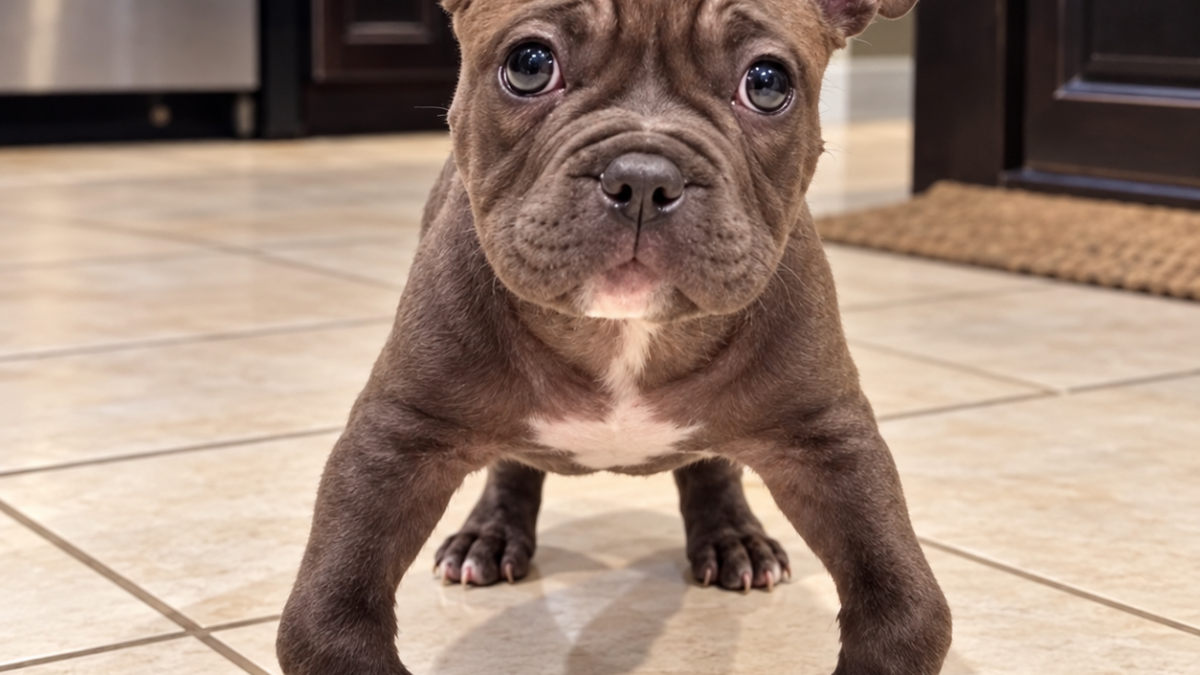
The first time I held Squid, he was only ten weeks old, and every breath looked like something his tiny body had to fight for.
A shelter had already placed him on the euthanasia list because his medical problems kept multiplying faster than anyone could solve them, and even after we pulled him out, there were nights when I wondered whether we had rescued him only to watch him die somewhere else.
What none of us knew was that the smallest puppy in the room was about to drag us through one medical crisis after another before giving us a moment I still cannot talk about without crying.
My name is Rachel Morgan, and I had worked with sick and abandoned dogs long enough to know that sometimes getting an animal out of a shelter is only the beginning.
Squid proved that more brutally than any puppy I had ever met.
When I first saw him, he was curled near the back of a kennel, so small that he looked even younger than ten weeks.
His body was thin.
His eyes were tired.
His breathing was wrong.
Not merely fast.
Labored.
Every few seconds, his chest seemed to work harder than it should have to pull in the next breath.
He had already been diagnosed with Giardia, severe respiratory symptoms, and a prolapsed rectum that no puppy should have been dealing with.
The shelter staff had tried.
But resources were limited, his condition was worsening, and his name had eventually appeared on the list no rescuer wants to see.
I remember staring at his paperwork.
“Ten weeks?” I asked.
The shelter worker nodded.
“That’s our estimate.”
“And he’s scheduled?”
Her expression answered before she did.
“Yes.”
I looked through the kennel door again.
Squid lifted his head.
Barely.
Then his tail moved once.
That was it.
One tiny movement.
I signed the rescue paperwork.
Getting him out felt like victory for approximately six hours.
Then his breathing got worse.
We had already started antibiotics and supportive care, but instead of stabilizing, Squid began having longer episodes where every breath looked frighteningly difficult.
His little chest rose.
Fell.
Paused.
Then worked again.
By the second night, I stopped pretending I wasn’t scared.
“We’re going to emergency,” I told my rescue partner, Hannah.
She was already grabbing the carrier.
At the clinic, everything moved quickly.
X-rays.
Ultrasound.
Oxygen.
Fluids.
Monitoring.
The veterinarian stood over the images with the expression doctors get when the problem in front of them refuses to be only one problem.
Then we discovered Squid couldn’t defecate normally on his own.
The prolapse and underlying complications meant surgery.
He survived it.
For several hours, we actually allowed ourselves to feel relieved.
Then his legs started collapsing.
I remember placing him on a blanket and watching him try to stand.
His front legs spread.
His back legs bent underneath him.
He looked confused.
So did we.
The veterinarians began considering a neuromuscular disorder, possibly myasthenia gravis.
More tests were planned.
More questions.
More waiting.
But Squid’s body did not give us time to solve one mystery before creating another emergency.
A follow-up ultrasound revealed a serious internal complication.
The veterinarian came into the room and shut the door.
I knew before she spoke.
“What is it?”
She pulled a chair closer.
“He’s septic.”
For a moment, I couldn’t process the word.
Squid was ten weeks old.
He had already survived the street, shelter intake, respiratory illness, Giardia, surgery, and weakness so severe he could barely hold himself up.
“How much more can he take?”
The veterinarian looked through the glass at him.
“I don’t know.”
Emergency surgery was his only real chance.
We signed the forms.
They carried Squid away.
And when those doors closed behind him, I realized rescuing him from the euthanasia list had never guaranteed him a life.
It had only given him the right to fight for one.
PART 2
The doors swung shut behind the technician carrying Squid, and for several seconds Hannah and I simply stood there.
I still remember the sound.
Rubber soles on the clinic floor.
The squeak of a cart wheel.
A monitor somewhere farther down the hallway.
Then nothing.
Hannah finally touched my arm.
“Rachel.”
I looked at her.
Her eyes were red.
“He’s so little.”
“I know.”
“He shouldn’t even know what an operating room is.”
I tried to answer, but nothing came out.
Squid had entered our lives less than two days earlier.
That was all.
Forty-eight hours.
Yet somehow the puppy behind those doors already felt like an entire responsibility compressed into one tiny body.
He had no owner waiting in the lobby.
No family pacing beside us.
Nobody who had raised him from birth.
He had come from the street, passed through a shelter, landed on a euthanasia list, and then entered rescue carrying more medical problems than some dogs experience in a lifetime.
His medical chart looked impossible.
Ten weeks old.
Prolapsed rectum.
Giardia.
Severe respiratory disease.
Progressive weakness.
Suspected neuromuscular disorder.
Now sepsis.
I sat down.
Hannah remained standing.
“You should sit.”
“I can’t.”
“Neither can I.”
Yet I was already sitting.
She looked at me.
“You know what I mean.”
I did.
Waiting during surgery is strange.
There is nothing useful to do.
You cannot help.
You cannot speed up the surgeon.
You cannot negotiate with infection.
You cannot explain to a puppy why strangers are cutting into him again.
All you can do is wait while someone else holds the life you promised to protect.
An hour passed.
Then two.
At some point, one of the receptionists brought us coffee.
I held mine without drinking.
Hannah walked the same section of hallway so many times I began counting.
Thirty-two steps one direction.
Thirty-two back.
At hour three, the surgeon finally appeared.
I stood so fast my chair hit the wall.
“He made it through.”
That was the first thing she said.
I closed my eyes.
Hannah grabbed my hand.
The surgeon continued.
“The next twenty-four hours are critical.”
Of course they were.
There was always a next critical period with Squid.
“What did you find?” I asked.
She explained carefully.
The internal complication had triggered severe infection.
His body was already compromised.
They had addressed the immediate source surgically, flushed the contaminated area, started aggressive antibiotics, and moved him to intensive care.
“Is the sepsis under control?”
“Not yet.”
“Can he survive it?”
“He has a chance.”
A chance.
Not a promise.
I had learned quickly that medicine gives you very few promises.
“Can we see him?”
“For a minute.”
They brought us into the ICU.
Squid looked smaller than ever.
A line ran into one front leg.
Bandaging covered part of his abdomen.
His breathing was assisted.
A monitor displayed numbers I watched obsessively even though I barely understood which fluctuations mattered.
His eyes remained closed.
Hannah whispered, “Hey, little man.”
Nothing.
I touched one finger to the blanket near his paw.
Not him.
Just close.
“You got through the surgery.”
His ear moved slightly.
I stopped breathing.
“Did you see that?”
Hannah nodded.
Maybe it was reflex.
Maybe coincidence.
I didn’t care.
“He heard me.”
The ICU nurse gave us the kindest professional smile.
“Let him rest.”
We left.
That first night, Squid remained in critical care.
The clinic called at 11:42 p.m.
Stable.
Still critical.
At 2:16 a.m.
No major deterioration.
At 5:03.
Temperature slightly better.
I slept in ten-minute fragments with my phone on my chest.
The next morning, I walked into the clinic carrying the same clothes from the previous night.
The ICU nurse recognized me.
“He’s still here.”
Three words.
I nearly cried.
Squid remained hospitalized for a full week.
Seven days.
It felt like seven months.
His progress was measured in numbers so small that anyone outside veterinary medicine might have missed their significance.
Slightly improved blood pressure.
Lower temperature.
Better hydration.
One meal tolerated.
A little more urine output.
A slightly stronger response when touched.
The first time he ate willingly, a technician called me.
“You need to come see.”
I was already driving toward the clinic.
“Hannah, he ate.”
“How much?”
“Two bites.”
She laughed.
“Two?”
“You don’t understand.”
“Oh, I understand.”
When I arrived, Squid was lying on his stomach instead of his side.
That alone looked miraculous.
A shallow dish sat near him.
The technician placed a tiny amount of soft food on her fingertip.
Squid sniffed.
Licked.
Then swallowed.
I put both hands over my mouth.
“He’s eating.”
The technician smiled.
“He’s interested.”
Squid licked again.
A puppy eating should not be extraordinary.
That was the thing about Squid.
He turned basic biological functions into celebrations.
Breathing.
Eating.
Standing.
Going to the bathroom.
Every ordinary act became a milestone.
On day four in ICU, he lifted his head when I entered.
On day five, his tail moved.
Day six, he tried to reposition himself without help.
Day seven, the veterinarian walked into the consultation room with something close to a smile.
“He can go home.”
I stared.
“Home?”
“If you understand that ‘home’ still means intensive monitoring.”
“I understand.”
“Medication schedule.”
“Yes.”
“Small frequent meals.”
“Yes.”
“Watch his breathing.”
“Constantly.”
“Temperature twice daily.”
“Yes.”
“Call if anything changes.”
“I’ll call if he looks at me differently.”
She laughed.
“I believe you.”
We carried Squid out wrapped in a blanket.
Sunlight hit his face.
He blinked.
That was the first time I realized he had probably spent more of his young life under fluorescent medical lights than outside.
Ten weeks became eleven.
Then twelve.
His foster setup was in my spare bedroom because I could control temperature, noise, and exposure to other dogs.
We had to be especially cautious because of his compromised health.
The first night home, I placed his bed beside mine.
I intended to sleep.
I did not.
Every time Squid inhaled, I listened.
Every time he shifted, I turned on the lamp.
At 1:00 a.m., he sighed.
I sat up.
At 1:20, he coughed.
I called the emergency clinic.
The veterinarian asked several questions.
Then said, “Rachel, puppies can cough once.”
“I know.”
“Do you?”
“Yes.”
“Let him sleep.”
I hung up.
Squid stared at me.
“You’re very stressful.”
He closed his eyes.
By morning, he had eaten almost his entire breakfast.
That felt huge.
Then came the second day.
More food.
A little more energy.
Third day.
He stood for almost thirty seconds without his legs folding.
Hannah came over to see him.
Squid walked three steps toward her.
She dropped to her knees.
“Look at you.”
He stopped.
His back legs trembled.
She held out her hands.
“Come on.”
One more step.
Then he collapsed gently onto his belly.
Hannah immediately looked worried.
I shook my head.
“He chose to move.”
She smiled.
“You’re right.”
Squid’s weakness remained concerning.
The veterinarians had not ruled out myasthenia gravis.
Further testing was being considered once he was strong enough.
Physical therapy would probably be necessary either way.
But for several days, hope finally felt larger than fear.
He developed an appetite.
A serious one.
I had been warned not to let him overeat, which felt deeply unfair after everything.
Squid disagreed with portion control.
He would finish his meal, stare at the empty bowl, then look at me like I had personally violated our rescue agreement.
“You ate.”
He blinked.
“You just ate.”
He licked the bowl.
“That doesn’t create more.”
He continued licking.
For the first time since meeting him, I laughed simply because he was being a puppy.
No crisis.
No medical milestone.
Just greed.
He also discovered toys.
At first, he only watched them.
A small blue stuffed octopus became his favorite.
Yes, somebody intentionally gave a puppy named Squid an octopus.
Rescue volunteers are not subtle.
He could not play vigorously because of his weakness, but he would grip one tentacle and carry the toy a few steps before lying down.
Hannah named it Captain.
“Absolutely not.”
“Captain Squid.”
“No.”
“Too late.”
Squid dragged Captain across the blanket.
“See? He approves.”
“He’s chewing it.”
“Enthusiastic approval.”
Those were good days.
Dangerously good.
Good enough that we started doing something we had forbidden ourselves from doing.
Imagining the future.
I pictured him six months old.
Healthy.
Running.
Annoying.
I pictured finding an adopter.
I pictured writing the update saying he had beaten everything.
Then one morning Squid did not finish breakfast.
I knew immediately.
People sometimes think rescuers become paranoid.
Maybe we do.
But when an animal has nearly died repeatedly, tiny changes become alarms.
Squid sniffed his food.
Took one bite.
Turned away.
I touched his ears.
Warm.
His breathing looked slightly faster.
“Hannah.”
She answered on the first ring.
“What?”
“Something’s wrong.”
“How wrong?”
“He isn’t eating.”
Silence.
“I’m coming.”
By the time she arrived, Squid was lying flat.
His energy had vanished almost overnight.
We took his temperature.
Too high.
His breathing worsened.
My hands began shaking.
“No.”
Hannah looked at me.
“Get the carrier.”
“No, no, no.”
“Rachel.”
“We just got home.”
“I know.”
“He was getting better.”
“I know.”
I wanted to scream at his body.
At disease.
At every biological system that seemed determined to betray him.
Instead, I wrapped him in a blanket.
“Hospital.”
Again.
The emergency clinic staff knew us now.
That was not a distinction I wanted.
They took Squid immediately.
Bloodwork.
Exam.
Imaging.
Hours.
Then the veterinarian returned.
“There’s another infection.”
“Where?”
She explained that complications associated with the earlier sepsis had spread.
The infection had reached his testicles.
I stared at her.
“He’s a baby.”
“I know.”
“What do we do?”
“They need to be removed.”
“Another surgery?”
“Yes.”
Hannah sat beside me.
My chest tightened.
“How many surgeries can he survive?”
The veterinarian’s voice remained calm.
“As many as his body can tolerate. Right now, leaving the infected tissue is the greater risk.”
I looked through the glass.
Squid was curled under a heating blanket.
“He just started playing.”
The veterinarian’s expression softened.
“I know.”
That became the cruelest pattern of his recovery.
Just enough joy to make the next crisis hurt more.
We approved surgery.
Again.
Squid survived.
Again.
The procedure itself went well.
But his respiratory symptoms returned.
The same frightening breathing that had first sent us into emergency care came back.
Every cough felt like history repeating.
Every labored breath pulled me back to the shelter.
The euthanasia list.
That tired little body.
Maybe, I thought, the shelter had known.
Maybe this was why.
Maybe Squid’s body was simply too sick.
Then I hated myself for thinking it.
Hannah caught me sitting alone outside the clinic.
“What’s happening in your head?”
“Nothing useful.”
“Try me.”
I stared at the parking lot.
“What if we’re making him go through all of this because we can’t let go?”
She was silent.
That was not the reassurance I wanted.
I continued.
“He’s had surgery after surgery. ICU. Breathing problems. Weakness. Infection.”
“I know.”
“When does saving become asking too much?”
Hannah sat beside me.
“That’s the right question.”
I looked at her.
“I wanted you to tell me I’m wrong.”
“I’m not going to lie.”
My throat tightened.
She continued.
“We ask his doctors about pain. Prognosis. Quality of life. Whether the treatment has a reasonable chance. We make decisions for him, not for us.”
“And right now?”
“Right now they think this infection is treatable.”
I nodded.
“And if that changes?”
“Then we listen.”
That conversation mattered.
Love can become selfish without meaning to.
Rescue cannot simply mean prolonging life at any cost.
Squid deserved a chance.
He also deserved not to suffer indefinitely because we were afraid to lose him.
His medical team believed he still had a meaningful path forward.
So we followed it.
Three days later, his breathing stabilized.
His fever dropped.
He ate.
A technician sent me a video.
Squid was lying on a blanket.
Captain the octopus beside him.
The technician placed food near his nose.
He lifted his head.
Ate.
Then tried to steal the spoon.
I laughed through tears.
“There you are.”
The following week, Squid came home for the second time.
We joked about needing a revolving door at the clinic.
Nobody really found it funny.
This time, I refused to imagine the future.
I focused on mornings.
Did he eat breakfast?
Yes.
Good.
Did he breathe comfortably?
Yes.
Good.
Did he sleep?
Yes.
Good.
Then afternoon.
Then evening.
One day at a time.
Squid began improving faster than expected.
His appetite returned hard enough that portion control became a negotiation.
His tail wagged more often.
He carried Captain around.
He learned that the kitchen was where food came from.
This created a logistical problem.
His legs were weak, but motivation was strong.
Every time I prepared his meal, Squid attempted to follow me.
Step.
Step.
Wobble.
Rest.
Step.
Hannah saw him one morning.
“That dog is doing physical therapy for chicken.”
“Best therapist we’ve hired.”
Squid looked up from his bowl.
His hind legs still lacked strength.
His front legs sometimes spread when he tired.
But he was moving.
The suspected myasthenia remained in the background.
More testing was planned.
His doctors still watched his neuromuscular symptoms carefully.
Then, for nearly two weeks, nothing catastrophic happened.
That sounds absurd.
Two weeks without an emergency became one of the happiest periods of my life.
Squid gained weight.
His coat looked better.
His eyes changed.
The dull exhaustion disappeared.
He began waking before me.
At first, I would open my eyes and see him sitting beside the bed.
Silent.
Then his tail would hit the floor.
Thump.
Thump.
Thump.
“Five thirty.”
Thump.
“No.”
Thump.
“You’re medically fragile. You need rest.”
Thump.
“You don’t care.”
More thumping.
We settled on six.
He became fascinated with the backyard.
Because of his compromised immune system and health history, we had to be careful about exposure, but once his doctors allowed controlled outside time in a safe area, it became his favorite part of the day.
Grass seemed to amaze him.
The first time his paw touched it, he lifted it immediately.
Then sniffed.
Tried again.
He walked three feet.
Stopped.
Looked at me.
I crouched.
“Go.”
Squid took another step.
Then another.
Captain remained inside.
Food was not involved.
He was walking because the world existed.
A bird landed on the fence.
Squid stared.
The bird moved.
Squid attempted to chase it.
His legs disagreed.
He made perhaps four enthusiastic steps before sitting abruptly.
I laughed.
“You almost had him.”
Squid looked toward the bird.
The bird was deeply unconcerned.
“You’ll get stronger.”
That became our promise.
Not “You’ll be fine.”
I stopped making promises medicine could not guarantee.
Just:
You’ll get stronger.
We’ll help.
Then one afternoon, the rescue phone rang.
Hannah answered.
She listened.
Her face changed.
“What?”
She held up one hand.
I waited.
Then she ended the call.
“What?”
“We need to test Squid.”
“For what?”
Her eyes met mine.
“Parvo.”
For several seconds I thought I had misheard her.
“No.”
“Rachel.”
“No.”
A dog connected to one of the medical environments Squid had passed through had tested positive.
The exact exposure route was uncertain.
Given Squid’s age, medical vulnerability, and symptoms that had begun emerging, the veterinarian wanted immediate testing.
“He’s been isolated.”
“I know.”
“We’ve been careful.”
“I know.”
“He can’t have parvo.”
Hannah said nothing.
We drove to the clinic.
The test turned positive.
I sat down on the floor.
Not a chair.
The floor.
My legs simply stopped participating.
The veterinarian crouched in front of me.
“We caught it.”
I stared.
“After everything?”
“We caught it early.”
“He just survived sepsis.”
“I know.”
“Two surgeries.”
“I know.”
“Respiratory disease.”
“I know.”
“He’s barely rebuilding muscle.”
“I know.”
“How is this fair?”
She didn’t answer.
There is no medical response to unfair.
Parvovirus is dangerous for puppies in the best circumstances.
Squid was not entering the fight from the best circumstances.
His body had already spent weeks surviving.
The veterinary team started treatment immediately.
Fluids.
Antiemetics.
Nutritional support.
Monitoring.
Isolation.
Every hour mattered.
When the staff carried him away, Squid looked back.
That almost destroyed me.
Not because I imagined he understood the diagnosis.
Because he recognized the pattern.
Clinic.
Strangers.
Doors.
Us leaving.
“Hey.”
I moved close enough for him to see me.
“You’re coming back.”
His eyes stayed on mine.
“I’m coming back too.”
The door shut.
Hannah and I walked outside.
I leaned against the wall.
“What did we do wrong?”
“Nothing.”
“He got parvo.”
“That doesn’t mean we did something wrong.”
“We were supposed to protect him.”
“We did.”
“Clearly not enough.”
Hannah’s voice sharpened.
“Stop.”
I looked at her.
“We rescued a ten-week-old puppy carrying multiple diseases. We followed isolation protocols. We followed veterinary instructions. Infection is not proof of failure.”
“It feels like failure.”
“I know.”
She stepped closer.
“But Squid needs us useful, not guilty.”
That was one of the best things anyone said to me during those months.
Useful, not guilty.
So I went home.
Washed everything again.
Disinfected.
Reviewed instructions.
Answered rescue messages.
Kept my phone beside me.
Squid remained hospitalized.
Day one.
Vomiting controlled.
Diarrhea continued.
Day two.
Dehydration managed.
Still weak.
Day three.
No major deterioration.
That became good news.
Day four.
Interested in food.
I almost didn’t believe it.
“Interested how?”
The veterinarian laughed.
“He tried to lick the dish.”
“Can you send video?”
“You rescue people are impossible.”
“Video?”
“Yes.”
The clip arrived twenty minutes later.
Squid raised his head.
A technician offered a small amount of food.
He licked.
Paused.
Licked again.
Captain was not allowed into the isolation area for obvious reasons, so he had a disposable toy beside him.
Squid ignored it.
Food remained his true religion.
Day five.
More alert.
Day six.
Eating.
Day seven.
The call.
“He can come home.”
I sat very still.
“Say that again.”
“He can come home.”
“Parvo?”
“Clinically he’s responded very well. You’ll continue strict precautions, but he’s stable enough for discharge.”
I started laughing.
Then crying.
Then laughing again.
Hannah heard from across the room.
“What?”
I held up one finger.
She covered her mouth.
“He beat it?”
I nodded.
We drove to the clinic together.
Squid came through the doors wearing a tiny harness.
His legs were still weak.
His body still thin.
But his head was up.
His tail moved.
The technician handed me his discharge papers.
There were so many pages I almost laughed.
“What has this dog not had?”
She considered.
“Patience?”
Squid attempted to chew the corner of his paperwork.
“Fair.”
At home, Captain the octopus was waiting.
Squid saw him.
Stopped.
Then walked directly toward the toy.
No food.
No encouragement.
He picked Captain up.
Carried him to his bed.
Lay down.
Hannah sat beside me.
“Okay.”
“What?”
“That got me.”
“Finally?”
“I’ve been holding it together.”
“For months?”
“Mostly.”
She wiped her eyes.
“He remembered his stupid octopus.”
Captain had become more than a toy to us.
Squid probably just liked its texture.
Humans assign meaning because we need somewhere to put emotion.
I knew that.
I still bought a backup Captain.
Hannah saw it in the closet.
“You mocked me for naming him.”
“This is different.”
“You bought a replacement octopus.”
“Emergency preparedness.”
“You’ve lost perspective.”
“Possibly.”
With parvo finally behind us, Squid entered a different phase of recovery.
Not crisis medicine.
Rehabilitation.
His body had survived.
Now it needed rebuilding.
Months of illness had stolen muscle.
His legs still tired quickly.
His coordination was inconsistent.
Sometimes his knees folded inward when he stood.
The physical therapist, Dr. Kelly Barnes, evaluated him on a Tuesday morning.
She watched him walk six feet.
Squid reached the end of the mat and sat.
Kelly looked at me.
“He’s weak.”
“I noticed.”
“But he’s motivated.”
“Food.”
“Yes.”
“Mostly food.”
Squid stared at her treat pouch.
Kelly smiled.
“That’s useful.”
His rehabilitation plan began with ridiculously small tasks.
Standing with correct alignment for several seconds.
Weight shifting.
Short controlled walks.
Gentle range-of-motion exercises.
Low obstacles later.
Balance work.
Rest.
More rest.
“Do not overdo it,” Kelly warned.
I nodded.
Squid attempted to climb into her treat bag.
“He may disagree.”
“He doesn’t make the schedule.”
Squid looked at me.
We all knew that was questionable.
Physical therapy became the first medical routine Squid seemed to enjoy.
Probably because nobody cut him open.
Nobody inserted IV lines.
Nobody confined him overnight.
Mostly, he received snacks for standing correctly.
This was, in Squid’s opinion, excellent medicine.
Week one, he could stand longer.
Week two, he walked farther without collapsing.
Week three, he stepped over a low foam pole.
The first attempt was terrible.
His front feet cleared it.
His back feet did not.
He sat on the pole.
Kelly laughed.
Squid looked betrayed.
“Again.”
Second attempt.
Better.
Third.
All four feet cleared.
I clapped.
Kelly immediately pointed at me.
“Don’t make him overexcited.”
“Sorry.”
Squid wagged.
“Good boy.”
Kelly smiled.
“You can say good boy.”
“Thank you.”
By month two, Squid could trot a few steps.
That word mattered.
Trot.
Not stumble.
Not shuffle.
Trot.
He began doing what healthy puppies do when their bodies finally cooperate.
Stealing things.
Shoes first.
Then dish towels.
A television remote once.
Hannah caught him dragging one of my slippers toward his bed.
“You begged him to survive.”
“I know.”
“This is your reward.”
“I regret everything.”
Squid shook the slipper.
“Absolutely nothing has humbled you faster than this dog becoming healthy.”
She was right.
Sick Squid inspired terror.
Recovering Squid inspired exhaustion.
Healthy Squid was becoming a menace.
I adored him.
At around six months old, he discovered zoomies.
The first attempt lasted perhaps eight seconds.
He ran from the hallway into the living room.
Turned badly.
Slid.
Recovered.
Ran toward the kitchen.
Stopped because his legs tired.
I stood frozen.
Hannah was laughing.
“He ran.”
“He ran.”
Squid looked pleased.
My mind flashed back to the hospital.
His legs bending beneath him.
My hands supporting his chest.
The possibility of myasthenia.
The fear that he might never walk normally.
Now he had just skidded into my kitchen because he lacked brakes.
“He ran.”
I repeated it until Hannah hugged me.
That evening I watched the security camera footage from my living room three times.
Not because anything was wrong.
Because Squid had run through the frame.
I saved the clip.
His doctors continued monitoring him.
Some of the earlier neuromuscular concerns became less dominant as his strength returned. His medical team adjusted its thinking based on his progress and ongoing results.
That mattered too.
Not every frightening possibility becomes the final diagnosis.
Sometimes medicine begins with suspicion and moves through evidence.
Squid taught me that uncertainty does not always mean doom.
But I had become conditioned to setbacks.
Every sneeze made me tense.
Every skipped bite of food made me watch him.
Every time he slept longer than usual, I counted his breaths.
Kelly noticed during therapy.
“You’re hovering.”
“I’m standing.”
“You’re hovering while standing.”
“He almost died five separate times.”
“I know.”
“What do you want me to do?”
“Let him be a dog.”
I looked at Squid.
He was chewing a foam cone.
“He’s destroying your equipment.”
“Exactly.”
“That costs money.”
“Normal puppy behavior.”
I sighed.
“How do you stop expecting disaster?”
Kelly’s face softened.
“You probably don’t stop all at once.”
“So?”
“You let normal days pile up.”
Normal days.
That became the next treatment.
Squid waking up healthy.
One normal day.
Squid eating breakfast.
Two.
Squid playing with Captain.
Three.
Squid completing therapy.
Four.
No emergency call.
Five.
A week.
Two.
A month.
Normality accumulating until fear no longer occupied every room.
By eight months old, Squid was strong enough for longer walks.
We found him a proper harness.
Bright red.
Hannah claimed it made him look athletic.
“He is athletic.”
“He fell off the couch yesterday.”
“Elite athletes fall.”
“He missed the couch entirely.”
“Poor depth perception.”
“Delusion.”
Squid wagged between us.
We took him to a quiet park early in the morning.
He had seen limited public spaces because so much of his puppyhood had been medical.
Everything fascinated him.
Leaves.
Bicycles.
A bench.
A trash can.
A man jogging.
A squirrel.
The squirrel nearly ended physical therapy prematurely because Squid forgot his legs had limits.
He lunged.
I held the harness.
“Absolutely not.”
Squid stared after it.
“No.”
He looked at me.
“You cannot defeat a squirrel.”
He disagreed.
He spent ten minutes trying to relocate it.
That day, Squid walked almost half a mile with breaks.
On the way home, he slept in the back seat.
Captain beneath his chin.
I looked in the rearview mirror.
For the first time, the image of the euthanasia list felt distant.
Not gone.
Never gone.
But distant.
Squid was approaching his first birthday when the rescue group suggested a celebration.
I resisted.
“A party?”
“He almost died thirteen times,” Hannah said.
“Not thirteen.”
“Emotionally thirteen.”
“We don’t need a party.”
“Yes, we do.”
“Squid doesn’t know what birthdays are.”
“He knows cake.”
“Dog-safe cake.”
“Obviously.”
“He’ll eat anything.”
“Exactly.”
I lost.
The party grew.
Not huge.
Just the people who had been part of his survival.
The emergency veterinarian.
Two technicians.
Kelly.
Hannah.
Several rescue volunteers.
Even one of the shelter employees who remembered seeing Squid’s name on the euthanasia list.
I had mixed feelings about inviting her.
She arrived carrying a toy.
When she saw Squid running toward us, she stopped walking.
Her eyes filled immediately.
“That’s him?”
I smiled.
“That’s him.”
She crouched.
Squid approached.
Sniffed her.
Then tried to steal the toy from her bag.
She laughed through tears.
“I remember carrying his paperwork.”
I didn’t know what to say.
She continued.
“We didn’t think anybody was coming.”
That sentence hurt.
Not because I blamed her.
Shelters make impossible decisions under resource constraints every day.
Squid had been profoundly sick.
His medical care ultimately cost more than most ordinary adopters could ever manage.
The euthanasia list was not proof that nobody cared.
It was proof that systems sometimes run out of safe options before animals run out of life.
She scratched his chest.
“You look different.”
Squid leaned against her.
“He thinks you have food.”
“I do.”
“Then you’re family.”
The birthday cake was small.
Pumpkin and peanut butter.
Squid sat in front of it shaking with anticipation.
We sang.
He barked halfway through because apparently the ceremony was delaying service.
Everyone laughed.
Then we placed the plate down.
He demolished the cake.
No dignity.
No gratitude.
Only speed.
Afterward, Hannah brought out Captain.
Original Captain was barely recognizable.
Multiple surgical repairs.
Missing one eye.
Several tentacles reattached.
A little stuffing permanently visible near the seam.
Squid grabbed him.
Then someone opened the back door.
Squid ran.
I mean ran.
Across the yard.
Full stride.
Legs straight.
Back strong.
Captain in his mouth.
He circled once.
Twice.
Hannah grabbed my hand.
I couldn’t speak.
Months earlier, we had watched his legs collapse beneath him.
Now he was running so fast I worried he would crash into the fence.
“Slow down!”
Nobody listened.
Especially Squid.
The shelter employee was crying.
Kelly was smiling.
The emergency technician recorded video.
I stood there completely still.
This was the moment.
The one the story had been moving toward without any of us realizing it.
Not the first successful surgery.
Not leaving ICU.
Not beating parvo.
Not the first therapy step.
All of those mattered.
But this—
This was life.
Squid was not surviving.
He was wasting energy.
For fun.
The difference broke me.
He ran toward me.
I crouched.
He nearly knocked me over.
Captain hit my leg.
Squid jumped.
I caught his chest.
“You made it.”
He licked my chin.
“You actually made it.”
Hannah sat beside us.
“He’s one.”
I laughed.
“One.”
Squid escaped my arms.
Ran again.
Somebody called after him.
He ignored us.
Exactly as a healthy one-year-old dog should.
That evening, after everyone left, the house was quiet.
Squid slept on the couch.
He was exhausted from behaving irresponsibly.
Captain lay beneath his chin.
I sat on the floor beside him.
One year.
I thought about the puppy on the euthanasia list.
If nobody had called.
If nobody had signed.
If the rescue had hesitated.
If surgery had gone differently.
If sepsis had overwhelmed him.
If parvo had hit harder.
If.
If.
If.
Animal rescue can destroy you with alternate endings.
I stopped.
Squid was breathing.
Easily.
That mattered.
I placed one hand lightly on his side.
In.
Out.
In.
Out.
No struggle.
No oxygen.
No panic.
Just breathing.
I started crying.
Squid opened one eye.
“Sorry.”
He closed it.
“You know, there was a time I stayed awake all night listening to you breathe.”
No reaction.
“And now you snore.”
He did.
Loudly.
“Terrible manners.”
His paw twitched.
I sat there until midnight.
Not because I feared he would die.
Because for once, I wanted to listen to him live.
After his first birthday, Squid’s story became less medical.
That was the greatest gift.
Appointments still happened.
Follow-ups.
Rehabilitation.
Routine care.
But the emergency clinic stopped being our second home.
His medical file stopped growing every week.
His world became bigger.
Parks.
Friends.
Car rides.
Training classes.
A ridiculous number of toys.
He loved people.
Maybe because so many had handled him gently during the worst moments of his life.
Maybe that was simply his nature.
He developed a habit of sitting directly on feet.
Visitors would stand in my kitchen, and Squid would park himself on their shoes.
No explanation.
Just ownership.
He learned “sit.”
“Down.”
“Wait.”
“Leave it” remained theoretical.
His strongest command was “dinner.”
Not technically a command.
He treated it as one.
He also learned how to manipulate me.
A slight cough after recovering from severe respiratory illness can be a powerful weapon.
The first time Squid wanted attention and made a strange throat noise, I dropped everything.
“What?”
He stared.
I checked his breathing.
Normal.
Gums.
Normal.
Temperature.
Normal.
Then he walked toward the treat cabinet.
I narrowed my eyes.
“No.”
Tail wag.
“You did not fake a medical emergency.”
Hannah laughed so hard she sat down.
“He owns you.”
“He exploited trauma.”
“Brilliant.”
Squid received no treat.
He got one five minutes later.
I had no authority.
By eighteen months, there was no visible sign in the way he moved that he had once struggled to support himself.
His legs were muscular.
He could run.
Jump.
Climb stairs.
Chase toys.
The physical therapist eventually discharged him from regular sessions.
Kelly handed me the paperwork.
“He doesn’t need me anymore.”
I stared at her.
“That feels rude.”
“He’s strong.”
“You taught him to walk.”
“He already knew how. His body needed rebuilding.”
Squid ran across the therapy room carrying a cone he had stolen.
Kelly pointed.
“My greatest achievement.”
I smiled.
“Can we keep coming anyway?”
“No.”
“Why?”
“Because there are dogs here who actually need appointments.”
Squid dropped the cone.
Kelly crouched and hugged him.
“Go be normal somewhere else.”
I cried in the parking lot.
Of course I did.
Every discharge from care felt like graduation.
Squid remained with me longer than originally planned.
Technically, he had entered rescue as a foster.
Technically.
By the time he was medically stable enough for adoption, nobody believed I was going to let him go.
Hannah finally confronted me.
“You need to complete paperwork.”
“I have paperwork.”
“Adoption paperwork.”
“I am his foster.”
“You celebrated his birthday in your yard.”
“Fosters can celebrate birthdays.”
“You bought health insurance.”
“Responsible foster.”
“You have his face on a mug.”
“That was a gift.”
“You ordered it.”
“Technicality.”
Squid walked into the room carrying my slipper.
Hannah pointed.
“That is your son.”
“He’s a dog.”
“Sign.”
I signed.
Squid became mine.
Officially.
Nothing changed.
Everything changed.
His name stayed Squid.
His bed remained beside mine.
Captain remained Captain.
He still woke me early.
Still sat on my feet.
Still acted as though eating breakfast was a constitutional right.
But his rescue profile changed.
ADOPTED.
I stared at the word.
For months, every update had been medical.
Critical.
Stable.
Surgery.
ICU.
Discharged.
Readmitted.
Parvo positive.
Recovering.
Rehabilitation.
Then one final status.
Adopted.
No test result ever looked better.
Time passed.
Squid turned two.
Then three.
At each birthday, Hannah insisted on cake.
Every year, Squid ran around the same yard.
Every year, I noticed his legs.
I probably always would.
At three, he developed a habit of jumping over one particular flower bed instead of walking around it.
The first time he did it, I yelled.
“Squid!”
He landed.
Looked back.
“Use the path!”
He jumped again.
Hannah, watching from the patio, smiled.
“You know why you hate that?”
“He’s destroying flowers.”
“No.”
“He could hurt himself.”
“No.”
“Then why?”
“Because part of you still sees the puppy whose legs bent.”
I went quiet.
Squid jumped the bed again.
Perfect landing.
Hannah touched my shoulder.
“He trusts them now.”
I watched him run.
His legs.
Yes.
He trusted them.
I was still learning.
Trauma does not belong only to the patient.
Caregivers collect fear too.
Every emergency had trained my body.
Phone ringing late at night.
Panic.
Squid skipping a meal.
Panic.
Cough.
Panic.
Long nap.
Panic.
It took years for that conditioning to fade.
Squid helped by being relentlessly normal.
He ate things he shouldn’t.
Rolled in something dead once.
Needed a completely unrelated emergency visit after swallowing part of a toy.
I nearly murdered him.
The veterinarian looked at the X-ray.
“Good news.”
“What?”
“It should pass.”
I stared at Squid.
“You survived sepsis to eat a rubber dinosaur.”
Squid wagged.
The veterinarian laughed.
“Recovery has consequences.”
Apparently.
At four years old, Squid became a foster brother.
I agreed to take a frightened adult dog named Nora for two weeks.
Nora had been removed from a neglect case and did not trust people.
Squid thought this was excellent.
Nora disagreed.
He approached.
She growled.
Squid stopped.
Sat.
Looked away.
I was impressed.
“Good boy.”
He waited.
Nora sniffed.
Squid remained still.
Over the next few days, he adjusted himself around her in ways I had never taught.
No crowding.
No stealing her food.
No forcing play.
He would lie near her.
Wait.
Eventually Nora followed him into the yard.
Then into the kitchen.
Then onto the couch.
Squid taught her where the water bowl was.
Where treats happened.
Which humans were safe.
Maybe he remembered fear.
Maybe he was just socially smart.
I refused to make suffering responsible for every beautiful thing about him.
He did not need to have been sick in order to become kind.
But I was grateful for the dog he became.
Nora was adopted by a quiet retired couple.
The day she left, Squid searched the guest room.
He carried Captain inside.
Dropped it where her bed had been.
Then looked at me.
“She went home.”
His ears shifted.
“You helped.”
He picked Captain up.
Walked away.
No ceremony.
Dogs are good at doing meaningful things without needing speeches.
By age five, Squid’s early medical history felt almost unbelievable.
New veterinarians would open his file.
Scroll.
Scroll more.
Then look at him.
“This is all one dog?”
“Yes.”
“Sepsis?”
“Yes.”
“Parvo?”
“Yes.”
“Multiple surgeries?”
“Yes.”
“Possible myasthenia concerns?”
“Yes.”
“Severe respiratory disease?”
“Yes.”
“And he’s doing this?”
Squid would usually be attempting to climb into their lap.
“Yes.”
One veterinarian laughed.
“What did this dog not survive?”
I looked at Squid.
“Being told no.”
He stole a treat from her hand.
Case closed.
I often thought about the euthanasia list.
People hearing Squid’s story sometimes wanted a villain.
They imagined a cruel shelter employee choosing death.
That was not what happened.
The truth was harder and more important.
A profoundly sick puppy arrived in a system with finite space, finite staff, finite money, and uncertain prognosis.
He needed specialized care.
Multiple surgeries.
Emergency medicine.
ICU.
Months of rehabilitation.
Thousands upon thousands of dollars.
Most shelters cannot create those resources out of nothing.
Squid survived because rescue created another option before time ran out.
That distinction mattered to me.
The revenge in his story was never against the shelter.
It was against the ending illness had written for him.
Against the list.
Against every diagnosis.
Against the moment somebody believed the kindest available choice might be to stop his suffering because no path forward seemed reachable.
Squid found a path.
Not alone.
Never alone.
Veterinarians.
Technicians.
Donors.
Rescuers.
Physical therapists.
Fosters.
Everybody carried a piece.
That was the truth of his survival.
When Squid turned six, we returned to the emergency clinic for a completely routine visit.
One of the nurses recognized his name.
“Squid?”
I smiled.
“The same.”
She came around the desk.
“No.”
Squid wagged.
She crouched.
“Oh my God.”
He walked directly into her arms.
She had cared for him during the sepsis hospitalization.
“I held this dog when he weighed practically nothing.”
“He’s heavier now.”
“Clearly.”
Squid climbed halfway onto her.
She laughed.
“I used to check whether he was breathing.”
“So did I.”
She buried her face briefly against his neck.
“You scared us.”
Squid licked her ear.
She started crying.
People underestimate what veterinary teams carry.
They move from patient to patient.
Some go home.
Some do not.
The ones who survive become memories too.
She stood.
“I remember the night after surgery.”
“So do I.”
“We thought we were going to lose him.”
“I know.”
She looked at Squid.
“I needed this.”
That visit showed me that Squid’s recovery belonged to more people than I realized.
His survival had repaired little places in all of us.
Not completely.
No rescue does that.
But enough.
Squid reached seven.
Then eight.
Gray began appearing near his muzzle.
I objected.
“This is unacceptable.”
Hannah laughed.
“He’s aging.”
“No.”
“He’s eight.”
“He was ten weeks old yesterday.”
“Trauma has destroyed your concept of time.”
Squid slept more.
Still ran.
Still jumped the flower bed even though I had removed the flowers years earlier because surrender was easier.
Captain the octopus had been replaced by backup Captain after the original finally disintegrated beyond repair.
I kept the original in a drawer.
Yes.
I know.
Ridiculous.
One afternoon, I opened that drawer looking for something else.
There he was.
Captain.
Flattened.
Repaired twelve times.
One eye missing.
I held him.
Suddenly I was back in the ICU.
Squid eating.
Squid breathing.
Squid returning home.
I sat on the floor.
Squid, now eight and dignified, walked in.
Saw Captain.
His body changed.
Tail moving.
He approached.
Sniffed.
Then gently took the old toy from my hands.
I laughed.
“You remember?”
He carried Captain to the living room.
Lay down.
Rested his chin on him.
My throat tightened.
Maybe scent.
Maybe familiarity.
Maybe nothing more profound than a favorite toy being recognizable after years.
It was enough.
I left Captain with him.
Backup Captain was demoted.
At nine, Squid developed mild arthritis.
The first time I saw him hesitate before jumping onto the couch, fear punched me in the chest.
Legs.
Again.
I called his veterinarian.
Exam.
X-rays.
Nothing catastrophic.
Age.
Wear.
Normal.
“You’re sure?”
“Yes.”
“Neuromuscular?”
“No evidence.”
“Old sepsis complication?”
“No.”
“Parvo?”
“Rachel.”
I stopped.
The veterinarian smiled gently.
“He’s getting older.”
I hated it.
Not because aging was unfair.
Because aging was the thing we had once prayed he would get the chance to do.
I remembered his first birthday.
Running.
The impossible milestone.
Now nine.
Nine years of borrowed time that had stopped feeling borrowed.
We began joint supplements.
Anti-inflammatory treatment when needed.
Ramps.
Rugs for traction.
Squid adapted.
He trusted his legs differently now.
Less speed.
More calculation.
But still trust.
At ten years old, the rescue organization invited us to an anniversary event.
They displayed before-and-after stories.
Squid’s board had two photographs.
The first showed him as a tiny sick puppy in medical care.
The second showed him at his first birthday.
Running.
I stood in front of it.
A teenager nearby pointed.
“That’s the same dog?”
I smiled.
“Yes.”
“He looked like he was dying.”
“He was very sick.”
“Is he alive now?”
I looked down.
Squid was beside me.
Gray muzzle.
Red harness.
Tail moving.
“This is him.”
The teenager’s eyes widened.
“No way.”
Squid approached.
Sat on his shoe.
Of course.
The teenager crouched.
Squid leaned into him.
“He’s ten?”
“Yes.”
“That’s crazy.”
It was.
Wonderful crazy.
The event coordinator asked me to say a few words later.
I hated public speaking.
Hannah volunteered me anyway.
I stood behind a microphone with Squid beside me.
I had prepared something.
I ignored it.
“When Squid was ten weeks old, I thought saving him meant getting him off a euthanasia list.”
I looked down.
He was sniffing the stage.
“I was wrong.”
The room quieted.
“That got him through one door. After that came breathing problems, surgery, weakness, sepsis, intensive care, another infection, another surgery, parvo, rehabilitation, and more nights than I can count when we didn’t know what the next morning would look like.”
Squid sat.
“People sometimes say he never gave up.”
I paused.
“That sounds beautiful. But Squid did not understand his diagnoses. He wasn’t making inspirational choices. He was a puppy whose body kept surviving while people around him kept providing the next thing he needed.”
I looked at the veterinary staff.
“That matters because rescue stories should not make survival sound like a test of character.”
Some people nodded.
“Dogs who die after rescue did not fail. People who choose humane euthanasia for untreatable suffering did not necessarily give up. Squid was fortunate enough to have treatment options, resources, a medical team, donors, and a body that kept responding.”
I touched his head.
“And because of all of that, we got ten years.”
Applause started.
Squid barked.
Everyone laughed.
I looked at him.
“You wanted the last word?”
Another bark.
Of course.
That was Squid.
At eleven, his arthritis became more noticeable.
We shortened walks.
Added hydrotherapy.
He loved it less than physical therapy.
Water was unacceptable unless voluntarily entered.
The first hydrotherapy session involved betrayal.
Squid stared at me from the underwater treadmill.
“You need this.”
His expression said otherwise.
The therapist started the belt slowly.
Squid walked.
Very slowly.
Then realized treats were involved.
Suddenly hydrotherapy became tolerable.
Food remained the central organizing principle of his life.
After several weeks, his movement improved.
He never became young again.
That wasn’t the goal.
Comfort was.
Mobility.
Choice.
Good days.
I had learned something from his puppyhood.
Medicine does not always mean returning to perfect.
Sometimes it means preserving what matters.
At twelve, Squid developed heart changes his veterinarian wanted to monitor.
Nothing immediately dangerous.
I felt the old panic waking.
The veterinarian noticed.
“We watch.”
I nodded.
“We watch.”
“No emergency today.”
“Okay.”
“You heard me?”
“No emergency today.”
Squid stole a biscuit from the exam table.
The veterinarian sighed.
“Strong prognosis for crime.”
That became our phrase.
No emergency today.
I used it often.
When bloodwork showed mild age-related changes.
No emergency today.
When he slept longer.
No emergency today.
When he stumbled once and recovered.
No emergency today.
Age asks you to live in smaller windows.
Puppyhood had taught me the same thing from the opposite direction.
I thought I understood uncertainty because of Squid’s beginning.
His old age showed me I still had more to learn.
At thirteen, Squid stopped jumping onto the couch entirely.
I bought steps.
He used them.
Then pretended he had invented them.
Captain remained in his bed.
Original Captain.
Barely an octopus now.
More stitching than fabric.
One evening Hannah visited.
She was older too.
So was I.
Squid walked toward her slowly.
She knelt.
“Hey, little man.”
His tail moved.
She looked at me.
“Remember the first time I called him that?”
“Emergency clinic.”
“Yeah.”
“He was tiny.”
“He’s still tiny in my head.”
Squid weighed considerably more than tiny.
“He ate enough to correct that.”
She laughed.
We sat on the floor.
Squid lay between us.
For a while, nobody said anything.
Then Hannah whispered:
“We actually got old with him.”
That sentence hit me.
Not old.
But older.
Years.
That was the miracle no emergency veterinarian could have promised.
We got years.
At fourteen, Squid’s breathing changed.
Not dramatically.
Just enough.
I noticed because of course I did.
That was how our story had begun.
Breathing.
I sat beside him one morning.
Counted.
Again.
Called the veterinarian.
Imaging showed age-related changes that needed management.
Medication helped.
For months, he did well.
But hearing his chest work harder brought back every fear I had buried.
The first emergency clinic.
The X-rays.
The oxygen.
Ten weeks old.
I had to remind myself:
This is not then.
This is fourteen years later.
He is not a doomed puppy.
He is an old dog with a long life behind him.
That difference mattered.
We adjusted medication.
Reduced exertion.
Kept him cool.
Squid still demanded breakfast.
Still sat on feet.
Still carried Captain short distances.
Still barked at delivery drivers.
Quality of life remained good.
So we continued.
One afternoon, the shelter worker who had first handled Squid’s euthanasia paperwork contacted me through the rescue.
Her name was Marissa.
We had stayed loosely in touch.
She asked whether she could visit.
“Of course.”
When she arrived, Squid was sleeping near the patio door.
She knelt.
He opened his eyes.
Tail moved.
Marissa started crying.
“I’m sorry.”
I sat beside her.
“For what?”
She touched his head.
“I signed part of the paperwork.”
I knew.
“I know.”
“I’ve thought about it for fourteen years.”
My heart hurt for her.
“Marissa.”
“I know the shelter had reasons. I know we were overloaded. I know he was suffering.”
“Yes.”
“But I still see his kennel.”
I looked at Squid.
“You didn’t put him there.”
“No.”
“You didn’t make him sick.”
“No.”
“You helped release him to rescue.”
She swallowed.
“Yes.”
“Then that is part of the story too.”
She wiped her face.
“What if you hadn’t come?”
I knew that question.
I had asked versions of it for years.
“We did.”
“But—”
“We did.”
Squid lifted his head and placed it on her knee.
Marissa laughed through tears.
“He doesn’t even know.”
“No.”
“That’s probably good.”
“Yes.”
Dogs do not carry our paperwork.
They carry bodies.
Sensations.
Relationships.
Whatever Squid remembered of the shelter, it did not include administrative guilt.
He simply knew Marissa’s hand was gentle.
That was enough.
His final year was quiet.
That was what I wanted.
No huge medical drama.
No endless cycle of crisis medicine.
We managed age.
Pain.
Breathing.
Mobility.
Appetite.
When those remained good, we enjoyed the day.
When one slipped, we adjusted.
Squid turned fifteen.
Fifteen.
I almost refused a party because he tired easily.
Hannah insisted on something small.
We made a tiny dog-safe cake.
No crowd.
Just five people.
The original medical team had scattered over the years, but several joined by video call.
Squid sat in front of the cake.
Gray.
Thin in the way very old dogs become.
Eyes still bright.
We sang softly.
He barked once.
Timing perfect.
I placed the cake down.
His appetite remained legendary.
He ate like the ten-week-old puppy who had once made us celebrate two bites.
Hannah whispered:
“Fifteen.”
I nodded.
“We thought one was impossible.”
“I know.”
Squid finished the cake.
Looked for more.
“He’s greedy.”
“Consistent character development.”
Afterward, I opened the back door.
Squid walked into the yard.
Slowly.
Very slowly.
The yard where he had once sprinted with Captain on his first birthday.
He reached the grass.
Stopped.
Sunlight touched his back.
For a second, I could see both dogs at once.
The old one.
The puppy.
Weak legs.
Strong legs.
Running legs.
Aging legs.
All Squid.
He took a few steps.
Then lay down.
I sat beside him.
“You won.”
Hannah heard.
“Against what?”
I thought.
“Everything that said he wouldn’t get this.”
That was the only revenge Squid’s story ever needed.
Not anger at the shelter.
Not blame.
Not punishment.
Time.
Fifteen years.
The euthanasia list had predicted an ending because medicine and resources left few other options.
Squid answered with years.
Sepsis tried.
Parvo tried.
Respiratory disease tried.
Weakness tried.
Infection tried.
Age eventually arrived, but age was not an enemy.
Age was the prize.
One morning several months after his fifteenth birthday, Squid did not get up for breakfast.
That had happened occasionally.
I brought the bowl closer.
He sniffed.
Turned away.
My chest tightened.
“No emergency today,” I whispered.
But I knew.
His breathing was more difficult.
His body tired.
The veterinarian came to the house.
I wanted home.
Not another emergency clinic.
Not fluorescent lights.
Not doors closing behind him.
Home.
She examined him gently.
Listened.
Watched him.
Then looked at me.
There are expressions you understand before words.
“How bad?”
“His body is tired.”
“Can medication fix this?”
“Not in a way that gives him comfortable time.”
I looked at Squid.
He was resting beside Captain.
Hannah sat nearby.
I asked every question I had promised myself I would ask.
Pain.
Breathing.
Comfort.
Options.
Prognosis.
Not because I wanted permission to let go.
Because I had once promised that rescue would be about him, not our fear of losing him.
The answers were clear.
Squid had fought enough.
No.
That phrase was wrong.
He had lived enough.
Fighting was not what made his life worthy.
Fifteen years of living had.
I lay beside him.
His breathing remained difficult.
I touched his chest.
Same place I had touched at ten weeks old.
“You know what?”
His eyes opened.
“I spent half your puppyhood begging you to breathe.”
Tail movement.
“And fifteen years telling you not to eat things.”
Another tiny movement.
Hannah laughed quietly through tears.
I picked up Captain.
Placed the ruined octopus beneath his chin.
Squid sniffed it.
Closed his eyes.
The veterinarian gave us time.
I whispered:
“You made it to one.”
His ear moved.
“Then two.”
I stroked his head.
“Then five.”
His breathing slowed.
“Ten.”
I kissed his forehead.
“Fifteen.”
Hannah put one hand over her mouth.
“You were never supposed to owe us any of that.”
That mattered to say.
“You didn’t owe anybody survival.”
Squid opened his eyes.
I smiled.
“But I’m so grateful you stayed.”
When the medication began, he relaxed.
No fear.
No struggle.
No ICU alarm.
No emergency surgery.
Just my hand.
Hannah’s voice.
Captain beneath his head.
Home.
His last breath was easier than many of the breaths he had taken during his first weeks of life.
That broke me.
And comforted me.
Both can be true.
For months afterward, I kept hearing him.
Not literally.
In habit.
I opened the pantry and expected paws behind me.
I sat at my desk and expected him on my feet.
The delivery truck came.
Silence.
No bark.
I hated that truck.
Captain remained beside his bed until I finally washed the blanket.
I never washed Captain.
Couldn’t.
Maybe someday.
Maybe not.
The rescue held a memorial gathering.
I almost refused.
Squid had been a public story for so long.
I wanted grief private.
Then Marissa contacted me.
The shelter had changed several medical-transfer procedures over the years, partly because partnerships with rescues had improved.
Squid’s case had been used internally as an example of what can happen when emergency placement networks are strong enough to move quickly.
“Would you come?” she asked.
So I did.
They placed two photographs on a board.
Ten-week-old Squid.
Fifteen-year-old Squid.
No dramatic caption.
Just:
SQUID
RESCUED AT 10 WEEKS
LOVED FOR 15 YEARS
I stared at it.
That was enough.
A young volunteer approached.
“I’ve heard about him.”
I smiled.
“Have you?”
“He’s kind of a legend.”
I laughed.
“He ate part of a rubber dinosaur once.”
The volunteer looked confused.
“Legends contain multitudes.”
We both laughed.
Then she said:
“I wish I’d met him.”
I looked at the old photograph.
“He would’ve sat on your shoes.”
Later, the rescue created a small medical emergency fund in his name.
Not because Squid was more deserving than other dogs.
Because people remembered him.
Donations went toward puppies who arrived with complicated conditions requiring rapid transfer, diagnostics, or emergency treatment.
The first dog helped was a seven-week-old mixed-breed puppy with pneumonia.
When Hannah told me, I cried.
“What’s his name?”
“Biscuit.”
“Of course it is.”
“He’s improving.”
“Good.”
The next was a young dog who needed surgery after an intestinal blockage.
Then another.
Then a litter with parvo.
I visited the clinic one afternoon while two puppies from that litter were recovering.
Isolation prevented direct contact.
I looked through the window.
Small bodies.
IV lines.
One lifted her head.
My entire chest hurt.
A technician stood beside me.
“Squid Fund covered part of their emergency admission.”
I nodded.
“Good.”
“Do you want to know their names?”
“Yes.”
“Peaches and Milo.”
Peaches was chewing her IV line.
“Strong prognosis for crime,” I said.
The technician looked confused.
I laughed.
“Old joke.”
Squid’s story kept moving without him.
That is one of the strange things about rescue.
An animal’s life ends.
The effects do not.
Someone remembers.
Someone donates.
Someone notices the next puppy.
Someone says yes where they might have said no.
Not every ending changes.
Not every puppy survives.
That matters too.
The fund helped dogs who later died despite treatment.
At first, that devastated me.
I had built too much meaning around Squid’s survival.
Then I remembered what I said at his tenth-year event.
Dogs who die did not fail.
Rescue does not guarantee survival.
It guarantees that suffering is seen and decisions are made with care.
Sometimes treatment.
Sometimes comfort.
Sometimes goodbye.
Squid had been fortunate enough to receive years.
Another animal’s dignity could not be measured by whether biology granted the same.
That became part of his legacy too.
Hope without dishonesty.
Fight when there is a meaningful fight to make.
Let go when suffering becomes the only future.
Love through both.
Years after Squid died, I still kept one video favorited on my phone.
First birthday.
The yard.
Someone opens the door.
Squid runs.
Captain in his mouth.
His legs extend beneath him.
Strong.
Fast.
He circles.
Turns.
Runs toward me.
The camera shakes because I start crying.
You can hear Hannah laughing.
Someone says:
“Look at him!”
Then my own voice:
“He’s running.”
Again.
“He’s running.”
That was the revenge.
The medical chart had recorded weakness.
The video recorded speed.
The shelter paperwork had contained a euthanasia date.
The birthday video contained a life beyond it.
His sepsis diagnosis had said emergency.
The yard said ordinary.
Parvo had said isolation.
The party said surrounded.
His failing legs had said maybe never.
His running body said watch me.
I do not mean Squid defeated medicine through attitude.
He survived because veterinary science, money, labor, luck, time, and a remarkable biological capacity all aligned.
But emotionally, that run became our answer to every night we had been afraid to hope.
People sometimes ask me what moment convinced me Squid would survive.
There wasn’t one.
That is the truth.
Even after ICU, I feared relapse.
After the second surgery, I feared his breathing.
After parvo, I feared weakness.
After physical therapy, I feared another diagnosis.
At one year, I relaxed a little.
At two, more.
At five, I realized I had stopped counting his breaths while he slept.
That might have been the real moment.
Not when his doctors declared him stable.
When my body finally believed them.
One night when Squid was about five, I woke at 2:00 a.m.
The room was dark.
He was asleep beside the bed.
I listened.
Not intentionally at first.
Breathing.
Slow.
Easy.
I realized I had no idea how many breaths per minute.
For years, I could tell you.
I used to count automatically.
That night I didn’t.
I smiled.
Rolled over.
Went back to sleep.
That was recovery too.
His.
Mine.
When I tell Squid’s story now, people often focus on the list.
“They were going to euthanize him?”
Yes.
Because he was profoundly ill and the resources needed to save him were enormous.
Then they focus on the crises.
“Sepsis too?”
Yes.
“And parvo?”
Yes.
“And surgery?”
Several.
“And he still lived fifteen years?”
Yes.
That is the part I love saying.
Fifteen.
The number feels almost defiant.
Not because death was an enemy he beat forever.
Nobody does.
Because he got enough time for the emergency to become ancient history.
Enough time to gray.
Enough time for young clinic staff who treated him to change careers.
Enough time for rescue volunteers to marry, move, have children, return.
Enough time for Captain to become an archaeological object.
Enough time for me to forget some medication doses but remember how he sat on people’s shoes.
That is what illness had tried to steal.
Not simply survival.
Ordinary years.
Squid got them.
His first ten weeks had been pain, fear, shelter noise, disease, and medical intervention.
His next fifteen years contained breakfast.
That sounds like a small word.
Breakfast.
But breakfast is future.
You feed a dog in the morning because you expect him to be there.
Dinner is future too.
Walks.
Appointments next year.
Buying the large bag of food.
Replacing worn toys.
Scheduling vaccines.
Making plans.
Squid went from a puppy nobody could promise tomorrow to an old dog whose life was filled with assumptions about later.
Later we’ll walk.
Later you’ll eat.
Later Hannah is coming.
Later we’ll go to the park.
Later.
Later.
Later.
That is what rescue gave him.
Not immortality.
Later.
The framed photograph in my house is not from the ICU.
It is not the shelter intake picture.
It is not even the first birthday.
It is Squid at around six years old.
Nothing dramatic.
He is lying in the yard.
Captain between his paws.
Mouth open.
Tongue out.
One ear folded strangely because he had been rolling in the grass.
Behind him, the fence is slightly crooked.
There are weeds.
The lighting is ordinary.
I love it because nobody looking at that picture would guess the history.
He is not a miracle patient.
Not a medical case.
Not “the puppy on the euthanasia list.”
Just Squid.
That was always the goal.
To let him become boring enough that tragedy stopped being the first thing people saw.
And he did.
Spectacularly.
He became annoying.
Expensive.
Greedy.
Loyal.
Funny.
Stubborn.
Affectionate.
Terrible with boundaries.
Good with frightened dogs.
Suspicious of squirrels.
Deeply committed to breakfast.
He became himself.
When I finally packed away his medical records after his death, the folder was enormous.
I flipped through it once.
Emergency intake.
Surgery.
Sepsis.
ICU.
Discharge.
Readmission.
Orchiectomy.
Respiratory symptoms.
Parvo.
Physical therapy.
Follow-ups.
Page after page.
Then near the back were years of boring records.
Annual exam.
Vaccination.
Dental cleaning.
Arthritis management.
Senior bloodwork.
Boring.
Beautiful.
I closed the folder.
On the front, somebody had written his name in black marker years earlier.
SQUID.
Under it, in smaller letters:
10-WEEK-OLD MALE PUPPY.
I touched those words.
Ten weeks.
Then I wrote something beneath them.
LIVED TO FIFTEEN.
I put the folder away.
That was the ending.
Not revenge against a person.
Not revenge against a shelter.
Not even revenge against disease, because disease has no conscience.
It was the kind of revenge only time can deliver.
A puppy placed on a list because his future looked impossibly short went on to have so much future that his rescue became only the first chapter.
A puppy whose legs folded beneath him learned to run.
A puppy who struggled for breath grew old enough to sleep deeply without anyone counting.
A puppy who survived parvo grew into a dog who complained when dinner was late.
A puppy whose medical team celebrated two bites eventually stole entire sandwiches.
A puppy we once feared would never reach one year made us celebrate fifteen.
If you had shown me his final photograph while I sat outside that emergency operating room, I would not have believed you.
I would have asked one question.
“Does he really get that old?”
Yes.
He did.
And if I could go back to the woman I was that night—coffee untouched, phone clutched in both hands, terrified that the surgeon would come through the doors with bad news—I would not tell her every setback waiting ahead.
I would not tell her about the second infection.
Or parvo.
Or all the rehabilitation.
She had enough fear.
I would only show her one image.
Squid at his first birthday.
Running.
I would say:
Watch his legs.
She would.
I would say:
He learns to trust them.
Then I would show her the photograph at fifteen.
Gray muzzle.
Soft eyes.
Captain beside him.
And I would say:
You get years.
Not without pain.
Not without bills.
Not without fear.
But years.
Then I would leave before she could ask questions.
Because some hope is powerful precisely because it does not explain everything between here and there.
Squid’s story was never clean.
Recovery was not one upward line.
It was surgery.
Improvement.
Collapse.
ICU.
Home.
Back to hospital.
Hope.
Infection.
Home.
Parvo.
Treatment.
Weakness.
Therapy.
One step.
Another.
Then running.
That is why his first birthday mattered so much.
We were not celebrating a date.
We were celebrating accumulated tomorrows.
Three hundred and sixty-five mornings his original paperwork could not promise him.
And every birthday afterward added another year to the answer.
When I close my eyes now, I can still see him running across that yard.
Captain swinging from his mouth.
People laughing behind me.
The puppy who once couldn’t hold his own legs beneath him moving faster than I could follow.
He comes toward the camera.
For half a second, his entire body fills the frame.
Then the video shakes.
Because I am crying.
I used to be embarrassed by that.
Now I am glad the recording has my voice.
“He’s running.”
Again.
“He’s running.”
I sound shocked.
I was.
Maybe I always will be.
Because somewhere in my memory, Squid will forever be ten weeks old.
Tiny.
Sick.
Breathing hard.
A name on a list.
And beside that memory will always be the dog he became.
Strong legs.
Easy breath.
Toy in his mouth.
Running simply because he could.
That was Squid’s revenge on every impossible day.
He lived long enough for us to stop waiting for him to die.
And then he lived long enough for us to forget we ever had.


