PART 2: They Left an 8-Pound Puppy to Di3 on the Street—Five Days Later, Dona’s Body Began to Give Up
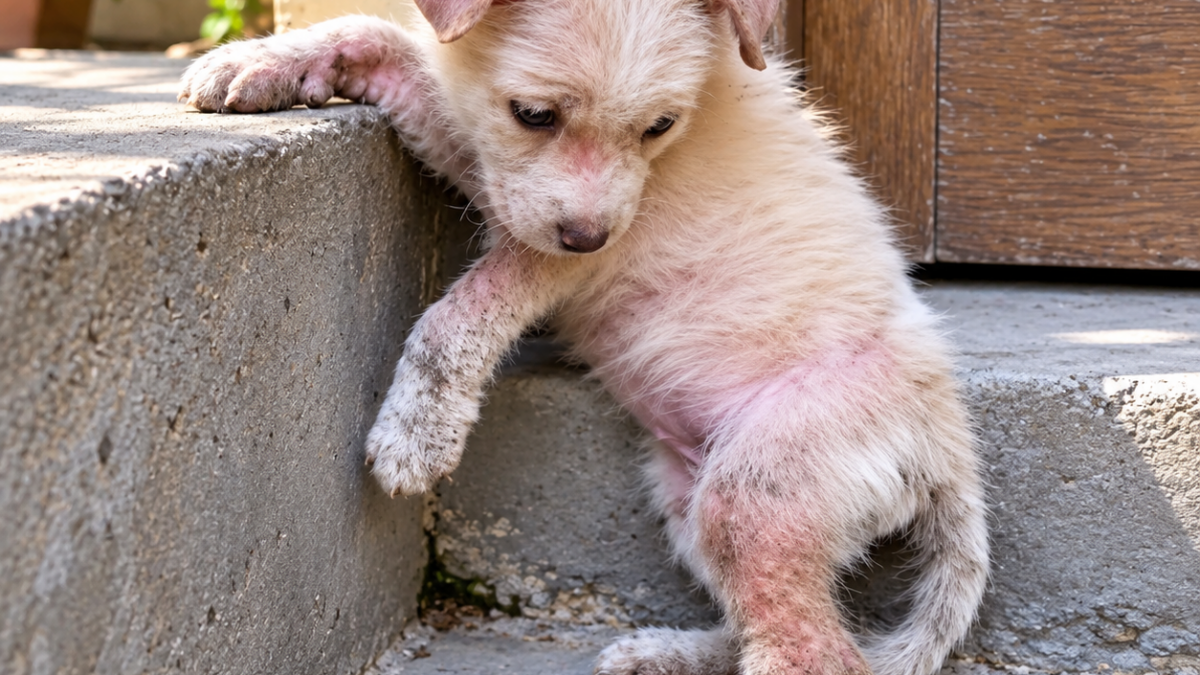
PART 2
The seizure probably lasted less than a minute.
To me, it lasted forever.
I could see only pieces of what was happening through the people gathered around Dona.
A technician supporting her head.
Another checking the IV line.
The veterinarian calling out instructions in the clipped, controlled voice people use when they’re moving quickly but cannot afford panic.
I took one step toward the treatment room.
A nurse stopped me.
“Please stay here.”
“What’s happening?”
“They’re treating her.”
“I can see that. What’s happening?”
Her expression softened.
“She’s having a seizure.”
“I know that.”
The words came out harder than I meant them to.
I immediately regretted it.
The nurse didn’t react.
People who work in emergency medicine learn that fear sometimes sounds like anger.
I pressed both hands against my forehead.
Five days.
Dona had been with us only five days.
Five days since somebody had picked a nearly lifeless puppy off the street.
Five days since I had first held that tiny body and wondered how a living creature could weigh so little.
Five days of medication.
Fluids.
Wound cleaning.
Assisted feeding.
And now I was standing in a hallway afraid that all of it had only brought her to another kind of ending.
The room suddenly grew quieter.
I looked up.
The veterinarian straightened.
One technician continued monitoring Dona.
Another adjusted the blanket beneath her.
Nobody was rushing anymore.
I searched the veterinarian’s face.
He walked toward me.
“She’s stopped seizing.”
My knees weakened.
“Is she awake?”
“Not fully.”
“Is she going to have another?”
“I can’t promise she won’t.”
“Why did it happen?”
“There are several possibilities. Severe infection. Malnutrition. Electrolyte imbalance. Low blood sugar. The strain her entire body is under.”
“Which one?”
“We’re running more tests.”
I looked past him.
Dona lay on her side.
Her eyes were closed.
“Can I see her?”
“In a few minutes.”
Again, waiting.
I hated waiting.
When you rescue an animal, people imagine the dramatic part is finding them.
Sometimes it is.
But nobody talks enough about the hours afterward.
The sitting.
The watching.
The numbers you don’t understand until they start falling.
The way you memorize every expression on a veterinarian’s face.
The way a ringing phone suddenly makes your heart pound because you know one sentence from the person on the other end can change the entire day.
I sat down.
Then immediately stood again.
The same nurse returned with water.
“Drink.”
“I’m fine.”
“No, you’re not.”
I took the cup.
My hands were trembling enough that some water spilled onto my sleeve.
Through the glass, Dona’s ear moved.
I stopped breathing.
Another small movement.
Then her head shifted slightly.
The technician beside her leaned down.
“Hey, little girl.”
Dona opened one eye.
Just a crack.
But she opened it.
I walked toward the glass.
“Dona.”
Her eye moved.
I didn’t know if she heard me through the door.
I said it again anyway.
“Dona.”
A few minutes later, they let me inside.
The room smelled of disinfectant and warm blankets.
Dona looked exhausted.
I pulled a chair close.
“Hey.”
Her eye turned toward me.
“You scared me.”
Nothing.
“I’m serious. You don’t get to do that again.”
One of the technicians gave me a tired smile.
“Good luck setting rules with a puppy.”
It was the first time I had almost laughed in hours.
I placed my hand beside Dona’s body without touching the places that hurt.
“I’m still here.”
Her eye slowly closed.
I stayed.
That night became another test.
Dona’s stomach was still terribly inflamed.
Food could save her.
Food could also trigger more vomiting.
Too much at once might be dangerous.
Too little meant her body had no fuel to fight the infection.
A technician named Maria sat with Dona tucked gently against her chest.
She held a small syringe filled with liquid food.
“Ready?”
I nodded.
Maria touched one drop to the side of Dona’s mouth.
Dona swallowed.
We waited.
Another drop.
Swallow.
Wait.
Another.
Every movement was slow.
Deliberate.
Nobody rushed.
After ten drops, Maria stopped.
“That’s enough for now.”
“That’s all?”
“That’s what she can tolerate.”
I looked at Dona’s thin body.
“How can that possibly be enough?”
“It isn’t. Not long-term. But her stomach needs to accept food before we can ask for more.”
That sentence stayed with me.
Before we can ask for more.
Recovery became exactly that.
We stopped looking weeks ahead.
Stopped asking when she would be normal.
Stopped asking how much weight she could gain.
Stopped asking when the swelling would disappear.
The goal became the next small thing.
Can she keep down ten drops?
Yes.
Then twelve.
Can she go thirty minutes without vomiting?
Yes.
Then an hour.
Can she sleep without another seizure?
Yes.
Then one more night.
By morning, she had kept down several tiny feedings.
Nobody celebrated loudly.
We had learned that hope could feel fragile.
But twelve hours passed.
No vomiting.
Then eighteen.
Then twenty-four.
At thirty-six hours, Maria gave Dona another small feeding.
Dona swallowed every drop.
At forty-eight hours, the veterinarian entered carrying the chart.
“She hasn’t vomited.”
“I know.”
“That’s important.”
“Can I finally be happy?”
He considered the question.
“For a few minutes.”
I smiled.
“Generous.”
I sat beside Dona.
“You heard him. We get five minutes.”
Her eyes opened.
I whispered her name.
“Dona.”
The tip of her tail moved.
I froze.
“Maria.”
“What?”
“Look.”
“Look at what?”
I said Dona’s name again.
The tail moved.
Once.
Twice.
Maria smiled.
“Well, there she is.”
I covered my mouth.
It was such a small thing.
A weak tail tapping against a blanket.
But the last time I had watched Dona move suddenly, her body had been seizing.
Now she was moving because she recognized a voice.
“Dona.”
Tap.
I laughed through tears.
“That’s enough. Don’t wear yourself out.”
As the infection began responding to treatment, Dona slowly returned to us.
First her eyes.
They started following familiar people.
Then her ears.
A voice she knew would make them shift.
Then the tail.
The tail became our measuring stick.
If Maria entered, wag.
If I walked in, wag.
If the veterinarian entered, sometimes nothing.
“You need better treats,” I told him.
He pretended to be offended.
The swelling in Dona’s face remained severe.
The infection had formed pockets that required repeated cleaning and drainage.
Wound care was painful.
Even with medication, there were moments when Dona trembled.
I hated those moments.
I hated holding her while something necessary caused discomfort.
One afternoon, after the veterinarian finished cleaning the worst area, Dona pressed herself into my chest.
I wrapped the blanket around her.
“I know.”
She shook.
“I know.”
I stroked the top of her head with two fingers.
“I wish I could explain this.”
She pushed closer.
That became another promise.
“You’re never going back there.”
I didn’t know exactly where “there” was yet.
The sidewalk?
The person who had failed her?
The hours of hunger?
Maybe all of it.
“You hear me?”
Her tail moved weakly.
“You don’t have to understand. I understand.”
Days passed.
Dona’s bloodwork stopped getting worse.
Then some values improved.
The veterinarian showed me the numbers on the chart.
“That’s better.”
“How much better?”
“Enough that I’m encouraged.”
I stared at him.
“That’s the happiest thing you’ve ever said.”
“I’m trying not to spoil you.”
The next major challenge was standing.
Dona had spent so much time curled into herself that her already weak muscles had become weaker.
Her fractured paw also limited how she could put weight down.
The first time we let her try, Maria supported her chest.
“Easy.”
Dona pushed up.
Her back legs trembled violently.
She collapsed.
I moved forward.
Maria stopped me.
“She’s okay.”
Dona rested for a moment.
Then pushed again.
This time she got halfway.
One paw slipped.
Down again.
“Enough,” I said.
But Dona did not agree.
She tried a third time.
Slowly.
Painfully.
Her legs straightened.
Her body shook.
And then she stood.
For maybe four seconds.
Five.
Then sat.
I laughed.
Maria whispered, “Good girl.”
Dona looked confused by all the excitement.
“You stood.”
Tail wag.
“You actually stood.”
That evening I went home for the first time in days and realized how quiet the room was without her.
Her first blanket was still folded in the corner.
The water bowl I had placed beside her sat empty.
I remembered the dark vomit.
The panic.
The drive back to the hospital.
I sat on the floor and cried.
Not because she was worse.
Because she was finally a little better.
Sometimes relief waits until you’re alone.
The following morning, I arrived before visiting hours officially started.
Maria saw me through the glass doors.
“You again.”
“Good morning.”
“Do you live here now?”
“Probably.”
Dona’s tail started moving before I reached her enclosure.
I crouched.
“That’s new.”
Wag.
“You knew I was coming?”
Wag.
Her face was still swollen, but less than before.
For the first time, I could clearly see the shape of her muzzle.
Her eyes seemed larger.
More alert.
I took a photograph.
Then compared it with the first one on my phone.
I almost could not believe they showed the same puppy.
Not because Dona looked healthy.
Not yet.
But because a face was emerging from beneath the infection.
A puppy was appearing.
“She’s cute,” Maria said.
“She was always cute.”
“You know what I mean.”
I did.
Until then, everyone had seen the emergency first.
The swelling.
The wounds.
The protruding bones.
The fractured paw.
Now there was something else to see.
Dona.
The puppy beneath all of it.
She started developing preferences.
She liked Maria.
She liked one particular blanket.
She disliked temperature checks.
She hated one medication enough that she would turn her head away before the syringe came near her.
One afternoon, she actually put a paw over her face.
Maria laughed.
“Oh, so now you have opinions?”
Dona’s tail wagged.
“Good,” I said. “Keep the attitude.”
Attitude meant energy.
Energy meant food.
Food meant healing.
Healing meant maybe.
Maybe became our favorite word.
Maybe she could leave intensive care soon.
Maybe the fractured paw would heal without lasting problems.
Maybe the seizure had been a crisis tied to malnutrition and wouldn’t repeat.
Maybe she would eventually eat from a bowl.
Maybe she would run.
We never said those things too loudly.
Then came the bowl.
Dona had been receiving carefully controlled nutrition.
As her stomach settled and her strength improved, the veterinarian approved a tiny amount of soft food in a shallow dish.
Maria put it down.
Dona smelled it.
Nothing.
My heart sank.
Then she smelled it again.
One lick.
Pause.
Another.
She stopped.
Maria whispered, “Don’t touch her.”
I wasn’t breathing.
Dona leaned forward.
Lick.
Lick.
Then a tiny mouthful.
Her head came up.
She swallowed.
I covered my face.
Maria started laughing.
“Don’t cry.”
“She ate.”
“Yes.”
“By herself.”
“Yes.”
Dona lowered her head again.
This time she kept going.
Not much.
But enough.
When she finished, the dish still contained food.
Dona stared at it.
Then looked at us.
“That’s enough,” Maria said.
Dona looked back at the bowl.
“No.”
Wag.
“Absolutely not.”
Dona’s expression changed.
For the first time in her life with us, she looked annoyed.
I laughed so hard I had to turn away.
A puppy who had been unable to keep ten drops in her stomach was now angry because we had taken away dinner.
That felt like victory.
Over the next week, she gained ounces.
I became obsessed with the scale.
“Up?”
“Four ounces.”
“Only four?”
The technician stared at me.
“Four ounces is significant for a puppy her size.”
Two days later:
“Another five.”
I grinned.
“Tell everyone.”
“They can read the chart.”
“Tell them anyway.”
The healing of her paw moved more slowly.
Every time Dona started feeling better, she wanted to use all four legs as if nothing had happened.
That meant stopping her from becoming the puppy she was becoming.
“No running.”
Tail wag.
“No.”
She tried again.
“Dona.”
She looked at me.
Then toward the hallway.
“You are thinking about it.”
She ran exactly three steps before Maria intercepted her.
We laughed.
“You nearly died two weeks ago,” I told her. “Have some respect.”
Dona licked Maria’s chin.
Respect was apparently not part of the recovery plan.
Then we received the first clue about Dona’s past.
A woman called the rescue.
“I saw the photo you posted.”
I immediately became alert.
“What about it?”
“I think I know that dog.”
My hand tightened around the phone.
“What makes you think that?”
“She looks like a puppy my neighbor had.”
“Had?”
“Yes.”
I wrote down the woman’s name.
“Tell me everything you remember.”
She described the same coloring.
Same approximate size.
Same age range.
A small female puppy who had frequently been outside near a row of rental homes.
Then she said something that made me stop writing.
“Her face was swelling before she disappeared.”
I looked across the room.
Dona was sleeping.
“You saw her face like that?”
“Not as bad as in the rescue photo. But something was wrong.”
“Did anyone take her to a vet?”
“I don’t know.”
“When did she disappear?”
The timeline matched.
I contacted animal control.
An officer came to speak with the woman.
Other neighbors were interviewed.
At first, the information was frustratingly incomplete.
People remembered seeing a puppy.
Someone remembered a man carrying her once.
Another neighbor remembered that Dona had stopped appearing outside.
No one knew where she went.
Then someone produced a photograph.
It showed Dona before everything became severe.
Smaller.
Still thin.
But unmistakably her.
The markings matched.
The shape of the ears.
The white patch.
The little front paw.
I stared at the picture.
“That’s her.”
The officer nodded.
“It appears to be.”
“Who owned her?”
“We’re working on that.”
I felt something change inside me.
Until then, Dona had been a mystery.
A puppy found on the street.
Maybe lost.
Maybe dumped.
Maybe abandoned.
Now there was a person at the beginning of the trail.
I wanted answers.
I also feared them.
A few days later, animal control located the former owner.
The first explanation was that Dona had “run away.”
But the timeline did not fit.
Witnesses had seen the puppy becoming ill.
There were messages in which someone complained about the cost of veterinary treatment.
Then another message surfaced.
A neighbor had received it after asking where the puppy had gone.
“Couldn’t deal with it anymore.”
That sentence made my hands cold.
Couldn’t deal with it.
The officer continued gathering evidence.
Eventually, the account changed.
The former owner admitted Dona had been driven away from the property.
“She was sick,” the investigator told me.
“They knew?”
“Yes.”
“They knew she needed help?”
“It appears so.”
“Then why didn’t they surrender her?”
“They said they didn’t think anyone would take her.”
I stared at him.
“There are shelters.”
“I know.”
“Rescues.”
“I know.”
“Clinics.”
“Yes.”
“They could have called anybody.”
He nodded.
I looked toward Dona.
She was awake now, chewing the corner of her blanket.
The infection had nearly disappeared.
Her face looked like a puppy’s face.
“They left her sick.”
“Yes.”
“On purpose.”
The officer paused.
“The evidence indicates she was intentionally abandoned.”
Anger arrived so quickly I almost felt dizzy.
I remembered the first photograph.
Dona curled against pavement.
Barely breathing.
Her face swollen.
Bones visible.
The broken paw.
The vomiting.
The seizure.
Somebody had known she was ill and still driven away.
“What happens now?”
“We document everything.”
“That’s it?”
“No. But we have to do this correctly.”
I wanted something immediate.
A consequence.
A confrontation.
I wanted whoever had abandoned Dona to sit in the clinic for five days watching what their decision had caused.
I wanted them to hear the seizure alarm.
I wanted them to count every syringe drop.
I wanted them to see eight pounds on a scale and understand how close that number was to a grave.
But evidence moves at its own pace.
So while the case developed, I returned to what mattered more.
Dona.
She did not know people were investigating her past.
She did not wake up angry.
She woke up hungry.
That became something I admired.
Dogs do not waste much time rehearsing betrayal.
They remember fear, of course.
They learn patterns.
They can carry trauma.
But Dona did not spend breakfast thinking about who left her.
She spent breakfast thinking about breakfast.
So I tried to follow her example.
Her first day out of the hospital felt enormous.
The veterinarian handed me a bag of medication and a page of instructions.
“Small meals.”
“I know.”
“Monitor hydration.”
“I know.”
“Limit activity.”
I looked at Dona.
She was trying to climb out of the carrier.
“That one may be harder.”
He smiled.
“If she vomits repeatedly, call.”
“I will.”
“If she has another seizure—”
“We come immediately.”
“Yes.”
I lifted the carrier.
Dona looked through the small opening.
“Ready to go home?”
Her tail thumped.
The word home came out before I thought about it.
Technically, it was foster care.
Temporary.
A place to finish healing.
But after what Dona had been through, temporary safety still deserved the name.
At the house, I opened the carrier in the recovery room.
Dona stepped out.
One leg was still supported.
Her movement was awkward.
But she walked.
I sat on the floor.
She sniffed the water.
The blanket.
The edge of the bed.
Then she walked toward me.
Her tail moved.
“You remember this place?”
She climbed halfway into my lap.
I touched the top of her head.
The swelling was almost gone.
“You nearly scared me to death the last time you were here.”
Dona licked my wrist.
That night, I put a mattress on the floor beside her.
At 12:40 a.m., she changed position.
I sat up.
Fine.
At 2:05, she made a small sound.
I turned on the lamp.
Dreaming.
At 3:17, she drank water.
I watched.
At 4:30, she sighed.
I put my fingers against her ribs.
Breathing.
By morning, I looked terrible.
Dona woke up refreshed and immediately wanted breakfast.
“You slept perfectly.”
Wag.
“I did not.”
Wag.
“You have no sympathy.”
Food stayed down.
Then another meal.
Then another.
Twenty-four hours.
No vomiting.
Forty-eight.
No vomiting.
The fear did not disappear at once.
Every time Dona swallowed strangely, I watched.
Every time she slept deeply, I checked her breathing.
Every time one paw twitched in a dream, my heart jumped.
The seizure had changed me.
Dona seemed less impressed.
By the end of the first week at home, she discovered toys.
The first was a faded stuffed rabbit someone had donated.
I placed it beside her.
Dona sniffed the rabbit.
Looked at me.
Walked away.
“Great response.”
Ten minutes later, I heard something scraping across the blanket.
Dona had the rabbit by one ear.
She pulled.
Stopped.
Pulled again.
Then shook her head.
Her tail began wagging.
I laughed.
“There you are.”
The next hour became the first truly ridiculous hour of Dona’s life with me.
She dragged the rabbit across the floor.
Dropped it.
Pounced awkwardly.
Lost her balance.
Got up.
Attacked again.
Every movement had to be limited because of her paw, so I spent half the time laughing and the other half stopping her from overdoing it.
“You’re injured.”
Wag.
“You cannot act like this.”
Wag.
“Why are you happy I’m yelling?”
Wag.
That rabbit became hers.
She slept with it.
Carried it toward the food bowl.
Once dropped it into the water and then stared at me as though I had caused the problem.
I dried it with a towel.
“You did this.”
She waited beside me until I returned it.
Watching Dona play changed something in me.
Until then, recovery had been medical.
Numbers.
Medication.
Hydration.
Weight.
Infection.
Healing.
Now I was watching something medicine could not prescribe.
Joy.
Puppies are supposed to waste energy.
They are supposed to do things with no survival value.
Chase toys.
Bark at shadows.
Steal socks.
Dona had spent so long conserving everything she had just to stay alive.
Now she could afford to be silly.
That was when I knew survival was becoming a life.
The investigation continued.
Animal control requested Dona’s complete veterinary records.
The clinic provided documentation.
Photographs.
Weights.
Descriptions of the infection.
The fracture.
The severe dehydration.
The seizure.
The prolonged hospitalization.
One veterinarian wrote a statement explaining how much earlier intervention could have reduced Dona’s suffering.
I read it once.
Then put it down.
The sentence I could not forget was simple.
“Her condition was consistent with prolonged neglect prior to abandonment.”
Prolonged.
Not one bad day.
Not one missed meal.
Not one unfortunate accident.
Time.
Enough time for bones to become visible.
Enough time for infection to spread.
Enough time for a puppy to weaken until lying in the road was easier than looking for help.
The former owner was eventually charged under applicable animal neglect and abandonment laws.
When I heard, I expected satisfaction.
Instead I looked at Dona sleeping beside her rabbit and felt tired.
The charge did not make her first weeks disappear.
It could not erase the seizure.
Could not return the body weight she should have had.
Could not explain to a puppy why someone had decided her illness was inconvenient.
Still, accountability mattered.
There would be a record.
Evidence.
Consequences.
And perhaps most importantly, restrictions intended to protect other animals from ending up where Dona had.
The legal process moved slowly.
Meanwhile Dona moved quickly.
Too quickly.
Her paw was healing well, and the veterinarian gradually increased her allowed activity.
The first day she was cleared for a short unrestricted walk across the room, Dona acted as if somebody had announced a national holiday.
I put her down.
“Easy.”
She walked.
Then trotted.
“Dona.”
Trotted faster.
“Dona.”
She broke into the ugliest little run I had ever seen.
Her recovering body seemed to have three different ideas about direction.
She reached the carpet, spun, and came back.
I laughed despite trying to sound stern.
“Stop.”
She launched herself against my shins.
I picked her up.
“You weigh almost eleven pounds now. You’re becoming dangerous.”
Her tongue came out.
“You’re proud of yourself.”
Absolutely.
Her next clinic appointment felt like returning to a place from another lifetime.
Maria saw us entering.
“Dona!”
The tail started instantly.
Maria crouched.
Dona pulled toward her.
“Look at you.”
The veterinarian came out.
Dona wagged at him too.
“Finally,” he said. “Respect.”
“She thinks you have food.”
“I’ll take it.”
The weight was up again.
Her bloodwork had improved dramatically.
The infection was resolving.
The paw showed strong healing.
No additional seizures.
I stared at the veterinarian.
“Say it.”
“Say what?”
“That she’s doing well.”
“She’s doing well.”
“Again.”
He laughed.
“She’s doing very well.”
I nearly hugged him.
Dona’s transformation became more obvious each week.
Her coat changed.
At first it had been dull and thin.
Now it grew softer.
Shinier.
Her eyes brightened.
Her body filled out.
The face that once looked distorted by infection became delicate and expressive.
People who met her for the first time had difficulty believing the original photograph was the same dog.
I understood.
Sometimes I had difficulty believing it too.
I printed two photos.
One from the day she was found.
One from three months later.
In the first, Dona was curled inward, face swollen, body skeletal.
In the second, she sat upright beside her stuffed rabbit.
The tail was blurred because she had been wagging.
I placed the photographs side by side.
Dona approached.
Sniffed both.
Then tried to steal the new one.
I laughed.
“You prefer that version?”
She pulled at the corner.
“Fair.”
Court came several months later.
I debated whether to attend.
Part of me wanted nothing more to do with the person who had abandoned Dona.
Another part felt that if somebody was going to describe her suffering in a courtroom, I wanted at least one person there who remembered what every clinical word actually looked like.
So I went.
The former owner sat across the room.
I had imagined this person many times.
In my mind, cruelty had created something obviously cruel.
Reality was more unsettling.
The person looked ordinary.
Clean clothes.
Nervous expression.
Human.
That bothered me.
Because it reminded me that terrible choices are not always made by people who look terrible.
The prosecutor presented the veterinary evidence.
Dona’s initial weight.
Photographs.
Medical findings.
The progression of infection.
The fractured paw.
The hospitalization.
The seizure.
The former owner’s attorney talked about financial hardship.
I listened.
I understood that veterinary treatment could be expensive.
I understood panic.
I understood not knowing what to do.
What I could not understand was driving a sick puppy away and leaving her.
There had been options.
A shelter.
A rescue.
Animal control.
A clinic.
A neighbor.
A phone call.
Even leaving her safely at a veterinary hospital entrance would have been better than a street.
Financial hardship explained why someone might struggle.
It did not explain why Dona had been treated as disposable.
The judge spoke carefully.
There was no dramatic speech.
No shouting.
No cinematic revenge.
There were consequences appropriate to the evidence and local law, including penalties and restrictions intended to limit future animal ownership.
The exact legal language mattered less to me than one fact.
The record now said Dona had been wronged.
Her suffering was not invisible.
When the hearing ended, I walked outside.
The investigator found me on the courthouse steps.
“You all right?”
“I thought I would feel better.”
He nodded.
“Court rarely gives people the feeling they imagine.”
“I wanted justice.”
“You got accountability.”
“That’s not the same thing.”
“No.”
I looked at a picture of Dona on my phone.
She was standing in the yard with the stuffed rabbit hanging from her mouth.
“I think she got the better thing.”
“What’s that?”
“A future.”
He smiled slightly.
“Probably.”
That evening, when I returned home, Dona met me at the door.
Her entire body wagged.
Not just the tail.
Everything.
I dropped my bag.
She brought the rabbit.
I sat on the floor.
“Guess what?”
Dona climbed into my lap.
“Nobody gets to decide you’re worthless again.”
She licked my chin.
I realized something then.
I had spent months imagining revenge as pain moving backward.
They hurt Dona.
Therefore, justice meant hurting them.
But Dona had no interest in that equation.
Her revenge was weight gain.
Her revenge was clean water.
Her revenge was the healed paw.
Her revenge was a veterinarian saying, “She looks great.”
Her revenge was a toy with one ear nearly chewed off.
Her revenge was having somebody worry when she slept too deeply because her life mattered enough to check.
The person who abandoned her had acted as if Dona’s suffering was inconvenient.
Dona’s answer was to become impossible to ignore.
But I still had one decision left.
Adoption.
Everybody around me assumed Dona would stay.
Maybe I did too.
When someone asked, “Are you keeping her?” I usually answered, “Probably.”
But rescue taught me not to decide based only on what I wanted.
Dona deserved the best permanent home available.
Maybe that was mine.
Maybe not.
Then I met Claire.
Actually, Dona met Claire’s daughter first.
Ava was ten years old.
They happened to be at the clinic during one of Dona’s follow-ups.
I was sitting in the waiting room with Dona beside my feet.
Ava entered with her parents.
The girl looked at Dona but did not rush over.
“Can I say hi?”
I appreciated the question.
“If she wants to.”
Ava crouched several feet away.
Dona looked at her.
Tail wag.
Ava held out one hand.
Dona walked forward.
Sniffed her fingers.
Then placed her head directly on Ava’s knee.
The girl looked at me.
“She’s sweet.”
“She is.”
“What happened to her face?”
Claire immediately said, “Ava, you don’t need to—”
“It’s okay.”
I gave them the short version.
Sick.
Abandoned.
Infection.
Recovered.
Ava stroked Dona gently.
“She looks good now.”
That sentence made me smile.
Not poor thing.
Not damaged.
She looks good now.
The family left.
I thought that was the end.
Two days later, the rescue coordinator called.
“You remember the family from the clinic?”
“Yes.”
“They asked about Dona.”
“No.”
Silence.
“You didn’t even hear the question.”
“I know where this is going.”
“They want to know if she’ll be available for adoption.”
“She’s not ready.”
“The veterinarian cleared her.”
“Emotionally.”
The coordinator laughed.
“Whose emotions are we discussing?”
I hung up on her.
Then called back thirty seconds later.
“That was rude.”
“A little.”
“I’m considering it.”
“I know.”
Claire, her husband Daniel, and Ava came for a formal meeting.
I prepared myself to dislike them.
That would make everything easier.
Unfortunately, they were wonderful.
Daniel asked about future medical risks.
“What should we watch because of the seizure?”
“The doctors believe it was likely connected to how sick and depleted she was, but any new seizure requires immediate veterinary evaluation.”
He wrote it down.
Claire asked about the old fracture.
Ava asked whether Dona had nightmares.
That question caught me off guard.
“Sometimes noises wake her.”
“Does she want someone with her?”
“Usually.”
“Can she sleep in my room?”
Claire looked at me and smiled.
“We’re still negotiating that.”
Dona solved the negotiation by walking directly to Ava and climbing halfway into her lap.
I stared at her.
“You are not helping.”
Ava laughed.
Dona kissed her chin.
The meeting lasted almost two hours.
They never pressured her.
Never forced affection.
Never talked about what a heroic thing adoption would be.
They asked what Dona liked.
What frightened her.
What food worked.
How much exercise.
Where she liked sleeping.
What made her happy.
By the end, I knew.
I hated knowing.
After they left, Dona carried her rabbit to the door and sat there for several seconds.
“You liked them.”
Wag.
“I noticed.”
Wag.
“I’m supposed to matter too.”
She walked back and climbed beside me.
I cried into her fur.
The adoption approval took another week.
During that week, I found reasons it might be wrong.
Ava was young.
What if Dona became too attached?
They had a house with stairs.
What if Dona’s leg bothered her?
They traveled occasionally.
What if—
The coordinator stopped me.
“You checked all of this.”
“I know.”
“They have a veterinary plan.”
“I know.”
“They understand her history.”
“I know.”
“They passed the home visit.”
“I know.”
“Then what are we really talking about?”
I looked toward Dona.
“She almost died.”
“Yes.”
“I promised her she would never be alone.”
“She won’t be.”
“What if she thinks I abandoned her?”
The coordinator’s expression softened.
“You are not leaving her on a street.”
I looked away.
“You’re choosing people who will carry the promise forward.”
That hurt because it was true.
Dona’s final night with me arrived too quickly.
I put her bed beside mine.
She ignored it and climbed onto the blanket near my legs.
Technically, she was not supposed to be on my bed.
Technically had lost a lot of power in our relationship.
At midnight, I woke to find the stuffed rabbit pressed against my stomach.
At two, Dona was sleeping sideways and taking up more room than physics should have allowed.
At four, I touched the top of her head.
She woke.
Tail tap.
“You remember the first night here?”
Probably not.
“I checked your breathing every hour.”
Dona sighed.
“You were so sick.”
She moved closer.
“I promised you something.”
Her eyes stayed on me.
“If you kept fighting, you’d never spend another night alone.”
My throat tightened.
“I thought that meant with me.”
Dona rested her chin on my arm.
“Turns out it means something bigger.”
We stayed like that until morning.
Claire’s family arrived at ten.
Ava carried a new blanket.
Daniel carried supplies.
Claire had a folder containing all the veterinary information they had already reviewed twice.
Prepared people.
That mattered.
Dona heard their voices.
Her tail started.
I laughed through the ache in my chest.
“So that’s how it is.”
Ava crouched.
“Hi, Dona.”
Dona ran toward her.
Ran.
The first time I had ever seen her, she barely had enough strength to lift her head.
Now she ran.
Across the room.
Straight into a child’s arms.
I turned away for a second because I couldn’t control my face.
The paperwork was completed.
Food packed.
Medication history transferred.
Emergency contacts exchanged.
Then the carrier door opened.
Dona walked inside after her rabbit.
She turned around.
Looked at me.
I knelt.
For one second, the room disappeared.
I saw the swollen face again.
The skeletal body.
The dark vomit.
The seizure.
The syringe feeding.
Then I looked at what was actually in front of me.
Bright eyes.
Soft coat.
Healthy weight.
Tail moving.
“Go.”
Dona stepped closer to the carrier door.
I touched her forehead.
“No more streets.”
Wag.
“No more wondering if anybody is coming back.”
Wag.
“Go be a puppy.”
Ava started crying.
That made me cry.
Then Claire cried because we were crying.
Daniel looked around.
“Should I just pretend this is normal?”
“Yes,” all three of us said.
He laughed.
They carried Dona outside.
I followed to the driveway.
Ava sat beside the carrier in the back seat.
As the car pulled away, Dona’s face appeared beside her.
Ava waved through the window.
Dona’s tail was moving behind her.
The car turned the corner.
Gone.
I stood there for several minutes.
Then I walked inside.
The room felt wrong.
Dona’s water bowl was gone.
The favorite blanket had gone with her.
The place where the rabbit usually lay was empty.
I sat on the floor.
This was what successful rescue looked like.
An empty room.
At 11:42 a.m., Claire sent the first message.
“We’re home.”
Photo.
Dona standing in the new living room.
At 12:17:
“She found the water.”
At 12:41:
“She found Ava.”
Photo.
Dona pressed against the girl’s leg.
At 1:03:
“She found the couch.”
I laughed.
By dinner:
“She ate everything.”
Of course.
Then came the message that mattered most.
“She’s asleep in Ava’s room.”
I stared at the photograph.
Dona lay on the new blanket beside Ava’s bed.
The stuffed rabbit was near her paws.
Her body was completely relaxed.
I touched the phone screen.
“Promise kept.”
The following days brought updates.
Dona barked at the vacuum cleaner.
Dona stole one of Daniel’s socks.
Dona discovered that dropping toys from the couch created humans who picked them up.
Dona learned the sound of the refrigerator.
Then Claire sent a video.
Ava had been at school.
Dona was asleep in the living room.
The front door opened.
“Ava’s home.”
Dona’s head lifted instantly.
The tail began.
Tap.
Tap.
Then faster.
Her whole body started moving.
She stood.
Ran through the hallway.
Ava dropped her backpack.
“Dona!”
The puppy launched herself into Ava’s arms.
Ava knelt.
Dona licked her face while her tail moved so hard she could barely keep balance.
I watched the video once.
Then again.
Then I returned to the beginning.
The hospital.
The weak tail movement after forty-eight hours without vomiting.
Dona.
Tap.
That tiny motion had made an entire medical team smile.
Now that same tail looked like it might knock furniture over.
I cried.
Not because I was sad.
Because for once, the past and present fit together in a way that made sense.
The tail had always been there.
The puppy had always been there.
Illness had simply buried them.
Months later, I visited.
Dona met me at the door.
For one terrifying second, she stared without reacting.
Maybe she forgot me.
Then she exploded.
Tail.
Body.
Paws.
Tongue.
Everything.
I dropped to the floor.
“You remember.”
Dona climbed against my chest.
Ava laughed.
“She does that to everyone.”
“Let me have this.”
“Okay.”
Dona brought the rabbit.
It was barely recognizable.
One ear gone.
Stuffing exposed.
“Good grief.”
Ava picked it up.
“She refuses to let us throw it away.”
“She nearly died with that rabbit beside her. She can keep it.”
Dona grabbed it from Ava and ran.
Ran.
Again that word.
I could never stop noticing it.
She crossed the living room.
Turned.
Came back.
No limp.
No hesitation.
No reminder of the fractured paw except the memory in my head.
Claire showed me the rest of Dona’s kingdom.
Bed near Ava’s room.
Blanket by the couch.
A sunny patch near the window.
A bowl in the kitchen.
A basket full of toys.
Dona had gone from owning nothing to owning most of the house.
Daniel walked in.
“She stole my chair.”
“That sounds accurate.”
“I bought her a bed.”
“Your first mistake.”
“She sleeps in my chair.”
“Because it’s hers.”
He sighed.
“I’ve accepted this.”
At dinner, Dona sat near the table.
Nobody fed her scraps.
She tried Claire.
Then Daniel.
Then me.
Then Ava.
“You’ve taught her manipulation,” I said.
Ava smiled.
“She came like that.”
After the meal, Dona curled beside Ava on the couch.
I watched the girl absentmindedly stroke the top of her head.
The same place I had touched in the hospital when the infection made everything else too painful.
Dona’s eyes closed.
Safe.
I realized I had been worried she might think I had abandoned her.
That fear vanished.
Dona had not been abandoned.
She had been transferred from one promise to another.
When I left, Dona followed me to the door.
I crouched.
“You stay.”
Tail wag.
“No emotional scene.”
Wag.
“You have your people.”
She licked my hand.
“Good girl.”
I drove home without crying.
That surprised me.
I felt peaceful.
The legal case had given me accountability.
The medical recovery had given me relief.
But seeing Dona in that house gave me closure.
Her real revenge was not what happened to the person who left her.
It was that abandonment failed to define her life.
That became even clearer as the years passed.
Dona stopped being “the rescue puppy” in her family.
She became simply Dona.
Dona hated rain.
Dona loved chicken.
Dona barked once at the doorbell, then ran to see who had arrived.
Dona believed blankets existed primarily to be dragged into different rooms.
Dona disliked one particular inflatable holiday decoration and barked at it every December as if meeting it for the first time.
Dona slept with Ava whenever storms came.
Dona learned that if she sat by Daniel while he made sandwiches, sometimes a tiny piece of turkey appeared.
Dona gained normal problems.
That phrase might sound strange.
Normal problems were beautiful.
One morning, Claire called laughing.
“Your dog ate homework.”
“My dog?”
“You started this.”
“What happened?”
“Ava left a worksheet on the couch.”
“Why?”
“She’s twelve.”
“Fair.”
“Dona shredded half.”
I laughed.
“Any medical concerns?”
“No. Just educational.”
“Then congratulations. You officially have a normal dog.”
Normal became the miracle.
At one of Dona’s annual veterinary exams, Maria happened to be working.
She had not seen Dona in almost a year.
When we walked in, Maria froze.
“No.”
Ava looked confused.
Maria crouched.
“Dona?”
The tail started.
Maria covered her mouth.
“Oh my God.”
Dona approached.
Maria wrapped her arms loosely around the dog.
“You were this tiny.”
She held her hands close together.
Dona licked her chin.
“You made me feed you one drop at a time.”
Tail wag.
“You threw up on me.”
More wagging.
Ava laughed.
“She still throws up in the car sometimes.”
Maria looked offended.
“So nothing changed.”
The veterinarian entered.
Dona received a clean bill of health.
There were recommendations to monitor her old injury as she aged, but nothing alarming.
Afterward, Maria pulled out her phone.
“I still have the first picture.”
She showed Ava.
Ava stared.
For several seconds, she did not speak.
“That’s Dona?”
“Yes.”
Ava looked down at the healthy dog beside her feet.
“I’ve seen pictures, but…”
She couldn’t finish.
Maria nodded.
“It’s different when you see them next to each other.”
Ava crouched and hugged Dona.
Dona immediately tried to lick inside her ear.
The emotional moment ended.
That was Dona’s gift.
She never allowed tragedy to remain dramatic for too long.
A few weeks later, Ava asked me about Dona’s abandonment.
She was older now.
Old enough to understand more.
“Did the person who had her hate her?”
The question stopped me.
“I don’t know.”
“How can you leave a dog like that if you don’t hate her?”
I sat beside her.
“People can do terrible things without feeling the emotion we expect.”
“Did they get punished?”
“There were legal consequences.”
“Was it enough?”
I considered my answer.
“I don’t know what ‘enough’ would mean.”
Ava looked at Dona sleeping nearby.
“They should have seen her when she was sick.”
“I sometimes thought that too.”
“Then they’d understand.”
“Maybe.”
“Are you still angry?”
“Yes.”
She looked surprised.
“All these years?”
“Sometimes.”
“What do you do with it?”
I looked at Dona.
“I remember that she won.”
Ava frowned.
“Won what?”
“Her life.”
That became the simplest explanation I ever found.
Dona won her life.
Not a perfect one.
Not one untouched by what happened.
Her body carried history.
Her family had to monitor things other dogs might never need monitored.
But none of that belonged to the person who abandoned her anymore.
Her mornings belonged to Ava.
Her walks belonged to the family.
Her toys belonged to her.
Her future belonged to time.
One summer, Dona went on her first camping trip.
Claire worried how she would handle the unfamiliar environment.
Ava sent me photographs.
Dona in a harness.
Dona smelling pine needles.
Dona staring suspiciously at a lake.
Dona sleeping inside the tent.
Then a video.
Ava stood knee-deep near the shoreline.
“Come on.”
Dona stepped toward the water.
Touched one paw to it.
Jumped backward.
Ava laughed.
Dona barked at the lake.
I watched the clip repeatedly.
The puppy once too dehydrated to drink had now developed an opinion about an entire body of water.
Another winter, snow fell heavily.
Dona had never seen deep snow.
Daniel opened the back door.
Dona stepped out.
Stopped.
Looked back.
Ava encouraged her.
“Go.”
Dona took another step.
Snow touched her belly.
She turned immediately.
Inside.
Everyone laughed.
Ten minutes later, curiosity won.
She went out again.
This time she ran along a narrow cleared path, barking at falling flakes.
Ava sent me the video.
The caption read:
“She hates snow until she loves snow.”
That was Dona too.
Fear.
Pause.
Curiosity.
Then life.
I sometimes wondered how much of her early trauma remained somewhere inside her.
She still hated being left completely alone for long periods.
Certain smells in veterinary settings made her tense.
If someone moved too quickly near her head, she sometimes ducked.
Those reactions mattered.
Love did not erase memory.
Her family respected them.
Nobody forced her to “get over it.”
If Dona needed space, she got space.
If she needed reassurance, she got reassurance.
Healing did not mean pretending nothing had happened.
It meant what happened no longer controlled everything.
By the time Ava was a teenager, Dona slept at the foot of her bed almost every night.
Then Ava began talking about college.
One evening, she called me.
“What happens when I leave?”
“To you?”
“To Dona.”
“She’ll stay with your parents.”
“I know, but she sleeps with me.”
“She’ll adapt.”
“What if she thinks I left her?”
There it was.
The same fear I had once carried.
I smiled sadly.
“You’ll come back.”
“That’s what people always say.”
“Then make sure you do.”
Ava became quiet.
“What if she doesn’t understand?”
“She understands patterns.”
“So?”
“Call. Come home when you can. Keep things familiar. Leave clothes that smell like you if that helps. And trust the family she has.”
Ava sighed.
“I don’t like this.”
“Neither did I when she left me.”
That made her laugh.
“You thought she’d think you abandoned her?”
“Yes.”
“Did she?”
“Look at her.”
Dona was asleep with her head in Ava’s lap.
“No.”
“Exactly.”
When Ava eventually left for college, Dona searched for her.
Claire sent videos.
Dona walked into Ava’s bedroom.
Smelled the bed.
Waited near the doorway.
For several days, she seemed quieter.
Then routines adjusted.
She slept more often near Claire.
Followed Daniel in the kitchen.
Still checked Ava’s room.
The first weekend Ava returned, Claire recorded the reunion.
The front door opened.
“Ava?”
Dona’s head shot up.
Then she moved.
Fast.
Not the awkward puppy run from rehabilitation.
Not the frantic motion of fear.
A strong adult dog crossing her own home toward the person she loved.
Ava dropped her bag.
Dona hit her knees with enough force to nearly knock her over.
“Aww, baby.”
The tail disappeared into a blur.
Ava laughed and cried at the same time.
I watched the video and thought about the street.
Dona had once been left in a place where nobody she knew returned.
Now she understood something new.
People can leave.
And still come back.
That may have been one of the deepest things her family ever taught her.
Years passed.
Dona’s muzzle slowly changed.
A little gray.
Then more.
The once-fractured paw occasionally became stiff in cold weather.
The veterinarian recommended joint support and lower-impact exercise.
Her family bought another bed.
Then another.
Dona ignored both and continued taking Daniel’s chair.
Some things do not change.
One evening Ava, home from college, sent me a photograph.
Dona was curled beside her.
Older now.
Heavier around the middle.
Face softer.
The message said:
“She still wags before I even say her name.”
I stared at the picture.
That tail.
I thought about the clinic.
Forty-eight hours without vomiting.
A weak puppy barely strong enough to respond.
Dona.
Tap.
Now years had passed.
Still the tail.
The final time I visited Dona while she was still energetic enough to greet me at the door, she moved more slowly.
But she came.
That mattered.
I knelt.
“Hey, old girl.”
Her tail moved.
I touched the top of her head.
No swelling.
No wound.
Just soft fur and age.
Ava sat beside us.
“Sometimes I think about what would’ve happened if nobody found her.”
I looked at Dona.
“I try not to.”
“But it could have been so different.”
“Yes.”
Ava stroked Dona’s back.
“Do you think she knows she got lucky?”
I smiled.
“I think she knows she’s loved.”
“Is that the same thing?”
“For a dog, maybe that’s the part that matters.”
We sat quietly.
Dona rested her head against my leg.
I could feel her breathing.
Steady.
Warm.
So different from the first time I held her and checked every breath because I feared the next one might not come.
I realized then that happy endings are rarely one moment.
I once thought Dona’s happy ending was surviving the seizure.
Then I thought it was eating again.
Then leaving the hospital.
Then the court case.
Then adoption.
I was wrong every time.
The happy ending was all of it.
A thousand ordinary mornings.
A thousand bowls of food.
A thousand doors opening.
A thousand times Ava came home and Dona’s tail started moving.
The person who abandoned her had made one terrible decision.
But one terrible decision did not get to own the thousands of good decisions made afterward.
Someone stopped beside the street.
Someone picked her up.
Someone called the clinic.
Veterinarians treated the infection.
Technicians fed her drop by drop.
People monitored her all night.
Someone documented the neglect.
Investigators followed the evidence.
A judge imposed consequences.
A foster home gave her recovery.
A family chose her.
A child grew up beside her.
No single heroic act created Dona’s life.
It took a chain.
A chain of people deciding not to look away.
And in the center of that chain was a puppy whose body kept answering each chance with another small effort.
Swallow.
Breathe.
Stand.
Eat.
Walk.
Run.
Trust.
Love.
Dona never understood that people told her story.
She never knew that strangers looked at the first photograph and cried.
She never knew anyone thought her transformation was extraordinary.
To Dona, it was simply life.
Breakfast.
Warm blanket.
Ava.
A walk.
Dinner.
The rabbit.
Rain she disliked.
Snow she sometimes tolerated.
The chair she stole.
A bedroom door opening.
Footsteps coming home.
That simplicity became the most beautiful thing about her.
She did not remain the abandoned puppy.
We did.
Humans remembered that version.
Dona moved forward.
Years after I first lifted those eight frightening pounds at the clinic, Ava sent me another short video.
No dramatic reason.
No medical update.
Dona was lying on the couch.
Older now.
Ava entered the room.
“Hi, baby.”
Dona lifted her head.
The tail began.
Slow at first.
Then stronger.
Tap.
Tap.
Tap.
Ava sat.
Dona pushed herself up and crossed the small distance between them.
She rested her head against Ava’s thigh.
Ava stroked the place on Dona’s forehead where the infection had once been worst.
Dona closed her eyes.
That was the whole video.
Maybe fifteen seconds.
I watched it several times.
The beginning of Dona’s story had been loud in my memory.
Vomiting.
Seizure.
Emergency.
Fear.
But the ending was quiet.
A dog resting against the person she trusted.
That felt right.
No courtroom could create that ending.
No punishment could create it.
No dramatic revenge could compete with it.
Dona’s real victory was expectation.
She expected food to be there.
Expected water.
Expected a soft place to sleep.
Expected Ava to return.
Expected a hand touching her face to be gentle.
Expected doors to open instead of close forever.
That is what safety gives an animal.
Not just protection from pain.
Expectation of kindness.
The puppy found curled on a street had not known what would happen next.
The dog on Ava’s couch did.
Love had become predictable.
That was the promise I had tried to make in the hospital when I whispered:
“If you keep fighting, you’ll never have another night alone.”
Back then, I didn’t know whether she could keep her half.
She did.
Drop by drop.
Day by day.
Step by step.
And everyone who loved her afterward kept ours.
Dona never faced another night wondering if anybody would come back.
There was always somebody.
A voice.
A light.
A blanket.
A hand.
A family.
And whenever one of those people walked through the door, that little tail still answered first.
Tap.
Tap.
Tap.
As if some part of Dona was still speaking for the tiny puppy we once thought we might lose.
I’m here.
You came back.
I knew you would.

