PART 2: They Found Elijah Barely Alive Beside the Road—Months Later, the Puppy Everyone Thought Was Finished Was Running Toward His New Family
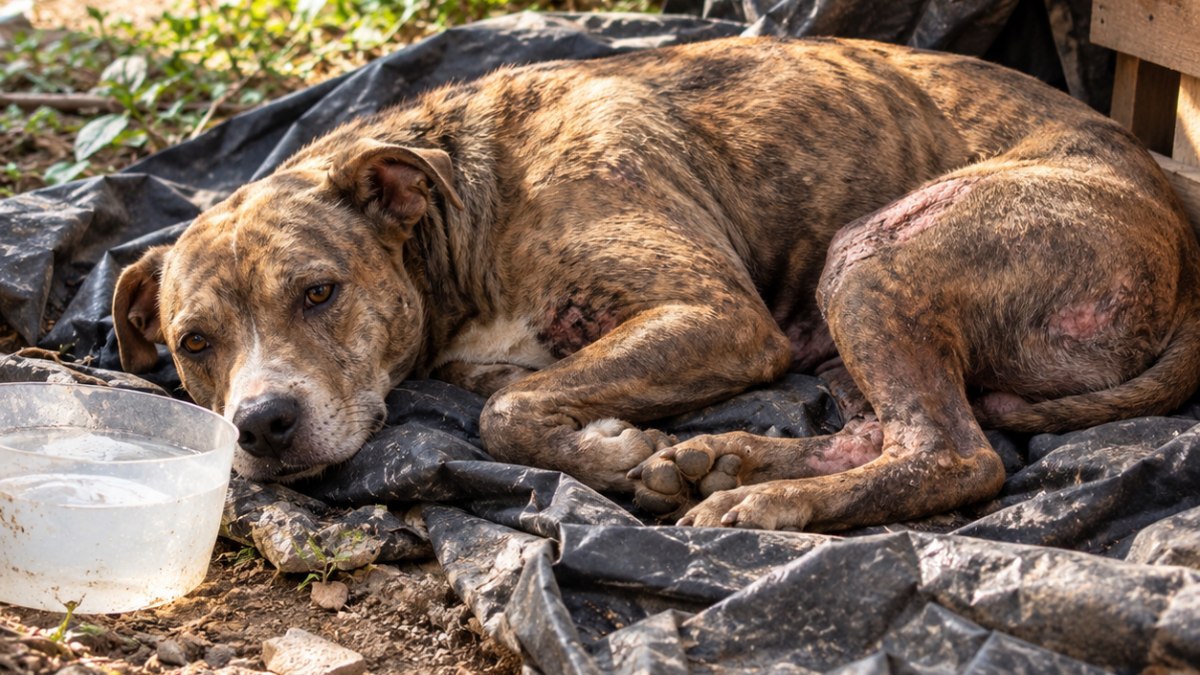
The puppy beside the road was so weak that when I knelt next to him, he could barely lift his head, yet the moment my hand touched the clean patch of fur between his eyes, he leaned toward me as if the one thing he still believed in was the possibility that somebody might finally stay.
His tiny body carried more injuries than any puppy should ever have known, infection had spread through several of them, and before the night was over a veterinary team would spend more than four hours trying to save what they could while I sat outside the treatment room wondering whether I had found Elijah in time or only found him in time to say goodbye.
What none of us knew then was that Elijah’s hardest fight would not end with the first surgery, the second operation, the feeding tube, or even the day he finally stood on his own, because the moment that would decide what kind of life he had left was still waiting far ahead of us.
My name is Rachel Morgan, and I had been involved with rescue long enough to know that sometimes the first thing you see is not the worst thing you are about to learn.
Elijah proved that to me.
The call came shortly before sunset.
A driver had spotted a small dog lying near the edge of a rural road and contacted one of our volunteers.
The original message was short:
Puppy alive. Very weak. Needs immediate help.
I was closest.
So I went.
I remember pulling over and thinking I had driven too far because I couldn’t see anything.
Then I noticed a shape near the grass.
Small.
Brown-and-white.
Still.
I grabbed a blanket from the back seat and crossed the road.
“Hey, baby.”
One ear moved.
That was all.
I crouched.
He was young.
Much younger than I expected.
Maybe several months old.
His body was terribly thin, and multiple injuries covered areas of his skin.
Some had been exposed long enough to become badly infected.
There were insects around several of them.
I won’t describe the scene more than that.
I don’t need to.
The important part is that Elijah was alive.
Barely.
But alive.
I touched the top of his head.
His eyes opened.
For one second, they focused on me.
Then he leaned.
Just slightly.
Toward my hand.
That broke something inside me.
“Okay,” I whispered. “I’m here.”
He couldn’t stand.
I slid the blanket beneath him and lifted as gently as I could.
He made one small sound.
“I’m sorry.”
I carried him toward my vehicle.
His body felt frighteningly light.
I called the emergency animal hospital before starting the engine.
“Critical puppy coming in,” I said. “Multiple infected wounds, severe weakness, possible tissue damage.”
“How far?”
“Twenty minutes.”
“We’ll be ready.”
I drove seventeen.
At the hospital, the veterinary team took Elijah immediately.
I remained in the hallway holding the dirty blanket.
A technician came back for information.
“Name?”
“He doesn’t have one.”
She looked at me.
I looked through the treatment-room window.
The puppy was barely visible beneath the hands of the people working around him.
“Elijah.”
“Elijah?”
“Yes.”
I don’t know why.
The name simply arrived.
Four hours later, Dr. Sarah Kendall came into the waiting room.
Her face told me the night was not over.
“We removed extensive contamination from the wounds and cleaned everything we safely could.”
“Is he stable?”
“For now.”
“What about his ear?”
She paused.
“Part of it couldn’t be saved.”
I closed my eyes.
“Okay.”
“There are areas of damaged tissue on his body that may not survive either.”
“What does that mean?”
“It means we may need another procedure.”
I stared at her.
“He hasn’t even recovered from this one.”
“I know.”
“Can he make it through another?”
“I don’t know yet.”
There it was.
The answer rescue teaches you to hate.
I don’t know.
I looked through the glass.
Elijah was covered in clean bandages.
A feeding tube had been placed because he was too weak to take enough nutrition on his own.
A wound-vac system helped manage some of the deepest injuries.
He looked smaller under all that equipment.
Almost lost inside it.
“How bad is his pain?”
“We’re controlling it.”
“Is he awake?”
“Sometimes.”
“Can I see him?”
Dr. Kendall nodded.
“Briefly.”
I entered the treatment room.
Elijah opened his eyes when I spoke.
“Hey, little man.”
His head barely moved.
I placed my fingers near his cheek.
He leaned toward them.
Again.
Even after everything people may have done to him, he was still asking for touch.
I swallowed hard.
“You don’t know me yet,” I whispered.
His eyes stayed on mine.
“But I’m going to keep coming back.”
His tail moved once beneath the blanket.
And from that moment forward, Elijah had me.
PART 2
The hospital staff warned me not to mistake survival through surgery for safety.
Elijah had made it through the first operation.
That was not the same as being out of danger.
His body had been under stress for far too long.
Infection.
Poor nutrition.
Open wounds.
Tissue damage.
Exhaustion.
Every system was working harder than it should have had to.
The feeding tube was necessary because asking him to eat enough on his own would have been unrealistic.
The wound vacuum helped the veterinary team manage several difficult areas.
His bandages needed frequent monitoring.
His pain medication had to be adjusted carefully.
And then there was the tissue we were waiting on.
Would it survive?
Would circulation recover?
Would more need to be removed?
Nobody knew.
I slept in the waiting room that night.
Or tried to.
At 1:17 a.m., a technician named Marcy sat beside me.
“You can go home.”
“I’m okay.”
“Your eyes are closed.”
“I’m resting them.”
“That’s called sleeping.”
“I can sleep here.”
She smiled.
“He’s stable.”
“For now.”
“Rachel.”
I looked at her.
“Go home for four hours.”
“What if—”
“We call.”
“I live twenty minutes away.”
“We know.”
I looked toward the treatment room.
“Does he wake up?”
“Sometimes.”
“Does he panic?”
“No.”
“Does he look for anyone?”
Marcy hesitated.
“Actually, when he hears your voice, he settles.”
That ruined any chance of me leaving.
“I’ll stay.”
She sighed.
“I knew you would.”
THE REPORT
The next morning, animal control came.
Not because we had identified anyone.
We hadn’t.
But the pattern of injuries raised serious concerns.
A field officer named David Chen asked me where Elijah had been found.
I gave him the exact location.
“Any collar?”
“No.”
“Microchip?”
“None found.”
“Did anyone see him dumped?”
“Not that I know.”
“Any houses nearby?”
“A few.”
“Businesses?”
“One storage yard about half a mile back.”
He wrote everything down.
Then he asked:
“You heard someone say he might have been used as a bait dog?”
“Yes.”
“From whom?”
“The person who originally contacted rescue said that was what the injuries looked like.”
David stopped writing.
“That’s not enough for us to state as fact.”
“I know.”
It mattered.
I had already seen social media posts beginning to form around Elijah.
BAIT DOG FOUND DYING.
Maybe that was true.
Maybe it wasn’t.
What we knew was enough.
He had puncture wounds.
Old and new injuries.
Severe neglect.
He had been outside long enough for infection and contamination to become critical.
Everything beyond that required evidence.
David said:
“We’ll investigate.”
“Do you think you’ll find who had him?”
“I don’t know.”
There it was again.
DAY TWO
Elijah’s eyes were brighter.
Not much.
But I noticed.
“You’re awake.”
His tail moved.
I sat beside his kennel.
“That’s two days in a row.”
Elijah tried to move his front paw.
He couldn’t do much with it because of the bandaging.
“Don’t.”
He stopped.
“You’re allowed to rest.”
His eyes stayed open.
One of the technicians changed a bag attached to the feeding line.
Elijah watched.
“You’re getting room service.”
No reaction.
“Tough crowd.”
Marcy laughed from across the room.
“He’s heard your jokes.”
“Unfair.”
For a few minutes, I let myself believe the worst was behind us.
Then Dr. Kendall called me into the consultation room.
I knew immediately.
“More tissue isn’t viable.”
I sat down.
“Where?”
She explained.
Not everywhere.
But enough.
“We need another procedure.”
“When?”
“Today.”
“Today?”
“The longer compromised tissue remains, the harder it becomes to control infection and support healing.”
I stared at the floor.
“Can his body take it?”
“We believe so.”
“Believe?”
“Rachel.”
I looked up.
“If I had a safer alternative, I’d offer it.”
Silence.
“Okay.”
That was all I could say.
THE SECOND SURGERY
Elijah went back under anesthesia before noon.
I called my sister.
She answered:
“How’s the puppy?”
“Going back into surgery.”
“What?”
I started crying before I could stop myself.
“He just had one.”
“What do the vets say?”
“They have to remove more damaged tissue.”
“Is he going to make it?”
“I don’t know.”
Silence.
Then my sister said:
“You don’t have to know.”
That irritated me.
“What does that mean?”
“It means you can only be there.”
“I need to do more than be there.”
“No.”
I wiped my face.
“That’s not enough.”
“It is to him.”
I looked through the window.
Elijah had already been moved into surgery.
My sister continued.
“You told me he leans into you when you touch him.”
“Yes.”
“Then be the person he can lean toward.”
Simple.
Impossible.
Enough.
FOUR MORE HOURS
The second procedure took less time than the first.
Still felt longer.
Dr. Kendall returned.
“He’s awake.”
I stood immediately.
“Stable?”
“Yes.”
“How much more tissue?”
She explained carefully.
I nodded.
“Can this happen again?”
“It can.”
My stomach dropped.
“We’ll monitor.”
“That sounds like yes.”
“It means I’m not promising something I can’t promise.”
I hated veterinary honesty.
Loved it too.
Without honesty, hope becomes fantasy.
And fantasy is dangerous when an animal’s life depends on decisions.
THE FEEDING TUBE
For the first several days, most of Elijah’s nutrition came through the tube.
He showed little interest in food.
That worried everyone.
A puppy should want food.
A puppy should complain.
A puppy should be difficult.
Elijah was too exhausted to be difficult.
I brought tiny amounts of veterinary-approved food to his nose.
Nothing.
Chicken.
Nothing.
Warm recovery food.
Nothing.
“You are terrible at this.”
His eye moved toward me.
“You’re supposed to love food.”
Nothing.
“All dogs love food.”
Marcy said:
“Not all sick dogs.”
“You’re interfering with my motivational speech.”
Elijah’s tail tapped once.
I froze.
“Did you see that?”
Marcy smiled.
“Yes.”
“That’s basically eating.”
“No.”
“Emotionally.”
“Still no.”
THE WOUND VAC
The wound-vac system fascinated me because I hated everything it represented.
It was helping.
That mattered.
But every time I saw the tubing and dressing, I remembered how serious Elijah’s condition was.
Dr. Kendall explained how negative-pressure therapy could encourage healthy tissue formation and manage drainage in suitable wounds.
I nodded as though I understood all of it.
Mostly, I understood one thing:
It was helping Elijah stay in the fight.
So I learned the routine.
What normal looked like.
What needed immediate attention.
Which sounds mattered.
Which alerts mattered.
When to call.
When not to panic.
I still panicked.
Just more efficiently.
THE FIRST STAND
On day four, Elijah tried to stand.
Nobody asked him.
He simply decided.
A technician had opened the kennel to adjust bedding.
Elijah planted his front paws.
Lifted his chest.
His back legs trembled.
“Easy.”
He got halfway up.
Then dropped.
I gasped.
Marcy laughed.
“He’s fine.”
“He fell.”
“He tried.”
That distinction mattered.
Elijah tried again.
This time, we supported him.
For maybe two seconds, he stood.
Bandaged.
Thin.
Unsteady.
But standing.
I cried.
Marcy rolled her eyes.
“You cry a lot.”
“You work in animal rescue. What did you expect?”
WHAT WE KNEW ABOUT HIS PAST
Very little.
Animal control canvassed the area.
A woman living nearby remembered seeing a young dog running loose several days earlier.
She couldn’t confirm it was Elijah.
A worker at the storage yard had heard barking one night.
Again, no certainty.
Someone anonymously messaged our rescue claiming Elijah had been “used for fighting.”
No proof.
No names.
No location.
People repeated the bait-dog story more confidently every day.
I started correcting them.
“Reportedly.”
They looked at me like I was minimizing what happened.
I wasn’t.
I was protecting the truth.
Elijah had suffered enough.
We did not need to build his story out of details we could not prove.
What we could prove was already devastating.
He had been badly neglected.
He had serious wounds.
He was found alone beside a road.
No one claimed him.
No one called to say:
That’s my puppy.
I want him back.
Sometimes absence is its own answer.
DAY FIVE
Elijah’s eyes began following people around the room.
That sounds small.
It was not.
Before, his eyes opened.
Now they watched.
Curiosity had returned.
When Marcy changed his bandages, he looked annoyed.
Wonderful.
When I adjusted the blanket, he tried to push my hand away with his nose.
Perfect.
When Dr. Kendall checked his ear, he turned his face dramatically.
“Attitude.”
I smiled.
“What?”
“He’s developing opinions.”
“Good.”
Dr. Kendall nodded.
“Very.”
That evening, Elijah raised his head when another dog barked somewhere in the hospital.
He listened.
Then gave a tiny sound.
Not a bark.
More like an attempt.
“You’re going to be loud someday.”
His tail moved.
THE EAR
Part of Elijah’s ear was gone.
The surgeons had saved as much as possible.
When the swelling decreased and bandages changed, I saw the new shape clearly for the first time.
My heart hurt.
Not because he looked ugly.
He didn’t.
Because the missing piece was evidence.
Something had happened to this puppy before I met him.
Something permanent.
I touched the intact side of his face.
“I’m sorry.”
Dr. Kendall heard.
“Don’t.”
I looked at her.
“What?”
“Don’t apologize to him for what he looks like.”
“I wasn’t—”
“You were.”
I sighed.
“He doesn’t know his ear is different.”
“I know.”
“Then don’t teach him it’s tragic.”
That stayed with me.
From then on, the ear wasn’t a loss.
It was simply Elijah’s ear.
DAY SIX: FOOD
Marcy called at 7:14 a.m.
I answered immediately.
“What happened?”
“He ate.”
I sat upright in bed.
“What?”
“Food. With his mouth.”
“How much?”
“Not enough to remove the tube.”
“How much?”
“Rachel.”
“How much?”
“Maybe two tablespoons.”
I screamed.
Actually screamed.
My neighbor probably thought something terrible had happened.
Something wonderful had.
I drove to the hospital.
Elijah was asleep.
“Wake him.”
Marcy stared at me.
“No.”
“I want to see him eat.”
“He already ate.”
“Again.”
“No.”
I sat beside his kennel.
“Traitor.”
Elijah opened one eye.
“You wait until I’m gone?”
Tail tap.
That afternoon, he ate again.
Slowly.
Carefully.
His body still needed tube support.
But food had become something he chose again.
THE FIRST REAL MEAL
Three days later, Elijah ate an entire small meal by himself.
I sat on the floor.
Didn’t breathe.
He lowered his head.
Licked.
Chewed.
Paused.
Looked at me.
“Keep going.”
He ate again.
No feeding tube doing the work.
No syringe.
No coaxing.
Elijah.
Eating.
When he finished, he licked the bowl.
I covered my mouth.
Marcy handed me tissues before I asked.
“Prepared.”
“I hate you.”
“No, you don’t.”
THE TUBE COMES OUT
The feeding tube remained for safety until the veterinary team was confident Elijah could maintain adequate intake.
The day they removed it, I felt like we were taking one step out of the hospital story.
Not leaving.
But moving.
Elijah shook his head afterward.
Then stared at us as if we’d personally offended him.
Dr. Kendall laughed.
“There he is.”
Elijah barked.
A real bark.
Tiny but clear.
Everyone in the room stopped.
Then laughed.
Elijah barked again.
“Sir,” I said, “you have no idea how expensive you are.”
Another bark.
“Exactly.”
OUTSIDE
His first trip outside lasted less than five minutes.
A technician carried him to a small enclosed hospital courtyard.
The weather was warm.
Sunlight.
Grass.
Elijah stood.
His legs were still weak.
His body was wrapped in lighter bandages now.
He sniffed.
One step.
Pause.
Another.
I followed.
Elijah stopped beside a patch of grass and looked up.
The sun hit the side of his face.
That image remains one of my favorites.
The road puppy.
The hospital patient.
Standing outside.
Alive enough to notice sunshine.
He took five more steps.
Then sat.
Exhausted.
“Big adventure.”
Elijah looked at me.
Tail wag.
THE TOY
The first toy was blue.
A soft rubber ball.
Marcy rolled it toward him.
Elijah watched.
Didn’t move.
She rolled it again.
The ball bumped his paw.
He looked down.
Sniffed.
Then put his mouth around it.
Everyone froze.
Elijah lifted the ball.
Dropped it.
Picked it up again.
I cried.
Naturally.
Dr. Kendall walked in.
“Why is Rachel crying?”
Marcy pointed.
“Ball.”
Dr. Kendall nodded as if that explained everything.
It did.
The puppy who had spent so much of his young life surviving had discovered play.
THE BANDAGES
Bandage changes became less dramatic.
More tissue looked healthy.
Wounds contracted.
New skin formed.
The wound vacuum was eventually discontinued.
The day it came off, Elijah spent twenty minutes trying to reach an itch he finally had access to.
“No.”
He turned.
“No chewing.”
He stared.
I gave him a toy.
Elijah threw the toy aside.
“Unreasonable.”
He tried again.
We used protective clothing as needed.
Elijah hated it.
Another wonderful thing.
Healthy puppies have time to hate inconvenience.
THE FIRST WALK
Not really a walk.
Maybe thirty yards.
Elijah wore a harness.
His legs were still thin.
He moved slowly.
The hospital staff gathered outside.
“Don’t make this weird,” I told them.
They all made it weird.
Clapping.
Phones.
Cheering.
Elijah walked five steps.
Stopped to sniff.
Ten more.
Then saw Marcy holding chicken.
Suddenly speed existed.
He moved toward her.
Everyone laughed.
“Miracle,” she said.
“Chicken.”
Same thing.
THE INVESTIGATION STALLS
Animal control had no confirmed owner.
No usable microchip.
No witness who could identify where Elijah came from.
No direct evidence tying anyone to him.
David Chen called.
“I want to be honest.”
I knew what was coming.
“You don’t have anything.”
“Not enough.”
“Nothing?”
“We have information. Not evidence strong enough for charges.”
I closed my eyes.
“What about the anonymous messages?”
“No verifiable source.”
“The storage yard?”
“Nothing on camera.”
“The people who said he was used as bait?”
“Rumor.”
I hated the word.
“So whoever did this just walks away.”
“We don’t know who did what.”
“David.”
“I know.”
“You saw him.”
“Yes.”
“Doesn’t that make you angry?”
“Very.”
“Then how can you sound so calm?”
“Because anger isn’t evidence.”
Same lesson.
Again.
I thanked him.
Hung up.
Then threw a towel across my kitchen.
Not my best moment.
THE INTERNET WANTED A VILLAIN
Elijah’s story spread.
People wanted names.
Punishment.
Justice.
One post falsely accused a local man because someone thought they recognized a truck.
I reported the post.
It disappeared.
Another claimed an entire underground operation had been uncovered.
False.
Another said Elijah had been rescued from inside a fighting ring.
False.
I wrote a public correction:
Elijah was found beside a road. His injuries raised concerns about possible prior abuse, including reports that he may have been used as a bait dog, but no responsible party has been identified. Please do not accuse individuals without evidence.
Some people were angry with me.
They said I was protecting abusers.
No.
I was protecting truth.
Justice built on a lie isn’t justice.
FOSTER
After nearly a month, Elijah was ready to leave the hospital.
Not fully healed.
Not done.
But stable enough for foster care.
Our foster was named Jenna Brooks.
Forty-six.
Worked from home.
One calm adult dog named Cooper.
Large fenced yard.
Experience with medical fosters.
Perfect on paper.
I still grilled her.
“How many stairs?”
“Three to the yard.”
“Flooring?”
“Mostly rugs.”
“Other animals?”
“Cooper.”
“Temperament?”
“Old man.”
“How old?”
“Nine.”
“Food aggression?”
“No.”
“Resource guarding?”
“No.”
“Crate?”
“Set up.”
“Backup vet?”
“Already called.”
Jenna stared at me.
“Do I pass?”
“Maybe.”
She laughed.
Elijah met her at the hospital.
He approached slowly.
Sniffed.
Jenna didn’t reach.
Good.
Elijah sniffed again.
Then sat beside her foot.
Jenna smiled.
“Hi.”
Tail wag.
Approved.
COOPER
Cooper was a yellow Lab mix with a gray muzzle and the emotional energy of an exhausted school principal.
Elijah adored him immediately.
Cooper tolerated Elijah.
At first.
Elijah followed him everywhere.
Kitchen.
Yard.
Living room.
Cooper slept.
Elijah slept nearby.
Cooper drank.
Elijah drank.
Cooper barked once at the mail carrier.
Elijah barked seven times because apparently backup was necessary.
Within two weeks, Cooper began playing with him.
Slowly.
Gently.
A play bow.
One chase.
Elijah nearly lost his mind.
He ran in circles.
His healing body couldn’t sustain much yet, so Jenna stopped him quickly.
Elijah protested.
Normal.
Beautiful.
THE NIGHTMARES
Elijah occasionally cried in his sleep.
Small sounds.
His legs moved.
Sometimes he woke suddenly and looked confused.
Jenna called me.
“Do you think he’s remembering?”
“I don’t know.”
“Should I wake him?”
“What does the vet say?”
“Let him wake naturally unless he’s in obvious distress.”
“Then do that.”
Cooper solved part of it.
When Elijah cried, Cooper sometimes stood.
Walked over.
Lay beside him.
The first night Jenna sent me a photo of them sleeping back-to-back, I stared for a long time.
A puppy who once leaned toward my hand because he needed someone to stay now had a dog who stayed without being asked.
HIS BODY CHANGED
Weight returned.
Muscle appeared.
His coat filled in around scars.
The wounds closed.
The missing portion of his ear remained.
So did several visible marks.
But the first thing people noticed changed.
At the hospital, people saw injuries.
In foster care, they saw Elijah.
Bright eyes.
Long legs.
Silly grin.
Half ear.
Full personality.
He loved socks.
Not chewing them.
Stealing them.
Jenna found six under her desk.
“He has a collection.”
“Evidence.”
“Of what?”
“Crime.”
Elijah wagged.
THE SWIMMING POOL
Swimming came later.
Long after the wounds were fully healed and veterinary staff cleared him.
Jenna had a small dog-safe pool used for supervised exercise.
Cooper loved it.
Elijah did not.
First encounter:
One paw in.
Immediate betrayal.
He backed away.
Cooper stepped into the water.
Elijah stared.
Cooper stood there.
Elijah tried again.
Two paws.
Back out.
Third attempt:
All four.
Then stillness.
He realized water wasn’t attacking him.
Within a week, he splashed.
Within a month, he loved it.
Years later, one of my favorite adoption updates would be Elijah swimming with his family.
At the time, it was just a puppy discovering another thing life could contain besides pain.
THE FIRST ADOPTION APPLICATION
A couple applied.
Excellent references.
Beautiful home.
Fenced yard.
No children.
One small dog.
They met Elijah.
Loved him.
Then asked:
“Will the scars fade?”
I didn’t like the question.
“Some.”
“What about the ear?”
“What about it?”
“Will it look more normal later?”
There it was.
Jenna answered before I could.
“This is normal for Elijah.”
They didn’t adopt.
Technically, they withdrew.
I was relieved.
THE SECOND FAMILY
Three kids.
Too chaotic.
Not because Elijah disliked children.
He liked them.
Too much.
He became overwhelmed.
We decided against it.
The family understood.
Good people.
Wrong match.
THE THIRD APPLICATION
A single man who traveled frequently.
Excellent person.
Not enough stability.
No.
DID NOBODY WANT THE SCARRED DOG?
That fear entered my head around month three.
Elijah was healthy enough.
Friendly.
Playful.
House-trained with occasional mistakes.
Good with Cooper.
Improving on leash.
Why wasn’t the right family appearing?
Then I realized how unfair the question was.
He had spent months surviving.
We could spend months choosing carefully.
There was no deadline anymore.
That was another victory.
THE FAMILY NAMED HARRIS
The application came from Mark and Emily Harris.
Two adults.
One teenage daughter, Lily.
A four-year-old mixed-breed dog named June.
Fenced property.
They hiked.
Camped.
Lived near a lake.
Their veterinary reference was excellent.
Their previous dog had lived to fifteen.
Then I read the final line:
We understand Elijah has scars and part of one ear missing. We aren’t interested in what he looked like before. We want to know what makes him happy now.
I sent it to Jenna.
She called immediately.
“These people.”
“You haven’t met them.”
“These people.”
I agreed.
THE MEET
The Harris family arrived on a Saturday.
Elijah barked once.
Then hid behind Jenna.
Lily sat on the floor.
Didn’t call him.
June, their dog, entered calmly.
Cooper greeted June.
Elijah watched.
Mark and Emily talked to us.
No reaching.
No crowding.
Ten minutes.
Elijah moved closer.
Sniffed Lily’s shoe.
She smiled.
Didn’t touch him.
Elijah sniffed her hand.
Then walked away.
Five minutes later, he returned with his blue ball.
Dropped it beside her.
Lily looked at me.
“Can I throw it?”
“Yes.”
She rolled it.
Elijah chased.
Returned.
Dropped it.
That was the beginning.
JUNE
Dog introductions were careful.
Neutral area.
Leashes.
Space.
June was confident but not pushy.
Elijah approached.
Sniffed.
June moved away.
Elijah followed.
She invited play.
Elijah responded.
Within minutes, they were running short circles.
Jenna looked at me.
I knew.
THE QUESTION THAT MATTERED
Mark asked:
“What scares him?”
Good question.
“Sudden loud conflict sometimes.”
“Anything else?”
“Unexpected restraint. Certain unfamiliar dogs if they come on too strong. Medical settings.”
Emily asked:
“What should we do if he shuts down?”
Better question.
“Give him space. Predictable routine. Don’t force affection.”
Lily asked:
“Does he like swimming?”
I laughed.
“Now he does.”
Then Mark asked:
“What would make you say no to us?”
Best question.
I thought.
“If you believe loving Elijah means proving his past never affected him.”
Silence.
Then Emily said:
“We don’t need him to forget.”
I looked at her.
“We just need him to feel safe now.”
That was it.
THE HOME VISIT
Perfect.
Not magazine perfect.
Dog perfect.
Rugs.
Beds.
Secure yard.
Lake access only with supervision.
June’s crate.
Toys everywhere.
Lily’s room had a dog bed already.
“That’s optimistic.”
She smiled.
“Prepared.”
I had said the same thing once about another rescue.
I approved.
GOODBYE TO COOPER
Elijah had lived with Cooper long enough that separating them worried us.
We arranged a gradual transition.
Short visit.
Overnight.
Return.
Weekend.
Return.
Each time, Elijah came back excited to see Cooper.
But he also became more comfortable with the Harris family.
The final morning, Cooper and Elijah lay together in the yard.
No dramatic goodbye.
No human understanding of permanence.
Elijah stood.
Walked to the car.
Then came back.
Licked Cooper’s face.
Cooper sighed.
Elijah left.
Jenna cried for an hour.
THE FIRST NIGHT HOME
Emily sent a photo.
Elijah asleep on a blanket beside June.
Caption:
He ate dinner, stole one sock, inspected every room, and finally crashed.
I laughed.
Then cried.
Again.
THE LAKE
Two weeks later, Elijah went to the lake.
Not swimming yet.
Just walking.
Sniffing.
Watching June retrieve a toy.
Elijah put his paws in the water.
Then stepped back.
Lily sat near him.
No force.
By the end of summer, he swam.
Real swimming.
Strong strokes.
Ears back.
Face determined.
The half ear made him look permanently surprised.
Everyone loved it.
THE UPDATE
The video that later spread online showed Elijah swimming toward Mark.
Then running along a trail with June.
Then rolling in grass.
Then sleeping beside Lily.
No bandages.
No feeding tube.
No hospital.
No road.
Just Elijah.
That was the update people waited for.
THE INVESTIGATION’S FINAL ANSWER
None.
No confirmed offender.
No prosecution.
No dramatic raid.
No person standing in court because of Elijah.
For a long time, that frustrated me.
I wanted a name.
A face.
Something to point to.
Then one day David Chen called.
“We’re formally closing the active portion unless new evidence comes in.”
My stomach sank.
“So that’s it.”
“For now.”
“No justice.”
“I didn’t say that.”
“No charges.”
“No.”
I looked at a video Emily had sent.
Elijah in the lake.
“Feels unfinished.”
David said something I remembered.
“Cases can close. Lives don’t.”
I was quiet.
He continued.
“Elijah’s alive.”
“I know.”
“Good home?”
“Yes.”
“Protected?”
“Yes.”
“Then don’t let the missing prosecution become the biggest part of his story.”
He was right.
Again, annoying.
THE FIRST YEAR
Elijah’s adoption anniversary became a celebration.
Cake.
Dog-safe.
June stole part.
Lily laughed.
Mark sent me photographs.
Elijah had gained healthy weight.
His scars softened.
His ear remained exactly Elijah’s ear.
He slept in ridiculous positions.
Loved the lake.
Hated rain.
Not all rain.
Hard rain.
He would pause at the door.
Emily didn’t force him.
One stormy night, Elijah hid beneath the dining table.
Lily sat nearby.
Didn’t touch him.
Read a book.
An hour later, Elijah crawled out and rested his head on her foot.
That mattered.
THE GARAGE DOOR
One day, a metal garage door slammed unexpectedly.
Elijah dropped to the ground.
Mark froze.
June ran toward him.
Elijah stayed still for several seconds.
Mark crouched but didn’t approach.
“It’s okay.”
Elijah looked.
Then slowly walked toward him.
Not away.
That was healing.
Not the absence of fear.
A different choice after fear.
SCHOOL PROJECT
Lily did a school presentation about rescue dogs.
She asked permission to use Elijah’s photos.
I said yes on one condition.
“Don’t make the first photo the whole story.”
“What do you mean?”
“If you show the hospital, show the lake.”
She did.
First slide:
Elijah after rescue.
Last slide:
Elijah swimming.
Her title:
A Scar Is Proof Something Continued.
I cried when Emily sent it.
ELIJAH BECOMES AN OLDER BROTHER
The Harris family fostered a puppy temporarily.
A tiny black dog named Olive.
Elijah was uncertain.
Olive was not.
She climbed over him.
Chewed his tail.
Stole his bed.
Elijah looked at the family as if requesting legal representation.
Within three days, he slept beside her.
When Olive cried at night, Elijah lay beside the crate.
History had turned.
The puppy who once needed someone to stay became the dog who stayed.
THE PUBLIC STORY CHANGES
Years passed.
People stopped calling Elijah “the bait dog.”
I pushed for that.
We couldn’t even prove it.
More importantly, he was more than any theory about his past.
He became:
Elijah the swimmer.
Elijah the sock thief.
Elijah who hated bananas.
Elijah who loved June.
Elijah who slept against Lily’s door.
That was better.
THE REAL REVENGE
People kept asking me for the revenge ending.
Who did it?
What happened to them?
Did they go to jail?
Did they lose everything?
I had no satisfying answer.
Then I realized Elijah did.
His revenge was waking up hungry because breakfast was late instead of hungry because nobody came.
His revenge was water becoming a place to swim.
His revenge was people touching him gently until touch no longer meant fear.
His revenge was toys.
Scars.
Beds.
Hikes.
June.
Lily.
His revenge was getting old enough for his muzzle to gray.
Nobody needed to suffer for Elijah to win.
He just needed time.
FIVE YEARS
At five years old, Elijah was strong.
Muscular.
Healthy.
People meeting him for the first time noticed the ear.
Then forgot.
He was too busy.
He carried sticks twice his length.
Refused to drop the ball.
Swam farther than June.
Slept on Mark’s pillow even though that was technically prohibited.
The rules around Elijah were flexible.
COOPER DIES
Jenna’s old dog Cooper eventually passed.
We arranged one final visit before he declined too far.
Elijah arrived.
Saw Cooper.
Slowed.
Approached.
Cooper lifted his head.
Their noses touched.
Elijah lay beside him.
No play.
Just presence.
Jenna cried.
“So many times he slept beside Elijah.”
I nodded.
“Elijah remembers.”
Maybe.
We like to believe.
The important thing was that he stayed.
JUNE AGES
June grew gray first.
Elijah adapted.
He stopped crashing into her during play.
Waited when she moved slowly.
At the lake, he would swim out, return, then stand near her.
Dogs change for one another in ways people underestimate.
SEVEN YEARS
Lily left for college.
Elijah waited at her bedroom door for three days.
Emily sent the photo.
My heart hurt.
When Lily returned for Thanksgiving, Elijah heard her voice before she entered.
He ran.
The same dog who had once barely lifted his head beside the road nearly knocked a college student over with joy.
That’s what survival can become.
THE STORM
At eight, Elijah experienced the worst thunderstorm since adoption.
Power went out.
Lightning.
Wind.
He trembled.
Mark sat on the floor.
June was old by then.
Elijah moved between them.
Lily was away.
Emily called her.
Lily spoke through the phone.
“Hey, Eli.”
Elijah’s ears lifted.
He searched.
Still afraid.
But listening.
Mark later said:
“He never stopped shaking, but he stayed with us.”
That mattered.
Healing doesn’t mean fear never returns.
It means fear no longer leaves you alone.
THE VETERINARY HOSPITAL
Elijah developed a benign growth at nine.
Surgery required.
The moment he entered the hospital, he froze.
Old smell.
Disinfectant.
Metal.
Memory.
Emily called me.
“He shut down.”
I drove there.
Probably unnecessary.
Didn’t care.
When Elijah saw me, his tail moved.
Nine years.
He remembered something.
Maybe voice.
Maybe scent.
Maybe nothing specific.
I sat beside him.
“Different day.”
He leaned against me.
Same as the road.
Same as the first night.
The surgery went well.
He came home.
THE EAR
Children sometimes asked why one ear looked different.
Lily learned to answer:
“That’s just Elijah.”
Best answer.
No trauma lecture.
No pity.
Just Elijah.
TEN YEARS
Elijah turned ten.
A milestone I never imagined in the waiting room.
Mark sent a picture.
Gray muzzle.
Half ear.
Birthday hat.
Deeply offended expression.
Caption:
He survived everything except party hats.
I laughed for five minutes.
THE OLD BLUE BALL
The original blue hospital ball somehow remained in a box.
I had taken it after Elijah moved to foster.
Years later, I mailed it to the Harris family.
Emily called.
“He went crazy.”
“Really?”
“Carried it around all afternoon.”
Maybe scent remained.
Maybe the shape felt familiar.
Maybe he just liked blue balls.
We don’t need every moment to be mystical.
Still beautiful.
JUNE’S GOODBYE
June reached fourteen.
Her health declined.
The Harris family said goodbye at home.
Elijah stayed beside her bed.
For hours afterward, he searched the house.
That grief was difficult.
He ate less.
Slept near June’s old blanket.
The family gave him time.
Didn’t immediately remove everything.
Eventually, he returned to routine.
Different.
But moving.
Again.
LILY COMES HOME
After college, Lily returned home temporarily.
Elijah was older now.
He followed her like before.
She worked remotely.
Elijah slept under the desk.
History restored.
THE ROAD
One day, I drove past the road where Elijah had been found.
I stopped.
No marker.
No memorial.
Cars passed.
Grass moved.
I tried to identify the exact spot.
Couldn’t.
Good.
Elijah’s life had grown too large for that piece of roadside to own him.
THE QUESTION I STOPPED ASKING
Who did this?
For years, I asked.
Eventually, I stopped.
Not because it didn’t matter.
Because Elijah mattered more.
The unanswered question had consumed enough space.
I refused to let an unknown person become more central to Elijah’s story than the family who spent a decade loving him.
TWELVE YEARS
Elijah slowed.
Arthritis.
Stiff mornings.
Shorter swims.
Then no swimming.
He still walked to the lake.
Stood at the edge.
Watched water.
Mark would say:
“Remember?”
Elijah probably didn’t need remembering.
He had now spent most of his life safe.
What a sentence.
Most of his life safe.
That’s the victory.
LILY’S CHILD
Years later, Lily had a baby.
Elijah was ancient.
The first meeting was careful.
Elijah sniffed the blanket.
Then lay beside Lily’s chair.
The puppy once found abandoned and wounded beside a road became an old dog guarding a sleeping baby.
Life can write better endings than we can.
HIS FINAL WINTER
Elijah was thirteen or close to it.
We never knew his exact age.
His body was tired.
Kidney disease.
Arthritis.
Age.
The family adjusted.
Soft food.
Pain management.
Ramps.
Warm beds.
No stairs.
He still stole socks occasionally.
Good.
THE FINAL VISIT
I visited when his health began declining.
He was sleeping near the fireplace.
Gray.
Thin again.
But not like the road.
Different kind of thin.
Old.
Loved.
His eyes opened.
“Hey.”
Tail movement.
One.
Just like the first night.
I sat on the floor.
Elijah lifted his head.
Then rested it against my knee.
I couldn’t speak for a while.
Thirteen years disappeared.
Road.
Blanket.
Hospital.
Feeding tube.
Blue ball.
Now this.
“You did it.”
Elijah closed his eyes.
“You got old.”
I had never been so grateful for old age.
THE FINAL MORNING
His family chose home.
No unfamiliar hospital.
No fear.
Lily came.
Mark.
Emily.
Their grandchild.
I joined by video because I couldn’t get there in time.
Elijah lay on June’s old blanket.
That detail destroyed me.
Emily touched his head.
“He ate a little chicken.”
“Of course.”
Mark laughed through tears.
Lily held one paw.
I said:
“Hey, little man.”
His ear moved.
“Remember how expensive you were?”
Nothing.
“Rude.”
Tail tap.
One.
I cried.
The veterinarian gave the family time.
Elijah left peacefully.
No roadside.
No insects.
No fear.
No hunger.
No one wondering whether help would come.
Just family.
AFTER
Emily sent two photographs.
Hospital Elijah holding the blue ball.
Old Elijah beside the lake.
I put them together.
Beginning.
Life.
Not beginning and end.
Because the middle was everything.
THE HOSPITAL MAKES A WALL
Years later, the animal hospital created a small wall of recovery stories.
Not graphic before-and-after images.
Dignified ones.
One photo of Elijah in early recovery.
One of him swimming.
Underneath:
ELIJAH
THE GOAL WAS NEVER TO ERASE HIS SCARS.
THE GOAL WAS TO GIVE HIM A LIFE BIGGER THAN THEM.
Perfect.
THE REAL REVENGE, FINALLY
If Elijah’s story needs revenge, this is it.
Someone once treated his body as if it didn’t matter.
Thirteen years later, an entire family rearranged their lives because he did.
Someone once left him unable to lift his head beside a road.
Later, he swam across a lake because he wanted to.
Someone once took from him part of an ear.
It became the feature everyone loved most.
Someone once taught him pain.
He became the dog who lay beside frightened foster puppies.
Someone once made survival his whole world.
His family gave him boredom.
Breakfast.
Mud.
Toys.
Socks.
Vacations.
Aging.
That was revenge.
Ordinary life.
Long enough to become old.
IF I COULD TALK TO THE PUPPY BESIDE THE ROAD
I’d kneel again.
Touch the clean place between his eyes.
He would barely look at me.
And I’d say:
“Elijah, I need you to stay.
“Tonight is going to be hard.
“The people at the hospital will work on you for hours.
“You’re going to wake up with bandages everywhere.
“Part of your ear won’t be there anymore.
“You’ll need a feeding tube.
“Then another surgery.
“There will be days when we don’t know whether your skin is healing fast enough.
“There will be nights when I think this is too much for your little body.
“But you’re going to eat.
“Not today.
“Not maybe tomorrow.
“But one day you’ll lower your head to a bowl and do the work yourself.
“You’re going to stand.
“You’re going to walk outside.
“You’re going to pick up a blue ball.
“I’m going to cry because of a toy.
“You’re going to think I’m ridiculous.
“You’re going to live with an old dog named Cooper who will teach you that sleeping beside someone can feel safe.
“You’re going to meet a family.
“They won’t ask whether your ear can be fixed.
“They’ll ask what makes you happy.
“You’re going to swim.
“You’re going to run trails.
“You’re going to steal socks.
“You’re going to help another puppy sleep.
“You’re going to watch a girl grow up.
“You’re going to become old enough for your face to turn gray.
“And when your body finally gets tired many years from now, nobody will leave you beside a road.
“They’ll sit with you.
“They’ll cry.
“They’ll tell stories.
“They’ll thank you.
“You won’t understand any of it.
“You won’t need to.
“So right now, don’t worry about thirteen years.
“Just give me one more minute.
“Then another.”
WHAT RESCUE REALLY WAS
People think rescue happened when I lifted Elijah from the road.
That was transportation.
Rescue happened afterward.
Four-hour procedures.
Bandage changes.
A surgeon saying:
“We need to go back in.”
A technician watching him overnight.
A donor paying part of the medical bill.
Someone cleaning the kennel.
Someone preparing tube feedings.
Someone rolling a blue ball.
Jenna opening her foster home.
Cooper sharing his bed.
The Harris family filling out paperwork.
Lily sitting on the floor without forcing contact.
Mark adjusting walks when Elijah got old.
Emily warming food.
A veterinarian coming to the house at the end.
Rescue isn’t one dramatic act.
It’s repetition.
Care repeated until safety becomes normal.
THE UNKNOWN PERSON
Maybe someone out there remembers Elijah.
Maybe whoever had him saw his updates.
Maybe not.
If they did, I hope they saw the swimming video.
Not because I wanted them hurt.
Because I wanted reality to answer whatever they once believed about his value.
He mattered.
That’s all.
He mattered enough for surgeons to work four hours.
Enough for another surgery.
Enough for a feeding tube.
Enough for a foster home.
Enough for a family.
Enough for thirteen years.
THE TITLE I REFUSED TO USE
People suggested:
THE BAIT DOG WHO SURVIVED.
I stopped using it.
We couldn’t prove it.
And even if we could, I didn’t want the worst thing done to Elijah to become his permanent title.
He wasn’t “the bait dog.”
He was Elijah.
That’s important.
Animals don’t exist to symbolize our horror.
They get to become individuals again.
THE LAST PHOTO
My favorite photograph came from his eleventh year.
Elijah standing chest-deep in shallow lake water.
Too old for real swimming that day.
Sunlight on his face.
Half ear visible.
Gray around the muzzle.
Lily beside him.
No one seeing it would know what he looked like beside the road.
Good.
That’s the point.
EPILOGUE
I still think about the first time Elijah leaned into my hand.
People say abused animals stop trusting.
Some do.
Some take years.
Elijah had every reason to turn away.
He didn’t.
Maybe he wasn’t forgiving humanity.
Maybe he was simply cold, weak, and desperate for comfort.
I don’t need to romanticize it.
What matters is what happened next.
I touched him gently.
Someone else did too.
Then another.
Over and over.
Until touch stopped being a question.
It became normal.
That’s how trust returned.
Not one magical moment.
Thousands of ordinary safe ones.
The road was one afternoon.
The hospital was one month.
The scars lasted forever.
But the life?
The life lasted years.
And that is what I remember.
Not what covered his body when we found him.
Not the infection.
Not the feeding tube.
Not the missing piece of his ear.
I remember the ball.
The first meal.
The grass beneath his feet.
Cooper beside him.
The Harris family waiting.
The lake.
The old gray face.
One tail tap on the final morning.
Elijah was found when he could barely lift his head.
He left this world more than a decade later knowing exactly what it felt like to have people bend down simply because they wanted to be close to him.
There was no courtroom victory.
No perfect investigation.
No villain publicly defeated.
Life gave us something better.
Elijah survived long enough for whoever hurt him to become irrelevant.
He became bigger than the unknown hands in his past.
Bigger than the road.
Bigger than the scars.
Bigger than the story people first told about him.
And if that isn’t revenge, I don’t know what is.
The little puppy everyone thought might not survive the night grew old.
He swam.
He played.
He loved.
He was loved back.
And in the end, the thing that defined Elijah wasn’t what people had done to him.
It was everything he got to do afterward.
For a long time after Elijah died, I thought the hardest part would be remembering the way we found him.
I was wrong.
The hardest part was remembering the ordinary things.
The sound his nails made against the floor at the Harris house.
The way he carried that ridiculous blue ball even after he had dozens of newer toys.
The way he tilted his head whenever somebody said the word “lake.”
The half-ear that moved differently from the other one when he was curious.
The way he had learned to stand beside the kitchen counter without technically begging, even though everyone in the room knew exactly what he was doing.
Those memories hurt more than the hospital ever did because they belonged to the life we had fought so hard to give him.
The hospital memories were frightening, but they had a purpose.
They were about survival.
The later memories were about belonging.
And once Elijah was gone, belonging was exactly what made his absence feel so enormous.
Emily told me that for weeks after his death, she still woke up expecting to hear him moving down the hallway.
Mark kept opening the back door automatically in the mornings before remembering there was no old dog waiting behind him.
Lily, now an adult with a child of her own, admitted that she avoided visiting the lake for almost three months.
“It feels wrong without him,” she told me.
I understood.
There are places dogs claim without ever owning them.
A certain path.
A corner of a couch.
A section of sunlight on the floor.
A shoreline.
A bed beside someone’s desk.
Elijah had claimed pieces of their house simply by existing in them long enough.
And when he disappeared, those places did not immediately understand that they were empty.
Neither did we.
A few months later, Mark called.
“I found the blue ball.”
For a second, I couldn’t speak.
“Where?”
“Under the workbench in the garage.”
Of course.
Elijah had carried that ball through so many versions of himself that it felt almost impossible it had survived him.
The hospital puppy had first picked it up while wrapped in bandages.
The young foster dog had chased it across Jenna’s living room.
The adopted dog had taken it to the lake.
The older dog had eventually lost interest in fetching but still kept it near his bed.
Now the ball sat on Mark’s workbench.
“What are you going to do with it?” I asked.
“I don’t know.”
“Don’t throw it away.”
“I wasn’t going to.”
Silence.
Then he asked:
“Do you want it?”
I almost said yes.
Part of me wanted to take it home and place it beside the photographs and medical notebook.
Then I pictured the Harris house.
The lake.
Lily.
Elijah carrying that ball through their yard.
“No,” I said.
“It belongs there.”
Mark understood.
A week later, he sent me a photograph.
The blue ball sat in a small wooden shadow box beside Elijah’s collar.
Underneath was a simple line:
HE LEARNED HOW TO PLAY.
Nothing about the road.
Nothing about the surgeries.
Nothing about the injuries.
Just that.
He learned how to play.
I think Elijah would have approved.
Not that he would have understood the plaque.
He probably would have been annoyed somebody had finally put the ball somewhere he couldn’t reach.
That thought made me laugh.
And for the first time since his death, laughing about Elijah did not immediately turn into crying.
That felt like progress.
Several months later, the animal hospital invited me back.
Dr. Kendall had retired from emergency surgery but still came in twice a month to mentor younger veterinarians.
Marcy was now supervising technicians.
When I walked into the building, the smell hit me first.
Disinfectant.
Clean laundry.
Medicine.
For a moment, I was standing there thirteen years earlier with Elijah wrapped in a dirty blanket.
My body remembered before my mind did.
Marcy saw me freeze.
“You okay?”
“Yeah.”
She knew I was lying.
“Come here.”
She took me down the hallway to the recovery wall.
Elijah’s photographs were there.
One from early treatment.
One from the lake years later.
I stood in front of them.
A young veterinary student came around the corner carrying a chart.
She stopped.
“Is that him?”
I turned.
“You know Elijah?”
She smiled.
“We all know Elijah.”
That surprised me.
His case had become part of the hospital’s teaching history.
Not because he had been the most complicated patient they’d ever treated.
He wasn’t.
Not because his surgeries had been unprecedented.
They weren’t.
But because he represented something younger staff needed to understand.
The patient on the table is not the entire life.
Sometimes you’re treating an animal at the worst moment he will ever experience.
If you only see that moment, it’s easy to believe the story is tragic.
But the treatment is supposed to create a future you may never witness.
A dog running.
Swimming.
Stealing socks.
Growing gray.
The young student pointed at the lake photograph.
“He really lived thirteen years after that?”
“Approximately.”
She looked again at the first picture.
“That’s hard to believe.”
“I know.”
“What was he like?”
That question caught me.
Not:
What happened to him?
What injuries did he have?
What surgery did he need?
What was he like?
I smiled.
“Annoying.”
She laughed.
“He stole socks.”
“Really?”
“Constantly.”
“He liked other dogs?”
“Very much.”
“Food?”
“Chicken.”
“Swimming?”
“Eventually.”
“And the ear?”
“What about it?”
She blushed slightly.
“Sorry.”
I smiled.
“That’s exactly the right answer.”
She looked confused.
“After a while, nobody asked about it anymore.”
Because once Elijah became a whole dog again, the missing part stopped feeling like the most important part.
That was one of the things I hoped the new staff understood.
Medicine saved his life.
But ordinary life gave that medicine meaning.
Not long after that visit, our rescue received another difficult case.
A young dog named Murphy.
Different injuries.
Different history.
Different personality.
He came in frightened enough that he wouldn’t allow anyone close without retreating.
One of our newest volunteers, Claire, stood outside his kennel crying.
“I don’t think he’ll ever trust us.”
I looked at her.
“Don’t say that.”
She wiped her face.
“I’m sorry.”
“No. I mean don’t make yourself responsible for predicting the ending.”
She frowned.
“What if he doesn’t?”
“Then we help the dog he becomes.”
“What if he never becomes affectionate?”
“Then he doesn’t.”
“What if he always has scars?”
“Then he has scars.”
“What if—”
I stopped her gently.
“You’re trying to decide whether the story is happy before the dog has had time to live it.”
She looked through the kennel gate.
Murphy watched us from the back corner.
I thought of Elijah.
Not because Murphy reminded me of him physically.
He didn’t.
Because I remembered making the same mistake.
I had looked at Elijah in the hospital and tried to imagine a perfect ending.
I wanted his body restored.
His fear erased.
His past explained.
Who hurt him?
Why?
Would they be punished?
Would his scars disappear?
Would he become “normal”?
Thirteen years later, I understood how unnecessary most of those questions had been.
Elijah didn’t need to become the dog he might have been without suffering.
He only needed the chance to become himself afterward.
I told Claire:
“Give Murphy today.”
“What?”
“Not forever. Today.”
She looked at me.
“Feed him today. Clean his bedding today. Sit five feet away instead of three if that’s what he needs. Tomorrow, do tomorrow.”
She nodded.
Three weeks later, Murphy took food from her hand.
She called me crying.
I laughed.
“Now you understand.”
“What?”
“Five licks.”
She didn’t know what I meant.
Not yet.
Years after Elijah’s death, Lily came back to visit our rescue with her daughter, Maya.
Maya was five.
She had seen photographs of Elijah but had been too young to remember him clearly.
She pointed at the picture on my office shelf.
“That’s Mommy’s dog.”
“Yes.”
“He had a funny ear.”
Lily smiled.
“He did.”
Maya asked the question only a child would ask.
“Did he know?”
“Know what?” I said.
“That his ear was funny.”
Lily and I looked at each other.
Then she laughed.
“No, honey. I don’t think he cared.”
Maya considered that.
“Good.”
Exactly.
Good.
Children often reach simple truths much faster than adults.
Maya looked at the lake photograph.
“Was he happy?”
Lily’s expression changed.
She knelt beside her daughter.
“Very.”
“Always?”
Another good question.
“No.”
“Why?”
“He had a hard beginning.”
Maya thought.
“Then he got happy?”
Lily nodded.
“Yes.”
Maya smiled.
“That’s okay.”
I had to turn away.
Because there it was.
The whole story reduced to something simple enough for a five-year-old.
He had a hard beginning.
Then he got happy.
That’s okay.
We spend so much time trying to make rescue stories perfectly symmetrical.
Bad beginning.
Perfect recovery.
Villain punished.
Victim healed.
Happy ending.
Life is rarely that clean.
Elijah kept scars.
We never found out exactly who hurt him.
Some fears lingered.
His ear never grew back.
The investigation never gave me the courtroom scene I once imagined.
And still, the ending was enough.
More than enough.
He lived.
Not briefly.
Not as a symbol.
He lived long enough to become inconvenient.
Long enough to chew things he shouldn’t.
Long enough to make a family plan vacations around him.
Long enough to slow down.
Long enough to need arthritis medication.
Long enough to become somebody’s old dog.
That phrase still gets me.
Somebody’s old dog.
When I first saw him, I would have given anything just to know he would survive the week.
I had no idea I should have been dreaming bigger.
A gray muzzle.
A stiff walk.
An old dog sleeping near the fireplace.
Those were miracles I did not yet know how to ask for.
One autumn, almost two years after Elijah died, the Harris family invited me to the lake.
I hadn’t returned since his final years.
The weather was cool.
Leaves had started turning.
Mark stood at the water’s edge holding something behind his back.
“What is that?”
He smiled.
“Don’t get emotional.”
“That’s never worked.”
He handed me the old blue ball.
I stared.
“I thought it was in the shadow box.”
“It was.”
“Then why—”
“Lily had an idea.”
We walked farther down the shoreline.
Not the place Elijah had swum most often.
A quieter area beneath a tree.
Lily and Emily were already there.
So was Maya.
Mark had built a small wooden box near a bench.
Not a grave.
Not an urn.
A weatherproof community toy box.
On the front:
ELIJAH’S BOX — TAKE A BALL, LEAVE A BALL.
I laughed.
“Oh no.”
Emily smiled.
“We asked permission.”
People who brought dogs to the lake could borrow a ball.
Leave another.
Play.
Simple.
Nothing dramatic.
No long explanation of Elijah’s history.
Inside were tennis balls, floating toys, ropes, and rubber balls.
Maya placed Elijah’s blue ball inside.
I immediately objected.
“That one shouldn’t be left out.”
Lily shook her head.
“Why not?”
“Because that’s his.”
“Exactly.”
“What if another dog destroys it?”
Lily smiled.
“Then it finally dies doing its job.”
I stared at her.
That was annoyingly wise.
We left it.
For three months, the blue ball survived.
Then one day, it disappeared.
Some dog probably took it home.
At first, I felt sad.
Then I imagined some completely unrelated dog carrying Elijah’s first toy across another yard.
Maybe perfect.
The box remained.
People began leaving photographs online.
Dogs playing at the lake.
Puppies.
Old dogs.
Three-legged dogs.
Rescue dogs.
Purebred dogs.
Nobody knew Elijah.
They didn’t need to.
He had become an excuse for play.
That felt exactly right.
There was another change I didn’t notice until years later.
I had stopped looking for the person who hurt him.
For a long time, every unknown number made me wonder if someone had information.
Every rumor sounded important.
Every story about illegal dog activity made my stomach tighten.
I thought closure required an answer.
Then one morning, I realized I hadn’t thought about the investigation in months.
Not because I had forgiven anyone.
There was nobody specific to forgive.
Not because I stopped believing accountability mattered.
It mattered.
But because the unknown offender had gradually become the least interesting person in Elijah’s life.
Think about how powerful that is.
At the beginning, whoever hurt Elijah seemed enormous.
Invisible but central.
A shadow over everything.
Thirteen years later?
Whoever it was had become nothing.
Elijah’s surgeons had names.
Sarah Kendall.
His technicians had names.
Marcy.
His foster had a name.
Jenna.
His first canine friend had a name.
Cooper.
His family had names.
Mark.
Emily.
Lily.
June.
His child friend had a name.
Maya.
His lake had memories.
His ball had a story.
His home had a couch with an Elijah-shaped dent in old photographs.
The person responsible for his pain?
Unknown.
Irrelevant.
Reduced to an empty space in the first chapter.
That may be the greatest revenge any survivor can have.
Not destroying the person who hurt you.
Building such a large life afterward that they shrink.
I wish I understood that earlier.
It would have saved me a lot of anger.
One winter, David Chen—the animal control officer who had worked Elijah’s original case—retired.
I attended his retirement gathering.
He saw me and laughed.
“Still mad at me?”
“For what?”
“Closing Elijah’s case.”
I thought.
“No.”
“Really?”
“Really.”
He looked surprised.
“What changed?”
I glanced at a photograph on my phone.
Elijah near the lake, old and gray.
“This.”
David studied it.
“Good dog.”
“Very.”
He handed the phone back.
“I always hated that case.”
“You never said that.”
“Couldn’t.”
“Why?”
“Because somebody has to be the person who says what we can prove.”
I nodded.
“I know that now.”
He smiled.
“Finally.”
“Don’t ruin the moment.”
He laughed.
Then he became serious.
“You know, we kept his file.”
“Archived?”
“Yeah.”
“Any new information ever come in?”
“Nothing usable.”
I waited to feel the old disappointment.
It didn’t come.
“Okay.”
That was all.
Okay.
We didn’t solve everything.
Okay.
Elijah still got his life.
Several years later, our rescue changed the language used on medical-case profiles.
We stopped defining animals primarily by suspected abuse histories unless there was a specific reason.
Instead of:
Former bait dog Elijah needs help.
We began writing:
Elijah is a young dog recovering from severe injuries.
Why?
Because words become cages too.
Once you call an animal “the bait dog,” people may never see anything else.
Even after he becomes a swimmer.
A family dog.
An old dog.
His history matters.
But identity needs room to grow.
Elijah taught us that.
At the tenth anniversary of his adoption, before he died, the Harris family had sent me one photograph that I didn’t fully appreciate until later.
No lake.
No dramatic scenery.
Elijah asleep on the kitchen floor.
Completely stretched out.
One back leg against a cabinet.
Half his face resting beneath the dishwasher.
Ugly lighting.
No composition.
Ordinary.
I eventually realized it was my favorite picture.
Why?
Because nothing was happening.
No one was saving him.
No one was treating him.
No one was celebrating him.
No one was talking about his scars.
He was simply asleep in his kitchen.
Safe enough to be unconscious in the middle of family life.
That is what trauma recovery looks like when nobody is taking a dramatic video.
Boredom.
Routine.
A dog sleeping through noises because he trusts the house.
There was one question I used to ask constantly during Elijah’s first month:
“Will he ever be normal?”
I hate that question now.
Normal compared with what?
The hypothetical puppy who was never hurt?
That dog never existed.
Elijah existed.
Half ear.
Scars.
Fear of certain sounds.
Love of chicken.
Blue ball.
Cooper.
Lake.
Socks.
All of it.
Normal was whatever life became once he was safe enough to participate in it.
And by that standard, Elijah became wonderfully normal.
Years after his death, a young couple walked into one of our adoption events.
They stopped in front of a scarred dog named Benny.
Benny had one eye that looked slightly different after an old injury.
The woman hesitated.
“Does he have special needs?”
The volunteer explained.
Mostly no.
A little monitoring.
The man asked:
“Will he always look like that?”
I was across the room.
The question pulled me backward in time.
Elijah.
His ear.
The family who asked whether it would look more normal.
Before I could say anything, the woman beside him answered:
“I like how he looks.”
The man laughed.
“So do I.”
They adopted Benny.
Simple.
No lesson required.
No speech.
I stood there feeling Elijah in the room anyway.
Not literally.
I don’t believe every coincidence is a sign.
But lives change other lives in ways we don’t always see.
Maybe one of those people had seen Elijah’s story.
Maybe not.
Still, I thought:
Good.
Another scar is about to become boring.
Exactly as it should.
The Harris family still visits the lake.
Maya is older now.
When she brings friends, she sometimes shows them Elijah’s Box.
Most have never heard of him.
One asked:
“Was he famous?”
Maya answered:
“Kind of.”
Then Lily corrected her.
“Not really.”
Maya frowned.
“He was on the internet.”
“That doesn’t mean famous.”
“What was he then?”
Lily looked at the lake.
“Our dog.”
Perfect answer.
Our dog.
Not victim.
Not case number.
Not survivor.
Not symbol.
Our dog.
When I tell Elijah’s story now, that’s where I try to end.
Not with the road.
Not even with the final morning.
With belonging.
A family saying “our.”
Because there was a time when nobody stepped forward to claim him.
Nobody called the hospital saying:
That’s my puppy.
Nobody came.
Years later, people argued over who Elijah loved most.
Mark said him.
Emily disagreed.
Lily insisted everyone knew the truth.
June probably would have claimed herself.
Cooper had seniority.
I claimed medical rights.
Elijah likely loved whoever held chicken.
That’s a much better problem.
Sometimes I still see his original photograph online.
Old posts never truly disappear.
The picture surfaces without context.
People write:
How could anyone do this?
Fair question.
Then:
Did he survive?
I always want to answer personally.
Yes.
But “survived” feels too small.
So if I respond, I say:
He grew old.
Because that tells you everything.
Did Elijah survive?
He grew old.
Did he recover?
He grew old.
Did he find love?
He grew old.
Did the road win?
He grew old.
Did the scars define him?
He grew old.
Three words containing thirteen years.
He grew old.
And every time I say them, I remember the puppy who could barely lift his head when my hand touched him.
The feeding tube.
The second surgery.
The blue ball.
The first meal.
The first walk.
The lake.
The gray face.
Then I think about what I would have told myself in that hospital hallway if I could have seen the entire future.
Not:
Don’t worry, everything will be perfect.
It wasn’t.
Not:
You’ll find who did this.
We didn’t.
Not:
His scars will disappear.
They didn’t.
I would say:
Stop staring at what was taken from him.
You have no idea how much he still has time to gain.
That is the lesson I carry now.
We meet rescue animals at moments of subtraction.
Lost weight.
Lost trust.
Lost home.
Lost health.
Lost pieces of ears.
Lost time.
So naturally, we focus on restoring.
But sometimes the future isn’t about getting back what was lost.
Sometimes it’s about accumulation.
Meals.
Friends.
Toys.
Mornings.
Walks.
Rainstorms survived safely.
People remembered.
Birthdays.
Gray hairs.
Years.
Elijah accumulated so much life that eventually the losses stopped being the largest numbers in the equation.
That’s how he won.
And when I stand beside his photograph now, I don’t see the puppy someone almost erased.
I see everything they failed to prevent.
The first meal.
The first bark.
The first ball.
The first foster night.
The first swim.
The first family Christmas.
The first gray hair.
The final peaceful morning.
Thirteen years.
Whoever hurt Elijah got only the beginning.
We got the rest.

