PART 2: They Dumped an 8-Pound Dog Outside an Apartment Complex—Kaefsi Survived, and the Truth Didn’t Stay Buried
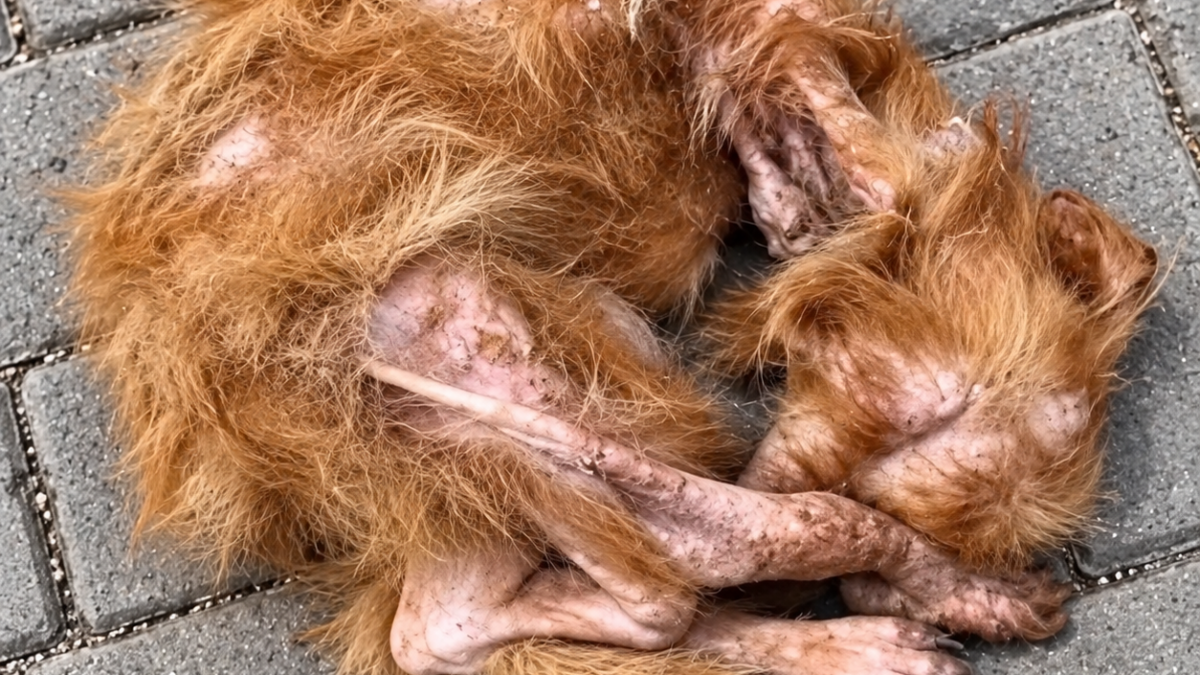
PART 2
“What does five percent mean?”
I heard myself ask the question, but my voice sounded strangely far away.
The veterinarian, Dr. Bennett, pulled a chair closer.
“It means he is profoundly anemic,” she said. “His red blood cell level is critically low. Right now, his body isn’t carrying oxygen the way it should.”
I looked at Kaefsi.
He was lying on his side under a blanket, breathing quietly.
He didn’t look frightened.
That almost made it worse.
“How dangerous is it?”
Dr. Bennett hesitated for half a second.
That half second told me more than anything else.
“Very.”
The room seemed to narrow around us.
A veterinary technician was already preparing fluids. Another was checking Kaefsi’s temperature and blood pressure.
“What do we do?”
“He needs stabilization. Fluids, careful monitoring, and a blood transfusion as soon as we can arrange it.”
“Then do it.”
“We will.”
“No, I mean whatever he needs. Don’t wait for me to approve every little thing. Just help him.”
Dr. Bennett nodded.
“That’s what we’re going to do.”
I reached through the opening in the blanket and touched two fingers lightly against Kaefsi’s head.
His eyes opened.
For one second, they met mine.
There was no dramatic moment.
No sudden burst of strength.
He simply looked at me.
Then his eyes closed again.
I had no way of knowing whether he understood that his life had just changed.
All I could do was hope his body lasted long enough for him to find out.
The clinic began searching for a compatible donor while Kaefsi was moved into intensive care.
My partner, Rachel, stood beside me in the hallway.
“You should sit down,” she said.
“I’m fine.”
“You’re shaking.”
I looked at my hands.
She was right.
I sat.
Through the narrow window in the treatment-room door, I could see the staff moving around Kaefsi.
Rachel lowered herself into the chair beside me.
“You were right to bring him straight here.”
“I keep thinking about that parking lot.”
“What about it?”
“What if nobody had called?”
She didn’t answer.
“What if he’d been there all night?” I continued. “What if it had rained? What if he’d crawled under a car and no one saw him?”
“But somebody did see him.”
I stared through the glass.
“Barely in time.”
Rachel leaned forward, elbows on her knees.
“You don’t know that.”
“The doctor’s face told me.”
She was quiet.
We both knew there was no point pretending.
After years of rescue work, I had learned that hope and honesty had to live in the same room.
Sometimes an animal arrived early enough.
Sometimes they didn’t.
Sometimes love could repair damage.
Sometimes damage had gone too far.
The hardest part was never knowing which story you were standing inside until the ending arrived.
A technician came through the doors.
“We found a donor.”
I stood too fast.
“When can you start?”
“Very soon.”
“Can I see him?”
“For a minute.”
She led me back.
Kaefsi looked impossibly small beneath the equipment surrounding him.
An IV line disappeared into one leg. A monitor tracked his heart rate. His shaved skin showed more scars than I had noticed before.
I sat beside him.
“Listen to me,” I whispered. “I know you don’t know who I am. I know today has probably been terrifying. But everybody in this room is here for you now.”
One ear moved slightly.
“That’s the deal, okay? You stay. We’ll handle the rest.”
His eyes opened again.
I smiled even though my throat hurt.
“You don’t have to do anything heroic. Just stay.”
When they started preparing for the transfusion, I stepped out.
That became the pattern of the next several hours.
Wait.
Ask.
Listen.
Wait again.
Every time the treatment-room door opened, my heart jumped.
The first part of the transfusion went slowly because the team had to watch closely for a reaction.
I tried to distract myself by returning calls from the shelter.
I answered three questions I couldn’t remember five minutes later.
I stared at paperwork without understanding a word.
Finally, Dr. Bennett came out.
“So far, he’s tolerating it.”
“So that’s good?”
“It’s good.”
“Does that mean he’s safe?”
“No.”
Her answer was gentle but immediate.
“We still have a long way to go.”
I nodded.
“Okay.”
His anemia wasn’t the only problem.
He was severely dehydrated.
He was dangerously underweight.
His skin needed treatment.
He had external parasites.
His body had almost no reserves left.
And there was something else Dr. Bennett warned me about.
Food.
I almost laughed when she said it.
Food seemed like the simplest problem in the world.
Give a starving dog food.
But it wasn’t simple.
“We have to be careful,” she explained. “After prolonged malnutrition, suddenly giving too much food can create serious metabolic complications. His system needs time.”
“So even now I can’t just let him eat?”
“Not as much as he wants.”
That felt cruel.
He had been denied food long enough.
The instinct in me wanted to fill a bowl to the top and keep filling it until he walked away.
Instead, the kindest thing we could do was measure every meal.
Small amounts.
Frequent feedings.
Careful adjustments.
Another lesson rescue work had taught me: compassion without discipline could still cause harm.
That night I finally left the clinic shortly after midnight.
I made it three blocks before pulling into a gas station.
Rachel looked over.
“What’s wrong?”
“I forgot something.”
“What?”
“I didn’t tell him I was coming back.”
She stared at me.
Then she smiled sadly.
“He’s a dog.”
“I know.”
“He doesn’t understand schedules.”
“I know.”
“And the clinic is two minutes behind us.”
“I know.”
Rachel turned the car around.
The night technician let me stand at the door of the treatment area.
I didn’t wake Kaefsi.
I just looked at him through the glass.
“I’ll be back tomorrow,” I whispered anyway.
Then I went home.
I didn’t sleep.
Every time I closed my eyes, I saw the scale.
Eight pounds.
Then I saw the number from the bloodwork.
Five percent.
At 5:40 the next morning, I was already dressed.
At 6:15, I called the clinic.
The night technician answered.
“This is about Kaefsi, right?”
“Yes.”
“He made it through the night.”
My knees almost gave out.
“How is he?”
“Still critical, but stable.”
“Did he eat?”
“A little.”
“On his own?”
“With some assistance.”
I closed my eyes.
“Thank you.”
When I arrived, Dr. Bennett was checking him.
His gums were still pale, but they no longer had that frightening almost-white appearance from the day before.
“He looks different,” I said.
“He is.”
“Better?”
“Better than yesterday.”
I learned quickly not to ask whether he was safe.
Better than yesterday was enough.
The first transfusion had helped.
His follow-up numbers were moving in the right direction.
He was still weak, but now when I sat beside him with his measured breakfast, he raised his head before I touched the bowl.
“That’s right,” I said. “You remember this part.”
He smelled the food.
I held a little against my fingers.
He ate it.
Then another bite.
On the fifth bite, he licked my thumb.
I laughed.
It surprised both of us.
“There you are,” I whispered.
For the first time, I saw the dog underneath the emergency.
Not the medical chart.
Not the ribs.
Not the scars.
Kaefsi.
He wanted breakfast.
That was enough personality for one morning.
Over the next two days, his blood values improved, then dipped again.
Dr. Bennett told me that wasn’t unexpected.
His body was trying to recover from extreme depletion, and recovery didn’t happen in a straight line.
He required another transfusion.
That second one frightened me more than the first because by then I had started imagining a future for him.
The first day, I had wanted him to live.
By the third day, I wanted to know what toy he would choose.
I wanted to know whether he barked at delivery trucks.
I wanted to know if he slept curled into a ball or stretched across an entire couch.
I wanted to know whether he liked grass.
He had become specific.
That made the fear specific too.
During the second transfusion, I sat in the waiting room with a notebook.
At the top of one page I wrote:
KAEFSI.
Below it, without thinking, I wrote:
Things he still needs to do.
Rachel looked over my shoulder.
“What’s that?”
I covered the page.
“Nothing.”
She pulled my hand away.
On the list I had written:
Run.
Roll in grass.
Destroy an expensive dog bed.
Steal food from somebody’s plate.
Get annoyed during a bath.
Sleep somewhere warm.
Learn what a toy is.
Have a birthday even if we have to invent the date.
Be somebody’s dog.
Rachel read the last line twice.
Then she handed the notebook back.
“You forgot one.”
“What?”
“Become spoiled.”
I added it.
That afternoon, the apartment manager called me.
His name was Mr. Lewis.
“I heard you’re the person who took that dog,” he said.
“Yes.”
“How is he?”
“Alive.”
There was a pause.
“Is it that bad?”
“Yes.”
He sighed.
“I’m sorry.”
“Did you find out anything?”
“I asked the maintenance staff. Nobody recognizes him.”
“Any cameras?”
Another pause.
“We have cameras at the entrances.”
My grip tightened around the phone.
“Can you check them?”
“I already asked our security company to preserve yesterday morning’s footage.”
That was the first moment I felt something other than grief.
It wasn’t satisfaction.
It was focus.
“What time range?”
“We don’t know exactly when the dog appeared.”
“One resident told us she walked past that area around seven and didn’t see him. We found him a little after nine.”
“I’ll check seven to nine-thirty.”
“Please don’t delete anything.”
“I won’t.”
After the call, I contacted county animal control.
Officer Maria Alvarez had worked several neglect cases involving animals brought to our shelter.
She listened while I described Kaefsi’s condition.
When I mentioned the pressure injuries, her voice changed.
“You have photographs?”
“The clinic does. I took some before we moved him too.”
“Keep the originals. Don’t edit them.”
“I won’t.”
“Medical records?”
“Yes.”
“Good. And the apartment complex may have video?”
“Yes.”
“I’ll contact the manager.”
“Maria.”
“Yes?”
“If you find whoever did this…”
I stopped.
The sentence had come out sharper than I intended.
She knew what I meant.
“I’ll follow the evidence,” she said. “That’s the way we help him.”
I looked through the glass at Kaefsi.
He was sleeping.
“I want somebody to answer for it.”
“I understand.”
“No. I mean I really want—”
“I know exactly what you mean.”
Her tone remained calm.
“But anger won’t build the case. Records will. Video will. Medical findings will. Let me do it correctly.”
I exhaled.
“You’re right.”
“I know it’s hard.”
“I keep looking at him and thinking somebody had months to stop this.”
“Maybe they did.”
That sentence stayed with me.
Maybe they did.
It would have been easy to imagine a monster.
Rescue work teaches you that reality is often less dramatic and more disturbing.
Neglect can happen slowly.
A missed veterinary visit.
Then another.
A dog left confined because caring for him is inconvenient.
Food reduced because money is tight.
Then reduced again.
Parasites untreated.
Sores ignored.
Weakness normalized.
Until one day an animal looks like Kaefsi, and the person responsible has spent so long making excuses that the condition no longer shocks them.
But speculation wasn’t evidence.
So I stopped guessing.
For the moment, Kaefsi’s only job was survival.
Mine was to stay beside him while he did it.
By the fourth morning, he surprised us.
I walked into the treatment area carrying his tiny measured breakfast.
His head appeared over the edge of the bedding.
“Excuse me,” I said. “Who gave you permission to sit up?”
His tail moved.
Once.
It was barely a wag.
I froze.
“Did you see that?”
The technician laughed.
“We’ve been waiting for you to notice.”
“You saw it already?”
“He wagged at us about ten minutes ago.”
“So I’m not even first?”
“Sorry.”
I knelt.
“After everything I’ve done for you.”
His tail moved again.
Stronger.
That tiny movement destroyed me.
I covered my mouth and looked away because suddenly I was crying in front of three veterinary technicians.
One of them placed a tissue box on the floor beside me without saying anything.
“Thanks,” I muttered.
Kaefsi watched me.
Then he tried to stand.
“No, no, no.”
I put my hand gently against his chest.
“Show-off behavior begins after breakfast.”
He disagreed.
He got his feet beneath him for perhaps two seconds.
His legs trembled.
Then he sat back down.
But those two seconds felt bigger than any milestone I could have imagined.
A dog who had collapsed trying to reach food was trying to stand because I had entered the room.
Later that afternoon, his hematocrit climbed again.
The next test was better.
Then the next.
Eventually it rose above thirty percent.
I made Dr. Bennett repeat the number.
“Above thirty?”
“Yes.”
“Are you sure?”
She smiled.
“We checked.”
I leaned against the wall.
It was the first time since finding him that I allowed myself to believe he might actually leave the clinic.
Not immediately.
He still needed time.
But someday.
His gums became pinker.
His eyes became brighter.
He started following people around the room with his gaze.
Then he developed opinions.
He did not like having his temperature taken.
He did like the technician named Sam because Sam smelled like chicken treats.
He disliked one particular blue towel for reasons known only to him.
He began nudging my fingers when I was too slow during meals.
The transformation was incremental, but because I visited every day, I saw each piece arrive.
Day five: he stood long enough to eat several bites.
Day six: he walked three unsteady steps.
Day seven: he attempted to follow a technician into the hallway.
Day eight: he tried to eat a paper towel.
“Okay,” I told him. “That is not the appetite improvement we discussed.”
Sam laughed.
“He’s feeling better.”
“That’s one way to measure it.”
His weight reached ten pounds.
Two pounds might not sound dramatic.
On him, it was.
His face looked less hollow.
The severe angles around his hips began softening.
His skin, cleaned and treated, started to heal.
Tiny patches of new fur appeared.
At first they looked like shadow.
Then fuzz.
I would rub my finger near them and tell him, “Look at you. Growing a whole new dog.”
He would lick my hand and search for food.
But while Kaefsi recovered, Officer Alvarez kept working.
Three days after our first conversation, she called.
“We got the apartment footage.”
I stepped outside the clinic.
“And?”
“There’s something.”
My heart started pounding.
“What?”
“A vehicle enters the property at 7:42 that morning.”
“What kind?”
“A white cargo van.”
“Can you see the plate?”
“Partially. We’re working on it.”
“And Kaefsi?”
There was a pause.
“The camera angle doesn’t show exactly where you found him.”
“But?”
“The van stops near that side of the complex for less than two minutes. When it leaves, another camera catches enough of the area to show what appears to be a person carrying an animal carrier.”
My stomach tightened.
“Carrying it in or carrying it out?”
“Out of the van.”
“And then?”
“The person moves out of frame.”
I closed my eyes.
“So someone did leave him.”
“It appears that way, but I need to be precise. The video doesn’t show the dog being placed in the exact location where you found him.”
“Maria.”
“I know.”
“That’s him.”
“It may be. We need more.”
“What about the van?”
“That’s where it gets interesting.”
I waited.
“There’s a business logo on the passenger door.”
“What business?”
“I’m not giving you the name yet.”
“Why?”
“Because I don’t want anyone contacting them before we finish what we’re doing.”
“I’m not going to—”
“Yes, you are.”
I opened my mouth.
Then closed it.
She knew me too well.
“Fine.”
“I mean it.”
“Fine.”
“The business appears to be connected to dog breeding and sales.”
I stopped breathing for a second.
The fear I had voiced at the apartment complex came back.
Backyard breeding.
But until that moment it had only been a suspicion based on Kaefsi’s condition.
“Are you saying he came from a breeder?”
“I’m saying we’re investigating that possibility.”
“Do they still have dogs?”
Another pause.
“That’s exactly what I’m trying to determine.”
My anger returned so fast it made my hands cold.
I looked through the clinic window.
Kaefsi was standing in his enclosure, waiting for somebody to notice him.
“Please tell me you’re going there.”
“We are following procedure.”
“That isn’t an answer.”
“It’s the only answer I can give you right now.”
“Maria, if there are more dogs—”
“I know.”
“What if they’re like him?”
Her voice softened.
“That is why we are not rushing this.”
I hated that answer.
I also knew she was right.
So again, I waited.
Waiting became easier because Kaefsi kept giving me something new to celebrate.
One afternoon, Dr. Bennett allowed us to take him outside behind the clinic.
He wore a little harness because his neck was still too delicate for pressure.
The sun was warm.
I lowered him carefully onto the grass.
He stood absolutely still.
For a moment, I wondered if he was afraid.
Then his nose dropped.
He smelled the ground.
One step.
Another.
His feet moved strangely at first, as if the uneven surface surprised him.
He smelled a patch of clover.
Then a leaf.
Then my shoe.
Then the clover again.
I sat down in the grass.
“Take your time.”
He walked in a small circle.
His tail lifted.
The dog who had been too weak to stand was outside choosing where he wanted to go.
I remembered the list in my notebook.
Run.
We weren’t there yet.
Roll in grass.
Not yet.
But walking through it?
I pulled out my pen when I got back inside.
I added that to the list and crossed it out.
Rachel found me doing it.
“You added something just so you could cross it off?”
“Yes.”
“That is cheating.”
“I make the rules.”
Kaefsi slept most of the afternoon afterward.
Recovery exhausted him.
That was another thing I had to learn.
A good morning could be followed by a quiet afternoon.
A burst of energy could be followed by hours of sleep.
Healing wasn’t a movie montage.
It was repetition.
Medicine.
Meals.
Cleaning.
Sleep.
Blood tests.
More meals.
More sleep.
And underneath all of it, trust.
That part grew too.
The first time we met, Kaefsi had tolerated my touch because he had no strength to resist.
A week later, he sought it.
When I stopped scratching his cheek, he leaned forward.
When I stood to leave, his eyes followed me.
One evening, I was halfway to the door when I heard a sound behind me.
A tiny bark.
I turned.
Kaefsi was standing with his front paws against the edge of his bedding.
“Did you just yell at me?”
He barked again.
Sam looked around the corner.
“Well, congratulations. He has discovered customer complaints.”
I went back.
Kaefsi sat.
I scratched behind his ears.
“That’s a dangerous power you just discovered.”
He wagged.
His bark was small, but it changed something in the room.
Until then, every sound around him had belonged to people making decisions about his life.
Now he had a voice again.
Two days later, Officer Alvarez called.
This time her voice was different.
“We served a warrant this morning.”
I stopped walking.
“Where?”
“The property associated with the van.”
I knew better than to ask for an address.
“What did you find?”
“Dogs.”
My stomach dropped.
“How many?”
“I can’t give you all the case details yet.”
“Are they alive?”
“Yes.”
That was the word I needed.
“Yes.”
“Are they safe?”
“They are now.”
I sat down on the curb outside the clinic.
“Were they like Kaefsi?”
“Some are underweight. Several need veterinary care. None of the ones I personally saw appeared as medically unstable as he was when you found him.”
I closed my eyes.
“How many?”
She hesitated.
“Enough that we needed multiple vehicles.”
I pressed my free hand against my forehead.
Behind the anger came something else.
Relief.
Not because the situation was good.
Because it had ended before another dog reached the same condition Kaefsi had.
“Was he theirs?”
“We found records.”
“What kind?”
“Breeding records, sales notes, veterinary paperwork. We’re still sorting through everything.”
“And his name?”
“No Kaefsi.”
“Of course not.”
“But there is a dog matching his age, sex, coloration, and identifying features.”
My chest tightened.
“What did they call him?”
“I’m not telling you.”
“Why?”
“Because whatever name they used doesn’t matter right now.”
I looked through the glass.
Kaefsi was licking food from a puzzle mat.
“You’re right.”
“There’s something else.”
“What?”
“According to the records, the dog appears to have been used in their breeding operation.”
I felt the anger arrive again, heavier now because it had somewhere to land.
The pressure marks.
The confinement injuries.
The neglect.
The condition of his skin.
The starvation.
“He’s only about two.”
“I know.”
“They did that to him in two years?”
“We’ll let the medical evidence establish what happened.”
“Are there charges?”
“We’re preparing the case.”
“Maria.”
“I know what you want me to say.”
“I want you to tell me they can’t get those dogs back.”
“We’re taking steps to prevent that.”
It still wasn’t the satisfying answer I wanted.
But real justice rarely arrives in one dramatic sentence.
It arrives through paperwork.
Photographs.
Medical reports.
Witness statements.
Hearings.
Evidence.
People doing boring things correctly so someone cannot walk into court later and say the case was built on emotion instead of fact.
I had spent days wanting immediate punishment.
Now I understood that patience could protect more animals than rage ever would.
“What can I do?” I asked.
“Keep every record related to Kaefsi.”
“Done.”
“Write down exactly what you remember from the day you found him. Do it now, while the details are fresh.”
“I will.”
“And keep helping him get better.”
I looked at the little dog through the window.
“That part I can handle.”
A few days later, Dr. Bennett gave us the news I had been waiting for.
“If he continues like this,” she said, “I think we can release him to your shelter.”
I stared at her.
“When?”
“Possibly tomorrow.”
“Tomorrow?”
“Possibly.”
I pointed at Kaefsi.
“You hear that?”
He was chewing the edge of his bedding.
Dr. Bennett laughed.
“I think he’s ready to become someone else’s problem.”
“He’s already my problem.”
“Then congratulations.”
That night I barely slept again.
But this time it was excitement.
I arrived the next morning with a small harness, a blanket, and a ridiculous amount of nervous energy.
Dr. Bennett reviewed his instructions.
Medication.
Skin care.
Feeding schedule.
Activity restrictions.
Follow-up bloodwork.
Warning signs.
I wrote everything down even though she also handed me printed instructions.
Then the technician brought Kaefsi out.
Two weeks earlier, I had carried him through those doors wrapped in a blanket.
Now he walked.
Slowly.
But by himself.
He crossed the lobby on four legs.
His tail wagged when he saw me.
I crouched.
“Ready?”
He came directly toward me.
Halfway there, something distracted him.
A cardboard box.
He changed direction.
I laughed.
“So that’s how it is now?”
He sniffed the box.
Apparently it was extremely important.
I waited until he had completed his investigation.
Then we went outside.
I opened the car door.
He looked inside.
“You’ve done this before.”
He did not appear convinced.
Rachel had put a soft bed on the back seat.
I lifted him gently.
He turned twice, then settled down.
Before shutting the door, I looked back at the clinic.
Dr. Bennett and two technicians were standing at the entrance.
“Bring him back if you’re worried about anything,” she called.
“I will.”
“And don’t overfeed him.”
“I know.”
“Seriously.”
“I know.”
She pointed at me.
“I’m talking to you, not the dog.”
Rachel laughed.
“I’ll supervise.”
The ride to the shelter took twenty minutes.
Kaefsi spent the first five sitting quietly.
Then he discovered the window.
Not the view.
The air.
Rachel cracked it barely an inch.
His nose rose.
His nostrils moved rapidly.
His eyes widened.
“That’s the world,” I told him.
He kept smelling.
Gasoline.
Trees.
Restaurants.
Grass.
Other cars.
Rain somewhere far away.
A thousand things I could not separate but he could.
By the time we reached the shelter, he was sitting upright.
We had prepared a quiet room away from the main kennels.
I didn’t want him overwhelmed.
I placed his bed in one corner, water nearby, and several safe toys on the floor.
When I set him down, he froze.
Then he began exploring.
Slowly at first.
He smelled the bed.
Water bowl.
Wall.
Chair.
My shoes.
Rachel’s shoes.
Back to the chair.
Then he found the toys.
There was a rope.
A rubber ball.
A small stuffed duck that made an obnoxious squeaking noise.
Kaefsi smelled the duck.
The duck squeaked when his nose pressed it.
He jumped backward.
Rachel covered her mouth, trying not to laugh.
Kaefsi stared at the duck.
He approached again.
Squeak.
Another jump.
This time his tail started wagging.
“Squeak it again,” I whispered.
He bit down.
SQUEAK.
Kaefsi startled himself so badly that he dropped it.
Then he pounced.
I laughed until my eyes watered.
He bit it again.
SQUEAK.
Something changed in him.
For the next five minutes, he forgot to be a recovering dog.
He attacked that duck with the absolute seriousness of an animal discovering play for the first time.
He shook it.
Dropped it.
Pounced on it.
Carried it three feet.
Lost it behind his bed.
Found it.
Squeaked it again.
I leaned against the wall and watched.
Rachel touched my shoulder.
“You can cross off another one.”
I knew exactly what she meant.
Learn what a toy is.
That night, I left the stuffed duck in Kaefsi’s bed.
The next morning, it was under him.
He had slept on top of it.
Within three days, the shelter staff had learned that the fragile little patient from the clinic was a thief.
His first theft was a cleaning cloth.
His second was a sealed bag of treats he couldn’t open.
His third was my pen.
“What are you even going to do with that?” I asked.
Kaefsi trotted away.
Trotted.
Not staggered.
Not crawled.
Trotted.
I let him keep the pen for about five seconds before trading him for a treat.
His personality came back faster than his fur.
He was curious about everything.
If a cabinet opened, Kaefsi wanted to inspect it.
If somebody sat on the floor, Kaefsi climbed into their lap.
If another dog barked, he needed to know why.
If something fell over, he appeared immediately to supervise.
We introduced him carefully to calm dogs.
The first was an older female named Millie.
She smelled him.
He smelled her.
Millie walked away.
Kaefsi followed.
She gave him the kind of look only an elderly dog can give a younger one.
He stopped.
Two minutes later, he followed her again.
By the end of the afternoon, they were lying on separate beds three feet apart.
By the end of the week, Kaefsi had decided Millie belonged to him.
Whenever she moved, he moved.
Whenever she slept, he curled nearby.
Millie tolerated this with great dignity.
One morning I found Kaefsi stretched across the edge of her bed while Millie stared at me as if requesting formal intervention.
“You allowed this,” I told her.
She sighed.
Kaefsi slept on.
His follow-up appointment came about a month after the day we found him.
I put him in the car and drove back to the clinic.
The moment we entered, Sam looked up from the front desk.
“No.”
I smiled.
“What?”
“That is not the same dog.”
Kaefsi wagged at him.
Sam came around the desk and crouched.
“Where did you get all this fur?”
The change was remarkable.
It wasn’t complete.
There were still thin patches.
Some scars would remain visible.
But soft new fur had spread across most of his body.
His weight had continued to improve.
His muscles were returning.
He no longer looked like every ounce of energy had to be rationed.
Dr. Bennett walked in and stopped.
“Well.”
“That sounds positive.”
She examined him.
Heart.
Lungs.
Skin.
Gums.
Weight.
Bloodwork.
I waited for the results with the same knot in my stomach I had carried during those first days.
When she returned, she was smiling.
“His numbers look good.”
“All of them?”
“The ones we were concerned about are reassuring.”
I exhaled.
“So what does that mean?”
“It means he’s recovering very well.”
The words hit harder than I expected.
Recovering very well.
A month earlier, she had told me five percent.
Now she was telling me this.
Kaefsi was on the floor trying to look inside a trash can.
I pointed at him.
“That’s your miracle patient.”
Dr. Bennett shook her head.
“No.”
“What?”
“He had excellent treatment. He had people who got him here. He had donor blood. He had careful nutrition. And he had a body young enough to respond. Calling it a miracle makes it sound like it happened by itself.”
I looked at Kaefsi.
“You’re ruining my dramatic moment.”
“I’m a doctor. It’s one of our services.”
Then her expression softened.
“But he fought hard.”
I crouched beside him.
“Yes, he did.”
There was still one question.
“When can he be adopted?”
Dr. Bennett looked almost offended.
“You’re already getting rid of him?”
“I knew you’d say that.”
She laughed.
“Medically, once we finish the remaining preventive care and you’re satisfied he’s stable in the shelter, I don’t see a reason he can’t begin meeting families.”
I scratched Kaefsi’s neck.
“Did you hear that?”
He licked my wrist.
I should have been happy.
I was.
But a strange sadness came with it.
That is the contradiction of rescue.
You work toward goodbye from the first day.
Every meal.
Every vet visit.
Every medication.
Every night spent worrying.
The goal is to make yourself unnecessary.
If you do the job right, eventually the animal you fought to save walks away with someone else.
I wanted that for Kaefsi.
I also hated imagining his room empty.
Rachel knew before I admitted it.
“You’re going to be ridiculous when he gets adopted,” she said.
“I am not.”
“You cried when he wagged his tail.”
“That was different.”
“You made a list of things he still needed to experience.”
“That was medically important.”
“You put ‘destroy expensive dog bed’ on it.”
“Emotional medicine.”
She laughed.
Then she became serious.
“We’ll find the right family.”
“Not just any family.”
“I know.”
“They need to understand what he’s been through.”
“I know.”
“They need to keep up with his care.”
“I know.”
“And if I don’t like the way they hold the leash—”
“You’re not allowed to reject somebody because of leash aesthetics.”
“I absolutely am.”
“No.”
“We’ll discuss it.”
Kaefsi’s adoption profile went online several days later.
We didn’t use his most painful intake photographs as bait.
I didn’t want his suffering turned into entertainment.
We explained that he had recovered from severe neglect and malnutrition, that he was affectionate, curious, playful, and still learning what normal life looked like.
The photograph showed him sitting on a blanket with his stuffed duck between his paws.
Applications arrived quickly.
Some people wanted him because they had seen his story.
Some seemed to want the idea of rescuing a famous sad dog more than they wanted the real Kaefsi.
Those applications worried me.
Kaefsi didn’t need to spend the rest of his life being treated as a tragedy.
He needed to become ordinary.
A dog whose biggest problem might someday be whether he got the good spot on the couch.
Then an application arrived from a family named the Parkers.
I read it twice.
Then a third time.
They weren’t dramatic.
They didn’t write paragraphs about saving him.
They asked practical questions.
What food was he eating?
Did he show separation anxiety?
How was he with other dogs?
Did he need ongoing medication?
What frightened him?
What kind of routine had helped him?
They already had one dog, a gentle mixed-breed female named Rosie.
Their veterinarian confirmed years of consistent care.
Their references were strong.
Their fenced yard was secure.
Most importantly, when I spoke to Mrs. Parker on the phone, she said something that stayed with me.
“We don’t want to adopt him because we feel sorry for him.”
I became very still.
“Why do you want him?”
“Because from everything you’ve told me, he sounds funny.”
I laughed.
“He is.”
“And stubborn.”
“Very.”
“And our Rosie has been bored since our older dog passed last year.”
“I’m sorry.”
“Thank you. We waited because we didn’t want another dog just to fill his place. But I think we’re ready.”
I looked across the room.
Kaefsi had somehow climbed halfway inside an empty cardboard box.
“He does enjoy making himself everyone’s business.”
“That sounds perfect.”
We arranged a meeting.
I arrived early.
Of course I did.
Kaefsi wore a clean harness.
I brushed him even though there wasn’t much to brush.
Then brushed him again.
Rachel watched me.
“You know he’s going to roll in something as soon as they arrive.”
“He better not.”
“He’s a dog.”
“He is representing the shelter.”
Kaefsi sneezed on my pants.
“Excellent.”
The Parkers arrived with Rosie.
Mrs. Parker knelt several feet from Kaefsi and let him make the decision.
I noticed that immediately.
She didn’t grab him.
Didn’t squeal.
Didn’t pull him toward her.
She waited.
Kaefsi smelled her shoes.
Then her hand.
Then walked past her to investigate Mr. Parker.
After several minutes, we brought Rosie into the fenced meeting yard.
Rosie was larger than Kaefsi.
She approached calmly.
Kaefsi froze.
Rosie smelled his shoulder.
He smelled her face.
They circled.
Then Rosie walked away.
Kaefsi followed.
I smiled.
It was exactly what he had done with Millie.
Rosie picked up a tennis ball.
Kaefsi watched.
Mr. Parker tossed it.
Rosie ran.
Kaefsi ran after Rosie.
I stopped breathing.
It wasn’t a long run.
Maybe twenty yards.
Maybe less.
But his legs stretched beneath him.
His ears moved back.
His tail flew behind him.
For one second I saw the parking lot again.
The trembling leg.
The body that couldn’t stand.
The dog who had needed my fingers to bring food to his mouth.
Then the image disappeared because Kaefsi was racing across a yard.
I heard Rachel behind me.
“The list.”
I nodded.
Run.
I crossed it off that night.
Rosie reached the ball first.
Kaefsi didn’t care.
Apparently, chasing Rosie was more interesting than chasing toys.
She turned.
He skidded slightly.
She bounced toward him.
He bounced back.
Mrs. Parker laughed.
It was done.
I knew it before anyone spoke.
Kaefsi had found his sister.
The adoption wasn’t immediate.
We still had final veterinary care to complete.
Kaefsi was neutered once Dr. Bennett felt his body was ready.
He received his vaccinations on the schedule the veterinary team considered appropriate.
He was groomed carefully.
We finalized the paperwork.
While all of that happened, the cruelty investigation continued in the background.
Officer Alvarez called one afternoon.
“The prosecutor accepted the case.”
I sat down.
“What charges?”
She explained that the allegations included animal neglect and violations related to the breeding operation. The exact counts would depend on individual animals and the evidence prosecutors believed could be proved in court.
“Will Kaefsi be part of it?”
“Yes.”
“Do I have to testify?”
“Possibly.”
“I will.”
“I figured.”
“What happens to the other dogs?”
“Several are being placed through partner rescues pending the legal process. Some need longer medical care.”
“Can the owners get them back?”
“We’re seeking permanent forfeiture.”
I was silent.
“What?” Maria asked.
“Nothing.”
“That is not a nothing silence.”
“I wanted something bigger.”
“Bigger than getting the dogs out?”
“No. That’s not what I mean.”
I struggled for the words.
“When I first found him, I imagined justice would feel like some huge moment. Somebody being confronted. Somebody finally seeing what they did.”
“And now?”
“Now it feels like a stack of veterinary records.”
Maria laughed softly.
“That’s often what justice looks like.”
“I thought revenge would feel hotter.”
“Revenge?”
“You know what I mean.”
“I do.”
I looked through the shelter window.
Kaefsi was sleeping beside Millie.
“I’m not sure I want revenge anymore.”
“What do you want?”
“I want them never to be able to do this again.”
“That,” Maria said, “is a much more useful goal.”
On Kaefsi’s last night at the shelter, I stayed late.
The building was quiet.
Most of the dogs had settled.
Kaefsi was in the office with me because I had invented several unnecessary reasons for him to be there.
He played with his stuffed duck.
The same one from his first day.
It was dirty now.
One wing was partly detached.
The squeaker produced a strange dying sound.
He loved it.
I sat on the floor.
“Tomorrow’s the day.”
Squeak.
“You have no idea what I’m saying.”
Squeak.
“You’re going to have a yard.”
Squeak.
“A sister.”
He stopped and looked at me.
“Yes, Rosie.”
His tail wagged.
“You remember her.”
I reached for the duck.
He grabbed it harder.
“Oh, so that’s how we’re ending this relationship?”
He pulled.
I pulled gently.
He growled playfully.
It was the first time I had heard him do it.
I let go.
Kaefsi stumbled backward with the duck in his mouth and looked extremely pleased with himself.
I laughed.
Then the laughter disappeared.
Tomorrow.
He was leaving tomorrow.
I sat against the cabinet.
After a moment, Kaefsi carried the duck over and climbed into my lap.
He was heavier now.
Warm.
Soft.
Alive.
I rested my cheek against his head.
“You scared me,” I whispered.
His ear moved.
“You scared me more than you will ever know.”
I thought about the first night.
The gas station.
Turning the car around just because I had forgotten to tell a dog I would come back.
“You know what the strange part is?”
Kaefsi sighed.
“I thought I was making promises to you.”
I rubbed his chest.
“But you kept every one of them.”
Stay.
He stayed.
Eat.
He ate.
Stand.
He stood.
Walk.
He walked.
Run.
He ran.
Trust us.
Eventually, he did.
The next morning the Parkers arrived.
Mrs. Parker carried a new leash.
Mr. Parker carried paperwork.
Rosie waited in their car with the windows partially open and Mr. Parker checking on her every few minutes.
I liked that too.
I went through every instruction.
Then went through them again.
Mrs. Parker listened patiently.
Rachel finally interrupted.
“You know we printed all of this for them.”
“I’m being thorough.”
“You explained his feeding schedule three times.”
“It’s important.”
Mrs. Parker smiled.
“You can explain it a fourth time.”
That made me like her even more.
Eventually, there was nothing left to explain.
I clipped the new leash onto Kaefsi’s harness.
Then I handed it to Mrs. Parker.
That tiny movement hurt more than expected.
Kaefsi walked with her toward the parking lot.
Halfway to the car, he turned.
I froze.
He looked back at me.
His ears lifted.
For one selfish second, part of me wanted him to run back.
Then Rosie barked from the car.
Kaefsi turned toward the sound.
His tail exploded into motion.
He hurried forward.
I laughed through tears.
“That’s right,” I whispered. “Go.”
Mrs. Parker opened the back door.
Rosie moved over.
Kaefsi climbed inside.
His stuffed duck went with him.
Of course it did.
The car pulled away.
I stood there until it disappeared.
Rachel came beside me.
“You okay?”
“No.”
She waited.
“Yes.”
Another pause.
“I don’t know.”
“That sounds about right.”
We walked back inside.
His room looked enormous without him.
I removed the water bowl.
Folded the blanket.
Picked up one forgotten rubber ball.
Then I sat on the floor where his bed had been.
For the first time since finding him, there was nothing I needed to do for Kaefsi.
No medication.
No feeding.
No appointment.
No bloodwork.
No emergency.
He had become somebody’s dog.
That was the point.
That evening, my phone buzzed.
Mrs. Parker had sent a photograph.
Kaefsi and Rosie were sleeping on the same couch.
Kaefsi was upside down.
All four legs were in the air.
His stuffed duck was wedged beside his head.
The message underneath said:
He found the couch.
I laughed so loudly Rachel came from the next room.
“What?”
I showed her.
She smiled.
“Cross it off.”
I opened the old notebook.
Sleep somewhere warm.
Crossed out.
Then I looked at another item.
Become spoiled.
I sent Mrs. Parker a message.
How many treats has he had?
She responded almost immediately.
I invoke my right to remain silent.
I crossed that one off too.
For several weeks, the updates came regularly.
Kaefsi learned the backyard.
He followed Rosie everywhere.
He discovered squirrels and took their existence personally.
He learned that the kitchen produced interesting smells.
He learned that Mr. Parker dropped pieces of carrot while cooking.
He learned which blanket belonged to Mrs. Parker and stole it anyway.
He hated rain.
Loved sunshine.
Tolerated baths with a deeply offended expression.
He slept beside Rosie.
Sometimes on Rosie.
His fur grew thicker.
The scars became harder to see.
Then the court date arrived.
I had known it was coming.
Still, when Officer Alvarez called and gave me the date, the old anger returned.
“You may be asked to testify,” she said.
“I’ll be there.”
The courthouse was less dramatic than people imagine.
No shouting crowd.
No cinematic confrontation in the hallway.
Fluorescent lights.
Security screening.
Hard benches.
Folders.
Attorneys walking quickly while carrying too much paper.
I sat beside Officer Alvarez.
“You okay?” she asked.
“Yes.”
“You’re bouncing your knee.”
“I’m still okay.”
She smiled.
When the defendant entered, I recognized him.
Not personally.
From the security video still Officer Alvarez had eventually shown me.
The man beside the van.
He looked ordinary.
That bothered me more than if he had looked frightening.
I had spent months imagining the person responsible for Kaefsi.
Reality was smaller.
A man in a clean shirt.
Hands folded.
Talking quietly to his attorney.
I looked at those hands and thought about the scars beneath Kaefsi’s new fur.
Then I forced myself to stop.
Evidence.
Not rage.
That was what Maria had taught me.
The prosecutor presented veterinary documentation.
Photographs.
Records collected from the breeding property.
Information about the other dogs.
Video evidence.
My statement from the morning we found Kaefsi.
Dr. Bennett’s medical findings.
There were legal arguments over responsibility, condition, ownership, intent, and what the records did or did not establish.
The defense argued that business problems had spiraled, that the dogs had not been deliberately harmed, and that the situation had become unmanageable.
I listened.
Part of me understood the distinction between deliberate cruelty and catastrophic neglect.
Another part kept seeing Kaefsi unable to stand.
At one point the attorney said, “There was no intent to cause this animal suffering.”
My hand tightened around the edge of the bench.
Officer Alvarez noticed.
“Stay with me,” she whispered.
The words hit me.
Stay with me.
The same words I had said to Kaefsi in the car.
I exhaled.
The prosecutor didn’t need my anger.
The photographs were enough.
When I was called, I described finding Kaefsi.
I described the apartment complex.
The way he tried to move his leg.
The scale.
Eight pounds.
The clinic.
The food in my hand.
I did not exaggerate.
I didn’t need to.
“What was his condition when you attempted to feed him?” the prosecutor asked.
“He was interested in the food, but he couldn’t remain standing long enough to eat normally.”
“Did you assist him?”
“Yes.”
“How?”
“I sat on the floor and fed him small amounts by hand while we waited for the veterinarian.”
“What was his behavior toward you?”
“Gentle.”
“Did he attempt to bite you?”
“No.”
“Growl?”
“No.”
“Resist handling?”
“No.”
“Why not?”
The defense attorney stood.
“Objection. Calls for speculation.”
“Sustained.”
I looked toward the judge.
The question didn’t need an answer.
I knew what I had seen.
A dog without enough strength left to protest.
Dr. Bennett testified about the medical findings.
Her voice was the same calm voice she had used in the clinic.
Precise.
Clinical.
Unemotional.
Somehow that made the facts more powerful.
She explained the severe anemia.
The dehydration.
The malnutrition.
The skin injuries.
The evidence consistent with prolonged pressure and confinement.
The care required to stabilize him.
The transfusions.
The controlled feeding.
The follow-up results.
Then the prosecutor showed a recent photograph.
I had provided it with the Parkers’ permission.
Kaefsi and Rosie were standing in the backyard.
Kaefsi’s fur was thick.
His mouth was open.
His tail was high.
He looked happy.
The prosecutor asked Dr. Bennett whether that was the same dog.
She smiled slightly.
“Yes.”
I glanced toward the defendant.
He looked at the photograph.
For the first time all day, I felt something shift inside me.
I had imagined wanting him to feel shame.
I had imagined wanting him to understand what he had nearly destroyed.
But sitting there, I realized the photograph wasn’t for him.
Kaefsi’s recovery didn’t belong to the man who neglected him.
It belonged to Kaefsi.
To the donor dog whose blood had helped save him.
To the technicians who had watched him through the night.
To Dr. Bennett.
To Rachel.
To the shelter staff.
To Officer Alvarez.
To the Parkers.
To Rosie.
Most of all, it belonged to a little dog who had kept breathing when his body had almost nothing left.
The court ultimately ordered consequences that mattered more to me than any dramatic punishment I had imagined.
The animals seized from the property were permanently removed.
The defendant lost the right to reclaim them.
Restrictions were imposed preventing him from simply returning to the same breeding operation.
Financial penalties and restitution were ordered according to the case.
The surviving dogs were allowed to continue toward permanent placement rather than being treated as property waiting indefinitely for someone to take them back.
When we stepped outside, Officer Alvarez stood beside me on the courthouse stairs.
“You look disappointed,” she said.
“I’m not.”
“Then what?”
I watched cars move along the street.
“I thought I’d feel victorious.”
“This isn’t a football game.”
“I know.”
She waited.
“I just keep thinking about the other dogs.”
“They’re safe.”
“And Kaefsi.”
“He’s safe too.”
“I know.”
“So what did you want?”
I thought about it.
“When I found him, I wanted whoever did it to hurt the way I hurt looking at him.”
Maria didn’t respond.
“Now I don’t.”
“That’s probably healthy.”
“I wanted revenge.”
“And now?”
I pulled out my phone.
The most recent photograph from the Parkers showed Kaefsi asleep with his head across Rosie’s back.
“Now I think this is enough.”
Maria looked at the screen.
“That dog?”
“That life.”
We stood quietly.
Then she said, “For what it’s worth, that’s the part people responsible for neglect often don’t understand.”
“What?”
“They think ownership means the animal’s entire story belongs to them.”
She pointed toward my phone.
“It doesn’t.”
A few months later, the Parkers invited me to visit.
I told myself I was going to behave normally.
Rachel did not believe me.
“You’re going to cry before we reach the front door.”
“I am not.”
“You cried over his first bark.”
“That was historic.”
“You cried when he got adopted.”
“That was different.”
“You cried at a photograph of him wearing a raincoat.”
“The raincoat was ridiculous.”
She looked at me.
“You’re going to cry.”
We pulled into the driveway.
Before I opened the car door, I heard barking from inside the house.
One deep bark.
Then a smaller, sharper one.
The front door opened.
Rosie came out first.
Kaefsi shot around her.
He ran down the walkway.
Not trotted.
Ran.
Straight at me.
I barely got down on one knee before he crashed against my chest.
“Hey!”
He licked my chin.
I laughed.
He climbed all over me.
His tail hit my arm so hard it stung.
“You remember me?”
He sneezed in my face.
Rachel started laughing.
“I’m taking that as a yes.”
I buried both hands in his fur.
Fur.
So much of it.
Soft around his neck.
Thick along his back.
The body beneath it was strong now.
Not overweight.
Not fragile.
Healthy.
Mrs. Parker stood at the doorway smiling.
“He heard your car.”
“You’re kidding.”
“He was at the window before you got out.”
That was when I cried.
Rachel made no attempt to hide her satisfaction.
“I told you.”
“Be quiet.”
We went inside.
Kaefsi gave me a full tour without being asked.
Living room.
Kitchen.
Back door.
Rosie’s bed.
His bed.
Another bed.
The couch.
A basket of toys.
I pointed at the basket.
“Does he really need all of those?”
Mr. Parker looked embarrassed.
“No.”
Mrs. Parker answered at the same time.
“Yes.”
Kaefsi pulled out a toy.
Not the duck.
“Where’s his original duck?” I asked.
Mrs. Parker laughed.
“We had a funeral.”
“No.”
“I’m afraid so.”
“What happened?”
“Rosie and Kaefsi disagreed about custody.”
“Did it die bravely?”
“Pieces of it were found in three rooms.”
I placed a hand over my heart.
“He loved that duck.”
“We bought two replacements.”
“Reasonable.”
Kaefsi ran toward the back door.
Rosie followed.
Mrs. Parker opened it.
They flew into the yard.
I stood on the patio.
The afternoon sun caught Kaefsi’s coat.
For several minutes, I didn’t speak.
He chased Rosie around a tree.
Rosie chased him back.
They ran across the grass.
Kaefsi stopped to smell something near the fence.
Then rolled onto his back.
I froze.
Rachel nudged me.
“Do you still have the list?”
I laughed.
“Of course I do.”
“Roll in grass.”
I watched Kaefsi twist happily from side to side.
That night, I crossed it off.
Only one item remained.
Destroy an expensive dog bed.
I decided not to mention that one to the Parkers.
Two days later, Mrs. Parker sent me a photograph.
Foam covered the living-room floor.
Kaefsi sat in the middle of it.
Behind him was what remained of a large orthopedic dog bed.
The message said:
You never warned us he could unzip things.
I laughed until I had tears in my eyes.
Then I opened the notebook.
Destroy an expensive dog bed.
Crossed off.
Every line was finished.
I should have thrown the notebook away.
I didn’t.
I still have it.
Not because Kaefsi needs a list anymore.
Because sometimes rescue work leaves you with memories you wish you could erase.
The animals you reach too late.
The empty kennels.
The phone calls where there is nothing anyone can do.
The cases that don’t end the way you wanted.
On those days, I open that notebook.
I look at the ridiculous little list I wrote while an eight-pound dog was receiving a blood transfusion.
Run.
Roll in grass.
Destroy an expensive dog bed.
Steal food from somebody’s plate.
Get annoyed during a bath.
Sleep somewhere warm.
Learn what a toy is.
Have a birthday even if we have to invent the date.
Be somebody’s dog.
Become spoiled.
Every one of them eventually became ordinary.
And that is what people sometimes misunderstand about rescue.
The victory isn’t always dramatic.
It isn’t the moment the abuser walks into court.
It isn’t a judge’s order.
It isn’t an arrest, a fine, or a headline.
Those things can matter.
Accountability matters.
Removing animals from dangerous situations matters.
Making sure someone cannot simply repeat the same neglect matters.
But that isn’t where Kaefsi won.
Kaefsi won on a couch.
He won in a backyard.
He won every time he heard the refrigerator open and came running because he had learned that food would still be there tomorrow.
He won when he became picky about treats.
He won when rain annoyed him.
He won when he stole Mrs. Parker’s blanket.
He won when Rosie pushed him off her bed and he climbed right back on.
He won when his family complained that he took up too much room on the couch.
He won when nobody in the house thought twice about filling his water bowl because caring for him had become routine.
For a dog who once had nothing, ordinary life was enormous.
Almost a year after I found him, I visited again.
This time I didn’t cry at the driveway.
I made it all the way into the house.
Then Mrs. Parker showed me something.
A photograph from the previous week.
Kaefsi was lying on his back between Mr. and Mrs. Parker on the couch.
Rosie was pressed against his side.
His legs were sprawled in every direction.
His eyes were closed.
His mouth had that relaxed softness dogs get when they are completely asleep.
“He sleeps like that every night,” she said.
“Doesn’t look very dignified.”
“He has no dignity.”
“I noticed.”
She smiled.
“Sometimes I wonder whether he remembers.”
I knew what she meant.
The cage.
The hunger.
The parking lot.
The clinic.
“I hope he doesn’t.”
“So do I.”
Kaefsi wandered into the room.
He stood beside me until I scratched his chest.
Then he leaned his entire body against my leg.
“Although,” I said, “I don’t think forgetting is the only way to heal.”
Mrs. Parker looked at me.
“What do you mean?”
“I don’t know what dogs remember the way we remember things. But maybe it doesn’t matter.”
I looked down at him.
“His life now is louder than whatever happened before.”
Kaefsi suddenly left me.
The sound of a cabinet opening had come from the kitchen.
We both laughed.
“There he goes.”
“Food,” Mrs. Parker said.
“Some things never change.”
I followed him into the kitchen.
Mr. Parker was cutting carrots.
Kaefsi sat beside him.
Perfectly still.
Perfectly focused.
A carrot piece fell.
Kaefsi caught it before it hit the floor.
I stared.
“You’ve trained him to do that?”
Mr. Parker shook his head.
“He trained me.”
That evening, as I prepared to leave, Kaefsi walked me to the door.
I knelt.
He pushed his forehead against my chest.
For a second, the house disappeared.
I was back in the clinic.
My hand held a tiny amount of food.
His legs couldn’t support him.
His ribs pressed beneath my fingers.
Stay with me.
Just stay with me.
I closed my eyes.
“You did,” I whispered.
Kaefsi licked my chin.
Then he heard Rosie in the backyard and immediately abandoned me.
I laughed.
“Fine. Go.”
He ran.
I watched from the doorway.
There was no hesitation in his movement.
No weakness.
No fear that someone might call him back and put him somewhere small.
He ran because he wanted to.
He stopped because he wanted to.
He followed Rosie because he wanted to.
The choices were tiny.
They meant everything.
Before leaving, Mrs. Parker hugged me.
“Thank you for finding him.”
I shook my head.
“We found each other.”
On the drive home, Rachel asked me whether I still thought about the person who had left Kaefsi outside the apartment complex.
“Sometimes.”
“Still angry?”
“Yes.”
That answer surprised her.
I could see it.
“I thought you’d say no.”
“I don’t think anger has to disappear for healing to be real.”
She nodded.
“But it changed.”
“How?”
I looked out the window.
“Back then, I wanted his suffering answered with suffering.”
“And now?”
“Now I want it answered with this.”
“With what?”
“A dog running home when somebody calls his name.”
Rachel smiled.
I thought about the court case.
The breeding records.
The other dogs removed from the property.
The legal orders.
The restrictions.
All of that mattered.
If accountability had prevented even one animal from ending up like Kaefsi, it mattered enormously.
But the revenge I once imagined had become something else.
It had become proof.
Proof that neglect had not gotten the final word.
Someone had confined him.
Now he had a yard.
Someone had allowed him to starve.
Now he stood in a kitchen expecting carrots to fall.
Someone had treated him as disposable.
Now an entire family rearranged themselves on the couch to make room for him.
Someone had left him without even stopping to see whether he could stand.
Now, when he ran too far across the backyard, people called his name because they wanted him to come back.
That was the ending I wanted.
Not pain returned for pain.
Life returned for what had been taken.
I still remember the exact position of Kaefsi’s body when I first saw him outside that residential complex.
I remember thinking he looked smaller than any dog should look.
I remember the insects.
The scars.
The missing fur.
The way one leg shook when he tried to move.
I remember asking the residents whether he belonged to anyone.
No one knew him.
At that moment, it felt like the saddest thing in the world.
Nobody knew his name.
Nobody knew where he came from.
Nobody was looking for him.
But now, when I think about that morning, I understand something I couldn’t understand then.
Kaefsi’s story didn’t begin with whoever neglected him.
It didn’t belong to the cage.
It didn’t belong to the person who drove away.
Those things were part of his past.
They were not his identity.
The dog I remember most clearly now isn’t the eight-pound dog on the pavement.
It’s the dog running through the Parkers’ yard with Rosie.
The one who learned to squeak a stuffed duck.
The one who stole my pen.
The one who barked at me because I tried to leave the clinic without scratching his ears long enough.
The one who turned a cardboard box into an afternoon adventure.
The one who destroyed an orthopedic dog bed and sat proudly in the foam.
The one whose fur grew back so thick that people who saw him months later could barely believe the intake photographs.
The one who survived.
People sometimes ask what made the difference.
There wasn’t one thing.
It was the resident who noticed him.
The call that reached us.
The drive to the clinic.
The veterinary team that recognized how critical he was.
The donor blood.
The fluids.
The carefully controlled meals.
The technician who watched him overnight.
The investigators who preserved the video before it disappeared.
The officers who followed the evidence.
The rescue partners who helped the other dogs.
The family who looked at Kaefsi and didn’t see a project.
They saw a dog.
And somewhere in the middle of all those ordinary decisions, a life that had nearly disappeared became a life surrounded by people.
That is why I will never forget the first meal I fed him.
He was too weak to stand.
I held each bite near his mouth.
He took it slowly.
At the time, I thought I was giving him something.
Food.
Comfort.
A chance.
Years of rescue work have taught me that sometimes you do everything right and still lose.
So I made no promises about forever that day.
I only asked him for the next minute.
Then the next.
One bite.
One breath.
One night.
One transfusion.
One step.
Until eventually there were enough minutes to become days.
Enough days to become weeks.
Enough weeks to become a life.
The last photograph the Parkers sent me is still one of my favorites.
There is nothing extraordinary in it.
No dramatic before-and-after collage.
No clinic.
No courtroom.
No evidence folder.
No reminder of what happened to him.
Kaefsi is lying on the floor in a stripe of afternoon sunlight.
Rosie is asleep nearby.
A half-chewed toy rests beside his paw.
His fur is soft and full.
His belly is relaxed.
He is asleep so deeply that one ear has folded underneath his head.
Behind him, you can see the corner of a couch.
A water bowl.
Part of a kitchen.
A family home.
That’s all.
And that is why I love it.
Because once, every minute of Kaefsi’s life was an emergency.
Now nothing is happening.
Nobody is saving him.
Nobody is examining him.
Nobody is investigating him.
Nobody is asking whether he will survive the night.
He is simply sleeping.
Safe enough to close his eyes.
Fed enough not to worry about the next meal.
Loved enough that when he wakes up, somebody will still be there.
For Kaefsi, that ordinary afternoon was the ending we had fought for from the beginning.
And if there was ever a better answer to the person who left him behind, I have never found it.
They left him with almost nothing.
Kaefsi built a whole life anyway.
And this time, when he finally closed his eyes, it wasn’t because he was too weak to keep them open.
It was because he was home.



