PART 2: They Called Him the Shelter’s “Worst Dog” for Six Months—Then I Put Him in My Car and Learned the Truth
For six months, everyone who passed Milo’s kennel saw the same thing: a dog barking, spinning, and throwing himself at the metal door like he was impossible to control.
The shelter records warned that he was “overstimulated,” “high-maintenance,” and possibly unsuitable for an ordinary home.
But less than ten minutes after I drove him away from that building, Milo did something that made me realize we had all been looking at the wrong dog.
For the first few miles, I drove in complete silence.
No radio.
No music.
I avoided potholes and slowed for every rough patch in the road.
I even hesitated before using my turn signal because the faint clicking seemed too loud.
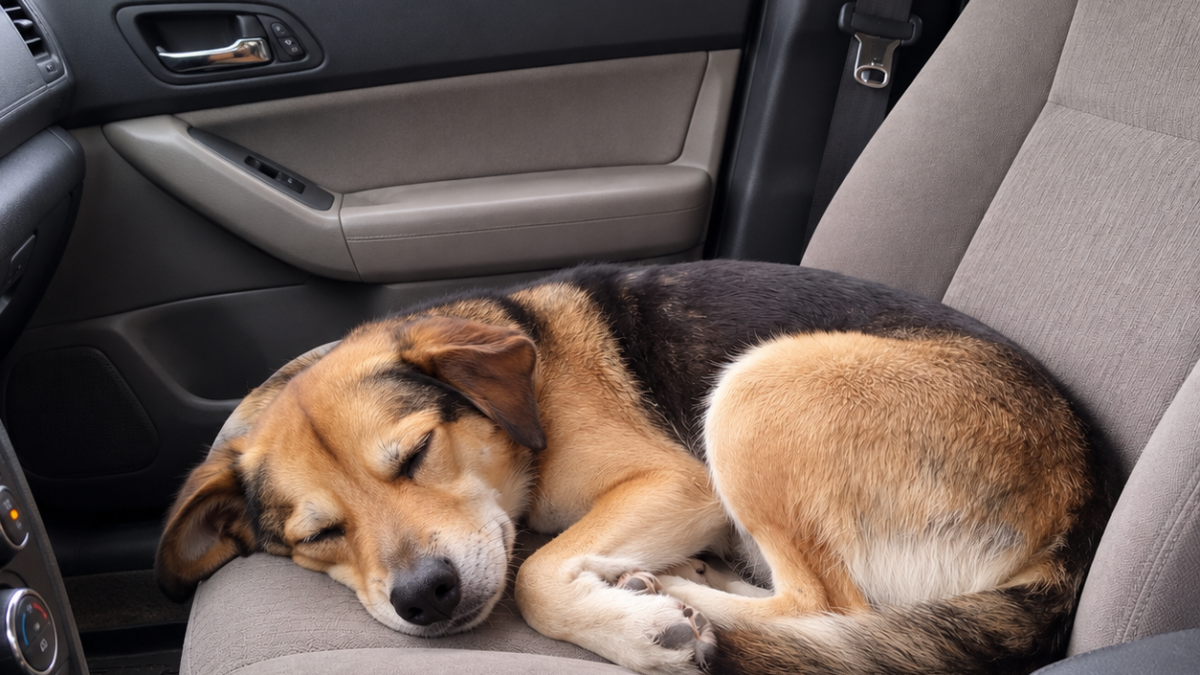
Milo was asleep beside me.
Not ordinary sleep.
Not the light dozing dogs do when they are listening for the refrigerator door or waiting for someone to stand up.
He had completely shut down.
His body was curled tightly into the passenger seat, his nose tucked beneath one front leg. His breathing was deep and uneven, and every few minutes a soft snore escaped him.
I kept glancing over.
This was the same dog I had been warned about.
The dog who supposedly had endless energy.
The dog volunteers struggled to walk.
The dog potential adopters rarely stopped to meet.
The shelter had known Milo for six months.
I had known him for twenty minutes.
And somehow, the animal sleeping beside me looked nothing like the one described on his kennel card.
I first noticed Milo three weeks earlier.
I had gone to the county shelter looking for an older dog.
Something calm.
Maybe eight or nine years old.
A dog that would be happy sleeping beside my desk while I worked from home.
The shelter was loud that afternoon.
Dogs barked from both sides of the concrete hallway.
Metal bowls scraped against kennel floors.
A hose ran somewhere in the back.
I had almost reached the senior-dog section when a sudden crash made me turn.
A large brown-and-white dog slammed both front paws against a kennel door.
He barked.
Spun around.
Barked again.
Then ran the same tight circle.
Over and over.
The card clipped outside his kennel said:
**MILO — 4 YEARS OLD**
**HIGH AROUSAL**
**NEEDS EXPERIENCED HANDLER**
**NO SMALL CHILDREN RECOMMENDED**
A volunteer saw me looking.
“That’s Milo.”
“What’s his story?”
She sighed.
“He’s been here six months.”
“Why so long?”
She looked toward him.
“You can probably guess.”
Milo hit the kennel door again.
The volunteer raised her voice over the barking.
“He gets worked up around people. He spins. He jumps. Sometimes he mouths the leash. He’s not mean, but he’s a lot.”
“Has he ever bitten anyone?”
“No.”
“Growled?”
“Not really.”
“Then what does ‘a lot’ mean?”
She hesitated.
“Nobody can get him to settle.”
I stood there another minute.
Milo never stopped moving.
But something about the pattern bothered me.
He wasn’t trying to reach me.
He wasn’t lunging with focused aggression.
He seemed trapped inside his own motion.
Like a person pacing a hospital hallway because sitting still would mean feeling everything at once.
I came back the next day.
Then again.
For two weeks, I sat outside Milo’s kennel without touching him.
Sometimes I read.
Sometimes I simply stayed quiet.
The barking never fully stopped.
But after several visits, I noticed something.
Whenever the hallway emptied, Milo changed.
His circles became slower.
His shoulders dropped.
Once, for maybe five seconds, he pressed his body against the far wall and closed his eyes.
Then another dog barked.
Milo exploded back into motion.
That was when I started wondering whether everyone had mistaken stress for personality.
Three weeks after I first saw him, I signed the foster paperwork.
A staff member handed me his leash.
“You sure?”
“No.”
She laughed.
“At least you’re honest.”
I clipped the leash onto Milo’s collar.
I expected chaos.
Instead, Milo stepped out of his kennel and froze.
The hallway was suddenly quiet.
He looked at me.
Then toward the exit.
Then he walked beside me.
Slowly.
No pulling.
No spinning.
No jumping.
By the time we reached my car, his head was hanging low.
I opened the passenger door.
He climbed in.
Turned around once.
And collapsed.
Before I even started the engine, Milo was asleep.
That was when I understood.
He hadn’t been overflowing with energy for six months.
He had been running on empty.
And I was about to learn just how badly everyone had misunderstood him.
PART 2
The drive from the shelter to my house took almost two hours.
Milo slept through all of it.
At the first red light, I looked over and watched his ribs rise and fall.
I had never seen a dog sleep that hard.
His paws twitched occasionally.
Once he gave a tiny whimper without waking.
I lowered the temperature in the car because the afternoon sun had begun warming the passenger side.
He didn’t move.
At a gas station halfway home, I needed coffee.
I sat in the parking lot for almost ten minutes before deciding I couldn’t bring myself to wake him.
So I kept driving.
An hour later, I pulled into my driveway.
“Milo?”
Nothing.
I touched his shoulder.
His eyes opened slowly.
For half a second, panic flashed across his face.
Then he saw me.
He blinked.
“Hey.”
His breathing slowed.
“You’re okay.”
He lifted his head.
Outside the windshield was my small blue house, a narrow lawn, two maple trees, and absolutely nothing interesting.
To Milo, apparently, it was overwhelming.
He stared through the glass.
I opened the passenger door.
“Ready?”
He climbed down cautiously.
No pulling.
No barking.
He sniffed the driveway.
Then the grass.
Then my shoes.
I expected him to explode with pent-up energy once we entered the house.
The shelter had told me to remove fragile objects.
Keep doors closed.
Use gates.
Limit stimulation.
Prepare for jumping.
I had rolled up the hallway rug, cleared my coffee table, and moved a lamp because I imagined Milo racing through the house like a storm.
Instead, he walked into the living room.
Saw the rug.
Lay down.
And fell asleep again.
I stood there holding his leash.
“Milo?”
His ears moved.
That was all.
I sat on the couch.
He slept for four hours.
At seven that evening, I put down a bowl of food.
He ate half.
Drank water.
Went outside.
Then came back inside and slept until morning.
The next day was almost identical.
No barking.
No spinning.
No pacing.
Nothing.
He moved between the rug, the couch, and a bed I had placed beside my desk.
By the third day, I became worried.
The shelter had described a dog who needed constant activity.
I had brought home what appeared to be a seventy-pound sleep disorder.
I called the shelter.
A staff member named Marissa answered.
“How’s the tornado?”
“That’s actually why I’m calling.”
“Oh no.”
“He hasn’t done anything.”
Silence.
“What do you mean?”
“He sleeps.”
“How much?”
“All day.”
“Has he eaten?”
“Yes.”
“Drinking?”
“Yes.”
“Bathroom normal?”
“Yes.”
“Any vomiting?”
“No.”
“Then maybe he’s decompressing.”
“For seventy-two hours?”
“That can happen.”
“What about the barking?”
“What barking?”
“Exactly.”
She was quiet.
I continued.
“He hasn’t barked once.”
“Seriously?”
“Not once.”
“No spinning?”
“Nothing.”
Marissa lowered her voice.
“Can I tell you something?”
“Sure.”
“I always wondered whether Milo was different outside the kennel.”
“Why?”
“Because once, during a power outage, the building got weirdly quiet.”
“And?”
“I was walking past his kennel. Milo was asleep.”
“That sounds normal.”
“It wasn’t. I’d never seen him sleep during the day.”
I looked toward the rug.
Milo was lying on his side with his legs stretched out.
“How much does he normally sleep at the shelter?”
“I honestly don’t know.”
That answer stayed with me.
Dogs need enormous amounts of rest.
But shelters are rarely restful places.
Doors slam.
Dogs bark.
People walk past constantly.
Lights turn on early.
Cleaning equipment moves through the runs.
Visitors stare through the gates.
For some dogs, that becomes background noise.
For others, it becomes pressure that never switches off.
Milo, I was beginning to suspect, belonged to the second group.
On the fourth morning, something changed.
I made toast.
The toaster popped.
Milo’s head flew up.
He stood.
For one second I expected the spinning I had seen at the shelter.
Instead, he stared at the toaster.
Then at me.
“You okay?”
He walked over.
Sniffed it.
Then sat.
I gave him a tiny piece of toast.
His tail moved.
One slow wag.
It was the first time I had seen it.
“There you are.”
He ate the toast.
The next day, he followed me into the kitchen.
The day after that, he carried a tennis ball from the living room to my office.
He didn’t bring it to me.
He simply set it beside his bed and went back to sleep.
By the end of the first week, Milo had begun showing me pieces of himself.
He liked peanut butter.
He hated the vacuum cleaner.
He preferred drinking water from the metal bowl rather than the ceramic one.
He was afraid of the laundry-room door because it clicked loudly when it closed.
He enjoyed car rides but always fell asleep before we reached the end of my street.
And he loved being near people.
Not touching necessarily.
Just near.
If I worked at my desk, Milo slept beneath the window.
If I cooked, he lay in the doorway.
If I watched television, he curled at the opposite end of the couch.
He was not demanding.
He was not destructive.
And he was certainly not what I would call uncontrollable.
I began taking notes.
Not because I wanted to prove the shelter wrong.
At least, not yet.
Because I was supposed to be fostering him.
After thirty days, I would submit a behavioral report.
So I wrote everything down.
**Day 4: No barking. Sleeps most of day.**
**Day 6: Startled by toaster, recovered quickly.**
**Day 8: Passed neighbor and dog at approximately twenty feet. Looked, no vocalization.**
**Day 10: First play bow.**
That happened in my backyard.
I rolled a ball.
Milo watched.
I rolled it again.
He stood.
The third time, he ran after it.
Not frantically.
Just a normal dog chasing a ball.
He grabbed it.
Turned around.
Then looked almost surprised by what he had done.
“Bring it here.”
He didn’t.
He ran away with it.
I laughed.
Milo stopped.
His ears lifted.
I laughed again.
Then something wonderful happened.
His entire back end began wagging.
Not just his tail.
His whole body.
For months, people had seen his body move and assumed every movement meant stress, intensity, excess.
This was different.
This was joy.
That night, Milo slept with the tennis ball between his paws.
Two weeks into the foster, I took him to my veterinarian.
Dr. Sarah Kim had treated my previous dog for twelve years.
She spent almost an hour examining Milo.
His heart was good.
Joints fine.
Weight slightly low.
No obvious neurological concerns.
Then she asked about the shelter behavior.
I showed her a video.
The shelter had given me permission to record him before foster placement.
In the clip, Milo barked and spun repeatedly inside the kennel.
Dr. Kim watched twice.
“How long would he do this?”
“Sometimes the entire time I was there.”
“And outside the kennel?”
“Nothing.”
She watched again.
“I can’t diagnose behavior from one video, but this looks very compatible with severe kennel stress.”
“So not excess energy?”
“It could include arousal, but people often call anything fast ‘high energy.’”
She handed me the phone.
“Behavior has context.”
That sentence became important later.
At the time, I was simply relieved.
“Should I exercise him more?”
“Not automatically.”
“He sleeps a lot.”
“Let him.”
“How much?”
“As much as he wants for now.”
“Seriously?”
“He may have months of accumulated sleep disruption.”
I looked at Milo.
He was lying on the examination-room floor.
“Can dogs really get that exhausted?”
Dr. Kim smiled sadly.
“Of course.”
That afternoon, I drove home in silence again.
Milo slept.
At a red light, I touched his shoulder.
“You fooled everyone.”
His eyes opened.
“No.”
I corrected myself.
“They fooled themselves.”
He went back to sleep.
By week three, my foster report was becoming ridiculous.
No aggressive incidents.
No destructive behavior.
No escape attempts.
No resource guarding.
No persistent barking.
No spinning.
No leash problems beyond occasional excitement when he saw squirrels.
The only major issue was that Milo had apparently decided six in the morning was an acceptable time to place a tennis ball on my face.
I sent Marissa a message.
**I think I have the wrong dog.**
She responded:
**Please don’t bring him back.**
I laughed.
Then she sent another message.
**I’m serious. I’ve never seen him like this.**
That bothered me.
Not because she was criticizing Milo.
Because Milo was supposed to return to the shelter if the foster failed.
What would happen if he did?
Would the spinning come back?
Would the barking?
Would he disappear again beneath the label everyone had already given him?
At the end of the first month, I attended the foster review meeting.
The shelter director, Patricia Wells, sat across from me.
Marissa was beside her.
Another staff member joined by video.
Patricia reviewed the notes.
“This is unusual.”
“Why?”
“Because it doesn’t match his shelter profile.”
“I know.”
“You’re sure there has been no repetitive spinning?”
“None.”
“Barrier reactivity?”
“None.”
“Persistent vocalization?”
“None.”
“Mouthing?”
“Once.”
Patricia looked up.
“When?”
“I stopped scratching him.”
Marissa laughed.
Patricia did not.
“Any incidents with unfamiliar people?”
“My mail carrier gave him a biscuit yesterday.”
“Dogs?”
“He ignores most of them.”
“Children?”
“I don’t have children.”
Patricia nodded.
“We’d still maintain the no-small-children recommendation.”
“Based on what?”
“His shelter behavior.”
“But there were no incidents involving children.”
“It’s precautionary.”
I leaned forward.
“What would you write now?”
Patricia looked confused.
“Excuse me?”
“If Milo were entering the shelter today based on his behavior in my home, what would his profile say?”
She closed the folder.
“We don’t rewrite intake history.”
“That’s not what I asked.”
Marissa looked between us.
Patricia answered carefully.
“Your home is one environment.”
“Exactly.”
“And the shelter is another.”
“Exactly.”
I waited.
She understood the point.
“Dogs can behave differently in different environments.”
“Then why does his profile describe his kennel behavior like it’s his personality?”
Patricia’s expression hardened slightly.
“Those notes help keep adopters safe.”
“Then say where the behavior occurs.”
“We do.”
“No, you don’t.”
I opened Milo’s public adoption profile on my phone.
The first sentence said:
**Milo is an extremely high-energy dog who requires an experienced owner and substantial daily exercise.**
I turned the screen toward her.
“That’s not true.”
“You’ve had him four weeks.”
“And you’ve had him six months in an environment where he apparently couldn’t sleep.”
The room went quiet.
Patricia folded her hands.
“I appreciate your advocacy.”
I knew immediately I wasn’t going to like whatever came next.
“But?”
“But one foster placement does not invalidate six months of observations.”
“No. It changes what those observations mean.”
She glanced at Marissa.
Marissa looked down.
“We’ll review his file.”
That was all I got.
Two days later, Milo’s online profile changed.
Barely.
The phrase “extremely high-energy” became “active.”
The rest remained.
**Needs experienced owner.**
**Requires significant exercise.**
**May become easily overstimulated.**
I read it from my couch.
Milo was asleep upside down beside me.
One leg hanging off the cushion.
“Significant exercise.”
He snored.
“Clearly.”
I took a picture.
I almost posted it online.
Then stopped.
I didn’t want to humiliate the shelter.
Most people working there cared deeply.
They were underpaid, understaffed, and responsible for too many animals.
But something was wrong.
Not malicious.
Structural.
Milo had behaved badly in one environment.
Instead of asking what that environment was doing to him, everyone had kept trying to change Milo.
More exercise.
More training.
More correction.
More stimulation.
It was like treating insomnia by making someone run laps.
I contacted a certified veterinary behaviorist named Dr. Elena Reeves.
Her office was nearly three hours away.
She agreed to review Milo’s history and evaluate him.
The appointment cost more than I wanted to admit.
I paid anyway.
Dr. Reeves began by asking one question.
“How much did Milo sleep in the shelter?”
“I don’t know.”
“Do they know?”
“No.”
She nodded.
“That itself is information.”
She spent two hours with him.
Milo entered her office.
Sniffed.
Drank water.
Accepted treats.
Lay down.
A dog barked in another room.
Milo’s head lifted.
His body became tense.
Another bark.
He stood.
Third bark.
Milo began pacing.
Dr. Reeves watched closely.
Then the barking stopped.
Within three minutes, Milo lay down again.
“What did you see?” she asked.
“Stress.”
“Good.”
She pointed toward him.
“What didn’t you see?”
“Aggression.”
“Correct.”
She continued.
“Repetitive behaviors like spinning can arise from multiple causes. Frustration. Arousal. Anxiety. Lack of control. Chronic stress. Sometimes medical issues. The environment matters.”
“So what does Milo need?”
“Predictability.”
“That simple?”
“No.”
She smiled.
“Simple and easy are different things.”
Her written report arrived four days later.
I read one paragraph three times.
**Milo’s reported kennel behaviors should not be generalized without context. His current presentation is inconsistent with a globally hyperactive or persistently dysregulated dog. The historical pattern is more consistent with significant environment-specific distress.**
I emailed the report to the shelter.
Patricia replied:
**Thank you. We will add this to his record.**
Add it.
Not revise the profile.
Add it.
I called Marissa.
“Am I being unreasonable?”
“No.”
“Then why won’t they change it?”
She sighed.
“Because if the shelter changes the profile too much and something happens, Patricia worries they’ll be blamed.”
“What would happen?”
“Anything.”
“That isn’t an answer.”
“I know.”
Milo brought me the tennis ball.
I threw it.
He chased it down the hallway.
Marissa continued.
“There was an incident before you started visiting him.”
My stomach tightened.
“What incident?”
“He knocked a volunteer over.”
“Was she injured?”
“Bruised.”
“How?”
“He came out of the kennel really fast.”
“Did he attack her?”
“No.”
“Did he make contact intentionally?”
“I don’t think so.”
“Then why isn’t that in the paperwork?”
“It is internally.”
“Why didn’t anyone tell me?”
“Because it wasn’t classified as aggression.”
I sat down.
“Marissa.”
“I know.”
“Do you?”
“Yes.”
She sounded tired.
“Milo has had seven different primary handlers in six months. Volunteers come and go. Sometimes he got two walks. Sometimes one. Occasionally none if the shelter was short-staffed.”
My anger shifted.
Not toward Marissa.
Toward the entire situation.
“How many dogs?”
“Right now?”
“Yes.”
“One hundred sixteen.”
“How many kennel staff?”
“On a good shift? Eight.”
I closed my eyes.
There it was.
The part nobody wants in an emotional story.
No villain.
Just too many dogs.
Too few people.
Too much noise.
Too little time.
And a system that turned coping behavior into identity because identity is easier to write on a kennel card than context.
I might have stopped there.
Milo was safe.
I could adopt him.
Move on.
Then something happened that changed everything.
A shelter fundraising video appeared online.
I recognized Milo instantly.
The footage had been recorded months earlier.
He was spinning inside his kennel.
Barking.
Jumping.
The caption said:
**Some dogs arrive with difficult behaviors that require months of professional care. Your donations help us rehabilitate dogs like Milo.**
I stared at the screen.
Professional care?
Milo had not received professional behavioral treatment.
Not until I paid for it myself.
The video showed him lunging at the kennel door.
Then cut to generic footage of trainers working with unrelated dogs.
The implication was obvious.
Milo was being used as an example of a dog the shelter had rehabilitated.
But they hadn’t rehabilitated him.
They had removed him from the environment making him fall apart.
Or rather, I had.
I called Patricia.
“I need that video taken down.”
“Why?”
“Because it’s misleading.”
“The footage belongs to the shelter.”
“I’m not arguing ownership.”
“Then what are you saying?”
“You’re telling donors Milo needed months of professional rehabilitation.”
“He did require significant management.”
“Management isn’t rehabilitation.”
“That’s semantics.”
“No. It’s accuracy.”
Patricia became quiet.
“Why are you so determined to turn this into a conflict?”
That sentence stunned me.
“I didn’t.”
“It feels that way.”
“You’re using Milo’s distress to raise money while refusing to correct the description that made people avoid him.”
“That is not fair.”
“Then explain what’s fair about it.”
Patricia exhaled sharply.
“The shelter saves thousands of animals every year.”
“I know.”
“We work with impossible resources.”
“I know.”
“We make decisions with limited information.”
“I know.”
“Then perhaps you could extend us some grace.”
“I am.”
“No, you’re attacking us.”
“I’m asking you to stop presenting stress as personality.”
Silence.
Then Patricia said something I would remember for a long time.
“If you’re this unhappy with how we operate, perhaps fostering through us is not a good fit.”
I looked toward Milo.
He had fallen asleep beneath my desk.
“What are you saying?”
“We may need Milo returned while we reassess placement.”
Every muscle in my body tightened.
“Returned?”
“He is still legally owned by the shelter.”
I stood.
“You want to put him back in the kennel?”
“Temporarily.”
“No.”
“That’s not your decision.”
“Milo has been out for six weeks.”
“We understand.”
“He’s stable.”
“We understand.”
“He finally sleeps.”
“I understand.”
“No, you don’t.”
My voice shook.
“You’re threatening to put him back into the environment that caused the behavior you’re using against him.”
“I am not threatening you.”
“It sounds exactly like one.”
Patricia lowered her voice.
“Please don’t make this harder.”
That was the moment the story changed.
Until then, I had been trying to help Milo.
Now I had to protect him.
I contacted an attorney.
Not because I wanted to sue the shelter.
Because I needed to understand the foster agreement.
The lawyer, Rachel Grant, read the contract.
“They can request the dog back.”
My stomach dropped.
“Any time?”
“Technically, yes.”
“Even without cause?”
“Mostly.”
“What if returning him is harmful?”
“That becomes more complicated.”
I showed her Dr. Reeves’s report.
Rachel read it.
“This helps.”
“How?”
“If a qualified professional says returning him to that specific environment presents a welfare concern, the shelter should at least evaluate alternatives.”
“Should.”
“Yes.”
“Not must.”
“Correct.”
I hated legal language.
“What can I do?”
“Document.”
That word again.
The answer to every conflict where facts mattered.
So I documented.
Videos of Milo sleeping.
Walks.
Interactions with neighbors.
Veterinary records.
Behavior reports.
The specialist’s evaluation.
My foster log.
Every email.
Every revision to his adoption profile.
Then Rachel found something I hadn’t noticed.
The shelter had posted Milo as “available for adoption.”
Even while telling me he might be returned for reassessment.
“If he’s adoptable,” Rachel said, “apply.”
“What?”
“Submit a formal adoption application.”
“They’ll deny it.”
“Maybe.”
“Then what?”
“They’ll have to explain why.”
So I applied.
The application asked:
Home type?
House.
Yard?
Fenced.
Other pets?
None.
Children?
None.
Work schedule?
Remote.
Previous dog experience?
Fourteen years.
Trainer?
Yes, if needed.
Veterinarian?
Listed.
References?
Three.
I submitted everything.
Forty-eight hours later, the application was denied.
Reason:
**Milo requires a more experienced placement capable of managing his high arousal and intensive exercise needs.**
I stared at the screen.
Then laughed.
Not because it was funny.
Because sometimes absurdity arrives so complete that anger has nowhere to go.
Milo was asleep beside my chair.
He had been on one forty-minute walk that morning.
He had spent the next three hours unconscious.
“Intensive exercise needs.”
I sent the denial to Rachel.
Her reply came one minute later.
**Perfect.**
I called.
“Why is that perfect?”
“Because now we have a written decision based on claims contradicted by their own foster observations and the specialist report.”
“I still don’t have Milo.”
“No.”
“What happens now?”
“We appeal through the shelter’s board.”
I didn’t know the shelter had an appeal process.
Apparently most people didn’t.
Rachel drafted a letter.
Calm.
Precise.
No insults.
She attached the behavioral report.
My logs.
Veterinary statement.
Photos.
The shelter’s own notes showing no bite history.
The foster report documenting zero significant incidents.
Then she asked one question:
**What evidence supports the conclusion that Milo requires intensive exercise and cannot succeed in the current foster home?**
I loved that sentence.
Because it required an answer.
Not a feeling.
Not a label.
Evidence.
The board scheduled a review for the following Tuesday.
Before it happened, someone leaked Milo’s story.
Not me.
Not Rachel.
Marissa called me at seven in the morning.
“You need to look online.”
My stomach sank.
A local rescue advocate had posted screenshots.
Milo’s kennel video.
His old profile.
A picture of him sleeping in my house.
The specialist’s sentence about environment-specific distress.
The post said:
**THIS DOG WAS LABELED “TOO MUCH” FOR SIX MONTHS. SIX WEEKS OUT OF THE KENNEL, HE’S A COUCH POTATO. WHY IS THE SHELTER REFUSING HIS ADOPTION?**
The post spread quickly.
Too quickly.
Comments poured in.
Some were supportive.
Others attacked shelter staff.
That was not what I wanted.
People called Patricia cruel.
They called employees incompetent.
They accused volunteers of mistreating Milo.
I knew that was wrong.
I had seen Marissa sit on concrete floors with frightened dogs during her lunch break.
I had seen kennel workers arrive early.
I had watched volunteers wash blankets long after closing.
The system had failed Milo.
That did not mean every person inside it had.
I posted one statement.
Only one.
**Please do not harass shelter staff. Milo’s case involves concerns about labeling, environment, and decision-making. Many people at the shelter cared for him. The goal is to get the facts right and keep Milo safe—not to target individuals.**
Patricia did not thank me.
But Marissa did.
The board meeting took place in a small conference room.
Five board members.
Patricia.
The shelter’s attorney.
Rachel.
Me.
And a thick folder containing six months of assumptions about Milo.
The board chair began.
“We are here to review the denial of an adoption application.”
Rachel spoke first.
She was devastating because she never raised her voice.
“Milo’s adopter has housed him successfully for nearly two months.”
“Foster,” Patricia corrected.
Rachel nodded.
“Current foster and applicant.”
She continued.
“No bites. No aggressive incidents. No destructive behavior. No repetitive spinning. No significant leash reactivity. No escape attempts.”
One board member looked at Patricia.
“Is that accurate?”
“Yes.”
Rachel slid forward Dr. Reeves’s report.
“A board-certified veterinary behaviorist evaluated Milo and concluded his shelter behavior was most consistent with environment-specific distress rather than persistent global hyperactivity.”
Patricia responded.
“One evaluator cannot erase six months of observations.”
Rachel nodded.
“Agreed.”
Patricia seemed surprised.
Rachel continued.
“The question is not whether the behavior occurred.”
She looked around the table.
“It did.”
Then she pointed toward Milo’s file.
“The question is whether the shelter interpreted it correctly.”
That changed the room.
For twenty minutes, they reviewed Milo’s history.
Intake.
Kennel notes.
Volunteer reports.
Exercise logs.
Then one board member noticed the gaps.
“Why are there days with no walks recorded?”
Patricia answered.
“Staffing.”
“How often?”
“It varies.”
“Could Milo have gone full days without leaving the kennel?”
Patricia hesitated.
“Potentially.”
Another member asked:
“How many hours of uninterrupted quiet did dogs receive overnight?”
The shelter manager shifted.
“The building is closed from eight p.m. until six a.m.”
“That wasn’t the question.”
Silence.
The kennel wing housed over eighty dogs.
Quiet was impossible.
Rachel asked permission to play two videos.
First:
Milo in the kennel.
Barking.
Spinning.
Jumping.
Then:
Milo in my living room.
He was on his back.
Snoring.
One front paw twitching.
There was no dramatic music.
No commentary.
Just contrast.
A board member smiled despite herself.
“How long after leaving the shelter was this?”
“Three days.”
Patricia looked irritated.
“That doesn’t prove the original behavior was caused by the shelter.”
“No,” Rachel said.
“It proves the original behavior did not follow him everywhere.”
That was enough.
The board asked Patricia to leave the room while they deliberated.
Twenty-three minutes later, we were called back.
The chair read the decision.
Milo’s adoption application would be approved.
Effective immediately.
I stopped hearing the rest.
Approved.
I looked at Rachel.
She smiled.
I cried.
I didn’t mean to.
I hated crying in meetings.
But six months of barking, spinning, warnings, labels, skipped glances, and assumptions had just been reduced to one sentence that mattered.
Milo could stay home.
That evening, I signed the papers.
Marissa met me in the lobby.
She handed me Milo’s shelter tag.
“You don’t need this anymore.”
I held the little metal disk.
MILO 7841.
“Do you want it?”
“No.”
“Why?”
She looked toward the kennel wing.
“Keep it.”
I slipped it into my pocket.
“Thank you.”
She hugged me.
“I always liked him.”
“I know.”
“Even when he was impossible.”
“He wasn’t impossible.”
She smiled.
“You know what I mean.”
I did.
When I got home, Milo was asleep.
Of course.
I sat beside him on the floor.
“Congratulations.”
He opened one eye.
“You’re officially mine.”
Nothing.
“I spent money on a lawyer.”
Milo yawned.
“There was a board meeting.”
He stretched.
“You could at least pretend to care.”
He put his head in my lap.
That was enough.
I thought the fight was finished.
It wasn’t.
Because the board’s decision contained another paragraph.
They ordered an internal review of behavioral labeling practices.
Patricia hated that.
I learned later that she had argued strongly against it.
But the board had questions.
How many dogs had been labeled “high energy” based primarily on kennel behavior?
How many had restrictions added without clear incident histories?
How often were foster observations used to revise profiles?
How much uninterrupted rest did dogs receive?
How were repetitive stress behaviors documented?
The shelter reviewed sixty-two dog files from the previous eighteen months.
What they found was uncomfortable.
Milo was not unique.
Several dogs described as “hyperactive” had become dramatically calmer in foster care.
Two dogs labeled “difficult on leash” had almost no issues outside the shelter campus.
One dog had spent fourteen months under a “no children” recommendation despite no recorded incident involving a child.
Another was described as “dog reactive” after barking through kennel fencing but had lived peacefully with three dogs in foster care.
Nobody had lied.
That mattered.
The problem was more subtle.
Observations had become conclusions.
Conclusions had become labels.
Labels had become restrictions.
And restrictions had made dogs harder to adopt.
Then their longer shelter stays created more stress.
Which produced more concerning behavior.
Which seemed to confirm the original labels.
A loop.
Milo had been trapped inside it.
The board hired an outside consultant.
Dr. Reeves was invited to help.
The changes were not dramatic.
No one held a press conference.
No one admitted everything had been wrong.
Instead, forms changed.
A new field appeared:
**CONTEXT OF BEHAVIOR**
Kennel.
Yard.
Leash.
Home.
Medical handling.
Food.
Visitor interaction.
Another section:
**RECOVERY TIME AFTER STRESSOR**
Profiles began separating known history from shelter observations.
“High energy” became less common.
“Displays repetitive spinning in kennel environment” became acceptable language.
Foster reports moved higher in the decision process.
The shelter created mandatory rest blocks in a quieter wing for dogs showing chronic stress behaviors.
Donations paid for visual barriers between certain kennels.
Acoustic panels were installed.
Volunteer schedules changed.
None of it was glamorous.
All of it mattered.
Patricia remained director.
People online hated that.
They wanted somebody fired.
Punishment is easier to understand than reform.
I did not.
I wanted her to learn.
For several months, she and I did not speak.
Then one afternoon, she called.
“I have a dog.”
I almost laughed.
“I assumed several.”
“No.”
She sounded tired.
“I mean I have a case I want you to see.”
“Why me?”
“Because I think I may be doing it again.”
That stopped me.
The dog’s name was Rosie.
A three-year-old hound mix.
She had begun jumping repeatedly against the kennel wall.
Barking.
Chewing her bedding.
Three months earlier, those behaviors might have earned her a profile describing her as high arousal and difficult to manage.
Instead, Patricia moved Rosie to a quiet foster home.
Within forty-eight hours, the behavior almost disappeared.
Patricia sent me the video.
Rosie asleep on a porch.
“What do you think?” she asked.
I considered saying something clever.
Something satisfying.
Something that would remind her of every argument we had over Milo.
I didn’t.
“I think she’s tired.”
Patricia was quiet.
Then she said:
“I thought you might say that.”
Rosie was adopted two weeks later.
That should have been enough revenge for me.
If revenge is even the right word.
The thing that had hurt Milo most—the certainty that his distress defined him—was now being dismantled because of him.
But the internet was not finished.
Remember the fundraising video?
The one showing Milo spinning while implying he had received months of professional rehabilitation?
A donor did.
His name was Harold Benson.
He had donated twenty-five thousand dollars to the shelter’s behavioral-support program the year before.
After Milo’s story spread, he requested expense records.
The shelter was a nonprofit.
Large donors had leverage.
The money had not been stolen.
Nothing criminal happened.
But the program description had been broad enough that funds intended for “behavioral rehabilitation” had covered general staffing, enrichment supplies, and facility needs.
Legal.
But not what Harold believed he had funded.
He demanded changes.
Clearer reporting.
Restricted behavioral-support accounts.
Documented use of credentialed professionals when advertising suggested professional intervention.
The shelter agreed.
That part made headlines.
Not because anyone had committed some dramatic crime.
Because donors hate ambiguity.
Patricia called me after the article appeared.
“You happy?”
The question had an edge.
“No.”
“Really?”
“Really.”
“People think we were stealing money.”
“I know.”
“We weren’t.”
“I know.”
“You could say that publicly.”
“I already did.”
She went quiet.
I had posted:
**The issues raised in Milo’s case concern interpretation, transparency, and shelter stress. I have seen no evidence that staff stole donations or intentionally harmed dogs. Please separate documented problems from rumors.**
Patricia hadn’t seen it.
“I didn’t know.”
“I don’t want you destroyed.”
She laughed bitterly.
“Could’ve fooled me.”
“I wanted Milo protected.”
“And now?”
“Now I want the next Milo protected.”
She said nothing.
Then:
“Fair.”
That was the first real conversation we had.
Months passed.
Milo changed too.
The dog who supposedly needed acres of land developed a deep commitment to avoiding rain.
If the weather was wet, he would step onto the porch, examine the sky, and turn around.
“No.”
He would stare at me.
“You have to go outside.”
Milo disagreed.
The dog who supposedly needed hours of exercise considered a forty-five-minute walk a major expedition requiring an afternoon nap.
The dog who had barked continuously at the shelter rarely vocalized at home.
Except at delivery boxes.
Not delivery people.
Boxes.
He trusted the drivers.
He distrusted cardboard.
I never solved that mystery.
He learned to sleep fully stretched out.
That took nearly three months.
At first, even at home, Milo slept curled tightly.
Nose protected.
Legs tucked beneath him.
Then one evening I looked over and saw him lying flat on his side.
Belly exposed.
Legs extended.
Something about it made me cry.
Safety is visible in small things.
A jaw unclenched.
A body taking up space.
A dog choosing to sleep deeply because nobody has taught him he needs to stay ready.
I photographed him.
Not for the internet.
For myself.
At six months home, Milo barked in his sleep.
I woke immediately.
He was running in a dream.
Paws twitching.
Soft sounds coming from his throat.
Then his body stiffened.
His eyes opened.
He jumped up.
For several seconds, he looked lost.
I sat on the floor.
“Milo.”
He stared.
“Come here.”
He approached slowly.
I didn’t grab him.
He placed his forehead against my chest.
I stayed there until his breathing slowed.
That was when I realized something I had been missing.
Removing a dog from stress doesn’t erase the stress that came before.
Milo was better.
He was safe.
But safety had to become a memory too.
Not just a location.
So we built routines.
Breakfast at seven.
Walk at seven-thirty.
Work beside my desk.
Afternoon play.
Dinner.
Evening walk.
Couch.
Bed.
Boring.
Predictable.
Beautiful.
Milo thrived on boring.
A year after his adoption, the shelter asked whether I would bring him back.
My immediate answer was no.
Patricia understood.
“Not to stay.”
“Still no.”
“For an event.”
“No.”
“Can I explain?”
I sighed.
“Fine.”
The shelter was hosting training for staff and volunteers.
The topic:
**Behavior Is Information, Not Identity.**
Dr. Reeves would speak.
They wanted Milo there for ten minutes at the end.
Not in the kennel wing.
In the community room.
“No spinning video?”
“There will be before-and-after footage.”
“No dramatic rescue language?”
“No.”
“No calling him broken?”
“Absolutely not.”
“No saying the shelter fixed him.”
Patricia laughed.
“I know better.”
I agreed.
Milo entered the community room wearing a blue bandana.
Thirty volunteers watched him.
I expected him to be nervous.
He sniffed a chair.
Accepted cheese from Marissa.
Then lay down in the middle of the floor.
Dr. Reeves pointed at him.
“This is not a calm dog.”
Everyone looked confused.
She smiled.
“This is a dog who is calm right now.”
That distinction mattered.
She continued.
“Milo is capable of stress. Excitement. Frustration. Fear. Arousal. Calm. Play. Sleep.”
She looked around the room.
“Just like every other animal.”
Then she played the old kennel footage.
Milo spun.
Barked.
Hit the gate.
Several volunteers shifted uncomfortably.
Then the screen showed Milo three days after leaving.
Asleep.
Snoring.
A few people laughed.
Dr. Reeves stopped the video.
“Which Milo is real?”
No one answered.
“Both.”
She pointed toward the screen.
“The mistake is not observing behavior.”
Pause.
“The mistake is confusing behavior under one set of conditions with permanent character.”
Patricia stood in the back of the room.
Her face was unreadable.
Afterward, while people gathered their things, she approached me.
“I owe you an apology.”
I hadn’t expected it.
“For what?”
“For making you fight that hard.”
I looked at Milo.
He was attempting to steal cheese from Marissa’s pocket.
“You were afraid.”
Patricia nodded.
“Of liability?”
“That.”
She hesitated.
“And of admitting we’d gotten something wrong.”
There it was.
The real confession.
Not cruelty.
Pride.
Organizational pride.
The belief that changing a conclusion means the first observation was useless.
It doesn’t.
Good systems change when better information arrives.
Bad ones defend old answers.
“Apology accepted.”
Patricia looked surprised.
“That’s it?”
“What do you want me to do?”
“I don’t know.”
“Make you suffer?”
She almost smiled.
“Maybe.”
“I think the paperwork did that.”
She laughed.
It was the first time I liked her.
Then something happened that made Milo’s story bigger than any of us.
A family came to the shelter looking for a dog.
Mother.
Father.
Teenage son.
They had already visited twice.
Each time they skipped a black dog named Winston.
Winston barked violently whenever people approached his kennel.
His profile now said:
**Displays high kennel reactivity. Significantly calmer outdoors. No bite history. Foster or low-stimulation meet recommended.**
A year earlier, the first sentence might have ended his chances.
Instead, Marissa took Winston into the yard.
He sat beside the teenage boy.
Ten minutes later, the boy was crying.
“Why is he so different?”
Marissa answered:
“Because this isn’t his kennel.”
They fostered Winston.
Then adopted him.
A month later, they sent a photograph.
Winston was asleep beside the boy in bed.
Marissa forwarded it to me.
**Another one.**
I showed Milo.
He was licking peanut butter from a toy.
“You started something.”
He did not care.
Over the next two years, the shelter tracked outcomes.
Dogs moved to foster homes earlier.
Behavior notes became more precise.
Average length of stay fell for dogs previously classified broadly as “high arousal.”
Return rates did not increase.
That mattered.
Because the argument against changing labels had always been safety.
What if they minimized behavior?
What if adopters were misled?
But accuracy was not minimization.
Saying “barks and spins continuously in kennel, settles within minutes outdoors” was more honest than “extremely high-energy.”
It told people what actually happened.
Not what someone assumed it meant.
Milo became unofficially famous.
I hated that.
He loved it.
Mostly because fame produced treats.
People recognized him at community events.
“Is that Milo?”
I would say yes.
They approached carefully.
Milo leaned into them.
Sometimes people cried.
That embarrassed me.
Milo enjoyed crying people because they tended to pet him longer.
One afternoon, an older man knelt beside him.
“My dog did the same thing.”
“What thing?”
“Fell apart in the shelter.”
He stroked Milo’s neck.
“We almost didn’t take her.”
“What changed your mind?”
“Someone showed us your story.”
I didn’t know what to say.
He smiled.
“She sleeps fourteen hours a day.”
“That sounds familiar.”
We both laughed.
Then he became serious.
“I thought she was crazy.”
I looked at Milo.
“What do you think now?”
“I think she was asking for help in the only way she knew.”
That sentence stayed with me.
Years passed.
Milo grew gray around the muzzle.
His preference for sleep became less about recovery and more about age.
He slowed down.
Our walks shortened.
The dog once described as needing “intensive daily exercise” eventually considered the mailbox a reasonable turnaround point.
At eight years old, he developed arthritis.
Dr. Kim recommended supplements.
Then medication.
I bought an orthopedic bed.
Milo ignored it.
He slept on the old rug.
I bought a more expensive orthopedic bed.
He slept beside it.
I placed the rug on top.
Milo accepted the compromise.
At nine, he stopped jumping into the car.
I bought a ramp.
The first time I unfolded it, he looked at me like I had personally insulted him.
“You can’t jump anymore.”
He stared.
“You know I’m right.”
Milo walked away.
The next day, he used the ramp when he thought I wasn’t watching.
Dogs have pride too.
At ten, we returned to the shelter for an anniversary event.
Not Milo’s surrender anniversary.
I never celebrated that.
His adoption anniversary.
By then, the community room displayed a poster explaining shelter stress.
One photograph showed Milo asleep in my passenger seat.
Underneath it:
**REST CAN BE PART OF REHABILITATION.**
I stood there longer than expected.
Patricia had retired the previous year.
Marissa was now shelter director.
She walked up beside me.
“You hate the poster?”
“No.”
“You’re making your poster-hating face.”
“I have a poster-hating face?”
“Very much.”
I looked again.
“What happened to Patricia?”
“Lives in Arizona.”
“Of course.”
“She volunteers with greyhounds.”
That surprised me.
“Seriously?”
“Apparently retirement made her soft.”
I smiled.
“Good.”
Marissa pointed toward Milo.
He was asleep beneath the refreshment table.
“Still the most energetic dog we’ve ever had.”
“Obviously.”
We laughed.
Then she handed me something.
A file folder.
“What is this?”
“Milo’s original record.”
“Why?”
“We digitized the old files.”
I opened it.
Pages of notes.
**Barking at kennel front.**
**Spinning behavior increased during afternoon traffic.**
**Hard to settle after cleaning.**
**Jumped on handler.**
**Pulled leash.**
Then handwritten in the margin on a later page:
**Quiet during building power outage.**
I stopped.
“Who wrote this?”
Marissa looked.
“I did.”
“You remembered.”
“I told you.”
I kept reading.
Another note from two months later:
**Very calm in laundry room during maintenance. Fell asleep.**
I looked up.
“You knew.”
She shook her head.
“No.”
“You saw it.”
“Seeing isn’t understanding.”
That was true.
The evidence had existed.
What changed was the interpretation.
I closed the folder.
“Can I keep this?”
“It belongs to you now.”
I brought it home.
That night, Milo slept beside me.
I opened the file again.
For years, I had been angry at those notes.
Now they looked different.
Not accusations.
Clues.
People had written down what they saw.
The failure came later, when clues hardened into certainty.
That is how mistakes become systems.
Not usually through one dramatic bad decision.
Through hundreds of small assumptions nobody revisits.
Milo had forced people to revisit them.
At eleven, his heart changed.
Dr. Kim heard a murmur.
Tests followed.
Medication.
Monitoring.
Milo did not appreciate the new routine.
He especially hated one pill.
I hid it in cheese.
He learned to eat around it.
I tried peanut butter.
He swallowed the peanut butter and spit out the pill.
I tried turkey.
Same result.
“You are too smart.”
He looked pleased.
Eventually I found a soft treat he couldn’t dismantle without taking the medication.
Victory.
At twelve, his world became smaller.
No shelter events.
No long drives.
No crowded parks.
He wanted the house.
The backyard.
My office.
The couch.
And sleep.
So much sleep.
Sometimes I would sit beside him and think about those first three days.
Back then, every hour of sleep felt like evidence.
Proof.
Now it was simply life.
I had spent years telling Milo’s story as:
He wasn’t high-energy.
He was exhausted.
Eventually I realized even that was too simple.
Milo was sometimes high-energy.
He loved running after balls when he was younger.
He could get overstimulated.
He could bark.
He could jump.
He could be difficult.
The truth wasn’t that every negative observation had been false.
The truth was that none of them were the whole dog.
That mattered more.
At thirteen, Milo woke me one night by pacing.
He had not paced like that in years.
I turned on the light.
“Milo?”
He stopped.
Looked at me.
Then continued.
His breathing was faster than normal.
I called the emergency veterinary hospital.
We went in.
Tests showed his heart condition had progressed.
He stabilized.
We returned home two days later with more medication.
Dr. Kim spoke carefully.
“We’re entering a different stage.”
“How long?”
She shook her head.
“You know I can’t answer that.”
I did know.
I still asked.
We adjusted everything.
More rugs so he wouldn’t slip.
A second water bowl.
Ramp to the porch.
Shorter walks.
More rest.
Milo accepted aging with the same skill he had eventually accepted safety.
Slowly.
Reluctantly.
But completely.
One morning, a package arrived from the shelter.
Inside was a blue fleece blanket.
A card signed by staff and volunteers.
**For the loudest dog we ever loved.**
I cried.
Milo immediately lay on the blanket.
“Traitor.”
He sighed.
That blanket became his favorite.
During his final winter, he stopped sleeping on the couch.
Too high.
He stayed on the rug beside my bed.
So I put my mattress on the floor.
A friend saw it and laughed.
“You reorganized your bedroom for a dog.”
“Yes.”
“You’re ridiculous.”
“Yes.”
Milo slept with his back against the mattress.
Every night.
Then came the morning he refused breakfast.
Milo had never been obsessed with food the way some dogs are.
But he never skipped breakfast.
I knew.
I called Dr. Kim.
She saw us immediately.
Tests.
Examination.
Long silence.
I hated the silence most.
“Tell me.”
She sat beside me.
“His heart is struggling.”
“Can we change medication?”
“We can adjust some things.”
“But?”
She looked at Milo.
“But we need to think about comfort now.”
I stared at the floor.
“How do I know?”
“You won’t get a perfect sign.”
“I need one.”
“I know.”
“What if I’m too early?”
“You’ll worry.”
“What if I’m too late?”
“You’ll worry about that too.”
That was cruelly accurate.
Dr. Kim touched my arm.
“Think about what Milo values.”
Sleep.
Quiet.
Being near me.
Walks.
Food.
Car rides.
Tennis balls, once.
Peanut butter forever.
“What can he still enjoy?”
I looked at him.
He was asleep against my shoe.
“Me.”
She smiled.
“Yes.”
That bought us time.
Not denial.
Time.
For three weeks, Milo still had good days.
He ate.
Walked slowly around the yard.
Slept in the sun.
One afternoon, I took him for a drive.
No destination.
Just the roads we had driven the first day.
Milo lay in the passenger seat on his blue blanket.
He couldn’t curl tightly anymore because his joints were stiff.
Instead, he rested his head against the seat.
I turned off the radio.
No music.
No noise.
Just like the first drive.
At a red light, I looked at him.
“You remember?”
His eyes opened.
Probably not.
Dogs don’t carry stories the way we do.
Maybe that’s mercy.
I touched his shoulder.
“You slept for two hours.”
His tail moved once.
“I thought you were broken.”
I swallowed.
“Everybody thought something was wrong with you.”
Milo closed his eyes.
“There was.”
My voice cracked.
“You were tired.”
He slept the rest of the drive.
Three days later, he fell in the yard.
He tried to stand.
Couldn’t.
I helped him.
He looked embarrassed.
That broke something inside me.
“Milo.”
He leaned against my legs.
I knew.
Not because of one dramatic sign.
Because the balance had changed.
His good moments had become breaks inside difficult days.
I called Dr. Kim.
She came to my house.
I asked her to.
Milo hated medical rooms now.
He deserved his rug.
His blanket.
His house.
His silence.
Marissa came too.
I hadn’t asked.
She stood at the door holding a tennis ball.
“I found this in an old donation box.”
Milo looked at it.
His tail moved.
She knelt beside him.
“You were such a pain.”
I laughed through tears.
Milo licked her hand.
“You know,” she whispered, “you made me change careers without even doing anything.”
“What do you mean?” I asked.
“I stayed because of him.”
She looked around.
“After the fight over his adoption, I almost quit.”
“Why didn’t you?”
“Because if I left, Patricia would win.”
I smiled.
“That’s unfair.”
“I know.”
She rubbed Milo’s ear.
“I wanted to make the shelter better.”
“You did.”
“Milo did.”
“No.”
I shook my head.
“You did the work.”
She looked at me.
“Let him have one accomplishment.”
We laughed.
Dr. Kim arrived at four.
The afternoon sunlight stretched across the rug.
Milo lay on his blue blanket.
His breathing was slow.
I sat beside him.
For years, people had talked about what Milo needed.
Training.
Space.
Exercise.
An experienced handler.
Structure.
Correction.
Professional intervention.
In the end, what he needed most was the same thing he had needed that first day.
Quiet.
Safety.
Rest.
I placed my hand on his chest.
“You don’t have to stay awake.”
His eyes opened.
I smiled.
“You’ve slept through most of our life together anyway.”
His tail moved once.
Marissa laughed softly.
Dr. Kim gave me time.
No rush.
No countdown.
I told Milo every stupid memory I could think of.
The toaster.
The cardboard boxes.
The rain refusal.
The expensive bed he ignored.
The tennis ball on my face at six in the morning.
The ramp he secretly used.
The pill hidden in cheese.
I thanked him.
For what?
Everything.
For forcing me to look twice.
For teaching me that behavior is not a moral verdict.
For making me understand that exhaustion can look like chaos.
For turning “difficult” into a question instead of an answer.
For sleeping.
So much sleeping.
At the end, Milo’s head rested in my lap.
His body was completely relaxed.
No spinning.
No barking.
No metal door.
No hallway full of noise.
He left exactly the way he should have been allowed to live.
Safe enough to rest.
Afterward, I kept his shelter tag.
MILO 7841.
I attached it to the old tennis ball Marissa brought.
The blue blanket stayed beside my bed for months.
I couldn’t move it.
The house became unbearable.
Silence had once been the gift I wanted for Milo.
Without him, it became the thing I hated most.
I found myself leaving the radio on.
Then laughing at the irony.
The dog I protected from noise was gone.
And I suddenly needed noise to survive the quiet.
A month after Milo died, the shelter held a board meeting.
Marissa invited me.
I almost said no.
Then she told me why.
They were naming the quiet decompression wing.
Absolutely not.
That was my first response.
“You’re not naming a building after Milo.”
“Why?”
“Because he’d hate it.”
“He was a dog.”
“Exactly.”
“Dogs love buildings.”
“Milo loved rugs.”
Marissa laughed.
“What do you suggest?”
I thought about it.
“Don’t name it after him.”
“What then?”
“Name the program after what we learned.”
A week later, the sign went up.
**THE REST FIRST PROGRAM**
Below it:
**For animals showing signs of chronic shelter stress: reduce stimulation, observe in multiple environments, and reassess before assigning permanent behavioral labels.**
No picture of Milo.
No dramatic memorial.
Just policy.
That was better.
Inside the quiet wing were thicker walls.
Visual barriers.
Soft bedding.
Scheduled low-traffic periods.
A small outdoor decompression yard.
Foster priority for dogs displaying repetitive stress behaviors.
And a rule I loved most:
**No behavioral descriptor becomes permanent without cross-context review when feasible.**
Milo had changed paperwork.
That amused me.
The dog who hated paperwork more than anything except rain.
The program’s first year produced results.
More dogs entered foster earlier.
Several dogs with spinning, pacing, or persistent barking improved rapidly outside the main kennel wing.
Not all.
That mattered too.
Some truly needed specialized treatment.
Some had significant behavioral needs unrelated to the shelter environment.
The new system wasn’t about pretending every dog was easy.
It was about being more precise.
One dog, Tucker, continued severe repetitive behavior even in foster care.
Instead of calling him “crazy” or “too much,” the shelter referred him to a specialist.
He was diagnosed with a compulsive disorder.
Medication and behavior therapy helped.
Another dog, Bailey, became calmer outside the shelter but showed significant guarding behavior around food in a home.
That went into her profile honestly.
Context didn’t erase risk.
It clarified it.
That was Milo’s real legacy.
Not the simplistic lesson that shelters are bad.
They aren’t.
Not that every barking dog is merely tired.
They aren’t.
Not that training is unnecessary.
It isn’t.
The lesson was harder.
Look longer.
Ask better questions.
Observe in more than one place.
Do not let the first explanation become the only explanation simply because it arrived first.
Two years after Milo died, I returned to the shelter on a rainy afternoon.
I had no intention of adopting.
None.
I had told everyone that.
I was simply dropping off blankets.
Marissa saw me.
“Oh no.”
“What?”
“I know that face.”
“What face?”
“The same one you made before Milo.”
“I am delivering blankets.”
“Sure.”
“I am not adopting.”
“Absolutely.”
She walked away smiling.
Then I heard barking.
Loud.
Persistent.
From the end kennel.
I stopped.
“No.”
Marissa called over her shoulder.
“I didn’t say anything.”
“No.”
“Still didn’t.”
I walked toward the kennel.
A medium-sized black dog was bouncing against the gate.
Barking.
Jumping.
Turning tight circles.
I closed my eyes.
“You have got to be kidding me.”
Marissa appeared beside me.
“Her name’s June.”
“I don’t care.”
“She sleeps well.”
“Good.”
“Foster says she’s lovely.”
“Fantastic.”
“She only does this here.”
“I hate you.”
Marissa smiled.
June barked.
I looked at the kennel card.
**JUNE — 3 YEARS OLD**
Then the behavior note:
**VOCAL AND REPETITIVE JUMPING IN KENNEL. SETTLES QUICKLY OUTSIDE. NO BITE HISTORY. FOSTER NOTES DESCRIBE CALM HOUSEHOLD BEHAVIOR. PLEASE MEET OUTSIDE KENNEL BEFORE MAKING DECISION.**
I read it twice.
Then I looked at Marissa.
“You changed it.”
“We changed.”
That mattered.
I didn’t adopt June.
A family did three days later.
Good.
Because not every story needs to repeat itself.
Sometimes the point of learning something is that the next animal doesn’t have to become a symbol before anyone listens.
Years have passed now.
Milo’s tennis ball still sits on my shelf.
His tag hangs from the loop.
Sometimes visitors ask why I kept such an ordinary object.
I tell them because it reminds me of the most misunderstood dog I ever knew.
They expect me to say Milo taught me about rescue.
Or loyalty.
Or second chances.
He did.
But mostly he taught me something about certainty.
We are very quick to explain behavior.
A dog barks, so he’s aggressive.
A child shuts down, so she’s rude.
A person talks too much, so he’s attention-seeking.
Someone avoids eye contact, so they’re dishonest.
A dog spins inside a metal kennel, so he must have endless energy.
Labels make uncertainty comfortable.
They give us the feeling that we understand what we’re seeing.
Milo taught me to be suspicious of that comfort.
Because sometimes the animal making the most noise is the one who hasn’t slept.
Sometimes the one who looks out of control is trying desperately to control himself.
Sometimes “bad behavior” is not defiance.
It is information.
And sometimes the greatest intervention is not adding something.
Not more commands.
Not more exercise.
Not more pressure.
Sometimes you remove the noise.
Close the door.
Dim the lights.
Give them a safe place.
Then wait long enough to see who appears when they no longer have to survive every minute.
For six months, Milo spun in circles inside a kennel.
People walked past him.
Some shook their heads.
Some read the warning card and moved on.
Some thought he needed acres of land.
Some thought he needed strict training.
Some thought he was simply too much.
Then I opened the kennel door.
He walked beside me.
Climbed into my car.
Curled into the passenger seat.
And slept almost the entire way home.
There was no miracle.
He had not transformed in five minutes.
For the first time in months, he had entered an environment where nothing was demanding a response from him.
No barking inches away.
No strangers staring through metal.
No doors slamming.
No constant footsteps.
No need to stay ready.
The dog everyone called impossible had finally been given permission to stop.
And once he stopped, we met Milo.
The real Milo.
A dog who loved toast.
Hated rain.
Distrusted cardboard boxes.
Cheated on medication.
Ignored expensive beds.
Loved peanut butter.
Slept like it was a profession.
And changed an entire shelter simply because one day somebody finally asked a different question.
Not:
**“How do we stop this dog from behaving this way?”**
But:
**“Why does he need to behave this way here?”**
That question saved Milo from returning to the kennel.
Later, it helped other dogs leave faster.
It changed forms.
Profiles.
Foster policies.
Training.
A quiet wing.
A shelter director.
A donor program.
Maybe even me.
People sometimes ask whether I still feel angry about how Milo was labeled.
Not anymore.
Anger was useful at first.
It made me challenge the denial.
Collect evidence.
Attend the board meeting.
Refuse to return him.
But anger is a terrible permanent home.
The satisfying ending wasn’t Patricia losing her job.
She didn’t.
It wasn’t the shelter being publicly destroyed.
It wasn’t.
The satisfying ending was much harder.
They had to look at the evidence.
They had to admit their interpretation had been incomplete.
They had to change.
The same institution that once described Milo as an extremely high-energy dog eventually built a program around giving stressed dogs more rest before deciding who they were.
That was enough revenge for me.
Because nobody suffered for Milo’s story.
They learned from it.
And the next dog benefited.
That is the kind of ending I think Milo would have preferred.
Especially because it required very little effort from him.
He was always a fan of that.

