PART 2: They Abandoned the Blind Puppy Because “Nobody Would Want Him”—Then an 8-Year-Old Girl Heard His Story
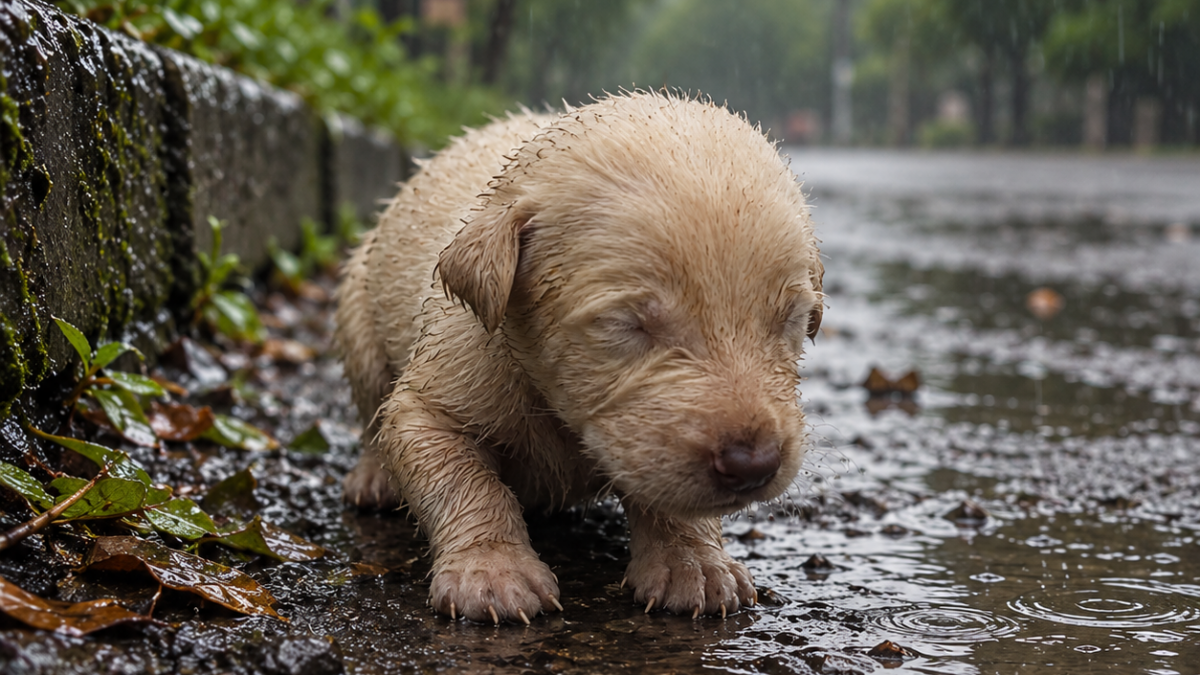
PART 2
For a moment, nobody moved.
Michael looked at Laura.
Laura looked at Ray.
Then both of them looked at me.
I knew that look.
I’d seen it hundreds of times.
The adult calculation.
Can we manage this?
How difficult will it be?
What will it cost?
Are we making an emotional decision because our child is crying?
Those questions are not cruel.
They’re responsible.
Love matters.
But so does preparation.
I stood.
“Before anyone decides anything, you should understand what living with a blind dog involves.”
Emma’s hand remained against Ray’s nose.
“I can learn.”
I smiled.
“I believe you.”
Then I looked at her parents.
“But all three of you need to learn.”
Michael nodded.
“Tell us.”
So I did.
Furniture should stay in predictable places.
Stairs needed barriers until Ray learned the home.
Sharp corners should be protected.
Consistent verbal cues mattered.
Touch shouldn’t come without warning when he was sleeping.
A bell on another pet could help, though they had none.
Food and water should remain in the same location.
Outdoor time needed supervision.
“He’ll never see a car coming,” I said.
Michael’s expression grew serious.
“Understood.”
“And you’ll need patience.”
Laura looked at Ray.
“How much?”
I laughed softly.
“As much as he needs.”
Emma answered for them.
“We have that.”
Her father glanced down.
“Do we?”
“Yes.”
“How do you know?”
Emma shrugged.
“You had enough for me.”
The entire room went silent.
Laura’s eyes filled.
Michael looked away.
And I pretended to become very interested in the adoption clipboard because otherwise I was going to start crying too.
## 1
They didn’t take Ray home that afternoon.
I respected them more because of that.
They spent almost two hours with him.
Asked questions.
Met Dr. Patel.
Read information about blind dogs.
Then went home to prepare.
Emma did not want to leave.
She sat outside Ray’s kennel with her fingers through the bars until Michael finally said:
“Sweetheart, we have to go.”
Emma leaned closer.
“I’ll come back.”
Ray licked her hand.
She smiled.
“I mean it.”
I’ve heard people make promises to shelter animals before.
Sometimes they don’t return.
Emma did.
The next morning.
At 9:03.
I know because we opened at nine.
She entered carrying something small.
A blue rubber bracelet.
“What is that?”
She held it up.
“It has bells.”
Three tiny bells were attached.
“For Ray?”
“For me.”
I frowned.
Emma fastened it around her wrist.
“When I walk, he’ll know where I am.”
She shook her arm.
Soft jingling filled the room.
Ray’s ears rose immediately.
His tail began wagging.
Emma beamed.
“See?”
That bracelet became one of Ray’s favorite sounds.
## 2
The adoption was finalized three days later.
Ray left Meadowbrook wearing a new red harness.
Emma walked beside him.
Not ahead.
Not dragging.
Beside.
She jingled the bracelet occasionally.
“Step.”
Ray moved.
“Stop.”
He stopped.
“Door.”
He sniffed.
“Good boy.”
By the time they reached the car, they had already begun creating their own language.
Laura opened the back door.
Ray hesitated.
Emma climbed in first.
She rang the bells.
Ray followed the sound.
Then disappeared into the car.
Before shutting the door, Emma looked at me.
“He knows I’m here.”
“Yes.”
She smiled.
“I know he’s here too.”
I didn’t understand how important that sentence would become until much later.
## 3
The first week was difficult.
Laura called me on day two.
“He walked into the coffee table.”
“Once?”
“Four times.”
“Have you moved it?”
“No.”
“Give him time.”
Day three:
“He’s afraid of the stairs.”
“Block them.”
“We did.”
“Don’t rush.”
Day four:
“He barked at the vacuum for twenty minutes.”
“That has nothing to do with blindness. Vacuums are evil.”
Laura laughed.
Day five:
“He stole Emma’s sandwich.”
“Congratulations. He’s becoming a normal puppy.”
By the second week, the calls changed.
“He found his water without help.”
“He knows the kitchen.”
“He follows Emma everywhere.”
“He learned ‘left.’”
“He learned ‘right.’”
“He knows the bell on the back door means outside.”
And then:
“He slept in Emma’s room last night.”
That became permanent.
## 4
Emma and Ray developed routines none of us had taught them.
Every morning, Emma touched Ray lightly on the shoulder before he stood.
Two taps.
Then:
“Morning.”
Ray would stretch.
When they went downstairs, Emma walked one step ahead and tapped each stair with her heel.
Ray followed the sound.
Outside, she used short commands.
“Grass.”
“Curb.”
“Step.”
“Wait.”
But their communication went both ways.
Emma’s hearing loss meant she sometimes didn’t hear people approach from behind.
Ray did.
If someone came toward them quickly, he turned.
Emma learned to watch his body.
His ears.
His head.
The dog who couldn’t see became an extra set of ears for the girl who couldn’t always hear.
The girl who struggled to hear became the guide for the dog who couldn’t see.
Neither was helpless.
Together, they filled spaces the other couldn’t.
## 5
Three months after the adoption, I visited their house.
I expected chaos.
Instead, Ray moved through the rooms confidently.
He knew where every wall began.
Where the couch ended.
Where the kitchen rug changed texture.
He counted stairs through rhythm.
At least, that’s what it looked like.
Emma had placed small textured mats before important locations.
One by the water.
One before the stairs.
One at the back door.
“How did you think of this?”
She shrugged.
“My teacher uses different things to help me know what’s happening.”
Laura smiled.
“She applied accessibility design to the dog.”
Emma frowned.
“What’s accessibility design?”
“Exactly what you did.”
Ray walked toward us.
He stopped beside Emma.
She rested one hand on his head without looking down.
Automatic.
Natural.
I remember thinking:
This puppy wasn’t waiting for someone to rescue him.
He was waiting for someone willing to learn his language.
## 6
Then their story appeared online.
It happened accidentally.
Michael posted a thirty-second video for relatives.
Emma was walking Ray through a small obstacle course she’d created in the backyard.
“Left.”
Ray turned.
“Step.”
He stepped over a pool noodle.
“Find me.”
Emma moved quietly to the other side of the yard.
Then jingled her bracelet once.
Ray’s head turned.
He ran toward her.
The clip ended with Emma hugging him.
Michael captioned it:
**My daughter can’t hear everything. Her dog can’t see anything. Somehow they understand each other perfectly.**
A cousin shared it.
Then a teacher.
Then a local community page.
Within a week, millions of people had watched some version of the video.
Laura called me.
“Sarah.”
“Yes?”
“I think we have a problem.”
“What happened?”
“Ray is internet famous.”
I laughed.
“How famous?”
She sent me the number.
I stopped laughing.
## 7
Most reactions were kind.
People wrote about disabled pets.
Children with hearing aids sent messages to Emma.
Parents asked about adopting special-needs animals.
Someone mailed Ray a box of scented toys.
A company offered a free GPS collar with audio cues.
A local television reporter asked to interview the family.
Michael initially refused.
Emma surprised everyone.
“I want to do it.”
Laura asked why.
Emma thought.
“Because maybe someone has a dog like Ray and thinks he can’t do anything.”
That was a good enough reason.
The interview aired on a Thursday evening.
Emma sat on the couch.
Ray beside her.
The reporter asked:
“Why did you choose him?”
Emma answered:
“I didn’t choose him because he was blind.”
Pause.
“I chose him because everybody kept acting like being blind was the most important thing about him.”
Even the reporter became quiet.
The clip spread farther than the first.
And that’s when a man named Travis Cole recognized Ray.
## 8
He called the shelter.
I answered.
“You have a blind cream-colored puppy named Ray?”
“He was adopted months ago.”
“I know.”
His tone bothered me.
“Who is this?”
“Travis Cole.”
I waited.
“He came from my dog.”
My hand tightened around the phone.
“What do you mean?”
“My female had a litter last winter.”
I sat down.
“What happened to the blind puppy?”
Silence.
Then:
“He got out.”
I knew immediately.
Not because I had proof.
Because people who lose a seven-week-old blind puppy don’t usually say it like that.
They panic.
Ask if he’s safe.
Ask where he is.
Travis asked:
“Is that family making money off him?”
There it was.
“What?”
“I saw the TV thing.”
“That doesn’t answer my question.”
“I own his mother.”
“That doesn’t make Ray your property.”
“He was born at my place.”
“And then?”
“He disappeared.”
“When?”
Travis hesitated.
“Months ago.”
“Did you report him missing?”
“No.”
“Call shelters?”
“No.”
“Post online?”
“No.”
“Check animal control?”
Nothing.
I wrote down the time.
The number.
Every word.
Then I asked:
“Did you leave Ray at the Miller Road bus stop?”
He hung up.
## 9
I called animal control before I called the Parkers.
Officer Jenna Morales handled the case.
She’d worked with us for years.
I told her everything.
She asked:
“Do we still have the intake documentation?”
“Yes.”
“Finder information?”
“Yes.”
“Vet estimate of age?”
“Yes.”
“Any microchip?”
“No.”
“Photographs?”
“Several.”
“Call Mrs. Walker.”
I did.
The elderly woman remembered more than I’d realized.
She hadn’t simply found Ray.
She had seen a pickup leaving.
“What kind?”
“Dark green. Old one.”
“Driver?”
“Man.”
“Plate?”
“No.”
Then she said:
“But there was writing on the side.”
My heart quickened.
“What writing?”
“Cole Creek Kennels.”
I wrote it down.
Travis Cole.
Cole Creek.
Not proof yet.
But no longer coincidence.
## 10
Cole Creek Kennels wasn’t really a kennel.
It was a small backyard breeding operation twenty minutes outside town.
Golden Retriever mixes.
Labrador mixes.
Occasional doodle litters advertised online.
No major violations on record.
But no formal breeder inspection either because local licensing rules had loopholes based on litter volume.
Officer Morales searched public listings.
She found an old advertisement.
**Golden mix puppies — ready soon.**
The date matched Ray’s estimated age.
The photograph showed six puppies.
Five with open eyes.
One cream-colored puppy in the rear.
Eyes closed.
My skin prickled.
“That could be him.”
“Could.”
“Can we use it?”
“It’s evidence. Not definitive identification.”
Then we found something stronger.
A comment beneath the original listing.
A potential buyer had asked:
**What about the little one in the back?**
Cole Creek replied:
**Not available. Defective.**
I read the word three times.
Defective.
Ray.
The puppy who knew fifteen verbal cues.
The dog who could find Emma from one bell.
The animal helping an eight-year-old girl become more confident.
Defective.
I wanted to call Travis immediately.
Morales stopped me.
“Don’t.”
“I wasn’t going to.”
“You absolutely were.”
She knew me too well.
## 11
The Parkers took the news better than I expected.
Emma did not.
“What do you mean his old owner called?”
Laura had wanted to keep her out of it.
But children hear things.
Especially children people assume aren’t listening.
Emma understood quickly.
“He wants Ray?”
Michael crouched.
“He can’t just take him.”
“But he wants him.”
“Maybe.”
Emma grabbed Ray’s harness.
Ray immediately stood.
“No.”
Her voice shook.
“He left him.”
We still hadn’t proven that.
But she knew.
Children sometimes jump to emotional truths before adults finish legal sentences.
Laura hugged her.
“Nobody is taking Ray tonight.”
“Or tomorrow?”
“Not tomorrow.”
“Ever?”
Laura looked at Michael.
That was harder.
“I don’t believe anyone is taking him.”
Emma began crying.
Ray pushed his head into her chest.
She wrapped both arms around him.
The bells on her wrist jingled.
Ray relaxed.
I hated Travis Cole for making that child afraid.
But anger wasn’t evidence.
So we kept looking.
## 12
The first major break came from someone named Dylan Ross.
He had bought a puppy from Cole Creek the previous year.
After seeing the television story, he contacted animal control.
“I’ve been waiting for somebody to investigate that place.”
Why?
His puppy had been sick.
Severe intestinal parasites.
Skin infection.
Congenital hip problem.
When Dylan complained, Travis told him:
“All puppies have issues.”
Then another buyer came forward.
Then another.
None alone proved Ray had been abandoned.
But they showed a pattern.
Minimal veterinary care.
Poor records.
Cash sales.
Litters bred quickly.
Animals valued according to sale potential.
Then Dylan sent screenshots.
A private buyer group.
One message from Travis:
**Got one bad pup in this litter. Eyes never came in right. Can’t sell him.**
Another member asked:
**Vet?**
Travis replied:
**Not spending hundreds on one that’s useless.**
I felt sick.
Still not abandonment.
But close.
## 13
The Parkers received a letter from an attorney two weeks later.
Travis claimed Ray had been “wrongfully retained” by the shelter after accidentally leaving his property.
He wanted the dog returned.
Or compensation for the dog’s current commercial value.
Commercial value.
Because Ray was famous.
Not because Travis loved him.
Not because he’d searched.
Because suddenly the puppy labeled “defective” had value.
Michael read the letter twice.
Then placed it on the kitchen table.
Emma stood beside him.
“What’s commercial value?”
No adult wanted to answer.
Eventually Michael said:
“Money somebody thinks Ray is worth.”
Emma frowned.
“He’s not for sale.”
“No.”
“Then why does it matter?”
It shouldn’t have.
But legally, property claims involving animals can become ugly.
The Parkers hired an attorney.
A friend of Laura’s recommended Rachel Kim, who handled civil disputes and volunteered with rescue organizations.
Rachel read the demand.
Then the adoption records.
Then Cole’s old listing.
Then the screenshots.
She looked up.
“This isn’t a strong ownership case.”
Michael exhaled.
“But?”
“People can file weak cases.”
Emma, sitting beside Ray on the floor, asked:
“Can he lie?”
Rachel looked at her.
“Yes.”
Emma nodded.
“Then we tell the truth longer.”
Every adult in the room stopped.
Rachel smiled.
“That is surprisingly good legal strategy.”
## 14
Meanwhile, Ray kept living.
That became important.
Travis’s claim made everyone tense.
Ray didn’t know.
He woke.
Found Emma.
Ate breakfast.
Walked his mapped route.
Played scent games.
Napped.
Destroyed one shoe.
Normal puppy behavior.
The legal fight wanted to reduce him to evidence.
Emma refused.
“He has training Saturday.”
“What training?” I asked.
“We’re learning nose work.”
Ray loved it.
Small boxes placed around a room.
Treat in one.
He followed scent.
Found it.
Then another.
Within weeks, he became astonishingly good.
His blindness wasn’t an advantage exactly.
But he already trusted his nose and ears completely.
Emma practiced with him.
She wore her hearing aids during some sessions and removed them during others.
One afternoon she told me:
“When I take them out, I feel calmer with Ray.”
“Why?”
“He doesn’t expect me to hear him.”
That sentence stayed with me.
Ray didn’t pity Emma.
Emma didn’t pity Ray.
They simply adjusted.
## 15
The investigation reached Cole Creek on a cold Tuesday morning.
Officer Morales obtained authority for an animal-welfare inspection after multiple complaints.
I wasn’t allowed on the property.
Later, she told me what they found.
Nine adult dogs.
Two nursing mothers.
Eleven puppies.
Outdoor pens.
Some acceptable.
Some not.
Water bowls dirty.
Several dogs underweight.
One female with untreated ear disease.
A male limping badly.
And records.
Poor ones.
But records.
Among them, a handwritten litter notebook.
A December entry:
**Molly — 6 pups.**
Colors.
Weights.
Sex.
Then beside one:
**M cream / blind / cull?**
I stared at the photocopy.
“Cull?”
Morales’s expression was hard.
“That’s what’s written.”
“What does he mean?”
“Could mean remove from breeding inventory.”
“You know what I mean.”
“I know.”
Below that entry, another note was added two weeks later:
**gone.**
No sale amount.
No buyer name.
No transfer record.
Gone.
## 16
Travis changed his story.
First:
Ray escaped.
Then:
Someone must have stolen him.
Then:
He had given the puppy to “a local guy.”
Then:
He couldn’t remember exactly.
His attorney eventually instructed him to stop talking publicly.
Too late.
The old private messages remained.
The breeding notes remained.
The advertisement remained.
Mrs. Walker remained.
But we still lacked the cleanest piece.
Proof that Travis had physically abandoned Ray at the bus stop.
That came from a school bus.
## 17
The Miller Road bus stop sat near a route used by the county school district.
One of their newer buses had forward-facing security cameras.
Nobody thought to check because Ray was found before school traffic began.
But Officer Morales requested archived footage.
Most had already been overwritten.
One route backup remained because of an unrelated traffic complaint.
At 6:18 that morning, a dark green pickup appeared near the old shelter.
Logo visible.
**COLE CREEK KENNELS.**
The truck stopped.
A man got out.
Carrying something wrapped in a towel.
He placed it beneath the bus-stop bench.
Returned to the truck.
Drove away.
The camera couldn’t clearly show the puppy’s face.
It didn’t need to.
Mrs. Walker found Ray there thirty-seven minutes later.
Travis’s attorney withdrew the demand letter within forty-eight hours.
## 18
But the consequences didn’t stop with Ray.
The welfare inspection had uncovered enough violations for formal proceedings.
Not dramatic felony charges.
Reality is often less cinematic.
But substantial.
Improper breeder licensing.
Failure to provide veterinary care.
Abandonment.
Record violations.
Several animals were placed under veterinary supervision.
The worst cases were removed temporarily.
Cole Creek’s breeding operation was suspended pending compliance.
Travis was fined.
Required to reimburse care for seized animals.
And prohibited from selling further litters until meeting stricter conditions.
Then something happened I hadn’t expected.
He came to the shelter.
## 19
I saw him through the front window.
Mid-forties.
Work jacket.
Baseball cap.
Angry posture.
I knew before he spoke.
“You Sarah?”
“Yes.”
“I want to see the dog.”
“No.”
“Why?”
“He doesn’t live here.”
“I know where he lives.”
Every muscle in my body tightened.
“If you’ve contacted that family directly—”
“I haven’t.”
“Good.”
He looked around.
“This whole thing got blown out of proportion.”
I folded my arms.
“You left a blind puppy at a bus stop in the rain.”
“He was going to die anyway.”
That sentence erased the last bit of professional calm I had.
“He was healthy.”
“He couldn’t see.”
“Yes.”
“Who buys a blind dog?”
I stared.
There it was.
Not:
Who loves one?
Who takes one?
Who cares for one?
Who buys one?
“You thought his only value was whether you could sell him.”
Travis scoffed.
“It’s a business.”
“No. Animals are part of your business.”
“Same difference.”
“No.”
I stepped closer.
“That’s the entire reason you’re standing here.”
He looked away.
Then said something worse.
“You people turned him into a celebrity. I should get something.”
I almost laughed.
“You did.”
His eyes narrowed.
“What?”
“A court date.”
He left.
I won’t pretend I didn’t enjoy that line.
## 20
Emma heard about the confrontation later.
She wasn’t impressed.
“You shouldn’t argue with mean people.”
“Probably not.”
“They like arguing.”
“Also probably true.”
She scratched Ray’s chest.
“What did he want?”
“Money.”
“For Ray?”
“Yes.”
Emma thought for a long time.
Then:
“That’s sad.”
I expected anger.
“Why?”
“Because he had Ray first.”
I waited.
“And he didn’t know what he had.”
That was better than any revenge speech I could have written.
## 21
The civil ownership claim was formally dismissed.
The adoption remained valid.
Ray was legally, completely, permanently the Parkers’ dog.
Michael brought home a copy of the final document.
Emma read the part she understood.
Then asked:
“So nobody can take him?”
“No.”
“Even if he gets famous again?”
“No.”
“Even if someone offers a million dollars?”
Michael smiled.
“Especially then.”
Emma hugged Ray.
He immediately tried to steal a cookie from her pocket.
“He’s a criminal,” Michael said.
Emma laughed.
“He’s my criminal.”
## 22
Ray grew.
The tiny puppy became a fifty-five-pound dog with a broad chest and soft cream coat.
His eyes remained cloudy and unseeing.
Everything else about him expanded.
Confidence.
Curiosity.
Appetite.
Attitude.
He learned the entire Parker house.
Then the yard.
Then neighborhood routes.
Emma taught him commands most sighted dogs never need.
“Wall.”
“Step.”
“Curb.”
“Slow.”
“Left.”
“Right.”
“Door.”
“Find me.”
That last one remained his favorite.
Emma would hide.
Ring her bracelet once.
Ray searched.
Sometimes using sound.
Sometimes scent.
He almost always found her.
## 23
Emma changed too.
Laura noticed first.
Before Ray, Emma hated telling new people she had hearing loss.
She wore her hair down to cover her devices.
At school, she sometimes pretended she’d heard instructions instead of asking teachers to repeat them.
She had learned very young that children could be cruel about differences they didn’t understand.
Then Ray came.
A classmate asked:
“Why does your dog have weird eyes?”
Emma answered:
“He’s blind.”
No embarrassment.
Another asked:
“Isn’t that sad?”
Emma replied:
“No. Being abandoned was sad. Being blind isn’t.”
Her teacher later called Laura.
“I thought you’d want to know what she said.”
Laura cried after hanging up.
## 24
Emma eventually gave a short presentation at school.
Not about disability.
About Ray.
She brought him into the classroom with permission.
Twenty-three third-graders immediately became silent.
Emma demonstrated.
“Ray can’t see the desk.”
She tapped it.
“He hears where I am.”
Jingle.
Ray turned.
“He smells stuff better than you.”
The children laughed.
“He remembers where things are. So don’t move chairs when he’s walking.”
One boy asked:
“Does he know he’s blind?”
Emma frowned.
“What do you mean?”
“Like, does he know other dogs can see?”
She thought.
“I don’t know.”
Then smiled.
“But he doesn’t care.”
## 25
One of the biggest changes came when Emma began working with an audiologist who encouraged her to advocate for accommodations herself.
Before appointments, she practiced with Ray.
“Please face me when you speak.”
Ray wagged.
“Please don’t cover your mouth.”
Wag.
“I need you to repeat that.”
Wag.
Laura watched from the doorway.
“You practicing?”
Emma nodded.
“Ray’s a good listener.”
Michael, walking past, said:
“Technically, Ray’s a terrible listener when food is involved.”
Ray barked.
Everyone laughed.
## 26
A year after his adoption, Ray and Emma were invited to a shelter event.
Not a fundraiser centered on pity.
We were careful about that.
It was an accessibility and special-needs adoption day.
Blind dogs.
Three-legged dogs.
Deaf cats.
Senior animals.
Animals with manageable chronic conditions.
Emma stood beside a poster of Ray’s original intake photograph.
Rain-soaked.
Tiny.
Eyes closed.
Then beside it:
Ray now.
Healthy.
Harnessed.
Tail high.
I watched visitors stop.
One woman said:
“I don’t know if I could handle a blind dog.”
Emma answered:
“You don’t have to know before you learn.”
The woman eventually adopted a one-eyed spaniel.
Not because Emma pressured her.
Because sometimes seeing one successful life makes another possible.
## 27
The animal-welfare case against Travis concluded later that year.
Cole Creek Kennels did not reopen under the same operation.
Several adult dogs were legally rehomed after ownership proceedings.
Two remained with Travis under monitoring.
He lost breeding privileges for a defined period and faced licensing restrictions afterward.
The fines were meaningful.
Restitution went toward veterinary care.
Some people online wanted harsher punishment.
I understood.
But the most satisfying part came from something else.
Molly.
Ray’s mother.
## 28
Molly was one of the dogs removed during the inspection.
A Golden Retriever mix.
Five years old.
Thin.
Chronic ear infections.
Repeated litters documented.
When I first saw her photograph, my stomach tightened.
Ray had her muzzle.
Same shape.
Same cream markings.
Same ears.
Genetic testing wasn’t necessary to prove anything legally because the breeding notebook already linked them.
But emotionally?
Nobody needed a laboratory.
Emma stared at the picture.
“That’s his mom?”
“Yes.”
“Can he meet her?”
Eventually.
After Molly’s medical hold ended.
After spaying.
After treatment.
After her ownership case resolved.
Months later, yes.
## 29
The reunion happened in a quiet fenced yard behind the shelter.
We didn’t know what to expect.
Dogs don’t experience family relationships exactly like humans.
Ray had been separated from Molly very young.
He might not recognize her.
Molly might not recognize him.
Emma understood.
“Don’t make it into a movie thing,” she warned Michael when he pulled out his phone.
He lowered it.
“Yes, ma’am.”
Ray entered first.
He sniffed.
New grass.
Fence.
People.
Then Molly came through the opposite gate.
Ray froze.
His nose lifted.
Molly stopped too.
For several seconds, nothing happened.
Then Ray moved.
Slowly.
Molly approached.
They sniffed.
Face.
Shoulders.
Sides.
Ray’s tail began wagging.
Molly’s did too.
No dramatic crying.
No miracle.
Just recognition of something familiar.
Maybe scent.
Maybe memory.
Maybe nothing we could name.
Then Molly licked Ray’s ear.
Emma covered her mouth.
Michael quietly started recording again.
Emma didn’t stop him.
## 30
Ray followed Molly around the yard.
For twenty minutes, he seemed younger.
Not physically.
Emotionally.
He bumped into her once.
Molly simply adjusted.
At one point, Ray lay down.
Molly settled beside him.
Emma sat a few feet away.
I looked at the three of them.
The puppy who had been considered useless.
The mother who had been repeatedly bred.
The girl who knew what it felt like to have strangers define her by what she couldn’t do.
None of them needed pity.
They needed dignity.
There is a difference.
## 31
Molly was adopted by Mrs. Walker.
Yes.
The same woman who found Ray beneath the bus-stop bench.
She had visited several times during Molly’s recovery.
“I wasn’t planning on getting a dog,” she told me.
I raised an eyebrow.
“You brought Ray into my shelter wrapped in your coat.”
“That was different.”
“Of course.”
She took Molly home the following Friday.
Sometimes life writes circles better than fiction.
## 32
Ray and Molly saw each other often after that.
Mrs. Walker lived only fifteen minutes from the Parkers.
Emma called her “Grandma June,” though they weren’t related.
Molly eventually learned Emma’s bell bracelet too.
When both dogs were together, Ray relied on Molly’s movement outdoors.
Molly wore a small bell on her collar.
Ray followed.
A guide dog for a blind dog.
We joked about it.
But never too much.
Because it was beautiful.
## 33
Two years passed.
Ray became remarkably independent.
He could navigate unfamiliar spaces if introduced carefully.
He participated in scent-work demonstrations.
Not competition.
Just recreational.
Emma’s confidence continued growing.
She began wearing her hair up more often.
Her hearing devices visible.
One afternoon, I noticed bright purple stickers decorating them.
“Those are new.”
She smiled.
“I picked them.”
“You used to hide them.”
“I know.”
“What changed?”
She pointed at Ray.
“His eyes look different and everybody knows.”
“And?”
“He doesn’t hide them.”
I had no response.
Children sometimes make arguments so clean adults ruin them by adding words.
## 34
Then a national pet company contacted the Parkers.
They wanted Ray and Emma for an accessibility campaign.
Paid.
That worried everyone.
Not because money was bad.
Because we’d already seen what attention could attract.
Michael consulted Rachel Kim again.
Contracts.
Image rights.
Trust account for Emma’s earnings.
A donation component to Meadowbrook.
Everything transparent.
Emma agreed only after asking one question:
“Can the shelter get money for dogs nobody wants?”
“Yes.”
“Then okay.”
The campaign featured no sad music.
No “inspirational tragedy.”
Just Emma and Ray navigating a park together.
At the end, text appeared:
**Different doesn’t mean less.**
I cried anyway.
## 35
Travis saw it.
Of course he did.
This time, he didn’t call.
Didn’t threaten.
Didn’t file anything.
He posted online.
A long angry message claiming everyone had profited from “his dog” while ruining his reputation.
He wrote:
**Without my breeding program, that dog wouldn’t exist.**
That sentence spread.
Not the way he expected.
People responded:
Without the woman who found him, he might have died.
Without the shelter, he wouldn’t have received care.
Without the Parkers, he wouldn’t have a home.
And breeding a dog did not entitle someone to profit after abandoning him.
Travis deleted the post.
The internet moved on.
So did we.
## 36
The donation from Ray’s campaign funded something permanent.
A sensory-access room at Meadowbrook.
Textured flooring.
Low obstacles.
Scent markers.
Sound cues.
Quiet lighting.
Training equipment for blind and deaf animals.
We named it the Ray Room.
Emma hated that.
“Why?”
“Because Ray doesn’t need a whole room named after him.”
Ray was currently attempting to steal treats from my pocket.
“I agree. He’s becoming arrogant.”
Emma laughed.
On the wall, we put no giant portrait.
Just one sentence:
**Meet the animal in front of you, not the limitation on the kennel card.**
That was enough.
## 37
Ray helped other dogs without understanding any of it.
A blind terrier named Scout learned confidence in the Ray Room.
A deaf puppy learned hand signals there.
An elderly dog recovering from eye surgery practiced navigating with scent markers.
Adopters received training before taking special-needs animals home.
Return rates dropped.
More people said yes.
Not because caring became effortless.
Because fear became information.
Ray had once spent months waiting because people saw the word blind and imagined impossible.
Now families could walk into a room and learn.
## 38
Emma became a teenager.
Ray entered middle age.
Their relationship changed.
As a child, Emma guided him everywhere.
As she grew, she sometimes wanted independence.
Friends.
School activities.
Sleepovers.
Ray stayed home.
That was healthy.
But there were nights she returned from difficult days and went straight to him.
One evening, after a classmate mocked the way she spoke when her hearing devices malfunctioned, Emma came home furious.
She didn’t tell Laura.
Didn’t tell Michael.
She sat on the kitchen floor.
Ray found her.
He sniffed her hands.
Then lay across her legs.
Emma cried into his fur.
Later she told me:
“He doesn’t say I’m brave.”
I frowned.
“Is that bad?”
“No.”
She shook her head.
“I hate when people call me brave for normal stuff.”
I understood.
“What does Ray do?”
“Nothing.”
She smiled.
“He just knows I’m sad.”
Sometimes nothing is exactly right.
## 39
At fourteen, Emma began volunteering at Meadowbrook.
She cleaned bowls.
Folded laundry.
Walked easy dogs.
Read adoption profiles.
And sat with animals no visitors chose.
One afternoon, I found her inside a kennel with a deaf senior beagle.
“You know you can’t bring him home.”
“I know.”
“Your mother texted me specifically.”
Emma laughed.
“I know.”
“Your father too.”
“I KNOW.”
The beagle put his head on her lap.
I sighed.
“This family has caused me years of paperwork.”
## 40
Ray slowed as he aged.
Blindness had never caused pain.
But arthritis did.
His hips stiffened.
He slept longer.
Stairs became difficult.
The Parkers adapted again.
Ramp.
Runners.
Raised food bowl.
Orthopedic bed.
Emma’s language changed.
“Slow.”
“Step.”
“Easy.”
Ray trusted every word.
The same puppy who once crawled through rain searching for familiar scent now crossed rooms confidently because a girl’s voice had become home.
## 41
When Emma was sixteen, she received new hearing technology.
Better clarity.
Improved background-noise processing.
The first week overwhelmed her.
The world sounded too loud.
Shoes.
Dishes.
Wind.
Traffic.
Ray’s nails clicking across the floor.
She came home from the audiologist exhausted.
Then froze.
Ray was walking toward her.
Click.
Click.
Click.
She started crying.
Laura panicked.
“What’s wrong?”
Emma laughed through tears.
“I can hear his feet better.”
Ray reached her.
She crouched.
“I didn’t know they sounded like that.”
Ray licked her face.
He couldn’t know what had changed.
But Emma did.
## 42
She recorded the sound.
Not a polished video.
Just Ray walking through the hallway.
Click.
Click.
Click.
Later she told me it became one of her favorite sounds.
Not music.
Not voices.
An old blind dog’s feet approaching.
Proof he was coming toward her.
## 43
Travis disappeared from the story almost completely.
That was fitting.
His punishment was never going to be the center.
Ray was.
Years later, I heard Cole Creek had never returned to commercial breeding.
Travis worked in another field.
No dramatic collapse.
No prison.
No public downfall beyond the local record.
Some people might find that unsatisfying.
I don’t.
Because justice isn’t always destroying the person who caused harm.
Sometimes it’s removing their ability to repeat it.
Sometimes it’s making them pay the cost of what they neglected.
Sometimes it’s ensuring the life they discarded flourishes beyond their reach.
Ray did.
## 44
If there was revenge, it happened in smaller, sharper ways.
Travis called him defective.
Ray became the reason special-needs adoption increased at our shelter.
Travis said nobody would want him.
Ray received hundreds of adoption inquiries after he was already home.
Travis refused to spend money on veterinary care.
Ray helped fund care for dozens of other animals.
Travis abandoned him because blindness made him commercially useless.
Ray’s blindness became the very reason people learned to see disabled animals differently.
You couldn’t design a more satisfying answer.
## 45
Ray’s mother lived a good life too.
Mrs. Walker spoiled Molly shamelessly.
Chicken.
Blankets.
A heated bed.
Too many treats.
When Molly developed cancer years later, Mrs. Walker treated her.
Not endlessly.
Not selfishly.
Enough to keep her comfortable.
Emma and Ray visited near the end.
Molly was old.
Ray sniffed her.
Then lay beside her.
Same as their first reunion.
Mrs. Walker cried.
“She should’ve had this from the beginning.”
I nodded.
“So should he.”
We couldn’t change the beginning.
Only the ending.
## 46
Molly died at home.
Loved.
Ray searched for her on his next visit.
Mrs. Walker showed him the empty bed.
He sniffed.
Walked around the room.
Then settled beside her chair.
Whether he understood death, I don’t know.
But he understood absence.
Animals always do.
## 47
Ray was almost eleven when his health changed significantly.
Not his eyes.
They had always been the same.
His kidneys.
Age.
Arthritis.
A heart murmur.
Nothing immediately catastrophic.
But time had arrived.
Emma was nineteen.
Home from college when possible.
The first semester away had been harder on her than she admitted.
She video-called Ray.
Ridiculous, perhaps.
He responded to her voice.
Whenever the bells on her old bracelet jingled through the speaker, his ears lifted.
She still had it.
The blue bracelet from adoption day.
Too small for her wrist now.
She kept it on her keychain.
## 48
One weekend, she came home unexpectedly.
Ray was asleep.
Emma entered quietly.
She didn’t speak.
Instead, she shook the old bells.
Jingle.
Ray’s head lifted.
He stood.
Slowly.
Sniffed.
Then his tail began moving.
Emma dropped her bag.
Ray walked toward her.
Not perfectly straight.
Not quickly.
But confidently.
He knew.
Emma knelt before he reached her.
He pressed his forehead into her hand.
Exactly as he had the first day.
She cried.
So did Laura.
Michael filmed it.
Some habits never change.
## 49
During Ray’s final year, Emma began studying audiology and accessibility design.
When she told me, I laughed.
“What?”
“You remember the textured mats?”
She smiled.
“I do.”
“You were eight.”
“I know.”
“You were designing accessible spaces before you knew the words.”
Emma looked at Ray.
“Maybe.”
Then:
“I don’t want kids to feel like accommodations mean something is wrong with them.”
There it was.
Ray’s legacy again.
Not inspiration.
Design.
Practical kindness.
Changing environments instead of demanding bodies fit environments that ignore them.
## 50
Ray’s final decline came slowly enough for everyone to recognize it.
He stopped wanting long walks.
Then short ones.
His appetite faded.
Kidney values worsened.
Pain medication helped his joints, but fatigue grew.
Dr. Patel—older now too—sat with the family.
“You’ll know.”
Emma hated that answer.
“How?”
“You know him.”
“What if we wait too long?”
“Then call me.”
“What if we do it too soon?”
Dr. Patel looked at her.
“Love always thinks it’s too soon.”
Emma cried.
Ray slept through most of the conversation.
## 51
They gave him good days.
Not bucket-list nonsense.
Ray didn’t need beaches or steak dinners.
He wanted routine.
His bed.
His yard.
Emma’s voice.
Chicken.
Mrs. Walker visiting.
Me scratching behind his ears.
The scent-work box he could still solve even when his legs were tired.
He found the treat every time.
Old professionals keep their skills.
## 52
One evening, Emma called me.
“Sarah.”
I knew.
“He didn’t eat breakfast.”
Silence.
“Or dinner.”
I drove over.
Ray lay on his bed.
His breathing was calm.
But his body looked tired in a way I recognized.
Emma sat beside him.
The old bell bracelet lay in her hand.
“I thought because he survived everything…”
She stopped.
I sat beside her.
“You thought what?”
“That maybe he’d just keep surviving.”
I nodded.
“We always think that.”
“He never even got to see anything.”
The sentence surprised me.
Not because it was cruel.
Because Emma had spent years rejecting the idea that sight defined his life.
She immediately shook her head.
“I know. That’s stupid.”
“No.”
I touched her shoulder.
“It’s grief.”
She looked at Ray.
“He never saw me.”
“No.”
Tears fell.
“But he knew me better than almost anyone.”
“Yes.”
That was the truth.
## 53
Ray’s final morning was warm.
Early summer.
The back door stood open.
Birds outside.
Fresh-cut grass.
Emma sat on the floor with him.
Her hearing devices were on the table.
She had taken them out.
No particular reason.
Maybe she wanted quiet.
Ray lay with his head in her lap.
She stroked his face.
“You know what’s funny?”
Michael asked:
“What?”
“People always said we understood each other because he couldn’t see and I couldn’t hear.”
She smiled sadly.
“But that’s not why.”
Laura sat beside her.
“Why, then?”
Emma thought.
“Because nobody had to pretend around him.”
## 54
Dr. Patel came to the house.
Ray didn’t like clinics anymore.
Home was kinder.
We all gathered.
Not too many people.
Family.
Me.
Mrs. Walker.
Ray smelled each person.
His nose still worked.
That mattered.
Emma held the bell bracelet near his ear.
One soft jingle.
Ray’s tail moved.
Barely.
Emma laughed through tears.
“There.”
She placed the bracelet beside him.
Dr. Patel gave the first medication.
Ray relaxed.
Emma kept one hand beneath his nose.
He breathed in her scent.
She whispered:
“You found me.”
The room went silent.
“You couldn’t see me.”
Her voice broke.
“But you found me anyway.”
Ray’s breathing slowed.
Emma pressed her forehead against his.
“And I found you too.”
A few minutes later, he was gone.
## 55
Emma didn’t cry loudly afterward.
Not immediately.
She sat.
Hand still on his fur.
Then reached behind her ear and removed one hearing device.
Then the other.
She placed them beside the bracelet.
I didn’t ask why.
Nobody did.
Sometimes grief needs silence.
## 56
Ray’s ashes were not scattered at the bus stop.
Someone suggested it.
Emma refused instantly.
“No.”
“Why?”
“That wasn’t his place.”
She was right.
The bus stop was where somebody left him.
Not where he belonged.
They buried a portion of his ashes beneath a maple tree in the Parkers’ backyard.
The rest stayed inside a simple wooden box beside a photograph.
Not the shelter intake photo.
Not the viral campaign image.
A completely ordinary picture.
Emma asleep on the couch.
Ray asleep beside her.
That was home.
## 57
After Ray died, the Ray Room remained.
For a while, Emma couldn’t enter it.
Then one winter break, she returned.
A small blind puppy had arrived.
Black.
Four months old.
Congenital retinal disease.
He kept running into the side of his kennel.
A volunteer said:
“He’s going to be hard to place.”
Emma stood very still.
Then:
“Don’t put that on his card.”
The volunteer frowned.
“What?”
“Hard to place.”
Emma walked into the kennel.
The puppy sniffed.
She sat.
Waited.
He found her knee.
Climbed halfway into her lap.
Emma laughed.
Not because it was Ray.
It wasn’t.
That’s important.
No animal replaces another.
She laughed because she knew this beginning.
And this time, the shelter knew more too.
## 58
We updated the adoption card.
Not:
**BLIND — SPECIAL NEEDS.**
Instead:
**Blind from birth. Healthy, curious, scent-motivated, learning navigation cues. Best with a predictable home layout and patient adopters.**
Same truth.
Different framing.
Words matter.
The puppy was adopted seventeen days later.
Not months.
Seventeen days.
Progress can be measured that way.
## 59
Emma eventually became an audiologist.
Then specialized in pediatric accessibility.
Her office had textured markers.
Visual alerts.
Quiet spaces.
Clear sightlines.
And one photograph of Ray.
A child once asked:
“Was he your service dog?”
Emma smiled.
“No.”
“Therapy dog?”
“No.”
“What job did he do?”
Emma thought.
“He was my dog.”
That’s all.
He didn’t need a job to justify his existence.
Neither did she.
## 60
Years after everything, I received an invitation.
Meadowbrook was renovating again.
The Ray Room had become too small.
The new wing would serve animals with sensory and mobility differences.
Blind.
Deaf.
Tripod.
Neurological conditions.
Older animals adapting to vision loss.
We gathered for the opening.
Emma stood beside me.
She was an adult now.
Professional.
Confident.
Purple hearing devices visible behind her ears.
The old blue bell bracelet hung from her bag.
Still there.
Always.
A plaque near the entrance read:
**THE RAY ACCESSIBILITY WING**
Emma groaned.
“I told you not to name it that.”
“I didn’t make the final decision.”
“You absolutely supported it.”
“Possibly.”
She laughed.
Beneath the name was a sentence she had approved:
**Different bodies do not need smaller lives. They need a world willing to make room.**
That one was hers.
## 61
People sometimes ask whether Travis ever apologized.
No.
Not to us.
Not to Emma.
Not publicly.
Maybe privately to himself.
I don’t know.
I stopped caring.
That’s one of the most satisfying parts of healing.
Eventually, the person who caused the harm becomes irrelevant.
Travis left Ray beneath a bus-stop bench believing blindness had made him worthless.
But Travis became a minor paragraph in Ray’s life.
Ray became the center of thousands of other stories.
That’s enough.
## 62
If you insist on calling something revenge, call it this:
The man who said nobody needed a blind puppy became legally unable to profit from him.
The puppy survived.
Was adopted.
Loved.
Trained.
Celebrated.
Helped change shelter practices.
Inspired accessible adoption education.
Helped fund medical treatment.
Changed one girl’s relationship with her own disability.
Contributed indirectly to the careers she chose.
And helped countless animals long after his death.
Travis abandoned one animal because he couldn’t imagine value beyond sight and sale price.
Ray spent the rest of his life proving how small Travis’s imagination had been.
## 63
But the scene I remember most isn’t court.
Or the inspection.
Or the television interview.
Or the accessibility wing.
It’s still that first Saturday.
Emma on her knees.
Ray behind the bars.
Tiny hearing device behind her ear.
Cloudy puppy eyes that had never seen her.
Emma extended her hand.
Ray smelled it.
Touched it with his nose.
Then pressed his head into her palm.
Two children, in a way.
Both growing up in worlds designed around abilities they didn’t fully have.
Neither knowing yet how much confidence they would give the other.
## 64
People around them saw limitations.
Emma saw recognition.
That difference changed Ray’s life.
And Ray changed hers.
Not by curing anything.
He never saw.
Emma never regained typical hearing.
There was no miracle of medicine.
No inspirational transformation where disability disappeared.
The miracle—if you want that word—was much simpler.
Nothing had to disappear for them to be happy.
They adapted.
Learned.
Built routines.
Asked for accommodations.
Made mistakes.
Tried again.
Lived.
## 65
That’s why I never tell Ray’s story as:
“The blind puppy nobody wanted.”
That was only the first chapter.
I say:
“The blind puppy one person failed to understand.”
Because plenty of people eventually wanted Ray.
The problem was never that Ray had nothing to offer.
The problem was that one man had decided usefulness had only one definition.
He was wrong.
## 66
Ray never saw sunlight.
But he knew warmth.
He never saw green grass.
But he knew its smell after rain and the softness beneath his paws.
He never saw Emma smile.
But he knew the way her breathing changed when she laughed.
He never saw the bells on her bracelet.
But he could find her anywhere when they rang.
He never saw his mother again.
But when Molly entered that yard, he knew something familiar enough to follow.
He never saw the house that became home.
But he mapped every inch of it until he could walk through the dark more confidently than many sighted dogs moved through the light.
## 67
And Emma?
She spent years being told people needed to “work around” her hearing loss.
Ray taught her to think differently.
The world could work with her.
Classrooms could face students when speaking.
Videos could have captions.
Rooms could use visual alerts.
People could repeat themselves without acting annoyed.
Dogs could navigate through sound and texture.
Accessibility wasn’t charity.
It was design.
Respect.
Making room.
## 68
I think that’s why the first sentence Emma said still matters so much.
“He’s like me.”
Not:
Poor dog.
Not:
I can save him.
Not:
He needs me.
He’s like me.
Recognition before rescue.
Equality before pity.
That’s what Ray needed.
Maybe it’s what all of us need.
## 69
The old bus stop on Miller Road is gone now.
The county removed it when they widened the road.
Mrs. Walker called me when she noticed.
“You know what?”
“What?”
“They tore down Ray’s bus stop.”
I thought I might feel sad.
I didn’t.
“Good.”
She laughed.
“I thought you’d say that.”
There was nothing there worth preserving.
Rain.
Cold ground.
Abandonment.
Let construction take it.
Ray had better landmarks.
Emma’s bedroom.
The backyard maple.
The shelter accessibility wing.
Mrs. Walker’s porch with Molly.
His bed beside the kitchen.
The sound of three tiny bells.
## 70
There is one thing Emma kept besides the bracelet.
Ray’s first red harness.
It hangs in a small shadow box in her office.
Visitors sometimes ask.
She tells them:
“That belonged to the dog who taught me how to stop apologizing for asking the world to meet me halfway.”
That is a much better memorial than a bus stop.
## 71
When I look back on the morning Mrs. Walker brought Ray into the shelter, I remember how tiny he was.
Wet.
Cold.
Searching with his nose.
No mother.
No littermates.
No understanding of why familiar smells had vanished.
If I’d known everything ahead of him, I would have wanted to tell him.
Hold on.
There will be a girl.
She’ll wear bells.
She’ll speak in short words you can follow.
She’ll build your world with textures and routines.
She’ll understand why pity can hurt even when people mean well.
You won’t see her.
But you’ll know her.
And one day, when both of you are older, she will tell you the most important truth of your life:
You found each other.
## 72
The man who abandoned Ray thought blindness made his future smaller.
He couldn’t have been more wrong.
Ray’s world became enormous.
Not visually.
Emotionally.
A family.
A school.
A shelter.
A community.
A mother reunited.
A girl growing into herself.
A career influenced.
An entire accessibility program.
Other animals going home sooner because one blind puppy taught us to rewrite how we introduced them.
## 73
That was the ending Travis could never take from him.
You can abandon an animal.
You can misjudge him.
You can write “defective” in a breeding notebook.
You can drive away.
But once somebody else recognizes his worth, your opinion stops defining his life.
Travis’s definition of Ray ended beneath that bus-stop bench.
Emma’s began at the shelter bars.
One was based on what Ray couldn’t do.
The other on who he already was.
We all know which one survived.
## 74
Years after Ray died, Emma once asked me:
“Do you think he knew I couldn’t hear well?”
I thought about it.
“Probably not the way you mean.”
She nodded.
“Yeah.”
Then smiled.
“I don’t think I knew he was blind after a while either.”
That sounds impossible.
Of course she knew.
But I understood.
Blind became information.
Not identity.
Just as hearing loss became information.
Not identity.
Once love knows enough details about someone, labels get smaller.
## 75
That’s the story I tell now.
A blind puppy was born.
Someone decided he was worthless.
They left him.
An elderly woman stopped.
A shelter said yes.
Families passed.
A girl arrived.
She understood.
And from that moment forward, almost every prediction about Ray was wrong.
Nobody would want him?
Wrong.
He couldn’t live a normal life?
Wrong.
He’d be too difficult?
Wrong.
His blindness would define everything?
Wrong.
His former owner could come back once Ray became valuable?
Wrong.
The story would end with one adoption?
Very wrong.
It kept going.
Through classrooms.
Court records.
Shelter policy.
A reunited mother.
An accessibility room.
A career.
Other animals.
Other families.
## 76
Ray’s eyes never opened to the world.
But the strange thing is—
he opened a lot of other people’s.
Mine included.
And every time I walk through the accessibility wing and hear someone explaining to a nervous adopter how a blind dog can map a home through scent, texture, and sound, I think of the little cream-colored puppy who once crawled through rain beneath a forgotten bus stop.
Then I think of Emma.
Eight years old.
Tears running down her face.
Hand through the kennel bars.
And Ray pressing his forehead into her palm.
Neither of them needed to become less different.
They needed someone to stop treating difference like a tragedy.
Emma understood that before the rest of us.
Maybe because she’d lived it.
Maybe because children sometimes see the truth before adults cover it with fear.
She had looked at the puppy everybody pitied and said:
“He’s just special.”
She was right.
But not because blindness made him extraordinary.
Ray was special for the same reason every deeply loved dog becomes special.
He was himself.
Stubborn.
Hungry.
Funny.
Clever.
Affectionate.
Occasionally destructive.
Loyal.
Good at scent work.
Bad at leaving sandwiches alone.
Completely blind.
Completely whole.
The man who abandoned him never understood that.
Emma did.
And in the end, that was all Ray needed.
One person willing to understand.
Then another.
Then another.
Until the puppy nobody supposedly wanted had built a world so full of people that there was no room left for the loneliness he began with.
**THE END**



