PART 2: The Whole Valley Called Them Thieves—At 19, I Crossed a Deadly Snowbound Pass and Found the Truth They Tried to Bury
PART 2
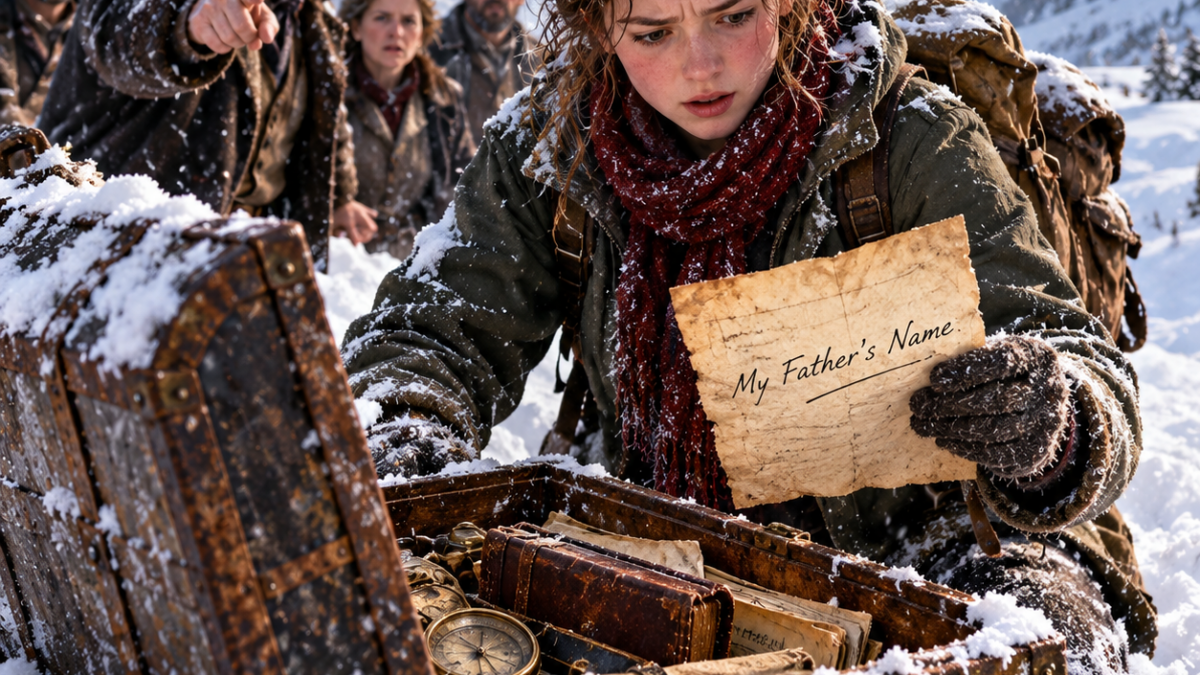
The first line changed everything.
*November 16.*
*If somebody finds this, tell the Reed woman her boy stayed brave.*
I read it twice.
Then a third time.
My hands had started trembling, and it wasn’t because of the cold anymore.
The letter continued.
*We did not leave the valley.*
*We did not take the freight.*
*We were turned away from McCrae Cut after dark, and by the time we reached the upper trail, the storm had already closed behind us.*
I looked up from the page.
McCrae Cut.
Everybody in Willowbottom knew it.
It was an old logging road that crossed the southern shoulder of the mountain and rejoined the main freight route beyond Martin Pass. In good weather, nobody used it because it added six miles.
In bad weather, it could save your life.
The lower road stayed beneath the tree line.
Martin Pass did not.
For years, freight crews had used McCrae Cut when snow made the upper trail dangerous.
Then Ward bought the ranch that surrounded its western entrance.
He put up a gate.
Most people assumed freight crews could still pass in emergencies.
Apparently, we had been wrong.
I kept reading.
Aught wrote that the four wagons reached McCrae Cut shortly before sunset on November 13.
A man named Silas Rusk was guarding the gate.
I knew the name.
Rusk was Ward McCrae’s foreman.
According to Aught’s letter, he had begged Rusk to open the road.
The weather was worsening.
Micah had already noticed ice forming on one wagon brake.
Two mule teams were exhausted.
Rusk refused.
Aught offered money.
Rusk demanded two crates of medicine and a barrel of lamp oil.
Aught refused.
Those supplies belonged to families in the valley.
Rusk told them to turn around.
So they did.
By the time they reached the main trail again, the first heavy snow had started.
I lowered the paper.
For three weeks, Ward McCrae had stood in Fenton Mercantile telling mothers, widows, ranch hands and hungry children that Aught Pearlman had stolen from them.
He had never mentioned his own gate.
I forced myself to keep reading.
The second page described the first accident.
One wagon slid sideways against a rock wall.
Nobody was badly hurt, but an axle cracked.
They unloaded part of the freight and shifted it to the remaining wagons.
Then another storm rolled over the ridge.
Visibility disappeared.
They could no longer tell trail from drop-off.
So Aught made the decision to stop.
They found the old shelter.
The cabin I was sitting in.
For two days, they carried supplies from the damaged wagons to the shelter.
Crate by crate.
Sack by sack.
They were trying to protect the valley’s winter provisions.
Not steal them.
The third page made my throat tighten.
Micah had developed a cough.
One of the older drivers, Ben Crowley, had injured his shoulder when the wagon slipped.
The fourth driver was Lewis Pike, a widower with two daughters in the eastern end of the valley.
They had almost no food of their own.
Aught refused to open the valley’s flour unless they had no choice.
Instead they ate beans, dried apples and whatever remained in their personal packs.
On November 17, Aught wrote that the storm had eased.
They decided two men would attempt to return to Willowbottom for help.
But before they could leave, they heard bells.
Not church bells.
Harness bells.
A mule team.
Someone else was on the mountain.
The fifth page was written in a shakier hand.
A family from the north settlement had tried crossing the pass in a smaller wagon.
A father.
A mother.
Two little girls.
Their wagon had overturned.
The father had injured his leg.
One child had a dangerous fever.
Aught and the others found them less than half a mile from the cabin.
They brought the family inside.
Then they opened one of the medicine crates.
Not for themselves.
For the child.
Aught carefully wrote down exactly what they used.
Two bottles of fever medicine.
Bandages.
A small portion of flour.
Half a tin of condensed milk.
Lamp oil.
He even wrote the family’s name.
Nathan and Ruth Bell.
Their daughters, Clara and Elsie.
I knew that name too.
The Bells had relatives north of the valley.
Nobody knew they had attempted Martin Pass.
The sixth page was dated November 19.
The weather had worsened again.
The Bells could not travel.
Aught wrote that he had decided to take Micah and Lewis Pike down the eastern drainage toward an abandoned trapper’s hut.
Ben Crowley would remain with the Bells.
If they could reach the lower timber, they might circle south and send help.
Then came a sentence I could barely read because the ink had blurred.
*If we don’t make it, we tried.*
Below that:
*The money is here.*
*Every dollar.*
*The freight is here.*
*What we used is listed.*
*Do not let them call the boy a thief.*
I closed my eyes.
For a moment, all I could hear was the fire.
Then I unfolded the seventh page.
It wasn’t a diary entry.
It was a list.
Every crate.
Every sack.
Every barrel.
Numbers.
Weights.
Destinations.
And at the bottom, Aught had written:
*Four wagons entered Martin Pass.*
*Four wagons remain in Martin Pass.*
*If they tell another story, ask why McCrae Cut was closed.*
I sat there until the fire burned low.
Then I heard something outside.
A scrape.
I froze.
Another sound came from beneath the window.
Molly.
I had tied her near the sheltered side of the cabin.
She was pulling at the rope.
I climbed back out.
The sky had darkened.
Snow was beginning again.
I almost packed the letters into my coat and headed home immediately.
Almost.
But one sentence kept bothering me.
*We tried the eastern drainage.*
If Aught, Micah and Lewis had left the cabin, there might be something else below.
There might even be—
I stopped myself.
Three weeks had passed.
Hope could get a man killed just as easily as fear.
Still, I couldn’t leave without looking.
I slept badly.
At first light, I followed the drainage.
The trail was nearly invisible.
Every hundred yards, I tied a strip of cloth to a branch so I could find my way back.
Molly remained at the cabin with the last of my grain.
I carried rope, water, one biscuit and Aught’s compass bearing copied onto the back of my hand.
For two hours I found nothing.
Then I saw a broken branch.
Not broken by snow.
Cut.
Farther down, another.
Someone had marked a route.
I kept going.
At midday I found a leather glove.
The fingers were stiff with ice.
I recognized the stitching.
Micah Reed’s mother repaired clothing for half the valley.
She always used red thread at the cuff.
That glove had red thread.
I put it inside my coat.
Another quarter mile down, I found the remains of a small fire beneath an overhang.
Beside it was a tin cup.
Then boot tracks.
Not fresh.
But sheltered enough that the wind hadn’t erased them.
Three sets entered the trees.
Only two continued.
My stomach dropped.
I followed them.
Near dusk, I found a shape beneath a cedar.
A coat.
Then boots.
I knew before I reached him.
Lewis Pike had not made it far.
He was lying beneath the tree as though he had simply sat down to rest.
There was no terrible scene.
No sign of panic.
His hands were folded against his chest.
Beside him sat a small wooden box.
Inside were two letters addressed to his daughters.
I didn’t open them.
I put them inside my coat.
Then I stood in that silent forest and removed my hat.
“I’ll take them home,” I promised.
The mountain gave no answer.
I continued another hundred yards before darkness forced me to stop.
That’s when I heard the sound.
Three knocks.
I stopped breathing.
Knock.
Knock.
Knock.
It came from somewhere ahead.
I shouted.
“Hello?”
Nothing.
Then again.
Three weak knocks.
I ran.
The trapper’s hut was almost invisible beneath fallen branches and snow.
Its roof had partially collapsed.
I pushed through the door.
“Hello?”
A voice answered.
So faintly I almost thought I imagined it.
“Here.”
I found Micah Reed beneath three blankets beside a dead fireplace.
For several seconds, neither of us spoke.
He looked impossibly small.
His cheeks were hollow.
His lips were cracked.
But his eyes were open.
“Samuel?”
I dropped beside him.
“Yeah.”
His face twisted.
“Am I dreaming?”
“No.”
“Everybody else?”
I couldn’t answer immediately.
Micah looked past me.
“Mr. Pearlman went back.”
“What?”
“He went back for Mr. Crowley and the Bell family.”
“When?”
Micah swallowed.
“I don’t know.”
He had lost count of the days.
Lewis had injured his ankle during the descent.
They reached the trapper’s hut, but Lewis grew weaker.
Aught decided Micah would remain sheltered while he returned toward the freight cabin.
Lewis tried going with him but never came back.
Micah had survived on melted snow and the last handful of oats they carried for emergencies.
I stared at him.
“You’ve been here alone?”
He nodded.
Then he whispered the words I would remember for the rest of my life.
“Mr. Pearlman said somebody would come.”
I looked away because my eyes had filled.
“He was right.”
Getting Micah out almost killed both of us.
He couldn’t walk more than fifty yards.
I half carried, half dragged him uphill.
We slept under the rock overhang where Lewis’s group had made their small fire.
By morning, Micah could barely stand.
I fashioned a crude sled from pine branches.
Progress became painfully slow.
Near noon, snow started again.
I kept thinking about Molly waiting at the freight shelter.
I kept thinking about the letters against my chest.
I kept thinking about Ward McCrae standing in the warm mercantile calling these men thieves.
Every time exhaustion told me to stop, anger pushed me another hundred yards.
We reached the buried shelter after dark.
Molly greeted us with a noise somewhere between a bray and an insult.
Micah almost smiled.
I fed him broth from melted snow and the last of my dried meat.
The next morning we searched the shelter again.
That’s when Micah pointed toward the floor.
“There.”
“What?”
“Under the bunk.”
I pulled away an old blanket.
A board had been pried loose.
Beneath it sat a second package.
Oilcloth.
Inside were three documents.
One was the original freight manifest.
One was a receipt signed by Silas Rusk.
And one was a note in Aught’s handwriting.
The receipt stopped me cold.
**Received from A. Pearlman: $20 emergency road passage deposit.**
Below it:
**Access delayed pending authorization.**
Signed:
**S. Rusk — McCrae Ranch.**
“They paid him?” I asked.
Micah nodded.
“Mr. Pearlman gave him money. Rusk took it. Then he still wouldn’t open the gate.”
“Why?”
Micah looked at me.
“Because Mr. McCrae said nobody crossed without surrendering freight.”
“How do you know Ward said that?”
“I heard Rusk say it.”
My jaw tightened.
That wasn’t proof Ward had given the order.
But it was enough to ask questions.
I put everything inside my coat.
Then I asked Micah the question I had been avoiding.
“Where are the wagons?”
He pointed north.
“Below the ridge.”
We found the first one that afternoon.
Only part of a wheel was visible.
The rest was beneath snow.
The second was thirty yards farther down.
The third had slid against the rocks.
The fourth lay tilted near the edge of a ravine.
They were still there.
So was the freight.
Not all of it.
Some had been carried to the cabin.
Some had been used to help the Bells.
But nobody had stolen a winter’s worth of supplies.
They had been trapped protecting them.
I stood beside that half-buried wheel with snow blowing across my boots and felt something inside me settle.
I had come to the mountain hoping to prove four men weren’t thieves.
Now I knew something worse.
They had been condemned by people who had never bothered to learn what happened.
And at least one powerful man had benefited from everyone believing the ugliest version.
I took Micah home.
The journey down required three days.
By the final afternoon, we could see smoke rising from Willowbottom chimneys.
Micah began crying.
He tried hiding it.
I pretended not to notice.
As we approached town, a farmer named Joseph Hale spotted us.
He stared.
Then dropped the bucket he was carrying.
“Lord above.”
He ran toward us.
“That’s the Reed boy!”
Within minutes, people were pouring into the road.
Someone ran for Micah’s mother.
I climbed down from Molly.
My legs nearly gave out.
Then I heard a scream.
Not fear.
A mother’s scream when something impossible becomes real.
Mrs. Reed came running through the crowd.
Micah slid from Molly before I could stop him.
She caught him.
Neither said anything.
They just held each other.
People around us began crying.
I should have felt relief.
Instead, I looked across the road.
Ward McCrae stood on the mercantile steps.
He wasn’t smiling.
His face had gone pale.
Our eyes met.
That was the first moment I knew he was afraid.
Ward recovered quickly.
Powerful men usually do.
He walked toward us while people crowded around Micah.
“Where’d you find him?”
I didn’t answer.
“Samuel.”
“Martin Pass.”
Ward’s jaw tightened.
“Where are Pearlman and the others?”
“I found Lewis Pike.”
A few people lowered their heads.
“And Aught?”
“Still missing.”
Ward glanced toward Micah.
Then back at me.
“What about the freight?”
“Still there.”
Everything around us went quiet.
Somebody behind Ward whispered, “What?”
I repeated it.
“The wagons are still in Martin Pass.”
Ward’s expression barely changed.
But I saw his left hand close.
“The supplies?”
“Most are still there too.”
“That doesn’t mean Pearlman didn’t plan—”
I pulled the leather money pouch from inside my coat.
Then I tossed it onto the mercantile porch.
It landed near Ward’s boots.
Coins clinked inside.
“Count it.”
Nobody moved.
Fenton himself came outside.
Edgar Fenton was nearly seventy and walked with a cane.
He picked up the pouch.
“What is this?”
“Aught Pearlman’s freight money.”
Fenton opened it.
His hands started shaking.
“He left records.”
Ward spoke sharply.
“Records can be written by anybody.”
I pulled out the seven pages.
“Recognize his hand, Mr. Fenton?”
Fenton took them.
He read the first page.
Then the second.
His face changed.
Ward stepped forward.
“What does it say?”
Fenton didn’t answer.
I did.
“It says your gate was closed.”
Ward stared at me.
“What gate?”
“McCrae Cut.”
A murmur spread through the crowd.
Ward laughed once.
It sounded wrong.
“That’s private land.”
“It also says your foreman took twenty dollars from Pearlman before refusing passage.”
Ward’s head snapped toward me.
For the first time, his confidence disappeared completely.
“That is a lie.”
I removed the receipt.
“Then somebody forged Silas Rusk’s signature.”
Ward reached for it.
I pulled it back.
“No.”
His eyes narrowed.
“Give me that.”
“Sheriff first.”
“You don’t know what you’re doing, boy.”
“I know exactly what I’m doing.”
His face changed.
Not much.
But enough.
He leaned closer so only I could hear.
“You should have stayed off that mountain.”
I looked at him.
“And you should have kept your mouth shut about men you knew nothing about.”
He stepped away.
The crowd had heard enough of the exchange to understand that something was wrong.
Mrs. Reed still held Micah.
Then Micah spoke.
His voice was weak.
But every person nearby heard him.
“Mr. Pearlman didn’t steal anything.”
Ward turned.
Micah continued.
“He saved me.”
His mother held him tighter.
“And Mr. Rusk wouldn’t open the gate.”
Ward’s face hardened.
“Son, you’ve been sick. You may be confused.”
Micah looked directly at him.
“I heard him say your name.”
That was when the crowd changed.
Not loudly.
Not dramatically.
But people who had spent weeks repeating Ward’s story suddenly stopped standing beside him.
They stepped away.
One by one.
That evening, Fenton Mercantile stayed open until midnight.
Not for business.
For testimony.
Sheriff Thomas Vale arrived from the county road station.
The doctor examined Micah.
Fenton counted the money.
Every dollar Pearlman was responsible for was there.
We spread the freight papers across the counter.
Micah described what happened at McCrae Cut.
I described the cabin.
The wagons.
Lewis Pike.
The letters.
By ten o’clock, Mrs. Pike had arrived.
I gave her the letters Lewis had written to his daughters.
She held them against her chest.
“Did you read them?”
“No, ma’am.”
She nodded.
“Thank you.”
That hurt worse than anything Ward could have said.
Because three days earlier, I had heard two men outside the blacksmith shop call Lewis Pike a coward.
Now his widow was thanking me for bringing home his final words.
Sheriff Vale read Aught’s pages twice.
Then he placed them carefully on the counter.
“We’ll need a recovery party.”
Ward, who had remained near the door, finally spoke.
“You’re taking the word of a half-frozen boy and some papers found in an abandoned shack?”
Sheriff Vale looked at him.
“We’re taking evidence seriously.”
“Pearlman could have written anything.”
“Then the mountain will tell us what’s true.”
Ward scoffed.
“The mountain’s under twenty feet of snow.”
“Then we’ll wait.”
“I suppose meanwhile you’re going to let people accuse me?”
Vale’s expression didn’t change.
“You’ve spent three weeks accusing four missing men.”
That silenced the room.
Ward left.
The next morning, someone threw a rock through my window.
It wasn’t difficult to guess why.
I lived in a tiny room behind Amos Weaver’s old workshop.
Amos had taken me in after my parents passed when I was eight.
He taught me harness repair, carpentry, mule handling, freight routes and the importance of never confusing a wealthy man’s confidence with the truth.
He had been gone less than a year.
Standing over broken glass that morning, I wished he were there.
A piece of paper had been wrapped around the rock.
Two words.
**STOP TALKING.**
I carried it directly to Sheriff Vale.
He read it.
“Any idea who sent it?”
“Plenty.”
“Any proof?”
“No.”
He folded the note.
“Then don’t accuse anybody.”
I almost laughed.
“That advice would’ve been useful three weeks ago.”
Vale looked at me.
“I know.”
That surprised me.
He sat back.
“I repeated the Pearlman story too.”
I said nothing.
“So did my deputy. So did half the valley.”
He looked ashamed.
“We were wrong.”
Hearing the sheriff admit that mattered more than I expected.
Then he said, “Being wrong doesn’t mean McCrae is guilty of anything except having a loud mouth.”
“I know.”
“You want to make him responsible for closing that road.”
“I want to know whether he knew.”
“Those are different things.”
“I know.”
Vale studied me.
“Do you?”
That question stayed with me.
Because he was right.
I was angry.
I wanted Ward humiliated.
I wanted every person who had watched Mrs. Reed walk through town while they whispered about her son to feel the same shame they had made her feel.
But anger wasn’t evidence.
So I waited.
For three days, nothing happened.
Then Silas Rusk disappeared.
Ward claimed he had quit.
Nobody had seen him leave.
Sheriff Vale searched the McCrae ranch.
Rusk’s room was empty.
His saddle was gone.
So were two shirts and a bedroll.
That looked like a man leaving willingly.
Then Micah remembered something.
“The gray ledger.”
We were sitting in Mrs. Reed’s kitchen.
“What gray ledger?”
“At the gate.”
He took a breath.
“Mr. Rusk wrote the wagon numbers in a gray book. He wrote the money too.”
“Are you sure?”
Micah nodded.
“Mr. Pearlman told him, ‘Write down that you took it.’ Rusk said he always recorded gate payments.”
I went straight to Vale.
By sunset, he had returned to McCrae Ranch.
Ward denied knowing about any ledger.
The gatehouse was searched.
Nothing.
Then one ranch hand mentioned that Ward had burned trash behind the tack room the morning after Micah returned.
We found no ledger.
Only ash.
Not proof.
But something had changed.
People started talking.
A stable hand named Eli Mercer came to my workshop after dark.
He kept looking over his shoulder.
“You Samuel Weaver?”
“You know I am.”
“Need to talk.”
“Come inside.”
He didn’t.
“Outside’s better.”
“What about?”
He swallowed.
“The freight crew.”
My heart started beating faster.
Eli had worked for Ward for four years.
Two days after the wagons disappeared, Ward sent him and another ranch hand named Tom Greeley to check the upper fence.
From the ridge, they saw smoke near the old freight shelter.
“You saw smoke?”
Eli nodded.
“You told Ward?”
“Yes.”
“What did he say?”
Eli looked toward the street.
“He said Pearlman would come down when he got hungry.”
I stared at him.
“When was this?”
“November fifteenth.”
Aught’s first letter was dated November sixteenth.
“You’re telling me Ward knew they were up there?”
“I’m telling you we saw smoke and told him.”
“Why didn’t anybody go?”
“Storm came back.”
“That afternoon?”
“Next morning.”
“So there was time.”
Eli looked miserable.
“Yes.”
“Why didn’t you say something?”
His face tightened.
“Because I got three children and my house sits on McCrae land.”
I understood.
That didn’t mean I liked it.
“What else?”
“Ward told us not to spread stories.”
“Why?”
“He said if Pearlman had chosen the upper trail, what happened was his business.”
“Did he know Rusk turned them away?”
Eli hesitated.
Then nodded.
“How?”
“Rusk told him.”
“When?”
“Night they came to the gate.”
I felt cold.
“Rusk rode back to the main ranch?”
“Yes.”
“What did Ward say?”
“I wasn’t in the office.”
“Then you don’t know.”
“No.”
I exhaled.
Eli looked at me.
“But the next morning Ward said, ‘If Pearlman won’t pay the road price, he can take his chances with Martin.’”
There it was.
Not murder.
Not some grand criminal conspiracy.
Something smaller.
Meaner.
More believable.
Ward had known.
He knew the freight crew had begged to use the safer road.
He knew they had been turned away.
He knew smoke had been seen near the shelter.
And when the men failed to return, instead of admitting any of that, he told the valley they were thieves.
“Will you tell Sheriff Vale?”
Eli went pale.
“No.”
“Then none of this helps.”
“I told you.”
“I need you to tell him.”
“I’ll lose my job.”
“Lewis Pike lost his life.”
Eli flinched.
I immediately regretted saying it that way.
But I didn’t take it back.
He left without promising anything.
The next day Ward came to see me.
He stepped into the workshop alone.
I was repairing a harness.
“You’ve been talking to my men.”
I didn’t look up.
“People talk to me.”
“You’re causing trouble.”
I pulled the thread tight.
“Strange. I thought I was fixing harness.”
He slammed one hand against the bench.
“Don’t play clever.”
I finally looked at him.
Ward was a big man, not because he was unusually tall but because he carried himself like every room belonged to him.
That day he looked tired.
“You want money?” he asked.
I almost thought I had misheard.
“What?”
“You’ve got nothing. This shop barely pays. Your mule’s half lame. You don’t even own the roof over your head.”
I set down the harness.
“What’s your point?”
“My point is people make bad decisions when they’re angry.”
“You offering to help me make a better one?”
“I’ll buy this place.”
“You don’t want this place.”
“I’ll pay three times what it’s worth.”
“And what do you get?”
“You stop stirring up suspicion.”
I stared at him.
Then I laughed.
It was the first time I’d laughed since Martin Pass.
Ward didn’t appreciate it.
“You think this is funny?”
“A little.”
“Why?”
“Because yesterday you said there was nothing to hide.”
“There isn’t.”
“Then you’re offering me three times the value of my shop for nothing.”
He leaned across the bench.
“You have no idea how this valley works.”
“I’m learning.”
“You think people love truth?”
“I didn’t say that.”
“They love heat in winter. They love full barns. They love wages. Half this valley owes me money.”
“That why they agreed with you?”
His expression changed.
I had hit something.
“You’re an orphan boy who got lucky on a mountain.”
“My parents being gone doesn’t make you right.”
“You know what I mean.”
“I know exactly what you mean.”
He straightened.
“You want revenge.”
I considered that.
Maybe I did.
But I also remembered Mrs. Pike holding her husband’s letters.
Mrs. Reed hearing women whisper about her son.
Aught’s words:
*Do not let them call the boy a thief.*
“No,” I said. “I want you to say their names without calling them criminals.”
Ward turned toward the door.
Before he left, he said, “Careful, Weaver. A man can ruin his future chasing the past.”
I answered, “A man can ruin his future trying to bury it too.”
Three nights later, someone set fire to the woodpile behind my workshop.
I smelled smoke before the flames reached the wall.
Neighbors helped put it out.
We lost part of the shed.
The workshop survived.
Sheriff Vale found boot prints.
They weren’t enough to identify anyone.
Ward denied involvement.
I believed him.
Not because I trusted him.
Because the act felt stupid.
Ward was many things.
He wasn’t stupid.
Somebody else wanted me quiet.
Maybe one of his ranch hands.
Maybe somebody who had repeated the thief story and feared what else might come out.
Maybe just some fool looking for excitement.
That night, sitting inside my smoke-stained workshop, I made a decision.
I would stop fighting rumors with rumors.
I would go back to the mountain.
Sheriff Vale refused at first.
“No.”
“The storm’s been clear four days.”
“No.”
“Micah knows where Aught turned back.”
“No.”
“There’s more evidence up there.”
“Samuel.”
“What?”
“You already nearly froze once.”
“So did they.”
Vale rubbed his forehead.
“That’s not an argument.”
“It is to me.”
Eventually, he agreed to organize a proper party.
Six men.
Two pack animals.
Rope.
Shovels.
A doctor.
And this time, Ward McCrae couldn’t stop us from using McCrae Cut.
Sheriff Vale arrived at the gate with a county order declaring emergency access.
Silas Rusk’s replacement stared at it.
Then opened the gate.
I looked at Ward’s ranch buildings in the distance.
For the first time, that gate swung open without somebody asking permission from a McCrae.
I won’t pretend I didn’t enjoy that.
We reached the buried freight shelter in a day and a half.
Using the lower road made the difference brutally clear.
The route Aught had been denied was safer.
Sheltered.
Manageable.
We found Ben Crowley inside the freight cabin.
He had not made it.
Neither had Nathan Bell.
But Ruth Bell and both daughters were gone.
At first we feared the worst.
Then we found a note beneath the stove.
*December 1.*
*Aught came back.*
*Nathan cannot travel.*
*He says he will take us east when the weather breaks.*
The writing belonged to Ruth.
They had survived much longer than I imagined.
Aught had returned.
He had kept his promise.
We followed the eastern route.
Near the trapper hut, we found fresh evidence that somebody had traveled farther downhill.
A scrap of blue cloth.
A child’s shoe.
Then tracks preserved beneath a rocky ledge.
Two days later, we found a line shack used during summer cattle drives.
Smoke rose from the chimney.
I ran.
The door opened before I reached it.
A woman stood there.
Thin.
Exhausted.
Alive.
“Ruth Bell?”
She stared at me.
Then began crying.
Behind her were Clara and Elsie.
And on a bunk near the wall lay Aught Pearlman.
Alive.
For one second, I couldn’t move.
He looked twenty years older than the man I remembered.
His beard had grown wild.
One foot was wrapped in cloth.
But when he saw me, his eyes sharpened.
“Samuel Weaver?”
“Yes.”
He tried to sit up.
“Micah?”
“Alive.”
Aught closed his eyes.
His entire body seemed to loosen.
“Thank God.”
I sat beside him.
“He’s home with his mother.”
Aught covered his face with both hands.
For a long time, nobody said anything.
Then he whispered, “Lewis?”
I shook my head.
Aught looked away.
“Ben?”
Again, I shook my head.
He nodded slowly.
“I should’ve gotten back sooner.”
“You got back.”
“Not soon enough.”
“You saved Micah.”
“I left him alone.”
“You saved Ruth and the girls.”
“Nathan didn’t make the trip.”
Ruth Bell spoke from behind me.
“You carried Clara six miles.”
Aught didn’t answer.
Ruth looked at us.
“He carried my daughter through the snow when she couldn’t walk. Then he came back for us.”
Aught’s jaw tightened.
“Don’t make me into something I’m not.”
I pulled his seven pages from inside my coat.
His eyes widened.
“You found them.”
“Yes.”
“And the money?”
“Every dollar.”
He gave a tired laugh.
“Fenton will be pleased.”
“Fenton cried.”
That stopped him.
Then I said, “Ward’s been calling you a thief.”
Aught looked at me.
His expression didn’t change much.
Maybe he wasn’t surprised.
“Has he?”
“For weeks.”
“What does Micah say?”
“That you’re the reason he’s alive.”
Aught looked toward the stove.
“Then I don’t much care what Ward says.”
“I do.”
He looked back at me.
“I noticed.”
There was almost a smile there.
I told him what had happened in Willowbottom.
The rumors.
The receipt.
Eli Mercer’s statement to me.
The gate.
Ward’s offer to buy my shop.
Aught listened.
Then he said something that irritated me.
“Don’t destroy yourself trying to destroy him.”
“I’m not.”
“You crossed Martin Pass with a lame mule and three days of food.”
“Five.”
“That supposed to make me feel better?”
“No.”
“You’re angry.”
“Of course I am.”
“So am I.”
“You don’t sound angry.”
“I’ve had more time.”
He looked at Ruth’s daughters sleeping near the stove.
“Mountain teaches you something.”
“What?”
“It doesn’t care who’s right.”
I frowned.
Aught continued.
“If you want Ward held responsible, bring facts home. Not anger.”
I hated hearing the same lesson Sheriff Vale had already given me.
Mostly because they were both right.
We brought Aught and the Bells back through McCrae Cut.
When we reached Willowbottom, nearly the whole town came outside.
This time nobody cheered at first.
People simply stared.
They were looking at a man they had buried in reputation before the mountain had finished with him.
Ward McCrae was there.
So was Silas Rusk.
Rusk had returned the previous night.
His horse had gone lame twenty miles south.
Sheriff Vale had intercepted him.
When Aught saw Rusk, his face went still.
Rusk looked at the ground.
Ward stepped toward Aught.
“Pearlman.”
Aught stopped.
“You got something to say, Ward?”
The crowd went silent.
Ward’s eyes moved toward Sheriff Vale.
Then toward Fenton.
Then toward Micah, who stood beside his mother.
Finally back to Aught.
“I heard you made it.”
“I did.”
“Glad to see it.”
Aught stared at him.
Ward added, “There were misunderstandings.”
I nearly laughed again.
Aught didn’t.
He said, “You called me a thief.”
“Information was limited.”
“You called a fifteen-year-old boy a thief.”
“I never said that.”
“You said the crew stole the wagons.”
Ward’s jaw tightened.
“That was the prevailing belief.”
“No.”
Aught’s voice remained calm.
“That was your belief.”
Ward looked around.
Nobody came to his defense.
Then Aught said the one thing that seemed to hurt Ward more than shouting would have.
“You should’ve sent help.”
Ward’s face stiffened.
“I didn’t know you needed it.”
Eli Mercer stepped forward.
“Yes, you did.”
Every head turned.
Ward looked stunned.
Eli’s hands were shaking.
But he didn’t step back.
“Tom Greeley and I saw smoke November fifteenth.”
Ward said nothing.
“We told you.”
“That proves nothing.”
“You told us Pearlman would come down when he got hungry.”
Ward’s expression changed.
Eli continued.
“And Rusk told you he turned them away.”
Ward pointed at him.
“You watch yourself.”
“No.”
Eli took a breath.
“I’ve watched myself for four years.”
Then Tom Greeley stepped forward too.
“He’s telling the truth.”
Ward looked from one man to the other.
That was the moment his power broke.
Not because the sheriff arrested him.
He didn’t.
Not because the crowd attacked him.
They didn’t.
It broke because men who had been afraid of losing their jobs finally realized silence had cost more than speaking.
Sheriff Vale took statements.
Silas Rusk admitted accepting the twenty dollars.
He claimed Ward had established a standing rule: no freight wagons used McCrae Cut without paying a toll or surrendering goods equal to the toll.
Ward denied ordering anyone turned away during dangerous weather.
Rusk produced the missing piece himself.
The gray ledger.
He had taken it when he left.
“Why?” Vale asked.
Rusk stared at Ward.
“Because I knew who he’d blame.”
Ward’s face turned dark.
The ledger listed the four freight wagons.
The twenty-dollar payment.
The date.
And beside it, in Rusk’s hand:
**Denied under W.M. standing order. Freight refused surcharge in goods.**
Ward called it unauthorized.
Rusk claimed otherwise.
Then Fenton produced something nobody expected.
A letter.
Two months earlier, Ward had written to Fenton demanding that all commercial wagons using McCrae Cut pay a new winter toll.
Fenton had refused.
The letter ended with one sentence:
**Then let your drivers take Martin Pass.**
Ward had signed it himself.
Nobody spoke after Fenton read that aloud.
Ward finally said, “That’s business.”
Aught answered, “Lewis Pike is gone.”
Ward looked at him.
Aught stepped closer.
“Ben Crowley is gone.”
Ward looked away.
“Nathan Bell is gone.”
Ruth Bell stood behind us with her daughters.
Aught continued.
“You’re right. Closing your road wasn’t the same as pushing a wagon off a cliff. Nobody’s saying it was.”
Ward’s eyes returned to him.
“But you knew we were trapped.”
“I saw no proof.”
“You had smoke.”
“I had a report.”
“You had men.”
“There was a storm.”
“The storm came later.”
Ward looked toward Sheriff Vale.
“This is turning into a public hanging without a rope.”
Vale’s expression stayed flat.
“No. It’s turning into an investigation.”
The county hearing was held three weeks later.
By then, the story had traveled beyond Willowbottom.
A newspaper from the county seat sent a reporter.
Then another paper farther south printed the headline:
**MISSING FREIGHT CREW FOUND — WINTER GATE DISPUTE UNDER REVIEW**
Ward hated that.
He had spent years controlling what people in our valley knew about him.
Now strangers were asking questions.
The hearing wasn’t dramatic in the way people later remembered it.
Nobody jumped from their chair.
Nobody confessed to some secret plot.
Truth is usually less theatrical.
It arrived piece by piece.
The receipt.
The gray ledger.
Fenton’s letter.
Eli’s testimony.
Tom’s testimony.
Micah’s testimony.
Aught’s seven pages.
The intact money pouch.
The recovered cargo.
Ruth Bell’s account.
And finally Ward himself.
The county magistrate asked him one simple question.
“Mr. McCrae, when were you first informed that smoke had been seen near the freight shelter?”
Ward hesitated.
“November fifteenth, possibly.”
“And when did you first publicly suggest the drivers had stolen the freight?”
Ward looked at the floor.
“November twenty-second.”
“So when you made that accusation, you knew there had been evidence the crew remained on the mountain?”
“I knew smoke had been observed.”
“Did you disclose that?”
“No.”
“Why?”
Ward’s lawyer whispered to him.
Ward answered carefully.
“Because smoke did not establish who was present.”
The magistrate nodded.
“Did you disclose that your foreman had turned the crew away from McCrae Cut?”
“No.”
“Why?”
“I wasn’t aware of the exact details.”
Silas Rusk shifted in his seat.
The magistrate looked at the ledger.
“Your foreman says you were.”
“His memory differs from mine.”
Then the magistrate asked, “Did you call Aught Pearlman a thief?”
Ward remained silent.
“Mr. McCrae?”
“Yes.”
“Did you possess evidence he had stolen anything?”
“No.”
The room changed.
That one word did more damage to Ward than anything I could have done.
No.
He had no evidence.
He had known about the smoke.
He had known about the gate.
And he had still used his standing in the valley to turn suspicion into certainty.
The magistrate could not charge him simply for being cruel.
Closing his private road was also complicated.
But the county found that McCrae Cut had been used as an emergency winter route under an old recorded easement dating back decades before Ward bought the ranch.
Ward had never had the right to block emergency freight access completely.
That mattered.
So did the money his foreman collected.
The county ordered the gate permanently opened for emergency winter passage.
Ward was required to return the tolls collected under the invalid restriction.
The freight company and several affected families filed civil claims.
Fenton sued for losses caused by the delayed cargo.
Ruth Bell filed a claim relating to the blocked emergency route.
Lewis Pike’s family did too.
Ben Crowley’s sister joined them.
Ward fought every one.
He had money.
Good lawyers.
Patience.
What he no longer had was control of the story.
Then came the part people later called my revenge.
It wasn’t planned.
At least not at first.
Three months after the hearing, Ward announced that he intended to purchase Fenton Mercantile.
Fenton was old.
The missing freight had nearly ruined him.
Even though much of the cargo was eventually recovered, winter losses had been severe.
Ward offered enough money to buy the store, the warehouse and Fenton’s remaining freight contracts.
If he succeeded, almost every family in Willowbottom would once again depend on him.
Fenton showed me the offer.
“I may have to take it.”
I stared at the paper.
“You hate him.”
“Hate doesn’t pay creditors.”
“How much do you owe?”
He told me.
The number felt impossible.
Then I thought about the reward money.
The freight company had paid me for locating the shipment.
The county had compensated the search party.
Fenton had given me a small percentage for recovering his cash and manifests.
It wasn’t enough.
Not even close.
But I had something else.
The story.
The county newspaper had received letters from people wanting to help the families of the missing drivers.
A relief fund had started.
Aught suggested something bigger.
“Form a cooperative.”
I looked at him.
“A what?”
“Farmers buy together.”
Fenton understood immediately.
“Community-owned mercantile.”
Aught nodded.
“Ward can buy buildings. Harder to buy a hundred families.”
I thought he was joking.
He wasn’t.
For six weeks, we went house to house.
Families invested what they could.
Five dollars.
Ten dollars.
Twenty-five.
A widow gave three.
A ranch hand contributed one week’s wages.
The Bells’ relatives sent money.
The county paper published our plan.
Former Willowbottom families living in other towns contributed.
Even men who had repeated Ward’s accusations came forward.
One of them placed forty dollars on Fenton’s counter.
“I called Pearlman a thief,” he said.
Aught was standing nearby.
The man couldn’t look at him.
“I was wrong.”
Aught nodded.
“Then don’t do it to the next man.”
That was all.
By spring, we had enough.
Fenton rejected Ward’s offer.
Instead, he sold controlling ownership of the mercantile to the Willowbottom Supply Cooperative.
Ward arrived the next morning.
I happened to be there.
He walked into the store carrying his purchase papers.
Fenton was behind the counter.
I stood beside Aught.
Mrs. Reed was stocking shelves.
Micah, healthier now, was arguing with a flour sack.
Ward looked around.
“What is this?”
Fenton smiled.
“New ownership.”
Ward stared at me.
“You?”
“No.”
“Then who?”
I pointed around the room.
“Everybody.”
Fenton handed him the cooperative charter.
Ward read the first page.
His face tightened.
“You people think you can run a freight company?”
Aught answered, “We already did.”
Ward looked at him.
Then at me.
“You’ve spent months trying to ruin me.”
I shook my head.
“No.”
“You cost me contracts.”
“No. You lost them.”
“You turned my own employees against me.”
“They spoke.”
“You dragged my name through every newspaper between here and the county seat.”
“Your name was on the documents.”
Ward stepped closer.
“You enjoying this?”
I considered lying.
Then decided not to.
“A little.”
Aught coughed to hide a laugh.
Ward’s face hardened.
I continued.
“But not for the reason you think.”
“Then enlighten me.”
I looked toward Mrs. Reed.
“Your money couldn’t make people forget Micah.”
Toward Aught.
“Your reputation couldn’t turn a good man into a thief.”
Toward the cooperative charter.
“And your land couldn’t make this valley belong to you.”
Ward stared at me for several seconds.
Then he folded his purchase papers.
“You’ll fail.”
“Maybe.”
“You don’t know business.”
“Then I guess we’ll learn.”
He left.
Micah waited until the door closed.
Then he said, “That felt pretty good.”
Mrs. Reed swatted his shoulder.
Aught laughed.
So did I.
That should have been the end.
It wasn’t.
Spring revealed the mountain.
As the snow melted, recovery crews returned to Martin Pass.
We found all four wagons.
Three could eventually be repaired.
The fourth had broken badly against the rocks.
Most of the seed survived because Aught and his men had covered the sacks before leaving.
Some flour was ruined.
Several crates had split.
But far more remained than anyone expected.
Then, beneath the driver’s bench of the third wagon, we found something Aught had forgotten about.
A small tin dispatch box.
Inside was the original route schedule.
Attached to it was a note from Fenton written before departure.
**In event of severe weather, use McCrae Cut. Emergency right-of-way remains recorded with county.**
Aught stared at it.
“I forgot this existed.”
Sheriff Vale smiled without humor.
“Ward won’t.”
That document ended the remaining dispute over whether Aught had acted irresponsibly by taking the upper pass.
He hadn’t chosen it.
He had been forced back onto it.
A settlement followed.
Ward never admitted wrongdoing publicly.
His lawyers did the talking.
Money was paid to the Pike family.
To Ben Crowley’s sister.
To Ruth Bell and her daughters.
To Fenton.
A portion went toward the cooperative’s winter road fund.
Ward sold several hundred acres on the eastern side of his ranch to cover his obligations and business losses.
People later exaggerated that part.
They said I took his ranch.
I didn’t.
They said I bankrupted him.
I didn’t.
Ward McCrae remained wealthier than I would probably ever be.
But wealth stopped being the same thing as power.
That difference mattered.
The McCrae gate came down in June.
I was there when county workers removed it.
Ward watched from horseback.
He didn’t speak to me.
Neither did I.
The final post was pulled from the ground.
A worker looked toward me.
“Want it?”
“What?”
“The post.”
I laughed.
“No.”
“Thought you might like a souvenir.”
I looked at Ward in the distance.
Then at the open road.
“I’ve got enough reminders.”
The county installed a sign.
**MARTIN PASS EMERGENCY ROUTE**
Below that:
**WINTER ACCESS MUST REMAIN OPEN**
Aught stood beside me.
“Not bad.”
“No.”
He looked toward the mountain.
“Lewis would’ve liked it.”
That took the satisfaction out of the moment.
Because that was the truth beneath all of it.
We had won.
But winning didn’t bring everybody home.
In July, Willowbottom held a memorial.
Three names were carved into a stone near the church.
**Lewis Pike.**
**Ben Crowley.**
**Nathan Bell.**
Mrs. Pike stood with her daughters.
Ben’s sister came from two counties away.
Ruth Bell held Clara and Elsie’s hands.
Micah stood beside Aught.
I remained toward the back.
The preacher spoke first.
Then Fenton.
Then Sheriff Vale.
Finally Mrs. Reed walked forward.
She carried a folded piece of paper.
“I spent twenty-one days believing my son might never come home,” she said.
Her voice shook.
“And during those twenty-one days, I heard people say things about him that no mother should have to hear.”
Several people lowered their eyes.
“I cannot change what was said.”
She looked toward Micah.
“But I can tell you what happened.”
She unfolded Aught’s first page.
Then she read the sentence that had taken me up the mountain and, in some ways, brought all of us back.
*If somebody finds this, tell the Reed woman her boy stayed brave.*
Mrs. Reed stopped.
Micah was crying.
So was Aught.
So was half the valley.
She folded the page.
“My boy stayed brave.”
Then she looked at Aught.
“So did the men with him.”
Nobody applauded.
It wasn’t that kind of moment.
We stood together in silence.
Afterward, Ward McCrae approached the memorial.
People noticed.
Conversations stopped.
He had not been invited to speak.
He didn’t try.
He walked to Mrs. Pike.
Removed his hat.
And said something quietly.
I couldn’t hear.
Mrs. Pike stared at him for a long time.
Then she nodded once.
Ward moved toward Ruth Bell.
Then Ben Crowley’s sister.
Finally he approached Mrs. Reed.
She listened.
Her expression didn’t soften.
But she let him finish.
Then Ward came toward me.
I wanted to walk away.
I didn’t.
He stopped.
“You got what you wanted.”
“No.”
His eyes narrowed.
“What else could you possibly want?”
I looked at the memorial stone.
“Lewis.”
Ward followed my gaze.
“Ben.”
He said nothing.
“Nathan.”
Still nothing.
“I wanted them home.”
Ward’s shoulders lowered slightly.
For once, he didn’t look like the richest man in Willowbottom.
He looked old.
“I didn’t know,” he said.
“You knew enough.”
“Yes.”
That surprised me.
He stared toward Martin Pass.
“I thought Pearlman would turn around.”
“He tried.”
“I thought they’d wait out the weather.”
“They tried that too.”
Ward nodded.
“I should’ve sent men after the smoke report.”
“Yes.”
He looked at me.
“That’s what you wanted me to say?”
“No.”
“What then?”
I thought about the rock through my window.
The fire.
The insults.
The hearing.
The newspaper stories.
All the things I had imagined saying to him.
None mattered anymore.
“Nothing.”
Ward frowned.
“Nothing?”
“You can’t give me what I wanted.”
He stood quietly.
Then said, “I’m sorry.”
It wasn’t dramatic.
Nobody heard except me.
And perhaps that was fitting.
I didn’t forgive him in that moment.
Maybe forgiveness isn’t one moment.
Maybe it’s a road.
Maybe some people spend their entire lives walking toward it.
I only nodded.
Ward left.
He never became beloved.
He never regained the influence he once had.
But in later winters, whenever snow closed the upper trail, McCrae ranch hands were often the first to open the lower road.
I don’t know whether Ward did that because he changed or because he never wanted another newspaper mentioning his gate.
Sometimes a good result comes from an imperfect reason.
I learned to accept that.
The Willowbottom Supply Cooperative survived its first year.
Then its second.
Fenton lived long enough to see us build a new warehouse.
He died in his sleep at eighty-one with no debt attached to his name.
Aught Pearlman never drove another winter freight wagon through Martin Pass.
His injured foot never fully recovered.
Instead, he became our freight master.
He sat behind a desk pretending to hate paperwork while checking every route twice.
Whenever a driver complained, Aught pointed toward the mountain.
“Paper’s lighter than snow.”
Nobody argued.
Micah returned to work the following year.
His mother objected.
Loudly.
Aught hired him anyway.
Eventually Micah became one of the finest route men in the territory.
But his first rule never changed.
If weather turned bad, he stopped.
He didn’t care what cargo was waiting.
He didn’t care what customer complained.
He would say, “Freight can arrive tomorrow. A driver has to arrive at all.”
People listened.
As for Molly, she retired.
Completely.
The cooperative bought me a younger mule.
Molly responded by refusing to leave my pasture for almost twelve years.
Every morning she stood at the fence demanding apples as though she had personally rescued Micah.
In fairness, she probably believed she had.
I kept the brass compass.
And Aught’s seven pages.
The originals eventually went into the county archive.
Mrs. Reed kept a copy of the first page.
I kept a copy of the last.
**Four wagons entered Martin Pass.**
**Four wagons remain in Martin Pass.**
**If they tell another story, ask why McCrae Cut was closed.**
Years later, children who had not been born that winter would ask me why the lower road had a small wooden shelter every three miles.
I told them.
After everything happened, the cooperative built them.
Each shelter held dry firewood, blankets, matches, emergency food and a small tin box containing medicine.
No lock.
No toll.
No gate.
On the wall of every shelter was a brass plate.
The first three carried names.
**LEWIS PIKE.**
**BEN CROWLEY.**
**NATHAN BELL.**
The fourth carried a sentence.
**FOR ANY TRAVELER WHO NEEDS THE ROAD.**
Ward McCrae paid for that plate.
Nobody knew until years later.
I didn’t tell anyone.
Neither did he.
Maybe that was his way of trying to repair something that couldn’t truly be repaired.
The old freight cabin where I found Aught’s letters eventually collapsed.
Before it did, Micah and I climbed back there one summer.
No snow.
No storm.
No danger.
I barely recognized the place.
Without twelve feet of white covering everything, Martin Pass looked almost peaceful.
Micah stood where I had dug out the stovepipe.
“You really thought I was gone?”
“Yes.”
He smiled.
“I thought you were crazy when you walked through that trapper hut door.”
“I probably was.”
“You looked terrible.”
“So did you.”
“I had an excuse.”
“So did I.”
We laughed.
Then Micah became quiet.
“I heard what people called us.”
I looked at him.
“Afterward. Ma told me.”
“You didn’t need to know.”
“I wanted to.”
He stared across the ridge.
“Did you hate them?”
“Who?”
“Everybody.”
I thought about it.
“At first.”
“And then?”
“I realized most of them were scared.”
“That excuses it?”
“No.”
“Then what does it do?”
“It explains it.”
Micah nodded slowly.
“Same thing with Ward?”
“Not exactly.”
He laughed.
We sat on the ruined cabin foundation.
After a while he asked, “Why’d you really come looking?”
I knew the easy answer.
Because Aught was a good man.
Because Micah was fifteen.
Because the story didn’t make sense.
Because somebody needed to search.
All true.
But not the whole truth.
So I told him.
“When I was eight and my parents were gone, people said a lot of things about what would happen to me.”
Micah listened.
“They said I’d end up begging. Or stealing. Or drifting from ranch to ranch.”
Then Amos Weaver took me in.
“He never asked what people expected me to become.”
I touched the brass compass in my pocket.
“He just showed me another road.”
Micah looked at me.
“So when people called you thieves, maybe I couldn’t stand hearing a whole valley decide who somebody was without going to look for themselves.”
Micah smiled.
“That’s a long answer.”
“You asked.”
We climbed down before sunset.
I never crossed Martin Pass in winter alone again.
I didn’t have to.
After that year, if a wagon went missing, twelve men volunteered before anybody finished asking.
That may have been the biggest change of all.
Not the gate.
Not Ward’s lost contracts.
Not the cooperative.
People learned what rumors cost.
Twenty years after the four wagons vanished, a young driver failed to arrive during an early November storm.
Nobody called him careless.
Nobody called him a thief.
Nobody said he’d probably run away.
By midnight, lanterns were moving toward the mountain.
I was among them.
So was Micah.
Even two McCrae ranch hands came.
We found the driver before morning.
Broken wagon wheel.
Sprained ankle.
Cold and embarrassed.
Alive.
While we carried him toward the nearest shelter, Micah looked at me.
“You remember?”
“Every day.”
The driver didn’t understand.
He was too young.
That was all right.
Some lessons are meant to outlive the people who learned them.
Ward McCrae passed away many years later.
I attended his funeral.
People found that strange.
Maybe it was.
He and I never became friends.
We never sat together telling old stories.
He never asked me to forget what happened.
I never pretended it hadn’t.
But something changed between us after the memorial.
He stopped trying to control every disagreement.
When the cooperative wanted to widen McCrae Cut, he donated the necessary strip of land.
When floods damaged the lower bridge, his ranch supplied timber.
And once, during a particularly hard winter, twenty barrels of grain appeared at the cooperative warehouse with no invoice.
I knew where they came from.
I never asked.
At his funeral, his oldest son found me outside the church.
“My father kept something of yours.”
He handed me a small wooden box.
Inside was the purchase offer Ward had once brought to Fenton Mercantile.
The one he planned to use to buy the store.
Across the front, Ward had written one sentence.
**You were right to stop me.**
I stood beneath that church awning for a long time.
Then I folded the paper and put it back.
I didn’t feel victorious.
I felt something quieter.
Maybe closure.
Maybe mercy.
Maybe simply the understanding that the nineteen-year-old boy who climbed Martin Pass thinking justice meant defeating a man had grown older.
Justice wasn’t Ward losing.
Justice was Mrs. Pike’s daughters growing up knowing their father had not abandoned them.
Justice was Mrs. Reed never again lowering her eyes when someone mentioned Micah.
Justice was Aught Pearlman living long enough to hear children call him the man who saved people on Martin Pass instead of the man who stole their winter supplies.
Justice was Ruth Bell watching Clara and Elsie grow into women.
Justice was an unlocked road.
A warm shelter.
A box of medicine waiting for anyone who needed it.
That was the revenge that mattered.
The lie disappeared.
The truth remained.
And the men Ward McCrae once called thieves ended up with their names carved into the valley more permanently than his ever was.
Aught lived until seventy-four.
Near the end, I visited him often.
His memory wandered.
Sometimes he thought he was back behind the freight desk.
Sometimes he asked whether Micah had checked the weather.
One afternoon, he looked toward me and became completely clear.
“Samuel.”
“I’m here.”
“You still have those papers?”
“Yes.”
“Good.”
He smiled.
“Didn’t want that boy called a thief.”
“He never was.”
Aught closed his eyes.
After a moment he said, “Neither were we.”
“No.”
I leaned closer.
“Everybody knows that now.”
That seemed to satisfy him.
A week later, Aught Pearlman quietly passed with Micah and me nearby.
At his memorial, the valley didn’t need anyone to defend his name.
That work had already been done.
His stone was placed beside Lewis Pike and Ben Crowley.
On it, Micah asked that we carve only four words:
**HE BROUGHT THEM HOME.**
People assumed that meant Ruth and the girls.
Or Micah.
Or the freight.
I think it meant all of us.
Because before that winter, Willowbottom Valley had become a place where suspicion traveled faster than kindness.
Where one wealthy man’s certainty could become everybody else’s truth.
Where four missing wagons were enough to turn neighbors against men who couldn’t defend themselves.
Aught brought us back from that.
So did Lewis.
So did Ben.
So did Nathan Bell.
And maybe, in a small way, so did a stubborn mule with a bad hoof and terrible manners.
Sometimes people ask whether I was afraid when I crossed Martin Pass at nineteen.
Of course I was.
I was terrified.
I was hungry.
Cold.
Lost more than once.
I nearly turned around a dozen times.
Courage wasn’t the absence of any of that.
It was seeing a dark piece of metal sticking from a snowdrift and digging anyway.
It was reading the first line of a dead man’s letter and understanding that if I carried those pages home, nothing in Willowbottom would stay simple.
It was giving Mrs. Pike letters I knew would hurt her because she deserved her husband’s true words more than she deserved a comfortable lie.
It was Eli Mercer walking into the sheriff’s office even though Ward McCrae controlled his wages and his home.
It was Silas Rusk producing the gray ledger.
It was Micah standing in front of people who had doubted him and speaking without hatred.
It was Aught telling me not to destroy myself while trying to punish somebody else.
And perhaps it was even Ward, years later, writing five words on an old purchase agreement:
**You were right to stop me.**
The mountain never apologized.
It didn’t need to.
Mountains don’t lie.
People do.
People also repeat lies.
Believe them.
Profit from them.
And sometimes, if we’re fortunate, correct them.
My eleven dollars disappeared during that first journey.
The gloves I wore never recovered.
Molly’s injured hoof bothered her every winter afterward.
The original freight shelter is gone.
Fenton Mercantile has another name now.
McCrae Cut is a county road.
Martin Pass has warning markers every quarter mile.
But if you travel through Willowbottom during winter and take the lower mountain road, there is one thing you can still see.
Near the place where Ward’s locked gate once stood, there is a simple wooden sign.
It was placed there after Aught passed.
I helped Micah install it.
No long explanation.
No accusation.
No mention of Ward.
Just one sentence:
**THE ROAD STAYS OPEN BECAUSE FOUR WAGONS ONCE DIDN’T COME HOME.**
Every winter, snow covers part of it.
Every spring, somebody brushes it clean.
And whenever I see those words, I remember myself at nineteen, kneeling in a frozen clearing, digging through snow with numb hands because I saw a few inches of black metal where no cabin seemed to exist.
I remember thinking I had found a stovepipe.
I didn’t understand yet that I had found something much larger.
I had found the difference between what everybody believed and what was actually true.
And once you find that difference, you have a choice.
You can cover it again.
Or you can keep digging.
I kept digging.
That’s why the four wagons that disappeared in the snow were never remembered as the wagons stolen by thieves.
They became the wagons guarded by ordinary men who refused to abandon their responsibility even when nobody knew where they were.
And that is how a valley that once condemned them finally learned to speak their names with honor.

