PART 2: The HOA Took My Home While I Was Deployed—Then One Federal Court Order Erased Everything They Did
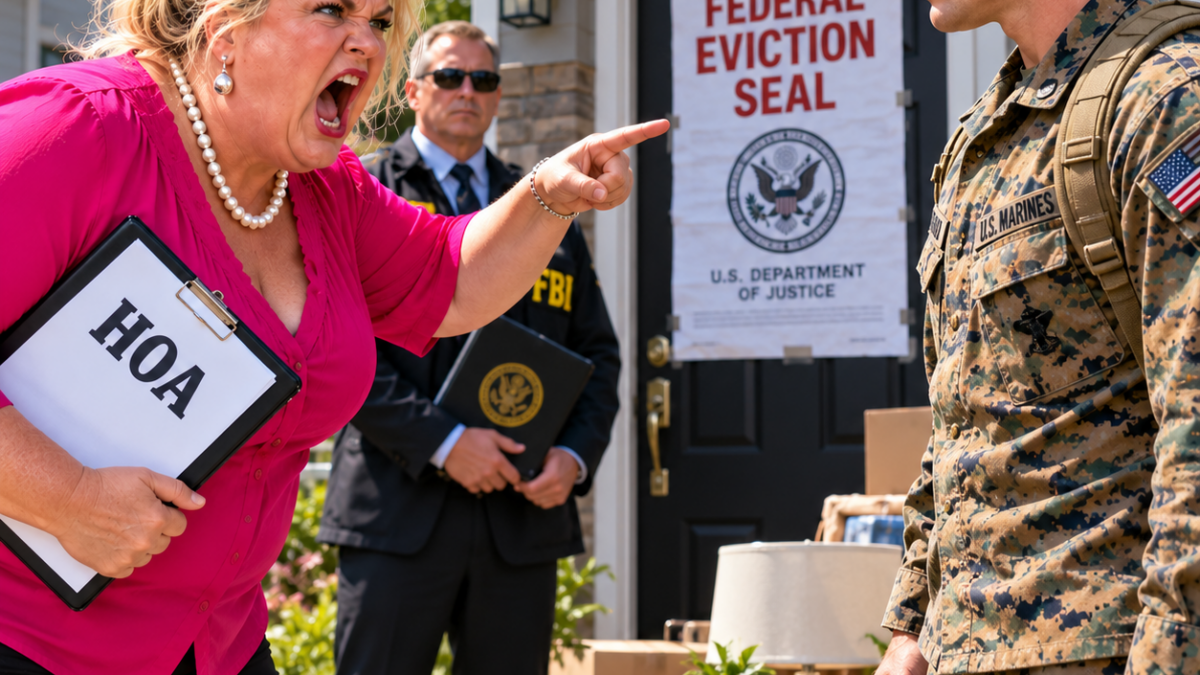
PART 2
Deployment changes your sense of time.
Back home, eight months sounds long.
Overseas, time gets broken into smaller pieces.
Watch rotations.
Work schedules.
Meals.
Calls home.
Mail.
The next morning.
The next week.
Then another month gone.
You don’t wake up thinking, *I’ve been away for one hundred and twenty-seven days.*
You just keep moving.
I checked on the house when I could.
Not physically, obviously.
I looked at my mortgage.
Utilities.
Bank balance.
Nothing seemed wrong.
The HOA payment was automated.
Two hundred eighty-five dollars every quarter.
Set it and forget it.
At least that was what I thought.
What I didn’t know was that six weeks after I deployed, Brenda walked into an HOA board meeting and announced that Ridgefield Acres was switching banks.
New bank.
New routing number.
New account.
Simple administrative change.
Except nobody told me.
My automatic payment kept sending money to the account I had been given when I bought the house.
That account was closed.
The payments bounced back into my bank account.
My bank generated notifications, but those notifications went to an old personal email account that I barely checked during deployment.
Every quarter, I assumed the HOA had been paid.
Every quarter, Brenda knew it hadn’t.
And she also knew exactly why I wasn’t responding to her.
Because I had told her where I was.
The sprinklers lasted a little longer.
Then the timer batteries died.
The grass started to brown.
Mail collected near the front door.
A package sat on the porch too long and softened in the rain.
That was all Brenda needed.
She began photographing my house.
Tuesday mornings, according to my neighbors later.
Front yard.
Driveway.
Porch.
Mailbox.
Grass.
Same angles.
Different dates.
She built a file.
The HOA board had four people.
Brenda.
Tammy Niles.
Doug Phelps.
Rhonda Beck.
Tammy sold candles out of her house and somehow Brenda always seemed to be one of her best customers.
Doug was seventy-four, partially deaf, and reportedly treated HOA meetings as an obstacle between himself and evening television.
Rhonda was Brenda’s sister-in-law.
That was the group deciding what happened to my house while I was seven thousand miles away.
A retired electrician named Clyde Rawlings attended some of the meetings.
Clyde had lived in Ridgefield Acres longer than almost anyone.
He kept copies of everything.
Meeting notices.
Old bylaws.
Financial statements.
Original covenants.
At first he didn’t interfere.
He later told me that was one of the things he regretted most.
“I figured Brenda was being Brenda,” he said. “Annoying isn’t illegal.”
By the third month of my deployment, Brenda called a special meeting.
Fourteen slides.
Fourteen.
About one house.
Mine.
Photographs of brown grass.
A spreadsheet showing unpaid dues.
Copies of notices.
She described the property as neglected.
Then blighted.
Then potentially abandoned.
The board approved a final warning.
Thirty days to cure the violations.
The letter went to my empty house.
So did the next one.
And the next.
By the time I came home, Brenda later claimed there had been sixty-two notices associated with my property.
Sixty-two letters sent to a house she knew had no owner inside it.
That detail mattered.
At the time, nobody challenged it.
Except one woman.
Nora Callaway.
Forty-five.
Emergency-room nurse.
Worked nights.
Former military spouse.
During one board meeting, Nora asked the obvious question.
“Has anybody actually contacted Keith?”
Brenda looked at her.
“We mailed notices.”
“He’s deployed.”
“That doesn’t excuse nonpayment.”
“Did anybody contact his unit?”
Brenda’s expression hardened.
“That’s not my responsibility.”
Nora remembered the sentence.
She remembered the way Brenda said it too.
Not confused.
Not concerned.
Dismissive.
As if being deployed were a lifestyle choice that had inconvenienced the HOA.
By month five, Brenda filed a lien.
The total was small compared with the value of the house.
A few quarters of dues.
Late fees.
Administrative costs.
Filing charges.
Roughly $2,540 against a home worth $189,000.
She filed it herself.
Walked the paperwork into the county office.
Watched it get stamped.
Then apparently went home and ate lunch.
Nobody contacted my command.
Nobody contacted a military legal office.
Nobody tried the military email I had used before leaving.
Nobody called my mother.
Nobody reached me.
And Brenda had that email.
**Noted.**
That one word sat quietly in her sent folder while everything else happened.
I wouldn’t understand its importance until much later.
The next step was foreclosure.
Ridgefield Acres had a version of its governing documents that Brenda claimed allowed non-judicial foreclosure.
Meaning, in simple terms, she believed the HOA could proceed without the kind of full court fight most people imagine when they hear the word foreclosure.
The problem was that the original neighborhood documents didn’t say that.
Clyde knew because he still had them.
The Ridgefield Acres CC&Rs from when the subdivision was established contained no provision giving the board the authority Brenda later relied on.
Eighteen months before my deployment, a new clause had appeared.
No neighborhood-wide vote.
No ballots mailed.
No proper approval process anyone could remember.
Just a new paragraph.
Clyde had noticed it when it happened.
He had underlined the section.
Then put the old and new copies into one of his famous file boxes.
His wife apparently called those boxes “Clyde’s conspiracy museum.”
He called them insurance.
He turned out to be right.
But nobody was looking inside that box yet.
By the sixth month of my deployment, Brenda had hired an auctioneer.
His name was Dale Perkins.
He later told investigators he had asked her one question before agreeing to proceed.
“You’re sure this is abandoned?”
Brenda gave him the paperwork.
“The file speaks for itself.”
The auction was held on a Thursday morning outside the clubhouse.
Ninety-two degrees.
No crowd.
No investors.
No neighbors.
Just the auctioneer.
And Brenda.
She bid $4,100.
Four thousand one hundred dollars.
For a house I had bought for $189,000.
A home financed through a VA loan.
My first house.
My father’s flag was inside.
My clothes.
My tools.
My photographs.
The coffee mug from my unit.
A box of birthday cards from my mother.
And for the price of an old used motorcycle, Brenda Holt walked away believing the entire property belonged to her.
That afternoon, the deed was transferred.
My name disappeared.
Hers replaced it.
The following day, she called a locksmith.
Nora had just finished a twelve-hour hospital shift when she turned into the neighborhood and saw Brenda standing on my porch directing the work.
She took a photograph.
She didn’t know exactly why.
She just knew it felt wrong.
That instinct would matter.
A week later, two men arrived with boxes.
They emptied the house.
Everything I owned went into a rented storage unit.
Clothes.
Books.
Kitchenware.
Military keepsakes.
Tools.
My father’s folded flag.
All of it.
Ten-by-ten storage unit near Route 9.
Paid with HOA funds.
Then Brenda renovated the house.
New paint.
Landscaping.
Countertops.
Decorative shrubs.
She put a sign in the front yard.
**HOA MODEL HOME — COMMUNITY SHOWCASE**
I wish I were making that part up.
She took the first thing I had ever owned and turned it into a display of her own authority.
Then she did something even more important.
She rented it.
Jared and Bethany Wells were in their twenties.
Newly married.
Moved from Raleigh.
They had no idea.
To them, Brenda was just a landlord.
She showed them the house.
Accepted a deposit.
Signed a twelve-month lease.
Rent:
$1,400 per month.
The money went directly to Brenda.
Not the association.
Not a property-management company.
Her personal payment account.
So while I slept in military quarters on the other side of the Pacific, another couple was paying the woman who had foreclosed on my home to live inside it.
Nora noticed their moving truck.
She took another photograph.
Then another when Brenda came by.
Then another when the model-home sign went up.
She kept everything.
She didn’t know when I was coming home.
She simply thought somebody should remember what happened.
***
August finally came.
My deployment ended.
I flew back exhausted enough that every airport chair looked comfortable.
By the time I reached North Carolina, my phone had fourteen percent battery.
I didn’t tell anybody in the neighborhood I was coming.
Why would I?
I was going home.
I took a ride from base.
The closer we got to Ridgefield Acres, the more awake I became.
Familiar convenience store.
Familiar intersection.
Familiar road.
Then the entrance sign.
**RIDGEFIELD ACRES**
For eight months, “home” had been an idea.
Suddenly it was five minutes away.
We turned onto my street.
The first thing I noticed was landscaping.
There were shrubs along my front walkway.
I had never planted shrubs.
Then the color.
My house had been beige.
Now it was gray-blue.
I leaned forward.
“Stop here.”
The driver glanced into the mirror.
“This one?”
“Yes.”
A white Kia sat in my driveway.
I didn’t recognize it.
Then I saw the sign.
**HOA MODEL HOME — COMMUNITY SHOWCASE**
My brain didn’t process it.
Not at first.
I climbed out.
Grabbed my duffel.
The driver pulled away.
I walked up the path.
The house looked cleaner than when I left.
That made the whole thing worse.
Fresh mulch.
Trimmed edges.
Flowers.
New paint.
It looked cared for.
By somebody else.
I put my key into the front lock.
It stopped halfway.
I pulled it out.
Tried again.
Wrong lock.
I pushed harder.
The key twisted.
Then snapped.
The tip stayed inside.
That sound is still clear in my memory.
Tiny.
Metallic.
Almost nothing.
Yet it felt like something had broken inside me too.
I stepped back.
Looked through the front window.
Different couch.
Different curtains.
A framed photograph on the wall that wasn’t mine.
Shoes near the door.
Then the door opened.
A man stood there.
Late twenties.
T-shirt.
Gym shorts.
He looked at me.
Then my duffel.
“Can I help you?”
I stared at him.
“I live here.”
He frowned.
“We rent this place.”
“What?”
“We’ve been renting since June.”
“From who?”
He hesitated.
“Brenda Holt.”
I didn’t say anything.
“She said she owns it.”
I lowered my duffel.
“Brenda from the HOA?”
“Yeah.”
I sat down on the porch.
Just sat.
People ask why I didn’t get angry immediately.
I did.
But anger wasn’t the first thing.
Confusion was.
My brain kept trying to find the missing piece that made the situation normal.
Maybe Brenda was managing the property.
Maybe there had been a misunderstanding.
Maybe the bank had contacted someone.
Maybe the HOA had rented it temporarily.
Nothing made sense.
The man sat near the doorway.
“My name’s Jared.”
“Keith.”
He looked uncomfortable.
“You really own this?”
“I did when I left.”
That sentence came out before I could stop it.
*Did.*
I hated the word.
Jared’s wife appeared behind him.
She looked scared.
I realized what I must look like.
Tired Marine.
Duffel bag.
Broken key.
Saying their rental was his house.
I took out my phone.
Called the HOA number.
Voicemail.
Called again.
Nothing.
Twenty minutes later, a silver Lexus turned onto the street.
Brenda.
I heard the heels before I saw her clearly.
Click.
Click.
Click.
She walked toward the porch.
Looked at me.
Then the bag.
Not surprise.
That was what bothered me later.
She wasn’t surprised.
She knew exactly who I was.
“Keith.”
“What happened to my house?”
Her face barely changed.
“You mean the association property?”
Jared lifted his phone.
I noticed he had started recording.
Brenda stepped closer.
“Your account became delinquent.”
“I had auto-pay.”
“Auto-pay to an old account.”
“Nobody told me the account changed.”
“Homeowners are responsible for their payments.”
“I emailed you before I deployed.”
“You received notices.”
“To an empty house.”
“Sixty-two.”
“You knew I wasn’t here.”
She folded her arms.
“The yard died. Mail piled up. The house looked abandoned.”
“I was deployed.”
“You were absent.”
I stared at her.
“You foreclosed on my home while I was overseas?”
“The board followed procedure.”
“You bought it?”
“Yes.”
“For how much?”
“That isn’t your concern.”
“It was my house.”
“Was.”
That word again.
Then she looked down at my duffel.
“Take your things off the porch.”
I didn’t move.
“Excuse me?”
“This is private property.”
Jared looked from her to me.
Even he understood how absurd that sounded.
“Brenda,” he said quietly, “he says he owns the house.”
“He doesn’t.”
I stood.
Not quickly.
I didn’t step toward her.
I had spent too much time around military discipline to hand somebody an excuse to turn my anger into their evidence.
I said, “You knew I was deployed.”
“You should have handled your responsibilities.”
“I did.”
“Apparently not.”
Then she said something I would remember in federal court.
“You should’ve been here instead of playing soldier on the other side of the world.”
Everything inside me went cold.
Not hot.
Cold.
I looked at her.
“Ma’am, you’re standing inside the doorway of the house I bought.”
She pointed toward the curb.
“You have sixty seconds to leave before I call the sheriff.”
Jared’s phone kept recording.
I picked up my bag.
No yelling.
No threats.
No touching anyone.
I walked back to my truck.
It was one of the hardest things I’ve ever done.
Not because I was afraid of Brenda.
Because every step away from that porch felt like I was accepting what she said.
That it wasn’t mine.
I spent that night at the Route 9 Motel.
Fifty-eight dollars.
The room smelled like bleach.
A game show played loudly through the wall.
The receptionist looked at my duffel.
“Coming or going?”
I almost laughed.
“Good question.”
I sat on the edge of the bed for a long time.
Then I opened my banking app.
Mortgage.
Insurance.
Utilities.
All paid.
House still listed in my mind as mine.
But apparently not in county records.
That night I slept about two hours.
At 8:15 the next morning, I was standing at the county recorder’s office.
***
The clerk printed fourteen pages.
They were still warm when she handed them to me.
I read standing at the counter.
Lien.
Notice.
Auction.
Transfer.
New deed.
My history converted into paperwork.
I saw my name.
Then Brenda’s.
There is something uniquely disturbing about seeing your life erased by administrative formatting.
No shouting.
No drama.
Just a line.
**Grantor.**
**Grantee.**
Dates.
Signatures.
Stamps.
I checked my bank records.
The payments had worked until the account changed.
Then they started bouncing.
Every one.
Same routing number.
Closed account.
Returned funds.
I found the email notification.
Sent months earlier to the account I hadn’t checked.
I called my mother.
“Ma.”
“Keith? You’re home?”
“Yeah.”
“Oh, honey—”
“I need to ask you something.”
She heard my voice change.
“What?”
“Those letters you got from North Carolina.”
Pause.
“What letters?”
“The ones forwarded from my house.”
“Oh.”
My stomach dropped.
“What happened to them?”
“I thought they were advertisements.”
“All of them?”
“I don’t know. There were a couple.”
“What did you do with them?”
Silence.
“Recycling.”
I closed my eyes.
“It’s okay.”
“Keith, what happened?”
“I don’t know yet.”
That was a lie.
I knew enough.
The clerk had been quietly watching me.
When I hung up, she said:
“I’ve seen some ugly property files.”
I looked at her.
“This bad?”
She glanced at the stack.
“This one has teeth.”
I left with copies.
I didn’t have a lawyer.
Didn’t have much savings.
Didn’t have a house.
But I had paper.
That afternoon, I searched everything I could think of.
HOA foreclosure active duty.
Military homeowner protection.
Can HOA foreclose deployed service member.
Most results gave the same advice.
Talk to an attorney.
Easy advice when you can afford one.
I was a lance corporal.
My truck had over two hundred thousand miles.
My savings had never been designed for a surprise federal property case.
I sat in that motel until after midnight reading legal websites on my phone.
The county documents looked terrible.
But they looked official.
Stamped.
Recorded.
Signed.
I kept thinking maybe Brenda had found a legal hole.
Maybe I had missed something.
Maybe ownership really could disappear that fast.
At nine the next morning, someone knocked.
I opened the door.
Nora Callaway stood there holding two coffees.
“You’re Keith.”
“Yes.”
“I’m Nora. I live three houses from you.”
“I know the name.”
“I was wondering when you’d get back.”
She handed me coffee.
Then pulled out her phone.
“I’ve been taking pictures.”
For the next thirty minutes, she showed me months of my own life from the outside.
Brenda with the locksmith.
Moving crew.
Boxes.
New paint.
Model-home sign.
Jared and Bethany arriving with their belongings.
Landscaping.
Every photo had a date.
Every date fit the county timeline.
“Why did you do this?” I asked.
“Because it didn’t feel right.”
“That simple?”
She nodded.
Then she sat in the cheap motel chair.
“My ex-husband was Army.”
I waited.
“During his second deployment, our landlord tried to remove me from a rental.”
“What happened?”
“JAG stepped in.”
She took a drink.
“There is a federal law that protects service members when they can’t defend certain legal actions because they’re on active duty.”
“What law?”
“I don’t remember the name.”
I searched.
The result appeared quickly.
**Servicemembers Civil Relief Act.**
SCRA.
I had heard the acronym in pre-deployment briefs.
Like most people, I remembered it vaguely.
Interest rates.
Leases.
Court proceedings.
I started reading.
The more I read, the straighter I sat.
Protections involving property.
Court authorization.
Active-duty status.
Foreclosure proceedings.
Requirements that suddenly made Brenda’s neat little county file look very different.
I looked up.
“She didn’t get a court order.”
Nora shook her head.
“She didn’t contact my command.”
“No.”
“She knew I was deployed.”
“You told her.”
I opened my email.
Searched Brenda.
Found the message.
My deployment notice.
Her reply.
**Noted.**
One word.
I stared at it.
I had never imagined two syllables could feel that heavy.
Nora leaned over.
“Save that everywhere.”
I forwarded it to myself.
Screenshot.
Cloud copy.
Printed copy later.
Then I called base legal.
I expected a long wait.
I got one.
The receptionist told me their SCRA caseload was backed up.
I gave her the short version anyway.
Deployed Marine.
HOA lien.
Foreclosure.
House sold.
HOA president bought it.
Renters living there.
Silence.
Then hold music.
I listened to a saxophone version of “America the Beautiful” loop several times.
A different voice came on.
“This is Captain Elise Woodard, JAG Corps.”
“Yes, ma’am.”
“The receptionist said the HOA president knew you were deployed.”
“Yes.”
“How?”
“I emailed her before I left.”
“Did she reply?”
“Yes.”
“What did she say?”
“One word. Noted.”
A pause.
“Do you still have it?”
“Yes, ma’am.”
“Forward it to me now.”
I did.
She stayed on the phone.
A minute later:
“I have it.”
“What does that mean?”
“It means I’m moving your case.”
“Out of the queue?”
“Yes.”
“Why?”
“Because there is a major difference between someone accidentally taking action against an active-duty member and someone doing it after being expressly notified.”
For the first time since arriving home, I felt like someone with authority was actually looking in the right direction.
She asked me for everything.
County documents.
Bank records.
HOA notices if I could find them.
Deployment orders.
Property deed.
Original mortgage documents.
VA loan information.
Photographs from Nora.
Rental evidence if available.
The video Jared recorded on the porch.
“Do not contact Brenda,” she said.
“I wasn’t planning to.”
“Good. Do not post online.”
“I don’t.”
“Do not drive over there to make a point.”
“I won’t.”
“If she contacts you?”
“I document it.”
“Exactly.”
Then she said:
“And Keith?”
“Yes, ma’am.”
“You are not homeless because you failed. You are temporarily displaced because we’re examining what happened.”
I didn’t realize how badly I needed to hear someone use the word *temporarily*.
***
Clyde Rawlings entered the story two days later.
Nora brought me to his house.
He had a kitchen table covered in paper.
Old bylaws.
Board minutes.
Bank statements.
Meeting notices.
Folders.
Boxes.
His coffee smelled burned.
He didn’t care.
“You’re the Marine.”
“That’s me.”
“Sit down.”
I sat.
He pulled out a thick stapled document.
“Original covenants.”
He put another beside it.
“Current covenants.”
He opened both.
“See this section?”
I read.
One version contained foreclosure authority.
The old one did not.
“When was this added?”
“Eighteen months ago.”
“Was there a vote?”
“Board vote.”
“Homeowners?”
“Nope.”
“How many people?”
“Four.”
I looked at him.
“Four board members changed the foreclosure rules for forty-two houses?”
“That’s what Brenda says.”
“Can they do that?”
“Captain Woodard says no.”
Clyde smiled for the first time.
“I like Captain Woodard.”
That night, Woodard walked me through the three fronts of the case.
First, federal court.
Challenge the foreclosure and deed transfer under the protections applicable to my active-duty status.
Second, state investigation.
The HOA had used association funds to renovate property Brenda personally claimed and personally rented.
Third, neighborhood governance.
Clyde was preparing a recall petition.
“I need twenty-two signatures,” he said.
“How many do you think you’ll get?”
“Depends how many doors Brenda hasn’t frightened shut.”
Nora added another item.
Rental payments.
Jared and Bethany had paid Brenda directly.
Personal account.
Screenshots.
Monthly amount.
Dates.
I looked around Clyde’s kitchen.
A retired electrician.
An ER nurse.
A military attorney.
My county documents.
My bank records.
My deployment email.
For days I had felt completely alone.
Now paper covered every inch of the table.
Clyde tapped one of the folders.
“Your problem is Brenda thinks paperwork only works for the person holding the stamp.”
“What do you think?”
“I think paperwork works for whoever kept better copies.”
I smiled.
“That’s encouraging.”
“Son, I have HOA minutes from 2011.”
“Why?”
“Because I knew someday somebody would annoy me enough to need them.”
Nora laughed.
Even I did.
It was the first genuine laugh I’d had since coming home.
***
The legal assistance letter reached Brenda on a Tuesday.
I didn’t see her read it.
Nora later told me she imagined the house going very quiet.
The letter outlined the dispute.
Deployment notice.
Active-duty protections.
Challenge to the foreclosure.
Pending federal filing.
Warning against further transfers or encumbrances.
Brenda called an attorney.
Glenn Sutter.
Small local practice.
Wills.
Property disputes.
General civil work.
He read the letter.
According to records later obtained, he told her the same thing any careful lawyer probably would have told her.
“This is federal.”
Brenda apparently demanded that he fix it.
He warned her the facts were bad.
She stopped using him.
Instead of slowing down, Brenda called an emergency HOA meeting.
That was her pattern.
Whenever facts moved against her, she tried to create more authority.
New motions.
New votes.
New letters.
She pushed through a $12,000 special assessment against my property for “emergency maintenance and beautification.”
Twelve thousand dollars.
On a house she already claimed to own.
She sent me a cease-and-desist letter accusing me of harassing a board officer.
Then she suspended my voting rights for being delinquent.
I read the letter in the motel.
“Can she suspend my voting rights on a house she says I don’t own?”
Woodard paused.
“That contradiction is not helping her.”
Then Brenda went to the police.
She filed a report saying I had come to her residence—meaning my house—and acted threateningly.
Requested protective relief.
There was one problem.
Jared had recorded the entire porch interaction.
When contacted, he told the officer the truth.
I sat down.
Brenda yelled.
I left.
No threat.
No aggressive contact.
The request went nowhere.
But Woodard called me.
“Listen carefully.”
“Yes, ma’am.”
“Because you’re active military, even a false complaint can create noise with your command.”
“I didn’t do anything.”
“I know.”
“So why should I worry?”
“Because systems respond to paperwork before they understand context.”
That sentence sounded familiar.
“So what do I do?”
“Nothing without me.”
Brenda also went after Nora.
Threatened her over a fence line.
Six inches, supposedly.
Measured personally.
Nora told me the tape measure still had a discount-store price sticker on it.
Clyde went public in the least dramatic way possible.
He posted two documents.
Old covenants.
New covenants.
Highlighted the added foreclosure language.
One sentence:
**When did we vote on this?**
Brenda deleted the post.
Clyde had already screenshotted it.
Then printed copies.
Then mailed them.
“Why mail them?” I asked.
“Can’t delete my mailbox.”
I liked Clyde more every day.
The recall petition spread.
Some people signed immediately.
Others didn’t want conflict.
One neighbor told Clyde:
“I don’t want drama.”
Clyde apparently replied:
“Then you should stop electing drama.”
Eventually, thirty-one homeowners signed.
Far more than required.
Clyde brought the petition to Brenda.
She tore it in half.
Right on her porch.
Dropped it.
Closed the door.
Then the sprinkler system on my lawn turned on and soaked the pieces.
Clyde had copies.
Of course he had copies.
He filed the originals elsewhere the next day.
Brenda’s control was shrinking.
The louder she became, the more people started checking her work.
That was when I found the second financial surprise.
I had developed a habit at the motel.
Every night, I reread the property file.
Same fourteen pages.
Same dates.
Same documents.
I knew them so well I could almost recite the order.
One night, a new filing appeared.
A home equity line of credit.
Thirty-five thousand dollars.
Secured against my house.
Brenda’s name.
Taken out only weeks after the deed transferred to her.
I stared at the screen.
Then called Woodard.
“I found something.”
“What?”
“HELOC.”
“How much?”
“Thirty-five thousand.”
Pause.
“Date?”
I told her.
Another pause.
“Send it now.”
I did.
She called back ten minutes later.
“This matters.”
“I figured.”
“If the deed is voided, we also need the debt addressed. You did not sign for this obligation.”
“She borrowed against my house.”
“Yes.”
“While I was deployed.”
“Yes.”
I sat on the motel bed.
“What happens if we get the house back but the debt stays?”
“We are not leaving that unanswered.”
Her tone changed.
Not emotional.
Sharper.
Professional anger.
The kind that makes people organize documents faster.
She amended the filing.
The bank became involved.
Now the dispute wasn’t just me versus Brenda.
A financial institution had to explain why a recently transferred property had been used to secure a substantial credit line so quickly.
More eyes were looking.
That was bad for Brenda.
Then the state investigator called her.
Questions about HOA money.
Renovations.
Rental income.
Homestead paperwork.
Brenda declined to answer.
She had that right.
But the silence did nothing to simplify the situation.
Clyde heard about the homestead filing and laughed so loudly Nora told him he was going to choke.
“She claimed your house as her primary residence?”
“Apparently.”
“While living four doors down?”
“Apparently.”
“That woman filled out every form available.”
That became the strange pattern of the case.
Brenda had believed documents made her powerful.
So she generated lots of them.
Lien.
Deed.
Assessment.
Police report.
Credit line.
Tax filing.
Lease.
Renovation records.
But each document tied her more tightly to what she had done.
Paper wasn’t protecting her anymore.
Paper was surrounding her.
***
Federal court was scheduled twenty-nine days after the main filing.
Twenty-nine days.
It felt both fast and endless.
I stayed in the motel.
Stayed away from Ridgefield Acres.
Stayed quiet.
I went back to base when required.
Answered command questions with Woodard involved.
Never drove past the house.
Never contacted Brenda.
The more she pushed, the quieter I became.
Partly because it was strategy.
Partly because I didn’t trust myself to see my home with somebody else’s car in the driveway.
Every night, I heard the television through the motel wall.
Every morning, I woke up and for two seconds forgot where I was.
Then I’d see the floral bedspread.
Plastic ice bucket.
Duffle bag.
County documents.
And remember.
Nora visited twice.
Clyde visited three times.
My mother called constantly after I finally told her the full story.
She blamed herself for throwing away the notices.
“Ma, stop.”
“If I’d opened them—”
“You didn’t know.”
“I should have.”
“Brenda knew.”
That was the distinction.
My mother made a mistake because she didn’t understand what she was looking at.
Brenda acted while knowing I was gone.
I wouldn’t let Mom carry that guilt.
The night before court, I barely slept.
I had bought a suit secondhand.
Forty-two dollars.
Dark enough.
Fit well enough.
The motel mirror made me look more tired than I felt.
At six in the morning, Clyde texted.
**Bring your papers. Leave the nerves.**
I wrote back:
**Working on second part.**
He replied:
**Paper is easier.**
***
The courtroom was in Wilmington.
Old carpet.
Polished wood.
Cold air-conditioning.
Serious silence.
I sat beside Captain Woodard.
Two binders in front of her.
One main case.
One HELOC issue.
Another folder stayed closed.
Brenda sat at the other table.
Alone.
Her original lawyer had withdrawn.
Several others apparently declined representation after reviewing the documents.
So she was appearing for herself.
She wore a navy blazer.
Had reading glasses.
And a thick folder of renovation receipts.
That folder would matter more than she understood.
The gallery surprised me.
Clyde.
Nora.
Jared and Bethany.
Several Ridgefield homeowners.
A local reporter.
People I had barely spoken to before deployment had driven more than an hour to sit in federal court and watch.
Judge Patricia Graves entered.
Everyone stood.
Then we sat.
No theatrics.
No dramatic music.
No television-lawyer pacing.
Woodard began with a timeline.
January.
My deployment notice.
Brenda’s acknowledgment.
Bank change.
Returned payments.
Violation letters.
Lien.
Auction.
Purchase.
Deed transfer.
Lock change.
Removal of my belongings.
Renovations.
Rental.
Personal payments.
Special assessment.
Police report.
HELOC.
Every item had a document.
Every date connected to the next.
I watched Brenda.
At first, she looked confident.
Then defensive.
Then smaller.
Woodard asked the question everything turned on.
“Mrs. Holt, did you obtain court authorization before proceeding against Lance Corporal Donovan’s property while he was on active duty?”
Brenda straightened.
“The property was abandoned.”
“That wasn’t my question.”
“He was not maintaining the home.”
“Did you obtain a court order?”
“No.”
“Were you aware that Mr. Donovan was serving on active military duty outside the continental United States?”
“He wasn’t at the property.”
Woodard opened the folder.
The courtroom screen changed.
My email.
Subject line.
Deployment.
Dates.
My message.
Then Brenda’s reply.
**Noted.**
One word enlarged on the courtroom screen.
It looked almost ridiculous.
So small compared with everything that came after it.
Woodard turned.
“Mrs. Holt, is this your email address?”
“Yes.”
“Did you send this response?”
Brenda hesitated.
“Yes.”
“So you knew.”
“I knew he said he was leaving.”
“Leaving for what?”
Silence.
Woodard waited.
Judge Graves looked over her glasses.
“Mrs. Holt.”
“Deployment.”
There it was.
No speech.
No dramatic confession.
Just the truth.
Judge Graves asked:
“You had actual notice that the homeowner was deployed?”
“Yes.”
“And proceeded with the property action anyway?”
Brenda tried to pivot.
“The house was deteriorating.”
The judge repeated:
“And you proceeded anyway?”
“We had community standards.”
“Yes or no.”
“Yes.”
Clyde later told me that was the moment he knew.
I wasn’t ready to believe it yet.
Then Brenda opened her folder.
She wanted credit for improving the house.
Paint.
Landscaping.
Counters.
Repairs.
Invoices.
She pushed them forward.
“I invested almost nineteen thousand dollars restoring the property.”
Woodard looked at the first receipt.
Then another.
Judge Graves picked one up.
“Who paid this?”
“The association.”
Another receipt.
“And this?”
“The association.”
“Who owned the property at the time?”
“I did.”
“According to the deed you obtained through the foreclosure we’re reviewing?”
“Yes.”
“And you rented the property personally?”
Brenda hesitated.
“Yes.”
Judge Graves set down the receipt.
Her voice stayed calm.
“You are offering evidence that association funds were used to improve property you personally claimed and from which you personally collected rent?”
Brenda’s face changed.
“I was protecting neighborhood value.”
The judge looked toward the state-investigation materials.
“This is not helping your position.”
No shouting.
No humiliation speech.
Just a sentence delivered flatly.
Sometimes that is worse.
Woodard then addressed the HELOC.
I hadn’t authorized it.
Hadn’t signed it.
Hadn’t received the funds.
The debt had arisen only because Brenda’s deed temporarily appeared in the chain of title.
The bank’s counsel tried to preserve its position.
The court examined the sequence.
Then came the ruling.
I remember pieces more than the full language.
The foreclosure could not stand.
The deed transfer was voided.
My ownership was restored.
The unauthorized debt associated with Brenda’s transaction was not mine.
The HOA lien and later assessments against my property were set aside.
Brenda had to leave the property.
The financial consequences tied to my displacement, storage, motel expenses, and other losses would fall on her according to the orders and later accounting.
The matter involving association funds and related conduct would continue with the appropriate authorities.
Woodard placed the stamped order in front of me.
I stared at my name.
**Keith Donovan.**
Owner.
Again.
The same name that had disappeared from the county record.
Back where it belonged.
Brenda stared down at the documents.
Then she said:
“I improved the house.”
Judge Graves didn’t argue.
“You spent money on property you did not have the right to retain.”
That was all.
I shook Woodard’s hand.
“Thank you.”
“We’re not completely finished.”
“I know.”
“But you’re going home.”
That word.
Home.
For the first time since deployment, it felt real again.
Outside the courtroom, Clyde caught up.
He put one hand on my shoulder.
“Let’s go home, son.”
I had been holding myself together all morning.
That nearly undid me.
I looked away.
Nora understood.
She didn’t say anything.
Sometimes silence is mercy.
***
News traveled faster than we did.
Clyde sent four words to the neighborhood group:
**Order granted. Keith restored.**
By the time I turned onto Ridgefield Circle, people were standing in driveways.
Not cheering.
Not waving signs.
Just watching.
It felt respectful.
They had watched Brenda take control.
Now they wanted to see the house returned.
She didn’t use the entire period the order allowed.
Within two days, movers were carrying her belongings out.
The irony wasn’t lost on anyone.
Same kind of boxes.
Same front steps.
Different owner leaving.
The HOA model-home sign came down.
A veteran locksmith replaced the front lock.
He refused payment.
“Consider it covered.”
I didn’t argue.
Jared and Bethany moved out voluntarily.
They had been caught in the middle.
I told them that.
On the same porch where Brenda had ordered me away, Jared shook my hand.
“I swear we didn’t know.”
“I know.”
“She told us the HOA acquired the house.”
“I know.”
Bethany looked embarrassed.
“We painted one bedroom.”
I almost smiled.
“Keep the paint choice to yourself.”
She laughed nervously.
Then Jared said:
“For what it’s worth, she charged us late fees twice.”
That time I did smile.
“Sounds like Brenda.”
They left with no hard feelings.
Saturday morning, we went to the storage unit.
My entire life waited behind a rolling metal door.
Boxes.
Furniture.
Tools.
Clothes.
I opened one container.
Books.
Another.
Kitchen stuff.
Then Clyde found the triangle case.
My father’s flag.
He stopped.
Didn’t say anything.
Just picked it up with both hands.
Carried it himself.
At the house, he walked straight into the living room.
Set it on the mantle.
Stepped back.
I stood in the doorway.
For months, I had imagined anger when I finally returned.
Instead, that flag nearly brought me to my knees.
Dad never saw me buy the house.
He never saw me deploy.
But that flag had been inside when Brenda’s movers came.
Somebody packed it.
Stored it.
And somehow it had made the entire round trip without a mark.
Nora touched my arm.
“You okay?”
“Yeah.”
I wasn’t.
But I would be.
The house felt different.
New counters I hadn’t chosen.
Paint I hadn’t chosen.
Shrubs I hadn’t planted.
Those things bothered me for about an hour.
Then I realized something.
I had spent weeks fighting for the house because it was mine.
If it was mine, I could decide what the changes meant.
The countertops?
Free upgrade.
Paint?
Could repaint it.
Shrubs?
They could stay until I felt like pulling them out.
Ownership was choice.
That was the whole fight.
That night, Clyde brought beer.
We sat on the back porch.
The pine trees moved in the wind.
Same sound I remembered.
Soft.
Steady.
I closed my eyes.
Eight months overseas.
Weeks in a motel.
Court.
Paper.
Arguments.
And now wind.
Clyde drank quietly.
After a while, he said:
“Thought you’d be happier.”
“I am.”
“You don’t look it.”
“I think I’m too tired.”
“That’ll pass.”
I looked at the house.
“I kept thinking getting it back would feel like winning.”
“What does it feel like?”
“Like I got something returned that should never have been taken.”
Clyde nodded.
“That’s usually what justice feels like.”
No celebration.
Just correction.
He stood to leave.
Then turned.
“Recall vote is in two weeks.”
“I almost forgot.”
“I didn’t.”
Of course he didn’t.
***
Thirty-one homeowners voted to remove Brenda from the HOA board.
Four supported her.
The rest stayed home.
Clyde called that “mathematical silence.”
Then the neighborhood did something I didn’t expect.
They elected Clyde president.
When I heard, I laughed.
“You spent years complaining about the HOA.”
“Exactly why I should run it.”
“That logic worries me.”
“It should reassure you. I don’t want the job.”
His first reforms were practical.
No property lien without documented notice beyond the property address when an owner is known to be away.
Emergency contact requirements.
No board member could purchase a property through an association enforcement proceeding.
Annual independent financial review.
Clear voting procedures for major amendments.
He typed the new policies himself.
Large font.
Pinned them to the clubhouse board.
Nora said they looked like a restaurant menu.
Clyde replied:
“If people can read them, I’ve already improved the HOA.”
The financial investigation continued.
Association money used on renovations.
Rental income.
Tax filings.
The false report.
Other records.
Brenda eventually sold her own house to cover expenses and obligations.
The buyer was Nora.
When she told me, I stared at her.
“You bought Brenda’s house?”
“Good price.”
“Four doors from me?”
“Great street.”
“You’re enjoying this.”
“A little.”
She moved in with almost no renovation.
Clyde offered to measure her fence.
She told him to leave.
The neighborhood became quieter.
Normal.
Which after everything felt miraculous.
But there was one part of the ending that mattered more to me than Brenda moving away.
Nora came over one evening with an idea.
“What happened to you could happen again.”
“I know.”
“Not just here.”
“I know.”
“Deployed people leave houses empty all the time.”
I nodded.
“Mail piles up.”
“Yes.”
“Grass dies.”
“Yes.”
“Payment accounts change.”
“Yes.”
“Someone should check.”
That became the beginning of what we called **Deploy Safe**.
Nothing fancy at first.
A neighborhood list.
Service members deploying could leave contact information with volunteers.
Someone mowed the lawn.
Someone checked mail.
Someone photographed the property every few weeks.
Someone opened urgent HOA notices.
If a bank or association account changed, someone actually told the owner.
No one needed another person to come home to a stranger behind their front door.
Clyde organized.
Nora coordinated schedules around hospital shifts.
I spoke to people on base.
The project spread to two nearby subdivisions.
Donations came in.
Not huge.
But enough for lawn service.
Postage.
Emergency maintenance.
Small repairs.
The first time we helped a deployed family, it was almost boring.
A staff sergeant left for several months.
His lawn got cut.
His mail got checked.
One HOA notice arrived about a fence.
We emailed him.
Problem solved.
No courtroom.
No investigation.
No story.
That was perfect.
The best version of Deploy Safe was the one where nothing dramatic happened.
At the launch meeting, I stood in the same clubhouse where Brenda had once shown photographs of my dying grass.
The room was full.
Clyde sat in front.
Nora leaned against the back wall.
My mom had driven down from Ohio.
I had written a speech.
Three pages.
I used about four sentences.
“I was overseas doing my job while someone at home used my absence against me. I came back expecting to unlock my front door, and I found somebody else’s life behind it. I got my house back, but not everybody knows how to fight something like that, and nobody should have to fight alone.”
Then I looked at the volunteers.
“This project exists so the next person comes home to their own key working.”
That was enough.
Mom hugged me afterward.
She cried.
Then apologized again for the letters.
“Ma.”
“I know.”
“No more.”
She nodded.
“I still feel terrible.”
“Then volunteer.”
She looked at me.
“What?”
“You want to fix it?”
“Yes.”
“Help somebody else.”
She did.
Back in Ohio, she found a military family whose son was deploying and offered to be their emergency mail contact.
That made her feel better than any reassurance I gave.
Sometimes guilt needs work, not words.
***
Months passed.
I repaired the yard.
The grass came back.
I eventually removed two of Brenda’s ornamental shrubs because I hated them.
Nora took one.
Clyde said we should plant it in front of the clubhouse as a warning.
We didn’t.
The inside paint stayed.
It grew on me.
The countertops definitely stayed.
One evening I found my old broken key in a small bag where the locksmith had left it.
Half of it.
The rest had been removed from the old lock.
I held it in my palm.
Tiny thing.
That key used to bother me.
It represented the moment I realized I’d been locked out of my own life.
Now it meant something different.
The lock was gone.
The house wasn’t.
I put the broken key inside the same box where I kept the certified court order.
Not as evidence.
As a reminder.
There are things you assume cannot happen until they happen.
You assume the bank will reach you.
You assume the HOA will use common sense.
You assume neighbors will ask questions.
You assume a deed means nobody can simply make your ownership disappear.
Usually those assumptions work.
Then one day they don’t.
What saved me wasn’t anger.
It wasn’t rank.
It wasn’t intimidation.
It wasn’t some cinematic revenge plan.
It was documentation.
A deployment email.
Bank records.
County filings.
Photographs from a neighbor.
Old HOA documents kept by a stubborn retired electrician.
Rental-payment screenshots.
A video recorded by a tenant who had no idea he was becoming a witness.
Every small fact mattered.
Especially Brenda’s one-word reply.
**Noted.**
I thought about that email often.
She could have written anything.
“Thank you.”
“Safe travels.”
“Contact us when you return.”
Instead she wrote one word.
And that one word proved exactly what mattered.
She knew.
That was the detail she could never explain away.
***
One year after I returned from deployment, I took the same walk I had taken the morning I moved in.
Front door.
Hallway.
Living room.
Back porch.
The screen door still made that satisfying slap.
I laughed the first time I noticed.
Brenda had changed locks.
Paint.
Counters.
Landscaping.
Furniture.
But the old screen door survived all of it.
Funny what does.
My father’s flag sat on the mantle.
The broken key was in a drawer.
Grass green again.
Sprinkler timer replaced.
Mail slot empty.
My mortgage payment went through automatically.
The HOA payment went through automatically too.
Clyde had insisted the new association send confirmation.
Every quarter.
“Redundancy,” he said.
“Paranoia,” Nora said.
“Experience,” I corrected.
Clyde smiled.
“See? Marine is learning.”
Later that summer, Ridgefield held a neighborhood cookout.
I almost didn’t go.
Old habit.
But Mom was visiting.
Nora threatened to drag me.
Clyde said he needed somebody to work the grill who understood fire discipline.
So I went.
Kids ran between yards.
People brought folding chairs.
Nobody measured the grass.
At one point, Earl Morrison—one of the homeowners who had originally supported Brenda—came over.
He held a paper plate.
Didn’t know where to look.
“Keith.”
“Earl.”
“I’ve been meaning to talk to you.”
“That sounds dangerous.”
He smiled weakly.
“I voted with Brenda more than once.”
“I know.”
“I believed her.”
“I know.”
“She always had paperwork.”
That line caught me.
“Yeah.”
“She made everything sound official.”
“That’s what she was good at.”
He looked toward my house.
“I should’ve asked whose name was on the deed.”
I didn’t rescue him from the discomfort.
He needed to sit in it for a second.
Then I said:
“You’re asking now.”
“Too late.”
“For me, maybe. Not next time.”
He nodded.
“I’m sorry.”
I shook his hand.
That was enough.
I didn’t need every person who had stayed quiet to suffer.
I needed them to remember what silence had allowed.
There’s a difference.
***
People sometimes ask me what happened to Brenda.
They expect that to be the satisfying part.
Lost position.
Legal bills.
House sale.
Investigations.
Financial consequences.
Yes.
All of that happened.
But if I’m being truthful, those weren’t the moments I replay.
I replay different things.
The morning the locksmith handed me a new key.
Clyde carrying Dad’s flag.
Nora bringing coffee to the motel.
Woodard saying, “You’re going home.”
My mother signing up to help another military family.
A deployed staff sergeant returning to a house where nothing dramatic happened because somebody had mowed the lawn and opened the mail.
Those moments mattered more than watching Brenda lose power.
Maybe that’s what I learned.
Revenge is loud in your imagination.
Justice is often quieter.
It’s a corrected deed.
A working key.
A refunded charge.
A restored name.
A neighbor deciding to speak up next time.
A community changing the rules so the same thing cannot happen again.
One night, I sat on the porch with Nora and Clyde.
Deploy Safe had just helped its twentieth family.
Clyde was proud enough to pretend he wasn’t.
Nora looked toward the pine trees.
“You ever think about selling?”
“Why?”
“After everything.”
I thought about it.
A year earlier, the house had felt contaminated by what happened.
For a while, every room reminded me of Brenda.
Then slowly, my life replaced hers.
My coffee mug returned to the cabinet.
Dad’s flag returned to the mantle.
My chair returned to the porch.
Friends sat in the kitchen.
Mom cooked there.
The place became mine again through use, not paperwork.
“No,” I said.
Clyde nodded.
“Good.”
Nora looked at him.
“You planning to live forever?”
“Association bylaws don’t currently prohibit it.”
She laughed.
I looked at the house.
“I fought too hard to let her decide where I live.”
That was the real answer.
Leaving because I wanted to leave would have been one thing.
Leaving because Brenda had made the place unbearable would have meant she still controlled one decision.
I wasn’t giving her that.
***
Two years later, I deployed again.
That surprised people.
“You’re leaving the house again?” Earl asked.
“Yes.”
“Aren’t you nervous?”
“A little.”
He looked toward Clyde’s place.
“You’ve got about forty people checking your mail now.”
“That helps.”
The night before I left, Ridgefield residents came over.
Not for a dramatic send-off.
Just pizza.
Clyde brought a clipboard.
I groaned.
“What is that?”
“Deploy Safe checklist.”
“Of course it is.”
“Emergency contact?”
“Nora.”
“Backup?”
“Mom.”
“Sprinkler timer?”
“New battery.”
“HOA account?”
“Verified.”
“County property alert?”
“Set.”
“Mortgage?”
“Automatic.”
He checked boxes.
Then looked up.
“Key?”
I held one up.
He smiled.
“Good.”
The next morning, I stood on the porch with my duffel in almost the same place it had been before my first deployment.
I locked the door.
Tested it twice.
Then handed Nora a spare.
“Don’t rent it out.”
She stared at me.
“Too soon?”
“Maybe a little.”
Clyde laughed loud enough for three houses to hear.
I walked to my truck.
Before getting in, I turned around.
Same house.
Same porch.
Same pine trees.
Different neighborhood.
That was the part I hadn’t expected.
Brenda tried to use an HOA as a weapon.
Afterward, the people left behind turned it into what an association should have been in the first place.
Neighbors protecting neighbors.
Not controlling them.
During that second deployment, I received photos every few weeks.
Fresh-cut lawn.
Mail collected.
A package placed inside.
Clyde standing in my driveway giving the camera a thumbs-up.
Nora sent one photo of him measuring my grass with Brenda’s old metal ruler.
Caption:
**WE HAVE BECOME WHAT WE HATED.**
I laughed in a room thousands of miles away.
And when I came home, my key worked.
I can’t explain how much that meant.
I put it in the lock.
Turned.
Click.
Door opened.
My furniture.
My walls.
Dad’s flag.
No stranger.
No model-home sign.
No county clerk.
No motel.
Just home.
I stood in the hallway longer than necessary.
Then the screen door slapped behind me.
Same old sound.
I smiled.
***
If I had to reduce everything that happened to one moment, it wouldn’t be federal court.
It wouldn’t be Brenda buying the house for $4,100.
It wouldn’t be the $35,000 loan.
It wouldn’t be the recall vote.
It would be that first broken key.
Because that was the second when I understood how far somebody had gone while I wasn’t looking.
And the ending isn’t really the court order either.
It’s the second key.
The one that worked when I came home again.
Between those two keys was almost everything.
Fear.
Anger.
Humiliation.
Paperwork.
Friends.
Neighbors.
A federal case.
A rebuilt community.
My father’s flag leaving and returning.
My mother’s guilt turning into volunteer work.
A retired electrician proving there is no such thing as keeping too many records.
An ER nurse proving that taking a photograph when something feels wrong can matter months later.
A young tenant proving that telling the truth can protect a stranger.
A military lawyer proving that one sentence in the right filing can be stronger than sixty-two notices sent to an empty door.
And one HOA president learning that official-looking paperwork is only powerful until somebody compares it to the law and the actual record.
For a long time, I thought the most satisfying outcome would be watching Brenda lose everything she had built through that HOA.
It wasn’t.
The satisfying part was watching everything she tried to exploit become stronger.
She used my deployment against me.
Deploy Safe now protects other deployed homeowners.
She used an HOA board that didn’t ask questions.
The new board requires records and independent reviews.
She relied on neighbors staying quiet.
Those neighbors learned to speak.
She turned my house into a source of personal income.
That same house became the meeting place where we organized help for military families.
She removed my name from a deed.
A federal court restored it.
She changed my lock.
My key works.
She called my absence abandonment.
I came home.
That is the ending I wanted.
Not that Brenda suffered.
That she failed.
Completely.
She failed to keep my home.
Failed to make the debt mine.
Failed to keep control of the HOA.
Failed to divide the neighborhood permanently.
Failed to turn my military service into weakness.
And in the end, the house she thought she had taken became the reason dozens of families would never face the same thing alone.
Sometimes payback isn’t taking something from the person who wronged you.
Sometimes the best payback is building something useful out of the damage they caused.
That’s what we did.
I still live in Ridgefield Acres.
Clyde still complains about paperwork while producing more paperwork than anyone I’ve ever met.
Nora still works nights and somehow knows everything happening on our street.
Mom still calls twice whenever I deploy.
Deploy Safe has expanded beyond our subdivision.
And my father’s flag is still on the mantle.
Every once in a while, early in the morning, I hear footsteps outside and think of Brenda’s old patrol.
Click.
Click.
Click.
Then I remember she doesn’t live there anymore.
The sound is usually Nora jogging.
Or Clyde pretending walking fast counts as exercise.
The neighborhood moves on.
Grass grows.
Paint fades.
People sell houses.
Boards change.
But there is one thing I no longer take for granted.
I know exactly whose name is on my deed.
I know exactly where the original records are.
I know exactly who has a spare key.
And whenever I leave home now, whether for three days or eight months, I do one thing before I pull away.
I walk back to the front door.
Put my hand on the knob.
And look through the window into the hallway where my broken key once failed.
Then I remind myself of the promise I made the night I finally got the house back.
No one who serves far from home should have to wonder whether home will still be theirs when they return.
Mine was.
Not because the system worked perfectly.
Because people finally forced it to work the way it should have from the beginning.
I came home once and my key broke.
I came home the next time and the door opened.
That difference is everything.

