PART 2: Someone Left a Dying White Kitten in My Garden—Then I Found Out Why He Had Been Put There
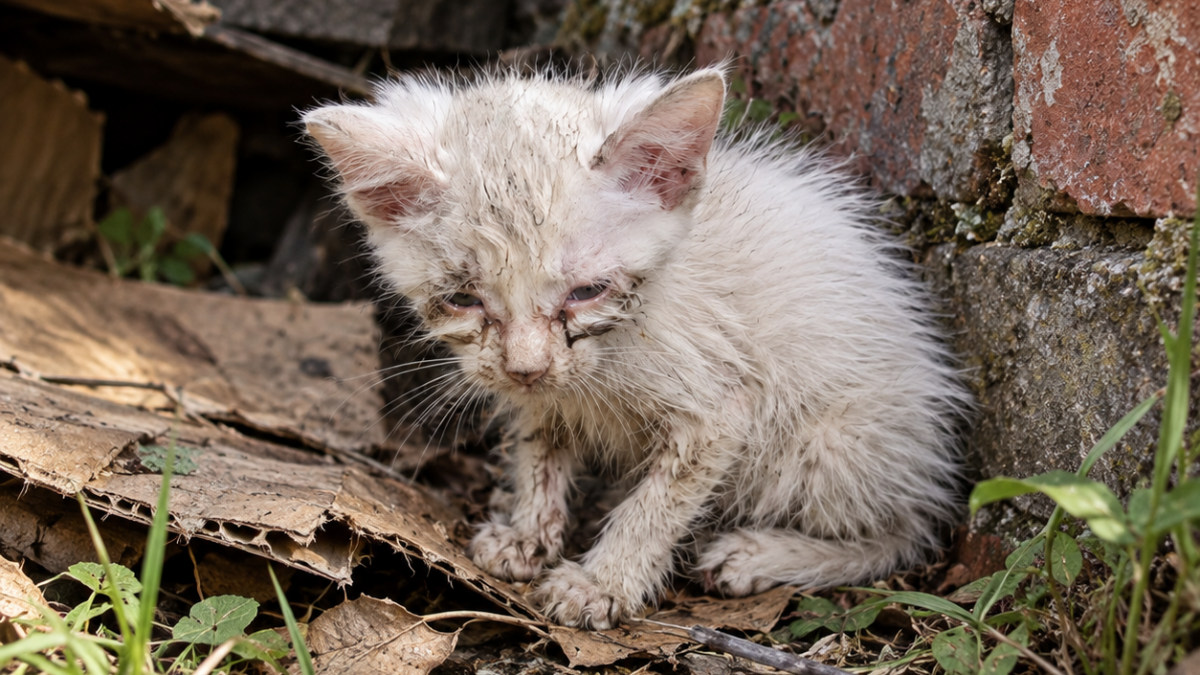
Someone left a tiny white kitten in the far corner of my garden before sunrise, and if he had been any quieter, I might never have found him.
When I lifted him from the wet grass, he weighed almost nothing, yet he pressed his entire body into my palm as if he had already decided I was his last chance.
I thought the worst thing I would discover that day was what had happened to him, but the real shock came later, when a veterinarian found something that proved his arrival in my yard had not been random at all.
My name is Anna Mitchell, and before that morning, the most dramatic thing that usually happened in my garden was discovering that rabbits had eaten another row of lettuce.
I lived on the edge of a small Pennsylvania town in a modest yellow house that had belonged to my parents. Behind it was a vegetable garden I had spent years improving, with tomatoes along one fence, herbs near the kitchen door, and an old apple tree leaning slightly toward the neighboring property.
That morning was cool for late August.
The sun had only begun rising when I stepped outside carrying a watering can.
Dew covered the grass. Birds argued in the apple tree. Somewhere down the road, a truck started.
Everything seemed ordinary.
Then I heard it.
A tiny sound.
So faint I initially thought the neighbor’s gate was squeaking.
I stopped.
Nothing.
Then again.
A weak little cry.
I set down the watering can.
“Hello?”
Another sound.
This time I could tell exactly what it was.
A kitten.
I followed the noise toward the far corner of the yard where I had stacked old boards and fallen branches after a spring storm.
At first I saw only leaves.
Then something white moved.
I crouched.
“Oh, sweetheart.”
The kitten tried to stand.
He couldn’t.
His front paws pushed against the dirt, his body lifted for half a second, and then he tipped onto his side.
I rushed forward.
He was tiny.
White fur, once probably beautiful, had turned gray from dust and damp soil. One eye barely opened. His ears had several scratches, and his body was so thin beneath the fur that I could feel every ridge when I carefully placed my hands around him.
He looked up.
His visible eye was bright blue.
Then he gave one soft meow.
It sounded less like a demand and more like an apology.
I picked him up.
He weighed almost nothing.
That frightened me more than anything else.
A kitten should feel warm and solid in your hands.
He felt like a handful of feathers.
Yet he didn’t fight.
He didn’t scratch.
He simply curled toward my palm and closed his eyes.
“Okay,” I whispered. “I’ve got you.”
I carried him into the kitchen.
I placed a shallow bowl of water on the floor.
The kitten stared at it.
For several seconds, he didn’t move.
Then he crawled forward and began drinking so quickly that I had to pull the dish away after a few moments.
“Slow down.”
He looked at me as though I had committed an unforgivable crime.
“I’m giving it back.”
I waited.
Then offered it again.
After water came food.
I had no kitten food in the house, so I opened a small can of plain chicken I kept for emergencies and offered only a little while calling the nearest veterinary clinic.
The kitten ate as though somebody might take the plate away.
That broke something in me.
Animals who have always had food do not eat like that.
This little one knew hunger.
When he finally stopped, he curled on an old towel beside the kitchen radiator and fell asleep almost immediately.
He slept for hours.
Sometimes his paws moved.
Sometimes he made tiny sounds without waking.
I sat at the kitchen table watching him and became angrier by the minute.
He did not look like a kitten born outdoors.
His fur was too fine.
His temperament too trusting.
His little claws had even been trimmed recently enough that the veterinarian later noticed.
Somebody had cared for him.
And then, for reasons I did not understand, somebody had decided that leaving him in a stranger’s garden was easier than continuing.
That evening, I took him to Dr. Rachel Morgan.
The examination was quiet.
Dehydration.
Severe exhaustion.
Eye inflammation.
Parasites.
A few older bruises.
Low body weight.
Rachel listened to his chest, checked his gums, then looked at me.
“You found him this morning?”
“Yes.”
“Outside?”
“In my garden.”
She became very still.
“What?”
Rachel ran the scanner over the kitten again.
A beep sounded.
I stared at her.
“He has a microchip?”
She looked at the number on the screen.
“Yes.”
My relief lasted less than five seconds.
Then Rachel opened the registration database.
Her expression changed.
“What is it?”
She turned the monitor slightly away.
“Anna…”
“What?”
“This kitten was reported dead six weeks ago.”
PART 2
For a moment, I honestly thought I had misunderstood her.
“Reported what?”
“Dead.”
Rachel looked at the kitten, then back at the computer.
“That’s what the microchip database says.”
I stared at the little white body lying on the examination towel.
He was exhausted, dirty, and sick.
But very much alive.
“That has to be a mistake.”
“Maybe.”
“Whose kitten is he?”
Rachel didn’t answer immediately.
Veterinarians have rules about personal information connected to registered animals, and she was careful about what she could tell me.
She checked the number again.
Then opened another record.
“The chip was registered to a family in Westbrook.”
That was less than eight miles away.
“Can you contact them?”
“We can.”
“And tell them he’s alive?”
Rachel studied my face.
“Normally, yes.”
Something in her tone made my stomach tighten.
“Normally?”
She pointed to the status field.
“This chip wasn’t simply marked as missing. The owner contacted the registry and reported the animal deceased.”
I looked at the kitten.
His blue eye had closed.
“How old?”
“About five months, according to the registration.”
Five months.
Barely beginning life.
“How could someone accidentally report him dead?”
Rachel didn’t answer.
Because we both knew that wasn’t the question.
The question was why.
## **1. The Name He Used to Have**
The kitten’s registered name was Casper.
I laughed when Rachel told me.
Not because it was funny.
Because of course the tiny white kitten was named Casper.
“What?”
Rachel smiled despite herself.
“Nothing.”
She entered some information into the clinic system.
“Do you want us to keep calling him that?”
I looked at him.
“Does he know it?”
“Probably.”
I leaned toward the table.
“Casper?”
One blue eye opened.
His ear moved.
I tried again.
“Casper.”
He lifted his head.
There was no question.
He knew.
“Well,” I said softly. “I guess you’re Casper.”
He lowered his head again.
Rachel examined his eye more closely.
“With medication, I think this should improve.”
“Will he be okay?”
She paused.
Veterinarians rarely answer questions like that casually.
“He came in at the right time.”
Meaning a little later might have been very different.
I looked down.
Casper had fallen asleep with one paw touching my wrist.
Rachel noticed.
“He trusts you.”
“I’ve known him for less than a day.”
“Sometimes animals decide quickly.”
I thought of the way he had pressed himself into my palm in the garden.
Maybe he had been waiting for somebody to make the right decision.
## **2. The Phone Call**
Rachel contacted the number associated with the chip.
Nobody answered.
She left a voicemail.
Twenty minutes later, her receptionist knocked on the treatment-room door.
“The owner called back.”
Rachel stepped into the hallway.
I could hear only her side.
“Yes, this is Dr. Morgan.”
Pause.
“Yes, we scanned him.”
Longer pause.
“No, sir. I’m looking at the animal.”
Another pause.
Rachel’s expression hardened.
“I understand what you reported.”
Silence.
“No, I’m not confused.”
Then she looked through the glass toward me.
“All right.”
When she returned, I asked immediately.
“Well?”
“The registered owner is a man named Kevin Barlow.”
“And?”
“He says Casper isn’t his.”
I stared.
“The chip says he is.”
“He says the chip must be wrong.”
“That’s ridiculous.”
“Maybe.”
“Did you tell him the registration has his information?”
“Yes.”
“And?”
Rachel sat down.
“He said Casper died.”
I pointed toward the table.
“Clearly he didn’t.”
“He says the kitten he owned died.”
“And this is a different white kitten with the same chip?”
Rachel gave me a look.
Exactly.
## **3. I Took Him Home**
Because ownership was suddenly disputed, I couldn’t formally adopt Casper.
But the clinic and county animal-services officer agreed that he could remain in temporary foster care with me while the situation was reviewed.
Temporary.
I told myself that word repeatedly.
I bought kitten food.
A litter box.
A small bed.
Eye medication.
A scratching post.
Three toys.
Then another toy because it looked like a fish.
Temporary.
My sister, Lisa, came over that evening.
She looked at the supplies lined across the kitchen.
“This is temporary?”
“Yes.”
She picked up the tiny blue collar I had purchased.
“Very temporary.”
“Stop.”
Casper slept most of the first two days.
The third morning, he followed me into the kitchen.
Slowly.
His legs were still weak.
But he followed.
I turned.
“What are you doing?”
Meow.
“You have a bed.”
Meow.
“You’re supposed to rest.”
He sat on my foot.
That was our first argument.
I lost.
## **4. Someone Had Been in My Garden**
Four days after I found Casper, my neighbor Ben knocked on my door.
Ben was sixty-three and noticed everything that happened within a quarter mile.
“I heard about the kitten.”
“News travels fast.”
“Lisa told my wife.”
“That explains it.”
He hesitated.
“I might have seen something.”
My smile disappeared.
“When?”
“The morning before you found him.”
“What?”
“Late night, technically. Maybe one thirty.”
Ben had insomnia.
He often sat on his screened porch listening to baseball radio.
That night, he noticed a vehicle stop near my driveway.
“What kind?”
“Dark SUV.”
“Did you see anyone?”
“Man got out.”
My skin prickled.
“Did he come into my yard?”
“I couldn’t see that far. Your hedge blocked him. But he was carrying something.”
“What?”
“Looked like a box.”
I stopped breathing for a second.
“Did you see him leave with it?”
Ben shook his head.
“No.”
The next morning, Casper was under my branches.
Someone had not simply abandoned him somewhere nearby.
Someone had chosen my yard.
## **5. Why My House?**
That question bothered me more than anything else.
I wasn’t known as a rescuer.
I didn’t run a shelter.
I didn’t post animal content online.
Why leave a kitten with me?
Lisa suggested coincidence.
“Maybe your garden was just accessible.”
“My fence is six feet high on one side.”
“Front gate?”
“Latched.”
“Maybe they climbed it.”
“That makes it less random.”
She stopped.
Fair point.
Then I remembered something.
Six years earlier, I had volunteered at a local pet-food drive.
A newspaper had taken a photograph of several volunteers.
My name had been printed beneath it.
But that was years ago.
Surely nobody would remember.
Unless they knew me.
That thought made me uncomfortable.
## **6. Casper Begins to Change**
Within two weeks, Casper became a different animal.
His eye improved.
The parasites were treated.
He gained weight.
The gray disappeared from his fur after a careful bath.
Underneath was bright white.
Almost ridiculous white.
His blue eyes looked even brighter.
And his personality?
Chaos.
Absolute chaos.
He climbed curtains.
Attacked shoelaces.
Slept in the fruit bowl.
Stole a slice of turkey from my sandwich and ran under the table carrying it like stolen treasure.
At three in the morning, he occasionally sprinted down the hallway for reasons known only to him.
This was the kitten somebody had marked dead.
He was very inconveniently alive.
And every day he became more mine.
I hated admitting that.
Because if Kevin Barlow suddenly produced valid ownership paperwork and demanded him back, I didn’t know what would happen.
The thought made my stomach hurt.
## **7. Kevin**
County animal-services officer Mark Ellis handled the ownership inquiry.
He came to my house to see Casper.
Casper climbed onto his clipboard.
Mark sighed.
“Helpful.”
“He’s contributing.”
Casper bit the corner of a form.
Mark moved it.
“Very civic-minded.”
Then he explained what they had learned.
Kevin Barlow lived in Westbrook with his wife, Jessica, and seventeen-year-old daughter, Madison.
Casper had been purchased from a breeder several months earlier.
“Purchased?”
“Yes.”
“For how much?”
Mark hesitated.
“Apparently quite a bit.”
Casper was not a rare wild animal or anything exotic.
But he had been sold as a pedigree Turkish Angora mix, mostly because of his white coat and blue eyes.
I looked at him.
Casper was currently attempting to climb inside Mark’s briefcase.
“Very dignified.”
Mark almost smiled.
“Kevin reported him deceased six weeks ago.”
“Why?”
“He says the kitten became ill.”
“With what?”
“He hasn’t provided veterinary records.”
“Because there aren’t any?”
“We’re looking.”
## **8. The Daughter**
Three days later, a teenage girl appeared at my front door.
She looked terrified.
“Are you Anna?”
“Yes.”
“My name is Madison.”
I knew immediately.
“Barlow?”
She nodded.
“Can I see Casper?”
I didn’t let her inside immediately.
Not because I wanted to be cruel.
Because I didn’t know whether her parents were with her.
“Does your father know you’re here?”
“No.”
“How did you find me?”
Her eyes lowered.
“I followed the animal-control van last week.”
That was both concerning and impressive.
I should have sent her home.
Instead, I saw tears forming.
“Wait here.”
I went inside.
Casper was asleep on the sofa.
When I returned carrying him, Madison covered her mouth.
“Oh my God.”
Casper woke.
He saw her.
For one second, nothing happened.
Then he started moving.
Not away.
Toward her.
I placed him down.
He ran to Madison.
She dropped to her knees.
Casper climbed directly into her lap.
Madison began crying.
“He’s alive.”
I felt something in my chest collapse.
“You thought he wasn’t?”
“My dad said he died.”
## **9. Madison’s Story**
I brought her inside.
She sat at my kitchen table holding Casper like he might disappear.
Casper purred so loudly I could hear him from the sink.
Madison told me everything.
Casper had been hers.
Her birthday present.
She fed him.
He slept in her room.
He followed her everywhere.
Then he developed an eye infection.
“Like the one he had when I found him?”
She nodded.
“My dad said the vet would cost too much.”
“But Casper cost money.”
“I know.”
Her father tried over-the-counter drops.
The infection worsened.
Then Casper began scratching furniture.
Kevin became angry.
Not dramatically.
Not one explosive event.
A pattern.
Casper was shut in the laundry room.
Then the garage.
Madison argued with her father.
One weekend, she went to stay with her grandmother.
When she returned, Casper was gone.
“My dad said he got really sick.”
Her hands shook.
“He told me they took him to an emergency clinic and he died.”
“Did you see him?”
“No.”
“Did he tell you which clinic?”
“He said I wouldn’t want details.”
My anger began rising.
“How long ago?”
“Six weeks.”
Exactly.
Madison had grieved a kitten who was still alive.
## **10. The Lie Becomes Bigger**
I called Mark immediately.
He interviewed Madison with her mother present.
Jessica confirmed part of the story.
She had not taken Casper to a veterinarian.
She had believed Kevin handled it.
Kevin’s account began falling apart.
No veterinary bill.
No emergency clinic.
No cremation paperwork.
No burial.
Nothing.
Then Mark asked one simple question.
“If Casper died at a veterinary clinic, why did you personally update the microchip registry?”
Kevin said the clinic told him to.
Which clinic?
He couldn’t remember.
That was when the investigation shifted.
## **11. A Familiar Name**
The surname Barlow bothered me.
I couldn’t place it.
Then my sister did.
“Kevin Barlow?”
“Yes.”
“Isn’t that the guy who does landscaping?”
I stared at her.
“Landscaping?”
“Barlow Outdoor Services.”
Something clicked.
Three years earlier, I had hired that company to remove a damaged tree from my backyard.
Kevin had come to estimate the job.
He had been on my property.
He knew where I lived.
He knew the garden.
The abandonment wasn’t random.
## **12. Why Me?**
Mark asked Kevin.
At first, he denied coming to my house.
Then investigators showed him an old business invoice confirming he had worked there.
He changed the answer.
Maybe he remembered the address.
That didn’t prove he had left Casper.
Then Ben gave a more detailed description of the man he saw.
Medium height.
Heavy shoulders.
Baseball cap.
Dark Barlow Outdoor Services jacket.
He hadn’t noticed the logo until Mark showed him a photograph.
Suddenly the dark SUV mattered too.
The company owned one matching the description.
Still not enough.
But pieces were aligning.
## **13. The Camera Across the Street**
My neighbor two houses down had a doorbell camera.
It did not face my garden directly.
But it faced the road.
Mark obtained footage from the night before I found Casper.
At 1:27 a.m., a dark SUV passed.
At 1:31, it returned slowly.
At 1:34, the same SUV passed again.
The license plate was blurry.
But a company decal was visible on the rear window.
Barlow Outdoor Services.
I watched the footage twice.
Then a third time.
Someone had intentionally driven to my house in the middle of the night.
## **14. Madison Confronts Her Father**
Madison called me after school one afternoon.
“I asked him.”
“About what?”
“Your house.”
I sat down.
“What did he say?”
“At first, nothing.”
Then Kevin became angry.
Not violent.
But defensive.
He said Madison had no idea what “real life” cost.
Veterinary bills.
Food.
Damage.
Responsibility.
Then he said something revealing.
“I found him somewhere he’d be taken care of.”
Madison repeated the sentence exactly.
I closed my eyes.
There it was.
Not a full confession.
But close.
## **15. The Veterinarian Finds Something Else**
Casper returned to Rachel for a follow-up.
His eye was nearly healed.
Weight good.
Energy too good.
He jumped off the table twice.
Rachel was examining his side when she paused.
“What?”
She parted the fur near his shoulder.
A small area had been shaved weeks earlier.
Very small.
Almost regrown.
“Was this from the chip?”
“No. The chip is higher.”
“What then?”
Rachel looked closer.
“Possibly an injection.”
“From when?”
“Hard to know.”
She checked records.
Nothing.
Then she ran bloodwork because Casper had been unusually thirsty for several days.
The results revealed something unexpected.
A sedative metabolite at a level suggesting exposure in the relatively recent past.
Not enough to harm him permanently.
But enough to raise questions.
Someone may have given Casper a sedating medication before transporting him.
That explained why he had been found so weak and quiet.
His condition had multiple causes, but the medication possibility changed the case.
## **16. The Garage Cabinet**
Jessica finally allowed investigators to inspect their garage.
Inside a locked cabinet were several veterinary medications left over from an older dog.
One was a sedative prescribed years earlier.
The medication count didn’t match what remained according to the old records.
Again, not proof by itself.
But the picture kept becoming clearer.
Kevin had access.
Kevin knew my address.
Kevin’s vehicle was on my road.
Kevin had told his daughter Casper died.
Kevin had reported the microchip status.
And Casper appeared in my garden alive.
## **17. Jessica**
Jessica came to my house once.
Alone.
I expected tension.
Instead, she looked exhausted.
“I owe you an apology.”
“You don’t owe me anything.”
“I should have known.”
She sat on my porch.
“Kevin told me he was taking Casper to a clinic.”
“And you believed him.”
“Yes.”
She looked through the screen door where Casper was watching us.
“I wanted to believe him.”
That distinction mattered.
Wanting to believe someone can become its own blindness.
Jessica admitted that Kevin had been increasingly obsessed with money after his business lost two large contracts.
Every expense became an argument.
Casper’s vet appointment.
Food.
Replacing scratched furniture.
“He kept saying Madison needed to learn that animals cost money.”
I looked at Casper.
“What lesson was she supposed to learn from being told he died?”
Jessica cried quietly.
“I don’t know.”
## **18. Temporary Becomes Permanent**
Legally, Casper’s ownership was still unresolved.
Kevin’s attorney initially claimed the kitten remained family property.
That terrified me.
Then Madison changed everything.
She had receipts.
Not paper receipts.
Texts.
Messages between her and her father.
One read:
**He needs a real vet. His eye is getting worse.**
Kevin:
**I’ll handle it.**
Madison:
**Promise?**
Kevin:
**Yes. Stop worrying.**
Two days later:
**Where’s Casper?**
Kevin:
**He got worse fast. There was nothing they could do.**
There was no veterinarian.
No emergency.
No clinic.
Only a lie.
Kevin withdrew his claim to Casper after the messages were produced and animal-services proceedings began.
I signed the final adoption papers on a Thursday morning.
Casper sat on the table and attacked the pen.
I laughed.
“Apparently he approves.”
Mark shook his head.
“That or he objects to contracts.”
I signed.
Casper was mine.
No.
That isn’t right.
He was home.
## **19. Madison’s Goodbye**
The hardest part was Madison.
She loved him.
I knew it.
She knew I knew it.
When she visited after the adoption became final, she sat on my living-room floor for almost two hours.
Casper slept in her lap.
Finally she said, “I want him to stay with you.”
I looked at her.
“You’re sure?”
She nodded.
“My house isn’t good for him right now.”
“You could eventually—”
“No.”
Her eyes filled.
“He trusts this house.”
Then she smiled.
“And he likes your garden.”
That destroyed me.
Madison kissed Casper’s head.
“Don’t forget me, idiot.”
Casper bit her sleeve.
She laughed while crying.
## **20. The Investigation**
The legal case was not dramatic in the way television makes investigations dramatic.
It was paperwork.
Interviews.
Vehicle records.
Microchip updates.
Medication logs.
Camera footage.
Witness statements.
Phone location data obtained through proper legal process.
Business schedules.
Kevin’s phone placed him near my property during the relevant period.
His SUV appeared on camera.
The sedative in his garage was consistent with the class of substance detected in Casper.
And his messages contradicted his story.
Kevin eventually admitted he had removed Casper from the house.
He still claimed he intended to place him somewhere safe.
The prosecutor’s response was simple.
A weak, sick kitten left outdoors overnight without notifying the homeowner was not a responsible placement.
Whatever word Kevin wanted to use, the facts remained.
## **21. The Business**
News traveled.
Small towns are efficient that way.
Barlow Outdoor Services began losing customers.
I did not call anyone.
I did not organize anything.
I didn’t need to.
People read the public case information.
Several clients canceled contracts.
One homeowner told a local reporter:
“If a man can leave an animal at someone’s house in the middle of the night and then tell his daughter it died, I’m not trusting him with my property.”
Kevin blamed me.
That came later.
## **22. The First Threat**
A note appeared in my mailbox.
No stamp.
Just folded paper.
**YOU’VE DONE ENOUGH.**
I called Mark.
He took it seriously.
Not because the words were explicit.
Because context matters.
Police documented it.
Then I installed more cameras.
Lisa started checking on me daily.
Madison stopped visiting temporarily because Jessica worried about tension.
I hated that.
Casper, meanwhile, cared about none of it.
He discovered the bathroom sink.
For three days, it became his preferred bed.
## **23. The Garden Gate**
One night at 11:18, my new camera detected movement near the side gate.
I checked the live feed.
A person stood outside.
Baseball cap.
Dark jacket.
My stomach dropped.
I called police.
The figure tried the latch.
Once.
Then again.
The new lock held.
A patrol car arrived seven minutes later.
The person was gone.
But the camera had captured enough.
Kevin.
His attorney later claimed he only wanted to “talk.”
At eleven at night.
At a locked gate.
During an active case.
The judge did not find that reassuring.
A no-contact order followed.
That was Kevin’s worst mistake.
Until the next one.
## **24. He Wanted Casper Back**
Kevin filed a civil claim alleging that I had interfered with his property and damaged his reputation by discussing the case.
The claim was weak.
But it scared me.
Not because I thought he would win.
Because it dragged everything out again.
I had to sit in a room and hear Casper described as property.
Market value.
Purchase price.
Ownership interest.
I kept looking at the kitten sleeping in photographs on my phone.
Market value?
He had slept on my chest during thunderstorms.
He had knocked an entire bowl of blueberries off the kitchen counter.
He woke me every morning at six by touching my nose.
You cannot put those things in a property valuation.
Legally, though, paperwork mattered.
And the paperwork favored me.
Kevin had surrendered his ownership claim during animal-services proceedings.
The adoption was valid.
The civil claim failed.
He left the courthouse furious.
I went home.
Casper met me at the door.
That was the difference between us.
Kevin kept trying to recover control.
Casper had already moved on.
## **25. The Missing Contract**
Then Kevin’s business problems exposed something else.
One former employee named Tyler contacted Mark.
He had seen the local coverage.
Tyler said Kevin had asked him months earlier to dispose of “a sick kitten.”
Tyler refused.
“What exactly did he say?”
According to Tyler:
“Take it somewhere. I don’t care where.”
Tyler assumed Kevin later took Casper to a shelter.
When he heard that Casper had supposedly died, he believed the story.
Then he saw the article.
Tyler also had a text.
Kevin:
**Forget the cat thing. I handled it.**
Dated the night before I found Casper.
That text became one of the strongest pieces of evidence.
## **26. Trial**
The case eventually went to court on charges associated with abandonment, neglect, misrepresentation connected with the investigation, and violations surrounding later contact.
I was not happy.
I was exhausted.
People imagine justice as a satisfying moment.
Most of the time, justice is waiting in hallways.
Missing work.
Answering the same questions repeatedly.
Having strangers challenge details you wish you could forget.
But I went.
For Casper.
For Madison.
For the simple principle that telling a teenager her kitten died because you no longer wanted to care for him should not become easier than doing the responsible thing.
## **27. Madison Testifies**
Madison was the strongest witness.
And the saddest.
She was eighteen by then.
When asked to describe Casper, she smiled.
“He slept under my chin.”
Kevin looked down.
She explained the eye infection.
The arguments.
Her weekend away.
Coming home.
The empty room.
Then the lie.
“My dad told me Casper died at a hospital.”
“Did you ask which hospital?”
“Yes.”
“What did he say?”
“That it didn’t matter.”
“Did he show you a bill?”
“No.”
“Did you ask to see where Casper was buried or cremated?”
“Yes.”
“What did he say?”
“That I was making everything harder.”
The courtroom became silent.
The prosecutor asked:
“When did you learn Casper was alive?”
Madison looked toward me.
“When I saw him in Anna’s arms.”
Her voice broke.
“He ran to me.”
## **28. Kevin’s Defense**
Kevin’s attorney argued that he had been overwhelmed.
Financial pressure.
Family stress.
A sick animal.
Poor judgment.
Those things can explain behavior.
They do not erase it.
The defense also argued that Kevin intended my property to be a safe place because he knew I had once supported animal charities.
That argument stunned me.
He had essentially admitted selecting my house.
The prosecutor asked the obvious question.
“If he believed Ms. Mitchell would care for Casper, why not knock on the door?”
No good answer.
“Why arrive after midnight?”
No good answer.
“Why tell his daughter the kitten died?”
No good answer.
“Why mark the microchip deceased?”
No good answer.
Sometimes a case becomes strong not because of one dramatic piece of evidence but because every innocent explanation requires another coincidence.
Eventually there are too many.
## **29. Kevin Takes the Stand**
Kevin testified.
I wish he hadn’t.
For him.
He said he loved Madison.
I believed that.
People can love someone and still fail them badly.
He said he never wanted Casper harmed.
Maybe that was true too.
Then the prosecutor asked:
“Why did you leave him?”
Kevin stared at the table.
“I thought somebody would find him.”
“Why Ms. Mitchell?”
“I remembered she cared about animals.”
“So you knew where you were taking him.”
“Yes.”
“Why not contact her?”
“I panicked.”
“Why report Casper dead?”
Kevin’s jaw tightened.
“Because my daughter wouldn’t stop asking.”
A sound moved through the courtroom.
The judge called for silence.
The prosecutor waited.
“So you told your daughter her kitten was dead because she continued asking where he was?”
Kevin looked toward Madison.
“Yes.”
That answer changed everything emotionally.
Maybe not legally.
But emotionally.
Madison closed her eyes.
## **30. The Verdict**
Kevin was found responsible on multiple counts supported by the evidence.
Not every allegation resulted in the harshest outcome.
I appreciated that.
Truth matters more than revenge.
The judge considered his later contact with my property, the false account given to his daughter, the abandonment circumstances, and his efforts to minimize what happened.
There were financial penalties.
Probationary conditions.
Restitution.
A significant restriction on possessing animals.
Required compliance with court orders.
The business-related civil consequences continued separately.
No dramatic destruction.
No movie-style ending.
Just consequences.
Real ones.
## **31. But Kevin Still Blamed Me**
Months later, I received a letter through his attorney.
Kevin claimed the publicity had destroyed his company.
He wrote that I had turned one mistake into “a public spectacle.”
I read the sentence twice.
Then placed the letter in a drawer.
I never replied.
Because that was the final thing I learned about Kevin.
He still believed the worst thing that happened was what people thought of him.
Not what Casper endured.
Not what Madison believed for six weeks.
Not the trust he destroyed.
His reputation.
That was what mattered to him.
I could not teach him otherwise.
The court could not.
Madison could not.
Sometimes consequences do not create remorse.
They simply create boundaries.
That had to be enough.
## **32. Casper Discovers Snow**
Casper had never seen snow from inside a safe house.
At least not that I knew.
His first winter with me, he sat at the patio door during the first snowfall.
For almost an hour.
Completely still.
Then I opened the door two inches.
Cold air entered.
Casper sniffed.
One snowflake landed near his paw.
He jumped backward.
I laughed.
He looked offended.
The next morning, he tried again.
I carried him onto the covered porch in my arms.
He watched snow falling over the garden where I had found him.
That image stayed with me.
Same garden.
Different kitten.
When I found him there, he could barely stand.
Now he was nine pounds of attitude.
He saw a bird and tried to launch himself out of my arms.
“Absolutely not.”
Meow.
“You are an indoor cat.”
Louder meow.
“Your legal argument has been denied.”
## **33. Madison Graduates**
Madison remained in Casper’s life.
Not as his owner.
As family.
She came over after high school graduation wearing her cap and gown.
Casper immediately attacked the tassel.
She laughed.
“Some things never change.”
She had decided to study veterinary technology.
When she told me, I stared.
“Because of Casper?”
“Partly.”
She looked at him.
“I spent so much time wishing somebody had taken him to a real vet.”
She scratched beneath his chin.
“Maybe I can be that person for someone else’s animal.”
That might have been the most satisfying consequence of the entire story.
Kevin had tried to end a responsibility.
Instead, the experience created another person determined to take responsibility seriously.
## **34. Jessica Leaves**
Jessica and Kevin eventually separated.
I learned through Madison.
I never asked for details.
They weren’t mine.
But Jessica later sent me a Christmas card.
Inside, she wrote:
**Thank you for giving him the home I should have protected.**
I kept the card.
Not because she needed forgiveness from me.
She didn’t.
Because accountability without cruelty matters.
Jessica made mistakes.
She also told investigators the truth.
Those things can coexist.
## **35. The Garden Becomes His**
Every summer, Casper watched me work outside through the screened patio.
Eventually I built a secure cat enclosure connected to the back porch.
A “catio,” Lisa called it.
Casper loved it.
From there, he could smell tomatoes.
Watch birds.
Lie in the sun.
And stare directly at the place where I had found him.
The first time he walked into the enclosure, I became emotional.
Lisa noticed.
“Don’t start.”
“I’m not.”
“You’re crying.”
“Allergies.”
“You have never had outdoor allergies.”
“I developed them today.”
Casper rolled onto his back.
He did not care.
## **36. The White Cat in the Newspaper**
A local paper eventually wrote a follow-up.
Not about Kevin.
About Casper.
The headline was something like:
**Kitten Found in Garden Thriving One Year Later.**
The photograph showed Casper sitting beside my tomatoes.
I liked that.
His story was finally about living.
Not being left.
Not court.
Not Kevin.
Living.
The reporter asked me what revenge looked like.
I corrected her.
“There wasn’t revenge.”
She raised an eyebrow.
“He lost business, faced court consequences, and can’t keep animals right now.”
“Those are consequences.”
“What’s the difference?”
“Revenge is about hurting someone back.”
I looked at Casper.
“Consequences are about making sure the same thing is harder to do again.”
She used that quote.
## **37. Tyler**
Tyler, the former employee, started his own small landscaping business.
I hired him once.
Not out of obligation.
Because he was good.
He came to trim the old apple tree.
Casper watched him from the catio.
Tyler laughed.
“That’s him?”
“That’s him.”
“He looks expensive.”
“He is.”
“Worth it?”
I smiled.
“Unfortunately.”
Casper meowed.
Tyler pointed.
“He agrees.”
Before leaving, Tyler stood near the corner of the garden where Casper had been found.
“I should have pushed harder.”
“You refused.”
“I could’ve asked where Kevin took him.”
“You didn’t know what he would do.”
Tyler nodded.
Still guilty.
People love imagining they would recognize the critical moment while it is happening.
Usually we don’t.
The important thing is what we do once we understand.
## **38. Ben’s Porch**
Ben became Casper’s unofficial grandfather.
He came over with treats.
Too many.
I accused him of sabotage when Casper gained half a pound.
Ben denied everything.
“He’s growing.”
“He’s an adult.”
“He’s emotionally growing.”
“That is not how calories work.”
Casper adored him.
Every afternoon Ben sat on his porch around four.
Casper waited at the window.
If Ben didn’t appear, Casper paced.
Eventually Ben started waving through the glass.
Ridiculous.
Completely ridiculous.
I loved it.
## **39. The Box**
For months, Casper hated cardboard boxes.
He would see one and leave the room.
I never forced the issue.
Then, about two years after I found him, a package arrived.
I opened it.
Removed the contents.
Left the empty box near the kitchen.
Casper entered.
Stopped.
Saw it.
I expected him to retreat.
Instead, he approached.
Smelled one corner.
Another.
Placed one paw inside.
Then the second.
Five minutes later, he was sleeping in it.
I took a photograph.
Madison cried when I sent it.
**Look at him.**
That was her whole message.
I understood.
A box had once meant somebody was done with him.
Now it was just another place to nap.
## **40. The Company Closes**
Barlow Outdoor Services eventually closed.
Not immediately.
Not because of one online outrage.
The business had already been struggling.
The court case accelerated problems.
Contracts disappeared.
Insurance costs rose.
Several employees left.
Kevin blamed everyone except himself.
Madison told me he moved to another county after probation supervision ended.
I never saw him again.
I did not celebrate the company closing.
But I also did not mourn it.
A business survives partly on trust.
Kevin had spent his.
## **41. Casper Becomes Ordinary**
This may sound strange, but the happiest part of Casper’s story was when nothing dramatic happened anymore.
Years passed.
He became an ordinary cat.
He hated closed bathroom doors.
Loved tuna.
Feared the vacuum.
Became obsessed with a red blanket.
Slept directly on clean laundry.
Ignored every expensive cat bed I bought.
Preferred a cardboard shipping box.
He developed a habit of tapping my face exactly once every morning before sunrise.
If I ignored him, twice.
If I continued ignoring him, claws became negotiable.
He became normal.
That mattered more than people realize.
Survival stories should eventually become boring.
Safety is wonderfully boring.
## **42. Madison Comes Home From College**
During her second year of veterinary-tech school, Madison came home for Thanksgiving.
She walked through my door.
Casper was asleep upstairs.
She called softly:
“Cas?”
His head appeared at the top of the stairs.
Then he ran down.
He was six years old by then.
Not a kitten.
Still, he ran to her.
Madison dropped her bag.
Casper jumped onto the sofa beside her.
She buried her face in his fur.
“He remembers.”
“Of course he remembers.”
I don’t know whether cats remember in precisely the emotional narrative we imagine.
But he remembered her voice.
That was enough.
## **43. The Truth About Those First Hours**
Years later, Rachel told me something she had never said that first evening.
We were having coffee after Casper’s annual exam.
“You remember when you asked if he was going to make it?”
“Yes.”
“I wasn’t sure.”
I stared.
“You said he came in at the right time.”
“That was true.”
“But?”
She looked down.
“If you had gone into the garden later that afternoon instead of that morning…”
She didn’t finish.
She didn’t need to.
I thought about my routine.
Normally, on Saturdays, I slept later.
That morning, I woke early for no reason.
No miracle.
No destiny.
Just chance.
That unsettled me.
Casper’s entire life had depended on hours.
Maybe less.
## **44. The Apple Tree**
The old apple tree eventually died.
I had it removed.
Tyler came to do the work.
When the stump remained, I couldn’t bring myself to grind it away completely.
Instead, I turned part of the space into a small flower bed.
White flowers.
Lisa laughed.
“Subtle.”
“I like white flowers.”
“You chose them because of Casper.”
“I can have two reasons.”
Casper watched from the catio.
The corner of the garden no longer looked like the place where someone had left him.
That was important.
Places can change meaning too.
## **45. His Blue Eyes**
Casper’s eyes remained astonishingly blue his whole life.
Visitors always commented.
“Is he deaf?”
No.
He heard everything.
Especially treat bags.
“Is he rare?”
Not particularly.
“Was he expensive?”
That question always made me smile.
“To somebody once.”
To me, he was priceless in the least romantic sense.
Meaning I had spent a truly unreasonable amount on dental care, emergency visits, specialty food, toys he ignored, and furniture protection he defeated.
But also priceless in the other sense.
Of course.
## **46. The Emergency**
At nine, Casper developed a urinary blockage.
Anyone who knows cats understands how quickly that can become serious.
I noticed because he kept entering the litter box.
Nothing.
Restless.
Not himself.
I called Rachel.
“Bring him now.”
I did.
Emergency procedure.
Hospitalization.
For two nights, my house felt wrong.
No white shape on the sofa.
No paws on my face.
No yelling from the kitchen.
I barely slept.
Madison, now working at a veterinary hospital, called repeatedly.
“He’s in good hands.”
“I know.”
“You did everything right.”
“I know.”
“Anna.”
“What?”
“Breathe.”
I laughed.
“Do not use my own advice against me.”
Casper came home furious and shaved.
Which meant he was recovering perfectly.
## **47. Getting Older**
At twelve, Casper slowed down.
Not dramatically.
Less climbing.
More sleeping.
The white fur around his face somehow became whiter.
He developed early arthritis.
Rachel recommended a heated bed.
I bought one.
Casper refused it.
Ben gave him an old folded blanket.
Casper loved that.
Naturally.
The expensive bed went to Lisa’s cat.
## **48. Ben**
Ben died the following year.
Heart attack.
Sudden.
His wife called me.
For weeks, Casper continued waiting near the window at four.
The first few days, I didn’t understand.
Then it hit me.
Ben wasn’t coming onto the porch.
Casper waited anyway.
Eventually, he stopped.
Animals experience absence in ways we can’t fully translate.
I never told myself he understood death.
I only knew he noticed someone was missing.
So did I.
## **49. Madison’s Clinic**
Madison eventually became a licensed veterinary technician.
She invited me to the clinic where she worked.
On the wall near reception was a photograph.
Casper.
The image from my garden follow-up story.
Underneath:
**The patient who started it all.**
I stared.
“You did this?”
She shrugged.
“My supervisor did.”
“You gave them the picture.”
“Maybe.”
Casper had no idea he had influenced her career.
Animals rarely know how far their lives ripple outward.
Maybe humans don’t either.
## **50. Kevin’s Apology**
The apology came thirteen years after I found Casper.
A letter.
No attorney.
No demand.
Just Kevin.
I almost threw it away.
Then I read it.
He wrote that he had spent years telling himself he had left Casper somewhere safe.
That because I had found him, everything had “worked out.”
Then Madison challenged him.
She told him that a good ending does not make a bad decision good.
Apparently that sentence stayed with him.
Kevin wrote:
**I was embarrassed about money and angry that I couldn’t control everything. I chose the easiest way out and then lied because I was ashamed of what I had done.**
He apologized to Madison.
To Jessica.
To me.
And, strangely, to Casper.
I did not know what to do with the letter.
So I showed Madison.
She read it slowly.
“Do you believe him?”
“I believe he wrote it.”
“That wasn’t my question.”
I looked at Casper sleeping by the window.
“I think people can understand something years too late.”
Madison nodded.
“Are you going to answer?”
“No.”
“Why?”
“Because his apology belongs to his conscience.”
I folded the letter.
“My job was Casper.”
## **51. Forgiveness**
I never forgave Kevin in the dramatic sense people expect.
I didn’t hate him either.
Time removed the sharpness.
He became a distant fact in Casper’s history.
Like the box.
Like the eye infection.
Something that happened.
Not the center.
That was more powerful than anger.
For years Kevin had shaped Casper’s story simply because he was the person who abandoned him.
Eventually, he became a paragraph.
Then a sentence.
Then almost nothing.
## **52. The Garden Anniversary**
Every year on the date I found Casper, Madison sent a message.
**Garden Day.**
Sometimes she visited.
Sometimes not.
One year we took a picture of Casper in the catio with the white flowers behind him.
He looked annoyed.
Madison said:
“He looks like he pays taxes.”
“He believes he owns the property.”
“He does.”
Fair.
## **53. His Last Winter**
Casper was seventeen when his kidneys began failing.
Seventeen.
I still struggle to believe it.
He had gone from a half-conscious kitten in my hand to an old cat who had occupied nearly two decades of my life.
The decline was slow.
Medication.
Special food.
Fluids.
Good weeks.
Bad days.
Rachel had retired by then but still asked about him.
Madison helped me understand the lab results.
“He’s old,” she said gently.
“I know.”
“You hate that.”
“Yes.”
No rescue story protects you from time.
That is part of the bargain.
You save them.
Love them.
And if you are lucky, eventually age becomes the problem.
That is what you want.
An old animal.
Old because nothing ended them early.
## **54. The Last Garden Morning**
One spring morning, I carried Casper into the catio.
He no longer jumped up alone.
The white flowers near the old apple-tree stump had opened.
He smelled the air.
Birds called.
The grass was wet with dew.
Almost exactly like the morning I found him.
I sat with him in my lap.
“You know this is where we met?”
He purred.
“Terrible first impression.”
Purr.
“You were filthy.”
Louder purr.
“And expensive.”
He opened one eye.
I laughed.
His body was thin now.
But not from neglect.
From age.
There is a difference that matters.
## **55. Madison Comes Over**
Madison drove three hours when I told her Casper was declining.
She sat on the floor.
Casper was sleeping on the red blanket.
She called his name.
His eyes opened.
“Cas.”
His tail moved.
Once.
Madison put her face beside his.
“You ridiculous old man.”
Casper touched her cheek with one paw.
She started crying.
“I thought I lost you when I was seventeen.”
I looked away.
“You gave me sixteen more years.”
Casper closed his eyes.
## **56. The Decision**
The final decision came on a Monday.
Casper stopped eating.
Then drinking.
His breathing changed.
The veterinarian came to my house.
I wanted home.
No carrier.
No clinical table.
No unfamiliar smells.
Casper lay on the red blanket beside the patio door.
The garden was visible through the glass.
Madison sat on one side.
I sat on the other.
Lisa stood behind me.
I stroked his head.
“You were supposed to be temporary.”
Madison laughed through tears.
“He never agreed to that.”
“No.”
I looked at Casper.
“You really didn’t.”
## **57. Goodbye**
The veterinarian gave him medication to relax.
Casper’s body softened.
His head rested in my palm.
Exactly where it had rested the first morning.
That realization nearly undid me.
Seventeen years earlier, I had lifted a tiny body from the dirt.
Too light.
Too cold.
Too tired.
Now an old cat rested in the same hands.
Safe.
Warm.
Loved.
I whispered:
“You don’t have to fight anymore.”
His breathing slowed.
Madison touched his paw.
The veterinarian gave the final medication.
One breath.
Another.
Then stillness.
Outside, birds continued singing.
A breeze moved the tomato leaves.
The garden did not know that my world had changed.
Gardens rarely do.
## **58. The White Flowers**
I buried none of Casper’s ashes in the garden.
People expected me to.
I couldn’t.
Instead, I kept his urn inside beside the photograph of him sleeping in the cardboard box.
But I planted more white flowers.
Not as a grave.
As a reminder.
The place where somebody had abandoned him became the place where I spent seventeen years remembering that abandonment was only his beginning.
Not his identity.
## **59. Madison’s Gift**
Months later, Madison brought me a wooden sign.
Small.
Simple.
It read:
**CASPER’S GARDEN**
I cried.
Of course.
We mounted it near the catio.
Underneath, she had engraved a smaller line.
**Found here. Loved everywhere after.**
That line still gets me.
## **60. The Ending Kevin Never Expected**
If someone asks me now whether Kevin got what he deserved, I don’t know how to answer.
He lost his business.
Faced court consequences.
Lost trust.
Lost years with his daughter.
Lived long enough to understand why what he did mattered.
Maybe that is punishment.
Maybe it is simply consequence.
But the ending that mattered had nothing to do with Kevin.
Kevin placed a sick white kitten in my garden believing he was removing a problem from his life.
Instead, Casper became part of mine.
He became part of Madison’s future.
He changed how Jessica understood responsibility.
He changed how Tyler responded when something felt wrong.
He became the photograph on a veterinary clinic wall.
The cat Ben waved to every afternoon.
The reason my garden gained an enclosure and a ridiculous number of white flowers.
And Kevin?
Eventually, he became the least interesting person in the story.
That was satisfying.
Because the person who abandons an animal should never be more important than the life that survives afterward.
## **61. What I Remember**
I remember many things.
Casper stealing turkey.
Casper asleep in the sink.
Casper seeing snow.
Casper attacking Madison’s graduation tassel.
Casper waiting for Ben.
Casper climbing into a cardboard box years after one had been used to leave him behind.
But the memory that remains clearest is still the first.
Morning dew.
Birds in the apple tree.
A sound so faint I almost ignored it.
I walk toward a pile of boards.
And there he is.
A little white kitten trying to stand.
He looks at me.
Meows.
Falls sideways.
I lift him.
He presses himself into my palm.
At the time, I thought he was simply too weak to resist.
Maybe he was.
But I like to think some tiny part of him understood one thing before I did.
He had reached the right garden.
## **62. What Rescue Actually Means**
People love the word “rescue.”
It sounds dramatic.
Someone arrives.
Somebody is saved.
The end.
Real rescue is usually much less cinematic.
It is waking up at two because medication is due.
It is cleaning litter.
Paying bills.
Waiting through investigations.
Respecting fear.
Taking an animal back to the veterinarian when something seems slightly wrong.
It is keeping doors closed.
Keeping food available.
Being there tomorrow.
Then the day after.
Then the year after that.
The moment I picked Casper up was not the whole rescue.
That was simply the introduction.
The rescue was seventeen years of staying.
## **63. The Last Box**
A week after Casper died, a delivery arrived.
I opened the package.
Then realized I was staring at the empty cardboard box.
For years, Casper would have climbed inside immediately.
The kitchen felt painfully quiet.
I almost threw it away.
Instead, I sat on the floor beside it.
And laughed.
Because I remembered the first time he chose a box for himself.
The absolute confidence.
The ridiculous way one back leg hung over the edge.
The look on his face that said:
This belongs to me now.
That may have been the greatest revenge against his beginning.
He reclaimed the ordinary things.
Boxes.
Gardens.
Cars.
Hands.
Doors.
Human beings.
Things that once carried fear became boring.
And boring was beautiful.
## **64. Home**
The old red blanket still sits folded in my living room.
The catio remains.
I tell myself I may adopt again.
Someday.
Maybe.
Lisa says the fact that I still buy birdseed for the catio view means I already know the answer.
She may be right.
But Casper’s story does not need another cat to complete it.
It was complete the moment an abandoned kitten grew old.
Think about that.
Someone looked at him when he was small, sick, and inconvenient and decided his life was something they could walk away from.
Seventeen years later, I sat beside him while age—not hunger, not cold, not abandonment—finally caught up.
That is the ending I wanted.
Not dramatic revenge.
Not suffering returned for suffering.
A life so long and so loved that the terrible beginning became almost absurdly small compared with everything that came after.
Kevin had tried to erase Casper with one lie.
“He died.”
But Casper spent seventeen years proving otherwise.
He lived loudly.
Messily.
Expensively.
Affectionately.
Stubbornly.
He lived long enough to become old.
And when I think about that cool morning in the garden now, I no longer remember the anger first.
I remember the weight of him in my hands.
Too light.
Almost nothing.
Then I remember what those same hands held seventeen years later.
An old white cat.
Safe in his own home.
Surrounded by people who knew his name.
And I think that is the only revenge story Casper ever needed.
Someone abandoned him believing he would disappear.
Instead, he became unforgettable.

